• Skip to primary navigation
  • Skip to main content
  • Skip to primary sidebar

everywomanover29 blog

Food, Mood and Women's Health – Be your healthiest, look and feel great!

  • Blog
  • About
  • Services
  • Store
  • Resources
  • Testimonials
  • The Book
  • Newsletter
  • Contact
  • Search this site

stress

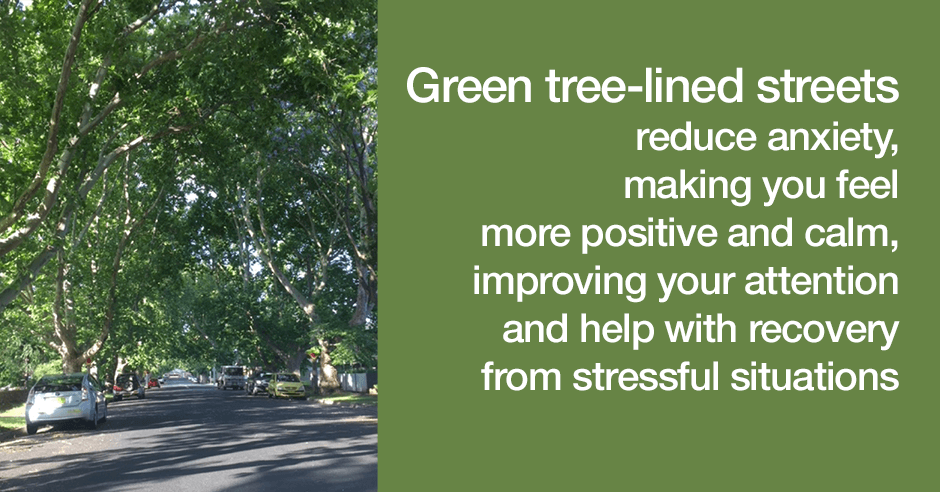
Green tree-lined streets reduce anxiety, making you feel more positive and calm, improving your attention and help with recovery from stressful situations.

January 11, 2019 By Trudy Scott 8 Comments

I’m a nature-lover and don’t need to be told that seeing trees or walking under them or driving along a tree-lined street has research supporting their benefits. I just feel the sense of wonderment, the calming effects and a heightened sense of joy and pleasure as soon as I’m in amongst trees in a street like the one above.

This is a quiet side street in the small town of Richmond in NSW, Australia. It runs perpendicular to a really busy road that heads up to North Richmond and beyond. Now the traffic doesn’t come close to comparing with Los Angeles traffic but for a small town it can be rather hectic from 4pm. If we happen to be heading towards North Richmond, we always take a detour along this wonderful tree-lined road and other similar tree-lined roads to get to where we’re going. As well as avoiding the bumper to bumper traffic we get this sense of ahhhhh!

I mentioned that I don’t need to be told there is research supporting the calming effects of tree lined-roads. But you know me: I’m always curious about the science so when I heard there was research I was of course intrigued about it and wanted to understand why they make us feel so good.

Here is some of the research I found: In Benefits of nature: what we are learning about why people respond to nature we discover that in general we respond in a positive way to nature and to trees in particular, especially “trees with spreading forms” reminiscent of trees on the African savanna. I was born in Africa and spent 32 years there so I find this so interesting! This paper also reports that

all colors were calming, but bright green trees were more calming than other tree colors, including less bright greens and oranges

and that

Adult responses to plants are also influenced by their childhood interactions with nature. We have shown that the more interaction people have with nature as children, the more positive are their attitudes towards nature as adults.

In this study: Stress recovery during exposure to natural and urban environments, the 120 participants were exposed to “color/sound videotapes of one of six different natural and urban settings” after watching a stressful movie. Watching the natural settings had a measurable impact on parasympathetic measures such as heart rate and muscle tension and they felt more positive, experienced improved attention and had better stress recovery.

In another study The View From the Road: Implications for Stress Recovery and Immunization, drivers were presented with a stress-causing stimulus and their reactions measured as they recovered from the stress. The Safe Streets report from the University of Washington summarizes the outcome:

Those viewing built-up, strip-mall-style roadside environments in a simulated drive after the stressful experience showed a slower and physiologically incomplete recovery and reported more negative feelings. Study participants seeing more natural roadside scenes (forests or golf courses) returned to normal baseline measures faster. An “immunization effect” was also detected, as initial exposure to a natural roadside setting decreased the magnitude of response to a subsequent stressful task.

And finally, the research about forest-bathing (known as Shinrin-yoku), although not directly related to stress-reduction from driving along tree-lined streets is worth mentioning. Just the word “forest-bathing” makes me smile.

Research on forest-bathing shows how spending time in forests can lower high blood pressure, and help ease modern-day “stress-state” and “technostress”. In one study, Effects of Short Forest Bathing Program on Autonomic Nervous System Activity and Mood States in Middle-Aged and Elderly Individuals:

The Profile of Mood States negative mood subscale scores of “tension-anxiety”, “anger-hostility”, “fatigue-inertia”, “depression-dejection”, and “confusion-bewilderment” were significantly lower, whereas the positive mood subscale score of “vigor-activity” was higher.

In summary, in this study, the 128 middle-aged and elderly individuals spent only 2 hours in a forest setting and felt less tense, had reduced anxiety, experienced less anger and hostility, felt less fatigued, were not depressed or dejected, felt less confused/bewildered and had more vigor and energy. This was after only 2 hours of forest-bathing!

Here are some ways you can get the most out of this information for your own sense of calm:

  • Take a detour like we do if at all possible and enjoy the calming effects of driving along a tree-lined street. Better yet, take a moment to get out the car and soak in the beauty while walking down the road. And best of all, take a full-day hike on a weekend or go camping for 2 days.
  • Plant a tree (or more than one) outside your home or get involved with a tree-planting committee at your child’s or your grand-child’s school or place of work to do the same
  • Talk to your local mayor and council members to make tree planting in your community a priority
  • If you live in a built-up city and can’t do any of the above, make an effort to spend quiet time in a nearby park
  • Find a tree-planting charity that is a good fit and make a donation in the name of a loved one in lieu of a gift or just do it for yourself
  • If you’re housebound (with agoraphobia for some other reason), find some pictures or a poster of green trees or dig out some old photos. Just looking at pictures of nature and greenery have a stress reducing effect.

On that note here is the bigger version of my Richmond tree-lined street image so you can enjoy looking at it while reading this blog AND get some of the stress-reducing benefits…until you’re in your own tree-lined street or out in nature.

Tree-lined street stress-reducing


I hope this motivates and inspires you to drive down more tree-lined streets and to do something tree-related in your life in addition to all the nutritional changes you’re making to eliminate your anxiety!

We’d love to hear how much you love trees and the outdoors. Do you have a favorite tree-planting charity? Feel free to share your feedback and questions too.
Filed Under: Anxiety, Nature Tagged With: anxiety, attention, calm, green, happy, positive, recovery from stressful situations, streets, stress, tree-lined

Using amino acids for anxiety and depression: does the right dose ever change or need a tweak?

October 19, 2018 By Trudy Scott 14 Comments

If you are using targeted individual amino acids for anxiety and/or depression and doing well on them, you’ll likely get to the point when you’re asking questions like how to discontinue them and does the right dose ever change or need a tweak, especially after some stressful life events. Amy posted this question in the comments section of the blog on using tyrosine to create a sense of calm energy (paraphrased and formatting for ease of reading)

Trudy you are a God send! I stumbled upon your work after following Julia Ross. I have depression and anxiety. I’m currently taking:

1000 mg tyrosine 2x daily

500 mg glutamine morning, 1000mg mid-morning and afternoon

500mg DPA (Endorphigen) 3 x daily (previously I was using DLPA but your recommended DPA was so much better and less stimulating)

50 mg 5-HTP afternoon and

1500mg tryptophan at night

I used the amino acids to treat what used to be referred to as “atypical” depression: loss of motivation, tiredness, lethargic, intense carb craving, feelings of guilt and hopelessness. I would become paralyzed with depression, barely able to get through the days. When I was younger I treated these episodes with antidepressants but as I got older could no longer tolerate the side effects. I’m also still on birth control pills at the age of 46 and believe I may be in perimenopause but can’t stop the pills for medical reasons.

Tyrosine gave me my energy back, glutamine cut the carb cravings. DPA and True Calm work wonders for my anxiety.

I watch my sugar intake and always consume lots of animal protein. I’m so grateful for this solution.

After trialing this seems to be the right combo. I always get confused when is it time to discontinue supplements? Do you stop or slowly reduce or taper?

Does the “right” dose ever change? I’ve been on this combo about 2 months. I’ve felt great but some anxiety/panic creeping back up …. wondering if supplements need a tweak or is this just the result of some stressful life events. Advice appreciated!

I was really pleased to hear the wonderful results she was having and glad that she had trialed the amino acids to find the correct amount for her unique needs and situation. I don’t see this happening often enough and it really is the most effective way to get results. It’s what I do with all my clients – methodical, step-by-step trialing of each amino acid, one at a time and carefully documenting results (both good and bad) in order to find the optimal dose of each one.

When and how to discontinue the amino acids?

To answer her question about when and how to discontinue this is my feedback:

Once you are feeling back to your old self with no more anxiety, panic attacks or depression, you may choose to stop everything at once, but I prefer to slowly lower the amount of one amino acid at a time and add back if your symptoms come back. They don’t need to be “tapered” but doing it this way it helps with preventing your original anxiety and depression symptoms going back to really bad in one big swoop and having to start all over again.

I will add that I have had feedback from someone saying when she stopped tryptophan abruptly she felt the same withdrawal effects as when she weaned off meds but based on my experience this is very rare.

After posting her question Amy made some adjustments – taking less of all of them. As I mentioned above I find it better to lower the amount of one amino acid at a time – kind of reverse of the trialing method you use when starting the amino acids. Also, since she mentioned she felt anxiety/panic creeping back up, I would have expected her to increase some of the calming amino acids.

Does the right dose ever change or need a tweak?

And to answer Amy’s other question: does the right dose ever change or need a tweak?

Yes, the “right dose” can change based on stressful life events especially if you have pyroluria – stressful life events can cause you to dump more zinc and vitamin B6 affecting serotonin and GABA production and increasing the social anxiety.

Amy does mention that she’s on the birth control pill and this depletes zinc and vitamin B6 and hence serotonin) and has an impact on the microbiome – so this may well be playing a role in the need to tweak doses.

There are many other factors that could lead to the need to adjust the amino acids (or other supplement protocols):

  • hormonal changes like PMS, perimenopause or menopause
  • something contributing to leaky gut like adding back gluten or accidental exposure to gluten
  • antibiotics (affecting the microbiome and serotonin/GABA levels)
  • artificial sweeteners (because of their effect on the microbiome and hormones)
  • starting on other medications (since many cause nutritional depletions)
  • adding in a new food like collagen/gelatin (for some people collagen and gelatin may lower serotonin levels)
  • running a marathon (it likely depletes zinc and may ramp up cortisol)
  • a formulation changing completely without you knowing (one example is Seriphos – used to lower high cortisol – where the core ingredient changed completely and the labeling stayed the same)
  • a product changing from using gelatin to cellulose capsules (this may be problematic if you have SIBO)
  • you move into a new home and get mold exposure
  • you get a new dog or cat and start using Frontline Plus for fleas (fipronil, the active ingredient, targets GABA receptors and recent research points to increased anxiety, aggressive behavior, memory problems)
  • you have started using a sauna (depletion of zinc and other minerals, as well as stirring up toxins)
  • your need for serotonin support increases as you head into winter-time (some low serotonin folks are more susceptible to the winter blues)
  • a recent course of fluoroquinolone antibiotics (impacts on magnesium and GABA levels and the mitochondria)
  • you may no longer need them

This is not a complete list of reasons that could impact you but this will give you an idea of what to start to think about.

Hopefully this shows how important it is to monitor how you’re doing and adjust as needed (either up or down) and think about what is changing in your life.

If you’d like to read about the amino acids products Amy uses – the same ones I recommend and use with clients – you can find them listed on my supplements blog.

We appreciate Amy for allowing me to share her results and posting these questions which are a great learning opportunity for you.  She shared this with me:

I hope my “story” is helpful. Keep doing this important work! I work in the behavior health field. My colleagues think this is radical thinking and continue to only support the medical model. I’ve done a lot of my own research and trial and error. I wish there were more-open minded clinicians.

Hopefully with success stories like this, all the nutritional psychiatry research and behavioral health practitioners like Amy who have experienced it first hand and/or with clients/patients and family, we’ll change how mental health care is approached.

Do success stories like this lead you to be more open-minded about anxiety nutrition solutions? Have they worked for you?

And have you found the ideal dose of amino acids and then needed to adjust them up or down based on any of the above? How methodical were you in doing your adjustments?

Filed Under: Amino Acids, Anxiety, Anxiety and panic, Tryptophan Tagged With: adjust, anxiety, depression, discontinue, DPA, microbiome, right dose, stress, taper, tryptophan, tweak, tyrosine

Tyrosine for alleviating anxiety and panic attacks and creating a feeling of calm focus

August 31, 2018 By Trudy Scott 72 Comments

If you had anxiety, felt hugely stressed and were having panic attacks would you consider using tyrosine to help calm you? It’s not the first approach I use with a client as I typically want to calm things down first by addressing the low serotonin symptoms of anxiety (such as worry, overwhelm, insomnia and panic attacks) and the low GABA physical symptoms of anxiety (physical tension, stiff and tense muscles, overwhelm and panic attacks).

However, for some individuals addressing low catecholamines with tyrosine is the best approach to take, even if it feels counter-intuitive. Since everyone is different using the trial method is the best way to figure out what you need.

Here is another success story from someone using tyrosine, as shared in the comments on a recent blog post on tyrosine:

Tyrosine for anxiety has done wonders for me! I have tried GABA and Tryptophan. The GABA seemed to take the edge off a little when panic attacks occurred but wasn’t keeping anxiety from occurring.

I have been under tremendous pressure at work. The internal stress has been overwhelming! I haven’t been able to remember anything, even things I’ve done for years! I am in the process of learning new software at work. In the very first class my mind just went blank. The more I tried to focus the more stressed I became. All I could do was sit and stare at my screen while the rest of the class moved forward.

In short order I developed a migraine and panic. The internal pressure felt as if someone was wringing out my brain like one would do to a wash rag! I had to leave the class earlier. From this point on I was struggling to even do my job as I have done the last few years. Every time I tried to think I’d immediately become overwhelmed and shut down. I felt like crying most of the time from the sheer force of the internal pressure (this is embarrassing to admit as I’m someone with a competitive career). This stress just completely shut down my ability to learn and problem solve.

So, I decided to start some tyrosine. I was hesitant because I have heard it can cause panic attacks and I definitely don’t need more of those! I bought some powder and took 400mg on an empty stomach about 30 minutes before breakfast. WOW!!! Within an hour the stress just melted away!

I wasn’t stressed on my way to work either which normally I am. I was able to sit down and think thru my problems without feeling overwhelmed at all. Also, I was communicating with people much more easily. I noticed better eye-contact. I seemed less concerned of anyone’s opinions too.

I take another 400mg 30 minutes before lunch. I simply cannot believe how much better I am doing!

Just a few weeks prior I was telling my wife that I may need to start thinking about starting the process for disability because I simply could not function well enough to do my job.

I’d also add that the stress from the anxiety was so bad I felt like I had the flu for a few weeks. This also has dissipated since starting the tyrosine.

It’s still early in this experiment but I am hopeful for once. Nothing, and I mean NOTHING has worked so well so fast for me than tyrosine. It’s the closest thing to a miracle I’ve ever experienced. A night and day experience!

What wonderful results! I’m thrilled to hear about his “miracle” and that he’s doing so much better, that he has hope and that the stress from the anxiety has dissipated!

What approach to follow if you can relate to this situation

Of course, I thanked him for sharing his success story with tyrosine and added my response for other blog readers who may relate to this situation and may consider a trial of tyrosine as a first step when anxiety is an issue.

I still stand by my advice to start with GABA and tryptophan when you have anxiety whether it’s the low serotonin-type anxiety (worry in the head) or the low GABA-type anxiety (physical anxiety). I always have clients start by addressing these deficiencies first before adding tyrosine for the low catecholamine symptoms because tyrosine is too stimulating for many and can increase anxiety and insomnia (and may also cause a panic attack).

With the majority of the anxious clients that I’ve worked with, the order of doing trials is as follows: tryptophan or GABA first and then tyrosine.

Addressing his low catecholamine symptoms was what he needed

For this gentleman, clearly GABA and tryptophan support was not what he needed or was not enough to ease his anxiety. Addressing his low catecholamine symptoms was what he needed to do.

In case you’re wondering how he’s doing now – I reached out to him and he reports he’s still taking tyrosine and is still doing great!

He is the third person that I know of who has experienced these types of results with tyrosine so I expect there are others who could benefit too – which is why I decided to share his story.

Increased anxiety because of lack of focus and low motivation

Here is another similar story from a prior client of mine. She had terrible anxiety, and we trialed both GABA and tryptophan. While she did get some benefits with both it just wasn’t enough.

She was sleeping better but still felt so stressed and anxious when preparing for an important meeting at work which she was in charge of running. The anxiety also seemed to get worse during the meetings. She did also score high on the low catecholamines section on the amino acid questionnaire (poor focus, low motivation, fatigue, ADHD, depression) but were working on the low serotonin and low GABA types of anxiety before addressing poor focus and low motivation.

It turned out that her anxiety escalated around her work meetings because of her lack of focus and low motivation – she was pushing herself to get through them. Once she added tyrosine her anxiety was under control. In this instance tyrosine actually helped ease the anxiety because her ADHD symptoms diminished and her motivation and drive improved!

This is what biochemically individuality is all about and how we all have our own unique needs. And is why I love the trial-method for determining which amino acid is best for your own unique needs.

Here are some related blog posts that you may find helpful:

  • Amino Acids Mood Questionnaire from The Antianxiety Food Solution
  • How to do an amino acid trial for anxiety
  • Tyrosine for focus, motivation, energy, a good mood and possibly even anxiety

Do let us know if you have experienced less anxiety and a sense of calm focus when taking tyrosine?

Filed Under: Anxiety Tagged With: Amino acid trial, anxiety, calm, catecholamines, GABA, serotonin, stress, tyrosine

Thailand cave rescue: yes to calming meditation and GABA, no to antianxiety medication

July 13, 2018 By Trudy Scott 3 Comments

The cave rescue of 12 teens and their soccer coach in Thailand is such a beautiful story of hope, courage, resilience, volunteerism and the whole world coming together! I’ve been following the news about this from day 1 (as I’m sure you were) and felt such relief and joy on hearing they had all been safely rescued and appear to be physically and mentally fine.

I’m weighing in on the fact that meditation seems to have played a major role in keeping them calm, using GABA or theanine instead of antianxiety medications and B vitamins for ongoing psychological support.

Meditation seems to have played a role in keeping them calm

Meditation seems to have played a role in keeping them calm, according to this report from the UK

The 12 Thai boys and their football coach who were trapped in a cave in Thailand got through the ordeal by practicing meditation, family members have said.

According to a mother of one of the boys, the team were meditating in the widely shared video of their discovery by two British divers.

Look at how calm they were sitting there waiting. No one was crying or anything. It was astonishing.

The coach who was rescued from the cave on Tuesday, trained as a Buddhist monk for 12 years before he decided to coach the Wild Boars soccer team.

‘He could meditate up to an hour,’ said his aunt, Tham Chanthawong. ‘It has definitely helped him and probably helps the boys to stay calm.’

Here is the video of their lovely smiling calm faces when they were first found.


In this paper, Meditation Programs for Psychological Stress and Well-Being, they report that

Meditation programs, in particular mindfulness programs, reduce multiple negative dimensions of psychological stress [such as anxiety, depression, stress, distress, well-being, positive mood, attention]

Meditation has also been shown to improve dopamine and serotonin transporter binding, which appears to have reduced fatigue and improved mood in this study, likely because there are higher levels of these neurotransmitters available.

In a study done with young adults, Effects of mindfulness meditation on serum cortisol of medical students, meditation lowered cortisol levels, suggesting reduced feelings of stress.

Meditation and GABA/theanine instead of antianxiety medications

It was clearly an extremely difficult rescue and the Australian doctor, Adelaide anaesthetist Dr Richard Harris, risked his life to go into the cave and stayed with the boys and their coach for several days. He assessed their health and made sure they were ready for the rescue.

He used his medical expertise and rescue diving experience to decide to have each of them use antianxiety medication for the arduous 8-hour plus rescue (I suspect it was Dr. Harris’ decision). It was confirmed by Thai Prime Minister Prayuth Chan-ocha – to help calm their nerves – and it’s likely they were given a benzodiazepine, hopefully only the one time.

Even though very short term acute situations like this, is actually the intended use of benzodiazepines, it concerns me that these young boys were medicated, especially since adverse paradoxical reactions can be caused by benzodiazepines and are difficult to predict and diagnose.

The following adverse reactions can occur: “unanticipated restlessness and agitated episode,” sometimes aggression, hostility, and rage, as well as “an increased state of anxiety.” An adverse reaction during the actual rescue would have been very serious.

There were also reports of elevated white blood cells (WBC) and signs of a lung infection in some of the boys, and one boy had low blood pressure. These are all be side-effects of benzodiazepines. It’s difficult to know what caused any of this – was the medication, the rescue itself and the fact that were under water or spending all that time in the cave?

My intention is not to be critical of the medical decisions that were made in these very dire circumstances. I’ve done caving or spelunking as it was called in England and it’s pretty scary being underground and in the dark, wading through running water – and we were safely in control of things!

I’m sharing about benzodiazepines simply to raise awareness about other options and some of the many risks. And we haven’t even explored the fact that long-term use of benzodiazepines do more harm than good. More than a week to 2 weeks is considered too long, and for some this is even too long.

I really do look forward to the day when benzodiazepines are not the first approach but rather that:

  • meditation is recognized as being as effective, if not a more effective calming approach (I suspect the mediation benefits these boys had been experiencing would likely have carried them through the rescue)
  • the amino acids GABA or theanine are recognized for the calming benefits they offer (especially since the “mechanism of benzodiazepine action is through the gamma-aminobutyric acid [or GABA] receptors.”

B vitamins and other nutrition solutions after psychological stress

Thailand’s Department of Mental Health shared that

People who endure such an intense and dangerous event can go on to suffer lasting anxiety, depression and other symptoms of post-traumatic stress disorder.

I was so pleased to hear that the boys and their coach are being given B vitamins. There is evidence-based research on the psychological benefits of B vitamins after a trauma (like an earthquake or flood), thanks to my colleagues Julia Rucklidge, PhD and Bonnie Kaplan PhD​.

I do hope the B vitamins are continued and is offered to worried family members and all the wonderful rescuers who must be exhausted and stressed too.

Hopefully the boys will also continue to meditate with their soccer coach and share some of the benefits they experienced with family and friends.

How did you feel when you heard the rescue was over? Good news gives us such feel-good warm emotions doesn’t it!?

Do you meditate and have you used calming GABA or theanine?

Let us know if you have questions too.

Filed Under: Anxiety, Insomnia Tagged With: antianxiety, anxiety, B vitamins, benzodiazepine, medication, meditation, rescue, stress, Thailand cave

Dark chocolate reduces stress and inflammation, improves memory, immunity and mood – but are you addicted?

June 22, 2018 By Trudy Scott 21 Comments

dark chocolate addiction

A press release from Loma Linda University reports that two new studies show dark chocolate consumption reduces stress and inflammation, while improving memory, immunity and mood. These are wonderful results from human trials and if you’re like most of us I’m sure this subject brings great delight! However (and sorry to be the party-pooper here), there are a number reasons why you may want to hold back on the excitement: if you’re addicted to chocolate and/or sugar this is a big red flag, and if dietary oxalates and caffeine are issues for you then this news won’t be good. But there may be ways you can get some of the benefits without the harmful effects (more on that below).

These papers were presented as posters at the Experimental Biology 2018 annual meeting in San Diego, and the press release reports that

dark chocolate with a high concentration of cacao (minimally 70% cacao, 30% organic cane sugar) has positive effects on stress levels, inflammation, mood, memory and immunity. While it is well known that cacao is a major source of flavonoids, this is the first time the effect has been studied in human subjects to determine how it can support cognitive, endocrine and cardiovascular health.

Lee S. Berk, a researcher in psychoneuroimmunology and food science from Loma Linda University, School of Allied Health Professions, served as principal investigator on both studies and stated the following:

For years, we have looked at the influence of dark chocolate on neurological functions from the standpoint of sugar content – the more sugar, the happier we are. This is the first time that we have looked at the impact of large amounts of cacao in doses as small as a regular-sized chocolate bar in humans over short or long periods of time, and are encouraged by the findings. These studies show us that the higher the concentration of cacao, the more positive the impact on cognition, memory, mood, immunity and other beneficial effects [such as enhanced neuroplasticity].

The flavonoids found in cacao are extremely potent antioxidants and anti-inflammatory agents, with known mechanisms beneficial for brain and cardiovascular health.

In these 2 small studies (which have yet to be published in a peer-review journal) the consumption of 48g of 70% dark organic chocolate offered many of these health benefits in as quickly as 30 mins (in one the study) and when consumed every day for a week (in the other study).

In case you’re wondering how much this means in practical terms: 48 g is just over an ounce and a half, or 2 tablespoons. So think about 2 squares of 70% dark chocolate.

But are you addicted to chocolate? And do you binge?

I know I sounded like a real party pooper in the introduction but if your eyes lit up or you even got a little teary-eyed or felt a really warm “I so deserve this treat” glow or you felt realy joy at the thought of indulging (or maybe all of the above emotions) when you read the subject line then these may be red flag for you. But despair not as there are ways to help you not overdo it and binge on a week’s supply of dark chocolate in one sitting. If you relate to the binge comment you know exactly what I mean and have felt that deep regret and shame afterwards.

Lorraine shares this about her chocolate addiction:

the minute I start eating it – I am like a heroin addict. I can’t stop. I end up bingeing for a few weeks as it’s all I can think about. It’s the weirdest thing – so I mainly abstain from it and have a slip, binge, anxiety relapse about once a year until I am able to buckle down and fight the cravings knowing the anxiety is not worth the euphoria.

For some people the anxiety that is caused by chocolate is too severe (more on that below) but if Lorraine’s anxiety and bingeing are related there may be a solution for her and if yes, it would be the GABA solution below.

The brain chemistry balancing solution for bingeing

Cravings for chocolate can often be due to brain chemical imbalances and when these are addressed no willpower is required and there are no feelings of being deprived. Here is a simple way to help you figure it out:

  • if you have to eat chocolate when you haven’t eaten in awhile it’s likely low blood sugar and glutamine on the tongue stops the desire on the spot
  • if you stress-eat your chocolate cravings are likely due to low GABA, and GABA will stop the stress-eating and calm you down
  • if you eat chocolate to feel happy (and especially from late afternoon onwards) then your cravings are likely due to low serotonin, and tryptophan stops the cravings and boosts mood and reduces anxiety
  • if you eat chocolate for an energy boost then it’s likely due to low catecholamines and tyrosine will stop those cravings and give you a mood and energy boost
  • if you are a comfort-eater then it’s likely due to low endorphins and DPA will stop that “I deserve-it-reward-eating” and also give you a hug-like mood boost

I write more about this in the glutamine cravings blog and you can find all the individual amino acids listed on my supplements blog here with details on how to purchase them from my distributor.

Once you have this figured out this brain balancing there is no bingeing, you can eat a small portion and feel very satisfied and will actually address some mood and anxiety issues at the same time!

Dark chocolate is a no-no if dietary oxalates are an issue for you

If dietary oxalates cause you issues like anxiety, insomnia, vulvar pain, urinary issues, or other pain (for me they cause dreadful foot pain – like shards of glass combined with hot coals)

When considering high oxalate foods, 41mg and above is considered an exceptionally high oxalate food. In one study, the total oxalate contents of 34 samples of dark chocolate collected from 13 different countries ranged from 155 to 485 mg/100 g which equates to around 77 to 240mg for 48g.   So dark chocolate does need to be avoided and I would not even consider eating some even with calcium citrate or magnesium citrate.

In a related study published last year by lead author Professor Lee Birk, Is Chocolate Beneficial for Brain Health? the 20 subjects were subjected to a sequence of cacao sensory awareness tasks ranging from:

  • recall of past experiences
  • imagine eating chocolate right now
  • visualization/looking at real chocolate
  • olfaction [or sense of smell]
  • taste but not swallow
  • and finally chocolate consumption (70% cocoa bar) to satiation

And for many the above provided benefits for them. For me a good long deep sniff of dark chocolate feels quite satisfying, as strange as it may sound.

I do sometimes miss the texture of melted chocolate but solid coconut butter satisfies that need. Believe it or not, but so does pemmican, a savory snack that is made with beef fat and beef jerky, honey/cherries and sea salt. Check out pemmican from US Wellness Meats here (my affiliate link).

Avoid it if the caffeine causes anxiety, insomnia, heart palpitations and/or migraines

For many of my clients the caffeine in dark chocolate can cause anxiety, insomnia, heart palpitations and/or migraines. Some of these “twitchy” effects may also be due to the theobromine, a chemical compound, which roughly translates to “food of the gods” and is also what makes chocolate deadly for dogs.

I have to admit that chocolate would be my “drug” of choice before cakes, cookies or sweets. Putting aside the oxalate issues, it also affects my sleep and creates mild anxiety/sort of edginess with mild heart palpitations with restless sleep. This is how I remember a coffee buzz feeling. But worse than this is the migraine I get a day or 2 days later. It is wicked pain above my left eye that leaves me horizontal for a day. So, no chocolate for me unfortunately, other than enjoying the aroma of it.

Carob as a delicious alternative

Carob is a delicious alternative to dark chocolate as it doesn’t contain caffeine and is lower in oxalates. It has a definite chocolate-like flavor.

A 2002 study found that carob may actually have calming effects. It is also antioxidant rich, contains the polyphenol gallic acid which has been shown to help metabolic syndrome, has chemoprotective properties and helps with digestion.

Check out my Carob Cinnamon Delight al la Trudy hot beverage recipe and this recipe for Carob Coconut Avocado bites (leave out the sesame seeds and add extra coconut flakes if oxalates are an issue).

Organic and Fair Trade of course

If you can get to enjoy dark chocolate be sure to consume only organic as cocoa plants are heavily sprayed, Other than the concerns with the actual pesticides and insecticides, there is cause for concern about raised copper levels because of copper-based pesticides.

Fair Trade is a global movement made up of a diverse network of producers, companies, shoppers, advocates, and organizations putting people and planet first

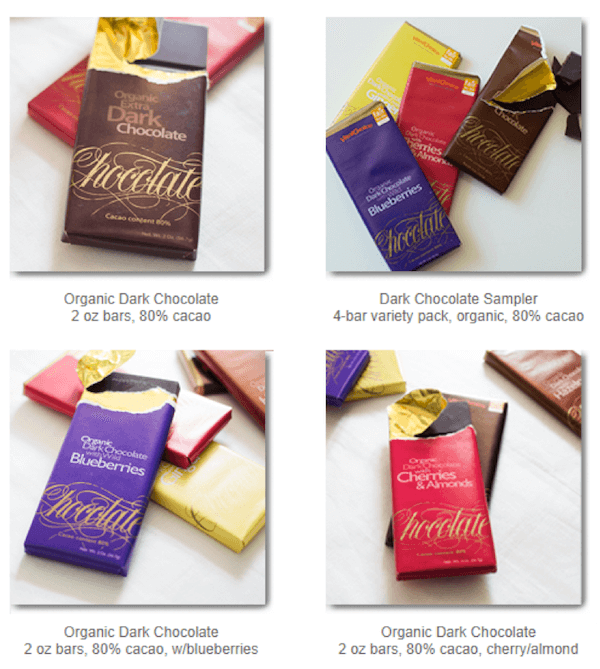
I know I’m going to get questions on what brands I recommend that are organic, Fair Trade and gluten-free so here goes – Vital Choice is my pick right now.

Vital Choice has quality dark chocolate that is both organic and Fair Trade. It is labeled gluten-free but they state it is “Manufactured on shared equipment with products containing wheat, milk, peanuts, and tree nuts.” I have not had any reports of anyone having a gluten issue with it but please use your own discretion. Here is the link to check them out and make a purchase (it is my affiliate link). Simply search for dark chocolate.

Feel free to share how you do with dark chocolate and how it makes you feel when you consume it and be sure to post any questions you may have.

And if you know of brands that are organic, Fair Trade and gluten-free please do share them.

Filed Under: Addiction Tagged With: addicted, anxiety, caffeine, comfort, Dark chocolate, DPA, immunity, Inflammation, insomnia, memory, mood, oxalates, reward, stress, tryptophan, Vital Choice

Blend of lavender, ylang-ylang, marjoram, and neroli reduces stress and lowers cortisol

February 19, 2018 By Trudy Scott 6 Comments

As you know I’m a big fan of essential oils and the healing benefits they offer for anxiety and stress. Here is one example of the power of essential oils for both reducing stress and lowering cortisol levels.

In this study, Essential oil inhalation on blood pressure and salivary cortisol levels in prehypertensive and hypertensive subjects, 83 participants who were hypertensive (high blood pressure) or prehypertensive were asked to inhale an essential oil blend of lavender, ylang-ylang, marjoram, and neroli with the following ratio (20 : 15 : 10 : 2).

The study group experienced the relaxation effects of this particular blend of essential oils leading to:

  • significant decreases in the concentration of salivary cortisol
  • reduced blood pressure
  • and stress reduction.

Here is the rationale for the particular blend they used in this study:

Lavender alleviates cardiac excitation, lowers BP [blood pressure], and is effective in hypertension and palpitations. Ylang-ylang lowers BP [blood pressure], alleviates palpitations and nervous system excitation, and promotes emotional relaxation. Marjoram lowers sympathetic nervous system activity and stimulates the parasympathetic nervous system, resulting in vasodilatation to reduce cardiac strain and decrease BP [blood pressure]. Neroli brings forth emotional soothing and comfort and is effective in cardiac palpitations secondary to shock or fear.

Are you new to essential oils or want to learn more about using them?

Dr. Z and Mama Z’s 10-part video online masterclass called Essential Oils for Abundant Living offers practical steps for using essential oils.  It is science-based (which I love!) and they address potential risks. Dr. Z shares this:

We pride ourselves on providing safe, scientific and practical advice that is all non-branded. We do not sell essential oils so, regardless of what your favorite brand is, the information you will learn in this program applies.

Not to mention, because we don’t sell essential oils, we are not restricted by government or “compliance” regulations and we can freely communicate what the research REALLY says about the healing power of essential oils!

And here is the amazing line-up of video lessons you’ll have access to when you register for Essential Oils for Abundant Living. After watching the Quick Start Guide, a new lesson will air each day:

Setting the Foundation

  • Lesson 1: Aromatherapy Quick-Start Guide
  • Lesson 2: Inhalation Guide & Safety Tips
  • Lesson 3: Topical Application Guide & Safety Tips
  • Lesson 4: Internal Use Guide & Safety Tips

Natural Solutions for a Toxic-Free Home

  • Lesson 5: DIY Body Care Products
  • Lesson 6: DIY Cleaning Products
  • Lesson 7: Cooking with Essential Oils 

Regaining Control of Your Health

  • Lesson 8: Preventing Disease with Essential Oils
  • Lesson 9: Treating Disease with Essential Oils
  • Lesson 10: Advanced Strategies & Protocols

This video series will

  • give you the confidence that you need to use essential oils to make healing remedies for your body, as well as non-toxic natural recipes for your home.
  • provide many golden nuggets that you can start putting into practice today (no matter where you are in your essential oil journey)
  • offer an all-you-can-eat buffet of expert tips, recipes and DIY ideas to help you and your family enjoy abundant health with essential oils!

Reserve your spot for Essential Oils for Abundant Living HERE!

I hope you enjoy it and learn a ton!

After the no-cost online airing you’ll have an opportunity to upgrade and get additional content and also join the wonderful Facebook group. I’m a member and it’s a fabulous resource for asking questions and sharing what’s working!

Filed Under: Essential oils Tagged With: anxiety, cortisol, essential oils, Essential Oils for Abundant Living, lavender, marjoram, neroli, stress, ylang-ylang

  • « Go to Previous Page
  • Page 1
  • Interim pages omitted …
  • Page 4
  • Page 5
  • Page 6
  • Page 7
  • Page 8
  • Interim pages omitted …
  • Page 11
  • Go to Next Page »

Primary Sidebar

GABA QuickStart Homestudy

gaba quickstart homestudy

Free Report

9 Great Questions Women Ask about Food, Mood and their Health

You'll also receive a complimentary subscription to my ezine "Food, Mood and Gal Stuff"


Connect with me

Popular Posts

  • Amino Acids Mood Questionnaire from The Antianxiety Food Solution
  • The Antianxiety Food Solution Amino Acid and Pyroluria Supplements
  • Pyroluria Questionnaire from The Antianxiety Food Solution
  • Collagen and gelatin lower serotonin: does this increase your anxiety and depression?
  • Tryptophan for the worry-in-your-head and ruminating type of anxiety
  • GABA for the physical-tension and stiff-and-tense-muscles type of anxiety
  • The Antianxiety Food Solution by Trudy Scott
  • Seriphos Original Formula is back: the best product for anxiety and insomnia caused by high cortisol
  • Am I an anxious introvert because of low zinc and vitamin B6? My response to Huffington Post blog
  • Vagus nerve rehab with GABA, breathing, humming, gargling and key nutrients

Recent Posts

  • Her cravings for chips and peanut butter were triggered by stress: GABA ends cravings and reduces physical tension and fear of heights
  • It is truly miraculous to be able to move through life without crippling anxiety and panic
  • GABA and tryptophan combo provide immediate and noticeable relief for tremors and cervical dystonia in just 7 days
  • Red light therapy for back and neck pain, plantar fasciitis and low mood – a complement to the amino acids GABA, DPA and tryptophan
  • What do I use instead of Seriphos to help lower high cortisol that is affecting my sleep and making me anxious at night?

Categories

  • 5-HTP
  • AB575
  • Addiction
  • ADHD
  • Adrenals
  • Alcohol
  • Allergies
  • Alzheimer's disease
  • Amino Acids
  • Anger
  • Antianxiety
  • Antianxiety Food Solution
  • Antidepressants
  • Anxiety
  • Anxiety and panic
  • Autism
  • Autoimmunity
  • benzodiazapines
  • Bipolar disorder
  • Books
  • Caffeine
  • Cancer
  • Candida
  • Children/Teens
  • Collagen
  • Cooking equipment
  • Coronavirus/COVID-19
  • Cravings
  • Depression
  • Detoxification
  • Diabetes
  • Diet
  • DPA/DLPA
  • Drugs
  • EFT/Tapping
  • EMF
  • EMFs
  • Emotional Eating
  • Endorphins
  • Environment
  • Essential oils
  • Events
  • Exercise
  • Fear
  • Fear of public speaking
  • Fertility and Pregnancy
  • Fish
  • Food
  • Food and mood
  • Functional neurology
  • GABA
  • Gene polymorphisms
  • General Health
  • Giving
  • Giving back
  • Glutamine
  • Gluten
  • GMOs
  • Gratitude
  • Gut health
  • Heart health/hypertension
  • Histamine
  • Hormone
  • Hyperparathyroidism
  • Hypoglycemia
  • Immune system
  • Inflammation
  • Insomnia
  • Inspiration
  • Introversion
  • Joy and happiness
  • Ketogenic diet
  • Lithium orotate
  • Looking awesome
  • Lyme disease and co-infections
  • MCAS/histamine
  • Medication
  • Men's health
  • Mental health
  • Mercury
  • Migraine
  • Mold
  • Movie
  • MTHFR
  • Multiple sclerosis
  • Music
  • NANP
  • Nature
  • Nutritional Psychiatry
  • OCD
  • Osteoporosis
  • Oxalates
  • Oxytocin
  • Pain
  • Paleo
  • Parasites
  • Parkinson’s disease
  • PCOS
  • People
  • PMS
  • Postpartum
  • PTSD/Trauma
  • Pyroluria
  • Questionnaires
  • Real whole food
  • Recipes
  • Research
  • Schizophrenia
  • serotonin
  • SIBO
  • Sleep
  • Special diets
  • Sports nutrition
  • Stress
  • Sugar addiction
  • Sugar and mood
  • Supplements
  • Teens
  • Testimonials
  • Testing
  • The Anxiety Summit
  • The Anxiety Summit 2
  • The Anxiety Summit 3
  • The Anxiety Summit 4
  • The Anxiety Summit 5
  • The Anxiety Summit 6
  • Thyroid
  • Thyroid health
  • Toxins
  • Tryptophan
  • Tyrosine
  • Uncategorized
  • Vegan/vegetarian
  • Women's health
  • Yoga

Archives

  • May 2026
  • April 2026
  • October 2025
  • September 2025
  • August 2025
  • July 2025
  • June 2025
  • May 2025
  • April 2025
  • March 2025
  • February 2025
  • January 2025
  • November 2024
  • October 2024
  • September 2024
  • August 2024
  • July 2024
  • June 2024
  • May 2024
  • April 2024
  • March 2024
  • February 2024
  • January 2024
  • December 2023
  • November 2023
  • October 2023
  • September 2023
  • August 2023
  • July 2023
  • June 2023
  • May 2023
  • April 2023
  • March 2023
  • February 2023
  • January 2023
  • December 2022
  • November 2022
  • October 2022
  • September 2022
  • August 2022
  • July 2022
  • June 2022
  • May 2022
  • April 2022
  • March 2022
  • February 2022
  • January 2022
  • December 2021
  • November 2021
  • October 2021
  • September 2021
  • August 2021
  • July 2021
  • June 2021
  • May 2021
  • April 2021
  • March 2021
  • February 2021
  • January 2021
  • December 2020
  • November 2020
  • October 2020
  • September 2020
  • August 2020
  • July 2020
  • June 2020
  • May 2020
  • April 2020
  • March 2020
  • February 2020
  • January 2020
  • December 2019
  • November 2019
  • October 2019
  • September 2019
  • August 2019
  • July 2019
  • June 2019
  • May 2019
  • April 2019
  • March 2019
  • February 2019
  • January 2019
  • December 2018
  • November 2018
  • October 2018
  • September 2018
  • August 2018
  • July 2018
  • June 2018
  • May 2018
  • April 2018
  • March 2018
  • February 2018
  • January 2018
  • December 2017
  • November 2017
  • October 2017
  • September 2017
  • August 2017
  • July 2017
  • June 2017
  • May 2017
  • April 2017
  • March 2017
  • February 2017
  • January 2017
  • December 2016
  • November 2016
  • October 2016
  • September 2016
  • August 2016
  • July 2016
  • June 2016
  • May 2016
  • April 2016
  • March 2016
  • February 2016
  • January 2016
  • December 2015
  • November 2015
  • October 2015
  • September 2015
  • August 2015
  • July 2015
  • June 2015
  • May 2015
  • April 2015
  • March 2015
  • February 2015
  • January 2015
  • December 2014
  • November 2014
  • October 2014
  • September 2014
  • August 2014
  • July 2014
  • June 2014
  • May 2014
  • April 2014
  • March 2014
  • February 2014
  • January 2014
  • December 2013
  • November 2013
  • October 2013
  • September 2013
  • August 2013
  • July 2013
  • June 2013
  • May 2013
  • April 2013
  • March 2013
  • February 2013
  • January 2013
  • December 2012
  • November 2012
  • October 2012
  • August 2012
  • July 2012
  • June 2012
  • May 2012
  • April 2012
  • March 2012
  • February 2012
  • January 2012
  • December 2011
  • November 2011
  • October 2011
  • September 2011
  • August 2011
  • July 2011
  • June 2011
  • May 2011
  • April 2011
  • March 2011
  • February 2011
  • January 2011
  • December 2010
  • October 2010
  • September 2010
  • July 2010
  • May 2010
  • April 2010
  • March 2010
  • February 2010
  • January 2010
  • November 2009

Share the knowledge!

The above statements have not been evaluated by the Food and Drug Administration. Products listed in this website are not intended to diagnose, treat, cure or prevent any disease.

The information provided on this site is for informational and educational purposes only and is not intended as a substitute for advice from your physician or other health care professional. You should consult with a healthcare professional before starting or modifying any diet, exercise, or supplementation program, before taking or stopping any medication, or if you have or suspect you may have a health problem.


Copyright © 2026 Trudy Scott. All Rights Reserved. | Privacy | Terms and Conditions | Refund Policy | Medical Disclaimer

Free Report

9 Great Questions Women Ask about Food, Mood and their Health

You’ll also receive a complimentary subscription to my ezine “Food, Mood and Gal Stuff”