• Skip to primary navigation
  • Skip to main content
  • Skip to primary sidebar

everywomanover29 blog

Food, Mood and Women's Health – Be your healthiest, look and feel great!

  • Blog
  • About
  • Services
  • Store
  • Resources
  • Testimonials
  • The Book
  • Newsletter
  • Contact
  • Search this site

Toxins

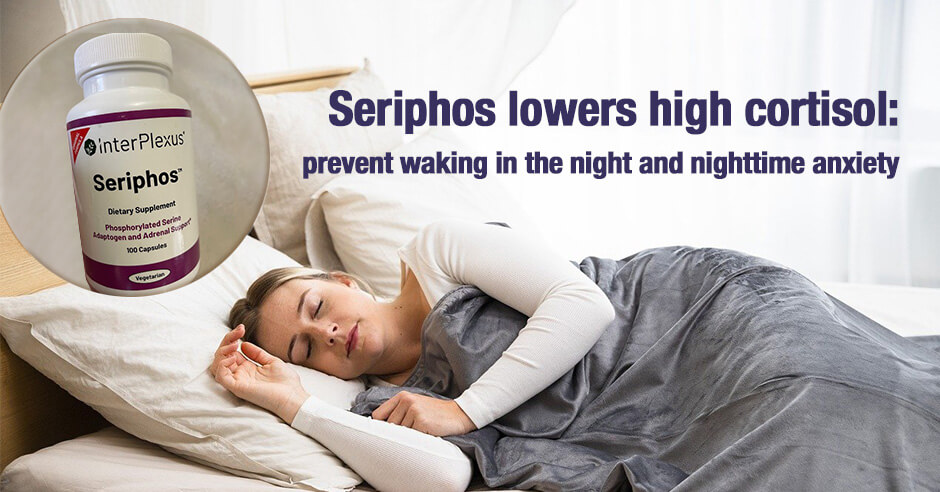
Seriphos lowers high cortisol: prevent waking in the night and nighttime anxiety

October 20, 2023 By Trudy Scott 63 Comments

seriphos and cortisol

Seriphos is my favorite nutrient for lowering high nighttime cortisol in order to reduce night waking and nighttime anxiety. I’ve used it with success in the past and have just needed it again:

After coming back from Hawaii (I was there for just under 2 weeks), I was still waking a few times each night. Sometimes I would be awake for 2-3 hours! I’m a hot mess when I don’t get sleep through the night. With just 1 Seriphos before bed for 9 days I was sleeping through the night again. It was glorious!

High cortisol can be a temporary issue after international travel i.e. caused by jetlag and out of balance circadian rhythm. I will admit that I have a number of confounding factors – like my loss and grief (my darling mom has just passed away), being sprayed with insecticide on landing in Australia (which I suspect caused severe vertigo the day after I got back), and high blood pressure (and likely higher cortisol too) after drinking too much licorice tea for my voice loss. Whatever the causes of my high cortisol, Seriphos really helped me sleep through the night.

I ran out of Seriphos 2 nights ago and I was awake for 3 hours last night. I’ll be adding it back to my nighttime protocol as soon as my order arrives.

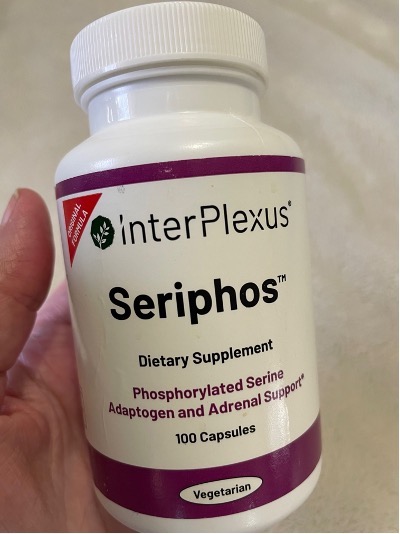
Seriphos is made by Interplexus and is a phosphorylated serine product. It is similar to the more recognized phosphatidylserine which is also used and known for lowering high cortisol – clinically and in the research.  However, clinically, I have found Seriphos to be more effective and work more quickly.

UPDATE Feb 2024: I did end up tweaking my Seriphos dose a few times. After a few weeks I decided to trial 2 per night – this worked well. Then a few weeks later I trialed 3 per night – but after a few days I realized that even though it worked well for sleep it made me too tired the next day. For this reason I went back down to 2 Seriphos at bedtime.

UPDATE August 2024: I’m now using just 1 Seriphos at night and have added ox bile supplementation and a bright light panel in the morning because of bile issues. More on this below.

Seriphos for high cortisol due to trauma, loss of beloved cat and more

When I posted this on Facebook, I had a number of folks share how Seriphos has also helped them.

Kathy shared this: “I take two Seriphos at night for high cortisol that causes insomnia. It works well for me and helps me to relax. I have a significant trauma background that keeps me in fight or flight, so Seriphos is a must have at night. I do take a break from time to time if I am going through a less stressful time.”

Hopefully Kathy is also working on the trauma, doing trauma work and even incorporating other nutritional approaches which help so much with recovery – like zinc, vitamin D, a B complex, GABA and tryptophan etc. Taking a break from time to time is a good plan – I share more about this below.

Kim shared this: “Seriphos is a life saver – I started it when I was having cortisol/adrenaline issues a few years ago and have continued using it. I don’t ever want to be without Seriphos. A little over a month ago I unexpectedly lost my youngest cat. She was emaciated when I rescued her over 4 years ago and we turned around health issues. I feel so sad that she was dealt such a bad hand but we got her a loving home. My animals are everything to me and the grief is so difficult. She was a character and I love her so much.”

She uses one capsule in the evening but also uses a capsule during the day if she feels off. Hopefully Kim is also doing trauma work and other nutritional support too.

Janie shared this: “I have used it, years ago when my cortisol was off the charts, morning and at night. I was awake every night until 2am, unable to sleep. Seriphos certainly helped.”

She used 1 Seriphos per day for about 3 months.

Patricia said: “Please remember that there is Original Seriphos and the next gen Seriphos. I was one of thousands of people who had used original Seriphos for sleep and then they changed their formulation without telling us and then so very many of us were wide awake at night until we realized that they had changed the formulation.”

This happened in 2016/2017 and I blogged about that whole fiasco here –  Seriphos Original Formula is back: the best product for anxiety and insomnia caused by high cortisol. You can read many other success stories on the blog and in the comments.

Address the causes of your high cortisol: jetlag, grief, toxins, licorice intake

As you can see from my example there can be a number of causes of high cortisol and you always want to address these causes while using Seriphos so you can eventually stop using it:

  • International travel i.e. caused by jetlag and out of balance circadian rhythm. I’m home so this is no longer a contributing issue.
  • Loss and grief can have physiological effects and high cortisol is one of many effects: “It appears that cortisol remains elevated for at least the first 6 months of bereavement. For some, cortisol elevation may become chronic”. The loss of my darling mom is going to take time but I am making time for grieving and I’m nurturing myself. As I navigate this period in my life I’ll continue to share what has helped me. I suspect I may need Seriphos for longer than the usual 3 months.
  • Being sprayed with insecticide on landing in Australia (which I suspect caused severe vertigo the day after I got back). It’s well-recognized that environmental toxins are hormone disruptors and affect the hypothalamic-pituitary-adrenal (HPA) axis and cortisol. I’m addressing this with active detoxification and my portable infrared sauna.
  • High blood pressure and likely higher cortisol too after drinking too much licorice tea for my voice loss. I have stopped the licorice consumption and my blood pressure is back to normal.

Other possible causes of high cortisol include day to day stresses, food sensitivities such as gluten, high sugar consumption, parasites and so on. Each factor needs to be addressed.

I do recommend Salivary cortisol testing before using Seriphos

Salivary cortisol testing is something I do with all my clients anyway. And I do recommend salivary cortisol testing before using Seriphos and the other cortisol-lowering nutrients mentioned below.

I will admit that I didn’t follow my own recommendation because I’ve had high nighttime cortisol in the past and recognized the symptoms. I had also identified all the above root causes and I desperately needed to sleep. I now have an adrenal saliva test kit on hand and will report back when I get the results.

Seriphos will only work for waking in the night if cortisol is high

One woman shared “I have never slept through the night in years. It would be delightful to get to the morning without waking.” Seriphos will very likely help if her cortisol is high.

Keep in mind there are many causes of not being able to sleep through the night and Seriphos will not help if cortisol is not high. Other root causes for insomnia/waking in the night (and nighttime anxiety) we consider and investigate are:

  • Low GABA and low serotonin (I always start with these while waiting for salivary cortisol results to come back),
  • Low melatonin

The following factors need to be addressed as root causes of sleep issues, anxiety and other symptoms (like gut issues, pain etc.), and also keep in mind that they are very possibly contributing to your high cortisol too:

  • Gluten and other food sensitivities
  • Caffeine and sugar intake
  • Oxalate issues and/or toxins exposure affecting bile production (this affected my sleep last year)
  • EMFs
  • Parasites and other gut issues like IBS/SIBO etc.
  • Disrupted circadian rhythms connected to liver/gallbladder/bile issues – more on that and bright light here. (Research does support a connection between high cortisol and cholestasis i.e. “stagnation, or at least a marked reduction, in bile secretion and flow.”)

A few folks reported they had tried Seriphos without success and it may well be that they don’t have high cortisol. Or they would possibly benefit from another approach to lower their cortisol (more on this below).

What are my options if I have high cortisol at night and Seriphos has the opposite effect?

One person said it had the opposite reaction. Joanne shared this: “Seriphos had the opposite effect on me. [One Seriphos] gave me extreme anxiety, kept me awake all night. Saliva tested consistently high cortisol at night so it should have helped. Been trying to work out why it would and how it might inform how I treat my insomnia.”

I’ve had a few clients do better with less than the recommended 3 per day and one not being able to use it at all. I suspect an allergic reaction or that it’s just too high a dose for some folks. The capsule could be opened and less could be used.

If this doesn’t work, other options for lowering high cortisol include lactium/hydrolyzed casein, Relora® (which contains Magnolia officinalis and Phellodendron amurense), essential oils such as bergamot and some herbal adaptogens. You can also read about some phosphatidylserine products I looked into when the Seriphos product was changed.

Forest bathing also helps to lower high cortisol levels and I recommend it for everyone.

Where does using Seriphos fit into everything else that I’m doing to address my insomnia and/or anxiety?

I typically don’t start with Seriphos right away with clients unless we know cortisol is high. As mentioned above I always start with assessing for low GABA and low serotonin and we do trials of the respective amino acids based on the symptoms questionnaire.

I also assess for low blood sugar and dietary factors like gluten, caffeine, sugar, quality animal protein intake etc. as covered in my book “The Antianxiety Food Solution.” More about my book here.  It does include a chapter on the amino acids and how to use them too.

Then we start to dig deeper and would consider Seriphos or lactium for anxiety caused by high night time or even high morning cortisol or high cortisol at other times of the day.

With many folks all of the above often applies. And we continue with assessing for each of the 60+ nutritional and biochemical root causes of anxiety/waking in the night (which does include liver/gallbladder/bile issues).

Where do I purchase Seriphos and how much do I use? What about taking a break?
seriphos

You can purchase Seriphos from my online store (Fullscript – only available to USA customers – use this link to set up an account) and you can also find it on iherb (use this link to save 5%).

The bottle states to use 1 capsule with water 15 minutes before a meal. Clinically, using 1-3 capsules a few hours before the high cortisol seems to be most effective. For 2-4am waking this typically means taking Seriphos right before bed. In some instances, taking 1 on waking in the night can help too (for a maximum of 3).

With high cortisol in the night and on waking, I have clients use Seriphos before bed and lactium on waking.

It is recommended to take a one-month break after 3 months of Seriphos use. Ideally, once the root causes of high cortisol are addressed, you should be able to stop anyway.  Or take a break, retest cortisol and then continue.

I’ll share some research and how Seriphos differs from phosphatidylserine in a follow-up blog if there is enough interest.

I appreciate all the feedback from these women in my community.

Have you used Seriphos (a phosphorylated serine product) to help with high cortisol and waking in the night/nighttime anxiety caused by any of the?

What do you suspect the cause(s) of your high cortisol is or was? And have you confirmed high cortisol with a saliva cortisol test?

Have any of the other products mentioned above helped to reduce high cortisol? If yes, have you compared them with Seriphos?

Let me know if you’re interested in a follow-up blog that includes some research and how Seriphos differs from phosphatidylserine.

Feel free to share and ask your questions below.
Filed Under: Adrenals, Anxiety, Insomnia, Stress, Toxins Tagged With: 000 lux, 10, anxiety, Balancing Neurotransmitters: the Fundamentals program for practitioners, bile liver, bright light, bright light panel, cholestasis, circadian rhythm, cognitive performance, cortisol, daytime sleepiness, disturbed sleep, GABA, GABA Quickstart, grief, high blood pressure, high cortisol, insecticide, Interplexus, jet lag, jetlag, licorice tea for my voice loss, melatonin, mood, nighttime anxiety, phosphatidylserine, phosphorylated serine, primary biliary cholangitis, salivary cortisol testing, seriphos, serotonin, sleep, sleep quality, sleep timing, trauma, tryptophan, vertigo, waking, waking early

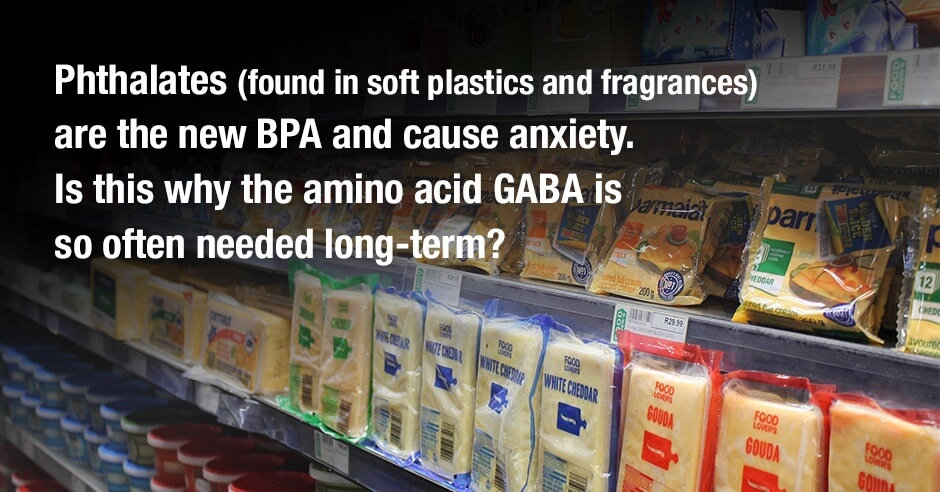
Phthalates (found in soft plastics and fragrances) are the new BPA and cause anxiety. Is this why the amino acid GABA is so often needed long-term?

June 10, 2022 By Trudy Scott 11 Comments

phthalates and gaba

Using the amino acid GABA (as a supplement) for anxiety (the physical tension type of anxiety) should ideally be short-term to address your low levels of GABA (gamma-amino butyric acid). Why then do many folks only find relief when using GABA long-term? What is depleting their GABA levels on an ongoing basis? One reason is that anxiety is caused with ongoing exposure to phthalates (found in soft plastics and fragrances). Ongoing exposure can continue to deplete GABA levels so supplementation is needed long-term. This blog reviews sources of phthalates and the supporting (and growing) research. And also the fact that we’re being told that phthalates are safe.

The awareness and concern about BPA (bisphenol A), an industrial chemical found in hard plastics (and a contributing factor when it comes to anxiety), is being surpassed by an awareness and concern about phthalates (pronounced “thalates”).

I believe “Phthalates are the new BPA!” and “Fragrance is the new smoking!” and I suspect we’ll be seeing more and more research on the adverse health impacts (including anxiety and other conditions – more on that below) and hopefully more and more awareness too.

Here is a brief summary:

  • They act as binding agents and make plastics flexible….and are found in plastics in the kitchen, vinyl toys (it makes them soft), shower curtains, paint and nail polish.
  • They are also found in anything with a fragrance – like air-fresheners and most commercial house-cleaning products, and cosmetics such as shampoos, moisturizers, sun cream and of course perfumes, deodorants and after-shave products. I cringe every time I see the beautiful perfume ads on TV and when I walk past someone with loads of after-shave wafting behind them

My assumption is that you’ve heard of phthalates and know they are harmful. They are well-recognized as being an endocrine disruptor but less is known about the effects on GABA levels and increasing anxiety (more on that below).

If you are new to phthalates, the organization called Safer Chemicals Healthy Family, has an excellent overview. They share that

Food is the leading source of exposure. Phthalates have been found in dairy products, meats, fish, oils & fats, baked goods, infant formula, processed foods, and fast foods. Phthalates are not intentionally added ingredients but rather “indirect” food additives. They easily escape from food processing equipment, food packaging, and food preparation materials, and contaminate food at points all along the supply chain.

They list the many health impacts (with links to studies): Endocrine disruption (i.e. affecting your hormones); abnormalities in the male reproductive system; reduced testosterone levels and altered thyroid hormone production; neurodevelopmental effects in infants or children (ADHD-like behaviors, aggression, depression, a lower IQ, and autism); liver and kidney toxicity; cancer; and asthma.

This article also addresses the fact that we’re being told that phthalates are safe when they are not.

Phthalates are associated with emotional symptoms (depression, anxiety and stress) in male and female students

In addition to the above health impacts, phthalates play a role in causing anxiety too. This 2020 paper, Association of Urinary Phthalates Metabolites Concentration With Emotional Symptoms in Chinese University Students, reports the results of a school-based cross-sectional survey that was carried out among 990 university students aged 17-24 years:

  • the concentration of six phthalate metabolites in urine was measured (with a detection rate of 79.6% to 99.7%)
  • The positive rates of depressive symptoms, anxiety symptoms, and stress were 17.4%, 24.8%, and 9.5%, respectively
  • One type of phthalates affected the males more severely and another type affected the females more

The authors concluded that:

Our study demonstrates that Chinese university students are widely exposed to phthalates; and high- and low-molecular weight phthalates are associated with emotional symptoms in males and females, respectively.

It’s seldom one cause that is contributing to anxiety and emotional symptoms, as illustrated by this study: Association Between Screen Time, Fast Foods, Sugar-Sweetened Beverages and Depressive Symptoms in Chinese Adolescents. We need to address all factors. And here it’s a combination of screen time, as well as junk food and sugar, and the plastic containers and soda bottles that are a source of phthalates.

As you can see, fast foods are a huge source – Phthalate and novel plasticizer concentrations in food items from U.S. fast food chains: a preliminary analysis. This paper was published in May 2022 and already we’re seeing “certain ortho-phthalates (i.e., di-n-butyl phthalate (DnBP) and di(2-ethylhexyl) phthalate (DEHP)) have been phased out and replaced with other plasticizers (e.g., dioctyl terephthalate (DEHT))”. This mirrors what we saw with BPA being replaced with BPS and BPF, which are concerning.

The anxiety-inducing effects caused by phthalates could be alleviated by GABA

What is very encouraging is the fact that the amino acid GABA can alleviate the anxiety caused by phthalates. In this 2018 animal study, Intervention Effect of Gamma Aminobutyric Acid on Anxiety Behavior Induced by Phthalate (2-ethylhexyl Ester) in Rats. This is the conclusion:

  • DEHP [phthalate] exposure induced anxiety in rats, which may be achieved through elevating nitric oxide and nitric oxide synthase levels in the prefrontal cortex of rats.
  • The [anxiety-inducing] effects caused by DEHP could be alleviated by GABA.

This study was looking at Di(2-ethylhexyl) phthalate (DEHP), and the authors shared that “it is one of the most widely used phthalate esters.” As you can see from the 2022 paper I shared above, it’s now being replaced with other plasticizers.

This 2019 paper, Effect of di(2-ethylhexyl) phthalate on the neuroendocrine regulation of reproduction in adult male rats and its relationship to anxiogenic behavior: Participation of GABAergic system didn’t use the amino acid GABA but do report a “decrease in hypothalamic gamma-aminobutyric acid (GABA) concentration” and the authors “suggest that GABA could participate in the modulation of reproductive and behavioral DEHP effects.”

Long-term use of GABA because of phthalates: using GABA should ideally be short-term

We clearly need human studies to confirm all this but until then we can use what we know about GABA and supplement with the amino acid GABA (as a supplement) when there are low GABA symptoms of physical anxiety, tension, stiff and tense muscles, intrusive thoughts, insomnia, and self-medicating with alcohol or sugar.

As mentioned above, using GABA should ideally be short-term – 3 to 12 months – to address your low levels of GABA. I propose that many folks only find relief when using GABA long-term and it’s partly due to phthalates (and other chemicals) depleting their GABA levels on an ongoing basis.

I’m in favor of long-term use of GABA supplementation as long as GABA levels continue to be low and GABA supplementation offers relief.

But you also need to be addressing your exposure to these chemicals and doing ongoing detoxification. And also addressing diet, gut-health, infections, low zinc, low vitamin B6, low serotonin etc. (on an as-needed basis).

Addressing exposure and ongoing detoxification

As far as addressing our exposure to these chemicals, reduction and ideally avoidance is ideal. The Safer Chemicals Healthy Family overview includes plenty of practical steps.

As far as ongoing detoxification and nutritional support I encourage regular infrared sauna (my personal favorite is the portable Therasage sauna), rebounding, dry skin brushing, optimizing lymph drainage and exercise.

The research on NAC alone and a combination of zinc and NAC is encouraging even if it’s not specific to anxiety. Also, research shows that rosmarinic acid, a natural polyphenol “confers protection against DEHP-induced thyroid inflammation.”

You can read about other more general detox approaches on this pesticide spill blog: rooibos tea, castor oil packs, vitamin D (it’s often lower in those exposed to phthalates), epsom salts baths, apple cider vinegar and broccoli sprouts (as a source of sulforaphane).

Resources if you are new to using GABA as a supplement

If you are new to using GABA as a supplement, here is the Amino Acids Mood Questionnaire from The Antianxiety Food Solution (you can see all the low GABA symptoms).

If you suspect low levels of GABA or any of the neurotransmitters and do not yet have my book, The Antianxiety Food Solution – How the Foods You Eat Can Help You Calm Your Anxious Mind, Improve Your Mood, and End Cravings, I highly recommend getting it and reading it before jumping in and using amino acids on your own so you are knowledgeable. And be sure to share it with the team you or your loved one is working with.

There is an entire chapter on the amino acids and they are discussed throughout the book in the sections on gut health, blood sugar control, sugar cravings, self-medicating with alcohol and more.

The book doesn’t include product names (per the publisher’s request) so this blog, The Antianxiety Food Solution Amino Acid and Pyroluria Supplements, lists the amino acids that I use with my individual clients and those in my group programs.

If, after reading this blog and my book, you don’t feel comfortable figuring things out on your own (i.e. doing the symptoms questionnaire and respective amino acids trials), a good place to get help is the GABA Quickstart Program. This is a paid online/virtual group program where you get my guidance and community support. There are many moms in the program who are having much success with their kids.

If you are a practitioner, join us in The Balancing Neurotransmitters: the Fundamentals program. This is also a paid online/virtual program with an opportunity to interact with me and other practitioners who are also using the amino acids.

Have you been using GABA for longer than 3-12 months? (please share how long and how it’s helping)

Do you think phthalates could be a factor in keeping your GABA levels low?

What have you done to reduce or eliminate phthalates from your life? (please share which sources and how)

If you have questions please share them here too.

Filed Under: Anxiety, Detoxification, GABA, Toxins Tagged With: anxiety, Balancing Neurotransmitters: the Fundamentals. NAC, BPA, depression, detoxification, emotional symptoms, endocrine disruptor, fast foods, fragrances, GABA, GABA Quickstart program, long-term, phthalates, physical-tension, rosmarinic acid, sauna, short-term, soda, soft plastics, sulforaphane, vitamin D, zinc

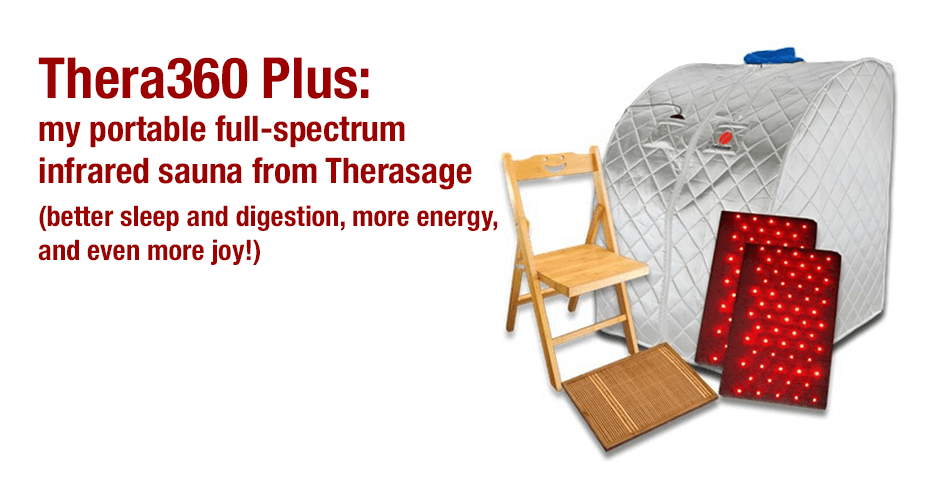
Thera360 Plus: my portable full-spectrum infrared sauna from Therasage (better sleep and digestion, more energy, and even more joy!)

April 29, 2022 By Trudy Scott 39 Comments

thera360 plus

Today I’m sharing why I personally chose the Thera360 Plus, a portable full-spectrum infrared sauna from Therasage. And I also share my feedback on how I feel after using this sauna.  I also have a call to action asking you to share your sauna experiences so the community can benefit from the collective wisdom of everyone who has one or uses one.

I also highlight some of the many health benefits of regular sauna sessions – both mental and physiological.

Mental health benefits: improved well-being, reduced pain, stress reduction and improved sleep

Here are some of the mental health benefits from this paper, Clinical Effects of Regular Dry Sauna Bathing: A Systematic Review):

  • In addition to having profound physiological effects, sauna bathing is reported to have beneficial psychological effects that are reflected in the many reports of improved well-being and pain tolerance.
  • The psychological impact of sauna bathing may be due to a combination of factors that include release of endorphins and other opioid-like peptides such as dynorphins, forced mindfulness, psychological stress reduction, relaxation, improved sleep, time out from busy life schedules, placebo effects, and other aspects of individual psychological and social interactions that likely occur around frequent sauna activity.
  • While it is difficult to distinguish between the different factors that produce positive psychological effects, such effects may enhance other physiological and metabolic benefits as they are likely to promote adherence to regular sauna activity.

Remember, endorphin release leads to feeling joyful.

And this last bullet is an important one to highlight: when you really enjoy doing something you are more likely to continue doing it. This means you’ll continue to see benefits.

There is also research that supports serotonin-boosting effects and cortisol-lowering effects, both of which are important when it comes to anxiety and mood too. (I’ll address this in a future blog on saunas, together with other mechanisms).

Physiological benefits: reduced inflammation, benefits for Alzheimer’s, reducing toxins and improved heart health

Here are a few studies you can read to learn more about some of the many physiological benefits of sauna:

  • Elevating body temperature to reduce low-grade inflammation: a welcome strategy for those unable to exercise?
  • Could Heat Therapy Be an Effective Treatment for Alzheimer’s and Parkinson’s Diseases? A Narrative Review
  • Evaluation of Interventions to Reduce Firefighter Exposures
  • Sauna bathing is associated with reduced cardiovascular mortality and improves risk prediction in men and women: a prospective cohort study
  • Effectiveness of a far-infrared low-temperature sauna program on geriatric syndrome and frailty in community-dwelling older people [improvements were noted]
  • Effects of Waon therapy on chronic fatigue syndrome: a pilot study [Waon therapy is a type of far infrared sauna and improvements were noted]
  • Sauna as a valuable clinical tool for cardiovascular, autoimmune, toxicant- induced and other chronic health problems [they are safe and offer multiple health benefits to regular users].

And this is an excerpt from the Therasage site

The Thera360 Plus sauna enhances mitochondrial health and cellular energy, improves microcirculation and blood oxygenation, enhances the natural production of nitric oxide, offers skin and anti-aging benefits, and the best natural detoxification possible, along with all the amazing health benefits of Full Spectrum Infrared.

The many positive features that helped me pick this sauna

The Thera360 Plus is the sauna I own and endorse. Here are a few of the many positive features that helped me decide to purchase this one (I did a fair amount of research and did look at other units too):

  • It is a full-spectrum (near and far) infrared sauna
  • It comes with red light/photobiomodulation panels (which also help with pain, mood and reducing inflammation).
  • It has the tourmaline gemstones built-in (these generate negative ions so it feels like you’ve been at the beach or a waterfall).
  • The chair and foot base is made of non-toxic bamboo materials. I’m used to having to leave new items outside for days in order to off-gas. I was surprised that this was not needed. Their “No Off-Gassing” message holds true.
  • The bamboo foot base is a grounding mat.
  • It is low EMF and shields not only EMF’s but also ELF’s, RF’s and dirty electricity. Before I purchased my sauna, I met with the owner and am super-impressed by this feature.  It’s a really important factor for me and anyone with anxiety or chronic illness and/or electromagnetic hypersensitivity). As soon as it arrived I set it up (set up is so easy) and got out my meter and measured all the EMFs and sure enough there is no exposure when inside the sauna.
  • The digital temperature controller is simple to use.
  • It’s portable, small and convenient to use.
  • It’s affordable, is made in California and the company ships internationally.

My personal feedback as to how I feel after using this sauna

For me, this infrared sauna (with red light therapy and tourmaline) helps me with sleep, digestion and energy primarily (I have chronic Lyme). I also know it’s helping me with ongoing detoxification, mitochondrial health, stress reduction and mood support, immune function and cardiovascular health.

The good news is that the sauna has anti-inflammatory benefits and provides me with wonderful relief from pain, muscle spasms and other injuries.

Also, I feel a real sense of joy after using it … I can’t stop smiling for hours after a session.  That is the endorphin and serotonin boost I’m getting, plus some of the benefits of negative ions! I love the outdoors and after a session in the sauna, I almost feel like I’ve been for a hike or walk on the beach.

I’ve also positioned my sauna facing a large window that looks onto our covered patio. It has lots of greenery and I can see the blue sky off to the left. This is particularly pleasant on a cold winter’s day and I get some of the benefits of nature.

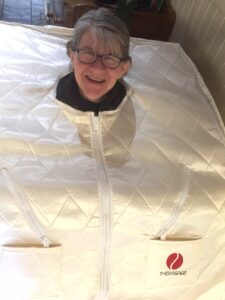
sauna
sauna

I love the bamboo chair that ships with it but it wasn’t providing me with any lower back support (I’m prone to back injuries).  I made a modification with a bamboo garden stake and PVC bracket (with some help from my darling father-in-law). Here are some images in case it’s something you’ve been considering….it works perfectly for the back support I need, keeps my bare back exposed to the heat and the bamboo garden stake slides out if needed.

sauna chair
sauna chair PVC clip

A more in-depth blog post: mechanisms and additional insights

I believe we can all benefit from regular sauna bathing! And I’ll be sharing a more in-depth blog post on additional benefits of infrared sauna, some of the mechanisms, how to interpret the research (since there is so much research on traditional/Finnish saunas which are shorter duration and higher temperatures), how to assess the different saunas that are available, and how to use one and get the most benefits.

I’ll also share my insights on using sauna bathing for benzodiazepine, SSRI, opioid and alcohol detox; why folks with pyroluria may see specific benefits; and using sauna bathing to help reduce the impact of these things that increase anxiety – toxic mold, heavy metals, Lyme disease, pesticides, glyphosate, fluoride, phthalates and much more.

Learn more about the Thera360 Plus sauna here on the Therasage site. If you decide to purchase use coupon code TRUDY10 to save 10%.

I was confused when I started looking into saunas and if you’ve been following me for a while you know I like to share what I learn – hence this blog post. I’m still learning and will continue to share in follow-up posts.

There are many excellent saunas available for purchase and this is just one of them that I landed upon after researching a number of them.

If you have a home sauna, please share:

  • which one you have
  • why you purchased this type/brand (or use this type of sauna)
  • and the benefits you have experienced.

And do feel free to share more about:

  • how you use yours – duration, frequency, temperature
  • what you do before and after (for hydration)
  • if you dry-brush (before or after)
  • if you use certain nutrients (like niacin, charcoal, magnesium and other electrolytes, glutathione, NAC etc)
  • anything else you do as part of your sauna bathing
  • what other detox approaches you use (such as rebounding or castor oil packs etc).

By using the collective wisdom from this community we can all learn and benefit. And giving/contributing gives you a nice endorphin boost too!

If you have questions please share them here too.

Filed Under: Detoxification, Inflammation, Sleep, Toxins Tagged With: alzheimer's, cardiovascular, Clinical Effects of Regular Dry Sauna Bathing, cortisol, digestion, endorphins, energy, full-spectrum infrared sauna, health benefits, heart health, improved well-being, Inflammation, infrared sauna, joy, joyful, mental, mindfulness, physiological, portable sauna, reduced pain, relaxation, sauna, serotonin, sleep, stress reduction, Thera360 Plus, Therasage, toxins

Christmas tree phenols as a trigger for anger, meltdowns, anxiety, hyperactivity, insomnia, aggression, self-injury and autistic symptoms?

December 18, 2020 By Trudy Scott 16 Comments

christmastree phenols and anxiety

Are you aware that the aromatic oils that give pine trees their wonderful smell are phenols and that these phenols may be a trigger for anger and meltdowns, anxiety, hyperactivity, irritability insomnia, self-injurious behavior, digestive issues and autistic symptoms (such as stimming, swinging and hand-flapping)? All this can be caused by an indoor Christmas tree in susceptible individuals.

My colleague Julie Matthews writes about this here: Avoiding Holiday Havoc: Healthy solutions to avoid meltdowns and keep the holidays happy

“When phenols are not able to be broken-down and detoxified by a process called sulfation, which is low in many children with autism and ADHD”, they can cause these symptoms and also red cheeks and ears. She shares that “phenolic compounds come in many forms including artificial petroleum-based food additives, and salicylates (a type of phenol) found in plants and foods like strawberries and spices, as well as pine trees.”

In the above blog, Julie shares this story about a client with a 10-year old son with autism. He severely regressed during the holidays and it was because of the Christmas tree. This is what the mom shared:

During the Holidays our son regressed severely.  He became anxious, aggressive, and self-abusive. He cried and had tantrums regularly throughout the day. He couldn’t sleep anymore and was up for hours at a time, night after night. He was hand-flapping like crazy.  We have a swing in the house for him and he now wanted to swing all day long, constantly, and do nothing else. He lost eye contact and he stopped responding to his name.

Once the Christmas tree was removed the improvements were dramatic:

The next day, he was much calmer. He seemed to have “exhaled.” Within 48 hours, our son was completely back to normal.

I shared Julie’s blog on my Facebook page and a father in my community shared a similar experience about his autistic son’s severe reactions to phenols:

Yes! My autistic son who is sensitive to phenols, would completely meltdown during the holidays. We thought it was just the change in routine and his environment, but quite by accident we discovered fragrances seemed to make him worse. We got rid of the fragrances and holiday tree/decor and the improvement in our son was dramatic! We now realize it was the phenols.

My son’s reaction to phenols/fragrances are bright red cheeks/ears, dark under eye circles, headaches, inappropriate manic laughter, aggression/self injurious behavior, marathon meltdowns/screaming, incontinence, insomnia/less than 3 hrs sleep a night, bumpy rashes, GI issues/diarrhea, excessive sensory stimming (hand flapping, lip licking, running around and body slamming into things.) During the holidays, the intensity of these reactions shot through the roof.

They found out by chance that it was the Christmas tree that was causing his son’s issues each year. It started when he was a toddler and they figured it was the stress and changes of the holidays that was the issue. One year they didn’t put up a tree and they could not believe the difference. It was then they made the connection and learned more about phenols and made the necessary changes.

By reducing phenols in his diet and environment, and giving him Epsom Salt baths and enzymes (No-Fenol), most of the above symptoms were significantly reduced.

I suspect there are many families who are seeing similar meltdowns and have no idea it could be the Christmas tree. Keep in mind that the reactions may not be as severe as these two cases I’ve shared here. If you are seeing any increase in anxiety, irritability, sleep problems, digestive issues or other unusual behavior changes in your child, keep an open mind that it may be more than just the holiday changes.

Julie’s advice is this:

  • Since so many children with autism and ADHD react to salicylates/phenols – in her nutrition practice she finds an overwhelming majority react negatively – she suggests a cautious approach to holiday decorating for all families of a child with autism or ADHD. Simply avoid the pine Christmas tree.
  • If you are unsure about their sensitivity to salicylates/phenols you might ask yourself if your child is often hyper, irritable, or has red cheeks, and other common salicylate symptoms, or whether they crave salicylate-rich foods such as berries, grapes, apples, and ketchup. If so, explore salicylates further.

I encourage you to read Julie’s blog to gain a better understanding of salicylates and phenols. If you are a practitioner and want to learn more about low salicylates/phenols and other special diets her practitioner training is excellent.

I appreciate this mom and dad for sharing their experiences with their sons so we can all learn and help other families. I also so appreciate Julie’s expertise in this area and really look forward to digging further into the research and picking her brain so I can share more.

Could your holiday anxiety and/or insomnia be phenol issues too?

Julie works with children with autism and ADHD but as someone who works primarily with adults with anxiety, I’m going to be exploring sensitivity to salicylates/phenols further. Julie recently shared this with me: “if you start looking you’ll probably see a lot of your clients with anxiety have phenol issues.”

If you also notice any increase in anxiety, anger, irritability, sleep problems, digestive issues or other unusual behavior changes, keep an open mind that it may be more than just the holiday stress or winter blues/winter anxiety. It may well be phenol issues too.

Serotonin connection to phenol issues

I’ll be blogging more about this and the fascinating serotonin connection to phenol issues. You may have noticed that many of the symptoms these 2 boys experienced sound a lot like either low serotonin or high serotonin (both of which can occur in autism).  Serotonin is an endogenous phenol compound and this phenol issue is likely causing high serotonin.

When I asked Julie about this she shared this with me: “Yes, serotonin and dopamine are phenolic. And sulfation is important for the inactivation of dopamine and serotonin. So poor sulfation can lead to neurotransmitter imbalances.”

Using collagen to lower high serotonin?

I’ve blogged about how collagen can lower serotonin in susceptible folks and increase anxiety. It is also used by some folks to lower their high serotonin and make them calm. Misty reports using collagen ‘therapeutically’:

I use it to reduce tryptophan because I have a tendency toward high serotonin. I have suffered my entire life with ADD, tics as a child, grinding teeth, general anxiety, lack of motivation and later, IBS. In my 53 years I’ve never been as calm as I am now.

I don’t know if Misty has a phenol issue but I’m going to be exploring if collagen or gelatin could possibly be used to help lower the high serotonin and ease some of these severe phenol reactions quickly, in conjunction with other approaches like avoiding the foods and environmental exposures, enzymes and other nutrients, and Epsom salt baths.

Christmas tree syndrome, mold issues and toxic plastic trees

I hate to spoil the Christmas fun but here are a few other things to consider:

  • Christmas tree syndrome is also a real issue for many individuals
  • My friend and Enviornmental Toxins expert Lara Adler shares how mold from a real tree made her and her cat really sick “Within a few days of getting the tree, I broke out in a full-body rash that required a 10-day run of prednisone. I didn’t think it was the tree at first (it could have been something else), but then my cat, who was already dealing with GI inflammation and a gut issue developed asthma! Out of nowhere! She also ended up on prednisone. I got rid of the tree and both our symptoms never came back.”
  • She also shares some issues with plastic trees: they are often made from toxic PVC (polyvinyl chloride) with “softeners like lead and/or phthalates”, and often treated with endocrine-disrupting flame retardant chemicals. More about this on Lara’s blog here.

Have you observed a salicylate/phenol reaction with your child or client/patient? What about a less severe reaction with your child or with you personally?

Have the following helped you: avoiding the foods and environmental exposures like a Christmas tree, using enzymes like No-Fenol and other nutrients, and Epsom salt baths? In the midst of a very severe reaction has collagen or gelatin helped reduce symptoms quickly?

What about mold issues or allergies with a Christmas tree?

Feel free to post your questions here on the blog too.

Filed Under: ADHD, Anxiety, Autism, Toxins Tagged With: ADHD, aggression, allergy, anger, anxiety, autism, autistic symptoms, Christmas tree, collagen, hyperactivity, insomnia, irritability, meltdowns, mold, Phenols, pine tree, plastic tree, salicylates, self-injury, serotonin

Botox injections (cosmetic or non-cosmetic): are they a root cause of anxiety and panic attacks?

March 6, 2020 By Trudy Scott 71 Comments

botox injections

New research shows Botox injections are being considered for severe depression and bipolar disorder because it stops frowning and this lack of frowning has a positive impact on neurotransmitters and mood. I recently posted this on Facebook and asked this question:

I’m curious if you have had Botox injections or would consider it (for cosmetic reasons) or perhaps for migraines, dystonia, proctalgia fugax or depression/bipolar?

If you have had Botox injections are you happy with the result or did you have any adverse effects like increased anxiety, panic attacks or anything else?

The response was varied with most folks saying they would never consider using Botox for cosmetic reasons, some folks saying they used Botox for cosmetic reasons and had issues and some folks saying they’ve used Botox for cosmetic reasons and love it, and others who have used Botox for non-cosmetic reasons.

All the practitioners who commented have concerns about Botox saying results are mixed with some of their clients having severe reactions and some doing fine. As I looked further into this topic I’ve gained additional insights and my biggest concern for you, and my community, is that Botox can lead to very severe anxiety and panic attacks.

I encourage you to keep an open mind about my Botox concerns if you have chronic anxiety that is not resolving and it started (or got worse) after receiving Botox injections, or if  you’re considering Botox injections.

Anxiety, panic attacks, inability to handle stress, body shaking

I gained my biggest insights from the Botox Dysport (Side Effects) Support group. Someone suggested I look into this group and I requested an invite to join so I could learn more. So many of the members of this support group  report anxiety, panic attacks, inability to handle stress, body shaking and problems connecting socially.  This is what one member shared:

…just joining the dots, I’ve been unwell for a few years since getting Botox but didn’t put it together until having it last week and going into panic attacks / ER.

Since then extreme anxiety and I’ve ended up in a mental health facility on benzodiazepines (ativan/valium). Reactions / withdrawal has been severe, have started to put it all together whilst reading through this page.

I’m realising that my decline, immune system failure (chronic epstein barr) fatigue, loss of motivation, loss of appetite, shaking in my body, muscle atrophy, anxiety, no motivation to connect socially, can’t handle any stress, can’t relax, tinnitus, breathing trouble and the list goes on is from botox…. scared to say the least as doesn’t seem to be a solution, I was worried to get Botox originally and obviously am eating myself up with regret, thought I would share if anyone has a similar story.

There are many similar posts to this one and it’s heart-breaking, especially because they say they are not being heard by their doctors.

I had a short online conversation with one of the moderators and she shared they suspect Botox is impacting the hypothalamic-pituitary-adrenal (HPA) axis leading to high cortisol and causing their anxiety symptoms. Many of the members find relief with Seriphos, which is a phosphorylated serine product I’ve had great success with. Here is my blog post on Seriphos for anxiety and insomnia related to high cortisol.

I asked if any of the members find GABA or serotonin support helpful and for some GABA helps ease the physical tension and for other members tryptophan or 5-HTP helps ease the worry type of anxiety. However for others, the amino acids seem to have a paradoxical effect and make symptoms worse.

I’ve never been in favor of Botox for cosmetic reasons simply because I’m not a fan of putting foreign objects/toxins into the body and because I believe in aging gracefully with confidence. I do find that many women feel the need for cosmetic Botox injections and other ways to try and look younger (such as breast implants and hair dye) because of low self-esteem and lack of confidence caused by low serotonin.

Botox for non-cosmetic purposes

Botox is also used for non-cosmetic purposes. Some of my neurologist colleagues also have concerns about cosmetic use and will only use Botox injections for the following:

  • severe cases of dystonia
  • migraines (to relax forehead muscles)
  • proctalgia fugax /rectal spasms

Botox may also be used for multiple sclerosis (MS) symptoms, pelvic pain and bladder issues, for TMJ, after a stroke and for chronic anal fissures in colitis (sphincter spasms can prevent anal fissures from healing).

I would love to see safer approaches for non-cosmetic Botox injections being researched and explored by practitioners. For example:

  • Relief of dystonia symptoms using diet, GABA, tryptophan, zinc and vitamin B6
  • Sublingual GABA to help to relax forehead muscles in those with migraines
  • Sublingual GABA for the extremely painful proctalgia fugax. Could this also be considered in colitis patients?

Botox for mental health – we can do better with nutritional psychiatry

At the beginning of this blog I mentioned the new research that shows Botox injections are being considered for severe depression and bipolar disorder because it stops frowning. This lack of frowning has a positive impact on neurotransmitters and mood.

A study published in 2018, Clinical analysis of 86 botulism cases caused by cosmetic injection of botulinum toxin (BoNT), reports that botulism is a severe side effect of Botox injections with symptoms including: “headache, dizziness, insomnia, fatigue, blurred vision, eye opening difficulty, slurred speech, dysphagia [difficulty swallowing], constipation, and anxiety.”

The authors report these symptoms occur in the first 36 days after the Botox injections and that all symptoms resolved after botulinum antitoxin serum injections.

This conclusion clearly doesn’t address why there are so many folks in the Botox Dysport (Side Effects) Support group continue to experience long-term severe symptoms.

We also have research reporting a possible connection between Botox injections and thyroid autoimmunity.

I feel we can do better especially with what we know about nutritional psychiatry, the use of targeted individual amino acids, nutrients like lithium orotate, the gut-brain connections and everything covered in my book The Antianxiety Food Solution (my Amazon link) and on this blog.

A note of appreciation

I’d like to end with a note of appreciation to everyone who commented on my Facebook post, to the members of Botox Dysport (Side Effects) Support group on facebook (with over 5700 members as of this writing).

I’d also like to thank Diane Kazer for asking bold questions about Botox injections as part of her Non-Toxic Beauty Revolution Summit which addresses Botox, breast implant illness, toxins in your cosmetics and so much more. In my interview we talked extensively about the low serotonin/low self-esteem connections which I feel is a big missing piece for helping women who feel the desire or need to use cosmetic Botox in order to feel good and love themselves.

Diane writes about Botox here: Is Botox Safe? Top 3 Concerns & What to do if you’ve had it, sharing a brief history of botox, what she has uncovered about toxicity issues and possible detox solutions.

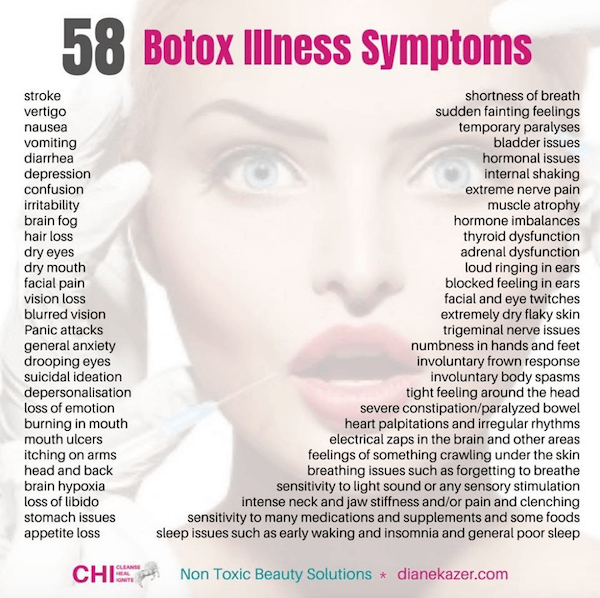
She also created this list of 58 Botox Illness Symptoms which she gave me permission to share here. She compiled this list from 1000+ people who have had Botox injections.

58 botox illness symptoms

Because of Diane asking questions and this initial research I’ve done, I’m adding a question about past history of Botox injections to my client intake form and will be gathering more information from my community of anxious women to see if there are patterns as to why some folks have such bad reactions.

I do feel we need to be asking if Botox injections (cosmetic or non-cosmetic) are a possible root cause of anxiety and panic attacks because they are adding to the toxic burden in susceptible folks.

But I do acknowledge it’s challenging to unwind all the contributing factors because it depends on what is going on with each person, such as their gut health, other medications (benzodiazepines themselves can be problematic), past trauma, infections, poor adrenal health, low GABA, low serotonin, poor detox capacity, low bile production, genetics etc. Unfortunately there is no way to know in advance who will be harmed and if Botox is the tipping point.

Please comment below if you’ve had Botox injections and had adverse reactions or have benefited from them with no adverse reactions. And if you have not had Botox would you ever consider it? Feel free to post your questions too.

Filed Under: Anxiety, Thyroid, Toxins Tagged With: 5-HTP, anxiety, bladder, Botox, botox injections, cosmetic, dystonia, GABA, low confidence, low serotonin, migraines, MS, panic attacks, pelvic, self-esteem, serotonin, TMJ, tryptophan

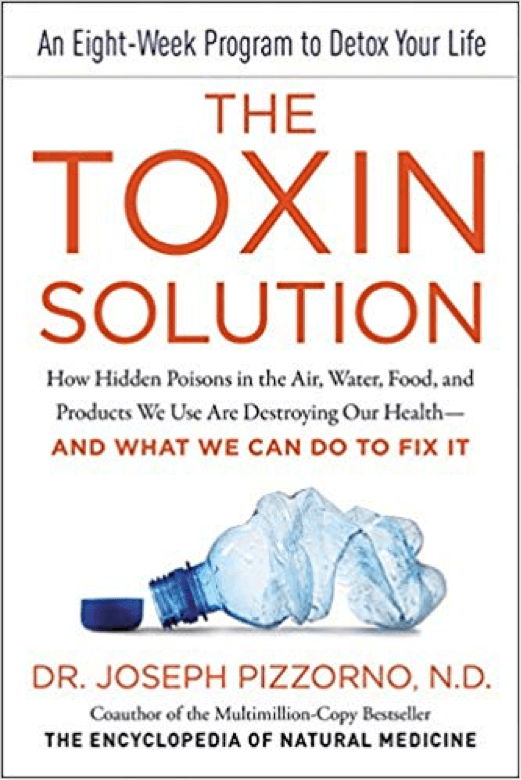
The Toxin Solution – an interview with author Dr. Joseph Pizzorno

May 24, 2019 By Trudy Scott 4 Comments

toxin solution

Toxin exposure is at an all-time high and very relevant when it comes to anxiety, ADHD, asthma, diabetes, cancer, dementia and all chronic diseases. I did this wonderful interview with Dr. Joseph Pizzorno in 2017 when his book – The Toxin Solution – was published and for some reason it didn’t make it onto the blog.

I’ve decided to share it now because Dr. Pizzorno is one of the speakers at the August IMMH/Integrative Medicine for Mental Health conference.

If you’re planning to attend this will give you a taste of what to expect. If you’re on the fence hopefully this will convince you, together with the fact that I’m presenting again this year (I’m doing a deep dive into GABA).

I look forward to meeting him in person at the conference and will hopefully see you there too! If you can’t make it or are not a practitioner enjoy this interview and do checkout his fabulous book.

Read on for notes from our interview, the video interview and resources for you related to our interview. Some highlights include these facts: about 90% of diabetes is just due to 6 toxins; PCBs (polychlorinated biphenyls) may account for half of all breast cancer; top 10% of those exposed to organophosphate pesticides saw a doubling of ADHD (just one pesticide); 20% of osteoporosis in women is due to cadmium; lentil soup in a can has 10 x more BPA than homemade and much more

Here is the book: The Toxin Solution: How Hidden Poisons in the Air, Water, Food, and Products We Use Are Destroying Our Health–AND WHAT WE CAN DO TO FIX IT (my Amazon link)

Here is our wonderful interview

And here is a summary from the video interview:

  • in mid to late-70s people were sick because of nutritional deficiencies, lack of exercise and lifestyle factors
  • we have polluted our air, water, food, health and beauty aids, household cleaning products, products in our yards – independent of what you do, toxins are coming in
  • he worked with big oil company in Canada – they wanted to improve the health of the staff and he ran tests to measure nutritional status and toxin levels ($1500 worth of lab tests of 4500 people) – saw a lot of toxicity
  • top 20% of those with body burden of toxins vs bottom 20% – what is disease risk? very big increase in disease risk
  • diabetes as example – when he was in medical school 50 years ago diabetes affected 1% of the population and now it’s 20-30x more common
  • looked at data on diabetes and toxins – looked at organochlorine pesticides – used widely in our food supply
  • top 10% of those with high body burden – 12 fold increase risk of diabetes
  • looked at many other diseases and all had high correlation of toxicity with higher risk
  • used his book advance to hire researchers (Bastyr grads) to determine what toxins contribute to what diseases
  • about 90% of diabetes is just due to 6 toxins
  • it’s why he wrote this book The Toxin Solution (my Amazon link) – here’s how toxins cause disease, here’s where the toxins are coming from, here’s how you avoid them and here’s how you prepare your body for a detox (do this first) and then do the detox
  • [I shared my exposure to lead when I worked in an oil refinery before I became a nutritionist]
  • oil field workers he tested were never exposed to the oil itself as it was underground – they were also farmers and spaying with pesticides, herbicides and insecticides
  • everyone can relate to how dangerous smoking is i.e. lung cancer is doubled by smoking and it affects 20-25% of the population, so bring it home for people asked if there are other toxins that increase the risk of certain diseases – answer is most certainly yes
  • asthma – Polycyclic aromatic hydrocarbons (PAHs) from second-hand smoke, city living, diesel, barbecue smoke; 93% of the US population have enough PAH exposure to double their risk of asthma
  • breast cancer – PCBs (polychlorinated biphenyls) may account for half of all breast cancer
  • some data on toxins and anxiety, mental health but more on neurodegeneration and dementia; damage to the neurons will make you more prone to anxiety, stress and depression
  • anxiety and ADHD in children – top 10% of those exposed to organophosphate pesticides compared to bottom 10%, saw a doubling of ADHD (and this was just looking at one pesticide)
  • neurological system is really susceptible to these toxins
  • if you’re eating conventional foods you’re full of toxins
  • Seattle study on kids coming out of organic stores vs those coming out of conventional stores – the later had 10x higher levels of organophosphate pesticides
  • high phosphate fertilizers are contaminated with cadmium
  • osteoporosis study in women – thinner bones when exposed to cadmium from conventional soybeans; 20% of osteoporosis in women in the USA is due to cadmium
  • eat organically grown foods
  • foods will absorb BPA and phthalates from the cans they are in
  • study comparing homemade lentil soup vs lentil soup in a can – canned lentil soup had 10 x more BPA
  • BPA binds to insulin-receptor sites, pancreas burns out and you get diabetes
  • [I mention moms exposed to BPA when pregnant and their children have higher risk for ADHD and anxiety]
  • children born to moms in top 10% of exposure to organophosphate pesticides vs bottom 10% – children had a 7 point drop in IQ (even when followed for 7 years)
  • women who breastfeed have lower cancer risk and more breastfeeding leads to lower PCB levels (breast-feeding for 12 months decreased PCB levels by 40%)
  • great for the mom but no good for the children
  • what’s remarkable – PCBs were banned in the US 40 years ago – so hard to breakdown in our bodies and the environment so they accumulate
  • best plan – east organic, don’t use plastic storage containers, beauty products with no phthalates
  • check your water – in the USA 10% of public water has high enough arsenic levels to increase risk of diseases; at least use carbon filter to get out the chemicals
  • 60-70% of out toxin exposure comes from food – we have control over this and the body can heal
  • [I say the book offers solutions: The Toxin Solution: How Hidden Poisons in the Air, Water, Food, and Products We Use Are Destroying Our Health–AND WHAT WE CAN DO TO FIX IT (my Amazon link)]
  • our bodies evolved to detoxify and there is a lot we can do
  • what to do – don’t let them in
  • increase your fiber intake – liver denatures toxins by binding them to another molecule and dumps them into the gut where they are bound to fiber and excreted but 90% of toxins get reabsorbed through enterohepatic circulation because we now only consume 15-20g of fiber a day. You need at least 40-50g of fiber a day to detox
  • if you do nothing more than consume more fiber you will get the toxins out – it’s very slow but you will get the toxins out
  • flax seeds, oats, alginate, pectin
  • not a fan of wheat fiber – most of his patients don’t tolerate wheat
  • any kind of fiber that mixes in water and gels – this is good
  • NAC (N-acetyl cysteine) – the cysteine promotes the production of glutathione (most important intracellular and intra-mitochondrial antioxidant
  • glutathione is also part of process in the liver where it binds chemical toxins in order to neutralize them and dump them into the gut to get rid of them
  • as little 500mg/day of NAC can help your body get rid of toxins
  • next is sweat – saunas and running, but not steam-baths as this recirculates stuff – your sweat is full of toxins
  • [I have a question about the toxin-filled sweat on the towels and in the sauna]
  • air out the sauna and wash the towels but it’s not ideal because then we’re putting those toxins back into the environment (can burn them or bury them but there is no good solution) – best to stop putting chemicals into environment
  • [I have a question about an indoor saunas and toxins going into the home]
  • valid question – his sauna has a window to the outside
  • tip for homemade cleaning products – water, vinegar and lavender oil (which is both calming and antibacterial)
  • no to fragrances which are solubilized to phthalates and 1/3 of all diabetes is linked to phthalate exposure
  • you get exposed to phthalates when hot water hits your plastic shower curtain
  • great-grandfather ate a Mediterranean diet lived to 95 and never saw a doctor, grandfather ate a mix of American diet and Mediterranean diet
  • dad ate 100% American diet, plus not worried about exposure to chemicals – lived to 88 but had dementia by 83, osteoporosis, arthritis, hip replacement surgery, cardiac surgery
  • final words of wisdom: good health is quite straight-forward – eat real food rich in nutrients and avoid toxins as much as you can and your wonderful body will take of just about everything else

Resources for you

  • The Toxin Solution: How Hidden Poisons in the Air, Water, Food, and Products We Use Are Destroying Our Health–AND WHAT WE CAN DO TO FIX IT (my Amazon link). This is a wonderful book if you as a health-savvy consumer are looking to learn and protect yourself and your family. It’s aksi a great gift for someone who is new to the concept of how toxins affect our health. Finally, it’s a wonderful resource for practitioners to share with their patients and clients.
  • You can purchase NAC and lavender essential oil from my supplement store here.
  • As I mentioned, Dr. Pizzorno is one of the speakers at the August 2019 IMMH/Integrative Medicine for Mental Health. His presentation will be on day 2 – Neurotoxin Susceptibility by Age: The Impact of Metal and Non-Metal Toxins on the Brain. You can read more here.
  • We didn’t address how some of the amino acids can help with detox too. But you can learn more about how GABA protects against hypothyroidism caused by fluoride and reduces anxiety here. I’ll be discussing this and some other new GABA research in my presentation on day 3 – GABA for Anxiety, ADHD, Autism, Insomnia and Addictions: Research and Practical Applications. You can read more here.

Do let us know what steps you’ve made to reduce toxic exposure in your life and what you’ve done to detox, and what improvements you’ve observed.

Feel free to post questions in the comments too.

And let me know if you’ll be at IMMH. And be sure to stop by and say hi to both me and Dr. Pizzorno.

Filed Under: Toxins Tagged With: ADHD, anxiety, asthma, breast cancer, dementia, fiber, Joseph Pizzorno, NAC, organic, osteoporosis, PCBs, pesticides, phthalates, sauna, The Toxin Solution

  • Page 1
  • Page 2
  • Page 3
  • Go to Next Page »

Primary Sidebar

GABA QuickStart Homestudy

gaba quickstart homestudy

Free Report

9 Great Questions Women Ask about Food, Mood and their Health

You'll also receive a complimentary subscription to my ezine "Food, Mood and Gal Stuff"


Connect with me

Popular Posts

  • Amino Acids Mood Questionnaire from The Antianxiety Food Solution
  • The Antianxiety Food Solution Amino Acid and Pyroluria Supplements
  • Pyroluria Questionnaire from The Antianxiety Food Solution
  • Collagen and gelatin lower serotonin: does this increase your anxiety and depression?
  • Tryptophan for the worry-in-your-head and ruminating type of anxiety
  • GABA for the physical-tension and stiff-and-tense-muscles type of anxiety
  • The Antianxiety Food Solution by Trudy Scott
  • Seriphos Original Formula is back: the best product for anxiety and insomnia caused by high cortisol
  • Am I an anxious introvert because of low zinc and vitamin B6? My response to Huffington Post blog
  • Vagus nerve rehab with GABA, breathing, humming, gargling and key nutrients

Recent Posts

  • Her cravings for chips and peanut butter were triggered by stress: GABA ends cravings and reduces physical tension and fear of heights
  • It is truly miraculous to be able to move through life without crippling anxiety and panic
  • GABA and tryptophan combo provide immediate and noticeable relief for tremors and cervical dystonia in just 7 days
  • Red light therapy for back and neck pain, plantar fasciitis and low mood – a complement to the amino acids GABA, DPA and tryptophan
  • What do I use instead of Seriphos to help lower high cortisol that is affecting my sleep and making me anxious at night?

Categories

  • 5-HTP
  • AB575
  • Addiction
  • ADHD
  • Adrenals
  • Alcohol
  • Allergies
  • Alzheimer's disease
  • Amino Acids
  • Anger
  • Antianxiety
  • Antianxiety Food Solution
  • Antidepressants
  • Anxiety
  • Anxiety and panic
  • Autism
  • Autoimmunity
  • benzodiazapines
  • Bipolar disorder
  • Books
  • Caffeine
  • Cancer
  • Candida
  • Children/Teens
  • Collagen
  • Cooking equipment
  • Coronavirus/COVID-19
  • Cravings
  • Depression
  • Detoxification
  • Diabetes
  • Diet
  • DPA/DLPA
  • Drugs
  • EFT/Tapping
  • EMF
  • EMFs
  • Emotional Eating
  • Endorphins
  • Environment
  • Essential oils
  • Events
  • Exercise
  • Fear
  • Fear of public speaking
  • Fertility and Pregnancy
  • Fish
  • Food
  • Food and mood
  • Functional neurology
  • GABA
  • Gene polymorphisms
  • General Health
  • Giving
  • Giving back
  • Glutamine
  • Gluten
  • GMOs
  • Gratitude
  • Gut health
  • Heart health/hypertension
  • Histamine
  • Hormone
  • Hyperparathyroidism
  • Hypoglycemia
  • Immune system
  • Inflammation
  • Insomnia
  • Inspiration
  • Introversion
  • Joy and happiness
  • Ketogenic diet
  • Lithium orotate
  • Looking awesome
  • Lyme disease and co-infections
  • MCAS/histamine
  • Medication
  • Men's health
  • Mental health
  • Mercury
  • Migraine
  • Mold
  • Movie
  • MTHFR
  • Multiple sclerosis
  • Music
  • NANP
  • Nature
  • Nutritional Psychiatry
  • OCD
  • Osteoporosis
  • Oxalates
  • Oxytocin
  • Pain
  • Paleo
  • Parasites
  • Parkinson’s disease
  • PCOS
  • People
  • PMS
  • Postpartum
  • PTSD/Trauma
  • Pyroluria
  • Questionnaires
  • Real whole food
  • Recipes
  • Research
  • Schizophrenia
  • serotonin
  • SIBO
  • Sleep
  • Special diets
  • Sports nutrition
  • Stress
  • Sugar addiction
  • Sugar and mood
  • Supplements
  • Teens
  • Testimonials
  • Testing
  • The Anxiety Summit
  • The Anxiety Summit 2
  • The Anxiety Summit 3
  • The Anxiety Summit 4
  • The Anxiety Summit 5
  • The Anxiety Summit 6
  • Thyroid
  • Thyroid health
  • Toxins
  • Tryptophan
  • Tyrosine
  • Uncategorized
  • Vegan/vegetarian
  • Women's health
  • Yoga

Archives

  • May 2026
  • April 2026
  • October 2025
  • September 2025
  • August 2025
  • July 2025
  • June 2025
  • May 2025
  • April 2025
  • March 2025
  • February 2025
  • January 2025
  • November 2024
  • October 2024
  • September 2024
  • August 2024
  • July 2024
  • June 2024
  • May 2024
  • April 2024
  • March 2024
  • February 2024
  • January 2024
  • December 2023
  • November 2023
  • October 2023
  • September 2023
  • August 2023
  • July 2023
  • June 2023
  • May 2023
  • April 2023
  • March 2023
  • February 2023
  • January 2023
  • December 2022
  • November 2022
  • October 2022
  • September 2022
  • August 2022
  • July 2022
  • June 2022
  • May 2022
  • April 2022
  • March 2022
  • February 2022
  • January 2022
  • December 2021
  • November 2021
  • October 2021
  • September 2021
  • August 2021
  • July 2021
  • June 2021
  • May 2021
  • April 2021
  • March 2021
  • February 2021
  • January 2021
  • December 2020
  • November 2020
  • October 2020
  • September 2020
  • August 2020
  • July 2020
  • June 2020
  • May 2020
  • April 2020
  • March 2020
  • February 2020
  • January 2020
  • December 2019
  • November 2019
  • October 2019
  • September 2019
  • August 2019
  • July 2019
  • June 2019
  • May 2019
  • April 2019
  • March 2019
  • February 2019
  • January 2019
  • December 2018
  • November 2018
  • October 2018
  • September 2018
  • August 2018
  • July 2018
  • June 2018
  • May 2018
  • April 2018
  • March 2018
  • February 2018
  • January 2018
  • December 2017
  • November 2017
  • October 2017
  • September 2017
  • August 2017
  • July 2017
  • June 2017
  • May 2017
  • April 2017
  • March 2017
  • February 2017
  • January 2017
  • December 2016
  • November 2016
  • October 2016
  • September 2016
  • August 2016
  • July 2016
  • June 2016
  • May 2016
  • April 2016
  • March 2016
  • February 2016
  • January 2016
  • December 2015
  • November 2015
  • October 2015
  • September 2015
  • August 2015
  • July 2015
  • June 2015
  • May 2015
  • April 2015
  • March 2015
  • February 2015
  • January 2015
  • December 2014
  • November 2014
  • October 2014
  • September 2014
  • August 2014
  • July 2014
  • June 2014
  • May 2014
  • April 2014
  • March 2014
  • February 2014
  • January 2014
  • December 2013
  • November 2013
  • October 2013
  • September 2013
  • August 2013
  • July 2013
  • June 2013
  • May 2013
  • April 2013
  • March 2013
  • February 2013
  • January 2013
  • December 2012
  • November 2012
  • October 2012
  • August 2012
  • July 2012
  • June 2012
  • May 2012
  • April 2012
  • March 2012
  • February 2012
  • January 2012
  • December 2011
  • November 2011
  • October 2011
  • September 2011
  • August 2011
  • July 2011
  • June 2011
  • May 2011
  • April 2011
  • March 2011
  • February 2011
  • January 2011
  • December 2010
  • October 2010
  • September 2010
  • July 2010
  • May 2010
  • April 2010
  • March 2010
  • February 2010
  • January 2010
  • November 2009

Share the knowledge!

The above statements have not been evaluated by the Food and Drug Administration. Products listed in this website are not intended to diagnose, treat, cure or prevent any disease.

The information provided on this site is for informational and educational purposes only and is not intended as a substitute for advice from your physician or other health care professional. You should consult with a healthcare professional before starting or modifying any diet, exercise, or supplementation program, before taking or stopping any medication, or if you have or suspect you may have a health problem.


Copyright © 2026 Trudy Scott. All Rights Reserved. | Privacy | Terms and Conditions | Refund Policy | Medical Disclaimer

Free Report

9 Great Questions Women Ask about Food, Mood and their Health

You’ll also receive a complimentary subscription to my ezine “Food, Mood and Gal Stuff”