• Skip to primary navigation
  • Skip to main content
  • Skip to primary sidebar

everywomanover29 blog

Food, Mood and Women's Health – Be your healthiest, look and feel great!

  • Blog
  • About
  • Services
  • Store
  • Resources
  • Testimonials
  • The Book
  • Newsletter
  • Contact
  • Search this site

Real whole food

Time magazine: ketamine is NOT the solution for treatment resistant depression!

August 11, 2017 By Trudy Scott 25 Comments

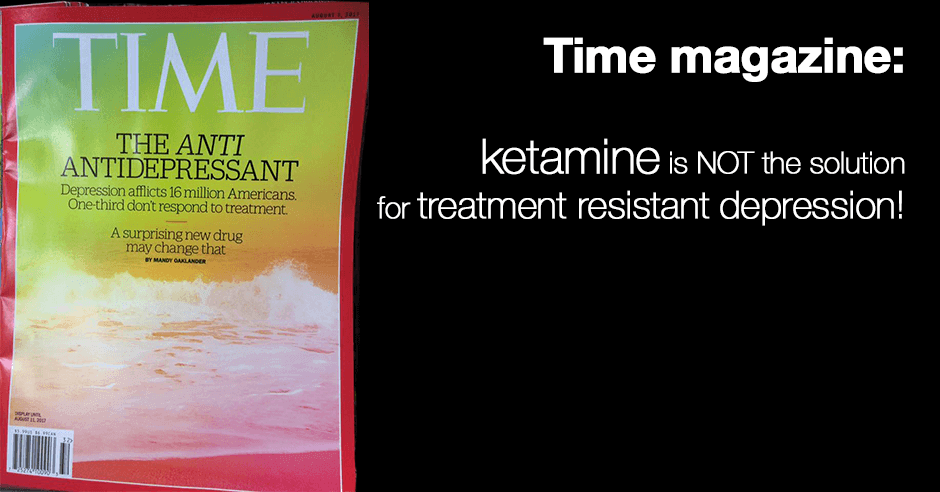
Seen at LAX airport en route back to Australia – this cover of Time magazine:

The Anti Antidepressant. Depression affects 16 million Americans. One third don’t respond to treatment. A surprising new drug may change that.

It’s scary to think that ketamine and ketamine-like drugs are being considered the solution to “treatment resistant depression”. I’ve never liked this term and in my opinion, what it really means is that the root cause of the depression has not been found. To me it looks like the mainstream medical mental health community is desperate!

It really is time to get all the well-researched nutritional psychiatry approaches to the forefront! They do work! The timing of this article is even more interesting since I was returning from the first international meeting of the International Society for Nutritional Psychiatry Research in Bethesda, MD.

Lead food mood researcher Professor Felice Jacka presented her SMILES paper where dietary changes from a junk food diet to a real whole foods diet reduced depression in 30% of the participants.

Microbiome researcher Professor John Cryan discussed the gut brain connection. This paper: Recent developments in understanding the role of the gut microbiota in brain health and disease, was published just last week:

recent preclinical and clinical evidence suggest that targeting the microbiota through prebiotic, probiotic, or dietary interventions may be an effective “psychobiotic” strategy for treating symptoms in mood, neurodevelopmental disorders, and neurodegenerative diseases

And research on sulforaphane for psychosis, and depression and anxiety was presented: Sulforaphane produces antidepressant- and anxiolytic-like effects in adult mice

these findings demonstrated that SFN [sulforaphane] has antidepressant- and anxiolytic-like activities in stressed mice model of depression, which likely occurs by inhibiting the hypothalamic-pituitary-adrenal (HPA) axis and inflammatory response to stress. These data support further exploration for developing SFN [sulforaphane] as a novel agent to treat depression and anxiety disorders.

I presented on the benefits of a gluten-free/grain free/Paleo diet for certain individuals for depression and anxiety, and did a poster presentation on GABA for eliminating anxiety. 

As you can see from the TIME Magazine article the only approaches that have been considered (and have failed) are medications in various different combinations:

Every week, when Ian Hanley sits down with his therapist, he goes through a list of depression treatments he’s been researching online. The best-known treatments at the top of the list–half a dozen antidepressants and known combinations of those drugs–are all crossed out….

Most diagnoses do not come with 20-plus medicines approved by the Food and Drug Administration to treat it–and yet with depression, more options don’t always mean better outcomes. Ever since the first antidepressants were introduced 60 years ago, doctors have had patients like Hanley–people who don’t seem to get better even after they’ve worked their way through the lengthy list of available drugs. About 30% of all people with depression don’t respond adequately to the available treatments. That’s a dismal failure rate for a class of drugs designed to improve a person’s basic ability to function.

According to this article in Time magazine:

The biggest development has been the rediscovery of a promising, yet fraught, drug called ketamine. It’s best known as a psychedelic club drug that makes people hallucinate, but it may also have the ability to ease depression–and fast. In a race to shape the next generation of antidepressants, Johnson & Johnson and Allergan are fast-tracking new medicines inspired by ketamine.

I encourage you to read the entire article and take note of the following: the side-effects seen with medications over the years and the fact that doctors “don’t know the consequences and potential side effects of taking tiny doses of ketamine over and over again”; “she tried nearly everything” (you’ll read this in all the articles advocating for ketamine but unfortunately they are only referring to medications); the ketamine effects are temporary and cost $15,000 per year (and are not covered by insurance); and ketamine “is thought to stimulate an opioid receptor in the brain” and is already known to be addictive.  

When I shared this image and article on my Facebook page I discovered that is a pretty divided topic with a number of people feeling really strongly about the fact that this approach needs to be researched further and considered.  I acknowledge their concern for the individuals who have not found a solution for their depression. BUT my question is this: have all the dietary and nutritional approaches been considered and looked into with these people who have not responded to antidepressants? 

I strongly believe that ketamine is NOT the solution and that nutritional psychiatry is!

Have you used this ketamine approach personally or with patients?

Would you consider using ketamine personally if the antidepressants didn’t work for you? Or would you be more willing to work with a functional medicine or functional nutrition practitioner to find your true root causes and address them with diet, nutrients and a functional medicine approach?

Filed Under: Depression, Food and mood, Mental health, Nutritional Psychiatry, Real whole food Tagged With: anxiety, depression, GABA, gluten, ketamine, nutritional psychiatry, sulforaphane, time magazine, treatment resistant

Tryptophan, red meat and baby steps for anxiety: the Brain Summit

May 1, 2016 By Trudy Scott 18 Comments

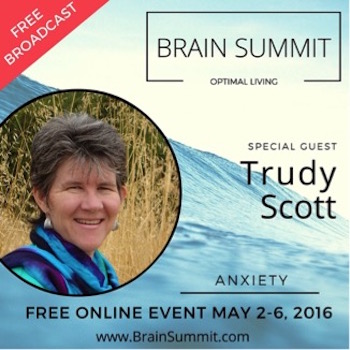
Just a quick reminder that the Brain Summit starts tomorrow, Monday, May 2nd.

brainsummit-trudy

Here are some snippets from my anxiety interview with host Erin Matlock. We started out talking about diet and grass-fed red meat and why it’s so beneficial if you have anxiety (and other mood problems):

…there’s a lot of research showing now that [a Western diet] diet is not good for so many conditions, and mental health is now coming into the research. And we know this, but to see it in the research is really beneficial. Dr. Felice Jacka did a great study in Australia that was one of the first studies that looked at anxiety and depression in women and found that the Western diet was associated with a higher risk for anxiety and depression. And this whole foods, traditional diet, that actually included grass-fed red meat, was more beneficial for anxiety and depression. And in her thesis, they actually looked at red meat thinking that they would find that red meat was actually detrimental. And, lo and behold, they found that grass-fed red meat was one of the most important predictors for good mental health. So a lot of people say, “I don’t eat red meat any more. I’m being healthy.” And in actual fact, not eating it is doing them harm.

So red meat is wonderful! And it needs to be grass fed because then you’re getting the good levels of the Omega-3s. The Omega-3 three profile of grass fed red meat is very similar to what you would find in salmon. Obviously, fish is great, so while fish like salmon or sardines are great as well, the reason I like the red meat is it’s something that most people enjoy eating. And as well as the Omega-3s, we’re getting the iron, and iron is a co-factor for making serotonin and making GABA, and it’s needed for energy and so many other functions in the body.

It’s also got zinc, and zinc is a common deficiency, way more common than we realize. And when you are anxious, you may have high copper level, and low zinc level. So getting those zinc levels up will push the copper down, and that can help with your anxiety, as well.

We also had a long discussion on serotonin and tryptophan/5-HTP:

…we often associate serotonin with depression. And a lot of people don’t realize that it’s very closely tied to anxiety, as well.  So we’ve got two types of anxiety when it comes to the brain chemicals. One is the low-serotonin type, and this is the anxiety in the head, where you’ve got the ruminating thoughts, and the busy mind, and the negative self-talk, and just this monkey mind that you can’t switch off — this worry, and sort of reprocessing things. And then we have the low-GABA kind of anxiety, where it’s in your physical body and you’re feeling stiff and tense, and you can feel it in your body, and you may feel it in your gut….

I have people do a questionnaire, and depending on how you score on that questionnaire, that’s a clue as to whether serotonin may be a factor. So all of those symptoms I’ve just mentioned, you would rate yourself on a scale of one to ten.  And then I use individual, targeted amino acids. So it’s a supplement, and the other things that obviously have an impact are food, and diet, and everything we just talked about. Getting exercise, getting outside in the light, all of those are factors.

But for quick, immediate results, and pretty profound results – people just say to me, “Could this really be happening so quickly?” that’s how quickly we get results, you know, within 30 seconds to two minutes they’re getting results – is to use these individual amino acids as supplements. And the reason they’re called “targeted” is because it’s targeted to your unique needs. Like when you do the questionnaire and it says, yes, you need some serotonin support, and then you would use either tryptophan or 5-HTP as a supplement. And again, targeted, because you need it, but also targeted to your unique biochemistry.

There’s a standard starting dose for tryptophan, which is 500 mg, while 5-HTP is 50 mg.

Be sure to tune into the interview with Debbie Hampton. She is the survivor of an acquired brain injury (from a pill overdose when trying to commit suicide) and the author of the upcoming book, Sex, Suicide, and Serotonin.  Her story and resilience is inspiring!  Here is Debbie’s wonderful answer to Erin’s question: “What advice would you give to someone who feels like it’s too late to do what they want to do? I’m already so deep in, there’s no way that I could possibly have the life that I wanted or do the work that I really wanted to do.”

debbie-hampton

It’s never too late. And those limitations, you’re putting on yourself. Those limitations are in your mind. If you think you can’t, and you think it’s too late, then it is. You’ve got to change your mind first and if your mind thinks you can, you’re halfway there.

My advice would be to start small … I’m not big on long-term plans. I’m big on a long-term bigger goal. But what you’ve got to do is you’ve got to take a little step in the right direction towards that goal, and when you get there, you look around and you say, “Okay, what is my next best step?” And when you get to that next step, there may be opportunities that you can see that you couldn’t even see back here.

So you’ve got to take it one step at a time and get there and assess your opportunities. And then figure out the next best step, and then get there and figure out the next one. And it may be a zigzag path, and you may even have to go back sometimes, regress, but as long as you just keep moving forward and keep positive momentum and positive thoughts and be your own cheerleader, and encourager, and supporter— be your own friend—that is the most important thing.

I could not agree more – there is an answer, you can do whatever you set out to do and just take baby steps!

You can register for the Brain Summit here:
http://www.brainsummit.com?orid=45505&opid=12


Filed Under: Amino Acids, Events, Food and mood, Real whole food, Tryptophan Tagged With: 5-HTP, anxiety, brain summit, Erin Matlock, iron, red meat, serotonin, Trudy Scott, tryptophan, zinc

Western diet is associated with a smaller left hippocampus and anxiety

October 23, 2015 By Trudy Scott Leave a Comment

western-diet

A new food and mental health study has been published in the international BMC Medicine journal: Western diet is associated with a smaller hippocampus: a longitudinal investigation. The lead author is Associate Professor Felice Jacka from Deacon University in Australia.

Here is the conclusion of the study: 

Lower intakes of nutrient-dense foods and higher intakes of unhealthy foods are each independently associated with smaller left hippocampal volume. To our knowledge, this is the first human study to demonstrate associations between diet and hippocampal volume concordant with data previously observed in animal models.

Study participants were Australian adults aged 60-64.   The results of the study, show that an unhealthy “Western” diet is associated with a smaller left hippocampus and a healthier “prudent”, nutrient-dense diet is associated with a larger left hippocampus.

The unhealthy “Western” diet was:

characterized by the consumption of roast meat, sausages, hamburgers, steak, chips, crisps and soft drinks

and the healthy “prudent”, nutrient-dense diet was:

characterized by the consumption of fresh vegetables, salad, fruit and grilled fish

This study has importance for cognition and mental health, both depression and very possibly anxiety too:

extensive evidence from animal studies points to the importance of the hippocampus in the association between diet and mental and cognitive health

The hippocampus is a brain structure associated with both learning and memory, as well as mood regulation, and is specifically implicated in depression

The study does group high sugar and high saturated fat together, and unfortunately the healthy diet excludes good quality red meat which is surprising considering previous research and conversations with Dr. Jacka about the benefits of good quality red meat and mental health:

In our study, out of every single dietary food grouping that I looked at including vegetables, fruits, salads, beans, etc the strongest correlate of mental health was red meat intake [grass-fed red meat of course]

Consistently, women who have less than the recommended intake of red meat seem to be in an increased risk for common mental disorders [like anxiety and depression] and bipolar disorder.

It will be wonderful to see follow-up research looking at the effect of quality grass-fed red meat on hippocampus size.  

Drew Ramsey, MD, an assistant clinical professor of psychiatry at Columbia University College of Physicians and Surgeons in New York City, described the study as “exciting” in an interview on Medscape Medical News:

It’s the first time that a dietary pattern has been linked to specific changes in the brain. We’ve known for a long time that there’s a correlation between dietary pattern and the risk of a number of brain illnesses, like depression and dementia, and the mechanism behind this, we believe, involves neuroplastic processes of how food affects brain growth. This is the first study that’s really shown that quite conclusively.

Dr. Ramsey is the author of The Happiness Diet, and co-founder of National Kale Day. His mission is to educate America on eating healthier and I’ll second what he said about this study:

nutrition should be incorporated into mental health clinical practice.

How wonderful is it to hear a statement like this from a psychiatrist!?

You can read the complete study here.

What does all this mean for you? Eat real whole nutrient-dense food and ditch the junk food and processed food. Your brain will be happy and so will you be!

If you’re a mental health practitioner, start talking to your clients and patients about what they’re eating, ask them what they had for breakfast and share this research.


Filed Under: Antianxiety Food Solution, Depression, Food and mood, Mental health, Real whole food, Research Tagged With: anxiety, depression, drew ramsey, felice jacka, healthy diet, hippocampal, red meat, western diet

60+ Nutritional & Biochemical Causes of Anxiety

May 19, 2015 By Trudy Scott 50 Comments

nutritional causes of anxiety

I shared these 60+ Nutritional & Biochemical Causes of Anxiety on my closing call  of the The Anxiety Summit season 3. Since then I’ve kept this list updated as I find additional research, connections and case studies.  In conjunction with my book “The Antianxiety Food Solution”, interviews and other blogs, I hope this list will help you put the puzzle pieces together to resolve your anxiety. 

Keep in mind it’s not uncommon to have many root causes so if it feels too overwhelming, addressing low serotonin and/or low GABA first, really does help with the overwhelm, fear, anxiety and negativity.

The Foundational Causes from The Antianxiety Food Solution :

  1. Food – real whole food, organic (pesticides may be problematic), quality protein (grass-fed, wild, pastured), healthy fats; avoid junk/processed food with additives/colors/trans fats/GMOs
  2. Sugar – depletes zinc and magnesium and fills us up. We should not feel the need for treats/fruit should satisfy our desire for sweet
  3. Low blood sugar – breakfast/protein/healthy snacks/no coffee
  4. Caffeine/Coffee – even decaf coffee may be an issue. Coffee has high-levels of pesticides, affects blood sugar and affects hormones
  5. Tobacco – depletes key nutrients like zinc, vitamin C
  6. alcohol – depletes key nutrients like zinc, vitamin C
  7. Food sensitivities – gluten (plus glyphosates/roundup affect serotonin/zinc etc), dairy, GAPs, grains
  8. Digestive system – low HCl
  9. Digestive system – Low good bacteria/probiotics
  10. Digestive system – other enzymes are low
  11. Digestive system – candida
  12. Digestive system – parasites
  13. Digestive system – leaky gut
  14. Digestive system – liver/gallbladder issues
  15. Digestive system – SIBO
  16. Brain chemicals/neurotransmitters: low GABA (covered in detail in season 4 of the Anxiety Summit)
  17. Brain chemicals/neurotransmitters: low serotonin
  18. Brain chemicals/neurotransmitters: low endorphins
  19. Brain chemicals/neurotransmitters: low catecholamines (need for coffee/sugar) or high catecholamines. Gut health, what you eat, coffee, gluten all affect the brain chemicals
  20. Pyroluria/social anxiety – zinc, vitamin B6 and EPO (addressing this improves brain chemical imbalances and hormone imbalances)
  21. A need for zinc
  22. A need for vitamin B6
  23. A need for EPO
  24. Toxins/pesticides/plastics/BPA
  25. Medication side-effects/withdrawal (benzos are the worst)
  26. Sex hormones imbalances (especially low progesterone)
  27. Thyroid problems – hyperthyroid/Hashimoto’s thyroiditis can cause anxiety symptoms; low thyroid symptoms – amino acids are not as effective
  28. Adrenals issues: cortisol imbalance can affect how you handle stress, digestion, inflammation; high cortisol can have direct impact on anxiety levels
  29. Low total cholesterol (<150)
  30. Low levels of vitamin D, magnesium, vitamin C
  31. Low levels of vitamin B12
  32. Low levels of folate
  33. Low levels of iron (test ferritin)
  34. Not getting exercise
  35. Not working on stress-reduction (tai chi, meditation, guided imagery, yoga)
  36. Not getting out in nature
  37. Not getting at least 8 hours of sleep
[the above are all covered in great detail in my book  The Antianxiety Food Solution ]

Other possible nutritional/biochemical/physical causes of anxiety/depression

  1. Drug-induced nutrient deficiencies (for example: the birth control pill depletes vitamin B6, folate, magnesium)
  2. MVP (mitral valve prolapse) – it feel like the “heart is skipping a beat” (magnesium may help)
  3. Infections – strep can cause OCD/PANDAS/PANS. Also consider: H/Pylori, Lyme disease, clostridia
  4. Heavy metals like mercury or lead.  We covered mercury in season 2 – Your hidden mercury burden: A likely root cause of the other root causes of anxiety and mercury/lead detox in season 4 with Dr. John Dempster
  5. Anything that increases inflammation in the body (high CRP is a good clue)
  6. Herbicide/Roundup use in the home/garden
  7. Genetic polymorphisms – MTHFR, COMT, MAOA, GAD – Dr. Ben Lynch is an excellent resource and has shared his expertise on season 2 – Anxiety: Biochemical and genetic predispositionsand season 3 – How Methylfolate can make you Feel Worse and even Cause Anxiety
  8. Apolipoprotein E ?4 (ApoE ?4) gene polymorphism
  9. Other possible hormone issues: high prolactin, low oxytocin
  10. Histamine reaction to certain foods (Yasmina covers this in her interview in season 3: Histamine-containing Foods: their Role in Anxiety, Depression and Schizophrenia )
  11. Oxalates reaction (berries, leafy greens, nuts). A good resource is lowoxalateinfo
  12. SIBO and FODMAPs/fructose malabsorption (affects serotonin levels)
  13. Too much of some nutrients: fish oil, a B complex, tyrosine, folate
  14. Low lithium (impacts GABA levels)
  15. Copper toxicity i.e. high copper and low zinc
  16. EMFs, air pollution, noise pollution, cell phone use, smart meters
  17. Marijuana use – used recreationally or as medical marijuana (Dr. Hyla Cass covers this in season 4 of the Anxiety Summit – cognitive issues, anxiety, psychosis, schizophrenia, social anxiety)
  18. Toxic mold exposure (Dr. Jill Carnahan covers this in season 3)
  19. Fluoride exposure
  20. Poor mouth health
  21. Toxoplasma gondii
  22. Metals/chemicals/drugs in the tap water
  23. Low leptin (signals satiety/fullness) and high ghrelin
  24. Over-the counter drugs, inner ear issues/cochlear damage, light sensitivity (Sharon Heller shared Hidden Causes of Anxiety on season 2)
  25. Physical pain (from an injury)
  26. Gas leaks
  27. Plastics/BPA
  28. Accutane, the acne drug can lead to psychiatric disorders in some people

May 14, 2016 updates after Season 4 of the Anxiety Summit:

66. Leptin resistance, obesity, skinny-fat and high body fat % (Mike Mutzel covers this in season 4 – anxiety, inflammation, microbiome, PTSD, cortisol and HPA axis)

67. Fluoroquinolone antibiotics (Lisa Bloomquist covers this in season 4 – anxiety, psychosis, connective tissue damage, mitochondrial impacts)

68. Low histamine/histapenia/overmethylation or high histamine/histadelia/undermethylation – read more here and the season 4 interview with Dr. William Walsh

69. Lack of community and social connection (James Maskell covers this in season 4)

Note: these causes do not include psychological or physical trauma or abuse (both past and current).

If the idea of 60+ causes feels too overwhelming and scary for you start with the basic food changes and look at the Amino Acids Mood Questionnaire from The Antianxiety Food Solution. GABA and serotonin support benefits most of my clients.  You can see how to do a trial here  and find the products I use with my clients here – such as tryptophan and GABA.

Missed this interview or can’t listen live? Or want this and the other great interviews for your learning library? Purchase the MP3s or MP3s + transcripts and listen when it suits you.

You can find your purchasing options here: Anxiety Summit Season 1, Anxiety Summit Season 2, and Anxiety Summit Season 3.

Filed Under: Amino Acids, Antianxiety, Food and mood, Gluten, Real whole food, The Anxiety Summit 3 Tagged With: amino acid questionnaire, anxiety, biochemical, nutritional, real whole food, the anxiety summit, Trudy Scott

The Anxiety Summit – 60+ Nutritional & Biochemical Causes of Anxiety and Recommended Supplements

May 19, 2015 By Trudy Scott 88 Comments


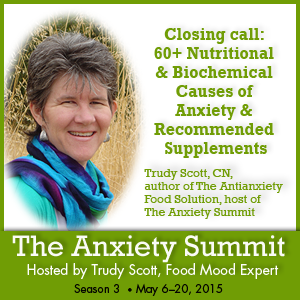
Trudy Scott, host of The Anxiety Summit, Food Mood Expert and Nutritionist, author of The Antianxiety Food Solution presents:

Closing call: 60+ Nutritional & Biochemical Causes of Anxiety and Recommended Supplements

  • 60+ Nutritional/biochemical causes of anxiety and associated solutions
  • 4 degrees/levels of anxiety I see and response to the 60+ causes
  • The unique ability of the body to heal
  • Testing I use with my clients and what tests I’d run if everyone had unlimited funds
  • My recommendations:  supplements
  • My message of hope

I mentioned the speaker blog posts.  You can access them all here: The Anxiety Summit Season 3: All the speakers and topics

I also referred back to speakers and topics from season 1 and 2 so here are those links:

The Anxiety Summit Season 2: All the speakers and topics

The Anxiety Summit: All the speakers and topics (this is summit 1)

If the idea of 60+ causes feels too overwhelming and scary for you here is the Amino Acids Mood Questionnaire from The Antianxiety Food Solution. Serotonin support in the form of tryptophan or 5-HTP may help

As Dr. Peter Bongiorno said in his interview: Serotonin and Anxiety, Happiness, Digestion and our Hormones

There can be multiple factors involved as to why someone has anxiety. How you’re going to work through these factors successfully is going to be very different for each person.

Here is the list of the 60+ Nutritional/biochemical causes of anxiety.  (Just click on this link to see all of them)

Here is the list of supplements: The Antianxiety Food Solution Amino Acid and Pyroluria Supplements (Just click on this link to see all of them)

Here is the: Nutritional testing for figuring out the root cause/s of your anxiety (Just click on this link to see all of them)

If you are not already registered for the Anxiety Summit you can get live access to the speakers of the day here: www.theAnxietySummit.com

Missed this interview or can’t listen live? Or want this and the other great interviews for your learning library? Purchase the MP3s or MP3s + transcripts and listen when it suits you.

You can find your purchasing options here: Anxiety Summit Season 1, Anxiety Summit Season 2, and Anxiety Summit Season 3.

Filed Under: Amino Acids, Antianxiety, Food and mood, Gluten, Real whole food, The Anxiety Summit 3 Tagged With: amino acid questionnaire, anxiety, biochemical, nutritional, real whole food, supplements, the anxiety summit, Trudy Scott

The Anxiety Summit – Sauerkraut for Gut Healing and Reducing Anxiety

May 8, 2015 By Trudy Scott 36 Comments


Summer Bock, Master Fermentationist, was interviewed on the Anxiety Summit by host of the Anxiety Summit, Trudy Scott, Food Mood Expert and Nutritionist, author of The Antianxiety Food Solution.

Sauerkraut for Gut Healing and Reducing Anxiety

  • Summer’s journey and recovery from allergies, gut problems, anxiety and panic attacks, and how fermented foods turned things round for her
  • The good bacteria we get from fermented foods: psychobiotics and anxiety
  • Sauerkraut: a “promising nutraceutical for the treatment of malnutrition-induced diseases” and how it helps with asthma, IBS and inflammatory bowel disease
  • The 3 categories of fermented foods: Functional Ferments, Increased Assimilation Ferments and Primarily Preservation Ferments
  • The history of kefir
  • How to buy sauerkraut in the store
  • How to make your own sauerkraut at home and why

Summer discovered that all the symptoms she was having (food and environmental allergies, anxiety and panic attacks, skin problems) were connected to her gut and that she needed probiotics.

With me being a herbalist and purist, I wanted to know how my ancestors did it. If I don’t have probiotics in my diet how do I get them? What is the whole food version of probiotics? It was when I discovered sauerkraut and kefir and all of these fermented foods and started including them in my diet, that’s when I started to see improvements in my health.

Sauerkraut is a whole food version of probiotics. The probiotics are one thing but raw (unpasteurized) sauerkraut also contains lactic acid which serves as a natural antibiotic.

I mentioned my season 2 interview with Dr. Ted Dinan, MD, PhD. Professor of Psychiatry at University College Cork: Microbes in the gut and psychobiotics as a potential treatment for anxiety and depression

we define a psychobiotic as a live organism that, when ingested in adequate amounts, produces a health benefit in patients suffering from psychiatric illness

This is Dr. Dinan’s most recent paper, published April this year: Gut Microbiota: The Conductor in the Orchestra of Immune-Neuroendocrine Communication

We discussed this paper at length: A MINI REVIEW ON THE MICROBIOCHEMICAL PROPERTIES OF SAUERKRAUT.

Healthy colons of humans contain some beneficial bacteria which feed on digestive wastes, thereby producing lactic acid. Without these beneficial bacteria, the digestive tracts become a thriving zone for pathogenic bacteria and yeasts, resulting in candidiasis. However, it is suggested that the consumption of lacto-fermented sauerkraut could help re-establish lactobacilli.

could be a promising nutraceutical for the treatment of malnutrition-induced diseases. Also, it could be suggested that the consumption of lacto-fermented sauerkraut could help reestablish lactobacilli-opportunistic infective agents equilibrium

lacto-fermented sauerkraut provides an array of lactobacilli probiotics, vitamin C, dietary folates, manganese and pyridoxine

If you are not already registered for the Anxiety Summit you can get live access to the speakers of the day here: www.theAnxietySummit.com

Missed this interview or can’t listen live? Or want this and the other great interviews for your learning library? Purchase the MP3s or MP3s + transcripts and listen when it suits you.

You can find your purchasing options here: Anxiety Summit Season 1, Anxiety Summit Season 2, and Anxiety Summit Season 3.

Filed Under: Antianxiety, Food and mood, Real whole food, The Anxiety Summit 3 Tagged With: anxiety, depression, microbiome, probiotics, sauerkraut, summer bock, the anxiety summit, Trudy Scott

  • Page 1
  • Page 2
  • Page 3
  • Interim pages omitted …
  • Page 17
  • Go to Next Page »

Primary Sidebar

GABA QuickStart Homestudy

gaba quickstart homestudy

Free Report

9 Great Questions Women Ask about Food, Mood and their Health

You'll also receive a complimentary subscription to my ezine "Food, Mood and Gal Stuff"


Connect with me

Popular Posts

  • Amino Acids Mood Questionnaire from The Antianxiety Food Solution
  • The Antianxiety Food Solution Amino Acid and Pyroluria Supplements
  • Pyroluria Questionnaire from The Antianxiety Food Solution
  • Collagen and gelatin lower serotonin: does this increase your anxiety and depression?
  • Tryptophan for the worry-in-your-head and ruminating type of anxiety
  • GABA for the physical-tension and stiff-and-tense-muscles type of anxiety
  • The Antianxiety Food Solution by Trudy Scott
  • Seriphos Original Formula is back: the best product for anxiety and insomnia caused by high cortisol
  • Am I an anxious introvert because of low zinc and vitamin B6? My response to Huffington Post blog
  • Vagus nerve rehab with GABA, breathing, humming, gargling and key nutrients

Recent Posts

  • Her cravings for chips and peanut butter were triggered by stress: GABA ends cravings and reduces physical tension and fear of heights
  • It is truly miraculous to be able to move through life without crippling anxiety and panic
  • GABA and tryptophan combo provide immediate and noticeable relief for tremors and cervical dystonia in just 7 days
  • Red light therapy for back and neck pain, plantar fasciitis and low mood – a complement to the amino acids GABA, DPA and tryptophan
  • What do I use instead of Seriphos to help lower high cortisol that is affecting my sleep and making me anxious at night?

Categories

  • 5-HTP
  • AB575
  • Addiction
  • ADHD
  • Adrenals
  • Alcohol
  • Allergies
  • Alzheimer's disease
  • Amino Acids
  • Anger
  • Antianxiety
  • Antianxiety Food Solution
  • Antidepressants
  • Anxiety
  • Anxiety and panic
  • Autism
  • Autoimmunity
  • benzodiazapines
  • Bipolar disorder
  • Books
  • Caffeine
  • Cancer
  • Candida
  • Children/Teens
  • Collagen
  • Cooking equipment
  • Coronavirus/COVID-19
  • Cravings
  • Depression
  • Detoxification
  • Diabetes
  • Diet
  • DPA/DLPA
  • Drugs
  • EFT/Tapping
  • EMF
  • EMFs
  • Emotional Eating
  • Endorphins
  • Environment
  • Essential oils
  • Events
  • Exercise
  • Fear
  • Fear of public speaking
  • Fertility and Pregnancy
  • Fish
  • Food
  • Food and mood
  • Functional neurology
  • GABA
  • Gene polymorphisms
  • General Health
  • Giving
  • Giving back
  • Glutamine
  • Gluten
  • GMOs
  • Gratitude
  • Gut health
  • Heart health/hypertension
  • Histamine
  • Hormone
  • Hyperparathyroidism
  • Hypoglycemia
  • Immune system
  • Inflammation
  • Insomnia
  • Inspiration
  • Introversion
  • Joy and happiness
  • Ketogenic diet
  • Lithium orotate
  • Looking awesome
  • Lyme disease and co-infections
  • MCAS/histamine
  • Medication
  • Men's health
  • Mental health
  • Mercury
  • Migraine
  • Mold
  • Movie
  • MTHFR
  • Multiple sclerosis
  • Music
  • NANP
  • Nature
  • Nutritional Psychiatry
  • OCD
  • Osteoporosis
  • Oxalates
  • Oxytocin
  • Pain
  • Paleo
  • Parasites
  • Parkinson’s disease
  • PCOS
  • People
  • PMS
  • Postpartum
  • PTSD/Trauma
  • Pyroluria
  • Questionnaires
  • Real whole food
  • Recipes
  • Research
  • Schizophrenia
  • serotonin
  • SIBO
  • Sleep
  • Special diets
  • Sports nutrition
  • Stress
  • Sugar addiction
  • Sugar and mood
  • Supplements
  • Teens
  • Testimonials
  • Testing
  • The Anxiety Summit
  • The Anxiety Summit 2
  • The Anxiety Summit 3
  • The Anxiety Summit 4
  • The Anxiety Summit 5
  • The Anxiety Summit 6
  • Thyroid
  • Thyroid health
  • Toxins
  • Tryptophan
  • Tyrosine
  • Uncategorized
  • Vegan/vegetarian
  • Women's health
  • Yoga

Archives

  • May 2026
  • April 2026
  • October 2025
  • September 2025
  • August 2025
  • July 2025
  • June 2025
  • May 2025
  • April 2025
  • March 2025
  • February 2025
  • January 2025
  • November 2024
  • October 2024
  • September 2024
  • August 2024
  • July 2024
  • June 2024
  • May 2024
  • April 2024
  • March 2024
  • February 2024
  • January 2024
  • December 2023
  • November 2023
  • October 2023
  • September 2023
  • August 2023
  • July 2023
  • June 2023
  • May 2023
  • April 2023
  • March 2023
  • February 2023
  • January 2023
  • December 2022
  • November 2022
  • October 2022
  • September 2022
  • August 2022
  • July 2022
  • June 2022
  • May 2022
  • April 2022
  • March 2022
  • February 2022
  • January 2022
  • December 2021
  • November 2021
  • October 2021
  • September 2021
  • August 2021
  • July 2021
  • June 2021
  • May 2021
  • April 2021
  • March 2021
  • February 2021
  • January 2021
  • December 2020
  • November 2020
  • October 2020
  • September 2020
  • August 2020
  • July 2020
  • June 2020
  • May 2020
  • April 2020
  • March 2020
  • February 2020
  • January 2020
  • December 2019
  • November 2019
  • October 2019
  • September 2019
  • August 2019
  • July 2019
  • June 2019
  • May 2019
  • April 2019
  • March 2019
  • February 2019
  • January 2019
  • December 2018
  • November 2018
  • October 2018
  • September 2018
  • August 2018
  • July 2018
  • June 2018
  • May 2018
  • April 2018
  • March 2018
  • February 2018
  • January 2018
  • December 2017
  • November 2017
  • October 2017
  • September 2017
  • August 2017
  • July 2017
  • June 2017
  • May 2017
  • April 2017
  • March 2017
  • February 2017
  • January 2017
  • December 2016
  • November 2016
  • October 2016
  • September 2016
  • August 2016
  • July 2016
  • June 2016
  • May 2016
  • April 2016
  • March 2016
  • February 2016
  • January 2016
  • December 2015
  • November 2015
  • October 2015
  • September 2015
  • August 2015
  • July 2015
  • June 2015
  • May 2015
  • April 2015
  • March 2015
  • February 2015
  • January 2015
  • December 2014
  • November 2014
  • October 2014
  • September 2014
  • August 2014
  • July 2014
  • June 2014
  • May 2014
  • April 2014
  • March 2014
  • February 2014
  • January 2014
  • December 2013
  • November 2013
  • October 2013
  • September 2013
  • August 2013
  • July 2013
  • June 2013
  • May 2013
  • April 2013
  • March 2013
  • February 2013
  • January 2013
  • December 2012
  • November 2012
  • October 2012
  • August 2012
  • July 2012
  • June 2012
  • May 2012
  • April 2012
  • March 2012
  • February 2012
  • January 2012
  • December 2011
  • November 2011
  • October 2011
  • September 2011
  • August 2011
  • July 2011
  • June 2011
  • May 2011
  • April 2011
  • March 2011
  • February 2011
  • January 2011
  • December 2010
  • October 2010
  • September 2010
  • July 2010
  • May 2010
  • April 2010
  • March 2010
  • February 2010
  • January 2010
  • November 2009

Share the knowledge!

The above statements have not been evaluated by the Food and Drug Administration. Products listed in this website are not intended to diagnose, treat, cure or prevent any disease.

The information provided on this site is for informational and educational purposes only and is not intended as a substitute for advice from your physician or other health care professional. You should consult with a healthcare professional before starting or modifying any diet, exercise, or supplementation program, before taking or stopping any medication, or if you have or suspect you may have a health problem.


Copyright © 2026 Trudy Scott. All Rights Reserved. | Privacy | Terms and Conditions | Refund Policy | Medical Disclaimer

Free Report

9 Great Questions Women Ask about Food, Mood and their Health

You’ll also receive a complimentary subscription to my ezine “Food, Mood and Gal Stuff”