• Skip to primary navigation
  • Skip to main content
  • Skip to primary sidebar

everywomanover29 blog

Food, Mood and Women's Health – Be your healthiest, look and feel great!

  • Blog
  • About
  • Services
  • Store
  • Resources
  • Testimonials
  • The Book
  • Newsletter
  • Contact
  • Search this site

Archives for October 2015

Glutamine for blood sugar stability, calming and gut healing

October 30, 2015 By Trudy Scott 31 Comments

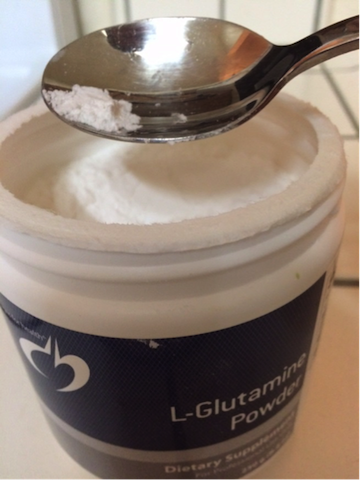
Glutamine powder by DFH: 3/4 of a teaspoon = 3g, so 1/6 of a teaspoon = 500mg

If you’ve been following me for awhile, worked with me, read my book The Antianxiety Food Solution, or listened in on The Anxiety Summit, you’ll be aware that I use glutamine with clients to help with blood sugar control while we’re figuring out diet/breakfast/adrenal health and the carbohydrate/sugar cravings associated with low blood sugar. Opened on to the tongue or taken in powder form glutamine is super-effective for stopping that intense desire for something sweet if it’s related to low blood sugar.

Integrative psychiatrist Dr. Hyla Cass and Julia Ross, MA both recommend glutamine for addiction and carb cravings, as well as for blood sugar control. During a past Anxiety Summit, Dr. Cass shared how to break free of addictions. And Julia Ross, a pioneer in the use of individual amino acids talked about glutamine and other amino acids for eliminating anxiety.

My clients also find benefits as far as healing the leaky gut and glutamine is recommended by many respected integrative practitioners for this purpose: Dr. Josh Axe, Dr. Amy Myers, author of The Autoimmune Solution , and Dr. David Perlmutter, author Grain Brain during his interview with Dr Tom O’ Bryan on The Gluten Summit.  Steven Wright also writes about leaky gut and glutamine on the SCD lifestyle blog, as does fermentationist Summer Bock.

With all these benefits, my clients love this amino acid!

Here is very encouraging feedback from one of the participants in the Amazing Aminos for Anxiety group program:

I started the glutamine trial low and slow. I have been taking 500mg three times a day AM AFT & BED for the past 4 days. I am celiac and have irritable bowel as well. The 2-3x a day diarrhea I have been experiencing has completely stopped! Blood sugar feels stable – not hungry and not craving. Psychologically, I’m feeling more resilient i.e., calmer and more positive on a daily basis. I am surprised that glutamine has helped so much 🙂  My gut is healing and my mental health has improved markedly through this trial.

She confirmed that adding the glutamine was the only change she made. She is already gluten-free and her diet doesn’t include any grains, legumes or lactose etc. She also avoids other foods to which she has had reactions.

I was so thrilled with these fabulous results and this was my feedback:

These are fabulous results – so happy for you! If you feel you could get added benefits i.e. if these symptoms (low blood sugar, hunger, craving, resilience) are not all 0s (with 10 being the worst on a scale of 1 to 10) then I’d consider bumping up the glutamine to 1000mg 3 x day to see if you get added benefits. If you don’t see added benefits then you can go back down.

It’s very common to get good results like this so I’d like to share another example. I met Nicole at the NTA conference and she shared how she suffers from low blood sugar issues:

I get irritable, I get shaky and I get to the point that if I don’t get food NOW I think I’m going to hurt something!

She did a trial of 500mg glutamine and in under 5 minutes she went from that frantic feeling to a very calm feeling:

I’m ok. I feel happy, I feel calm, I feel I can make it longer without needing food right away. I’m impressed at how well that worked for me.

You can read more about low blood sugar and watch Nicole’s video feedback here.

Of course there is research supporting the many benefits that glutamine has for gut health. Here are some excerpts from the abstract of a 2015 paper titled: Glutamine and intestinal barrier function.

glutamine has been reported to enhance intestinal and whole-body growth, to promote enterocyte proliferation and survival, and to regulate intestinal barrier function in injury, infection, weaning stress, and other catabolic conditions

glutamine stimulates growth of the small intestinal mucosa in young animals and also enhances ion transport by the gut in neonates and adults

as a functional amino acid with multiple key physiological roles, glutamine holds great promise in protecting the gut from atrophy and injury under various stress conditions in mammals and other animals.

And this 2015 paper titled: Oral supplementation with L-glutamine alters gut microbiota of obese and overweight adults found that adults supplemented with 30g of glutamine a day for just 14 days had a change in gut bacteria:

Oral supplementation with [glutamine], for a short time, altered the composition of the gut microbiota in overweight and obese humans reducing the Firmicutes to Bacteroidetes ratio, which resembled weight loss programs already seen in the literature.

In a randomized, double-blind, placebo-controlled trial that was conducted in children aged two months to nine years from the urban shanty compound community of Fortaleza, Brazil, it was found that:

Glutamine and all combined nutrients (glutamine, vitamin A, and zinc) improved the intestinal barrier function in these children

When it comes to cravings, addiction and appetite we have this research supporting the use of glutamine:

  • Glutamine and glutamatergic metabolism is a factor in cravings and alcohol dependence
  • A combination of tyrosine, lecithin, glutamine and 5-HTP helped withdrawal syndromes and mental symptoms in detoxified heroin addicts
  • Glutamine has been shown to decrease secretion of ghrelin, the hormone that impacts appetite regulation. High levels of ghrelin appear to make high-calorie foods look more appealing.

I do want to end by saying there are some possible concerns with cancer supplementation and be sure to check with your oncologist if you are currently undergoing treatment. I write about these concerns here – Glutamine supplementation: cancer concerns and benefits.

Have you successfully used glutamine for helping with low blood sugar control, reducing carb or other cravings/addictions, and healing your leaky gut?
 

Filed Under: Amino Acids, Antianxiety, Emotional Eating, Sugar addiction, Sugar and mood Tagged With: glutamine

Western diet is associated with a smaller left hippocampus and anxiety

October 23, 2015 By Trudy Scott Leave a Comment

western-diet

A new food and mental health study has been published in the international BMC Medicine journal: Western diet is associated with a smaller hippocampus: a longitudinal investigation. The lead author is Associate Professor Felice Jacka from Deacon University in Australia.

Here is the conclusion of the study: 

Lower intakes of nutrient-dense foods and higher intakes of unhealthy foods are each independently associated with smaller left hippocampal volume. To our knowledge, this is the first human study to demonstrate associations between diet and hippocampal volume concordant with data previously observed in animal models.

Study participants were Australian adults aged 60-64.   The results of the study, show that an unhealthy “Western” diet is associated with a smaller left hippocampus and a healthier “prudent”, nutrient-dense diet is associated with a larger left hippocampus.

The unhealthy “Western” diet was:

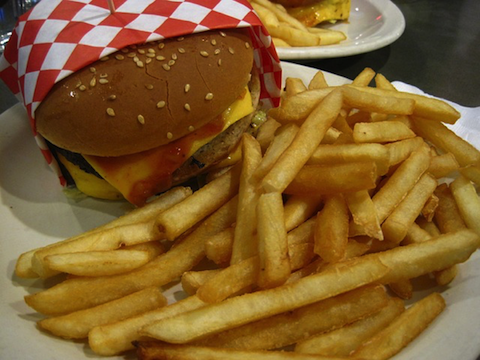
characterized by the consumption of roast meat, sausages, hamburgers, steak, chips, crisps and soft drinks

and the healthy “prudent”, nutrient-dense diet was:

characterized by the consumption of fresh vegetables, salad, fruit and grilled fish

This study has importance for cognition and mental health, both depression and very possibly anxiety too:

extensive evidence from animal studies points to the importance of the hippocampus in the association between diet and mental and cognitive health

The hippocampus is a brain structure associated with both learning and memory, as well as mood regulation, and is specifically implicated in depression

The study does group high sugar and high saturated fat together, and unfortunately the healthy diet excludes good quality red meat which is surprising considering previous research and conversations with Dr. Jacka about the benefits of good quality red meat and mental health:

In our study, out of every single dietary food grouping that I looked at including vegetables, fruits, salads, beans, etc the strongest correlate of mental health was red meat intake [grass-fed red meat of course]

Consistently, women who have less than the recommended intake of red meat seem to be in an increased risk for common mental disorders [like anxiety and depression] and bipolar disorder.

It will be wonderful to see follow-up research looking at the effect of quality grass-fed red meat on hippocampus size.  

Drew Ramsey, MD, an assistant clinical professor of psychiatry at Columbia University College of Physicians and Surgeons in New York City, described the study as “exciting” in an interview on Medscape Medical News:

It’s the first time that a dietary pattern has been linked to specific changes in the brain. We’ve known for a long time that there’s a correlation between dietary pattern and the risk of a number of brain illnesses, like depression and dementia, and the mechanism behind this, we believe, involves neuroplastic processes of how food affects brain growth. This is the first study that’s really shown that quite conclusively.

Dr. Ramsey is the author of The Happiness Diet, and co-founder of National Kale Day. His mission is to educate America on eating healthier and I’ll second what he said about this study:

nutrition should be incorporated into mental health clinical practice.

How wonderful is it to hear a statement like this from a psychiatrist!?

You can read the complete study here.

What does all this mean for you? Eat real whole nutrient-dense food and ditch the junk food and processed food. Your brain will be happy and so will you be!

If you’re a mental health practitioner, start talking to your clients and patients about what they’re eating, ask them what they had for breakfast and share this research.


Filed Under: Antianxiety Food Solution, Depression, Food and mood, Mental health, Real whole food, Research Tagged With: anxiety, depression, drew ramsey, felice jacka, healthy diet, hippocampal, red meat, western diet

How to Use Food to Rebalance Your Hormones

October 22, 2015 By Trudy Scott 22 Comments

hormone-balancing

It’s just around the corner so here’s your friendly reminder if you haven’t already signed up to attend this free webinar/live online workshop called: How to Use Food to Rebalance Your Hormones 

If you have already signed up – I know you’ll enjoy it!

This webinar is being hosted by my friend and colleague, Magdalena Wszelaki, founder of Hormones Balance.

Here is how she introduces herself:

I’m a certified nutrition coach, speaker, educator and chef with a long history of my own hormonal challenges which resulted from a highly stressful life in advertising – starting from Graves’ and Hashimoto’s Disease (autoimmune conditions causing thyroid failure) to adrenal fatigue and estrogen dominance. Today I’m in full remission, live a symptoms-free, awesome life and I want to show you how to achieve the same. Food was instrumental in my own recovery. My mission is to help you figure out what food your body craves or rejects as there is no one diet or protocol that works for all. Knowing your body will be your fast-track to balanced hormones and to the person you want to be.

You may remember our great interviews on last season of The Anxiety Summit! She was a hit, is a wealth of knowledge and very hands-on when it comes to food for hormone balancing! I really love what she offers (and her cute accent)!

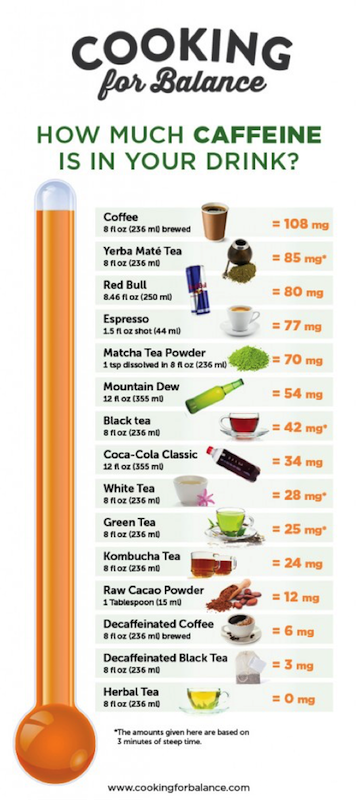
Here is a great image from Cooking for Balance showing you just how much caffeine is in your drink!

cooking-for-balance

Magdalena shares many ways on how caffeine impacts our hormones. Here are just two of them (and both can make anxiety worse):

Exhausts the adrenals

Coffee stimulates the adrenals to release more cortisol, our stress hormone; this is partly why we experience a wonderful but temporary and unsustainable burst of energy.

What many of us don’t realize is that our tired adrenals are often the cause of unexplained weight gain, sleeping problems, feeling emotionally fragile, depression, anxiety and fatigue. Drinking coffee while experiencing adrenal fatigue is only adding fuel to the fire.

Worsens PMS and lumpy breasts

It’s well-established that coffee contributes to estrogen dominance, which can mean one of two things: we either have too much estrogen in relation to progesterone, or we have an imbalance in the estrogen metabolites (some are protective and some are dangerous).

PMS, lumpy breasts, heavy periods, cellulite and even breast cancer (which is an estrogenic cancer) can be symptoms of estrogen dominance.

You can read the entire guest post from Magdalena here: 12 Ways Coffee Impacts Your Hormones

At the end of the webinar she’ll be sharing more about her upcoming Cooking for Balance online cooking program that helps women rebalance their hormones with food.

It will air Saturday October 24th (at 10am PST, 1pm EST). Seats are limited and Magdalena tells me they get snapped up quickly.

Here is the registration page: https://xa202.isrefer.com/go/CFB/trudys/


Filed Under: Events, Hormone Tagged With: free webinar, Magdalena Wszelaki

Tryptophan and 5-HTP combination for anxiety and sleep: when to use

October 19, 2015 By Trudy Scott 22 Comments

amazing aminos for anxiety

Here is a great question that came in from one of the attendees of the live Amazing Aminos for Anxiety program that I hosted earlier this year.   This attendee is asking when to use a combination of tryptophan and 5-HTP for anxiety and sleep, and concerns about high cortisol when wanting to use 5-HTP:

The book says “for symptoms that occur earlier in the day, 50-150 mg of 5-HTP on waking and midmorning” but it also cautions about taking 5-HTP if one has severe insomnia (which I do) as it can raise cortisol. Is it okay to take tryptophan upon waking and mid-morning? I’m assuming the reason for holding off until late afternoon is to avoid daytime drowsiness, but am wondering if this is where the tyrosine may come in? (At the end of the program)

I started getting good results at 500 mg tryptophan. Sometimes I needed more so I doubled the dose to 1000 mg. Sometimes I got better results than others. It’s possible I may need to take more than that – the book says to take up to 1500 mg. Is consistency key (as opposed to PRN/as needed) when taking tryptophan, in the same way that one has to build up a blood level of serotonin when taking an SSRI? I also wanted to mention that prior to coming off my SSRI, my mood was fine

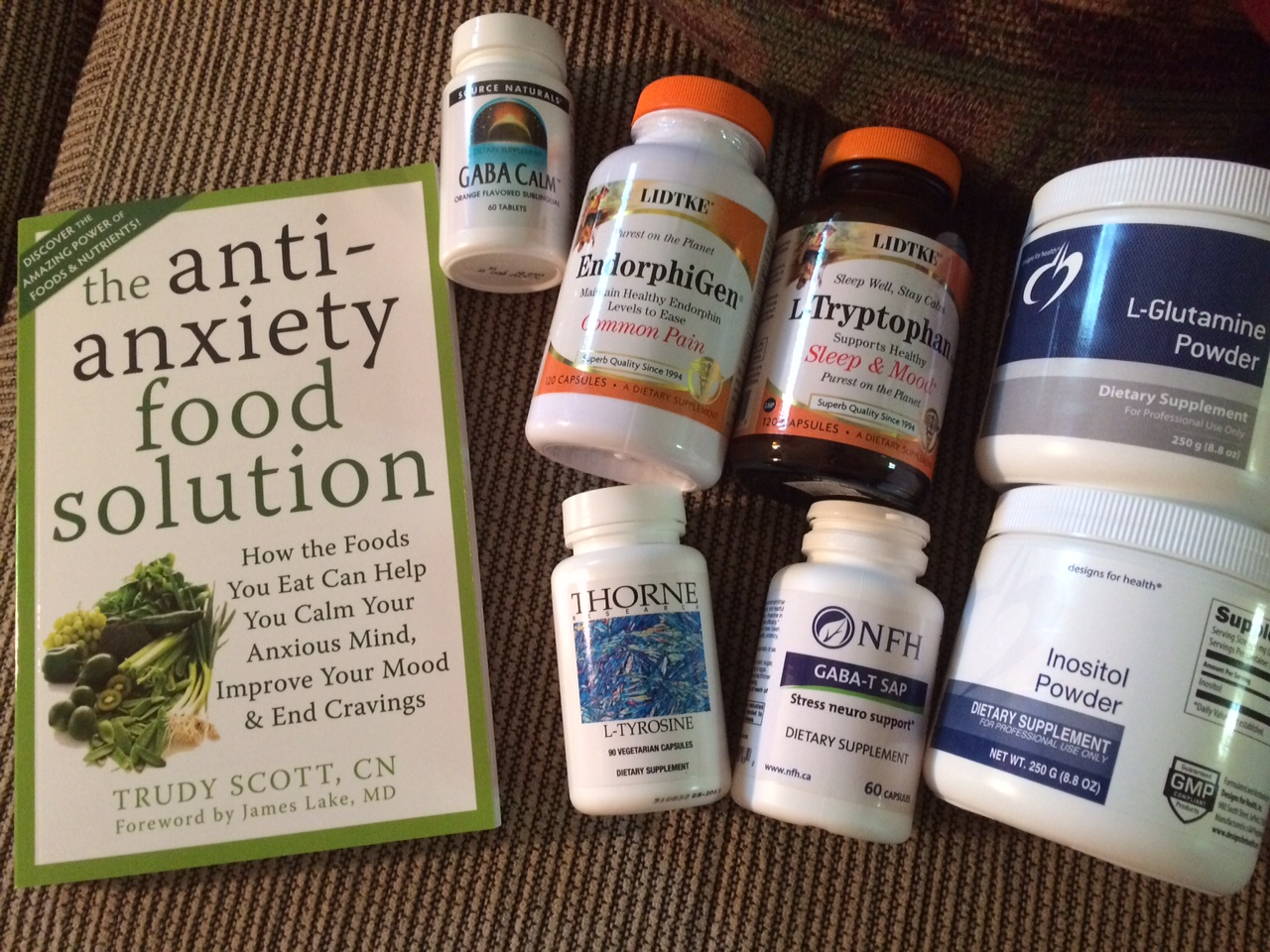
She is referring to my book The Antianxiety Food Solution and she had been taking these amino acids before starting the group program with me. Her goals were to address her insomnia, the anxiety and the depression. The tryptophan she had been taking was not the Lidtke tryptophan, which is the brand I recommend.

You can listen to the 4 minute snippet of this question and my answer here:

https://s3.amazonaws.com/trudyblog/3_AAA_low+serotonin_4+min_snippet_on_tryptophan_and_5HTP.mp3


Before using any amino acids be sure to check the Amino Acid Precautions and work with your doctor if needed.

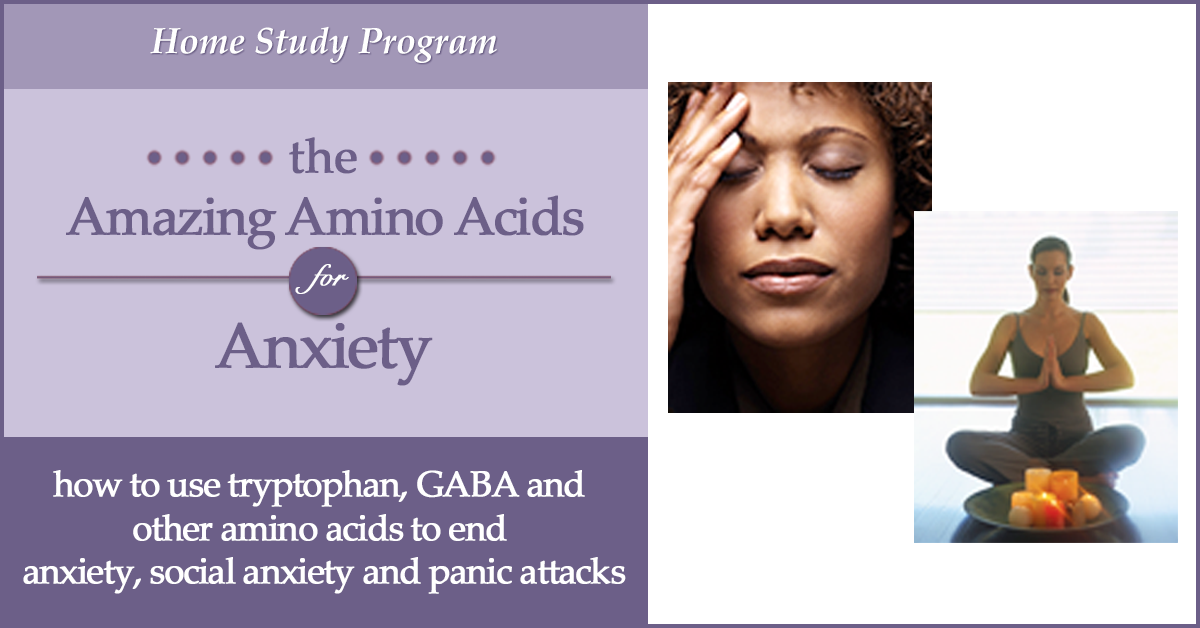
And a friendly reminder for you …. we are offering $100 off each of the 3 options of The Amazing Aminos for Anxiety homestudy programs. This offer expires today, Monday October 19th at 9pm PST midnight EST  (previous emails said 9pm EST – sorry about that)

This is a powerful home study program that results in you feeling

  • less stressed and overwhelmed, and happier
  • more energetic and focused
  • sleeping through the night
  • and no longer suffering from emotional eating/stress eating!

I walk you through, one week at a time, how to use five of the top individual amino acid supplements (tryptophan/5-HTP, GABA, glutamine, DPA/Endorphigen and tyrosine) to help you eliminate anxiety, social anxiety and panic attacks. We also cover pyroluria, other key nutrients, diet and lifestyle changes.

There are 3 program options available:

  1. Basic: Homestudy if you’re a DIY person

     OR

  1. Plus: Homestudy + 2 Q and A Live with Trudy (if you need some guidance and will have questions you can opt for this one)

     OR

  1. Premium: Homestudy + 4 Q and A live with Trudy (if you need some guidance and will have questions) + private Facebook group for group discussions and interactions.

All 3 options include access to Questions and Answers from the previous program so you get to learn from others. Options 2 and 3 include the LIVE Question and Answer sessions i.e. you can ask your own questions (option 3 also includes the facebook support).

For #3 Premium program, we will also be closing the cart and not taking new registrations until January next year

You can check out the 3 program options and register here https://www.everywomanover29.com/aminosforanxietyhs/

Got questions about the program or tryptophan and 5-HTP? Feel free to ask them below and read some of the commonly asked questions on this blog post

Filed Under: Amino Acids, Antianxiety, Events Tagged With: 5-HTP, amazing amino acids, Amazing Aminos for Anxiety, anxiety, Trudy Scott, tryptophan

5-HTP for anxiety, depression and insomnia: a clinically-effective serotonin precursor

October 16, 2015 By Trudy Scott 43 Comments

5-htp

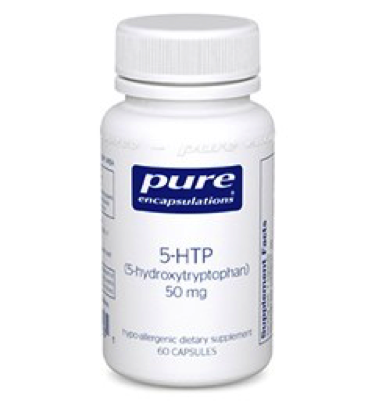
5-Hydroxytryptophan or 5-HTP is an amino acid that increases production of serotonin in the brain alleviating anxiety, depression, insomnia, pain, carbohydrate cravings and more.

Here are some excerpts from an excellent paper published in Alternative Medicine Review in 1998 titled 5-Hydroxytryptophan: a clinically-effective serotonin precursor:

5-Hydroxytryptophan (5-HTP) is an aromatic amino acid naturally produced by the body from the essential amino acid L-tryptophan. Produced commercially by extraction from the seeds of the African plant, Griffonia simplicifolia, 5-HTP has been used clinically for over 30 years. The clinical efficacy of 5-HTP is due to its ability to increase production of serotonin in the brain.

In the central nervous system (CNS), serotonin has been implicated in regulation of sleep, depression, anxiety, aggression, appetite, temperature, sexual behavior, and pain sensation.

Therapeutic administration of 5-HTP has been shown to be effective in treating a wide variety of conditions, including depression, fibromyalgia, binge eating associated with obesity, chronic headaches, and insomnia.

I advise my clients to take all the amino acids between meals and away from protein containing food so they are no getting competition from other amino acids, thereby affecting absorption of the targeted individual amino acid they are taking. I typically make the same recommendation for taking 5-HTP however I simply do this to make things less complicated. In actual fact, 5-HTP can be taken with meals:

Intestinal absorption of 5-HTP does not require the presence of a transport molecule, and is not affected by the presence of other amino acids; therefore it may be taken with meals without reducing its effectiveness.

The recommended starting dose for 5-HTP is 50mg two or three times a day and it is well absorbed:

Initial dosage for 5-HTP is usually 50 mg three times per day with meals. If the clinical response is inadequate after two weeks, dosage may be increased to 100 mg three times per day. For insomnia, the dosage is usually 100-300 mg before bedtime. Because some patients may experience mild nausea when initiating treatment with 5-HTP, it is advisable to begin with 50 mg doses and titrate upwards.

5-HTP is well absorbed from an oral dose, with about 70 percent ending up in the bloodstream. It easily crosses the blood-brain barrier and effectively increases central nervous system synthesis of serotonin.

It’s well recognized that 5-HTP (and tryptophan) can impact both serotonin and melatonin levels but is often less recognized that other neurotransmitters can be increased too:

Other neurotransmitters and CNS chemicals, such as melatonin, dopamine, norepinephrine, and beta-endorphin have also been shown to increase following oral administration of 5-HTP.

You can read the complete paper here at altmedrev.com, a publication of Thorne Research Inc.

The author does seem to favor 5-HTP over tryptophan but I have found that many of my clients do better on one versus the other. I typically start my clients on tryptophan unless they have benefited from 5-HTP in the past. I would also recommend tryptophan at night if someone is wired-tired and adrenal testing shows high cortisol levels as 5-HTP can raise cortisol levels.

It really all comes down to our own biochemical individuality. I recommend doing a trial to see which amino acid is going to work for your symptoms. I write about this in this blog: How to do an amino acid trial for anxiety

Low serotonin MAY be a factor in anxiety and/or depression (and research shows this to be a fact). Anxiety and/or depression could have one of many possible causes – low serotonin, blood sugar instability, poor diet, not eating enough protein, sugar, caffeine, gluten, low dopamine (for depression), pyroluria, inflammation etc.

If low serotonin is a factor then 5-HTP (or tryptophan) is one way to start to raise serotonin levels so you can feel calm, confident, happy, pain-free again, as well as sleep through the night and end the afternoon and evening cravings.

Have you found 5-HTP to be effective? Please share how much you take/took and when, and how it made you feel. Did you also try tryptophan and do you prefer 5-HTP? We’d love to hear in the comments below.

Have you got questions? Feel free to ask in the comments below.

If this information sounds intriguing and you’d like practical help to figure out if you could possibly benefit from 5-HTP or one of the other amino acids, I invite you to join us in one of The Amazing Aminos for Anxiety homestudy group programs. This homestudy group program will provide guidance with using each of the targeted individual amino acids.


Filed Under: Amino Acids Tagged With: 5-HTP, serotonin

How to do an amino acid trial for anxiety

October 9, 2015 By Trudy Scott 184 Comments

amino acids for anxiety

The best way to figure out if you have a particular brain chemical imbalance and if you’ll benefit from a certain amino acid, is to do a trial.   This is something I do with all my clients with anxiety, when we’re working one-one-one and with those in group programs, and it works really well.

Because the effects of amino acids can be felt within a few minutes to a few days, it’s easy to confirm whether you do in fact have a deficiency in a certain area and whether you’ll benefit from supplementing with the associated amino acid.

How does doing a trial work?

  • I have my clients complete the Amino Acids Mood Questionnaire from The Antianxiety Food Solution  and check off their symptoms on the low serotonin, low GABA, low catecholamines, low endorphins, and low blood sugar sections.  The rating uses scale of 1-10 with 10 being worst.
  • I also have my clients review the Amino Acids Precautions  and we figure out which amino acids they can and can’t use
  • I have them do a trial of the amino acid that resonates the most with them. For example if they have really bad obsessive thoughts, anxiety in the head, negative self-talk we’ll start with trying to address low serotonin with tryptophan or 5-HTP. If they resonate more with physical tension and overwhelm, we’ll start with trying to address low GABA with GABA.
  • We trial one amino acid at a time and use them opened onto the tongue or chewed (and held there for 1 to 2 minutes) for getting immediate feedback.
  • I have my client rate themselves before the trial and then afterwards (10 is worst), looking for benefits and how many notches they improved. This helps us figure out how much to start with.
    • If it’s a big improvement (like 4 or 5 notches) they may start on 1 of the lowest dose (for example 1 x 500mg tryptophan or 1 x 125 mg GABA).
    • If they see a small improvement (like 1 or 2 notches) we may start with the lowest dose and give them a range to try over the next week (for example 1-2 x 500mg tryptophan or 1-2 x 125 mg GABA)
  • During the trial and over the next week we also look for possible negative effects, such as a headache or feeling light-headed. If the adverse effects of supplemental amino acids are uncomfortable, taking 1,000 mg of vitamin C is an effective short-term antidote.
  • If someone is very sensitive to small amount of supplements, we may have them do a trial with a dab or two rather than a whole capsule and start really low during the next week.
  • We typically allow a week to see how the selected amino acid is working and adjust up or down during that week until we find the optimal amount.

What are the advantages of doing a trial?

  • You are able to target the amino acid for your specific needs – I write more about this here: Targeted individual amino acids: what do we really mean?
  • You get feedback immediately – the amino acid works or doesn’t
  • You are able to figure out what your starting dose of the amino should be and are able to adjust upwards accordingly
  • You get more in tune with your symptoms and how certain amino acids affect you
  • You can use the results (provided you log them – this is something I recommend and encourage) if you ever need a tune up in the future

Which amino acids have you found to be effective? Did you do a trial to figure out which one to try and how did that work for you? We’d love to hear in the comments below?

Have you got questions about doing a trial? Feel free to ask in the comments below.

If this information is useful but also sounds a little overwhelming, check out the The Amazing Aminos for Anxiety homestudy program. This homestudy group program provides guidance with using each of the targeted individual amino acids and how to do a trial.

Filed Under: Amino Acids, Antianxiety, Anxiety and panic, GABA Tagged With: amino acids, anxiety, GABA, trial, tryptophan

  • Page 1
  • Page 2
  • Go to Next Page »

Primary Sidebar

GABA QuickStart Homestudy

gaba quickstart homestudy

Free Report

9 Great Questions Women Ask about Food, Mood and their Health

You'll also receive a complimentary subscription to my ezine "Food, Mood and Gal Stuff"


Connect with me

Popular Posts

  • Amino Acids Mood Questionnaire from The Antianxiety Food Solution
  • The Antianxiety Food Solution Amino Acid and Pyroluria Supplements
  • Pyroluria Questionnaire from The Antianxiety Food Solution
  • Collagen and gelatin lower serotonin: does this increase your anxiety and depression?
  • Tryptophan for the worry-in-your-head and ruminating type of anxiety
  • GABA for the physical-tension and stiff-and-tense-muscles type of anxiety
  • The Antianxiety Food Solution by Trudy Scott
  • Seriphos Original Formula is back: the best product for anxiety and insomnia caused by high cortisol
  • Am I an anxious introvert because of low zinc and vitamin B6? My response to Huffington Post blog
  • Vagus nerve rehab with GABA, breathing, humming, gargling and key nutrients

Recent Posts

  • Her cravings for chips and peanut butter were triggered by stress: GABA ends cravings and reduces physical tension and fear of heights
  • It is truly miraculous to be able to move through life without crippling anxiety and panic
  • GABA and tryptophan combo provide immediate and noticeable relief for tremors and cervical dystonia in just 7 days
  • Red light therapy for back and neck pain, plantar fasciitis and low mood – a complement to the amino acids GABA, DPA and tryptophan
  • What do I use instead of Seriphos to help lower high cortisol that is affecting my sleep and making me anxious at night?

Categories

  • 5-HTP
  • AB575
  • Addiction
  • ADHD
  • Adrenals
  • Alcohol
  • Allergies
  • Alzheimer's disease
  • Amino Acids
  • Anger
  • Antianxiety
  • Antianxiety Food Solution
  • Antidepressants
  • Anxiety
  • Anxiety and panic
  • Autism
  • Autoimmunity
  • benzodiazapines
  • Bipolar disorder
  • Books
  • Caffeine
  • Cancer
  • Candida
  • Children/Teens
  • Collagen
  • Cooking equipment
  • Coronavirus/COVID-19
  • Cravings
  • Depression
  • Detoxification
  • Diabetes
  • Diet
  • DPA/DLPA
  • Drugs
  • EFT/Tapping
  • EMF
  • EMFs
  • Emotional Eating
  • Endorphins
  • Environment
  • Essential oils
  • Events
  • Exercise
  • Fear
  • Fear of public speaking
  • Fertility and Pregnancy
  • Fish
  • Food
  • Food and mood
  • Functional neurology
  • GABA
  • Gene polymorphisms
  • General Health
  • Giving
  • Giving back
  • Glutamine
  • Gluten
  • GMOs
  • Gratitude
  • Gut health
  • Heart health/hypertension
  • Histamine
  • Hormone
  • Hyperparathyroidism
  • Hypoglycemia
  • Immune system
  • Inflammation
  • Insomnia
  • Inspiration
  • Introversion
  • Joy and happiness
  • Ketogenic diet
  • Lithium orotate
  • Looking awesome
  • Lyme disease and co-infections
  • MCAS/histamine
  • Medication
  • Men's health
  • Mental health
  • Mercury
  • Migraine
  • Mold
  • Movie
  • MTHFR
  • Multiple sclerosis
  • Music
  • NANP
  • Nature
  • Nutritional Psychiatry
  • OCD
  • Osteoporosis
  • Oxalates
  • Oxytocin
  • Pain
  • Paleo
  • Parasites
  • Parkinson’s disease
  • PCOS
  • People
  • PMS
  • Postpartum
  • PTSD/Trauma
  • Pyroluria
  • Questionnaires
  • Real whole food
  • Recipes
  • Research
  • Schizophrenia
  • serotonin
  • SIBO
  • Sleep
  • Special diets
  • Sports nutrition
  • Stress
  • Sugar addiction
  • Sugar and mood
  • Supplements
  • Teens
  • Testimonials
  • Testing
  • The Anxiety Summit
  • The Anxiety Summit 2
  • The Anxiety Summit 3
  • The Anxiety Summit 4
  • The Anxiety Summit 5
  • The Anxiety Summit 6
  • Thyroid
  • Thyroid health
  • Toxins
  • Tryptophan
  • Tyrosine
  • Uncategorized
  • Vegan/vegetarian
  • Women's health
  • Yoga

Archives

  • May 2026
  • April 2026
  • October 2025
  • September 2025
  • August 2025
  • July 2025
  • June 2025
  • May 2025
  • April 2025
  • March 2025
  • February 2025
  • January 2025
  • November 2024
  • October 2024
  • September 2024
  • August 2024
  • July 2024
  • June 2024
  • May 2024
  • April 2024
  • March 2024
  • February 2024
  • January 2024
  • December 2023
  • November 2023
  • October 2023
  • September 2023
  • August 2023
  • July 2023
  • June 2023
  • May 2023
  • April 2023
  • March 2023
  • February 2023
  • January 2023
  • December 2022
  • November 2022
  • October 2022
  • September 2022
  • August 2022
  • July 2022
  • June 2022
  • May 2022
  • April 2022
  • March 2022
  • February 2022
  • January 2022
  • December 2021
  • November 2021
  • October 2021
  • September 2021
  • August 2021
  • July 2021
  • June 2021
  • May 2021
  • April 2021
  • March 2021
  • February 2021
  • January 2021
  • December 2020
  • November 2020
  • October 2020
  • September 2020
  • August 2020
  • July 2020
  • June 2020
  • May 2020
  • April 2020
  • March 2020
  • February 2020
  • January 2020
  • December 2019
  • November 2019
  • October 2019
  • September 2019
  • August 2019
  • July 2019
  • June 2019
  • May 2019
  • April 2019
  • March 2019
  • February 2019
  • January 2019
  • December 2018
  • November 2018
  • October 2018
  • September 2018
  • August 2018
  • July 2018
  • June 2018
  • May 2018
  • April 2018
  • March 2018
  • February 2018
  • January 2018
  • December 2017
  • November 2017
  • October 2017
  • September 2017
  • August 2017
  • July 2017
  • June 2017
  • May 2017
  • April 2017
  • March 2017
  • February 2017
  • January 2017
  • December 2016
  • November 2016
  • October 2016
  • September 2016
  • August 2016
  • July 2016
  • June 2016
  • May 2016
  • April 2016
  • March 2016
  • February 2016
  • January 2016
  • December 2015
  • November 2015
  • October 2015
  • September 2015
  • August 2015
  • July 2015
  • June 2015
  • May 2015
  • April 2015
  • March 2015
  • February 2015
  • January 2015
  • December 2014
  • November 2014
  • October 2014
  • September 2014
  • August 2014
  • July 2014
  • June 2014
  • May 2014
  • April 2014
  • March 2014
  • February 2014
  • January 2014
  • December 2013
  • November 2013
  • October 2013
  • September 2013
  • August 2013
  • July 2013
  • June 2013
  • May 2013
  • April 2013
  • March 2013
  • February 2013
  • January 2013
  • December 2012
  • November 2012
  • October 2012
  • August 2012
  • July 2012
  • June 2012
  • May 2012
  • April 2012
  • March 2012
  • February 2012
  • January 2012
  • December 2011
  • November 2011
  • October 2011
  • September 2011
  • August 2011
  • July 2011
  • June 2011
  • May 2011
  • April 2011
  • March 2011
  • February 2011
  • January 2011
  • December 2010
  • October 2010
  • September 2010
  • July 2010
  • May 2010
  • April 2010
  • March 2010
  • February 2010
  • January 2010
  • November 2009

Share the knowledge!

The above statements have not been evaluated by the Food and Drug Administration. Products listed in this website are not intended to diagnose, treat, cure or prevent any disease.

The information provided on this site is for informational and educational purposes only and is not intended as a substitute for advice from your physician or other health care professional. You should consult with a healthcare professional before starting or modifying any diet, exercise, or supplementation program, before taking or stopping any medication, or if you have or suspect you may have a health problem.


Copyright © 2026 Trudy Scott. All Rights Reserved. | Privacy | Terms and Conditions | Refund Policy | Medical Disclaimer

Free Report

9 Great Questions Women Ask about Food, Mood and their Health

You’ll also receive a complimentary subscription to my ezine “Food, Mood and Gal Stuff”