• Skip to primary navigation
  • Skip to main content
  • Skip to primary sidebar

everywomanover29 blog

Food, Mood and Women's Health – Be your healthiest, look and feel great!

  • Blog
  • About
  • Services
  • Store
  • Resources
  • Testimonials
  • The Book
  • Newsletter
  • Contact
  • Search this site

Archives for September 2016

Seriphos has been reformulated – what do I use to lower high cortisol?

September 30, 2016 By Trudy Scott 121 Comments

seriphos
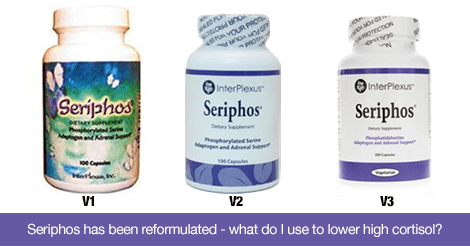
V1. The very old bottle (many years ago): Phospholylated Serine on the front

V2. Old label, original formulation (2 years ago?): Phospholylated Serine on the front

V3. New label, new formulation (5 months ago): Phosphatidylserine on the front

Last month I wrote a blog called Tryptophan and melatonin make a big difference but why do I still wake at 4am? and included a section about high night-time cortisol (measured with an adrenal salivary test) also being a factor with insomnia and waking in the night, often with anxiety. I then shared my top product for lowing high cortisol, Interplexus Seriphos, and had a number of readers (very kindly) inform me that Seriphos has been reformulated. One person shared this:

In your blog you recommend Interplexus Seriphos for those who have a high cortisol problem. What you may not know is that Interplexus changed its proprietary formula sometime March/April 2016 to a form which no longer works for many of us.

This is also true for me as I have been taking the new formula and the sleep issues have returned: waking at 2 am and not being able to go back to sleep. I have asked my functional medicine doctor and called Interplexus but they cannot help. Since you are an expert in such matters, PLEASE, help find another product like the old Seriphos (prior to March 2016) so that all of us who were happy with the old product can get back to the business of sleeping through the night.

Someone else shared this:

I was using the phosphorylated serine found in Interplexus Seriphos from November 2015 until present. For the first 6 months it was like a miracle pill calming me and leaving me feel normal, not like Niagara Falls was rushing through my veins.

Sometime in the spring 2016 I noticed the Seriphos was not working and read the reviews on Amazon that Interplexus had changed the formula.

I was not aware that the formulation had changed

I was not aware that the formulation had changed and love that I get to learn from my community too – thank you for letting me know!

I had not seen any new clients since just before the Anxiety Summit in June and my existing clients who are using the original Seriphos have enough stock to not have noticed the change or brought it to my attention.

It’s such a pity it has been reformulated because it’s been so powerful for lowering high cortisol and quickly when 1-3 x Seriphos (the original) are taken about 2-3 hours before the high cortisol. I first learned about this phosphorylated serine product when working with Julia Ross and continued to use it very successfully in my practice.

As you can see from the feedback above it truly was a lifesaver for these two women and for so many individuals.

I’m going to share what I have discovered thus far

I like to share what I know works but so many of you are desperately seeking a solution right now. I promised to look into what has happened so I’m going to share what I have discovered thus far.

It’s always helpful to learn from feedback from others (both positive and negative) so I read through Steve Gibson’s negative review on Amazon and found the very long thread of comments under this.

I also reached out to my colleagues to ask what they are now using:

  • some had not ever used Seriphos
  • some were also not aware it had changed (the old and new labels are deceptively similar)
  • some had used phosphatidyl serine and found Seriphos to be more effective
  • and many have had/do have success with phosphatidyl serine.

I also contacted Interplexus and was told there are no plans to go bring back the original formulation and they very nicely communicated that they’re sorry and feel they’ve done their best in communicating that it’s a new product.

As you can see from the images above the bottles, I tend to disagree and find it confusing:

V1. The very old bottle (many years ago): Phospholylated Serine on the front

V2. Old label, original formulation (2 years ago?): Phospholylated Serine on the front

V3. New label, new formulation (5 months ago): Phosphatidylserine on the front

So what are your options instead of Seriphos?

It’s going to be a good 3 months before I can definitively give you feedback so these are my suggestions right now since it’s too soon to know for sure. These are based on what I already know, some common sense, some of what we know from the research, feedback from colleagues, and feedback from real people who have been searching for alternatives and trying various combinations:

  • Cortisol Manager by Integrative Therapeutics (1 capsule contains 50mg phosphatidyl serine, theanine and other ingredients)
      • A colleague shared this: “Cortisol Manager can be dosed up to 2-3 tablets per day and used with or without additional phosphatidyl serine which can easily go as high as 600 mg.” He has seen salivary cortisol levels shift with this approach and shared: “Interestingly, I never saw those changes with Seriphos despite being a heavy user between 2009 and 2011 so I thought it was just hype.”
      • Feedback from someone on my blog: “Cortisol Manager was too stimulating with the Ashwagandha”
      • Feedback from a practitioner who first used Cortisol Manager personally and then switched to Seriphos at my recommendation: “Cortisol Manager did nothing for me. I dosed it high enough and took it for a month – but I felt nothing. Seriphos on the other hand, worked the same night, within an hour or two.”
  • Designs for Health PS 150 – Phosphatidylserine 150 mg: non-soy, sunflower sourced phosphatidyl serine with one capsule serving of 150mg
    • Someone shared this on Amazon: “We have equally good results with phosphatidyl serine, but the dose usually needs to be in the 300-500mg range, to equate to what 1 or 2 Seriphos capsules could do.” I don’t know which brand they use used.
    • Feedback from a colleague: “We started using PS150 from DFH and love it.” He often uses this in conjunction with another Designs for Health product called Catecholacalm.
  • Phosphatidyl Serine Powder 50 gms: One quarter teaspoon provides Phosphatidyl Serine 200 mg in a powder form.
    • This one is soy-derived (GMO-free) but may be easier to use to get higher doses
  • Enerphos by T.E. Neesby [Update Oct 2025 – this product is no longer on the Neesby site]
      • It is advertised to be same formula as the original Seriphos
      • Julia Ross recommends this as a replacement
      • One practitioner shared that she has had similar results with this product.
      • I’ve also had feedback from colleagues saying it works half as well. Perhaps doubling the dose would be more effective?
  • Lactium, also known as hydrolyzed casein
    • Biotics Research De-stress is a product I use with clients with good results. It’s calming and based on the research it also lowers high cortisol
  • There is very promising research on essential oils lowering cortisol levels – such as bergamot and I wonder if this approach could be incorporated too?

Update Nov 11, 2016: Relora, which is a proprietary combination of Magnolia bark extract and Phellodendron bark extract that studies show reduces cortisol and perceived daily stress and anxiety, improving mood and reducing fatigue.

I know the original Seriphos was very affordable and very effective for the cost. Using higher amounts of the above products and various combinations is likely to be much more expensive but at least it’s an option to provide relief until we find a longer term solution or until a Seriphos-type product becomes available.

Address all the possible underlying causes of high cortisol

We also don’t want to lose sight of why long-term use of Seriphos is needed and be sure to also focus on addressing all the possible underlying causes of high cortisol: stress, parasites, infections and inflammation, gluten sensitivity and other food sensitivities, low calorie eating, medication side-effects etc.

Please share what helps

If you’ve used Seriphos in the past and have found a solution please let us know.

If you are looking for an alternative to Seriphos please share this list with your practitioner in case they are not aware the formulation has changed. And have them help you find the right combination for your particular needs. Please come back and share what helps so we can all benefit.

If you are a practitioner and have your favorite product or combination please share what is working for your clients/patients.


Update November 18, 2016: I emailed Interplexus asking if they will be bringing back the original Seriphos formula and received this message from them:

Yes, the information is correct we will be returning the previous formula of Seriphos and are expecting to have it late November, unfortunately we do not have a completion date as of yet so the estimated time frame is not a guarantee. It will be the same formula as before and we will also manufacture a Phosphatidylserine standalone product in the future. If you have further questions or concerns feel free to contact, and you’re also welcome to check on the status of Seriphos periodically.

Update January 20, 2017:

The original Seriphos formula is back. This blog post has additional information – Seriphos Original Formula is back: the best product for anxiety and insomnia caused by high cortisol


Filed Under: Antianxiety Tagged With: anxiety, cortisol, Cortisol Manager, insomnia, phosphatidyl serine, phosphorylated serine, seriphos

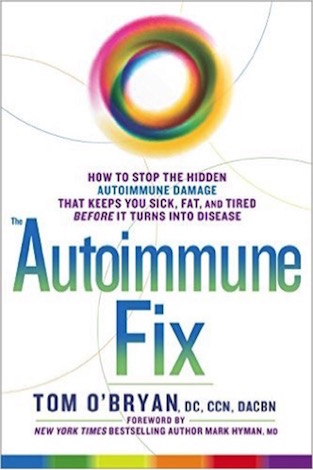
The Autoimmune Fix by Dr. Tom O’Bryan: gluteomorphins, casomorphins and withdrawal

September 23, 2016 By Trudy Scott 4 Comments


autoimmune-fix

Alzheimer’s disease, multiple sclerosis, Type 1 diabetes, Hashimoto’s Thyroiditis, celiac disease, osteoporosis, and lupus are all autoimmune diseases and can be reversed because 70% of them are found in the gut. In Dr. Tom O’Bryan’s new book, The Autoimmune Fix: How to Stop the Hidden Autoimmune Damage That Keeps You Sick, Fat, and Tired Before It Turns Into Disease he provides a practical and much-needed guide to navigating autoimmune diseases to help you feel better and develop a plan that works for you.

A big factor with many autoimmune diseases and conditions is going gluten-free and often going dairy-free too. As Dr. O’ Bryan states:

This does not mean that everyone with a systemic autoimmune disease has a sensitivity to gluten, but it does show the very high correlation.

He also shares that Marios Hadjivassiliou MD believes that

gluten sensitivity is associated with autoimmune disease and that celiac is just one manifestation of it.

Here is a wonderful success story from the book – a gluten-free and dairy-free diet, and the nutrition to heal her intestinal permeability (or leaky gut):

Nancy never left the house without a packet of tissues. She suffered from chronic allergies but could never figure out exactly what she was allergic to. She was also constantly battling her depression, and although she didn’t think of herself as someone who had digestive problems, she always felt bloated. The comforting allure of a box of doughnuts, a pint of ice cream, a bowl of noodles, or, when things were really bad, a roll of raw cookie dough was often too hard to resist and seemed to calm down her anxiety. She dressed to hide her weight gain in public, hoping to pass invisibly through life. She didn’t even consider dating. She had lost interest in men anyway, despite being only 28 years old.

To the average doctor, Nancy was a classic depressed patient who needed a prescription for antidepressants, perhaps some antianxiety medication, and a good weight-loss and exercise program. But here’s what most doctors miss with people like Nancy: Her depression, anxiety, and weight gain were actually the result of immune responses that were causing chronic inflammation. Nancy, like so many women, had a constellation of symptoms that all pointed to one culprit: a systemic inflammatory cascade.

When Nancy came to my office, I ran an antibody test to determine the cause of her problems. I discovered that the culprits for her immune reaction were a sensitivity to gluten and dairy and elevated levels of LPS [lipopolysaccharides] in her blood. These molecules were activating her immune system. But how did these molecules enter her bloodstream? The answer was the third factor: intestinal permeability. With the proper testing and treatment, a gluten- and dairy-free diet, and the nutrition to heal her intestinal permeability, Nancy’s antibody load to LPS reduced within 6 months. She stopped throwing gasoline on the fire (by removing gluten and dairy), and her symptoms began lifting within the first 2 weeks as her inflammation subsided. Within 6 months, she was down two dress sizes and came back to see me, vibrant with life.

It really can be as successful as this and I see these kind of results with so many of my clients who make these few simple changes.

However, for some people, it can be more challenging and you may experience withdrawal symptoms when you give up wheat and dairy, and feel tired, depressed (or anxious) or nauseated:

Some don’t want to exercise, and some have headaches (just like with coffee withdrawal). This is especially true of those who in their blood tests have elevated levels of the peptide in wheat called gluteomorphin or elevated levels of the peptide in dairy called casomorphin.

These poorly digested peptides can stimulate the opiate receptors in the gut and brain. Opiate receptors trigger the production of hormones called endorphins and enkephalins that produce that feel-good response. Remember the last time you laughed out loud in a movie or with your friends? Perhaps you even had belly laughter—when you laugh so hard your belly hurts? Remember how good you felt after that? It’s because your opiate receptors were stimulated and you now have a little more endorphins circulating in your bloodstream. Well, gluten and dairy can mildly stimulate these same receptors. And just as an addict may have withdrawal symptoms when they stop their drug of choice, such may be the case with gluten and dairy withdrawal. My friend William Davis, MD, author of Wheat Belly, even came up with a name for it: wheat withdrawal. The same may be true for removing dairy or sugar.

If this happens to you, don’t be surprised. First of all, this may be the first time you had to give up some of your favorite comfort foods cold turkey. And these favorite foods become comfort foods for a reason: Sugar-laden foods, especially refined carbohydrates, are highly addictive. Your body is actually going through a gliadin-casein-sugar–derived opiate withdrawal.

You may ask how common is it to have these withdrawal symptoms? This can be different for each individual and can differ from one practice to the next:

Dr. Davis [author of Wheat Belly] believes that wheat withdrawal can be quite unpleasant for close to 40 percent of the population. That has not been my clinical experience. Our number has been closer to 10 percent, which is still a substantial number. You may have a friend or family member who has tried to go gluten-free and has told you, “My body must need wheat. It’s been 3 days since I’ve had anything made of wheat, and I feel awful!” This response can be scary. But remember, it’s not that the body needs wheat; it craves it. This is just the body craving a toxic substance that it has gotten accustomed to. Don’t worry: The symptoms will disappear quickly. And best of all, the cravings for sugar and wheat will subside, and then you feel wonderful!

It is interesting to read that Dr. O’Bryan finds that only 10% of his patients have unpleasant withdrawal symptoms. I’d like to add to the discussion and share that with the anxious women that I work with, it’s even higher than the 40% that Dr. Davis reports. It’s in these instances that I find the targeted amino acids so helpful to break the addiction, prevent the need for having to use willpower and provide instant mood and anxiety relief at the same time: tryptophan (if it’s afternoon/evening cravings), GABA (if you stress-eat), DPA (if you comfort-eat) or glutamine (if you crave due to low blood sugar).

Dr. O’Bryan does recommend glutamine for gut healing, together with vitamin D, fish oil, probiotics, zinc carnosine and colostrum. I suspect he doesn’t recommend the amino acids I mentioned above because he doesn’t see as many unpleasant or difficult withdrawal symptoms.

Some of my other favorite sections from this new book include:

  • his brilliant description of the immune system and how antibodies are created, and how inflammation is the primary tool in our immune system’s arsenal that keeps us healthy
  • the differences between autoimmune diseases and the many autoimmune conditions (he lists 159 that are on the autoimmune spectrum!)  
  • the differences between celiac disease and gluten sensitivity
  • the leaky gut and lipopolysaccharides discussion, and the section on the microbiome and dysbiosis (and the big connection to stress)
  • the connection of a disproportionally large forehead to celiac disease (fascinating!)
  • testing and measuring autoantibodies (I love that he calls them “messengers from the future”) and the chart that shows the likelihood as to whether you will develop a particular disease
  • the extensive lists of the hidden sources of gluten in supplements, cosmetics (this is surprisingly long) and even household products
  • the connection between gum disease, mouth bacteria and leaky gut
  • his food and nutrient recommendations
  • the long list of references and study summaries – if you’ve have the wonderful opportunity to have heard Dr. O’Bryan speak live or on summits (he’s a popular speaker on prior Anxiety Summits) you’ll recognize and love this style of his right away

If any of this is new to you and you suspect you may have an autoimmune disease or condition, then this book, The Autoimmune Fix is a must-read. It launched earlier this week and as you would expect from Dr. O’Bryan, it’s brilliant! You can order your copy here on Amazon. This is groundbreaking information we all need to know!

Let us know if you have an autoimmune disease or condition and if going gluten-free and/or dairy-free has helped you? Was it an easy change for you to make or did you experience withdrawal symptoms? Did you power through or did you successfully use amino acids to help? Have you done any of the testing he discusses or addressed dysbiosis? Healed your leaky gut?

If you have already purchased and read the book, please share some of your favorite sections and what has helped you.

Filed Under: Books Tagged With: amino acids, anxiety, Autoimmunity, casomorphin, celiac disease, depression, Dr. O’Bryan, gluten, gluteomorphin, The Autoimmune Fix, tom o’bryan, withdrawal

BPA Exposure: Anxiety, depression and hyperactivity in children

September 21, 2016 By Trudy Scott 10 Comments

bpa-exposure

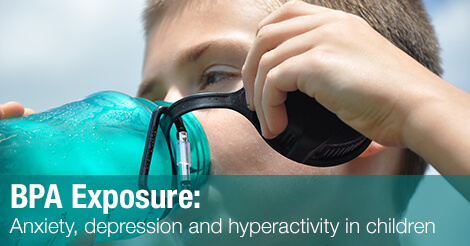
BPA is a chemical that’s found in hard plastics. And it behaves in a very similar way to estrogen and other hormones in the body. And because of this it’s called an endocrine disrupter. And we may find it in water bottles and it’s actually found in baby bottles as well. Interestingly enough, it’s found in dental fillings and sealants and other dental devices. And it’s used as a coating inside food containers and drink cans. So it’s very prevalent. It’s also used on receipts. So we are exposed to it in many different ways. And unfortunately children and babies are especially sensitive to the effects of BPA.

These are snippets from my response to questions Dr. Jay Davidson asks me during my interview on the Detox Project (an online summit) which runs Sept 26 to October 3: can we start talking about neuroendocrine and the toxic effects of maybe something like BPA, Bisphenol A? What is it? Where is it found? And then of course you’re the anxiety expert, so how does that even tie into anxiety as a chemical?

There have been a number of papers that look at the direct effects of a chemical such as BPA on anxiety. And there was a paper actually published earlier this year in March. And it was titled “Bisphenol A Exposure and Children’s Behavior: A Systematic Review.” And what that means is they’re looking at the results of a number of papers. And I’ll just read a few quotes here from the paper.

“We concluded original studies reporting on the association between prenatal and childhood BPA exposure.”

So they’re looking at exposure to BPA before the child is even born. They found that prenatal exposure was related to high levels of anxiety, depression, aggression, and hyperactivity in children. Think about how many kids are put on ADHD medications. Maybe it’s an issue simply because they were exposed to BPA before they were even born.

They also found that BPA exposure in childhood was associated with high levels of anxiety, depression, hyperactivity, and attention problems.

So we’ve got to really look at the chemicals and see is that causing some of these problems. And so it’s always getting back to the root cause and not necessarily thinking, “Well, we need to go ahead and medicate right away.”

I also cover why BPA-free is no longer an option, what to use instead of plastic, the effects of pesticides in our foods and the toxicity of benzodiazepines. My interview is called: Toxicity of Benzodiazepine Medication for Anxiety.

Detoxify your body to aid in prevention of – and possibly overcome – chronic illnesses! The unhealthy amounts of chemicals and toxins in our bodies are causing tremendously negative consequences! Let’s overcome this crisis! I hope you can join us to hear the many topics being covered:

  • Kelly Brogan, MD -Toxic Impact of Antidepressants
  • Suzanne Somers – Tox-Sick: From Toxic to Not Sick
  • Jeffrey Smith – The Toxicity of Glyphosate and GMOs
  • Wendy Myers – Toxic Metals that Cause Fatigue and How to Detox Them
  • Narelle Chenery – Toxic Chemicals Found in “Natural” Skin Care Products!

detox-project

Use this link to register for access: 
https://qt247.isrefer.com/go/DETOX16reg/trudyscottcn/

Use this link to purchase at pre-summit special prices: 
https://qt247.isrefer.com/go/DETOX16order/trudyscottcn/

Filed Under: Detoxification, Events Tagged With: BPA, detox, detox project

Bile and modified citrus pectin for detox: Medicinal Supplements Summit

September 16, 2016 By Trudy Scott 23 Comments

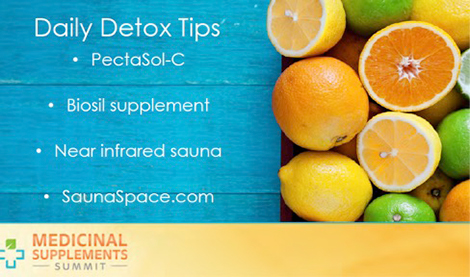
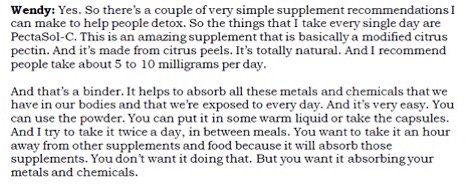
Wendy Myers, co-host of the Medicinal Supplements Summit, addresses minerals, toxins and heavy metals and shares one her favorite supplements for detox support: modified citrus pectin. This entire interview is fascinating!

medicinal-supplements-summit-detox

wendy-detox

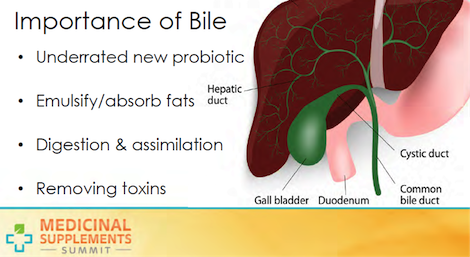
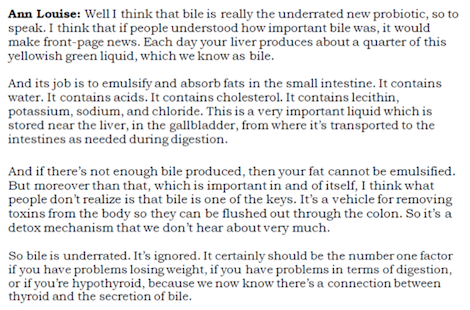
I just love Ann Louise Gittleman’s interview on the importance of bile for absorbing fats, hormone production, removing toxins, thyroid health, digestion and anxiety, and so much more. For promoting bile production and thinning, she covers choline, taurine, beets, lipase, bitter greens, apple-cider vinegar, hot lemon water and more.

bile

ann-louise-gittleman-bile

medicinal-supplements-summit-attend

Tune in to hear these entire interviews and all the other great speakers!

You can use this link to register for access https://qt247.isrefer.com/go/SUPP16reg/trudyscottcn/

And use this link to purchase at summit special prices https://qt247.isrefer.com/go/SUPP16order/trudyscottcn/

Filed Under: Detoxification, Events Tagged With: ann louise gittleman, bile, detox, Medicinal supplements summit, supplements

Sugar vs fat, BPA in cans, PCOS awareness month: in the news

September 16, 2016 By Trudy Scott 2 Comments

sugar-vs-fat

Sugar vs fat, BPA in cans, and PCOS awareness month are all in the news this month so here are some links to more information on each of these topics.

This shocking NPR article covers this new paper about the sugar vs fat debate: 50 years ago, sugar industry quietly paid scientists to point blame at fat

In the 1960s, the sugar industry funded research that downplayed the risks of sugar and highlighted the hazards of fat, according to a newly published article in JAMA Internal Medicine.

The article draws on internal documents to show that an industry group called the Sugar Research Foundation wanted to “refute” concerns about sugar’s possible role in heart disease. The SRF then sponsored research by Harvard scientists that did just that. The result was published in the New England Journal of Medicine in 1967, with no disclosure of the sugar industry funding.

It’s hard to believe that researchers would do this! The worst part is that this type of thing is still happening. You can read some of Marion Nestle’s commentary at the end of the above article.

At least now research sponsors do have to be disclosed so we are hopefully getting better at preventing this type of thing. We must always look at who funds a paper.

canned-foods

A CNN article, Canned foods linked to BPA risk in new study reports:

A study published in the journal Environmental Research on Wednesday not only reveals that consuming canned foods can expose our bodies to BPA, it pinpoints the worst offenders.

The study suggests that canned soups and pasta can expose consumers to higher concentrations of BPA than canned vegetables and fruit – and although those foods are tied to BPA concentrations, canned beverages, meat and fish are not.

BPA stands for bisphenol A, it’s a chemical that is found in plastics and it behaves in a very similar way to estrogen in the body. Because of this it’s called an endocrine disrupter and has an impact on depression, ADHD and anxiety.

An animal study published in 2015, Hypothalamic-pituitary-adrenal axis hyperactivity accounts for anxiety- and depression-like behaviors in rats perinatally exposed to bisphenol A reports

hyperactivity of the HPA [hypothalamic-pituitary-adrenal axis] is an important link between perinatal BPA exposure and persistent potentiation in anxiety and depression

It’s unfortunate they didn’t get a commentary from the Environmental Working Group which has a great short Guide to BPA.

pcos-yoga

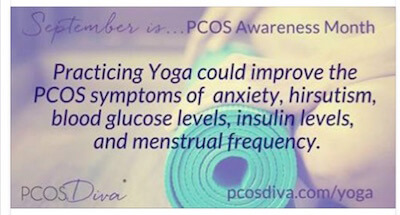
September is PCOS awareness month and here is some wonderful information on yoga for anxiety and PCOS, from my friend and PCOS expert Amy Medling at PCOS Diva. I’m such a big fan of yoga for stress and anxiety but had no idea it could improve these PCOS symptoms:

Yoga can reduce anxiety symptoms, reduce mFG score for hirsutism, improve menstrual frequency, insulin values and more according to a 2012 study. For more about the benefits of yoga for women with PCOS check out this blog post: 5 Reasons Why Yoga is Beneficial for PCOS

In case you’re not familiar with PCOS, Amy shares this overview on her site

PCOS Polycystic Ovarian Syndrome (PCOS) is one of the most common endocrine disorders found in women, affecting approximately 10% of women worldwide, with less than 50% of them diagnosed. The syndrome is present throughout a woman’s life from puberty through post-menopause and affects women of all races and ethnic groups. Women with PCOS wrestle with an array of possible symptoms including obesity, irregular menstrual cycles, infertility, depression [and anxiety], acne, and hair loss. Far reaching health implications such as increased risk of cardiovascular disease and diabetes make these already stressful symptoms even more daunting.

What do you think? Are you shocked about the sugar study discovery? Do you already avoid BPA? Do you have PCOS or know someone who has PCOS?

Filed Under: Sugar and mood, Yoga Tagged With: anxiety, BPA, depression, fat, PCOS, sugar, yoga

DPA to end comfort-eating, end weepiness and boost endorphins

September 10, 2016 By Trudy Scott 83 Comments

medicinal-supplements-summit-speakers

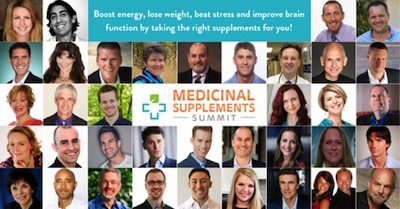
The Medicinal Supplements Summit runs September 12 -19 and is dedicated to helping you learn the latest in supplement customization to boost energy, lose weight, beat stress, improve brain function and heal your body! 

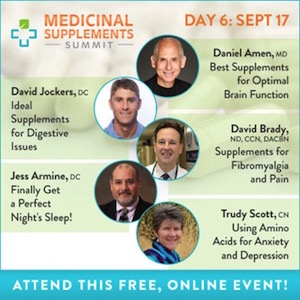
My interview addresses amino acids for both anxiety and depression – I talk about GABA, tryptophan, 5-HTP (and when not to use it), DPA, glutamine and tyrosine.

medicinal-supplements-summit-day6

Wendy asks me to share more about DPA for the low endorphins kind of depression, comfort eating, emotional pain, weepiness and physical pain. Here are some snippets on this topic from my interview:

DPA is D-phenylalanine. It’s an amino acid that actually destroys the enzyme that breaks down endorphins. Endorphins are feel-good chemicals that we may relate to when you hear about getting an endorphin rush, when you go for a run or when someone gives you a big hug or when you do something nice for someone or someone does something nice for you, you get that nice sort of feel good feeling, like you’ve got this big hug kind of feeling. So taking this amino acid, DPA, helps, in essence, to raise your endorphins.

There are different kinds of depression. I mentioned the low serotonin depression, which is more the anxiety kind of depression. With the low endorphin kind of depression, you’re very weepy. You may be overly emotional. So if you watched a TV ad or you watched a really sad movie, you may be more prone to crying than the average person. As well as being sensitive to emotional pain, which is the crying and the weepiness, you also tend to be sensitive to physical pain.

So we know that doing acupuncture raises your endorphin levels. And in that way it helps with pain. So taking this amino acid will help with that emotional sadness that you often feel when you’ve got low endorphins. And it is very, very helpful for physical pain as well. I find a number of clients with physical pain that is related to low endorphins. Pain can be related to low oxalates or nightshades, something physical, or even osteoarthritis. So you’ve got some kind of physical issue. But if it’s related to low endorphins you’ll actually see a really nice pain reduction effect from it.

Now, the big thing with low endorphins is this comfort eating. So I mentioned earlier with low serotonin you have the anxiety and the depression and the afternoon and the evening cravings. With low endorphins, as well as this emotional aspect and the pain aspect, the cravings part is very much a comfort kind of craving.

It’s like, “This is my reward. This is my treat. I deserve it.” And when you consume those carbohydrates, that bowl of ice cream, that bowl of cereal, that chocolate chip cookie, you feel like this is my reward. I deserve it. So a lot of people will resonate with the low endorphins kind of emotional eating. And when they get on DPA their mood improves, and this comfort eating goes away.

Tune in to hear my entire interview and all the other great speakers!

You can use this link to register for access: https://qt247.isrefer.com/go/SUPP16reg/trudyscottcn/

And use this link to purchase at pre-summit special prices:
https://qt247.isrefer.com/go/SUPP16order/trudyscottcn/

Filed Under: Events, GABA Tagged With: 5-HTP, aminos for anxiety, comfort eating, depression, DPA, emotional, GABA, glutamine, Medicinal supplements summit, tryptophan, tyrosine

  • Page 1
  • Page 2
  • Go to Next Page »

Primary Sidebar

GABA QuickStart Homestudy

gaba quickstart homestudy

Free Report

9 Great Questions Women Ask about Food, Mood and their Health

You'll also receive a complimentary subscription to my ezine "Food, Mood and Gal Stuff"


Connect with me

Popular Posts

  • Amino Acids Mood Questionnaire from The Antianxiety Food Solution
  • The Antianxiety Food Solution Amino Acid and Pyroluria Supplements
  • Pyroluria Questionnaire from The Antianxiety Food Solution
  • Collagen and gelatin lower serotonin: does this increase your anxiety and depression?
  • Tryptophan for the worry-in-your-head and ruminating type of anxiety
  • GABA for the physical-tension and stiff-and-tense-muscles type of anxiety
  • The Antianxiety Food Solution by Trudy Scott
  • Seriphos Original Formula is back: the best product for anxiety and insomnia caused by high cortisol
  • Am I an anxious introvert because of low zinc and vitamin B6? My response to Huffington Post blog
  • Vagus nerve rehab with GABA, breathing, humming, gargling and key nutrients

Recent Posts

  • Her cravings for chips and peanut butter were triggered by stress: GABA ends cravings and reduces physical tension and fear of heights
  • It is truly miraculous to be able to move through life without crippling anxiety and panic
  • GABA and tryptophan combo provide immediate and noticeable relief for tremors and cervical dystonia in just 7 days
  • Red light therapy for back and neck pain, plantar fasciitis and low mood – a complement to the amino acids GABA, DPA and tryptophan
  • What do I use instead of Seriphos to help lower high cortisol that is affecting my sleep and making me anxious at night?

Categories

  • 5-HTP
  • AB575
  • Addiction
  • ADHD
  • Adrenals
  • Alcohol
  • Allergies
  • Alzheimer's disease
  • Amino Acids
  • Anger
  • Antianxiety
  • Antianxiety Food Solution
  • Antidepressants
  • Anxiety
  • Anxiety and panic
  • Autism
  • Autoimmunity
  • benzodiazapines
  • Bipolar disorder
  • Books
  • Caffeine
  • Cancer
  • Candida
  • Children/Teens
  • Collagen
  • Cooking equipment
  • Coronavirus/COVID-19
  • Cravings
  • Depression
  • Detoxification
  • Diabetes
  • Diet
  • DPA/DLPA
  • Drugs
  • EFT/Tapping
  • EMF
  • EMFs
  • Emotional Eating
  • Endorphins
  • Environment
  • Essential oils
  • Events
  • Exercise
  • Fear
  • Fear of public speaking
  • Fertility and Pregnancy
  • Fish
  • Food
  • Food and mood
  • Functional neurology
  • GABA
  • Gene polymorphisms
  • General Health
  • Giving
  • Giving back
  • Glutamine
  • Gluten
  • GMOs
  • Gratitude
  • Gut health
  • Heart health/hypertension
  • Histamine
  • Hormone
  • Hyperparathyroidism
  • Hypoglycemia
  • Immune system
  • Inflammation
  • Insomnia
  • Inspiration
  • Introversion
  • Joy and happiness
  • Ketogenic diet
  • Lithium orotate
  • Looking awesome
  • Lyme disease and co-infections
  • MCAS/histamine
  • Medication
  • Men's health
  • Mental health
  • Mercury
  • Migraine
  • Mold
  • Movie
  • MTHFR
  • Multiple sclerosis
  • Music
  • NANP
  • Nature
  • Nutritional Psychiatry
  • OCD
  • Osteoporosis
  • Oxalates
  • Oxytocin
  • Pain
  • Paleo
  • Parasites
  • Parkinson’s disease
  • PCOS
  • People
  • PMS
  • Postpartum
  • PTSD/Trauma
  • Pyroluria
  • Questionnaires
  • Real whole food
  • Recipes
  • Research
  • Schizophrenia
  • serotonin
  • SIBO
  • Sleep
  • Special diets
  • Sports nutrition
  • Stress
  • Sugar addiction
  • Sugar and mood
  • Supplements
  • Teens
  • Testimonials
  • Testing
  • The Anxiety Summit
  • The Anxiety Summit 2
  • The Anxiety Summit 3
  • The Anxiety Summit 4
  • The Anxiety Summit 5
  • The Anxiety Summit 6
  • Thyroid
  • Thyroid health
  • Toxins
  • Tryptophan
  • Tyrosine
  • Uncategorized
  • Vegan/vegetarian
  • Women's health
  • Yoga

Archives

  • May 2026
  • April 2026
  • October 2025
  • September 2025
  • August 2025
  • July 2025
  • June 2025
  • May 2025
  • April 2025
  • March 2025
  • February 2025
  • January 2025
  • November 2024
  • October 2024
  • September 2024
  • August 2024
  • July 2024
  • June 2024
  • May 2024
  • April 2024
  • March 2024
  • February 2024
  • January 2024
  • December 2023
  • November 2023
  • October 2023
  • September 2023
  • August 2023
  • July 2023
  • June 2023
  • May 2023
  • April 2023
  • March 2023
  • February 2023
  • January 2023
  • December 2022
  • November 2022
  • October 2022
  • September 2022
  • August 2022
  • July 2022
  • June 2022
  • May 2022
  • April 2022
  • March 2022
  • February 2022
  • January 2022
  • December 2021
  • November 2021
  • October 2021
  • September 2021
  • August 2021
  • July 2021
  • June 2021
  • May 2021
  • April 2021
  • March 2021
  • February 2021
  • January 2021
  • December 2020
  • November 2020
  • October 2020
  • September 2020
  • August 2020
  • July 2020
  • June 2020
  • May 2020
  • April 2020
  • March 2020
  • February 2020
  • January 2020
  • December 2019
  • November 2019
  • October 2019
  • September 2019
  • August 2019
  • July 2019
  • June 2019
  • May 2019
  • April 2019
  • March 2019
  • February 2019
  • January 2019
  • December 2018
  • November 2018
  • October 2018
  • September 2018
  • August 2018
  • July 2018
  • June 2018
  • May 2018
  • April 2018
  • March 2018
  • February 2018
  • January 2018
  • December 2017
  • November 2017
  • October 2017
  • September 2017
  • August 2017
  • July 2017
  • June 2017
  • May 2017
  • April 2017
  • March 2017
  • February 2017
  • January 2017
  • December 2016
  • November 2016
  • October 2016
  • September 2016
  • August 2016
  • July 2016
  • June 2016
  • May 2016
  • April 2016
  • March 2016
  • February 2016
  • January 2016
  • December 2015
  • November 2015
  • October 2015
  • September 2015
  • August 2015
  • July 2015
  • June 2015
  • May 2015
  • April 2015
  • March 2015
  • February 2015
  • January 2015
  • December 2014
  • November 2014
  • October 2014
  • September 2014
  • August 2014
  • July 2014
  • June 2014
  • May 2014
  • April 2014
  • March 2014
  • February 2014
  • January 2014
  • December 2013
  • November 2013
  • October 2013
  • September 2013
  • August 2013
  • July 2013
  • June 2013
  • May 2013
  • April 2013
  • March 2013
  • February 2013
  • January 2013
  • December 2012
  • November 2012
  • October 2012
  • August 2012
  • July 2012
  • June 2012
  • May 2012
  • April 2012
  • March 2012
  • February 2012
  • January 2012
  • December 2011
  • November 2011
  • October 2011
  • September 2011
  • August 2011
  • July 2011
  • June 2011
  • May 2011
  • April 2011
  • March 2011
  • February 2011
  • January 2011
  • December 2010
  • October 2010
  • September 2010
  • July 2010
  • May 2010
  • April 2010
  • March 2010
  • February 2010
  • January 2010
  • November 2009

Share the knowledge!

The above statements have not been evaluated by the Food and Drug Administration. Products listed in this website are not intended to diagnose, treat, cure or prevent any disease.

The information provided on this site is for informational and educational purposes only and is not intended as a substitute for advice from your physician or other health care professional. You should consult with a healthcare professional before starting or modifying any diet, exercise, or supplementation program, before taking or stopping any medication, or if you have or suspect you may have a health problem.


Copyright © 2026 Trudy Scott. All Rights Reserved. | Privacy | Terms and Conditions | Refund Policy | Medical Disclaimer

Free Report

9 Great Questions Women Ask about Food, Mood and their Health

You’ll also receive a complimentary subscription to my ezine “Food, Mood and Gal Stuff”