• Skip to primary navigation
  • Skip to main content
  • Skip to primary sidebar

everywomanover29 blog

Food, Mood and Women's Health – Be your healthiest, look and feel great!

  • Blog
  • About
  • Services
  • Store
  • Resources
  • Testimonials
  • The Book
  • Newsletter
  • Contact
  • Search this site

stress

GABA Calm instead of Xanax for panic attacks, heightened stress and anxiety: questions and my feedback

April 12, 2019 By Trudy Scott 42 Comments

Last month I shared Dee’s wonderful results with using GABA Calm for her panic attacks, heightened stress and anxiety. I posted the following on Facebook and it led to some really good questions so here they are with my feedback in case you have similar questions about using GABA, which is a calming amino acid. This is Dee’s feedback:

I have taken Xanax in the past for panic attacks. My functional medicine doctor suggested GABA Calm as I wanted a natural product. I was amazed how it works just like the Xanax did – instant calm feeling within 10 mins of taking 2 capsules. I use them as needed when I am having heightened stress and anxiety.

These are wonderful results for Dee and what a great functional medicine doctor she has. I get feedback like this all the time with my clients. In fact, I had this positive feedback on the Facebook post:

  • “Yes absolutely treat the anxiety while finding root cause” – I agree with this but would add that low GABA is one of the root causes we are addressing right away
  • I have GAD enzyme deficiency. B6, Magnesium, theanine, and GABA are a must
  • GABA saved my life – my functional medicine doctor gave me the same thing!


(1) The first question I received was about which product and which form of GABA:

The Gaba Calm that is being mentioned by Dee says 2 capsules – would you please provide a link for that? I see the one you mention as a lozenge – which I’d like to try as well. Do they contain pharmaGaba or synthetic GABA? I read that the pharmaGaba is superior – your thoughts on this?

This is the GABA product Dee is referring to: Source Naturals GABA Calm and she used 2 sublingual lozenges.

As a recap (in case you’re new to the low GABA type of anxiety) when you have low GABA levels you will have physical anxiety with stiff and tense muscles as well as feelings of stress, overwhelm and may even have panic attacks.

The amino acid GABA helps to raise GABA levels and ease these symptoms very quickly. I find that all GABA products are most effective when taken sublingually or opened on to the tongue. This is why I recommend the Source Naturals GABA Calm™ product.

This is my most popular and most effective form of GABA I use with my clients. It is a pleasant-tasting sublingual product that you can buy at your local health-store and in my online supplement store.

I prefer to start with GABA with my clients but folks do better with pharmaGABA so it’s matter of doing a trial to figure it out.

(2) Someone also asked if you can you take it if you are on antidepressants?

There are no known issues that I am aware of and I use GABA calm with clients who are prescribed antidepressants.

(3) One woman had a concern about her prior use and how GABA made her feel worse:

2 capsules at what dosage? I tried one at 750 mg and made me feel more panicked. Maybe it’s the strength?

I always have my clients start LOW, typically at 125mg, which is the amount in one GABA Calm lozenge. We start even lower (like ¼ of a lozenge) if they are very sensitive to supplement or medications. Higher doses like 750mg (and even 500mg for some people) is way too much for most folks to start on and can make you feel worse and even cause a panic attack, make you feel flushed and light-headed and very sleepy.

(4) One woman said, “unfortunately GABA didn’t work for me” but lithium orotate (5-10 mg per day did help her – “Great mood stabilizer”

When GABA doesn’t help to ease anxiety, it could be for a number of reasons:

  • the root cause of the anxiety wasn’t due to low GABA (perhaps it’s the low serotonin anxiety) or
  • it wasn’t enough GABA (we titrate up from 125mg until we find the ideal amount for each person) or
  • too much GABA was used (as above) or
  • it wasn’t actually GABA that was used (some people say GABA when they used the medication gabapentin or used Phenibut) or
  • the GABA was not used sublingually (this is the best way to use it for quickest results) or
  • the person has thyroid issues (the amino acids are less effective in this instance)

I do like lithium orotate as a mood stabilizer and find that for some individuals this does make the amino acids more effective. The fact that lithium worked for her makes me think there is some GABA involvement in her anxiety because lithium seems to support increased levels of GABA. Dr. Peter Bongiorno writes about this in his book Put Anxiety Behind You.

(5) One person shared her success with exposure therapy and acceptance and cognitive behavior therapy (CBT) instead of using GABA, and a concern about a lifetime need for GABA. I’m paraphrasing some of the discussion:

I have recovered from GAD, panic disorder, OCD and depression from exposure therapy and acceptance and cognitive behavior therapy (CBT). It takes a lot of work and understanding but anxiety and panic can be recovered, and you don’t have use ANY external substances.

We can’t take GABA for a whole life time and it isn’t a permanent solution. Anxiety comes with a LOT more than uncomfortable feelings. Unfortunately for myself and many others GABA had no significant impact on anxiety. No external substance is going to correct a cognitive disorder.

GABA is not a life-time solution. The goal is to take GABA short-term and address other root causes that are leading to low GABA such as poor gut health, gluten issues, diet (not enough quality protein or health fats), stress/adrenals, sex hormone imbalances, heavy metals, Lyme disease and so on.

As I mention in #4 above there are reasons when the GABA doesn’t work or doesn’t seem to work.

I respectfully disagree that “No external substance is going to correct a cognitive disorder.” I’m all for CBT but many folks have to address their biochemistry too for lasting results. I also have many therapist colleagues who share that CBT and other therapy is often more effective when someone is nutritionally stable and with no deficiencies or biochemical imbalances. I say let’s use everything at our disposal to feel good again!

I’m really pleased she found results with acceptance and cognitive behavior therapy. I will admit that I’m not a big fan of exposure therapy as I’m concerned about the added stress for someone who is already anxious. I’ve also worked with a number of clients who have not seen long-term results with exposure therapy.

Here are three additional GABA success stories:

  • GABA for children: ADHD, focus issues, irritability, anxiety and tantrums
  • GABA helps with Lyme anxiety (while addressing the underlying disease)
  • GABA for ending sugar cravings (and anxiety and insomnia)

In case this is relevant for you, the product mentioned in this blog can be found in my online store:

  • Source Naturals GABA Calm (with additional information here)

If for some reason GABA Calm isn’t the best product for you, a low dose GABA-only product or combination GABA/theanine product can easily be opened onto the tongue in order to provide similar benefits to the lozenge. You can find some examples on my supplements blog here and purchased from my online store:

  • Nutritional Fundamentals for Health GABA-T SAP: gamma-aminobutyric acid (GABA) 300 mg, l-theanine 150 mg. This is pleasant-tasting when opened on to the tongue and works very well when GABA Calm can’t be used.  I find best results when it is used opened on to the tongue.
  • Enzymatic Therapy GABA: gamma-aminobutyric acid (GABA) 250 mg. This is also pleasant-tasting when opened on to the tongue and works very well when GABA Calm can’t be used.  As with all GABA products, I find best results when it is used opened on to the tongue.
  • ProThera 500mg GABA: gamma-aminobutyric acid (GABA) 500 mg.  You will likely need to open this up and start with less than a full capsule during the day. A full capsule may be fine at night for some individuals)

I’d love to hear if these questions and my feedback have been helpful for you as you navigate the low GABA type of anxiety? Do you have additional GABA questions for me? Or a GABA success story to share? Please post in the comments below.
Filed Under: GABA Tagged With: anxiety, CBT, exposure therapy, GABA, GABA Calm, panic attacks, Source naturals, stress, theanine, Xanax

Perimenopause and menopause: low GABA, pyroluria and the adrenals

March 16, 2019 By Trudy Scott 14 Comments

As you go into perimenopause and menopause you don’t have to settle for increased anxiety, dull moods, depression, a foggy brain, a flabby belly, night sweats, insomnia, fatigue, low libido, weight gain and the bone loss that so “common” and “accepted” with getting older.

There are natural, effective and easy-to-implement solutions to balance your hormones at any age!

My perimenopausal symptoms hit with a vengeance in my late 30s. The stress that I was experiencing at work, together with all the hormone changes and what I call my “perfect storm” of gluten issues, heavy metals, low GABA, low serotonin, low zinc, adrenal issues, vegetarian diet, candida, pyroluria and leaky gut, all worked together to cause my anxiety and panic attacks.

I didn’t settle and as soon as I used GABA and tryptophan the anxiety and panic attacks stopped and I could take a step back and work on all the other underlying issues, without all the overwhelm.

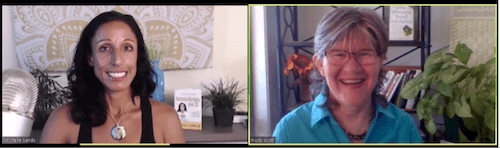
I share my story in my interview on the Perimenopause Summit with summit host Dr. Michelle Sands, and go into great detail about how to use the amino acids in the most effective way to ease anxiety, worry, fear, negative self-talk, ruminations and overwhelm.

I also share a study about tryptophan easing PMS symptoms in just 3 cycles, as well as some of my other tips for PMS symptom relief (think liver support).

I also talk about a topic that no-one is addressing and yet there is such a simple solution for this excruciatingly painful condition called proctalgia fugax. You may not have heard this term but if you have you know it! In the medical literature it is described as “a condition that leads to rectal spasms and sharp fleeting pain in the lower rectum or anus.” Sublingual GABA works miracles in a few minutes).

My interview – Amino Acid Therapy for Anxiety

  • Problems with commonly prescribed anti-anxiety meds
  • How food affects mood
  • Right and wrong way to use amino acid therapy

Unfortunately, hormone and women’s health issues are incredibly misdiagnosed and misunderstood, leaving many women feeling hopeless, broken and stuck.

Dr. Michelle gets all this because she was also there, in her 20s with irregular and absent periods, mood swings, joint pain, infertility, low libido, digestive issues and insomnia. She was told her ovaries had failed and to manage her symptoms for the rest of her life with birth control pills, antidepressants and other medications. So, she found a better way — a natural way to help her body heal itself — and she’s here to teach you how to do the very same, no matter whether you’re in your 20s or decades older!

The pyroluria perimenopause connection

There are little known connections between pyroluria (a social anxiety condition) and perimenopause.

The nutrients, zinc, vitamin B6 and evening primrose oil, eliminate the social anxiety symptoms and have a direct tie in to perimenopause because these same nutrients:

  • are needed to make neurotransmitters like GABA and serotonin
  • are also are needed to make our sex hormones (and help so much with PMS and perimenopausal hormone imbalance)

In my interview with Dr. Michelle I also share how I discovered I had pyroluria before I even knew what pyroluria was. I was in perimenopause and had terrible PMS. I read Ann Louise Gittleman’s wonderful book Before the Change: Taking Charge of Your Perimenopause (my Amazon link), and she recommended zinc, vitamin B6, and evening primrose oil for PMS symptoms. Once I started taking these nutrients I had fewer hormonal issues and they helped so much with my social anxiety.

A few years later when I was working with clients with pyroluria and I looked at the pyroluria questionnaire I thought: “that looks like me, maybe I’ve got this too!” I did the urine test and I discovered that I have pyroluria.

In my interview I talk about :

  • the pyroluria-introvert connection and why I believe there is a nutritional aspect to introversion and it’s not purely a personality trait
  • the pyroluria-Lyme connection and how Klinghardt feels that Lyme Disease cannot be treated until the underlying pyroluria is addressed

Be sure to also tune in to Ann Louise Gittleman’s interview. Her discussion about zinc and copper is a perfect complement to my interview.

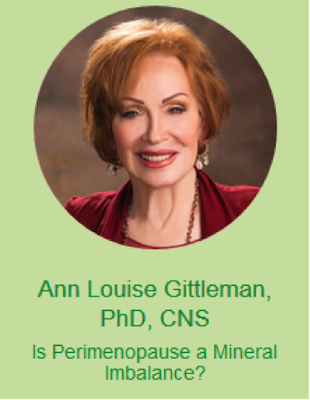
Ann Louise Gittleman, PhD, CNS: Is Perimenopause a Mineral Imbalance?

  • Do you have toxic levels of this mineral (copper)?
  • Best way to test mineral imbalance
  • Overcoming nutrient and mineral imbalance

Adrenal health is so important during perimenopause

Adrenal health is so important during perimenopause. This is covered in this interview – Adrenals are a Perimenopausal Gal’s Bestie with Marcelle Pick MSN, OB-GYN, NP. She covers the following:

  • Role of the adrenal glands in hormone balance
  • Causes and consequences of adrenal burnout
  • Caring for your adrenals.

And shares these gems:

  • Prior to menopause about 15% of our sex hormones are produced by our adrenals and after menopause it’s 30% – this is why adrenal health is so important!
  • When you are stressed the adrenals will make cortisol at the expense of estrogen and progesterone

She also talks about how we handle stress impact the adrenals and why it’s so important to work on lifestyle changes. One great example she shares is this: “are we a perfectionist and do we expect too much of ourselves?”

I’d like to add to this and say that the first step is recognizing that you are a perfectionist and reminding you that perfectionism is a classic sign of low serotonin. That way you can consider using the amino acids tryptophan or 5-HTP to say goodbye to perfectionism and ease some of your stress.

I talk all about low serotonin in my interview but want to help you make this connection as you listen to Dr. Marcelle’s and my interviews.

Dr. Marcelle also discusses what to eat, some of her favorite adaptogenic herbs for the adrenals, exercise advice (and why to do less when you are healing your adrenals) and the effects of childhood trauma.

Do let us know if any of this resonates with you and feel free to post questions in the comments below.

Filed Under: Women's health Tagged With: adrenals, GABA, Michelle Sands, perimenopause, pyroluria, stress

I have issues with perimenopausal anxiety a couple of weeks per month and don’t want to turn to SSRIs.

March 8, 2019 By Trudy Scott 10 Comments

My challenges with anxiety have been hormonal. I’ve had issues with both postpartum anxiety and now perimenopausal anxiety a couple of weeks per month as I’m approaching menopause. I don’t want to turn to SSRIs but some days are pretty miserable and most other days I feel fine. Any info you have to share regarding this topic or any natural solutions would be of great interest.

When I’m working with a client who reports symptoms like this we start with serotonin and GABA support; determine if they have low zinc, low vitamin B6 and low iron. I also always ask the question: are you on the birth control pill (now or in even in the past).

I’ve blogged about much of this in the past so I’m going to share snippets and blogs for further reading.

Serotonin support with tryptophan for immediate worry-type anxiety relief

In a study published in 1999, A placebo-controlled clinical trial of L-tryptophan in premenstrual dysphoria, tryptophan was found to reduce symptoms of PMS when used in the luteal phase or second half of the cycle (i.e. after ovulation).

This is very typical when I’m working with someone with both PMS (premenstrual syndrome) and perimenopausal anxiety, depression, irritability and mood swings. It typically takes 2 to 3 cycles for an amino acid like tryptophan to have an impact on the cyclical nature of your perimenopausal symptoms.

However, tryptophan does typically start to work right away on the less severe anxiety and mood symptoms assuming you find the ideal dose for your needs. I use the trial method to help my clients figure this out.

When you boost serotonin you also reduce the worry-in-your-head and ruminating type of anxiety, and end to panic attacks and phobias, a boost of confidence, no more depression and negativity, imposter syndrome that is no more, an end to your anger issues and irritability, an improvement in sleep and no more afternoon/evening cravings for something sweet.

You can read more about tryptophan here: Tryptophan for the worry-in-your-head and ruminating type of anxiety

GABA support for relief from tension-type anxiety

During perimenopause progesterone is often low and when it is low, we can expect GABA to be low too. Research confirms low GABA and high glutamate-glutamine in premenstrual dysphoric disorder (PMDD) and that shifting hormones may lead to dysregulation of GABA which contributes to HPA axis dysfunction. The HPA (hypothalamic pituitary adrenal) axis is your stress response system and when it’s not functioning well you are more susceptible to the effects of stress and more likely to feel depressed and anxious.

If your GABA levels are low you will feel increased physical tension and insomnia. The amino acid GABA, opened on to the tongue, can provide calming results within minutes.

Dee likes the instant calm and compares how it worked as well as Xanax had worked for her in the past:

I have taken Xanax in the past for panic attacks. My functional medicine doctor suggested this product as I wanted a natural product. I was amazed how it works just like the Xanax did – instant calm feeling within 10 mins of taking 2 capsules. I use them as needed when I am having heightened stress and anxiety.

Low zinc, low vitamin B6 and/or low iron?

Low iron/ferritin is common if you’re still having a period and it’s one of the important -cofactors for making serotonin, thyroid hormones and the sex hormones. Low iron, together with low vitamin B6 plays a role in anxiety and panic attacks. In one study premenopausal women who had been admitted to the emergency room with panic attacks were found to have both low iron and low vitamin B6. I have an entire blog post on this topic here

The other key co-factor for making serotonin is zinc. You’ll want to look into and address pyroluria if you feel more anxious in social situations like family gatherings, going to church events or community picnics, or even while doing business networking or in work meetings. The key nutrients for pyroluria are zinc and vitamin B6 and both help with PMS and perimenopausal anxiety, and hormone balance.

Are you on the birth control pill?

I recently reviewed Beyond the Pill A 30-Day Program to Balance Your Hormones, Reclaim Your Body, and Reverse the Dangerous Side Effects of the Birth Control Pill by Dr. Jolene Brighten.

If you currently on the pill or have been in the recent past read the above review and get the book to give you an excellent understanding of what may be going on with your body.

Dr. Jolene shares that mood disruption is common and mentions a study in the Journal of the American Medical Association which reports the following:

women who began the pill were more likely to be prescribed an antidepressant – which means it contributes to a bit more than moodiness

She writes in great detail about Post–birth control syndrome (PBCS) which is “is a constellation of symptoms women experience when they discontinue hormonal birth control.” She has found the symptoms of PBCS typically occur in the first 4-6 months after stopping the pill. As well as mood swings and anxiety, you may also experience heavy bleeding or no period, acne, headaches, infertility, pill-induced PCOS (polycystic ovarian syndrome), hypothyroidism, gut issues and even autoimmune symptoms.

You also want to reduce your stress levels. Here are some ideas for you:

  • Get into nature and experience the incredible benefits of forest bathing
  • Do some bird-watching in your backyard or at a nearby park: People living in neighborhoods with more birds, shrubs and trees are less likely to suffer from depression, anxiety and stress
  • Get outside and start bouldering or go and “play” in a climbing gym: A growing body of research suggests that bouldering, a form of rock climbing, can help build muscle and endurance while reducing stress

All the above is a great starting point. You also want to consider adrenal support if needed; and support liver health, together with dietary changes, addressing gut health and thyroid health, getting toxins out of your life and figuring out whatever your own root causes may be.

Here is the link to the amino acids and pyroluria supplements I use with my clients.

Have you found that any of the above has helped you with your PMS or perimenopausal anxiety?

Do you have any stress-relief tips to share with other women who find themselves so stressed out at this age?

Feel free to post questions here too.

Filed Under: Women's health Tagged With: adrenals, anxiety, Beyond the Pill, bird-watching, bouldering, depression, forest bathing, GABA, iron, perimenopause, serotonin, stress, the pill, vitamin B6, zinc

Tulsi or holy basil: adaptogenic herb for adrenal support, anxiety and anti-stress effects

March 1, 2019 By Trudy Scott 16 Comments

One very effective approach for supporting the adrenals, reducing anxiety and providing general anti-stress support is using a herbal adaptogen. One of my favorite herbal adaptogens and one that I have found to be very effective and well tolerated by my clients is tulsi, also known as holy basil or the “Elixir of Life” in Ayurveda. I also really like rhodiola. ashwagandha and licorice root but we’ll cover these in another blog.

As stated in this 2017 paper, The Clinical Efficacy and Safety of Tulsi in Humans: A Systematic Review of the Literature

Tulsi, also known as holy basil, is indigenous to the Indian continent and highly revered for its medicinal uses within the Ayurvedic and Siddha medical systems. Many in vitro, animal and human studies attest to tulsi having multiple therapeutic actions including adaptogenic, antimicrobial, anti-inflammatory, cardioprotective, and immunomodulatory effects.

The above paper is a review of the literature and the 24 studies that were included, reported favorable therapeutic effects of tulsi for humans and no significant adverse effects. Only one clinical trial reported mild nausea that lasted a short while.

The authors conclude that the outcome of this review

reinforces traditional uses and suggests tulsi is an effective treatment for lifestyle-related chronic diseases including diabetes, metabolic syndrome, and psychological stress.

With regards to psychological stress, three of the clinical studies reviewed

reported significant reduction in anxiety and stress levels with higher doses of tulsi given over a longer time period.

The positive effect of tulsi on mood was demonstrated … with two studies reporting reductions of 31.6%–39% in overall stress-related symptoms in patients with psychosomatic problems compared to a control group.

In two of these stress studies the dosage ranged from 300mg to 400mg 3 x day and was taken either before or after a meal. In one stress study, 3g (3,000mg) twice a day was used. In all the stress/anxiety studies improvements were observed in 4-12 weeks.

The review also looked at studies on metabolic disorders i.e. type 2 diabetes with “measures of blood glucose, lipids, and blood pressure” and studies on immunity, all showing benefits. In one of the immunity studies, the participants were given 10g (10,000mg) /day for viral hepatitis and symptoms all improved within 2 weeks. I’m sharing this so you can see that the dosage varies depending on the condition and severity of symptoms.

Adrenal support, anxiety, depression and radiation-protection

Here are some additional animal studies that support the use of holy basil or tulsi for adrenal support, for easing anxiety and even depression, and for the anti-stress effect it offers:

  • Anti-stress Activity of Ocimum sanctum: Possible Effects on Hypothalamic-Pituitary-Adrenal Axis

found to be effective in the management of stress effects, and anti-stress activity could be due to inhibition of cortisol release

  • Effects of Ocimum sanctum and Camellia sinensis on stress-induced anxiety and depression in male albino Rattus norvegicus

With all the WiFi we are exposed to and the fact that research is now showing that EMFs (electromagnetic frequencies) are likely playing a role in anxiety, depression and ADHD, I’m really pleased to see there are also some animal studies on tulsi being protective against radiation.

Consuming tulsi tea on a daily basis

The review paper above mentions

the Ayurvedic tradition of consuming tulsi on a daily basis

and an easy and delicious way to do this is to drink it as a herbal tea.

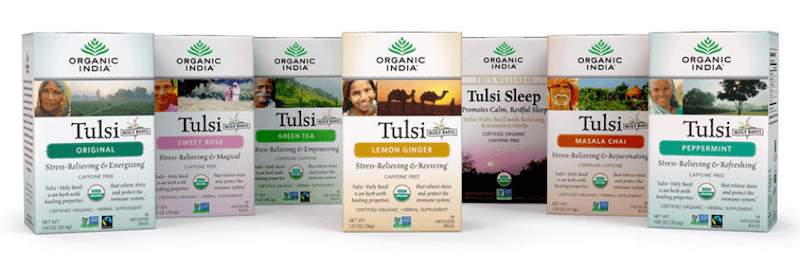
Next time you’re ordering your amino acids and pyroluria supplements from my online store with Fullscript, be sure to add a few boxes of Organic India tulsi tea to your shopping cart. This way you can enjoy the healing and anti-stress benefits of tulsi together with the many other herbs included in their teas.

The Lemon Ginger Tulsi has been a long-time favorite of mine and is wonderful when flying to counter motion sickness. Based on the radiation research I uncovered when writing this blog. I’m thrilled I’ll be getting those benefits when flying too. I also enjoy the Peppermint Tulsi early in the day and have recently found a new favorite, the Tumeric Ginger Tulsi (not pictured below). Just so you know, you can also find the herbal teas in most health shops and natural food markets.

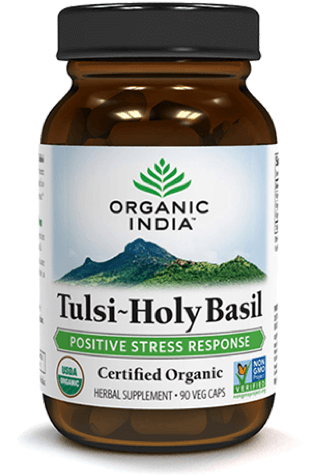
The adaptogenic Tulsi-Holy Basil product

Organic India also carries the wonderful adaptogenic Tulsi-Holy Basil product which is taken as a supplement. This is an option if you’re not a herbal tea drinker and/or you need some additional support.

If you’re interested in purchasing the tea or Tulsi-Holy Basil product, you can go to my online store with Fullscript, and simply search for “tulsi”.

How do I use tulsi with my anxious clients?

Where does recommending the tulsi herbal teas and/or the Tulsi-Holy Basil supplements fit in with the dietary and nutritional protocols of my anxious clients?

  • If you have stress in your life (and who doesn’t?!), drinking the tulsi herbal tea on a daily basis is beneficial. You can mix-and-match with other naturally caffeine-free and healing herbal teas such as rooibos
  • If you have done adrenal testing and cortisol results are outside of the reference ranges (either high or low) drink the herbal tea and use an adaptogenic herbal supplement such as tulsi (or rhodiola, licorice or ashwagandha), together with a B-Complex, extra vitamin C and extra pantothenic acid
  • Assess for low serotonin and low GABA anxiety with the questionnaire and do trials of amino acids for the low GABA physical anxiety and/or tryptophan for the worry-in-the-head anxiety
  • If you are tapering from a benzodiazepine and are not able to initially tolerate high doses of GABA, tulsi is often gentle enough to provide some additional healing support. Research shows the immune modulating effects of tulsi may be mediated by GABAergic pathways).
  • Make all the dietary changes and address gut health, blood sugar control, low levels of various nutrients like low zinc, reduce stress etc.

Organic India’s ethic and mission

I really love that Organic India works “with thousands of small family farmers in India to cultivate tens of thousands of acres of sustainable organic farmland”, the fact that their “farmers and tribal wildcrafters are educated in organic and regenerative agricultural practices”, and that they have global wellness as part of their bigger mission.

I would like to disclose that Organic India has sponsored me on a number of occasions, providing samples of herbal tea for me to share at conferences such as IMMH. I’ve blogged about this in the past thanking Organic India and other companies.

I do also want to mention that the review paper discloses that one of the authors, Professor Marc M. Cohen, “receives remuneration as a consultant and advisor to Organic India Pty. Ltd., which is a company that manufactures and distributes tulsi products. This article is the independent work of the authors and Organic India did not have input into the article’s content or the decision to publish it.” I appreciate this disclosure.

Do you drink tulsi tea on a regular basis and have you seen the anti-stress and calming benefits? If you drink Organic India tea, which one is your favorite one?

Have you used tulsi or holy basil in supplement form as an adaptogenic herb and what benefits have you observed? Have you used it while tapering from a benzodiazepine?

If you’re a practitioner do you use tulsi with clients/patients or recommend tulsi tea?

Feel free to post questions here too.

Filed Under: Supplements Tagged With: adaptogenic, adrenal, adrenals, anti-stress effects, anxiety, benzodiazepine, cortisol, depression, diabetes, GABA, holy basil, immunity, Organic India, radiation, serotonin, stress, tulsi, viral hepatitis

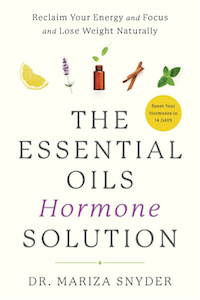
The Essential Oils Hormone Solution by Dr. Mariza Snyder – my book review

February 22, 2019 By Trudy Scott 15 Comments

Together with dietary changes and key nutrients like GABA, tryptophan, zinc and vitamin B6, using essential oils are a wonderful tool for helping to ease anxiety, reduce stress, improve sleep and focus and contribute to overall hormonal health for women. Now we have a new book that is a wonderful essential oil resource specifically for women, The Essential Oils Hormone Solution: Reclaim Your Energy and Focus and Lose Weight Naturally by Dr. Mariza Snyder.

She shares this about essential oils:

Essential oils are natural aromatic com­pounds found in the roots, seeds, stems, bark, leaves, and flowers of various plants. They are super-charged, fifty to seventy times more potent than their dried-herbal counterparts. They’re simply the best plant-based remedy that exists, and they have been success­fully used for thousands of years.

Dr. Mariza lists these top 5 must-have hormone-support essential oils for perimenopausal and menopausal women: clary sage, geranium, lavender, peppermint and rosemary. Lavender and peppermint have been long-time favorites of mine and I recently learned about clary sage and rosemary and love both.

She covers so many wonderful essential oils in the book but for the purposes of this review I’ll focus on clary sage since it was new to me until recently and may be new to you too.

In the chapter on sleep, she shares this about the benefits of clary sage and how to use this essential oil:

CLARY SAGE (Salvia sclarea)

  • Promotes relaxation of the body for a restful night’s sleep
  • Calms and soothes the mind and body
  • Supportive during menstrual distress

Aromatic Use 

  • Apply 1–2 drops directly to bedclothes or pillow.
  • Diffuse 3–4 drops before bedtime.

Topical Use

  • Dilute 1–2 drops with your favorite carrier oil and massage into abdomen.
  • Add 2–3 drops to a warm bath with ¼ cup Epsom salts dis­solved in the water.
  • Dilute 1–2 drops with your favorite carrier oil and massage into your soles before bedtime.

I had looked into clary sage about 6 months ago when I learned that it supports serotonin production and also lowers high cortisol.

Interestingly, I didn’t care for the aroma of clary sage when I first purchased it and I diffused it with lavender and rosemary to disguise the aroma. But I have grown to really like it and use a drop on a hanky each night and look forward to how much it helps me sleep and the fact that it eased the mild hot flashes I had started to experience again.

I love the combinations/blends Dr. Mariza recommends in the book and would have welcomed these ideas when I first started using clary sage myself. Here is one example of a rollerball blend with clary sage:

Tense-Away Rollerball Blend

10 drops Lavender essential oil

10 drops Clary Sage essential oil

10 drops Peppermint essential oil

Carrier oil of choice

I also really like that Dr. Mariza describes different ways to use the oils other than only diffusing – like using rollerballs, using them for massages and in baths, and applying the essential oils on various parts of the body for a more direct impact. One such example is the Hormone Synergy Rollerball Blend (which contains clary sage, lavender, geranium, bergamot and ylang ylang). She recommends applying this blend directly over your ovaries.

I learned this direct application tip from Dr. Mariza last year and started using lavender, peppermint and rosemary (in a carrier oil) topically on my belly before bed. It helps with digestion, occasional belly bloat from SIBO (if I’ve eaten something that triggers symptoms) and is relaxing too. I think I’ll add clary sage to this belly blend too for the added hormone benefits. This could be one way to use clary sage for the benefits if you find you don’t really like the aroma (because it will be further from your nose!)

Here are some of the benefits of the other top 5 hormone-support essential oils for perimenopausal and menopausal women that Dr. Mariza shares:

  • geranium – calming and soothing and “rejuvenates and revitalizes skin, complexion, and hair” (I haven’t been using this one and looking forward to trying this one)
  • lavender – “eases and calms feelings of anxiety, stress, and tension while rebalancing emotions” and “relieves discomfort associated with menstrual cycles” (I’ve been using lavender for years)
  • peppermint – “stimulates mental focus and energy by enlivening the senses” and supports your respiratory system (I also use this one all the time. It’s also great for headaches and neck pain)
  • and rosemary – “increases memory, concentration, and focus” (I also use it for EMF/electromagnetic radiation protection. Research shows rosemary could play a protective role against this harmful effect through its antioxidant activity)

Clary sage is also featured in the libido chapter: “Commonly used to stimulate sexual energy and boost libido.” This aspect was new to me, but it makes sense given that it lowers cortisol and supports serotonin production (and hence estrogen). Dr. Mariza also covers many other wonderful essential oils that boost libido too: jasmine, neroli, rose, sandalwood, ylang ylang and geranium.  In one study neroli, lavender, fennel, geranium, and rose significantly improved sexual function in menopausal women.

Here is the official book blurb:

Have your hormones been hijacked? Do you feel energy-depleted and irritable, unable to sleep, stay focused, or lose weight? You may have attributed these symptoms to the natural hormonal fluctuations that occur with age. But behind the scenes, there are a host of pesky culprits wreaking havoc on your hormonal health: chronic stress, air pollution, chemical-laden foods and cleaning supplies, and the synthetic estrogens in personal care products. Women of all ages are left vulnerable to the consequences, suffering from unnecessary hormonal imbalance and frustrating symptoms that are often dismissed by their doctors.

Dr. Mariza Snyder is here to help put you back in control of your health. In The Essential Oils Hormone Solution, you will learn how to heal hormonal chaos and revitalize the body from the inside out with the support of high-quality essential oils. You’ll learn how essential oils work on a cellular level to mitigate the toxic loads we carry, and how to use essential oils to reduce cravings, get deep, restful sleep, ease stress, improve mood, banish the worst symptoms of PMS, regain focus and concentration, boost libido, and increase energy.

Featuring a 14-day plan to jumpstart your hormonal health, with over 100 essential oil blends, daily self-care rituals, and delicious, easy-to-prepare recipes, you’ll discover how to reset your body and pave the way for improved hormonal health, without taking hormones.

Grab your copy of The Essential Oils Hormone Solution here (my Amazon link).

I’d like to add my thoughts on what I have found to be safe use of essential oils, and what I share with my clients (I consider myself an essential oil user like you – I’m not an expert):

  • Always use a carrier oil, unless you are diffusing, and this includes using essential oils in the bath (I know there is some conflicting advice on this, but I like to err on the side of caution)
  • Don’t try to remove too much of an essential oil with water – it will only drive it deeper into the skin
  • Think low doses i.e. a little goes a long way
  • Be sure to rotate your essential oils
  • Don’t ingest the oils neat or even in a gelatin capsule. I would only consider doing so if I was working with an experienced practitioner and using an enteric coated capsule  (there is definitely conflicting advice on this one but again I like to err on the side of caution)

It’s a fun book with wonderful ideas for how to combine essential oils and use them to improve hormone imbalance. I love this quote from Dr. Mariza:

Inhaling them and applying them is like adorning yourself in something truly beautiful

What are your favorite essential oils and combinations for easing anxiety, reducing stress, improving sleep and balancing your hormones? How are you “adorning yourself” and what is your favorite way to use them – diffused, topically, via a rollerball, or via a massage or in the bath? Feel free to post questions here too.

Filed Under: Books, Essential oils Tagged With: anxiety, calming, clary sage, cortisol, Dr. Mariza Snyder, energy, essential oils, focus, hormone, hormones, insomnia, lavender, libido, mood, peppermint, PMS, serotonin, sleep, stress, The Essential Oils Hormone Solution

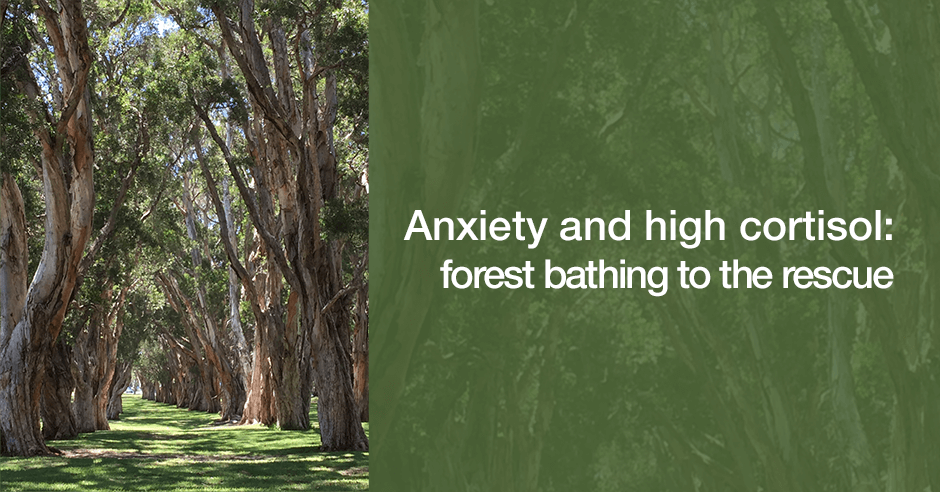
Anxiety, stress and high cortisol: forest bathing to the rescue

January 25, 2019 By Trudy Scott 16 Comments

On the way home from a snorkelling trip to the beach earlier this week we stopped at Centennial Park in Sydney and were wowed by the magnificent trees. It inspired me to write this blog about forest bathing to inspire you to think about the power of nature as a simple way to give you joy and contribute to a wonderful sense of calm and peace. I was quite giddy with these feelings while there and still feel waves of awe days later when thinking about it and looking at these pictures of the Paperbark Grove and the massive Morton Bay fig trees.

We know being in nature has a psychological impact making us feel calm and relaxed, happy and joyful, and even playful. But what exactly is forest bathing and are there really physiological impacts i.e. does forest bathing simply help you feel good or does it actually lower your cortisol levels or blood pressure?

This paper, The physiological effects of Shinrin-yoku (taking in the forest atmosphere or forest bathing): evidence from field experiments in 24 forests across Japan, defines forest bathing:

The term Shinrin-yoku (taking in the forest atmosphere or forest bathing) was coined by the Japanese Ministry of Agriculture, Forestry, and Fisheries in 1982. It can be defined as making contact with and taking in the atmosphere of the forest: a process intended to improve an individual’s state of mental and physical relaxation

The above study set out to measure and clarify the physiological effects of Shinrin-yoku or forest bathing with 12 young male university students who had no history of physical or psychiatric disorders:

12 subjects walked in and viewed a forest or city area. On the first day, six subjects were sent to a forest area, and the others to a city area. On the second day, each group was sent to the other area as a cross-check.

The participants sat and viewed the landscape for 12-16 minutes and then walked in the landscape for 14-18 minutes (in one of the 24 forests and then in one of the 24 city areas on the second day).

The subjects had the following markers measured before breakfast and both before and after the walking and viewing periods:

  • salivary cortisol
  • blood pressure
  • pulse rate and
  • heart rate variability

After this surprisingly short period of viewing and walking in the forests the following results were found:

forest bathing promotes lower concentrations of cortisol, lower pulse rate, lower blood pressure, greater parasympathetic nerve activity, and lower sympathetic nerve activity

So, what we have, is more activity of the parasympathetic system i.e. more of the calming “rest and digest” activity and less activity of the sympathetic system i.e. what we term as “fight or flight” or stress activity.

The authors suggest that forest bathing “may be used as a strategy for preventive medicine” and I wholeheartedly agree.

Given that GABA can lower high pressure and calm down the “fight or flight” sympathetic system (see this animal study) I won’t be surprised when we see research showing us that forest bathing boosts GABA levels just in a similar way that yoga boosts GABA.

If you don’t have everyday access to parks, trees or forests be sure to go out of your way to make detours down nearby tree-lined streets to get some of these wonderful health benefits.

And because we know that simply looking at images of greenery and nature can have a calming and stress-reducing effect, here is a bigger version of the photo I took of the Paperbark Grove for you to enjoy looking at!

My picture of the Paperbark Grove in Centennial Park, Sydney

We were so excited to “discover” this gem and got home and googled it only to find out it’s a popular avenue for wedding parties! I’m sure you can see why!

Right next to the Paperbark Grove are three giant Moreton Bay fig trees. These trees are estimated to be older that the park, which was opened in 1888.

Here I am being “hugged” by one of them (doesn’t it take tree-hugging to another level!?)

If you’re local to Sydney or come for a visit one day, I highly recommend a trip to Centennial Park to see these magnificent trees and do your own Australian version of forest bathing. You may just see me there!

Until then, I encourage you to get outside into forests, get “hugged” by trees, hug trees and gaze up and enjoy every calming and joyous moment. It can help to lower your cortisol levels so you can be free of anxiety and it may even help to prevent anxiety!

Please do share your favorite forest bathing locations and how they make you feel.

Filed Under: Nature Tagged With: anxiety, calming, centennial park, cortisol, forest, forest bathing, GABA, Shinrin-yoku, stress, stress-reducing, trees, yoga

  • « Go to Previous Page
  • Page 1
  • Interim pages omitted …
  • Page 3
  • Page 4
  • Page 5
  • Page 6
  • Page 7
  • Interim pages omitted …
  • Page 11
  • Go to Next Page »

Primary Sidebar

GABA QuickStart Homestudy

gaba quickstart homestudy

Free Report

9 Great Questions Women Ask about Food, Mood and their Health

You'll also receive a complimentary subscription to my ezine "Food, Mood and Gal Stuff"


Connect with me

Popular Posts

  • Amino Acids Mood Questionnaire from The Antianxiety Food Solution
  • The Antianxiety Food Solution Amino Acid and Pyroluria Supplements
  • Pyroluria Questionnaire from The Antianxiety Food Solution
  • Collagen and gelatin lower serotonin: does this increase your anxiety and depression?
  • Tryptophan for the worry-in-your-head and ruminating type of anxiety
  • GABA for the physical-tension and stiff-and-tense-muscles type of anxiety
  • The Antianxiety Food Solution by Trudy Scott
  • Seriphos Original Formula is back: the best product for anxiety and insomnia caused by high cortisol
  • Am I an anxious introvert because of low zinc and vitamin B6? My response to Huffington Post blog
  • Vagus nerve rehab with GABA, breathing, humming, gargling and key nutrients

Recent Posts

  • Her cravings for chips and peanut butter were triggered by stress: GABA ends cravings and reduces physical tension and fear of heights
  • It is truly miraculous to be able to move through life without crippling anxiety and panic
  • GABA and tryptophan combo provide immediate and noticeable relief for tremors and cervical dystonia in just 7 days
  • Red light therapy for back and neck pain, plantar fasciitis and low mood – a complement to the amino acids GABA, DPA and tryptophan
  • What do I use instead of Seriphos to help lower high cortisol that is affecting my sleep and making me anxious at night?

Categories

  • 5-HTP
  • AB575
  • Addiction
  • ADHD
  • Adrenals
  • Alcohol
  • Allergies
  • Alzheimer's disease
  • Amino Acids
  • Anger
  • Antianxiety
  • Antianxiety Food Solution
  • Antidepressants
  • Anxiety
  • Anxiety and panic
  • Autism
  • Autoimmunity
  • benzodiazapines
  • Bipolar disorder
  • Books
  • Caffeine
  • Cancer
  • Candida
  • Children/Teens
  • Collagen
  • Cooking equipment
  • Coronavirus/COVID-19
  • Cravings
  • Depression
  • Detoxification
  • Diabetes
  • Diet
  • DPA/DLPA
  • Drugs
  • EFT/Tapping
  • EMF
  • EMFs
  • Emotional Eating
  • Endorphins
  • Environment
  • Essential oils
  • Events
  • Exercise
  • Fear
  • Fear of public speaking
  • Fertility and Pregnancy
  • Fish
  • Food
  • Food and mood
  • Functional neurology
  • GABA
  • Gene polymorphisms
  • General Health
  • Giving
  • Giving back
  • Glutamine
  • Gluten
  • GMOs
  • Gratitude
  • Gut health
  • Heart health/hypertension
  • Histamine
  • Hormone
  • Hyperparathyroidism
  • Hypoglycemia
  • Immune system
  • Inflammation
  • Insomnia
  • Inspiration
  • Introversion
  • Joy and happiness
  • Ketogenic diet
  • Lithium orotate
  • Looking awesome
  • Lyme disease and co-infections
  • MCAS/histamine
  • Medication
  • Men's health
  • Mental health
  • Mercury
  • Migraine
  • Mold
  • Movie
  • MTHFR
  • Multiple sclerosis
  • Music
  • NANP
  • Nature
  • Nutritional Psychiatry
  • OCD
  • Osteoporosis
  • Oxalates
  • Oxytocin
  • Pain
  • Paleo
  • Parasites
  • Parkinson’s disease
  • PCOS
  • People
  • PMS
  • Postpartum
  • PTSD/Trauma
  • Pyroluria
  • Questionnaires
  • Real whole food
  • Recipes
  • Research
  • Schizophrenia
  • serotonin
  • SIBO
  • Sleep
  • Special diets
  • Sports nutrition
  • Stress
  • Sugar addiction
  • Sugar and mood
  • Supplements
  • Teens
  • Testimonials
  • Testing
  • The Anxiety Summit
  • The Anxiety Summit 2
  • The Anxiety Summit 3
  • The Anxiety Summit 4
  • The Anxiety Summit 5
  • The Anxiety Summit 6
  • Thyroid
  • Thyroid health
  • Toxins
  • Tryptophan
  • Tyrosine
  • Uncategorized
  • Vegan/vegetarian
  • Women's health
  • Yoga

Archives

  • May 2026
  • April 2026
  • October 2025
  • September 2025
  • August 2025
  • July 2025
  • June 2025
  • May 2025
  • April 2025
  • March 2025
  • February 2025
  • January 2025
  • November 2024
  • October 2024
  • September 2024
  • August 2024
  • July 2024
  • June 2024
  • May 2024
  • April 2024
  • March 2024
  • February 2024
  • January 2024
  • December 2023
  • November 2023
  • October 2023
  • September 2023
  • August 2023
  • July 2023
  • June 2023
  • May 2023
  • April 2023
  • March 2023
  • February 2023
  • January 2023
  • December 2022
  • November 2022
  • October 2022
  • September 2022
  • August 2022
  • July 2022
  • June 2022
  • May 2022
  • April 2022
  • March 2022
  • February 2022
  • January 2022
  • December 2021
  • November 2021
  • October 2021
  • September 2021
  • August 2021
  • July 2021
  • June 2021
  • May 2021
  • April 2021
  • March 2021
  • February 2021
  • January 2021
  • December 2020
  • November 2020
  • October 2020
  • September 2020
  • August 2020
  • July 2020
  • June 2020
  • May 2020
  • April 2020
  • March 2020
  • February 2020
  • January 2020
  • December 2019
  • November 2019
  • October 2019
  • September 2019
  • August 2019
  • July 2019
  • June 2019
  • May 2019
  • April 2019
  • March 2019
  • February 2019
  • January 2019
  • December 2018
  • November 2018
  • October 2018
  • September 2018
  • August 2018
  • July 2018
  • June 2018
  • May 2018
  • April 2018
  • March 2018
  • February 2018
  • January 2018
  • December 2017
  • November 2017
  • October 2017
  • September 2017
  • August 2017
  • July 2017
  • June 2017
  • May 2017
  • April 2017
  • March 2017
  • February 2017
  • January 2017
  • December 2016
  • November 2016
  • October 2016
  • September 2016
  • August 2016
  • July 2016
  • June 2016
  • May 2016
  • April 2016
  • March 2016
  • February 2016
  • January 2016
  • December 2015
  • November 2015
  • October 2015
  • September 2015
  • August 2015
  • July 2015
  • June 2015
  • May 2015
  • April 2015
  • March 2015
  • February 2015
  • January 2015
  • December 2014
  • November 2014
  • October 2014
  • September 2014
  • August 2014
  • July 2014
  • June 2014
  • May 2014
  • April 2014
  • March 2014
  • February 2014
  • January 2014
  • December 2013
  • November 2013
  • October 2013
  • September 2013
  • August 2013
  • July 2013
  • June 2013
  • May 2013
  • April 2013
  • March 2013
  • February 2013
  • January 2013
  • December 2012
  • November 2012
  • October 2012
  • August 2012
  • July 2012
  • June 2012
  • May 2012
  • April 2012
  • March 2012
  • February 2012
  • January 2012
  • December 2011
  • November 2011
  • October 2011
  • September 2011
  • August 2011
  • July 2011
  • June 2011
  • May 2011
  • April 2011
  • March 2011
  • February 2011
  • January 2011
  • December 2010
  • October 2010
  • September 2010
  • July 2010
  • May 2010
  • April 2010
  • March 2010
  • February 2010
  • January 2010
  • November 2009

Share the knowledge!

The above statements have not been evaluated by the Food and Drug Administration. Products listed in this website are not intended to diagnose, treat, cure or prevent any disease.

The information provided on this site is for informational and educational purposes only and is not intended as a substitute for advice from your physician or other health care professional. You should consult with a healthcare professional before starting or modifying any diet, exercise, or supplementation program, before taking or stopping any medication, or if you have or suspect you may have a health problem.


Copyright © 2026 Trudy Scott. All Rights Reserved. | Privacy | Terms and Conditions | Refund Policy | Medical Disclaimer

Free Report

9 Great Questions Women Ask about Food, Mood and their Health

You’ll also receive a complimentary subscription to my ezine “Food, Mood and Gal Stuff”