• Skip to primary navigation
  • Skip to main content
  • Skip to primary sidebar

everywomanover29 blog

Food, Mood and Women's Health – Be your healthiest, look and feel great!

  • Blog
  • About
  • Services
  • Store
  • Resources
  • Testimonials
  • The Book
  • Newsletter
  • Contact
  • Search this site

microbiome

The amino acid glutamine improves low mood by addressing gut health, and it has calming effects too

October 3, 2025 By Trudy Scott 2 Comments

glutamine and low mood

Recent research has shown that the amino acid glutamine can positively affect gut health by supporting the gut microbiome, gut mucosal wall integrity, and by modulating inflammatory responses.

As modulated by the vagus nerve, via the enteric nervous system, the gut-brain connection can impact the brain’s neurochemical environment. Poor gut health can disrupt the balance of neurotransmitters, which can result in neuropsychiatric based conditions such as depression.

Glutamine supplementation may provide significant adjunctive nutritional support in cases of depression by promoting proper gut health and function.

The above is an excerpt from the paper, The role of glutamine in supporting gut health and neuropsychiatric factors, published in 2021.

The authors do note the fact that glutamine is a “fundamental precursor to the most prevalent neurotransmitters, GABA and glutamate.” This is why glutamine supplementation can be calming for many individuals and may sometimes be too stimulating for some folks. It also highlights the importance of biochemical individuality and why it’s important to find your ideal dose (more on that below).

I appreciate their call for more research on glutamine, “as well as studies which could explore using glutamine in concert with other supportive amino acids, such as GABA and tyrosine, in an effort to restore neurotransmitter equilibrium” (more on that below too).

Read on below to learn more about how glutamine directly supports gut health and what harms the gut; how to know if glutamine will be calming or too stimulating, and how much to use; and other clues that you may benefit from glutamine; and additional resources when are new to amino acids such as glutamine, GABA and others.

How glutamine directly supports gut health and what harms the gut

From the above paper, glutamine:

1) has a positive impact on sustaining the balance of the gut microbiome
2) increases the expression of tight junction proteins and the integrity of the intestinal lining (i.e. it heals leaky gut)
3) helps to minimize the inflammatory response in situations of gut mucosal irritation (i.e the inner most lining of the digestive tract).

The authors also discuss all of the many factors that are harmful for the gut: highly processed foods, refined sugars, saturated fat, and minimal healthy fatty acids and antioxidants; lack of probiotics and prebiotics; blood sugar swings; stress and high cortisol; medications and alcohol consumption. Much of this is addressed in my book “The Antianxiety Food Solution”

It’s well-worth reading the entire paper for a full understanding of the two-way gut-brain connection via the vagus nerve and the role of the microbiome when it comes to neurotransmitter production and much more.

How to know if glutamine will be calming or too stimulating, and how much to use

As mentioned above, the authors share that glutamine is a precursor to GABA, a calming neurotransmitter i.e. it is often calming.

Glutamine is also a precursor to glutamate and can be too stimulating for some, typically when very high doses are used.

The paper mentions studies that “observed the effects of glutamine supplementation used at doses of between 15 g and 30 g,” however my recommendation is to start low and slowly increase based on your unique need. I have clients and those in my programs start with 500 mg once a day and increase to 1-3 x 500 mg, up to 3 or 4 times a day.

The only way to know if it will be calming or stimulating is to do a trial alone i.e. with no other new supplements, and carefully track the effects.

I also find using glutamine powder and holding it for 1-2 minutes on the tongue is more effective and less is often needed. This has additional benefits of stopping intense sugar cravings in their tracks (more on this below).

Other clues that you may benefit from glutamine: symptoms of low blood sugar

As mentioned above, glutamine helps reduce intense sugar cravings, and prevents low blood sugar (which can actually cause anxiety and panic attacks). This aspect is not mentioned in the paper but addressing low blood sugar is yet another application of glutamine when it comes to anxiety and low mood.

Here are all the symptoms we see with low blood sugar:

  • Crave sugar, starch or alcohol any time during the day
  • Irritable, shaky, headachey – especially if going too long between meals
  • Intense cravings for sweets
  • Lightheaded if meals are missed
  • Eating relieves fatigue
  • Agitated, easily upset
  • Nervous, anxious, panic attacks

And here are some other blog posts that illustrate some of the above:

  • Reactive hypoglycemia in binge eating disorder, food addiction and intense sugar cravings, and how glutamine stops the cravings
  • Waking with a jolt, feeling shaky and anxious: low blood sugar/hypoglycemia, glutamine and eating for blood sugar stability
  • Glutamine for hypoglycemia/low blood sugar: “500mg mixed in water works in 15 minutes and keeps me going for 2 – 3 hours”
  • “A demonic urge to eat sugar and all things sweet”: glutamine opened onto the tongue stops the urge every time!

Together with low serotonin and low GABA, addressing low blood sugar is one of the most effective approaches I use with clients to help ease anxiety.  We achieve this with the use of glutamine and by controlling blood sugar by starting the day with a breakfast that includes quality animal protein.

We may also use tyrosine if there are low dopamine symptoms and d-phenylalanine if there are low endorphin symptoms, in an “effort to restore neurotransmitter equilibrium.”

Additional resources when you are new to using glutamine, GABA or tyrosine, or other amino acids as supplements

We use the symptoms questionnaire to figure out if low blood sugar (indicating a possible need for glutamine) or low GABA (indicating a possible need for GABA or theanine) or low dopamine (indicating a possible need for tyrosine) or other neurotransmitter imbalances may be an issue for you.

If you suspect low levels of any of the neurotransmitters and do not yet have my book, The Antianxiety Food Solution – How the Foods You Eat Can Help You Calm Your Anxious Mind, Improve Your Mood, and End Cravings. I highly recommend getting it and reading it before jumping in and using amino acids on your own so you are knowledgeable. And be sure to share it with the practitioner/health team you or your loved one is working with.

There is an entire chapter on the amino acids and they are discussed throughout the book in the sections on gut health, gluten, blood sugar control (this and glutamine is covered in an entire chapter too), sugar cravings, anxiety and mood issues. The importance of quality animal protein and healthy fats is also covered.

The book doesn’t include product names (per the publisher’s request) so this blog, The Antianxiety Food Solution Amino Acid and Pyroluria Supplements, lists the amino acids that I use with my individual clients and those in my group programs.

If, after reading this blog and my book, you don’t feel comfortable figuring things out on your own (i.e. doing the symptoms questionnaire and respective amino acids trials), a good place to get help is the GABA QuickStart Program (if you have low GABA symptoms too). This is a paid online/virtual group program where you get my guidance and community support.

If you need serotonin support, the Serotonin QuickStart Program is a good place to get help. This is also a paid online/virtual group program where you get my guidance on using tryptophan and 5-HTP safely, and community support during 5 LIVE Q&A calls. You can sign up to be notified when the next live launch of this program is happening.

If you are a practitioner, join us in The Balancing Neurotransmitters: the Fundamentals program. This is also a paid online/virtual program with an opportunity to interact with me and other practitioners who are also using the amino acids.

Now I’d love to hear from you…

Has glutamine helped you with your leaky gut, low mood and/or offered calming effects?

What about intense cravings for something sweet or irritability and poor focus? And other low blood sugar symptoms?

How much do you find helps? And do you use powder or capsules?

Are you interested in a program to learn more about the safe and effective use of glutamine and/or tyrosine?

Feel free to share and ask your questions below.

Filed Under: Amino Acids, Anxiety, Depression, GABA, Glutamine, Gut health Tagged With: amino acid, blood sugar, calming, cravings, depression, GABA, glutamate, glutamine, gut, gut health, gut-brain connection, Inflammation, low mood, microbiome, mood, neuropsychiatric, neurotransmitters, serotonin, stimulating, tyrosine, vagus nerve

Berberine in perimenopause and menopause: improving mood, calming the anxious mind, and improving heart health, blood sugar and bone health

May 10, 2024 By Trudy Scott 15 Comments

berberine and menopause

… Berberine, an isoquinoline alkaloid derived from plants of the generis Berberis, has been recognized as being capable of decreasing oxidative stress, LDL, triglycerides, and insulin resistance and of improving the mood. This review describes the cellular and clinical effects associated with the use of berberine, which suggest that this molecule could be an effective natural supplement to ensure a smooth peri- and postmenopausal transition.

The above is from a paper published in 2015, Potential benefits of berberine in the management of perimenopausal syndrome.

These are just a few of the many benefits of berberine. Other research reports impacts on the microbiome, benefits for bone density and kidney health – all very relevant in perimenopause and menopause.

I feel that berberine may be a nutrient to consider, in addition to dietary changes, stress reduction and lifestyle changes, and targeted individual amino acids. Read on to discover some of the mechanisms and the benefits of using a comprehensive approach, and feedback from folks in the community who are using berberine with success.

Impacts on oxidative stress, blood sugar/insulin resistance, lipids and heart health, and mood

I encourage you to read the full paper in order to get an overview of the impacts on oxidative stress, blood sugar/insulin resistance, lipids and heart health, and mood. Here is a very high level summary:

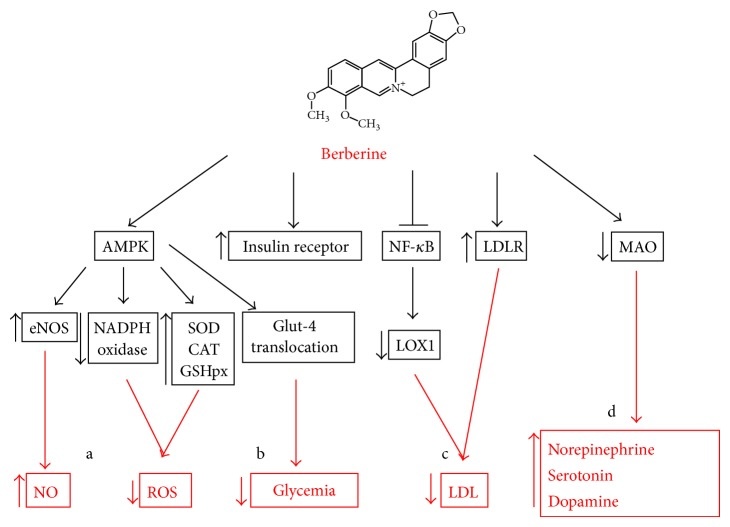
  • Estrogen deficiency, increased cardiovascular risk, an “overproduction of reactive oxygen species (ROS)” and reduced nitric oxide (NO) which are important contributing factors when it comes to “menopause-related endothelial dysfunction, atherosclerosis, hypertension, cardiovascular, and renal diseases.” Berberine counters this via various mechanisms.
  • Type 2 diabetes is higher amongst menopausal women, causing high blood sugar and insulin resistance. This paper shares a study that found berberine “significantly lowered fasting blood glucose (FBG), hemoglobin A1c, triglycerides, and insulin levels in patients with Type 2 diabetes as well as metformin and rosiglitazone.” One way berberine does this is via “increased insulin receptor (InsR) messenger RNA and protein expression.”
  • “inactivity of LDL receptor (LDLR)” in liver cells leads to higher levels of oxidized LDL, a risk factor for “endothelial dysfunction and atherosclerosis.” One mechanism is that berberine improves LDLR expression and has lipid-lowering activity.
  • When it comes to mood issues, the increased oxidative stress, immune dysfunction and inflammation play a role because of “interactions between neurotransmitters, neuropeptides, oxidative and nitrosative stress, and cytokines.” Higher levels of inflammatory markers such as interleukin-6 (IL-6), C-reactive protein, interleukin-1-beta (IL-1β), and TNFα “can enter the brain and may cause alterations of the metabolism of serotonin and dopamine.” Berberine helps to counter this inflammatory cascade and “inhibits the expression of MAO” , increasing norepinephrine, serotonin, and dopamine – and improving mood and presumably reducing anxiety too.
Berberine benefits menopause
From: Potential benefits of berberine in the management of perimenopausal syndrome

Feedback from folks in the community

When I shared this research on Facebook I received much in the way of positive results.

Susan shared this: “A functional medicine doctor suggested I take it with every meal. My A1C was not bad, (5.3) but my last level was 4.8. This was over the course of about 1 year.”

Becky shared this: “I used it for about 6 months along with diet changes to drop my A1C. Have been holding steady since with dietary measures alone. I didn’t realize berberine also helped lower LDL. Mine is slightly elevated. Not enough that my traditional MD has called me on it, but I’ve adjusted my diet again and hearing this about berberine I think I’ll try going back on it.”

Liz shared this: “I had gained some caregiver weight so started on berberine twice a day and it was helpful. However my Doc quickly had me switch over to [a combination product with berberine, chromium and alpha lipoic acid] and it’s fabulous! Twice a day and I feel great, my carb cravings are at bay and my bloodwork and overall health has vastly improved in just a few months.”

Marcy shared this: “Yes!! My son had been steadily gaining weight from binge eating and medications. In October 2022 his triglycerides were through the roof and I was so worried about his health. I put him on 500 mg of Berberine twice a day. Fast forward to today, he has lost approximately 50 pounds and his triglycerides are normal. There were other factors that may have contributed to the weight loss such as therapy and more structured eating times, but I absolutely believe the Berberine supported all this!” (this was also a combination product with berberine and a small amount of alpha lipoic acid and grape seed extract)

Marcia shared this: “I’ve used Berberine for appetite suppression, which it seems to help with, though not enough for me to lose any weight. But it did also actually lift my mood, which I was not expecting.”

Berberine: the microbiota, the gut-brain connection and anxiety

The number of studies on berberine is impressive and growing by the day. It’s not discussed in the above paper, but this paper, Effects of Berberine on the Gastrointestinal Microbiota states this: “The mechanism underlying the role of berberine in lipid‐lowering and insulin resistance is incompletely understood, but one of the possible mechanisms is related to its effect on the gastrointestinal microbiota.” Given what we know about the gut-brain connection, this is another likely mechanism for mood and anxiety benefits.

In another paper, Berberine ameliorates ovariectomy-induced anxiety-like behaviors by enrichment in equol generating gut microbiota, the authors propose that the use of berberine “modulates the gut microbiota, stimulates equol production, and improves anxiety-like symptoms” … “suggesting a direct link between gut microbiota modulation and estrogen deficiency-induced anxiety.”

Berberine: osteoporosis and the kidneys

An osteoporosis study shows that berberine regulates “the estrogen and thyroid hormone signaling pathways to treat osteoporosis in a multi-target, multi-pathway, and multi-system manner.”

And berberine used in conjunction with calcium carbonate and vitamin D, helps to prevent drug-induced bone loss too: “berberine inhibits bone resorption and improves bone formation to prevent glucocorticoid-induced osteoporosis.” I’d be considering vitamin K and other approaches like working towards optimal homocysteine, addressing food sensitivities, addressing possible oxalate and gallbladder issues too. The latter are more common during and after perimenopause.

Interestingly berberine also improves kidney health. One study reports that berberine “significantly ameliorated chronic kidney disease by altering the composition of the gut microbiota and inhibiting the production of gut-derived uremic toxins.”

A comprehensive approach that includes amino acids

As I mentioned above, I feel that berberine may be a nutrient to consider, in addition to dietary changes, stress reduction and lifestyle changes, and targeted individual amino acids. Berberine is relatively new to me and not covered in my book “The Antianxiety Food Solution” but it’s a great resource for the rest.

Here are are few blog posts specific to amino acids in perimenopause and menopause:

  • Tryptophan had the added benefit of turning me completely off alcohol when I took it to improve mood and sleep during perimenopause
  • “Potion” of tyrosine, Endorphigen, GABA and tryptophan has been nothing less than a miracle for my depression and anxiety – how long can I remain on these?
  • I have issues with perimenopausal anxiety a couple of weeks per month and don’t want to turn to SSRIs
  • The individual amino acids glutamine, GABA, tryptophan (or 5-HTP), DPA and tyrosine are powerful for eliminating sugar cravings, often within 5 minutes

The good news is that the amino acids provide immediate relief while the berberine is slower-acting and starting to have an impact.

Product recommendation: Thorne Berberine

There are many good berberine products available. I did some reading and research and landed on Thorne Berberine.

thorne berberine

It is available from my online store (Fullscript – only available to US customers – use this link to set up an account) and it’s available via iherb (use this link to save 5%).

If you’re new to berberine, be sure to discuss the research and if it may be something to consider with your practitioner.

Additional resources when you are new to using amino acids as supplements

As always, I use the symptoms questionnaire to figure out if low GABA or other neurotransmitter imbalances may be an issue.

If you suspect low levels of any of the neurotransmitters and do not yet have my book, The Antianxiety Food Solution – How the Foods You Eat Can Help You Calm Your Anxious Mind, Improve Your Mood, and End Cravings, I highly recommend getting it and reading it before jumping in and using amino acids on your own so you are knowledgeable. And be sure to share it with the practitioner/health team you or your loved one is working with.

There is an entire chapter on the amino acids and they are discussed throughout the book in the sections on gut health, gluten, blood sugar control (this is covered in an entire chapter too), sugar cravings, anxiety and mood issues.

The book doesn’t include product names (per the publisher’s request) so this blog, The Antianxiety Food Solution Amino Acid and Pyroluria Supplements, lists the amino acids that I use with my individual clients and those in my group programs.

If, after reading this blog and my book, you don’t feel comfortable figuring things out on your own (i.e. doing the symptoms questionnaire and respective amino acids trials), a good place to get help is the GABA QuickStart Program (if you have low GABA symptoms too). This is a paid online/virtual group program where you get my guidance and community support.

If you are a practitioner, join us in The Balancing Neurotransmitters: the Fundamentals program. This is also a paid online/virtual program with an opportunity to interact with me and other practitioners who are also using the amino acids.

Wrapping up and your feedback

I do always appreciate feedback from the community and being able to share it on the blog.

Now I’d love to hear from you – have you used berberine with success? How much have you used, which product and how has it helped?

Were you aware of all these benefits?

Have you also used amino acids and dietary approaches as you start to see hormonal shifts?

If you’re a practitioner do you berberine with your clients/patients?

And please let me know if it’s helpful that I’m now including product recommendations and where to get them.

Feel free to share and ask your questions below.
Filed Under: Anxiety, Depression, Women's health Tagged With: amino acids, anxious, anxious mind, berberine, blood sugar, bone density, bone health, calming, GABA, GABA Quickstart; Balancing Neurotransmitters: the Fundamentals program for practitioners, gut-brain, heart health, insulin resistance, kidney, LDL, menopause, microbiome, mood, osteoporosis, oxalates, oxidative stress, perimenopause, triglycerides, tryptophan

Too much GABA causes a tingling niacin-like flush sensation (in the brain and body). It’s awful and very uncomfortable!

February 18, 2022 By Trudy Scott 104 Comments

too much gaba

GABA, used as an amino acid, helps to raise GABA levels and ease physical tension-type anxiety. There are many misunderstandings on the best and most effective ways to use GABA and this can lead to unpleasant symptoms. One common thing I see is that too much GABA causes the brain and body to react with a tingling niacin-like flush sensation that is very uncomfortable and often described as awful.

Too many people stop using GABA for this reason. And then they lose out on the wonderful calming benefits of this amino acid. Some folks actually push through and continue with the unpleasant tingling sensation because they don’t know better and because they are also getting some of the calming benefits of GABA (I share an example of this below). Neither situation is ideal.

I recently received a GABA question on the blog on this very topic. It was from a licensed acupuncturist in California, USA (let’s call her Dr. M):

When I used to take GABA for my stress, my body/brain reacted with a tingling sensation.

It was so awkward and uncomfortable.

I thought it was only me, but when I prescribed GABA to my patients, they also felt the same sensations.

Can you tell me why this reaction occurred?

Thank you so much for your generosity and deep research.

Because this is such a common question that I get, I’m sharing it and my responses to use it as a teaching opportunity.

Too much GABA can cause this uncomfortable tingling niacin-like flush or sensation

I responded sharing that it can happen when too much GABA is used or if GABA is not needed. I typically hear of this happening when 500mg to 750mg is used to start. It’s also often described as a niacin-like flush. With GABA, 125mg is a typical starting dose and it’s always used as a sublingual or capsule opened onto the tongue. We slowly go up from there based on symptoms and the final dose is unique to each person’s needs. You may end up using 500mg or more but it’s a slow approach to get there.

I asked Dr. M to share which product/s she used, the dosing and let me know if she does better with a lower dose.

As expected she was using too high a dose (and hadn’t done a trial of a lower dose). She responded with this feedback:

The GABA I used for me and my patients is from Pure Encapsulations. This GABA contains 700 mg per capsule, which may be too much for the start.

Which brand would you recommend for practitioner use?

I responded by confirming that 700 mg GABA is way too much to start for most people.

What product and how much to use instead of 700 mg GABA

I like the Pure Encapsulations product but I actually feel the companies are partially at fault for having such high dose products, stating “1 capsule daily, between meals, or as directed by a health professional” on the label, and not educating practitioners and consumers about this issue.

With a product like this I have clients open up the capsule and start with 125 mg GABA powder on the tongue and increase from there as needed.

I also shared the other GABA products I use in case she would prefer to try something like the Source Naturals GABA Calm product I frequently use with clients.

This is a lozenge that contains 125 mg GABA, 5 mg magnesium, 50 mg glycine, 25 mg tyrosine and 20 mg taurine. This is my most popular and most effective form of GABA I use with my clients. [Note: this product is a lozenge with 125mg GABA and is not to be confused with the Source Naturals, GABA Calm Mind, 750 mg tablets]

I’m waiting for feedback from her to hear how using less of the 700 mg GABA (opened up and divided out) or how using another GABA product works for her and her patients.

I do appreciate Dr. M for asking a tough question like this and being open to me sharing so everyone gets to learn.

Where did Dr. M learn about GABA and some resources for additional practitioner education

I did ask Dr. M where she learned about using GABA and if the recommendation was to use a high dose like this. I’m genuinely curious to know so I can help guide further education in the use of GABA.

Of course, I encouraged her to get my book “The Antianxiety Food Solution” and read the chapter on the amino acids. And to consider signing up for the amino acid training for practitioners. There are many nuances and best practices when using the amino acids. And it’s an opportunity to interact with me and other practitioners who are also using the amino acids.

If you’re a practitioner, I’m hoping this question, my feedback and these resources are helpful for you.

Similar niacin-like flush experienced by Holly

As mentioned above this is a very common issue because most GABA products are 500mg and up and folks hear how amazing GABA is for physical anxiety and use a high dose without understanding they need to start low and use only what they need.

I shared my discussion with Dr. M in a Facebook post and Holly responded with what happened to her when she switched from GABA Calm (which has 125 mg GABA) to a 750 mg GABA product:

I experienced the niacin-like flush when I tried to go from GABA Calm [mostly dissolved in my mouth] to a pill form and didn’t realize the dosage would be way too high all at one time. The pill was 750 mg GABA [and swallowed with food], so it wasn’t going to work well anyway.

The flush lasted about 15-20 minutes. It was awful. I was sure I was going to throw up every time.

It took me a couple of weeks to figure out the cause.  My therapist recommended your website and book and those helped me understand when to take it and why it would help.

When I eliminated the 750 mg GABA  pill the symptoms completely went away.

Now I stick to GABA Calm. I take one in the morning and one before bed and sometimes one midday.

I appreciate Holly for sharing and I’m glad her and her therapist figured it out.

Resources if you are new to using GABA as a supplement

If you are new to using the the amino acids GABA as supplements, here is the Amino Acids Mood Questionnaire from The Antianxiety Food Solution (you can see the low GABA and other low neurotransmitter symptoms)

In case you’re new to the low GABA-type of anxiety, with low GABA levels you may experience physical-tension and stiff-and-tense-muscles, panic attacks, more physical tension in certain settings like public speaking or driving. You will often have the need to self-medicate to calm down, often with alcohol but sometimes with carbs and sugary foods.

Insomnia can also be caused by low GABA and you’ll experience physical tension in bed at night rather than the ruminating thoughts which is the low serotonin type of insomnia (although it’s not uncommon to experience both.) GABA also helps with muscle spasms and pain relief when muscles are tight.

If you suspect low levels of GABA or low serotonin and do not yet have my book, The Antianxiety Food Solution – How the Foods You Eat Can Help You Calm Your Anxious Mind, Improve Your Mood, and End Cravings, I highly recommend getting it and reading it before jumping in and using amino acids on your own so you are knowledgeable. And be sure to share it with the team you or your loved one is working with.

The book doesn’t include product names (per the publisher’s request) so this blog, The Antianxiety Food Solution Amino Acid and Pyroluria Supplements, lists the GABA products that I use with my individual clients and those in my group programs.

Get guidance in the GABA QuickStart Program

If you don’t feel comfortable reading my book, doing the low GABA symptoms questionnaire and doing trials of GABA on your own, you can get guidance from me in the GABA Quickstart Program.

We have an active and engaged community in the private Facebook group and there are 2 live Q & A calls with me.

One of the recent participants shared this lightbulb moment after starting with GABA Calm in the day and then shifting to 250 mg GABA at night only:

Listening to the GABA Quickstart made me realize something about the Source Naturals GABA Calm with the bit of tyrosine. I bought the NOW GABA powder and last night took 250mg (1/8 tsp and I have tiny measuring spoons) and woke up great.

I think I found my dose of GABA and I don’t think after my trial I’m a GABA in the day girl.

Have you used a high dose of GABA to start (or switched to a higher dose like Holly did) and experienced this unpleasant niacin-like flush?

How much caused this tingling sensation for you and how unpleasant was it? Did you push through and continue using the high dose? Or did you figure it out and use less? How long did it take you to figure it out?

Maybe you quit using GABA because of something like this – do you now feel inspired to try again?

If you’ve had success with using GABA please do share too.

If you’re a practitioner where did you learn about using GABA and was the recommendation was to use a high dose like 500 mg or 750 mg to start?

Feel free to ask your questions here too.

Be sure to share which product you used, how much you used and if you have low GABA symptoms.

Filed Under: Anxiety, Diet, GABA Tagged With: anxiety, bizarre, GABA, grain-free, horrible, intrusive thoughts, keto, Ketogenic, LCHF, low carb/high fat diet, microbiome, nutritional psychiatry, OCD, paleo, postpartum, serotonin, tryptophan, zinc

A lifetime of horrible and bizarre intrusive thoughts eliminated by a low carb/high fat diet (not as strict as keto) – a case study and research

February 11, 2022 By Trudy Scott 26 Comments

intrusive thoughts and low carb high fat diet

Intrusive thoughts are a symptom of anxiety, are more common than you’d expect and it’s not just you who experiences them. Today’s case study illustrates the power of diet: a low carb/high fat diet (not as strict as keto) completely eliminated a lifetime of horrible and bizarre intrusive thoughts for one woman. Read examples of her actual intrusive thoughts below and check out the supporting research and other case studies.

Ruthie suffered from intrusive thoughts as a child and most of her adult life, and assumed everyone did too. As a child, she would share some of her bizarre thoughts with other children, and they would stare at her and tell their parents. Her own parents became extremely concerned believing she might do one of these bizarre things. Her husband would sometimes look at her in horror when she asked certain questions. As an adult, she was told she was “unusual in a nice sort of way-haha!” This is how she described some of her intrusive thoughts:

They took the form of either myself or family members doing horrible/bizzare things or I would get in the car to go someplace and imagine one of the other drivers on the road doing something bizarre and my mind would follow it right through to the end result of what the individual caused to happen. I would arrive at my destination not remembering any part of my drive, my mind was so busy.

She goes on to share some of her postpartum experience with intrusive thoughts:

Everyone thought I had postpartum depression with my first child but it was the intrusive thoughts that had put me into a panic regarding her care. It was wonderful when a therapist told me it was the intrusive thought component of OCD and I could put a name to it.

It was the greatest delight of my life, when both children grew bigger and stronger than me so I knew, even though I knew I would never hurt them, they had the chance to defend themselves!

For her, eating high fat/low carb has eliminated her lifetime of intrusive thoughts:

Fast forward to discovering the low carb/high fat (LCHF) eating plan (not as strict as keto) and my intrusive thoughts have been gone for almost 2 years now (unless I become overtired).

It is a simply horrid disorder to have. I am just glad now it is well known but it really upsets me that it is being treated with dangerous psychotropic drugs that can do more harm than good when diet changes could be the solution.

I asked if she had ever used GABA or tryptophan (covered in part 1) or any other nutrients during any of the really bad periods and if any of it had helped. She shared that tryptophan gave her dreams that were too vivid and “by the time I was aware of GABA as a possibility, I had changed my diet and my problems had basically been resolved.”

She also confirmed her LCHF diet is predominantly gluten/grain free except the occasional splurge. I suspect these splurges may contribute to her feeling overtired and factor into her intrusive thoughts showing up again.

These are powerful results and I’m thrilled for her. I also appreciate her willingness to share and for allowing me to include her story.

A low carb/high fat (LCHF) / Ketogenic diet study

Most of the LCHF diet research focuses on weight loss and improvement of metabolic markers for conditions like diabetes. However, there is some promising new research on mental health.

This 2020 paper is one example – Ketogenic Diet: A Dietary Modification as an Anxiolytic Approach?

Diets with low amounts of carbohydrate consumption (low-carb) seem promising both for weight mass optimization among mentally ill patients and for their possible anxiolytic effect.

A diet is characterized as being low-carb high-fat (LCHF) when fat comprises >70% of the daily calorie consumption, with sugars [or carbs] being 5–15%, and the rest of the calorie intake being made up of proteins.

This paper discusses anxiety and the role of serotonin, GABA/glutamate imbalance, hypothalamic-pituitary-adrenal axis and elevated cortisol, inflammation and oxidative stress, the microbiome and leaky gut.

It also covers some ways LCHF diets may reduce anxiety: via impacts on the microbiome (with GABA being produced by good bacteria in the gut), by reducing inflammation and oxidative stress, and by providing omega-3 fatty acids and healthy oils (such as olive oil). The inclusion of real whole foods (i.e. no processed junk foods) with quality protein and zinc-rich foods such as oysters, low glycemic index carbohydrates and leafy greens as a source of magnesium, all contribute too.

The authors do mention canola oil which I do not recommend. And contrary to their mention of egg whites, I recommend the entire egg.

Their conclusion includes these statements:

In our mind, the LCHF diet is a promising, well-accepted diet regimen which has an impact on anxiety disorders…

The evidence mentioned in this paper should encourage psychiatrists to recommend LCHF diets as advice somewhere between psychotherapy and pharmacology, or as an add-on to those two.

And I’ll add this: let’s consider LCHF instead of psychotherapy and pharmacology. As you heard Ruthie share above and as you’ll read below, diet changes alone can have profound effects.

Dietary changes alone can be profound for many folks

I’ve blogged extensively about diet in the past: ketogenic diets, the omnivore or Paleo diet and grain-free diets. Diet provides the foundation of any anxiety nutritional program but many people don’t realize or acknowledge that dietary changes alone can be profound for many folks.

I’ll typically hear something like this: “My anxiety [or depression or intrusive thoughts] are too severe for only diet to make a difference. I’m someone who really does need medication.”

As you’ll see below, diet alone can make a huge difference and is often the only thing that needs to change:

  • Ketogenic diet: reductions in auditory hallucinations and delusions, better mood and energy, and weight loss

Two schizoaffective patients of Dr. Chris Palmer, a psychiatrist from Harvard’s McLean Hospital in Belmont, Massachusetts, tried a ketogenic diet for weight loss. As well as losing weight, they experienced reductions in auditory hallucinations and delusions, had a better mood and had more energy. I review the 2018 study and offer my insights in this blog.

  • An “omnivore” like diet or Paleo diet is associated with reduced anxiety and depression

This type of diet is also referred to as a cave-man type of diet. Even though this 2018 study was only showing associations and not a cause-and-effect, it’s still very encouraging to see new research in the field of nutritional psychiatry, further supporting the results we see in clinical practice.

  • Paleo and grain free diets: anxiety and depression success stories

I share many success stories in this blog. Here is an example from one woman: “Three days after I stopped eating grains, my chronic depression lifted and has never returned (it’s three years later now).”

  • Integrative Medicine Approach to Pediatric Obsessive-Compulsive Disorder and Anxiety

I write about a 2016 study where gluten was found to be the cause of a childhood case of obsessive-compulsive disorder (OCD). Intrusive thoughts are common with OCD and a gluten-free diet (and some other interventions) led to a “marked reduction of OCD symptoms and anxiety along with marked improvement of social behavior and school work.”

This is a small selection of many similar articles on the blog.

Other nutritional and hormonal solutions

This blog is part 2 of my deeper dive into intrusive thoughts and as a follow-on to part 1 where I cover low GABA, low serotonin, low zinc, low vitamin B6 (and pyroluria) and hormone imbalances as root causes for some individuals.

  • Many people “did not realize intrusive thoughts were a ‘thing’ a symptom of something” and thought it’s just something that happens to them
  • A definition of intrusive thoughts from The Anxiety and Depression Association of America and the fact that “Unwanted intrusive thoughts can be very explicit, and many people are ashamed and worried about them, and therefore keep them secret.”
  • The article that inspired these blogs on intrusive thoughts: The Debilitating Anxiety Symptom No One Ever Talks About
  • How to address low GABA, low serotonin, pyroluria (low zinc & vitamin B6) and hormone imbalances as possible causes (and examples from folks with these causes, plus supporting research)

As I mentioned in part 1, my purpose is to share actual examples from real people so you can see how varied these intrusive thoughts can be. And recognize that they are a thing and that you are not alone if you experience them.

And, of course, to create awareness that there are nutritional solutions.

My book as a resource if you are new to nutritional psychiatry

If you are new to nutritional psychiatry, do read this blog: Nutritional medicine in modern psychiatry: position statement by ISNPR.

If you do not yet have my book, The Antianxiety Food Solution – How the Foods You Eat Can Help You Calm Your Anxious Mind, Improve Your Mood, and End Cravings, I highly recommend getting it and reading the chapters on diet, sugar and blood sugar control, gluten and grains, and caffeine/alcohol so you have the foundation in place. Who knows, it may be the only changes you need to make to eliminate your intrusive thoughts and other anxiety symptoms!

Be sure to share it with the health team you or your loved one is working with.

If you are new to using the the amino acids GABA or 5-HTP/tryptophan as supplements, I cover this and pyroluria in part 1: Intrusive thoughts are a thing with anxiety: low GABA, low serotonin, pyroluria (low zinc & vitamin B6) and hormone imbalances as possible causes. Be sure to read the many comments and especially Kimberly’s feedback – she combined everything in the above blog and saw wonderful results.

As I mentioned in part 1, let’s talk about intrusive thoughts so we don’t have to feel alone and so we can find solutions. And share your success with nutritional solutions when something works for you. Share it with your friends, your health practitioner, researchers and on this blog.

Did you know intrusive thoughts are a thing, or did you think it was just you? And what kind of intrusive thoughts have you had?

Are you surprised that a LCHF/keto or similar diet could have such a profound impact?

Has a dietary approach alone helped you eliminate your intrusive thoughts or other anxiety symptoms?  Or has diet, in conjunction with amino acids such as GABA and tryptophan helped?

What else has helped eliminate or reduce your unwanted intrusive thoughts?

Feel free to ask your questions here too.

Filed Under: Anxiety, Diet, GABA Tagged With: anxiety, bizarre, GABA, grain-free, horrible, intrusive thoughts, keto, Ketogenic, LCHF, low carb/high fat diet, microbiome, nutritional psychiatry, OCD, paleo, postpartum, serotonin, tryptophan, zinc

SSRI/antidepressant impact on the microbiome, discontinuation syndrome and safe tapering

October 16, 2021 By Trudy Scott 2 Comments


Antidepressants can have an antibiotic effect, causing dysbiosis and impacting serotonin, GABA and dopamine production. This can cause psychiatric symptoms and even suicidal thoughts or behaviors. Various SSRI (selective serotonin reuptake inhibitors) and SNRI (serotonin norepinephrine reuptake inhibitors) have more of an effect than others. And the top known side effects for SSRIs are gut symptoms: nausea, diarrhea and vomiting.

These medications are seldom prescribed with informed consent and can cause severe psychological, cognitive, physical and neurological withdrawal side effects (also known as discontinuation syndrome). A functional medicine and nutritional approach using 5-HTP, GABA, theanine and glycine can often be used to smooth the taper process.

Dr. Achina Stein addresses all this in her interview, SSRI Impact on the Microbiome and Safe SSRI Tapering, on The Anxiety Summit 5: Gut-Brain Axis.

achina stein and trudy scott

We cover the following:

  • Antibiotic effect of antidepressants: dysbiosis and impacts on serotonin/GABA/dopamine
  • Withdrawal/discontinuation syndrome symptoms of SSRIs and benzodiazepines
  • 5-HTP, GABA, theanine and glycine to smooth the taper process

Here are a few snippets from our interview.

We start with a discussion on the antibiotic effect of antidepressants and a review of this paper – Serotonin Reuptake Inhibitors and the Gut Microbiome: Significance of the Gut Microbiome in Relation to Mechanism of Action, Treatment Response, Side Effects, and Tachyphylaxis.

Dr. Stein comments on this study sharing how SSRIs affect the gut and microbiome in many different ways:

  • “This paper is important. It’s one of several papers that talk about how the SSRIs or serotonin reuptake inhibitors affect the gastrointestinal tract. And as you know, the gastrointestinal tract is really full of serotonin.
  • SSRIs, as well as other psychotropic medications, actually exert an antibiotic effect, which can have a direct consequence in disrupting the integrity and stability of the gut microbiome.
  • And the ones that are most likely to do that are Sertraline, fluoxetine, and paroxetine in that order. And it’s followed by fluvoxamine, escitalopram, and citalopram, having the least impact.
  • What they’re noticing is that this antibiotic effect actually results in dysbiosis.
  • The top known side effects for SSRIs are gut symptoms: nausea, diarrhea, vomiting.
  • We know that the gut microbiome has a significant effect on emotions, behaviors, and metabolic changes.
  • And it’s involved in the metabolism of drugs, and this combination is what really causes psychiatric symptoms and even suicidal thoughts or behaviors.”

She also talks about the bidirectional gut-brain connection/communication, the microbiome and short-chain fatty acids (which are a common theme you’ll hear throughout the summit):

  • “There is this huge connection between the gut microbiome and the brain.
  • And there’s also other indirect communication pathways because we’ve always wondered, well, how does this happen that the gut is connected to the brain?
  • So the other pathways which are more indirect are the hypothalamic-pituitary-adrenal axis.
  • And there’s also an immune-mediated connection where there’s a communication between short-chain fatty acids and microglia in the brain.
  • So short-chain fatty acids are the main metabolites produced by the microbiota in the large intestine through bacterial fermentation of indigestible polysaccharides, which are dietary fiber and resistant starch. And they possess neuroactive properties. So they influence the communication between these short-chain fatty acids between the gut and the microglia of the brain.
  • And it’s a bidirectional communication too.”

And we talk about tachyphylaxis or the poop-out effect of antidepressants.

The discussion on the SSRI (selective serotonin reuptake inhibitors) and SNRI (serotonin norepinephrine reuptake inhibitors) discontinuation syndrome (or withdrawal symptoms) is eye-opening and sobering, Here are just a few of the many psychological symptoms that she says patients may experience when tapering:

I’m just going to read them off because I think it’s important for people to know: mood swings, unstable moods, hypomania, hyperarousal, anxiety, medication-induced agitation – which is described as being caffeinated – impulsive behavior, aggression, irritability, crying spells, lowered mood or depression.

Dr. Stein also shares the many cognitive, physical and neurological side effects, and how she works with her patients with a functional medicine and nutritional approach to try and mitigate the side effects. She likes to use 5-HTP, GABA, theanine and glycine to smooth the taper process.

We also have a lengthy discussion about informed consent and the fact that it’s not happening and should be.

We do a deep dive into all this and much more.

The interviews that dove-tail well with this topic are as follows:

  • My interviews, GABA & Tryptophan: Gut-Anxiety Connections and Glutamine, DPA and Tyrosine for Anxiety and Sugar Cravings. The amino acids help during the  tapering process and help you make the dietary changes.
  • Thiamine Deficiency in Anxiety and Gut Health (Part 1 and 2) with Chandler Marrs. She talks about how medications can deplete thiamine. Could this contribute to some of the severe discontinuation syndrome symptoms we see?
  • Anxiety, Gut-Brain Communication and Diet with David Perlmutter, MD, FACN, ABIHM. This one gives you an excellent overview of the gut-brain communication and fermented foods, short-chain fatty acids and histone deacetylases (HDACs).
  • Gut-Brain Axis and Mental Health with Peter Bongiorno, ND, LAc. This is also a great overview on the mental health impacts of the microbiome. He goes deep into serotonin and GABA production mechanisms.

I encourage you to tune in if you have:

  • Anxiety & feel overwhelmed & stressed by little things
  • Panic attacks &/or obsessive thoughts or behaviors
  • Social anxiety/pyroluria
  • Phobias or fears (flying, spiders or even driving on a highway)

And also if you suffer from…

  • Food sensitivities, IBS/SIBO, parasites or gallbladder issues
  • Constipation, diarrhea, bloating, gas, pain & other digestive issues
  • Leaky gut, a leaky blood-brain barrier or vagus nerve issues

Join us if you are also an emotional eater with intense sugar cravings (and know you suffer from low blood sugar), experience insomnia, low mood, PMS, poor focus and/or low motivation.

This is THE online event to learn about the powerful individual amino acids – GABA, theanine, tryptophan, 5-HTP, glutamine, DPA and tyrosine – to quickly ease anxiety and help with gut symptoms while you are dealing with other root causes which take longer to address. (They also help with cravings as with this example, and sleep and immunity).

With research-based anxiety nutritional solutions and practical steps, you can determine your root causes, ease your anxiety and prevent it from coming back so you can feel on top of the world again!

If you are a practitioner, please join us too and find advanced solutions for your clients or patients too!

You’ve heard me say the Anxiety Summit has been called “a bouquet of hope!”  My wish for you is that this summit is your bouquet of hope!

I hope you’ll join me and these incredible speakers, be enlightened and find YOUR solutions!

Here’s to no more anxiety and you feeling on top of the world again!

Learn more/purchase now


How have antidepressants impacted your gut and digestion?

Have you experienced discontinuation syndrome when tapering from an SSRI or SNRI or benzodiazepines? And have diet and the amino acids helped smooth the taper process?

Feel free to post your questions here too.

Filed Under: Antidepressants, Anxiety, Depression, The Anxiety Summit 5 Tagged With: 5-HTP, antibiotic, antidepressant, anxiety summit, cognitive, discontinuation syndrome, dopamine, Dr. Achina Stein, dysbiosis, functional medicine, GABA, glycine, gut-brain, informed consent, microbiome, neurological, nutritional, physical, psychiatric symptoms, psychological, safe tapering, serotonin, SNRI, SSRI, Suicidal, taper, theanine, withdrawal side effects

GABA and theanine for easing anxiety, improving sleep and supporting immunity

March 20, 2020 By Trudy Scott 86 Comments

gaba theanine

Stress and anxiety suppresses immunity and so does poor sleep. One root cause of anxiety and poor sleep can be low GABA (gamma-aminobutyric acid) levels.  When you boost low levels of GABA (the neurotransmitter) with the amino acid GABA (it has the same name as the neurotransmitter) or theanine (another amino acid), you feel calmer and you sleep better, and you indirectly support your immune function too. We also have research that directly supports the role that GABA and theanine may play when it comes to improving immune function.

This paper, Psychological Stress, Immunity, and the Effects on Indigenous Microflora, describes the field of PsychoNeuroImmunology which

has clearly demonstrated that the physiological response to psychological stressors can dramatically impact the functioning of the immune system, thus identifying one way in which susceptibility to or severity of diseases are exacerbated during stressful periods.

It’s important that we keep all this in mind as we deal with the coronavirus pandemic and during other times when we may be exposed to infections.

The authors also share that psychological stressors impact the microbiome contributing to increases in markers of inflammation even when there is no infection. As you may recall from the recent Anxiety Summit 5: Gut-Brain Axis there is a bidirectional communication between the gut and the brain, with poor gut health having a direct impact on anxiety levels.

The sleep-immunity connection

Here is some of the research supporting the sleep and immunity connection:

  • The Bidirectional Relationship between Sleep and Immunity against Infections

Sleep is considered an important modulator of the immune response. Thus, a lack of sleep can weaken immunity, increasing organism susceptibility to infection.

  • Short- and long-term health consequences of sleep disruption

Sleep abnormalities affect immune function in a reciprocal manner, leading to changes in proinflammatory cytokines, such as tumor necrosis factor, interleukins 1 and 6, and C-reactive protein. The multitude of systems that react to sleep loss suggest effects beyond the central nervous system and include total body functioning.

The GABA and theanine anxiety-immunity connection

Here is some of the research supporting the more direct role GABA and theanine may play when it comes to immune function (and act as a relaxant and anti-stress nutrient at the same time):

  • Relaxation and immunity enhancement effects of gamma-aminobutyric acid (GABA) administration in humans

GABA could work effectively as a natural relaxant and its effects could be seen within 1 hour of its administration to induce relaxation and diminish anxiety. Moreover, GABA administration could enhance immunity under stress conditions.

  • L-Theanine as a Functional Food Additive: Its Role in Disease Prevention and Health Promotion

A number of recent studies have suggested that theanine administration can improve the body’s immune system….one particular study highlighted the use of theanine as an intervention to decrease the incidence of upper respiratory tract infection symptoms via enhancing gamma and delta T-lymphocyte function.

The authors cite one study where “administration of 200 mg theanine was found to have an “anti-stress” effect on pharmacy students” and “regulate dopamine and serotonin levels in the brain through the release of the inhibitory neurotransmitter GABA.”

The  low GABA type of anxiety

When you have the  low GABA type of anxiety you’ll feel physically tense and overwhelmed, fearful and not be sleeping well. You may lie in bed stiff and tense and may also have unwanted thoughts and experience monkey-mind. It’s common to self-medicate with alcohol to stay calm or you may also use carbs to relax. When you use the amino acid supplement GABA, you get quick and very effective relief – when it’s used sublingually.

Already using GABA/theanine or have used it in the past?

If you are already using GABA or theanine you may find you need extra during this time of added stress.  You don’t want to make the mistake of thinking “This is serious, I need to double-up.” The best approach is to monitor your low GABA symptoms and consider using an extra dose during the day or possibly more at night or possibly more at each dose. Use the trial method to monitor your response.

Someone in my facebook community said she was conserving her GABA and noticed her anxiety was creeping back up. Now is not the time to cut back on GABA.

If you’ve found benefit from GABA or theanine in the past but are not currently using it you may very likely feel the need for the additional support right now.

New to low GABA anxiety symptoms and using GABA/theanine?

If you suspect low GABA symptoms and are new to using the amino acids and do not have my book I highly recommend getting it and reading it before jumping in to taking supplements: The Antianxiety Food Solution – How the Foods You Eat Can Help You Calm Your Anxious Mind, Improve Your Mood, and End Cravings. (get it out of the library if you’re watching your expenses.)

There is a complete chapter on the amino acids and one for pyroluria, plus information on real whole food, sugar and blood sugar, gluten, digestion and much more.  If you’re not a reader there is now also an audible version.

Here is the Amino Acids Mood Questionnaire from The Antianxiety Food Solution and additional information on Anxiety and targeted individual amino acid supplements: a summary

Please also read and follow these Amino Acid Precautions.

This lists The Antianxiety Food Solution Amino Acid and Pyroluria Supplements that I use with my individual clients and those in my group programs.

In summary, anxiety and sleep deprivation are not good for your immunity, and theanine and GABA can ease anxiety, improve sleep AND enhance immunity.

Please share your experiences with GABA and theanine and feel free to ask questions. Let us know if you were aware of the connections to immune function and if you’ve noticed your immune system is stronger when using GABA or theanine?

Filed Under: Anxiety Tagged With: anxiety, Coronavirus, GABA, immune function; questionnaire, immune system, immunity, microbiome, psychological stressors, Psychoneuroimmunology, serotonin, sleep, stress, theanine

  • Page 1
  • Page 2
  • Page 3
  • Interim pages omitted …
  • Page 5
  • Go to Next Page »

Primary Sidebar

GABA QuickStart Homestudy

gaba quickstart homestudy

Free Report

9 Great Questions Women Ask about Food, Mood and their Health

You'll also receive a complimentary subscription to my ezine "Food, Mood and Gal Stuff"


Connect with me

Popular Posts

  • Amino Acids Mood Questionnaire from The Antianxiety Food Solution
  • The Antianxiety Food Solution Amino Acid and Pyroluria Supplements
  • Pyroluria Questionnaire from The Antianxiety Food Solution
  • Collagen and gelatin lower serotonin: does this increase your anxiety and depression?
  • Tryptophan for the worry-in-your-head and ruminating type of anxiety
  • GABA for the physical-tension and stiff-and-tense-muscles type of anxiety
  • The Antianxiety Food Solution by Trudy Scott
  • Seriphos Original Formula is back: the best product for anxiety and insomnia caused by high cortisol
  • Am I an anxious introvert because of low zinc and vitamin B6? My response to Huffington Post blog
  • Vagus nerve rehab with GABA, breathing, humming, gargling and key nutrients

Recent Posts

  • Her cravings for chips and peanut butter were triggered by stress: GABA ends cravings and reduces physical tension and fear of heights
  • It is truly miraculous to be able to move through life without crippling anxiety and panic
  • GABA and tryptophan combo provide immediate and noticeable relief for tremors and cervical dystonia in just 7 days
  • Red light therapy for back and neck pain, plantar fasciitis and low mood – a complement to the amino acids GABA, DPA and tryptophan
  • What do I use instead of Seriphos to help lower high cortisol that is affecting my sleep and making me anxious at night?

Categories

  • 5-HTP
  • AB575
  • Addiction
  • ADHD
  • Adrenals
  • Alcohol
  • Allergies
  • Alzheimer's disease
  • Amino Acids
  • Anger
  • Antianxiety
  • Antianxiety Food Solution
  • Antidepressants
  • Anxiety
  • Anxiety and panic
  • Autism
  • Autoimmunity
  • benzodiazapines
  • Bipolar disorder
  • Books
  • Caffeine
  • Cancer
  • Candida
  • Children/Teens
  • Collagen
  • Cooking equipment
  • Coronavirus/COVID-19
  • Cravings
  • Depression
  • Detoxification
  • Diabetes
  • Diet
  • DPA/DLPA
  • Drugs
  • EFT/Tapping
  • EMF
  • EMFs
  • Emotional Eating
  • Endorphins
  • Environment
  • Essential oils
  • Events
  • Exercise
  • Fear
  • Fear of public speaking
  • Fertility and Pregnancy
  • Fish
  • Food
  • Food and mood
  • Functional neurology
  • GABA
  • Gene polymorphisms
  • General Health
  • Giving
  • Giving back
  • Glutamine
  • Gluten
  • GMOs
  • Gratitude
  • Gut health
  • Heart health/hypertension
  • Histamine
  • Hormone
  • Hyperparathyroidism
  • Hypoglycemia
  • Immune system
  • Inflammation
  • Insomnia
  • Inspiration
  • Introversion
  • Joy and happiness
  • Ketogenic diet
  • Lithium orotate
  • Looking awesome
  • Lyme disease and co-infections
  • MCAS/histamine
  • Medication
  • Men's health
  • Mental health
  • Mercury
  • Migraine
  • Mold
  • Movie
  • MTHFR
  • Multiple sclerosis
  • Music
  • NANP
  • Nature
  • Nutritional Psychiatry
  • OCD
  • Osteoporosis
  • Oxalates
  • Oxytocin
  • Pain
  • Paleo
  • Parasites
  • Parkinson’s disease
  • PCOS
  • People
  • PMS
  • Postpartum
  • PTSD/Trauma
  • Pyroluria
  • Questionnaires
  • Real whole food
  • Recipes
  • Research
  • Schizophrenia
  • serotonin
  • SIBO
  • Sleep
  • Special diets
  • Sports nutrition
  • Stress
  • Sugar addiction
  • Sugar and mood
  • Supplements
  • Teens
  • Testimonials
  • Testing
  • The Anxiety Summit
  • The Anxiety Summit 2
  • The Anxiety Summit 3
  • The Anxiety Summit 4
  • The Anxiety Summit 5
  • The Anxiety Summit 6
  • Thyroid
  • Thyroid health
  • Toxins
  • Tryptophan
  • Tyrosine
  • Uncategorized
  • Vegan/vegetarian
  • Women's health
  • Yoga

Archives

  • May 2026
  • April 2026
  • October 2025
  • September 2025
  • August 2025
  • July 2025
  • June 2025
  • May 2025
  • April 2025
  • March 2025
  • February 2025
  • January 2025
  • November 2024
  • October 2024
  • September 2024
  • August 2024
  • July 2024
  • June 2024
  • May 2024
  • April 2024
  • March 2024
  • February 2024
  • January 2024
  • December 2023
  • November 2023
  • October 2023
  • September 2023
  • August 2023
  • July 2023
  • June 2023
  • May 2023
  • April 2023
  • March 2023
  • February 2023
  • January 2023
  • December 2022
  • November 2022
  • October 2022
  • September 2022
  • August 2022
  • July 2022
  • June 2022
  • May 2022
  • April 2022
  • March 2022
  • February 2022
  • January 2022
  • December 2021
  • November 2021
  • October 2021
  • September 2021
  • August 2021
  • July 2021
  • June 2021
  • May 2021
  • April 2021
  • March 2021
  • February 2021
  • January 2021
  • December 2020
  • November 2020
  • October 2020
  • September 2020
  • August 2020
  • July 2020
  • June 2020
  • May 2020
  • April 2020
  • March 2020
  • February 2020
  • January 2020
  • December 2019
  • November 2019
  • October 2019
  • September 2019
  • August 2019
  • July 2019
  • June 2019
  • May 2019
  • April 2019
  • March 2019
  • February 2019
  • January 2019
  • December 2018
  • November 2018
  • October 2018
  • September 2018
  • August 2018
  • July 2018
  • June 2018
  • May 2018
  • April 2018
  • March 2018
  • February 2018
  • January 2018
  • December 2017
  • November 2017
  • October 2017
  • September 2017
  • August 2017
  • July 2017
  • June 2017
  • May 2017
  • April 2017
  • March 2017
  • February 2017
  • January 2017
  • December 2016
  • November 2016
  • October 2016
  • September 2016
  • August 2016
  • July 2016
  • June 2016
  • May 2016
  • April 2016
  • March 2016
  • February 2016
  • January 2016
  • December 2015
  • November 2015
  • October 2015
  • September 2015
  • August 2015
  • July 2015
  • June 2015
  • May 2015
  • April 2015
  • March 2015
  • February 2015
  • January 2015
  • December 2014
  • November 2014
  • October 2014
  • September 2014
  • August 2014
  • July 2014
  • June 2014
  • May 2014
  • April 2014
  • March 2014
  • February 2014
  • January 2014
  • December 2013
  • November 2013
  • October 2013
  • September 2013
  • August 2013
  • July 2013
  • June 2013
  • May 2013
  • April 2013
  • March 2013
  • February 2013
  • January 2013
  • December 2012
  • November 2012
  • October 2012
  • August 2012
  • July 2012
  • June 2012
  • May 2012
  • April 2012
  • March 2012
  • February 2012
  • January 2012
  • December 2011
  • November 2011
  • October 2011
  • September 2011
  • August 2011
  • July 2011
  • June 2011
  • May 2011
  • April 2011
  • March 2011
  • February 2011
  • January 2011
  • December 2010
  • October 2010
  • September 2010
  • July 2010
  • May 2010
  • April 2010
  • March 2010
  • February 2010
  • January 2010
  • November 2009

Share the knowledge!

The above statements have not been evaluated by the Food and Drug Administration. Products listed in this website are not intended to diagnose, treat, cure or prevent any disease.

The information provided on this site is for informational and educational purposes only and is not intended as a substitute for advice from your physician or other health care professional. You should consult with a healthcare professional before starting or modifying any diet, exercise, or supplementation program, before taking or stopping any medication, or if you have or suspect you may have a health problem.


Copyright © 2026 Trudy Scott. All Rights Reserved. | Privacy | Terms and Conditions | Refund Policy | Medical Disclaimer

Free Report

9 Great Questions Women Ask about Food, Mood and their Health

You’ll also receive a complimentary subscription to my ezine “Food, Mood and Gal Stuff”