• Skip to primary navigation
  • Skip to main content
  • Skip to primary sidebar

everywomanover29 blog

Food, Mood and Women's Health – Be your healthiest, look and feel great!

  • Blog
  • About
  • Services
  • Store
  • Resources
  • Testimonials
  • The Book
  • Newsletter
  • Contact
  • Search this site

Supplements

GABA Supplementation Increased Heart-Rate Variability, Emotional Response, Sleep Efficiency and Reduced Depression in Sedentary Overweight Women

March 29, 2024 By Trudy Scott 17 Comments

gaba supplementation trial

In a new GABA study published earlier this year, the authors report that supplementation with the calming amino acid, GABA (gamma-aminobutyric acid), helped to reduce stress and depression, and improved emotional response and sleep in overweight women. The intervention group was given 200 mg GABA per day for 90 days. Here is the study abstract:

Gamma-aminobutyric acid (GABA) serves as a pivotal neurotransmitter implicated in the pathogenesis of stress, anxiety, sleep-related disorders, and heart rate (HR) reactions.

Heart-rate variability (HRV), modulated by the sympathetic and parasympathetic branches of the autonomic nervous system (ANS), offers insights into cardiac autonomic control and cardiovascular well-being.

The present study aimed to explore the impact of GABA supplementation on emotional metrics, sleep quality, and HRV in sedentary women with overweight or obesity partaking in physical exercise.

A randomized, double-blind, placebo-controlled clinical trial was undertaken involving 30 sedentary women with overweight or obesity. Volunteers were assigned randomly to two groups: the intervention group receiving GABA (200 mg) once daily for a total of 90 supplementation doses, and the placebo group. Both groups engaged in physical exercise, while the supplementation regimen spanned 90 days.

Assessments were conducted at three intervals: baseline (T0), midway through the study (T45), and study culmination (T90).

Following 90 days of GABA supplementation, the intervention group demonstrated enhancements in habitual sleep efficiency, as indicated by reductions in Pittsburgh Sleep Quality Index (PSQI) scores. Moreover, an improved emotional response was observed, characterized by diminished negative affect. GABA supplementation yielded ameliorations in depression scores as per the Depression, Anxiety, and Stress Scale (DASS-21). Notably, an augmented HRV was noted, attributed to heightened parasympathetic autonomic nervous system predominance.

GABA supplementation elicited noteworthy enhancements in heart rate variability, emotional response, depression mitigation, and sleep efficiency following a 90-day supplementation.

I received a full copy of the paper, GABA Supplementation, Increased Heart-Rate Variability, Emotional Response, Sleep Efficiency and Reduced Depression in Sedentary Overweight Women Undergoing Physical Exercise: Placebo-Controlled, Randomized Clinical Trial. I thanked them for doing this research and shared my clinical insights and the fact that I do use GABA a little differently. More on that below.

The type of GABA, how it was used, the timing and fillers

The study participants were given GABA and not pharmaGABA, it was swallowed and it was used before bed.

Both the GABA and placebo contained starch and talc. The starch may be an issue with someone with SIBO (small intestinal bacterial overgrowth) or an IgG reaction to whatever the starch is made from, such as corn (used in this study) or rice or wheat.

Talc is simply not necessary in any supplements. With so many of my clients being very sensitive to excipients, ideally we want to be using fewer fillers and using a clean supplement just like when it comes to eating real whole good quality food.

My feedback on the 200 mg GABA dose used in the study

Given that many studies use much higher doses it’s wonderful that they used just 200 mg GABA.

They used the same dose for everyone for 90 days at night only.

This illustrates how effective GABA can be when used in the same manner for all study participants. It is, however, very possible that the fact they were exercising and just being part of a study also contributed to many of their improvements:

While both study groups engaged in physical exercise, it is plausible to surmise that the act of participating in physical activities may have contributed to the improved stress, anxiety, and depression profiles in the placebo group. Furthermore, study participation alone can instill a positive effect, potentially fostering volunteers’ motivation to embrace healthier lifestyle habits and enhance overall well-being.

My approach for using GABA is personalized

The study provides a great foundation for future research and clinical use.

My approach is personalized dosing based on symptoms and increased to find the optimal dose. I typically have clients start on 125 mg GABA used sublingually, which is a nice low starting dose for most folks. I have clients use GABA 1-5 times a day, including the night, based on their unique needs and only if they have low GABA type of physical/tension anxiety). I have clients rate 1 or 2 symptoms on a scale of 1-10 with 10 being worst, do an initial one-off trial of GABA and rate the symptoms again right afterwards (in the next 2 to 30 minutes). Based on this we decide if we’ll continue with GABA and how much to use.

I speculate there would likely be even better outcomes with a GABA only powder used on the tongue and held in the mouth for up to 2 minutes. And of course, dosing according to each person’s needs is ideal but impractical in a study.

Feedback illustrates how GABA use (and the benefits) can differ per person

When I shared the research on Facebook I received this feedback from Doula Michelle Jackson:

25 mg GABA twice a day has done wonders for me. I used to take 750 mg of GABA Calm Mind at night and it made me very weepy. Lower dosing works best for me. It helps with sleep, anxiety and depression.

(The 750 mg GABA Calm Mind is a hard tablet and is not the same as the 125mg GABA Calm sublingual product I recommend. The product that works for her is Kal GABA 25mg.)

Carrie shared this: “I always put GABA under the tongue myself.”

Tara said: “GABA is the one thing I can rely on to get a good night’s rest. I open a 420 mg cap about 45 minutes before bed.”

Patrice said: “I take GABA about 30 minutes before bedtime. I open a capsule and use about 100-200 mg in water. It helps to calm my mind and stop ruminating. I think I sleep better.”

Elmas shared this about her son’s results: “GABA can be a game changer. We just started last week and can see it improves my boy’s tics and stimming. Thanks to Trudy’s recommendation on Mind Body and vagus nerve connection summit, we started only 100mg (Superior Sources sublingual) in water. And increased to approx 1/8 tsp about 380mg (Sources Naturals GABA powder) yesterday.”

Both Sue and her husband benefit from GABA:“Trudy posted once about GABA helping with pain in the colon so I tried it and was so amazed at how quickly it worked. I use 200 mg and take the capsule whole, not opening the caps and it works in 15 minutes for me. I have found it also helps me with times that I get anxiety, crabbiness, restless legs and the blues. This is such a blessing for me.

Even my husband will take 200 mg when he’s feeling grouchy with the customers and within 15 to 20 minutes, he’s a different person. It’s a wonder supplement. I tell EVERYBODY about it.”

As you can see from the above, it really is different strokes for different folks and a personalized approach to using GABA.

A few GABA product options  – a sublingual and a powder
gaba calm
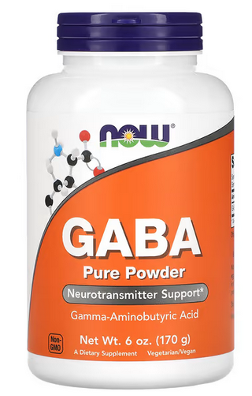
gaba pure poder

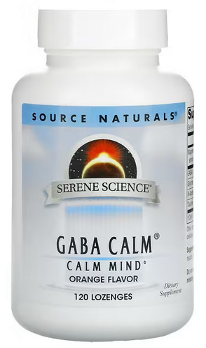
Products I recommend include Source Naturals GABA Calm lozenges and Now GABA Powder.  You can purchase these from my online store (Fullscript – only available to US customers – use this link to set up an account).

If you’re not in the US, these same products are available via iherb (use this link to save 5%).

Additional resources when you are new to using GABA and other amino acids as supplements

As I mentioned above, I use the symptoms questionnaire to figure out if low GABA or other neurotransmitter imbalances may be an issue for you.

If you suspect low levels of any of the neurotransmitters and do not yet have my book, The Antianxiety Food Solution – How the Foods You Eat Can Help You Calm Your Anxious Mind, Improve Your Mood, and End Cravings, I highly recommend getting it and reading it before jumping in and using amino acids on your own so you are knowledgeable. And be sure to share it with the practitioner/health team you or your loved one is working with.

There is an entire chapter on the amino acids and they are discussed throughout the book in the sections on gut health, gluten, blood sugar control (this is covered in an entire chapter too), sugar cravings, anxiety and mood issues.

The book doesn’t include product names (per the publisher’s request) so this blog, The Antianxiety Food Solution Amino Acid and Pyroluria Supplements, lists the amino acids that I use with my individual clients and those in my group programs (over and above the few I mentioned above).

If, after reading this blog and my book, you don’t feel comfortable figuring things out on your own (i.e. doing the symptoms questionnaire and respective amino acids trials), a good place to get help is the GABA QuickStart Program (if you have low GABA symptoms too). This is a paid online/virtual group program where you get my guidance and community support.

If you are a practitioner, join us in The Balancing Neurotransmitters: the Fundamentals program. This is also a paid online/virtual program with an opportunity to interact with me and other practitioners who are also using the amino acids.

Wrapping up and your feedback

I do appreciate the researchers and do hope my clinical insights and community feedback help with further research. The team has plans to do similar research with men and older individuals, and I look forward to these outcomes. I’ll be sure to share these at a later date.

I’ll end here with this statement from the conclusion:

Consequently, GABA supplementation emerges as a promising avenue for augmenting both cardiovascular and emotional well-being among individuals actively participating in physical exercise.

How has GABA helped your emotions, depression, stress and sleep? And what doses work best for you?

Have you tweaked your dosing to find the ideal doses for your needs?

If yes, which products have helped and do you find sublingual or swallowed is more effective?

If you’re a practitioner do you use GABA with clients/patients and how do you use it?

And please let me know if it’s helpful that I’m now including product recommendations and where to get them?

Feel free to share and ask your questions below.
Filed Under: Depression, Exercise, GABA, Sleep, Supplements Tagged With: clinical trial, exercise, GABA, overweight

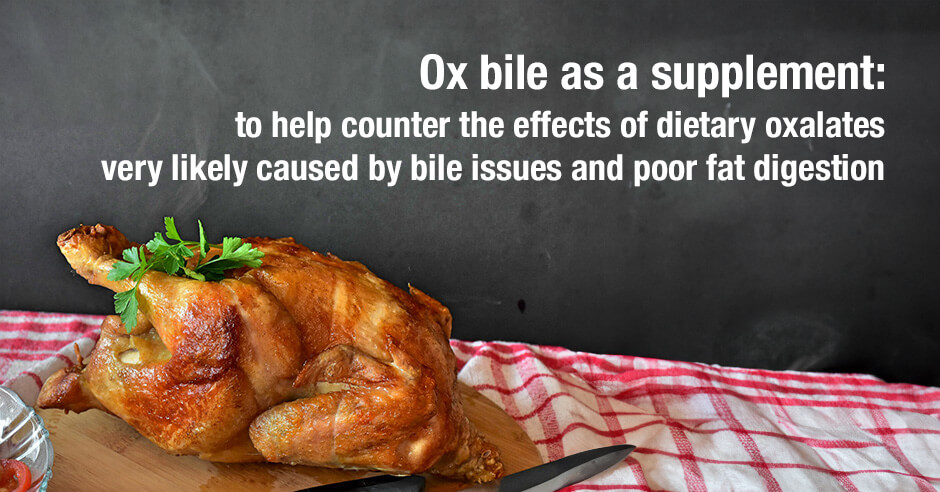
Ox bile as a supplement: to help counter the effects of dietary oxalates very likely caused by bile issues and poor fat digestion

March 15, 2024 By Trudy Scott 69 Comments

ox bile

I’m using ox bile (as a supplement) to help counter the effects of dietary oxalates very likely caused by my bile issues and poor fat digestion.

I started with 125 mg ox bile with lunch and dinner and now I’m up to 250 mg at lunch and 375 mg at dinner. Many ox bile products are 500 mg but I decided to start low and go slow and also use an ox bile only product rather than ox bile combined with digestive enzymes.

I don’t know exactly what my liver or gallbladder issues are but suspect low bile production and/or sluggish bile flow.

I have an issue with dietary oxalates and using ox bile confirms my suspicions because I can feel it helping further with symptom reduction (foot and eye pain, and restless legs at night). Because of improved fat digestion, I’m encouraged it’s going to help with longer term bone health (I was recently diagnosed with osteoporosis), immunity, hormone balance and heart health too. I expect better absorption of healthy fats like omega-3 fatty acids, evening primrose oil and fat-soluble vitamins A, E, D and K (and D and K are so important for bone health).

Of course, all this means less oxalate absorption and a reduced impact of the sharp damaging crystals found in medium/high oxalate foods. Oxalates also bind to minerals like zinc, magnesium, and calcium so those mineral deficiencies should shift too.

Read on for a background on oxalate crystal disease, the research on conjugated bile acid replacement therapy (or ox bile supplementation) and oxalate/fat digestion mechanisms, and more about signs of bile issues and solutions. I also share what else I do to mitigate oxalate issues and improve fat digestion,  and the ox bile product I am using.

Ox bile increases fat absorption and reduces oxalate absorption

This paper, Conjugated bile acid replacement therapy reduces urinary oxalate excretion in short bowel syndrome, explains that “Soluble oxalate is hyper absorbed by the colon leading to hyperoxaluria and an increased risk for renal calcium oxalate stones and deposits” (and other pain issues – more on that below).

Using ox bile as a supplement (or replacement) with meals “increases fat absorption and thereby decreases calcium fatty acid soap formation and oxalate hyperabsorption.”  What does this mean? When fat absorption is improved with ox bile supplements there is more calcium left to bind to excess oxalates in the gut and get rid of them in the stool i.e. less oxalates are absorbed.

I encourage you to read the above paper for a better understanding of the mechanisms.

I do appreciate this team of researchers who have highlighted this approach to help with oxalate issues. Keep in mind I’m experimenting and extrapolating from this single case study of someone with short bowel syndrome and based on what I already know about bile/fat digestion, my own oxalate issues and symptoms of poor bile production/flow (see below).

I don’t have short bowel syndrome but  there are a few related studies like this one from the same department, so I feel comfortable experimenting and tracking.

Other pain issues and my pain symptoms caused by dietary oxalates

Keep in mind that the increased absorption of oxalates also causes issues like joint and soft tissue pain, anxiety, restless legs, insomnia, bladder issues, vulvodynia, eye-poking (in autism), thyroid problems, osteoporosis, damage to the heart etc. even when there are no kidney stones. This is not recognized in kidney stone research but is seen extensively in clinical practice.

In 2012 I made the connection between oxalate intake and my excruciating foot pain – a combination of hot-burning-coals-pain and shards-of-glass-pain. The pain has always been worse at night and at its worst I was unable to sleep with severe restless legs.  A few years later, I noticed my left eye being affected too, with scratchy discomfort and mild pain. There is also a goopy kind of discharge from the inner part of my eye and burning/redness crystal-like teariness on the outer parts of my eyes.

You can read more about my oxalate story and oxalate crystal disease on this blog – Oxalate crystal disease, dietary oxalates and pain: the research & questions.

It’s more than only ox bile replacement to help with oxalate issues

I say that ox bile helps further because this is a journey I’m on and there are many nutritional approaches that have been helping me over the years. My symptoms have reduced as I do eat mostly low oxalate with some medium oxalate vegetables from time to time, and occasional chocolate or carob (which are high oxalate).

I continue to finesse my use of calcium citrate at bedtime when my symptoms do flare. I am fortunate that I am able to eat cheese so this is another source of calcium for me.

I have pyroluria so I have long used vitamin B6 which is recognized to be helpful for some with oxalate issues. I suspect this may have prevented dumping when I first switched to low oxalate eating.

Signs of low quality bile from Anne Louse Gittleman

These are from her book, The New Fat Flush Plan:

  • Queasiness after a fatty meal (impaired bile flow)
  • Light-colored or floating stools (lack of bile output)
  • Nausea/motion sickness (not enough bile)
  • Dry skin and hair (lack of essential fatty acids)
  • Constipation (inadequate bile for lubrication)
  • Constant feeling of fullness
  • Inability to lose weight
  • Pain under the right rib cage (reflective pain from the gallbladder)
  • Hemorrhoids (congested liver)
  • Varicose veins (pressure from constipation due to thickened bile)
  • Pain between the shoulder blades (reflective pain from the gallbladder)
  • Bloating or gas
  • Headache over the eyes (gallbladder meridian passes over this region)
  • Bitter taste in the mouth after meals (sign of bile regurgitation)
  • History of prescription or recreational drug use (need for more liver and gallbladder support)
  • Sensitivities to chemicals
  • Easily intoxicated (need for more liver and gallbladder support)
  • Fibromyalgia (sign of liver and gallbladder overload)
  • Hypothyroidism (sign of deficient bile to stimulate active thyroid hormone in fat cells)

I’m adding these signs/related issues/conditions:

  • Fatigue
  • Itchy skin
  • SIBO/small intestinal bacterial overgrowth
  • Osteoporosis
  • History of gallbladder attacks or gallstones
  • Oxalate issues

In my Anxiety Summit interview with Anne Louise Gittleman she explains what bile is and why it’s so important (read here if you’re new to this).

What I’ve already done to improve my bile production/quality

Here is a quick summary of the advice Anne Louise Gittleman offers, with a note of what I’ve done. I share this to illustrate that I didn’t jump straight to ox bile supplementation/replacement:

  • Elimination of food allergies (I’ve done this)
  • Addressing low levels of hydrochloric acid or stomach acid (this is not an issue for me)
  • Controlling stress (this is ongoing)
  • Adding bitter greens to the diet (I do this as much as I can, avoiding medium/high oxalate bitter greens)
  • Hot lemon water in the morning (a favorite of the original Fat Flush Plan and something I’ve done for years)
  • Adding non-GMO lecithin from soy and sunflowers to your morning smoothie (I don’t do this)
  • Using a bile building formula that contains choline, taurine, beet root, inositol and methionine, and pancreatic lipase (I use taurine but can’t use beet root because it’s high oxalate; I did a 2 month trial of a lipase only supplement with no changes; I will likely experiment with choline, methionine and inositol in the near future)
  • Using castor oil packs (I plan to do this in the near future)

These are some of the other approaches that can also help:

  • Digestive bitters (it does help me and I continue to use it but it’s not enough)
  • Toxin removal (I’ve experienced the harmful effects of acute environmental toxin exposure and my daily use of taurine helped. I blogged about this here.)
  • Ongoing detox with infrared sauna (I use a Therasage portable sauna)
  • Ox bile supplementation/replacement (I chose to use ox bile to be sure it was a bile issue I was dealing with and I did many other interventions first.)

My observations when using ox bile supplementation

I have not had any severe pain flares and have not needed to use extra calcium citrate in the night. The other profound change was a dramatic increase in energy. A few months ago I thought my Lyme was flaring again as I was so exhausted in the afternoons. This exhaustion has dissipated.

In terms of digestive symptoms, I notice less queasiness after a fatty meal like roast chicken with the skin on or a fatty lamb slow cooker stew. The constant feeling of fullness, gas and bloating has improved too. I suspect ox bile is helping with SIBO because it’s antimicrobial. But I can’t be sure since I started berberine 6 months ago and noticed it reduced methane gas production.

I have yet to test out motion sickness on a boat trip but I haven’t been using wristbands in the car and have been fine. I had been having some unusual/new skin itchiness a few months ago and this has now resolved. I do have sensitivities to chemicals but I haven’t noticed any change yet.

I used my stool color as a gauge to whether the ox bile was working – as I increased the dose I noticed it got darker and I have no more floaters. My bowel movements are much easier (more lubrication) and I feel the urge to go more than before.

It will be interesting to see if longer term this helps with improving my bone density. It makes no sense that I have osteoporosis given I’ve been physically active all my life. I highly suspect my bile issues have been a factor since childhood and then got worse during perimenopause Research shows “Gallbladder emptying time is longer during the perimenopausal period.”  Unfortunately kidney stones and oxalate issues ramp up in menopause so it’s the perfect storm.    I will be discussing all this with my endocrinologist/bone density doctor and ideally do some testing to figure out what the bile issues are (the pancreatic elastase test was fine).

I do track carefully and only make one change at a time so I typically know what improvements I can attribute to what changes.

Ox bile product options

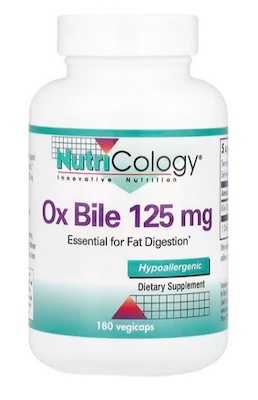
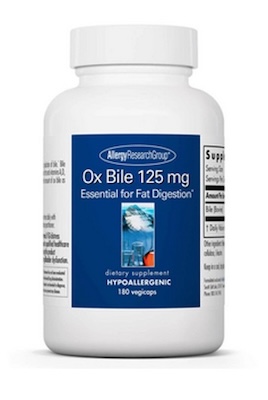
Allergy Research has an Ox Bile 125 mg product and a 500 mg product. You can purchase these from my online store (Fullscript – only available to US customers – use this link to set up an account).

If you’re not in the US, Nutricology has an Ox Bile 125 mg product and a 500 mg product. This is the brand I happen to be using. It can be purchased on iherb (use this link to save 5%).

In conclusion

I’d like to give a shout out to my colleagues… I first learned about oxalates from my dear friend  Julie Matthews. Hearing her present at a conference helped me make the connection to my feet pain issues. She introduced me to Susan Owens, oxalate guru and researcher, and the TLO/Trying Low Oxalate group, and now I communicate regularly with them, the TLO moderators and members. And I met Sally K. Norton a few years ago. She is the author of this excellent book, Toxic Superfoods: How Oxalate Overload Is Making You Sick (my Amazon link).

Unfortunately no-one discusses the use of ox bile replacement/supplementation for those of us with oxalate issues and bile issues, and I suspect it’s an under-appreciated tool for those of us who continue to struggle. Hopefully this research and my results starts a discussion on the topic and further interest.

Sally K. Norton does mention a connection in her book: “The immune system has a method for shielding surrounding tissues from oxalate crystals; entrapping them with extruded DNA called a neutrophil extracellular trap (NET). These NETs forming around oxalates may contribute to gallstones and gallbladder “sludge”. If this is the case in my situation, then my lifelong issues with bile were likely made worse by my intake of medium- and high-oxalate foods.

I do hope that me sharing my personal experiments and healing journey helps you or someone you know. Honestly, I could write a book on oxalates and what I’ve learned over the last few years. There is so much to all this and even though it’s a “pain” to be affected like this it is fascinating. I do feel thankful to have dietary and nutritional “solutions.”

The next step for me is looking into and addressing my endogenous oxalate production i.e. oxalates that are produced internally vs oxalates that are ingested. Stay tuned for an update on this.

Do you have oxalate issues together with gallbladder/bile issues/fat digestion issues and how has ox bile supplementation helped you?

Has ox bile helped you with low bile production or sluggish bile – even if you don’t have oxalate issues?

If you’re a practitioner have you used ox bile with your clients or patients?

Feel free to share and ask your questions below.
Filed Under: Oxalates, Pain, Supplements Tagged With: bile, dietary oxalates, fat digestion, ox bile, oxalate crystal disease, pain, supplement

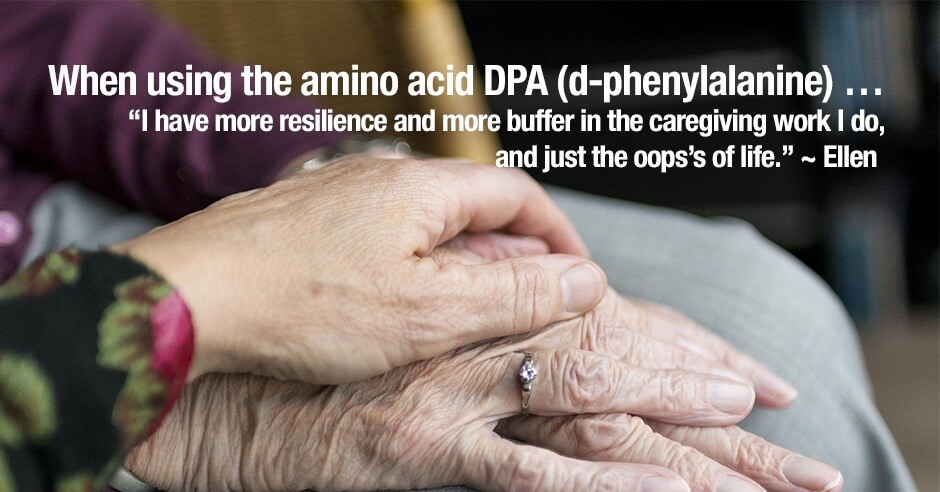
When using the amino acid DPA (d-phenylalanine) I have more resilience and more buffer in the caregiving work I do, and just the oops’s of life

July 29, 2022 By Trudy Scott 10 Comments

using dpa

I had not investigated DPA as I am a joyful, happy person. But recently I have been so depleted that I benefitted much from taking licorice to boost cortisol (who knew cortisol isn’t always to be lowered?)

Your presentation convinced me to try DPA as when I get depleted enough I get weepy (not sadness, just from being physically drained). Wow. I used a 500 mg dose of Lidke Endorphigen in the afternoon, and that has made a startling difference. I have more resilience now, more buffer, in the caregiving work I do, and just the oops’s of life.

I have been an avid note-taker of your summits and the interviews you give on the summits of others, and have recommended your book and blog to precious ones looking for answers to their health challenges.

Because of your diligence, I have been greatly helped by using GABA, 5-HTP (seems to work better for me than tryptophan), and tyrosine (so my thyroid glandular works more effectively).

Thank you ever so much for presenting information with evidence backing in a way that truly meets my curious, investigative, analytical mind. I love to know the whys and hows of things.

Ellen shared this feedback on one of the blogs after she heard me talk about DPA and low endorphins on The Anxiety Summit 5: Gut-Brain Axis. I’m sharing her wonderful results to give you a practical resource if you find yourself depleted and needing resilience as a caregiver. I’m also sharing this in order to illustrate that it’s not always easy to know when to trial a certain amino acid.

Ellen commented that she appreciated understanding the whys and hows of things. She is referring to my explanation of how DPA (d-phenylalanine) works. It’s an amino acid that destroys the enzyme that breaks down endorphins and thereby helps to raise your endorphins. With low endorphins you can feel very weepy, overly emotional, be extra sensitive to emotional pain, be sensitive to physical pain, and indulge in comfort/reward eating. You also often don’t feel joy.

Even though she was well versed in the use of GABA, 5-HTP and tyrosine (and seeing results), she had not investigated DPA. She described herself as a joyful and happy person so she didn’t think she needed DPA.

But her caregiving work (and other health and life challenges) had left her depleted and she started to feel weepy. And she is happy to share that DPA reversed that feeling. I’m thrilled for her and appreciate her for sharing.

The DPA product, how best to use it and how it differs from DLPA

Ellen mentions Lidtke Endorphigen which contains 500 mg of DPA. This product has been a long-time firm favorite with my clients and those in my community.

I used to recommend simply chewing the capsule to get the quickest and best effects and this worked well when it was produced in a gelatin capsule. Now it’s made with a cellulose capsule and chewing doesn’t work at all well, so opening the capsule (or just biting off the top) and tipping the powder into your mouth works best.

I’m often asked about the difference between DPA and DLPA (dl-phenylalanine) so if you have this question you can read more about that here.

Some of the supporting research

Research supports the use of DPA for helping to ease depression and the fact that caregivers are prone to an emotional burden.

  • D-phenylalanine and other enkephalinase inhibitors as pharmacological agents: implications for some important therapeutic application

It is proposed that the enkephalinase [a subgroup of endorphins] inhibitors may be effective in a number of human “endorphin deficiency diseases” such as depression…

  • Burden and quality of life of caregivers for hemodialysis patients

Caregivers of hemodialysis patients may experience a significant burden and an adverse effect on their quality of life. Emotional aspects of caregivers (particularly female spouses) and patients are important predictors of burden.

The study mentions that “Social support and psychological interventions should be considered to improve caregiver life and patient outcomes.”

There is no research that I am aware of that has found DPA to be beneficial for caregivers but until we have that research, let’s include nutritional support based on clinical results we see.

This case, Caregiving Burden, Stress, and Health Effects Among Family Caregivers of Adult Cancer Patients, illustrates what many caregivers experience: “extremely high levels of psychological distress, including anxiety, depression, worry and extreme loneliness.”

Ellen was already using GABA, 5-HTP and tyrosine when she added DPA, so as a caregiver she was already addressing her low GABA physical-type anxiety (with GABA), low serotonin worry-type anxiety (with 5-HTP) and low dopamine low-energy/low mood (with tyrosine). Adding DPA was the cherry-on-the-top for her weepiness and low resilience, and gave her more of a buffer.

Resources if you are new to using the amino acids as supplements

If you are new to using any of the amino acids as supplements, here is the Amino Acids Mood Questionnaire from The Antianxiety Food Solution (you can see all the symptoms of neurotransmitter imbalances, including low endorphins).

If you suspect low levels of any of the neurotransmitters and do not yet have my book, The Antianxiety Food Solution – How the Foods You Eat Can Help You Calm Your Anxious Mind, Improve Your Mood, and End Cravings, I highly recommend getting it and reading it before jumping in and using amino acids on your own so you are knowledgeable. And be sure to share it with the practitioner/health team you or your loved one is working with.

There is an entire chapter on the amino acids and they are discussed throughout the book in the sections on gut health, gluten, blood sugar control, sugar cravings, self-medicating with alcohol and more.

The book doesn’t include product names (per the publisher’s request) so as mentioned above, this blog, The Antianxiety Food Solution Amino Acid and Pyroluria Supplements, lists the amino acids that I use with my individual clients and those in my group programs.

As mentioned above, Lidtke Endorphigen is the DPA product I’ve had the most success with (and it can be found in my online store). Doctor’s Best D-phenylalanine is also a good product.

If, after reading this blog and my book, you don’t feel comfortable figuring things out on your own (i.e. doing the symptoms questionnaire and respective amino acids trials), a good place to get help is the GABA Quickstart Program (if you have low GABA symptoms). This is a paid online/virtual group program where you get my guidance and community support. There are many moms in the program who are having much success with their kids.

You can then use this knowledge to then trial DPA and other amino acids or move on to the Amazing Aminos for Anxiety Program and get help there.

If you are a practitioner, join us in The Balancing Neurotransmitters: the Fundamentals program. This is also a paid online/virtual program with an opportunity to interact with me and other practitioners who are also using the amino acids with success with their clients/patients.

If you’re a caregiver have you used DPA with success and if yes how has it helped? And do you feel more resilient?

Has GABA, 5-HTP (or tryptophan) and tyrosine also helped you?

What else helps you as a caregiver and what advice would you share with others taking care of a loved one?

If you’re a practitioner, do you use DPA with your clients/patients?

If you have questions please share them here too.

Filed Under: Amino Acids, DPA/DLPA, Endorphins, Supplements Tagged With: 5-HTP, anxiety, Balancing Neurotransmitters: the Fundamentals program for practitioners, buffer, caregiver, caregiving work, comfort/reward eating, d-phenylalanine, depleted, depression, DLPA, DPA, emotional burden, emotional pain, endorphins, GABA, GABA Quickstart program, joy, joyful, Lidke Endorphigen, physical pain, resilience, tyrosine, weepiness, weepy

Is DPA stimulating; can it be used with kids and someone with bipolar disorder; can it be used with a benzo/SSRI? (and other questions)

July 22, 2022 By Trudy Scott 12 Comments

dpa questions

DPA (d-phenylalanine) is an amino acid that destroys the enzyme that breaks down endorphins. Endorphins are feel-good chemicals that you experience with an endorphin rush when you go for a run or when someone gives you a big hug, when you show kindness to someone or someone does something nice for you. The amino acid DPA helps to raise your endorphins. With low endorphins you can feel very weepy, overly emotional, be extra sensitive to emotional pain, be sensitive to physical pain, and indulge in comfort/reward eating. Today I’m sharing some questions (and my feedback) as to whether it’s stimulating, can it be used with kids and someone with bipolar disorder, can it be used with a benzo/SSRI and more.

Misha has had success with DPA and wants to know if it is considered too stimulating. Here is her feedback and question:

I first tried DPA after reading about it on your blog and found it helpful for raising my mood. The DPA definitely helped curb my weepiness. I used Lidtke Endorphigen 1 cap/day. I have chronic Lyme which creates severe difficulty with sleep, anxiety and depression. Six months ago my neurologist took me off DPA saying it would be too stimulating to my nervous system.

I have since begun using DPA again; I really need the endorphin boost. Do you have any insights on whether DPA is considered stimulating? Whether it interferes with sleep (unfortunately my sleep is bad whether I take DPA or not)? Or suggestions for time of day to take it?

Here is my feedback for Misha: There is no evidence that DPA is too stimulating whereas DLPA (dl-phenylalanine) is known to be stimulating (it works like a combination of DPA and tyrosine).

And when I hear all this it tells me the person needs endorphin support:

  • “found it helpful for raising my mood”
  • “The DPA definitely helped curb my weepiness”
  • “I have since begun using DPA again; I really need the endorphin boost”

That said anything is possible which is why using the amino acids is based on the questionnaire and trials to see how a person responds. The best way to know if sleep is affected is to monitor sleep when using it and when not using it. She says her sleep is bad whether she takes DPA or not so I would recommend going back to her neurologist, sharing this information and the fact that it’s helping her so much. And look for other causes of her sleep issues.

Anna asks if DPA and other amino acids are safe for kids and how high doses? This is her question:

My 10 yr old has been diagnosed with social anxiety and she ticks off most of the boxes for low endorphins, low GABA, low serotonin. She’s very sensitive and very very emotional. We tried, but can’t seem to find a naturopath that can help her much. I feel after a while they all reach a dead end. I have been following you for a year and recently got your book. It looks relatively easy to follow, however I’m a bit reluctant, as she’s a kid.

My feedback: I work with women and once they have figured out the amino acids and neurotransmitter imbalances themselves they find it much easier to help their children who often have similar issues. When that is not the case working with a practitioner is ideal. That being said many moms become informed and educated enough to trial the amino acids on their own (like this mom who had her daughter use GABA with much success).

Anna says her daughter is very sensitive and very very emotional so I’d consider using 125 mg DPA to start (500 mg is an adult starting dose).With kids we also always start with dietary changes as laid out in my book. A good place to start is with a gluten-free and sugar-free diet and DPA (and the other amino acids) can help curb the cravings and feelings of deprivation.

Anon has bipolar disorder and likes comfort foods. This is her question:

I have bipolar disorder and wonder if the DPA will send me into a manic state. It’s one of the reasons I can’t take anti-depressants or stimulants otherwise I go manic. But I can eat for comfort so I only have food in the house I’m going to eat according to meal schedules. So I want to try the DPA.

Here is my feedback: I have not seen DPA to be an issue with bipolar disorder and it’s fabulous when you are a comfort-eater. If you have bipolar disorder and are on medications, it’s always advised to discuss new supplements with your prescribing doctor. You can share that DPA is not on the list of amino acids that have precautions with bipolar disorder.

I would not recommend the use of DLPA (dl-phenylalanine) with bipolar disorder because some of this increases dopamine (which can trigger a manic state).

Kristie is doing a benzodiazepine taper and would like to use DPA:

I am currently going through a benzo taper & there are numerous wonderful products that I am unable to mix with benzos. Would this be safe for me?

This is my feedback: I have not had issues with DPA with clients who are doing a benzo taper and there are no documented contraindications. DPA can help with some of the emotional blunting caused by benzos and the emotional fragility we often see during a benzo taper.  I know some of the great benzo support groups say not to use GABA but I find it very helpful when tapering too.

The medication question is a common one. Someone else described her depression as weepy and is using the SSRI. There are also no documented contraindications when using DPA with a SSRI. But again, best to discuss with the prescribing doctor.

Arleen has a question about blood pressure and the DPA product I recommend (Lidtke Endorphigen):

1) Is this product gluten free and 2) What effect if any would it have on blood pressure (mine is naturally low)

Here is my feedback: Lidtke Endorphigen is gluten-free and I have not seen it or other DPA products to be an issue with low blood pressure.

Jan wants to use GABA and DPA. She asks:

Can I use Gaba 125mg and also take DPA? Would either offset the other?

If someone has low GABA symptoms and GABA helps with the physcal anxiety and they also have low endorphin symptoms and DPA helps then they are absolutely fine to use together and even at the same time. However, I have clients trial one at a time in order to find the ideal dose and so you know how each one is working.

Resources if you are new to using the amino acids as supplements

If you are new to using any of the amino acids as supplements, here is the Amino Acids Mood Questionnaire from The Antianxiety Food Solution (you can see all the symptoms of neurotransmitter imbalances, including low endorphins).

If you suspect low levels of any of the neurotransmitters and do not yet have my book, The Antianxiety Food Solution – How the Foods You Eat Can Help You Calm Your Anxious Mind, Improve Your Mood, and End Cravings, I highly recommend getting it and reading it before jumping in and using amino acids on your own so you are knowledgeable. And be sure to share it with the practitioner/health team you or your loved one is working with.

There is an entire chapter on the amino acids and they are discussed throughout the book in the sections on gut health, gluten, blood sugar control, sugar cravings, self-medicating with alcohol and more.

The book doesn’t include product names (per the publisher’s request) so as mentioned above, this blog, The Antianxiety Food Solution Amino Acid and Pyroluria Supplements, lists the amino acids that I use with my individual clients and those in my group programs.

As mentioned above, Lidtke Endorphigen is the DPA product I’ve had the most success with (and it can be found in my online store). Doctor’s Best D-phenylalanine is also a good product.

If, after reading this blog and my book, you don’t feel comfortable figuring things out on your own (i.e. doing the symptoms questionnaire and respective amino acids trials), a good place to get help is the GABA Quickstart Program (if you have low GABA symptoms). This is a paid online/virtual group program where you get my guidance and community support. There are many moms in the program who are having much success with their kids.

You can then use this knowledge to then trial DPA and other amino acids or move on to the Amazing Aminos for Anxiety Program and get help there.

If you are a practitioner, join us in The Balancing Neurotransmitters: the Fundamentals program. This is also a paid online/virtual program with an opportunity to interact with me and other practitioners who are also using the amino acids with success with their clients/patients.

Have you used DPA with success and if yes how has it helped?

If you’re a practitioner, do you use DPA with your clients/patients?

If you have questions please share them here too.

Filed Under: Amino Acids, DPA/DLPA, Endorphins, Supplements Tagged With: amino acid, anxiety, Balancing Neurotransmitters: the Fundamentals, benzo, bipolar disorder, comfort/reward eating, d-phenylalanine, DPA, emotional, emotional pain, endorphin-boosting, endorphins, GABA, GABA Quickstart program, kids, low blood pressure, mood, physical pain, SSRI, stimulating, weepiness, weepy

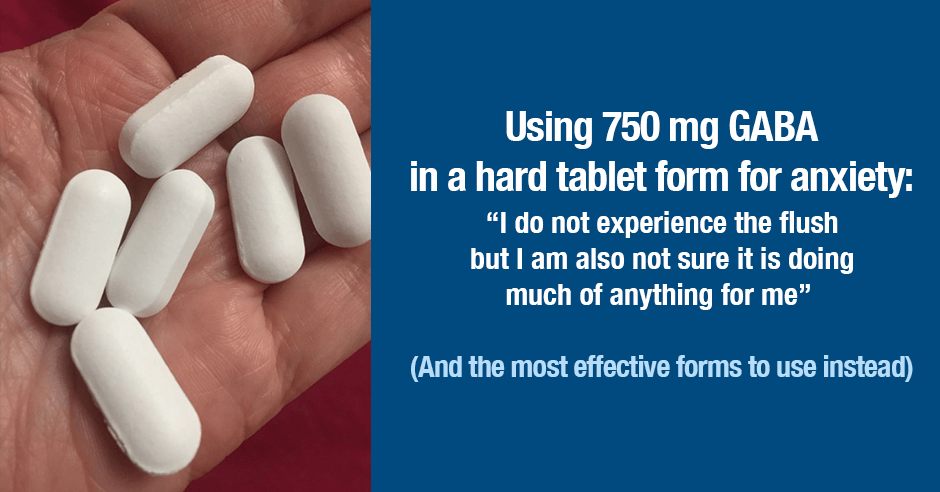
Using 750 mg GABA in a hard tablet form for anxiety: I do not experience the flush but I am also not sure it is doing much of anything for me

July 15, 2022 By Trudy Scott 21 Comments

gaba hard tablet

Today I’m addressing a question from someone in this community about a particular GABA product and her confusion about dosing with 750mg and using a hard tablet (she calls it a pill). When she uses it she doesn’t notice any effect i.e. no calming benefits and no adverse niacin-type tingly flush either. This is what she asked:

Not sure if “Source Naturals GABA Calm Mind” is on your list, but I thought it was one you had recommended at one time? Anyway, these are pills that cannot be opened like a capsule and 1 pill = 750 mg.

Personally, I had the tingly flush when I used a different product that WAS a capsule and opened it on my tongue…unfortunately I do not recall dosage or product name but I purchased at Whole Foods.

With this particular product (Source Naturals GABA Calm Mind) in pill form, although the dosage could be higher, I do not experience the flush…(however, I also am not sure it is doing much of anything for me).

This is my feedback for her: I have never recommended the Source Naturals GABA Calm Mind 750 mg tablet ever (she calls it a pill but I know she is referring to the hard tablets).

These are not a very effective way to use GABA. As you can see, she doesn’t feel it’s doing anything for her in terms of easing her anxiety and being calming. With a high dose of GABA we also often see a niacin-like flush or tingling and yet with this pill/tablet form she didn’t experience this either. GABA is much more effective when used sublingually or opening a capsule (and starting low at 125mg). More on this below.

But I’m not surprised she is confused and asking this question. The Source Naturals GABA Calm Mind has a very similar bottle/name/label to Source Naturals GABA Calm (the sublingual with 125mg GABA) and there is also a Source Naturals GABA Calm Mind 750 mg capsules (which can be opened).

She mentions the tingly flush when using a different product that was a capsule and opened on to her tongue. I’d suspect the tingling happened with a 500 mg GABA or 750 mg GABA product as this is a common dosage found in health stores. Opening the capsule and using less is best when starting out.

If you have to break it it’s a tablet and much less effective

All this logic applies to any brand of hard GABA tablet. Someone just shared on Facebook that she had purchased a GABA product in the Netherlands and broke it in half in order to use a lower dose. If you have to break it it’s a tablet and much less effective and possibly not at all effective. Be sure to read the front and back of the bottle and avoid hard tablets.

From time to time someone will see some benefit with a GABA tablet that is swallowed but it’s usually minimal.

The most effective forms of GABA to use

Here is a quick recap if you’re new to GABA. It’s an amino acid that is used as a supplement to boost GABA levels (a calming neurotransmitter) and ease physical tension type anxiety symptoms. It’s most effective when used sublingually, or as a powder or by using a GABA capsule opened on to the tongue or as a liposomal product.

When using GABA it must ideally be in one of these forms for the best effects:

  • Capsule form so the gelatin or cellulose capsule can be opened and the contents sprinkled onto the tongue, or some of it depending on dosing (NFH GABA-T SAP is a good example of this one – it contains GABA and theanine)
  • Sublingual form which is sucked/held in the mouth (Source Naturals GABA Calm 125mg is a good example of this – this is the GABA product that I have the most success with and it’s easy to use when out and about; PharmaGABA chewables are another option)
  • Powder form which is measured out using special tiny measuring spoon and sprinkled on to the tongue (Healthwise and Bulk Nutrients are good examples of this one)
  • Liposomal form which is sprayed into the mouth and held for a few minutes (Designs for Health Liposomal Neurocalm and Quicksilver Scientific Liposomal GABA with L-Theanine are good examples of this form)

This blog, Antianxiety Food Solution Amino Acid and Pyroluria Supplements, lists the amino acids that I use with my individual clients and those in my group programs. You can find a list of selected GABA products.

Here are a few success stories where the above different forms have been used:

  • Drastic reduction in intrusive thoughts, anxiety and fears (and better sleep) with GABA, tryptophan, 5-HTP and the pyroluria protocol
  • Keep GABA powder handy for choking episodes, stridor and panic (and find the ideal dose and be consistent for prevention/easing anxiety)
  • GABA helps 14-year-old with Tourette’s Syndrome (the tics and sleep), and tyrosine makes him happier and his mind sharper
  • GABA, Heartmath and EFT ease Micki’s mold-induced anxiety and panic attacks
  • PharmaGABA eases physical anxiety in a young man who has recently given up Adderall, alcohol and nicotine
  • GABA is the answer after 40 years of a lump-in-the-throat sensation, nervousness and muscle tension at work

Resources if you are new to using the amino acids as supplements

If you are new to using any of the amino acids as supplements, here is the Amino Acids Mood Questionnaire from The Antianxiety Food Solution (you can see all the symptoms of neurotransmitter imbalances, including low GABA).

If you suspect low levels of any of the neurotransmitters and do not yet have my book, The Antianxiety Food Solution – How the Foods You Eat Can Help You Calm Your Anxious Mind, Improve Your Mood, and End Cravings, I highly recommend getting it and reading it before jumping in and using amino acids on your own so you are knowledgeable. And be sure to share it with the practitioner/health team you or your loved one is working with.

There is an entire chapter on the amino acids and they are discussed throughout the book in the sections on gut health, gluten, blood sugar control, sugar cravings, self-medicating with alcohol and more.

The book doesn’t include product names (per the publisher’s request) so as mentioned above, this blog, The Antianxiety Food Solution Amino Acid and Pyroluria Supplements, lists the amino acids that I use with my individual clients and those in my group programs.

If, after reading this blog and my book, you don’t feel comfortable figuring things out on your own (i.e. doing the symptoms questionnaire and respective amino acids trials), a good place to get help is the GABA QuickStart Program (if you have low GABA symptoms). This is a paid online/virtual group program where you get my guidance and community support. There are many moms in the program who are having much success with their kids.

If you are a practitioner, join us in The Balancing Neurotransmitters: the Fundamentals program. This is also a paid online/virtual program with an opportunity to interact with me and other practitioners who are also using the amino acids with success with their clients/patients.

Did you use a GABA product that didn’t work for you before finding the ideal product and dose?

Please share which product didn’t work (was it a hard tablet?) and what did work for you. And be sure to share how it helps to ease your physical anxiety, insomnia, pain, intrusive thoughts and cravings (for sugar or alcohol).

Have you experienced the niacin-like flush or tingle from using too high a dose of GABA? How much did that and which product?

If you’re a practitioner, which forms of GABA do you find the most success with?

If you have questions please share them here too.

Filed Under: Amino Acids, Anxiety, GABA, Supplements Tagged With: 125mg, 750 mg GABA, anxiety, Balancing Neurotransmitters: the Fundamentals, calming, choking, flush, GABA, GABA Calm, GABA Quickstart program, hard tablet, intrusive thoughts, lump-in-the-throat sensation, mold-induced anxiety, muscle tension, nervousness, niacin-type flush, not doing much, opening a capsule, panic, pharmaGABA, pill, sleep, Source Naturals GABA Calm Mind, sublingual, tics, tingly, Tourette’s Syndrome

Ginger, pressure-point wrist-bands, the horizon and vitamin B6 for sea-sickness

July 5, 2019 By Trudy Scott 18 Comments

sea sickness tips

We had an amazing day snorkeling on the Great Barrier Reef earlier this week. As you know, I always like to keep it real. I was not very happy on the 2.5 hour boat trip to the Great Barrier Reef. It was supposedly calm, but it felt very rough to me (look at the horizon behind the boat!)

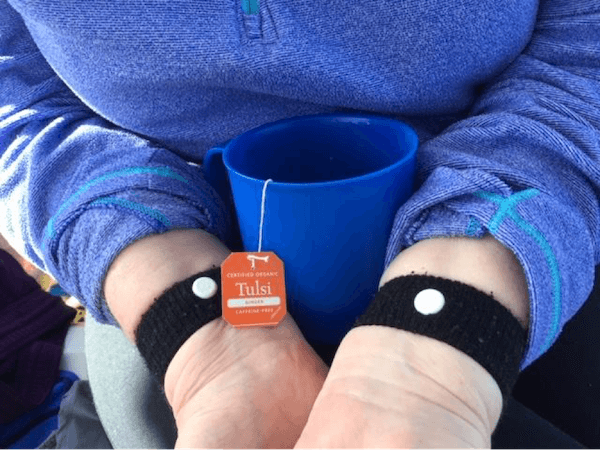
I’ve always suffered from various degrees of motion sickness and this day was no exception. However, I was able to keep it together and not throw up by using pressure point wrist bands, ginger tea and ginger tablets, sitting where I could feel the sea air blowing on me and by looking at the horizon pretty much the entire time. As someone with pyroluria, my vitamin B6 status is good too and this always helps with nausea prevention.

pressure point wrist band
Here is a close-up picture of the pressure-point wrist bands, with the pressure “button” placed two finger widths from the wrist joint. It’s important to put these on before the motion starts.
pressure point wrist band
I was only feeling good enough to demonstrate the wrist-bands about 10 mins before arriving back in Townsville.
TravaCalm
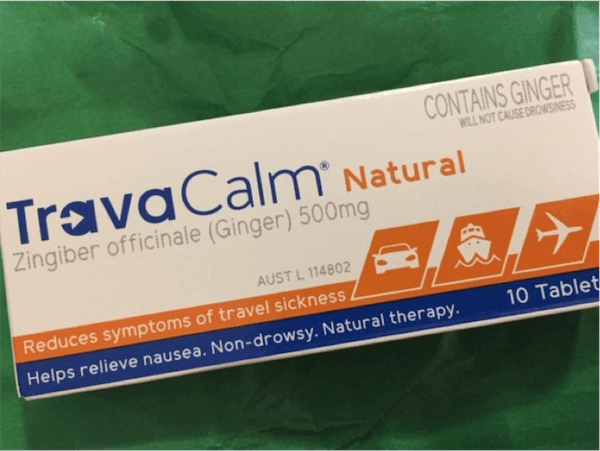
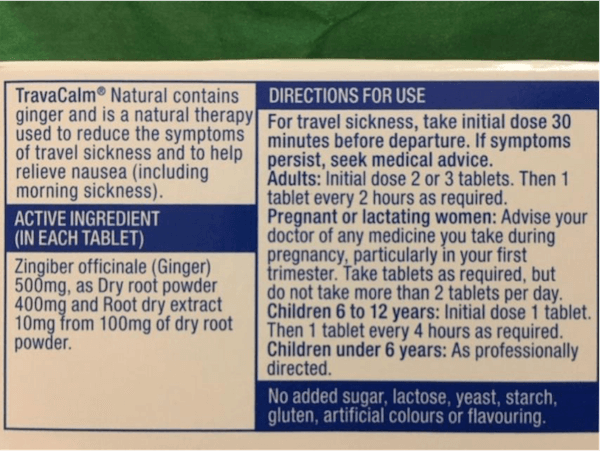
The tour company, Adrenalin Dive, offered these excellent TravaCalm Natural ginger tablets to everyone. These were new to me and I took 2 shortly after we left Townsville.
travacalm
They are simply ginger and have no nasty fillers, and they are gluten-free. It was only after I got back that I learned it’s best to take 2-3 tablets 30 minutes before leaving, then take 1 tablet every hour as required. If I’d done this I would probably have felt more human!
tulsi tea
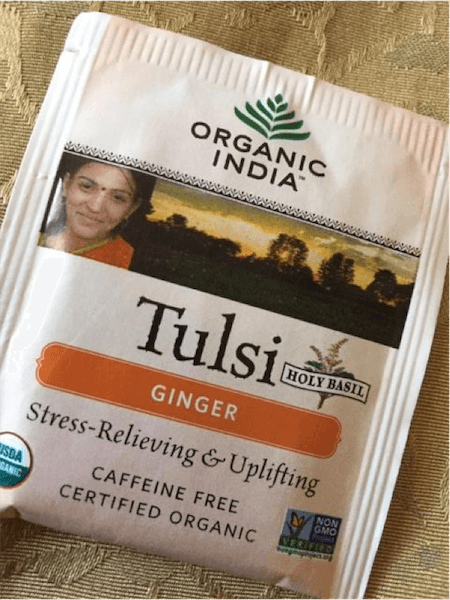
I also sipped Organic India Tulsi Ginger tea for the entire journey, in both directions. I always carry ginger tea with me.

Next for me is vestibular neuro-rehab with a functional neurologist to hopefully sort out this motion sickness thing once and for all!

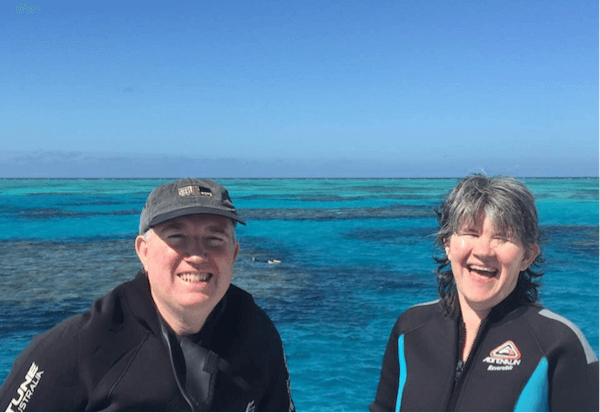
The good news is that it was so much calmer once we got to the reef and I felt 100% when snorkeling. I’m in awe of the beauty of this place: the amazing blues, the colorful coral and fish, together with spending hours in the ocean!

snorkeling great barrier reef

I think we need a new term similar to forest bathing called “reef bathing” as I’m sure the physiological benefits are similar – a combination of calming, lowered blood pressure and heart rate, lowered cortisol and even boosting serotonin (we could not stop smiling!) and endorphins (the feeling of pure joy is still with us).

Since I’m on holiday, I’ll share more with the supporting research about vitamin B6, ginger and pressure point wrist-bands in an updated version of this blog.

Until then feel free to share what works for you if you’re prone to motion sickness.

Filed Under: Supplements Tagged With: ginger, ginger tea, horizon, motion sickness, pyroluria, sea-sickness, vitamin B6

  • Page 1
  • Page 2
  • Page 3
  • Go to Next Page »

Primary Sidebar

GABA QuickStart Homestudy

gaba quickstart homestudy

Free Report

9 Great Questions Women Ask about Food, Mood and their Health

You'll also receive a complimentary subscription to my ezine "Food, Mood and Gal Stuff"


Connect with me

Popular Posts

  • Amino Acids Mood Questionnaire from The Antianxiety Food Solution
  • The Antianxiety Food Solution Amino Acid and Pyroluria Supplements
  • Pyroluria Questionnaire from The Antianxiety Food Solution
  • Collagen and gelatin lower serotonin: does this increase your anxiety and depression?
  • Tryptophan for the worry-in-your-head and ruminating type of anxiety
  • GABA for the physical-tension and stiff-and-tense-muscles type of anxiety
  • The Antianxiety Food Solution by Trudy Scott
  • Seriphos Original Formula is back: the best product for anxiety and insomnia caused by high cortisol
  • Am I an anxious introvert because of low zinc and vitamin B6? My response to Huffington Post blog
  • Vagus nerve rehab with GABA, breathing, humming, gargling and key nutrients

Recent Posts

  • Her cravings for chips and peanut butter were triggered by stress: GABA ends cravings and reduces physical tension and fear of heights
  • It is truly miraculous to be able to move through life without crippling anxiety and panic
  • GABA and tryptophan combo provide immediate and noticeable relief for tremors and cervical dystonia in just 7 days
  • Red light therapy for back and neck pain, plantar fasciitis and low mood – a complement to the amino acids GABA, DPA and tryptophan
  • What do I use instead of Seriphos to help lower high cortisol that is affecting my sleep and making me anxious at night?

Categories

  • 5-HTP
  • AB575
  • Addiction
  • ADHD
  • Adrenals
  • Alcohol
  • Allergies
  • Alzheimer's disease
  • Amino Acids
  • Anger
  • Antianxiety
  • Antianxiety Food Solution
  • Antidepressants
  • Anxiety
  • Anxiety and panic
  • Autism
  • Autoimmunity
  • benzodiazapines
  • Bipolar disorder
  • Books
  • Caffeine
  • Cancer
  • Candida
  • Children/Teens
  • Collagen
  • Cooking equipment
  • Coronavirus/COVID-19
  • Cravings
  • Depression
  • Detoxification
  • Diabetes
  • Diet
  • DPA/DLPA
  • Drugs
  • EFT/Tapping
  • EMF
  • EMFs
  • Emotional Eating
  • Endorphins
  • Environment
  • Essential oils
  • Events
  • Exercise
  • Fear
  • Fear of public speaking
  • Fertility and Pregnancy
  • Fish
  • Food
  • Food and mood
  • Functional neurology
  • GABA
  • Gene polymorphisms
  • General Health
  • Giving
  • Giving back
  • Glutamine
  • Gluten
  • GMOs
  • Gratitude
  • Gut health
  • Heart health/hypertension
  • Histamine
  • Hormone
  • Hyperparathyroidism
  • Hypoglycemia
  • Immune system
  • Inflammation
  • Insomnia
  • Inspiration
  • Introversion
  • Joy and happiness
  • Ketogenic diet
  • Lithium orotate
  • Looking awesome
  • Lyme disease and co-infections
  • MCAS/histamine
  • Medication
  • Men's health
  • Mental health
  • Mercury
  • Migraine
  • Mold
  • Movie
  • MTHFR
  • Multiple sclerosis
  • Music
  • NANP
  • Nature
  • Nutritional Psychiatry
  • OCD
  • Osteoporosis
  • Oxalates
  • Oxytocin
  • Pain
  • Paleo
  • Parasites
  • Parkinson’s disease
  • PCOS
  • People
  • PMS
  • Postpartum
  • PTSD/Trauma
  • Pyroluria
  • Questionnaires
  • Real whole food
  • Recipes
  • Research
  • Schizophrenia
  • serotonin
  • SIBO
  • Sleep
  • Special diets
  • Sports nutrition
  • Stress
  • Sugar addiction
  • Sugar and mood
  • Supplements
  • Teens
  • Testimonials
  • Testing
  • The Anxiety Summit
  • The Anxiety Summit 2
  • The Anxiety Summit 3
  • The Anxiety Summit 4
  • The Anxiety Summit 5
  • The Anxiety Summit 6
  • Thyroid
  • Thyroid health
  • Toxins
  • Tryptophan
  • Tyrosine
  • Uncategorized
  • Vegan/vegetarian
  • Women's health
  • Yoga

Archives

  • May 2026
  • April 2026
  • October 2025
  • September 2025
  • August 2025
  • July 2025
  • June 2025
  • May 2025
  • April 2025
  • March 2025
  • February 2025
  • January 2025
  • November 2024
  • October 2024
  • September 2024
  • August 2024
  • July 2024
  • June 2024
  • May 2024
  • April 2024
  • March 2024
  • February 2024
  • January 2024
  • December 2023
  • November 2023
  • October 2023
  • September 2023
  • August 2023
  • July 2023
  • June 2023
  • May 2023
  • April 2023
  • March 2023
  • February 2023
  • January 2023
  • December 2022
  • November 2022
  • October 2022
  • September 2022
  • August 2022
  • July 2022
  • June 2022
  • May 2022
  • April 2022
  • March 2022
  • February 2022
  • January 2022
  • December 2021
  • November 2021
  • October 2021
  • September 2021
  • August 2021
  • July 2021
  • June 2021
  • May 2021
  • April 2021
  • March 2021
  • February 2021
  • January 2021
  • December 2020
  • November 2020
  • October 2020
  • September 2020
  • August 2020
  • July 2020
  • June 2020
  • May 2020
  • April 2020
  • March 2020
  • February 2020
  • January 2020
  • December 2019
  • November 2019
  • October 2019
  • September 2019
  • August 2019
  • July 2019
  • June 2019
  • May 2019
  • April 2019
  • March 2019
  • February 2019
  • January 2019
  • December 2018
  • November 2018
  • October 2018
  • September 2018
  • August 2018
  • July 2018
  • June 2018
  • May 2018
  • April 2018
  • March 2018
  • February 2018
  • January 2018
  • December 2017
  • November 2017
  • October 2017
  • September 2017
  • August 2017
  • July 2017
  • June 2017
  • May 2017
  • April 2017
  • March 2017
  • February 2017
  • January 2017
  • December 2016
  • November 2016
  • October 2016
  • September 2016
  • August 2016
  • July 2016
  • June 2016
  • May 2016
  • April 2016
  • March 2016
  • February 2016
  • January 2016
  • December 2015
  • November 2015
  • October 2015
  • September 2015
  • August 2015
  • July 2015
  • June 2015
  • May 2015
  • April 2015
  • March 2015
  • February 2015
  • January 2015
  • December 2014
  • November 2014
  • October 2014
  • September 2014
  • August 2014
  • July 2014
  • June 2014
  • May 2014
  • April 2014
  • March 2014
  • February 2014
  • January 2014
  • December 2013
  • November 2013
  • October 2013
  • September 2013
  • August 2013
  • July 2013
  • June 2013
  • May 2013
  • April 2013
  • March 2013
  • February 2013
  • January 2013
  • December 2012
  • November 2012
  • October 2012
  • August 2012
  • July 2012
  • June 2012
  • May 2012
  • April 2012
  • March 2012
  • February 2012
  • January 2012
  • December 2011
  • November 2011
  • October 2011
  • September 2011
  • August 2011
  • July 2011
  • June 2011
  • May 2011
  • April 2011
  • March 2011
  • February 2011
  • January 2011
  • December 2010
  • October 2010
  • September 2010
  • July 2010
  • May 2010
  • April 2010
  • March 2010
  • February 2010
  • January 2010
  • November 2009

Share the knowledge!

The above statements have not been evaluated by the Food and Drug Administration. Products listed in this website are not intended to diagnose, treat, cure or prevent any disease.

The information provided on this site is for informational and educational purposes only and is not intended as a substitute for advice from your physician or other health care professional. You should consult with a healthcare professional before starting or modifying any diet, exercise, or supplementation program, before taking or stopping any medication, or if you have or suspect you may have a health problem.


Copyright © 2026 Trudy Scott. All Rights Reserved. | Privacy | Terms and Conditions | Refund Policy | Medical Disclaimer

Free Report

9 Great Questions Women Ask about Food, Mood and their Health

You’ll also receive a complimentary subscription to my ezine “Food, Mood and Gal Stuff”