• Skip to primary navigation
  • Skip to main content
  • Skip to primary sidebar

everywomanover29 blog

Food, Mood and Women's Health – Be your healthiest, look and feel great!

  • Blog
  • About
  • Services
  • Store
  • Resources
  • Testimonials
  • The Book
  • Newsletter
  • Contact
  • Search this site

Archives for May 2017

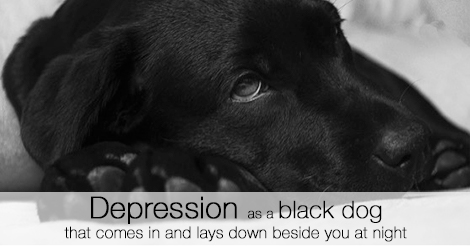
Depression as a black dog that comes in and lays down beside you at night

May 26, 2017 By Trudy Scott 18 Comments

Trevor King’s interview about his journey with depression – on That Vitamin Summit – is not to be missed if you are depressed, have ever suffered with depression or if you have a loved one or friend with depression. He shares how he feels a sense of complete hopelessness at times:

It descends like a black cloud that makes me almost sort of retreat into myself. And my eyes will know and I don’t want to take the world in. I don’t want to get out of bed at times. Actually, that’s one of the things that … one of the only things that actually helps me, is going to bed and lying down.

Winston Churchill famously described it as this black dog who’d come in and lay beside him at night.

“From the moment my eyes opened in the morning, I am engaged in a battle. I must protect myself with armor against ongoing, negative, intrusive thoughts that flood into my brain, while sending my prefrontal cortex, which is the home of logical thought, the green light to make decisions and take charge of my brain’s limbic system. That is, before the fear center completely spazzes out. I spend more time and energy chasing and maintaining good health than I do in any other aspect of my life. My marriage, family or work. Because I know that everything meaningful and good around me depends on a stable base. And I hope and pray that one day, I don’t have to fight so hard for my sanity.”

He talks about how he is affected by sugar and low blood sugar, and how he’s found some benefits with niacin, chromium, magnesium and tryptophan (when he’s consistent with taking them!).

Trevor actually talks about the GABA interview I did with him a few days earlier and how he’s very interested in what he learned. He is planning to do a trial of GABA to see if it can help him further.

Here is a snippet from my interview on GABA (so do tune in to this interview if you’re new to my work and the targeted amino acids):

GABA is really quite profound. When I had my anxiety, GABA was my lifesaver. It completely turned my life around. Within three days of using GABA, the panic attacks stopped and the anxiety started to go down, and then I had to look for all the other root causes. It worked immediately so I’m a complete believer, just because I’ve experienced it myself. You’ll hear a lot of people say GABA won’t work. It doesn’t cross the blood/brain barrier so it’s not going to have an impact.

We’ve now got research showing that there may be ways that it crosses the blood/brain barrier. We’ve also got research showing that we have GABA receptors in various parts of our body. We’ve got a lot in our muscles, and with low GABA symptoms you’ll have physical tension.

The beautiful thing is it works. It works quickly, and if you have these low GABA symptoms, which is the physical anxiety, which could be panic attacks. It could be stress eating, it could be drinking to calm down. If you are the kind of person who needs wine to wind down at the end of the day, that’s a big sign that you may need GABA. You take the GABA and you just feel this physical tension release from you, you know you’re onto something good.

I just wish I’d known about his struggles with depression at the time of our interview – I would have talked more about tyrosine for dopamine support (for curl up in bed depression) and DPA for endorphin boosting (for low endorphins weepy depression). 

I did discuss gluten and would consider this especially since his daughter has issues with it. I talked about low serotonin and mentioned Lidtke tryptophan.  If someone doesn’t do well on another brand I’d have them trial the Lidtke brand.  I’d also look into SIBO – I have SIBO and rice and grains make me feel flat and low and I see this often with clients.  Finally I’d look into lithium orotate for keeping an even mood. 

Trevor shares these wise words at the end of his interview:

You do find that when you actually bite the bullet and share it with people,

people are very, very understanding. And actually, you’re amazed that many people have been there themselves.

I could not agree more which is why I’ve always shared my journey with anxiety. I appreciate him for being willing to share his story with depression!

If you’re not already registered here is the registration link for That Vitamin Summit

Feel free to post questions or feedback below – and share your story with anxiety or depression if you feel drawn to do so

Filed Under: Bipolar disorder, Depression, Events, GABA, Mental health, People Tagged With: anxiety, depression, GABA, low blood sugar, niacin, sugar, That Vitamin Summit, Trevor King, tryptophan

Children who garden have fun, eat more vegetables, and have less anxiety, depression and ADHD symptoms

May 26, 2017 By Trudy Scott 2 Comments


Little hands gathering fennel for juicing with apples and cucumber (photo: Anne Binder)

I’m sure you’d agree that children who garden have fun and that it may motivate them to actually eat more vegetables but would you expect gardening to reduce anxiety, depression and ADHD symptoms? Read on to learn more and be inspired.

My friend Anne Binder has the children at her school, Sunrise Montessori School of Roseville, participate in gardening and juicing and I just love it! She told me that the kids love gardening and that she’s been doing it with her pupils for 31 years now. They are constantly in the garden, weeding, raking, planting and reaping the benefits of their hard work.

They recently harvested some fennel that they had been growing and seeing the pictures she shared on Facebook just made my day! She kindly gave me permission to share them via a blog so here goes:

We grew the fennel and then the children picked it and we made juice with the fennel, apples and cucumber. 

This is one of my favorite pictures – the newly picked fennel with all their little feet showing! (photo: Anne Binder)

Here are just some of the things she overheard the children saying on harvest day:  

  • This is so much fun. I love fennel.
  • The leaves are beautiful.
  • Gardening is my favorite thing to do.  We have a garden at home.
  • I love tomatoes. 
  • Look at the bees

And this is some of what she heard the day they released butterflies into the garden

  • Look he’s flying into the tree.
  • Are they going to come back?
  • Oh look it wants to stay at our school!

And then it was time to juice the fennel with apples and cucumbers and they all got stuck in

They loved it. They also loved the lovely licorice smell of the leaves and fennel was new to all of them. None of them had seen it or eaten it before – but they were good sports and tried it. I also cut up slivers of fennel to taste by itself and most of them tried it too.

Anne shows them how to use the juicer (photo: Anne Binder)
Enthusiastic little hands working the juicer (photos: Anne Binder)

What fun! What joy! And what a wonderful learning opportunity for these kids!

Other than the fun factor, this type of activity has far-reaching impacts in terms of their future vegetable and fruit consumption, and even their mental health and focus.

Gardening has an impact on vegetable preference and consumption as reported in this 2016 paper – Previous Gardening Experience and Gardening Enjoyment Is Related to Vegetable Preferences and Consumption Among Low-Income Elementary School Children.

Children with more gardening experience had greater vegetable exposure and higher vegetable preference and consumed more vegetables compared with children who reported less gardening experience.

And this paper – Involving children in cooking activities: A potential strategy for directing food choices toward novel foods containing vegetables concludes that these cooking activities.

can increase their willingness to taste novel foods and direct food choices towards foods containing vegetables.

As always I like to make the connection to anxiety, mental health, ADHD and overall well-being. There is actually research that supports how good you feel after spending time outdoors and in the garden.

In this 2016 paper – Gardening is beneficial for health: A meta-analysis the authors report:

a wide range of health outcomes, such as reductions in depression, anxiety, and body mass index, as well as increases in life satisfaction, quality of life, and sense of community.

In a recent blog I write about how Most children with anxiety relapse, regardless of treatment: Now is the time for Nutritional Psychiatry! Let us also add gardening to the mix!

In this paper – A Potential Natural Treatment for Attention-Deficit/Hyperactivity Disorder: Evidence From a National Study

Green outdoor settings appear to reduce ADHD symptoms in children across a wide range of individual, residential, and case characteristics.

And in this paper Home Gardening and the Health and Well-Being of Adolescents, the authors report that gardening was

positively associated with physical activity and improved mental health and well-being. Students who participate in gardening report slightly lower levels of depressive symptoms and enhanced emotional well-being and experience higher family connection than students who do not participate in gardening.

They conclude that we should be including gardening in future interventions for young people and I couldn’t agree more.

I hope these pictures and the research has inspired you to get out and do some gardening with the children in your life, either at home or at school or in a community setting.

If you are already doing some form of gardening or food activity with children please feel free to share so we can inspire more of this.

Finally, a thank you to Anne and your pupils for making my day and inspiring this blog post!

Filed Under: Nature

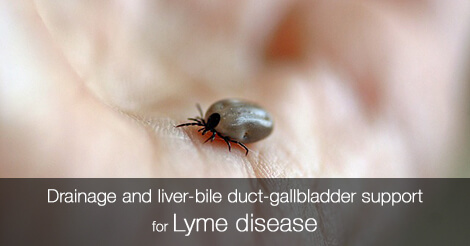
Drainage and liver-bile duct-gallbladder support for Lyme disease

May 24, 2017 By Trudy Scott 4 Comments

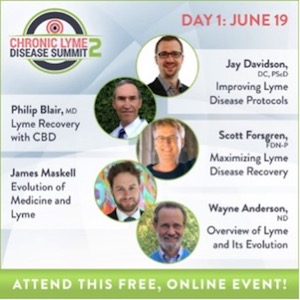
Dr Jay Davidson, host The Chronic Lyme Disease Summit 2 shares the powerful story of how he became a Lyme expert because of his own wife’s crash with Lyme disease when their daughter was born. I just love that he offers hope:

there is actually hope out there no matter how much crud you’ve been through and how many crazy things you went through

He shares the 5 steps from his book: 5 Steps to Restoring Health Protocol

  • Step one is detect, and that’s all about figuring out what are all the pieces to the puzzle. Because if we can’t figure out what the pieces are, we can’t create a road map of where we need to go, right.
  • The second step is drain. And I want to talk a lot about that today, because that’s something I believe that can improve any protocol, any treatment that you’re going through; drainage, drainage, drainage.
  • Step three is elimination or pathogen elimination or if you just want to think of it as like killing pathogens.
  • Step four is about rebuilding tissues, and it’s very dependent on what’s going on with your body as to where we need to focus with rebuilding the tissues.
  • Step five is detoxification.

And goes into what drainage is and why it’s so important when it comes to Lyme disease, heavy metal detox and healing in general:

Drainage, I think more of the pathways. So you could say, okay, what are the pathways? I think of the colon, like going number two, pooping, that’s a pathway. So if you are not going number two at least once a day, if not twice a day, and having good bowel movements then that’s a sign that drainage pathway is not open.

The kidneys are drainers; the skin, just the ability to sweat; the liver-bile duct system; the brain; lymphatic system; these are all drainers.

And so if we focus on the idea of draining just to make sure these pathways are open and moving. Then when we get to a point where we’re going to kill bugs or kill pathogens and/or detoxify toxins, heavy metals – get these things out of our body – if the drainage pathways are open, the body does well.

If the drainage pathways are clogged, then that’s when these things can’t move – like the metals, these pathogens like Lyme – they can’t move out of the body. So therefore, the debris or the chemical creates inflammation, and that’s what makes us to have these reactions. We call them Herxheimer reactions.

Dr Jay goes into more detail on the number one drainage area he focuses on with his patients – the liver-bile duct-gallbladder area and how it impacts:

  • the lymphatic system
  • stomach acid and digestion
  • exposure to pathogens

And he shares how to use ox bile, dandelion tea, activated charcoal, coffee enemas and castor oil packs to support the liver-bile duct-gallbladder area and improve drainage.

He’s also excited to share a liver support product that is new to me. It’s called TUDCA or tauroursodeoxycholic acid and I certainly look forward to learning more about it!

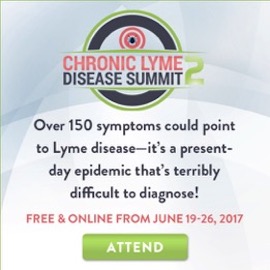
The Chronic Lyme Disease Summit 2 runs June 19-26, 2017 and Dr Jay’s interview airs on day 1 of the summit.

Lyme disease is quickly spreading across the entire globe – very few are enlightened on this troublesome condition! We know that 300,000+ people per year contract Lyme, and 2017 is predicted by some to be an incredibly risky year! And according to the CDC, every single year there are more people affected with Lyme disease than breast cancer. That’s why Dr. Jay Davidson is hosting the second summit on this topic with only 2 repeat speakers from 2016.

Last year I was interviewed on Lyme anxiety and how to use GABA and other amino acids to ease the anxiety while you are working on addressing the Lyme disease. I’m not speaking this year but last year’s summit was so good and very popular with my community so I want you to know about it in case your health challenges are due to Lyme disease. I’ve seen the line-up this year and I’m excited to learn from these experts.

This summit will help you understand symptoms (common and rare), diagnosis and testing, practical at-home health tips, healing protocol explanations and more!

So much of what you’ll learn on this summit is applicable for you if you have Lyme BUT much of it will be valuable if you’re dealing with any health issue (like this drainage interview).

Register here for The Chronic Lyme Disease Summit 2

Feel free to post questions or feedback below.

Filed Under: Events Tagged With: anxiety, bile duct, Chronic Lyme Summit, Dr. Jay Davidson, drainage, gallbladder, liver, Lyme Disease

How to make sugar cravings go away without massive willpower or without feeling deprived

May 19, 2017 By Trudy Scott 6 Comments

Do you believe that you can actually make sugar cravings go away without massive willpower or without feeling deprived? I’m going to tell you that is really is possible no matter how crazy it sounds! And share how to do it!

I was recently quoted in this great article: Is our addiction to sugar a spiritual crisis? Find out how to think your life sweeter, naturally, written by the talented Lisa Sanfilippo.

Lisa shares such a great description of how we get a hit of dopamine when we consume sugar in the same way addictive drugs give you that hit. Nicole Avena’s writings and videos illustrate:

how receptors on the tongue trip off the brain to ping its reward system. A hit of the brain chemical dopamine signals, ‘Oh, that’s good.’ A warm fuzzy feeling ensues. And we want to do the thing that stimulated that feeling again. Addictive drugs such as cocaine, nicotine, alcohol and heroin also stimulate this ‘feels-good-do-it-again’ pathway. Our brains light up when we think about a treat or a ‘hit’. The wanting or craving sets it in motion, too. We may not realise it but we are in a relationship with the thing that makes us feel good, even if it damages us.

When your brain chemistry is out of whack, you self-medicate with alcohol, painkillers, street drugs, or the most socially-acceptable and readily available of all – sugar. Here is my contribution to the article:

‘We must understand why sugar affects our brain chemistry like addictive drugs. We may use sugar to concentrate better, feel calmer or get happy when we’re low.’ But, Trudy says, ‘If we get the right nutritional balance or take specific amino acid supplements, we can boost the needed neurotransmitters, so that cravings go away without requiring massive willpower or without feeling deprived.’ Her recipe? Supplements. ‘Tyrosine boosts dopamine for concentration, GABA makes you feel calmer, and tryptophan boosts serotonin for happiness.’ So, a trip to a qualified nutritionist might help us to stop drugging with sugar.

You can read Lisa’s entire article here. I really love how she describes our unhealthy relationship with sugar, how she discovered she was self-medicating with the stuff and of course, some of the other practical advice like yoga for stress reduction.

Let’s take a deeper look into the imbalanced brain chemistry and addictions or cravings. I see this all the time when you have low levels of any of the neurotransmitters and by addressing these low levels with targeted individual amino acids you really can end the sugar cravings without massive willpower or without feeling deprived. Low levels of dopamine, low serotonin, low GABA and even low blood sugar and low endorphins can be addressed in this way.

Let’s look at low endorphins. The big problem with low endorphins is comfort eating and emotional eating. It’s like: “This is my reward. This is my treat. I deserve it.” And when you consume carbohydrates or sugar like a bowl of ice cream, a bowl of cereal and milk, a chocolate chip cookie, you feel like “this is my reward. I deserve it.” The amino acid DPA boosts endorphins and ends this comfort and emotional eating and the sad, weepy mood we see with low endorphins improves too.

When it comes to low serotonin you are going to crave sugar and carbs in the afternoon and evening. And we will also have the low serotonin mood symptoms which are depression, the worry type of anxiety, the ruminating thoughts, the worry and the fear.

And if you’re looking for resources on how to use amino acids to make sugar cravings go away without massive willpower or without feeling deprived here is some additional information:

  • GABA for ending sugar cravings (and anxiety and insomnia)
  • Glutamine for blood sugar stability, calming and gut healing

In this blog post – Neurotransmitters in food addiction: dopamine, endorphins, GABA and serotonin you can read Meme Grant’s feedback after using the amino acids after participating in my Amazing Aminos for Ending Emotional Eating program:

I still am amazed at how quickly the panic attacks, binge eating, and mood swings disappeared. Tyrosine enabled me to focus and gave me energy to do things again, glutamine allowed me to walk past the gluten and dairy free junk foods, d-phenylalanine [DPA] stopped my comfort eating, tryptophan enabled me to stop my negative thoughts and helped me sleep but the best was when GABA was introduced, the panic attacks disappeared.

You may notice that the amino acids eliminated her cravings AND helped her mood, anxiety and panic attacks.

How have the amino acids helped eliminate your sugar cravings and addictions? Were you surprised that you were able to quit without massive willpower or without feeling deprived?

If this is new to you what questions do you have and what have you already tried for reducing your sugar cravings?  

Filed Under: Sugar addiction Tagged With: Lisa Sanfilippo, sugar cravings

Niacin for anxiety and insomnia: Andrew W. Saul on That Vitamin Summit

May 16, 2017 By Trudy Scott 57 Comments

If you have trouble calming down or maybe difficulty sleeping at night, niacin may be worth investigating and trialing. Andrew W. Saul addresses this B vitamin on That Vitamin Summit which starts later this week and runs May 18 – 24 2017. (Note that it starts on a Thursday and not the usual Monday)

He covers the four types of niacin:

Niacin or plain old niacin, niacinamide, a no flush form that works just right for all mental and emotional issues but does not work for cholesterol issues. Inositol hexanicotinate which works well for everything but you have to use more it costs a little more money and it doesn’t work as well and then sustained release niacin which is prescription, expensive and has the most side effects.

Andrew discusses how to experiment and what you can expect in the way of flushing:

First of all you personally can experiment by trying some niacin and seeing how you feel. An example of this would be a healthy person who has a little trouble calming down maybe difficulty sleeping at night. Maybe they’re a little more anxious than they think they should be and perhaps taking some niacin would be a good thing to try. You could open up with 500 milligrams of niacin, breakfast lunch and dinner.

Now you’re probably going to flush and by the way if you have it with a meal you don’t flush as much. You don’t flush as quickly as you do if you take it on an empty stomach but you are still going to flush. The weird thing is you’re not going to flush for a couple of hours because you’re going to have the niacin with all that food and if you take the niacin in the middle of the meal or at the end of the meal there could be quite a delay before you have your flush.

Andrew does share what he calls “my wimpy way of taking niacin” where you slowly but surely increase from a low dose to avoid the flush.

He laughs about how Dr. Abram Hoffer was so fond of using niacin that he would tell people look just tough it out: “Tolerate the flush, it’s going to take a couple of weeks.”

And he also shares that Dr. Hoffer was his mentor and how Dr. Hoffer saw dramatic results with schizophrenia patients:

Now Dr. Abram Hoffer the world’s expert on niacin who started studying niacin in the early 1950’s and he was my personal mentor many decades later. Dr. Hoffer was a psychiatrist, a PhD as well as an MD and he treated over five thousand patients with niacin in his medical career.

The amount of niacin that you need for schizophrenia tends to be very high. Dr. Hoffer’s standard prescription was three thousand milligrams a day, divided into three doses of one thousand milligrams each.

It’s a fascinating interview and the most detailed one I’ve yet to hear on the topic of niacin. It’s not to be missed!

He goes on to cover the following

  • niacin for the treatment of alcoholic depression
  • other B vitamins like thiamine, vitamin B12, vitamin B6 and folate
  • plus multivitamins and whole food vitamins

I hope you can join us on That Vitamin Summit brought to you by makers of That Vitamin Movie which has been watched online by over one million people since its release in January 2016.

There are over 80 years of documented evidence that show how humble vitamins, minerals and other nutrients (such as amino acids – the topic of my interview) can prevent, and even cure major diseases like diabetes, arthritis heart disease and anxiety and depression. That Vitamin Summit 2 has assembled over 20 top experts to show YOU how to use these nutrients to increase your health and well-being almost immediately.

Here is the registration link for the summit which starts later this week on Thursday May 18 (note the Thursday start date)

Filed Under: Events Tagged With: Andrew W. Saul, anxiety, calming, inositol hexanicotinate, insomnia, niacin, niacinamide, That Vitamin Summit

Butyrate, oxalates, sleep and the health of the microbiome

May 14, 2017 By Trudy Scott 11 Comments

Butyrate, oxalates and sleep are all closely tied to the health of the microbiome. Here are a few snippets from some of my favorite interviews on the Microbiome Medicine Summit 2:

Healthy Messages from Body to Brain: Dr. David Perlmutter

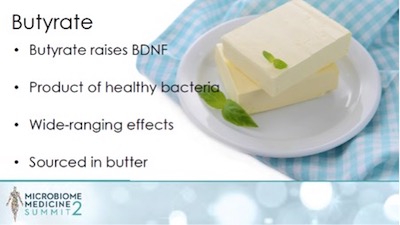
Butyrate is one of the 3 very important short chain fatty acids that are made in the gut: butyrate, propionate, and acetic acid are the products of the healthy bacteria.

And it turns out that butyrate has some far reaching effects in the body. It acts as a fuel for the cells that line the gut. It acts as a modulator of our gene expression, a fancy term called histone deacetylase inhibitor, but it changes the expression of our DNA.

It regulates the leakiness of the gut lining. It regulates the leakiness of the blood brain barrier, and it also simulates specific receptors on immune cells called G protein receptors that code for things like the formation of inflammatory chemicals, so it has wide-ranging effects.

We can increase our butyrate by having healthier gut bacteria. We can eat butyrate in certain foods. It comes from the word butter; butter is probably nature’s richest source of butyrate.

Special Diets & the Microbiome: Julie Matthews

What’s interesting about oxalates is they can affect and actually damage mitochondria. Mitochondria, those little powerhouses in the cell, there are millions and millions of those going on every second that supply our entire body, every cell, every organ of our body with energy at every second.

Issues with mitochondria are very common not only on autism but variety of conditions including fibromyalgia and all sorts of pain-related condition. And we often see when people have mitochondrial issues that they have issues with three or more systems. So if they’ve got issues with their gut and maybe something in their central nervous system or their immune system.

And interestingly, there is a microbiome connection with oxalates as well. And what that is, is that oxalates have to be broken down by good bacteria, particularly there is a bacteria called Oxalobacter formigenes and its job is to break down oxalates. There are other bacteria. There are Lactobacillus bacteria that can help break down oxalates, as well. Oxalobacter is particularly sensitive to antibiotics. Even a single round of antibiotics can really damage this population, sometimes not only for the short-term but sometimes for the longer term, particularly when someone has had multiple rounds.

Cleansing the Microbiome: Donna Gates

People probably don’t have this picture of the microbiome in their mind. But it’s very dynamic. It changes all the time. If you change your diet, your microbiome is going to change. If you travel, it’s going to change because you’re eating different foods and so on.

It’s also very cyclical. So, what happens at night when we go to sleep—the microbiome changes. There are certain microbes that become dormant—become quiet. And they don’t do anything much. And other ones become very active at night when we’re sleeping.

What happens if you have sleep disorders—like sleep apnea, for example, where you’re not breathing well at night—that’s going to change the diversity of the microbes in your gut. So, you want to correct sleep disorders.

You may not realize that when you don’t sleep, you’re harming the microbes in your gut. And you’re allowing the pathogenic crypts to have a heyday down in the gut. So, sleep is very important, very much connected to the microbiome.

I hope you’ll join the host Dr. Raphael Kellman and all the great speakers on the last few days of The Microbiome Medicine Summit 2.

Filed Under: Events Tagged With: Butyrate, Donna Gates, Dr. Kellman, Dr. Perlmutter, Julie Matthews, microbiome, microbiome medicine summit, oxalates, sleep

  • Page 1
  • Page 2
  • Go to Next Page »

Primary Sidebar

GABA QuickStart Homestudy

gaba quickstart homestudy

Free Report

9 Great Questions Women Ask about Food, Mood and their Health

You'll also receive a complimentary subscription to my ezine "Food, Mood and Gal Stuff"


Connect with me

Popular Posts

  • Amino Acids Mood Questionnaire from The Antianxiety Food Solution
  • The Antianxiety Food Solution Amino Acid and Pyroluria Supplements
  • Pyroluria Questionnaire from The Antianxiety Food Solution
  • Collagen and gelatin lower serotonin: does this increase your anxiety and depression?
  • Tryptophan for the worry-in-your-head and ruminating type of anxiety
  • GABA for the physical-tension and stiff-and-tense-muscles type of anxiety
  • The Antianxiety Food Solution by Trudy Scott
  • Seriphos Original Formula is back: the best product for anxiety and insomnia caused by high cortisol
  • Am I an anxious introvert because of low zinc and vitamin B6? My response to Huffington Post blog
  • Vagus nerve rehab with GABA, breathing, humming, gargling and key nutrients

Recent Posts

  • Her cravings for chips and peanut butter were triggered by stress: GABA ends cravings and reduces physical tension and fear of heights
  • It is truly miraculous to be able to move through life without crippling anxiety and panic
  • GABA and tryptophan combo provide immediate and noticeable relief for tremors and cervical dystonia in just 7 days
  • Red light therapy for back and neck pain, plantar fasciitis and low mood – a complement to the amino acids GABA, DPA and tryptophan
  • What do I use instead of Seriphos to help lower high cortisol that is affecting my sleep and making me anxious at night?

Categories

  • 5-HTP
  • AB575
  • Addiction
  • ADHD
  • Adrenals
  • Alcohol
  • Allergies
  • Alzheimer's disease
  • Amino Acids
  • Anger
  • Antianxiety
  • Antianxiety Food Solution
  • Antidepressants
  • Anxiety
  • Anxiety and panic
  • Autism
  • Autoimmunity
  • benzodiazapines
  • Bipolar disorder
  • Books
  • Caffeine
  • Cancer
  • Candida
  • Children/Teens
  • Collagen
  • Cooking equipment
  • Coronavirus/COVID-19
  • Cravings
  • Depression
  • Detoxification
  • Diabetes
  • Diet
  • DPA/DLPA
  • Drugs
  • EFT/Tapping
  • EMF
  • EMFs
  • Emotional Eating
  • Endorphins
  • Environment
  • Essential oils
  • Events
  • Exercise
  • Fear
  • Fear of public speaking
  • Fertility and Pregnancy
  • Fish
  • Food
  • Food and mood
  • Functional neurology
  • GABA
  • Gene polymorphisms
  • General Health
  • Giving
  • Giving back
  • Glutamine
  • Gluten
  • GMOs
  • Gratitude
  • Gut health
  • Heart health/hypertension
  • Histamine
  • Hormone
  • Hyperparathyroidism
  • Hypoglycemia
  • Immune system
  • Inflammation
  • Insomnia
  • Inspiration
  • Introversion
  • Joy and happiness
  • Ketogenic diet
  • Lithium orotate
  • Looking awesome
  • Lyme disease and co-infections
  • MCAS/histamine
  • Medication
  • Men's health
  • Mental health
  • Mercury
  • Migraine
  • Mold
  • Movie
  • MTHFR
  • Multiple sclerosis
  • Music
  • NANP
  • Nature
  • Nutritional Psychiatry
  • OCD
  • Osteoporosis
  • Oxalates
  • Oxytocin
  • Pain
  • Paleo
  • Parasites
  • Parkinson’s disease
  • PCOS
  • People
  • PMS
  • Postpartum
  • PTSD/Trauma
  • Pyroluria
  • Questionnaires
  • Real whole food
  • Recipes
  • Research
  • Schizophrenia
  • serotonin
  • SIBO
  • Sleep
  • Special diets
  • Sports nutrition
  • Stress
  • Sugar addiction
  • Sugar and mood
  • Supplements
  • Teens
  • Testimonials
  • Testing
  • The Anxiety Summit
  • The Anxiety Summit 2
  • The Anxiety Summit 3
  • The Anxiety Summit 4
  • The Anxiety Summit 5
  • The Anxiety Summit 6
  • Thyroid
  • Thyroid health
  • Toxins
  • Tryptophan
  • Tyrosine
  • Uncategorized
  • Vegan/vegetarian
  • Women's health
  • Yoga

Archives

  • May 2026
  • April 2026
  • October 2025
  • September 2025
  • August 2025
  • July 2025
  • June 2025
  • May 2025
  • April 2025
  • March 2025
  • February 2025
  • January 2025
  • November 2024
  • October 2024
  • September 2024
  • August 2024
  • July 2024
  • June 2024
  • May 2024
  • April 2024
  • March 2024
  • February 2024
  • January 2024
  • December 2023
  • November 2023
  • October 2023
  • September 2023
  • August 2023
  • July 2023
  • June 2023
  • May 2023
  • April 2023
  • March 2023
  • February 2023
  • January 2023
  • December 2022
  • November 2022
  • October 2022
  • September 2022
  • August 2022
  • July 2022
  • June 2022
  • May 2022
  • April 2022
  • March 2022
  • February 2022
  • January 2022
  • December 2021
  • November 2021
  • October 2021
  • September 2021
  • August 2021
  • July 2021
  • June 2021
  • May 2021
  • April 2021
  • March 2021
  • February 2021
  • January 2021
  • December 2020
  • November 2020
  • October 2020
  • September 2020
  • August 2020
  • July 2020
  • June 2020
  • May 2020
  • April 2020
  • March 2020
  • February 2020
  • January 2020
  • December 2019
  • November 2019
  • October 2019
  • September 2019
  • August 2019
  • July 2019
  • June 2019
  • May 2019
  • April 2019
  • March 2019
  • February 2019
  • January 2019
  • December 2018
  • November 2018
  • October 2018
  • September 2018
  • August 2018
  • July 2018
  • June 2018
  • May 2018
  • April 2018
  • March 2018
  • February 2018
  • January 2018
  • December 2017
  • November 2017
  • October 2017
  • September 2017
  • August 2017
  • July 2017
  • June 2017
  • May 2017
  • April 2017
  • March 2017
  • February 2017
  • January 2017
  • December 2016
  • November 2016
  • October 2016
  • September 2016
  • August 2016
  • July 2016
  • June 2016
  • May 2016
  • April 2016
  • March 2016
  • February 2016
  • January 2016
  • December 2015
  • November 2015
  • October 2015
  • September 2015
  • August 2015
  • July 2015
  • June 2015
  • May 2015
  • April 2015
  • March 2015
  • February 2015
  • January 2015
  • December 2014
  • November 2014
  • October 2014
  • September 2014
  • August 2014
  • July 2014
  • June 2014
  • May 2014
  • April 2014
  • March 2014
  • February 2014
  • January 2014
  • December 2013
  • November 2013
  • October 2013
  • September 2013
  • August 2013
  • July 2013
  • June 2013
  • May 2013
  • April 2013
  • March 2013
  • February 2013
  • January 2013
  • December 2012
  • November 2012
  • October 2012
  • August 2012
  • July 2012
  • June 2012
  • May 2012
  • April 2012
  • March 2012
  • February 2012
  • January 2012
  • December 2011
  • November 2011
  • October 2011
  • September 2011
  • August 2011
  • July 2011
  • June 2011
  • May 2011
  • April 2011
  • March 2011
  • February 2011
  • January 2011
  • December 2010
  • October 2010
  • September 2010
  • July 2010
  • May 2010
  • April 2010
  • March 2010
  • February 2010
  • January 2010
  • November 2009

Share the knowledge!

The above statements have not been evaluated by the Food and Drug Administration. Products listed in this website are not intended to diagnose, treat, cure or prevent any disease.

The information provided on this site is for informational and educational purposes only and is not intended as a substitute for advice from your physician or other health care professional. You should consult with a healthcare professional before starting or modifying any diet, exercise, or supplementation program, before taking or stopping any medication, or if you have or suspect you may have a health problem.


Copyright © 2026 Trudy Scott. All Rights Reserved. | Privacy | Terms and Conditions | Refund Policy | Medical Disclaimer

Free Report

9 Great Questions Women Ask about Food, Mood and their Health

You’ll also receive a complimentary subscription to my ezine “Food, Mood and Gal Stuff”