• Skip to primary navigation
  • Skip to main content
  • Skip to primary sidebar

everywomanover29 blog

Food, Mood and Women's Health – Be your healthiest, look and feel great!

  • Blog
  • About
  • Services
  • Store
  • Resources
  • Testimonials
  • The Book
  • Newsletter
  • Contact
  • Search this site

Bipolar disorder

KetoNutrition: From Science to Emerging Applications and Practical Implementation

May 4, 2018 By Trudy Scott Leave a Comment

I had the pleasure of hearing Dominic D’Agostino, NASA crew member, researcher and Associate Professor at the University of South Florida present on “KetoNutrition: From Science to Emerging Applications and Practical Implementation” at the 6th BioCeuticals Research Symposium in Melbourne last weekend. His presentation was based on decades of evidence that supports the anticonvulsant and neuroprotective properties of nutritional ketosis. It was one of my favorite presentations and I’m thrilled to share some of the highlights with you here.
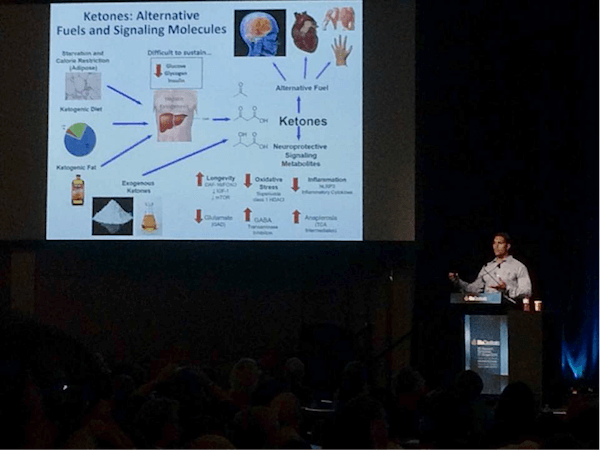
Ketones are alternative fuels and neuroprotective signaling metabolites – increasing longevity, lowering inflammation, dampening oxidative stress, lowering glutamate and raising GABA.
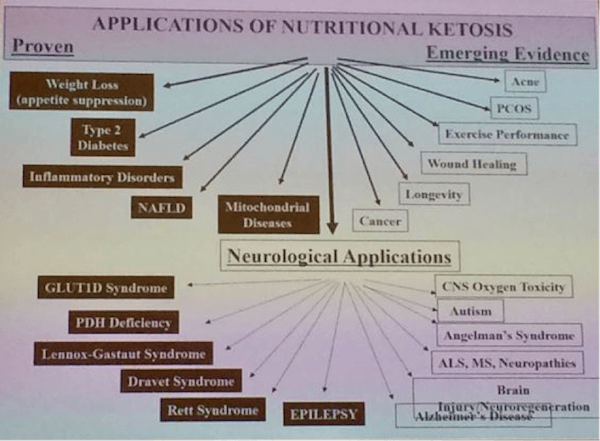
In this slide he shared how the proven applications of nutritional ketosis are extensive – including epilepsy, type 2 diabetes, weight loss, NAFLD, mitochondrial disease and inflammation, GLUTID Syndrome, PDH Deficiency, Lennox-Gastaut Syndrome, Dravet Syndrome and Rett Syndrome.

There is emerging evidence for acne, PCOS, exercise performance, wound healing, longevity, cancer, CNS Oxygen Toxicity, autism, Angelman’s Syndrome, ALS, MS, Neuropathies, Alzheimer’s disease, brain injury, neurodegeneration, anxiety, depression, bipolar and schizoaffective disorder.

Seizures, cancer and the ketogenic diet


In his TEDx talk from 2013 Dr. D’Agostino shares the benefits of a ketogenic diet for seizures and how while studying the effects of gasses on the brains of Navy Seal divers, he developed an approach for metabolically starving cancer cells through diet and compressed oxygen, replacing chemotherapy, surgery, or radiation.

He ends by saying this:

Future treatments and prevention of many diseases may fall back on the ancient wisdom of Hippocrates when he said “let food be thy medicine”

As you can see from the applications slide above, much more research has been done on the therapeutic benefits of a ketogenic diet since this 2013 TEDx talk.  And food truly is medicine!
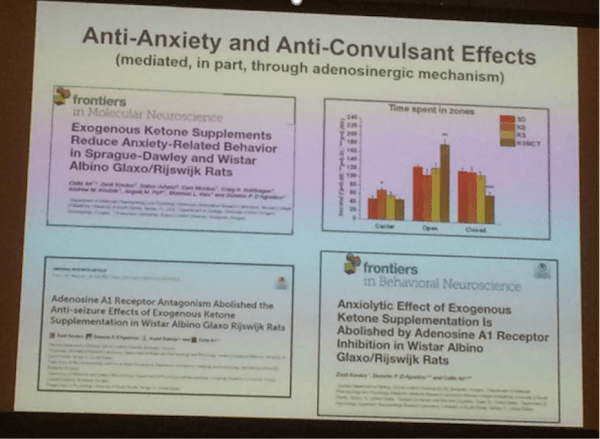
In one of his studies, the first paper above, ketone supplementation was found to have an anti-anxiety effect – Exogenous Ketone Supplements Reduce Anxiety-Related Behavior in Sprague-Dawley and Wistar Albino Glaxo/Rijswijk Rats:

We conclude that ketone supplementation may represent a promising anxiolytic strategy through a novel means of inducing nutritional ketosis.

Adenosine and the adenosinergic mechanism

He shared a number of studies that describe how the anti-anxiety and anti-convulsant effects of ketone supplementation are mediated, in part, through the adenosinergic mechanism. This was one of his papers – Anxiolytic Effect of Exogenous Ketone Supplementation Is Abolished by Adenosine A1 Receptor Inhibition in Wistar Albino Glaxo/Rijswijk Rats.

Adenosine is a neurochemical which many coffee-drinkers may be familiar with since: “Caffeine increases wakefulness [and often anxiety] by antagonizing adenosine receptors, and adenosine itself promotes sleepiness” and a feeling of calm.

Older research finds that there is the “involvement of adenosinergic receptor system in anxiety related behaviours.” More recent research describes adenosine as “a mediator with multisystemic effects”, and it is produced by almost all cells, playing a role in heart function, sleep, bone health, activation of the immune system and mediating the effect of various hormones. I expect we’ll be hearing a great deal more about adenosine in relation to ketogenic diets in the near future.

The microbiomes of astronauts sync up and so do their serotonin levels
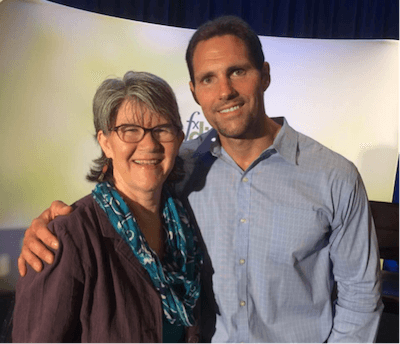
This was one of my favorite presentations at the BioCeuticals Symposium and it was really great to meet Dominic afterwards and learn more about future anxiety research. He shared that his lab has planned research on the benefits of ketosis for both anxiety and improved cognitive function.

It was also fascinating learning from someone who has been in space and hearing how the microbiomes of the astronauts sync up when they are all in space together. And so do their serotonin levels.

If the ketogenic diet is new for you or you want to see the latest research, check out Dominic’s work at Keto Nutrition. And if you want to learn more from Dominic and other keto experts, the Keto Edge Summit runs all of next week.

I also write about two schizoaffective case studies here and share questions and concerns I have about the ketogenic diet. It’s not a panacea for everyone in all instances. But the therapeutic benefits are profound when someone needs to adopt this dietary approach.

Feel free to ask questions and share you experiences with a ketogenic diet – in the comments below.
Filed Under: Anxiety, Bipolar disorder, Ketogenic diet Tagged With: adenosine, adenosinergic, anxiety, autism, cancer, depression, Dominic D'Agostino, keto, Ketogenic diet, ketosis, schizoaffective disorder, seizures, weight-loss

Midday bright light therapy for bipolar depression

October 20, 2017 By Trudy Scott 6 Comments

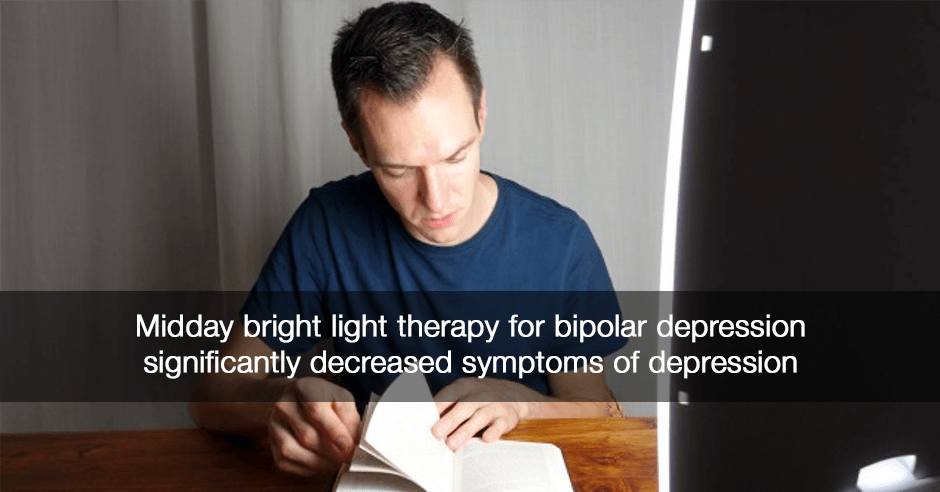
A recent study from Northwestern University and published in The American Journal of Psychiatry: Adjunctive Bright Light Therapy for Bipolar Depression: A Randomized Double-Blind Placebo-Controlled Trial has found that midday daily exposure to 7,000 lux bright white light for 6 weeks, significantly decreased symptoms of depression and increased functioning in people with bipolar disorder.

The press release issued by Northwestern University reports as follows

Previous studies found morning bright light therapy reduced symptoms of depression in patients with Seasonal Affective Disorder (SAD.). But patients with bipolar disorder can experience side effects such as mania or mixed symptoms from this type of depression treatment. This study implemented a novel midday light therapy intervention in an effort to provide relief for bipolar depression and avoid those side effects.

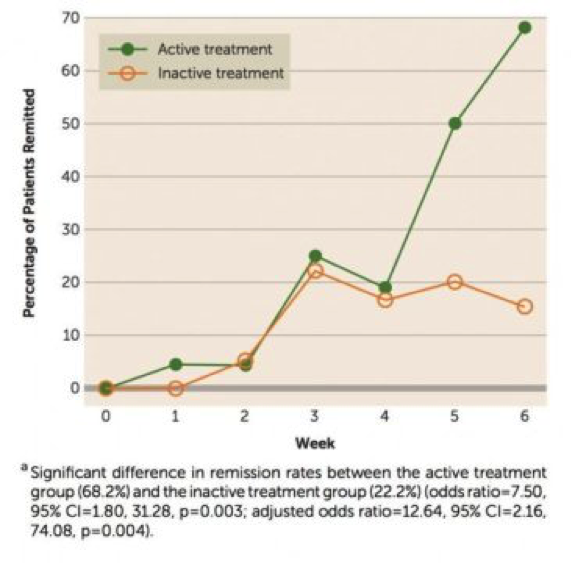
Compared to dim placebo light, study participants assigned to bright white light between noon and 2:30 p.m. for six weeks experienced a significantly higher remission rate (minimal depression and return to normal functioning). More than 68 percent of patients who received midday bright light achieved a normal level of mood, compared to 22.2 percent of patients who received the placebo light.

Images used with permission from Northwestern University

How the 7,000 lux bright light therapy was used

Here are the details of how the 7,000 lux bright light therapy was used in the study:

The light therapy patients were instructed to place the light box about one foot from their face for 15-minute sessions to start.

Every week, they increased their exposure to the light therapy by 15-minute increments until they reached a dose of 60 minutes per day or experienced a significant change in their mood.

Study lead author Dr. Dorothy Sit shares that starting low and slowly increasing the treatment made it more tolerable. None of the study participants experienced side effects, likely because the treatment was customized for each patient:

No one experienced mania or hypomania, a condition that includes a period of elation, euphoria, irritability, agitation, rapid speech, racing thoughts, a lack of focus and risk-taking behaviors.

A noticeable mood improvement with bright light therapy was also noticed as quickly as four weeks, which is similar to other light therapy research for non-seasonal depression and depression during pregnancy.

How do you do this in the middle of a work day?

You may have concerns about doing this at midday as this facebook follower voiced:

I guess if your bipolar depression is so debilitating that you cannot hold a job, then this is worth trying.

But 60 minutes!! What working person has 60 minutes in the middle of their workday?

It’s very doable because there are very nice desk versions that could easily be used at work (without anyone knowing – if privacy is a concern) or at a home-office desk for your convenience. I share some examples in this blog – Winter blues or SAD: light therapy.

I have tried lights in the morning but found that it caused agitation

I also received this feedback about increased agitation:

I have tried lights in the morning but found that it caused agitation. Over time my tolerance went down so that I could only use for less than 5 minutes. I haven’t ever tried midday light though. I’m not bipolar but I have depression which is generally worse in the winter. Exercise helps.

It may be worth trying midday light therapy if morning light therapy causes agitation or other adverse effects.

The press release mentions that light therapy is typically used in the morning to help reset circadian rhythms and the authors are unclear why midday light therapy worked for these patients with bipolar disorder. They plan to investigate further. If it is working via the same mechanism i.e. by resetting circadian rhythms, then it may well work at this time for other individuals too.

It may also be that your depression (and/or anxiety) is not caused by low serotonin but by something else instead – such as low catecholamines, poor thyroid health, gluten issues, poor diet and so on.

Using light therapy and tryptophan (or 5-HTP)

I have also found that some people do well on a combination of light therapy and tryptophan (or 5-HTP). One of my clients had many low serotonin symptoms and did better mood-wise and with reduced anxiety, on a small amount of tryptophan but still needed additional serotonin support. Additional tryptophan was too much for him and increased his day-time sleepiness, but using a small amount of tryptophan together with light therapy was the ideal balance for him.

Have you used light therapy with success – for the winter blues or depression or bipolar disorder? Or even for anxiety?

Have you ever used it at midday or at other times?

And have you used light therapy in conjunction with tryptophan or 5-HTP?

Filed Under: Antianxiety, Bipolar disorder, Depression, Mental health Tagged With: 5-HTP, anxiety, bipolar disorder, Bright light therapy, depression, serotonin, tryptophan

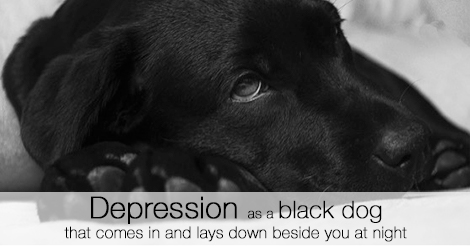
Depression as a black dog that comes in and lays down beside you at night

May 26, 2017 By Trudy Scott 18 Comments

Trevor King’s interview about his journey with depression – on That Vitamin Summit – is not to be missed if you are depressed, have ever suffered with depression or if you have a loved one or friend with depression. He shares how he feels a sense of complete hopelessness at times:

It descends like a black cloud that makes me almost sort of retreat into myself. And my eyes will know and I don’t want to take the world in. I don’t want to get out of bed at times. Actually, that’s one of the things that … one of the only things that actually helps me, is going to bed and lying down.

Winston Churchill famously described it as this black dog who’d come in and lay beside him at night.

“From the moment my eyes opened in the morning, I am engaged in a battle. I must protect myself with armor against ongoing, negative, intrusive thoughts that flood into my brain, while sending my prefrontal cortex, which is the home of logical thought, the green light to make decisions and take charge of my brain’s limbic system. That is, before the fear center completely spazzes out. I spend more time and energy chasing and maintaining good health than I do in any other aspect of my life. My marriage, family or work. Because I know that everything meaningful and good around me depends on a stable base. And I hope and pray that one day, I don’t have to fight so hard for my sanity.”

He talks about how he is affected by sugar and low blood sugar, and how he’s found some benefits with niacin, chromium, magnesium and tryptophan (when he’s consistent with taking them!).

Trevor actually talks about the GABA interview I did with him a few days earlier and how he’s very interested in what he learned. He is planning to do a trial of GABA to see if it can help him further.

Here is a snippet from my interview on GABA (so do tune in to this interview if you’re new to my work and the targeted amino acids):

GABA is really quite profound. When I had my anxiety, GABA was my lifesaver. It completely turned my life around. Within three days of using GABA, the panic attacks stopped and the anxiety started to go down, and then I had to look for all the other root causes. It worked immediately so I’m a complete believer, just because I’ve experienced it myself. You’ll hear a lot of people say GABA won’t work. It doesn’t cross the blood/brain barrier so it’s not going to have an impact.

We’ve now got research showing that there may be ways that it crosses the blood/brain barrier. We’ve also got research showing that we have GABA receptors in various parts of our body. We’ve got a lot in our muscles, and with low GABA symptoms you’ll have physical tension.

The beautiful thing is it works. It works quickly, and if you have these low GABA symptoms, which is the physical anxiety, which could be panic attacks. It could be stress eating, it could be drinking to calm down. If you are the kind of person who needs wine to wind down at the end of the day, that’s a big sign that you may need GABA. You take the GABA and you just feel this physical tension release from you, you know you’re onto something good.

I just wish I’d known about his struggles with depression at the time of our interview – I would have talked more about tyrosine for dopamine support (for curl up in bed depression) and DPA for endorphin boosting (for low endorphins weepy depression). 

I did discuss gluten and would consider this especially since his daughter has issues with it. I talked about low serotonin and mentioned Lidtke tryptophan.  If someone doesn’t do well on another brand I’d have them trial the Lidtke brand.  I’d also look into SIBO – I have SIBO and rice and grains make me feel flat and low and I see this often with clients.  Finally I’d look into lithium orotate for keeping an even mood. 

Trevor shares these wise words at the end of his interview:

You do find that when you actually bite the bullet and share it with people,

people are very, very understanding. And actually, you’re amazed that many people have been there themselves.

I could not agree more which is why I’ve always shared my journey with anxiety. I appreciate him for being willing to share his story with depression!

If you’re not already registered here is the registration link for That Vitamin Summit

Feel free to post questions or feedback below – and share your story with anxiety or depression if you feel drawn to do so

Filed Under: Bipolar disorder, Depression, Events, GABA, Mental health, People Tagged With: anxiety, depression, GABA, low blood sugar, niacin, sugar, That Vitamin Summit, Trevor King, tryptophan

Lithium, bipolar and heavy metal detox on the Mental Wellness Summit

August 9, 2015 By Trudy Scott 17 Comments

mental-wellness-summit-3

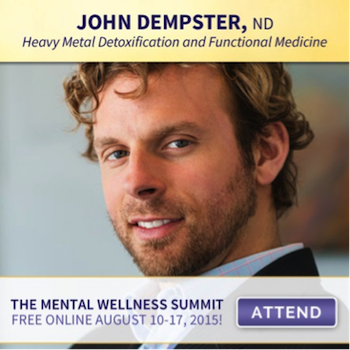
Ross McKenzie, Co-founder of Mental Wellness Summit, Filmmaker of Bipolarized : Journey Beyond Meds, is interviewed by Dr. John Dempster on The Mental Wellness Summit. Here are a few snippets from the compelling interview “Journey Beyond Meds”:

  • I was playing soccer. Our soccer team in college, we were number one in the country. And then 6 months later, I’m at this seminar. I’m having this huge euphoric bliss. And then I’m in a straightjacket in a white-padded room. I’m like okay, what on Earth just happened to my life?
  • I’m just watching my life pass me by. And the expression I think of how it felt for so many years is I felt like the walking dead without the actual benefits of being dead. It was a nightmare. It was like being trapped in my body. And it was brutal.
  • So I had this big wake up call. One of the things with lithium is that you have to get your kidneys tested. It’s very hard on your organs. And you have to get blood work done just to make sure that you’re not in toxic levels. My first year of taking it, I actually almost died of lithium toxicity. It was so bad. I actually felt my body shutting down from that, which was terrifying.

Ross also talks about detoxing from prescription lithium and how he was then able to start filming his story and making the movie Bipolarized; and how there is this grassroots awakening happening right now [in integrative mental health]. His message is very clear and inspiring:

  • become your own best doctor. Become an informed consumer, do your research
  • we can actually address root cause symptoms, heal these symptoms. These diseases are not for life.
  • So there’s a place for all of it… an integrated mental health holistic model. And to have that be the norm on the planet. What an incredible thing that would be

Ross also says:

I know I can speak from experience now, too, having gone through the [heavy metal] chelation process. There are studies now saying it’s affecting the central nervous system. It can cause anxiety. It can actually lead to psychosis.

During the summit, Ross McKenzie also interviews Dr. John Dempster, who is his doctor and helped him address his high levels of heavy metals – both mercury and lead.   Here are some snippets from this interview: “Heavy Metal Detoxification and Functional Medicine”:

mental-wellness-summit-4

  • Heavy metals are a neurotoxin. And they’re an endocrine disruptor. And in English, that means that they are going to break a lot of the chemicals, such as your neurotransmitters, which make you feel great. They make you sad. They make you sleep. They make you feel energized. They make you focused. This is your dopamine, your serotonin, your GABAs.
  • there’s a difference between what we call a toxic metal burden, which means much in your body’s tissues, versus a heavy metal toxicity, which is a bit more in the acute state of where it circulating your blood.
  • And if we aren’t being careful and we’re mobilizing these toxic agents and they get stuck in these organs, we’re going to have some kidney function issues that can affect all sorts of other aspects of our health. So this is where it does have to be done with somebody who is been trained properly in the proper detoxification programs and processes.

Dr. Dempster goes on to talk about functional testing, food, and the importance of healing the gut, sleep, nature and much more – for anxiety, depression, bipolar disorder, schizophrenia and ADHD.

On The Mental Wellness Summit you will also hear both these interviews:

  • Ross McKenzie Co-founder of Mental Wellness Summit, Filmmaker of Bipolarized: Journey Beyond Meds
  • John Dempster, ND, Co-founder of Mental Wellness Summit: Heavy Metal Detoxification and Functional Medicine

And you can listen to all the other amazing interviews that address functional and integrative approaches to root cause resolution of anxiety and depression.

Please leave your comments, questions and feedback below.


Filed Under: Bipolar disorder, Events Tagged With: John Dempster, Mental Wellness Summit, Ross McKenzie

MTHFR and methylation: mood, anxiety, depression, and resources

March 6, 2015 By Trudy Scott 27 Comments

Methylation polymorphisms (also called defects or mutations or SNPs) can impact mood. I’d like to share a few studies on some of the mood issues, other health conditions where we may see impacts and some resources for you to learn more.

If you have one of the MTHFR polymorphisms, the BH4 cycle may be affected and may impact how we make serotonin and dopamine. Here is some of the research:

  • Anxiety and schizophrenia
  • Depression
  • Bipolar disorder

There is much evidence on the methylation polymorphisms and these health conditions:

  • Cancer
  • Fertility
  • Heart disease and stroke
  • Thyroid cancer

Resources for further learning

The two practitioners who I have learned the most from are Dr. Ben Lynch ND and Coleen Walsh, a nutritionist who has been dubbed the “methyl queen”.    

  • Ben Lynch ND: his website http://mthfr.net/ and blog articles provide a wealth of information and he is very active on his Facebook page (https://www.facebook.com/drbenjaminlynch). I did his excellent 2 day professional training which he has available on this site. I also interviewed him on The Anxiety Summit and we talked about GAD, MOAO and COMT polymorphisms
  • Coleen Walsh, nutritionist, “methyl queen” offers a professional MTHFR and Methylation training for practitioners and a MTHFR workshop for the layperson and every day mutant. I highly recommend both of these.

Just remember this great quote from Coleen Walsh during our interview on the Anxiety Summit:

Our DNA is not set in stone! Diet and lifestyle can go a long way to change our health destiny

The good news is that we can change our health, our disease outcomes and how we feel by eating real whole good quality organic food, getting chemicals and toxins out of our diets and environment, reducing stress, supporting the liver and our natural detox processes.

Certain key nutrients can also be very help for many people with polymorphisms. I’ll share more on folate and other nutrients and other SNPs in a later blog post. I’ll also share more on genetic testing.

I’d love to hear if you’ve done genetic testing and how making changes (supplement, diet, lifestyle) have helped. Be sure to post questions too.


Filed Under: Anxiety and panic, Bipolar disorder, Cancer, Depression, MTHFR, The Anxiety Summit Tagged With: coleen walsh, Methylation, mthfr

Bipolar, disruptive mood or gluten and junk food?

May 29, 2012 By Trudy Scott 27 Comments

A national study published in 2007 showed a surge in use of the bipolar diagnosis in children: the frequency of visits to doctors’ offices by youths 19 and younger for treatment of the condition increased from 25 per 100,000 visits in 1994-95 to 1,003 per 100,000 visits in 2002-03. I wonder what the numbers are now?

The above quote is from a story that appeared in the Boston Globe earlier this month [thanks to my friend in Boston who shared this story with me and urged me to write a commentary!]

The story, “Proposed diagnosis for bipolar disorder divides psychiatrists” by Patricia Wen, discusses issues with proposed revisions to the Diagnostic and Statistical Manual of Mental Disorders IV (DSMIV). The psychiatric association is expected to make final decisions for its fifth revised edition to be published in May 2013.

A panel appointed by the American Psychiatric Association is urging that a new, potentially more transient and less-stigmatizing diagnosis – “disruptive mood dysregulation disorder’’ – be added to the official manual of mental illnesses, which is undergoing a sweeping revision [this new disorder would be included in the manual in addition to the existing bipolar disorder, and this is where the division is].

The new condition would apply to children who have chronic irritability, as well as recurrent temper outbursts – three or more times a week, on average – that are “grossly out of proportion’’ to the situation the child confronts.

It can be as disabling to a young child as bipolar disorder, but would probably be treated with antidepressants, not antipsychotic drugs. As adults, these children would be more likely to develop anxiety or depression, rather than bipolar disorder.

Wow! chronic irritability, recurrent temper outbursts, “grossly out of proportion’’ to the situation, likely to develop anxiety or depression as adults

This sounds a lot like a combination of poor diet/junk food and food intolerances. And it’s no surprise when you consider what diets kids are eating these days! Let’s also throw in low blood sugar for good measure – how many kids do you know who eat a good breakfast that includes protein?

Let’s first look at food quality and bipolar disorder:

In the Journal of Affective Disorders, a 2012 paper titled “Diet quality in bipolar disorder in a population-based sample of women”, found a lower risk of bipolar disorder in those eating a quality traditional foods diet. Granted, this is epidemiological evidence, but this is exactly why more research is imperative. The authors do actually state: “Longitudinal studies are warranted”.

Lead author of the above paper, Dr. Felice Jacka , is also the lead author in a 2011 PLoS One paper that found diet quality in adolescents was associated with a lower risk of mental health issues. The author stated that this “study highlights the importance of diet in adolescence and its potential role in modifying mental health over the life course”

Let’s also look at gluten and bipolar disorder:

In the journal Psychiatry Research, a 2012 paper titled “Markers of gluten sensitivity in acute mania: A longitudinal study” states that individuals “with mania had significantly increased levels of IgG antibodies to gliadin” “which is derived from the wheat protein gluten”.

When I read this section in the Boston Globe story a light bulb went off….

What is ultimately added, subtracted, or revised in the Diagnostic and Statistical Manual of Mental Disorders, first put out by the American Psychiatric Association in 1952, is loaded with practical and cultural implications.

It will help define what is considered normal behavior. It largely determines how clinicians diagnose conditions; what health insurers will pay for; what drugs are made and marketed; and what research will be funded by governments and foundations

Perhaps the division between bipolar disorder and disruptive mood dysregulation disorder is less important than my whole-hearted proposal to add gluten intolerance and celiac disease, junk food addict (and low blood sugar and a host of other nutritional factors) to the DSMIV!!!

I’m obviously saying this tongue-in-cheek but imagine a world where we:

  • Do get government research funding and studies done on mental health issues related to or directly caused by gluten intolerance and a junk food diet
  • Do get insurance coverage for nutrition coaching and consulting
  • Do see subsidies for organic food farmers
  • Do make this the first approach instead of medications…or at least use this approach in conjunction with lower doses of medications
  • Do see huge improvements …leading to say a 40-fold (or more) decrease in bipolar diagnoses in children (and adults) in a less than a year!

Yes! Add these now… please! If we need research for it to become mainstream then so be it! I’m volunteering to be part of any research in these areas. It works – I already know this, as do countless of other practitioners and people who have made these changes. Just read Michael Ellsberg’s compelling bipolar story on Forbes to be inspired!

Dr Katherine Falk, MD is in private practice in New York City and is certified by the American Board of Psychiatry and Neurology. She endorsed my book The Antianxiety Food Solution and said this:

Trudy Scott is an expert on the relationship of food and mood, an often neglected area in the health of persons with mental illness. This book provides practical information, clearly presented, which I believe to be an important adjunct in the treatment of not only anxiety and depression, but also of serious mental illness.

I would like to end by saying that I have no intention of minimizing the seriousness of bipolar disorder or any mental illness, I just believe there is so much more we can do on the food-mood front!

Filed Under: Antianxiety Food Solution, Anxiety and panic, Bipolar disorder, Food and mood, Real whole food Tagged With: antianxiety diet, Antianxiety Food Solution, anxiety, Bipolar, depression, gluten, junk food, mood

Primary Sidebar

GABA QuickStart Homestudy

gaba quickstart homestudy

Free Report

9 Great Questions Women Ask about Food, Mood and their Health

You'll also receive a complimentary subscription to my ezine "Food, Mood and Gal Stuff"


Connect with me

Popular Posts

  • Amino Acids Mood Questionnaire from The Antianxiety Food Solution
  • The Antianxiety Food Solution Amino Acid and Pyroluria Supplements
  • Pyroluria Questionnaire from The Antianxiety Food Solution
  • Collagen and gelatin lower serotonin: does this increase your anxiety and depression?
  • Tryptophan for the worry-in-your-head and ruminating type of anxiety
  • GABA for the physical-tension and stiff-and-tense-muscles type of anxiety
  • The Antianxiety Food Solution by Trudy Scott
  • Seriphos Original Formula is back: the best product for anxiety and insomnia caused by high cortisol
  • Am I an anxious introvert because of low zinc and vitamin B6? My response to Huffington Post blog
  • Vagus nerve rehab with GABA, breathing, humming, gargling and key nutrients

Recent Posts

  • Her cravings for chips and peanut butter were triggered by stress: GABA ends cravings and reduces physical tension and fear of heights
  • It is truly miraculous to be able to move through life without crippling anxiety and panic
  • GABA and tryptophan combo provide immediate and noticeable relief for tremors and cervical dystonia in just 7 days
  • Red light therapy for back and neck pain, plantar fasciitis and low mood – a complement to the amino acids GABA, DPA and tryptophan
  • What do I use instead of Seriphos to help lower high cortisol that is affecting my sleep and making me anxious at night?

Categories

  • 5-HTP
  • AB575
  • Addiction
  • ADHD
  • Adrenals
  • Alcohol
  • Allergies
  • Alzheimer's disease
  • Amino Acids
  • Anger
  • Antianxiety
  • Antianxiety Food Solution
  • Antidepressants
  • Anxiety
  • Anxiety and panic
  • Autism
  • Autoimmunity
  • benzodiazapines
  • Bipolar disorder
  • Books
  • Caffeine
  • Cancer
  • Candida
  • Children/Teens
  • Collagen
  • Cooking equipment
  • Coronavirus/COVID-19
  • Cravings
  • Depression
  • Detoxification
  • Diabetes
  • Diet
  • DPA/DLPA
  • Drugs
  • EFT/Tapping
  • EMF
  • EMFs
  • Emotional Eating
  • Endorphins
  • Environment
  • Essential oils
  • Events
  • Exercise
  • Fear
  • Fear of public speaking
  • Fertility and Pregnancy
  • Fish
  • Food
  • Food and mood
  • Functional neurology
  • GABA
  • Gene polymorphisms
  • General Health
  • Giving
  • Giving back
  • Glutamine
  • Gluten
  • GMOs
  • Gratitude
  • Gut health
  • Heart health/hypertension
  • Histamine
  • Hormone
  • Hyperparathyroidism
  • Hypoglycemia
  • Immune system
  • Inflammation
  • Insomnia
  • Inspiration
  • Introversion
  • Joy and happiness
  • Ketogenic diet
  • Lithium orotate
  • Looking awesome
  • Lyme disease and co-infections
  • MCAS/histamine
  • Medication
  • Men's health
  • Mental health
  • Mercury
  • Migraine
  • Mold
  • Movie
  • MTHFR
  • Multiple sclerosis
  • Music
  • NANP
  • Nature
  • Nutritional Psychiatry
  • OCD
  • Osteoporosis
  • Oxalates
  • Oxytocin
  • Pain
  • Paleo
  • Parasites
  • Parkinson’s disease
  • PCOS
  • People
  • PMS
  • Postpartum
  • PTSD/Trauma
  • Pyroluria
  • Questionnaires
  • Real whole food
  • Recipes
  • Research
  • Schizophrenia
  • serotonin
  • SIBO
  • Sleep
  • Special diets
  • Sports nutrition
  • Stress
  • Sugar addiction
  • Sugar and mood
  • Supplements
  • Teens
  • Testimonials
  • Testing
  • The Anxiety Summit
  • The Anxiety Summit 2
  • The Anxiety Summit 3
  • The Anxiety Summit 4
  • The Anxiety Summit 5
  • The Anxiety Summit 6
  • Thyroid
  • Thyroid health
  • Toxins
  • Tryptophan
  • Tyrosine
  • Uncategorized
  • Vegan/vegetarian
  • Women's health
  • Yoga

Archives

  • May 2026
  • April 2026
  • October 2025
  • September 2025
  • August 2025
  • July 2025
  • June 2025
  • May 2025
  • April 2025
  • March 2025
  • February 2025
  • January 2025
  • November 2024
  • October 2024
  • September 2024
  • August 2024
  • July 2024
  • June 2024
  • May 2024
  • April 2024
  • March 2024
  • February 2024
  • January 2024
  • December 2023
  • November 2023
  • October 2023
  • September 2023
  • August 2023
  • July 2023
  • June 2023
  • May 2023
  • April 2023
  • March 2023
  • February 2023
  • January 2023
  • December 2022
  • November 2022
  • October 2022
  • September 2022
  • August 2022
  • July 2022
  • June 2022
  • May 2022
  • April 2022
  • March 2022
  • February 2022
  • January 2022
  • December 2021
  • November 2021
  • October 2021
  • September 2021
  • August 2021
  • July 2021
  • June 2021
  • May 2021
  • April 2021
  • March 2021
  • February 2021
  • January 2021
  • December 2020
  • November 2020
  • October 2020
  • September 2020
  • August 2020
  • July 2020
  • June 2020
  • May 2020
  • April 2020
  • March 2020
  • February 2020
  • January 2020
  • December 2019
  • November 2019
  • October 2019
  • September 2019
  • August 2019
  • July 2019
  • June 2019
  • May 2019
  • April 2019
  • March 2019
  • February 2019
  • January 2019
  • December 2018
  • November 2018
  • October 2018
  • September 2018
  • August 2018
  • July 2018
  • June 2018
  • May 2018
  • April 2018
  • March 2018
  • February 2018
  • January 2018
  • December 2017
  • November 2017
  • October 2017
  • September 2017
  • August 2017
  • July 2017
  • June 2017
  • May 2017
  • April 2017
  • March 2017
  • February 2017
  • January 2017
  • December 2016
  • November 2016
  • October 2016
  • September 2016
  • August 2016
  • July 2016
  • June 2016
  • May 2016
  • April 2016
  • March 2016
  • February 2016
  • January 2016
  • December 2015
  • November 2015
  • October 2015
  • September 2015
  • August 2015
  • July 2015
  • June 2015
  • May 2015
  • April 2015
  • March 2015
  • February 2015
  • January 2015
  • December 2014
  • November 2014
  • October 2014
  • September 2014
  • August 2014
  • July 2014
  • June 2014
  • May 2014
  • April 2014
  • March 2014
  • February 2014
  • January 2014
  • December 2013
  • November 2013
  • October 2013
  • September 2013
  • August 2013
  • July 2013
  • June 2013
  • May 2013
  • April 2013
  • March 2013
  • February 2013
  • January 2013
  • December 2012
  • November 2012
  • October 2012
  • August 2012
  • July 2012
  • June 2012
  • May 2012
  • April 2012
  • March 2012
  • February 2012
  • January 2012
  • December 2011
  • November 2011
  • October 2011
  • September 2011
  • August 2011
  • July 2011
  • June 2011
  • May 2011
  • April 2011
  • March 2011
  • February 2011
  • January 2011
  • December 2010
  • October 2010
  • September 2010
  • July 2010
  • May 2010
  • April 2010
  • March 2010
  • February 2010
  • January 2010
  • November 2009

Share the knowledge!

The above statements have not been evaluated by the Food and Drug Administration. Products listed in this website are not intended to diagnose, treat, cure or prevent any disease.

The information provided on this site is for informational and educational purposes only and is not intended as a substitute for advice from your physician or other health care professional. You should consult with a healthcare professional before starting or modifying any diet, exercise, or supplementation program, before taking or stopping any medication, or if you have or suspect you may have a health problem.


Copyright © 2026 Trudy Scott. All Rights Reserved. | Privacy | Terms and Conditions | Refund Policy | Medical Disclaimer

Free Report

9 Great Questions Women Ask about Food, Mood and their Health

You’ll also receive a complimentary subscription to my ezine “Food, Mood and Gal Stuff”