• Skip to primary navigation
  • Skip to main content
  • Skip to primary sidebar

everywomanover29 blog

Food, Mood and Women's Health – Be your healthiest, look and feel great!

  • Blog
  • About
  • Services
  • Store
  • Resources
  • Testimonials
  • The Book
  • Newsletter
  • Contact
  • Search this site

Thyroid health

The Thyroid Reset Diet: Reverse Hypothyroidism and Hashimoto’s Symptoms with a Proven Iodine-Balancing Plan by Dr. Alan Christianson

February 19, 2021 By Trudy Scott 7 Comments

thyroid reset diet

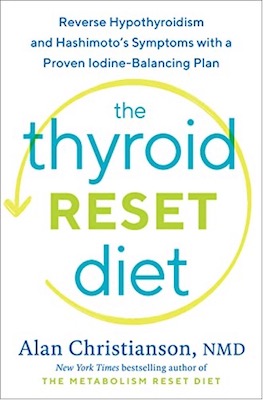
Dr. Alan Christianson’s new book, The Thyroid Reset Diet: Reverse Hypothyroidism and Hashimoto’s Symptoms with a Proven Iodine-Balancing Plan, is a “surprising new plan to reverse the symptoms of thyroid disease by reducing excess dietary iodine.”

I highly recommend this book if you:

  • Have known or suspected thyroid dysfunction/disease
  • Are a practitioner working with individuals with thyroid disease
  • Are using amino acids – such as tryptophan, 5-HTP, GABA or theanine – for easing anxiety (because thyroid health needs to be optimal in order for the amino acids to work well)
  • Would like to learn about how too much dietary iodine (and some surprising sources) can contribute to thyroid disease

Here is the official book blurb:

A surprising new plan to reverse the symptoms of thyroid disease by reducing excess dietary iodine, from integrative physician and New York Times bestselling author Dr. Alan Christianson.

“The most innovative treatment plan around.”—JJ Virgin, New York Times bestselling author, celebrity nutrition expert, and Fitness Hall of Famer

Though the thyroid gland is small, it produces hormones that control the rate of nearly every chemical reaction in the body—turning food into energy, controlling the rate of tissue growth, stimulating the activity of other hormones, and much more. An estimated twenty million Americans have some form of thyroid disease, and up to 60 percent of them are unaware of their condition. Depending on the type and severity of the thyroid disease, symptoms can range from weight gain and fatigue to hair thinning and memory loss.

In The Thyroid Reset Diet, Dr. Alan Christianson helps readers reverse chronic thyroid diseases like hypothyroidism and Hashimoto’s Thyroiditis with nothing more than dietary change: the reduction of iodine intake. Backed by new research showing that proper dietary iodine intake can start to reverse thyroid disease in as little as four weeks, his diet plan contains the optimal amount of iron and dietary iodine to control thyroid hormones, effectively resetting the thyroid.

Instead of following a restrictive diet for thyroid health, The Thyroid Reset Diet does not require eliminating any food category. Instead, Dr. Christianson recommends food swaps like brown rice instead of processed bread to regulate iodine intake. He shares the latest on supplements and other thyroid health strategies, along with more than sixty-five recipes, weekly meal plans, and maintenance info. His cutting-edge research and clear results, coupled with an easy-to-follow diet plan, will help anyone struggling with thyroid disease.

Get your copy on Amazon here (my Amazon link) or from bookstores.

I have some questions for Dr. Christianson and based on the response to the email I shared about this book a few weeks ago, I know many of you have questions too.

Please do share your questions in the comments below.

I’ll also update this blog with some snippets and my questions in next week’s newsletter.

I’m planning a video interview with Dr. Christianson and we’ll do our best to get all our questions answered.

Filed Under: Books, Thyroid, Thyroid health Tagged With: Alan Christianson, Dr Alan Christianson, The Thyroid Reset Diet

It’s not just you: More women than men have thyroid disorders

May 5, 2017 By Trudy Scott 1 Comment

Guest post by Izabella Wentz, PharmD, FASCP

If you’ve ever wondered why more women than men seem to have autoimmune disorders, you’re not alone—I repeatedly get asked this question by people (mostly women!) who come to me seeking help with a thyroid disorder.

Even if you have had a hunch that more women than men are affected by autoimmune diseases such as lupus, rheumatoid arthritis, and multiple sclerosis, you’ll be surprised by this statistic: women account for a whopping 78% of all cases of autoimmune disease.

Hashimoto’s thyroiditis, which I was diagnosed with at 27, is five to eight times more common in women. (I’ve since gotten myself into remission and have dedicated my life to helping others heal from this condition.)

These disproportionate figures have perplexed experts for some time. After years of research and time spent working with people with thyroid disorders, I have formed my own theory, which I call the Izabella Wentz Safety Theory. I can’t wait to share it with you—but first, I’ll tell you a little about some of the other influences autoimmunity.

Searching for an Explanation

When we consider why more women than men have Hashimoto’s and other diseases of autoimmunity, we have to consider two key differences between men and women: hormones and a propensity to use more personal care products.

Regarding the first, there’s no denying that hormones could play a major role in autoimmunity developing. Three of the most likely times for the onset of thyroid disease are during and around puberty, pregnancy, and perimenopause.

Sex hormones such as estrogen and prolactin help regulate the immune system and fluctuations in these could contribute to thyroid disorders especially. Estrogen can alter the requirements for thyroid hormone, which could result in an autoimmune condition, especially if nutrient deficiencies are present. Prolactin, a hormone released by the pituitary gland in women after childbirth, can become elevated in women with Hashimoto’s (even in those not postpartum) and has been linked to increased thyroid antibodies and infertility.

Women do have a higher risk of developing diseases of the thyroid after they’ve given birth. But theories, such as “fetal microchimerism” which suggests that the presence of fetal cells in a woman’s thyroid gland after childbirth could be the spark of an immune system response, haven’t proven to be true.  

All this is to say that at present, there isn’t enough information to support the idea that hormones alone are to blame for the higher rates of autoimmunity in women.

It’s also been considered that because women generally use a greater number of personal care products—makeup, lotions, perfumes, etc.—they are more exposed to a greater number of chemicals, which could alter the immune system.

I haven’t seen enough evidence to convince me of this explanation either.

In truth, I think the answer is much more complicated and requires us to consider some of the underlying vulnerabilities that often occur in people with Hashimoto’s.

Unsafe Conditions Ahead: Go Back to Bed!

After working with thousands of people with Hashimoto’s, I’ve found that there are some common co-occurring factors. Many have nutrient depletions, intestinal permeability, food sensitivities, an impaired stress response, an impaired ability to get rid of toxins, and infections.

The more I thought about these factors, the more I realized that they have something in common: they all send a message to our bodies that the environment isn’t entirely safe and maybe self-preservation mode is what’s best for now. This provided the basis for my Safety Theory.

Let me explain.

Women are responsible for bringing new life into the world. And with this job comes a more finely tuned ability to sense the safety of the environment. We may be more inclined to sense that it’s not be the best time to reproduce—this could be because resources are scarce and we need to focus on our own survival, or for some other protective reason.

In either case, it’s a result of an evolutionary adaptation, or what’s known as adaptive physiology.

When we were cavewomen, one of the main sources of stress was food scarcity—we didn’t always know when we were getting our next meal. When we didn’t eat, consumed things that we weren’t intended to digest, or developed nutrient deficiencies, our bodies would conserve resources and reduce calorie burning.

Strangely enough, even though these scenarios first occurred hundreds of thousands of years ago, there are aspects of modern living that are replicating these signals: we go on calorie-restricted diets (signals food scarcity), eat a highly processed diet (creates nutrient deficiencies), and try to eat foods we’re not intended to digest, such as gluten (leads to digestive difficulties/intestinal permeability).

And when these vulnerabilities are present, they set the stage for an attack on the thyroid to take place and for some of the symptoms of self-preservation to develop. As thyroid function is disrupted, metabolism is slowed and you are sent into a quasi-hibernation mode.

Your body is signaling to you to conserve energy, hold onto weight, making you feel cold and tired all the time so you stay in your cave (or your bed), and lowering your interest in reproduction (low libido) until the environment is safe and fertile once again.

Other Environmental Threats Women Face and How the Thyroid Responds

Did you know that your thyroid gland can sense danger and initiate the autoimmune response? I think in this ability lies another possible clue as to why more women than men develop thyroid disorders.

It’s no secret that the world we live in is not as safe for a woman as it is for a man. Women are more likely to be abused, physically, emotionally, and sexually. And abuse is one of the most undeniable messages to our bodies that we are not safe. The function of the perceptive and sensitive thyroid is put at risk when this is the case.

This is part of my Safety Theory, but it’s not just a theory—multiple studies have confirmed that thyroid hormone imbalances occur in people who have been abused:

  • Research shows that there are alterations in thyroid hormones in women who have been sexually abused. These women also had co-occurring menstrual-related mood disorders.
  • Another study, published in 2005, found that women with PTSD due to childhood sexual abuse experienced thyroid hormone alterations
  • Fluctuating or modified thyroid hormone patterns have also been reported in people who have undergone traumatic stress events.

The abuse doesn’t have to be physical to trigger a red alert in the body. Many girls and women today experience emotional abuse or trauma that can make us feel isolated and cue up a flight response. This can happen at school or in adult social circles, where if we can’t keep up the appearance of being a Superwoman, we might get edged out of the tribe.

The Key to Healing—Showing (and Telling) Your Body It’s Safe

In working with so many women with Hashimoto’s over the years, I’ve learned so much about the condition and the vulnerabilities that can lead to its development. And I’ve also learned about some of the most effective strategies and approaches to healing.

One of the most moving revelations was that a message of safety is so important to helping women through recovery. I’m referring to comprehensive self-care, which can include internal mantras and the right kind of exercise and pampering that help create a restorative environment.

But it should be more than that.

What I’ve found is vital is addressing the vulnerabilities head-on—the signals your body is sending to conserve need to be shut off. You must repair your internal ability to respond to stress and restore detoxifying and digestive functions, eliminate food sensitivities and infections, and replenish nutrients that are lacking.

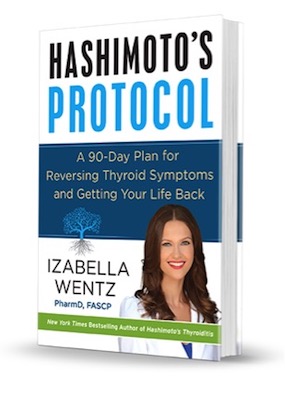
I’ve spent years creating and refining protocols that help women (and men) accomplish these goals. And I’ve finally been able to collect and present them together in one place in one program in my new book Hashimoto’s Protocol: A 90-Day Plan for Reversing Thyroid Symptoms and Getting Your Life Back.

When you follow the protocols I outline there, you send safety signals to your body by reducing your toxic burden, supporting your stress response, and supporting your gut with nutrition and targeted supplements. You communicate in a concrete way that the environment is stable and safe, and your thyroid can get back to its important work of helping you feel energized and warm, calm and clear headed.

I have dedicated my life’s work to helping women heal from Hashimoto’s so that they might feel safe, supported, and active in their lives again. I hope you’ll check out Hashimoto’s Protocol to see if might help you or a loved one recover from a thyroid disorder.

Until then, I encourage you to start sending safety signals today. Start by being nice to your body—feed it nutritious foods when it’s hungry and don’t skip meals. Don’t subject it to excessive or unnecessary stress, which means make time for play and rest. Stop forcing it to push through exhaustion by piling on the caffeine—rest! Listen to your digestion; if there are signs that a food is not working for you, don’t double up on antacids, but instead adjust.

Listen to your body and care for it like a child, or any other loved one who you would treat with absolute care. Like someone you’d want to make sure feels safe.

Filed Under: Thyroid, Thyroid health, Uncategorized Tagged With: hashimoto's, hashimoto's protocol, izabella wentz

Hashimoto’s Protocol by Dr. Izabella Wentz

April 6, 2017 By Trudy Scott 4 Comments

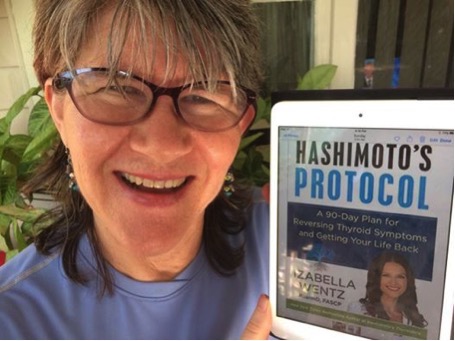
The great new book called Hashimoto’s Protocol by Dr. Izabella Wentz just made #1 on the New York Times bestseller list!

Since I’m in Australia I have a kindle edition of Dr. Izabella’s brilliant new book that just released last week: Hashimoto’s Protocol: A 90-Day Plan for Reversing Thyroid Symptoms and Getting Your Life Back. It’s a must-read if you are dealing with Hashimoto’s or actually any thyroid problems (or if you suspect you may have thyroid issues)!

If you are a practitioner I highly recommend it too!

Here’s the official blurb:

Dr. Izabella Wentz, the author of the phenomenal New York Times bestseller Hashimoto’s Thyroiditis, returns with a long-awaited, groundbreaking prescription to reverse the symptoms of this serious autoimmune condition that is becoming one of the country’s fastest growing diseases.

More than thirty-five million Americans currently suffer from Hashimoto’s—an autoimmune disease that affects the thyroid gland and causes the body to attack its own cells. To alleviate the symptoms of this debilitating condition—including chronic cough, acid reflux, IBS, allergies, chronic pain, hair loss, brain fog, and forgetfulness [plus anxiety and depression] —patients are often prescribed synthetic hormones that have numerous life-altering side effects.

But there is a better way.

Diagnosed with Hashimoto’s at twenty-seven, pharmacist Dr. Izabella Wentz knows first-hand the effects of the disease, as well as the value—and limitations—of medication. The key to improved health, she argues, involves lifestyle interventions. In Hashimoto’s Protocol, she outlines a proven treatment that has helped thousands heal and many others feel better—in as fast as ninety days.

Drawing on her own personal experience as well as her work consulting with thousands of patients, Hashimoto’s Protocol offers a practical pathway for healing and reversing the autoimmune damage at the root of the disease. The first step is a quick-start two-week detox that includes foods to eat and inflammatory foods to avoid, advice on supplements to support the liver, and an adrenal recovery plan. Next, readers create a personalized plan with foods, supplements, and other lifestyle interventions tailored to their body’s own unique Hashimoto’s triggers, which they can identify using self-tests included in the book. Hashimoto’s Protocol also features original recipes.

Grounded in the latest science, Hashimoto’s Protocol is the first book to offer a proven protocol by an acknowledged expert in the field to treat this condition without dangerous hormones—and help sufferers reclaim their lives.

Izabella has done a wonderful job! I love that she covers the basics like liver support, the adrenals and gut health and then goes into advanced protocols for trauma, infections, toxins and nutrient deficiencies! I really LOVE how she dives deep into the newest research and connects ALL the dots in a really smart way!

And even if you don’t have thyroid issues you would benefit from these sections that are applicable for everyone:

  • Root Cause Liver Support Protocol — how to support your liver by clearing detox pathways so that you’re able to release toxins and get your energy back.
  • Adrenal Recovery Protocol — how to reset your response to stress so that you can regenerate your body.
  • The Gut Balancing Protocol — the right nutrients so that your gut starts working at its optimal level.

Here is a snippet from the Liver support section:

Halogens and halogen-containing chemicals: These chemicals include bromide, chloride, and fluoride; are structurally similar to iodine; and may take up receptor sites in the thyroid gland. Unfortunately, their presence in the thyroid gland can

lead to thyroid cell death and inflammation. Individuals exposed to high levels of halogen-containing substances have been found to have higher rates of thyroid antibodies.

Chlorine: When found in polychlorinated biphenyls (PCBs), chlorine has been shown to be toxic to thyroid cells and to promote the onset of Hashimoto’s through increasing TSH, thyroid antibodies, and thyroid size. PCBs are found in industrial products. Chlorine is also found in water systems, pools, cleaning products, and plastics.

Bromide: This can be found in baked goods, plastics, soft drinks, and even our mattresses, which are coated with brominated flame retardants. Studies show bromine-containing substances—polybrominated diphenyl ethers (PBDEs)—are connected to an increased incidence of Hashimoto’s.

Fluoride: This thyroid-suppressing halogen is found in water, toothpaste, and some medications as well as in black, green, and red tea. Using a reverse osmosis filter is the best way to get rid of fluoride.

The gentle two-week Liver support section

will guide you on how to eliminate hidden toxins from your everyday life and how to help your liver process out the toxins you may have in your body. Both are critical steps for anyone who’s had problems with taking supplements or is struggling with current symptoms. Most people see drastic changes just by completing this step alone.


Here is the Amazon link or support your local book store if you have one nearby!

Also enjoy the fabulous 2 week recipe plan Dr. Izabella is offering. It has 2 weeks worth of recipes, meal plans and shopping lists based on the autoimmune Paleo diet template. Click here to learn more and signup for the 2 week recipe plan.

Hope you enjoy these great thyroid resources!

If you already have a copy let us know what you think and which sections have helped you?

Filed Under: Books, Thyroid, Thyroid health Tagged With: hashimoto's, hashimoto's thyroiditis, izabella wentz, thyroid

Thyroid Secret documentary – wise words of wisdom!

February 25, 2017 By Trudy Scott 9 Comments

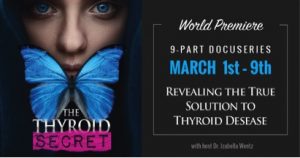
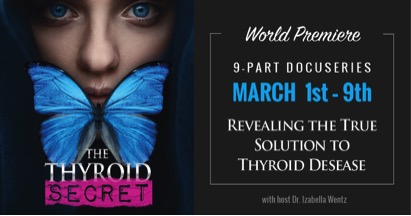
The Thyroid Secret documentary is just around the corner!  My colleague Dr. Izabella Wentz and her amazing team have produced this powerful 9-part documentary and it truly is groundbreaking! (It starts on March 1.)

Thyroid disease is one of the most overlooked diseases and is so often misdiagnosed. I see this all this time with my anxious clients (and I share more about this in the documentary!)

In case you’re not already signed up here is the link to sign up. And some wise words of wisdom from some of the experts that are part of the documentary

If you are already signed up enjoy these wise words too!

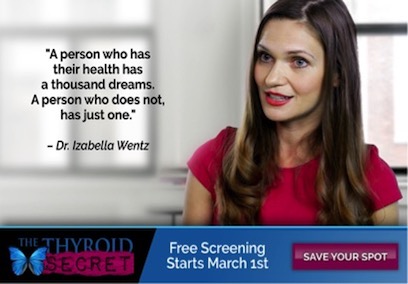
Dr. Izabella Wentz, host and producer of the documentary, and author of the forthcoming book, Hashimoto’s Protocol, sets the tone and I love it!

A person who has their health has 1,000 dreams. A person who does not has just one.

Allowing yourself to heal will allow you to do all these different things in your life that you maybe dreamed about but you never thought were possible. I have people within my community who’ve become like romance novelists or … they’ve gone back to horseback riding. They’ve done all of these things that they never thought will be possible and sometimes in their 40s, 50s, 60s, lucky ones in their 20s.

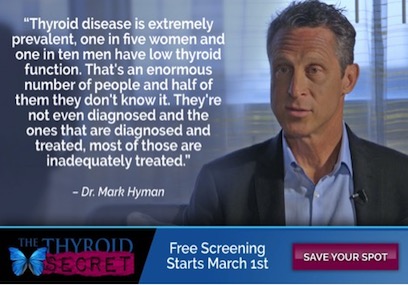
Dr. Mark Hyman, author of The Blood Sugar Solution, discusses the prevalence of thyroid disease in this part of his interview:

Thyroid disease is extremely prevalent, one in five women and one in ten men have low thyroid function. That’s an enormous number of people and half of them they don’t know it. They’re not even diagnosed and the ones that are diagnosed and treated most of those are inadequately treated.

You’ve got an epidemic or thyroid dysfunction that is really driving a lot of suffering and it’s subtle. People don’t know, they think it’s something else. Oh I’m a little tired, oh I have trouble getting up in the morning, my skin’s a little dry, my nails are cracking, I’m a little constipated, I have a little fluid retention. Can’t remember things as well, I feel little depressed, I might not be sleeping as well, I might get muscle cramps, my sex drive’s a little low… You add all these things up, oh my hair’s falling out a little bit.


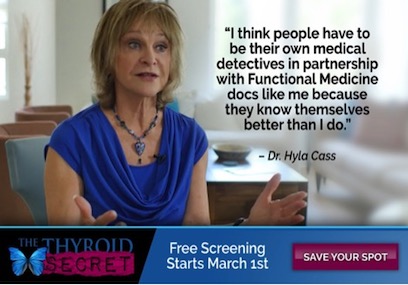
Dr. Hyla Cass, integrative psychiatrist, talks about antidepressant side-effects in this part of her interview:

I think people have to be their own medical detectives in partnership with Functional Medicine docs like me because they know themselves better than I do.

 I think the way conventional medicine is treating depression is really a disaster and that’s simply writing prescriptions for antidepressants. I get a lot of these women and women outnumbering men with thyroid issues coming to me, that have been failures. ‘Failures’ at antidepressant therapy, they’re still depressed and they’re not only still depressed but they now have side effects from being on antidepressants. They can’t sleep or they’re sleeping too much, weight gain, huge weight gain (with thyroid issues you’re already gaining weight). Then there is dizziness, nausea, lack of libido… I mean really? So many problems with the antidepressants and it’s not directed to the cause.


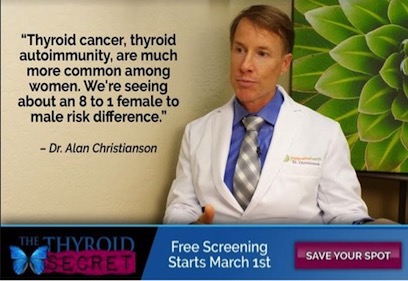
Dr. Alan Christianson, author of The Adrenal Reset Diet, covers our genes and environmental toxins in this part of his interview:

Thyroid cancer, thyroid autoimmunity are much more common among women. We’re seeing about a eight to one female to male risk difference.

So, we think that it’s really a perfect storm of three, three large factors; we’ve got the, the genes, you know. So, the first step is you got to be cautious about choosing your parents (laughter), however that works out, I don’t know. So, there’s some genetic susceptibility and then, and there’s some foreign substances. So, your thyroid like, there’s the shows about the hoarders you know, like those that like never let go of things. So, your thyroid is kind of a hoarder (laughter). It needs iodine, but the amount that it needs is way above what your blood carries, so it concentrates it and pulls it in.

We have a lot of weird chemicals nowadays that confuse that concentrator, that your concentrator thinks, “Well, that looks like iodine,” but it’s not. So, we have uh, Perchlorate for example in the soils in the southwest area, where we had someone just the other day who is working in aviation, in managing the airplanes out in the tarmac and what not and exposed to jet fuel, and they get Perchlorate from that as well.

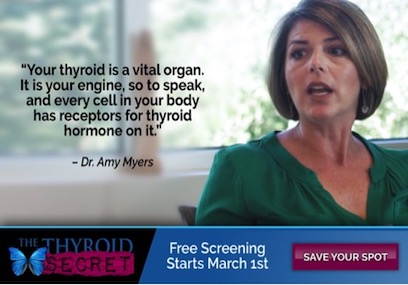
Dr. Amy Myers, author of The Autoimmune Solution, covers diagnosis, root causes and supplemental thyroid hormone in this part of her interview:

Your thyroid is a vital organ. It is your engine, so to speak, and every cell in your body has receptors for thyroid hormone on it.

The average is 6 to 10 doctors in five years to get any kind of autoimmune diagnosis. It may be less for thyroid because that’s a little more common and people do screen at least with a TSH, but if that damage has been going on or you are just now becoming aware of it and you’ve had Hashimoto’s for 20 years, if you’ve had enough damage and destruction to your thyroid, I and no one can grow your thyroid back. We can optimize the function through, and I’m sure we’ll talk about that through this interview, we can optimize the function, we can prevent you hopefully from getting another autoimmune disease, we can get to the root cause of why you got it, but I can’t regrow thyroid tissue for you. You may still need to be on some supplemental thyroid hormone, and that’s okay. I just want people to know that there are people, and I have them in my clinic as well, that we get it early enough and we’re able to do all the things that we’ll talk about in the interview, and they don’t need to go on supplemental thyroid hormone, or they’ve gone on it and we’ve been able to get them off.

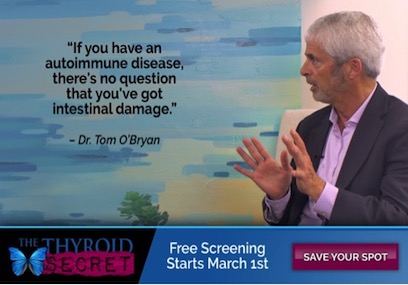
Dr. Tom O’Bryan, author of The Autoimmune Fix, discusses the key role the gut and microbiome play:

If you have an autoimmune disease, there’s no question that you’ve got intestinal damage.

It’s a shift. The first shift is recognizing that there’s no magic pill for thyroid autoimmune disease. There’s no magic pill. The second shift is recognizing that it’s going to take time to reverse the damage that’s accrued. If you can accept that and look for the small wins regularly, and the third is … My recommendation to people, one hour a week. Can you give one hour a week to just doing some research on this topic that you have? Just one hour a week.

The most important thing as we’re learning now in this last ten to twelve year period is if there’s one organ that is more impactful on the rest of the body than any other organ, it’s the microbiome. The microbiome controls our brain function. For every one message coming from the brain down to the gut, there are nine messages from the gut to the brain. It’s the exhaust, if you will, the chemicals that are secreted by the microbiome that go up to the brain to tell the brain what to do. It’s a nine to one ratio. For your heart, the microbiome sends direction to the heart. For your thyroid, the microbiome sends direction to the thyroid.

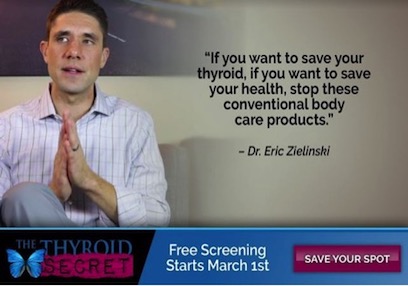
Dr. Eric Zielinski, host of the Essential Oils Summit, covers the dangers of conventional body care products and why use essential oils instead:

We need to work on preventing disease before they happen and I hope to God, that the researchers will come together, that the funding will be available so we could start testing how certain essential oils and chemical constituencies in these oils affect thyroid conditions. Until we do have that, I’m telling you one thing.

If you want to save your thyroid, if you want to save your health, stop these conventional body care products. I’m talking throw them away.

The lowest hanging fruit that anyone can do today, so easy, is literally to throw away all hand sanitizer. I’m telling you, it’s like the worst stuff for you. Conventional hand sanitizer, throw it away. To replace it, super simple. You get a one to two ounce glass spritzer bottle, you put a few drops of witch hazel in it, a couple drops of aloe, vitamin E, and seven drops of essential oils per every ounce that the bottle is.

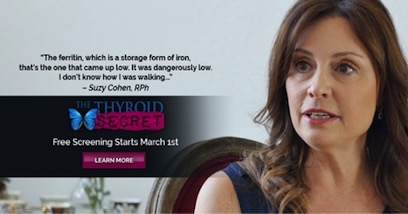
Suzy Cohen, RPh covers low ferritin and low manganese:

The ferritin, which is a storage form of iron, that’s the one that came up low. It was dangerously low. I don’t know how I was walking, it was eight, and it was eight for years. It was eight when I measured it, so it was probably lower, but eight is a very bad number. We shoot to have it above 50, sometimes even closer to 70.

I’m often asked, “What did I do to raise that ferritin, how did I get my iron up?” You would think the answer is that I took iron supplements, but that didn’t work. I did try them. I tried them for six months, they tore me apart. I took the best forms. I’m a pharmacist, I know what the best forms are. Iron doesn’t really help you if you’re iron deficient. That’s a huge secret.

The things that I did were I bought a cast iron pot. I bought two, a little one and a bigger one, and I cooked everything in my cast iron pot because the iron leaches just a little teeny bit. It’s just a little bit, but cooking all of your food in a cast iron pot helped. I drank a little Dixie cup full of orange juice every day. I took betaine with pepsin. This was huge for me. You’ve written articles about this, where you have to titrate up with the betaine. You can’t just take five all at once, but I was so low in acid that at one point I was taking six with my meals. Isn’t that a lot? Today I don’t take any, but there was a point where I worked my way up from one capsule with a meal to six.

The final piece of this was manganese. If your iron is low, manganese is lower, count on it. Having your iron and your manganese in the correct ratio is very huge. I took one capsule of manganese every day and that worked for me. It allows you to better absorb your iron, you need less iron, and you maintain the manganese-iron ratio, and that was a very big piece of it. I took one manganese capsule every day for about a year.

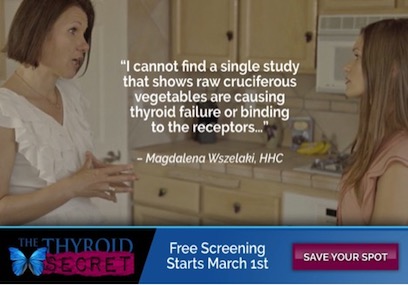
Magdalena Wszelaki, creator of Eating for Hormone Balance, talks about raw cruciferous vegetables and oxalates in this part of her interview:

I cannot find a single study that shows raw cruciferous vegetables are causing thyroid failure or binding to the receptors, or whatever. It’s the stuff that I feel like the bloggers have copied and pasted the same information and just created fear. Having said that, I have come across people …This is anecdotal, but when you have people coming to you over and over again telling these stories of going on a health binge, on a health kick I should say, and they will do juicing or they would start blending smoothies that are full of kale, and beets, and almonds. Then three months into that health protocol, they start having a lot of issues with fatigue. They start putting on weight. They go and get a test that turns out it’s the thyroid.

I think that what is happening is that there’s an issue with oxalates with a lot of the vegetables. Kale has got some oxalates, but spinach is super high in oxalates. Almonds are super high in oxalates, so are hemp seeds, all the seeds and nuts. That has been well-documented that oxalates can deposit on the thyroid gland and be causing an issue. I suspect that could be a problem for a lot of people. With the cruciferous vegetables, I love them because they are so rich in … Nutritionally they’re so much richer than all the other vegetables. They’re also full of diindolylmethane, DIM also named, which binds estrogen and that really supports the thyroid function. I’m definitely for them.

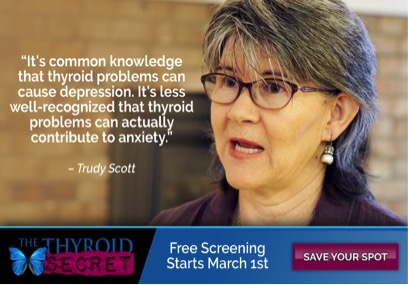
Trudy Scott, yours truly (!), and author of The Antianxiety Food Solution:

A lot of people go to the doctor and get a diagnosis, you’ve got anxiety, or you’ve got depression, and they’ll be given a medication, benzodiazepine or an SSRI. It may be the thyroid that’s causing the problems. It’s common knowledge that thyroid problems can cause depression. It’s less well recognized that thyroid problems can actually contribute to anxiety.

I actually looked at a study that was published in 2010, and they found that there was three times the higher incidence of anxiety in women who have underactive thyroid. It’s more common than a lot of people realize.

Certainly in my practice, working with anxious women, most of the people that I work with are women, I work with men as well, but most of the women that I work with, with anxiety, have thyroid issues. They either have Hashimoto’s Thyroiditis, they have hypothyroid, or they may have had Graves’ in the past. It’s very, very common that I see this.

One of the things that we want to think about from a biochemical and a nutritional aspect when it comes to anxiety is, junk food. We want to eat real whole food. The additives, the colors, the pesticides, the trans fats, all of those can be problematic when it comes to anxiety, because we don’t have the raw materials to make our brain chemicals. GABA is a wonderful calming neurotransmitter, and serotonin is also calming, and if we don’t have enough of the raw materials to make those neurotransmitters, we can be more prone to anxiety.

I’d like to end with a perfect quote from Mary Shomon, thyroid advocate: Be your own CEO of your healthcare!

Watching this Thyroid Secret documentary will empower you, provide you with vital thyroid knowledge you and will truly allow you to be the CEO of your own healthcare when it comes to your thyroid health!

Here is the link to register for the 9-part online documentary The Thyroid Secret, which runs March 1-9.

I do hope you can join us online for this amazing 9-part documentary that I’m so honored to have been a part of!

Filed Under: Anxiety and panic, Events, Thyroid, Thyroid health Tagged With: anxiety, Dr Alan Christianson, Dr Tom O'Bryan, Dr. Mark Hyman, GABA, hashimoto's thyroiditis, izabella wentz, thyroid, Thyroid Secret

The Evolution of Psychiatry: integrative psychiatry, anxiety and the thyroid

February 18, 2017 By Trudy Scott 2 Comments

James Maskell is the founder of The Functional Forum and this month the theme was The Evolution of Psychiatry. It was such a great episode so I’m sharing it with you here today.

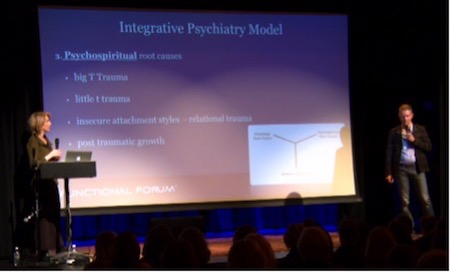
The first presentation was by Janet Settle, MD and Will Van Derveer, MD. They took the stage and presented on the fundamentals of integrative psychiatry, covering root cause-based psychiatry. Together with Scott Shannon, MD, they are also now offering their “Psychiatry Masterclass” training program to other doctors.

This presentation included:

  • The foundations of truly effective, root-cause focused mental health system
  • Typical unresolved physiological dysfunctions that manifest as mental illness
  • Concrete steps for creating the mental health centers of the future

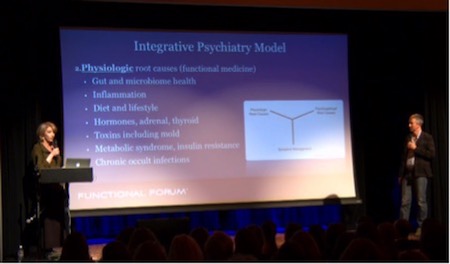
Here is a sampling of what they covered. Isn’t it wonderful to see a slide titled “Integrative Psychiatry Model” and with physiologic root causes listed?

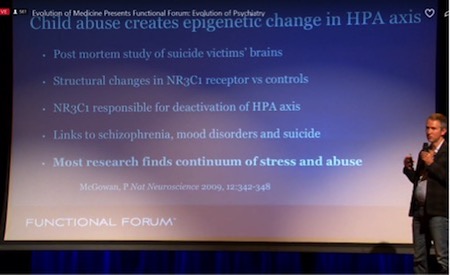
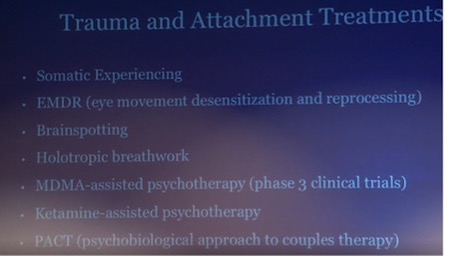
The section on child abuse, trauma and psychospiritual root causes was enlightening:

They cover MDMA- and ketamine-assisted psychotherapy and I look forward to learning more from them about these approaches. However, until I learn more I’m wary of these approaches because of the side-effects. Based on the work I do with targeted individual amino acids I would use them before even considering MDMA or ketamine.

You can watch the entire video presentation here:


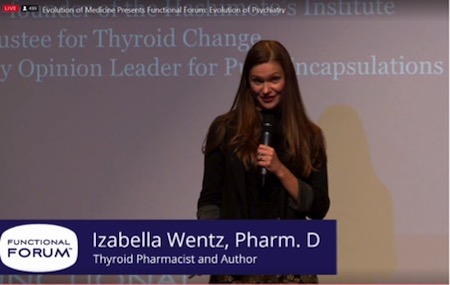
Next up was Thyroid Pharmacist, Dr. Izabella Wentz, returning to the Functional Forum stage for her first keynote. Dr. Izabella is a dear friend and one of my favorite thyroid experts and she covered the connections between thyroid health and depression and anxiety, looking at proven protocols to address the underlying causes.   Her presentation is titled “The Misdiagnosis Machine: How Thyroid Problems Mimic the Symptoms of Mental Illness.”

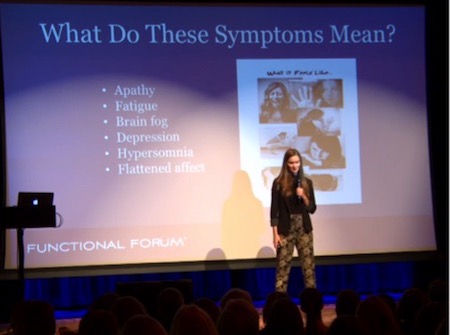
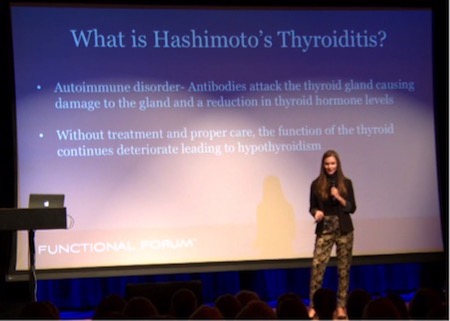
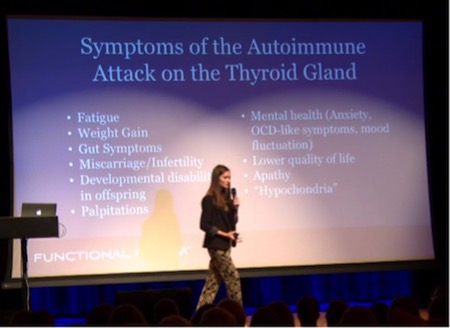
Dr. Izabella shares the symptoms of the autoimmune attack on the thyroid gland. As well as fatigue, weight gain, gut issues and apathy, you can experience mood symptoms such as anxiety, OCD-like symptoms and mood swings.

You can watch the entire video presentation here (and listen for a mention of my name and how commonly I see anxiety with clients with thyroid symptoms):


If you enjoyed Dr. Izabella’s presentation you don’t want to miss her upcoming documentary called The Thyroid Secret. I’m thrilled to have been invited to contribute on my expertise on anxiety and how this ties back to thyroid health. You can read more about it and find a few snippets from my interview here.


Dr. Izabella also has a new book that will be released next month: Hashimoto’s Protocol: A 90-Day Plan for Reversing Thyroid Symptoms and Getting Your Life Back. I have a review copy and it’s brilliant! I’ll be sharing more via a book review and interview with Dr. Izabella, taking a deep dive into infections and Hashimoto’s, so stay tuned for that.

I hope you’ve enjoyed these two presentations! For me, hearing presentations like these gives me so much optimism for the future of mental health!

I’d love to hear what has inspired you?

If you’re a practitioner and would like to attend a live Functional Forum meeting in the future or tune in online, you can register here to be notified. James and his team also offer excellent practice resources for functional medicine practitioners. We appreciate him for what he is doing for functional medicine via the Functional Forum!


Filed Under: Anxiety and panic, Depression, Events, People, Thyroid, Thyroid health Tagged With: anxiety, depression, functional forum, integrative psychiatry, izabella wentz, james maskell, Janet Settle, mental health, thyroid, Will Van Derveer

Zonulin and leaky gut on the Thyroid Connection Summit

October 24, 2016 By Trudy Scott 2 Comments

thyroid-connection-zonulin

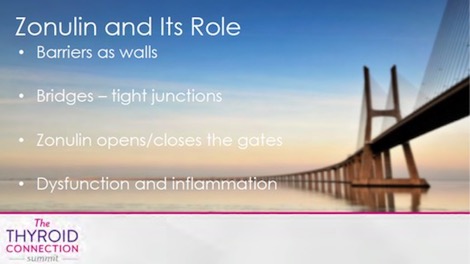
One of the speakers on the Thyroid Connection Summit is Alessio Fasano, MD and a leading Harvard scientist. He addresses the “Latest Research on Leaky Gut” and shares about zonulin. Dr. Fasano and his team actually discovered zonulin.

Dr. Myers asks him to share the role that zonulin plays in leaky gut:

zonulin-and-leaky-gut

This is one of many topics being covered on the summit. A few of my other favorites are:

  • Aristo Vojdani, PhD, MSc, MT: Predictive Antibodies, Leaky Gut and Toxins
  • Raphael Kellman, MD: Your Microbiome and Thyroid
  • David Perlmutter, MD: The Gut-Brain-Thyroid Connection
  • Izabella Wentz, PharmD, FASCP: Infections As a Root Cause of Your Thyroid Dysfunction
  • Sydney Baker, MD: How Parasites Can Rebalance Your Immune System (yes, you read that correctly – his discussion on helminth therapy or “little dudes” is fascinating!)
  • Ritchie Shoemaker, MD: Toxic Mold and Chronic Inflammatory Response Syndrome (CIRS)

Tune into this online event if you have Graves’, Hashimoto’s, hypothyroidism or hyperthyroidism, cancer, nodules, cysts, are post-I-131 radiation or are post-thyroidectomy, or if your doctor says your labs are normal, yet you still have symptoms.

thyroid-connection-hrz

Tens of millions worldwide have some form of thyroid dysfunction, and 60% don’t know they have it or how it occurred. Dr. Amy Myers has identified 5 environmental factors that are the root cause of all thyroid dysfunction: diet, leaky gut, toxins, infections, and stress.

Congrats to Dr. Myers on the release of her new book The Thyroid Connection, which is a companion to the summit content

You can register for the summit here: https://qt247.isrefer.com/go/THY16reg/trudyscottcn/

And purchase at the summit special price here: https://qt247.isrefer.com/go/THY16order/trudyscottcn/

I’m not a speaker on this summit but I’m sharing this resource because thyroid health is so key when it comes to anxiety and depression. And many of the topics on this summit have relevance for anxiety: like genetics, gut health, toxins, stress and more.  Enjoy!

Filed Under: Thyroid health Tagged With: Alessio Fasano, leaky gut, Thyroid Connection Summit, Zonulin

  • Page 1
  • Page 2
  • Go to Next Page »

Primary Sidebar

GABA QuickStart Homestudy

gaba quickstart homestudy

Free Report

9 Great Questions Women Ask about Food, Mood and their Health

You'll also receive a complimentary subscription to my ezine "Food, Mood and Gal Stuff"


Connect with me

Popular Posts

  • Amino Acids Mood Questionnaire from The Antianxiety Food Solution
  • The Antianxiety Food Solution Amino Acid and Pyroluria Supplements
  • Pyroluria Questionnaire from The Antianxiety Food Solution
  • Collagen and gelatin lower serotonin: does this increase your anxiety and depression?
  • Tryptophan for the worry-in-your-head and ruminating type of anxiety
  • GABA for the physical-tension and stiff-and-tense-muscles type of anxiety
  • The Antianxiety Food Solution by Trudy Scott
  • Seriphos Original Formula is back: the best product for anxiety and insomnia caused by high cortisol
  • Am I an anxious introvert because of low zinc and vitamin B6? My response to Huffington Post blog
  • Vagus nerve rehab with GABA, breathing, humming, gargling and key nutrients

Recent Posts

  • Her cravings for chips and peanut butter were triggered by stress: GABA ends cravings and reduces physical tension and fear of heights
  • It is truly miraculous to be able to move through life without crippling anxiety and panic
  • GABA and tryptophan combo provide immediate and noticeable relief for tremors and cervical dystonia in just 7 days
  • Red light therapy for back and neck pain, plantar fasciitis and low mood – a complement to the amino acids GABA, DPA and tryptophan
  • What do I use instead of Seriphos to help lower high cortisol that is affecting my sleep and making me anxious at night?

Categories

  • 5-HTP
  • AB575
  • Addiction
  • ADHD
  • Adrenals
  • Alcohol
  • Allergies
  • Alzheimer's disease
  • Amino Acids
  • Anger
  • Antianxiety
  • Antianxiety Food Solution
  • Antidepressants
  • Anxiety
  • Anxiety and panic
  • Autism
  • Autoimmunity
  • benzodiazapines
  • Bipolar disorder
  • Books
  • Caffeine
  • Cancer
  • Candida
  • Children/Teens
  • Collagen
  • Cooking equipment
  • Coronavirus/COVID-19
  • Cravings
  • Depression
  • Detoxification
  • Diabetes
  • Diet
  • DPA/DLPA
  • Drugs
  • EFT/Tapping
  • EMF
  • EMFs
  • Emotional Eating
  • Endorphins
  • Environment
  • Essential oils
  • Events
  • Exercise
  • Fear
  • Fear of public speaking
  • Fertility and Pregnancy
  • Fish
  • Food
  • Food and mood
  • Functional neurology
  • GABA
  • Gene polymorphisms
  • General Health
  • Giving
  • Giving back
  • Glutamine
  • Gluten
  • GMOs
  • Gratitude
  • Gut health
  • Heart health/hypertension
  • Histamine
  • Hormone
  • Hyperparathyroidism
  • Hypoglycemia
  • Immune system
  • Inflammation
  • Insomnia
  • Inspiration
  • Introversion
  • Joy and happiness
  • Ketogenic diet
  • Lithium orotate
  • Looking awesome
  • Lyme disease and co-infections
  • MCAS/histamine
  • Medication
  • Men's health
  • Mental health
  • Mercury
  • Migraine
  • Mold
  • Movie
  • MTHFR
  • Multiple sclerosis
  • Music
  • NANP
  • Nature
  • Nutritional Psychiatry
  • OCD
  • Osteoporosis
  • Oxalates
  • Oxytocin
  • Pain
  • Paleo
  • Parasites
  • Parkinson’s disease
  • PCOS
  • People
  • PMS
  • Postpartum
  • PTSD/Trauma
  • Pyroluria
  • Questionnaires
  • Real whole food
  • Recipes
  • Research
  • Schizophrenia
  • serotonin
  • SIBO
  • Sleep
  • Special diets
  • Sports nutrition
  • Stress
  • Sugar addiction
  • Sugar and mood
  • Supplements
  • Teens
  • Testimonials
  • Testing
  • The Anxiety Summit
  • The Anxiety Summit 2
  • The Anxiety Summit 3
  • The Anxiety Summit 4
  • The Anxiety Summit 5
  • The Anxiety Summit 6
  • Thyroid
  • Thyroid health
  • Toxins
  • Tryptophan
  • Tyrosine
  • Uncategorized
  • Vegan/vegetarian
  • Women's health
  • Yoga

Archives

  • May 2026
  • April 2026
  • October 2025
  • September 2025
  • August 2025
  • July 2025
  • June 2025
  • May 2025
  • April 2025
  • March 2025
  • February 2025
  • January 2025
  • November 2024
  • October 2024
  • September 2024
  • August 2024
  • July 2024
  • June 2024
  • May 2024
  • April 2024
  • March 2024
  • February 2024
  • January 2024
  • December 2023
  • November 2023
  • October 2023
  • September 2023
  • August 2023
  • July 2023
  • June 2023
  • May 2023
  • April 2023
  • March 2023
  • February 2023
  • January 2023
  • December 2022
  • November 2022
  • October 2022
  • September 2022
  • August 2022
  • July 2022
  • June 2022
  • May 2022
  • April 2022
  • March 2022
  • February 2022
  • January 2022
  • December 2021
  • November 2021
  • October 2021
  • September 2021
  • August 2021
  • July 2021
  • June 2021
  • May 2021
  • April 2021
  • March 2021
  • February 2021
  • January 2021
  • December 2020
  • November 2020
  • October 2020
  • September 2020
  • August 2020
  • July 2020
  • June 2020
  • May 2020
  • April 2020
  • March 2020
  • February 2020
  • January 2020
  • December 2019
  • November 2019
  • October 2019
  • September 2019
  • August 2019
  • July 2019
  • June 2019
  • May 2019
  • April 2019
  • March 2019
  • February 2019
  • January 2019
  • December 2018
  • November 2018
  • October 2018
  • September 2018
  • August 2018
  • July 2018
  • June 2018
  • May 2018
  • April 2018
  • March 2018
  • February 2018
  • January 2018
  • December 2017
  • November 2017
  • October 2017
  • September 2017
  • August 2017
  • July 2017
  • June 2017
  • May 2017
  • April 2017
  • March 2017
  • February 2017
  • January 2017
  • December 2016
  • November 2016
  • October 2016
  • September 2016
  • August 2016
  • July 2016
  • June 2016
  • May 2016
  • April 2016
  • March 2016
  • February 2016
  • January 2016
  • December 2015
  • November 2015
  • October 2015
  • September 2015
  • August 2015
  • July 2015
  • June 2015
  • May 2015
  • April 2015
  • March 2015
  • February 2015
  • January 2015
  • December 2014
  • November 2014
  • October 2014
  • September 2014
  • August 2014
  • July 2014
  • June 2014
  • May 2014
  • April 2014
  • March 2014
  • February 2014
  • January 2014
  • December 2013
  • November 2013
  • October 2013
  • September 2013
  • August 2013
  • July 2013
  • June 2013
  • May 2013
  • April 2013
  • March 2013
  • February 2013
  • January 2013
  • December 2012
  • November 2012
  • October 2012
  • August 2012
  • July 2012
  • June 2012
  • May 2012
  • April 2012
  • March 2012
  • February 2012
  • January 2012
  • December 2011
  • November 2011
  • October 2011
  • September 2011
  • August 2011
  • July 2011
  • June 2011
  • May 2011
  • April 2011
  • March 2011
  • February 2011
  • January 2011
  • December 2010
  • October 2010
  • September 2010
  • July 2010
  • May 2010
  • April 2010
  • March 2010
  • February 2010
  • January 2010
  • November 2009

Share the knowledge!

The above statements have not been evaluated by the Food and Drug Administration. Products listed in this website are not intended to diagnose, treat, cure or prevent any disease.

The information provided on this site is for informational and educational purposes only and is not intended as a substitute for advice from your physician or other health care professional. You should consult with a healthcare professional before starting or modifying any diet, exercise, or supplementation program, before taking or stopping any medication, or if you have or suspect you may have a health problem.


Copyright © 2026 Trudy Scott. All Rights Reserved. | Privacy | Terms and Conditions | Refund Policy | Medical Disclaimer

Free Report

9 Great Questions Women Ask about Food, Mood and their Health

You’ll also receive a complimentary subscription to my ezine “Food, Mood and Gal Stuff”