• Skip to primary navigation
  • Skip to main content
  • Skip to primary sidebar

everywomanover29 blog

Food, Mood and Women's Health – Be your healthiest, look and feel great!

  • Blog
  • About
  • Services
  • Store
  • Resources
  • Testimonials
  • The Book
  • Newsletter
  • Contact
  • Search this site

Antianxiety

5-HTP can raise salivary cortisol: does this cause a “wired-tired” feeling?

August 14, 2020 By Trudy Scott 48 Comments

5-htp salivary

Are you aware that 5-HTP – an amino acid supplement that supports serotonin levels – can raise cortisol levels and leave you feeling “wired-tired”? You may be able to relate to this if you’ve ever used 5-HTP to help with anxiety and insomnia and ended up feeling more anxious and more wide-awake despite your exhaustion and need for sleep. You feel “wired-tired” and it’s not pleasant at all.

Both 5-HTP and tryptophan, used as supplements, help to boost serotonin levels so you can feel happy, calm, sleep well and not crave carbs in the afternoon/evening. They also help with panic attacks and phobias, lack of confidence, depression, negativity, imposter syndrome, PMS, irritability, anger issues, pain/fibromyalgia, TMJ and anger. I typically have my clients with low serotonin symptoms start with a trial of tryptophan because I see such excellent results with this amino acid. That being said, some people simply do better on one versus the other and you may do better with 5-HTP.

However there is one big caveat with 5-HTP. I don’t recommend 5-HTP when a client has elevated cortisol levels because we know that it can raise cortisol levels in certain individuals. This can leave you feeling agitated, cranky, as well as wired and yet tired at the same time.

In this 2002 study, L-5-hydroxytryptophan induced increase in salivary cortisol in panic disorder patients and healthy volunteers

Salivary cortisol levels were measured in 24 panic disorder patients and 24 healthy volunteers, following ingestion of 200 mg L-5-hydroxytryptophan or placebo.

The experiment was carried out in the afternoon, “when basal cortisol secretion is more stable.” The first saliva sample was obtained at 1pm and the subjects ingested the 200mg 5-HTP at 2pm. Additional saliva samples were obtained at 2:30pm, 3:00pm and 3:30pm.

They report the following:

A significant rise in cortisol was observed in both patients and controls following ingestion of L-5-hydroxytryptophan. No such effects were seen in the placebo condition.

Here are a few additional comments and my thoughts:

  • This study was done to find evidence for “serotonin receptor hypersensitivity in panic disorder” and not specifically to test for the effects of 5-HTP on cortisol levels but it serves this purpose rather nicely (and it’s one of many similar studies, some of which measure plasma cortisol levels)
  • Keep in mind 200mg of 5-HTP is a large starting dose. It’s typical to start with 50mg so may be a factor to consider
  • In this study they did not assess cortisol levels beyond the 1.5 hours from ingestion of the 5-HTP. It would have been useful to see when levels started to go down
  • We would want to consider the ramifications of using 5-HTP for weeks (whether it’s 50 or 200mg). What impact would that have on cortisol and the adrenals? (I am not aware of a study like this having been done)
  • I’m also not aware of a study being done with 50mg but if you feel worse and feel “wired-tired” with 5-HTP and switch to tryptophan (the equivalent starting dose is 500mg) and your anxiety and other low serotonin symptoms resolve then you have found your solution
  • You may be wondering: “could I use 5-HTP to raise my low cortisol levels”? Theoretically yes and possibly very short-term. But I would question the timing since 5-HTP and tryptophan are best dosed mid-afternoon and later. This is when we would expect our cortisol levels to be on the downward slope as we end our day. I’d also want to nourish the adrenals with B vitamins and herbal adaptogen and remove the trigger/s that are leading to low cortisol.

If you suspect low serotonin symptoms and are new to using the amino acids and do not have my book I highly recommend getting it and reading it before jumping in to taking supplements: The Antianxiety Food Solution – How the Foods You Eat Can Help You Calm Your Anxious Mind, Improve Your Mood, and End Cravings.

There is a complete chapter on the amino acids and one for pyroluria, plus information on real whole food, sugar and blood sugar, gluten, digestion and much more.  If you’re not a reader there is now also an audible version.

Here is the Amino Acids Mood Questionnaire from The Antianxiety Food Solution and additional information on Anxiety and targeted individual amino acid supplements: a summary

Please also read and follow these Amino Acid Precautions.

This lists The Antianxiety Food Solution Amino Acid and Pyroluria Supplements that I use with my individual clients and those in my group programs.

Have you used 5-HTP with success? Or have you used it and felt “wired-tired”? Have you correlated the success or failure of your 5-HTP use with your salivary cortisol levels?

If you switched from 5-HTP to tryptophan did you have success with that?

If you’re a practitioner is this something you see with your clients/patients and take into consideration?

Feel free to post your questions here too.
Filed Under: Antianxiety Tagged With: 5-HTP, adrenals, amino acid, anger, anger issues, calm, cortisol, depression, Fibromyalgia, happy, Imposter syndrome, irritability, L-5-hydroxytryptophan, negativity, pain, panic attacks, Panic disorder, phobias, PMS, serotonin, sleep, TMJ, tryptophan, wired-tired

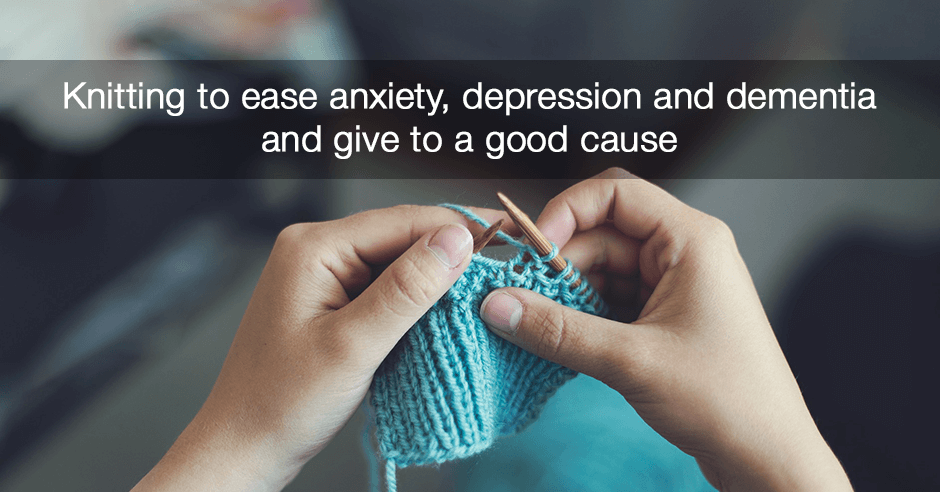
Knitting to ease anxiety, depression and dementia and give to a good cause

March 16, 2018 By Trudy Scott 3 Comments

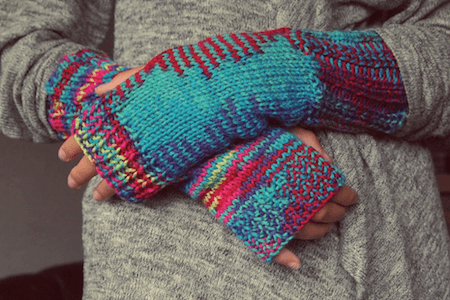
Knit for Peace, a UK based charity that “matches knitters with good causes” has published an extensive review of studies that reports the many physical and mental benefits of knitting, including easing anxiety and depression, benefiting those with dementia, helping with chronic pain, promoting a sense of community and improving sociability.

There is evidence-based research that shows that knitting does the following:

  • Lowers blood pressure
  • Reduces depression and anxiety
  • Slows the onset of dementia
  • Is as relaxing as yoga
  • Distracts from chronic pain
  • Provides an opportunity for creativity (at a time of reducing capacity)
  • Increases sense of wellbeing
  • Reduces loneliness and isolation
  • Increases sense of usefulness and inclusion in society

Knitting for those in need is a volunteering activity that can carry on into extreme old age and can be undertaken by those whose sight, hearing and mobility are severely limited. It provides an activity that gives a sense of purpose. Knitting for charity makes people feel more useful and worthwhile. Self-worth is important post retirement, especially with physical decline.

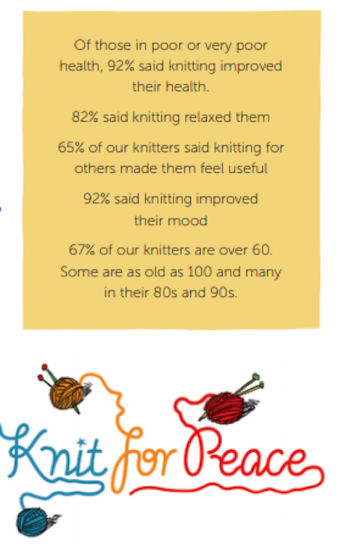
They also surveyed their members about their knitting experiences. Here is some of the feedback they received:

You can read a summary of that report here and request the entire digital report here.

You’ll be able to read some of the heartwarming backstory of Knit for Peace in the above summary… how they “started as an income generation project for Hutu and Tutsi widows, victims of the Rwandan genocide and civil war” and grew to a similar project in India “bringing together Hindu and Muslim women in the slums of Delhi” and then “Knit for Peace groups were set up in Pakistan, Bangladesh, Nepal and Afghanistan.” … And then “when people in the UK heard about this project they asked if they could knit for the children of Afghanistan.” “Through word of mouth the idea spread, and we were soon receiving a positive tsunami of knitted goods.”

Positive feedback about knitting

I asked my community on Facebook if they knit and how it makes them feel.

Diane shared this: I noticed that knitting lowers my blood pressure but interesting to note that crochet lowers it even more. Maybe because the crochet is an easier pattern?

Catriona shared this: I did some knitting when I had horrible anxiety and depressive symptoms. Really helped keep me focused on the present, which made it hard to ruminate and worry while doing it. Like mindfulness. And you end up with a nice gift at the end of it.

Maria shared this: I don’t knit but I crochet a lot. Very therapeutic 

Knitting is not for everyone

Knitting certainly isn’t for everyone. Bonnie shared this:  Knitting did not lower my stress level at all. First of all, I don’t like to sit or stand still that much, it bothered my wrists and was not easy to pick up. I think I was more stressed from doing it. Mountain biking is my stress reliever!

Aminda shared this: Knitting leads me to want to poke out eyes with knitting needles lol. I’ll stick to my crossword puzzles. I’m super tired of being told I just have to try it and being treated like something is wrong with me because I find crafts the opposite of de-stress. I’m glad people love knitting… I’m just not one of them and I only got happier when I stopped trying to fit onto the mold.

If knitting isn’t for you don’t worry about it, rather find something that you love to do.

Knitting is for kids too

I was very fortunate to have my granny teach me when I was about 8 years old. We had such fun time together, making scarves, gloves, baby clothes for my dolls and then my baby sister and eventually jerseys/jumpers for myself. It was a very special bonding time and it’s a skill I’ll always have. My granny was fearful of storms and I’d like to think knitting helped ease some of her anxieties.

I feel we should be encouraging kids to knit too. Many anxious kids could benefit from anxiety relief and contribute to a worthy cause by giving away their finished items.

Christina shared this on the Huffington Post blog: I’m an elementary teacher and I have a knitting group at lunch on Wednesday’s! The kids love it! It promotes patience, concentration and perseverance! I have about 25 students ages 10-12, both girls and boys!

Some of the research

In this Norwegian study, Knitters in a Day Center: The Significance of Social Participation for People With Mild to Moderate Dementia, the main activity of elderly women with mild dementia was knitting. It was found that

the social activity of knitting facilitated conversations about different topics, required various forms of memory and problem solving, and involved different participant statuses. Being part of the knitting group appeared to help the participants maintain their skills and facilitated sociability.

In this study, Managing anxiety in eating disorders with knitting, 38 women with anorexia reported these benefits of knitting:

  • it lessened the intensity of their fears and thoughts and cleared their minds of eating disorder preoccupations (74%)
  • it had a calming and therapeuticeffect (74%)
  • it provided satisfaction, pride and a sense of accomplishment (53%)

Where do you start if you don’t know how to knit?

If you didn’t learn to knit as a kid and want to learn now or possibly want your child or grandchild to learn, knitting is inexpensive and easily learned. Here are some resources for you:

  • The Complete Beginner’s Guide to Knitting (DVD). “Beautiful and clear demonstrations can get you started knitting in just 30 minutes.” You’ll learn all the basic stitches, get a booklet with scarf patterns and other bonus goodies.
  • A good starter yarn such as Lion Brand’s Wool Ease is recommended. Avoid dark colors when you are first learning to knit.
  • Wooden needles like Brittany 10-inch long Single Point Birch Knitting Needles are also suggested, US Size 10, 10.5 or 11. They say to avoid the more slippery metal needles (although I used these and they were fine), and the “grippy” plastics. (All these links are my Amazon affiliate links)

Knit as part of a group and give to someone in need

Whether or not you’re new to knitting, consider getting a knitting group together for that wonderful community aspect and once you’ve knitted enough goodies for family and friends, start to send knitted goods to a charity such as Knit for Peace or take them to a local shelter.

If you work in a nursing home or long-term care facility, in a school or after-school program, or are part of a church group, I encourage you to get a group knitting program together. Or you could even get together with friends and start knitting.

Notice the calmness you feel when you knit and the joy of giving your finished product to someone in need.

We’d love to hear if you knit and when you learned? And how do you feel when you knit? Are you part of a community knitting group and who do you knit for?

Filed Under: Antianxiety Tagged With: anxiety, calming, dementia, depression, fears, give, knit for peace, knitting, memory, sociability

Smart pills: sensors, copper, silicon and EMFs in medications?

January 19, 2018 By Trudy Scott 1 Comment

Can you discuss the new copper and silicon microchip they are starting to use in Abilify and other bipolar and schizophrenia medications? This subject has been in the news.

The above question was posted on a recent blog – Copper toxicity: anxiety, phobias, ADHD on the Heavy Metals Summit

This was new to me and at first glance I didn’t like the sound of copper and a microchip in a medication, so I went looking for information.

Before I share my findings, here is a quick overview of Abilify/Aripiprazole and the FDA-Approved and Off-Label Uses: originally approved for schizophrenia and then approved for bipolar disorder, approved ‘as adjunctive treatment for major depressive disorder’ and also approved for irritability in autism spectrum disorders.

The above article also lists off-label use of Abilify which includes the following: generalized anxiety disorder, social phobia, ADHD, dementia, insomnia, OCD, PTSD, substance abuse and Tourette’s syndrome.

Dr. Mark Hyman actually mentions off-label use of antipsychotics like Abilify in the Broken Brain docuseries. He discusses their use in children:

there’s pushing of medications for off-label use, which means that they’re not approved for those indications. They’re doing this for kids with antipsychotics, and they’re actually being sued. The pharma companies have been held liable for promoting these drugs for off-label uses for kids, which they’re not allowed to do. They get fined billions of dollars, but they don’t care because they’ve made umpteen more billions, and they just see it as a marketing expense.

What are these ‘smart pills’?

This article, ‘smart pill’ can help patients remember their meds explains more about these new smart pills:

Chicago’s Rush University Medical Center has become one of the few health care providers in the United States to use a grain-of-sand-sized sensor that, after being swallowed, can alert patients when they’ve forgotten to take medication.

Developed by Proteus Digital Health, the FDA-approved sensor is made from microscopic quantities of copper and magnesium. Powered by the human body (no batteries or antennas required), the tiny sensor turns on after reaching patients’ stomachs, where it begins sending signals to a Band-Aid-like, Bluetooth-enabled patch worn on the torso. The patch then decodes those signals into meaningful health information and sends it to users and physicians in an app.

Here is the press release about these ‘smart pills’- Otsuka and Proteus® Announce the First U.S. FDA Approval of a Digital Medicine System: Abilify MyCite® (aripiprazole tablets with sensor)

This was approved by the FDA for use in U.S. in 2012. The microchip is actually made of copper, magnesium and silicon, and reacts with stomach juices when swallowed along with the medication. According to the above article:

Once the microchip has done its job, it dissolves and passes out of the body along with other digested food.

However, another article on the introduction of these smart pills into the UK doesn’t seem to reach the same conclusion:

What’s not clear is how long the microchip operates inside the body, and what happens to it once it dies. Is it digested, or is it flushed out into the sewer system wholly intact? And if it’s flushed, what happens to all those millions of chips that wind up in sewage treatment facilities?

Some of my concerns

I have no idea what the long-term implications of this ‘smart pill’ technology will be and would hope patients are being informed now, will be informed in the future, and will have a choice as to whether or not they want to use ‘smart’ medications like this.

Here are some of my initial concerns I’d like to share:

  • the adverse effects of added copper in the body (implications for dementia and Alzheimer’s disease, and anxiety and autism)
  • the adverse health effects of Bluetooth/EMFs for the person ingesting a ‘smart pill’ and for those around them (the new book The Non-Tinfoil Guide to EMFs by Nicolas Pineault is the most current resource for all things related to EMFs)
  • the adverse effects of silicon in the body
  • the harmful environmental impacts once these get into the sewer system
  • the added costs of these medications
  • how quickly we’ll start to see this technology used in more and more medications
  • lack of awareness for the consumer in terms of adverse health impacts and privacy concerns

Without going into the myriad of issues with off-label use of atypical antipsychotics and all the functional medicine and nutritional approaches that can be used to address anxiety (such as tryptophan), social phobia (such as low zinc and low vitamin B6), ADHD (such as gardening or low iron), OCD (such as a gluten-free diet or inositol), insomnia (such as GABA and 5-HTP) and PTSD, we now have the added concerns of what problems these ‘smart pills’ may contribute to.

I say let’s be smart about this and rethink these ‘smart pills’ and ideally look for functional medicine and nutritional solutions instead of using antipsychotics off-label.

And even if we look at some of the approved uses of antipsychotic medications, case studies report a nutritional psychiatry approach for this. Dr. Georgia Ede, MD, shares two schizoaffective cases in her article: Low-Carbohydrate Diet Superior to Antipsychotic Medications. These were patients of Dr. Chris Palmer, a psychiatrist from Harvard’s McLean Hospital in Belmont, Massachusetts. They both tried a ketogenic diet for weight loss. Here are the results the woman patient experienced:

After four weeks on the diet, her delusions had resolved and she’d lost ten pounds. At four months’ time, she’d lost 30 pounds and her score on a clinical questionnaire called the PANSS (Positive and Negative Symptom Scale), which ranks symptoms on a scale from 30 (best) to 210 (worst), had come down from 107 to 70. 

The male patient experienced similar results with “dramatic” reductions in auditory hallucinations and delusions, as well as better mood and energy. He also lost weight, losing 104 pounds over the course of a year.  As Dr. Ede writes:

These outcomes are truly remarkable: improvement by dozens of points on the PANSS, significant weight loss, and better quality of life. There simply is no psychiatric medication available with the power to accomplish those results.  

And in this instance and others like them we won’t have the ‘smart pill’ issues.

Have you ever been prescribed Abilify or one of the other antipsychotics? And for what symptoms?

Has your doctor ever offered you the ‘smart pill’ option?

Have you worked with clients or patients who have been prescribed these medications?

Filed Under: Antianxiety Tagged With: Abilify, antipsychotics, anxiety, autism, copper, depression, EMFs, off-label, smart pill, smart pills, social phobia

Is the term ‘broken brain’ hopeful and real or too negative and scary?

January 12, 2018 By Trudy Scott 18 Comments

If you experience anxiety, panic attacks, depression, memory or cognitive issues, ADHD or poor focus and someone suggests you may be suffering from a broken brain are you intrigued and hopeful that something that is broken can now be fixed OR do you consider the term broken brain too negative and scary?

I received this feedback from someone in my community when I shared my recent Broken Brain interview with Dr. Mark Hyman:

I’m looking forward to seeing the [Broken Brain] documentaries however I dislike the title. Everything that you say and think is affecting your brain. For me Broken is not a word with healing potencies but suggests that is something very bad happening in the brain. And maybe that is the case, but how we interpret our symptoms is very crucial for healing. In my opinion it could be Healing the Brain or something like that. I think is very important that the title implies positivity not fear!

I shared this feedback with her: “Thanks for sharing – you’re the 4th person in a day to say this. Prior to your feedback and hearing from 3 mental health colleagues earlier today I had not considered the name would invoke negativity and fear. One of my mental health colleagues shared with me that “referring to people as ‘broken’ is really stigmatizing and inappropriate.”

My thinking is that just like a leg is broken, the brain can be broken and can just as easily be fixed when we address the root causes. I’ve also watched the series (during the test run late last year) and have seen the wisdom, caring and compassion of the experts and Dr. Hyman, as well as the solutions and message of hope. I suspect that has swayed my opinion too. But I do see your point on being positive and solution-oriented without the fear aspect.”

What do you think?

It’s important that I serve my community well – and that’s you! If something concerns you I want to know so I can address it.  I also want you to know that I’m offering solutions hope and not wanting to create fear and negativity, so I posed this question on Facebook (together with the above feedback from the blog):

I’d love to hear your thoughts on the title of Dr. Hyman’s new Broken Brain docu-series?

What do you think? Good title? Bad title? And why?

The positive feedback: enlightening, fixable, hopeful

The majority of responses were positive feedback. Here are many of them:

  • Mary Anne McEvoy: I rather like the title. When I read the word “Broken” it brought my awareness to: “WOW – the brain can actually get ‘broken’!” I want to see the docu-series because of the word broken.
  • Cathcart Louque: I don’t mind the title at all. I work in mental health (as a Care Manger for a non-profit mental health organization helping low income people) and see “broken brains” everyday which could be so much better by diet, exercise, meditation etc. I wish something would shake people up into wanting to have better brain health. Dementia and Alzheimer’s can be at work ten, twenty, thirty years before it manifests but people continue to make bad choices. I hope his videos will bring enlightenment to many and more will be proactive! Me included 😀! Daily healthy choices are not always the easiest but boy it’s so worth it.
  • Susan McDuffie: This title may really speak to those who feel in dire straits. ‘Have tried everything, read everything, and still struggle.’ Sometimes it’s the darker words that actually resonate with people.
  • Wyndie: I’m not afraid of the word broken – it’s true. Some things break. But broken things can be fixed. When I hear that title, I don’t hear negative, I hear reality.
  • Holly Higgins, NTP: I love the title. It’s catchy, alliterative, and it’s the exact words that so many of my clients use to describe how they feel. I’ve heard this phrase over and over by people who feel like they’ve been harmed by psychiatry or have never felt like their brain was working right. We are all going to have different reactions. It’s clear from the content of the series and the character of the people involved that this was not meant to be offensive.
  • Marthe: I actually liked the title. I thought it was powerful and, to me, it inferred that brain issues are becoming common occurrences and that there are ways to heal.
  • Leslie Montano: It’s just a title. I like the alliteration. It’s catchy, easy to remember, and certainly effective in that way for marketing. It not stigmatizing, it is not directly calling any person broken, it is speaking about a part of the body generally. Things that are broken can be repaired. There is hope. And personally, 2 years ago before I fixed my diet and lifestyle, I felt broken. Broken brain explains EXACTLY what was going on and how I was feeling.
  • Sharleen McDowall: As a psychologist, I like the title. I see the title the same way you do – just like a broken leg. I think the title conveys a strong message and it is needed to spark the conversation about how we are treating our brains. Also, Dr. Hyman’s message focuses on how the broken brain can be healed which is very positive.
  • Lee Ann Foster: First of all, it’s a good, empowering series giving people a lot of useful and hope-inspiring information to care for their brain related issues. Secondly, as a 30-year old functional neuropsychology practice, Neurosource, in which we get to root issues and help re-regulate brain function through evidence based technologies and lifestyle interventions, we find that many people are relieved when we show them through 3-D neuroimaging how their brain is dysregulated – or one could say broken. We find people feel hopeful when they see their issues are physiological in nature (and can be helped), versus giving them stigmatized and often inaccurate or unhelpful mental health diagnostic labels that mean very little aside from labeling for insurance and pharmaceutical purposes. Just my two cents.
  • Pierce: For me the first step in healing is acknowledging that I’m broken at the moment. Then I focus on moving forward and healing for the long term.
  • Deena Louise: My son has tuberous sclerosis that has left him severely disabled with autism, MR and uncontrolled epilepsy….when my daughter, who is younger than him by 6 years, was able to understand that he was “different” than neurotypical people, she asked what was wrong with him….why didn’t he talk. She didn’t understand autism, so we just told her he had a broken brain. Some things can be fixed and some things can’t. She understood it when we said it that way. I think the title is fine…broken is just a word used to describe something that isn’t working right at the moment. Dealing with anxiety, menopause, insomnia and panic…my brain definitely feels broken! I can’t wait to watch the series, I don’t care what he calls it. I am grateful for all of these lovely functional medicine docs and scientists giving of their time and expertise to help so many.

The less than positive feedback: worthless, negative, insensitive

Three mental health professionals felt the term broken brain was stigmatizing but other than this, surprisingly few people had negative feedback. A few people resonated with words like repair or mend instead of broken, saying most people think of broken as worthless and negative, and can’t be fixed. One mom felt it was insensitive to the real struggles of depression and anxiety. Here are a few specific comments:

  • Donna: Broken brains aren’t as easily fixable as broken legs. Broken brain means Alzheimer’s or stroke or something equally scary to me. I think another word could have been used to get the point across…. whatever a broken but fixable brain is…
  • Missy Ruth: Our brains are not broken. They regenerate and grow and change and are incredible. However, they certainly can feel like they are not operating like we wish they would. Labeling the brain as “broken” is an example of inflammatory linguistics, and as human beings we create fear by using terms that exaggerate. We scare ourselves. Nobody’s brain is broken.

If you don’t like the term broken brain, I’m hoping you will get some inspiration and feel some level of comfort from the positive comments above and watch it anyway. You will see there are solutions, compassion and hope!

Also, many of my clients who use words like “negative, worthless, scary and fear”, do feel better when we look into low serotonin and address low levels with tryptophan or 5-HTP. Also, addressing gluten issues, poor gut health, low GABA, low zinc and so on – everything body-related that can affect the mind and brain. All of this is covered in the docuseries, other then the use of targeted amino acids, which I cover extensively in my book The Antianxiety Food Solution, in my newsletters and elsewhere on this blog.

An apology: integrity, compassion and hope

I really want to hear your thoughts but also want to offer Dr. Hyman’s apology if you are offended by the term broken brain. As soon as his team started getting feedback they issued this statement on his behalf:

Thank you for your comment. We completely understand what you are saying and we agree. So much of this docuseries is about Dr. Hyman’s personal health crisis and how he treated his own brain disorder. During this time Dr. Hyman felt like he had a broken brain. This is why we decided to call the title Broken Brain because the foundation of the series is about his personal journey. However, we do not think that everyone who is dealing with a brain disorder or a developmental disorder has a broken brain. We know that all individuals, including those with brain conditions, are fully complete people, each with their unique spirit. We hope that you’ll watch the series and understand that more than anything it’s about hope and about moving toward our best health!

I find this very thoughtful and it clearly reflects the level of his integrity and compassion.

In case you’re just hearing about the Broken Brain for the first time, you can watch my highlights video interview with Dr. Hyman (together with the transcript).

So, what do YOU think? Is broken brain a good title or term? Or a bad title or term? And why?

(With appreciation if you already provided feedback and for giving me permission to share it here. This is a good discussion to have!)

Filed Under: Antianxiety, Events Tagged With: anxiety, broken brain, depression, Dr. Mark Hyman, hopeful, Negative, panic attacks

Trichotillomania: NAC, GABA, tryptophan, inositol and zinc?

January 5, 2018 By Trudy Scott 44 Comments


This recent paper reports on a case study with NAC – Trichotillomania: a good response to treatment with N-acetylcysteine

Trichotillomania is considered a behavioral disorder and is characterized by the recurring habit of pulling one’s hair, resulting in secondary alopecia. It affects 1% of the adult population, and 2 to 4.4% of psychiatric patients meet the diagnostic criteria. It can occur at any age and is more prevalent in adolescents and females. Its occurrence in childhood is not uncommon and tends to have a more favorable clinical course.

The scalp, eyebrows and eyelashes are the most commonly affected sites. Glutamate modulating agents, such as N-acetylcysteine, have been shown to be a promising treatment. N-acetylcysteine acts by reducing oxidative stress and normalizing glutaminergic transmission. In this paper, we report a case of trichotillomania with an excellent response to N-acetylcysteine.

In this case report an 11 year-old male student had been pulling his hair out for 6 months. He had a relationship problem with this father and also suffered from asthma and dermatitis. He was started on NAC:

Treatment with N-acetylcysteine was initiated ​​(1200 mg/day for three months). The patient’s outlook improved dramatically, but complete remission was not achieved. We chose to increase the dosage to 1800 mg/day, which resulted in almost complete regrowth.

[From: Trichotillomania: a good response to treatment with N-acetylcysteine]

In this paper from 2009, N-acetylcysteine, a glutamate modulator, in the treatment of trichotillomania: a double-blind, placebo-controlled study, it is reported that

  • Fifty individuals with trichotillomania (45 women and 5 men) received 1200-2400 mg/day of N-acetylcysteine or placebo over a 12-week period.
  • 56% percent of patients experienced “much or very much improved” hair-pulling symptoms with N-acetylcysteine use compared with 16% using the placebo, and the improvements were first noted after 9 weeks of supplementation.
  • Those in the N-acetylcysteine group did not experience any adverse events.

As you can see, the results with NAC are excellent but it can take 9 weeks and more before results are seen. For this reason, I would always also assess for low serotonin and low GABA and do trials of tryptophan or 5-HTP for low serotonin and GABA for low GABA. With any compulsive and obsessive behaviors I always consider inositol too and we may add this once the ideal dose of tryptophan has been found.

What is my rationale for recommending GABA, tryptophan, 5-HTP and/or inositol?

  • Since NAC works on reducing oxidative stress and normalizing glutaminergic transmission, GABA may help too and will certainly help to ease any physical anxiety that is being experienced
  • “Recommended first-line therapy for this psychiatric condition is administration of SSRIs” even though their efficacy is not yet proven in children – for this reason I’d recommend tryptophan or 5-HTP
  • Also “according to the psychiatric definition, these patients pull their hair because the act is gratifying and reduces tension, anger, depression and anxiety” (these are all signs of low serotonin and another reason to consider tryptophan or 5-HTP)
  • Because they offer relief right away, within 1-5 minutes

A complete nutritional and functional medicine work-up would be part of the plan too – to address the asthma and dermatitis (in the first paper above) and any other symptoms the person is experiencing and may be a contributing factor.

I’d expect the 56% of improved patients (in the second study above) to go to a much higher percent with all of the above approaches.

When I shared these papers on Facebook I was asked this question from someone who pulls out her eyelashes:

I pull my mascara off what is left of my eyelashes every night. I try my hardest not to do it but I find it impossible once I’ve touched my lashes. I’m about to start taking GABA and I was thinking about taking NAC. Would it be a bad idea to take both these amino acids?

This is my feedback: I always like to do one thing at a time and (as mentioned above) I would do the amino acid questionnaire and a trial of tryptophan and GABA first if the scores are high, and then look at adding NAC. If there are still some obsessive tendencies I would consider adding inositol. I am not aware of any issues with using all of these nutrients at once.

Someone else asked this:

Wouldn’t you deal with the psychological cause of it too – at the same time?

My response: Yes absolutely – if there is a psychological cause. But be aware that sometimes it’s purely nutritional or biochemical.

Another person shared that she only exhibits these behaviors when she’s stressed. Of course, the nutrients mentioned above, plus dietary changes, adrenal support, improving gut health and everything that I educate about, are important for reducing stress.

I also received some success stories. Here is one of them:

I’ve struggled with trichotillomania and dermatillomania (skin picking) for years and years. I underwent hypnosis that was extremely effective. When I added in zinc (after reading your book) the urge is almost completely gone. Thank you!

Keep in mind that zinc is a co-factor for making serotonin and GABA, is important for overall adrenal support and stress reduction, is needed for glutathione production and works as an antioxidant. I’d actually love to see these studies repeated with zinc alone.

And then I received this message from someone else:

I’m messaging you my answer about NAC because it’s slightly embarrassing I’ve always had terrible acne and always have picked at it obsessively and could not stop until I was given some supplements for PCOS which happened to contain NAC. To my surprise I lost the compulsion to pick at my skin, something I had never thought possible!

How wonderful for both of them! I always appreciate feedback like this and have to say nothing is too embarrassing to share (especially if it helps someone else).

Have you used NAC with success – with trichotillomania or dermatillomania (skin-picking) or even nail-biting? Or some other compulsive behavior?

What about GABA or inositol or tryptophan or zinc (or something else) for the same purpose and/or for additional emotional and stress-reducing support?

Filed Under: Antianxiety Tagged With: anger, depression and anxiety, dermatillomania, GABA, inositol, NAC, skin-picking, tension, trichotillomania, tryptophan, zinc

The best food-mood-nutrient topics of 2017

December 29, 2017 By Trudy Scott Leave a Comment

As we move into 2018, it’s time to recap and share the best of 2017 – from both blog posts and facebook posts. Hopefully these topics have helped you move forward as you address your anxiety symptoms and will help you (and your clients/patients if you’re a practitioner) take even bigger leaps as you move into 2018!

Most popular blog posts

Here are the most popular blog posts of 2017, based on comments and questions. If you have already read one of these and found it interesting at the time of publication, it’s worth a re-read for all the valuable comments/questions and my feedback.

Collagen and gelatin lower serotonin: does this increase your anxiety and depression?

I see everyone raving about gelatin and collagen – and rightly so – they have amazing health benefits. However, no-one is addressing the fact that gelatin is actually used in tryptophan-depletion studies to lower serotonin.

Some people get more anxious and depressed when consuming collagen, some do just fine and some even use it to lower their serotonin. Many need to use it with added tryptophan. I recently made some additional updates to this blog and have more to add so stay tuned for more on this topic.

How much GABA should I use and which GABA product is best?

There is no simple answer! It requires a blog post to provide a good answer because we are all unique, have different needs and these needs can even differ at different times depending on the issue and what is going on in our lives at the moment.

My Kid is Not Crazy and PANS/PANDAS awareness day 2017

PANDAS (Pediatric Autoimmune Neuropsychiatric Disorders Associated with Streptococcal Infections) occurs when strep triggers a misdirected immune response results in inflammation on a child’s brain. In turn, the child quickly begins to exhibit life changing symptoms such as OCD, anxiety, tics, personality changes, decline in math and handwriting abilities, sensory sensitivities, restrictive eating, and more.

Anxiety, compulsive thinking, counting behaviors: gluten, tryptophan and inositol

Today I’m going to share my feedback on a question I received on how to approach working with a child with anxiety, compulsive thinking and counting behaviors in the hope it can help you or someone you know (or are working with if you’re a practitioner)

DPA for weepiness, pain and comfort and reward eating

This amino acid is a favorite with so many of my clients because it helps with [weepiness, pain and comfort and reward eating] by boosting your endorphins and when you chew a capsule you feel like you just got a big hug.

How to Beat Anxiety and Resolve Panic Attacks with Targeted Amino Acids: Wellness Mama podcast

I share my wonderful interview with Katie, the “Wellness Mama”. We talk about my favorite topic: How to Beat Anxiety and Resolve Panic Attacks with Targeted Amino Acids, with some extra questions about pregnancy and nursing that I’m not often asked about.

GABA for the physical-tension and stiff-and-tense-muscles type of anxiety

I’m going to review some GABA products for the physical-tension and stiff-and-tense-muscles type of anxiety, and share some additional resources for you….

I share that sublingual is best, do a trial and start low, my favorite GABA products and when it works and when it doesn’t.

Tryptophan for the worry-in-your-head and ruminating type of anxiety

I’m going to review some tryptophan products for the worry-in-your-head and ruminating type of anxiety… Lidtke is the only brand of tryptophan that I recommend simply because I see it work so well and because of quality issues with tryptophan in the past.

I also share when to use tryptophan and when to use GABA, and tryptophan for PMS.

GABA: an amino acid supplement for neurotransmitter support and anxiety relief

I recently attended the first international meeting of International Society for Nutritional Psychiatry Research and was honored and thrilled to present my poster – GABA: an amino acid supplement for neurotransmitter support and anxiety relief Because you were not able to be there, here are the contents of my poster word for word.

How GABA eases agonizing rectal pain and spasms in under 2 minutes

Proctalgia fugax is described as a condition that leads to rectal spasms and sharp fleeting pain in the lower rectum or anus. In some people it can be more than fleeting and is often described as excruciating and agonizing.

I have experienced this awful anal sphincter spasm and pain myself so I want to shine some light on this condition and offer the simplest and most effective solution: oral and sublingual GABA. It works to completely eliminate the pain in 1-2 minutes! And it can also be used to prevent a full-on spasm if you catch it in advance.

Migraines, Anxiety and Antiphospholipid Syndrome: on the Chronic Headache & Migraine Summit

The autoimmune condition called Antiphospholipid Syndrome (APS) is one of many possible contributing factors for both migraines and anxiety.

Cognitive impairment, strokes and livedo reticularis is common.

GABA protects against hypothyroidism caused by fluoride and reduces anxiety

To the best of our knowledge, this is the first study to establish the therapeutic efficacy of GABA as a natural antioxidant in inducing thyroprotection against fluoride-induced toxicity.

GABA for children: ADHD, focus issues, irritability, anxiety and tantrums

My daughter hasn’t been diagnosed with ADHD but has a lot of ADHD qualities. We were having a huge amount of behavior problems as she is getting older (she’s 11). I did some research and went to the health food store and bought a bottle [of GABA Calm]. At this point I was mentally exhausted from all the fighting and drama at home and at school. I was desperate and didn’t want to put her on any hard medication.

She has had amazing behavior at school and at home since giving it to her. She’s almost like different child. GABA has truly changed our life. She’s been taking it for almost 2 months.

Anxiety: when to use GABA and tryptophan and how much to use

When you have anxiety it can be confusing trying to figure out the root cause. I like to start by assessing for low GABA and low serotonin because when you address these with targeted individual amino acids you typically see results right away and feel hopeful (and now have time to look for other root causes like gluten issues, high cortisol, gut issues, dietary changes etc).

But there may still be some confusion about when to use GABA and when to use tryptophan and how much of each of these amino acids to use.

Vulvodynia: oxalates, GABA, tryptophan and physical therapy

I just listened to the webinar talking about oxalates. I was shocked and delighted to hear the mention of the connection between high oxalates and vulvodynia.

Research shows there is serotonin involvement with vulvodynia and SSRIs are often prescribed, as are benzodiazepines. My recommendation is trials of tryptophan and/or GABA.

Seriphos Original Formula is back: the best product for anxiety and insomnia caused by high cortisol

If you have high nighttime cortisol (as measured by an adrenal saliva test) it can cause insomnia and anxiety. Using 1-3 x Seriphos about 1-3 hours before the high cortisol is the best way I know for lowering the high cortisol and providing relief.

The product was reformulated and didn’t work like it used to and then the original formula was brought back.

GABA takes some of the anxiety edge away and now I want to add tryptophan: how do I do this?

I would say this – ask yourself what low GABA anxiety symptoms (this is the physical anxiety) have improved with the GABA and how much (rate each one before – out of 10; and what are they now – out of 10). From your question it sounds like they could improve more – so if we were working together I’d continue to increase GABA before adding something new.

The most popular facebook posts

And here are some of the most popular Facebook posts on TrudyScottAntianxietyFoodSolution (based on comments and shares). Many of these link to other sources like the research or other blogs with additional information. Most of them have a great back and forth discussion on the Facebook post so feel free to join in there.

Canola oil linked to worsened memory and learning ability in Alzheimer’s

Canola oil is one of the most widely consumed vegetable oils in the world, yet surprisingly little is known about its effects on health. Now, a new study published online December 7 in the journal Scientific Reports by researchers at the Lewis Katz School of Medicine at Temple University (LKSOM) associates the consumption of canola oil in the diet with worsened memory, worsened learning ability and weight gain in mice which model Alzheimer’s disease. The study is the first to suggest that canola oil is more harmful than healthful for the brain.

Canola oil is not something I’ve ever recommended and I’m really glad to see this research. You have to read labels because it’s in a lot of salad dressings and processed foods!

Nestle to buy vitamin maker Atrium Innovations for $2.3 billion

The following brands are now owned by Nestle: Garden of Life, Douglas Laboratories, Pure Encapsulations.

This is not good! Other than the fact that the formulations will likely be changed, there is much to be said about Nestle and their ethics.

The Big Vitamin D Mistake

This could lead to a recommendation of 1000 IU for children <1 year on enriched formula and 1500 IU for breastfed children older than 6 months, 3000 IU for children >1 year of age, and around 8000 IU for young adults and thereafter. Actions are urgently needed to protect the global population from vitamin D deficiency.

Do you use a zinc supplement every day?

1) how much and what form? and with or without copper?
2) how did you decide to add zinc (or was it recommended by a practitioner)
3) how did you assess your zinc status (alk phos? zinc challenge/tally? mood symptoms? white flecks on nails? poor digestion? pyroluria questionnaire? blood work? other?)
4) how it helps you? (less anxious? more social? less depressed? less cravings? better digestion? better skin? less aches/pains? better blood sugar control? less PMS/hormone symptoms? better adrenal health? better immunity? other?)

Scary new information about benzodiazepine deaths

The five most frequently occurring drugs found in decedents were ethyl alcohol (5,318), benzodiazepines (5,167, including 1,851 alprazolam occurrences), cocaine (2,882), cannabinoids (2,292), and morphine (2,040).

With teen mental health deteriorating over five years, there’s a likely culprit

In a new paper published in Clinical Psychological Science, my colleagues and I found that the increases in depression, suicide attempts and suicide appeared among teens from every background – more privileged and less privileged, across all races and ethnicities and in every region of the country. All told, our analysis found that the generation of teens I call “iGen” – those born after 1995 – is much more likely to experience mental health issues than their millennial predecessors.

What happened so that so many more teens, in such a short period of time, would feel depressed, attempt suicide and commit suicide? After scouring several large surveys of teens for clues, I found that all of the possibilities traced back to a major change in teens’ lives: the sudden ascendance of the smartphone.

Gabapentin and pregabalin are as problematic as benzodiazepines

Crippling toll of the new valium that’s ruining the lives of MILLIONS

Can you relate to the term high-functioning anxiety?

Busy and in control. High-achieving and perfectionistic. Driven by details and order in a desperate attempt to calm racing thoughts, worry, and the fear that invade every ounce of the mind and body. An over-thinker with a tendency to perseverate, dwell, and stew on everything.

I used to be like this before the panic attacks and it’s a big clue that it’s time to do something about it but too often we push and push and push and then it gets really bad. I would love to be able to reach women (and men) at this stage before it gets really bad!

Great article about squatting and the benefits

How often do you squat? and do you use a device like the Squatty Potty?

Screen time might boost depression, suicide behaviors in teens

A new study finds that teens, especially girls, who spend several hours per day on phones and tablets are more likely to be depressed and have suicide-related outcomes.

When it comes to cravings, addiction and appetite we have this research supporting the use of glutamine

– Glutamine and glutamatergic metabolism is a factor in cravings and alcohol dependence
– A combination of tyrosine, lecithin, glutamine and 5-HTP helped withdrawal syndromes and mental symptoms in detoxified heroin addicts
– Glutamine has been shown to decrease secretion of ghrelin, the hormone that impacts appetite regulation. High levels of ghrelin appear to make high-calorie foods look more appealing.

Why the vaginal mesh scandal could be ‘bigger than thalidomide’

More than 92,000 women had vaginal mesh implants between 2007 and 2015 in England, and about one in 11 is said to have complications. More than 800 of these women are now taking legal action against the NHS and mesh manufacturers.

Please be aware of the dangers of vaginal mesh (and other procedures that use mesh) – it’s something I’ve always warned my clients about and it needs to become common knowledge

Do you take probiotics on a daily basis and do they help? Have you had to stop taking probiotics because of any adverse effects?

Melatonin–estrogen interactions in breast cancer

Individualized protocols in Dr. Nalini Chilkov’s OutSmart Cancer system include melatonin at 10-20mg at bedtime (to match nature’s cycling of melatonin…not for sleep issues) . MANY breast cancer patients have low or aberrant melatonin patterns.

The anti antidepressant. Depression affects 16 million Americans.

One third don’t respond to treatment. A surprising new drug may change that: ketamine.

I’m quite surprised how many women who are smart and savvy when it comes to eating and natural health continue to color their hair (or straighten or perm or treat).

I’m curious if you are one of those people ? And if yes why? Do you know the risks or would you just prefer not to know?

Excellent article on toxic sunscreen ingredients

I have always avoided conventional sunscreens and teach my clients about this but wish more people were aware of these issues. It’s not just sunscreens either…so many skin care products, makeup, hair products and household products have ingredients that are endocrine disrupters, cause DNA and oxidative damage and affect our health – both physically and mentally! What sunscreen do you use?

My favorite protein powder

I love this one because _______. I use it in these ways ______, _______, ________.

Right now my favorite protein powder is a pea protein (made by Nuzest). I love this one because it’s gluten-free, dairy and soy free, GMO-free and is pea only (no other ingredients!). I just found out it’s also available in USA and other countries.

My favorite healthy protein bar

I love it because _______ AND/OR I tried ______ and don’t like it because ________. My clients are always looking for protein bars for a quick healthy snack but so many are loaded with sugar OR don’t have enough protein and fat OR are full of processed soy OR contain a ton of nuts OR aren’t gluten-free.

Thank you for being such a huge part of this community, for sharing your stories and successes and for offering words of encouragement to others in the community. Thank you too, for asking your questions. Keep the questions coming – they keep me on my toes and help me to learn too!

I’d love to hear how the above topics have helped you and what topics you’d like me to cover in 2018, plus which areas you’d like me to take an even deeper dive into.

Filed Under: Antianxiety Tagged With: anxiety, collagen, cravings, depression, DPA, GABA, melatonin, mesh, migraines, PANDAS, seriphos, serotonin, teens, tryptophan, vitamin D, vulvodynia, zinc

  • Page 1
  • Page 2
  • Page 3
  • Interim pages omitted …
  • Page 20
  • Go to Next Page »

Primary Sidebar

GABA QuickStart Homestudy

gaba quickstart homestudy

Free Report

9 Great Questions Women Ask about Food, Mood and their Health

You'll also receive a complimentary subscription to my ezine "Food, Mood and Gal Stuff"


Connect with me

Popular Posts

  • Amino Acids Mood Questionnaire from The Antianxiety Food Solution
  • The Antianxiety Food Solution Amino Acid and Pyroluria Supplements
  • Pyroluria Questionnaire from The Antianxiety Food Solution
  • Collagen and gelatin lower serotonin: does this increase your anxiety and depression?
  • Tryptophan for the worry-in-your-head and ruminating type of anxiety
  • GABA for the physical-tension and stiff-and-tense-muscles type of anxiety
  • The Antianxiety Food Solution by Trudy Scott
  • Seriphos Original Formula is back: the best product for anxiety and insomnia caused by high cortisol
  • Am I an anxious introvert because of low zinc and vitamin B6? My response to Huffington Post blog
  • Vagus nerve rehab with GABA, breathing, humming, gargling and key nutrients

Recent Posts

  • Her cravings for chips and peanut butter were triggered by stress: GABA ends cravings and reduces physical tension and fear of heights
  • It is truly miraculous to be able to move through life without crippling anxiety and panic
  • GABA and tryptophan combo provide immediate and noticeable relief for tremors and cervical dystonia in just 7 days
  • Red light therapy for back and neck pain, plantar fasciitis and low mood – a complement to the amino acids GABA, DPA and tryptophan
  • What do I use instead of Seriphos to help lower high cortisol that is affecting my sleep and making me anxious at night?

Categories

  • 5-HTP
  • AB575
  • Addiction
  • ADHD
  • Adrenals
  • Alcohol
  • Allergies
  • Alzheimer's disease
  • Amino Acids
  • Anger
  • Antianxiety
  • Antianxiety Food Solution
  • Antidepressants
  • Anxiety
  • Anxiety and panic
  • Autism
  • Autoimmunity
  • benzodiazapines
  • Bipolar disorder
  • Books
  • Caffeine
  • Cancer
  • Candida
  • Children/Teens
  • Collagen
  • Cooking equipment
  • Coronavirus/COVID-19
  • Cravings
  • Depression
  • Detoxification
  • Diabetes
  • Diet
  • DPA/DLPA
  • Drugs
  • EFT/Tapping
  • EMF
  • EMFs
  • Emotional Eating
  • Endorphins
  • Environment
  • Essential oils
  • Events
  • Exercise
  • Fear
  • Fear of public speaking
  • Fertility and Pregnancy
  • Fish
  • Food
  • Food and mood
  • Functional neurology
  • GABA
  • Gene polymorphisms
  • General Health
  • Giving
  • Giving back
  • Glutamine
  • Gluten
  • GMOs
  • Gratitude
  • Gut health
  • Heart health/hypertension
  • Histamine
  • Hormone
  • Hyperparathyroidism
  • Hypoglycemia
  • Immune system
  • Inflammation
  • Insomnia
  • Inspiration
  • Introversion
  • Joy and happiness
  • Ketogenic diet
  • Lithium orotate
  • Looking awesome
  • Lyme disease and co-infections
  • MCAS/histamine
  • Medication
  • Men's health
  • Mental health
  • Mercury
  • Migraine
  • Mold
  • Movie
  • MTHFR
  • Multiple sclerosis
  • Music
  • NANP
  • Nature
  • Nutritional Psychiatry
  • OCD
  • Osteoporosis
  • Oxalates
  • Oxytocin
  • Pain
  • Paleo
  • Parasites
  • Parkinson’s disease
  • PCOS
  • People
  • PMS
  • Postpartum
  • PTSD/Trauma
  • Pyroluria
  • Questionnaires
  • Real whole food
  • Recipes
  • Research
  • Schizophrenia
  • serotonin
  • SIBO
  • Sleep
  • Special diets
  • Sports nutrition
  • Stress
  • Sugar addiction
  • Sugar and mood
  • Supplements
  • Teens
  • Testimonials
  • Testing
  • The Anxiety Summit
  • The Anxiety Summit 2
  • The Anxiety Summit 3
  • The Anxiety Summit 4
  • The Anxiety Summit 5
  • The Anxiety Summit 6
  • Thyroid
  • Thyroid health
  • Toxins
  • Tryptophan
  • Tyrosine
  • Uncategorized
  • Vegan/vegetarian
  • Women's health
  • Yoga

Archives

  • May 2026
  • April 2026
  • October 2025
  • September 2025
  • August 2025
  • July 2025
  • June 2025
  • May 2025
  • April 2025
  • March 2025
  • February 2025
  • January 2025
  • November 2024
  • October 2024
  • September 2024
  • August 2024
  • July 2024
  • June 2024
  • May 2024
  • April 2024
  • March 2024
  • February 2024
  • January 2024
  • December 2023
  • November 2023
  • October 2023
  • September 2023
  • August 2023
  • July 2023
  • June 2023
  • May 2023
  • April 2023
  • March 2023
  • February 2023
  • January 2023
  • December 2022
  • November 2022
  • October 2022
  • September 2022
  • August 2022
  • July 2022
  • June 2022
  • May 2022
  • April 2022
  • March 2022
  • February 2022
  • January 2022
  • December 2021
  • November 2021
  • October 2021
  • September 2021
  • August 2021
  • July 2021
  • June 2021
  • May 2021
  • April 2021
  • March 2021
  • February 2021
  • January 2021
  • December 2020
  • November 2020
  • October 2020
  • September 2020
  • August 2020
  • July 2020
  • June 2020
  • May 2020
  • April 2020
  • March 2020
  • February 2020
  • January 2020
  • December 2019
  • November 2019
  • October 2019
  • September 2019
  • August 2019
  • July 2019
  • June 2019
  • May 2019
  • April 2019
  • March 2019
  • February 2019
  • January 2019
  • December 2018
  • November 2018
  • October 2018
  • September 2018
  • August 2018
  • July 2018
  • June 2018
  • May 2018
  • April 2018
  • March 2018
  • February 2018
  • January 2018
  • December 2017
  • November 2017
  • October 2017
  • September 2017
  • August 2017
  • July 2017
  • June 2017
  • May 2017
  • April 2017
  • March 2017
  • February 2017
  • January 2017
  • December 2016
  • November 2016
  • October 2016
  • September 2016
  • August 2016
  • July 2016
  • June 2016
  • May 2016
  • April 2016
  • March 2016
  • February 2016
  • January 2016
  • December 2015
  • November 2015
  • October 2015
  • September 2015
  • August 2015
  • July 2015
  • June 2015
  • May 2015
  • April 2015
  • March 2015
  • February 2015
  • January 2015
  • December 2014
  • November 2014
  • October 2014
  • September 2014
  • August 2014
  • July 2014
  • June 2014
  • May 2014
  • April 2014
  • March 2014
  • February 2014
  • January 2014
  • December 2013
  • November 2013
  • October 2013
  • September 2013
  • August 2013
  • July 2013
  • June 2013
  • May 2013
  • April 2013
  • March 2013
  • February 2013
  • January 2013
  • December 2012
  • November 2012
  • October 2012
  • August 2012
  • July 2012
  • June 2012
  • May 2012
  • April 2012
  • March 2012
  • February 2012
  • January 2012
  • December 2011
  • November 2011
  • October 2011
  • September 2011
  • August 2011
  • July 2011
  • June 2011
  • May 2011
  • April 2011
  • March 2011
  • February 2011
  • January 2011
  • December 2010
  • October 2010
  • September 2010
  • July 2010
  • May 2010
  • April 2010
  • March 2010
  • February 2010
  • January 2010
  • November 2009

Share the knowledge!

The above statements have not been evaluated by the Food and Drug Administration. Products listed in this website are not intended to diagnose, treat, cure or prevent any disease.

The information provided on this site is for informational and educational purposes only and is not intended as a substitute for advice from your physician or other health care professional. You should consult with a healthcare professional before starting or modifying any diet, exercise, or supplementation program, before taking or stopping any medication, or if you have or suspect you may have a health problem.


Copyright © 2026 Trudy Scott. All Rights Reserved. | Privacy | Terms and Conditions | Refund Policy | Medical Disclaimer

Free Report

9 Great Questions Women Ask about Food, Mood and their Health

You’ll also receive a complimentary subscription to my ezine “Food, Mood and Gal Stuff”