• Skip to primary navigation
  • Skip to main content
  • Skip to primary sidebar

everywomanover29 blog

Food, Mood and Women's Health – Be your healthiest, look and feel great!

  • Blog
  • About
  • Services
  • Store
  • Resources
  • Testimonials
  • The Book
  • Newsletter
  • Contact
  • Search this site

stress

Laughter, self-compassion and appreciation: Global Stress Summit

May 1, 2017 By Trudy Scott 1 Comment

Laughter, self-compassion and appreciation: 3 wonderful tips for reducing stress and anxiety in your life – from experts in the Global Stress Summit, hosted by Heidi Hanna.

#1: Laughter and mirth

Heidi Hanna’s wise words:

I have three things I do every morning to prime my brain. One is movement. One is meditation. And one is mirth

Heidi and neurohumorist Karen Buxman talk about the many benefits of humor and laughter during Karen’s interview What’s so Funny About Stress? It’s one of my favorites in the summit!

Laughter and humor boost resilience, affect gene expression and generate gamma brain waves in a similar way that meditation does, acting as a brain tonic. People who experience this gamma wave pattern find that

Food tastes better, things look more appealing and colors look brighter

I’m with them and HAVE to laugh every day – what about you?

#2 Self-care and self-compassion in times of loss
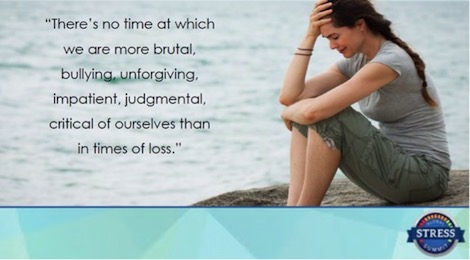
Ken Druck, PhD shares this in his interview on Courageous Living: Turning Adversity into Opportunity

There is no time at which we are more brutal, bullying, unforgiving, impatient, judgmental and critical of ourselves than in times of loss

This could be the loss of someone we love or a living loss like a divorce or break-up. He goes on to say:

It’s a teachable moment in our life to learn self-care and self-compassion. The practice of self-compassion is the basis for surviving through these hard and rough stretches in our lives

#3 Appreciation for your loved one every day

Arielle Ford shares this in her interview with her husband Brian on Positively Resilient Relationships

I try to give him 5 appreciations every day, just things that he’s doing and acknowledging them

She shares how research shows that doing it in public in front of other people wins millions more brownie points!

Arielle and Brian also share how they lighten up stressful situations with laughter and humor. I love their “Sheila” and “Wayne” tip when either of them are being too bossy (Sheila is Arielle’s mom and Wayne is Brian’s dad).

Arielle also offers these wise words: instead of being annoyed with something Brian is doing she changes the way she perceives the behavior.

It’s encore day of the Global Stress Summit so you can watch these and all the speakers today. If you haven’t already signed up you can still do so – just register here)

If you’re considering purchasing the series for your learning library be sure to do so today before the price increase. Here is the link to learn more and purchase.

I hope you enjoy them as much as I have!
Filed Under: Events, Stress Tagged With: anxiety, appreciation, Arielle Ford, global stress summit, Heidi Hanna, Karen Buxman, Ken Druck, laughter, Mirth, Self-care, stress

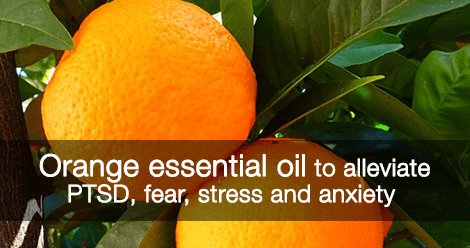
Orange essential oil to alleviate PTSD, fear, stress and anxiety

April 28, 2017 By Trudy Scott 7 Comments

Recent research finds evidence that orange essential oil reduces fear and anxiety, diminishes immune system markers of stress in mice and may help alleviate PTSD, offering a nonpharmaceutical option.

Essential oils are aromatic compounds produced naturally by plants. Orange essential oil is typically extracted from the peel of the orange fruit. People use essential oils for therapeutic purposes by diffusing them into the air, applying them to the skin or ingesting them in foods or beverages.

About 8 percent of people will develop post-traumatic stress disorder at some point in their lives, according to the U.S. Department of Veterans Affairs, yet treatments for this debilitating condition remain limited. Cassandra Moshfegh is research assistant in Paul Marvar’s laboratory at the George Washington University and she presented this research at the American Physiological Society’s annual meeting during the Experimental Biology 2017 meeting held April 22-26 in Chicago.

Relative to pharmaceuticals, essential oils are much more economical and do not have adverse side effects. The orange essential plant oil showed a significant effect on the behavioral response in our study mice. This is promising, because it shows that passively inhaling this essential oil could potentially assuage PTSD symptoms in humans.

The researchers tested the effects of passive inhalation of orange essential oil using Pavlovian Fear conditioning, a behavioral mouse model used to study the formation, storage and expression of fear memories as a model for PTSD.

Mice exposed to orange essential oil showed a significant reduction in freezing/fear behavior. They also showed significant differences in the types of immune cells present after fear conditioning. The immune system contributes to the inflammation associated with chronic stress and fear, so immune cells are a marker of the biochemical pathways involved in PTSD.

Preliminary results point to differences in the gene expression in the brain between the mice that were exposed to essential oil and those that were not, hinting at a potential mechanism to explain the behavioral results.

Moshfegh said further studies would be needed to understand the specific effects of orange essential oil in the brain and nervous system and shed light on how these effects might help to reduce fear, anxiety and stress in people with PTSD.

Experimental Biology is an annual meeting comprised of more than 14,000 scientists and exhibitors from six host societies and multiple guest societies. With a mission to share the newest scientific concepts and research findings shaping clinical advances, the meeting offers an unparalleled opportunity for exchange among scientists from across the U.S. and the world who represent dozens of scientific areas, from laboratory to translational to clinical research.

The American Physiological Society (APS) is a nonprofit organization devoted to fostering education, scientific research and dissemination of information in the physiological sciences. The Society was founded in 1887 and today represents more than 11,000 members and publishes 14 peer-reviewed journals.

Here is a link to the press release issued by Experimental Biology

Here is a link to the actual session abstract – Effects of Essential Oil on Fear Memory and the Immune Response: A Potential Alternative Therapy for Post Traumatic Stress Disorder (PSTD)

The application of orange essential oil has other supporting evidence for anxiety:

The effect of aromatherapy by essential oil of orange on anxiety during labor: A randomized clinical trial.

Aromatherapy is a noninvasive and effective method to help women overcome their anxiety during labor. Orange scent can be useful in childbirth units to help women who are experiencing stress in labor.

Effect of aromatherapy with orange essential oil on salivary cortisol and pulse rate in children during dental treatment: A randomized controlled clinical trial

It seems that the use of aromatherapy with natural essential oil of orange could reduce salivary cortisol and pulse rate due to child anxiety state.

Effect of sweet orange aroma on experimental anxiety in humans

Although more studies are needed to find out the clinical relevance of aromatherapy for anxiety disorders, the present results indicate an acute anxiolytic [anxiety-reducing] activity of sweet orange aroma, giving some scientific support to its use as a tranquilizer by aromatherapists.

Based on this we can see that essential oils have a valuable place when it comes to anxiety and stress relief and even PTSD. I do consider aromatherapy to be one of many tools of a comprehensive approach that includes dietary changes (like no gluten, no sugar, no caffeine, eating for blood sugar balance etc.) and addressing biochemical and nutritional imbalances (like low zinc, low omega-3s, alterations in cortisol and the hypothalamic-pituitary-adrenal (HPA) axis, low GABA and/or low serotonin with targeted individual amino acids, low vitamin D, dysbiosis and the microbiome etc.). Research is now showing that many of these factors may play a role in PTSD (making you more susceptible and also enhancing healing) as well as anxiety.

Have you used orange essential oil to help with your anxiety, fears or even PTSD? What is your favorite way to use it?

If you’re a practitioner do you used this essential oil with clients or patients?

Filed Under: Essential oils Tagged With: anxiety, aromatherapy, Cassandra Moshfegh, cortisol, fear, Orange essential oil, PTSD, stress

How to Reduce Stress and Anxiety by Optimizing Performance: Global Stress Summit

April 23, 2017 By Trudy Scott 2 Comments

I really enjoyed this guest expert interview with John Assaraf on the Global Stress Summit because it is so practical: Reducing Stress and Optimizing Performance. He developed some ideas based on following what really highly successful people do within time.


He shares this about time management:

And the first thing that I learned in research and study is, number one, there’s no such thing as time management. And so, that’s the first fallacy.

And what I discovered was that highly successful people really know how to organize and prioritize what they are committed to accomplishing in a day.

And this gem about prioritization:

When you shift your thinking to understanding that you cannot manage time, all you can get really, really good at is prioritizing what you do in time and when.

John shares that all your time management should evolve around your highest values and life’s priorities and then

how do you orchestrate your decisions into that framework so that you’re taking care of at least two or three of your highest values before 9 o’clock every morning. I get to do three of those before 9 o’clock every day, which means the rest of the day I can do all the other stuff.

He does work mostly with entrepreneurs and his talk is aimed at those with their own businesses and flexibility but I can see how some of it could be tweaked and also applied to anyone.

If time management is a nightmare for you and you don’t feel you have enough hours in the day then this interview is well worth tuning in to! You may just find that by applying some of the concepts that you are able to reduce your stress levels and anxiety!

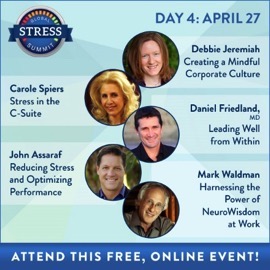
If you’d like to hear more from John Assaraf and the other fascinating speakers tune in to the Global Stress Summit, which is online from April 24 – May1, 2017

John’s inteview interview airs on day 4.

Your host, Dr. Heidi Hanna, began her expedition into the world of stress science at the early age of 12 when she began to suffer from debilitating anxiety, depression, and panic attacks. With no medical explanation, she was forced to dive into mind-body research to try to put the puzzle pieces together.

In this Global Stress Summit, Dr. Hanna interviews the very pioneering researchers and thought leaders who helped her learn how to utilize stress as a stimulus for growth rather than a trigger for burnout and breakdown, as she passionately encourages us to do the same. Here is the registration link.

Filed Under: Events Tagged With: anxiety, Dr. Heidi Hanna, global stress summit, John Assaraf, stress, Time Management

The definition of stress and why we need it: Global Stress Summit

April 12, 2017 By Trudy Scott Leave a Comment

I really enjoyed this interview between Dr. Heidi Hanna, host of the Global Stress Summit and guest expert Dr. Susan Peirce Thompson, author of Bright Line Eating: The Science of Living Happy, Thin & Free.

Dr. Heidi Hanna starts by asking what the definition of stress is, first sharing her definition:

What’s so crazy is if you look at that same textbook, depending on who wrote it, you can find a thousand different definitions for what stress actually is. And I think one of the things that you and I also, without knowing, really connect on is this idea that stress is not necessarily bad. My definition of stress is what happens when demand exceeds capacity. So that doesn’t have to be bad.

When we feel like we don’t have the resources we need to adapt appropriately, there’s a tension that exists. And that can actually help us grow. Or it can wear us out.

Dr. Susan likes this definition and I do too: “stress is what happens when demand exceeds capacity.” Dr. Susan goes on to say we actually need stress – all of the meaningful things in life come with stress (success, love, marriage etc.) – and how she can handle high stress because she keeps her support really high:

And I personally prefer to run high stress. I just do. I like activity. I like engagement. I like meaning. I like to stay active. I just do. So I’ve learned that I just need to keep my support really high.

And that makes my days really, really full. I’m an extrovert so I like a lot of human connection. And so for me, staying in touch with my friends on the phone is one of the best ways that I can manage my stress, just process it, process it, process it. Get enough sleep. I eat immaculately.

You put those things together. And you’re good to go. I can shoulder a lot of stress.

Later on in the interview Dr. Susan emphasizes the self-care aspect, to know how much you need and why it should be as automatic as brushing your teeth twice a day:

We all should be taking exquisite care of ourselves. Some of us just don’t get away with it when we don’t though, whether it’s because we’re highly sensitive or because we’re addictive.

For me, the consequences of not taking care of myself are really high. So I get the bounty of, therefore, meditating every morning and hopefully getting a good night’s sleep and having a wonderful support network.

But it’s definitely worth it to know what kind of person you are and to build up your self-care regimen accordingly, for sure.

….You want to be executing your self-care habits like you brush your teeth.

Dr. Susan also covers the stress and sugar addiction connections and how some of us have brains that are susceptible to the addictive pull of sugar and how some of us have brains that are just not affected.

And as a society, we need to understand. Sugar is more addictive than nicotine, more addictive than cocaine.

She shares interesting information about how a third of the population will say “Oh yeah. I don’t think that’s true. I can take a cookie or leave it alone” because that’s the percentage that doesn’t experience that addictive pull at all. And how two-thirds of the population do experience that addictive pull – there are one third who experience it mildly and then the other third find the addictive pull of sugar and carbs to be very severe.

If you’d like to hear more from Dr. Susan Peirce Thompson, tune in to the Global Stress Summit, which is online from April 24 – May1, 2017

Your host, Dr. Heidi Hanna, began her expedition into the world of stress science at the early age of 12 when she began to suffer from debilitating anxiety, depression, and panic attacks. With no medical explanation, she was forced to dive into mind-body research to try to put the puzzle pieces together. In this Global Stress Summit, Dr. Hanna interviews the very pioneering researchers and thought leaders who helped her learn how to utilize stress as a stimulus for growth rather than a trigger for burnout and breakdown, as she passionately encourages us to do the same. Here is the registration link.

Filed Under: Events, Stress Tagged With: Bright Line Eating, Dr. Heidi Hanna, Dr. Susan Peirce Thompson, global stress summit, stress, Sugar addiction

Why green spaces in cities are good for grey matter, stress and anxiety

April 12, 2017 By Trudy Scott 2 Comments

Central Park in New York City

I love all research that support green space and nature for anxiety and stress reduction. And I’m thrilled to see this taking a front seat in cities where people often have less access to greenery!   A great example is the beautiful   Central Park in New York City.

New research is reviewed in this report in Science Daily: Why green spaces in cities are good for grey matter

Walking between busy urban environments and green spaces triggers changes in levels of excitement, engagement and frustration in the brain, a study of older people has found.

Researchers at the Universities of York and Edinburgh say the findings have important implications for architects, planners and health professionals as we deal with an aging population.

The volunteers experienced beneficial effects of green space and preferred it, as it was calming and quieter, the study revealed.

Dr Chris Neale, Research Fellow, from the University of York’s Stockholm Environment Institute, said: “There are concerns about mental wellbeing as the global population becomes older and more urbanised.”

“Urban green space has a role to play in contributing to a supportive city environment for older people through mediating the stress induced by built up settings.”

You can read the study abstract here – Older People’s Experiences of Mobility and Mood in an Urban Environment: A Mixed Methods Approach Using Electroencephalography (EEG) and Interviews.

Personally I need greenery and nature and thrive on it!

How important is greenery for you? Especially if you’re a city person?

Filed Under: Antianxiety, Environment, Nature, Stress Tagged With: anxiety, calming, green spaces, greenery, grey matter, nature, parks, stress

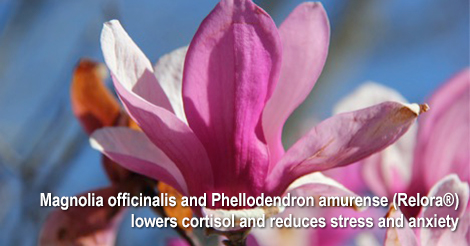
Magnolia officinalis and Phellodendron amurense (Relora®) lowers cortisol and reduces stress and anxiety

November 11, 2016 By Trudy Scott 19 Comments

magnolia

I recently blogged about the Seriphos reformulation: Seriphos has been reformulated – what do I use to lower high cortisol? and promised to share additional products that could provide similar benefits. When someone in my community shared that she uses Relora® with success I started to look at the research and I am very encouraged.

This 2013 study: Effect of Magnolia officinalis and Phellodendron amurense (Relora®) on cortisol and psychological mood state in moderately stressed subjects

assessed salivary cortisol exposure and psychological mood state in 56 subjects (35 men and 21 women) screened for moderate stress and supplemented with a standardized/patented MP [Magnolia bark extract and Phellodendron bark extract] combination (Relora®, Next Pharmaceuticals) or placebo for 4 weeks.

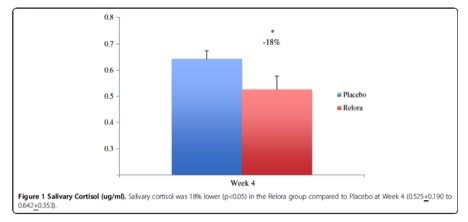
After 4 weeks of supplementation (500 mg /day, with 250 mg at breakfast and 250mg at dinner) these were the results seen in the Relora® group (compared to the placebo group):

  • salivary cortisol exposure was significantly lower (18%)
  • lower overall stress (11%)
  • lower tension (13%)
  • less depression (20%)
  • less anger (42%)
  • less fatigue (31%),
  • less confusion (27%)
  • and significantly better mood state parameters (11%) and vigor (18%)

relora-effect-chart (table from Effect of Magnolia officinalis and Phellodendron amurense (Relora®) on cortisol and psychological mood state in moderately stressed subjects)

Each of the components in Relora® have been shown to be beneficial for controlling stress and anxiety, with the combination proving to be even more effective:

Extracts of Magnolia officinalis bark and its active constituent, honokiol, have been studied in animal models with comparable anxiolytic activity to diazepam (a benzodiazepine anxiolytic used to treat anxiety), but without associated side effects such as sedation.

Berberine, a constituent of the Phellodendron extract, has also demonstrated a significant anxiolytic effect in rodent stress studies.

The combination of magnolia plus phellodendron appears to be even more effective in controlling stress/anxiety compared to either herb used separately.

The study concluded that:

daily supplementation with a combination of Magnolia bark extract and Phellodendron bark extract (Relora®) reduces cortisol exposure and perceived daily stress, while improving a variety of mood state parameters, including lower fatigue and higher vigor.

These results suggest an effective natural approach to modulating the detrimental health effects of chronic stress in moderately stressed adults.

An added bonus is that there were no adverse events or side effects reported.

I’d like to note that the study does report that it was funded by the manufacturer of Relora® (Next Pharmaceuticals) and conducted by SupplementWatch.

A related study, also funded by the manufacturer: Effect of a proprietary Magnolia and Phellodendron extract on stress levels in healthy women: a pilot, double-blind, placebo-controlled clinical trial indicated that

Relora may offer some relief for premenopausal women experiencing mild transitory anxiety.

In this study, the participants used 250mg Relora® 3 times daily for 6 weeks and although mild anxiety was reduced, no changes were observed in cortisol levels. Clearly more research is needed and as with any nutrient, there will be the fact that you may benefit from it and someone else may not.

I’m encouraged enough by the research to begin recommending this product for high cortisol and the anxiety caused by the high cortisol. This will of course be done in conjunction with all the other approaches I use: real whole food, quality animal protein, eat to control blood sugar, no gluten/sugar/caffeine, addressing gut health, using GABA/tryptophan and the other amino acids as needed and addressing low levels of zinc, vitamin B6, vitamin D, iron if necessary. Additional adrenal support would include extra vitamin C and pantothenic acid, a B complex and possibly rhodiola.

Have you used Relora® with success either personally or with clients/patients? Has it lowered salivary cortisol levels? Has it helped with stress and anxiety?

If you had been using Seriphos to help lower high cortisol and reduce stress and anxiety, and decide to use Relora® please let us know how effective it is for you.


Update November 18, 2016: I emailed Interplexus asking if they will be bringing back the original Seriphos formula and received this message from them:

Yes, the information is correct we will be returning the previous formula of Seriphos and are expecting to have it late November, unfortunately we do not have a completion date as of yet so the estimated time frame is not a guarantee. It will be the same formula as before and we will also manufacture a Phosphatidylserine standalone product in the future. If you have further questions or concerns feel free to contact, and you’re also welcome to check on the status of Seriphos periodically.

Update January 20, 2017: Seriphos Original Formula is back and you can read more about it here 


Filed Under: Antianxiety Tagged With: adrenal, anxiety, depression, Magnolia officinalis, Phellodendron amurense, Relora, seriphos, stress, tension

  • « Go to Previous Page
  • Page 1
  • Interim pages omitted …
  • Page 6
  • Page 7
  • Page 8
  • Page 9
  • Page 10
  • Page 11
  • Go to Next Page »

Primary Sidebar

GABA QuickStart Homestudy

gaba quickstart homestudy

Free Report

9 Great Questions Women Ask about Food, Mood and their Health

You'll also receive a complimentary subscription to my ezine "Food, Mood and Gal Stuff"


Connect with me

Popular Posts

  • Amino Acids Mood Questionnaire from The Antianxiety Food Solution
  • The Antianxiety Food Solution Amino Acid and Pyroluria Supplements
  • Pyroluria Questionnaire from The Antianxiety Food Solution
  • Collagen and gelatin lower serotonin: does this increase your anxiety and depression?
  • Tryptophan for the worry-in-your-head and ruminating type of anxiety
  • GABA for the physical-tension and stiff-and-tense-muscles type of anxiety
  • The Antianxiety Food Solution by Trudy Scott
  • Seriphos Original Formula is back: the best product for anxiety and insomnia caused by high cortisol
  • Am I an anxious introvert because of low zinc and vitamin B6? My response to Huffington Post blog
  • Vagus nerve rehab with GABA, breathing, humming, gargling and key nutrients

Recent Posts

  • Her cravings for chips and peanut butter were triggered by stress: GABA ends cravings and reduces physical tension and fear of heights
  • It is truly miraculous to be able to move through life without crippling anxiety and panic
  • GABA and tryptophan combo provide immediate and noticeable relief for tremors and cervical dystonia in just 7 days
  • Red light therapy for back and neck pain, plantar fasciitis and low mood – a complement to the amino acids GABA, DPA and tryptophan
  • What do I use instead of Seriphos to help lower high cortisol that is affecting my sleep and making me anxious at night?

Categories

  • 5-HTP
  • AB575
  • Addiction
  • ADHD
  • Adrenals
  • Alcohol
  • Allergies
  • Alzheimer's disease
  • Amino Acids
  • Anger
  • Antianxiety
  • Antianxiety Food Solution
  • Antidepressants
  • Anxiety
  • Anxiety and panic
  • Autism
  • Autoimmunity
  • benzodiazapines
  • Bipolar disorder
  • Books
  • Caffeine
  • Cancer
  • Candida
  • Children/Teens
  • Collagen
  • Cooking equipment
  • Coronavirus/COVID-19
  • Cravings
  • Depression
  • Detoxification
  • Diabetes
  • Diet
  • DPA/DLPA
  • Drugs
  • EFT/Tapping
  • EMF
  • EMFs
  • Emotional Eating
  • Endorphins
  • Environment
  • Essential oils
  • Events
  • Exercise
  • Fear
  • Fear of public speaking
  • Fertility and Pregnancy
  • Fish
  • Food
  • Food and mood
  • Functional neurology
  • GABA
  • Gene polymorphisms
  • General Health
  • Giving
  • Giving back
  • Glutamine
  • Gluten
  • GMOs
  • Gratitude
  • Gut health
  • Heart health/hypertension
  • Histamine
  • Hormone
  • Hyperparathyroidism
  • Hypoglycemia
  • Immune system
  • Inflammation
  • Insomnia
  • Inspiration
  • Introversion
  • Joy and happiness
  • Ketogenic diet
  • Lithium orotate
  • Looking awesome
  • Lyme disease and co-infections
  • MCAS/histamine
  • Medication
  • Men's health
  • Mental health
  • Mercury
  • Migraine
  • Mold
  • Movie
  • MTHFR
  • Multiple sclerosis
  • Music
  • NANP
  • Nature
  • Nutritional Psychiatry
  • OCD
  • Osteoporosis
  • Oxalates
  • Oxytocin
  • Pain
  • Paleo
  • Parasites
  • Parkinson’s disease
  • PCOS
  • People
  • PMS
  • Postpartum
  • PTSD/Trauma
  • Pyroluria
  • Questionnaires
  • Real whole food
  • Recipes
  • Research
  • Schizophrenia
  • serotonin
  • SIBO
  • Sleep
  • Special diets
  • Sports nutrition
  • Stress
  • Sugar addiction
  • Sugar and mood
  • Supplements
  • Teens
  • Testimonials
  • Testing
  • The Anxiety Summit
  • The Anxiety Summit 2
  • The Anxiety Summit 3
  • The Anxiety Summit 4
  • The Anxiety Summit 5
  • The Anxiety Summit 6
  • Thyroid
  • Thyroid health
  • Toxins
  • Tryptophan
  • Tyrosine
  • Uncategorized
  • Vegan/vegetarian
  • Women's health
  • Yoga

Archives

  • May 2026
  • April 2026
  • October 2025
  • September 2025
  • August 2025
  • July 2025
  • June 2025
  • May 2025
  • April 2025
  • March 2025
  • February 2025
  • January 2025
  • November 2024
  • October 2024
  • September 2024
  • August 2024
  • July 2024
  • June 2024
  • May 2024
  • April 2024
  • March 2024
  • February 2024
  • January 2024
  • December 2023
  • November 2023
  • October 2023
  • September 2023
  • August 2023
  • July 2023
  • June 2023
  • May 2023
  • April 2023
  • March 2023
  • February 2023
  • January 2023
  • December 2022
  • November 2022
  • October 2022
  • September 2022
  • August 2022
  • July 2022
  • June 2022
  • May 2022
  • April 2022
  • March 2022
  • February 2022
  • January 2022
  • December 2021
  • November 2021
  • October 2021
  • September 2021
  • August 2021
  • July 2021
  • June 2021
  • May 2021
  • April 2021
  • March 2021
  • February 2021
  • January 2021
  • December 2020
  • November 2020
  • October 2020
  • September 2020
  • August 2020
  • July 2020
  • June 2020
  • May 2020
  • April 2020
  • March 2020
  • February 2020
  • January 2020
  • December 2019
  • November 2019
  • October 2019
  • September 2019
  • August 2019
  • July 2019
  • June 2019
  • May 2019
  • April 2019
  • March 2019
  • February 2019
  • January 2019
  • December 2018
  • November 2018
  • October 2018
  • September 2018
  • August 2018
  • July 2018
  • June 2018
  • May 2018
  • April 2018
  • March 2018
  • February 2018
  • January 2018
  • December 2017
  • November 2017
  • October 2017
  • September 2017
  • August 2017
  • July 2017
  • June 2017
  • May 2017
  • April 2017
  • March 2017
  • February 2017
  • January 2017
  • December 2016
  • November 2016
  • October 2016
  • September 2016
  • August 2016
  • July 2016
  • June 2016
  • May 2016
  • April 2016
  • March 2016
  • February 2016
  • January 2016
  • December 2015
  • November 2015
  • October 2015
  • September 2015
  • August 2015
  • July 2015
  • June 2015
  • May 2015
  • April 2015
  • March 2015
  • February 2015
  • January 2015
  • December 2014
  • November 2014
  • October 2014
  • September 2014
  • August 2014
  • July 2014
  • June 2014
  • May 2014
  • April 2014
  • March 2014
  • February 2014
  • January 2014
  • December 2013
  • November 2013
  • October 2013
  • September 2013
  • August 2013
  • July 2013
  • June 2013
  • May 2013
  • April 2013
  • March 2013
  • February 2013
  • January 2013
  • December 2012
  • November 2012
  • October 2012
  • August 2012
  • July 2012
  • June 2012
  • May 2012
  • April 2012
  • March 2012
  • February 2012
  • January 2012
  • December 2011
  • November 2011
  • October 2011
  • September 2011
  • August 2011
  • July 2011
  • June 2011
  • May 2011
  • April 2011
  • March 2011
  • February 2011
  • January 2011
  • December 2010
  • October 2010
  • September 2010
  • July 2010
  • May 2010
  • April 2010
  • March 2010
  • February 2010
  • January 2010
  • November 2009

Share the knowledge!

The above statements have not been evaluated by the Food and Drug Administration. Products listed in this website are not intended to diagnose, treat, cure or prevent any disease.

The information provided on this site is for informational and educational purposes only and is not intended as a substitute for advice from your physician or other health care professional. You should consult with a healthcare professional before starting or modifying any diet, exercise, or supplementation program, before taking or stopping any medication, or if you have or suspect you may have a health problem.


Copyright © 2026 Trudy Scott. All Rights Reserved. | Privacy | Terms and Conditions | Refund Policy | Medical Disclaimer

Free Report

9 Great Questions Women Ask about Food, Mood and their Health

You’ll also receive a complimentary subscription to my ezine “Food, Mood and Gal Stuff”