• Skip to primary navigation
  • Skip to main content
  • Skip to primary sidebar

everywomanover29 blog

Food, Mood and Women's Health – Be your healthiest, look and feel great!

  • Blog
  • About
  • Services
  • Store
  • Resources
  • Testimonials
  • The Book
  • Newsletter
  • Contact
  • Search this site

stress

GABA helps a stressed young boy with episodes of “choking” or tightening in his throat

December 25, 2020 By Trudy Scott 34 Comments

gaba throat relief

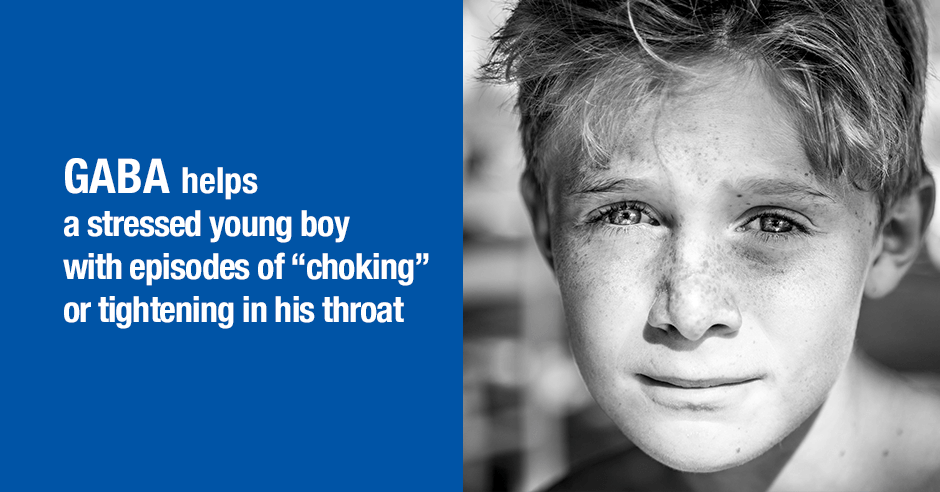
Earlier this year I blogged about how the calming amino acid GABA is often a solution for both anxiety and globus pharyngeus (lump in the throat) and a mom shared this about her son’s episodes of “choking” or tightening in his throat (to the point that he cannot swallow), especially when school stress gets high:

My son, (8 y.o.) has a history of public school use of physical aversion intervention for behaviors that result from a significant language impairment often reports “choking” or tightening in his throat to the point that he cannot swallow. When school stress gets high, he ceases to swallow his saliva which creates a long period of “spitting” out substances including food and natural spit as he is fearful of “choking” to death. During panic attacks he immediately reports “choking” which furthers his panic. You are the first practitioner I have come across that has explained the relationship between globus pharyngeus, stress reaction and low GABA levels. I always felt his throat tightening (involuntary muscle response) was a stress response but was not aware of it’s connection to GABA levels. Thank you for this informative piece!

I voiced my concern for what her son was going through and how I can’t imagine how scary it must be for someone his age, asking her to keep us updated on his progress.

And just over a month later she reported the success her son was having with GABA:

We started a GABA supplement which has positively impacted my son. While he still struggles with hypersalivation when in distress or anxious, his self-reports of feeling like he is “choking” or his throat is closing, has not been present since GABA has been started. We are about a month in and I am inspired that we will continue to have progress. I have been referring to your work as a source to everyone I know that struggles with anxiety. Thank you for all that you do from a very grateful parent.

What wonderful results for her son! Getting feedback like this warms my heart and I appreciate her for sharing so I can share here.

I did ask what GABA product he was using, how much/how often he uses it and how quickly he noticed an improvement but did not hear back. My recommendation is 125mg to start for adults and less for children and I like the GABA Calm product as it’s a sublingual form and easy to use for kids.

I also commented on the fact that he still has “hypersalivation when in distress or anxious.” I would focus on trying to reduce the anxiety with higher doses of GABA and also consider addressing low serotonin because of the anxiety, panic attacks and being “fearful of “choking” to death”.

The anxiety could trigger hypersalivation but the hypersalivation could also be as a result of a food sensitivity like gluten or dairy. Both these and other food sensitivities could also contribute to low GABA/low serotonin and be a trigger for anxiety.

Of course, bullying at school should always be considered and so should the social anxiety condition pyroluria, speech therapy, gut health and vagus nerve support.

Could this be a case of laryngopharyngeal reflux (LPR)?

I always like to try and connect the dots and wonder if this could be a case of laryngopharyngeal reflux (LPR)?  I don’t know but it’s possible. This paper, Laryngopharyngeal reflux: A confounding cause of aerodigestive dysfunction, states that LPR is “defined by the retrograde passage of gastric contents beyond the upper oesophageal sphincter, with contamination of the larynx, pharynx and lungs” and states that “half of the laryngeal complaints referred to ear, nose and throat (ENT) services are ultimately diagnosed as LPR.

It also mentions globus pharyngeus and dysphagia (which is difficulty swallowing), sharing that changes in pH suggest reflux occurs in “50% of patients with hoarseness, 64% with globus, 55% with chronic cough and 35% with dysphagia.”

This same paper reports that “30% of patients with LPR-like symptoms report anxiety, compared with 6% of healthy controls.”

Prevalence of reflux disease in children and LPR symptoms by age

This paper, Laryngopharyngeal Reflux Disease in Children, reports that “Although the exact prevalence is unknown, it is estimated that nearly 1 in 5 children likely suffers from reflux disease.” This 1 in 5 number is for both GERD (gastroesophageal reflux disease) and LPR.

The authors also share that it usually presents with a different set of symptoms depending on age:

  • Infants typically present with regurgitation, vomiting, dysphagia [difficulty swallowing], anorexia, failure to thrive, apnea, recurrent croup, laryngomalacia [softening of the laryngeal structure], subglottic stenosis [narrowing of the airway], or chronic respiratory issues.
  • School-age children tend to demonstrate chronic cough, dyspnea [shortness of breath], dysphonia [hoarseness], persistent sore throat, halitosis [bad breath], and globus sensation.
  • Older children may also complain of regurgitation, heartburn, vomiting, nausea, or have chronic respiratory issues.

Low levels of GABA, a calming neurotransmitter

In case you’re new to GABA: low levels of GABA, a calming neurotransmitter can lead to anxiety, fears and panic attacks. With low GABA, the anxiety is a physical kind of anxiety with muscle tension or muscle spasms. Low GABA may be one possible root cause of globus pharyngeus, which leads to a rather scary golf-ball-like lump or constriction in the throat – or as this young boy describes, episodes of “choking” or tightening in his throat.

The amino acid GABA raises GABA levels and in this instance helps ease this tightening, choking or throat muscle spasms.

To be clear, there is no research (yet) on the use of the amino acid GABA for these types of symptoms, however in one study gabapentin was compared to baclofen for the treatment of gastro-oesophageal reflux-induced chronic cough and in another study there were improvements with both proton pump inhibitors and gabapentin for globus pharyngeus. If GABA works I’m all for it, rather than these  medications, which do have a long list of side-effects.

Has your child been diagnosed with globus pharyngeus or laryngopharyngeal reflux disease?

Have you observed episodes like this in your child, personally or with clients/patients and has GABA helped?

Have you found other contributing factors like low serotonin, food sensitivities, gut issues, vagus nerve issues or pyroluria?

Feel free to post your questions here on the blog too.
Filed Under: Anxiety, Children/Teens, GABA Tagged With: anxiety, anxious, calming, choking, episodes of choking, GABA, GERD, globus pharyngeus, hypersalivation, laryngopharyngeal reflux, LPR, lump in the throat, reflux, serotonin, stress, stressed, throat tightening, tightening in his throat

GABA and theanine for easing anxiety, improving sleep and supporting immunity

March 20, 2020 By Trudy Scott 86 Comments

gaba theanine

Stress and anxiety suppresses immunity and so does poor sleep. One root cause of anxiety and poor sleep can be low GABA (gamma-aminobutyric acid) levels.  When you boost low levels of GABA (the neurotransmitter) with the amino acid GABA (it has the same name as the neurotransmitter) or theanine (another amino acid), you feel calmer and you sleep better, and you indirectly support your immune function too. We also have research that directly supports the role that GABA and theanine may play when it comes to improving immune function.

This paper, Psychological Stress, Immunity, and the Effects on Indigenous Microflora, describes the field of PsychoNeuroImmunology which

has clearly demonstrated that the physiological response to psychological stressors can dramatically impact the functioning of the immune system, thus identifying one way in which susceptibility to or severity of diseases are exacerbated during stressful periods.

It’s important that we keep all this in mind as we deal with the coronavirus pandemic and during other times when we may be exposed to infections.

The authors also share that psychological stressors impact the microbiome contributing to increases in markers of inflammation even when there is no infection. As you may recall from the recent Anxiety Summit 5: Gut-Brain Axis there is a bidirectional communication between the gut and the brain, with poor gut health having a direct impact on anxiety levels.

The sleep-immunity connection

Here is some of the research supporting the sleep and immunity connection:

  • The Bidirectional Relationship between Sleep and Immunity against Infections

Sleep is considered an important modulator of the immune response. Thus, a lack of sleep can weaken immunity, increasing organism susceptibility to infection.

  • Short- and long-term health consequences of sleep disruption

Sleep abnormalities affect immune function in a reciprocal manner, leading to changes in proinflammatory cytokines, such as tumor necrosis factor, interleukins 1 and 6, and C-reactive protein. The multitude of systems that react to sleep loss suggest effects beyond the central nervous system and include total body functioning.

The GABA and theanine anxiety-immunity connection

Here is some of the research supporting the more direct role GABA and theanine may play when it comes to immune function (and act as a relaxant and anti-stress nutrient at the same time):

  • Relaxation and immunity enhancement effects of gamma-aminobutyric acid (GABA) administration in humans

GABA could work effectively as a natural relaxant and its effects could be seen within 1 hour of its administration to induce relaxation and diminish anxiety. Moreover, GABA administration could enhance immunity under stress conditions.

  • L-Theanine as a Functional Food Additive: Its Role in Disease Prevention and Health Promotion

A number of recent studies have suggested that theanine administration can improve the body’s immune system….one particular study highlighted the use of theanine as an intervention to decrease the incidence of upper respiratory tract infection symptoms via enhancing gamma and delta T-lymphocyte function.

The authors cite one study where “administration of 200 mg theanine was found to have an “anti-stress” effect on pharmacy students” and “regulate dopamine and serotonin levels in the brain through the release of the inhibitory neurotransmitter GABA.”

The  low GABA type of anxiety

When you have the  low GABA type of anxiety you’ll feel physically tense and overwhelmed, fearful and not be sleeping well. You may lie in bed stiff and tense and may also have unwanted thoughts and experience monkey-mind. It’s common to self-medicate with alcohol to stay calm or you may also use carbs to relax. When you use the amino acid supplement GABA, you get quick and very effective relief – when it’s used sublingually.

Already using GABA/theanine or have used it in the past?

If you are already using GABA or theanine you may find you need extra during this time of added stress.  You don’t want to make the mistake of thinking “This is serious, I need to double-up.” The best approach is to monitor your low GABA symptoms and consider using an extra dose during the day or possibly more at night or possibly more at each dose. Use the trial method to monitor your response.

Someone in my facebook community said she was conserving her GABA and noticed her anxiety was creeping back up. Now is not the time to cut back on GABA.

If you’ve found benefit from GABA or theanine in the past but are not currently using it you may very likely feel the need for the additional support right now.

New to low GABA anxiety symptoms and using GABA/theanine?

If you suspect low GABA symptoms and are new to using the amino acids and do not have my book I highly recommend getting it and reading it before jumping in to taking supplements: The Antianxiety Food Solution – How the Foods You Eat Can Help You Calm Your Anxious Mind, Improve Your Mood, and End Cravings. (get it out of the library if you’re watching your expenses.)

There is a complete chapter on the amino acids and one for pyroluria, plus information on real whole food, sugar and blood sugar, gluten, digestion and much more.  If you’re not a reader there is now also an audible version.

Here is the Amino Acids Mood Questionnaire from The Antianxiety Food Solution and additional information on Anxiety and targeted individual amino acid supplements: a summary

Please also read and follow these Amino Acid Precautions.

This lists The Antianxiety Food Solution Amino Acid and Pyroluria Supplements that I use with my individual clients and those in my group programs.

In summary, anxiety and sleep deprivation are not good for your immunity, and theanine and GABA can ease anxiety, improve sleep AND enhance immunity.

Please share your experiences with GABA and theanine and feel free to ask questions. Let us know if you were aware of the connections to immune function and if you’ve noticed your immune system is stronger when using GABA or theanine?

Filed Under: Anxiety Tagged With: anxiety, Coronavirus, GABA, immune function; questionnaire, immune system, immunity, microbiome, psychological stressors, Psychoneuroimmunology, serotonin, sleep, stress, theanine

Theanine for easing stress and anxiety, and improving cognition and sleep in healthy adults

January 24, 2020 By Trudy Scott 46 Comments

theanine for anxiety

L-Theanine is a “unique non-protein amino acid found in green tea” which according to the study below, has shown benefits when used short-term or acutely as a supplement for it’s anti-stress effects, reducing anxiety, improving sleep quality, improving cognition and even easing depression.

This 2019 study, Effects of L-Theanine Administration on Stress-Related Symptoms and Cognitive Functions in Healthy Adults: A Randomized Controlled Trial, aimed to examine the effects of four weeks use of l-theanine:

on stress-related symptoms and cognitive functions in healthy adults. Participants were 30 individuals (nine men and 21 women; aged 20-69) who had no major psychiatric illness.

The trial was randomized, placebo-controlled, crossover, and double-blind.

L-theanine (200 mg/day of Suntheanine), was used by study participants before going to bed each night and was used for four-weeks.

Study participants who used the theanine for two weeks observed the following:

  • For sleep: Reductions in sleep latency (the amount of time it takes to fall asleep), sleep disturbance and less use of sleep medication
  • For cognitive function: Improvements in verbal fluency (especially letter fluency) and improvements in executive function (planning, multi-tasking etc)

The Japanese versions of The Self-rating Depression Scale, State-Trait Anxiety Inventory-trait, and Pittsburgh Sleep Quality Index (PSQI) scores decreased and the study concludes as follows:

Our findings suggest that L-theanine has the potential to promote mental health in the general population with stress-related ailments and cognitive impairments.

The authors also note that “there were no significant adverse events, demonstrating the safety of four weeks of L-theanine administration.”

As expected, the participants saw increases in serum theanine concentrations.

Some of the reported possible mechanisms of action

Here are some of the reported possible mechanisms of action of theanine from some studies referenced in his paper:

  • via glutamate receptors (improving cognitive dysfunction)
  • as a neuroprotective agent and “increases in brain serotonin, dopamine, GABA levels” (improving mood and focus and reducing anxiety)
  • enhances hippocampal activity (the hippocampus has a major role in learning and memory)
  • via a proposed increase in the expression of brain-derived neurotrophic factor (BDNF) in the hippocampus (BDNF is a protein implicated in the stress response, long-term memory, Alzheimer’s disease, and psychiatric disorders)

Impacts on cortisol levels?

What is unusual and inconsistent with previous studies, is the fact that there was “no significant effect on cortisol or immunoglobulin A levels in the saliva or serum.”  The authors report that “the reduction of salivary cortisol and immunoglobulin A levels may be a short term, recoverable effect of L-theanine administration.”  

Update Sept 2025:

In this 2021 paper, A Randomized, Triple-Blind, Placebo-Controlled, Crossover Study to Investigate the Efficacy of a Single Dose of AlphaWave®l-Theanine on Stress in a Healthy Adult Population “there was a significant reduction in salivary cortisol with a single dose of AlphaWave® l-Theanine relative to the placebo, immediately following the stress-inducing task 1 h post-dose.”

In other words, within an hour of taking AlphaWave l-theanine, cortisol levels were lower. This paper also mentions that in a previous study, cortisol levels were only lower 3 hours after taking theanine.

Suntheanine and AlphaWave are different theanine products, each produced by their own  proprietary manufacturing process. There are a number of other l-theanine products/manufacturing processes and this may explain why some individuals do well on some theanine products and not others, and why impacts on cortisol levels may vary.

Theanine or GABA – which one to use when?

I typically start my clients with a trial of GABA Calm for low GABA symptoms like physical tension, stress and overwhelm, panic attacks and insomnia. If we are not getting all the expected benefits with GABA and there is a need for added cognitive benefits then we’ll consider adding theanine too. Some folks find one works better than the other and some like a combination (at the same time or theanine in the day/GABA at night or GABA in the day/theanine at night).

I recently reached out on facebook asking:

“Theanine or GABA? Which do you prefer for anxiety and why? How much helps? And any other benefits (like reduced body pain, better thinking/cognition, easing IBS (irritable bowel syndrome) and gut pain, reduced cravings, less negative self-talk etc)? Or do you like a combination of both?”

As you can see from these varied responses it’s a matter or trialing both to find what works for each person’s unique needs:

  • Lorraine shared this: “They are both good, but I reach for GABA Calm first.. 2 or 3 lozenges. If anxiety doesn’t leave quickly with GABA ( which works well for a panic attack), and I continue to have anxiety humming along in the background, then I’ll reach for theanine.”
  • Jackie shared this: “I take 200mg theanine in morning, then 100mg GABA around 4pm, when the kids get home from school. I had a panic attack in the middle of the night last week, took GABA 100 mg, then seemed to calm down.” I asked if theanine gives her a feeling of calm focus and she said: “yes, I think so. I noticed if I take 200mg of GABA, it makes me drowsy.”
  • Evelyn shared this: “I use both at night for sleep. If I could only use one it would be l-theanine.” Theanine is more consistently helpful for stress reduction and sleep for me. I use 200mg. When I use GABA it’s 500mg of chewables.”
  • Sara shared this: “GABA during the day, theanine at night.”
  • Karine shared this: “GABA!! The Source Naturals Theanine Serene with Holy Basil is really good. But GABA Calm (also Source Naturals which is a sublingual lozenge) is the only thing for a severe issue/episode and helps me concentrate right before an important presentation at work etc. Pure GABA from any supplier is good for long periods where you need a boost or to tone down general anxiety. I also bought a probiotic that also includes GABA (Jarrodophilus Mood) and notice it improves digestion too.”

Some of my top GABA/theanine products

You can find my favorite GABA/theanine combination product, a theanine-only product and my most popular GABA products on the supplements blog here (and with details for how to set up an account for my online store)

Nutritional Fundamentals for Health GABA-T SAP: 300mg GABA, 150mg theanine. This is pleasant-tasting when opened on to the tongue and works very well when GABA Calm can’t be used.

Pure Encapsulations L-Theanine: 200mg theanine. This is also pleasant-tasting when opened on to the tongue. Unlike like GABA, it can also be swallowed.

Source Naturals GABA Calm. This is a pleasant-tasting sublingual product that is my most popular and most effective form of GABA I use with my clients. It can be used in conjunction with theanine.

Enzymatic Therapy GABA: 250 mg GABA. This is also pleasant-tasting when opened on to the tongue and works very well when GABA Calm can’t be used. It can also be used in conjunction with theanine.

BeSerene IR (instant relief): a topical GABA/theanine cream which can be used in conjunction with other GABA and theanine products or instead of them.

Additional resources when you are new to using GABA or theanine and other amino acids as supplements

We use the symptoms questionnaire to figure out if low serotonin or low GABA or low dopamine or other neurotransmitter imbalances may be an issue for you.

If you suspect low levels of any of the neurotransmitters and do not yet have my book, The Antianxiety Food Solution – How the Foods You Eat Can Help You Calm Your Anxious Mind, Improve Your Mood, and End Cravings. I highly recommend getting it and reading it before jumping in and using amino acids on your own so you are knowledgeable. And be sure to share it with the practitioner/health team you or your loved one is working with.

There is an entire chapter on the amino acids and they are discussed throughout the book in the sections on gut health, gluten, blood sugar control (this is covered in an entire chapter too), sugar cravings, anxiety and mood issues. The importance of quality animal protein and healthy fats is also covered.

The book doesn’t include product names (per the publisher’s request) so this blog, The Antianxiety Food Solution Amino Acid and Pyroluria Supplements, lists the amino acids that I use with my individual clients and those in my group programs.

If, after reading this blog and my book, you don’t feel comfortable figuring things out on your own (i.e. doing the symptoms questionnaire and respective amino acids trials), a good place to get help is the GABA QuickStart Program (if you have low GABA symptoms too). This is a paid online/virtual group program where you get my guidance and community support.

If you need serotonin support, the Serotonin QuickStart Program is a good place to get help. This is also a paid online/virtual group program where you get my guidance on using tryptophan and 5-HTP safely, and community support during 5 LIVE Q&A calls. You can sign up to be notified when the next live launch of this program is happening.

If you are a practitioner, join us in The Balancing Neurotransmitters: the Fundamentals program. This is also a paid online/virtual program with an opportunity to interact with me and other practitioners who are also using the amino acids.

Now I’d love to hear from you

Please let us know … theanine or GABA: which do you prefer for anxiety and why? How much helps? And any other benefits (like reduced body pain, better thinking/cognition, easing IBS gut pain, reduced cravings, less negative self-talk etc)? Or do you like a combination of both?”

Feel free to share and ask your questions below.

Filed Under: Amino Acids Tagged With: adults, anxiety, BDNF, cognition, cognitive function, GABA, GABA Calm, panic attack, sleep, stress, theanine

Increased sociability improves vagus nerve function: the role of social anxiety, pyroluria and low zinc

December 13, 2019 By Trudy Scott 43 Comments

increased sociability and vagus nerve

With the objective of taking a deeper dive into some of the favorite topics of the recent Anxiety Summit: Gut-Brain Axis, today’s blog is about the vagus nerve since Dr. Navaz Habib’s interview, Vagus Nerve Activation to Reduce Anxiety, was voted one of the favorites. I’m focusing on one tool that improves vagus nerve function that we didn’t have time to get into in great detail – and that is how increased sociability helps.  It’s all good and well to recommend getting out and hanging out with more people but if you have the social anxiety condition called pyroluria it’s really challenging, hard work and very stressful. Added stress makes pyroluria worse so it becomes a vicious cycle.

Let’s start with the research that supports the connection between the vagus nerve and increased anxiety and mood problems.  In the interview with Dr Navaz, we discussed this paper: Vagus Nerve as Modulator of the Brain–Gut Axis in Psychiatric and Inflammatory Disorders which states that “vagus nerve stimulation is a promising add-on treatment for treatment-refractory depression, posttraumatic stress disorder, and inflammatory bowel disease” and how stimulation of vagal fibers that go from the gut to the brain (afferent fibers) influences neurotransmitter production and “play crucial roles in major psychiatric conditions, such as mood and anxiety disorders.”  The gut bacteria play a major role too, “partly by affecting the activity of the vagus nerve.”

In our interview we end with very practical ways to activate your vagus nerve

  • Deep breathing exercises (mentioned in the above paper, together with yoga and meditation) and cold showers (which makes you breathe harder)
  • Gargling and using the gag reflex
  • Humming, chanting and singing (I used these approaches for my vagus nerve issue after my terrifying plane ride. GABA also helped with the voice/throat spasms I experienced – more here on that)
  • Auricular acupuncture (which is also very effective for addictions)
  • And finally, social interaction or increased sociability, which I want to cover today

The research on the vagus nerve and being more social

Let’s look at the research on the vagus nerve or vagal tone and being more social.  This paper, Upward spirals of the heart: autonomic flexibility, as indexed by vagal tone, reciprocally and prospectively predicts positive emotions and social connectedness, reports that that vagal tone and connectedness or being more social is a two-way street i.e. it’s reciprocal

  • “…increases in connectedness and positive emotions predicted increases in vagal tone” and
  • “Adults who possessed higher initial levels of vagal tone increased in connectedness and positive emotions more rapidly than others”

In summary, the more social and happy you are, the healthier your vagus nerve is and a healthier vagus nerve leads to feeling more connected and happy.

This study was done with adults in a community-dwelling setting over 9 weeks: “adults were asked to monitor and report their positive emotions and the degree to which they felt socially connected each day.”

Address pyroluria in those who have social anxiety

Pyroluria, the social anxiety condition, was not part of the study because it’s under-recognized as a factor in anxiety.  I’d like to propose that we address pyroluria in those who have social anxiety in order to further improve social connectedness and their vagus nerve function.

Many folks with pyroluria put on a brave face in social settings and even “extrovert” which is extremely stressful. The added stress makes pyroluria worse (zinc and vitamin B6 are dumped in much higher amounts) so it becomes a vicious cycle.

Others, who are not willing to even show up because of their severe social anxiety, are not getting that social interaction and connectedness that is so crucial for improved vagus nerve function and better overall health.

Here is the pyroluria questionnaire and the pyroluria/introvert connection.

Connecting the dots further we have

  • research that reports that vagus nerve stimulation has potential in autism treatment and we know pyroluria and social issues are common in autism
  • one of the key nutrients for pyroluria, zinc, plays a role in vagus nerve function
  • another key nutrient in pyroluria is vitamin B6 and it plays a role in reducing inflammation
  • according to the vagus nerve study above, the vagus nerve “plays important roles in the relationship between the gut, the brain, and inflammation”
  • both zinc and vitamin B6 are needed for neurotransmitter production, so increasing both GABA and serotonin will further improve mood and reduce anxiety
  • and finally, the more social and happy you are, the healthier your vagus nerve is and a healthier vagus nerve leads to feeling more connected and happy

By addressing the social anxiety called pyroluria with a foundation of zinc and vitamin B6, we can increase sociability and thereby improve vagus nerve function.

UPDATE 5/7/2020:

Social isolation during the coronavirus pandemic – other vagus nerve exercises

This blog is very applicable now during the coronavirus pandemic. I’ve made an update because I feel we need to start thinking about the longer-term adverse impacts of social isolation and work on other ways to improve vagus nerve function during isolation or quarantine.

This can include any or all of the ways mentioned above: deep breathing exercises, yoga, meditation, cold showers, gargling/gag reflex, humming/chanting/singing and/or auricular acupuncture.

Do you find you have better vagus nerve function when you are more sociable? What of these vagus nerve exercises have you been doing and found helpful during isolation? Do you have any other favorite approaches like using essential oils or anything else?

Vagus nerve stimulation to treat respiratory symptoms associated with COVID-19

This paper reports benefits in 2 patients with coronavirus – Use of non-invasive vagus nerve stimulation to treat respiratory symptoms associated with COVID-19: A theoretical hypothesis and early clinical experience

  • Both patients reported clinically meaningful benefits from nVNS therapy [non-invasive vagus nerve stimulation].
  • In Case 1, the patient used nVNS to expedite symptomatic recovery at home after hospital discharge and was able to discontinue use of opioid and cough suppressant medications.
  • In Case 2, the patient experienced immediate and consistent relief from symptoms of chest tightness and shortness of breath, as well as an improved ability to clear his lungs.

The authors also share that “vagus nerve stimulation has been demonstrated to block production of cytokines in sepsis and other medical conditions.”

With this virus being novel and with everyone learning we are still appreciative of small case reports like this and hope to see bigger studies done. Until then there is other evidence of the overall importance of the vagus nerve in helping to regulate lung infection and immunity.

The nVNS therapy mentioned in the COVID-19 paper is an external device that delivers “a proprietary signal through the skin to either the right or the left branches of the vagus nerve in the neck.” It’s not something I’ve used personally or had clients use so please share if you’ve had success with this device or a similar device.

Loving social isolation and thriving during coronavirus

On the flip side we also need to consider that there are some individuals who are loving social isolation and thriving emotionally. I share some feedback from folks in my community:

  • Elissa: “As an introvert, my mental health has never been better ☺️. Loving isolation life.”
  • Drew: “Loving it in many ways. Dreading the hedonism starting up again…”
  • Tiffany: “My anxiety levels have decreased and I have decreased my anxiety meds! I think it’s because the demand to produce has decreased. I can actually move at my own speed in this world. I’m fortunate, though. My heart goes out to those people in medical fields. I really miss some things, like time with my dad, but we have made some adjustments, like driveway picnics.”
  • Katie: “I was praying for relief from the busyness. Definitely didn’t have this in mind and my heart hurts for those who are impacted. It has been a beautiful time of rest and restoration for my body and soul.”
  • Wendy: “My life is usually slow paced and introverted. Now it’s more so and I’m finding the less I do in a day, the better I sleep. I’m actually dreading getting back to “normal” with all the pressures put on us by extroverts. Yes I have sympathy for people suffering mentally by isolation, but for the first time I feel like my type of lifestyle is socially acceptable. I’m tired of life expectations being dictated by the extrovert half of the population.”

I appreciate these folks for sharing their valuable perspectives about thriving in these times. It reinforces how unique we all are.

If you’re struggling with social isolation…

  • How are you feeling and what are you most looking forward to doing once social isolation recommendations are relaxed?
  • I’m guessing you don’t have pyroluria but please share if you do?

If you are thriving in social isolation…

  • Would you consider yourself an introvert /a contented introvert?
  • Have you got pyroluria and has addressing it nutritionally in the past allowed you to be more sociable or at least less anxious when you are in crowds?
  • How are you feeling during social isolation and what do you love the most right now?
  • What are you not looking forward to once social isolation recommendations are relaxed?
  • And how do you plan to go back to the old “normal” or don’t you?

Please comment below and let us know where you are with social isolation during this pandemic – struggling or thriving? And what vagus nerve exercises are you using right now? Have you used an external device with success?

Filed Under: Coronavirus/COVID-19, Pyroluria Tagged With: anxiety, anxiety summit, autism, Coronavirus, COVID-19, depression, GABA, Habib Navaz, infection, Inflammation, lung, non-invasive vagus nerve stimulation, posttraumatic stress disorder, pyroluria, sociability, social anxiety, spasms, stress, struggling, thriving, vagal tone, vagus nerve, vitamin B6, voice, zinc

PQQ for Stress, Sleep, Mitochondria and Gut Health with Dr. Michael Murray: The Anxiety Summit 5

October 28, 2019 By Trudy Scott 7 Comments

pqq stress

Michael Murray, ND is one my guest experts on The Anxiety Summit 5: Gut-Brain Axis and our topic is: PQQ for Stress, Sleep, Mitochondria and Gut Health.  What You’ll Learn –

  • Pyrroloquinoline quinone (PQQ) for calm energy – what it is and how to use it
  • How it is protective against every known toxin
  • A study where participants report “improved happiness and fullness of social life”

michael murray as5

Pyrroloquinoline quinone (PQQ) is a fascinating nutrient that provides calm energy, helps with sleep, is protective against every known toxin and support mitochondrial health. PQQ also supports digestive health because the liver and gut is mitochondria-dense (Tara Hunkin shares more about this in her mitochondria/anxiety interview).

When I discovered that Dr. Michael Murray, ND is an expert on PQQ I reached out to invite him to speak on the summit. I was not disappointed – our interview is fabulous, meaty and exciting.

(We actually ended up doing it twice because of technical issues with the first one. There are always plenty of “fun and games” when hosting a summit!)

Dr. Murray shares some of the many benefits of this vitamin-like compound that is found in kiwi fruit, leafy green vegetables, papaya and other fruits and vegetables:

It’s been shown to be neuroprotective, protecting brain cells, it promotes nerve growth factors, it’s been shown to be memory restorative in animal and human studies. It has some interesting effects on anxiety and improving sleep quality. And it exerts many synergistic effects with Coenzyme Q10 and some of the other nutritional compounds that influence the mitochondria.

He feels that “eventually, PQQ is going to be recognized as essential for human nutrition.” And in case you’re curious about the pronunciation, this is how you say it: pyrro-lo-quin-o-line quinone.

We discuss this paper: “Effects of Oral Supplementation with Pyrroloquinoline Quinone on Stress, Fatigue, and Sleep” and Dr. Murray shares how PQQ is

really quite interesting because normally when we think of substances exerting an anti-stress or an anti-anxiety effect, we think about things that maybe calm us down and maybe even make us a little tired.

PQQ is able to promote a calming effect, an anti-stress effect, an anti-anxiety effect, but it actually enhances mental energy and physical energy.

The results in the study were pretty profound and I quote some of the findings the study authors report participants experienced (this, of course, was subjective feedback):

  • Fullness of social life improved
  • Happiness and fullness in the  family  life improved
  • Fullness and  satisfaction  in  overall  daily improved

They also found improved quality of life on measures of appetite, and pain, and obsession, as well.

The authors have this conclusion about a possible mechanism: “The  anti-oxidative  capacity  or  mitochondrial  biogenesis  function  of  PQQ might be responsible for the outcomes in this study.”

michael murray trudy scott

Some of the other topics we discuss around PQQ:

  • why taking PQQ is likely a better approach than using resveratrol
  • how it compares with vitamin C in terms of being an antioxidant (this really amazes me)
  • how it “been shown to protect against every known toxin on the brain”
  • possible benefits for Parkinson’s disease (by preventing the formation of alpha-synuclein) and also for Alzheimer’s disease
  • how “PQQ influences the microbiome in a very favorable way”
  • how a single dose, used one time, dramatically reduced C-reactive protein (a marker of inflammation) in one study
  • possible concerns about oxalates
  • optimal dosages and when to use it with coenzyme Q10
  • best products and much more

Be sure to listen to Tara Hunkin’s interview to get a solid understanding of the bidirectional connection between mitochondria and anxiety: Mitochondrial Dysfunction in Anxiety

You can listen to each of the interviews (and get transcripts) by purchasing The Anxiety Summit 5: Gut-Brain Axis.

If you’d like to give feedback or ask a question, please post in the comments section. I’d love to hear from you once you’ve listened in.

Have you already used PQQ and found good results? Please share so we can all learn.

I’ll be reporting back more in the coming weeks and months based on my own personal findings and based on feedback from my clients and my community.  I’ve already had this feedback from someone who has seen the speaker line-up:

Registered for the summit today. So excited about it. And excited to see PQQ, one of my favourite, must-have supplements, getting its own piece.

If you’d like to give feedback or ask a question, please post in the comments section at the bottom.

I’d also love to hear from you once you’ve listened in to Dr. Murray’s interview and the others.

Filed Under: The Anxiety Summit 5 Tagged With: anxiety, anxiety summit, digestive system, liver, michael murray, mitochondria, mitochondria and gut health, PQQ, sleep, stress, toxin

The Anxiety Summit, Dr. Perlmutter, the fear center of the brain and the joy of fresh flowers

September 27, 2019 By Trudy Scott 4 Comments

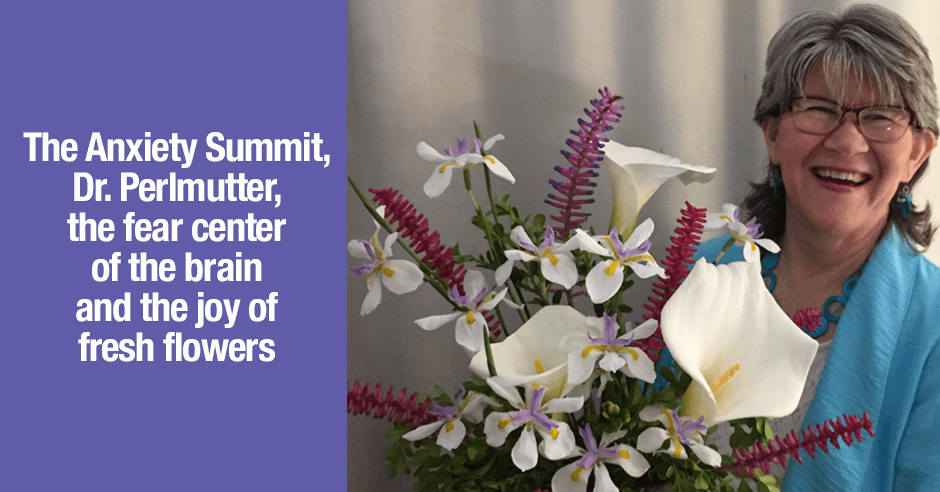
trudy and flowers

These lovely flowers are all from our garden and I have my wonderful mom-in-law to thank for this arrangement which I used for a very special interview this week with Dr. David Perlmutter (more on this below) for season 5 of The Anxiety Summit. I have my mom-in-law, Althea, to thank for all the flowers in all the interviews.

As you know, I love nature and flowers and because of this it feels really special to be able to say that The Anxiety Summit has been dubbed “a bouquet of hope.” Someone in one of the past seasons shared this anonymously and then sent me a lovely letter afterwards saying it was her.

Unfortunately, we were in the middle of packing to move and her letter was misplaced so I still don’t have a name and person to thank. If you’re reading this now, please please let me know it was you so I can thank you.

I’m sure you don’t need a study to convince you why you enjoy flowers so much but here goes anyway because – you know me – I love to geek out on the research.

In a study, Effect of olfactory stimulation by fresh rose flowers on autonomic nervous activity, 19 female university and graduate students (21 to 26 years old) reported an increase in physiological and psychological relaxation when smelling fresh roses. The study reported that the aroma of the fresh flowers led to

  • a significant increase in parasympathetic nervous activities
  • an increase in “comfortable” and “natural” feelings.

I’m not one bit surprised at these results! Are you? I would expect there to be an effect on our endorphins too because we feel so wonderful when we get a bunch of flowers from our loved one!

Dr. Perlmutter – Anxiety: Gut-Brain Communication & Diet

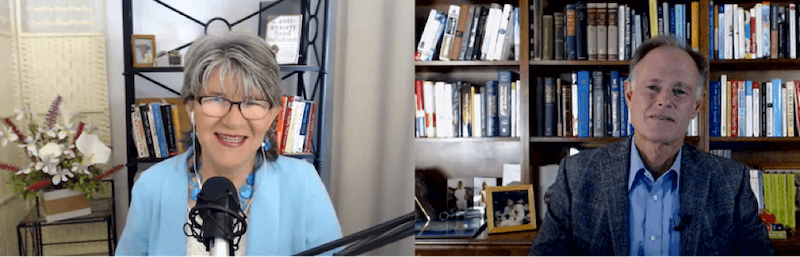
As I said above, I had the distinct pleasure of interviewing Dr. David Perlmutter for The Anxiety Summit this week (notice the flower arrangement in the background).

dr. perlmutter interview

You likely know Dr. Perlmutter as the author of Grain Brain, The Surprising Truth About Wheat, Carbs and Sugar, with over 1 million copies in print. What a wonderful interview we had. He’s smart, articulate, funny, geeky and practical at the same time, and an all around lovely person. I can’t wait to share this and all the incredible interviews I have done for The Anxiety Summit 5: Gut-Brain Axis.

In my interview with Dr David Brady on this summit he mentions how Dr. Perlmutter has championed the whole gut-brain connection. We all appreciate him for this work and with him being a trailblazer and leader in this, having him as a speaker on this summit could not have been more perfect. This is our topic and the talking points we cover

Anxiety: Gut-Brain Communication & Diet

  • Fermented foods, prebiotics, gut integrity and anxiety
  • SCFAs/short chain fatty acids, HDACs and serotonin production
  • Inflammation/cortisol and the amygdala/prefrontal cortex connection

Here is a snippet from our interview which went deep into the research, the mechanisms and biochemistry, and then brought it all back to practical interventions :

Both inflammation and stress can enhance anxiety. Well, what is anxiety? Anxiety is a physiological reaction to real of more commonly a perceived stress – in other words, a threat. There is no real threat there but the body perceives a situation that is not necessarily threatening as being threatening. So the body goes into this anxiety response for no good reason….

What we understand is that inflammation and cortisol actually tend to reduce the availability or the functionality of a connection between two parts of the brain. One of them, called the amygdala, is the fear center, and the other is the prefrontal cortex which is an area of the brain that tends to calm things down. It says to the amygdala: “Hey, cool, we’re glad you’re around but this isn’t one of those times you need to get excited.” It’s the adult in the room, if you will.

Inflammation and cortisol/stress breaks this key connection between the amygdala and the prefrontal cortex and these are one possible mechanism that leads to anxiety. We go on to discuss solutions such as diet, nature, and sleep.

I could have brought up flowers and talked more about nature at this point but we still had so much to cover.

Earlier in the interview went in depth into dietary aspects like delicious fermented foods and prebiotics such as garlic, onions, leeks and cauliflower. Prebiotics are fuel for short-chain fatty acids like butyrate, acetate and propionate, which are involved in the integrity of the gut lining, protect from intestinal inflammation. They are also involved in the manufacture of calming neurotransmitters, so here we have some of the stress/cortisol aspect covered.

Please join us and listen to the entire interview on The Anxiety Summit 5: Gut-Brain Axis.

Resources from Dr. Perlmutter

Now I get to share some of his wonderful work. You can find him online at DrPerlmutter.com and he has these new releases coming up:

  • He is the editor of the upcoming collection The Microbiome and the Brain that will be authored by top experts in the field and will be published in 2019 by CRC Press – written for both practitioners and researchers. This is so exciting and perfectly supports what we cover in this summit.
  • He shares a few gems from his book Brain Wash, which is proudly co-written with his son Austin Perlmutter, MD, in our interview.

Are you excited to hear my interview with Dr. Perlmutter? Which areas are of most interest to you?

And do you love flowers as much as I do? What are you favorites and how do you enjoy them?

If you have found any of the Anxiety Summits to be “a bouquet of hope” in your healing journey please tell us why and how you’re doing now.

If you’d like to give feedback or ask a question, please post in the comments below.


Filed Under: The Anxiety Summit, The Anxiety Summit 5 Tagged With: amygdala, anxiety, anxiety summit, bouquet of hope, Butyrate, cortisol, Dr. Perlmutter, fear, fear center, fresh flowers, gut integrity, Inflammation, prefrontal cortex, short chain fatty acids, stress

  • « Go to Previous Page
  • Page 1
  • Page 2
  • Page 3
  • Page 4
  • Page 5
  • Page 6
  • Interim pages omitted …
  • Page 11
  • Go to Next Page »

Primary Sidebar

GABA QuickStart Homestudy

gaba quickstart homestudy

Free Report

9 Great Questions Women Ask about Food, Mood and their Health

You'll also receive a complimentary subscription to my ezine "Food, Mood and Gal Stuff"


Connect with me

Popular Posts

  • Amino Acids Mood Questionnaire from The Antianxiety Food Solution
  • The Antianxiety Food Solution Amino Acid and Pyroluria Supplements
  • Pyroluria Questionnaire from The Antianxiety Food Solution
  • Collagen and gelatin lower serotonin: does this increase your anxiety and depression?
  • Tryptophan for the worry-in-your-head and ruminating type of anxiety
  • GABA for the physical-tension and stiff-and-tense-muscles type of anxiety
  • The Antianxiety Food Solution by Trudy Scott
  • Seriphos Original Formula is back: the best product for anxiety and insomnia caused by high cortisol
  • Am I an anxious introvert because of low zinc and vitamin B6? My response to Huffington Post blog
  • Vagus nerve rehab with GABA, breathing, humming, gargling and key nutrients

Recent Posts

  • Her cravings for chips and peanut butter were triggered by stress: GABA ends cravings and reduces physical tension and fear of heights
  • It is truly miraculous to be able to move through life without crippling anxiety and panic
  • GABA and tryptophan combo provide immediate and noticeable relief for tremors and cervical dystonia in just 7 days
  • Red light therapy for back and neck pain, plantar fasciitis and low mood – a complement to the amino acids GABA, DPA and tryptophan
  • What do I use instead of Seriphos to help lower high cortisol that is affecting my sleep and making me anxious at night?

Categories

  • 5-HTP
  • AB575
  • Addiction
  • ADHD
  • Adrenals
  • Alcohol
  • Allergies
  • Alzheimer's disease
  • Amino Acids
  • Anger
  • Antianxiety
  • Antianxiety Food Solution
  • Antidepressants
  • Anxiety
  • Anxiety and panic
  • Autism
  • Autoimmunity
  • benzodiazapines
  • Bipolar disorder
  • Books
  • Caffeine
  • Cancer
  • Candida
  • Children/Teens
  • Collagen
  • Cooking equipment
  • Coronavirus/COVID-19
  • Cravings
  • Depression
  • Detoxification
  • Diabetes
  • Diet
  • DPA/DLPA
  • Drugs
  • EFT/Tapping
  • EMF
  • EMFs
  • Emotional Eating
  • Endorphins
  • Environment
  • Essential oils
  • Events
  • Exercise
  • Fear
  • Fear of public speaking
  • Fertility and Pregnancy
  • Fish
  • Food
  • Food and mood
  • Functional neurology
  • GABA
  • Gene polymorphisms
  • General Health
  • Giving
  • Giving back
  • Glutamine
  • Gluten
  • GMOs
  • Gratitude
  • Gut health
  • Heart health/hypertension
  • Histamine
  • Hormone
  • Hyperparathyroidism
  • Hypoglycemia
  • Immune system
  • Inflammation
  • Insomnia
  • Inspiration
  • Introversion
  • Joy and happiness
  • Ketogenic diet
  • Lithium orotate
  • Looking awesome
  • Lyme disease and co-infections
  • MCAS/histamine
  • Medication
  • Men's health
  • Mental health
  • Mercury
  • Migraine
  • Mold
  • Movie
  • MTHFR
  • Multiple sclerosis
  • Music
  • NANP
  • Nature
  • Nutritional Psychiatry
  • OCD
  • Osteoporosis
  • Oxalates
  • Oxytocin
  • Pain
  • Paleo
  • Parasites
  • Parkinson’s disease
  • PCOS
  • People
  • PMS
  • Postpartum
  • PTSD/Trauma
  • Pyroluria
  • Questionnaires
  • Real whole food
  • Recipes
  • Research
  • Schizophrenia
  • serotonin
  • SIBO
  • Sleep
  • Special diets
  • Sports nutrition
  • Stress
  • Sugar addiction
  • Sugar and mood
  • Supplements
  • Teens
  • Testimonials
  • Testing
  • The Anxiety Summit
  • The Anxiety Summit 2
  • The Anxiety Summit 3
  • The Anxiety Summit 4
  • The Anxiety Summit 5
  • The Anxiety Summit 6
  • Thyroid
  • Thyroid health
  • Toxins
  • Tryptophan
  • Tyrosine
  • Uncategorized
  • Vegan/vegetarian
  • Women's health
  • Yoga

Archives

  • May 2026
  • April 2026
  • October 2025
  • September 2025
  • August 2025
  • July 2025
  • June 2025
  • May 2025
  • April 2025
  • March 2025
  • February 2025
  • January 2025
  • November 2024
  • October 2024
  • September 2024
  • August 2024
  • July 2024
  • June 2024
  • May 2024
  • April 2024
  • March 2024
  • February 2024
  • January 2024
  • December 2023
  • November 2023
  • October 2023
  • September 2023
  • August 2023
  • July 2023
  • June 2023
  • May 2023
  • April 2023
  • March 2023
  • February 2023
  • January 2023
  • December 2022
  • November 2022
  • October 2022
  • September 2022
  • August 2022
  • July 2022
  • June 2022
  • May 2022
  • April 2022
  • March 2022
  • February 2022
  • January 2022
  • December 2021
  • November 2021
  • October 2021
  • September 2021
  • August 2021
  • July 2021
  • June 2021
  • May 2021
  • April 2021
  • March 2021
  • February 2021
  • January 2021
  • December 2020
  • November 2020
  • October 2020
  • September 2020
  • August 2020
  • July 2020
  • June 2020
  • May 2020
  • April 2020
  • March 2020
  • February 2020
  • January 2020
  • December 2019
  • November 2019
  • October 2019
  • September 2019
  • August 2019
  • July 2019
  • June 2019
  • May 2019
  • April 2019
  • March 2019
  • February 2019
  • January 2019
  • December 2018
  • November 2018
  • October 2018
  • September 2018
  • August 2018
  • July 2018
  • June 2018
  • May 2018
  • April 2018
  • March 2018
  • February 2018
  • January 2018
  • December 2017
  • November 2017
  • October 2017
  • September 2017
  • August 2017
  • July 2017
  • June 2017
  • May 2017
  • April 2017
  • March 2017
  • February 2017
  • January 2017
  • December 2016
  • November 2016
  • October 2016
  • September 2016
  • August 2016
  • July 2016
  • June 2016
  • May 2016
  • April 2016
  • March 2016
  • February 2016
  • January 2016
  • December 2015
  • November 2015
  • October 2015
  • September 2015
  • August 2015
  • July 2015
  • June 2015
  • May 2015
  • April 2015
  • March 2015
  • February 2015
  • January 2015
  • December 2014
  • November 2014
  • October 2014
  • September 2014
  • August 2014
  • July 2014
  • June 2014
  • May 2014
  • April 2014
  • March 2014
  • February 2014
  • January 2014
  • December 2013
  • November 2013
  • October 2013
  • September 2013
  • August 2013
  • July 2013
  • June 2013
  • May 2013
  • April 2013
  • March 2013
  • February 2013
  • January 2013
  • December 2012
  • November 2012
  • October 2012
  • August 2012
  • July 2012
  • June 2012
  • May 2012
  • April 2012
  • March 2012
  • February 2012
  • January 2012
  • December 2011
  • November 2011
  • October 2011
  • September 2011
  • August 2011
  • July 2011
  • June 2011
  • May 2011
  • April 2011
  • March 2011
  • February 2011
  • January 2011
  • December 2010
  • October 2010
  • September 2010
  • July 2010
  • May 2010
  • April 2010
  • March 2010
  • February 2010
  • January 2010
  • November 2009

Share the knowledge!

The above statements have not been evaluated by the Food and Drug Administration. Products listed in this website are not intended to diagnose, treat, cure or prevent any disease.

The information provided on this site is for informational and educational purposes only and is not intended as a substitute for advice from your physician or other health care professional. You should consult with a healthcare professional before starting or modifying any diet, exercise, or supplementation program, before taking or stopping any medication, or if you have or suspect you may have a health problem.


Copyright © 2026 Trudy Scott. All Rights Reserved. | Privacy | Terms and Conditions | Refund Policy | Medical Disclaimer

Free Report

9 Great Questions Women Ask about Food, Mood and their Health

You’ll also receive a complimentary subscription to my ezine “Food, Mood and Gal Stuff”