• Skip to primary navigation
  • Skip to main content
  • Skip to primary sidebar

everywomanover29 blog

Food, Mood and Women's Health – Be your healthiest, look and feel great!

  • Blog
  • About
  • Services
  • Store
  • Resources
  • Testimonials
  • The Book
  • Newsletter
  • Contact
  • Search this site

Archives for July 2018

Vitamin B6 improves dream recall (which can be used to monitor vitamin B6 status)

July 27, 2018 By Trudy Scott 40 Comments

It’s exciting to see new research confirming the connection between vitamin B6 and dream recall. In this new study, Effects of Vitamin B6 (Pyridoxine) and a B Complex Preparation on Dreaming and Sleep (which was randomized, double-blind and placebo-controlled), 100 participants from across Australia were given 240 mg vitamin B6 (pyridoxine hydrochloride) before bed for five consecutive days. Other study participants were given a B complex. This is the outcome of the study:

  • vitamin B6 significantly increased the amount of dream content participants recalled but did not significantly affect dream vividness, bizarreness, or color, nor did it significantly affect other sleep-related variables
  • participants in the B complex group showed significantly lower self-rated sleep quality and significantly higher tiredness on waking

Here are my thoughts on these results:

  • It’s wonderful to read that Vitamin B6 improves dream recall – this is what I see with my clients all the time.
  • With an optimal dose of vitamin B6, I would expect changes in “dream vividness, bizarreness, or color” and this also what I also see with my clients. If they are having horrible/vivid/bizarre dreams, the vitamin B6 changes them to pleasant dreams OR if dreams were not recalled prior to supplementation, they are now remembered and pleasant. The dose of 240 mg was used across the board but based on what we know about biochemical individuality, 240mg may be too much for some folks and not enough for others, so this could have impacted the results.
  • It’s not surprising that the B complex taken at bedtime impacted sleep. It’s known to be stimulating and it’s not something I’d advise any client to do. For this reason, I don’t feel it was the ideal control for this study.

The lead researcher is Dr. Denholm Aspy and his primary research focus is lucid dreaming. On his researcher profile on the University of Adelaide website, he describes lucid dreaming and the potential benefits:

In a lucid dream, the dreamer realizes that they are dreaming and can then explore and even control the dream. Lucid dreaming has a wide range of potential benefits and applications such as creative problem solving, treatment for recurrent nightmares and improvement of motor skills through rehearsal in the dream environment (e.g. for elite athletes or people recovering from physical trauma).

He shares that the purpose of his research is to address exploration of the potential applications of lucid dreaming and to “develop reliable ways to induce lucid dreams.” Looking for potential applications of lucid dreaming is very interesting and new to me.

Vitamin B6/dream recall research and pyroluria (a social anxiety condition)

However, this vitamin B6/dream recall research is of particular interest to me because of my work with pyroluria, a social anxiety condition which responds really well to supplementation with zinc, vitamin B6 or P5P (pyridoxal-5-phosphate) or a combination of both, and a few other key nutrients.  Here is the pyroluria questionnaire.

One of the classic signs of pyroluria is poor dream recall, stressful or bizarre dreams, or nightmares, signs which the late Carl Pfeiffer, MD attributed to low vitamin B6 status. He suggested that your dreams and dream recall serve as a good indicator of your need for vitamin B6. You should dream every night and you should remember your dreams. They should be pleasant—the kind of dreams where you wake up and want to close your eyes and continue dreaming.

Going back to the above discussion of lucid dreaming, in lucid dreams “the dreamer is aware of dreaming and often able to influence the ongoing dream content.” This is exactly how I would describe my dreams when I have good levels of vitamin B6 and my clients say the same.

Keep in mind that if you do have pyroluria, you may need to increase your dose of vitamin B6 in times of stress. Vitamin B6 can also be depleted by oral contraceptives because they cause both low vitamin B6 and zinc, reduce serotonin levels and increase anxiety. Vitamin B6 can also be depleted by antidepressants, diuretics, and cortisone, so if you start or stop taking any of these, you may need to adjust the amount you supplement.

If this intrigues you and you’re new to pyroluria, I write about dreams and vitamin B6 in the pyroluria chapter of my book, The Antianxiety Food Solution. My blog is also a wealth of information on pyroluria:

  • Pyroluria prevalence and associated conditions
  • Joint hypermobility / Ehlers-Danlos Syndrome and pyroluria?
  • Pyroluria and focal musician’s dystonia or musician’s cramp
  • Am I an anxious introvert because of low zinc and vitamin B6? My response to Huffington Post blog

Dream recall and vitamin B6 status is important even if you don’t have pyroluria

Observing your dream recall and hence vitamin B6 status is important even if you don’t have pyroluria. This is because vitamin B6 it has been implicated as a co-factor in more than 140 biochemical reactions in the cell, playing a role making amino acids and neurotransmitters, making fatty acids, and even quenching reactive oxygen species (ROS).

This is partial list showing the importance of vitamin B6 (with both research and clinical evidence) for:

  • carpal tunnel syndrome – I’ve had many clients see major improvements to the extent that surgery is able to be cancelled
  • PMS (together with magnesium) – all the women I work with see the benefits of vitamin B6 for PMS, perimenopause and menopausal symptoms
  • issues with dietary oxalates – vitamin B6 is one of the key nutrients for preventing metabolism of food to oxalate
  • morning sickness/vomiting during pregnancy
  • protective potential against Alzheimer’s disease due to antioxidant properties
  • inflammation and IBD/irritable bowel disease

You may also wonder what the mechanism of action is? How does vitamin B6 impact your dream recall? One hypothesis is that vitamin B6 is a co-factor nutrient used in the conversion of tryptophan to serotonin which is then used to make melatonin. Vitamin B6 is also an antioxidant, is anti-inflammatory, and modulates immunity and gene expression.

If you’re looking for a quality vitamin B6 product, my supplements blog lists a range of vitamin B6 supplements that I use with clients and those in my group program.

Monitoring your dream recall is one very simple way to assess changes in your vitamin B6 status. And we now have new research supporting this. I look forward to follow-on studies by these authors, learning more from them about lucid dreaming and I hope to be able to offer some of my insights from clinical practice.

*** I address some concerns about vitamin B6 toxicity in this blog: Why is vitamin B6 toxic for some and why don’t symptoms resolve when vitamin B6 is stopped? I have yet to see any signs of toxicity in my clients, but I have also not ever recommended more than 500mg/day. However, I was recently made aware (thanks to some folks in my community) that there are some individuals who have issues with very small amounts of vitamin B6.  If you have experienced any issues with using vitamin B6 supplementation please share.

What are your dreams like and do you use your dreams to monitor your vitamin B6 status? What improvements have you noticed by addressing low vitamin B6 levels?

If you’re a practitioner do you use dream recall as an indication of vitamin B6 status?  Have you seen adverse issues with vitamin B6 supplementation and at what doses?
Filed Under: Anxiety, Sleep Tagged With: anxiety, B6, carpel tunnel, dream recall, dreams, PMS, pyridoxine, pyroluria, serotonin, tryptophan, vitamin B6

Delayed IgG food sensitivities: depression and anxiety due to inflammation, leaky gut, leaky blood brain barrier and low serotonin

July 20, 2018 By Trudy Scott 7 Comments

It’s really encouraging and exciting to see a major study confirming what we’ve known about IgG food sensitivities or IgG food reactivity for years, and also reporting a link to irritable bowel syndrome (IBS) and depression. The paper, published in May this year, The Food-Specific Serum IgG Reactivity in Major Depressive Disorder Patients, Irritable Bowel Syndrome Patients and Healthy Controls states

There is an increasing amount of evidence which links the pathogenesis of irritable bowel syndrome (IBS) with food IgG hyperreactivity. Some authors have suggested that food IgG hyperreactivity could be also involved in the pathophysiology of major depressive disorder (MDD).

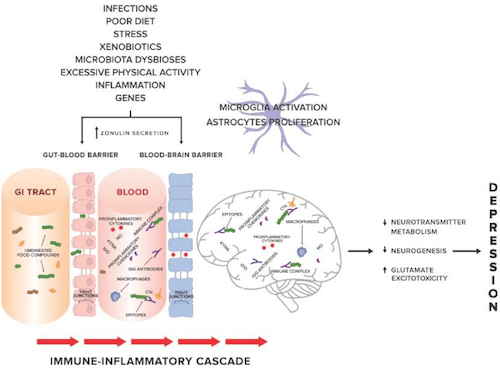
The following diagram and excerpt illustrates the gut-immune-inflammatory-brain model for depression that is associated with food IgG hyperreactivity or sensitivity.

The gut-immune-inflammatory-brain model for Major Depressive Disorder associated with food IgG hyperreactivity. According to the hypothesis proposed in our previous work, we present a possible mechanism underlying the MDD [major depressive disorder] development, suggesting that the interplay between genetic and environmental factors may lead to disruption of tight junctions, the loss of their integrity and both gut and BBB [blood brain barrier] permeability. Undigested food compounds, which would normally break down in the gut, translocate into the blood circulation, and trough epitopes combine with food IgG antibodies to form immune complexes. This, in turn, provokes an abnormal response and triggers immune-inflammatory cascade. Uncontrolled release of the proinflammatory mediators may contribute to low-grade systemic inflammation and low-grade neuroinflammation, which, via pathological processes in CNS [central nervous system], i.e., changes in neurotransmitter metabolism, neurogenesis, glutamate excitotoxicity, may in consequence induce and then maintain and prolong depression.

[diagram and excerpt from The Food-Specific Serum IgG Reactivity in Major Depressive Disorder Patients, Irritable Bowel Syndrome Patients and Healthy Controls]

I wrote my book, The Antianxiety Food Solution, in 2011 and there wasn’t research on the gut-immune-inflammatory-brain model, but I do write extensively about delayed IgG food sensitivities (as well as other types of food issues). If you don’t have my book I’m including some of the highlights related to this (and I encourage you to pick up a copy too!). If you do have my book I hope this next section encourages you to go back and read chapter 4 again (and even check out the other books I mention below).

I write about how with delayed food reactions, it may take a few hours to several days before symptoms appear, which can make it difficult to identify the offending food or foods. In these reactions, the body responds by creating a type of antibody known as IgG (immunoglobulin G).

I also write about how food sensitivities can have effects beyond physiological symptoms, including creating imbalances in key chemicals in the brain, which can cause anxiety, phobias, depression, irritability, and mood swings. When food sensitivities have these effects, they are sometimes termed “brain allergies” or “cerebral allergies.” Dr. Carl Pfeiffer wrote extensively about this and used these terms in his wonderful book, Nutrition and Mental Illness, way back in 1987. (This book is a quick read and is one of my favorite older books on the subject of mental health and biochemical imbalances.)

I also reference the work of my colleague and friend, clinical nutritionist Liz Lipski. In her 2004 book, the 3rd edition of Digestive Wellness she shares that

24 percent of American adults claim they have delayed food and environmental reactions.

She feels that these sensitivities are often the result of leaky gut syndrome, a condition characterized by damage to the microvilli lining the intestinal walls. This allows undigested food particles to travel across the intestinal wall and into the blood, where the immune system responds to them as foreign, harmful substances and creates antibodies to neutralize them.

All this sounds very similar to what the new study is reporting doesn’t it? I’d prefer it not to take so long for the knowledge from as far back as 1987 to get into mainstream journals but it’s the world we live in and we can just appreciate that we are moving forward and in the right direction!

The 2018 paper mentioned above concludes the following:

Our findings suggest more common food-specific serum IgG hyperreactivity among patients with IBS and MDD [major depressive disorder], which may be one of the mechanisms leading to the development of immune activation and low-grade inflammation observed in these disorders.

They do support an elimination diet for IBS but not for depression:

There is no causal relationship which could confirm clinical utility of an elimination diet in patients with depression

I do love research, but this really bothers me as it’s just common-sense and we do have some case studies supporting the use of elimination diets. In this case study the patient’s “treatment-resistant” depression improved considerably with an elimination diet, with similar results in another case study where a gluten-free elimination diet improved both anxiety and depression and everyday functioning.

In the meantime, we’ll continue to rely on the wisdom of practitioners like Dr. Pfeiffer and Liz Lipski, and all the clinical evidence showing how an elimination diet does help with both depression and anxiety. Just read some of the success stories on this blog – Paleo and grain free diets: anxiety and depression success stories.

Other mechanisms: nutrient malabsorption and serotonin production

There are other mechanisms that I also cover in my book – nutrient malabsorption and a more direct impact on serotonin production.

One possible mechanism is indirect effects of gastrointestinal damage due to eating problem foods, resulting in nutrient malabsorption. In a 2009 double blind placebo-controlled study:

65 celiac patients aged 45-64 years on a strict gluten-free diet for several years [and showing signs of low folate, low vitamin B12 and low vitamin B6] were randomized to a daily dose of 0.8 mg folic acid,0.5 mg cyanocobalamin and 3 mg pyridoxine or placebo for 6 months

I doubt folic acid or this form of B12 would be used today but even with these forms at these low doses, the study participants showed homocysteine in a good range and reported improvement in general well-being – after just 6 months of supplementation.

Another possible mechanism is the fact that gluten sensitivity and the resulting damage to the gut can limit the availability of tryptophan and therefore lead to decreases in levels of serotonin. Research published in 2005, Gluten-free diet may alleviate depressive and behavioural symptoms in adolescents with coeliac disease: a prospective follow-up case-series study, reports that:

serotonergic dysfunction due to impaired availability of tryptophan may play a role in vulnerability to depressive and behavioral disorders among adolescents with untreated coeliac disease

In addition to removing the foods that are causing the sensitivities, you need to heal the gut and boost serotonin levels with a targeted individual amino acid like tryptophan.

Give the link between anxiety and depression, all of the above could apply if you have anxiety too.

Have you had IgG food sensitivity testing and found that an elimination diet helped reduce your depression or anxiety symptoms?

Filed Under: Depression Tagged With: anxiety, blood brain barrier, celiac, depression, gluten, IgG, leaky BBB, leaky gut, serotonin, tryptophan

The healing properties of camel’s milk for autism (and anxiety)

July 16, 2018 By Trudy Scott 8 Comments

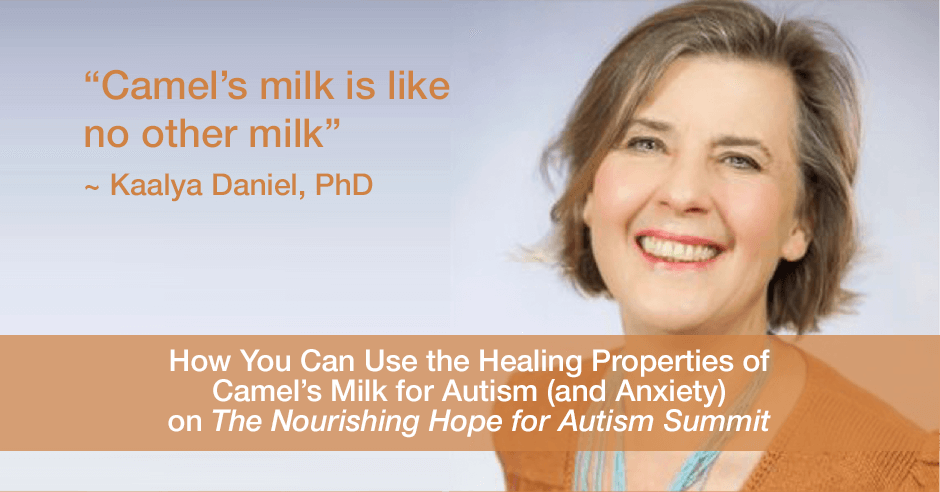
Kaalya Daniel, PhD covers the very interesting topic of camel milk in her interview on The Nourishing Hope for Autism Summit

How You Can Use the Healing Properties of Camel’s Milk for Autism

Camel’s milk is like no other milk. You’ll learn the unique and powerful immune system properties and nutrient benefits of this milk, from an animal known to endure extreme conditions. And how it helps with autism, even when you can’t tolerate other milk.

I don’t have access to the interview transcript yet but since this is a new topic I haven’t yet blogged about I’ve decided to highlight this interview as one I’m really interested in exploring for mom’s in my community with children on the spectrum, with ADHD or other developmental disorders.

In case you’re new to camel’s milk, a paper published in 2015 – Nutritional and Therapeutic Characteristics of Camel Milk in Children: A Systematic Review, shares the following:

Camel milk is the closest to a human mother’s milk. Camel milk is different from other milks, however, having low sugar and cholesterol, high minerals (sodium, potassium, iron, copper, zinc and magnesium, and vitamin C). The milk is considered have medicinal characteristics as well.

The study concludes that there is evidence denoting the importance, usability and benefits of camel’s milk:

Camel milk as a supplemental treatment seems less invasive and costly than specialist care, medications, alternative treatments, and behavioral interventions. Based on our findings, camel milk is safer for children, effective in the treatment of autism, improves general well-being, promotes body natural defenses, is a good nutritional source, and can helps the daily nutritional needs of humans.

Given the many overlaps we see with autism/ASD and anxiety/depression, it’s clear that camel milk has wide applications given the benefits we see has for immunity, the gut and inflammation, as well as providing nourishment when dairy cannot be tolerated. As you can see in the above study below camel milk consumption has been shown to improve general well-being.

I’m not sure if anxiety and GABA is covered in the interview but I did find some interesting research reporting that both camel and goat milk have significantly more bioavailable GABA than cow and human milk – which may be another beneficial mechanism.

Here are just a few of the other speakers and topics I’m really looking forward to hearing:

  • James Adams, PhD: The Scientific Evidence Linking Nutrition and Autism Improvement
  • Dietrich Klinghardt: Understanding Lyme, Infections, Mold, and Heavy Metals and the Effects on Autism
  • Chef Pete Evans: Food is Medicine, Inspiration from a chef
  • Dominic D’Agostino, PhD: Is the Ketogenic Diet Right for an Autistic Child?
  • Susan Owens, MS: The Inflammasome, Oxalates, Autoimmunity and Autism
  • And of course, Julie Matthews, CNC: When GFCF Diets Don’t Work – BioIndividual Nutrition for Autism (I’m actually going to interview Julie on this topic)

In my interview we go into anxiety, OCD and aggression in great detail, discussing the amino acids GABA and tryptophan, plus gluten issues and when and how to use inositol.

This summit provides you with information and tools that address the root causes of autism, ADHD and many other conditions including anxiety.

The Summit runs July 30 to August 3 and is hosted by my dear friend and colleague Julie Matthews, whose work you’re probably very familiar with. In case Julie’s work is new to you, in my eyes, she is THE autism nutrition expert. I’ve had the pleasure of interviewing her a number of times on the Anxiety Summit, I endorse her Bioindividual Nutrition training (special diets) for practitioners, I highly respect the work she does and I adore her!

Register here for The Nourishing Hope for Autism Summit to learn more! It airs online from July 30 to August 3, 2018. Hope to see you online!

I’d love to hear your camel’s milk experiences. If you have questions please post them in the comments below.

Filed Under: Anxiety, Autism, Events Tagged With: anxiety, ASD, autism, Camel milk, GABA, Julie Matthews, Kaayla Daniel, Nourishing Hope for Autism Summit, OCD

Thailand cave rescue: yes to calming meditation and GABA, no to antianxiety medication

July 13, 2018 By Trudy Scott 3 Comments

The cave rescue of 12 teens and their soccer coach in Thailand is such a beautiful story of hope, courage, resilience, volunteerism and the whole world coming together! I’ve been following the news about this from day 1 (as I’m sure you were) and felt such relief and joy on hearing they had all been safely rescued and appear to be physically and mentally fine.

I’m weighing in on the fact that meditation seems to have played a major role in keeping them calm, using GABA or theanine instead of antianxiety medications and B vitamins for ongoing psychological support.

Meditation seems to have played a role in keeping them calm

Meditation seems to have played a role in keeping them calm, according to this report from the UK

The 12 Thai boys and their football coach who were trapped in a cave in Thailand got through the ordeal by practicing meditation, family members have said.

According to a mother of one of the boys, the team were meditating in the widely shared video of their discovery by two British divers.

Look at how calm they were sitting there waiting. No one was crying or anything. It was astonishing.

The coach who was rescued from the cave on Tuesday, trained as a Buddhist monk for 12 years before he decided to coach the Wild Boars soccer team.

‘He could meditate up to an hour,’ said his aunt, Tham Chanthawong. ‘It has definitely helped him and probably helps the boys to stay calm.’

Here is the video of their lovely smiling calm faces when they were first found.


In this paper, Meditation Programs for Psychological Stress and Well-Being, they report that

Meditation programs, in particular mindfulness programs, reduce multiple negative dimensions of psychological stress [such as anxiety, depression, stress, distress, well-being, positive mood, attention]

Meditation has also been shown to improve dopamine and serotonin transporter binding, which appears to have reduced fatigue and improved mood in this study, likely because there are higher levels of these neurotransmitters available.

In a study done with young adults, Effects of mindfulness meditation on serum cortisol of medical students, meditation lowered cortisol levels, suggesting reduced feelings of stress.

Meditation and GABA/theanine instead of antianxiety medications

It was clearly an extremely difficult rescue and the Australian doctor, Adelaide anaesthetist Dr Richard Harris, risked his life to go into the cave and stayed with the boys and their coach for several days. He assessed their health and made sure they were ready for the rescue.

He used his medical expertise and rescue diving experience to decide to have each of them use antianxiety medication for the arduous 8-hour plus rescue (I suspect it was Dr. Harris’ decision). It was confirmed by Thai Prime Minister Prayuth Chan-ocha – to help calm their nerves – and it’s likely they were given a benzodiazepine, hopefully only the one time.

Even though very short term acute situations like this, is actually the intended use of benzodiazepines, it concerns me that these young boys were medicated, especially since adverse paradoxical reactions can be caused by benzodiazepines and are difficult to predict and diagnose.

The following adverse reactions can occur: “unanticipated restlessness and agitated episode,” sometimes aggression, hostility, and rage, as well as “an increased state of anxiety.” An adverse reaction during the actual rescue would have been very serious.

There were also reports of elevated white blood cells (WBC) and signs of a lung infection in some of the boys, and one boy had low blood pressure. These are all be side-effects of benzodiazepines. It’s difficult to know what caused any of this – was the medication, the rescue itself and the fact that were under water or spending all that time in the cave?

My intention is not to be critical of the medical decisions that were made in these very dire circumstances. I’ve done caving or spelunking as it was called in England and it’s pretty scary being underground and in the dark, wading through running water – and we were safely in control of things!

I’m sharing about benzodiazepines simply to raise awareness about other options and some of the many risks. And we haven’t even explored the fact that long-term use of benzodiazepines do more harm than good. More than a week to 2 weeks is considered too long, and for some this is even too long.

I really do look forward to the day when benzodiazepines are not the first approach but rather that:

  • meditation is recognized as being as effective, if not a more effective calming approach (I suspect the mediation benefits these boys had been experiencing would likely have carried them through the rescue)
  • the amino acids GABA or theanine are recognized for the calming benefits they offer (especially since the “mechanism of benzodiazepine action is through the gamma-aminobutyric acid [or GABA] receptors.”

B vitamins and other nutrition solutions after psychological stress

Thailand’s Department of Mental Health shared that

People who endure such an intense and dangerous event can go on to suffer lasting anxiety, depression and other symptoms of post-traumatic stress disorder.

I was so pleased to hear that the boys and their coach are being given B vitamins. There is evidence-based research on the psychological benefits of B vitamins after a trauma (like an earthquake or flood), thanks to my colleagues Julia Rucklidge, PhD and Bonnie Kaplan PhD​.

I do hope the B vitamins are continued and is offered to worried family members and all the wonderful rescuers who must be exhausted and stressed too.

Hopefully the boys will also continue to meditate with their soccer coach and share some of the benefits they experienced with family and friends.

How did you feel when you heard the rescue was over? Good news gives us such feel-good warm emotions doesn’t it!?

Do you meditate and have you used calming GABA or theanine?

Let us know if you have questions too.

Filed Under: Anxiety, Insomnia Tagged With: antianxiety, anxiety, B vitamins, benzodiazepine, medication, meditation, rescue, stress, Thailand cave

Candida: anxiety and low serotonin, testing and parasites, sugar cravings, EMFs and your genes

July 8, 2018 By Trudy Scott 9 Comments

My interview on anxiety on The Candida Summit with host Evan Brand, addresses anxiety, the tie in to low serotonin and the sugar cravings aspect. I was so excited to find a connection between serotonin and candida and share this in our interview. 

with low serotonin you’ve got the mental anxiety – the worry, the ruminating thoughts, the obsessive thinking, the reprocessing, insomnia, lying awake in bed, trying to shut down the busy mind. And the two amino acids I use for this is tryptophan; that’s my first choice. And my second choice is 5-HTP. That being said, some people do better on one versus the other.

The reason I like tryptophan is 5-HTP can raise cortisol and make people who are wired/tired feel a little bit more wired/tired. So until I’ve seen cortisol results in saliva, I like to use tryptophan first.

But let me share some of this interesting research that I’ve found. And why I’m so excited about it is because as I said earlier, I will use the amino acids first before I’m specifically addressing the candida. But it seems like using tryptophan first, as well as helping with the low serotonin, it’s starting to have an impact on the candida, which I didn’t know about, until I did the research for this. So thank you for inviting me to speak. It just reinforces what I know about the amino acids – that they are pretty powerful.

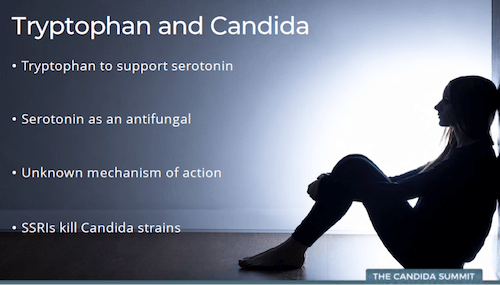
There was a study done in 2003, and the title is Antifungal Properties of Serotonin Against Candida species. And they looked at various different candida strains: albicans, glabrata, tropicalis, and a few others. And they exposed these candida strains to serotonin. The study concludes: “Serotonin showed antifungal activity towards all isolates of candida.”

What they didn’t know is what the mechanism of action was. They stated: “Identifying the mode of action would be of great help in developing and research new antifungal drugs.” I don’t agree with that. I’m just excited to see that there is this connection with serotonin, which reinforces how beneficial tryptophan is.

Of course, my solution is to provide serotonin support via diet, exercise and the use of the targeted individual amino acid tryptophan or 5-HTP.

You can read more about this serotonin-candida connection in my blog post: Symptoms, nutrient malabsorption, worsening psychiatric symptoms and the serotonin connection

In our interview I also discuss how I use the amino acids and how tryptophan/5-HTP as well as GABA, DPA, tyrosine and glutamine, can actually help with so much of the sugar craving we see in candida, PLUS how I use this approach to gauge when candida is really serious.

EMFs and the dangers of 5G – and candida

Dr. Schaffner talks about EMFs and the dangers of 5G and shares how they are protecting the Sophia Institute Clinic (which she shares with Dr. Dietrich Klinghardt):

What we have done at the clinic—and again, this is an evolving art—the two things that I think are going to make the most difference in what we can do right now is, first, of course we always say avoid exposure, try to distance yourself. Distance is your friend with any technology, when we’re looking at EMF.

But we actually shielded the clinic. We have a cell phone tower within a mile of the clinic. And so, we wanted to be mindful of that exposure. We ask everybody to turn off their cell phones when they come in to the clinic. And we don’t have Wi-Fi. So everything is ethernet corded. And then, we don’t have cell phone exposure while we’re practicing.

But we do two things that I think people should be aware of. And one is we use a type of graphite paint. It’s called YSHIELD. And that actually comes from Germany. And it has properties to, essentially, try to create a Faraday cage environment and block the incoming microwave radiation. And so, that has to be grounded, of course. And you want to always work with somebody who knows what they’re doing with this technology. Because if you don’t do it right, you can actually increase your exposures or create an unhealthy environment.

And then, Dr. Klinghardt works with the woman who creates these silver-lined curtains that actually help to block the microwave radiation coming in through the windows.

There’s a really great website—LessEMF has a lot of this technology. And then, YSHIELD, you can Google, I think it’s yshield.com. And then, the silver-lined curtains, I believe, is a fabric called, Swiss Shield. And so, you can either make them yourself or hire somebody to do that.

Learn more about candida, low serotonin, low melatonin, and your glymphatic system in the second half of Dr. Schaffner’s interview.

Candida, sugar cravings and COMT and MAOA genes

Evan Brand brings up the topic of sugar and carbs in the diet with Dr. Ben Lynch in the Candida, sugar cravings and COMT and MAOA genes interview: No one is discussing the influence of the whole epigenetic piece, and how people and their decision making with foods could be influenced by their genes?

Dr. Ben Lynch shares how he has a unique angle on this fascinating topic of our genes and sugar/carb cravings:

It’s one that always ties back to what came first—the chicken or the egg, right? So what came first, the genetic propensity towards carbohydrate binging or addictive personalities for high-caloric dense foods like ice cream and cakes, doughnuts, pastries, which then leads us to candida?

And then, they go on all these candida treatments. And they beat it. And they’re all happy again. But then their genetic propensity drives them yet again for the yeast overgrowth and the food binging.

He gives an example of how some people, when they’re down and out, may be drawn to sugar and carbs to self-medicate (this is something I see with my anxious clients all the time):

They’ll hit the chocolate. They’ll hit the doughnuts, the ice cream to make them feel good. And what these do is they spike your dopamine.

You’re not really aware of it, but you just do it. And you know you shouldn’t do it. But what happens here is, is some individuals, they have genes, which eliminate their dopamine out of their body pretty quickly. This gene is called COMT. And one of its jobs is to move dopamine out. You don’t want to always have neurotransmitters in your brain. That’s not good.

So some of these folks are born with a COMT gene that actually works faster, which is really good because they can calm down really quick in stressful environments. They can perform at a high level in stressful situations like surgeons, or EMT, or firefighters, or policemen, policewomen. They strive in these high-risk, highly-attentive situations.

But when they come home, everything’s a low normal. And they need that hit of dopamine. So they might come home and binge on sugars and carbs to drive their dopamine back up. And that’s a significant one.

Dr Lynch also shares about another gene, MAOA, which deals with our serotonin:

If you have a faster MAOA gene, which moves through your serotonin, then you are craving carbohydrates, and you’re craving pastas, and breads, and all the things that candida love, and beer. These things which increase your tryptophan levels, support your MAOA, and thus your serotonin. These are two major foods that our candida love. And these are two very, very common genes in the population which predispose us to having these issues

Candida testing, parasites and intractable yeast overgrowth 

Evan Brand asks this question about candida testing in the Candida, Mitochondrial Dysfunction, and Meditation interview with Dr. Dan Kalish: I’m guessing your statistics are similar to mine, 9 out of every 10 organic acids I find Candida overgrowth. Stool test, the GI map is missing a lot of Candida. Maybe you could help me understand why that’s happening.

Dr. Dan Kalish shares why candida testing can be challenging:

Because Candida can be commensal where it’s growing within the digestive tract itself, or it can be invasive where it penetrates into the tissue of the gut. And then it’s not going to be found in any of the stool tests. So stool tests can miss it easily. And in fact, the more severe it gets, the harder it is to find on a test.

That’s what happens with the yeast when it gets bad. It gets invasive. It goes up into the actual lining of the gut. So if it penetrates there, it causes leaky gut. But then it’s invasive, so it’s penetrating into the tissues. And you’re not going to see it in the stool. And that’s when it gets worse. In fact, it’s going to cause more symptoms. But then it’s almost impossible to find on the stool test.

He also shares this gem about intractable yeast overgrowth that just won’t go away:

You can have a Candida overgrowth, treat it and feel better, but have there be another underlying cause for the Candida. So there’s a lot of patients that will come to me and be like, “I had this Candida overgrowth. As long as I eat this radical and extreme and ridiculous diet, and take all these herbs, I’m fine. But every time I stop, it just comes back.”

Then, that leads the person to assume that it’s this horrific Candida overgrowth that’s never going to go away. And in those patients, there’s almost always Giardia, or Crypto [Cryptosporidium], or E. histo [Entamoeba histolytica], or some other bug that’s screwing up the ecology of the gut that’s allowing the Candida to keep coming back. So that’s just something to be on the lookout for.

If you feel like you have this intractable yeast overgrowth that just won’t go away, you should find a functional medicine doctor and do all the stool testing. Because you’re almost guaranteed there will be some other infection.

Click here to register for The Candida Summit which runs online from July 9-15, 2018!

Do share if you’ve successfully addressed candida overgrowth and how your symptoms improved and how bad your sugar cravings were.

Let us know if you’re EMF-aware and how addressing low serotonin has helped you.

If you have questions post them below in the blog comments.

Filed Under: Candida, Events Tagged With: 5G, anxiety, candida, COMT, EMFs, genes, MAOA, parasites, serotonin, sugar cravings, testing, tryptophan

Melatonin improves sleep quality and reduces anxiety after a TBI (traumatic brain injury)

July 6, 2018 By Trudy Scott 11 Comments

New research shows that melatonin improves sleep quality and reduces anxiety after a TBI (traumatic brain injury). The study, Efficacy of melatonin for sleep disturbance following traumatic brain injury: a randomised controlled trial was completed in Australia and used a prolonged-release (also called timed-release) melatonin product.

The study participants, 67% of whom were male, had mild to severe TBI and sleep disturbances as a result of their injuries (most of which were from car accidents). There were 2 study groups, with one group given 2mg of prolonged-release melatonin for 4 weeks and then switched to a placebo for 4 weeks (with a 48-hour window in between). The other group did the opposite.

The prolonged-release melatonin was made by Sigma Pharmaceuticals Australia and called Circadin. Each night 2 hours before bedtime, 2mg of Circadin was taken by study participants. They received a reminder text message each night.

These are the study results for sleep:

Melatonin was associated with a significant and moderate reduction in PSQI [Pittsburgh Sleep Quality Index] global scores, indicating improved sleep quality.

There was no significant reduction in sleep onset latency with melatonin compared to placebo.

What this means is that overall quality of sleep improved but there was no change in the time it takes to fall asleep (sleep onset latency). The latter is to be expected with prolonged-release or timed-release melatonin.

The study concluded that:

The present results, therefore, suggest that melatonin may be useful in treating sleep disturbances in patients with TBI.

With better sleep quality you would expect reduced fatigue and improved vitality – both were reported by study participants.

Melatonin associated with a small decrease in self-reported anxiety

What is interesting is that melatonin was also associated with a small decrease in self-reported anxiety (no differences in depression were reported.) The authors suggest that one possible mechanism of this may be that melatonin acts a muscle relaxant. In this commentary: Potential action of melatonin in insomnia, the authors equate the beneficial effects of melatonin to benzodiazepines:

many of the actions of melatonin on sleep propensity, anxiety, thermoregulation, and convulsions resemble those reported following administration of benzodiazepines. It is possible that some of these actions of melatonin may be mediated via peripheral benzodiazepine receptors

They are suggesting that with melatonin we get the sleep improvement (sleep propensity is the readiness to transit from wakefulness to sleep, or the ability to stay asleep if already sleeping), relaxation effects and antianxiety benefits of benzodiazepines.

But you get none of the side-effects, tolerance issues and withdrawal nightmares with a benzodiazepine which do more harm than good. On a side notes: this month World Benzodiazepine Day is celebrated to create awareness and offer support for benzo sufferers.

I would have picked something more inert for the placebo ingredients

I would have picked something more inert for the placebo ingredients: mannitol (106mg), acacia (11 mg) and pure icing sugar (106 mg). Mannitol, a sugar alcohol, can cause bloating and diarrhea in some individuals and although the amount is tiny (5g of sugar equals 1 teaspoon), sugar consumption is not ideal before bed. As I would expect adverse symptoms:

were more frequently reported during placebo treatment. The most commonly reported symptoms were neurological, followed by bodily pain, gastrointestinal and dermatologic.

In Australia, melatonin cannot be purchased over the counter (OTC) at health stores or via online retailers, unlike in the USA, and is only available by prescription. I’m all for melatonin being available OTC but the silver lining to this is that companies that make melatonin, such as Circadin, have a vested interest in the research. Research is expensive and time-consuming and we get to benefit too.

Keep in mind that this research is applicable to anyone with low melatonin, whether or not a prior TBI has occurred.

There are many root causes of insomnia – how I work with clients

In those with TBI, sleep disturbances are common, and the authors do report reduced evening and overnight melatonin production in this population. However, there are many root causes of insomnia, with low melatonin being one possible root cause – in TBI and in those who have not had a TBI.

One study limitation is that they didn’t measure melatonin levels or circadian rhythm (salivary cortisol) in all of the study participants so we can’t be sure everyone did have low melatonin.

And melatonin isn’t going to work in all instances of insomnia. It’s one root cause I look at.

This is how I work with clients who have insomnia:

  • I start with low serotonin and address this with tryptophan observing improvements in sleep and easing of worry and anxiety (on a side note, low serotonin is common after a TBI so this makes total sense)
  • Then I have my client use sublingual melatonin if they have issues falling asleep AND timed-release melatonin if they have issues staying asleep (you can see some of the melatonin products I recommend here)
  • When saliva results come back, we address the adrenals as needed, often adding Seriphos when cortisol is high
  • Other factors are addressed based on each person’s need: gluten issues, SIBO, parasites, candida, EMFs, sex hormone imbalances, medication side-effects, sleep habits

We’d love to hear if timed-release melatonin has helped you improve your sleep quality? And if it also helped with easing anxiety?

What about tryptophan or sublingual melatonin for helping you fall asleep? And the other root causes?

If you’re a practitioner, do you use tryptophan or sublingual or timed-release melatonin with your clients? And address the other root causes of insomnia?

Feel free to post your questions too.

Filed Under: Anxiety, Insomnia Tagged With: anxiety, benzodiazepine, cortisol, insomnia, melatonin, prolonged-release, seriphos, serotonin, sleep quality, TBI, timed-release, traumatic brain injury, tryptophan

  • Page 1
  • Page 2
  • Go to Next Page »

Primary Sidebar

GABA QuickStart Homestudy

gaba quickstart homestudy

Free Report

9 Great Questions Women Ask about Food, Mood and their Health

You'll also receive a complimentary subscription to my ezine "Food, Mood and Gal Stuff"


Connect with me

Popular Posts

  • Amino Acids Mood Questionnaire from The Antianxiety Food Solution
  • The Antianxiety Food Solution Amino Acid and Pyroluria Supplements
  • Pyroluria Questionnaire from The Antianxiety Food Solution
  • Collagen and gelatin lower serotonin: does this increase your anxiety and depression?
  • Tryptophan for the worry-in-your-head and ruminating type of anxiety
  • GABA for the physical-tension and stiff-and-tense-muscles type of anxiety
  • The Antianxiety Food Solution by Trudy Scott
  • Seriphos Original Formula is back: the best product for anxiety and insomnia caused by high cortisol
  • Am I an anxious introvert because of low zinc and vitamin B6? My response to Huffington Post blog
  • Vagus nerve rehab with GABA, breathing, humming, gargling and key nutrients

Recent Posts

  • Her cravings for chips and peanut butter were triggered by stress: GABA ends cravings and reduces physical tension and fear of heights
  • It is truly miraculous to be able to move through life without crippling anxiety and panic
  • GABA and tryptophan combo provide immediate and noticeable relief for tremors and cervical dystonia in just 7 days
  • Red light therapy for back and neck pain, plantar fasciitis and low mood – a complement to the amino acids GABA, DPA and tryptophan
  • What do I use instead of Seriphos to help lower high cortisol that is affecting my sleep and making me anxious at night?

Categories

  • 5-HTP
  • AB575
  • Addiction
  • ADHD
  • Adrenals
  • Alcohol
  • Allergies
  • Alzheimer's disease
  • Amino Acids
  • Anger
  • Antianxiety
  • Antianxiety Food Solution
  • Antidepressants
  • Anxiety
  • Anxiety and panic
  • Autism
  • Autoimmunity
  • benzodiazapines
  • Bipolar disorder
  • Books
  • Caffeine
  • Cancer
  • Candida
  • Children/Teens
  • Collagen
  • Cooking equipment
  • Coronavirus/COVID-19
  • Cravings
  • Depression
  • Detoxification
  • Diabetes
  • Diet
  • DPA/DLPA
  • Drugs
  • EFT/Tapping
  • EMF
  • EMFs
  • Emotional Eating
  • Endorphins
  • Environment
  • Essential oils
  • Events
  • Exercise
  • Fear
  • Fear of public speaking
  • Fertility and Pregnancy
  • Fish
  • Food
  • Food and mood
  • Functional neurology
  • GABA
  • Gene polymorphisms
  • General Health
  • Giving
  • Giving back
  • Glutamine
  • Gluten
  • GMOs
  • Gratitude
  • Gut health
  • Heart health/hypertension
  • Histamine
  • Hormone
  • Hyperparathyroidism
  • Hypoglycemia
  • Immune system
  • Inflammation
  • Insomnia
  • Inspiration
  • Introversion
  • Joy and happiness
  • Ketogenic diet
  • Lithium orotate
  • Looking awesome
  • Lyme disease and co-infections
  • MCAS/histamine
  • Medication
  • Men's health
  • Mental health
  • Mercury
  • Migraine
  • Mold
  • Movie
  • MTHFR
  • Multiple sclerosis
  • Music
  • NANP
  • Nature
  • Nutritional Psychiatry
  • OCD
  • Osteoporosis
  • Oxalates
  • Oxytocin
  • Pain
  • Paleo
  • Parasites
  • Parkinson’s disease
  • PCOS
  • People
  • PMS
  • Postpartum
  • PTSD/Trauma
  • Pyroluria
  • Questionnaires
  • Real whole food
  • Recipes
  • Research
  • Schizophrenia
  • serotonin
  • SIBO
  • Sleep
  • Special diets
  • Sports nutrition
  • Stress
  • Sugar addiction
  • Sugar and mood
  • Supplements
  • Teens
  • Testimonials
  • Testing
  • The Anxiety Summit
  • The Anxiety Summit 2
  • The Anxiety Summit 3
  • The Anxiety Summit 4
  • The Anxiety Summit 5
  • The Anxiety Summit 6
  • Thyroid
  • Thyroid health
  • Toxins
  • Tryptophan
  • Tyrosine
  • Uncategorized
  • Vegan/vegetarian
  • Women's health
  • Yoga

Archives

  • May 2026
  • April 2026
  • October 2025
  • September 2025
  • August 2025
  • July 2025
  • June 2025
  • May 2025
  • April 2025
  • March 2025
  • February 2025
  • January 2025
  • November 2024
  • October 2024
  • September 2024
  • August 2024
  • July 2024
  • June 2024
  • May 2024
  • April 2024
  • March 2024
  • February 2024
  • January 2024
  • December 2023
  • November 2023
  • October 2023
  • September 2023
  • August 2023
  • July 2023
  • June 2023
  • May 2023
  • April 2023
  • March 2023
  • February 2023
  • January 2023
  • December 2022
  • November 2022
  • October 2022
  • September 2022
  • August 2022
  • July 2022
  • June 2022
  • May 2022
  • April 2022
  • March 2022
  • February 2022
  • January 2022
  • December 2021
  • November 2021
  • October 2021
  • September 2021
  • August 2021
  • July 2021
  • June 2021
  • May 2021
  • April 2021
  • March 2021
  • February 2021
  • January 2021
  • December 2020
  • November 2020
  • October 2020
  • September 2020
  • August 2020
  • July 2020
  • June 2020
  • May 2020
  • April 2020
  • March 2020
  • February 2020
  • January 2020
  • December 2019
  • November 2019
  • October 2019
  • September 2019
  • August 2019
  • July 2019
  • June 2019
  • May 2019
  • April 2019
  • March 2019
  • February 2019
  • January 2019
  • December 2018
  • November 2018
  • October 2018
  • September 2018
  • August 2018
  • July 2018
  • June 2018
  • May 2018
  • April 2018
  • March 2018
  • February 2018
  • January 2018
  • December 2017
  • November 2017
  • October 2017
  • September 2017
  • August 2017
  • July 2017
  • June 2017
  • May 2017
  • April 2017
  • March 2017
  • February 2017
  • January 2017
  • December 2016
  • November 2016
  • October 2016
  • September 2016
  • August 2016
  • July 2016
  • June 2016
  • May 2016
  • April 2016
  • March 2016
  • February 2016
  • January 2016
  • December 2015
  • November 2015
  • October 2015
  • September 2015
  • August 2015
  • July 2015
  • June 2015
  • May 2015
  • April 2015
  • March 2015
  • February 2015
  • January 2015
  • December 2014
  • November 2014
  • October 2014
  • September 2014
  • August 2014
  • July 2014
  • June 2014
  • May 2014
  • April 2014
  • March 2014
  • February 2014
  • January 2014
  • December 2013
  • November 2013
  • October 2013
  • September 2013
  • August 2013
  • July 2013
  • June 2013
  • May 2013
  • April 2013
  • March 2013
  • February 2013
  • January 2013
  • December 2012
  • November 2012
  • October 2012
  • August 2012
  • July 2012
  • June 2012
  • May 2012
  • April 2012
  • March 2012
  • February 2012
  • January 2012
  • December 2011
  • November 2011
  • October 2011
  • September 2011
  • August 2011
  • July 2011
  • June 2011
  • May 2011
  • April 2011
  • March 2011
  • February 2011
  • January 2011
  • December 2010
  • October 2010
  • September 2010
  • July 2010
  • May 2010
  • April 2010
  • March 2010
  • February 2010
  • January 2010
  • November 2009

Share the knowledge!

The above statements have not been evaluated by the Food and Drug Administration. Products listed in this website are not intended to diagnose, treat, cure or prevent any disease.

The information provided on this site is for informational and educational purposes only and is not intended as a substitute for advice from your physician or other health care professional. You should consult with a healthcare professional before starting or modifying any diet, exercise, or supplementation program, before taking or stopping any medication, or if you have or suspect you may have a health problem.


Copyright © 2026 Trudy Scott. All Rights Reserved. | Privacy | Terms and Conditions | Refund Policy | Medical Disclaimer

Free Report

9 Great Questions Women Ask about Food, Mood and their Health

You’ll also receive a complimentary subscription to my ezine “Food, Mood and Gal Stuff”