• Skip to primary navigation
  • Skip to main content
  • Skip to primary sidebar

everywomanover29 blog

Food, Mood and Women's Health – Be your healthiest, look and feel great!

  • Blog
  • About
  • Services
  • Store
  • Resources
  • Testimonials
  • The Book
  • Newsletter
  • Contact
  • Search this site

Tryptophan

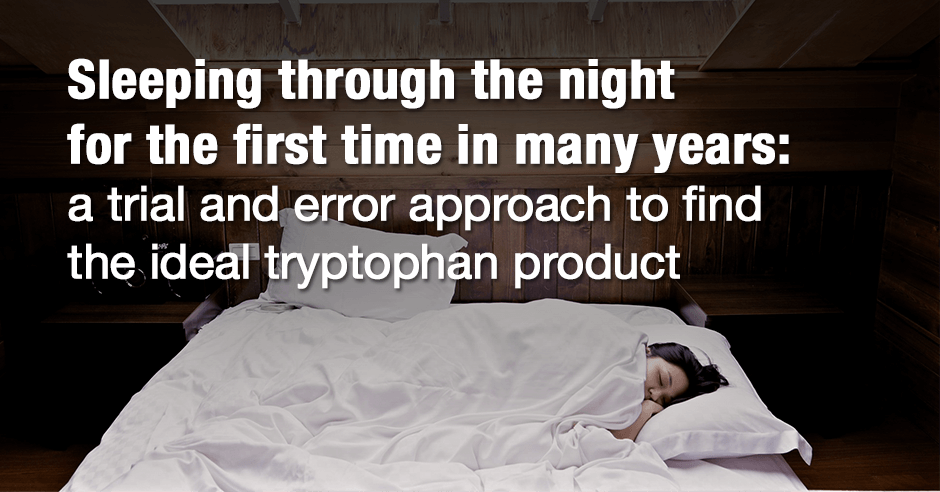
Sleeping through the night for the first time in many years: a trial and error approach to find the ideal tryptophan product

April 5, 2019 By Trudy Scott 42 Comments

If you have trouble sleeping through the night (or even have anxiety or panic attacks), finding the nutritional/biochemical root causes and addressing them is going to provide relief but it’s not always straightforward to find your root cause or causes (there are often more than one). Also, what works for you today may not work for you in 2 years time and may not work for your friend who has similar symptoms. You have to be a detective yourself and/or work with a health professional who can put all the puzzle pieces together.

I recently read a Facebook comment where someone was really frustrated about all the trial and error work that may be involved:

I’m just so tired of all this trial and error work trying to figure out why I’m anxious and depressed can’t sleep more than 4 hours a night. It’s been going on way too long I just want answers and a solution to all this. Enough already!

While I feel for this woman, I do acknowledge that it can sometimes be challenging to put all the puzzle pieces together. Other times we are able to figure things out very quickly. I’d like to share some feedback from Lorraine on the tryptophan-PMS-anxiety blog to illustrate how one small change made a big difference for her and it was a matter of trial and error.

Lorraine shares her great results with this Tryptophan Complete tweak for her insomnia:

Trudy, after listening to your talks about Lidtke Tryptophan I decided to give the Tryptophan Complete a try. I’ve taken one capsule each on the last two nights instead of two of the Tryptophan 500mg caps. Both nights I slept straight through all night and had a hard time waking up in the morning. I’ve struggled with insomnia for many, many years. The 500mg Lidtke Tryptophan supplements were helping but I was still waking up during the night. For me to sleep all night is almost miraculous.

I’ve been also taking Progesterone (low on testing), Magnesium, L-Theanine and Melatonin.

I recently added phosphatidylserine, and Holy Basil because saliva testing showed high cortisol at bedtime and off the charts high in the morning. I’m hoping to start eliminating some of those other supplements now that I’m sleeping so well.

I want to thank you for the Anxiety Summits and your book and updates on Facebook and newsletters. I have learned so much from you!

I’ve blogged about which product to use for boosting serotonin: Tryptophan 500mg or Tryptophan Complete (by Lidtke)?. I share this

  • I like to have my clients do a trial of the amino acidsso they can find the ideal dose for their needs and right now I still feel this would still be the best approach to take – using 500mg tryptophan. Once you have figured out you do well with tryptophan-only product and have your dose, then consider reducing it slightly after about 2-3 weeks and adding in additional Tryptophan Complete.
  • The other option is this: if you don’t get the expected results with Tryptophan 500mg, then try the Tryptophan Complete. You may need the other ingredients for it to work well for you.

Lorraine chose to do the latter – switching to Tryptophan Complete – since she didn’t get ideal results with Tryptophan 500mg and it worked for her. I will add that even though she slept straight through all night, I don’t like that she had a hard time waking up in the morning and when that happens, I recommend less tryptophan. It’s very possible that the ideal combination would be 1 x Tryptophan 500mg and 1 x Tryptophan Complete (my first suggestion).

Here is my quick commentary on the other products she’s using for her insomnia:

  • Progesterone and theanine: Testing progesterone levels are important before using progesterone. Both theanine and GABA support GABA production and when GABA is low, we often see low progesterone. With both low GABA and low progesterone, sleep and anxiety can be worse.
  • Magnesium: This mineral is commonly low and is needed to make both serotonin and GABA.
  • Melatonin: This is made in the body when there is sufficient serotonin and may not be needed long-term once she has good levels of serotonin (which the tryptophan product/s are helping her make).
  • Phosphatidylserine and holy basil: High cortisol is a common root cause of both insomnia and anxiety and saliva testing is an excellent way to confirm this. Phosphatidylserine can be used to lower high cortisol although I have found even better results with a phosphorylated serine product called Seriphos. Holy basil or tulsi is an adaptogenic herbal product that provides adrenal support helping with sleep problems and easing anxiety and stress.

In Lorraine’s case, her insomnia was caused by low serotonin (hence the need for tryptophan, melatonin and magnesium), low GABA/low progesterone (hence the need for progesterone, theanine and magnesium) and high cortisol (hence the need for phosphatidylserine and holy basil).

She shares she’s hoping to start eliminating some of these other supplements now that she’s sleeping so well. So, this would be another trial and error approach, stopping and/or reducing one at a time and seeing how she does. Or she may well find she needs to continue with everything for some time.

As you can see, for Lorraine it was a matter of trial and error to find her solution, but it was well worth it to get the “miraculous results” she experienced: sleeping though the night for the first time in many years!

Some of these products may work for you but it’s going to be a matter of trial and error to find your root cause/s and solution.

In case they are relevant for you, these products mentioned in this blog can all be found in my online Fullscript store:

  • Lidtke 500mg Tryptophan (with additional information here)
  • Lidtke Tryptophan Complete (with additional information here)
  • Magnesium
  • Melatonin (with additional information here)
  • Holy basil /tulsi (with additional information here)
  • Interplexus Seriphos (with additional information here)

I’d love to hear how you’ve used a trial and error approach either on your own or with the help of your practitioner to find the nutritional solution for your insomnia and/or anxiety?

If you’re a practitioner, please do share an example of how you’ve used this approach with a client or patient.

If you’ve had frustrations with this trial and error approach, please share them too.

Feel free to post your questions here too.
Filed Under: Tryptophan Tagged With: adrenals, anxiety, cortisol, depression, GABA, insomnia, Lidtke, magnesium, seriphos, serotonin, sleep, sleeping, trial and error, tryptophan, tryptophan complete, tulsi

Using amino acids for anxiety and depression: does the right dose ever change or need a tweak?

October 19, 2018 By Trudy Scott 14 Comments

If you are using targeted individual amino acids for anxiety and/or depression and doing well on them, you’ll likely get to the point when you’re asking questions like how to discontinue them and does the right dose ever change or need a tweak, especially after some stressful life events. Amy posted this question in the comments section of the blog on using tyrosine to create a sense of calm energy (paraphrased and formatting for ease of reading)

Trudy you are a God send! I stumbled upon your work after following Julia Ross. I have depression and anxiety. I’m currently taking:

1000 mg tyrosine 2x daily

500 mg glutamine morning, 1000mg mid-morning and afternoon

500mg DPA (Endorphigen) 3 x daily (previously I was using DLPA but your recommended DPA was so much better and less stimulating)

50 mg 5-HTP afternoon and

1500mg tryptophan at night

I used the amino acids to treat what used to be referred to as “atypical” depression: loss of motivation, tiredness, lethargic, intense carb craving, feelings of guilt and hopelessness. I would become paralyzed with depression, barely able to get through the days. When I was younger I treated these episodes with antidepressants but as I got older could no longer tolerate the side effects. I’m also still on birth control pills at the age of 46 and believe I may be in perimenopause but can’t stop the pills for medical reasons.

Tyrosine gave me my energy back, glutamine cut the carb cravings. DPA and True Calm work wonders for my anxiety.

I watch my sugar intake and always consume lots of animal protein. I’m so grateful for this solution.

After trialing this seems to be the right combo. I always get confused when is it time to discontinue supplements? Do you stop or slowly reduce or taper?

Does the “right” dose ever change? I’ve been on this combo about 2 months. I’ve felt great but some anxiety/panic creeping back up …. wondering if supplements need a tweak or is this just the result of some stressful life events. Advice appreciated!

I was really pleased to hear the wonderful results she was having and glad that she had trialed the amino acids to find the correct amount for her unique needs and situation. I don’t see this happening often enough and it really is the most effective way to get results. It’s what I do with all my clients – methodical, step-by-step trialing of each amino acid, one at a time and carefully documenting results (both good and bad) in order to find the optimal dose of each one.

When and how to discontinue the amino acids?

To answer her question about when and how to discontinue this is my feedback:

Once you are feeling back to your old self with no more anxiety, panic attacks or depression, you may choose to stop everything at once, but I prefer to slowly lower the amount of one amino acid at a time and add back if your symptoms come back. They don’t need to be “tapered” but doing it this way it helps with preventing your original anxiety and depression symptoms going back to really bad in one big swoop and having to start all over again.

I will add that I have had feedback from someone saying when she stopped tryptophan abruptly she felt the same withdrawal effects as when she weaned off meds but based on my experience this is very rare.

After posting her question Amy made some adjustments – taking less of all of them. As I mentioned above I find it better to lower the amount of one amino acid at a time – kind of reverse of the trialing method you use when starting the amino acids. Also, since she mentioned she felt anxiety/panic creeping back up, I would have expected her to increase some of the calming amino acids.

Does the right dose ever change or need a tweak?

And to answer Amy’s other question: does the right dose ever change or need a tweak?

Yes, the “right dose” can change based on stressful life events especially if you have pyroluria – stressful life events can cause you to dump more zinc and vitamin B6 affecting serotonin and GABA production and increasing the social anxiety.

Amy does mention that she’s on the birth control pill and this depletes zinc and vitamin B6 and hence serotonin) and has an impact on the microbiome – so this may well be playing a role in the need to tweak doses.

There are many other factors that could lead to the need to adjust the amino acids (or other supplement protocols):

  • hormonal changes like PMS, perimenopause or menopause
  • something contributing to leaky gut like adding back gluten or accidental exposure to gluten
  • antibiotics (affecting the microbiome and serotonin/GABA levels)
  • artificial sweeteners (because of their effect on the microbiome and hormones)
  • starting on other medications (since many cause nutritional depletions)
  • adding in a new food like collagen/gelatin (for some people collagen and gelatin may lower serotonin levels)
  • running a marathon (it likely depletes zinc and may ramp up cortisol)
  • a formulation changing completely without you knowing (one example is Seriphos – used to lower high cortisol – where the core ingredient changed completely and the labeling stayed the same)
  • a product changing from using gelatin to cellulose capsules (this may be problematic if you have SIBO)
  • you move into a new home and get mold exposure
  • you get a new dog or cat and start using Frontline Plus for fleas (fipronil, the active ingredient, targets GABA receptors and recent research points to increased anxiety, aggressive behavior, memory problems)
  • you have started using a sauna (depletion of zinc and other minerals, as well as stirring up toxins)
  • your need for serotonin support increases as you head into winter-time (some low serotonin folks are more susceptible to the winter blues)
  • a recent course of fluoroquinolone antibiotics (impacts on magnesium and GABA levels and the mitochondria)
  • you may no longer need them

This is not a complete list of reasons that could impact you but this will give you an idea of what to start to think about.

Hopefully this shows how important it is to monitor how you’re doing and adjust as needed (either up or down) and think about what is changing in your life.

If you’d like to read about the amino acids products Amy uses – the same ones I recommend and use with clients – you can find them listed on my supplements blog.

We appreciate Amy for allowing me to share her results and posting these questions which are a great learning opportunity for you.  She shared this with me:

I hope my “story” is helpful. Keep doing this important work! I work in the behavior health field. My colleagues think this is radical thinking and continue to only support the medical model. I’ve done a lot of my own research and trial and error. I wish there were more-open minded clinicians.

Hopefully with success stories like this, all the nutritional psychiatry research and behavioral health practitioners like Amy who have experienced it first hand and/or with clients/patients and family, we’ll change how mental health care is approached.

Do success stories like this lead you to be more open-minded about anxiety nutrition solutions? Have they worked for you?

And have you found the ideal dose of amino acids and then needed to adjust them up or down based on any of the above? How methodical were you in doing your adjustments?

Filed Under: Amino Acids, Anxiety, Anxiety and panic, Tryptophan Tagged With: adjust, anxiety, depression, discontinue, DPA, microbiome, right dose, stress, taper, tryptophan, tweak, tyrosine

How do I taper tryptophan without withdrawal symptoms: a tight band around my head, brain zaps and agitated free-floating anxiety?

September 21, 2018 By Trudy Scott 43 Comments

I have not had any clients experience the need to taper or slowly wean their tryptophan dose or report tapering side-effects similar to those they experienced when tapering off an antidepressant. However, I recently had someone ask this question on the blog (and then had someone else ask a similar question) so I’m sharing these questions and my responses in the hope of gleaning some additional information (and educating you if this applies to you). I never say never and am always learning. I’m also very interested to know how common this is and what some of the underlying factors could be.

Here is the question that was asked by Lara (we’ll call her Lara) and slightly paraphrased for clarity:

I’ve been taking 1500 mg of tryptophan for 3 months, and it has helped a lot with sleep and depression. I dropped to 1000 mg about a week ago then 500mg just to see how I’d do without it. I didn’t think it was numbing my feelings, but I am experiencing a return of feeling good.

I’ve been on antidepressants before and I am feeling the same withdrawal effects as when I weaned off meds. This is exactly why I chose to not go back to pharmaceuticals. It was difficult to wean off. How do I taper tryptophan without experiencing withdrawal symptoms? Thank you for your valuable knowledge.

These are the kinds of questions I’d ask a client in this situation:

  • Was the 1500mg helping and which low serotonin symptoms were eased?
  • How did this change when you reduced to 1000mg and then reduced to 500mg? i.e. did the low serotonin symptoms come back?
  • Which antidepressant are you comparing these affects to? And how long ago did you wean off the antidepressant?
  • Which brand of tryptophan you are using? (I find Lidtke is the best quality)

Keep in mind that we always want to be sure it’s not a one-off situation. In order to be sure someone is observing mild adverse effects from a supplement I’ll often have my client stop it and then add it back to make sure. And sometimes more than once.

In this instance repeating the process may be a good idea i.e. going back to 1000mg and then 1500mg and then reducing again, carefully documenting in a food mood supplement log.

It turns out that Lara was using the Lidtke tryptophan and she was seeing wonderful benefits for her low serotonin symptoms with none of the typical SSRI side-effects:

the 1500mg before bed with a small carb helped me get to sleep and stay asleep. It also helped with anxiety and depression during day. I tend to be a worrier, have social anxiety, and get stuck with negative thoughts about myself and others. And have very little interest in life.

I was on Zoloft from 2005 – 2009. Got off of that and did Lexapro for only 6 months in 2012. The Zoloft was life changing for me but I did not like the side effects and being on an antidepressant for the rest of my life.

The tryptophan is superior to these SSRIs [selective serotonin reuptake inhibitors] – no sexual side effects, no weight gain, or anhedonia [inability to feel pleasure in normally pleasurable activities].

She describes how she reduced the tryptophan and how her withdrawal symptoms were similar to those she experienced when tapering off her SSRIs in the past:

The withdrawal effects were felt when dropping from 1500mg to 1000mg, to 500mg, then zero over 2 days and they lasted about 3 days. By the 4th day I was no longer feeling bad.

The symptoms are hard to explain – it felt like a tight band around my head, also brain zaps (this is a common SSRI withdrawal symptom many describe feeling in their head).

The worst of it was a deep agitated free-floating anxiety like you’re walking along the edge of a cliff and there’s a physical pain in your gut. Fortunately, it was only present from waking up till around 2pm.

These are questions I’d ask or wonder about

As I mentioned in the introduction, I have not had any clients experience the need to taper or slowly wean their tryptophan dose or report tapering side-effects similar to those they experienced when tapering off an antidepressant. But if this is an issue some individuals experience I’d like to know about it

I’d also like to know how long the tapering side-effects of tryptophan last and how severe the symptoms are. In Lara’s case the symptoms were pretty severe but fortunately they only lasted 3 days which is very much shorter than SSRI tapers.

There could be confounding factors and here are additional questions I’d ask or wonder about if a client experienced similar adverse tapering effects. These are questions you could ask yourself if you have experienced this when stopping tryptophan abruptly:

  • Could the prior use of SSRI prescriptions be a factor? (but I have worked with many clients with prior use of SSRIs and not have tryptophan tapering issues)
  • What else has changed in terms of stress, diet, hidden gluten exposure, or even the something like a recent introduction of collagen (which may deplete serotonin levels in susceptible folks)?
  • Are there hormonal changes that could affect serotonin levels – like in a woman with PMS or perimenopausal or menopausal symptoms? (again, I’ve worked with many women of all ages and haven’t observed this to be an issue)
  • If you are prone to the winter blues and reduced winter serotonin, could stopping the tryptophan in the winter play a role? (I have had clients have SSRI tapering issues in winter because of being prone to the winter blues and choose to work with their doctors on their SSRI taper in the spring and summer for this reason)
  • Could this also be an issue with summer blues in hot states like Arizona?
  • Could any of these play a role: a recent medical procedure, a course of antibiotics (especially fluoroquinolones) or antifungals, poor gut health, a new infection, decreased immunity or increased inflammation?
  • Could low levels of these nutrients play a role: vitamin B6, ferritin, magnesium and zinc?
  • Would using high doses of vitamin C during the “taper” help reduce some of the symptoms? (this works well as an antidote when you take tryptophan and don’t need it and want to negate some of the negative effects, so may help in this situation)

Stopped tryptophan and felt very angry and down

The other question I had about tryptophan weaning is this one from someone who shared that she had suggested tryptophan for a friend. This friend was

experiencing a lot of ruminating and anxiety. She responded beautifully and felt great. About a year later, she tried to stop taking it, and said she felt very angry and down. Is there a weaning process for the tryptophan?

This could possibly be related to the above and you could pose similar questions but based on on what I see with clients I feel this is more of a matter of stopping the tryptophan too soon while she still had low serotonin – especially if the ruminating and anxiety came back. Feeling angry and down are classic signs of low serotonin.

The questions asked were specifically about tryptophan but they could also possibly apply to some individuals who stop 5-HTP abruptly.

I’d love to hear if you’ve experienced anything like this with either tryptophan or 5-HTP and if yes please share your answers to some of the above questions.

Right now, I’m afraid I don’t have an answer for you on how to taper tryptophan without these withdrawal symptoms: a tight band around the head, brain zaps and agitated free-floating anxiety. Right now, I’m not sure how big an issue this is. If it is common, I’m hoping some of the feedback I receive may provide some answers.

Filed Under: Tryptophan Tagged With: 5-HTP, agitated, angry, antidepressant, anxiety, anxious, brain zaps, down, symptoms, taper, tryptophan, withdrawal

Tryptophan promotes charitable donating

February 9, 2018 By Trudy Scott 2 Comments

This 2014 study is one of my all-time favorite applications of tryptophan, an amino acid I use extensively with anxious clients. The goal of the study, Tryptophan promotes charitable donating, was to investigate the link between serotonin and charitable giving, something the authors consider to be “one of the most important elements of prosocial behavior.” They offer this quote by Molière:

Every good act is charity. A man’s true wealth hereafter is the good that he does in this world to his fellow.

In this study they tested whether charitable donating or giving can be promoted with the use of the amino acid tryptophan, the biochemical precursor of serotonin:

Participants were compared with respect to the amount of money they donated when given the opportunity to make a charitable donation.

Additional information about the study

Here is some additional information about the study, where the study group was given 800mg of tryptophan:

Thirty-two healthy international south European students (mean age = 21.8; 4 male, 28 female; mean Body Mass Index = 21.5, range 17.8–30.8) with no cardiac, hepatic, renal, neurological, or psychiatric disorders, personal or family history of depression, migraine and medication or drug use participated in the experiment.

Sixteen participants (2 male, 14 female) were exposed to an oral dose (powder) of 0.8 grams [which is 800mg] of tryptophan – which roughly corresponds to the amount of TRP contained in 3 eggs–and 16 (2 male, 14 female) to 0.8 grams of microcrystalline cellulose, a neutral placebo. These doses were always dissolved in 200 ml of orange juice.

The donating task was standardized, without the presence of an experimenter, and with a fixed amount of money in a fixed number of notes and coins:

…Participants were not informed beforehand that the donating task was part of the experiment. Donating behavior was measured by the amount of money the participant donated. After having received 10 Euros… for their participation in the study, participants were left alone and asked whether they were willing to donate part of their financial reward to charity. Four money boxes (Unicef, Amnesty International, Greenpeace, and World Wildlife Fund) had been positioned on the table.

Here are the results:

As expected, compared to a neutral placebo, [tryptophan] appears to increase the participants’ willingness to donate money to a charity.

The serotonin oxytocin connection

The authors mention the “functional and anatomical interactions between serotonergic and oxytocinergic systems” and that “it may be likely that the willingness to donate money to a charity is modulated by the effect that serotonin exerts on oxytocin levels.”

My perspectives

I always like to add my perspectives on studies like this so here goes. We know that because tryptophan boosts serotonin it’s going to improve mood and reduce anxiety, worrying and fears. When you feel better, lighter, happier and calmer you feel like anything is possible and I can see how this could translate to feeling more caring and wanting to be charitable.

The authors do mention how low serotonin is correlated with “antisocial behaviors such as social isolation and aggression.” Anger and irritability is also something we see when serotonin is low. Of course, these are also antisocial behaviors.

Here is the amino acid questionnaire with the low serotonin section.  I’d like to add this new sign to the questionnaire and wonder what would work: Lack of charitability? No desire to give to charity?  

One additional comment is that with the work I do, the amino acids are used when you show signs of low serotonin such as anxiety or worry or depression or insomnia or afternoon/evening cravings. I use the trial-response method to determine if you’ll actually respond to tryptophan i.e. experience benefits and how much you will need to see those benefits. I starting dose is typically 500mg tryptophan and I have found the Lidtke brand to be the most effective. You can read more on tryptophan here.

Because of this I’m intrigued with this application of using tryptophan in healthy individuals. But I’d also be cautious based on what I’ve seen with clients who don’t need serotonin support and take tryptophan – they can feel too sleepy or even more sad or more anxious. This would be my hesitation in saying we should give everyone tryptophan in order to create a more charitable and giving society. I do however agree with the authors about the importance of a quality real whole foods diet with adequate quality animal protein, saying the study result:

supports the idea that the food we eat may act as a cognitive enhancer modulating the way we think and perceive the world and others.

The lead author, Professor Laura Steenbergen, works in the Cognitive Psychology Unit, Institute for Psychological Research and Leiden Institute for Brain and Cognition, Leiden University Leiden, Netherlands, as is doing some very interesting research with amino acids, cognitive enhancement and mood improvement. It’s really exciting!

We’d love to hear if you feel more charitable and giving when you take tryptophan or 5-HTP (since it also boosts serotonin)?

And if you feel more charitable and giving when you eat a quality real whole foods diet with adequate quality animal protein?

Filed Under: Tryptophan Tagged With: anxiety, Charitable, cognition, donation, giving, oxytocin, serotonin, tryptophan

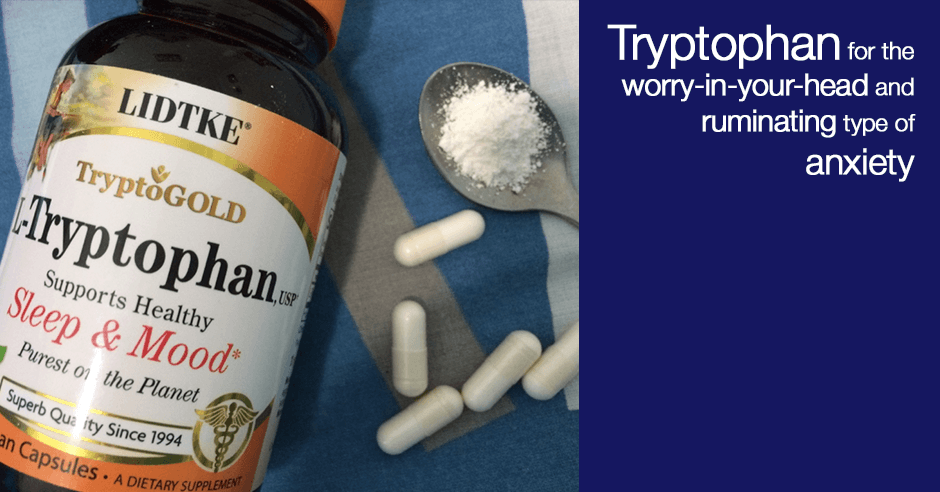
Tryptophan for the worry-in-your-head and ruminating type of anxiety

August 30, 2017 By Trudy Scott 193 Comments

Today I’m going to review some tryptophan products for the worry-in-your-head and ruminating type of anxiety, and share some additional resources for you.

The other symptoms we see with low serotonin are: panic attacks and phobias, lack of confidence, depression, negativity, imposter syndrome, PMS, irritability, anger issues, insomnia and afternoon/evening cravings.

Lidtke is the top brand of tryptophan that I recommend simply because I see it work so well and because of quality issues with tryptophan in the past. Here are the Lidtke tryptophan products I recommend:

  • Lidtke Tryptophan 500mg (this is ideal for doing a targeted trial, opened; it doesn’t taste very good and if a client needs to continue taking it this way we have them mix it with inositol or even glutamine powder)
  • Lidtke Tryptophan Complete (see below for when this one may work well)
  • Lidtke Chewable Tryptophan (this is also good for doing a trial and if lower doses are better; it’s also wonderful for children; there is some hesitation with the taste of the new 2025 formulation – more on this below)

This blog covers how to do an amino acid trial and has the low serotonin questionnaire, the precautions and what I mean by targeted individual amino acids.

When to use GABA vs tryptophan, PMS and when to use Tryptophan Complete

Anxiety: when to use GABA and tryptophan and how much to use

When you have anxiety it can be confusing trying to figure out the root cause. I like to start by assessing for low GABA and low serotonin because when you address these with targeted individual amino acids you typically see results right away and feel hopeful (and now have time to look for other root causes like gluten issues, high cortisol, gut issues, dietary changes etc).

But there may still be some confusion about when to use GABA and when to use tryptophan and how much of each of these amino acids to use. Read more here.

Tryptophan for PMS: premenstrual dysphoria, mood swings, tension, and irritability

In a study published in 1999, A placebo-controlled clinical trial of L-tryptophan in premenstrual dysphoria, tryptophan was found to reduce symptoms of PMS when used in the luteal phase or second half of the cycle (i.e. after ovulation)

This is very typical when I’m working with someone with PMS and anxiety and other mood symptoms. It typically takes 2 to 3 cycles for an amino acid like tryptophan to have an impact on PMS itself. But it does typically start to work right away on the less severe anxiety and mood symptoms that may also be a factor during the rest of the month. Read more here.

Tryptophan 500mg or Tryptophan Complete (by Lidtke)?

I like to have my clients do a trial of the amino acids so they can find the ideal dose for their needs and right now I still feel this would still be the best approach to take – using 500mg tryptophan. Once you have figured out you do well with tryptophan-only product and have your dose, then consider reducing it slightly after about 2-3 weeks and adding in additional Tryptophan Complete. Read more here.

Using chewable tryptophan for kids and pixie dust adults (and a potential taste issue)

Update Jan 2025: 

Lidtke tryptophan 100mg chewable is back! It’s great for anxious, worried, raging kids and pixie dust adults who have trouble sleeping too

The Lidtke tryptophan 100mg chewable product was out of stock for close to a year and was reformulated last year. This product has been a firm favorite of mine for many years and I’ve used it successfully with children and adults with signs of low serotonin.

I’ve used this product in the past with children who are anxious, worried, raging, having problems sleeping and craving sugar and carbs. I’ve also used it with “pixie dust” clients who do well with a small dose and prefer a chewable form of tryptophan. And I often recommend clients use it to do the initial one-off trial to figure out if low serotonin is the issue (and before moving on to a typical starting dose of 500mg tryptophan twice a day).

In this blog you’ll see the label of the newly formulated tryptophan 100mg chewable and some of the many advantages of tryptophan as a low-dose chewable. You’ll also see some feedback on the previous formulation, a success story with a young girl, my personal experience and some of the negative feedback on the taste. Read more here.

This blog post is part of a series of amino acid product reviews

You can read about GABA, glutamine, DPA (D-phenylalanine) and tyrosine on the following blog posts:

  • GABA for low GABA symptoms (physical anxiety)
  • Glutamine for calming, intense sugar cravings, gut healing and low blood sugar
  • DPA for weepiness, pain and comfort and reward eating
  • Tyrosine for focus, motivation, energy, a good mood and possibly even anxiety

Additional resources when you are new to using amino acids as supplements

We use the symptoms questionnaire to figure out if low serotonin or low GABA or low endorphins or low dopamine or low blood sugar may be an issue for you.

If you suspect low levels of any of the neurotransmitters and do not yet have my book, The Antianxiety Food Solution – How the Foods You Eat Can Help You Calm Your Anxious Mind, Improve Your Mood, and End Cravings, I highly recommend getting it and reading it before jumping in and using amino acids on your own so you are knowledgeable. And be sure to share it with the practitioner/health team you or your loved one is working with.

There is an entire chapter on the amino acids and they are discussed throughout the book in the sections on gut health, gluten, blood sugar control, sugar cravings, anxiety and mood issues.

The book doesn’t include product names (per the publisher’s request) so this blog, The Antianxiety Food Solution Amino Acid and Pyroluria Supplements, lists the amino acids that I use with my individual clients and those in my group programs. You can find them all in my online store.

If, after reading this blog and my book, you don’t feel comfortable figuring things out on your own (i.e. doing the symptoms questionnaire and respective amino acids trials), a good place to start if you also need serotonin support, is the Serotonin QuickStart Program. This is a paid online/virtual group program where you get my guidance on using tryptophan and 5-HTP safely, and community support during 5 LIVE Q&A calls. You can sign up to be notified when the next live launch of this program is happening. We take a deep dive into product options including the Lidtke products and others if you’re not able to access Lidtke.

If you also have low GABA symptoms, the next step to get help is the GABA QuickStart Program. This is also a paid online/virtual group program where you get my guidance and community support. Another option is the budget-friendly GABA QuickStart Homestudy program.

If you are a practitioner, join us in The Balancing Neurotransmitters: the Fundamentals program. This is also a paid online/virtual program with an opportunity to interact with me and other practitioners who are also using the amino acids.

Now I’d like to hear from you

The blog has many other posts on tryptophan and serotonin and simply use the “search” function to find them.

Have you had success with any of these tryptophan products? Or another brand?

Feel free to share and ask your questions below.


Filed Under: Supplements, Tryptophan Tagged With: lidke, serotonin, supplements, tryptophan

Anxiety: when to use GABA and tryptophan and how much to use

March 17, 2017 By Trudy Scott 116 Comments

When you have anxiety it can be confusing trying to figure out the root cause. I like to start by assessing for low GABA and low serotonin because when you address these with targeted individual amino acids you typically see results right away and feel hopeful (and now have time to look for other root causes like gluten issues, high cortisol, gut issues, dietary changes etc).

But there may still be some confusion about when to use GABA and when to use tryptophan and how much of each of these amino acids to use.

I’d like to share a question I received on this blog: I am on 5-HTP for anxiety and I am wondering about trying tryptophan instead and my response so you have a clearer understanding of this:

I have started with Source Naturals GABA Calm 125 mg, 2 on awakening and two in mid-afternoon, and 2 GABA Relaxer at bedtime. It has taken some anxiety edge away from me, but I still feel some anxiety on and off, not so severe as before. I used to feel very anxious on awakening. I want to improve more.

Today, I ordered Lidtke L-trytophan 500mg and am expecting to receive it in a week. I plan to take 2 Gaba Calm on awakening and 2 in mid-afternoon, then add one 500mg Trytophan mid-afternoon and one 500 mg trytophan at bed time.

Is this a good plan? Or shall I have 2 GABA Calm on awakening, 2 trytophan mid-afternoon and 2 trytophan at bedtime.

It’s an excellent question and this is my feedback (with some additional information here for this blog post)

Firstly I’m so pleased to hear the GABA products has taken some of the anxiety edge away.

I would expect this when someone has the low GABA type of anxiety and hear this all the time despite the fact I continue to be asked the blood brain barrier question and does GABA really work as a supplement.

There is also no specific formula to be followed because each person is different and when I’m working with someone we’re figuring out what is working and why and adjusting accordingly. If something is working we continue with that until no additional benefits are seen.

Ask yourself what low GABA anxiety symptoms (this is the physical anxiety) have improved with the GABA and how much (rate each one before – out of 10; and what are they now – out of 10).

From your question it sounds like they could improve more – so if we were working together I’d continue to increase GABA before adding something new. I’d do this until the low GABA symptoms are resolved or until no additional benefits are observed.

Remember when it comes to brain chemical imbalances and anxiety we have 3 anxiety types

  1. Low GABA anxiety type (physical anxiety, more stiff and tense muscles)
  2. Low serotonin anxiety type (mental anxiety, ruminations, negative self-talk, worry)
  3. Low blood sugar anxiety type (physical anxiety, but more shaky)

You need to figure out which type of anxiety you are experiencing and address that. It can be different for each person but it’s not uncommon to experience all of the above.

Once that has been done and we have the ideal amount of GABA and no more low GABA anxiety symptoms I’d then check what low serotonin symptoms my client has (these are the busy mind, ruminations type or worry anxiety).

If she does have some of these symptoms, we pick one or two symptoms and do a trial with 1 x 500mg tryptophan opened on to the tongue (or less if she’s super sensitive). She rates the symptoms out of 10 before the tryptophan trial and then after the trial. Depending on how she responds on the trial, we’ll decide if she needs 1 or 2 x 500mg mid-afternoon and evening. The bedtime dose also depends on how bad the insomnia is. We continue to increase as needed based on symptoms until she has no more low serotonin type symptoms or until no additional benefits are observed.

All the while we are starting to make other changes – like diet, eating for blood sugar balance (this and using glutamine helps with the low blood sugar anxiety type), no caffeine, no sugar, looking for high cortisol, no gluten, looking at gut health and for other nutritional deficiencies.

Here are some links to additional resources related to the above:

  • The amino acid questionnaire to help you figure out which anxiety type you have: low GABA or low serotonin
  • How to do an amino acid trial
  • Targeted individual amino acids: what do we really mean?
  • Anxiety and the amino acids: an overview
    • In this blog I make the following recommendation: if you do not have my book The Antianxiety Food Solution, I highly recommend getting it and reading it before jumping in to taking amino acids
  • Here are the supplements I use with my clients

I’d love to hear your feedback – do you/did you have the low GABA type of anxiety or the low serotonin type of anxiety or the low blood sugar type of anxiety or all three?

And feel free to share the before rating (from 1 to 10) and the after rating (from 1 to 10) once you’re taking the corresponding amino acid.

Filed Under: GABA, Tryptophan Tagged With: anxiety, GABA, tryptophan

  • « Go to Previous Page
  • Page 1
  • Interim pages omitted …
  • Page 7
  • Page 8
  • Page 9
  • Page 10
  • Page 11
  • Go to Next Page »

Primary Sidebar

GABA QuickStart Homestudy

gaba quickstart homestudy

Free Report

9 Great Questions Women Ask about Food, Mood and their Health

You'll also receive a complimentary subscription to my ezine "Food, Mood and Gal Stuff"


Connect with me

Popular Posts

  • Amino Acids Mood Questionnaire from The Antianxiety Food Solution
  • The Antianxiety Food Solution Amino Acid and Pyroluria Supplements
  • Pyroluria Questionnaire from The Antianxiety Food Solution
  • Collagen and gelatin lower serotonin: does this increase your anxiety and depression?
  • Tryptophan for the worry-in-your-head and ruminating type of anxiety
  • GABA for the physical-tension and stiff-and-tense-muscles type of anxiety
  • The Antianxiety Food Solution by Trudy Scott
  • Seriphos Original Formula is back: the best product for anxiety and insomnia caused by high cortisol
  • Am I an anxious introvert because of low zinc and vitamin B6? My response to Huffington Post blog
  • Vagus nerve rehab with GABA, breathing, humming, gargling and key nutrients

Recent Posts

  • Her cravings for chips and peanut butter were triggered by stress: GABA ends cravings and reduces physical tension and fear of heights
  • It is truly miraculous to be able to move through life without crippling anxiety and panic
  • GABA and tryptophan combo provide immediate and noticeable relief for tremors and cervical dystonia in just 7 days
  • Red light therapy for back and neck pain, plantar fasciitis and low mood – a complement to the amino acids GABA, DPA and tryptophan
  • What do I use instead of Seriphos to help lower high cortisol that is affecting my sleep and making me anxious at night?

Categories

  • 5-HTP
  • AB575
  • Addiction
  • ADHD
  • Adrenals
  • Alcohol
  • Allergies
  • Alzheimer's disease
  • Amino Acids
  • Anger
  • Antianxiety
  • Antianxiety Food Solution
  • Antidepressants
  • Anxiety
  • Anxiety and panic
  • Autism
  • Autoimmunity
  • benzodiazapines
  • Bipolar disorder
  • Books
  • Caffeine
  • Cancer
  • Candida
  • Children/Teens
  • Collagen
  • Cooking equipment
  • Coronavirus/COVID-19
  • Cravings
  • Depression
  • Detoxification
  • Diabetes
  • Diet
  • DPA/DLPA
  • Drugs
  • EFT/Tapping
  • EMF
  • EMFs
  • Emotional Eating
  • Endorphins
  • Environment
  • Essential oils
  • Events
  • Exercise
  • Fear
  • Fear of public speaking
  • Fertility and Pregnancy
  • Fish
  • Food
  • Food and mood
  • Functional neurology
  • GABA
  • Gene polymorphisms
  • General Health
  • Giving
  • Giving back
  • Glutamine
  • Gluten
  • GMOs
  • Gratitude
  • Gut health
  • Heart health/hypertension
  • Histamine
  • Hormone
  • Hyperparathyroidism
  • Hypoglycemia
  • Immune system
  • Inflammation
  • Insomnia
  • Inspiration
  • Introversion
  • Joy and happiness
  • Ketogenic diet
  • Lithium orotate
  • Looking awesome
  • Lyme disease and co-infections
  • MCAS/histamine
  • Medication
  • Men's health
  • Mental health
  • Mercury
  • Migraine
  • Mold
  • Movie
  • MTHFR
  • Multiple sclerosis
  • Music
  • NANP
  • Nature
  • Nutritional Psychiatry
  • OCD
  • Osteoporosis
  • Oxalates
  • Oxytocin
  • Pain
  • Paleo
  • Parasites
  • Parkinson’s disease
  • PCOS
  • People
  • PMS
  • Postpartum
  • PTSD/Trauma
  • Pyroluria
  • Questionnaires
  • Real whole food
  • Recipes
  • Research
  • Schizophrenia
  • serotonin
  • SIBO
  • Sleep
  • Special diets
  • Sports nutrition
  • Stress
  • Sugar addiction
  • Sugar and mood
  • Supplements
  • Teens
  • Testimonials
  • Testing
  • The Anxiety Summit
  • The Anxiety Summit 2
  • The Anxiety Summit 3
  • The Anxiety Summit 4
  • The Anxiety Summit 5
  • The Anxiety Summit 6
  • Thyroid
  • Thyroid health
  • Toxins
  • Tryptophan
  • Tyrosine
  • Uncategorized
  • Vegan/vegetarian
  • Women's health
  • Yoga

Archives

  • May 2026
  • April 2026
  • October 2025
  • September 2025
  • August 2025
  • July 2025
  • June 2025
  • May 2025
  • April 2025
  • March 2025
  • February 2025
  • January 2025
  • November 2024
  • October 2024
  • September 2024
  • August 2024
  • July 2024
  • June 2024
  • May 2024
  • April 2024
  • March 2024
  • February 2024
  • January 2024
  • December 2023
  • November 2023
  • October 2023
  • September 2023
  • August 2023
  • July 2023
  • June 2023
  • May 2023
  • April 2023
  • March 2023
  • February 2023
  • January 2023
  • December 2022
  • November 2022
  • October 2022
  • September 2022
  • August 2022
  • July 2022
  • June 2022
  • May 2022
  • April 2022
  • March 2022
  • February 2022
  • January 2022
  • December 2021
  • November 2021
  • October 2021
  • September 2021
  • August 2021
  • July 2021
  • June 2021
  • May 2021
  • April 2021
  • March 2021
  • February 2021
  • January 2021
  • December 2020
  • November 2020
  • October 2020
  • September 2020
  • August 2020
  • July 2020
  • June 2020
  • May 2020
  • April 2020
  • March 2020
  • February 2020
  • January 2020
  • December 2019
  • November 2019
  • October 2019
  • September 2019
  • August 2019
  • July 2019
  • June 2019
  • May 2019
  • April 2019
  • March 2019
  • February 2019
  • January 2019
  • December 2018
  • November 2018
  • October 2018
  • September 2018
  • August 2018
  • July 2018
  • June 2018
  • May 2018
  • April 2018
  • March 2018
  • February 2018
  • January 2018
  • December 2017
  • November 2017
  • October 2017
  • September 2017
  • August 2017
  • July 2017
  • June 2017
  • May 2017
  • April 2017
  • March 2017
  • February 2017
  • January 2017
  • December 2016
  • November 2016
  • October 2016
  • September 2016
  • August 2016
  • July 2016
  • June 2016
  • May 2016
  • April 2016
  • March 2016
  • February 2016
  • January 2016
  • December 2015
  • November 2015
  • October 2015
  • September 2015
  • August 2015
  • July 2015
  • June 2015
  • May 2015
  • April 2015
  • March 2015
  • February 2015
  • January 2015
  • December 2014
  • November 2014
  • October 2014
  • September 2014
  • August 2014
  • July 2014
  • June 2014
  • May 2014
  • April 2014
  • March 2014
  • February 2014
  • January 2014
  • December 2013
  • November 2013
  • October 2013
  • September 2013
  • August 2013
  • July 2013
  • June 2013
  • May 2013
  • April 2013
  • March 2013
  • February 2013
  • January 2013
  • December 2012
  • November 2012
  • October 2012
  • August 2012
  • July 2012
  • June 2012
  • May 2012
  • April 2012
  • March 2012
  • February 2012
  • January 2012
  • December 2011
  • November 2011
  • October 2011
  • September 2011
  • August 2011
  • July 2011
  • June 2011
  • May 2011
  • April 2011
  • March 2011
  • February 2011
  • January 2011
  • December 2010
  • October 2010
  • September 2010
  • July 2010
  • May 2010
  • April 2010
  • March 2010
  • February 2010
  • January 2010
  • November 2009

Share the knowledge!

The above statements have not been evaluated by the Food and Drug Administration. Products listed in this website are not intended to diagnose, treat, cure or prevent any disease.

The information provided on this site is for informational and educational purposes only and is not intended as a substitute for advice from your physician or other health care professional. You should consult with a healthcare professional before starting or modifying any diet, exercise, or supplementation program, before taking or stopping any medication, or if you have or suspect you may have a health problem.


Copyright © 2026 Trudy Scott. All Rights Reserved. | Privacy | Terms and Conditions | Refund Policy | Medical Disclaimer

Free Report

9 Great Questions Women Ask about Food, Mood and their Health

You’ll also receive a complimentary subscription to my ezine “Food, Mood and Gal Stuff”