• Skip to primary navigation
  • Skip to main content
  • Skip to primary sidebar

everywomanover29 blog

Food, Mood and Women's Health – Be your healthiest, look and feel great!

  • Blog
  • About
  • Services
  • Store
  • Resources
  • Testimonials
  • The Book
  • Contact
  • Search this site

depression

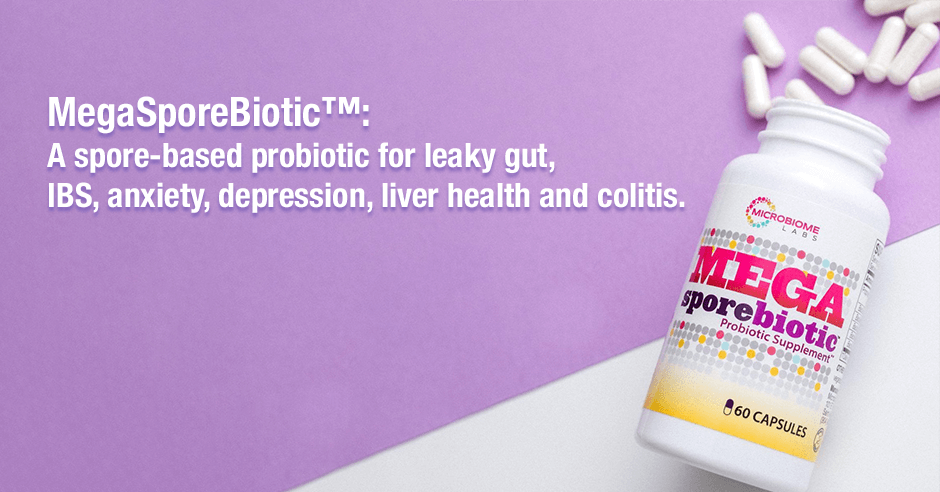
MegaSporeBiotic™: A spore-based probiotic for leaky gut, IBS, anxiety, depression, liver health and colitis

May 7, 2021 By Trudy Scott 44 Comments

megasporebiotic

MegaSporeBiotic™ is “a 100% spore-based broad-spectrum probiotic shown to maintain healthy gut barrier function” i.e. leaky gut. Research and clinical results show it is promising for irritable bowel syndrome (IBS) or SIBO (small intestinal bacterial overgrowth), recovery from liver injury caused by acetaminophen, and is protective in ulcerative colitis (an inflammatory bowel disease). Given the gut-brain connection and the fact that the majority of serotonin is produced in the gut, it’s not surprising that spore-based probiotics may also help ease anxiety and depression.

Here are some of the studies supporting this spore-based probiotic for gut issues:

  • Oral spore-based probiotic supplementation was associated with reduced incidence of post-prandial dietary endotoxin, triglycerides, and disease risk biomarkers

The key findings of the present study is that oral spore-based probiotic supplementation reduced symptoms indicative of “leaky gut syndrome”.

  • Bacillus spp. Spores-A Promising Treatment Option for Patients with Irritable Bowel Syndrome

The results demonstrated that patients treated with MegaSporeBiotic, compared with those treated with rifaximin followed by nutraceutical or low-FODMAP diet, had similar severity scores and rectal volume sensation test results for all parameters tested and statistically significant improvement in measurements of quality of life.

  • Probiotic Bacillus Spores Protect Against Acetaminophen Induced Acute Liver Injury in Rats

This is important because “Acetaminophen  is one of the most used analgesics [pain-reducing] and antipyretic [fever-lowering] agents in the world. Intoxication with acetaminophen is the main cause of acute liver toxicity in both the US and Europe.”

  • Probiotic Bacillus Spores Together with Amino Acids and Immunoglobulins Exert Protective Effects on a Rat Model of Ulcerative Colitis

Pretreatment with probiotic spore-forming Bacillus strains and a supplement of amino acids in combination with immunoglobulins exhibited anti-inflammatory and antioxidant effects in an AA-induced rat model of ulcerative colitis.

In one study, Bacillus coagulans (one of the spore-forming strains in MegaSporeBiotic™), when used alone was shown to help ease depression and gut problems in IBS patients. It was a randomised, double-blind, placebo controlled, multi-centre, pilot clinical study and:

The improvement in depression and IBS symptoms was statistically significant and clinically meaningful. These findings support B. coagulans MTCC 5856 as an important new treatment option for major depressive disorder in IBS patients.

During The Anxiety Summit 5: Gut-Brain Axis, I interviewed Kiran Krishnan who is a microbiologist, one of the founders of Microbiome Labs and a co-creator of MegaSporeBiotic™. He reminds us about the gut-brain connection and how anxiety and mental health issues come from the gut “because the vast majority of serotonin in your body – more than ninety percent of it – is actually produced in the gut” and not in the brain.

He talks about the type of cell in the gut that produces serotonin – the enterochromaffin cell – and the fact that “spore forming bacteria are some of the best stimulators of the enterochromaffin cell to produce serotonin.”

With low levels of serotonin you’ll experience the worry-type of anxiety with ruminations, obsessing, panic attacks, insomnia (often lying awake worrying). Other low serotonin symptoms include low mood/depression, late afternoon and evening carbohydrate cravings, pain, PMS, irritability, rage and anger, TMJ, low confidence, imposter syndrome and perfectionism. This type of low-serotonin anxiety is different from the low GABA physical/tension type anxiety.

These cells also play a crucial role in gastrointestinal regulation, particularly intestinal motility. We know low serotonin also contributes to digestive/IBS-type symptoms.

You can see a list of all the low serotonin symptoms here.

Brandy’s positive feedback on digestive issues and mental health

Brandy Oto, a marriage, couple and family counselor, incorporates  an integrative nutrition approach with her clients and she shares this:

MegaSporeBiotic™ makes a HUGE difference in my body! I have used every probiotic I can think of. Megaspore has not only resolved my digestive issues and allows me regular bowel movements, I find my mental health is much better! I have decided to use it in my practice as well now. Clients consistently report better mental health!

I asked her how quickly she notices an improvement when using MegaSporeBiotic™ and what aspects of mental health improve for her and her clients. She shares this:

I personally notice physical and mental anxiety decrease usually about 4-5 days, bowel movements easy within a couple days, ability to tolerate foods I was sensitive to after 6 or so months on them.

Clients report all types of improvements from anxiety, depression, to digestive issues improving. I have even heard from one client that when she gets off the probiotic symptoms of schizophrenia return.

In Brandy’s mental health practice, she does use amino acids to address neurotransmitter deficiencies too (for example tryptophan or 5-HTP to address low serotonin symptoms like worry, fear, panic attacks). She uses this spore-based probiotic to address underlying issues that cause those deficiencies.

It’s not one or the other – the probiotics and amino acids are part of a comprehensive plan.

Not everyone raves about this probiotic and some folks report it either does nothing for them or is too strong for them. So, as with everything, it’s very individualized.

How do spore-based probiotics differ from other probiotics?

During the Anxiety Summit interview with Kiran, he explains how they differ from other probiotics and why this is important for them to get into the gut:

These are organisms that have a unique capability of covering themselves in a thick calcified protein-like coating. So it’s armor, essentially, around the bacterial cell.

This allows these bacteria to come in through the gastric system, through the oral route, and survive the gauntlet that bacteria have to go through just getting through the process of digestion.

So the first step is the stomach acid. The stomach acid is called the gastric barrier and that’s because it acts as an actual physical barrier through the function of hydrochloric acid to try to kill off as many microbes that are trying to enter the system through food and other exposure.

If something gets past the stomach acid then the second piece of the gauntlet are the bile salts. Bile salts are released into the duodenum itself. Those are very strong antimicrobials and part of their function is to act as an antimicrobial to protect the system against a lot of bacteria coming in on a regular basis.

And then the last part is the pancreatic enzymes that help you digest your food – they also act as antimicrobials.

So there’s this really difficult gauntlet that the microbes that are entering the system through the oral route have to go through in order to make it past these initial systems to get to the site of action in the deeper part of the intestines where they’re supposed to function as a probiotic.

These spores have developed this unique, natural capability of covering themselves in this armor which allows them to survive through all of that.

This study, Survival and persistence of Bacillus clausii in the human gastrointestinal tract following oral administration as spore-based probiotic formulation confirms the above for one particular strain and concludes that “Bacillus clausii spores survive transit through the human gastrointestinal tract.”

Where can I buy MegaSporeBiotic™?
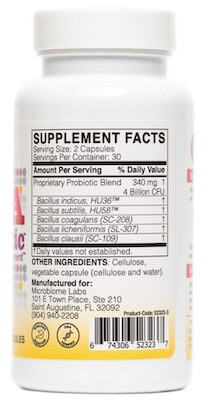
megasporebiotic supplement facts

These are the spore-based bacteria contained in the MegaSporeBiotic™ product: Bacillus Licheniformis, Bacillus Indicus HU36™, Bacillus Subtilis HU58™, Bacillus Clausii and Bacillus Coagulans.

You can purchase MegaSporeBiotic™ directly from Microbiome Labs once you have set up an account with them under my name. Use this link (and make sure the Direct2Patient™ Code says tscott).

You can also read more about the product on the Microbiome Labs site here.

If you already have an account with Fullscript, my online supplement store, you can purchase from there too.

If you don’t yet have an account with Fullscript you can read more about how to set up an account here.

Let us know if you’ve used MegaSporeBiotic™ with success and how it helped you with anxiety, depression and/or gut and liver health.

Let us know if you’ve used another spore-based probiotic and which one? Or do you have a favorite probiotic that is not spore-based?

I’m going to a product review like this once a month so please let me know if you like this format with research, feedback and mechanisms.  And let me know what other products you’d like me to review.

Feel free to post your questions here too.


Filed Under: Anxiety, Depression, Gut health, serotonin Tagged With: acetaminophen, amino acids, anxiety, Bacillus clausii, bacillus coagulans, colitis, depression, enterochromaffin, IBS, Kiran Krishnan, leaky gut, liver, MegaSporeBiotic™, Microbiome Labs, probiotics, serotonin, SIBO, spore-based probiotic

5-HTP and/or tryptophan to help with increased anxiety, panic attacks and depression caused by spring allergies

April 23, 2021 By Trudy Scott 24 Comments

5-htp, tryptophan, and spring allergies

Many of my clients experience increased anxiety, more severe panic attacks and worse depression when their spring allergies are flaring up. Do they feel like this simply because they feel so bad physically or could there be some underlying biochemistry that triggers their worsening mental health symptoms? I explain below how low serotonin is one possible root cause that can be addressed nutritionally with tryptophan and/or 5-HTP. Other factors to consider are the impact on the adrenals and GABA levels.

Today’s blog is inspired by Unten, who is part of my Facebook community. She asked this question:

I find that always during spring my anxiety and panic attacks get much worse when there’s lots of pollen and dust and other allergens in the air (at least here in Finland)…could this be true and not just “in my head”?

And then someone else responded saying:

I have noticed the same for me as well here in the USA.

My response to both of them is that it is not just in your head. There is plenty of research supporting this connection and we see it clinically too.

This paper, Changes in Severity of Allergy and Anxiety Symptoms Are Positively Correlated in Patients with Recurrent Mood Disorders Who Are Exposed to Seasonal Peaks of Aeroallergens, confirmed a significant positive association between allergy scores and anxiety scores and reports some possible mechanisms:

  1. The psychological effects of being ill, as well as impairments of sleep secondary to nasal obstruction or inflammation may affect mood.
  2. Cytokines may lead to a mood disturbance via the expression of the enzyme indoleamine-2,3-dioxygenase, which shifts the synthesis of tryptophan from serotonin to kynurenine. The resultant acute tryptophan depletion results in decreased brain serotonin, which may contribute to both depression and anxiety.
  3. Cytokines released during allergic inflammation may affect the brain directly, via nerves, surrounding tissue, or via regions that do not have a blood brain barrier, such as the circumventricular organs.
  4. Cytokines may also be involved in changes in the hypothalamic-pituitary-adrenal (HPA) axis… A sustained increase in activity in the HPA axis is associated with severe anxiety.
  5. Cytokines might lead to a physiological change in GABAA receptor functioning

I’ll discuss some possible solutions below.

Tryptophan and/or 5-HTP for low serotonin support if needed

The second bullet above is a good reason to consider serotonin support with tryptophan or 5-HTP.  If you have anxiety or panic attacks (and other low serotonin symptoms), we always want to figure out if low serotonin is a possible cause and address it, regardless of the circumstances/trigger (seasonal allergies in this instance).

Here are some useful blogs related to low serotonin and the amino acids:

  • You can see all the low serotonin symptoms here.
  • You can see the 5-HTP and tryptophan products I use with my clients here on the supplements blog.

Christine’s increased depression due to seasonal allergies improves a few days after starting 5-HTP and tryptophan

When I posted the above possible mechanisms on Facebook, Christine thanked me and shared her surprise:

I had no idea! This explains my increased depression lately. I didn’t know there was a correlation, but it makes complete sense now.  I’m in the Midwest. I’ve always had issues in March and April because of my seasonal allergies.

When I asked if she has used tryptophan or 5-HTP and bumped up the dose when she is suffering during seasonal allergies, she responded:

I just learned about both of these [amino acids]. I just bought your book and I am starting to use them. I don’t know if they take a while to start working?

I responded saying the amino acids work very quickly if they are needed and serotonin is low. It was not surprising to me that Christine shared her great results a few days later:

I’ve been using 5-HTP and tryptophan. I’m feeling so much better now. Thank you!

If your anxiety or depression is caused by low serotonin, you can expect to feel some relief right away provided you find the ideal dose for your unique needs. For some it’s a solution right away and for others it can take some adjusting up and down and trialing with 5-HTP and/or tryptophan to find the right combination.

Adrenal support and/or Seriphos if needed

The fourth bullet under the possible mechanisms above, is a good reason to also consider adrenal support: herbal adaptogens such a rhodiola and licorice, B vitamins, extra pantothenic acid and vitamin C. I also recommend using something like Seriphos to lower high cortisol if needed.  Another option is Relora®, a combination of Magnolia officinalis and Phellodendron amurense which lowers cortisol and reduces stress and anxiety.

Low GABA support if needed

The fifth bullet above is a good reason to consider GABA support with GABA or theanine if you have the low GABA type of physical tension that is made worse during your seasonal allergies. Just like with low serotonin we always want to figure out if low GABA is a possible cause of the anxiety and address it, even if it’s being made worse because of seasonal allergies.

You can see all the low GABA symptoms here and GABA products I use with my clients here on the supplements blog.

Address all root cause of anxiety/depression and the seasonal allergies

As always, it’s not only the low serotonin and/or high cortisol we need to address. We must always do a full functional workup looking at diet, nutritional deficiencies, digestion, all hormones, toxins and infections (and so on) so we can address all possible root causes.

Of course, identifying and addressing the root causes of the seasonal allergies is important too. This blog, Hay Fever: 9 Natural Ways to Treat Seasonal Allergy Symptoms by Dr. Josh Axe, outlines many dietary and lifestyle changes that can have a big impact. You’ll notice that much of this is foundational to my work.

Stress reduction is key and serotonin/GABA support help so much in this regard. So does zinc which is needed for both the production of serotonin and GABA, and enhanced immunity.

The blog also states that quercetin helps with seasonal allergies because it “stops the production and release of histamine.” Interestingly, quercetin also protects  against stress-induced anxiety and depression in animal studies (here is a link to one such study).

Thanks to these folks for asking good questions and for allowing me to share here.

My first take-away is not to ever tolerate not feeling your best (if that’s confusing – you deserve to feel your best always!) and always ask questions and look for connections.  My second take-away is to encourage you and others in my community to be empowered and take action. So kudos to Christine for jumping and purchasing my book, The Antianxiety Food Solution, reading it and being smart about using the amino acids.

Have you found that higher doses of tryptophan or 5-HTP helps with reducing the more severe anxiety, the depression/low mood and/or the increased panic attacks you experience during allergy season?

What about other low serotonin symptoms such as insomnia, cravings and PMS? Are they worse during allergy season?

Have you found addressing low GABA anxiety with higher doses of GABA helps when you have seasonal allergies?

Have you tested your cortisol levels during allergy season and found that adrenal support helps too? Keep in mind it will take longer to see results if this is the case.

Feel free to post your questions and feedback in the comments below.

Filed Under: 5-HTP, Allergies, Anxiety, Tryptophan Tagged With: 5-HTP, allergens, anxiety, cravings, cytokines, depression, dust, GABA, HPA axis, IDO, insomnia, panic attacks, pollen, quercetin, seasonal allergies, serotonin, spring allergies, tryptophan, zinc

5-HTP in Parkinson’s disease: benefits for depression, levodopa-induced motor complications, anxiety and sleep issues

March 19, 2021 By Trudy Scott 37 Comments

5-HTP and Parkinson's Disease

Research shows that the amino acid 5-HTP (5-hydroxytryptophan), the intermediate metabolite of tryptophan in the production of serotonin, offers benefits for Parkinson’s disease patients. It has been reported to ease depression and to reduce levodopa-induced motor complications. This was reported in two separate studies by the same research team at the University of Cagliari, Cagliari, Italy. They were small studies and considered preliminary. However, given what I know about the effectiveness of 5-HTP (for depression, anxiety and insomnia), I consider it a major step forward for Parkinson’s disease patients.

In this study, Efficacy and safety of 5-hydroxytryptophan on depression and apathy in Parkinson’s disease: a preliminary finding, 25 individuals with Parkinson’s disease were enrolled and “patients received placebo or 50 mg of 5-HTP daily over a period of 4 weeks”

The findings were as follows:

a significant improvement of depressive symptoms during the 50-mg 5-HTP treatment compared with placebo.

In this study 5-HTP was not shown to reduce apathy symptoms. This is not surprising to me, given that we typically see the amino acid tyrosine help with apathy symptoms associated with low catecholamines, rather than low serotonin.

In this study, Efficacy and safety of 5-Hydroxytryptophan on levodopa-induced motor complications in Parkinson’s disease: A preliminary finding, 12 Parkinson’s patients who were diagnosed with levodopa-induced dyskinesias (involuntary, erratic, writhing movements of the face, arms, legs or trunk) and motor fluctuations were included. Patients received placebo or 50 mg of 5-HTP daily over 4 weeks.

The findings were as follows:

a significant improvement of levodopa-induced dyskinesias during the 50 mg 5-HTP treatment.

The study authors make the serotonin-dyskinesias connection, stating that “Several studies have indicated that altered serotonergic neurotransmission may contribute to the motor features commonly associated with Parkinson’s disease drug treatment such as levodopa-induced dyskinesias.”

Both studies were single-center, randomized, double-blind placebo-controlled cross-over trials, and both recommend larger studies, longer treatment duration and different doses in order to corroborate these early findings.

Sleep disorders, gastrointestinal dysfunction, and anxiety in Parkinson’s disease

As reported in this paper, Spectrum of Non-Motor Symptoms in Parkinson’s Disease

Despite their significant clinical importance, the awareness of non-motor symptoms is quite negligible. Sleep disorders, gastrointestinal dysfunction, olfactory disturbances, anxiety, and depressive episodes are some of the most common non-motor presentations.

5-HTP helps with depression, anxiety, sleep issues (more here: Sleep promoting effects of combined GABA and 5-HTP)  and digestive issues.

Given what I know about the effectiveness of 5-HTP in my clients with anxiety, low mood and sleep issues, I consider this research a major step forward for Parkinson’s disease patients who may also experience anxiety, depression and sleep issues.

5-HTP also improves focus and when to switch to tryptophan

I was surprised to read that it has been hypothesized that ADHD and Parkinson’s disease share “several overlapping anatomical and neurochemical changes.”

As you can see from these blog posts, in addition to boosting mood, 5-HTP also improves focus and ADHD symptoms:

  • 5-HTP benefits both adopted daughters who had prenatal exposure to alcohol: they are happier, more focused and can stay on task
  • ADHD: 5-HTP melts have been a miracle for one of my adopted kids

One caution with 5-HTP is that it can raise salivary cortisol and cause a “wired-tired” feeling. When this happens we switch to tryptophan, always starting with a trial in order to figure out the ideal dose.

Typical dosing of 5-HTP for low serotonin-type anxiety

I find that using 50 mg of 5-HTP 1-3 times a day is a typical starting dose for my adult clients who have the low serotonin-type of anxiety (mental anxiety, worry, panic attacks, ruminations), low mood, insomnia, sugar cravings, irritability, PMS, anger issues and TMJ.

Keep in mind that in these 2 studies, 50 mg of 5-HTP was used only once a day, and everyone was given the same dose. There is never a one-size fits all approach with the amino acids and we adjust up or down based on symptoms, using a trial approach. I’d love to see this approach used with follow-up studies.

If you are new to the concept of low serotonin and the use of tryptophan or 5-HTP you will find this blog helpful.

Parkinson’s disease and GABA, flavonoids in parsley and insecticides

Here are some other useful blogs on Parkinson’s disease:

  • GABA and tryptophan for pain and anxiety in Parkinson’s disease?
  • Apigenin, a flavonoid in parsley increases brain connections, reduces anxiety
  • Fipronil insecticide: GABA/glutamate and anxiety, aggressive behavior, memory and Alzheimer’s disease in humans?

Have you or a family member with Parkinson’s disease used 5-HTP (or tryptophan) for easing depression and improving levodopa-induced motor complications?

Have you seen reduced anxiety, improved sleep, better digestion and better focus too?

If you’re a practitioner working with Parkinson’s patients have you used 5-HTP or tryptophan with success?

Feel free to post your questions and feedback in the comments below.

Filed Under: 5-HTP, Anxiety, Depression, Parkinson’s disease Tagged With: 5-HTP, anxiety, apathy, depression, dyskinesias, flavonoids, focus, GABA, gastrointestinal dysfunction, insecticides, levodopa-induced motor complications, Parkinson's disease, serotonin, sleep, tryptophan, tyrosine

Tryptophan for my teenager: she laughs and smiles, her OCD and anxiety has lessened, and she is more goal oriented and focused on school.

February 19, 2021 By Trudy Scott 60 Comments

tryptophan teenager

A mom posted wonderful feedback on a recent blog post on ADHD and 5-HTP, sharing how how tryptophan has helped her daughter in ways that didn’t even realize were an issue. She was shocked to see so many improvements and she called it a miracle experience. Here is the feedback Kathy shared:

We had a “miracle” experience with adding L-Tryptophan 300mg at bedtime for my teenager. I was shocked to see how much it improved my child, especially in ways that I didn’t even realize were an issue.

  • The results were like my teenager coming out of a fog, and also like my child was when she was younger.
  • She became more engaged with the family and did a lot less isolating.
  • She suddenly had interest in activities she had never pursued before. For instance, she wanted to start playing team sports after having played nothing for years. She wanted to do family game night! Before, we couldn’t force her to do it, and now it was her idea.
  • Her thoughts seemed to quiet down and were more organized.
  • Her OCD [obsessive compulsive disorder] and anxiety symptoms lessened.
  • She became more goal oriented and focused on school.
  • She laughs and smiles more!

We were most shocked because what we thought was normal teenage development was actually depression that we had no idea was there.

Tryptophan has been the most effective supplement we have ever used, and we have used a lot. We experimented with the dose until we ended up on 3 at bedtime. The brand we used was the Lidtke L-Tryptophan.

This did not cure her ADD [attention deficit disorder], but definitely improved her executive functioning. We tried GABA and saw no improvement with that. We have tinkered with L-Tyrosine, but haven’t been able to get on a steady dose of it yet to see if it will also help.

Thank you for giving us the idea to try!

I thanked Kathy for sharing the wonderful results her daughter has experienced with the Lidtke Tryptophan and how happy I was for both of them! I love all the surprise benefits she saw and appreciate this feedback: “This has been the most effective supplement we have ever used, and we have used a lot.” I hear this a lot – tryptophan and GABA are game-changers for so many of my clients.

I have these questions I posed to this mom and hope to hear back as I feel these answers may be helpful for other parents and practitioners who work with children and teens:

  • Did she use 3 x chewable 100mg tryptophan or did they open the 500mg capsule
  • What did the trial look like for them to end up with 300mg at night?
  • What made her decide to trial tryptophan instead of 5-HTP?
  • What made you decide to even trial tryptophan – was it her daughter’s anxiety and OCD?
  • Was her daughter willing to trial tryptophan initially or was there resistance?

I’ll report back once I get Kathy’s feedback.

Updated Feb 26, 2021: Kathy’s additional feedback

I read all your blog articles and listened to some of your talks. I made a chart of symptoms and then decided to try GABA Calm first.

Since that didn’t help, the next logical choice for us was Tryptophan. My daughter has a lot of anxiety, intrusive thoughts and other OCD symptoms. The reason I didn’t trial the 5HTP first was because my daughter has some PTSD like startle responses, and since you said it isn’t good if you have high cortisol, I just made the guess that she might due to her startle response.

With the Lidtke brand, we used the [500mg] capsules and I did not open them up. My teen would not have gone for that because she already takes a lot of supplements and medication because she is being treated for Lyme and Bartonella. She is cooperative with taking all the supplements/medication. We started at 1 capsule a night for probably 5 days and saw no difference, then went to two for another 5 days, and then landed on 3 when we noticed the dramatic change.

Even her LLMD [Lyme literate MD] was shocked at how differently she interacted with her in our last appointment.

To further clarify, it turns out Kathy actually started her daughter on 500 mg tryptophan at bedtime and they experimented with the dose until they ended up on 3 x 500 mg at bedtime for a total of 1500 mg. Kathy’s initial comment about 300 mg had me thinking she was using 3 x 100 mg tryptophan.  Either way, the dose really simply reflects what her needs are and someone else may well get similar benefits with a total of 300 mg. This is why we experiment and do trials of different doses.

Normal teenage development or really depression?

I also have to wonder how many other parents would say this after addressing low serotonin levels in their daughters and/or sons: “We were most shocked because what we thought was normal teenage development was actually depression that we had no idea was there.” I suspect the number would be high, especially given the growing incidence of anxiety and depression in teens.

Also, according to the ADAA/Anxiety and Depression Association of America “80 percent of kids with a diagnosable anxiety disorder and 60 percent of kids with diagnosable depression are not getting treatment.”

Now that Kathy has seen these wonderful changes in her daughter, I’d love to know – if she could go back in time – what questions would she have asked her anxious and depressed daughter so she could help her with solutions sooner?

And what would she suggest to other parents to be looking out for in order to identify anxiety and depression in their children (who often cannot adequately articulate that they do feel anxious and/or depressed)?

If you’re new to tryptophan and low serotonin symptoms

In case you’re new to tryptophan, it is an amino acid that is used as a supplement to support low levels of serotonin. With low serotonin we the worry-in-your-head and ruminating type of anxiety, panic attacks and phobias, lack of confidence, depression, negativity, imposter syndrome, PMS, irritability, anger issues, insomnia and afternoon/evening cravings.

My thoughts on addressing the ADD/inattention issues

Here are my thoughts for her as a starting point for helping to address her daughter’s residual ADD/inattention symptoms:

  • When someone does well with tryptophan at night, we often trial 5-HTP in the day too. As I shared in a recent blog, this mom shared how 5-HTP melts helped with ADHD symptoms one of her adopted kids was experiencing. She also called it a miracle!
  • A tyrosine trial may also be worth considering because low catecholamines lead to poor focus and feelings of calm focus are reported with tyrosine. However we also see low energy, low motivation and depression with low catecholamines which no longer seem to be an issue – so I’m not sure if tyrosine would help.
  • L-theanine may work better than the GABA they tried. Research shows it helps with cognitive function specifically improvements in verbal fluency (especially letter fluency) and improvements in executive function (planning, multi-tasking etc).
  • With inattention issues it’s also key to look at low blood sugar, gluten and sugar consumption, low iron, low zinc and low omega-3s.
  • If there was hyperactivity with the inattention then we’d look at salicylates in the diet as they can cause behaviour issues. This doesn’t seem to be the issue but a big clue would be red cheeks and ears that are not from the heat.
  • Consider the Ayurvedic herb Bacopa monnieri which has been shown to improve “visual perception, impulsivity, and attention” in children and adults.
  • Consider the herb saffron (Crocus sativus) which has “memory-enhancing and antidepressant effects” and has been shown to be as effective as Methylphenidate/Ritalin.

Additional resources when you are new to using amino acids as supplements

We use the symptoms questionnaire to figure out if low serotonin or low GABA or low endorphins or low dopamine or low blood sugar may be an issue for you.

If you suspect low levels of any of the neurotransmitters and do not yet have my book, The Antianxiety Food Solution – How the Foods You Eat Can Help You Calm Your Anxious Mind, Improve Your Mood, and End Cravings, I highly recommend getting it and reading it before jumping in and using amino acids on your own so you are knowledgeable. And be sure to share it with the practitioner/health team you or your loved one is working with.

There is an entire chapter on the amino acids and they are discussed throughout the book in the sections on gut health, gluten, blood sugar control, sugar cravings, anxiety and mood issues.

The book doesn’t include product names (per the publisher’s request) so this blog, The Antianxiety Food Solution Amino Acid and Pyroluria Supplements, lists the amino acids that I use with my individual clients and those in my group programs. You can find them all in my online store.

If, after reading this blog and my book, you don’t feel comfortable figuring things out on your own (i.e. doing the symptoms questionnaire and respective amino acids trials), the Serotonin QuickStart Program is a good place to start if you need serotonin support. This is a paid online/virtual group program where you get my guidance on using tryptophan and 5-HTP safely, and community support during 5 LIVE Q&A calls. You can sign up to be notified when the next live launch of this program is happening. We take a deep dive into product options including the Lidtke products and others if you’re not able to access Lidtke.

If you also have low GABA symptoms, the next step to get help is the GABA QuickStart Program. This is also a paid online/virtual group program where you get my guidance and community support. Another option is the budget-friendly GABA QuickStart Homestudy program.

If you are a practitioner, join us in The Balancing Neurotransmitters: the Fundamentals program. This is also a paid online/virtual program with an opportunity to interact with me and other practitioners who are also using the amino acids.

Now I’d like to hear from you

I love hearing heartwarming stories like this and I am sharing it here to inspire and offer hope!

Please do share your success story on the blog so we can all learn from each other, as well as inspire and offer hope.

How has tryptophan helped you or your child? What has helped with inattention?

Feel free to post your questions and feedback in the comments below.

Filed Under: Anxiety, Children/Teens, Testimonials, Tryptophan Tagged With: anxiety, children, depression, engaged, focused, fog, goal oriented, isolating, laughs, OCD, organized, panic, serotonin, teenager, tryptophan, worry

GABA for bladder pain/interstitial cystitis and urgency, IBS pain and anxiety?

January 29, 2021 By Trudy Scott 19 Comments

gaba for pain

Is there a place for using the amino acid GABA as a supplement to help with bladder pain/interstitial cystitis and urgency and also help with IBS (irritable bowel syndrome) pain – at the same time as easing physical anxiety caused by low GABA levels?

I’d like to share some quotes from this commentary, GABAB receptors in the bladder and bowel: therapeutic potential for positive allosteric modulators?

The bladder pain syndrome (or interstitial cystitis/painful bladder syndrome) is a spectrum of urological symptoms characterized by frequency, urgency and pain on bladder filling.

Bladder pain syndrome is often present in those who have IBS and abdominal pain and the authors mention the role of GABA in both:

Of further note is the co-morbidity between bladder pain syndrome and other functional pain syndromes, in particular, irritable bowel syndrome, a functional gastrointestinal disorder associated with visceral abdominal pain and altered bowel habit.

… it is tempting to speculate that GABAB receptor positive allosteric modulators may display efficacy in not only functional pain disorders of the bladder, but also of the bowel, through modulation of either central and peripheral GABAB receptors, or both

Positive allosteric modulators increase the activity of the receptor so in this case they are referring to increasing the activity of the GABAB receptor, reducing both bladder pain and gut pain.

This commentary and the original paper refer to ADX71441, which has been shown in animal studies to be “a novel positive allosteric modulator (PAM) of the GABAB receptor that has shown encouraging results in pre-clinical models of anxiety, pain, overactive bladder and alcohol addiction.”

We know GABA eases anxiety and pain and is extremely beneficial when it comes to alcohol and other addictions. In a recent blog post I shared how PharmaGABA eases physical anxiety in a young man who has recently given up Adderall, alcohol and nicotine.

And given that depression, anxiety and stress is higher in women with urinary incontinence it makes sense that an amino acid such as GABA may also help ease some of the symptoms of bladder pain syndrome when low GABA is a factor.

Depending on the root cause/s it’s likely addressing low serotonin, low endorphins and low vitamin D may play a role too. Of course, a full functional medicine and nutritional work up and review of diet is key too. Bladder dysfunction is seen in up to one third of celiac patients. This can cause leaky gut and nutritional deficiencies leading to low levels of neurotransmitters such a GABA and serotonin. Dietary oxalates can often be a factor with bladder issues and pain.

Considering all of this in conjunction with learning from/working with a pelvic floor physical therapist is key.  I highly recommend someone like Isa Herrera, MSPT, CSCS who hosts online masterclass training sessions for those with pelvic health issues. Her next series airs online mid-February and you can learn more and register here.

Here are some related blog posts that you may find helpful:

  • How GABA eases agonizing rectal pain and spasms in under 2 minutesProctalgia fugax is described as a condition that leads to rectal spasms and sharp fleeting pain in the lower rectum or anus….and GABA can ease the severe pain or prevent the spasms before they get severe
  • How to address rectal spasms with GABA, pelvic floor work, gluten removal and squats
  • GABA reduces the visceral pain of IBS & SIBO, eases anxiety and helps with insomnia

In case you’re new to GABA you can read more about it here: GABA for the physical-tension and stiff-and-tense-muscles type of anxiety.

The supplements blog lists GABA products I use with clients and recommend to those in my community.

I’m proposing that there is a place for doing a trial of the amino acid GABA (as a supplement) to help with bladder pain/interstitial cystitis and urgency, especially when there are symptoms of low GABA. If GABA helps to ease the visceral pain caused by IBS/SIBO, it may also help with bladder pain.

Have you observed less bladder pain when using GABA for easing physical symptoms of low GABA anxiety (stiff and tense muscles, overwhelm, lying awake tensely at night, anxious and using alcohol to self-medicate in order to calm down)?

Have you noticed any reduction in bladder urgency when using GABA for anxiety?

Do you also have IBS pain or SIBO (small intestinal bacterial overgrowth) pain that is eased by GABA?

Have the following helped: going gluten-free, lowering oxalates and/or working with a pelvic floor physical therapist?

If you’re a practitioner have you made any of these observations?

Please do share in the comments below and let me know if you found this helpful, what else has helped you or if you have questions.

Filed Under: Anxiety, GABA, Women's health Tagged With: addiction, anxiety, bladder pain, bladder urgency, celiac, depression, dietary oxalates, GABA, gluten, IBS, IBS pain, interstitial cystitis, physical therapist, physical-tension, Proctalgia fugax, rectal pain, SIBO, stiff muscles, stress, tense

Gelatin triggers Enid’s anxiety in 2 weeks but also lowers her high blood sugar

December 4, 2020 By Trudy Scott 59 Comments

gelatin anxiety blood sugar

Are you aware that collagen and gelatin lower serotonin and may increase your anxiety and depression and worsen sleep? I blogged about this in 2017 and how susceptible individuals who are prone to low serotonin need to be aware of this and use 5-HTP or tryptophan to counter these effects. (You can read that blog here: Collagen and gelatin lower serotonin: does this increase your anxiety and depression?)

I’m sharing an example today from one of the many comments on the above blog as a reminder or in case this is new to you. It’s not well-recognized as being an issue even amongst practitioners and producers of collagen. This is also one of my most commented-on blogs so it’s clearly a big issue. And gelatin and collagen continue to become more and more popular.

As a reminder, gelatin is derived from collagen: when collagen breaks down, it becomes gelatin. Also, collagen and gelatin are an excellent source of these amino acids: proline, glycine, glutamine and arginine, but they do not contain the amino acid tryptophan, so they have the potential to lower serotonin levels.

Tryptophan-depletion studies have been done for years – using a tryptophan-deficient amino acid mixture – as a way to study the relationship between low serotonin and depression.

More recently, collagen and gelatin are being used in these tryptophan-depletion studies because they do not contain the amino acid tryptophan. This paper, Pharmacokinetics of acute tryptophan depletion using a gelatin-based protein in male and female Wistar rats, summarizes what we find in a number of studies that use gelatin for the purpose of lowering serotonin levels (in order to study the relationship between serotonin and mood issues):

The essential amino acid tryptophan is the precursor of the neurotransmitter serotonin. By depleting the body of tryptophan, brain tryptophan and serotonin levels are temporarily reduced.

What does this mean? If you consume gelatin or collagen, you end up depleting the body of tryptophan and serotonin levels are reduced for a short time. This can cause the classic low serotonin symptoms of anxiety, worry, panic attacks, fears, phobias, insomnia, PMS, afternoon and evening carb cravings, TMJ, PMS and even anger issues and obsessions/ruminations.

For Enid, adding gelatin to her weight-loss shake powder triggered the anxiety she used to experience:

I wanted to give you a sincere thanks for all the work you’ve done on this blog and for studying collagen and serotonin. I have been taking quite a bit of gelatin because I started a medically supervised weight-loss program a month ago and was adding the shake powder to gelatin to thicken it. I have a long history of anxiety but it has been better for several years. However, I have been really concerned because my heart hurts with anxiety like I used to have. So your article and the follow up comments have helped me since I would have continued to eat a lot of it But now I will stop. So thank you.

Edid also shared how the gelatin she was consuming lowered her blood sugar in 2 weeks:

What’s interesting is in 2 weeks of being on the diet and eating a lot of gelatin my glucose went from 190 (which is diabetes) to 113 which is perfectly normal. I’ve read that collagen lowers blood sugar. So hopefully it will stay down even after stopping eating gelatin.

I found it very interesting to learn about Enid’s lowered glucose and that it went down so much in just 2 weeks.

So I went looking into the research and found this paper, Therapeutic effects of marine collagen peptides on Chinese patients with type 2 diabetes mellitus and primary hypertension, stating that marine collagen “significantly reduced levels of fasting blood glucose.” The study concluded that marine collagen:

may benefit glucose and lipid metabolism, insulin sensitivity, renal function and hypertension management in Chinese patients with T2DM [type 2 diabetes] and hypertension.

This research is new to me and is a good reason to continue with gelatin or collagen and address why it’s causing her anxiety to ramp again after just 2 weeks.

My message in this blog post – Collagen and gelatin lower serotonin: does this increase your anxiety and depression? – is not to stop gelatin or collagen, but rather help you to figure out if your consumption of collagen or gelatin is causing your anxiety, depression or insomnia (or other low serotonin symptoms), or making it worse.

Once you have made this connection then you need to figure out what the mechanism is. The fact that the consumption of collagen and gelatin lower serotonin is one possible factor for susceptible folks. The easiest way to figure out if it is low serotonin for you is to do a trial of tryptophan or 5-HTP while continuing to consume gelatin or collagen and see if your new symptoms resolve. (You can read more about that here: Tryptophan for the worry-in-your-head and ruminating type of anxiety)

I would love your feedback. Do you use gelatin or collagen regularly i.e. daily or weekly? And why do you use it? How do you use it and what benefits do you notice?

Have you noticed an increase in anxiety or worsening of mood or any of the other low serotonin symptoms? Do you take tryptophan or 5-HTP to offset the fact that gelatin or collagen doesn’t contain any tryptophan and does that help?

Have you done the off/on test with collagen/gelatin and tryptophan or 5-HTP – and what was the outcome?

Have you found collagen or gelatin helped to lower your high glucose levels?

Feel free to post your questions here too.
Filed Under: Anxiety Tagged With: 5-HTP, anxiety, collagen, depression, fasting blood glucose, gelatin, high blood sugar, hypertension, insomnia, serotonin, sleep, tryptophan, type 2 diabetes

  • « Go to Previous Page
  • Page 1
  • Interim pages omitted …
  • Page 4
  • Page 5
  • Page 6
  • Page 7
  • Page 8
  • Interim pages omitted …
  • Page 27
  • Go to Next Page »

Primary Sidebar

NEW! GABA QuickStart Homestudy (with special intro pricing)

gaba quickstart homestudy

Free Report

9 Great Questions Women Ask about Food, Mood and their Health

You'll also receive a complimentary subscription to my ezine "Food, Mood and Gal Stuff"


Connect with me

Popular Posts

  • Amino Acids Mood Questionnaire from The Antianxiety Food Solution
  • The Antianxiety Food Solution Amino Acid and Pyroluria Supplements
  • Pyroluria Questionnaire from The Antianxiety Food Solution
  • Collagen and gelatin lower serotonin: does this increase your anxiety and depression?
  • Tryptophan for the worry-in-your-head and ruminating type of anxiety
  • GABA for the physical-tension and stiff-and-tense-muscles type of anxiety
  • The Antianxiety Food Solution by Trudy Scott
  • Seriphos Original Formula is back: the best product for anxiety and insomnia caused by high cortisol
  • Am I an anxious introvert because of low zinc and vitamin B6? My response to Huffington Post blog
  • Vagus nerve rehab with GABA, breathing, humming, gargling and key nutrients

Recent Posts

  • What do I use instead of Seriphos to help lower high cortisol that is affecting my sleep and making me anxious at night?
  • BeSerene™ GABA/theanine cream eases severe muscle tension in her neck/shoulders, prevents her bad headaches and quells her anxiety
  • How the correct approach, dose and sublingual use of GABA can be calming and not cause a flushed and itchy face and neck
  • The amino acid glutamine improves low mood by addressing gut health, and it has calming effects too
  • Flight anxiety with heightened breath, physical tension and also fearing the worst (the role of low GABA and low serotonin)

Categories

  • 5-HTP
  • AB575
  • Addiction
  • ADHD
  • Adrenals
  • Alcohol
  • Allergies
  • Alzheimer's disease
  • Amino Acids
  • Anger
  • Antianxiety
  • Antianxiety Food Solution
  • Antidepressants
  • Anxiety
  • Anxiety and panic
  • Autism
  • Autoimmunity
  • benzodiazapines
  • Bipolar disorder
  • Books
  • Caffeine
  • Cancer
  • Candida
  • Children/Teens
  • Collagen
  • Cooking equipment
  • Coronavirus/COVID-19
  • Cravings
  • Depression
  • Detoxification
  • Diabetes
  • Diet
  • DPA/DLPA
  • Drugs
  • EFT/Tapping
  • EMF
  • EMFs
  • Emotional Eating
  • Endorphins
  • Environment
  • Essential oils
  • Events
  • Exercise
  • Fear
  • Fear of public speaking
  • Fertility and Pregnancy
  • Fish
  • Food
  • Food and mood
  • Functional neurology
  • GABA
  • Gene polymorphisms
  • General Health
  • Giving
  • Giving back
  • Glutamine
  • Gluten
  • GMOs
  • Gratitude
  • Gut health
  • Heart health/hypertension
  • Histamine
  • Hormone
  • Hyperparathyroidism
  • Hypoglycemia
  • Immune system
  • Inflammation
  • Insomnia
  • Inspiration
  • Introversion
  • Joy and happiness
  • Ketogenic diet
  • Lithium orotate
  • Looking awesome
  • Lyme disease and co-infections
  • MCAS/histamine
  • Medication
  • Men's health
  • Mental health
  • Mercury
  • Migraine
  • Mold
  • Movie
  • MTHFR
  • Multiple sclerosis
  • Music
  • NANP
  • Nature
  • Nutritional Psychiatry
  • OCD
  • Osteoporosis
  • Oxalates
  • Oxytocin
  • Pain
  • Paleo
  • Parasites
  • Parkinson’s disease
  • PCOS
  • People
  • PMS
  • Postpartum
  • PTSD/Trauma
  • Pyroluria
  • Questionnaires
  • Real whole food
  • Recipes
  • Research
  • Schizophrenia
  • serotonin
  • SIBO
  • Sleep
  • Special diets
  • Sports nutrition
  • Stress
  • Sugar addiction
  • Sugar and mood
  • Supplements
  • Teens
  • Testimonials
  • Testing
  • The Anxiety Summit
  • The Anxiety Summit 2
  • The Anxiety Summit 3
  • The Anxiety Summit 4
  • The Anxiety Summit 5
  • The Anxiety Summit 6
  • Thyroid
  • Thyroid health
  • Toxins
  • Tryptophan
  • Tyrosine
  • Uncategorized
  • Vegan/vegetarian
  • Women's health
  • Yoga

Archives

  • October 2025
  • September 2025
  • August 2025
  • July 2025
  • June 2025
  • May 2025
  • April 2025
  • March 2025
  • February 2025
  • January 2025
  • November 2024
  • October 2024
  • September 2024
  • August 2024
  • July 2024
  • June 2024
  • May 2024
  • April 2024
  • March 2024
  • February 2024
  • January 2024
  • December 2023
  • November 2023
  • October 2023
  • September 2023
  • August 2023
  • July 2023
  • June 2023
  • May 2023
  • April 2023
  • March 2023
  • February 2023
  • January 2023
  • December 2022
  • November 2022
  • October 2022
  • September 2022
  • August 2022
  • July 2022
  • June 2022
  • May 2022
  • April 2022
  • March 2022
  • February 2022
  • January 2022
  • December 2021
  • November 2021
  • October 2021
  • September 2021
  • August 2021
  • July 2021
  • June 2021
  • May 2021
  • April 2021
  • March 2021
  • February 2021
  • January 2021
  • December 2020
  • November 2020
  • October 2020
  • September 2020
  • August 2020
  • July 2020
  • June 2020
  • May 2020
  • April 2020
  • March 2020
  • February 2020
  • January 2020
  • December 2019
  • November 2019
  • October 2019
  • September 2019
  • August 2019
  • July 2019
  • June 2019
  • May 2019
  • April 2019
  • March 2019
  • February 2019
  • January 2019
  • December 2018
  • November 2018
  • October 2018
  • September 2018
  • August 2018
  • July 2018
  • June 2018
  • May 2018
  • April 2018
  • March 2018
  • February 2018
  • January 2018
  • December 2017
  • November 2017
  • October 2017
  • September 2017
  • August 2017
  • July 2017
  • June 2017
  • May 2017
  • April 2017
  • March 2017
  • February 2017
  • January 2017
  • December 2016
  • November 2016
  • October 2016
  • September 2016
  • August 2016
  • July 2016
  • June 2016
  • May 2016
  • April 2016
  • March 2016
  • February 2016
  • January 2016
  • December 2015
  • November 2015
  • October 2015
  • September 2015
  • August 2015
  • July 2015
  • June 2015
  • May 2015
  • April 2015
  • March 2015
  • February 2015
  • January 2015
  • December 2014
  • November 2014
  • October 2014
  • September 2014
  • August 2014
  • July 2014
  • June 2014
  • May 2014
  • April 2014
  • March 2014
  • February 2014
  • January 2014
  • December 2013
  • November 2013
  • October 2013
  • September 2013
  • August 2013
  • July 2013
  • June 2013
  • May 2013
  • April 2013
  • March 2013
  • February 2013
  • January 2013
  • December 2012
  • November 2012
  • October 2012
  • August 2012
  • July 2012
  • June 2012
  • May 2012
  • April 2012
  • March 2012
  • February 2012
  • January 2012
  • December 2011
  • November 2011
  • October 2011
  • September 2011
  • August 2011
  • July 2011
  • June 2011
  • May 2011
  • April 2011
  • March 2011
  • February 2011
  • January 2011
  • December 2010
  • October 2010
  • September 2010
  • July 2010
  • May 2010
  • April 2010
  • March 2010
  • February 2010
  • January 2010
  • November 2009

Share the knowledge!

The above statements have not been evaluated by the Food and Drug Administration. Products listed in this website are not intended to diagnose, treat, cure or prevent any disease.

The information provided on this site is for informational and educational purposes only and is not intended as a substitute for advice from your physician or other health care professional. You should consult with a healthcare professional before starting or modifying any diet, exercise, or supplementation program, before taking or stopping any medication, or if you have or suspect you may have a health problem.


Copyright © 2026 Trudy Scott. All Rights Reserved. | Privacy | Terms and Conditions | Refund Policy | Medical Disclaimer

Free Report

9 Great Questions Women Ask about Food, Mood and their Health

You’ll also receive a complimentary subscription to my ezine “Food, Mood and Gal Stuff”