• Skip to primary navigation
  • Skip to main content
  • Skip to primary sidebar

everywomanover29 blog

Food, Mood and Women's Health – Be your healthiest, look and feel great!

  • Blog
  • About
  • Services
  • Store
  • Resources
  • Testimonials
  • The Book
  • Newsletter
  • Contact
  • Search this site

anxiety

EMFs from computers, phones, smart meters and circuit breakers: insomnia, anxiety, depression, IBS, numb hands and skin issues

November 9, 2018 By Trudy Scott 4 Comments

EMFs from computers, phones, smart meters and circuit breakers can cause insomnia, anxiety, depression, IBS, numb hands and skin issues, and even play a role in the severity of autism and other chronic health conditions.

Investigative health journalist, Nick Pineault, also known as “The EMF Guy” is on a mission to create awareness and provide practical and research-based resources for practitioners via his ElectrosmogRX training. He kindly offered to answer questions from some of you in my community. Thank you if you submitted a question and if you didn’t hopefully you get to learn from these great questions that were submitted.

Sarah ask about smart meters, cell phone in the bedroom and a CPAP machine, and depression, IBS, insomnia, pain and sinus problems

PART 1: I’d like to know Nick’s thoughts on what to do about a smart meter outside a bedroom wall almost directly behind my husband’s side of the bed. He suffers from many things… depression IBS, diarrhea during stressful events, painful joints and muscles, fatigue, insomnia at times, sinus problems.

Here is Nick’s feedback for Sarah:

Smart utility meters have often been linked with an increase in a slew of symptoms. One 2013 survey conducted in Maine has shown that 98% of respondents were “fairly sure” or “very sure” that their meter had made them sicker.

Depression, digestive issues, joint pain, fatigue, insomnia are all possible EMF-related symptoms.

The best thing you can do is to call your utility company and have your smart meter replaced by an analog meter. In certain states they will charge you a monthly penalty for that, and in other states the utility company won’t let you do it.

If you can’t remove the smart meter, then your next best choice is to shield it. A cheap solution to dampen the signal is to install a Smart Meter Guard, but in the case of your husband there’s a chance this would not be enough.

You could install special shielding materials between your bedroom wall and the meter, with the help of a certified Building Biologist (find one in your state)

PART 2: I’ve just put our WiFi on a timer to turn off at night. He still charges his phone next to him at night and sleeps with a CPAP machine. My main question is, in the whole scheme of EMF exposure where does the smart meter stand? And how serious is this compared to having the phone charging at night and the CPAP machine?  Thanks very much for all that you do!

Here is Nick’s additional feedback for Sarah H:

Turning off the wifi at night is an extremely important step. In the case of your husband, again I’m not sure that will be sufficient.

I would try the following for 3 nights:

  • Make sure the CPAP machine is 3 or more feet away.
  • Charge the phones in another room
  • No wireless device in the room whatsoever
  • Unplug everything from the walls — lamps, alarm clocks, etc. Phones in Airplane Mode can act as an alarm clock, but don’t charge it on the bed stand.

See how his symptoms change. If there are improvements in his sleep and reduction in symptoms, it’ll be easier for him to get on board too.

I’d like to add to this and suggest also getting a meter to get your husband on board – seeing is often believing.

Nicole is concerned about numb hands, hypersensitivity to smells and skin issues

Can EMFs cause numb hands, hypersensitivity to smells, skin issues?

Here is Nick’s feedback for Nicole:

Numb hands is a very common symptom. A lot of people feel itchy, tingling or other weird sensations when they hold a cell phone.

Hypersensitivity to smells might be linked with multiple chemical sensitivity (MCS), which often comes with his cousin electro hypersensitivity (EHS).

EMFs can definitely be linked with skin issues as well. For starters, EMF cause oxidative stress in cells, which will lead to premature aging of the skin.

Many EHS sufferers have reported skin-related symptoms. The work of Dr. Dominique Belpomme from France has shown that 40% of EHS people have high histamine levels in their blood, and the work of Olle Johansson has shown that exposure to screens and TV monitors (sources of magnetic and electrical fields) causes mast cells to migrate to the top dermis and release more histamine.

Basically, this means that a lot of us could be having a type of low-level allergic reaction on the skin when exposed to various types of EMFs.

Dilia is concerned about the circuit breaker and EMFs

How can I deal with EMF? I live in a small apartment where the breaker of the house is located. Is there something I can do about this?

Here is Nick’s feedback for Dilia:

Make sure that this circuit breaker panel is at least several feet away from an area where you spend a lot of time. It is unfortunately very hard to shield against the magnetic fields emitted by a breaker panel — I would suggest hiring a Building Biologist if the breaker panel was right next to your bed, for example.

That being said, generally speaking, you can deal with EMFs by turning off your wireless devices when not in use.

This includes:

  • Hitting Airplane Mode on your phone unless you need it
  • Turning off the wifi at night when not in use and at night, or using wired ethernet (best)
  • “Unsmarting” the home by getting rid of cordless phones and other wireless gadgets if you can

Sarah J asks about EMF mitigating devices and harmonizers for anxiety, sleep issues and more

My family is experiencing a plethora of serious health issues including anxiety, major sleep issues, autism, multiple brain injuries, etc.

There are many EMF mitigating devices and harmonizers on the market.  Which products really make a difference? How can one know? Are there any specific brands you can recommend that really work?

How does one cut through the pretenders and find the products that really help? Thank you for the opportunity ask Nick!! I’ve struggling with these questions for a long time

Here is Nick’s feedback for Sarah J:

A lot of devices (chips you’d out on your cell phone or computer, pendants, etc.) claim to “harmonize” EMFs, but there is very little scientific validation to back up these claims.

I cannot deny that some of these devices have been shown to alleviate some symptoms: less frequent headaches, less blood clumping and better blood circulation, better HRV (a sign of lowered stress), etc.

That being said, there are a few problems with these devices:

a) They are often marketed as “protective” (prevents harm), but the manufacturers offer tests which demonstrate that they are “supportive” (reduces symptoms).

In other words, I have no seen a single manufacturer of these devices who could show me the scientific proof that if I installed one of these devices on my phone, my body would experience ZERO biological effects from it. No DNA damage, no oxidative stress.

b) As these devices reduce symptoms related to EMF exposure, some people use them as an excuse to increase their EMF exposure now that they don’t feel as sensitive to EMFs anymore.

If you keep all of the above in mind, using these pendant or “chips” isn’t a bad idea to reduce symptoms and support the body during times of inevitable exposure outside the home.

May I add that considering the plethora of symptoms that your family is experiencing — all of which have been linked in medical literature with EMF exposure — I suggest hiring a Building Biologist and having them do a thorough home survey in order to identify how you could minimize EMFs inside the home, and shield against outside exposures (cell phone towers, smart meters, etc.), if the need be.

I’d like to add that I am convinced my Qlink helps me, especially with sleep, but I also follow Nick’s advice and have no WiFi and very seldom use my smart phone. I also recently had someone share this with me: “I shut off my WiFi at night and wear a Qlink. I have tested the Qlink with looking at blood cells under a dark field microscope and when it’s removed there is definitely clumping of red blood cells. They move fine with it on.”

This question about EMF mitigating devices and harmonizers is the most common question I get related to EMFs so I’d like to reiterate Nick’s advice and share how Dr. Klinghardt supports his patients who have chronic health conditions – notice he makes no mention of devices or harmonizers.
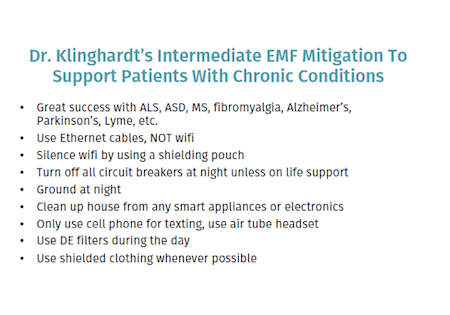
The above slide is shared with permission from Nick Pineault’s ElectrosmogRX training (more details below).

Adriana asks this question about EMFs and sleep

My boyfriend cannot sleep for years now. We are in the outskirts of [a big city], close to the international airport. We lived in the city and there we had a lot of EMF (3 GSM antennas on the neighboring block, WiFi with every neighbor in the block – 10 stories high and 4 apartments/floor + intelligent meters for heating on every heater in the house. That was a lot for him and after we moved outside the city, to a house and in a low-density housing area, then it was better for him. But he sits at the laptop for 6-8 hours every day. You think that may be affecting him that much?

Here is Nick’s feedback for Adriana:

Your boyfriend might be feeling symptoms related to EMF exposure, and sleep disturbance is one of the most common ones.

If he exposes himself to a laptop connected via WiFi, then his symptoms might persist.

In his case, especially if he works at the computer all day, every day — I’d recommend cutting off the WiFi anytime it’s not in use and using his computer via an ethernet cable instead of WiFi.

Turn off the WiFi at night, unplug everything from the walls and even turn off the circuit breaker to the bedroom at night for at least 3 days and sees if this helps him.

In order to alleviate EMF sensitivity, it’s critical that he takes extra step to reduce his exposure as much as possible.

If you’re a practitioner, are you looking at the impact EMFs have on the health of your clients/patients and do you feel comfortable answering questions like these ones? If not, Nick Pineault is on a mission to create awareness and provide practical and research-based resources for practitioners via his ElectrosmogRX training (it’s 33% off for a limited time).

Nick is also offering these non-cost resources so you can be as informed as possible:

  • Downloadable Guide: How EMFs Affect Your Patients/Clients
  • EMF case studies video (teaching you how to identify EMF-related symptoms)
  • Here is the link to register for a replay of the webinar: 3 Essential Steps to Know Which of Your Patients/Clients Are Suffering From EMF-Related Symptoms

This blog is strictly about EMFs – which cannot be ignored – but we must not forget how the amino acids like GABA and tryptophan can help with anxiety and depression, and even pain and IBS. They can both also help with insomnia as can melatonin which has been shown to be disrupted by EMF exposure. This is just the tip of the iceberg in terms of nutritional support for EMF-related issues for both healing and resilience – Nick covers it all in the ElectrosmogRX training (which I’ve done and wholeheartedly endorse).

Are you seeing improvements in your health once you address EMFs? What changes have you made? Have nutritional changes helped too?
Filed Under: EMF, EMFs Tagged With: anxiety, depression, electrosmog, EMF harmonizer, EMF mitigating device, EMFs, IBS, insomnia, Nick Pineault, Qlink, sinus, skin, sleep

MDMA-Assisted Psychotherapy for Treating Chronic PTSD: Why I feel we can do better and the role of nutrition and amino acids like GABA

November 2, 2018 By Trudy Scott 7 Comments

You may be familiar with MDMA (3,4-methylenedioxymethamphetamine), also known as “ecstasy”, because of its reputation as a party drug. And you have likely seen some of the media reports on the new research and growing support for MDMA-Assisted psychotherapy for treating chronic PTSD (post-traumatic stress disorder). Due to adverse effects I’d like to share my concerns about this research and treatment and why I feel we can do better – by addressing nutrition and using amino acids like GABA and others.

In a recent press release, Colorado Study Shows Lasting Benefits of MDMA-Assisted Psychotherapy for Treating Chronic PTSD, the non-profit organization, Multidisciplinary Association for Psychedelic Studies (MAPS) reports these study results:

28 participants found that one month after their second day-long experimental session, 42.9% in the active-dose (100 mg and 125 mg) MDMA groups did not qualify for a diagnosis of PTSD, compared to 33.3% in the low-dose MDMA (40 mg active placebo) control group.

The results were even more notable 12 months after the third active-dose experimental session, which found that one year following treatment with MDMA-assisted psychotherapy, 76% of participants no longer had PTSD.

It is the largest U.S. FDA-regulated double-blind, placebo-controlled clinical trial of MDMA-assisted psychotherapy for the treatment of chronic PTSD and the results are impressive: 76% of the study participants no longer had PTSD after a year and 3 treatment sessions. I’m really happy for the participants BUT I believe we can do better because there are adverse reactions to this treatment and there are other safer approaches for recovery.

This comment about an acceptable risk profile and adverse reactions concerns me (and I suspect it concerns you too):

The study replicated previous research showing an acceptable risk profile for MDMA, with the most frequently reported adverse reactions during experimental sessions being anxiety, jaw clenching, headache, muscle tension, dizziness, fatigue, and low mood.

Adverse reactions one week following treatment included insomnia, low mood, irritability, and ruminations. Temporary elevations in pulse, blood pressure, and temperature were also recorded during MDMA sessions, and did not require medical intervention.

A common theme we see in the research on psychedelics is how effective it is for PTSD that doesn’t respond to therapy or medications. This paper states:

There is an immense need for innovative treatment options that improve outcomes, especially for PTSD refractory to psychotherapy and/or pharmacotherapies

I agree there is an immense need for successful treatment approaches, but jumping to MDMA from psychotherapy and/or psychiatric medications is skipping out the entire nutritional and biochemical step which is SO powerful and doesn’t have the above adverse effects. I’m concerned too many who have not seen benefits from therapy or medications are seeing MDMA as THE solution and are going to be harmed even further.

This paper, The Potential Dangers of Using MDMA for Psychotherapy, the author is concerned about the fact that “acute MDMA can stimulate the release of difficult feelings and memories, which may be distressing” and also the negative moods that occur after MDMA treatment:

This period of negative cognitions may be counter-productive, especially in psychiatrically vulnerable clients, for instance those with predispositions to anxiety, depression, or psychosis. For example, it could increase the likelihood of suicide in those individuals with strong post-recovery feelings of depression.

Because of this, I wholeheartedly agree with the author’s position:

it will always be far safer to undertake psychotherapy without using co-drugs. In selected cases MDMA might provide an initial boost, but it also has far too many potentially damaging effects for safe general usage.

In addition to psychotherapy, there are also so many nutritional and biochemical factors we can consider when it comes to PTSD. These don’t have any of the above damaging effects seen with MDMA. Here are a few to consider:

  • In this blog post, PTSD from 3 tours in Afghanistan: Can GABA help with the anxiety? how low GABA can lead to physical anxiety, muscle tension and the need to self-medicate with alcohol or sugary foods in order to calm down and relax. We also have research supporting the use of GABA for helping with unwanted obtrusive thoughts which are common with PTSD. When low GABA is suspected we do an amino acid trial with GABA, one of the calming amino acids.
  • A 2016 reports that blueberries boost serotonin and may help with PTSD and anxiety https://www.everywomanover29.com/blog/blueberries-serotonin-ptsd-anxiety/. This was an animal study where the traumatized rats were fed a blueberry-enriched diet. The study authors report an increase in serotonin levels, suggesting that “non-pharmacological approaches might modulate neurotransmitters in PTSD.”
  • A recent meta-analysis, Association between posttraumatic stress disorder and lack of exercise, poor diet, obesity, and co-occuring smoking, confirms the diet and lifestyle connection to being more impacted by trauma when health is not optimal.

I feel it is these above approaches and others like this that we need to be using to address PTSD, rather than subjecting individuals who are already suffering to treatments that have adverse reactions AND are not addressing underlying nutritional deficiencies of low GABA, low serotonin, out of balance endocannabinoid system and overall health, to name a few of many possible underlying biochemical factors.

If this treatment approach is approved, I would hope that all the adverse effects and dangers are clearly explained and I’d also like there to be informed consent before it is used – so individuals know exactly what they are getting into. Hopefully, by the time it is approved, nutritional psychiatry will be more accepted.

I’d love to hear your thoughts on this research and treatment approach. Is it something you have considered or would possibly consider in the future – you personally or with patients?

Or do you have similar concerns that I have?

Have you already tried MDMA recreationally (possibly for therapeutic reasons) and what were your experiences like?

Filed Under: PTSD/Trauma Tagged With: anxiety, biochemical, blueberries, depression, GABA, insomnia, irritability, low mood, MAPS, MDMA, nutrition, nutritional, PTSD, ruminations

Using amino acids for anxiety and depression: does the right dose ever change or need a tweak?

October 19, 2018 By Trudy Scott 14 Comments

If you are using targeted individual amino acids for anxiety and/or depression and doing well on them, you’ll likely get to the point when you’re asking questions like how to discontinue them and does the right dose ever change or need a tweak, especially after some stressful life events. Amy posted this question in the comments section of the blog on using tyrosine to create a sense of calm energy (paraphrased and formatting for ease of reading)

Trudy you are a God send! I stumbled upon your work after following Julia Ross. I have depression and anxiety. I’m currently taking:

1000 mg tyrosine 2x daily

500 mg glutamine morning, 1000mg mid-morning and afternoon

500mg DPA (Endorphigen) 3 x daily (previously I was using DLPA but your recommended DPA was so much better and less stimulating)

50 mg 5-HTP afternoon and

1500mg tryptophan at night

I used the amino acids to treat what used to be referred to as “atypical” depression: loss of motivation, tiredness, lethargic, intense carb craving, feelings of guilt and hopelessness. I would become paralyzed with depression, barely able to get through the days. When I was younger I treated these episodes with antidepressants but as I got older could no longer tolerate the side effects. I’m also still on birth control pills at the age of 46 and believe I may be in perimenopause but can’t stop the pills for medical reasons.

Tyrosine gave me my energy back, glutamine cut the carb cravings. DPA and True Calm work wonders for my anxiety.

I watch my sugar intake and always consume lots of animal protein. I’m so grateful for this solution.

After trialing this seems to be the right combo. I always get confused when is it time to discontinue supplements? Do you stop or slowly reduce or taper?

Does the “right” dose ever change? I’ve been on this combo about 2 months. I’ve felt great but some anxiety/panic creeping back up …. wondering if supplements need a tweak or is this just the result of some stressful life events. Advice appreciated!

I was really pleased to hear the wonderful results she was having and glad that she had trialed the amino acids to find the correct amount for her unique needs and situation. I don’t see this happening often enough and it really is the most effective way to get results. It’s what I do with all my clients – methodical, step-by-step trialing of each amino acid, one at a time and carefully documenting results (both good and bad) in order to find the optimal dose of each one.

When and how to discontinue the amino acids?

To answer her question about when and how to discontinue this is my feedback:

Once you are feeling back to your old self with no more anxiety, panic attacks or depression, you may choose to stop everything at once, but I prefer to slowly lower the amount of one amino acid at a time and add back if your symptoms come back. They don’t need to be “tapered” but doing it this way it helps with preventing your original anxiety and depression symptoms going back to really bad in one big swoop and having to start all over again.

I will add that I have had feedback from someone saying when she stopped tryptophan abruptly she felt the same withdrawal effects as when she weaned off meds but based on my experience this is very rare.

After posting her question Amy made some adjustments – taking less of all of them. As I mentioned above I find it better to lower the amount of one amino acid at a time – kind of reverse of the trialing method you use when starting the amino acids. Also, since she mentioned she felt anxiety/panic creeping back up, I would have expected her to increase some of the calming amino acids.

Does the right dose ever change or need a tweak?

And to answer Amy’s other question: does the right dose ever change or need a tweak?

Yes, the “right dose” can change based on stressful life events especially if you have pyroluria – stressful life events can cause you to dump more zinc and vitamin B6 affecting serotonin and GABA production and increasing the social anxiety.

Amy does mention that she’s on the birth control pill and this depletes zinc and vitamin B6 and hence serotonin) and has an impact on the microbiome – so this may well be playing a role in the need to tweak doses.

There are many other factors that could lead to the need to adjust the amino acids (or other supplement protocols):

  • hormonal changes like PMS, perimenopause or menopause
  • something contributing to leaky gut like adding back gluten or accidental exposure to gluten
  • antibiotics (affecting the microbiome and serotonin/GABA levels)
  • artificial sweeteners (because of their effect on the microbiome and hormones)
  • starting on other medications (since many cause nutritional depletions)
  • adding in a new food like collagen/gelatin (for some people collagen and gelatin may lower serotonin levels)
  • running a marathon (it likely depletes zinc and may ramp up cortisol)
  • a formulation changing completely without you knowing (one example is Seriphos – used to lower high cortisol – where the core ingredient changed completely and the labeling stayed the same)
  • a product changing from using gelatin to cellulose capsules (this may be problematic if you have SIBO)
  • you move into a new home and get mold exposure
  • you get a new dog or cat and start using Frontline Plus for fleas (fipronil, the active ingredient, targets GABA receptors and recent research points to increased anxiety, aggressive behavior, memory problems)
  • you have started using a sauna (depletion of zinc and other minerals, as well as stirring up toxins)
  • your need for serotonin support increases as you head into winter-time (some low serotonin folks are more susceptible to the winter blues)
  • a recent course of fluoroquinolone antibiotics (impacts on magnesium and GABA levels and the mitochondria)
  • you may no longer need them

This is not a complete list of reasons that could impact you but this will give you an idea of what to start to think about.

Hopefully this shows how important it is to monitor how you’re doing and adjust as needed (either up or down) and think about what is changing in your life.

If you’d like to read about the amino acids products Amy uses – the same ones I recommend and use with clients – you can find them listed on my supplements blog.

We appreciate Amy for allowing me to share her results and posting these questions which are a great learning opportunity for you.  She shared this with me:

I hope my “story” is helpful. Keep doing this important work! I work in the behavior health field. My colleagues think this is radical thinking and continue to only support the medical model. I’ve done a lot of my own research and trial and error. I wish there were more-open minded clinicians.

Hopefully with success stories like this, all the nutritional psychiatry research and behavioral health practitioners like Amy who have experienced it first hand and/or with clients/patients and family, we’ll change how mental health care is approached.

Do success stories like this lead you to be more open-minded about anxiety nutrition solutions? Have they worked for you?

And have you found the ideal dose of amino acids and then needed to adjust them up or down based on any of the above? How methodical were you in doing your adjustments?

Filed Under: Amino Acids, Anxiety, Anxiety and panic, Tryptophan Tagged With: adjust, anxiety, depression, discontinue, DPA, microbiome, right dose, stress, taper, tryptophan, tweak, tyrosine

Fipronil insecticide: GABA/glutamate and anxiety, aggressive behavior, memory and Alzheimer’s disease in humans?

October 5, 2018 By Trudy Scott 21 Comments

The insecticide called fipronil has me concerned because there is increasing evidence that it can be toxic to humans and, much to my surprise, I’ve just discovered that the main mechanism of action is by targeting the gamma-aminobutyric acid (GABA) receptor and recent research points to increased anxiety, aggressive behavior, memory problems and even Alzheimer’s disease in animal studies.

Based on a rather surprising conversation I had with someone a few weeks ago (let’s call her Sue), I felt compelled to get more information on fipronil. Before that I was not aware about the specific effects I mention above.

We were in Sue’s front yard and the dog kept sniffing these small white plastic squares in the flower beds. Sue kept pulling the dog away and I asked “why? what are those?” It turns out they were ant-bait devices. Yes, I’m this clueless simply because I’ve never purchased anything like this. I expressed my concerns about toxicity and possible endocrine/hormone effects but didn’t have enough concrete facts, so I went digging through the research. Needless to say I am very concerned with what I found.

What was equally concerning is that Sue had not even considered that it could be harmful. Looking into possible harms was not even on her radar. When pressed, Sue said “it’s only a small amount in each container so I’m sure it’ll be fine” and “the poison is inside the container so none of it will come out – so it’ll be fine.”

This is what went through my mind (which is pretty typical for me – I’m always in questioning mode): What is it and how toxic is it? Does it have impacts on humans and by what mechanism? Could it cause anxiety or increase existing anxiety symptoms? Are there additional concerns about it being in a flower-bed near the front door where you could possibly walk some into the house or breathe it in as you come and go?

Organophosphates and psychological effects

Organophosphates are a commonly used pesticide used on fruits and vegetables and research going as far back as 1994 reports that acute exposure can cause psychological effects because they

act directly on the nervous system by inhibiting the neurotransmitter acetylcholine … [contributing to] … acute psychological and behavioral effects, such as anxiety, depression, and cognitive impairments.

The researchers also suggest that long-term psychological effects of low-level exposure have not been determined satisfactorily.

We hear less about insecticides such as fipronil

We hear less about insecticides such as fipronil and how they work.

According to the National Pesticide Information Center Fipronil is a broad use insecticide that

belongs to the phenylpyrazole chemical family. Fipronil is used to control ants, beetles, cockroaches, fleas, ticks, termites, mole crickets, thrips, rootworms, weevils, and other insects.

Fipronil is used in a wide variety of pesticide products, including granular products for grass, gel baits, spot-on pet care products, liquid termite control products, and products for agriculture.

It can be found in ant-bait and anti-cockroach products as well as Frontline Plus (tick and flea protection) for cats and dogs. You can find a partial list of products here and a fact sheet here.

GABA & glutamate: anxiety, aggressive behavior and neurotoxic effects

Fipronil works to kill insects via the inhibition of glutamate- and GABA-activated chloride channels resulting in uncontrolled neural excitation. It also blocks GABAA receptor function and is typically considered toxic to insects but not humans.

As soon as I read the GABA-glutamate mechanism I started searching for anxiety and neurotoxic connections.

There are no human studies on increased anxiety due to fipronil exposure but research on zebrafish larvae exposed to fipronil at typical environmental levels, finds anxiety-like behavior.   In the paper, A metabolomic study of fipronil for the anxiety-like behavior in zebrafish larvae at environmentally relevant levels, the authors report decreased levels of glycine and serine with higher levels of glutamate saying fipronil may be a potential neurotransmitter disruptor. Here are some of the possible mechanisms they discuss related to this:

  • The decreased metabolite glycine caused by fipronil may contribute to the excitatory swimming performance. Whether the glycinergic reciprocal receptor (GlyR)…inhibitory mechanism is also involved in low level of fipronil [exposure] requires further investigation.
  • Additionally, as one of the most abundant amino acids in microenvironment stress, proline is biosynthetically derived from the amino acid L-glutamine. Low levels of L-proline detected in fipronil-treated group may indicate the accumulation of glutamine. As an excitatory neurotransmitter, high level of glutamine would associate with the excitatory behavior of the fish.

In another study, Prenatal exposure to fipronil disturbs maternal aggressive behavior in rats, the authors suggest fipronil impacts the central nervous system areas that control aggression and increases in maternal aggressive behavior are via impacts on GABA(A) receptors.

This 2016 paper lists a variety of toxic effects to both animals and humans: Fipronil insecticide toxicology: oxidative stress and metabolism:

because of accidental exposure, incorrect use of fipronil or widespread fipronil use leading to the contamination of water and soil, there is increasing evidence that fipronil could cause a variety of toxic effects on animals and humans, such as neurotoxic, hepatotoxic, nephrotoxic, reproductive, and cytotoxic effects

They explore oxidative stress as a possible mechanism as to how fipronil causes these toxic effects.

Does concrete make fipronil more toxic?

One of the questions I asked myself was this: Are there additional concerns about it being in a flower-bed near the front door where you could possibly walk some into the house?

It turns out that this may be a valid concern. In this 2016 paper, Conversion of pesticides to biologically active products on urban hard surfaces, the researchers report that urban landscapes that include concrete can actually convert pesticides to other biologically active and more toxic intermediates, likely caused by the alkalinity and metal oxides in concrete. They report that fipronil:

was quickly transformed to desulfinyl and sulfone derivatives, with the desulfinyl level exceeding that of parent in the runoff water only 1week after treatment. Fipronil derivatives have aquatic toxicity similar or even greater than the parent fipronil.

Impacts on memory and a possible factor in Alzheimer’s disease

This 2016 animal study, Memory impairment due to fipronil pesticide exposure occurs at the GABAA receptor level, in rats concludes that fipronil can

have toxic interactions with the CNS [central nervous system] of mammals and lead to memory impairment by modulating the GABAergic system.

We also have to ask how big a role this insecticide could be playing in Alzheimer’s disease? In a paper published earlier in 2018, Induction of Amyloid-β42 Production by Fipronil and Other Pyrazole Insecticides, they use the term “Alzheimerogens” when writing about insecticides such as fipronil and the metabolite fipronil sulfone:

Focusing on fipronil, we showed that some of its metabolites, in particular the persistent fipronil sulfone, also favor the production of Aβ42/Aβ43 in both cell-based and cell-free systems.

Fipronil administered orally to mice and rats is known to be metabolized rapidly, mostly to fipronil sulfone, which stably accumulates in adipose tissue and brain.

In conclusion several widely used pyrazole insecticides [such as fipronil] enhance the production of toxic, aggregation prone Aβ42/Aβ43 peptides, suggesting the possible existence of environmental “Alzheimerogens” which may contribute to the initiation and propagation of the amyloidogenic process in sporadic AD.

The paper shares that amyloid-β peptides (Aβs), especially increased production of Aβ42/Aβ43 over Aβ40, represent a characteristic feature of Alzheimer’s disease.

Why wait for long-term human studies?

Hopefully you’re like me and don’t buy ant-bait or roach-bait products.

My bigger concern is the wide-spread use of spot-on pet-care products which contain fipronil, exposing our beloved pets to this toxin and all the humans they come into contact with. Pet-groomers are especially cautioned. And I’d also add a caution for children playing with pets where these flea and tick products are used since “the developing brain is particularly vulnerable to the action of insecticides.”

We don’t know for sure how harmful this insecticide is for humans and it’s not clear what the mechanisms are – GABA-glutamate and/or glycine and/or oxidative stress – but why wait for long-term human studies, especially given that chronic and long-term effects are difficult to investigate and based on what we already know about their effects on Parkinson’s disease, amyotrophic lateral sclerosis, and depression.

I have found enough information to be very concerned and to feel justified in continuing to avoid fipronil. I encourage you to avoid fipronil as well.

This is especially the case if you already suffer from long-term anxiety, insomnia or another chronic health condition as it may be one more possible contributory factor.

Given that fipronil blocks GABAA receptor function, I have to wonder if chronic long-term exposure could play a role in difficulties with benzodiazepine tapering.

If this is old news to you feel free to share with family and friends who may not be as informed as you.

If this is news to you, I hoping this gets you thinking and questioning. I’d love to hear your thoughts, concerns and questions.

Filed Under: GABA Tagged With: aggressive behavior, Alzheimer’s disease, anxiety, anxious, benzodiazepine, fipronil, GABA, insecticide, memory, pets

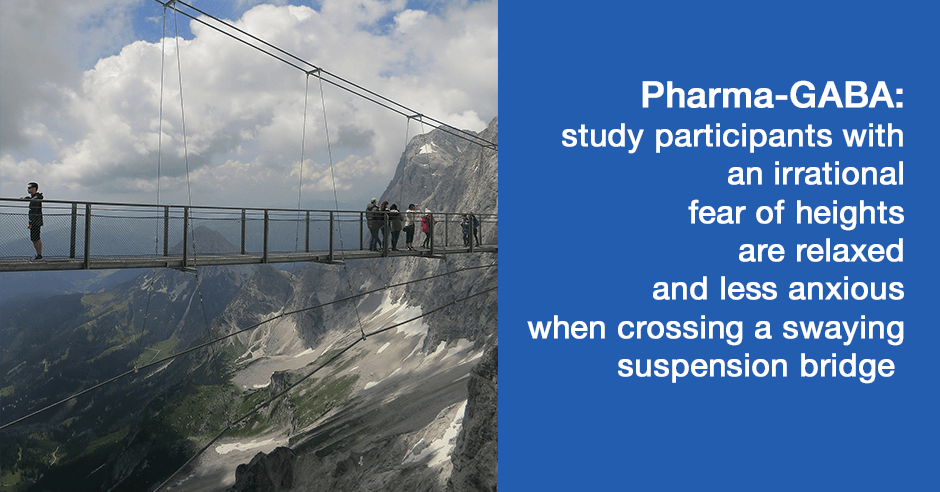
Pharma-GABA: study participants with an irrational fear of heights are relaxed and less anxious when crossing a swaying suspension bridge

September 28, 2018 By Trudy Scott 7 Comments

Based on clinical evidence, we know that gamma-aminobutyric acid (GABA), a calming amino supplement, reduces anxiety. There isn’t as much research on GABA or Pharma-GABA as we’d like to see, so we’ll take small studies that are done on humans.

In a 2006 study, Relaxation and immunity enhancement effects of gamma-aminobutyric acid (GABA) administration in humans, Pharma-GABA was used to determine if it would increase relaxation and reduce anxiety during the stressful event of crossing a suspension bridge:

Eight healthy volunteers, with no clinical evidence of any illness, (5 males and 3 females) aged 25 to 30 years who had a history of acrophobia [extreme or irrational fear of heights], were recruited.

Subjects crossed … a pedestrian suspended bridge at Nara Prefecture, Japan (Totsu River Bridge) with 54 m height, 300 m length, and 2 m width.

I believe it’s also called the Tanize Suspension bridge and is one of the longest suspension bridges in Japan. You can see pictures of the bridge here and here. They say this: “though quite safe, the swaying motion can be disconcerting, or fun, depending on your perspective.”

If we convert that to feet, it’s 177 feet high, almost 1000 feet long (about 3 times the length of a football field) and 6 feet wide.

There were 2 groups: placebo and Pharma-GABA. Salivary immunoglobulin A (IgA) levels (also known as secretary IgA or sIgA) was measured in both groups and used as a marker of relaxation and stress, as well as immunity. Saliva was collected before crossing the bridge, half way across and at the end. The study found that the

placebo group showed marked decrease of their IgA levels, while GABA group showed significantly higher levels.

And concludes as follows:

GABA could work effectively as a natural relaxant and its effects could be seen within 1 hour of its administration to induce relaxation and diminish anxiety. Moreover, GABA administration could enhance immunity under stress conditions.

The paper is reporting about 2 studies and it’s not clear how much Pharma-GABA was used in this bridge study – it was either 100mg or 200mg. Results were observed within 60-90 minutes. Also, this study was conducted by the company who makes the Pharma-GABA product, and they do say that this bridge study includes unpublished data.  Notice that they use the term GABA in the paper – I prefer to differentiate since Pharma-GABA and GABA are actually different.

Other than this and the very small number of participants, I’m always encouraged by any research we have. Clinically, we see very similar results with GABA or Pharma-GABA when someone has a fear of something – heights, flying, spiders etc. – and it typically addresses the physical fear and anxiety symptoms.

Here are some of my thoughts as to why results were only observed after 60 minutes:

  • Pharma-GABA was used in the study and for some folks this is not as effective as using GABA. I typically start my clients on GABA.
  • Using GABA sublingually often has calming results in under 10 minutes, so a chewable Pharma-GABA may have been a better option and would be something I’d recommend
  • Low serotonin is commonly a factor with fears and phobias and I’d recommend a trial of tryptophan

The resources in this blog and my other articles are intended to be used in conjunction with my book: The Antianxiety Food Solution – How the Foods You Eat Can Help You Calm Your Anxious Mind, Improve Your Mood, and End Cravings (Amazon link). If you do not have my book I highly recommend getting it and reading it before jumping in and trialing/taking amino acid supplements: There is a complete chapter on the amino acids and one for pyroluria, plus information on real whole food, sugar and blood sugar, gluten, digestion and much more.

You can find the GABA and tryptophan products I recommend on this blog: The Antianxiety Food Solution Amino Acid and Pyroluria Supplements

How would you feel walking across a swaying suspension bridge like this?

Have you used Pharma-GABA, GABA and/or tryptophan to help you with the stress and anxiety caused by a phobia like this or another phobia?

Filed Under: GABA Tagged With: acrophobia, anxiety, anxious, bridge, fear of heights, GABA, immunity, Pharma-GABA, relaxation, relaxed, sIgA, swaying suspension bridge

How do I taper tryptophan without withdrawal symptoms: a tight band around my head, brain zaps and agitated free-floating anxiety?

September 21, 2018 By Trudy Scott 43 Comments

I have not had any clients experience the need to taper or slowly wean their tryptophan dose or report tapering side-effects similar to those they experienced when tapering off an antidepressant. However, I recently had someone ask this question on the blog (and then had someone else ask a similar question) so I’m sharing these questions and my responses in the hope of gleaning some additional information (and educating you if this applies to you). I never say never and am always learning. I’m also very interested to know how common this is and what some of the underlying factors could be.

Here is the question that was asked by Lara (we’ll call her Lara) and slightly paraphrased for clarity:

I’ve been taking 1500 mg of tryptophan for 3 months, and it has helped a lot with sleep and depression. I dropped to 1000 mg about a week ago then 500mg just to see how I’d do without it. I didn’t think it was numbing my feelings, but I am experiencing a return of feeling good.

I’ve been on antidepressants before and I am feeling the same withdrawal effects as when I weaned off meds. This is exactly why I chose to not go back to pharmaceuticals. It was difficult to wean off. How do I taper tryptophan without experiencing withdrawal symptoms? Thank you for your valuable knowledge.

These are the kinds of questions I’d ask a client in this situation:

  • Was the 1500mg helping and which low serotonin symptoms were eased?
  • How did this change when you reduced to 1000mg and then reduced to 500mg? i.e. did the low serotonin symptoms come back?
  • Which antidepressant are you comparing these affects to? And how long ago did you wean off the antidepressant?
  • Which brand of tryptophan you are using? (I find Lidtke is the best quality)

Keep in mind that we always want to be sure it’s not a one-off situation. In order to be sure someone is observing mild adverse effects from a supplement I’ll often have my client stop it and then add it back to make sure. And sometimes more than once.

In this instance repeating the process may be a good idea i.e. going back to 1000mg and then 1500mg and then reducing again, carefully documenting in a food mood supplement log.

It turns out that Lara was using the Lidtke tryptophan and she was seeing wonderful benefits for her low serotonin symptoms with none of the typical SSRI side-effects:

the 1500mg before bed with a small carb helped me get to sleep and stay asleep. It also helped with anxiety and depression during day. I tend to be a worrier, have social anxiety, and get stuck with negative thoughts about myself and others. And have very little interest in life.

I was on Zoloft from 2005 – 2009. Got off of that and did Lexapro for only 6 months in 2012. The Zoloft was life changing for me but I did not like the side effects and being on an antidepressant for the rest of my life.

The tryptophan is superior to these SSRIs [selective serotonin reuptake inhibitors] – no sexual side effects, no weight gain, or anhedonia [inability to feel pleasure in normally pleasurable activities].

She describes how she reduced the tryptophan and how her withdrawal symptoms were similar to those she experienced when tapering off her SSRIs in the past:

The withdrawal effects were felt when dropping from 1500mg to 1000mg, to 500mg, then zero over 2 days and they lasted about 3 days. By the 4th day I was no longer feeling bad.

The symptoms are hard to explain – it felt like a tight band around my head, also brain zaps (this is a common SSRI withdrawal symptom many describe feeling in their head).

The worst of it was a deep agitated free-floating anxiety like you’re walking along the edge of a cliff and there’s a physical pain in your gut. Fortunately, it was only present from waking up till around 2pm.

These are questions I’d ask or wonder about

As I mentioned in the introduction, I have not had any clients experience the need to taper or slowly wean their tryptophan dose or report tapering side-effects similar to those they experienced when tapering off an antidepressant. But if this is an issue some individuals experience I’d like to know about it

I’d also like to know how long the tapering side-effects of tryptophan last and how severe the symptoms are. In Lara’s case the symptoms were pretty severe but fortunately they only lasted 3 days which is very much shorter than SSRI tapers.

There could be confounding factors and here are additional questions I’d ask or wonder about if a client experienced similar adverse tapering effects. These are questions you could ask yourself if you have experienced this when stopping tryptophan abruptly:

  • Could the prior use of SSRI prescriptions be a factor? (but I have worked with many clients with prior use of SSRIs and not have tryptophan tapering issues)
  • What else has changed in terms of stress, diet, hidden gluten exposure, or even the something like a recent introduction of collagen (which may deplete serotonin levels in susceptible folks)?
  • Are there hormonal changes that could affect serotonin levels – like in a woman with PMS or perimenopausal or menopausal symptoms? (again, I’ve worked with many women of all ages and haven’t observed this to be an issue)
  • If you are prone to the winter blues and reduced winter serotonin, could stopping the tryptophan in the winter play a role? (I have had clients have SSRI tapering issues in winter because of being prone to the winter blues and choose to work with their doctors on their SSRI taper in the spring and summer for this reason)
  • Could this also be an issue with summer blues in hot states like Arizona?
  • Could any of these play a role: a recent medical procedure, a course of antibiotics (especially fluoroquinolones) or antifungals, poor gut health, a new infection, decreased immunity or increased inflammation?
  • Could low levels of these nutrients play a role: vitamin B6, ferritin, magnesium and zinc?
  • Would using high doses of vitamin C during the “taper” help reduce some of the symptoms? (this works well as an antidote when you take tryptophan and don’t need it and want to negate some of the negative effects, so may help in this situation)

Stopped tryptophan and felt very angry and down

The other question I had about tryptophan weaning is this one from someone who shared that she had suggested tryptophan for a friend. This friend was

experiencing a lot of ruminating and anxiety. She responded beautifully and felt great. About a year later, she tried to stop taking it, and said she felt very angry and down. Is there a weaning process for the tryptophan?

This could possibly be related to the above and you could pose similar questions but based on on what I see with clients I feel this is more of a matter of stopping the tryptophan too soon while she still had low serotonin – especially if the ruminating and anxiety came back. Feeling angry and down are classic signs of low serotonin.

The questions asked were specifically about tryptophan but they could also possibly apply to some individuals who stop 5-HTP abruptly.

I’d love to hear if you’ve experienced anything like this with either tryptophan or 5-HTP and if yes please share your answers to some of the above questions.

Right now, I’m afraid I don’t have an answer for you on how to taper tryptophan without these withdrawal symptoms: a tight band around the head, brain zaps and agitated free-floating anxiety. Right now, I’m not sure how big an issue this is. If it is common, I’m hoping some of the feedback I receive may provide some answers.

Filed Under: Tryptophan Tagged With: 5-HTP, agitated, angry, antidepressant, anxiety, anxious, brain zaps, down, symptoms, taper, tryptophan, withdrawal

  • « Go to Previous Page
  • Page 1
  • Interim pages omitted …
  • Page 35
  • Page 36
  • Page 37
  • Page 38
  • Page 39
  • Interim pages omitted …
  • Page 96
  • Go to Next Page »

Primary Sidebar

GABA QuickStart Homestudy

gaba quickstart homestudy

Free Report

9 Great Questions Women Ask about Food, Mood and their Health

You'll also receive a complimentary subscription to my ezine "Food, Mood and Gal Stuff"


Connect with me

Popular Posts

  • Amino Acids Mood Questionnaire from The Antianxiety Food Solution
  • The Antianxiety Food Solution Amino Acid and Pyroluria Supplements
  • Pyroluria Questionnaire from The Antianxiety Food Solution
  • Collagen and gelatin lower serotonin: does this increase your anxiety and depression?
  • Tryptophan for the worry-in-your-head and ruminating type of anxiety
  • GABA for the physical-tension and stiff-and-tense-muscles type of anxiety
  • The Antianxiety Food Solution by Trudy Scott
  • Seriphos Original Formula is back: the best product for anxiety and insomnia caused by high cortisol
  • Am I an anxious introvert because of low zinc and vitamin B6? My response to Huffington Post blog
  • Vagus nerve rehab with GABA, breathing, humming, gargling and key nutrients

Recent Posts

  • Her cravings for chips and peanut butter were triggered by stress: GABA ends cravings and reduces physical tension and fear of heights
  • It is truly miraculous to be able to move through life without crippling anxiety and panic
  • GABA and tryptophan combo provide immediate and noticeable relief for tremors and cervical dystonia in just 7 days
  • Red light therapy for back and neck pain, plantar fasciitis and low mood – a complement to the amino acids GABA, DPA and tryptophan
  • What do I use instead of Seriphos to help lower high cortisol that is affecting my sleep and making me anxious at night?

Categories

  • 5-HTP
  • AB575
  • Addiction
  • ADHD
  • Adrenals
  • Alcohol
  • Allergies
  • Alzheimer's disease
  • Amino Acids
  • Anger
  • Antianxiety
  • Antianxiety Food Solution
  • Antidepressants
  • Anxiety
  • Anxiety and panic
  • Autism
  • Autoimmunity
  • benzodiazapines
  • Bipolar disorder
  • Books
  • Caffeine
  • Cancer
  • Candida
  • Children/Teens
  • Collagen
  • Cooking equipment
  • Coronavirus/COVID-19
  • Cravings
  • Depression
  • Detoxification
  • Diabetes
  • Diet
  • DPA/DLPA
  • Drugs
  • EFT/Tapping
  • EMF
  • EMFs
  • Emotional Eating
  • Endorphins
  • Environment
  • Essential oils
  • Events
  • Exercise
  • Fear
  • Fear of public speaking
  • Fertility and Pregnancy
  • Fish
  • Food
  • Food and mood
  • Functional neurology
  • GABA
  • Gene polymorphisms
  • General Health
  • Giving
  • Giving back
  • Glutamine
  • Gluten
  • GMOs
  • Gratitude
  • Gut health
  • Heart health/hypertension
  • Histamine
  • Hormone
  • Hyperparathyroidism
  • Hypoglycemia
  • Immune system
  • Inflammation
  • Insomnia
  • Inspiration
  • Introversion
  • Joy and happiness
  • Ketogenic diet
  • Lithium orotate
  • Looking awesome
  • Lyme disease and co-infections
  • MCAS/histamine
  • Medication
  • Men's health
  • Mental health
  • Mercury
  • Migraine
  • Mold
  • Movie
  • MTHFR
  • Multiple sclerosis
  • Music
  • NANP
  • Nature
  • Nutritional Psychiatry
  • OCD
  • Osteoporosis
  • Oxalates
  • Oxytocin
  • Pain
  • Paleo
  • Parasites
  • Parkinson’s disease
  • PCOS
  • People
  • PMS
  • Postpartum
  • PTSD/Trauma
  • Pyroluria
  • Questionnaires
  • Real whole food
  • Recipes
  • Research
  • Schizophrenia
  • serotonin
  • SIBO
  • Sleep
  • Special diets
  • Sports nutrition
  • Stress
  • Sugar addiction
  • Sugar and mood
  • Supplements
  • Teens
  • Testimonials
  • Testing
  • The Anxiety Summit
  • The Anxiety Summit 2
  • The Anxiety Summit 3
  • The Anxiety Summit 4
  • The Anxiety Summit 5
  • The Anxiety Summit 6
  • Thyroid
  • Thyroid health
  • Toxins
  • Tryptophan
  • Tyrosine
  • Uncategorized
  • Vegan/vegetarian
  • Women's health
  • Yoga

Archives

  • May 2026
  • April 2026
  • October 2025
  • September 2025
  • August 2025
  • July 2025
  • June 2025
  • May 2025
  • April 2025
  • March 2025
  • February 2025
  • January 2025
  • November 2024
  • October 2024
  • September 2024
  • August 2024
  • July 2024
  • June 2024
  • May 2024
  • April 2024
  • March 2024
  • February 2024
  • January 2024
  • December 2023
  • November 2023
  • October 2023
  • September 2023
  • August 2023
  • July 2023
  • June 2023
  • May 2023
  • April 2023
  • March 2023
  • February 2023
  • January 2023
  • December 2022
  • November 2022
  • October 2022
  • September 2022
  • August 2022
  • July 2022
  • June 2022
  • May 2022
  • April 2022
  • March 2022
  • February 2022
  • January 2022
  • December 2021
  • November 2021
  • October 2021
  • September 2021
  • August 2021
  • July 2021
  • June 2021
  • May 2021
  • April 2021
  • March 2021
  • February 2021
  • January 2021
  • December 2020
  • November 2020
  • October 2020
  • September 2020
  • August 2020
  • July 2020
  • June 2020
  • May 2020
  • April 2020
  • March 2020
  • February 2020
  • January 2020
  • December 2019
  • November 2019
  • October 2019
  • September 2019
  • August 2019
  • July 2019
  • June 2019
  • May 2019
  • April 2019
  • March 2019
  • February 2019
  • January 2019
  • December 2018
  • November 2018
  • October 2018
  • September 2018
  • August 2018
  • July 2018
  • June 2018
  • May 2018
  • April 2018
  • March 2018
  • February 2018
  • January 2018
  • December 2017
  • November 2017
  • October 2017
  • September 2017
  • August 2017
  • July 2017
  • June 2017
  • May 2017
  • April 2017
  • March 2017
  • February 2017
  • January 2017
  • December 2016
  • November 2016
  • October 2016
  • September 2016
  • August 2016
  • July 2016
  • June 2016
  • May 2016
  • April 2016
  • March 2016
  • February 2016
  • January 2016
  • December 2015
  • November 2015
  • October 2015
  • September 2015
  • August 2015
  • July 2015
  • June 2015
  • May 2015
  • April 2015
  • March 2015
  • February 2015
  • January 2015
  • December 2014
  • November 2014
  • October 2014
  • September 2014
  • August 2014
  • July 2014
  • June 2014
  • May 2014
  • April 2014
  • March 2014
  • February 2014
  • January 2014
  • December 2013
  • November 2013
  • October 2013
  • September 2013
  • August 2013
  • July 2013
  • June 2013
  • May 2013
  • April 2013
  • March 2013
  • February 2013
  • January 2013
  • December 2012
  • November 2012
  • October 2012
  • August 2012
  • July 2012
  • June 2012
  • May 2012
  • April 2012
  • March 2012
  • February 2012
  • January 2012
  • December 2011
  • November 2011
  • October 2011
  • September 2011
  • August 2011
  • July 2011
  • June 2011
  • May 2011
  • April 2011
  • March 2011
  • February 2011
  • January 2011
  • December 2010
  • October 2010
  • September 2010
  • July 2010
  • May 2010
  • April 2010
  • March 2010
  • February 2010
  • January 2010
  • November 2009

Share the knowledge!

The above statements have not been evaluated by the Food and Drug Administration. Products listed in this website are not intended to diagnose, treat, cure or prevent any disease.

The information provided on this site is for informational and educational purposes only and is not intended as a substitute for advice from your physician or other health care professional. You should consult with a healthcare professional before starting or modifying any diet, exercise, or supplementation program, before taking or stopping any medication, or if you have or suspect you may have a health problem.


Copyright © 2026 Trudy Scott. All Rights Reserved. | Privacy | Terms and Conditions | Refund Policy | Medical Disclaimer

Free Report

9 Great Questions Women Ask about Food, Mood and their Health

You’ll also receive a complimentary subscription to my ezine “Food, Mood and Gal Stuff”