• Skip to primary navigation
  • Skip to main content
  • Skip to primary sidebar

everywomanover29 blog

Food, Mood and Women's Health – Be your healthiest, look and feel great!

  • Blog
  • About
  • Services
  • Store
  • Resources
  • Testimonials
  • The Book
  • Newsletter
  • Contact
  • Search this site

anxiety

Tyrosine for alleviating anxiety and panic attacks and creating a feeling of calm focus

August 31, 2018 By Trudy Scott 72 Comments

If you had anxiety, felt hugely stressed and were having panic attacks would you consider using tyrosine to help calm you? It’s not the first approach I use with a client as I typically want to calm things down first by addressing the low serotonin symptoms of anxiety (such as worry, overwhelm, insomnia and panic attacks) and the low GABA physical symptoms of anxiety (physical tension, stiff and tense muscles, overwhelm and panic attacks).

However, for some individuals addressing low catecholamines with tyrosine is the best approach to take, even if it feels counter-intuitive. Since everyone is different using the trial method is the best way to figure out what you need.

Here is another success story from someone using tyrosine, as shared in the comments on a recent blog post on tyrosine:

Tyrosine for anxiety has done wonders for me! I have tried GABA and Tryptophan. The GABA seemed to take the edge off a little when panic attacks occurred but wasn’t keeping anxiety from occurring.

I have been under tremendous pressure at work. The internal stress has been overwhelming! I haven’t been able to remember anything, even things I’ve done for years! I am in the process of learning new software at work. In the very first class my mind just went blank. The more I tried to focus the more stressed I became. All I could do was sit and stare at my screen while the rest of the class moved forward.

In short order I developed a migraine and panic. The internal pressure felt as if someone was wringing out my brain like one would do to a wash rag! I had to leave the class earlier. From this point on I was struggling to even do my job as I have done the last few years. Every time I tried to think I’d immediately become overwhelmed and shut down. I felt like crying most of the time from the sheer force of the internal pressure (this is embarrassing to admit as I’m someone with a competitive career). This stress just completely shut down my ability to learn and problem solve.

So, I decided to start some tyrosine. I was hesitant because I have heard it can cause panic attacks and I definitely don’t need more of those! I bought some powder and took 400mg on an empty stomach about 30 minutes before breakfast. WOW!!! Within an hour the stress just melted away!

I wasn’t stressed on my way to work either which normally I am. I was able to sit down and think thru my problems without feeling overwhelmed at all. Also, I was communicating with people much more easily. I noticed better eye-contact. I seemed less concerned of anyone’s opinions too.

I take another 400mg 30 minutes before lunch. I simply cannot believe how much better I am doing!

Just a few weeks prior I was telling my wife that I may need to start thinking about starting the process for disability because I simply could not function well enough to do my job.

I’d also add that the stress from the anxiety was so bad I felt like I had the flu for a few weeks. This also has dissipated since starting the tyrosine.

It’s still early in this experiment but I am hopeful for once. Nothing, and I mean NOTHING has worked so well so fast for me than tyrosine. It’s the closest thing to a miracle I’ve ever experienced. A night and day experience!

What wonderful results! I’m thrilled to hear about his “miracle” and that he’s doing so much better, that he has hope and that the stress from the anxiety has dissipated!

What approach to follow if you can relate to this situation

Of course, I thanked him for sharing his success story with tyrosine and added my response for other blog readers who may relate to this situation and may consider a trial of tyrosine as a first step when anxiety is an issue.

I still stand by my advice to start with GABA and tryptophan when you have anxiety whether it’s the low serotonin-type anxiety (worry in the head) or the low GABA-type anxiety (physical anxiety). I always have clients start by addressing these deficiencies first before adding tyrosine for the low catecholamine symptoms because tyrosine is too stimulating for many and can increase anxiety and insomnia (and may also cause a panic attack).

With the majority of the anxious clients that I’ve worked with, the order of doing trials is as follows: tryptophan or GABA first and then tyrosine.

Addressing his low catecholamine symptoms was what he needed

For this gentleman, clearly GABA and tryptophan support was not what he needed or was not enough to ease his anxiety. Addressing his low catecholamine symptoms was what he needed to do.

In case you’re wondering how he’s doing now – I reached out to him and he reports he’s still taking tyrosine and is still doing great!

He is the third person that I know of who has experienced these types of results with tyrosine so I expect there are others who could benefit too – which is why I decided to share his story.

Increased anxiety because of lack of focus and low motivation

Here is another similar story from a prior client of mine. She had terrible anxiety, and we trialed both GABA and tryptophan. While she did get some benefits with both it just wasn’t enough.

She was sleeping better but still felt so stressed and anxious when preparing for an important meeting at work which she was in charge of running. The anxiety also seemed to get worse during the meetings. She did also score high on the low catecholamines section on the amino acid questionnaire (poor focus, low motivation, fatigue, ADHD, depression) but were working on the low serotonin and low GABA types of anxiety before addressing poor focus and low motivation.

It turned out that her anxiety escalated around her work meetings because of her lack of focus and low motivation – she was pushing herself to get through them. Once she added tyrosine her anxiety was under control. In this instance tyrosine actually helped ease the anxiety because her ADHD symptoms diminished and her motivation and drive improved!

This is what biochemically individuality is all about and how we all have our own unique needs. And is why I love the trial-method for determining which amino acid is best for your own unique needs.

Here are some related blog posts that you may find helpful:

  • Amino Acids Mood Questionnaire from The Antianxiety Food Solution
  • How to do an amino acid trial for anxiety
  • Tyrosine for focus, motivation, energy, a good mood and possibly even anxiety

Do let us know if you have experienced less anxiety and a sense of calm focus when taking tyrosine?

Filed Under: Anxiety Tagged With: Amino acid trial, anxiety, calm, catecholamines, GABA, serotonin, stress, tyrosine

Radical Metabolism: boosting energy, enhancing digestion, improving hormone health and blasting fat

August 28, 2018 By Trudy Scott 13 Comments

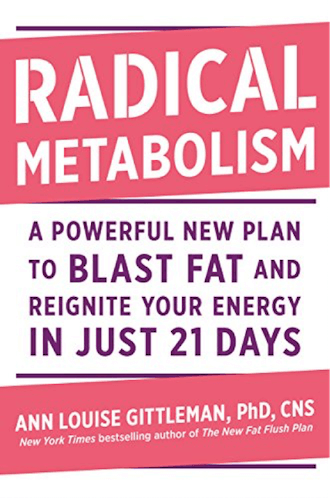
Ann Louise Gittleman has a new book called “Radical Metabolism: A Powerful New Plan to Blast Fat and Reignite Your Energy in Just 21 Days.”

Last week I had the wonderful opportunity to interview her! The book is primarily about weight-loss but I chose to focus on other aspects in our interview. We talked about so many valuable topics for boosting metabolism and energy, enhancing digestion, improving hormone health and reducing anxiety.

She shares that no disease can be healed if your cell membranes – which direct nutrients in and poisons out – are weak and unstable:

Radical Metabolism is all about what to eat to rebuild and fortify those lipid (fat)-based cell membranes, so that toxins are prevented from moving up the chain and gunking up the function of every cell, tissue, and organ in your body, from your brain to your thyroid, gallbladder, liver, kidneys, and skin. This is where omega-6 fats really shine.

Here are some of the highlights of what we covered, together with some related snippets from the book:

– our gallbladders and thyroid health

a study out of Finland found that people with decreased bile production are nearly ten times more apt to experience hypothyroidism. With low thyroid on the rise, this provides great hope to the millions of hypothyroid sufferers who experience metabolic slowdown as well as fatigue, dry skin, and constipation. Besides hypothyroidism, studies have also connected poor quality bile with chronic fatigue, migraines, depression, and autoimmune disorders.

– the importance of bile for digesting fat and absorbing fat-soluble vitamins

Bile is stored in the gallbladder to break down dietary fat and remove toxins from the body. Harvard Medical School research has revealed that subjects with improved bile health showed a remarkable spike in metabolism.

– the metabolic benefits of omega-6 fats – hemp seed oil, sesame seed oil, pine nut oil and ghee

Hemp seeds are one of nature’s greatest gifts, perfect little bundles of benefits for your entire body. You can reap the hemp’s benefits by consuming the oil, seeds (typically these are “hemp hearts” which have had their hulls removed), or by blending them into hemp milk. Hemp seeds are about one third healthful fats and one quarter protein, as well as a magnificent source of natural GLA (gamma-linolenic acid). It’s hard to find a food with a better essential fat profile – hemp boasts a 3:1 omega-6–to–omega-3 ratio.

– omega-6s and pyroluria/zinc absorption (my addition)

– why to include these oils if you’re eating a keto or paleo diet

– why bitters are beautiful – the big one is improving digestion and stimulating bile production!

Studies suggest bitters “get your juices flowing” (literally) by stimulating the release of bile, as well as saliva, HCl, pepsin, gastrin, and pancreatic enzymes.

– watercress as a great bitter food bile booster

Watercress is kind of the forgotten stepchild of the cruciferous family – a peppery-flavored cousin to cabbage, arugula, and mustard greens. Recent studies have put watercress back on the menu thanks to its powerful health-stimulating benefits, which is why it deserves a starring role in the Radical Metabolism plan

Besides being a bitter food bile-booster, in a study led by nutritionist Sarah Schenker a small group of women lost an average of 17 pounds in six weeks on a watercress soup diet. The exceptional antioxidants in watercress pump up your energy while exercising, while at the same time protecting you from exertion-related DNA damage. According to head researcher Dr. Mark Fogarty, watercress contains ten times as many beneficial chemicals as any other fruit or vegetable.

– how coffee and cacao work as bitters and dandelion tea as a good alternative (also bitter) if you can’t tolerate coffee

– and grapefruit as a bitter fruit (and one of the reasons why the grapefruit diet worked!)

– why testing ferritin is so important (and why to avoid cast iron pots)

Here is the audio of our interview. Enjoy!

https://s3-us-west-2.amazonaws.com/trudyjvs/ann-louise-gittleman-radical-matabolism-interview.mp3

And here is the recipe for: Creamy Dreamy Watercress Soup

This soup is not only fat-burning, but filling and flavorful. The recipe makes about one day’s worth of soup on the 4-Day Radical Intensive. You can either prepare it daily or cook up four batches in advance—whatever works best with your schedule.

Makes 6 cups

4 cups bone broth, either homemade (page 216) or Kettle & Fire

1/2 large bulb celeriac (celery root), (about one 5-inch bulb), brown exterior removed (do not to remove too much); cauliflower works as substitute

1 bunch leeks, cleaned and sliced

1 daikon radish, roughly chopped

1 (2-inch) piece fresh ginger, peeled and chopped

1 to 2 teaspoons sea salt, to taste

1 Radical Lemon Cube

1 large bunch watercress, roughly chopped

Optional: Add 1/2 to 1 teaspoon miso to each warm bowl of soup

Bring the broth to a simmer in a saucepan. Add the celeriac, leeks, daikon, and ginger. Add enough water to the pot to just submerge the vegetables. Simmer for 20 minutes, or until the veggies are tender.

Using an immersion blender, blend the soup until creamy. If too thick, you can always add a bit more water. Stir in the salt, lemon cube, and watercress. Simmer for 5 minutes, then blend again with your immersion blender.

Serve in a mug or bowl with or without the miso.

Note: To make Radical Lemon Cubes: 3 lemons quartered, 1 cup filtered water

Place the lemons and water in a blender or food processor and puree. Spoon the puree into ice cube trays and freeze.

Ann Louise Gittleman, New York Times bestselling author of more than thirty books including The Fat Flush Plan series and Before the Change, has been revolutionizing the rules of health and nutrition for more than three decades. She holds an MS in Nutrition Education from Columbia University, the title of Certified Nutrition Specialist (CNS) from the American College of Nutrition, and a PhD in Holistic Nutrition. Gittleman has also served as the Chief Nutritionist of the Pediatric Clinic at Bellevue Hospital and is the former Director of Nutrition at the Pritikin Longevity Center in Santa Monica, CA. She currently sits on the Advisory Board for the International Institute for Building-Biology & Ecology, the Nutritional Therapy Association, Inc. and Clear Passage, Inc. Read more about her at www.annlouise.com.

Grab your copy of Radical Metabolism on Amazon here (my Amazon link). Grab bonus ebooks and details about the private Facebook group here

Enjoy! And do let us know what you think of these tips and the watercress soup recipe. And be sure to leave a review for Ann Louise.

Filed Under: Books Tagged With: ann louise gittleman, anxiety, blasting fat, digestion, energy, hormone health, Radical Metabolism

WiFi modem with a public hotspot causes seizures, vertigo, headaches, insomnia and heart palpitations in a woman with a history of West Nile virus

August 24, 2018 By Trudy Scott 11 Comments

This recent research illustrates the harmful effects of a new type of wireless modem, enabled for both personal use and functioning as a public hotspot: Exacerbation of demyelinating syndrome after exposure to wireless modem with public hotspot. The public hotspot feature was designed to reach up to 100 meters (or 328 feet which is close to the length of a football field).

Here is the entire abstract since it explains the situation so well:

In August 2003, 48-year-old JS of Colorado, USA, a fitness therapist and sports nutritionist, contracted neuroinvasive [i.e infecting the nervous system] West Nile virus which left her with disabilities due to spinal axonal damage.

In August 2014, she suddenly developed symptoms very much like her acute West Nile infection 11 years ago, including focal seizures, ataxia, vertigo and headaches. Her blood count looked normal so there was no obvious infection. What struck her as odd was that when she left her apartment for any length of time, the symptoms stopped.

She found out that a new type of wireless modem, enabled for both personal use and functioning as a public hotspot designed to reach up to 100 m, had been installed in the flat under hers. Her neighbor replaced the modem with a router without the hotspot feature. After that, the seizures stopped immediately, and the other symptoms faded gradually, after which she was fine and again could sleep well.

Later, when another activated hotspot was installed in an adjacent flat, JS once again noticed symptoms.

A possible association between electrohypersensitivity, myelin integrity and exposure to low-intensity radiofrequency electromagnetic fields (RF-EMF) typical in the modern world has recently been proposed.

Since the West Nile virus attacks both the nerve cells and the glial ones, one explanation to the above observed case effects is that the initial virus attack and the wireless modem’s RF-EMF affect the nervous system through the very same, or similar, avenues, and maybe both via the oligodendrocytes [i.e. the myelinating cells of the central nervous system].

Here are a few of the other symptoms she reported before discovering that it was the public hotspot that was causing her symptoms:

  • losing sensation in her face, neck and torso
  • tinnitus (ringing in the ears)
  • allergy symptoms like those of severe hayfever
  • difficulty concentrating
  • poor fine motor control
  • impaired short-term memory
  • pain in the facial bones, especially the cheeks, jaw bones and the roots of her teeth
  • numbness and tingling
  • difficulty breathing and swallowing (more pronounced after exertion)
  • dizziness
  • elevated morning fasting blood sugar levels (up 25% from usual to 100 mg/dL) and then back to normal 2 weeks after the hotspot was disabled
  • fight or flight reaction for the first 2–3 weeks, which then turned into fatigue and apathy with little accomplished during the day

These symptoms all dissipated when she wasn’t home. Once home in the evenings, her desire for sweets increased and her sleep was also impacted:

In the evening, her appetite was much increased and she craved sweet food, which was not usual for her. She became sleepy at the usual time, settling down between 10.30 pm and 11 pm and could fall asleep, all as normal.

However, within 1–2 hours, she routinely woke suddenly having had very vivid, disturbing dreams and with a pounding heartbeat. This was usually followed by a seizure, sometimes focal, where one part of her body (primarily right arm) would be shaking. Other times, her whole body was shaking.

She also noticed more severe symptoms when the modem with the activated public hotspot was closer to where she slept i.e. distance was a factor. On bad nights, after waking, she would sometimes go and sleep in her living room which was further away from the modem.

After a seizure, she slept fitfully, unless she moved to sleep on the couch in another room. There, JS found she could fall asleep quite quickly and sleep through the rest of the night.

When in her bedroom the modem was just 20–30 feet away and when in the living room it was about 50–60 feet from her (plus an additional wall), both of which weakened the signal.

It should also be noted that JS used a cell phone, a wireless router and a computer and had no problems from any of these – it was only the modem with the public hotspot that was problematic.The study authors shared that

The hotspot antenna almost certainly has a considerably higher transmit power as this would be needed to increase the effective transmit range for users in the area.

Other possible causes/mechanisms are reported as follows:

  • the pulse width of the beacon signal
  • an additional pattern or stroboscopic effect, or double intensity set up by the simultaneous transmission of the private and public hotspots

However, do keep in mind that for some people with electrohypersensitivity, simply using a cell phone and WiFi can cause symptoms.

Do you know if your router has this public Wi-Fi hotspot feature turned on?

Do you know if your router has this public Wi-Fi hotspot feature turned on? Many people do not and are fuming when they find out – I know I was!

JS discovered this as a result of a pop-upon her mobile phone:

From before the episodes occurred, JS kept her mobile phone WiFi disabled while at home. The day after she began having symptoms in August, she had temporarily enabled the WiFi feature while out shopping and when she came home that day, a pop-up appeared informing her she was in a free Xfinity WiFi zone.

In this article two Comcast customers sued the company for turning their Xfinity Internet routers into public WiFi hotspots saying “Comcast’s actions pose risks to subscribers and are taken without seeking their authorization.” They objected to the increase in customers’ electricity costs, the impacts on network performance and network security concerns.

However, they don’t even raise the issue of potential harm from a public WiFi hotspot that is activated on a modem in your home or one nearby.

In fact this site that offers instructions for disabling this public WiFi hotspot on your Comcast Xfinity router states that “We don’t necessarily think you have to disable this feature, as it seems to work fine — we haven’t heard any horror stories or reports of problems yet.”  

I would consider this case study to be a horror story that is not common knowledge and needs to be. JS was seriously harmed on two occasions by modems with public WiFi hotspots. In both instances the home-owners with these modems were not even aware they had these public hotspots activated and very quickly had them disabled once they found out what was happening to JS.

The study authors conclude that this case study strongly indicates that:

emissions from these new wireless modems could cause physical harm for those susceptible to that type of radiation.

My questions are this:

  • How many people are not even aware that their modem has this public WiFi hotspot feature enabled?
  • How many other people like JS are being seriously harmed by modems with public WiFi hotspots?
  • How many people have chronic issues like problems falling asleep, waking in the early hours, agitation, anxiety and heart palpitations – all possibly caused by a public WiFi hotspot on their modem or on a modem next door or even down the street?

I consider JS to be the canary in the coal-mine and her story is a good lesson for all us to wake up and get serious about WiFi and EMFs.

Here are some other blogs posts I’ve written about WiFi and EMFs:

  • Wi-Fi is an important threat to human health and may contribute to unresolved anxiety, SIBO, oxalate issues and high cortisol
  • Electrosmog and autoimmune disease: silver-threaded caps result in improved symptoms for 90% of study participants
  • EMFs: a factor in neuropsychiatric symptoms and cancer (this post has additional information about the practitioner Electrosmog RX evergreen training and Nicholas Pineault’s book “The Non-Tinfoil Guide to EMFs: How to Fix Our Stupid Use of Technology” (my Amazon link)

Do share what you’ve experienced with modems that have public WiFi hotspots activated and if you can relate to any of the symptoms JS experienced?

Filed Under: EMFs Tagged With: anxiety, electrohypersensitivity, EMF, Headaches, heart palpitations, insomnia, modem, public hotspot, seizures, vertigo, West Nile virus, WiFi

GABA reduces the visceral pain of IBS & SIBO, eases anxiety and helps with insomnia

August 23, 2018 By Trudy Scott 6 Comments

I have chronic SIBO (small intestinal bacterial overgrowth) and shared some insights – during an interview on the IBS & SIBO SOS Summit – on what helps me when I’m trying a new protocol or new food and get that awful and painful belly bloat.

It’s so bad that I’m in pain all night, tossing and turning and can’t sleep…. and Iberogast, enzymes and peppermint and lavender essential oil on my bloated belly help so much:

Because of the cellulose in one of the Candibactin products, I was getting the bloating. And the Iberogast taken at night just before I went to bed (together with a few other things) definitely helped with some of the bloating.

For me, the problem with the bloating is the pain (obviously), but worse than that is the lack of sleep. If I’m bloated, it just feels like I’m tossing and turning the whole night. And if I don’t get eight hours of sleep, I’m a mess. So, the biggest issue for me is the impact on my sleep.

But if I’ve got this huge, bloated belly which was happening a lot, I take enzymes that help with carb digestion. I will also rub peppermint essential oil on my belly. So I’ve got a little bowl of coconut oil with a dab of lavender (it’s calming and it helps you sleep as well) and a little bit of peppermint oil.

There’s a number of studies showing that essential oil or peppermint ingested in a capsule can help with IBS. And I’ve found that, topically, it can help too. So that works for me to help with some of the bloating.

I also share about my 2 favorite amino acids – you guessed it – GABA and tryptophan. They just have so many applications! In this instance of painful belly bloating they help with pain and sleep and improve motility:

The other thing that helps is GABA which is one of the amino acids. There is research discussing the role of GABA in stress-induced visceral hypersensitivity. GABA helps with reducing the visceral pain that is seen with IBS/SIBO because we have GABA receptors in various parts of the body, including the digestive system. GABA is amazing for physical tension/anxiety and it can ease that. I’m thinking that this easing of physical tension may be one of the mechanisms as to how it works for some of the pain issues.

I do want to mention something about GABA – it works most effectively when taken sublingually. I just chew a capsule and get the results. And it works within five minutes.

And then, the other one that I use at night is tryptophan. This really helps with the sleep as well by boosting serotonin levels. It actually helps with motility too – there’s research showing this.

If your SIBO causes increased anxiety, these two amino acids would help ease those symptoms too – GABA for the physical anxiety and tryptophan for the worry in the head anxiety:

And then, it helps with anxiety as well if that’s an issue – for many people with IBS and SIBO, anxiety is an issue.

Summit host, Shivan Sarna, shares how LDN (low dose naltrexone) has helped her tremendously (she also has chronic SIBO) and we discuss how too much can increase anxiety and impact your sleep. Since doing this interview I’ve had feedback from two people who successfully used GABA Calm to reduce their anxiety from too high a dose of LDN.

We also touch on some of the possible mechanisms of LDN, I share some of the benefits of berberine, and we discuss benzodiazepines which are so often prescribed for IBS/SIBO (for the anxiety, the insomnia and the pain) and why nutritional approaches are a safer option.

Have topical peppermint/lavender essential oils helped with belly bloat?

Has GABA or tryptophan helped you with the pain, poor motility or anxiety associated with SIBO?

Feel free to post your feedback and questions in the comments below.

Filed Under: GABA Tagged With: anxiety, bloat, GABA, Iberogast, IBS, insomnia, lavender, pain, peppermint, SIBO, visceral pain

Vitamin B6 improves dream recall (which can be used to monitor vitamin B6 status)

July 27, 2018 By Trudy Scott 40 Comments

It’s exciting to see new research confirming the connection between vitamin B6 and dream recall. In this new study, Effects of Vitamin B6 (Pyridoxine) and a B Complex Preparation on Dreaming and Sleep (which was randomized, double-blind and placebo-controlled), 100 participants from across Australia were given 240 mg vitamin B6 (pyridoxine hydrochloride) before bed for five consecutive days. Other study participants were given a B complex. This is the outcome of the study:

  • vitamin B6 significantly increased the amount of dream content participants recalled but did not significantly affect dream vividness, bizarreness, or color, nor did it significantly affect other sleep-related variables
  • participants in the B complex group showed significantly lower self-rated sleep quality and significantly higher tiredness on waking

Here are my thoughts on these results:

  • It’s wonderful to read that Vitamin B6 improves dream recall – this is what I see with my clients all the time.
  • With an optimal dose of vitamin B6, I would expect changes in “dream vividness, bizarreness, or color” and this also what I also see with my clients. If they are having horrible/vivid/bizarre dreams, the vitamin B6 changes them to pleasant dreams OR if dreams were not recalled prior to supplementation, they are now remembered and pleasant. The dose of 240 mg was used across the board but based on what we know about biochemical individuality, 240mg may be too much for some folks and not enough for others, so this could have impacted the results.
  • It’s not surprising that the B complex taken at bedtime impacted sleep. It’s known to be stimulating and it’s not something I’d advise any client to do. For this reason, I don’t feel it was the ideal control for this study.

The lead researcher is Dr. Denholm Aspy and his primary research focus is lucid dreaming. On his researcher profile on the University of Adelaide website, he describes lucid dreaming and the potential benefits:

In a lucid dream, the dreamer realizes that they are dreaming and can then explore and even control the dream. Lucid dreaming has a wide range of potential benefits and applications such as creative problem solving, treatment for recurrent nightmares and improvement of motor skills through rehearsal in the dream environment (e.g. for elite athletes or people recovering from physical trauma).

He shares that the purpose of his research is to address exploration of the potential applications of lucid dreaming and to “develop reliable ways to induce lucid dreams.” Looking for potential applications of lucid dreaming is very interesting and new to me.

Vitamin B6/dream recall research and pyroluria (a social anxiety condition)

However, this vitamin B6/dream recall research is of particular interest to me because of my work with pyroluria, a social anxiety condition which responds really well to supplementation with zinc, vitamin B6 or P5P (pyridoxal-5-phosphate) or a combination of both, and a few other key nutrients.  Here is the pyroluria questionnaire.

One of the classic signs of pyroluria is poor dream recall, stressful or bizarre dreams, or nightmares, signs which the late Carl Pfeiffer, MD attributed to low vitamin B6 status. He suggested that your dreams and dream recall serve as a good indicator of your need for vitamin B6. You should dream every night and you should remember your dreams. They should be pleasant—the kind of dreams where you wake up and want to close your eyes and continue dreaming.

Going back to the above discussion of lucid dreaming, in lucid dreams “the dreamer is aware of dreaming and often able to influence the ongoing dream content.” This is exactly how I would describe my dreams when I have good levels of vitamin B6 and my clients say the same.

Keep in mind that if you do have pyroluria, you may need to increase your dose of vitamin B6 in times of stress. Vitamin B6 can also be depleted by oral contraceptives because they cause both low vitamin B6 and zinc, reduce serotonin levels and increase anxiety. Vitamin B6 can also be depleted by antidepressants, diuretics, and cortisone, so if you start or stop taking any of these, you may need to adjust the amount you supplement.

If this intrigues you and you’re new to pyroluria, I write about dreams and vitamin B6 in the pyroluria chapter of my book, The Antianxiety Food Solution. My blog is also a wealth of information on pyroluria:

  • Pyroluria prevalence and associated conditions
  • Joint hypermobility / Ehlers-Danlos Syndrome and pyroluria?
  • Pyroluria and focal musician’s dystonia or musician’s cramp
  • Am I an anxious introvert because of low zinc and vitamin B6? My response to Huffington Post blog

Dream recall and vitamin B6 status is important even if you don’t have pyroluria

Observing your dream recall and hence vitamin B6 status is important even if you don’t have pyroluria. This is because vitamin B6 it has been implicated as a co-factor in more than 140 biochemical reactions in the cell, playing a role making amino acids and neurotransmitters, making fatty acids, and even quenching reactive oxygen species (ROS).

This is partial list showing the importance of vitamin B6 (with both research and clinical evidence) for:

  • carpal tunnel syndrome – I’ve had many clients see major improvements to the extent that surgery is able to be cancelled
  • PMS (together with magnesium) – all the women I work with see the benefits of vitamin B6 for PMS, perimenopause and menopausal symptoms
  • issues with dietary oxalates – vitamin B6 is one of the key nutrients for preventing metabolism of food to oxalate
  • morning sickness/vomiting during pregnancy
  • protective potential against Alzheimer’s disease due to antioxidant properties
  • inflammation and IBD/irritable bowel disease

You may also wonder what the mechanism of action is? How does vitamin B6 impact your dream recall? One hypothesis is that vitamin B6 is a co-factor nutrient used in the conversion of tryptophan to serotonin which is then used to make melatonin. Vitamin B6 is also an antioxidant, is anti-inflammatory, and modulates immunity and gene expression.

If you’re looking for a quality vitamin B6 product, my supplements blog lists a range of vitamin B6 supplements that I use with clients and those in my group program.

Monitoring your dream recall is one very simple way to assess changes in your vitamin B6 status. And we now have new research supporting this. I look forward to follow-on studies by these authors, learning more from them about lucid dreaming and I hope to be able to offer some of my insights from clinical practice.

*** I address some concerns about vitamin B6 toxicity in this blog: Why is vitamin B6 toxic for some and why don’t symptoms resolve when vitamin B6 is stopped? I have yet to see any signs of toxicity in my clients, but I have also not ever recommended more than 500mg/day. However, I was recently made aware (thanks to some folks in my community) that there are some individuals who have issues with very small amounts of vitamin B6.  If you have experienced any issues with using vitamin B6 supplementation please share.

What are your dreams like and do you use your dreams to monitor your vitamin B6 status? What improvements have you noticed by addressing low vitamin B6 levels?

If you’re a practitioner do you use dream recall as an indication of vitamin B6 status?  Have you seen adverse issues with vitamin B6 supplementation and at what doses?

Filed Under: Anxiety, Sleep Tagged With: anxiety, B6, carpel tunnel, dream recall, dreams, PMS, pyridoxine, pyroluria, serotonin, tryptophan, vitamin B6

Delayed IgG food sensitivities: depression and anxiety due to inflammation, leaky gut, leaky blood brain barrier and low serotonin

July 20, 2018 By Trudy Scott 7 Comments

It’s really encouraging and exciting to see a major study confirming what we’ve known about IgG food sensitivities or IgG food reactivity for years, and also reporting a link to irritable bowel syndrome (IBS) and depression. The paper, published in May this year, The Food-Specific Serum IgG Reactivity in Major Depressive Disorder Patients, Irritable Bowel Syndrome Patients and Healthy Controls states

There is an increasing amount of evidence which links the pathogenesis of irritable bowel syndrome (IBS) with food IgG hyperreactivity. Some authors have suggested that food IgG hyperreactivity could be also involved in the pathophysiology of major depressive disorder (MDD).

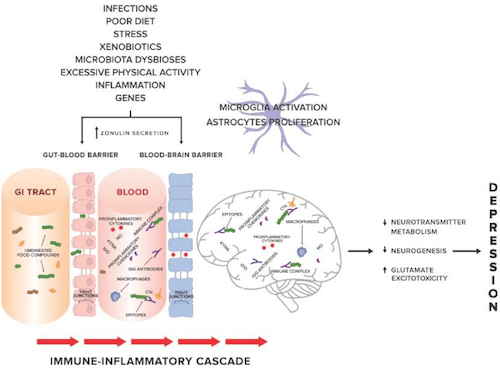
The following diagram and excerpt illustrates the gut-immune-inflammatory-brain model for depression that is associated with food IgG hyperreactivity or sensitivity.

The gut-immune-inflammatory-brain model for Major Depressive Disorder associated with food IgG hyperreactivity. According to the hypothesis proposed in our previous work, we present a possible mechanism underlying the MDD [major depressive disorder] development, suggesting that the interplay between genetic and environmental factors may lead to disruption of tight junctions, the loss of their integrity and both gut and BBB [blood brain barrier] permeability. Undigested food compounds, which would normally break down in the gut, translocate into the blood circulation, and trough epitopes combine with food IgG antibodies to form immune complexes. This, in turn, provokes an abnormal response and triggers immune-inflammatory cascade. Uncontrolled release of the proinflammatory mediators may contribute to low-grade systemic inflammation and low-grade neuroinflammation, which, via pathological processes in CNS [central nervous system], i.e., changes in neurotransmitter metabolism, neurogenesis, glutamate excitotoxicity, may in consequence induce and then maintain and prolong depression.

[diagram and excerpt from The Food-Specific Serum IgG Reactivity in Major Depressive Disorder Patients, Irritable Bowel Syndrome Patients and Healthy Controls]

I wrote my book, The Antianxiety Food Solution, in 2011 and there wasn’t research on the gut-immune-inflammatory-brain model, but I do write extensively about delayed IgG food sensitivities (as well as other types of food issues). If you don’t have my book I’m including some of the highlights related to this (and I encourage you to pick up a copy too!). If you do have my book I hope this next section encourages you to go back and read chapter 4 again (and even check out the other books I mention below).

I write about how with delayed food reactions, it may take a few hours to several days before symptoms appear, which can make it difficult to identify the offending food or foods. In these reactions, the body responds by creating a type of antibody known as IgG (immunoglobulin G).

I also write about how food sensitivities can have effects beyond physiological symptoms, including creating imbalances in key chemicals in the brain, which can cause anxiety, phobias, depression, irritability, and mood swings. When food sensitivities have these effects, they are sometimes termed “brain allergies” or “cerebral allergies.” Dr. Carl Pfeiffer wrote extensively about this and used these terms in his wonderful book, Nutrition and Mental Illness, way back in 1987. (This book is a quick read and is one of my favorite older books on the subject of mental health and biochemical imbalances.)

I also reference the work of my colleague and friend, clinical nutritionist Liz Lipski. In her 2004 book, the 3rd edition of Digestive Wellness she shares that

24 percent of American adults claim they have delayed food and environmental reactions.

She feels that these sensitivities are often the result of leaky gut syndrome, a condition characterized by damage to the microvilli lining the intestinal walls. This allows undigested food particles to travel across the intestinal wall and into the blood, where the immune system responds to them as foreign, harmful substances and creates antibodies to neutralize them.

All this sounds very similar to what the new study is reporting doesn’t it? I’d prefer it not to take so long for the knowledge from as far back as 1987 to get into mainstream journals but it’s the world we live in and we can just appreciate that we are moving forward and in the right direction!

The 2018 paper mentioned above concludes the following:

Our findings suggest more common food-specific serum IgG hyperreactivity among patients with IBS and MDD [major depressive disorder], which may be one of the mechanisms leading to the development of immune activation and low-grade inflammation observed in these disorders.

They do support an elimination diet for IBS but not for depression:

There is no causal relationship which could confirm clinical utility of an elimination diet in patients with depression

I do love research, but this really bothers me as it’s just common-sense and we do have some case studies supporting the use of elimination diets. In this case study the patient’s “treatment-resistant” depression improved considerably with an elimination diet, with similar results in another case study where a gluten-free elimination diet improved both anxiety and depression and everyday functioning.

In the meantime, we’ll continue to rely on the wisdom of practitioners like Dr. Pfeiffer and Liz Lipski, and all the clinical evidence showing how an elimination diet does help with both depression and anxiety. Just read some of the success stories on this blog – Paleo and grain free diets: anxiety and depression success stories.

Other mechanisms: nutrient malabsorption and serotonin production

There are other mechanisms that I also cover in my book – nutrient malabsorption and a more direct impact on serotonin production.

One possible mechanism is indirect effects of gastrointestinal damage due to eating problem foods, resulting in nutrient malabsorption. In a 2009 double blind placebo-controlled study:

65 celiac patients aged 45-64 years on a strict gluten-free diet for several years [and showing signs of low folate, low vitamin B12 and low vitamin B6] were randomized to a daily dose of 0.8 mg folic acid,0.5 mg cyanocobalamin and 3 mg pyridoxine or placebo for 6 months

I doubt folic acid or this form of B12 would be used today but even with these forms at these low doses, the study participants showed homocysteine in a good range and reported improvement in general well-being – after just 6 months of supplementation.

Another possible mechanism is the fact that gluten sensitivity and the resulting damage to the gut can limit the availability of tryptophan and therefore lead to decreases in levels of serotonin. Research published in 2005, Gluten-free diet may alleviate depressive and behavioural symptoms in adolescents with coeliac disease: a prospective follow-up case-series study, reports that:

serotonergic dysfunction due to impaired availability of tryptophan may play a role in vulnerability to depressive and behavioral disorders among adolescents with untreated coeliac disease

In addition to removing the foods that are causing the sensitivities, you need to heal the gut and boost serotonin levels with a targeted individual amino acid like tryptophan.

Give the link between anxiety and depression, all of the above could apply if you have anxiety too.

Have you had IgG food sensitivity testing and found that an elimination diet helped reduce your depression or anxiety symptoms?

Filed Under: Depression Tagged With: anxiety, blood brain barrier, celiac, depression, gluten, IgG, leaky BBB, leaky gut, serotonin, tryptophan

  • « Go to Previous Page
  • Page 1
  • Interim pages omitted …
  • Page 36
  • Page 37
  • Page 38
  • Page 39
  • Page 40
  • Interim pages omitted …
  • Page 96
  • Go to Next Page »

Primary Sidebar

GABA QuickStart Homestudy

gaba quickstart homestudy

Free Report

9 Great Questions Women Ask about Food, Mood and their Health

You'll also receive a complimentary subscription to my ezine "Food, Mood and Gal Stuff"


Connect with me

Popular Posts

  • Amino Acids Mood Questionnaire from The Antianxiety Food Solution
  • The Antianxiety Food Solution Amino Acid and Pyroluria Supplements
  • Pyroluria Questionnaire from The Antianxiety Food Solution
  • Collagen and gelatin lower serotonin: does this increase your anxiety and depression?
  • Tryptophan for the worry-in-your-head and ruminating type of anxiety
  • GABA for the physical-tension and stiff-and-tense-muscles type of anxiety
  • The Antianxiety Food Solution by Trudy Scott
  • Seriphos Original Formula is back: the best product for anxiety and insomnia caused by high cortisol
  • Am I an anxious introvert because of low zinc and vitamin B6? My response to Huffington Post blog
  • Vagus nerve rehab with GABA, breathing, humming, gargling and key nutrients

Recent Posts

  • Her cravings for chips and peanut butter were triggered by stress: GABA ends cravings and reduces physical tension and fear of heights
  • It is truly miraculous to be able to move through life without crippling anxiety and panic
  • GABA and tryptophan combo provide immediate and noticeable relief for tremors and cervical dystonia in just 7 days
  • Red light therapy for back and neck pain, plantar fasciitis and low mood – a complement to the amino acids GABA, DPA and tryptophan
  • What do I use instead of Seriphos to help lower high cortisol that is affecting my sleep and making me anxious at night?

Categories

  • 5-HTP
  • AB575
  • Addiction
  • ADHD
  • Adrenals
  • Alcohol
  • Allergies
  • Alzheimer's disease
  • Amino Acids
  • Anger
  • Antianxiety
  • Antianxiety Food Solution
  • Antidepressants
  • Anxiety
  • Anxiety and panic
  • Autism
  • Autoimmunity
  • benzodiazapines
  • Bipolar disorder
  • Books
  • Caffeine
  • Cancer
  • Candida
  • Children/Teens
  • Collagen
  • Cooking equipment
  • Coronavirus/COVID-19
  • Cravings
  • Depression
  • Detoxification
  • Diabetes
  • Diet
  • DPA/DLPA
  • Drugs
  • EFT/Tapping
  • EMF
  • EMFs
  • Emotional Eating
  • Endorphins
  • Environment
  • Essential oils
  • Events
  • Exercise
  • Fear
  • Fear of public speaking
  • Fertility and Pregnancy
  • Fish
  • Food
  • Food and mood
  • Functional neurology
  • GABA
  • Gene polymorphisms
  • General Health
  • Giving
  • Giving back
  • Glutamine
  • Gluten
  • GMOs
  • Gratitude
  • Gut health
  • Heart health/hypertension
  • Histamine
  • Hormone
  • Hyperparathyroidism
  • Hypoglycemia
  • Immune system
  • Inflammation
  • Insomnia
  • Inspiration
  • Introversion
  • Joy and happiness
  • Ketogenic diet
  • Lithium orotate
  • Looking awesome
  • Lyme disease and co-infections
  • MCAS/histamine
  • Medication
  • Men's health
  • Mental health
  • Mercury
  • Migraine
  • Mold
  • Movie
  • MTHFR
  • Multiple sclerosis
  • Music
  • NANP
  • Nature
  • Nutritional Psychiatry
  • OCD
  • Osteoporosis
  • Oxalates
  • Oxytocin
  • Pain
  • Paleo
  • Parasites
  • Parkinson’s disease
  • PCOS
  • People
  • PMS
  • Postpartum
  • PTSD/Trauma
  • Pyroluria
  • Questionnaires
  • Real whole food
  • Recipes
  • Research
  • Schizophrenia
  • serotonin
  • SIBO
  • Sleep
  • Special diets
  • Sports nutrition
  • Stress
  • Sugar addiction
  • Sugar and mood
  • Supplements
  • Teens
  • Testimonials
  • Testing
  • The Anxiety Summit
  • The Anxiety Summit 2
  • The Anxiety Summit 3
  • The Anxiety Summit 4
  • The Anxiety Summit 5
  • The Anxiety Summit 6
  • Thyroid
  • Thyroid health
  • Toxins
  • Tryptophan
  • Tyrosine
  • Uncategorized
  • Vegan/vegetarian
  • Women's health
  • Yoga

Archives

  • May 2026
  • April 2026
  • October 2025
  • September 2025
  • August 2025
  • July 2025
  • June 2025
  • May 2025
  • April 2025
  • March 2025
  • February 2025
  • January 2025
  • November 2024
  • October 2024
  • September 2024
  • August 2024
  • July 2024
  • June 2024
  • May 2024
  • April 2024
  • March 2024
  • February 2024
  • January 2024
  • December 2023
  • November 2023
  • October 2023
  • September 2023
  • August 2023
  • July 2023
  • June 2023
  • May 2023
  • April 2023
  • March 2023
  • February 2023
  • January 2023
  • December 2022
  • November 2022
  • October 2022
  • September 2022
  • August 2022
  • July 2022
  • June 2022
  • May 2022
  • April 2022
  • March 2022
  • February 2022
  • January 2022
  • December 2021
  • November 2021
  • October 2021
  • September 2021
  • August 2021
  • July 2021
  • June 2021
  • May 2021
  • April 2021
  • March 2021
  • February 2021
  • January 2021
  • December 2020
  • November 2020
  • October 2020
  • September 2020
  • August 2020
  • July 2020
  • June 2020
  • May 2020
  • April 2020
  • March 2020
  • February 2020
  • January 2020
  • December 2019
  • November 2019
  • October 2019
  • September 2019
  • August 2019
  • July 2019
  • June 2019
  • May 2019
  • April 2019
  • March 2019
  • February 2019
  • January 2019
  • December 2018
  • November 2018
  • October 2018
  • September 2018
  • August 2018
  • July 2018
  • June 2018
  • May 2018
  • April 2018
  • March 2018
  • February 2018
  • January 2018
  • December 2017
  • November 2017
  • October 2017
  • September 2017
  • August 2017
  • July 2017
  • June 2017
  • May 2017
  • April 2017
  • March 2017
  • February 2017
  • January 2017
  • December 2016
  • November 2016
  • October 2016
  • September 2016
  • August 2016
  • July 2016
  • June 2016
  • May 2016
  • April 2016
  • March 2016
  • February 2016
  • January 2016
  • December 2015
  • November 2015
  • October 2015
  • September 2015
  • August 2015
  • July 2015
  • June 2015
  • May 2015
  • April 2015
  • March 2015
  • February 2015
  • January 2015
  • December 2014
  • November 2014
  • October 2014
  • September 2014
  • August 2014
  • July 2014
  • June 2014
  • May 2014
  • April 2014
  • March 2014
  • February 2014
  • January 2014
  • December 2013
  • November 2013
  • October 2013
  • September 2013
  • August 2013
  • July 2013
  • June 2013
  • May 2013
  • April 2013
  • March 2013
  • February 2013
  • January 2013
  • December 2012
  • November 2012
  • October 2012
  • August 2012
  • July 2012
  • June 2012
  • May 2012
  • April 2012
  • March 2012
  • February 2012
  • January 2012
  • December 2011
  • November 2011
  • October 2011
  • September 2011
  • August 2011
  • July 2011
  • June 2011
  • May 2011
  • April 2011
  • March 2011
  • February 2011
  • January 2011
  • December 2010
  • October 2010
  • September 2010
  • July 2010
  • May 2010
  • April 2010
  • March 2010
  • February 2010
  • January 2010
  • November 2009

Share the knowledge!

The above statements have not been evaluated by the Food and Drug Administration. Products listed in this website are not intended to diagnose, treat, cure or prevent any disease.

The information provided on this site is for informational and educational purposes only and is not intended as a substitute for advice from your physician or other health care professional. You should consult with a healthcare professional before starting or modifying any diet, exercise, or supplementation program, before taking or stopping any medication, or if you have or suspect you may have a health problem.


Copyright © 2026 Trudy Scott. All Rights Reserved. | Privacy | Terms and Conditions | Refund Policy | Medical Disclaimer

Free Report

9 Great Questions Women Ask about Food, Mood and their Health

You’ll also receive a complimentary subscription to my ezine “Food, Mood and Gal Stuff”