• Skip to primary navigation
  • Skip to main content
  • Skip to primary sidebar

everywomanover29 blog

Food, Mood and Women's Health – Be your healthiest, look and feel great!

  • Blog
  • About
  • Services
  • Store
  • Resources
  • Testimonials
  • The Book
  • Newsletter
  • Contact
  • Search this site

sleep

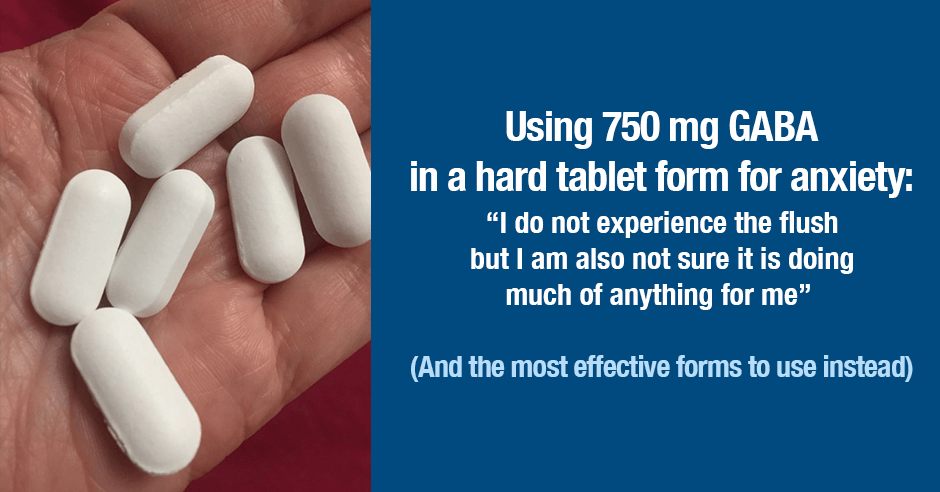
Using 750 mg GABA in a hard tablet form for anxiety: I do not experience the flush but I am also not sure it is doing much of anything for me

July 15, 2022 By Trudy Scott 21 Comments

gaba hard tablet

Today I’m addressing a question from someone in this community about a particular GABA product and her confusion about dosing with 750mg and using a hard tablet (she calls it a pill). When she uses it she doesn’t notice any effect i.e. no calming benefits and no adverse niacin-type tingly flush either. This is what she asked:

Not sure if “Source Naturals GABA Calm Mind” is on your list, but I thought it was one you had recommended at one time? Anyway, these are pills that cannot be opened like a capsule and 1 pill = 750 mg.

Personally, I had the tingly flush when I used a different product that WAS a capsule and opened it on my tongue…unfortunately I do not recall dosage or product name but I purchased at Whole Foods.

With this particular product (Source Naturals GABA Calm Mind) in pill form, although the dosage could be higher, I do not experience the flush…(however, I also am not sure it is doing much of anything for me).

This is my feedback for her: I have never recommended the Source Naturals GABA Calm Mind 750 mg tablet ever (she calls it a pill but I know she is referring to the hard tablets).

These are not a very effective way to use GABA. As you can see, she doesn’t feel it’s doing anything for her in terms of easing her anxiety and being calming. With a high dose of GABA we also often see a niacin-like flush or tingling and yet with this pill/tablet form she didn’t experience this either. GABA is much more effective when used sublingually or opening a capsule (and starting low at 125mg). More on this below.

But I’m not surprised she is confused and asking this question. The Source Naturals GABA Calm Mind has a very similar bottle/name/label to Source Naturals GABA Calm (the sublingual with 125mg GABA) and there is also a Source Naturals GABA Calm Mind 750 mg capsules (which can be opened).

She mentions the tingly flush when using a different product that was a capsule and opened on to her tongue. I’d suspect the tingling happened with a 500 mg GABA or 750 mg GABA product as this is a common dosage found in health stores. Opening the capsule and using less is best when starting out.

If you have to break it it’s a tablet and much less effective

All this logic applies to any brand of hard GABA tablet. Someone just shared on Facebook that she had purchased a GABA product in the Netherlands and broke it in half in order to use a lower dose. If you have to break it it’s a tablet and much less effective and possibly not at all effective. Be sure to read the front and back of the bottle and avoid hard tablets.

From time to time someone will see some benefit with a GABA tablet that is swallowed but it’s usually minimal.

The most effective forms of GABA to use

Here is a quick recap if you’re new to GABA. It’s an amino acid that is used as a supplement to boost GABA levels (a calming neurotransmitter) and ease physical tension type anxiety symptoms. It’s most effective when used sublingually, or as a powder or by using a GABA capsule opened on to the tongue or as a liposomal product.

When using GABA it must ideally be in one of these forms for the best effects:

  • Capsule form so the gelatin or cellulose capsule can be opened and the contents sprinkled onto the tongue, or some of it depending on dosing (NFH GABA-T SAP is a good example of this one – it contains GABA and theanine)
  • Sublingual form which is sucked/held in the mouth (Source Naturals GABA Calm 125mg is a good example of this – this is the GABA product that I have the most success with and it’s easy to use when out and about; PharmaGABA chewables are another option)
  • Powder form which is measured out using special tiny measuring spoon and sprinkled on to the tongue (Healthwise and Bulk Nutrients are good examples of this one)
  • Liposomal form which is sprayed into the mouth and held for a few minutes (Designs for Health Liposomal Neurocalm and Quicksilver Scientific Liposomal GABA with L-Theanine are good examples of this form)

This blog, Antianxiety Food Solution Amino Acid and Pyroluria Supplements, lists the amino acids that I use with my individual clients and those in my group programs. You can find a list of selected GABA products.

Here are a few success stories where the above different forms have been used:

  • Drastic reduction in intrusive thoughts, anxiety and fears (and better sleep) with GABA, tryptophan, 5-HTP and the pyroluria protocol
  • Keep GABA powder handy for choking episodes, stridor and panic (and find the ideal dose and be consistent for prevention/easing anxiety)
  • GABA helps 14-year-old with Tourette’s Syndrome (the tics and sleep), and tyrosine makes him happier and his mind sharper
  • GABA, Heartmath and EFT ease Micki’s mold-induced anxiety and panic attacks
  • PharmaGABA eases physical anxiety in a young man who has recently given up Adderall, alcohol and nicotine
  • GABA is the answer after 40 years of a lump-in-the-throat sensation, nervousness and muscle tension at work

Resources if you are new to using the amino acids as supplements

If you are new to using any of the amino acids as supplements, here is the Amino Acids Mood Questionnaire from The Antianxiety Food Solution (you can see all the symptoms of neurotransmitter imbalances, including low GABA).

If you suspect low levels of any of the neurotransmitters and do not yet have my book, The Antianxiety Food Solution – How the Foods You Eat Can Help You Calm Your Anxious Mind, Improve Your Mood, and End Cravings, I highly recommend getting it and reading it before jumping in and using amino acids on your own so you are knowledgeable. And be sure to share it with the practitioner/health team you or your loved one is working with.

There is an entire chapter on the amino acids and they are discussed throughout the book in the sections on gut health, gluten, blood sugar control, sugar cravings, self-medicating with alcohol and more.

The book doesn’t include product names (per the publisher’s request) so as mentioned above, this blog, The Antianxiety Food Solution Amino Acid and Pyroluria Supplements, lists the amino acids that I use with my individual clients and those in my group programs.

If, after reading this blog and my book, you don’t feel comfortable figuring things out on your own (i.e. doing the symptoms questionnaire and respective amino acids trials), a good place to get help is the GABA QuickStart Program (if you have low GABA symptoms). This is a paid online/virtual group program where you get my guidance and community support. There are many moms in the program who are having much success with their kids.

If you are a practitioner, join us in The Balancing Neurotransmitters: the Fundamentals program. This is also a paid online/virtual program with an opportunity to interact with me and other practitioners who are also using the amino acids with success with their clients/patients.

Did you use a GABA product that didn’t work for you before finding the ideal product and dose?

Please share which product didn’t work (was it a hard tablet?) and what did work for you. And be sure to share how it helps to ease your physical anxiety, insomnia, pain, intrusive thoughts and cravings (for sugar or alcohol).

Have you experienced the niacin-like flush or tingle from using too high a dose of GABA? How much did that and which product?

If you’re a practitioner, which forms of GABA do you find the most success with?

If you have questions please share them here too.
Filed Under: Amino Acids, Anxiety, GABA, Supplements Tagged With: 125mg, 750 mg GABA, anxiety, Balancing Neurotransmitters: the Fundamentals, calming, choking, flush, GABA, GABA Calm, GABA Quickstart program, hard tablet, intrusive thoughts, lump-in-the-throat sensation, mold-induced anxiety, muscle tension, nervousness, niacin-type flush, not doing much, opening a capsule, panic, pharmaGABA, pill, sleep, Source Naturals GABA Calm Mind, sublingual, tics, tingly, Tourette’s Syndrome

Increased kidney stones in postmenopausal women with lower estradiol levels. What about increased dietary oxalate issues too?

June 3, 2022 By Trudy Scott 20 Comments

oxalate menopause

Epidemiological data reveal that the overall risk for kidney stones disease is lower for women compared to age-matched men. However, the beneficial effect for the female sex is lost upon menopause, a time corresponding to the onset of fall in estrogen levels.

The above is from a 2013 paper, Serum estradiol and testosterone levels in kidney stones disease with and without calcium oxalate components in naturally postmenopausal women.

The aim of this study was to look at serum estradiol and testosterone levels of naturally postmenopausal women who had kidney stones.

It was a small study with 113 naturally postmenopausal women with newly diagnosed kidney stones (some with calcium oxalate stones and some with non-calcium oxalate stones) and 84 controls, all around 52 to 62 years of age.

The results were as follows:

  • Serum estradiol (E2) was significantly lower in kidney stones patients compared to controls (21.1 vs. 31.1 pg/ml)
  • Serum testosterone (T) levels did not significantly differ among the groups.

The authors came to the conclusion that “Naturally postmenopausal women with higher remaining estradiol levels appear less likely to suffer from kidney calcium oxalate stones.

These findings support the hypothesis that higher postmenopausal endogenous [produced by the body] estrogens may protect against kidney stones with ageing.”

This is very encouraging research because it means we can do something about it (more on that below).

My question is this: What about increased dietary oxalate issues in this age group? And can there be similar issues in perimenopausal women too? This study only looked at kidney stones but I propose that there is a connection and that declining estradiol is the common factor. I also propose that providing estrogen support may help to counter both issues – kidney stones and/or dietary oxalate issues with no kidney stones, especially with the clinical observations and feedback I have had (more on that below).

Now this may not be the case for all women and is clearly not the only factor when it comes to kidney stones and dietary oxalate issues. But I do feel it needs to be part of the discussion. In menopause, osteoporosis and heart disease are on our radar but kidney stones and dietary oxalate issues are not.

Dr. Felice Gersch talks about estrogen and calcium in bone health and osteoporosis

I really thought I was onto something after hearing Dr. Felice Gersh, MD (a integrative gynecologist who focuses on women’s health and menopause) talk about estrogen and calcium in bone health/osteoporosis on The Osteoporosis Summit earlier this year. This is some of what she shared:

Estrogen affects everything! So estrogen is involved in the development of bone, but it’s even more complex. For example, estrogen allows the proper absorption of calcium, so that you get proper absorption of calcium from food in the gastrointestinal tract. That involves having proper estrogen levels. And having proper estrogen levels allows the reabsorption of calcium in the kidneys so that you don’t excrete a lot of calcium that you shouldn’t be excreting.

As soon as I heard calcium and the kidneys, the light bulbs went off and I started looking for some research. I didn’t expect there to be much because a higher incidence of kidney stones in menopause and the estrogen connection is not something I’ve heard discussed by menopause experts. However, the above study was one of many. Here are a few more studies that support this connection:

  • Estrogen replacement increased the citrate and calcium excretion rates in postmenopausal women with recurrent urolithiasis (urolithiasis is kidney stone disease)
  • Etiological role of estrogen status in renal stone formation

Interestingly this 2021 paper, Association between sex hormones and kidney stones: analysis of the National Health and Nutrition Examination Survey, reports that there is “no independent association between sex hormones (testosterone and estradiol) and history of kidney stones in either males or females.”  This conclusion may be related to the fact that there are fewer studies that include women. I look forward to future research in this area and until then we use the other research and what we see clinically.

How common are dietary oxalate issues in my community of perimenopausal and menopausal women?

I posted the 2013 study and this question on Facebook to see how common an issue it is:

If you have dietary oxalate issues (with or without kidney stones) I’m curious if there is a hormonal connection and specifically if things got worse for you in perimenopause, and got really bad in menopause (as estrogen declines even further). This has certainly been the case for me.

Here is some of the feedback I’ve received on this post and related posts:

Cynthia shared this: “Really interesting! I definitely had oxalate issues (perimenopause) provoked by ruptured appendix/SBO/abscesses and fistula formation (13 day hospitalization)….I had to remove all oxalates and go full carnivore for 9 months….I’m still oxalate sensitive and had not been before…. I will definitely be sharing this with my communities….there are SO many middle aged women with oxalate issues”

Kirsten shared this: “Interesting to know. At the age of 49 (I am now 51), for the first time in my life I developed kidney stones – probably the most painful experience of my life. I eliminated vitamin C supplements and some oxalates (I had a daily dose of “green juice” that I was consuming as well that I no longer take) however I never understood the relationship between estrogen and their development. I am not post menopausal as of yet -but definitely experiencing symptoms common in peri-menopause… Perimenopausal symptoms include – anxiety (the worrying type) which is at its worst around the time I menstruate (taking 5-HTP which helps but doesn’t completely resolve), night sweats, hypoglycemia, HPA dysfunction (which could be a result of perimeno as well as its own issue – or both). If I don’t keep my stress levels in check, everything becomes exacerbated – meditation helps too.”

Leah shared this: I developed oxalate issues after menopause (I’m in my 60s) and didn’t realize what is was until I read your post about it during the early days of the pandemic when people were overdosing on vitamin C (at least you were trying to figure out if there was a connection at the time). With more research, I discovered a product called Kidney Cop that I still take (though I never get stones, only skin issues on my face). I also switched to liposomal vitamin C and amla and cut back on the offensive [high oxalate] foods for me. I do also experience a similar effect when I use collagen powder with peptides (skin issues). When I switched to a powder that didn’t contain peptides but has collagen types 1-5 in it, I had no issues. I don’t know if this is oxalate-related or not, but the skin issue is the same (clear fluid-filled bumps around my mouth and chin only).”

A number of women in the Facebook group Trying Low Oxlaates have shared comments like this: “I was never bothered by oxalate issues before menopause” and “I can tell you that my oxalate problems became far worse – along with everything else, pyroluria, copper toxicity etc – in perimenopause.”

Personally, my severe dietary oxalate issues started in 2012, when I was 52, and it manifested as excruciating foot pain. It was a combination of hot-burning-coals-pain and shards-of-glass-pain. Later it affected my left eye and more recently it impacted my sleep in a big way. I eat low oxalate and use vitamin B6 and calcium citrate (carefully timed) to keep symptoms away. My next plan is to see if addressing my low estrogen will help even more (more on that below).

Approaches to support declining estrogen levels in perimenopause and menopause

Briefly, here is a summary for supporting declining estrogen levels in perimenopause and menopause:

  • Diet and lifestyle including exercise and stress-reduction
  • Amino acid support as needed (GABA supports progesterone and tryptophan supports estrogen) and the pyroluria protocol of zinc, vitamin B6 and evening primrose oil (more on this here)
  • Adrenal support
  • Essential oils such as geranium and rose otto and clary sage and other oils to help with anxiety and stress
  • Liver and kidney support
  • Avoiding environmental toxins, especially xenoestrogens (plastics, fragrances, pesticides etc) which bind to estrogen receptor sites
  • Maca – the research on Femmenessence Maca-Pause for bone and cardio health is very encouraging and I suspect there may be benefits for dietary oxalate issues and kidney stones too (when there is a low estrogen trigger). I will be trying this approach and I’ll report back on what I find.
  • Other herbal approaches for hormonal support: Black cohosh, red clover, dong quai (which, interestingly, are reno-protective too)
  • Bioidentical hormone replacement therapy

This section deserves an entire blog post and is important to address over and above the mood issues, increased anxiety, compromised sleep, low libido, vaginal issues and hot flashes – because of the impacts for heart health, cognitive decline and bone health.

Kidney stones and dietary oxalate issues in men

This 2016 paper addresses kidney stones in males and makes the testosterone connection for men under 60 years of age: Possible role of elevated serum testosterone in pathogenesis of renal stone formation

Urolithiasis [kidney stones] occurs with greater frequency in males with incidences three times higher compared to females indicating some role played by androgens. Stone formation in renal tissues before puberty is similar between males and females, whereas greater frequency is seen in the third to the fourth decade of life when the levels of serum testosterone are also the highest in males.

With advancing age, the probability for stone formation also decreases as consistent with the decline in serum testosterone levels with more than 20% of healthy men over 60 years of age presenting with serum levels of hormone below the range for young men.

This paper does also support the menopausal estrogen connection I’ve mentioned above: “With females, the frequency for stone formation is considered more compared with premenopausal postulated mainly due to low estrogen levels.”

There is so mention of dietary oxalate issues but we do see this clinically.

My other resources on oxalates if this is new to you

This blog, Oxalate crystal disease, dietary oxalates and pain: the research & questions, came out of my quest for finding a medical explanation/term for my own pain caused by dietary oxalates and a desire to gain a better understanding for my clients who experience similar pain.

You can read an overview of oxalates, my pain issues with dietary oxalates, a deeper dive into the condition called oxalate crystal disease (with some of my insights and questions), and the autism and atherosclerosis research.

As I mentioned above, my severe dietary oxalate issues started in 2012 (when I was 52) and it manifested as excruciating foot pain. It was a combination of hot-burning-coals-pain and shards-of-glass-pain. Later it affected my left eye.

You can also read how oxalates can contribute to anxiety, sleep issues (this has been a more recent issue for me), headaches, fatigue and other symptoms.

When I did the research for this older blog I didn’t come across any studies related to menopause and estrogen levels.

I published this blog, Coronavirus and vitamin C for immune support: new pain or more severe pain due to oxalate issues?, to help folks identify the increase in different types of pain they were seeing as a result of using high dose vitamin C. This could be joint pain, eye pain, foot pain, vulvodynia, bladder issues, insomnia, gut pain, kidney pain, changes in thyroid health/labs, bone pain etc.

This blog, Vitamin C causes oxalate formation resulting in pain, anxiety, and insomnia (when there is a defect in ascorbic acid or oxalate metabolism)? is part 2 and reviews some of the research on vitamin C/ascorbic acid being a possible trigger for the formation of oxalates in certain instances.

I do mention the big disconnect that we see in this research is always the mention of kidney stones. The missing piece – in the research and in many articles – is that you can have issues with dietary oxalates when there is no kidney disease/no kidney stones. I propose similar logic for dietary oxalate issues in perimenopause and menopause with declining estrogen levels i.e. dietary oxalate issues with or without kidney stones.

If you’re in perimenopause or menopause have approaches for supporting estrogen (estradiol) made your dietary oxalate issues and/or kidney stones less severe? Please share what has helped and if you have both – dietary oxalate issues and kidney stones/kidney disease.

If you’re a younger woman and have dietary oxalate issues and kidney stones/kidney disease, have you noticed any hormonal connections?

If this doesn’t affect you personally, have you seen the benefits of supporting estrogen with your perimenopausal/menopausal female clients/patients who have dietary oxalate issues and kidney stones/kidney disease?

If you’re male and have had dietary oxalate issues and/or kidney stones have you found they get less severe as you get older and testosterone declines?

If you have questions please share them here too.
Filed Under: Oxalates, Women's health Tagged With: anxiety, bone health, calcium, calcium oxalate, cognitive decline, dietary oxalate issues, Dr. Felice Gersch, estrogen, heart health, hot-flashes, insomnia, kidney stones, libido, lower estradiol levels, men, mood issues, osteoporosis, oxalate menopause, pain, perimenopausal, perimenopause, postmenopausal women, postmenopause, sleep, testosterone, vaginal, vitamin C

Drastic reduction in intrusive thoughts, anxiety and fears (and better sleep) with GABA, tryptophan, 5-HTP and the pyroluria protocol

May 6, 2022 By Trudy Scott 33 Comments

intrusive thoughts reduction

It’s not uncommon for an adult woman to have had intrusive thoughts her entire life and not even recognize that they are connected to her anxiety levels. She is often unaware that there is anything she can do to actually ease her anxiety and reduce the bad thoughts (such as fearing horrible things happening to her husband and children). Enter the amino acids: GABA, tryptophan, 5-HTP and the pyroluria protocol (zinc, vitamin B6 and evening primrose oil). They can do all of this and more. Kimberly shared her own experience and success on a blog post about intrusive thoughts and these specific nutrients. Here is her story in her own words:

Oh my goodness, I’m realizing after reading this, that intrusive thoughts are something I’ve had my entire life. As a child, this manifested in thoughts of what might happen to my one stable parent when we were apart. More recently, I feared horrible things happening to my husband or children. Like the author of the original blog wrote, these intrusive thoughts reflect a greater anxiety. But I didn’t realize this until I began experimenting with your protocols.

I first tried GABA when I felt extremely anxious, but not on a regular basis. Next, I added the pyroluria protocol, which did bring some relief to the intrusive thoughts. Fast forward to today, when I also take 5-HTP, tryptophan and GABA regularly and have noticed a drastic reduction in those thoughts/fears. It’s like a miracle.

My fear level is maybe 15% of what it used to be, if that.

I also find that I can use extra GABA at night if I wake up and can’t shut off my mind. It works like a charm to help me get back to sleep. What a blessing to have these amino acids.

I’m a calmer, more serene person than I’ve ever been, without (for the most part) the crippling, irrational fears I used to experience. Thank you, as always, Trudy. You are also a tremendous blessing.

I thanked her for sharing and said how glad I was that she is connecting more and more dots. It’s very common to suddenly realize you’ve had these intrusive thoughts your entire life. With her  amazing results, combining all the above nutrients she is a poster child for this approach that I use with my clients. I’m thrilled for her miracle outcome and so very happy for her.

I’m sharing her story here as a new blog so I can provide her with some additional approaches to explore and so you can see how these amino acids and other nutrients have worked for someone else (and get your own insights.) I’m also sharing my feedback on how she approached things.

Additional approaches to her to explore: adjusting what is working for her now

Her fear level is maybe 15% of what it used to be but ideally we want to improve on that by fine-tuning what she is doing and capitalize on what is working. Know this – it’s not unreasonable to expect that to get to zero!

If we were working together this is what I’d suggest (assuming she hasn’t already done this):

  • Review the low GABA and low serotonin questionnaires and adjust the GABA and/or tryptophan/5-HTP based on any symptoms that remain with a score above zero.
  • After that, if there are still some troubling low serotonin symptoms experiment with different doses and timings of tryptophan and 5-HTP – some people do better on one vs the other
  • Also, if there are still some troubling low GABA symptoms, experiment with a few different GABA products. I’ve had folks try up to 5 different products before they find the perfect one for their needs
  • If she can see the social anxiety and other pyroluria signs remain, we’d adjust zinc, vitamin B6 (and possibly add P5P) and evening primrose oil.

With all of the above, I’d have her do one change at a time and carefully document everything in her food-mood log.

Identifying if the remaining fear/intrusive thoughts are more pronounced in the second half of her cycle

It may simply be a matter of identifying if the remaining fear/intrusive thoughts are more pronounced in the second half of her cycle i.e. after ovulation. As I shared on the blog, one study showed that “women in the ‘early luteal’ phase… had more than three times as many intrusive thoughts.”

She may need to adjust the amino acids up during this period and it may be that over the next 2 months she sees these symptoms resolve with her current approach, as her hormones become balanced. It’s typical to see this in 2-3 months.

My feedback on her approach

Here is my feedback on how she did things and why I love her approach:

  • She experimented with GABA some of the time – as needed – based on what she was learning from me from blogs, my book and interviews.
  • She made one change at a time, adding the pyroluria protocol next
  • Then she added tryptophan and 5-HTP (hopefully one at a time)
  • And then her use of the amino acids became regular. This last aspect of consistency is a needle mover for so many of my clients.
  • She now tweaks things and takes extra GABA at night if needed. This may be needed after a tough day or if you’ve been glutened or exposed to insecticides.

I will add that the sequence could have been varied and still have had a similar successful outcome, for example, amino acid consistency from day 1 and then adding the pyroluria protocol (this is what I typically do with clients).

However, it’s my goal to empower women like Kimberly to take charge, learn, make changes, listen to their bodies, learn some more and adjust to see further improvements. It makes me immensely happy when I hear that she is a calmer, more serene person than she’s ever been. I feel confident that she’ll be able to get to zero intrusive thoughts with the tips I shared above.

She may or may not also need to consider other possible root causes of intrusive thoughts: low magnesium, low iron, diet (a low carb/high fat intrusive thoughts case study) and gluten issues.

Psychiatric medication discontinuation syndrome, Lyme disease, mold toxicity, heavy metals, toxins, infections, TBI and trauma can also be factors with intrusive thoughts and anxiety, but with her huge improvement I’d suspect these root causes are unlikely for her.

Resources if you are new to using the amino acids and pyroluria supplements

If you are new to using GABA or tryptophan/5-HTP as a supplement, here is the Amino Acids Mood Questionnaire from The Antianxiety Food Solution (you can see all the low GABA and low serotonin symptoms).

If you suspect low levels of any of the neurotransmitters and do not yet have my book, The Antianxiety Food Solution – How the Foods You Eat Can Help You Calm Your Anxious Mind, Improve Your Mood, and End Cravings, I highly recommend getting it and reading it before jumping in and using amino acids on your own so you are knowledgeable. And be sure to share it with the team you or your loved one is working with.

There is an entire chapter on the amino acids and they are discussed throughout the book in the sections on gut health, blood sugar control, sugar cravings, self-medicating with alcohol and more.

My book also has an entire chapter on pyroluria (with the protocol and questionnaire). The questionnaire is on the blog too, together with many other related posts (simply search for pyroluria).

The book doesn’t include product names (per the publisher’s request) so this blog, The Antianxiety Food Solution Amino Acid and Pyroluria Supplements, lists the amino acids that I use with my individual clients and those in my group programs.

If, after reading this blog and my book, you don’t feel comfortable figuring things out on your own (i.e. doing the symptoms questionnaire and respective amino acids trials), a good place to get help is the GABA Quickstart Program. This is a paid online/virtual group program where you get my guidance and community support.

If you are a practitioner, join us in The Balancing Neurotransmitters: the Fundamentals program. This is also a paid online/virtual program with an opportunity to interact with me and other practitioners who are also using the amino acids.

Do you experience intrusive thoughts or did you have them in the past? Feel free to describe them if you feel comfortable doing so.

And did you think you’d be able to reduce the horrible intrusive thoughts with a nutritional approach?

What helped reduce them for you? If you used a similar approach, how did it look for you?

If you’re a practitioner, have you found this approach to help reduce intrusive thoughts and ease anxiety in your clients/patients?

If you have questions please share them here too.
Filed Under: 5-HTP, Anxiety, GABA, Insomnia, OCD, Tryptophan Tagged With: 5-HTP, amino acids, anxiety, anxious, calmer, can’t shut off my mind, empowering women, evening primrose oil, fear, feared horrible things, fears, GABA, GABA Quickstart program, intrusive thoughts, luteal phase, more serene, practitioner training, pyroluria protocol, sleep, tryptophan, vitamin B6, zinc

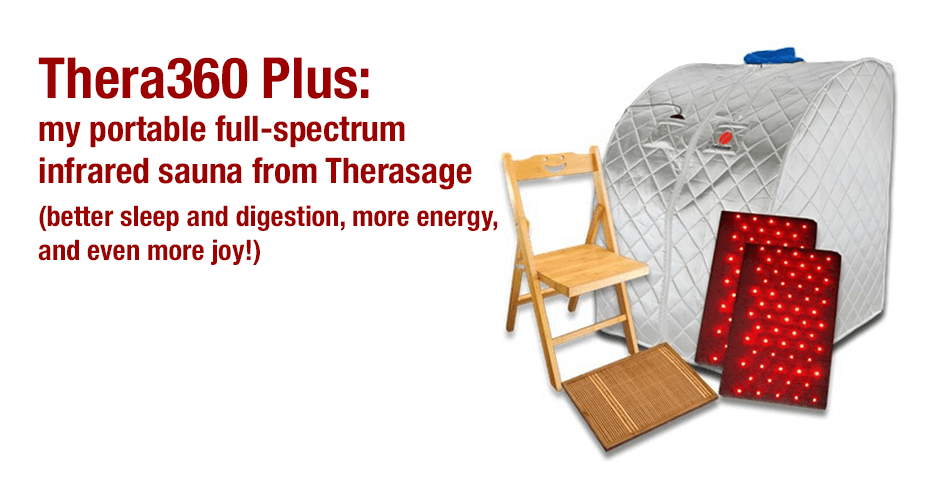
Thera360 Plus: my portable full-spectrum infrared sauna from Therasage (better sleep and digestion, more energy, and even more joy!)

April 29, 2022 By Trudy Scott 39 Comments

thera360 plus

Today I’m sharing why I personally chose the Thera360 Plus, a portable full-spectrum infrared sauna from Therasage. And I also share my feedback on how I feel after using this sauna.  I also have a call to action asking you to share your sauna experiences so the community can benefit from the collective wisdom of everyone who has one or uses one.

I also highlight some of the many health benefits of regular sauna sessions – both mental and physiological.

Mental health benefits: improved well-being, reduced pain, stress reduction and improved sleep

Here are some of the mental health benefits from this paper, Clinical Effects of Regular Dry Sauna Bathing: A Systematic Review):

  • In addition to having profound physiological effects, sauna bathing is reported to have beneficial psychological effects that are reflected in the many reports of improved well-being and pain tolerance.
  • The psychological impact of sauna bathing may be due to a combination of factors that include release of endorphins and other opioid-like peptides such as dynorphins, forced mindfulness, psychological stress reduction, relaxation, improved sleep, time out from busy life schedules, placebo effects, and other aspects of individual psychological and social interactions that likely occur around frequent sauna activity.
  • While it is difficult to distinguish between the different factors that produce positive psychological effects, such effects may enhance other physiological and metabolic benefits as they are likely to promote adherence to regular sauna activity.

Remember, endorphin release leads to feeling joyful.

And this last bullet is an important one to highlight: when you really enjoy doing something you are more likely to continue doing it. This means you’ll continue to see benefits.

There is also research that supports serotonin-boosting effects and cortisol-lowering effects, both of which are important when it comes to anxiety and mood too. (I’ll address this in a future blog on saunas, together with other mechanisms).

Physiological benefits: reduced inflammation, benefits for Alzheimer’s, reducing toxins and improved heart health

Here are a few studies you can read to learn more about some of the many physiological benefits of sauna:

  • Elevating body temperature to reduce low-grade inflammation: a welcome strategy for those unable to exercise?
  • Could Heat Therapy Be an Effective Treatment for Alzheimer’s and Parkinson’s Diseases? A Narrative Review
  • Evaluation of Interventions to Reduce Firefighter Exposures
  • Sauna bathing is associated with reduced cardiovascular mortality and improves risk prediction in men and women: a prospective cohort study
  • Effectiveness of a far-infrared low-temperature sauna program on geriatric syndrome and frailty in community-dwelling older people [improvements were noted]
  • Effects of Waon therapy on chronic fatigue syndrome: a pilot study [Waon therapy is a type of far infrared sauna and improvements were noted]
  • Sauna as a valuable clinical tool for cardiovascular, autoimmune, toxicant- induced and other chronic health problems [they are safe and offer multiple health benefits to regular users].

And this is an excerpt from the Therasage site

The Thera360 Plus sauna enhances mitochondrial health and cellular energy, improves microcirculation and blood oxygenation, enhances the natural production of nitric oxide, offers skin and anti-aging benefits, and the best natural detoxification possible, along with all the amazing health benefits of Full Spectrum Infrared.

The many positive features that helped me pick this sauna

The Thera360 Plus is the sauna I own and endorse. Here are a few of the many positive features that helped me decide to purchase this one (I did a fair amount of research and did look at other units too):

  • It is a full-spectrum (near and far) infrared sauna
  • It comes with red light/photobiomodulation panels (which also help with pain, mood and reducing inflammation).
  • It has the tourmaline gemstones built-in (these generate negative ions so it feels like you’ve been at the beach or a waterfall).
  • The chair and foot base is made of non-toxic bamboo materials. I’m used to having to leave new items outside for days in order to off-gas. I was surprised that this was not needed. Their “No Off-Gassing” message holds true.
  • The bamboo foot base is a grounding mat.
  • It is low EMF and shields not only EMF’s but also ELF’s, RF’s and dirty electricity. Before I purchased my sauna, I met with the owner and am super-impressed by this feature.  It’s a really important factor for me and anyone with anxiety or chronic illness and/or electromagnetic hypersensitivity). As soon as it arrived I set it up (set up is so easy) and got out my meter and measured all the EMFs and sure enough there is no exposure when inside the sauna.
  • The digital temperature controller is simple to use.
  • It’s portable, small and convenient to use.
  • It’s affordable, is made in California and the company ships internationally.

My personal feedback as to how I feel after using this sauna

For me, this infrared sauna (with red light therapy and tourmaline) helps me with sleep, digestion and energy primarily (I have chronic Lyme). I also know it’s helping me with ongoing detoxification, mitochondrial health, stress reduction and mood support, immune function and cardiovascular health.

The good news is that the sauna has anti-inflammatory benefits and provides me with wonderful relief from pain, muscle spasms and other injuries.

Also, I feel a real sense of joy after using it … I can’t stop smiling for hours after a session.  That is the endorphin and serotonin boost I’m getting, plus some of the benefits of negative ions! I love the outdoors and after a session in the sauna, I almost feel like I’ve been for a hike or walk on the beach.

I’ve also positioned my sauna facing a large window that looks onto our covered patio. It has lots of greenery and I can see the blue sky off to the left. This is particularly pleasant on a cold winter’s day and I get some of the benefits of nature.

sauna
sauna

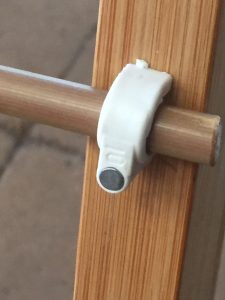
I love the bamboo chair that ships with it but it wasn’t providing me with any lower back support (I’m prone to back injuries).  I made a modification with a bamboo garden stake and PVC bracket (with some help from my darling father-in-law). Here are some images in case it’s something you’ve been considering….it works perfectly for the back support I need, keeps my bare back exposed to the heat and the bamboo garden stake slides out if needed.

sauna chair
sauna chair PVC clip

A more in-depth blog post: mechanisms and additional insights

I believe we can all benefit from regular sauna bathing! And I’ll be sharing a more in-depth blog post on additional benefits of infrared sauna, some of the mechanisms, how to interpret the research (since there is so much research on traditional/Finnish saunas which are shorter duration and higher temperatures), how to assess the different saunas that are available, and how to use one and get the most benefits.

I’ll also share my insights on using sauna bathing for benzodiazepine, SSRI, opioid and alcohol detox; why folks with pyroluria may see specific benefits; and using sauna bathing to help reduce the impact of these things that increase anxiety – toxic mold, heavy metals, Lyme disease, pesticides, glyphosate, fluoride, phthalates and much more.

Learn more about the Thera360 Plus sauna here on the Therasage site. If you decide to purchase use coupon code TRUDY10 to save 10%.

I was confused when I started looking into saunas and if you’ve been following me for a while you know I like to share what I learn – hence this blog post. I’m still learning and will continue to share in follow-up posts.

There are many excellent saunas available for purchase and this is just one of them that I landed upon after researching a number of them.

If you have a home sauna, please share:

  • which one you have
  • why you purchased this type/brand (or use this type of sauna)
  • and the benefits you have experienced.

And do feel free to share more about:

  • how you use yours – duration, frequency, temperature
  • what you do before and after (for hydration)
  • if you dry-brush (before or after)
  • if you use certain nutrients (like niacin, charcoal, magnesium and other electrolytes, glutathione, NAC etc)
  • anything else you do as part of your sauna bathing
  • what other detox approaches you use (such as rebounding or castor oil packs etc).

By using the collective wisdom from this community we can all learn and benefit. And giving/contributing gives you a nice endorphin boost too!

If you have questions please share them here too.
Filed Under: Detoxification, Inflammation, Sleep, Toxins Tagged With: alzheimer's, cardiovascular, Clinical Effects of Regular Dry Sauna Bathing, cortisol, digestion, endorphins, energy, full-spectrum infrared sauna, health benefits, heart health, improved well-being, Inflammation, infrared sauna, joy, joyful, mental, mindfulness, physiological, portable sauna, reduced pain, relaxation, sauna, serotonin, sleep, stress reduction, Thera360 Plus, Therasage, toxins

How much GABA should I use for my anxiety? It depends on your unique needs (and there is an extremely large variation in dosing)

February 25, 2022 By Trudy Scott 55 Comments

gaba dosage and needs

GABA is a calming amino acid, used as a supplement, to ease low GABA levels. With low GABA you’ll experience physical-tension and stiff-and-tense-muscles type of anxiety, panic attacks and insomnia. You may feel the need to self-medicate to calm down, often with alcohol but sometimes with carbs and sugary foods. GABA also helps with muscle spasms and provides pain relief when muscles are tight.

One of the most common questions I get from individuals who are excited to hear about the benefits of GABA but are totally new to using this amino acid is: “How much GABA should I use for my anxiety?” Even individuals who may be familiar with GABA and have even experimented with it themselves and are seeing some benefits may also have this question.

Most are not aware of the extremely large variations in dosing that may work for different individuals. Today I’ll share some examples to illustrate both the wonderful benefits and this range of dosing which can be as much as a 1000x to 2000x variation in some instances!

Syd gets sleep and body anxiety benefits with just 1.5 mg to 3 mg GABA

As you can see in this first example, Syd gets sleep and body anxiety benefits with just 1.5 mg to 3 mg GABA. She shared this on a recent blog post where I discussed how using too much GABA can cause a niacin-like flushing sensation

I think it’s useful to note that some, like me, start out with tiny doses and still get benefits with no side effects. I take around 1.5 mg to 3 mg GABA at a time and it works for me! Really helps me sleep at night.

I also take approximately 1.5mg if I feel body anxiety. I divide a melt-able 25mg tablet into 8ths or less. (Very approximate, of course. Sometimes it’s just crumbs!)

Right now, anything higher and I’m a wet noodle the next day, meaning I feel super depleted and can hardly stand up. But, no niacin flush-like symptoms.

I appreciate her sharing and I’m so glad she found her ideal dose. As you can see it’s really really low. We call folks like Syd “pixie dust” people because they do really well with tiny tiny doses. It also shows that some folks get flushed with too much GABA and some don’t. Syd just feels depleted.

In case you’re wondering which product Syd is using, it’s the Kal 25 mg GABA, which she breaks apart.

To give this perspective, a typical starting dose is 125mg GABA for adults and half that for children. I share more below on this and how to use the symptoms questionnaires and do a trial.

Christina’s agoraphobic client was able to leave the house with 3000 mg GABA

A colleague, Christina Veselak, MS, LMFT, CN shared this feedback about her client who had agoraphobia i.e. fear of outdoor spaces:

I once had a profoundly anxious, agoraphobic client who I sent home with instructions to trial GABA until she either got relief from her anxiety or an adverse reaction. She came back a few days later to say that she had arrived at 3000 mg of GABA in the morning as her ideal dose.

That dose allowed her not only to leave her bedroom but also leave her house, socialize and babysit her hyperactive grandsons!

Most of my other clients could not tolerate anything near to that dose without getting an adverse reaction but it was perfect for her.

This really adds perspective to the range of doses that folks may respond to. This dosage is 1000x higher than Syd’s maximum dose and 2000x higher than her lowest dose!

Let’s address this question: How much GABA should I use for my anxiety?

The answer is this – it depends on your unique needs and biochemistry. I know it’s not the answer you (and almost everyone else too) probably want to hear but there really is no one-size-fits-all when it comes to GABA and the other amino acids.

The best way to determine if you may have low GABA and may benefit from using GABA is to look at the low GABA symptoms, rate them on a scale of 1-10, with 10 being worst, do a trial of GABA and rate the symptoms again right afterwards (in the next 2 to 30 minutes).

Here are the symptoms.

From there you continue to adjust up (or down) over the next few weeks to find your ideal dose. If you go too high you may experience an uncomfortable tingling niacin-like flush.

I can share this: for GABA, 125mg is a typical starting dose for adults that I use with my clients. Half that or less is a good ballpark for starting a trial for children. As with all the amino acids, they are always best used sublingually and taken away from protein.

Below is an example from someone who figured out 1-3 of the 125 mg GABA Calm product was ideal for her own needs.

Melissa is much calmer, sleeps well and stopped craving sweets with 125 mg to 375 mg GABA Calm a day

Melissa started using Source Naturals GABA Calm in anticipation of holiday travel and holiday gatherings and shared how much she benefited:

I have been taking 1-3 per day for two weeks. I’m glad I bought it before traveling home for Christmas – I was cool as a cucumber at the airport and was much calmer when visiting family and friends compared to last year!

The true test of its efficacy will be in two weeks when the semester starts. For now, I notice a general calmness and am sleeping well.

An unexpected result was that I stopped craving sweets after about a week of taking it!

And how wonderful for her! And we have much appreciation for her sharing her success.

These results at this dosage are pretty typical for the majority of my clients. Of course there may need to be adjustments seasonally (possibly needing less after the holidays and closer to spring) or more around her period or more with added stresses in her life.

You can read more about the GABA Calm product she used here (you can find it in my online supplement store too).  

Resources if you are new to using GABA as a supplement

If you are new to using the the amino acid GABA as a supplement, here is the Amino Acids Mood Questionnaire from The Antianxiety Food Solution (you can see the low GABA and other low neurotransmitter symptoms)

If you suspect low levels of GABA or low serotonin and do not yet have my book, The Antianxiety Food Solution – How the Foods You Eat Can Help You Calm Your Anxious Mind, Improve Your Mood, and End Cravings, I highly recommend getting it and reading it before jumping in and using amino acids on your own so you are knowledgeable. And be sure to share it with the team you or your loved one is working with.

The book doesn’t include product names (per the publisher’s request) so this blog, The Antianxiety Food Solution Amino Acid and Pyroluria Supplements, lists the GABA products that I use with my individual clients and those in my group programs.

If you don’t feel comfortable reading my book, doing the low GABA symptoms questionnaire and doing trials of GABA on your own, you can get guidance from me in the GABA Quickstart Program.

If you are a practitioner, join us in The Balancing Neurotransmitters: the Fundamentals program. AS you’ve learned today, there are many nuances and best practices when using the amino acids. And it’s an opportunity to interact with me and other practitioners who are also using the amino acids.

What have you found to be your ideal dose of GABA? And how has it helped you?

What dose did you start with and did you go too high and then have to back down again to get to your ideal dose? (be sure to share which product worked for you too)

Are you surprised to learn about this huge variation in dosing GABA?  And if yes do you feel  inspired to experiment with your current dosing?

If you’re a practitioner have you seen these variations?

Feel free to ask your questions here too.

Filed Under: Anxiety, GABA, Insomnia, Sugar addiction Tagged With: Agoraphobia, alcohol, anxiety, calming amino acid, carbs, GABA, GABA Calm, GABA Quickstart program, how much, insomnia, pain, panic attacks, physical-tension, self-medicate, sleep, sugary foods, to calm down, unique needs, variation in dosing

GABA helps 14-year-old with Tourette’s Syndrome (the tics and sleep), and tyrosine makes him happier and his mind sharper

January 21, 2022 By Trudy Scott 30 Comments

gaba tyrosine teenager

We typically associate low GABA, a calming neurotransmitter, with a physical-type of tension- anxiety that also often affects sleep. However there is evidence that low GABA is also a factor in other conditions. One of these conditions is Tourette’s Syndrome, which is characterized by the presence of chronic tics which can be motor/movement and vocal. In today’s blog I share some research that suggests a deficit in GABAergic transmission may contribute to symptoms in Tourette’s and a case study where a teenage boy found relief from his tics when using the amino acid GABA as a supplement. GABA also improved his sleep. He also made some dietary changes – no gluten, no sugar and no caffeine – and supplemented with magnesium and melatonin. The amino acid tyrosine, used as a supplement, also improved his low mood and focus, both of which can be issues with Tourette’s.

Kim, a mom in this community, shared this wonderful feedback about her son in response to a Facebook post a few years ago:

Because of your book, I started using GABA for my 14-year-old son with moderate to severe Tourette’s Syndrome, and the results have been significant. Highly recommended for tics, and sleep for these individuals. Thank you.

I asked her how much GABA he used and how often and she shared this:

He used 750mg GABA nightly before bed, and if tics are really active then additional 300mg. Lots of water and a balanced diet with no caffeine…. life-saver.

Keep in mind that 750mg is considered a high dose. We typically start with 125mg GABA and increase based on each person’s unique needs. There is the temptation to think “I have tics and this is a very severe condition so I need a high dose to start.” You don’t want to be thinking like this. Some people may not need this much and others may need this high dose. We always use the trial method to figure out the ideal dose.

She also shared that when he added tyrosine, he saw benefits from that amino acid supplement too:

He recently added 300mg of l-tyrosine, and it promotes happiness and a sharper mind, due to brain fog. He says he really notices a difference. He has read your book as well.

How wonderful is this? GABA helped reduce his tics and improved his sleep, and tyrosine improved his mood and focus.

I love that he’s read my book – good for him and this mom! It’s never too early to have you and your child read this information. It’s empowering for them so they understand the changes they need to make and why these amino acids, dietary changes and elimination of caffeine make such a difference.

I recently checked in to see how he is doing now and asked what other nutritional approaches helped/help other than GABA, a balanced diet and no caffeine. She shared this:

He’s gluten free, magnesium for sure for the muscle tics, and melatonin for good sleep (Touretters need a routine sleep schedule).

He’s 18 now and is doing way better as he matures, but GABA no doubt has improved his life. We promote GABA and educate others as much as possible.

All this is so great to hear and I love that they now help to educate others about GABA too.

I appreciate that she gave me permission to share, hence this post. (The image above is a stock image and not her son.)

Tourette’s Syndrome and reduced GABA function

This paper, Reduced GABAergic inhibition and abnormal sensory symptoms in children with Tourette syndrome, describes the condition and the role of reduced GABA function:

Tourette Syndrome is characterized by the presence of chronic tics. Individuals with Tourette Syndrome often report difficulty with ignoring (habituating to) tactile sensations, and some patients perceive that this contributes to a “premonitory urge” to tic. While common, the physiological basis of impaired tactile processing in Tourette Syndrome, and indeed tics themselves, remain poorly understood.

It has been well established that GABAergic processing plays an important role in shaping the neurophysiological response to tactile stimulation. Furthermore, there are multiple lines of evidence suggesting that a deficit in GABAergic transmission may contribute to symptoms found in Tourette Syndrome.

In this study, the authors used testing (magnetic resonance spectroscopy) and tasks that were vibrotactile (the perception of vibration through touch) to investigate the role of GABA and atypical sensory processing in these 8-12-year old children with Tourette Syndrome.

They found the following:

  • lower concentration of GABA in the sensorimotor cortex and “impaired performance on tactile detection and adaptation tasks, consistent with altered GABAergic function”
  • the altered/reduced GABAergic function correlated with the severity of motor tics and sensory impairments, “linking the core feature of Tourette Syndrome directly to … brain neurochemistry.”

The authors conclude that this provides a foundation for novel interventions (i.e. medications) but unfortunately do not offer the use of the amino acid GABA as one of these solutions. This is very unfortunate but not unexpected. I plan to reach out to the authors and share this case study and blog.

This research supports why GABA works so well for Kim’s son and why he needed higher amounts of GABA when his tics were more active/severe. And now I’m curious to find out if her son has/had sensory issues and how they improve/improved with GABA. I’ll report back if I hear from her about this.

It’s no surprise that GABA helps his sleep too. There is much evidence supporting this – like the the sleep promoting effects of combined GABA and 5-HTP (or GABA alone or 5-HTP alone).  I’ve also shared many GABA-sleep success stories on the blog. Here is one: Since starting GABA my child sleeps for the first time in years and really notices a difference in his carb cravings. (Use the search feature and “GABA sleep” to find additional blog posts)

Interestingly only 8% of the children in the study had generalized anxiety disorder. Given how common low GABA is in anxiety, and that low serotonin can also be a factor with tics, I would have expected anxiety to be higher.

Evidence supporting the other nutritional changes he made

There is evidence to support the other nutritional changes that Kim’s son made:

  • There are reports that “an increase in tics has been related to the consumption of caffeine and refined sugar.” The authors acknowledge that there is no one diet for Tourette’s, so as always, it’s a matter of figuring out the ideal diet for each child (or adult) with tics. Oligoantigenic diets have been identified as significantly reducing tics. This involves removing foods that can potentially cause a food sensitivity leading to tics and/or behavioral impacts and/or insomnia.
  • A gluten-free diet maintained for one year in patients with Tourette’s Syndrome was shown to markedly reduce tics and OCD in children and adults
  • Magnesium is one of the most used supplements in children with Tourette’s Syndrome. When used with probiotics, omega-3 and multivitamins “Seventy-five per cent of supplement users in the Tourette syndrome group noted improvement, mainly in motor and vocal tics, sleep quality and anxiety reduction.”
  • Melatonin is listed with a number of medications commonly prescribed for tic disorders where sleep issues are also a factor

Keep in mind that the above is not a protocol for relief from tics for everyone with Tourette’s Syndrome. It’s what worked for the unique biochemical needs of Kim’s son.

That said, this could be a framework to start with and build upon.

Tyrosine improves his mood and focus

Tyrosine helps with low catecholamines, improving the curl-up-in-bed low-energy kind of low mood and poor focus. (You can see all the symptoms here.) The typical dose is 500mg tyrosine a few times a day. Kim’s son found just 300mg to be beneficial.

Interestingly, 48% of the children in this study had attention-deficit/hyperactivity disorder (ADHD) with about half of those on stimulant medication. I wonder how many would have also benefited from tyrosine for improving their focus, as it did for Kim’s son.

You can read more about tyrosine for focus and mood, and motivation and energy here.

Resources if you are new to using GABA or tyrosine as a supplement

If you are new to using the the amino acid GABA or tyrosine as supplements, here is the Amino Acids Mood Questionnaire from The Antianxiety Food Solution (you can see the low serotonin and other low neurotransmitter symptoms) and a brief overview here: Anxiety and targeted individual amino acid supplements: a summary.

If you suspect low levels of GABA or catecholamines and do not yet have my book, The Antianxiety Food Solution – How the Foods You Eat Can Help You Calm Your Anxious Mind, Improve Your Mood, and End Cravings, I highly recommend getting it and reading it before jumping in and using amino acids so you are knowledgeable.

And be sure to share it with the team you or your loved one is working with. As I mentioned above, it’s empowering for your teen and also relatively easy reading too.

The book doesn’t include product names (per the publisher’s request) so this blog, The Antianxiety Food Solution Amino Acid and Pyroluria Supplements, lists the GABA and tyrosine products that I use with my individual clients and those in my group programs.

Have you seen results with GABA or any of the above approaches? Or has another approach helped you or your child?

If you’re a practitioner have you seen GABA and any of the above to help? What else has helped your clients/patients?

If you suffer from Tourette’s Syndrome, do you also experience ADHD, insomnia, low mood and/or anxiety?

Feel free to ask your questions here too.

Filed Under: ADHD, GABA, Insomnia Tagged With: ADHD, anxiety, caffeine, focus, GABA, gluten, low mood, magnesium, melatonin, mind sharper, nutritional, sleep, sugar, teen, tics, Tourette’s Syndrome, tyrosine, tyrosine happier

  • « Go to Previous Page
  • Page 1
  • Interim pages omitted …
  • Page 4
  • Page 5
  • Page 6
  • Page 7
  • Page 8
  • Interim pages omitted …
  • Page 13
  • Go to Next Page »

Primary Sidebar

GABA QuickStart Homestudy

gaba quickstart homestudy

Free Report

9 Great Questions Women Ask about Food, Mood and their Health

You'll also receive a complimentary subscription to my ezine "Food, Mood and Gal Stuff"


Connect with me

Popular Posts

  • Amino Acids Mood Questionnaire from The Antianxiety Food Solution
  • The Antianxiety Food Solution Amino Acid and Pyroluria Supplements
  • Pyroluria Questionnaire from The Antianxiety Food Solution
  • Collagen and gelatin lower serotonin: does this increase your anxiety and depression?
  • Tryptophan for the worry-in-your-head and ruminating type of anxiety
  • GABA for the physical-tension and stiff-and-tense-muscles type of anxiety
  • The Antianxiety Food Solution by Trudy Scott
  • Seriphos Original Formula is back: the best product for anxiety and insomnia caused by high cortisol
  • Am I an anxious introvert because of low zinc and vitamin B6? My response to Huffington Post blog
  • Vagus nerve rehab with GABA, breathing, humming, gargling and key nutrients

Recent Posts

  • Her cravings for chips and peanut butter were triggered by stress: GABA ends cravings and reduces physical tension and fear of heights
  • It is truly miraculous to be able to move through life without crippling anxiety and panic
  • GABA and tryptophan combo provide immediate and noticeable relief for tremors and cervical dystonia in just 7 days
  • Red light therapy for back and neck pain, plantar fasciitis and low mood – a complement to the amino acids GABA, DPA and tryptophan
  • What do I use instead of Seriphos to help lower high cortisol that is affecting my sleep and making me anxious at night?

Categories

  • 5-HTP
  • AB575
  • Addiction
  • ADHD
  • Adrenals
  • Alcohol
  • Allergies
  • Alzheimer's disease
  • Amino Acids
  • Anger
  • Antianxiety
  • Antianxiety Food Solution
  • Antidepressants
  • Anxiety
  • Anxiety and panic
  • Autism
  • Autoimmunity
  • benzodiazapines
  • Bipolar disorder
  • Books
  • Caffeine
  • Cancer
  • Candida
  • Children/Teens
  • Collagen
  • Cooking equipment
  • Coronavirus/COVID-19
  • Cravings
  • Depression
  • Detoxification
  • Diabetes
  • Diet
  • DPA/DLPA
  • Drugs
  • EFT/Tapping
  • EMF
  • EMFs
  • Emotional Eating
  • Endorphins
  • Environment
  • Essential oils
  • Events
  • Exercise
  • Fear
  • Fear of public speaking
  • Fertility and Pregnancy
  • Fish
  • Food
  • Food and mood
  • Functional neurology
  • GABA
  • Gene polymorphisms
  • General Health
  • Giving
  • Giving back
  • Glutamine
  • Gluten
  • GMOs
  • Gratitude
  • Gut health
  • Heart health/hypertension
  • Histamine
  • Hormone
  • Hyperparathyroidism
  • Hypoglycemia
  • Immune system
  • Inflammation
  • Insomnia
  • Inspiration
  • Introversion
  • Joy and happiness
  • Ketogenic diet
  • Lithium orotate
  • Looking awesome
  • Lyme disease and co-infections
  • MCAS/histamine
  • Medication
  • Men's health
  • Mental health
  • Mercury
  • Migraine
  • Mold
  • Movie
  • MTHFR
  • Multiple sclerosis
  • Music
  • NANP
  • Nature
  • Nutritional Psychiatry
  • OCD
  • Osteoporosis
  • Oxalates
  • Oxytocin
  • Pain
  • Paleo
  • Parasites
  • Parkinson’s disease
  • PCOS
  • People
  • PMS
  • Postpartum
  • PTSD/Trauma
  • Pyroluria
  • Questionnaires
  • Real whole food
  • Recipes
  • Research
  • Schizophrenia
  • serotonin
  • SIBO
  • Sleep
  • Special diets
  • Sports nutrition
  • Stress
  • Sugar addiction
  • Sugar and mood
  • Supplements
  • Teens
  • Testimonials
  • Testing
  • The Anxiety Summit
  • The Anxiety Summit 2
  • The Anxiety Summit 3
  • The Anxiety Summit 4
  • The Anxiety Summit 5
  • The Anxiety Summit 6
  • Thyroid
  • Thyroid health
  • Toxins
  • Tryptophan
  • Tyrosine
  • Uncategorized
  • Vegan/vegetarian
  • Women's health
  • Yoga

Archives

  • May 2026
  • April 2026
  • October 2025
  • September 2025
  • August 2025
  • July 2025
  • June 2025
  • May 2025
  • April 2025
  • March 2025
  • February 2025
  • January 2025
  • November 2024
  • October 2024
  • September 2024
  • August 2024
  • July 2024
  • June 2024
  • May 2024
  • April 2024
  • March 2024
  • February 2024
  • January 2024
  • December 2023
  • November 2023
  • October 2023
  • September 2023
  • August 2023
  • July 2023
  • June 2023
  • May 2023
  • April 2023
  • March 2023
  • February 2023
  • January 2023
  • December 2022
  • November 2022
  • October 2022
  • September 2022
  • August 2022
  • July 2022
  • June 2022
  • May 2022
  • April 2022
  • March 2022
  • February 2022
  • January 2022
  • December 2021
  • November 2021
  • October 2021
  • September 2021
  • August 2021
  • July 2021
  • June 2021
  • May 2021
  • April 2021
  • March 2021
  • February 2021
  • January 2021
  • December 2020
  • November 2020
  • October 2020
  • September 2020
  • August 2020
  • July 2020
  • June 2020
  • May 2020
  • April 2020
  • March 2020
  • February 2020
  • January 2020
  • December 2019
  • November 2019
  • October 2019
  • September 2019
  • August 2019
  • July 2019
  • June 2019
  • May 2019
  • April 2019
  • March 2019
  • February 2019
  • January 2019
  • December 2018
  • November 2018
  • October 2018
  • September 2018
  • August 2018
  • July 2018
  • June 2018
  • May 2018
  • April 2018
  • March 2018
  • February 2018
  • January 2018
  • December 2017
  • November 2017
  • October 2017
  • September 2017
  • August 2017
  • July 2017
  • June 2017
  • May 2017
  • April 2017
  • March 2017
  • February 2017
  • January 2017
  • December 2016
  • November 2016
  • October 2016
  • September 2016
  • August 2016
  • July 2016
  • June 2016
  • May 2016
  • April 2016
  • March 2016
  • February 2016
  • January 2016
  • December 2015
  • November 2015
  • October 2015
  • September 2015
  • August 2015
  • July 2015
  • June 2015
  • May 2015
  • April 2015
  • March 2015
  • February 2015
  • January 2015
  • December 2014
  • November 2014
  • October 2014
  • September 2014
  • August 2014
  • July 2014
  • June 2014
  • May 2014
  • April 2014
  • March 2014
  • February 2014
  • January 2014
  • December 2013
  • November 2013
  • October 2013
  • September 2013
  • August 2013
  • July 2013
  • June 2013
  • May 2013
  • April 2013
  • March 2013
  • February 2013
  • January 2013
  • December 2012
  • November 2012
  • October 2012
  • August 2012
  • July 2012
  • June 2012
  • May 2012
  • April 2012
  • March 2012
  • February 2012
  • January 2012
  • December 2011
  • November 2011
  • October 2011
  • September 2011
  • August 2011
  • July 2011
  • June 2011
  • May 2011
  • April 2011
  • March 2011
  • February 2011
  • January 2011
  • December 2010
  • October 2010
  • September 2010
  • July 2010
  • May 2010
  • April 2010
  • March 2010
  • February 2010
  • January 2010
  • November 2009

Share the knowledge!

The above statements have not been evaluated by the Food and Drug Administration. Products listed in this website are not intended to diagnose, treat, cure or prevent any disease.

The information provided on this site is for informational and educational purposes only and is not intended as a substitute for advice from your physician or other health care professional. You should consult with a healthcare professional before starting or modifying any diet, exercise, or supplementation program, before taking or stopping any medication, or if you have or suspect you may have a health problem.


Copyright © 2026 Trudy Scott. All Rights Reserved. | Privacy | Terms and Conditions | Refund Policy | Medical Disclaimer

Free Report

9 Great Questions Women Ask about Food, Mood and their Health

You’ll also receive a complimentary subscription to my ezine “Food, Mood and Gal Stuff”