• Skip to primary navigation
  • Skip to main content
  • Skip to primary sidebar

everywomanover29 blog

Food, Mood and Women's Health – Be your healthiest, look and feel great!

  • Blog
  • About
  • Services
  • Store
  • Resources
  • Testimonials
  • The Book
  • Newsletter
  • Contact
  • Search this site

sleep

GABA, the calming amino acid: products and results

December 18, 2015 By Trudy Scott 57 Comments

gaba

GABA (gamma-aminobutyric acid) is a calming amino acid that when taken orally works to relax, calm, ease anxiety and social anxiety, quiet the mind, help with sleeping better, reduce neck tension, remove uneasiness and worry, and give hope.

Even though we have recent research that it does work we still hear the naysayers saying “why bother to take GABA, it just doesn’t work unless you have a leaky blood brain barrier.”  

The blog post from last week – GABA, the calming amino acid: expert opinions generated so much interest and feedback, so I’m sharing some of this feedback so you can hear first-hand from people who have tried various GABA products. I’ve corrected typos but what follows is their actual feedback.

As you’ll see, it does work extremely well for many people. You’ll also see that there are many different products that work well. I’m sharing all of them even though I have my favorites.

There are some people that don’t benefit from it.   I share some questions below and you may want to go through these if GABA doesn’t work for you.

Here is the feedback for many of the products that were mentioned. It starts with products I like/recommend and have experience with.

Allergy Research 200mg of Zen product contains 500mg GABA and 200mg Theanine 200 mg per 2 capsules. Dee likes the instant calm and compared how it worked as well as Xanax had worked for her in the past:

I have taken Xanax in the past for panic attacks. My functional medicine doctor suggested this product as I wanted a natural product. I was amazed how it works just like the Xanax did – instant calm feeling within 10 mins of taking 2 capsules. I use them as needed when I am having heightened stress and anxiety.

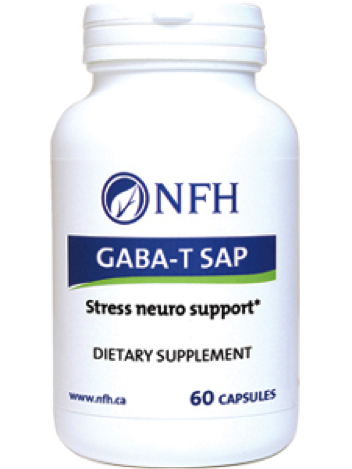
I’ve had a number of clients who really liked this GABA/theanine combination. This product together with Nutritional Fundamentals GABA-T SAP, also a GABA/theanine combination, comes highly recommended by me. They both contain a small amount of GABA, the theanine works really well with the GABA and the capsules, when opened on to the tongue, are pleasant tasting.

Source Naturals GABA Calm was only mentioned once which surprised me! Together with GABA/theanine combination products above, it’s the GABA product I use most with my clients because it’s sublingual, easy to take, great tasting and works so exceptionally well. It contains GABA, taurine and glycine, and a small amount of magnesium and tyrosine.   The tyrosine means this product cannot be used if you have melanoma, high blood pressure or bipolar disorder. You can see all the amino acid precautions here.  

Country Life GABA Relaxer contains GABA, taurine, glycine, inositol, niacin and vitamin B6. Melissa shares how much it helped her:

After my first panic attack I thankfully found Julia Ross’s work. I began taking 250 mg GABA every night. That really helped! Now a few years later I don’t need it every day, and I take a half pill during my cycle anxiety – more like uneasiness and over worried now, just as needed. I then heard you speak Trudy and share more info, bought your book, and put into place supportive lifestyle changes, and I have my life back. GABA is a great supplement for some of us!

I really like this product and used it when I worked with Julia Ross in her clinic. It was also a product I personally used when my anxiety and panic attacks started. I used this at night and GABA Calm in the day.

Seeking Health GABA 500mg was mentioned by a few people. Sherie said she loves it and takes it 2-4 times a day (she also takes theanine). This is what she shares:

It helps lower my overall anxious feeling all day (anxiety for no reason). I just started increasing the dose slightly and am beginning to take it a few times a day to help with social anxiety. I have lifelong problem of severe blushing and sweating from social anxiety and need that to stop.

I asked her if she’s looked into pyroluria and she said hadn’t but said it fits her to a T so this would be the next thing for her to address. It’s seldom just one underlying cause and the great thing is that the zinc, vitamin B6 and evening primrose oil of the pyroluria protocol help us make more GABA (and other brain chemicals).

I’d like to add that 500mg can be a high amount for many anxious individuals so it’s not something I typically start with. I like to have my clients start on either Source Naturals GABA Calm (which has 125mg of GABA) or one of the GABA/theanine combination products that have around 200mg GABA, and increase as needed.

I recommend GABA over pharmaGABA because over the years I’ve simply found more people seem to do better on GABA. But clearly, pharmaGABA does work for some individuals.

Thorne PharmaGABA-100 contains 100mg pharmaGABA and Cheryl shares how this product works great for her:

I usually only take it at night only when I know I need it, to quiet my mind and relax my body so I can sleep better. I need it less now because I am following MTHFR and adrenal fatigue supplement protocols and diet.

PharmaGABA Stress Relax from Natural Factors is another pharmaGABA product and Gina chewed two 100mg tablets and said this is how they helped:

It changed my life in minutes! Take it every day now. No more hopelessness!

April also finds that the Natural Factors pharmaGABA works great for her:

I take 100mg a day for about a week and then take time off until I feel I need it again or I feel I have too much. I know if I take too much, I get spacey, unmotivated, depressed even. Helps a ton with head/neck tension and anxiety.

I just want to add that this product does contain sugar (3.5 g with 300mg pharmaGABA) and fruit flavors (which sensitive folks may have an issue with) so this one would not be high on my list of recommendations. But if it’s the only one that works for you then go for it!

Quicksilver GABA is a liquid that contains GABA, theanine and sunflower lecithin, and is promoted as being a very effective form of delivery. Candy shares:

It is a liquid that I keep in the fridge. I squirt and leave it under my tongue for a couple minutes. It has been helpful.

I look forward to hearing if you or your clients have found this to be superior to other forms. I’d like add that it’s not suitable for children and alcoholics due to the ethanol.

A few other products were mentioned (neither of which I’ve had feedback on until now):

  • Source Naturals Theanine Serine which has GABA, theanine, taurine, magnesium and holy basil.
  • Pure Tranquility from Pure Encapsulations contains GABA, theanine and glycine. One person was suspicious that it was triggering migraines. I wonder if it could be related to one of the other ingredients like the natural apple flavor, potassium sorbate or purified stevia extract?

GABA won’t work for everyone and a few people said GABA didn’t work at all.

Karen appreciated me dispelling the blood-brain-barrier-GABA myth and pointing out that phenibut is not GABA. But GABA didn’t work for her and she shared this:

I have tried GABA, my mother swears by it and my husband uses it. It has a calming effect on me, but I like holy basil better.

I checked with her and she hasn’t tried it sublingually, which I find to be more effective for most of my clients. This could be something like Source Naturals GABA Calm or one of the GABA /theanine combination products opened on to tongue and held there for 1-2 minutes.

GABA also didn’t work for Sheri and she said:

I’m one of those folks for whom it seems to do nothing. Zip. I have found some relief using niacinamide, however.

Dr. Jonathan Prousky really likes niacinamide for anxiety and I find it helps a lot with my clients who have runaway thoughts and paranoia.

If GABA doesn’t work for you that’s fine, not everything works for everyone. But if you really feel GABA should work for you or feel you need additional support for your anxiety then I wouldn’t give up and ask these questions:

  1. do you have an underactive thyroid (amino acids may not be as effective)
  2. did you take it sublingually (it’s often more effective taken this way)
  3. did you take it away from protein (it needs to be taken this way)
  4. how much did you take (amounts can vary by person)
  5. do you have low GABA symptoms/physical anxiety (it will only work if you do) or
  6. are you taking a benzodiazepine (for some people on benzos many supplements don’t work or are just too much for them)

Here is the facebook post if you’d like to read the whole discussion.  I’d like to thank everyone who contributed to this great discussion!

I’ll cover phenibut (which is not GABA) in a future blog post. It’s always a hot topic and is not something I recommend but more on that next time.  

A heads up that I’ve shared links to the products that were mentioned so you can check them out. Some of the links are from Emerson, the online distributer I use. If you’d like to order from them you can find out how to set up an account here.

Now I’d love to hear from you. Have you used any of these GABA products (or had your clients use them) with good results? How much did you/they use and what were the results?

If GABA doesn’t help do you say “yes” to any of the 6 above questions?

Filed Under: Antianxiety, GABA Tagged With: amino acids, anxiety, calm, case study, GABA, sleep, supplements, tension, Trudy Scott

Organic Acids Testing by Great Plains Lab

December 15, 2014 By Trudy Scott Leave a Comment

greatplainslabThis is a 1-day professional training being held in Berkeley, CA on January 24, 2015: An Overview of Organic Acids Testing and Why it is so Important

Hundreds of organic acid metabolites are found in the urine of all mammals including humans. These metabolites can be used for both diagnostic and therapeutic measurements for: detecting abnormal gastrointestinal overgrowth or dysbiosis, assessing mitochondrial energy production, detecting genetic diseases, assessing malnutrition and suboptimum nutrition, revealing toxic exposure, finding alterations of neurotransmitter metabolites in neurological and psychiatric disorders, and assessing metabolites that cause severe inflammation in a variety of chronic illnesses.

The Interrelationship between Chronic Yeast and Various Issues

The OAT evaluates for various fungal toxins, including specific markers for Candida. Many people rely on stool testing for Candida diagnosis and miss the presence of Candida toxins through the Organic Acid Test. Candida can lead to neurochemical imbalances in the brain, as well as sensory problems and self-stimulatory behavior (often seen in autism).

The Interrelationship between Clostridia and Various Health Issues

The OAT evaluates for two specific toxins related to Clostridia bacteria – HPHPA and 4-cresol. Both of these toxins can inhibit a dopamine converting enzyme, leading to excess dopamine and toxic reactions in the brain and nervous system. Problems such as moodiness, irritability, aggression, self-injurious behavior, sleep difficulties and more can be associated with Clostridia bacteria overgrowth.

Correlating Oxalate Problems

The OAT includes glycolic and glyceric acids in the oxalate section, which can differentiate between genetic and nutritional components in disturbed oxalate metabolism. Oxalates are compounds found in many foods, and can be worsened from Candida overgrowth. High oxalates are associated with pain in the joints, muscles, and connective tissues. They can also trap heavy metals (such as mercury, lead, and arsenic) in the body and lead to mineral imbalances. Certain behavioral issues and self-injurious tendencies have been associated with high oxalates.

Organic Acids Testing and Neurochemical Imbalances

The OAT evaluates for imbalances in serotonin (an important brain chemical for mood, fine and gross motor skills, and calmness), as well additional markers that can indicate toxic stress in the brain and nervous system, such as Quinolinic Acid. High Quinolinic Acid suggests toxic stress in the brain and is important to evaluate before prescribing certain supplements, particularly L-Tryptophan which is commonly used to help with sleep.

Case Studies

This presentation will highlight various patient cases from clinical practice that show the role of biomedical intervention for various patient scenarios such as dietary therapy, yeast and Clostridia treatment, and methylation support.

All of the above, together with start and end times, and breaks can be found here on the presentation schedule page

Presenter: Kurt N. Woeller, D.O., has been an integrative medicine physician and biomedical autism specialist for 15+ years. He is an author of several health books including “Autism – The Road To Recovery,” “Methyl-B12 Therapy For Autism,” “Methyl-B12 for Alzheimer’s Disease and Dementia,” and “5 Things You MUST Do Right Now To Help With Your Rheumatoid Arthritis.” He is a lecturer (United States and International), educator and experienced clinician offering specialized treatment and testing for individuals with complex medical conditions such as Autism-Spectrum Disorders, Chronic Fatigue Syndrome, Mental Health Disorders, Multiple Sclerosis and other chronic health conditions.

I’m sharing this training on behalf of Dr. Kat Toups, M.D., Distinguished Fellow APA, Functional Medicine Psychiatry, BayAreaWellness.net

Dr. Toups shared this with me and I would suggest you call Great Plains Lab if you are unsure whether you are eligible to order testing:

This includes a free test kit. My understanding about the free test kits at the Organic Acid Testing conference is that they are available for anyone licensed to order testing. You do not have to be a Physician. Their website says the following: “Please note that to receive the FREE Organic Acids Test practitioners must be qualified as MD, DO, NP, NMD, DC, PsyD, PA, LAc or otherwise have the authority to order laboratory testing. Other healthcare practitioners will receive a voucher for 50% off one Organic Acids Test.

The pricing will increase by $40 on 12/22/14, so please register as early as possible to allow time to receive your OAT kit, complete it, mail back and get results before the conference. Things may get a little backed up around the holidays.

For those of you new to Organic Acid Testing, you can also request a complimentary consult at Great Plains once you receive your results. They will go over them with you.

Register here  Early bird expires 12/22/14

Location details are here

Filed Under: Anxiety and panic, Events, Testing Tagged With: anxiety, dysbiosis, great plains, mood, organic acids, serotonin, sleep

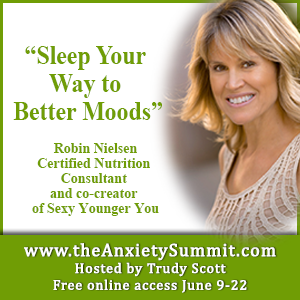
The Anxiety Summit: Sleep Your Way to Better Moods

June 19, 2014 By Trudy Scott 9 Comments

robin nielsen 1 the anxiety summit

This is day 12 of the Anxiety Summit. Robin Nielsen, Certified Nutrition Consultant and co-creator of Sexy Younger You, is interviewed by host of the Anxiety Summit, Trudy Scott, Food Mood Expert and Nutritionist, author of The Antianxiety Food Solution.

Everyone needs sleep! The CDC /Centers for Disease control says “Insufficient Sleep Is a Public Health Epidemic” According to data from the National Health Interview Survey, nearly 30% of adults reported an average of ?6 hours of sleep and only 31% of high school students reported getting at least 8 hours of sleep on an average school night. How do you feel when you don’t get enough sleep – other than awful…irritable, anxious, depressed and you very likely gravitate to sugar and caffeine to keep you going – which is only going to make things worse!

Research published just last month in the journal Pediatrics suggest that poor sleep in children under age 7 can lead to weight problems later on in life and can also affect their emotional health leading to more anxiety and depression.

Robin shares how you can …

Sleep Your Way to Better Moods

  • Learn why restorative sleep is the key to being happier
  • How anxiety and poor sleep are connected: sugar, blood sugar, caffeine, gluten
  • What sleep has to do with brain chemistry and hormones
  • How you can feel so much better when you get restorative sleep

Here are some great gems from my interview with Robin:

restorative sleep means sleep without medication

sleep helps to keep us beautiful as we age

insomnia can really be caused by just about anything and things that we would never guess

if you have a busy day, you’re going to have a busy night

chronic infections are constant stressor (and can affect your sleep)

hypothyroidism can cause sleep apnea

if you’re exercising improperly it’s going to raise your stress hormones and it’s going to affect your sleep and anxiety

We certainly did cover all the causes of insomnia and there are a lot of them.

Robin also shared that one of her favorite books is Lights Out: Sleep, Sugar, and Survival by T.S. Wiley.

Robin is so funny…she starts out by saying talking about sleep is not sexy and then ends with a sexy bombshell about oxytocin that left me speechless! Be warned!

Get your free gift from Robin Nielsen. She has a great Sleep Quiz, Checklist and Journal for you.

If you are not already registered for the Anxiety Summit you can get live access to the speakers of the day here www.theAnxietySummit.com

UPDATE: the summit concluded on Tues 6/24 – season 2 of The Anxiety Summit will be in November 2014. If you’d like to be on the notification list just sign up here www.theAnxietySummit.com

Missed this interview or can’t listen live? Or want this and the other great interviews for your learning library? Purchase the MP3s or MP3s + transcripts + interview highlights and listen when it suits you

Filed Under: Antianxiety, Anxiety and panic, Sleep, The Anxiety Summit Tagged With: Antianxiety Food Solution, anxiety, GABA, insomnia, mood, Robin Nielsen, sleep, the anxiety summit, Trudy Scott

How to get a great night’s sleep

August 31, 2012 By Trudy Scott 26 Comments

“A 2009 poll by the National Sleep Foundation found that only 28 percent of those surveyed regularly got eight hours or more of sleep a night. The average was around six and a half hours on weekdays and seven on weekends. Those who slept less than eight hours a night typically had mood problems, including worry and anxiety, ate more sugar and unhealthy food and drank more caffeinated beverages!”

~ Trudy Scott, The Antianxiety Food Solution

It’s amazing how many people don’t get enough sleep and there is so much we can do from a nutritional point of view to change this.  Here are six things to consider:

  1. One of the first things I think about when a client can’t sleep is low serotonin.  Low serotonin symptoms include insomnia, depression, negativity, worry and anxiety, irritability, PMS and afternoon and evening cravings.  And low serotonin can be boosted with tryptophan, taken as a supplement and/or in food sources.
  2. Research has actually shown that a medical or functional food made with pumpkin seeds improved sleep, due to the good sources of tryptophan and zinc. In another study this same functional food was also shown to reduce anxiety and social phobia.Pumpkin seeds can be soaked in water overnight and then lightly roasted with olive oil, sea salt, pepper, turmeric and ginger.  Food-wise, pumpkin seeds are a favorite of mine for a healthy snack and my clients love them.  Here is an blog post that discusses the benefits of soaked nuts and a roasted pumpkin seed recipe
  3. When tryptophan is taken as a supplement, some is converted to serotonin and some to melatonin.  Melatonin is fabulous for resetting your circadian rhythm so your sleep cycle gets back to normal. If taking tryptophan doesn’t quite get you sleeping through the night then taking additional melatonin may help. Sublingual melatonin helps you fall asleep and the timed-release form helps you stay asleep.
  4. Other factors that should be considered when sleep is an issue: low blood sugar,  addressing low serotonin levels,  addressing low GABA levels, checking for parasites and dysbiosis, and making sure you don’t have high cortisol.
  5. Other nutrients that may be helpful:  vitamin B6 (which helps improve mood and reduce anxiety too), zinc (which is also important for skin health,  reducing anxiety, improving mood, helping with blood sugar balance and PMS), and magnesium (which is also calming).
  6. Of course, it also helps to use a comfortable soft eye patch to keep the room dark and to use earplugs to keep things quiet. Also, keep clock radios and cell phones away from your head and don’t use an electric blanket!  Having a warm bath with essential oil of lavender is also a great help to help you wind down at the end of a hectic day.

Try some of the above tips and get those eight hours of sleep and you’ll have less mood problems, experience less worry and anxiety, eat less (or no) sugar and unhealthy food and drink less (or no) caffeinated beverages!   Sweet dreams!

Filed Under: Antianxiety Food Solution, Anxiety and panic, Real whole food, Sleep Tagged With: anxiety, insomnia, pumpkin seeds, serotonin, sleep, social anxiety, tryptophan

Bubble gum flavored apples anyone?

July 2, 2012 By Trudy Scott 9 Comments

Guest Post by Mira Dessy, Certified Nutrition Educator and holistic health columnist helping others eat well to be well.


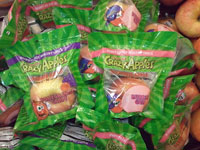
fake apples | photo: LeemanS

One of my readers, sent in this picture and comment/question about these apples.

“We came across these apples at Stop & Shop here in town. We could not believe our eyes when we saw flavored apples!! I told my husband to take a pic to send to you because I wasn’t sure you would believe me when I tell you that they had bubblegum flavored apples. I believe there were four flavors total to choose from. 

I’m curious what your thoughts are. I walked away all kinds of confused. Was this an attempt to help kids with poor eating habits cross over the healthy eating or the other way around? How exactly did they alter this apple to make it flavored? And of course the obvious…yet another example of FAKE food.

Oh and as you can see it’s was placed right next to the apples and the packaging says ready to eat snack. What’s so difficult about preparing an apple for eating? hmmm you wash it?!?!”

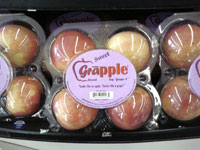
Good eye, and good thinking. This is very similar to something I just saw in my local grocery store called grapples. Research indicates that the flavoring comes from “natural” (read possible MSG ingredients) and artificial flavoring. It seems that the apples are marinated for several days in an undoubtedly chemical concoction which allows the apple to soak up the flavor. This process has apparently been approved by the FDA.

grapples | photo: Qrd2006

The Grapple company website assures the consumer that the product has not been genetically modified and there are no added sugars or calories. Unfortunately there is a huge chemical load, not just from the flavorings, but one assumes these are not organic apples and therefore potentially high in pesticide residue.

The Crazy Apple company website says they can’t tell you how they do it but I assume it’s the same sort of process. They do however assure you that their apples are gluten free (duh!), dairy free (again, duh!), and contain no soy or nuts.

I believe this is seen as a way to market apples to kids but I’m not really sure why this sort of adulteration is seen as a positive. Since apples by themselves are sweet, crunchy, and tasty I’m not sure what the appeal is here. Unfortunately I see this as a big step backwards as items like these further dull the taste buds to what food should taste like.

Update: It turns out these apples are being spotted all over the place and most of you are not happy about it. My friend Adrienne says, “If you want a grape flavored apple take a slice of apple and some grapes. Eat them together. It’s a party in your mouth!” Good advice.

Filed Under: Real whole food Tagged With: anxiety, depression, exercise, hot-flashes, mood, sleep, social anxiety

Low GABA Questionnaire from The Antianxiety Food Solution

December 10, 2011 By Trudy Scott 16 Comments

This questionnaire will help you identify whether you may have low levels of GABA. Check off any of the symptoms below that apply to you:

Anxiety and feeling overwhelmed

Feeling worried or fearful

Panic attacks

Unable to relax or loosen up

Stiff or tense muscles

Feeling stressed and burned-out

Craving carbs, alcohol, or drugs for relaxation and calming

If you checked off 3 or more symptoms, you may have low GABA levels.

You may benefit from taking a supplement containing GABA. GABA is the most important calming neurotransmitter, and is also an amino acid. Low levels of GABA are associated with anxiety, agitation, stress, and poor sleep. If you have sufficient GABA, you’ll feel relaxed and stress free. You won’t have anxiety or panic attacks, and you won’t eat sugary foods or other starchy foods or feel like you need a glass of wine in an effort to calm down.

Try some yoga, which has been shown to raise GABA levels. It’s also important to do whatever you can to reduce stress in your life. In addition to yoga, try tai chi, meditation, taking walks outdoors in a peaceful environment or taking a vacation.

It’s amazing how many women tolerate low-grade anxiety. I’m working with a client at the moment, who came to me because she has low energy and arthritis. It turns out, based on the Low GABA Questionnaire, she has low grade anxiety and stiff/tense muscles. Based on her Low Serotinin Questionnaire she also has mild depression, imposter syndrome and negative self-talk. When I asked why these were not on her list of health objectives, she said they were just so much a part of her everyday life, that she really didn’t think there was anything she could do about it. I’m pleased to report that there is plenty we can do and did do and she is feeling a LOT better after a few short weeks!

Worry and anxiety can be a result of low GABA and also low serotonin, so you may check off anxiety in both this questionnaire and the Low Serotonin Questionnaire. I’ll address this in a future post.

This questionnaire is taken from chapter 6 of The Antianxiety Food Solution: How the Foods You Eat Can Help You Calm Your Anxious Mind, Improve Your Mood and End Cravings, now available in major books stores, at Amazon and via www.antianxietyfoodsolution.com.

Filed Under: Antianxiety Food Solution, Anxiety and panic, Food and mood, General Health, Questionnaires, Women's health Tagged With: agitation, antianxiety. panic, anxiety, GABA, sleep, stress

  • « Go to Previous Page
  • Page 1
  • Interim pages omitted …
  • Page 11
  • Page 12
  • Page 13

Primary Sidebar

GABA QuickStart Homestudy

gaba quickstart homestudy

Free Report

9 Great Questions Women Ask about Food, Mood and their Health

You'll also receive a complimentary subscription to my ezine "Food, Mood and Gal Stuff"


Connect with me

Popular Posts

  • Amino Acids Mood Questionnaire from The Antianxiety Food Solution
  • The Antianxiety Food Solution Amino Acid and Pyroluria Supplements
  • Pyroluria Questionnaire from The Antianxiety Food Solution
  • Collagen and gelatin lower serotonin: does this increase your anxiety and depression?
  • Tryptophan for the worry-in-your-head and ruminating type of anxiety
  • GABA for the physical-tension and stiff-and-tense-muscles type of anxiety
  • The Antianxiety Food Solution by Trudy Scott
  • Seriphos Original Formula is back: the best product for anxiety and insomnia caused by high cortisol
  • Am I an anxious introvert because of low zinc and vitamin B6? My response to Huffington Post blog
  • Vagus nerve rehab with GABA, breathing, humming, gargling and key nutrients

Recent Posts

  • Her cravings for chips and peanut butter were triggered by stress: GABA ends cravings and reduces physical tension and fear of heights
  • It is truly miraculous to be able to move through life without crippling anxiety and panic
  • GABA and tryptophan combo provide immediate and noticeable relief for tremors and cervical dystonia in just 7 days
  • Red light therapy for back and neck pain, plantar fasciitis and low mood – a complement to the amino acids GABA, DPA and tryptophan
  • What do I use instead of Seriphos to help lower high cortisol that is affecting my sleep and making me anxious at night?

Categories

  • 5-HTP
  • AB575
  • Addiction
  • ADHD
  • Adrenals
  • Alcohol
  • Allergies
  • Alzheimer's disease
  • Amino Acids
  • Anger
  • Antianxiety
  • Antianxiety Food Solution
  • Antidepressants
  • Anxiety
  • Anxiety and panic
  • Autism
  • Autoimmunity
  • benzodiazapines
  • Bipolar disorder
  • Books
  • Caffeine
  • Cancer
  • Candida
  • Children/Teens
  • Collagen
  • Cooking equipment
  • Coronavirus/COVID-19
  • Cravings
  • Depression
  • Detoxification
  • Diabetes
  • Diet
  • DPA/DLPA
  • Drugs
  • EFT/Tapping
  • EMF
  • EMFs
  • Emotional Eating
  • Endorphins
  • Environment
  • Essential oils
  • Events
  • Exercise
  • Fear
  • Fear of public speaking
  • Fertility and Pregnancy
  • Fish
  • Food
  • Food and mood
  • Functional neurology
  • GABA
  • Gene polymorphisms
  • General Health
  • Giving
  • Giving back
  • Glutamine
  • Gluten
  • GMOs
  • Gratitude
  • Gut health
  • Heart health/hypertension
  • Histamine
  • Hormone
  • Hyperparathyroidism
  • Hypoglycemia
  • Immune system
  • Inflammation
  • Insomnia
  • Inspiration
  • Introversion
  • Joy and happiness
  • Ketogenic diet
  • Lithium orotate
  • Looking awesome
  • Lyme disease and co-infections
  • MCAS/histamine
  • Medication
  • Men's health
  • Mental health
  • Mercury
  • Migraine
  • Mold
  • Movie
  • MTHFR
  • Multiple sclerosis
  • Music
  • NANP
  • Nature
  • Nutritional Psychiatry
  • OCD
  • Osteoporosis
  • Oxalates
  • Oxytocin
  • Pain
  • Paleo
  • Parasites
  • Parkinson’s disease
  • PCOS
  • People
  • PMS
  • Postpartum
  • PTSD/Trauma
  • Pyroluria
  • Questionnaires
  • Real whole food
  • Recipes
  • Research
  • Schizophrenia
  • serotonin
  • SIBO
  • Sleep
  • Special diets
  • Sports nutrition
  • Stress
  • Sugar addiction
  • Sugar and mood
  • Supplements
  • Teens
  • Testimonials
  • Testing
  • The Anxiety Summit
  • The Anxiety Summit 2
  • The Anxiety Summit 3
  • The Anxiety Summit 4
  • The Anxiety Summit 5
  • The Anxiety Summit 6
  • Thyroid
  • Thyroid health
  • Toxins
  • Tryptophan
  • Tyrosine
  • Uncategorized
  • Vegan/vegetarian
  • Women's health
  • Yoga

Archives

  • May 2026
  • April 2026
  • October 2025
  • September 2025
  • August 2025
  • July 2025
  • June 2025
  • May 2025
  • April 2025
  • March 2025
  • February 2025
  • January 2025
  • November 2024
  • October 2024
  • September 2024
  • August 2024
  • July 2024
  • June 2024
  • May 2024
  • April 2024
  • March 2024
  • February 2024
  • January 2024
  • December 2023
  • November 2023
  • October 2023
  • September 2023
  • August 2023
  • July 2023
  • June 2023
  • May 2023
  • April 2023
  • March 2023
  • February 2023
  • January 2023
  • December 2022
  • November 2022
  • October 2022
  • September 2022
  • August 2022
  • July 2022
  • June 2022
  • May 2022
  • April 2022
  • March 2022
  • February 2022
  • January 2022
  • December 2021
  • November 2021
  • October 2021
  • September 2021
  • August 2021
  • July 2021
  • June 2021
  • May 2021
  • April 2021
  • March 2021
  • February 2021
  • January 2021
  • December 2020
  • November 2020
  • October 2020
  • September 2020
  • August 2020
  • July 2020
  • June 2020
  • May 2020
  • April 2020
  • March 2020
  • February 2020
  • January 2020
  • December 2019
  • November 2019
  • October 2019
  • September 2019
  • August 2019
  • July 2019
  • June 2019
  • May 2019
  • April 2019
  • March 2019
  • February 2019
  • January 2019
  • December 2018
  • November 2018
  • October 2018
  • September 2018
  • August 2018
  • July 2018
  • June 2018
  • May 2018
  • April 2018
  • March 2018
  • February 2018
  • January 2018
  • December 2017
  • November 2017
  • October 2017
  • September 2017
  • August 2017
  • July 2017
  • June 2017
  • May 2017
  • April 2017
  • March 2017
  • February 2017
  • January 2017
  • December 2016
  • November 2016
  • October 2016
  • September 2016
  • August 2016
  • July 2016
  • June 2016
  • May 2016
  • April 2016
  • March 2016
  • February 2016
  • January 2016
  • December 2015
  • November 2015
  • October 2015
  • September 2015
  • August 2015
  • July 2015
  • June 2015
  • May 2015
  • April 2015
  • March 2015
  • February 2015
  • January 2015
  • December 2014
  • November 2014
  • October 2014
  • September 2014
  • August 2014
  • July 2014
  • June 2014
  • May 2014
  • April 2014
  • March 2014
  • February 2014
  • January 2014
  • December 2013
  • November 2013
  • October 2013
  • September 2013
  • August 2013
  • July 2013
  • June 2013
  • May 2013
  • April 2013
  • March 2013
  • February 2013
  • January 2013
  • December 2012
  • November 2012
  • October 2012
  • August 2012
  • July 2012
  • June 2012
  • May 2012
  • April 2012
  • March 2012
  • February 2012
  • January 2012
  • December 2011
  • November 2011
  • October 2011
  • September 2011
  • August 2011
  • July 2011
  • June 2011
  • May 2011
  • April 2011
  • March 2011
  • February 2011
  • January 2011
  • December 2010
  • October 2010
  • September 2010
  • July 2010
  • May 2010
  • April 2010
  • March 2010
  • February 2010
  • January 2010
  • November 2009

Share the knowledge!

The above statements have not been evaluated by the Food and Drug Administration. Products listed in this website are not intended to diagnose, treat, cure or prevent any disease.

The information provided on this site is for informational and educational purposes only and is not intended as a substitute for advice from your physician or other health care professional. You should consult with a healthcare professional before starting or modifying any diet, exercise, or supplementation program, before taking or stopping any medication, or if you have or suspect you may have a health problem.


Copyright © 2026 Trudy Scott. All Rights Reserved. | Privacy | Terms and Conditions | Refund Policy | Medical Disclaimer

Free Report

9 Great Questions Women Ask about Food, Mood and their Health

You’ll also receive a complimentary subscription to my ezine “Food, Mood and Gal Stuff”