• Skip to primary navigation
  • Skip to main content
  • Skip to primary sidebar

everywomanover29 blog

Food, Mood and Women's Health – Be your healthiest, look and feel great!

  • Blog
  • About
  • Services
  • Store
  • Resources
  • Testimonials
  • The Book
  • Contact
  • Search this site

DPA

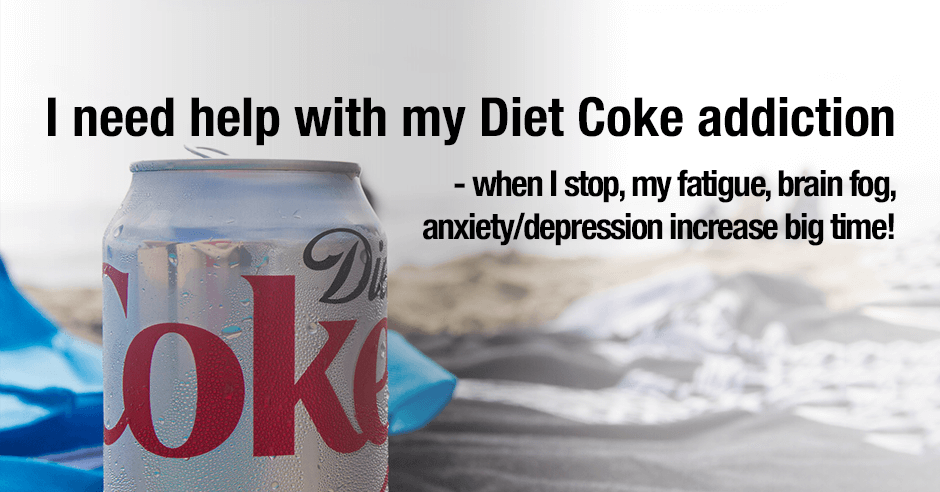
I need help with my Diet Coke addiction – when I stop, my fatigue, brain fog, anxiety/depression increase big time!

September 10, 2021 By Trudy Scott 42 Comments

diet coke addiction

A woman asked for help on the blog, wanting desperately to quit her long-time Diet Coke addiction. This woman knows her addiction is detrimental to her health and she gets withdrawal symptoms when she tries to quit – fatigue, brain fog, anxiety and depression increase big time! And yet she can’t quit. This is not unusual. I share my feedback on the brain chemical imbalances that can drive addictions and how to figure out which amino acids (or more than one) may help her quit easily. This means she doesn’t have to go cold turkey and then fail yet again. Using the amino acids means there is no willpower required and no feelings of deprivation, and it’s addressing an underlying neurotransmitter imbalance i.e. a root cause.

Here is her question:

I need help with my Diet Coke addiction. I have been using it for 35 years and I am too appalled to tell you how much I drink.

I have tried to quit many times and ended up in utter failure. A friend mentioned that phenylalanine may be a booster for my dopamine.

When I stop, my fatigue, brain fog, anxiety/depression increase big time. I know this drink is literally killing my health and I am desperate for some answers, suggestions….or a miracle.

What supplements do you recommend for helping me quit this devil of a habit? Thank you for ALL you do!” 

Here is my response …. when it comes to using amino acids to help break the addiction, pretty much everything I write about in relation to sugar addiction or cravings would likely also apply to quitting Diet Coke.

What emotions are driving the addiction?

She needs to figure out what emotions are driving her addiction and use the respective amino acid supplement/s (one or more of them) to help break the addiction and improve the mood symptoms at the same time.

These are the questions I review with my clients who have a Diet Coke addiction (or other diet soda or regular soda addiction):

  1. If you have to drink it when you haven’t eaten in awhile it’s likely low blood sugar. Glutamine on the tongue stops the desire almost immediately and also helps with the low blood sugar symptoms of shakiness and irritability
  2. If you stress-drink, your cravings are likely due to low GABA, and GABA will stop the stress-drinking and calm you down too
  3. If you drink it to feel happy (and especially from late afternoon into the evening) then your cravings are likely due to low serotonin, and tryptophan (or 5-HTP) stops the cravings and boosts mood and reduces anxiety
  4. If you drink it for comfort or a reward comfort then it’s likely due to low endorphins and DPA (d-phenylalanine) will stop that feeling of “I deserve-it” and also give you a hug-like mood boost
  5. If you drink it for an energy boost or to give you focus then it’s likely due to low catecholamines and tyrosine will stop those cravings and give you a mood and energy boost, and also help with mental clarity

Based on her question above, she mentions that “my fatigue, brain fog, anxiety/depression increase big time” when she stops. The fatigue, brain fog and depression is a big clue that #5 above will likely apply. She asks about using phenylalanine for dopamine support (dopamine is one of the catecholamines). I prefer tyrosine to l-phenylalanine for boosting levels.

The fact that anxiety also increases when she stops is a clue that #2 or #3 may apply too, and possibly #1. It’s not unusual for someone to have imbalances in multiple areas.

If this is the case, I  always recommend doing a trial of one at a time, so it’s easy to see the benefits.

It’s not the same neurotransmitter imbalance that shows up in each person

It’s also not the same neurotransmitter imbalance that shows up in each person with a Diet Coke (or other soda addiction). When I shared this on Facebook and asked what was the driving emotion behind their “self-medication” with Diet Coke this is feedback I received from two women:

  • “I had been drinking almost 6 per day for decades. I believe it was comforting.” In this instance, addressing low endorphins with DPA (#4) would have helped. Comfort or reward or treat is a common emotional driver for all addictions.
  • “I noticed I would drink Diet Coke when I felt anxious (1 or 2 times a day).” In this instance #2 or #3 would have helped i.e. GABA support if it was physical anxiety and/or tryptophan or 5-HTP for low serotonin if it was worry-type anxiety.

The caffeine addiction and the artificial sweetener Aspartame

Keep in mind, with Diet Coke, there is the caffeine addiction and the artificial sweetener Aspartame that also make it challenging to quit. Tyrosine and addressing low catecholamines (#5 above) and vitamin C can help with the caffeine addiction and quitting so headaches are minimized.

The amino acids can help with the imbalances created by aspartame. This paper, Direct and indirect cellular effects of aspartame on the brain, proposes that “excessive aspartame ingestion might be involved in the pathogenesis of certain mental disorders and also in compromised learning and emotional functioning.”  This excerpt from the abstract is relevant to this discussion:

Aspartame is composed of phenylalanine (50%), aspartic acid (40%) and methanol (10%). Phenylalanine plays an important role in neurotransmitter regulation, whereas aspartic acid is also thought to play a role as an excitatory neurotransmitter in the central nervous system. Glutamate, asparagines and glutamine are formed from their precursor, aspartic acid. Methanol, which forms 10% of the broken down product, is converted in the body to formate, which can either be excreted or can give rise to formaldehyde, diketopiperazine (a carcinogen) and a number of other highly toxic derivatives. Previously, it has been reported that consumption of aspartame could cause neurological and behavioural disturbances in sensitive individuals. Headaches, insomnia and seizures are also some of the neurological effects that have been encountered, and these may be accredited to changes in regional brain concentrations of catecholamines, which include norepinephrine, epinephrine and dopamine.

This further supports the need for catecholamine support with tyrsosine (#5 above) and GABA support with the amino acid GABA (#2 above).

Recognizing it’s an issue is a big first step

I acknowledge her for recognizing it’s an issue – that is a big first step! I did also ask her to share how much she was consuming each day because there is no judgement here and we acknowledge it’s an addiction. I’ll report back when I hear from her and will also share which amino acid/s helped her break the addiction.

As always, it’s not only about the amino acids and a comprehensive healing approach is always part of the picture. The amino acids make it easy to get started and then other underlying issues can be addressed: other nutritional deficiencies, dysbiosis, fatty liver, metabolic syndrome and so on. You can see some of the many studies below.

Of course, it’s important to be eating a real whole foods diet with quality animal protein, healthy fats, organic vegetables and fruit, no caffeine, no gluten, no sugar, fermented foods and herbs.

Reconsider your diet soda consumption if you’re on the fence

If you are on the fence about giving up your diet soda consumption here are a few additional papers that will hopefully make you reconsider:

  • Diet soda intake and risk of incident metabolic syndrome and type 2 diabetes in the Multi-Ethnic Study of Atherosclerosis (MESA) – “Although these observational data cannot establish causality, consumption of diet soda at least daily was associated with significantly greater risks of select incident metabolic syndrome components and type 2 diabetes.”
  • Altered processing of sweet taste in the brain of diet soda drinkers – “there are alterations in reward processing of sweet taste in individuals who regularly consume diet soda.” This has widespread ramifications for driving the need for sugar/carbs and all things sweet
  • A comparative study of the effect of diet and soda carbonated drinks on the histology of the cerebellum of adult female albino Wistar rats – “These results suggest that diet soda has adverse effect on the cerebellum of adult female albino Wistar rats,” with “shrunken and degenerated Purkinje cells with hypertrophied dendrites.” Purkinje cells are involved in the release of GABA.
  • Soft drinks consumption and nonalcoholic fatty liver disease – “the aspartame sweetener and caramel colorant which are rich in advanced glycation end products … potentially increase insulin resistance and inflammation”

Facts like this help you recognize it’s an issue but even when we have these facts, we often simply cannot quit. This is where the amino acids are so powerful because they work with no willpower required and no feelings of deprivation. And using them addresses the underlying neurotransmitter imbalance/root cause that led to the initial addiction or “self-medication”. They also help address the neurotransmitter deficiencies that are often made worse by diet soda consumption.

Resources if you are new to using the amino acids as supplements

If you are new to using the amino acids as supplements and want to know more, here is the Amino Acids Mood Questionnaire from The Antianxiety Food Solution and a brief overview here, Anxiety and targeted individual amino acid supplements: a summary.

If you suspect low neurotransmitters and do not yet have my book, The Antianxiety Food Solution – How the Foods You Eat Can Help You Calm Your Anxious Mind, Improve Your Mood, and End Cravings, I highly recommend getting it and reading it before jumping in and using amino acids so you are knowledgeable.

What advice do you have if you have been through this yourself and what has helped you?

What do you drink now instead of your diet soda?

If you are a practitioner, how do you help your patients/clients with this kind of addiction?

Feel free to post your questions too.
Filed Under: Addiction, Anxiety, Cravings, Depression Tagged With: 5-HTP, addiction, amino acids, anxiety, artificial sweetener, brain chemical imbalances, brain fog, caffeine, catecholamines, cold turkey, depression, Diet Coke addiction, dopamine, DPA, endorphins, fatigue, GABA, glutamine, low blood sugar, neurotransmitter, no feelings of deprivation, no willpower, quit, serotonin, sugar, tryptophan, tyrosine, withdrawal symptoms

Wean off prescription pain medication, improve sleep and reduce emotional eating with DPA (an endorphin-boosting amino acid)

September 3, 2021 By Trudy Scott 19 Comments

dpa

A question about using the amino acid DPA (d-phenylalanine) to help wean off prescription pain medication was posted on the blog. She was also hoping it would help ease her pain while she was weaning and improve her poor sleep too. I share my feedback on DPA for weaning, timing of vitamin C, additional information for sleep support and using DPA for emotional eating too. Concerns about oxalates and pain are mentioned and the importance of a comprehensive approach.

Here is the question that was posted:

Hi Trudy, I am trying to get off prescription pain medication and have read that DPA really helps – do you have any knowledge and/or experience with this?

There is a very popular opiate withdrawal support website that recommends DPA 500mg 3x/daily. Since amino acids need to be taken away from food and other amino acids, I feel like it could be very easy to make the DPA go to waste if not taken at exactly the right time every day.

The insomnia is the worst part of opiate withdrawal for me – days can go by with only 20-45 minutes of sleep. I have a little one to care for and the stress of no sleep just makes me want to give up.

No sleep worsens my physical pain as I toss and turn for hours on end. It isn’t a surprise that then causes terrible emotional distress.

One more question…since Vitamin C does help withdrawal does it affect/break down DPA?  I take a liposomal version multiple times a day.

Here is my response: Yes, DPA (d-phenylalanine) does help with withdrawal from prescription pain medication and I’ve used it for this purpose with great success with many clients. It does need to be used away from protein and the dosing can vary for each person.

A starting dose of DPA is 500mg and it can be used 3- 4 x day to start, and we increase from there based on the unique need of each person. We typically adjust the DPA up as the prescription medication is tapered very slowly, and under the guidance of the prescribing physician.

I share more about her vitamin C and insomnia questions below.

If you are new to DPA and endorphin support

DPA/d-phenylalanine is an amino acid used as a supplement.

DPA destroys the enzyme that breaks down/inhibits endorphins and in essence raises endorphin levels. Endorphins are feel-good chemicals that you experience with an endorphin rush when you go for a run or when someone gives you a big hug, when you show kindness to someone or an individual does something nice for you.

Taking the amino acid, DPA, as a supplement helps to raise your endorphins and helps when you feel weepy and overly emotional and reduces the need to self-medicate with treats as a reward or for comfort (more on that below). This amino acid is a favorite with so many of my clients and community because it makes them feel so lovely.

In addition to helping with emotional pain, DPA also helps with easing physical pain. And for this reason it can be used to help get off prescription pain medications.

In summary, these are the signs of low endorphins:

  • Heightened sensitivity to emotional pain
  • Heightened sensitivity to physical pain
  • Crying or tearing up easily
  • Eating to soothe your mood, or comfort eating
  • Really, really loving certain foods, behaviors, drugs, or alcohol
  • Craving a reward or numbing treat

DPA and endorphin support for pain: the research

Here is one paper, which discusses how DPA inhibits or breaks down enkephalins (endorphins are closely related compounds) and as a result helps with depression and pain, and acts as an anti-inflammatory: “proven to be beneficial in many human patients with chronic, intractable pain.” The authors also state that a compound such as DPA “may alleviate other conditions associated with decreased endorphin levels such as opiate withdrawal symptoms.”

This paper discusses beta-endorphins and the reward mechanism and how they can induce euphoria, reduce pain and ease addictions and distress: “Long known for its analgesic effect, the opioid beta-endorphin is now shown to induce euphoria, and to have rewarding and reinforcing properties.”

I would love to see DPA used instead of pain meds when possible or used in conjunction with prescription pain medications when they are needed.

I am also very curious to know which opiate withdrawal support website is recommending DPA. I’m so pleased to hear this because it helps so much – for physical pain relief and for weaning off pain medications.

Is DPA the same as DLPA?

DLPA (dl-phenylalanine), although similar sounding, is not the same as DPA and only offers about half as much endorphin support. It also provides dopamine/catecholamine support (i.e. focus, motivation, mood, energy) and this aspect means DLPA has the same precautions as tyrosine. It also means DLPA can affect sleep if used from midafternoon onwards.

I seldom have clients use DLPA and prefer DPA for endorphin support and tyrosine for dopamine/catecholamine support if needed.

Keep in mind, the amino acid DPA, is not the same as the omega-3 fatty acid called docosapentaenoic acid and also abbreviated as DPA.

The brand of DPA that I recommend for my clients

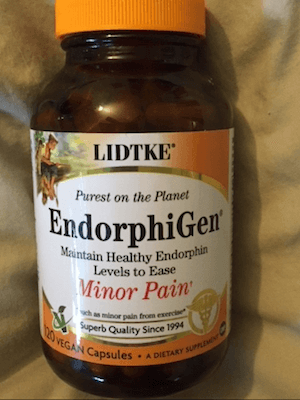
The brand I recommend for my clients is Lidtke Endorphigen. You can read about it and the other supplements I recommend on the supplements blog here.

My recommendation has always been to chew the DPA capsule for the best effects and to get results quickly (in 2-5 minutes). Instead of chewing the whole capsule I now recommend opening the capsule into your mouth. You can read more about using DPA and some client feedback here.

lidtke endorphigen

I’ve used Endorphigen personally too and it’s always with me as part of my travel first-aid kit. I write about using DPA, GABA and acupuncture for pain relief after my back injury and I had DPA, GABA and arnica on hand when I sprained my ankle while hiking in Red Rocks.

Benefits include reduction of emotional/comfort eating too

As I mentioned above, with DPA there is the bonus benefit of endorphin support to help end emotional/comfort eating where you are seeking treats as a reward i.e it helps with physical pain and emotional pain.

You may relate to this if you are someone who would say or think “I just LOVE chocolate-chip cookies!” or “PLEEEEASE don’t make me give up my treats, it’s all I have left after I gave up my coffee and wine! I deserve something nice!”

This emotional attachment to sweet treats and reward-eating is very common with low endorphins.

Using vitamin C with the amino acids and watching for oxalate pain adverse effects

She is correct, vitamin C is best used away from the amino acids so as not to reduce the beneficial effects.

I do caution clients to find the right amount of vitamin C as too much can increase pain in individuals with dietary oxalate issues. I write about oxalate crystal disease here and vitamin C and oxalates here. Both can aggravate insomnia too and increase anxiety.

Address low serotonin, low GABA and/or high cortisol for sleep too

With sleep issues we may also look into supporting low serotonin with tryptophan or 5-HTP,  and/or low GABA levels with GABA and/or theanine. These amino acids can also help with reducing pain in some instances.

Opioids have an endocrine effect via impacts on the hypothalamic-pituitary-gonadal axis, affecting sex hormones levels and cortisol levels. Endocrine dysfunction can adversely impact sleep and make anxiety worse, and needs to be addressed. GABA and serotonin support can help with some of the sex hormone imbalances and Seriphos helps when cortisol is too high.

A comprehensive approach is key

Of course, a comprehensive approach is key, so it’s important to remove inflammatory foods (gluten, maybe all grains, sugar, caffeine, unhealthy fats etc), add fish oil if omega-3s are low and include anti-inflammatory nutrients such as turmeric.

And we always want to figure out the root cause of the pain and address it. Also, ruling out if dietary oxalates (and vitamin C) are an issue is important and often overlooked.

I’m a big fan of working with a physical therapist and acupuncturist too.

Resources if you are new to using the amino acids as supplements

If you are new to using the amino acids, DPA, tryptophan or GABA, as supplements and want to know more, here is the Amino Acids Mood Questionnaire from The Antianxiety Food Solution and a brief overview here, Anxiety and targeted individual amino acid supplements: a summary.

If you suspect low endorphins, low serotonin or low GABA levels and do not yet have my book, The Antianxiety Food Solution – How the Foods You Eat Can Help You Calm Your Anxious Mind, Improve Your Mood, and End Cravings, I highly recommend getting it and reading it before jumping in and using amino acids so you are knowledgeable.

Can you relate to any of this? Has DPA helped your pain and/or helped you withdraw from prescription pain meds? And did you even know this was an option?

Did it also help you sleep and make you less anxious/worried because of the reduction in pain?

What about less emotional eating when using DPA/Endorphigen?

Feel free to post your questions too.
Filed Under: Cravings, Medication, Pain Tagged With: comfort eating, d-phenylalanine, DPA, emotional eating, Endorphigen, endorphins, GABA, get off pain medication, insomnia, Lidtke, opioid, oxalates, pain, pain medication, poor sleep, sleep, tryptophan, vitamin C, wean off prescription pain medication

GABA, Heartmath and EFT ease Micki’s mold-induced anxiety and panic attacks

May 14, 2021 By Trudy Scott 20 Comments

gaba heartmath eft

The amino acids can provide relief when you have mold-induced anxiety – anxiety and panic attacks that are triggered by physiological changes due to mold toxicity such as inflammation and effects on your immune system and neurotransmitters. There is also the anxiety and worry you’re feeling because of the frightening situation you find yourself in and this trauma has a psychological and physiological effect. The anxiety, worry, fears, insomnia and imagining the worst is often compounded by low levels of GABA and serotonin. Benzodiazepines and/or SSRIs are commonly prescribed and only add to the toxic burden. The amino acids GABA, tryptophan and/or DPA/Endorphigen, used as supplements, are better options that address the root causes of low GABA, low serotonin and/or low endorphins. And for some folks, Heartmath and EFT offer additional emotional and calming support (as you’ll read below).

Micki Contini, MS CNC, a board-certified holistic health and nutrition consultant, is a friend and colleague whose life was hugely impacted by mold toxicity. She has kindly given me permission to share her story in the hope it’s helpful for you if you’re in a similar situation. She shares her mold-induced anxiety symptoms and the other ways mold toxicity impacted her health:

My heart was pounding, my face was red, I was sweating, my thoughts were racing and I felt like I was going to die. I wondered if I was having a heart attack? My husband brought me to the emergency room several times with panic attacks and heart palpitations with me thinking this was the end only to find out that I was “fine.” But I knew that I was far from ok. I knew that something was wrong, I just didn’t know what.

I had found mold in my water damaged office. Shortly thereafter I realized it was also in my home. I had cross-contaminated my house, but it was a year before I knew my house had mold.  I had been getting better but not 100%.  It was a step I missed because I didn’t want to face the truth of what the consequences would bring – throwing out more stuff. I had already thrown out most of the stuff from my contaminated office BUT not all of the stuff.  And I paid dearly for not throwing out ALL the things from my office.

I was in denial and I had toxic mold poisoning. Toxic mold was causing my anxiety and panic attacks and other debilitating symptoms such brain fog, tinnitus, trouble focusing, numbness and tingling in my fingers and toes, crazy fatigue, shortness of breath, nausea, diarrhea/constipation, excessive thirst, vertigo, night sweats and bloody nose.

Micki already knew about my work and had been using my book, The Antianxiety Food Solution, with anxious clients in her functional nutrition practice, so she immediately considered the amino acids for her mold-induced anxiety and panic attacks.

GABA for her physical anxiety and panic attacks

When Micki reached out to me, I encouraged her to explore GABA for her physical anxiety and panic attacks, tryptophan for her racing thoughts and DPA/Endorphigen for the crying and emotional symptoms she was experiencing.

The good news is that her anxiety and tension started to fade as soon as she added sublingual GABA Calm to her protocol. She shares this about how GABA helped her

As they started tearing my house apart for remediation, I started eating GABA Calm like candy. At the beginning I had to have a lot more than I do now. GABA Calm takes me down a notch and I feel my shoulder coming away from my ears and I get closer to relaxing.

GABA is well known for relieving the physical tension experienced when you have anxiety. We have GABA receptors in our muscles and many of my clients feel this obvious release of neck tension as the anxiety eases. This release of muscle tension also helps with the kind of insomnia where you lie in bed feeling stiff and tense and can’t switch off your busy mind going 100 miles an hour.

GABA for immune support and toxin protection

What is really interesting when it comes to mold toxicity and GABA is that research shows that GABA can support immunity. GABA also protects the thyroid against fluoride-induced toxicity and counters the toxic effects of phthalates, so I suspect research will eventually show that GABA also offers protection against other environmental toxins such as mold.

Biofeedback and tapping for additional emotional support

Micki also used Heartmath (a type of biofeedback) and EFT (emotional freedom technique or tapping) for additional support while she was in the midst of all this:

I added Heartmath Inner Balance app and Emwave because I had used them prior to this challenge and it helps because you go through a thought pattern where you’re concentrating on gratitude and what’s right vs what’s wrong. That was powerful for me. Still is.

I used EFT to break the pattern of doom and gloom. When I was really sick I felt like another bad terrible thing was going to happen at any moment like I was on guard or on watch. So anything I could do to break that mind set I did.

Micki found what worked for her and that’s key when you’re in this situation. I’ve had many clients not succeed with Heartmath or EFT so don’t feel bad if these approaches don’t work for you.

Tryptophan and/or DPA/Endorphigen for the gloom and doom

I’ve had many many clients successfully use tryptophan for the spinning and overwhelming feeling that many folks with mold toxicity experience. Tryptophan and/or DPA can also help the pattern of doom and gloom Micki described.

Recent research also shows that GABA helps you switch off unwanted thoughts too so it’s possible Micki didn’t need tryptophan for this reason.

She doesn’t remember all the supplements that she used when she was really REALLY sick. This is very typical when you’re in the midst of dealing with mold toxicity (and a good reason to try and keep a log) but she seems to recall that DPA/Endorphigen may have helped with the emotional trauma of it all.

The wonderful news is that today Micki is doing so much better! The amino acid GABA, together with Heartmath and EFT provided much-needed anxiety relief and emotional support while Micki was remediating her home, detoxing her body with daily infrared sauna sessions and following mold toxicity nutritional protocols.

Micki’s gift is that she has become a mold expert

When you’re in the midst of all this you can’t imagine that there can be a gift in what you’re going through but there always is. For Micki, her gift is that she has become a mold expert and now helps others navigate their mold healing journey via SimpleGoodHealth. She shares this:

As you may know, the road to recovery from mold illness is a long hard one, but I can make it easier for you. I have become an expert out of necessity.

We appreciate Micki for sharing her anxiety-induced mold story.

Resources if you are new to the amino acids

If you are new to the amino acids, here is the Amino Acids Mood Questionnaire from The Antianxiety Food Solution and additional information on Anxiety and targeted individual amino acid supplements: a summary

This lists The Antianxiety Food Solution Amino Acid and Pyroluria Supplements that I use with my individual clients and those in my group programs – you will find the GABA Calm and other GABA products, tryptophan and DPA/Endorphigen here.

If you suspect low GABA symptoms and are new to using the amino acids and do not have my book I highly recommend getting it and reading it before jumping in to taking the amino acids as supplements: The Antianxiety Food Solution – How the Foods You Eat Can Help You Calm Your Anxious Mind, Improve Your Mood, and End Cravings.

Let us know if you’ve used GABA or tryptophan with success for mold-induced anxiety and panic attacks, and DPA/Endorphigen for helping with weepiness.

And let us know what other approaches you’ve used for helping with the anxiety and other emotional impacts of mold toxicity.

Feel free to post your questions here too.


Filed Under: Anxiety, EFT/Tapping, GABA, Mold Tagged With: anxiety, biofeedback, DPA, eft, emotional support, Endorphigen, endorphins, GABA, Heartmath, immune support, mold, mold expert, mold toxicity, mold-induced, panic attacks, physical anxiety, serotonin, tapping, tension, toxin protection, tryptophan

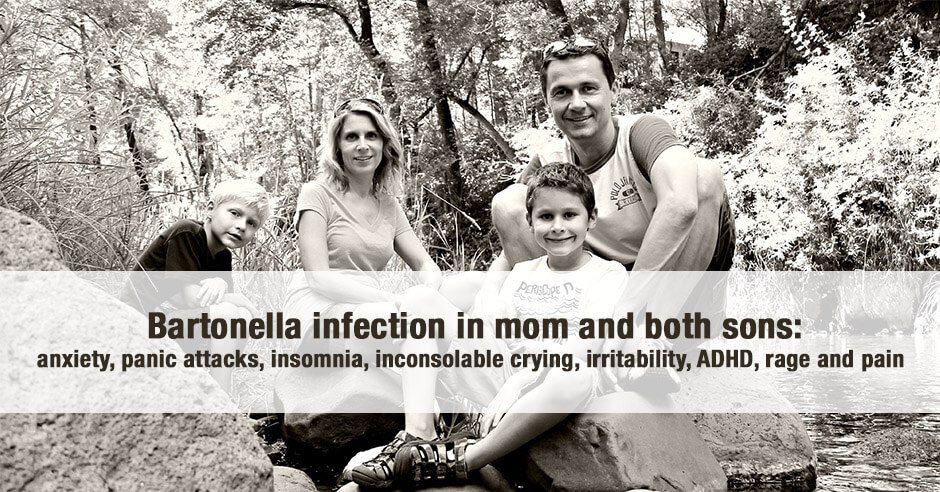
Bartonella infection in mom and both sons: anxiety, panic attacks, insomnia, inconsolable crying, irritability, ADHD, rage and pain

March 12, 2021 By Trudy Scott 32 Comments

bartonella infection

A mom and both her sons experienced a variety of emotional/mood and pain symptoms between them as a result of a Bartonella infection: anxiety, panic attacks, insomnia, irritability, inconsolable crying, ADHD, rage, eye pain, joint pain and pain in the legs. This family case study was published in Parasites and Vectors in 2013. I would love to see individual amino acids being used to ease some of these symptoms while the infection is being treated (more on this below).

Here are some of the emotional and mood-related symptoms they experienced:

  • the mother and both sons developed recurrent rash-like skin lesions, disruptive sleep patterns and both boys developed anxiety accompanied by episodes of inconsolable crying, irritability, and panic attacks
  • subsequent to the spider infestation of the apartment, [the mother] developed fatigue, memory difficulties, headaches, irritability, eye pain, insomnia, chest pain, blurred vision, shortness of breath, rash and skin lesions and anxiety attacks.
  • The youngest son… awakened at night crying and complaining of pain in his legs
  • The older son experienced increased irritability and rage episodes. In addition, the boy’s teacher indicated a lack of attention during class, and suggested that the child might have an Attention Deficit Hyperactivity Disorder (ADHD).

The youngest son also developed severe neurological symptoms and was diagnosed with Guillain-Barre syndrome and Chronic Inflammatory Demyelinating Polyradiculoneuropathy.

You can read the full investigation, timing, sequence of events and all the symptoms in the paper: Bartonella henselae infection in a family experiencing neurological and neurocognitive abnormalities after woodlouse hunter spider bites

Creating awareness, motivating, inspiring and educating

I’d like to highlight some of the reasons for sharing this paper:

  • creating more awareness about the emotional/mood symptoms that can occur with a Bartonella henselae infection
  • educating about this infection in general so other families can find solutions quicker than this family did
  • motivating and inspiring you to not give up looking for answers for you and your family – this mom suspected Bartonella infection after doing internet searches (almost 3 years after all this started)
  • creating more awareness about possible hosts other than ticks (in this case woodlice and woodlice hunter spiders)
  • highlighting how family members exposed to the same infection can have different symptoms and how some family members may not be infected at all (in this case the father was not affected)
  • highlighting that some individuals (the mom in this case) do not recall being bitten and yet still get sick
  • educating on how amino acids can offer much symptom relief during the investigation and treatment of the infection (more on this below)

Treatment with antibiotics and Chinese herbs

This family was successfully treated with antibiotics and other medications once it was determined Bartonella was the cause of their symptoms:

The parents report that the [youngest] child is actively socializing with other children and now runs and plays like he had never done before.

Following this antibiotic course, the mother reported substantial overall improvement and was almost symptom free. However, she continues to experience occasional irritability, confusion, dizziness, nausea, and pain involving the shoulder, hip and the bottoms of her feet.

One of the common symptoms of Bartonella is burning feet and this article, How to Put Out the Fire in Your Burning Bartonella Feet, mentions a herb from the Zhang protocol:

In Chinese herbal medicine, an herb called “houttuynia” is classified as “Clearing Heat and Relieving Toxicity.” This herb has been successfully used to treat Bartonella by a Chinese physician in New York named Dr. Q. Zhang. This herb has antibacterial and antiviral properties in addition to clearing heat and toxins. Fortunately this herb can be combined with other herbs to help relieve Bartonella symptoms.

I mention this because I am personally familiar with the Zhang protocol, having used it when working with Dr. Darin Ingels to address my Lyme disease (Borrelia). Dr. Ingels is the author of  The Lyme Solution and writes about the Zhang protocol in this excellent book.

Using amino acids to address anxiety, panic attacks, sleep problems, crying and pain

Individual amino acids, used as supplements, can offer much symptom relief during the investigation and treatment of the Bartonella infection, however they are seldom recommended. I would love to see this change and become the norm.

In this blog post, GABA helps with Lyme anxiety (while addressing the underlying disease), Tricia shares that “Lyme, Bartonella and Babesia are all known to cause anxiety and other psychological disorders ranging from mild to very severe.” She also shares that her daughter used GABA:

We’ve used Source Naturals GABA Calm sublinguals with good results. I learned about GABA helping anxiety and because I was treating my young daughter I purchased this because it was easy for her to take.

Looking at some of the emotional symptoms this family experienced, and how the amino acids could have helped:

  • anxiety, irritability, and panic attacks: can be eased by using tryptophan/5-HTP
  • disruptive sleep patterns and waking: can be helped by using calming GABA
  • inconsolable crying: can be eased by using DPA to boost endorphins
  • headaches, pain in the legs, shoulders and elsewhere: can be eased with DPA and/or tryptophan
  • rage episodes: can be eased with tryptophan/5-HTP
  • ADHD: can be helped with GABA in some instances and 5-HTP in other instances

I feel for this poor family. It certainly was a very complex family case and reflects the need to dig deep to find the root cause. And I appreciate the case being written up so more awareness can be created.

Have you or your family experienced something like this? And has your practitioner introduced you to the amino acids for some symptom relief while they are addressing the infection/s?

If you’re a practitioner working with Lyme disease and coinfections such as Bartonella, have you seen cases similar to this one? Do you use amino acids for some symptom relief while addressing the infection/s?

Feel free to post your questions and feedback in the comments below.

Filed Under: ADHD, Anxiety, Children/Teens, Lyme disease and co-infections Tagged With: ADHD, amino acids, anxiety, Bartonella henselae infection, Bartonella infection, burning feet, DPA, emotional, eye pain, GABA, inconsolable crying, insomnia, irritability, joint pain, Lyme anxiety, mood, neurocognitive, neurological, pain, pain in the legs, panic attacks, rage, sleep, The Lyme Solution book, tryptophan, woodlouse hunter spider bites, Zhang protocol

The effect of emotional freedom technique on nurses’ stress, anxiety, and burnout levels during the pandemic

February 12, 2021 By Trudy Scott 4 Comments

emotional freedom technique and nurses

Nurses who are working with patients during this pandemic “are particularly vulnerable to emotions such as fear and anxiety, due to fatigue, discomfort, and helplessness related to their high intensity work.” A new paper published Dec 2020, The effect of Emotional Freedom Techniques on nurses’ stress, anxiety, and burnout levels during the COVID-19 pandemic: A randomized controlled trial reports the benefits of just one online session of EFT (emotional freedom technique) or tapping.

As this paper mentions, “The basic principle of EFT is to send activating and deactivating signals to the brain by stimulating points on the skin that have distinctive electrical properties, usually by tapping on them.”

The study participants were shown a picture of the acupressure points and shown how to “gently tap on them using their index and middle fingers. After this demonstration, the participants followed the basic steps of an EFT session, following the researcher’s example:

  1. Identify an anxiety-evoking issue and determine the SUD level [the SUD is a subjective unit of distress ranging from 0 to 10 with 10 being most severe]
  2. Creating a personal acceptance and reminder statement in the general form of “I accept myself despite this ……….”
  3. Tapping seven times on each acupressure point
  4. After tapping these points, the affirmation/reminder statement is repeated.
  5. A sequence of physical movements and vocalizations called “The Nine Gamut Procedure” is carried out.
  6. Steps 3 and 4 are repeated.
  7. Another SUD rating is given [in other words how they felt afterwards on a scale of 0 to 10]

The study conclusion is as follows: “A single online group EFT session reduced stress, anxiety, and burnout levels in nurses treating COVID-19.” You can read the full study here and see the picture of the acupressure points.

This is a powerful intervention for nurses, other healthcare and frontline workers – and anyone dealing with anxiety, stress and burnout!

Tapping leads to psychological and physiological improvements

As well as psychological improvements, tapping also leads to physiological improvements. In a 2019 study, “after a 4-day training workshop on tapping, the researchers reported that happiness increased by 31% and the following declines in psychological symptoms in 203 participants were reported:

  • anxiety (-40%)
  • depression (-35%)
  • posttraumatic stress disorder (-32%)
  • pain (-57%) and
  • cravings (-74%)

I find it fascinating that EFT/tapping leads to physiological improvements too. In this same 2019 study these changes were reported:

  • resting heart rate (-8%)
  • salivary cortisol (-37%)
  • systolic blood pressure (-6%) and diastolic blood pressure (-8%)
  • heart rate variability and heart coherence
  • salivary immunoglobulin A (SigA) (+113%)

You can read more about this study here: Tapping (or EFT) for reducing anxiety, depression, pain and cravings, plus physiological changes in cortisol, heart rate, blood pressure and SigA

Combining tapping with nutritional approaches for easing anxiety

As I mention in the above blog, I have great success with amino acids like GABA, tryptophan and glutamine to provide quick anxiety-relief, end the overwhelm and stop the carb cravings for my clients. So until recently, I hadn’t really felt the need to look into tapping.

However, I believe we need to use everything at our disposal. We also respond differently to different approaches and what may work for one person may not work as well for someone else.

I love that EFT/emotional freedom technique/tapping compliments the dietary/nutritional/biochemical approach I use with my clients for helping to ease anxiety, overwhelm and stress.

Ideally these nurses (and you and anyone who is stressed or anxious) could could use tapping/EFT and combine it with nutritional support for possibly even more benefits:

  • Use targeted amino acids such as tryptophan or 5-HTP for the low serotonin worry-in-your-head anxiety where folks may also experience fears, panic attacks, ruminations, phobias, insomnia, PMS, anger, irritability and cravings; and GABA for the low GABA physical-anxiety that also includes muscle tension, overwhelm, insomnia and the need to self-medicate with alcohol to calm down
  • DPA (d-phenylalanine), also an amino acid, boosts endorphins (in a similar way to acupuncture) and helps my clients who are experiencing weepiness, pain and are big comfort/reward eaters. I blog about this here: DPA for weepiness, pain and comfort and reward eating)

In April last year I blogged about nutritional and lifestyle approaches after reading a very somber and eye-opening article in the New York Times titled: The Psychological Trauma That Awaits Our Doctors and Nurses. You can read about B vitamins, melatonin, nature and more on this blog here.

EFT/tapping resources

If you’re new to EFT/tapping and would like to learn more, the 13th Annual Tapping World Summit airs online starting Feb 22, 2021:

  • This is a great introductory video from summit host Nick Ortner (register to watch it and get access to the summit)
  • Here is the main summit registration page

Nick has also written a best-selling book “The Tapping Solution: A Revolutionary System for Stress-Free Living” (my Amazon link)

Are you a nurse or other frontline worker who has used EFT with success?

Do you use both with success: EFT and the amino acids like GABA, tryptophan, 5-HTP, theanine or glutamine? What about EFT and dietary changes like no gluten, no sugar and no caffeine?

I also want to give a shoutout to all the nurses and other frontline workers who are doing so much during this pandemic. We appreciate you!

Filed Under: Anxiety Tagged With: anxiety, burnout, cortisol, DPA, eft, endorphins, GABA, Nick Ortner, nurses, nutritional, pandemic, physiological, psychological, serotonin, stress, tapping, Tapping Summit, trauma, tryptophan

I am an emotional eater and eat sugar as a reward and find myself craving it when I am fatigued. Do you have clients on more than one amino acid?!

July 24, 2020 By Trudy Scott 24 Comments


emotional eating and amino acides

This is a question I received from a stressed out mom in my community. She has identified when she craves sugar and the emotion connected to her cravings. Now she has questions about how to trial and use amino acids to stop her cravings, get her energy back and feel emotionally stable:

I know I am an emotional eater, I know I eat sugar as a reward and I do find myself craving it when I am fatigued. I also seem to crave it after a very savory meal; especially one with garlic. What is THAT about?! Do you have clients on more than one amino acid?!

I have been a caregiver for my son (multiple disabilities) for 30 years; he has uncontrolled seizures and my husband has PTSD. It is a stressful household.

This is what I shared with her about the brain chemical imbalances and amino acids:

  • Many of my clients need more than one amino acid but it’s best to trial one at a time. When I hear my client say they eat sugar as a reward we immediately consider a trial of DPA (d-phenylalanine) especially if they are also overly emotional/weepy and also have physical pain.
  • When I hear my client say “I do find myself craving sugar when I am fatigued” we consider low catecholamines and a trial of tyrosine especially if they also have poor focus, low motivation and a flat mood. If the fatigue is caused by low blood sugar this can cause fatigue, irritability/crankiness and anxiety and a trial of glutamine may be a better option. If the DPA helps the emotional-reward-eating after a week or two, then we may do a trial of tyrosine and/or glutamine (one at a time) and use them in addition to the DPA.
  • When I hear “sugar cravings after a savory meal” we consider low serotonin and a trial of tryptophan if it’s after lunch or dinner. Serotonin dips in the afternoon and evening triggering this type of craving. With low serotonin we also see worry, anxiety, depression, anger, PMS, insomnia and irritability. Let’s assume the DPA helps and the tyrosine helps with the fatigue, then we’d consider a trial of tryptophan and add that.

So yes I do have many clients needing more than one amino acid! But we always trial one at a time and find a good baseline before adding the next one or doing a new trial if the first one didn’t give expected results.

With regards to which amino acid trial to do first, I always ask my client which area is causing the most problem or distress in your life and we start there. Since she mentioned emotional eating and then fatigue and then cravings after a savory meal, this sequence may be best for her. But addressing the fatigue with tyrosine first may be a better approach for someone else.

With regards to cravings after a savory meal we also look into how much protein and healthy fats the client has in that meal. I don’t know why garlic would be a trigger other than it’s possibly stirring up candida. Candida is also a big factor when it comes to sugar cravings, fatigue and feeling sad/emotional so we would also possibly need to address this too.

Adrenal and sleep support is also key and I recommend this resource for additional caregiver support for her – The psychological trauma of coronavirus – nutritional support for doctors, nurses and their loved ones.

For her husband’s PTSD I recommend this resource – PTSD from 3 tours in Afghanistan: Can GABA help with the anxiety?

For her son’s seizures I recommend this paper, Ketogenic Diet and Epilepsy: What We Know So Far, and working with a practitioner who could offer consultation and guidance on a ketogenic diet.  Another useful resource is this one – Use of Cannabidiol in the Treatment of Epilepsy: Efficacy and Security in Clinical Trials.

If you suspect low levels of any any of the neurotransmitters and are new to using the amino acids and do not have my book I highly recommend getting it and reading it before jumping in to taking supplements: The Antianxiety Food Solution – How the Foods You Eat Can Help You Calm Your Anxious Mind, Improve Your Mood, and End Cravings.

There is a complete chapter on the amino acids and one for pyroluria, plus information on real whole food, sugar and blood sugar, gluten, digestion and much more.  If you’re not a reader there is now also an audible version.

Here is the Amino Acids Mood Questionnaire from The Antianxiety Food Solution and additional information on Anxiety and targeted individual amino acid supplements: a summary

Please also read and follow these Amino Acid Precautions.

This lists The Antianxiety Food Solution Amino Acid and Pyroluria Supplements that I use with my individual clients and those in my group programs. You’ll find DPA, tyrosine and tryptophan listed here.

Please share your emotional eating and sugar craving success story if you have one using DPA.

And let us know if tyrosine helps with your fatigue and low-energy driven sugar cravings?

And does tryptophan help your afternoon and evening sugar cravings?

Feel free to post your questions here too.

Filed Under: Cravings Tagged With: anxiety, DPA, emotional eating, endorphins, energy, fatigue, glutamine, insomnia, low mood, pain, PTSD, seizures, serotonin, stressed, sugar, tryptophan, worry

  • « Go to Previous Page
  • Page 1
  • Page 2
  • Page 3
  • Page 4
  • Page 5
  • Page 6
  • Interim pages omitted …
  • Page 8
  • Go to Next Page »

Primary Sidebar

NEW! GABA QuickStart Homestudy (with special intro pricing)

gaba quickstart homestudy

Free Report

9 Great Questions Women Ask about Food, Mood and their Health

You'll also receive a complimentary subscription to my ezine "Food, Mood and Gal Stuff"


Connect with me

Popular Posts

  • Amino Acids Mood Questionnaire from The Antianxiety Food Solution
  • The Antianxiety Food Solution Amino Acid and Pyroluria Supplements
  • Pyroluria Questionnaire from The Antianxiety Food Solution
  • Collagen and gelatin lower serotonin: does this increase your anxiety and depression?
  • Tryptophan for the worry-in-your-head and ruminating type of anxiety
  • GABA for the physical-tension and stiff-and-tense-muscles type of anxiety
  • The Antianxiety Food Solution by Trudy Scott
  • Seriphos Original Formula is back: the best product for anxiety and insomnia caused by high cortisol
  • Am I an anxious introvert because of low zinc and vitamin B6? My response to Huffington Post blog
  • Vagus nerve rehab with GABA, breathing, humming, gargling and key nutrients

Recent Posts

  • What do I use instead of Seriphos to help lower high cortisol that is affecting my sleep and making me anxious at night?
  • BeSerene™ GABA/theanine cream eases severe muscle tension in her neck/shoulders, prevents her bad headaches and quells her anxiety
  • How the correct approach, dose and sublingual use of GABA can be calming and not cause a flushed and itchy face and neck
  • The amino acid glutamine improves low mood by addressing gut health, and it has calming effects too
  • Flight anxiety with heightened breath, physical tension and also fearing the worst (the role of low GABA and low serotonin)

Categories

  • 5-HTP
  • AB575
  • Addiction
  • ADHD
  • Adrenals
  • Alcohol
  • Allergies
  • Alzheimer's disease
  • Amino Acids
  • Anger
  • Antianxiety
  • Antianxiety Food Solution
  • Antidepressants
  • Anxiety
  • Anxiety and panic
  • Autism
  • Autoimmunity
  • benzodiazapines
  • Bipolar disorder
  • Books
  • Caffeine
  • Cancer
  • Candida
  • Children/Teens
  • Collagen
  • Cooking equipment
  • Coronavirus/COVID-19
  • Cravings
  • Depression
  • Detoxification
  • Diabetes
  • Diet
  • DPA/DLPA
  • Drugs
  • EFT/Tapping
  • EMF
  • EMFs
  • Emotional Eating
  • Endorphins
  • Environment
  • Essential oils
  • Events
  • Exercise
  • Fear
  • Fear of public speaking
  • Fertility and Pregnancy
  • Fish
  • Food
  • Food and mood
  • Functional neurology
  • GABA
  • Gene polymorphisms
  • General Health
  • Giving
  • Giving back
  • Glutamine
  • Gluten
  • GMOs
  • Gratitude
  • Gut health
  • Heart health/hypertension
  • Histamine
  • Hormone
  • Hyperparathyroidism
  • Hypoglycemia
  • Immune system
  • Inflammation
  • Insomnia
  • Inspiration
  • Introversion
  • Joy and happiness
  • Ketogenic diet
  • Lithium orotate
  • Looking awesome
  • Lyme disease and co-infections
  • MCAS/histamine
  • Medication
  • Men's health
  • Mental health
  • Mercury
  • Migraine
  • Mold
  • Movie
  • MTHFR
  • Multiple sclerosis
  • Music
  • NANP
  • Nature
  • Nutritional Psychiatry
  • OCD
  • Osteoporosis
  • Oxalates
  • Oxytocin
  • Pain
  • Paleo
  • Parasites
  • Parkinson’s disease
  • PCOS
  • People
  • PMS
  • Postpartum
  • PTSD/Trauma
  • Pyroluria
  • Questionnaires
  • Real whole food
  • Recipes
  • Research
  • Schizophrenia
  • serotonin
  • SIBO
  • Sleep
  • Special diets
  • Sports nutrition
  • Stress
  • Sugar addiction
  • Sugar and mood
  • Supplements
  • Teens
  • Testimonials
  • Testing
  • The Anxiety Summit
  • The Anxiety Summit 2
  • The Anxiety Summit 3
  • The Anxiety Summit 4
  • The Anxiety Summit 5
  • The Anxiety Summit 6
  • Thyroid
  • Thyroid health
  • Toxins
  • Tryptophan
  • Tyrosine
  • Uncategorized
  • Vegan/vegetarian
  • Women's health
  • Yoga

Archives

  • October 2025
  • September 2025
  • August 2025
  • July 2025
  • June 2025
  • May 2025
  • April 2025
  • March 2025
  • February 2025
  • January 2025
  • November 2024
  • October 2024
  • September 2024
  • August 2024
  • July 2024
  • June 2024
  • May 2024
  • April 2024
  • March 2024
  • February 2024
  • January 2024
  • December 2023
  • November 2023
  • October 2023
  • September 2023
  • August 2023
  • July 2023
  • June 2023
  • May 2023
  • April 2023
  • March 2023
  • February 2023
  • January 2023
  • December 2022
  • November 2022
  • October 2022
  • September 2022
  • August 2022
  • July 2022
  • June 2022
  • May 2022
  • April 2022
  • March 2022
  • February 2022
  • January 2022
  • December 2021
  • November 2021
  • October 2021
  • September 2021
  • August 2021
  • July 2021
  • June 2021
  • May 2021
  • April 2021
  • March 2021
  • February 2021
  • January 2021
  • December 2020
  • November 2020
  • October 2020
  • September 2020
  • August 2020
  • July 2020
  • June 2020
  • May 2020
  • April 2020
  • March 2020
  • February 2020
  • January 2020
  • December 2019
  • November 2019
  • October 2019
  • September 2019
  • August 2019
  • July 2019
  • June 2019
  • May 2019
  • April 2019
  • March 2019
  • February 2019
  • January 2019
  • December 2018
  • November 2018
  • October 2018
  • September 2018
  • August 2018
  • July 2018
  • June 2018
  • May 2018
  • April 2018
  • March 2018
  • February 2018
  • January 2018
  • December 2017
  • November 2017
  • October 2017
  • September 2017
  • August 2017
  • July 2017
  • June 2017
  • May 2017
  • April 2017
  • March 2017
  • February 2017
  • January 2017
  • December 2016
  • November 2016
  • October 2016
  • September 2016
  • August 2016
  • July 2016
  • June 2016
  • May 2016
  • April 2016
  • March 2016
  • February 2016
  • January 2016
  • December 2015
  • November 2015
  • October 2015
  • September 2015
  • August 2015
  • July 2015
  • June 2015
  • May 2015
  • April 2015
  • March 2015
  • February 2015
  • January 2015
  • December 2014
  • November 2014
  • October 2014
  • September 2014
  • August 2014
  • July 2014
  • June 2014
  • May 2014
  • April 2014
  • March 2014
  • February 2014
  • January 2014
  • December 2013
  • November 2013
  • October 2013
  • September 2013
  • August 2013
  • July 2013
  • June 2013
  • May 2013
  • April 2013
  • March 2013
  • February 2013
  • January 2013
  • December 2012
  • November 2012
  • October 2012
  • August 2012
  • July 2012
  • June 2012
  • May 2012
  • April 2012
  • March 2012
  • February 2012
  • January 2012
  • December 2011
  • November 2011
  • October 2011
  • September 2011
  • August 2011
  • July 2011
  • June 2011
  • May 2011
  • April 2011
  • March 2011
  • February 2011
  • January 2011
  • December 2010
  • October 2010
  • September 2010
  • July 2010
  • May 2010
  • April 2010
  • March 2010
  • February 2010
  • January 2010
  • November 2009

Share the knowledge!

The above statements have not been evaluated by the Food and Drug Administration. Products listed in this website are not intended to diagnose, treat, cure or prevent any disease.

The information provided on this site is for informational and educational purposes only and is not intended as a substitute for advice from your physician or other health care professional. You should consult with a healthcare professional before starting or modifying any diet, exercise, or supplementation program, before taking or stopping any medication, or if you have or suspect you may have a health problem.


Copyright © 2026 Trudy Scott. All Rights Reserved. | Privacy | Terms and Conditions | Refund Policy | Medical Disclaimer

Free Report

9 Great Questions Women Ask about Food, Mood and their Health

You’ll also receive a complimentary subscription to my ezine “Food, Mood and Gal Stuff”