• Skip to primary navigation
  • Skip to main content
  • Skip to primary sidebar

everywomanover29 blog

Food, Mood and Women's Health – Be your healthiest, look and feel great!

  • Blog
  • About
  • Services
  • Store
  • Resources
  • Testimonials
  • The Book
  • Contact
  • Search this site

tryptophan

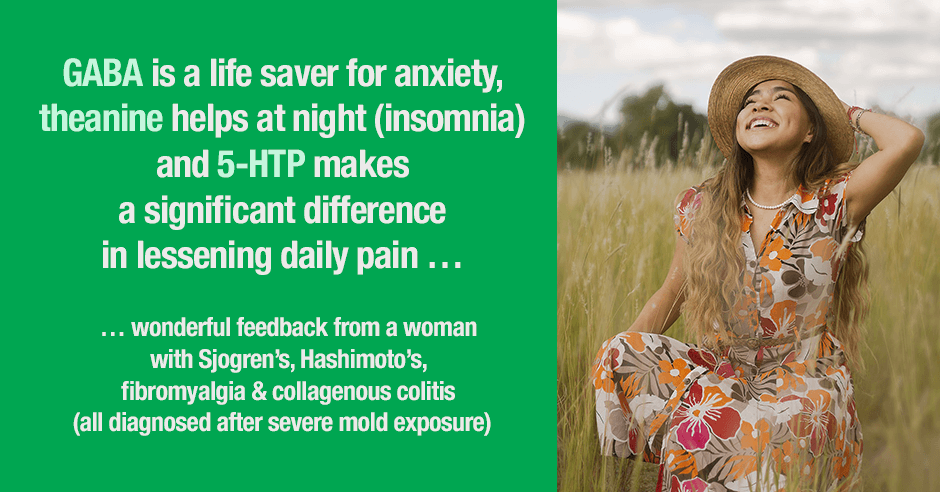
GABA is a life saver for anxiety, theanine helps at night (insomnia) and 5-HTP makes a significant difference in lessening daily pain

September 16, 2022 By Trudy Scott 16 Comments

aminos help

Joie has Sjogren’s, Hashimoto’s, fibromyalgia & collagenous colitis (all diagnosed after severe mold exposure) and shared how GABA is a life saver for her anxiety, how theanine helps at night with her insomnia and how 5-HTP makes a significant difference in lessening her daily pain. Here is her wonderful feedback in her own words (my feedback for her follows):

I was diagnosed with Sjogrens several years ago. I also have Hashimoto’s, Fibromyalgia & Collagenous Colitis. All of these happened after a severe mold exposure which destroyed my pituitary, and caused Exocrine Pancreatic Insufficiency (EPI). I have to take human growth hormone injections daily, as my pituitary isn’t working, digestive enzymes for the EPI, and have experienced the anxiety and depression you’ve written about.

The GABA has been a life saver for me (for my anxiety), and I share this with all I know who experience anxiety. I also use L-theanine at night because of insomnia. The 5-HTP has helped somewhat for sleep. L-tryptophan didn’t seem to make a difference. However the 5-HTP has made a significant difference in lessening my daily pain levels, which I am most grateful for.

Unfortunately, I am also taking Klonopin and Gabapentin, both of which I have tried to get off of but keep finding myself back on both in order to have greater than 5 hours of sleep at night. Even with these, I often awaken after 4-6 hours and take 1-2 chewable GABA which allows me to go back to sleep and get 2-4 more hours of sleep.

She shared this on the blog, Sjogren’s syndrome: tryptophan and GABA for anxiety, and moisturizing for dry skin and inflammation?, where I write about the prevalence of anxiety and depression in this autoimmune condition, and the fact that serotonin and GABA are often low.

I shared how sorry I was to hear how mold has impacted her but that it was wonderful to hear the GABA has been a lifesaver for you in terms of anxiety (and when waking in the night) and that theanine helps her sleep. It’s wonderful that 5-HTP helps ease her daily pain (here is fibromyalgia research on 5-HTP) and helps somewhat with her sleep issues.

Has she increased the amino acids to the optimal doses for her unique needs?

My question for her was this: “how much of each of these amino acids are you using and have you increased them to the optimal doses for your unique needs?” I asked this because many folks don’t do this and we always want to capitalize on what is working.

Here are some examples that relate to Joie:

  • When 5-HTP helps with pain relief we also do afternoon and bedtime trials to see if it can improve sleep further. And we always explore some of the reasons why serotonin may be low and address those too. You can read more on that here: what causes low serotonin

I shared that tryptophan doesn’t work for everyone and some do better with 5-HTP, but I do also consider melatonin when sleep is an issue, especially timed release to prevent waking in the night.

  • Since GABA is a lifesaver for her in terms of her anxiety and also helps when she wakes, trialing higher doses at bedtime may prevent the early morning waking. The same could be said for trialing a higher dose of theanine and using both GABA and theanine together at night (a 2019 study shows the combination decreases sleep latency and improves NREM sleep).

High cortisol, rebound sleep issues with meds and/or poor fat digestion?

If she has already done the above, I’d explore high cortisol and do a 5-collection an adrenal saliva test). When cortisol is high during the night, the use of Seriphos can be a game-changer for many.

Unfortunately both Klonopin and Gabapentin (especially the former) can cause rebound insomnia even when they seem to be helping in the short-term.

I also mentioned that my recent blog post many be helpful since she mentions exocrine pancreatic insufficiency, which could affect sleep by impacting her fat digestion – Waking in the night due to environmental toxins: impacts on the liver, gallbladder and fat digestion (making oxalate issues worse). This has relevance whether or not oxalates are an issue.

Autoimmune-Paleo (AIP) diet, pyroluria and moisturizing for reducing inflammation

It goes without saying that since Sjogren’s, Hashimoto’s and even Collagenous Colitis are autoimmune conditions, following an Autoimmune-Paleo (AIP) diet is key too. I have links to some AIP resources on the above Sjogren’s blog post.

In this blog I also mention pyroluria which may be relevant for someone with Collagenous Colitis and is crucial to address when there has been toxic mold exposure or other chronic issues like Lyme disease or MCAS. More on this here.

And you can also read about the value of moisturizing for reducing inflammation.

I thanked her and said I plan to share her results and my response as a new blog as I feel it will help others and give hope!

Resources if you are new to using amino acids as supplements

If you are new to using any of the amino acids as supplements, here is the Amino Acids Mood Questionnaire from The Antianxiety Food Solution (you can see all the symptoms of neurotransmitter imbalances, including low serotonin and low GABA).

If you suspect low levels of any of the neurotransmitters and do not yet have my book, The Antianxiety Food Solution – How the Foods You Eat Can Help You Calm Your Anxious Mind, Improve Your Mood, and End Cravings, I highly recommend getting it and reading it before jumping in and using amino acids on your own so you are knowledgeable. And be sure to share it with the practitioner/health team you or your loved one is working with.

There is an entire chapter on the amino acids and they are discussed throughout the book in the sections on gut health, gluten, blood sugar control, sugar cravings, self-medicating with alcohol and more.

The book doesn’t include product names (per the publisher’s request) so this blog, The Antianxiety Food Solution Amino Acid and Pyroluria Supplements, lists the amino acids that I use with my individual clients and those in my group programs. You can find them all in my online store.

If, after reading this blog and my book, you don’t feel comfortable figuring things out on your own (i.e. doing the symptoms questionnaire and respective amino acids trials), a good place to get help is the GABA QuickStart Program (if you have low GABA symptoms). This is a paid online/virtual group program where you get my guidance and community support.

If you are a practitioner, join us in The Balancing Neurotransmitters: the Fundamentals program. This is also a paid online/virtual program with an opportunity to interact with me and other practitioners who are also using the amino acids.

Has GABA helped with your anxiety and insomnia? What about theanine? And 5-HTP for your pain? Or melatonin for sleep?

Have you used taurine with success for fat digestion? Or Seriphos for high cortisol?

What else has helped you with symptoms like these ones?

If you have questions please share them here too.
Filed Under: 5-HTP, Anxiety, GABA, Insomnia, Pain Tagged With: 5-HTP, anxiety, Balancing Neurotransmitters: the Fundamentals program for practitioners, collagenous colitis, depression, Exocrine Pancreatic Insufficiency, Fibromyalgia, GABA, GABA Quickstart program, gabapentin, hashimoto's, Inflammation, insomnia, Klonopin, lessening daily pain, moisturizing, mold exposure, pain, serotonin, Sjogren’s, sleep, theanine, tryptophan

Rebound insomnia after tapering a benzodiazepine: will taking GABA or any other natural supplement interfere with healing?

August 26, 2022 By Trudy Scott 16 Comments

rebound insomnia after tapering

This question was posted on one of the GABA blog posts by Fran, asking about about using GABA for insomnia shortly after having tapered a benzodiazepine she had used for 15 years:

I am a senior who took benzodiazepines (clonazepam) on advice of my doctor for sleep because of chronic fatigue for 15 years. Last year I weaned myself off the medication and it has been just over 10 months. No one tells you that when you stop taking them you go into a rebound insomnia phase and it can last a long time. The doctor still won’t admit that!

I joined benzo buddies, a group I found out about on your site and found much encouragement from the posts of many brave and determined people. One post mentioned that the drug actually overrides your GABA receptors so when you stop taking it they have to heal to become active again. My question is: Will taking GABA or any other natural supplement interfere with that healing. The writer of the post feels taking nothing is best for the brain to return to normal and that only time will do that.

I said I was sorry to hear about her struggles with her benzodiazepine prescription. Sadly it’s all too common and it’s seldom that folks are cautioned about the rebound insomnia and other issues seen with benzodiazepines.

I love benzo buddies and other benzo support groups and often recommend that clients join one of these groups for the community support aspect. I am really happy that Fran found encouragement.

However, I  respectfully disagree with their message that GABA supplements or other supplements should not be used and that you should just wait for time to heal. We want to use everything at our disposal in order to heal as quickly as possible. And quality sleep is imperative for healing.

Also many of the most severely affected folks are part of these support groups, so it may well be all that they know, hence the advice they dispense.

Many do get relief with GABA during and post benzo taper and it won’t affect long-term healing (with a very low dose)

It is true that GABA receptors can be affected by benzodiazepines but despite this, many of my clients and others in my community do get relief from GABA during this period. Since we are all unique, some folks may have an issue, so we always do a trial with GABA if someone has rebound insomnia (and other low GABA symptoms of physical tension/anxiety, stiff and tense muscles, stress eating etc).

When someone can’t tolerate GABA they will know very quickly – typically in 1-2 days. If you can’t tolerate GABA it may feel the same as someone who takes GABA and doesn’t need it (i.e. GABA isn’t low) or when someone takes too much. This could make you feel light-headed, dizzy, feel a flush and/or feel too tired. You may even feel more anxious. Vitamin C is a wonderful antidote to all this and these short-term adverse reactions won’t interfere with long-term healing.

We also start with a very small dose – I typically have someone start with 25mg GABA and go up from there – and only use sublingual GABA. For some very sensitive folks we will start even lower as in this example where Syd gets sleep and body anxiety benefits with just 1.5 mg to 3 mg GABA.

Other nutrients that may also help with insomnia

We may also use other nutrients to help with sleep support and rebound anxiety (which is also common) and other symptoms, all based on each person’s unique needs. These may include tryptophan or 5-HTP if serotonin is also low (this can affect sleep and cause worry/ruminating type anxiety), melatonin if that is low (either sublingual or timed-release) and Seriphos if cortisol is high too. We may also combine GABA with theanine (research shows the combination may help some folks).

A full functional medicine and nutritional workup is recommended in order to be as nutritionally stable as possible. Ideally this happens before tapering starts but even if it’s done after the fact it can help with healing and symptom relief. Addressing histamine imbalances is one factor to consider as this can impact sleep (more on that below).

This is an important question that many folks ask so I appreciate her asking so I could share it as a blog post for others in a similar situation.

I am waiting to hear back about what happened when she did use GABA and how much she used. She mentioned that she did take GABA for a time at first but it only worked for a while. I find that during the taper and post taper, GABA needs can fluctuate as healing starts to take place. I have clients adjust up and down as needed.

More on benzodiazepine withdrawal and histamine issues

These medications have the most debilitating withdrawal reactions in all of medicine and Valium blocks DAO/impacts histamine levels:

  • World Benzodiazepine Awareness Day 2017: Awareness and Anxiety Nutrition Solutions

Benzodiazepines (Xanax, Klonopin, Ativan, Valium, Librium, and others) as well as Z-drugs (Ambien, Lunesta and others), which are similar, have the most debilitating withdrawal reactions in all of medicine.

This happens in regular, everyday people who are taking the medications exactly as their doctor prescribed. It also happens to people on what they think are “low doses” and is not just a “high dose” problem.

  • The benzodiazepine valium blocks DAO and impacts histamine levels: wisdom from Yasmina Ykelenstam and a tribute to her brilliance

Many people doing a benzodiazepine taper are often switched to Valium which is a DAO [diamine oxidase blocker (or histamine liberator)] and this further prevents histamine from being removed from the body [and can lead to increased anxiety].

Dyes are also triggers…the pink Xanax can be problematic.

GABA is as effective as benzodiazepines (which should only be prescribed for short-term use)

Many folks who have used benzos in the past, find GABA to be as effective. Another woman in my community, Dee, shared that she had taken Xanax in the past for panic attacks and her functional medicine doctor suggested GABA Calm as she wanted a natural product. This is her encouraging feedback: “I was amazed how it works just like the Xanax did – instant calm feeling within 10 mins of taking 2 capsules. I use them as needed when I am having heightened stress and anxiety.”

Ideally we want to use GABA instead of one of the benzodiazepines – which are all too commonly prescribed for anxiety, insomnia and pain – in order to avoid tolerance issues, dependence and withdrawal/tapering issues. The fact that they are used long term – like 15 years for Fran – further compounds the issues. Even a few months can be problematic for some folks. It’s important to be aware that this class of medication is intended for short-term use  i.e. 2-4 weeks only.

Resources if you are new to using the GABA and other amino acids as supplements

If you are new to using GABA and any of other the amino acids as supplements, here is the Amino Acids Mood Questionnaire from The Antianxiety Food Solution (you can see all the symptoms of neurotransmitter imbalances, including low GABA).

If you suspect low levels of any of the neurotransmitters and do not yet have my book, The Antianxiety Food Solution – How the Foods You Eat Can Help You Calm Your Anxious Mind, Improve Your Mood, and End Cravings, I highly recommend getting it and reading it before jumping in and using amino acids on your own so you are knowledgeable. And be sure to share it with the practitioner/health team you or your loved one is working with.

There is an entire chapter on the amino acids and they are discussed throughout the book in the sections on gut health, gluten, blood sugar control, sugar cravings, self-medicating with alcohol and more.

The book doesn’t include product names (per the publisher’s request) so this blog, The Antianxiety Food Solution Amino Acid and Pyroluria Supplements, lists the amino acids that I use with my individual clients and those in my group programs. You can find them all in my online store.

If, after reading this blog and my book, you don’t feel comfortable figuring things out on your own (i.e. doing the symptoms questionnaire and respective amino acids trials), a good place to get help is the GABA QuickStart Program (if you have low GABA symptoms). This is a paid online/virtual group program where you get my guidance and community support.

If you are a practitioner, join us in The Balancing Neurotransmitters: the Fundamentals program. This is also a paid online/virtual program with an opportunity to interact with me and other practitioners who are also using the amino acids.

Have you used GABA with success while tapering a benzodiazepine or shortly after tapering is complete?

Have you used other nutrients to help while tapering or post taper? If yes, which ones?

Did you find that GABA was not helpful? (which product and how much did you use?)

If you have questions please share them here too.
Filed Under: Anxiety, benzodiazapines, GABA, Insomnia Tagged With: 5-HTP, amino acids, Balancing Neurotransmitters: the Fundamentals program for practitioners, benzo buddies, benzodiazepine, clonazepam, DAO enzyme, GABA, GABA Quickstart program, GABA receptors, healing, histamine, insomnia, medication, melatonin, natural supplement, Rebound insomnia, seriphos, sleep, tapering, theanine, tryptophan, Xanax

Low lithium questionnaire and how we use lithium orotate with the amino acids

August 19, 2022 By Trudy Scott 44 Comments

low lithium questionnaire

This is the low lithium questionnaire that I use with new clients in order for us to figure out if a trial of low dose lithium, in the form of lithium orotate, may be helpful. The hallmark of low lithium is a rollercoaster of emotions. Keep in mind that this is just one of 12 questionnaires that I have my clients complete. Many of the following symptoms can have multiple causes, the labs may relate to other deficiencies and the conditions have other root causes. This questionnaire simply provides additional evidence that lithium orotate may help.

We typically do a lithium orotate trial, starting with 5 mg once a day, and going up to 10 mg twice a day. We do this after we have started trialing the respective amino acids for low serotonin, low GABA, low endorphins, low catecholamines and low blood sugar. A big clue that lithium orotate may be helpful (when many of the symptoms below are checked off) is when the amino acids for low serotonin (tryptophan or 5-HTP), low GABA (GABA or theanine), low endorphins (DPA or DLPA), low catecholamines (tyrosine or DLPA) and low blood sugar (glutamine) are not as effective as expected (based on the amino acids mood/neurotransmitter questionnaire).

Low lithium questionnaire

Symptoms
Mood swings (a rollercoaster of emotions)
Addictions and/or cravings
Depressed
Low self-esteem
Boredom
Easily distracted
Rebellious, disruptive behavior and/or aggressiveness
Irritability
Restless/internal anxiety (similar to low serotonin worry/ruminating anxiety)
Restless/external anxiety (similar to low GABA physical anxiety)
Anxiety ups and downs (fluctuations)
Melancholic pessimism
Suicidal thoughts
Disorganized with planning difficulties
Focus issues/ADHD
Insomnia
Procrastination and/or no initiative
Jack of all trades, master of none
Impulsive and/or lacking tact
Poor insight
Risky behavior
Cognitive issues
Migraines or cluster headaches

Effectiveness of amino acids
The amino acids for low serotonin, low GABA, low endorphins, low catecholamines and low blood sugar are not as effective as expected (based on the amino acids mood/neurotransmitter questionnaire)

Labs
Low white blood cell count
Low red blood cell count
Anemia
Low platelet count

Conditions
Anorexia nervosa
Heart disease (heart arrhythmias, history of heart attack)
Raised blood sugar or diabetes
Kleptomania
Alcoholism
Alzheimer’s disease
Fibromyalgia
Bipolar II
Gout
Hyperthyroidism
Nearsightedness or glaucoma
Herpes infections (current or prone to them)

If you are new to low dose lithium / lithium orotate

As I share in this blog, Upping my tryptophan and lithium orotate have been absolutely profound for me: I’ve been depression free and anxiety free for over a year, I’ve used lithium orotate with many clients and use it when folks have mood swings and anxiety ups and downs. It’s harder for the amino acids to work when there is a moving goal post and lithium orotate evens things out.

You can read Katrin’s wonderful results: “Upping my tryptophan dose and also including and upping the dose of lithium orotate has been absolutely profound for me. I’m off my SSRI/antidepressant (which I was off and on for a number of years). I’ve been depression/anxiety free for over a year. So fantastic.”

The above blog also includes additional information on the differences between low dose lithium / lithium orotate and prescription lithium carbonate. The latter is used at much higher doses and does have side-effects.

One of the many ways lithium works is via the impact on neurotransmitter production. This paper, Potential Mechanisms of Action of Lithium in Bipolar Disorder, states this: “At a neuronal level, lithium reduces excitatory (dopamine and glutamate) but increases inhibitory (GABA) neurotransmission.” It also increases protective proteins such as BDNF (brain-derived neurotrophic factor), helps reduce oxidative stress and is neuroprotective. This paper is referring to lithium carbonate and not lithium orotate but until we have more research on lithium orotate, I feel comfortable extrapolating, given what I’ve seen clinically with lithium orotate.

I’ve also blogged about low dose or microdose lithium here: Microdose lithium formulation is capable of halting signs of advanced Alzheimer’s and improving cognition. In a study published in 2020, “a team of researchers has shown that, when given in a formulation that facilitates passage to the brain, lithium in doses up to 400 times lower than what is currently being prescribed for mood disorders is capable of both halting signs of advanced Alzheimer’s pathology and of recovering lost cognitive abilities.”  In this study, they used lithium citrate in similar doses as the lithium orotate i.e  3.2 mg to 6.4 mg NP03 based on 70kg of body weight (which is around 154.3 lbs).

Resources if you are new to using the amino acids as supplements (and where to get lithium orotate)

If you are new to using any of the amino acids as supplements, here is the Amino Acids Mood Questionnaire from The Antianxiety Food Solution (you can see all the symptoms of neurotransmitter imbalances).

If you suspect low levels of any of the neurotransmitters and do not yet have my book, The Antianxiety Food Solution – How the Foods You Eat Can Help You Calm Your Anxious Mind, Improve Your Mood, and End Cravings, I highly recommend getting it and reading it before jumping in and using amino acids on your own so you are knowledgeable. And be sure to share it with the practitioner/health team you or your loved one is working with.

There is an entire chapter on the amino acids and they are discussed throughout the book in the sections on gut health, gluten, blood sugar control, sugar cravings, self-medicating with alcohol and more.

The book doesn’t include product names (per the publisher’s request) so this blog, The Antianxiety Food Solution Amino Acid and Pyroluria Supplements, lists the amino acids that I use with my individual clients and those in my group programs.

You can find the amino acid products I use and a number of different lithium orotate products in my online Fullscript store.

If, after reading this blog and my book, you don’t feel comfortable figuring things out on your own (i.e. doing the symptoms questionnaire and respective amino acids trials), a good place to get help is the GABA QuickStart Program (if you have low GABA symptoms). This is a paid online/virtual group program where you get my guidance and community support. There are many moms in the program who are having much success with their kids.

If you are a practitioner, join us in The Balancing Neurotransmitters: the Fundamentals program. This is also a paid online/virtual program with an opportunity to interact with me and other practitioners who are also using the amino acids.

Do you resonate with any of the above and have you used lithium orotate with success?

Was the rollercoaster of emotions and fluctuating anxiety a hallmark for you before using lithium orotate?

If you’re a practitioner, do you use lithium orotate with your clients or patients?

If you have questions please share them here too.
Filed Under: Anxiety, Depression, GABA, Lithium orotate Tagged With: addiction, ADHD, aggressiveness, Alzheimer’s disease, amino acids, anxious, boredom, catecholamines, cognitive, endorphins, GABA, insomnia, irritable, lithium, lithium orotate, low blood sugar, low dose lithium, Low lithium questionnaire, low self-esteem, mood swings, rebellious, rollercoaster of emotions, serotonin, tryptophan

Upping my tryptophan and lithium orotate have been absolutely profound for me: I’ve been depression free and anxiety free for over a year

July 8, 2022 By Trudy Scott 66 Comments

tryptophan and lithium orotate

Upping my tryptophan dose and also including and upping the dose of lithium orotate has been absolutely profound for me.

I’m off my SSRI/antidepressant (which I was off and on for a number of years). I’ve been depression/anxiety free for over a year. So fantastic.

Everyone is bioindividual, of course, so please avoid using my dosing regime, but it wasn’t until I increased the lithium orotate to 20mg a day – 10mg in the AM and PM.

Life changing

Katrin shared this wonderful feedback on Facebook and I’m sharing this today in order to illustrate how much tryptophan dosing can vary, when you may need to up your dosage of tryptophan, how the addition of lithium orotate may be the missing link, and increasing it may help further and to offer hope (as always). And I share my insights and some additional information on lithium orotate.

Katrin was inspired by a post of mine where I discussed increasing tryptophan over and above 500mg twice a day and only taking it when needed). She shared this:

I was taking 3g tryptophan split up between the hours of 2pm and bedtime. 3 grams was what I increased to after floundering on 500mg afternoon and evening.  I don’t take it every day (as per your great suggestion of not taking an amino acid if you feel you don’t need to.) But if I’m having a stressful week etc and my serotonin tanks, I’ll start to take it again.

After the initial increase of lithium orotate, in conjunction with the tryptophan increase, that’s when I started to feel the real difference – the icing on the cake, so to speak (sugar-free, gluten free icing and cake, of course). Lithium orotate was the game changer.

She started with 5mg lithium orotate twice a day and then increased it to 10mg twice a day and has recently reduced this (more on this below).

Is there a role for lithium orotate in psychiatry?

If you’re new to lithium orotate, this editorial, Is there a role for lithium orotate in psychiatry?, is a useful introduction. Here are a few highlights:

  • The growing evidence from epidemiological studies mirror the cellular studies that suggest lithium is perhaps a crucial trace element necessary for optimum brain functioning. All these studies imply that adequate lithium intake may be neuroprotective. Conversely, inadequate lithium intake (especially in vulnerable individuals) may predispose and/or perpetuate a range of psychiatric and neurodegenerative conditions.
  • If further studies confirm this hypothesis, then a safe and effective lithium mineral supplement will be needed to correct this specific mineral deficiency. Advocates of lithium orotate argue that such a supplement already exists and that it is both safe and effective.
  • Lithium orotate has been used worldwide, mainly by non-medical health practitioners for over 30  years

Lithium orotate is used at low doses and the dosing is much lower and in a different form to prescription lithium (carbonate) that is prescribed for bipolar disorder. The above editorial explains some of the differences and standard daily dose:

To further illustrate the differences in the daily doses of elemental lithium between the orotate and carbonate forms, a single 120 mg tablet of lithium orotate contains about 5mg of elemental lithium. This is only 10% of the dose of elemental lithium that you would find in a single 250 mg tablet of lithium carbonate, which would have about 50 mg of elemental lithium.

There are no established (medical) guidelines for the daily dose of lithium orotate. However, the standard dose prescribed by alternative health practitioners is a single tablet of 120 mg of lithium orotate a day (which is equivalent to 5 mg of elemental lithium).

The authors conclude with this: “There have only been a few small trials done in humans, and they showed that lithium orotate was effective, safe and generally well tolerated.” Until we have more human trials we have to rely on what we see clinically.  And based on what I’ve seen and the feedback from colleagues, there is most definitely a role for lithium orotate in psychiatry.

Lithium orotate works when there are mood swings and anxiety ups and downs

I’ve used lithium orotate with many clients and use it when folks have mood swings and anxiety ups and downs. It’s harder for the amino acids to work when there is a moving goal post and lithium orotate evens things out. Katrin said she resonates with this and this may be why the lithium orotate works so well for her.

There are not many studies on lithium orotate, although it’s exciting that there has been an increase in the last few years. This small study done in 1994, Effects of nutritional lithium supplementation on mood, mentions the “mood-improving and stabilizing effect.”  They used a yeast based lithium supplement of 400 μg (which is just  0.4 mg) for former drug users of mostly heroin and crystal methamphetamine.

The above editorial states the following reported benefits of taking lithium orotate:

feeling calmer; experiencing fewer or less intense depressive, hypomanic or mixed affective symptoms; being less impulsive; experiencing less frequent and less intense suicidal thoughts or aggressive impulses; reduced consumption of alcohol and not getting as easily upset by stressors.

I also use a low lithium questionnaire with clients. A number of symptoms/signs other than mood swings  provide a clue that you may have low lithium levels and lithium orotate may need to be trialed.

My insights on Katrin’s approach to increasing her tryptophan and adding/increasing lithium orotate

Katrin increased the tryptophan to 3g and added lithium orotate at the same time. I recommend changing one thing at a time i.e. do a trial or tryptophan, then increase the tryptophan for better results (increasing slowly from 500mg 2 x day to 1000mg 2 x day and then 1500mg 2 x day, and tracking symptom improvements); then add lithium orotate; and then increase lithium orotate for even better results. But if it’s done the way Katrin did it, you simply unwind things so you can figure out what is really working for you.

Keep in mind, the starting dose for tryptophan is 500mg twice a day and lithium orotate is 5mg once a day. I would never recommend that anyone starts on 3g tryptophan or 20mg lithium orotate.

Experimenting with different doses and combinations

Katrin stayed at this dosing and combination of tryptophan and lithium orotate for close to a year. When something is working well, you understandably don’t want to change things. But more recently she has been experimenting with different doses and combinations. She is what is is doing now:

  • “currently trying lithium orotate by itself, during the day while only taking 1g tryptophan at night before bed.”
  • “now I only take a lithium orotate dose of 5mg twice a day and I do that every second day. It’s working for me.”

This is the perfect way to adjust things and if she finds the new combination doesn’t work over the coming weeks and months she can adjust again.

Also, keep in mind that your needs change as your hormones fluctuate, when you’re under more stress, with seasonal changes (winter time/winter blues and due to seasonal allergies), if you’re exposed to a toxin such as lead (it can impact serotonin levels) or parasites etc.

It goes without saying that diet must be addressed too – gluten-free, sugar-free, caffeine-free, real whole food, quality animal protein, organic vegetables and fruit, fermented foods and healthy fats.

Resources if you are new to using the amino acids as supplements

If you are new to using any of the amino acids as supplements, here is the Amino Acids Mood Questionnaire from The Antianxiety Food Solution (you can see all the symptoms of neurotransmitter imbalances).

If you suspect low levels of any of the neurotransmitters and do not yet have my book, The Antianxiety Food Solution – How the Foods You Eat Can Help You Calm Your Anxious Mind, Improve Your Mood, and End Cravings, I highly recommend getting it and reading it before jumping in and using amino acids on your own so you are knowledgeable. And be sure to share it with the practitioner/health team you or your loved one is working with.

There is an entire chapter on the amino acids and they are discussed throughout the book in the sections on gut health, gluten, blood sugar control, sugar cravings, self-medicating with alcohol and more. There is also an entire chapter on gluten and grains if this is new to you.

The book doesn’t include product names (per the publisher’s request) so this blog, The Antianxiety Food Solution Amino Acid and Pyroluria Supplements, lists the amino acids that I use with my individual clients and those in my group programs.

You can find the Lidtke Tryptophan products I use and a number of different lithium orotate products in my online Fullscript store.

If, after reading this blog and my book, you don’t feel comfortable figuring things out on your own (i.e. doing the symptoms questionnaire and respective amino acids trials), a good place to get help is the GABA QuickStart Program (if you have low GABA symptoms). This is a paid online/virtual group program where you get my guidance and community support. There are many moms in the program who are having much success with their kids.

If you need serotonin support, the Serotonin QuickStart Program is a good place to get help. This is also a paid online/virtual group program where you get my guidance on using tryptophan and 5-HTP safely, and community support during 5 LIVE Q&A calls. You can sign up to be notified when the next live launch of this program is happening.

If you are a practitioner, join us in The Balancing Neurotransmitters: the Fundamentals program. This is also a paid online/virtual program with an opportunity to interact with me and other practitioners who are also using the amino acids.

Wrapping up and your feedback

With much appreciation for Katrin for sharing her wonderful success story – I’m so thrilled for her! I’d love to get this published as case studies to further add to the evidence. If you are a researcher or have a resource for me please do let me know.

Did  you need to adjust your tryptophan dose for easing your anxiety, depression and other low serotonin symptoms? What adjustments did you make?

Have you found the addition of lithium orotate has helped keep things more even so the amino acids are more effective? What dosing works for you?

If you’re a practitioner, do you find the addition of lithium orotate to be helpful for your patients/clients?

If you have questions please share them here too.
Filed Under: Anxiety, Depression, Lithium orotate, serotonin, Tryptophan Tagged With: antidepressant, anxiety, Balancing Neurotransmitters: the Fundamentals program for practitioners, depression, dosing can vary, lithium carbonate, lithium orotate, mood swings, prescription lithium, psychiatry, serotonin, SSRI, stabilizing, tryptophan

What causes low serotonin? Use tryptophan/5-HTP to help with the anxiety, overwhelm and worry right away and address all the root causes

May 13, 2022 By Trudy Scott 40 Comments

what causes low serotonin

Low serotonin has a number of root causes which can be different for each person. If you do have low serotonin levels you always want to figure and address why it’s low. This can take time to figure out and resolve so you want to be using either tryptophan or 5-HTP (and sometimes both) to boost your serotonin levels and get symptom relief quickly. This helps with the worry, overwhelm, anxiety, insomnia, carb cravings, TMJ, irritability, PMS, anger, OCD, low mood and ruminations right away. It also helps with the worry and overwhelm triggered by sometimes complex and challenging root causes.

Here is a list of some of the many factors that may cause low serotonin for you:

  • stress and adrenal dysfunction (high cortisol affects your sex hormone and neurotransmitter production, inlcuding serotonin)
  • eating junk food and sugar (a Western diet “of processed or fried foods, refined grains, sugary products, and beer was associated with a higher odds of mood disorders”
  • consuming caffeine (which reduces zinc and B vitamins, needed to make serotonin)
  • not consuming enough quality animal protein (amino acids are the building blocks of our neurotransmitters, and grass fed red meat provides zinc, iron and omega-3s – all needed to make serotonin)
  • low stomach acid (meaning you can’t digest the protein you’re consuming)
  • gluten issues (leading to low serotonin and other nutritional deficiencies such as low iron, low vitamin D etc.)
  • low vitamin D (“Brain serotonin is synthesized from tryptophan by tryptophan hydroxylase 2, which is activated by vitamin D hormone”)
  • low iron/ferritin levels (iron is a cofactor for making serotonin)
  • dysbiosis and microbiome imbalances (we make so much serotonin in the gut)
  • candida (in one study short exposure to serotonin resulted in antifungal activity)
  • liver issues (affecting how you process xenoestrogens)
  • low bile production (affecting how you digest the healthy fats you’re eating)
  • sex hormone imbalances (serotonin and estrogen are very closely linked and women make less serotonin than men. In one study, tryptophan improved the low serotonin PMS symptoms)
  • thyroid imbalance (“it is postulated that one mechanism, among others, through which exogenous thyroid hormones may exert their modulatory effects in affective illness is via an increase in serotonergic neurotransmission”)
  • histamine imbalances (in one study “Acute LPS-induced inflammation increases CNS histamine and decreases CNS serotonin)”
  • the birth control pill (which lowers zinc and vitamin B6, both of which are needed for serotonin production)
  • statins (leading to cholesterol that is too low)
  • mold exposure/mycotoxins/mold poisoning
  • heavy metal toxicity such as lead (and tryptophan and ascorbic acid can help ease the anxiety)
  • Lyme disease and other co-infections (serotonin was found to be low in cerebrospinal fluid in patients with post-Lyme disease syndrome i.e. chronic Lyme)
  • collagen consumption (in susceptible folks this can lower serotonin levels)
  • seasonal allergies (“Cytokines may lead to a mood disturbance via the expression of the IDO enzyme, which shifts the synthesis of tryptophan from serotonin to kynurenine. The resultant acute tryptophan depletion results in decreased brain serotonin”)
  • genetics (one example is the MTHFR polymorphism)
  • low zinc, low vitamin B6 (and other B vitamins), low selenium, low magnesium etc. – all needed to make serotonin
  • oxalates (which can bind to zinc and deplete it)
  • a high copper diet (nut flours on Paleo diets can be problematic), copper IUD, copper pipes etc. (which can cause low zinc)
  • lack of nature (forest bathing reduces cortisol which affects serotonin production)
  • lack of exercise
  • lack of sunshine (like in the winter when serotonin declines)

When I posted some of this list on Facebook earlier this week, there was a great deal of interest, hence this blog. I’ve included one relevant link for each one so you can read further on the topic.

When I posted it I also asked this: “Have you figured out your root cause/s that are contributing to your low serotonin levels? And has tryptophan or 5-HTP helped while you’re figuring it all out?”

Leanne has mold, dysbiosis, Lyme, low vitamin D, bile issues and more

Leanne responded and gave me the go ahead to share especially if this helps someone else (I appreciate that!) She shared she has identified these root causes:

Mold. Dysbiosis. Possible Lyme/co-infections. Low vitamin D. Bile and motility issues. Liver issues. Stress. Low HCL. Those are the ones I’m aware of. And taking each and every day to work on them.  It takes time to heal

I agree it takes time to heal and can be a longer journey for some folks, especially when there are a number of underlying factors. She is in a good frame of mind, saying pragmatically, it takes time to heal. This confirms her serotonin levels are robust i.e. she is not in a state of overwhelm and worry. Sure enough, when I asked if tryptophan or 5-HTP has been helping this was her response:

5-HTP and GABA calm initially helped me in my first round of going through this back in 2015. Then I discovered l-tryptophan about a year ago and that seemed to be a better help over 5-HTP.

Since I’ve just identified that histamine is an issue and started a low histamine diet this past week I noticed less of a need for l-tryptophan as I did before. My body is calming down significantly. And my digestion is working a little better.

But I still have to address mold, SIBO, candida, parasites and possibly Lyme and underlying hidden viruses.

So I know these amino acids will play a key part in supporting me as I dive deeper into addressing them all.

It’s wonderful the amino acids have helped her so much and they will most likely continue to help. A quick comment on her preference for tryptophan over 5-HTP – some folks do better on one vs the other.

Regarding the histamine issues/root cause, it’s good that she is now addressing this. Already she needs less tryptophan (for now). Things may fluctuate in the future again as she peels away the onion layers of root causes. She may find she needs tryptophan again or a higher dose or needs to get back on the GABA.

As you can see she has been working on her health for some time. This is not unusual. Slow and steady is just fine, especially when there is so much going on.

The amino acids are intended for short-term use while diet and underlying root causes are addressed. But when the list is long this is a common reason for the ongoing need for serotonin support. Keep in mind, your list may be a short one and may be quick to resolve. And not everyone has the same root causes.

Resources if you are new to using tryptophan or 5-HTP as supplements

If you are new to using tryptophan or 5-HTP as supplements, here is the Amino Acids Mood Questionnaire from The Antianxiety Food Solution (you can see all the low serotonin symptoms).

If you suspect low levels of serotonin or any of the neurotransmitters and do not yet have my book, The Antianxiety Food Solution – How the Foods You Eat Can Help You Calm Your Anxious Mind, Improve Your Mood, and End Cravings, I highly recommend getting it and reading it before jumping in and using amino acids on your own so you are knowledgeable. And be sure to share it with the team you or your loved one is working with.

There is an entire chapter on the amino acids and they are discussed throughout the book in the sections on gut health, blood sugar control, sugar cravings, self-medicating with alcohol and more.

The book doesn’t include product names (per the publisher’s request) so this blog, The Antianxiety Food Solution Amino Acid and Pyroluria Supplements, lists the amino acids that I use with my individual clients and those in my group programs.

If you are a practitioner, join us in The Balancing Neurotransmitters: the Fundamentals program. This is also a paid online/virtual program with an opportunity to interact with me and other practitioners who are also using the amino acids.

Have you figured out your root cause/s that are contributing to your low serotonin levels? And does this give you a better understanding of your own issues?

Do you have any other root causes I may have missed? (when I posted this list on Facebook, a few people pointed out I had missed a few. I’ll update the list and continue to add as we discover new connections).

Has tryptophan and/or 5-HTP helped you feel less overwhelmed and worried while you’re figuring it all out?

Have you adjusted doses of tryptophan and/or 5-HTP as things change and root causes are addressed/resolved?

If you’re a practitioner, do you have anything to add and do your clients/patients find this useful?

If you have questions please share them here too.
Filed Under: 5-HTP, Anxiety, serotonin, Tryptophan Tagged With: 5-HTP, adrenal dysfunction, anxiety, bile issues, candida, collagen, diet junk food, dysbiosis, gluten, high cortisol, histamine, iron, Lead toxicity, low cholesterol, low stomach acid, lyme, mold, overwhelm, red meat, root causes, seasonal allergies, serotonin, stress, sugar, thyroid, tryptophan, vitamin D, What causes low serotonin?, worry

Drastic reduction in intrusive thoughts, anxiety and fears (and better sleep) with GABA, tryptophan, 5-HTP and the pyroluria protocol

May 6, 2022 By Trudy Scott 33 Comments

intrusive thoughts reduction

It’s not uncommon for an adult woman to have had intrusive thoughts her entire life and not even recognize that they are connected to her anxiety levels. She is often unaware that there is anything she can do to actually ease her anxiety and reduce the bad thoughts (such as fearing horrible things happening to her husband and children). Enter the amino acids: GABA, tryptophan, 5-HTP and the pyroluria protocol (zinc, vitamin B6 and evening primrose oil). They can do all of this and more. Kimberly shared her own experience and success on a blog post about intrusive thoughts and these specific nutrients. Here is her story in her own words:

Oh my goodness, I’m realizing after reading this, that intrusive thoughts are something I’ve had my entire life. As a child, this manifested in thoughts of what might happen to my one stable parent when we were apart. More recently, I feared horrible things happening to my husband or children. Like the author of the original blog wrote, these intrusive thoughts reflect a greater anxiety. But I didn’t realize this until I began experimenting with your protocols.

I first tried GABA when I felt extremely anxious, but not on a regular basis. Next, I added the pyroluria protocol, which did bring some relief to the intrusive thoughts. Fast forward to today, when I also take 5-HTP, tryptophan and GABA regularly and have noticed a drastic reduction in those thoughts/fears. It’s like a miracle.

My fear level is maybe 15% of what it used to be, if that.

I also find that I can use extra GABA at night if I wake up and can’t shut off my mind. It works like a charm to help me get back to sleep. What a blessing to have these amino acids.

I’m a calmer, more serene person than I’ve ever been, without (for the most part) the crippling, irrational fears I used to experience. Thank you, as always, Trudy. You are also a tremendous blessing.

I thanked her for sharing and said how glad I was that she is connecting more and more dots. It’s very common to suddenly realize you’ve had these intrusive thoughts your entire life. With her  amazing results, combining all the above nutrients she is a poster child for this approach that I use with my clients. I’m thrilled for her miracle outcome and so very happy for her.

I’m sharing her story here as a new blog so I can provide her with some additional approaches to explore and so you can see how these amino acids and other nutrients have worked for someone else (and get your own insights.) I’m also sharing my feedback on how she approached things.

Additional approaches to her to explore: adjusting what is working for her now

Her fear level is maybe 15% of what it used to be but ideally we want to improve on that by fine-tuning what she is doing and capitalize on what is working. Know this – it’s not unreasonable to expect that to get to zero!

If we were working together this is what I’d suggest (assuming she hasn’t already done this):

  • Review the low GABA and low serotonin questionnaires and adjust the GABA and/or tryptophan/5-HTP based on any symptoms that remain with a score above zero.
  • After that, if there are still some troubling low serotonin symptoms experiment with different doses and timings of tryptophan and 5-HTP – some people do better on one vs the other
  • Also, if there are still some troubling low GABA symptoms, experiment with a few different GABA products. I’ve had folks try up to 5 different products before they find the perfect one for their needs
  • If she can see the social anxiety and other pyroluria signs remain, we’d adjust zinc, vitamin B6 (and possibly add P5P) and evening primrose oil.

With all of the above, I’d have her do one change at a time and carefully document everything in her food-mood log.

Identifying if the remaining fear/intrusive thoughts are more pronounced in the second half of her cycle

It may simply be a matter of identifying if the remaining fear/intrusive thoughts are more pronounced in the second half of her cycle i.e. after ovulation. As I shared on the blog, one study showed that “women in the ‘early luteal’ phase… had more than three times as many intrusive thoughts.”

She may need to adjust the amino acids up during this period and it may be that over the next 2 months she sees these symptoms resolve with her current approach, as her hormones become balanced. It’s typical to see this in 2-3 months.

My feedback on her approach

Here is my feedback on how she did things and why I love her approach:

  • She experimented with GABA some of the time – as needed – based on what she was learning from me from blogs, my book and interviews.
  • She made one change at a time, adding the pyroluria protocol next
  • Then she added tryptophan and 5-HTP (hopefully one at a time)
  • And then her use of the amino acids became regular. This last aspect of consistency is a needle mover for so many of my clients.
  • She now tweaks things and takes extra GABA at night if needed. This may be needed after a tough day or if you’ve been glutened or exposed to insecticides.

I will add that the sequence could have been varied and still have had a similar successful outcome, for example, amino acid consistency from day 1 and then adding the pyroluria protocol (this is what I typically do with clients).

However, it’s my goal to empower women like Kimberly to take charge, learn, make changes, listen to their bodies, learn some more and adjust to see further improvements. It makes me immensely happy when I hear that she is a calmer, more serene person than she’s ever been. I feel confident that she’ll be able to get to zero intrusive thoughts with the tips I shared above.

She may or may not also need to consider other possible root causes of intrusive thoughts: low magnesium, low iron, diet (a low carb/high fat intrusive thoughts case study) and gluten issues.

Psychiatric medication discontinuation syndrome, Lyme disease, mold toxicity, heavy metals, toxins, infections, TBI and trauma can also be factors with intrusive thoughts and anxiety, but with her huge improvement I’d suspect these root causes are unlikely for her.

Resources if you are new to using the amino acids and pyroluria supplements

If you are new to using GABA or tryptophan/5-HTP as a supplement, here is the Amino Acids Mood Questionnaire from The Antianxiety Food Solution (you can see all the low GABA and low serotonin symptoms).

If you suspect low levels of any of the neurotransmitters and do not yet have my book, The Antianxiety Food Solution – How the Foods You Eat Can Help You Calm Your Anxious Mind, Improve Your Mood, and End Cravings, I highly recommend getting it and reading it before jumping in and using amino acids on your own so you are knowledgeable. And be sure to share it with the team you or your loved one is working with.

There is an entire chapter on the amino acids and they are discussed throughout the book in the sections on gut health, blood sugar control, sugar cravings, self-medicating with alcohol and more.

My book also has an entire chapter on pyroluria (with the protocol and questionnaire). The questionnaire is on the blog too, together with many other related posts (simply search for pyroluria).

The book doesn’t include product names (per the publisher’s request) so this blog, The Antianxiety Food Solution Amino Acid and Pyroluria Supplements, lists the amino acids that I use with my individual clients and those in my group programs.

If, after reading this blog and my book, you don’t feel comfortable figuring things out on your own (i.e. doing the symptoms questionnaire and respective amino acids trials), a good place to get help is the GABA Quickstart Program. This is a paid online/virtual group program where you get my guidance and community support.

If you are a practitioner, join us in The Balancing Neurotransmitters: the Fundamentals program. This is also a paid online/virtual program with an opportunity to interact with me and other practitioners who are also using the amino acids.

Do you experience intrusive thoughts or did you have them in the past? Feel free to describe them if you feel comfortable doing so.

And did you think you’d be able to reduce the horrible intrusive thoughts with a nutritional approach?

What helped reduce them for you? If you used a similar approach, how did it look for you?

If you’re a practitioner, have you found this approach to help reduce intrusive thoughts and ease anxiety in your clients/patients?

If you have questions please share them here too.

Filed Under: 5-HTP, Anxiety, GABA, Insomnia, OCD, Tryptophan Tagged With: 5-HTP, amino acids, anxiety, anxious, calmer, can’t shut off my mind, empowering women, evening primrose oil, fear, feared horrible things, fears, GABA, GABA Quickstart program, intrusive thoughts, luteal phase, more serene, practitioner training, pyroluria protocol, sleep, tryptophan, vitamin B6, zinc

  • « Go to Previous Page
  • Page 1
  • Interim pages omitted …
  • Page 6
  • Page 7
  • Page 8
  • Page 9
  • Page 10
  • Interim pages omitted …
  • Page 31
  • Go to Next Page »

Primary Sidebar

NEW! GABA QuickStart Homestudy (with special intro pricing)

gaba quickstart homestudy

Free Report

9 Great Questions Women Ask about Food, Mood and their Health

You'll also receive a complimentary subscription to my ezine "Food, Mood and Gal Stuff"


Connect with me

Popular Posts

  • Amino Acids Mood Questionnaire from The Antianxiety Food Solution
  • The Antianxiety Food Solution Amino Acid and Pyroluria Supplements
  • Pyroluria Questionnaire from The Antianxiety Food Solution
  • Collagen and gelatin lower serotonin: does this increase your anxiety and depression?
  • Tryptophan for the worry-in-your-head and ruminating type of anxiety
  • GABA for the physical-tension and stiff-and-tense-muscles type of anxiety
  • The Antianxiety Food Solution by Trudy Scott
  • Seriphos Original Formula is back: the best product for anxiety and insomnia caused by high cortisol
  • Am I an anxious introvert because of low zinc and vitamin B6? My response to Huffington Post blog
  • Vagus nerve rehab with GABA, breathing, humming, gargling and key nutrients

Recent Posts

  • What do I use instead of Seriphos to help lower high cortisol that is affecting my sleep and making me anxious at night?
  • BeSerene™ GABA/theanine cream eases severe muscle tension in her neck/shoulders, prevents her bad headaches and quells her anxiety
  • How the correct approach, dose and sublingual use of GABA can be calming and not cause a flushed and itchy face and neck
  • The amino acid glutamine improves low mood by addressing gut health, and it has calming effects too
  • Flight anxiety with heightened breath, physical tension and also fearing the worst (the role of low GABA and low serotonin)

Categories

  • 5-HTP
  • AB575
  • Addiction
  • ADHD
  • Adrenals
  • Alcohol
  • Allergies
  • Alzheimer's disease
  • Amino Acids
  • Anger
  • Antianxiety
  • Antianxiety Food Solution
  • Antidepressants
  • Anxiety
  • Anxiety and panic
  • Autism
  • Autoimmunity
  • benzodiazapines
  • Bipolar disorder
  • Books
  • Caffeine
  • Cancer
  • Candida
  • Children/Teens
  • Collagen
  • Cooking equipment
  • Coronavirus/COVID-19
  • Cravings
  • Depression
  • Detoxification
  • Diabetes
  • Diet
  • DPA/DLPA
  • Drugs
  • EFT/Tapping
  • EMF
  • EMFs
  • Emotional Eating
  • Endorphins
  • Environment
  • Essential oils
  • Events
  • Exercise
  • Fear
  • Fear of public speaking
  • Fertility and Pregnancy
  • Fish
  • Food
  • Food and mood
  • Functional neurology
  • GABA
  • Gene polymorphisms
  • General Health
  • Giving
  • Giving back
  • Glutamine
  • Gluten
  • GMOs
  • Gratitude
  • Gut health
  • Heart health/hypertension
  • Histamine
  • Hormone
  • Hyperparathyroidism
  • Hypoglycemia
  • Immune system
  • Inflammation
  • Insomnia
  • Inspiration
  • Introversion
  • Joy and happiness
  • Ketogenic diet
  • Lithium orotate
  • Looking awesome
  • Lyme disease and co-infections
  • MCAS/histamine
  • Medication
  • Men's health
  • Mental health
  • Mercury
  • Migraine
  • Mold
  • Movie
  • MTHFR
  • Multiple sclerosis
  • Music
  • NANP
  • Nature
  • Nutritional Psychiatry
  • OCD
  • Osteoporosis
  • Oxalates
  • Oxytocin
  • Pain
  • Paleo
  • Parasites
  • Parkinson’s disease
  • PCOS
  • People
  • PMS
  • Postpartum
  • PTSD/Trauma
  • Pyroluria
  • Questionnaires
  • Real whole food
  • Recipes
  • Research
  • Schizophrenia
  • serotonin
  • SIBO
  • Sleep
  • Special diets
  • Sports nutrition
  • Stress
  • Sugar addiction
  • Sugar and mood
  • Supplements
  • Teens
  • Testimonials
  • Testing
  • The Anxiety Summit
  • The Anxiety Summit 2
  • The Anxiety Summit 3
  • The Anxiety Summit 4
  • The Anxiety Summit 5
  • The Anxiety Summit 6
  • Thyroid
  • Thyroid health
  • Toxins
  • Tryptophan
  • Tyrosine
  • Uncategorized
  • Vegan/vegetarian
  • Women's health
  • Yoga

Archives

  • October 2025
  • September 2025
  • August 2025
  • July 2025
  • June 2025
  • May 2025
  • April 2025
  • March 2025
  • February 2025
  • January 2025
  • November 2024
  • October 2024
  • September 2024
  • August 2024
  • July 2024
  • June 2024
  • May 2024
  • April 2024
  • March 2024
  • February 2024
  • January 2024
  • December 2023
  • November 2023
  • October 2023
  • September 2023
  • August 2023
  • July 2023
  • June 2023
  • May 2023
  • April 2023
  • March 2023
  • February 2023
  • January 2023
  • December 2022
  • November 2022
  • October 2022
  • September 2022
  • August 2022
  • July 2022
  • June 2022
  • May 2022
  • April 2022
  • March 2022
  • February 2022
  • January 2022
  • December 2021
  • November 2021
  • October 2021
  • September 2021
  • August 2021
  • July 2021
  • June 2021
  • May 2021
  • April 2021
  • March 2021
  • February 2021
  • January 2021
  • December 2020
  • November 2020
  • October 2020
  • September 2020
  • August 2020
  • July 2020
  • June 2020
  • May 2020
  • April 2020
  • March 2020
  • February 2020
  • January 2020
  • December 2019
  • November 2019
  • October 2019
  • September 2019
  • August 2019
  • July 2019
  • June 2019
  • May 2019
  • April 2019
  • March 2019
  • February 2019
  • January 2019
  • December 2018
  • November 2018
  • October 2018
  • September 2018
  • August 2018
  • July 2018
  • June 2018
  • May 2018
  • April 2018
  • March 2018
  • February 2018
  • January 2018
  • December 2017
  • November 2017
  • October 2017
  • September 2017
  • August 2017
  • July 2017
  • June 2017
  • May 2017
  • April 2017
  • March 2017
  • February 2017
  • January 2017
  • December 2016
  • November 2016
  • October 2016
  • September 2016
  • August 2016
  • July 2016
  • June 2016
  • May 2016
  • April 2016
  • March 2016
  • February 2016
  • January 2016
  • December 2015
  • November 2015
  • October 2015
  • September 2015
  • August 2015
  • July 2015
  • June 2015
  • May 2015
  • April 2015
  • March 2015
  • February 2015
  • January 2015
  • December 2014
  • November 2014
  • October 2014
  • September 2014
  • August 2014
  • July 2014
  • June 2014
  • May 2014
  • April 2014
  • March 2014
  • February 2014
  • January 2014
  • December 2013
  • November 2013
  • October 2013
  • September 2013
  • August 2013
  • July 2013
  • June 2013
  • May 2013
  • April 2013
  • March 2013
  • February 2013
  • January 2013
  • December 2012
  • November 2012
  • October 2012
  • August 2012
  • July 2012
  • June 2012
  • May 2012
  • April 2012
  • March 2012
  • February 2012
  • January 2012
  • December 2011
  • November 2011
  • October 2011
  • September 2011
  • August 2011
  • July 2011
  • June 2011
  • May 2011
  • April 2011
  • March 2011
  • February 2011
  • January 2011
  • December 2010
  • October 2010
  • September 2010
  • July 2010
  • May 2010
  • April 2010
  • March 2010
  • February 2010
  • January 2010
  • November 2009

Share the knowledge!

The above statements have not been evaluated by the Food and Drug Administration. Products listed in this website are not intended to diagnose, treat, cure or prevent any disease.

The information provided on this site is for informational and educational purposes only and is not intended as a substitute for advice from your physician or other health care professional. You should consult with a healthcare professional before starting or modifying any diet, exercise, or supplementation program, before taking or stopping any medication, or if you have or suspect you may have a health problem.


Copyright © 2026 Trudy Scott. All Rights Reserved. | Privacy | Terms and Conditions | Refund Policy | Medical Disclaimer

Free Report

9 Great Questions Women Ask about Food, Mood and their Health

You’ll also receive a complimentary subscription to my ezine “Food, Mood and Gal Stuff”