• Skip to primary navigation
  • Skip to main content
  • Skip to primary sidebar

everywomanover29 blog

Food, Mood and Women's Health – Be your healthiest, look and feel great!

  • Blog
  • About
  • Services
  • Store
  • Resources
  • Testimonials
  • The Book
  • Newsletter
  • Contact
  • Search this site

sleep

The morning after a spine surgery, I had an anxiety attack and insisted on being allowed to take my GABA, which helped

February 28, 2025 By Trudy Scott 12 Comments

surgery anxiety gaba

I’d been taking GABA before [my spine] surgery and really didn’t want to have to discontinue it. My surgeons have always insisted on me going off supplements in the week or more leading to surgery.

I’m sure they don’t want to have to be well versed on everything a person might be taking so they only allow prescription drugs.

The morning after the spine surgery, I had an anxiety attack and insisted on being allowed to take my GABA, which helped.

GABA helps tremendously in preventing me waking in the middle of the night or early morning in a panic. I take 500mg of NOW GABA sublingually before bed. I also take tryptophan and magnesium glycinate at bedtime and believe they help a bit, but GABA is the most effective.

It would be really helpful to be able to take needed supplements right up to surgery time.

LM posted this in response to my blog: GABA and theanine for sedation, anxiety, and cognition in preoperative surgical patients (a randomized controlled study) (more on this below).

She also said “This would be really nice” if doctors knew this! I’m with her – it would be really nice if doctors were aware of this research and allowed patients to use GABA and theanine right up to surgery and right afterwards too. This is especially relevant given the fact that GABA lowers blood pressure and high blood pressure is common after surgery (more on this below too).

Hopefully this GABA/theanine surgery research and the GABA/high blood pressure research will start to shift perspectives and guidelines, especially since increased anxiety also impacts the outcome of surgery. I share more on the research and my insights below.

The study: GABA and theanine are calming before a surgical procedure and don’t cause too much drowsiness

If you missed the blog post and study I shared above, here is the overview:

This novel study was planned to study and compare the effects of L-theanine and GABA on anxiety, sedation, and cognition in preoperative patients posted for major elective surgeries under general anesthesia.

The conclusion is that:

GABA and L-theanine result in effective preoperative anxiolysis with minimal sedation and improvement of cognitive skills.

In other words, both these amino acids are calming before a surgical procedure, don’t cause too much drowsiness and improve cognition.

Study participants used 500 mg GABA and 200 mg of theanine – but dosing is unique

The authors had the study participants use 500 mg GABA and 200 mg of theanine. Both were used as capsules and swallowed. If you’ve been following my work, you’re aware that I find sublingual (or powder or liposomal or topical) use of GABA to be more effective than swallowing a capsule. For this reason it’s possible that using a lower dose sublingually may be as effective or possibly even more effective.

As always, dosing of GABA (and other amino acids such as theanine) is individualized to the unique needs of the person. Ideally, the person has figured out their optimal dose for easing anxiety in their day to day life before going in for surgery. They may find that a higher dose is needed the weeks leading up to surgery and the day of surgery.

As LM shared, she uses “500mg of NOW GABA sublingually before bed”, and presumably started with a lower dose and worked up to 500mg i.e. the optimal dose for her unique needs. It’s very individualized with no-one-size fits all i.e. someone else may get similar benefits with 125mg.

You can read the entire blog post here: GABA and theanine for sedation, anxiety, and cognition in preoperative surgical patients (a randomized controlled study).

Why you are told to stop all supplements prior to surgery

My understanding is that being told to stop all supplements prior to surgery is because of potential concerns about effects on bleeding, anesthesia and blood pressure. Unfortunately, the study didn’t address this possible issue. This article has some information on supplements (and some meds) to stop before surgery/anesthesia stating:

you may need to take a break from some supplements and medications that can interfere with anesthesia. Surgical complications could include heart or bleeding problems, prolonged anesthesia effects, or increased blood pressure.

GABA lowers blood pressure which may be helpful right after surgery

High blood pressure is common after surgery and can have far-reaching implications. According to this paper, “Postoperative hypertension often begins ~10–20 minutes after surgery and may last up to 4 hours. If left untreated, patients are at increased risk for bleeding, cerebrovascular events, and myocardial infarctions.”

This is another reason GABA may actually be helpful to use right up to surgery and right afterwards – it lowers blood pressure.

This paper, United States Pharmacopeia (USP) Safety Review of Gamma-Aminobutyric Acid (GABA), published in 2021, reports the results of a 4-week study that investigated the tolerability of GABA supplementation in mildly hypertensive but otherwise healthy adults:

The authors first established an optimum dose in mildly hypertensive subjects (SBP/systolic blood pressure between 130 and 180 mm Hg) who were randomized to receive oral doses of GABA at 0 (placebo), 20, 40, or 80 mg/day for 4 weeks.

An intake of 80 mg/day of GABA was associated with a significant reduction of the BP in adults with mild hypertension, and no adverse effects were reported.

A subsequent study evaluated long-term effects of GABA at 80 mg daily versus placebo in mildly hypertensive subjects for 8 weeks:

At the end of the 8-week study, SBP [systolic blood pressure i.e. the top number] and DBP [diastolic blood pressure i.e. the bottom number] were on average 5% lower in all the subjects who received 80 mg/day of GABA compared to participants in the placebo group whose blood pressure levels remained above normal.

This is a substantial reduction when 80 mg of GABA a day is considered a very low dose. I typically have my anxious clients start with 125mg GABA and increase from there. They may end up using 125 mg GABA 3 or 4 times a day and sometimes 250 mg a few times a day or 500 mg once a day like LM is doing.

Additional resources when you are new to using GABA and other amino acids as supplements

As always, I use the symptoms questionnaire to figure out if low GABA may be an issue. The low GABA symptoms include: physical tension, overwhelm, fears, anxiousness, stiff and tense muscles, sleep issues, feelings of panic and stress-eating and drinking.

If you suspect low levels of any of the neurotransmitters and do not yet have my book, The Antianxiety Food Solution – How the Foods You Eat Can Help You Calm Your Anxious Mind, Improve Your Mood, and End Cravings, I highly recommend getting it and reading it before jumping in and using amino acids on your own so you are knowledgeable. And be sure to share it with the practitioner/health team you or your loved one is working with.

There is an entire chapter on the amino acids and they are discussed throughout the book in the sections on gut health, gluten, blood sugar control (this is covered in an entire chapter too), sugar cravings, anxiety and mood issues.

The book doesn’t include product names (per the publisher’s request) so this blog, The Antianxiety Food Solution Amino Acid and Pyroluria Supplements, lists the amino acids that I use with my individual clients and those in my group programs.

If, after reading this blog and my book, you don’t feel comfortable figuring things out on your own (i.e. doing the symptoms questionnaire and respective amino acids trials), a good place to get help is the GABA QuickStart Program (if you have low GABA symptoms). This is a paid online/virtual group program where you get my guidance and community support.

If you are a practitioner, join us in The Balancing Neurotransmitters: the Fundamentals program. This is also a paid online/virtual program with an opportunity to interact with me and other practitioners who are also using the amino acids.

Wrapping up and your feedback

I appreciate LM for sharing how GABA helps her and her post surgery experience with anxiety and using GABA. It is wonderful that she was able to take her GABA supplement for the anxiety attack after her surgery. Let’s hope this research increases awareness amongst surgeons.

I’d love to hear from you – have you been told to stop all supplements before surgery, including GABA and other amino acids.

And do you feel increasingly anxious before surgery and other medical procedures and would GABA help i.e. is GABA and/or theanine part of your calming repertoire on a day-to-fay basis?

Have you ever discussed either of these two amino acids – GABA or theanine – with your surgeon or anesthetist prior to surgery and were they open to you using them before and right after surgery?

If you’re a practitioner do you recommend GABA and theanine to your anxious clients/patients and as a surgeon or anesthetist would you consider these amino acids in the future, based on this research?

Feel free to share your experiences and ask your questions below.

Filed Under: Anxiety, GABA, Heart health/hypertension Tagged With: amino acid, anxiety, anxiety attack, anxiousness, blood pressure, calming, drinking, fears, GABA, GABA Quickstart, high blood pressure, neurotransmitter, overwhelm, physical-tension, sleep, stiff and tense muscles, stress-eating, sublingually, surgery, surgical patients, theanine, waking

Exploring the Therapeutic Potential of Gamma-Aminobutyric Acid (GABA) in Stress and Depressive Disorders through the Gut–Brain Axis

January 31, 2025 By Trudy Scott 4 Comments

gaba and stress disorder

Research conducted on individuals with depression reveals that major depressive disorders (MDDs) coincide with diminished levels of the inhibitory neurotransmitter γ-aminobutyric acid (GABA) in the brain, as well as modifications in the subunit composition of the primary receptors (GABAA receptors) responsible for mediating GABAergic inhibition.

Furthermore, there is substantial evidence supporting the significant role of GABA in regulating stress within the brain, which is a pivotal vulnerability factor in mood disorders. GABA is readily available and approved as a food supplement in many countries.

Although there is substantial evidence indicating that orally ingested GABA may affect GABA receptors in peripheral tissues, there is comparatively less evidence supporting its direct action within the brain.

Emerging evidence highlights that oral GABA intake may exert beneficial effects on the brain and psyche through the gut–brain axis. While GABA enjoys wide consumer acceptance in Eastern Asian markets, with many consumers reporting favorable effects on stress regulation, mood, and sleep, rigorous independent research is still largely lacking.

Basic research, coupled with initial clinical findings, makes GABA an intriguing neuro-nutritional compound deserving of clinical studies in individuals with depression and other psychological problems.

This is the abstract from a recently published review paper: Exploring the Therapeutic Potential of Gamma-Aminobutyric Acid in Stress and Depressive Disorders through the Gut–Brain Axis

Does GABA exert calming and mood benefits via the gut-brain axis or is it really just a placebo effect? This paper discusses both possibilities. I’m excited by the former (and share more about this below) but I do not agree with the latter. Based on my clinical and personal experience, the calming effects of the amino acid GABA, used as a supplement (when you have low GABA symptoms/levels and used in a very specific way), is not a placebo effect. I also discuss this and share some cases that clearly confirm there is no placebo effect. Read on to be enlightened and encouraged about the power of GABA.

GABA and the microbiota-gut-brain axis

The authors describe the microbiome-gut-brain axis as “the bidirectional communication between the gastrointestinal tract, including its resident microbiota and the brain, linking emotional and cognitive centers of the brain with peripheral intestinal functions.”

They acknowledge that while we don’t quite understand the exact mechanisms of this bidirectional communication, “the vagus nerve, the endocrine and immune system, and the synthesis and metabolism of metabolites and neurotransmitters in the gut are critically involved.” This is exciting given what we know about the blood brain barrier.

If you are new to this concept of the gut-brain axis or want to read some of the latest updates, I encourage you to read the paper and learn about the benefits of probiotics (such as Lactobacillus and Bifidobacterium, and Lactococcus, Enterococcus, Streptococcus, and Leuconostoc) and prebiotics i.e. psychobiotics; and fermented foods – for mood improvement and stress reduction.

You’ll read this about GABA (both as a metabolite produced by the microbiome and as a supplement):

  • found in the enteric nervous system it contributes significantly to gut-brain axis functions and related disorders, including depression, anxiety, inflammatory, and cardiovascular disorders (they refer to GABA as a crucial ‘postbiotic’ i.e. a metabolite produced by the microbiome)
  • while GABA may not directly cross the blood-brain barrier in humans, an indirect influence through the enteric nervous system could potentially provide a viable pathway for the impact of GABA dietary supplements
  • although the connection between oral GABA administration i.e. GABA supplementation, the vagal nerve, and GABA levels in the brain has not been firmly established, considering the existing evidence, it represents a promising avenue for future research.

The last two bullets are worth emphasizing because one of the most common myths is that “GABA supplements don’t work because GABA is too big a molecule to get across the blood brain barrier.”  It really doesn’t need to get through the blood brain barrier in order to be calming.

I share more about this in a blog I published in 2023 – you can read it here.

GABA is a lifesaver and helps with mycotoxin-induced anxiety

Joie has Sjogren’s, Hashimoto’s, fibromyalgia & collagenous colitis (all diagnosed after severe mold exposure) and shares how GABA

has been a life saver for me (for my anxiety), and I share this with all I know who experience anxiety. I also use L-theanine at night because of insomnia. The 5-HTP has helped somewhat for sleep. L-tryptophan didn’t seem to make a difference. However the 5-HTP has made a significant difference in lessening my daily pain levels, which I am most grateful for.

Micki Contini, MS CNC, a board-certified holistic health and nutrition consultant, is a friend and colleague whose life was hugely impacted by mold toxicity. She shares this about how GABA helped her:

As they started tearing my house apart for remediation, I started eating GABA Calm like candy. At the beginning I had to have a lot more than I do now. GABA Calm takes me down a notch and I feel my shoulder coming away from my ears and I get closer to relaxing.

Here are a few other blogs that illustrate just how calming GABA can be when used as a supplement:

  • GABA Calm is a game changer for husband’s sound and tactile hypersensitivity, significant coordination problems and his anxiety
  • Her mum just passed away and although she is sad, GABA allows her to sit with a feeling of peace and calm most of the time
  • GABA worked amazingly for 18-year-old during a MCAS/histamine flare, helping with OCD, anxiety, rage and skin issues

If GABA works it’s a placebo effect?!

I find this statement in the conclusion of the review to be confusing given all that the authors share about the gut-brain axis, vagus nerve and bidirectional communication:

The dietary supplement form of GABA is readily accessible to consumers. While many individuals assert that they derive advantages from using these products, it remains uncertain whether these supplements provide benefits beyond what could be attributed to a placebo effect.

Their argument about conflict of interest and small sample sizes when it comes to studies doesn’t hold water with me.

As I mentioned above, based on my clinical experience, the calming effects of the amino acid GABA, used as a supplement when you have low GABA levels (and used in a very specific way), is not a placebo effect.

The following two cases clearly confirm there is no placebo effect (and these are just a few of many which I plan to share with the authors).

My 6 year old was having panic attacks getting out of the car for Kindergarten

My 6 year old son was having panic attacks getting out of the car going to Kindergarten and taking two GABA Calm has completely relieved him of his fears. He has been going for 3 straight weeks in a row.

I thought it may be low serotonin since this happened last winter as well but I gave him 5-HTP for a couple months and it didn’t seem to affect him and his anxiety. We had to have him repeat Kinder this year.

But wow, the GABA has been fabulous and Kindergarten is in full swing because of your help.

Lisa, a mom in the community, shared these wonderful results about her son. This is most definitely not a placebo effect.

You can read the entire story on the blog here. The school is actually in shock at how well carpooling is going for him.

GABA lessens anxiety, agitation and defiance in 98 year old mother who has been “sundowning” for a couple of years

My mother is 98 and has been “sundowning” for a couple of years. It starts around 3pm, sometimes earlier. Some days it’s no big deal. It is on those other days when she starts and then it goes to anxiety, agitation, then she can get sort of defiant which is so not her. She is a gentle soul, friendly, and kind so this is difficult on her as well as our family.

I just started to use my pestle and mortar to crush up a 125 mg GABA CALM supplement (Source Naturals) and I mix a little into her flavored yogurt when I start to see her having difficulty. I give it to her throughout the day. She only gets the 125 mg amount so I feel safe with that.

I believe that I do notice it lessens her anxiety. I pray that this will be helpful for her because that anxiety can be really draining for her. I have not noticed any adverse reactions.

This is another heartwarming success story shared by Marsha who used GABA Calm with her mother. It’s yet another one that is not a placebo effect either. You can read the entire blog post here.

My personal GABA results are also not a placebo effect

I can also share from first-hand experience that GABA was a life-saver for me in my late 30s when I had no idea what a panic attack was and knew very little about GABA other than the fact it calmed me down very quickly!

I still use GABA in various situations to this day: to help with back spasms after a fall, to help with rectal spasms, to help with throat spasms/pain caused by crying (after the loss of my darling mom), to help me sleep solidly and before doing an on-stage presentation, and much more.

GABA is effective and safe when used in a very specific way

Many people use GABA and report it didn’t work or that they had a strange or uncomfortable reaction to their GABA supplement (such as tingles or flush or feeling dizzy). I’m on a mission to educate folks how GABA is effective and safe when used in a very specific way:

  • Only if you have low GABA levels and symptoms of physical tension, overwhelm, fears, anxiousness, stiff and tense muscles, stress eating, drinking to calm down or fit in socially (you can see all the symptoms here)
  • Starting with a low dose of around 125mg (and less if you’re sensitive)
  • Only using it as a sublingual, powder or capsule opened on to the tongue, liposomal or GABA cream (to see results in 1-10 mins and to bypass the digestive system)
  • Titrating up (and sometimes back down) to find the ideal dose for your unique needs
  • Being open to trialing different products and forms and sometimes combining GABA with theanine
  • Understanding that there can be nuances to using GABA, making one change at a time and not giving up too soon
  • Tracking carefully and course-correcting as needed

I educate anxious individuals about all of the above and offer guidance and encouragement in the GABA Quickstart 2.0 online group 5 week program.

I hope this summary, the review paper and the cases leave you feeling enlightened and encouraged about the power of calming GABA.

Additional resources when you are new to using GABA and other amino acids as supplements

As always, I use the symptoms questionnaire to figure out if low GABA or other neurotransmitter imbalances may be an issue.

If you suspect low levels of any of the neurotransmitters and do not yet have my book, The Antianxiety Food Solution – How the Foods You Eat Can Help You Calm Your Anxious Mind, Improve Your Mood, and End Cravings, I highly recommend getting it and reading it before jumping in and using amino acids on your own so you are knowledgeable. And be sure to share it with the practitioner/health team you or your loved one is working with.

There is an entire chapter on the amino acids and they are discussed throughout the book in the sections on gut health, gluten, blood sugar control (this is covered in an entire chapter too), sugar cravings, anxiety and mood issues.

The book doesn’t include product names (per the publisher’s request) so this blog, The Antianxiety Food Solution Amino Acid and Pyroluria Supplements, lists the amino acids that I use with my individual clients and those in my group programs.

If, after reading this blog and my book, you don’t feel comfortable figuring things out on your own (i.e. doing the symptoms questionnaire and respective amino acids trials), a good place to get help is the GABA QuickStart Program (if you have low GABA symptoms). This is a paid online/virtual group program where you get my guidance and community support.

If you are a practitioner, join us in The Balancing Neurotransmitters: the Fundamentals program. This is also a paid online/virtual program with an opportunity to interact with me and other practitioners who are also using the amino acids.

Wrapping up and your feedback

Have you experienced the benefits of GABA for stress and/or low mood? Do you believe it’s more than a placebo effect?

And are you excited to understand the possible mechanisms and read the research? Or do you just want to know how GABA could help you and how to use it?

Have you tried GABA without success or only had limited success? Feel free to share and I’ll provide my feedback.

Feel free to ask your questions below.

Filed Under: Anxiety, Depression, GABA Tagged With: amino acid, anxiety, anxiousness, calming, depressive disorder, drinking, fears, GABA, GABA Quickstart, gamma-aminobutyric acid, gut-brain axis, inhibitory neurotransmitter, low mood, neurotransmitter, overwhelm, physical-tension, placebo effect, sleep, stiff and tense muscles, stress, stress-eating, vagus nerve

Tyrosine had an amazing effect: he had more clarity, could interact with people and joke, and he started reasoning in a more organized way

September 20, 2024 By Trudy Scott 8 Comments

tyrosine

I tried tyrosine yesterday, and Wow! What an amazing effect!

I answered positively to many of the low catecholamines symptoms and I’m also trying to break my coffee addiction – I take espresso shots throughout the day to get through.

So I gave it a try and took 300 mg of tyrosine yesterday at 4pm.

I had more clarity, I could interact with people, I could joke, I started reasoning in a more organized way.

I can’t believe how powerful tyrosine is. Now I finally understand that my brain fog is a result of low dopamine among other neurotransmitters and me drinking that much coffee is just a symptom of low dopamine and I would not need it otherwise.

Today, thanks to tyrosine, I’m better equipped to break this addiction, although I’m a bit scared about a few things before I can use it more spontaneously.

Steve shared this wonderful feedback in a blog comment. I said how happy I was for him and thanked him for sharing.

He also asked a few questions about his sleep being impacted, the chances of getting dependent on tyrosine and concerns for thyroid health. I addressed his questions (read my feedback below) and links for further reading about the catecholamines and using the amino acid tyrosine as a supplement. I also share some tyrosine research, my tyrosine recommendations for quitting coffee, and a key nutritional deficiency to address (low thiamine/vitamin B1).

Tyrosine impacted his sleep (and how to prevent this)

This was the first of his questions:

I could not fall asleep last night because of tyrosine. I was awake 3 hours after my regular bedtime. Maybe because I took it in the afternoon and I drank 2 cups of coffee that morning? Coffee never kept me from sleeping.

There is a simple way to get the benefits of tyrosine and not have it impact your sleep. Tyrosine is best used on waking, mid-morning and only mid-afternoon (no later than 3pm) if sleep is not an issue. If sleep is an issue we start with using it on waking and mid-morning.

I recommend having the bottle of tyrosine beside the bed especially if an espresso shot (likely in Steve’s case) or cup of coffee is needed to get going first thing. Right away it’s helping with the caffeine addiction and offering energy and clarity or focus. It’s also boosting dopamine and improving mood … “I could interact with people, I could joke”.

He could trial just twice a day and then consider another tyrosine no later than 3pm and see how he feels and watch for sleep impacts.

I mentioned to Steve that all this is explained in my book “The Antianxiety Food Solution” which I recommend everyone reads before using amino acids.

One important consideration with high caffeine consumption like this, is a strong possibility of vitamin B1/thiamine deficiency. I share more about this here. Zinc and other B vitamins can become depleted too.

Will the brain adapt and become dependent on tyrosine?

This is a common question I get about the amino acids and Steve was justifiably concerned about it too:

If I’m taking tyrosine to correct low dopamine in my brain, don’t you think that the brain will adapt and will be dependent on tyrosine to create enough dopamine? What is the real cause behind the brain lacking dopamine? I took psychiatric medication in the past and I know they can affect the brain long term; so isn’t it the same about tyrosine?

Using a foreign substance to hijack the brain’s normal working and chemistry and then be dependent on it to produce the right amount?

How will the tyrosine correct this imbalance and help me heal? Do I go back to low levels when I stop it?

There are no concerns about dependence. Tyrosine is addressing low levels of dopamine, one of the catecholamines. It should be a short-term solution when other nutritional imbalances (like low zinc, low vitamin B1 low vitamin B6, low iron etc) are addressed and the dietary changes (all laid out in my book) are implemented too.

Short-term could be a month to 3 months for one-person and up to 6-12 months for someone else. It really depends on the complexity of health issues and other compounding factors (like Steve’s past use of psychiatric medications).

As you can read below, Steve is already gluten-free and dairy-free so this is a great start.

A question about tyrosine and thyroid concerns

I have a history of hypothyroidism in my family and I’m afraid that tyrosine could trigger that for me? I’m healthy now and I eat Gluten/Dairy free

Tyrosine is actually one of the raw materials the thyroid needs and uses for the synthesis of the thyroid hormone thyroxine so there is no issue with it triggering hypothyroidism (an underactive thyroid).

There is, however, an issue with Graves’ disease, an autoimmune disorder that can cause hyperthyroidism (or overactive thyroid). Tyrosine should not be used in this instance. You can read all the amino acid precautions here.

Tyrosine and the research: cognitive performance

Here are some excerpts from this paper: Effect of tyrosine supplementation on clinical and healthy populations under stress or cognitive demands–A review

Consuming the amino-acid tyrosine, the precursor of dopamine and norepinephrine, may counteract decrements in neurotransmitter function and cognitive performance…

Tyrosine does seem to effectively enhance cognitive performance, particularly in short-term stressful and/or cognitively demanding situations.

The conclusion made by the authors is in line with how I recommend using tyrosine i.e. only when “dopamine and/or norepinephrine is temporarily depleted.” This is the same for all amino acids and we use the symptoms questionnaire as a starting point to indicate the possibility of low levels of each of the neurotransmitters.

Tyrosine can also be calming and help with sugar addiction too

As you can see from these blog posts, tyrosine has many applications:

  • Tyrosine for alleviating anxiety and panic attacks and creating a feeling of calm focus
  • “Potion” of tyrosine, Endorphigen, GABA and tryptophan has been nothing less than a miracle for my depression and anxiety – how long can I remain on these?
  • GABA helps 14-year-old with Tourette’s Syndrome (the tics and sleep), and tyrosine makes him happier and his mind sharper
  • The individual amino acids glutamine, GABA, tryptophan (or 5-HTP), DPA and tyrosine are powerful for eliminating sugar cravings, often within 5 minutes

And this blog is a good introduction to using tyrosine for improved focus, motivation, energy, a good mood and even for easing anxiety

Additional resources when you are new to using tyrosine and other amino acids as supplements

As always, I use the symptoms questionnaire to figure out if low low dopamine/catecholamines or other neurotransmitter imbalances may be an issue.

If you suspect low levels of any of the neurotransmitters and do not yet have my book, The Antianxiety Food Solution – How the Foods You Eat Can Help You Calm Your Anxious Mind, Improve Your Mood, and End Cravings, I highly recommend getting it and reading it before jumping in and using amino acids on your own so you are knowledgeable. And be sure to share it with the practitioner/health team you or your loved one is working with.

There is an entire chapter on the amino acids and they are discussed throughout the book in the sections on gut health, gluten, blood sugar control (this is covered in an entire chapter too), sugar cravings, anxiety and mood issues.

The book doesn’t include product names (per the publisher’s request) so this blog, The Antianxiety Food Solution Amino Acid and Pyroluria Supplements, lists the amino acids that I use with my individual clients and those in my group programs.

If, after reading this blog and my book, you don’t feel comfortable figuring things out on your own (i.e. doing the symptoms questionnaire and respective amino acids trials), a good place to get help is the GABA QuickStart Program (if you have low GABA symptoms). This is a paid online/virtual group program where you get my guidance and community support.

If you are a practitioner, join us in The Balancing Neurotransmitters: the Fundamentals program. This is also a paid online/virtual program with an opportunity to interact with me and other practitioners who are also using the amino acids.

Wrapping up and your feedback

I appreciate Steve for sharing his success with tyrosine and asking these questions. I do hope this information has been helpful for you and for him too.

Now I’d love to hear from you – does any of this resonate with you? Have you had success like this with tyrosine or experienced other benefits?

If you’re a practitioner is tyrosine one of the amino acids you use with your clients/patients?

Feel free to share and ask your questions below.
Filed Under: Addiction, Anxiety, Caffeine, Insomnia, Men's health, Tyrosine Tagged With: amino acid, anxious, brain fog, catecholamines, clarity, coffee, coffee addiction, dependent, espresso shots, interaction, joke, low dopamine, neurotransmitters, organized, quitting coffee, reasoning, sleep, Thiamine, thyroid, tyrosine, vitamin B1

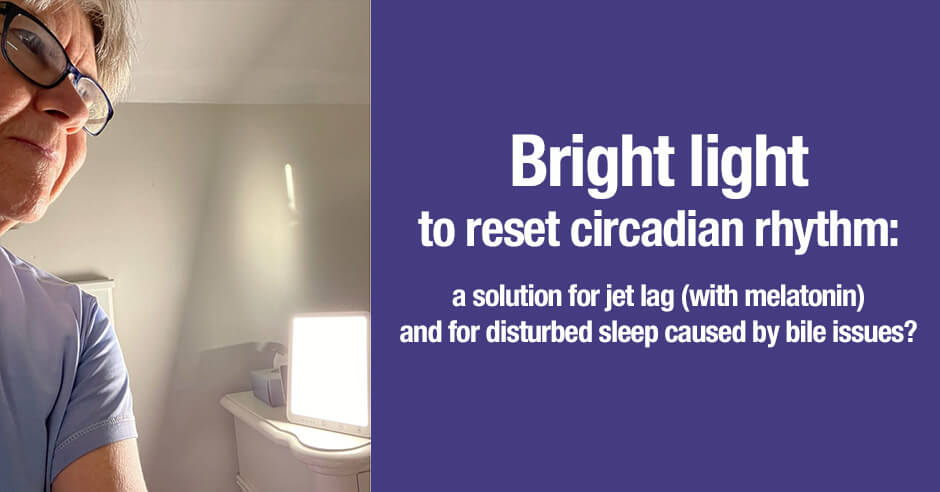
Bright light to reset circadian rhythm: a solution for jet lag (with melatonin) and for disturbed sleep caused by bile issues?

August 2, 2024 By Trudy Scott 28 Comments

bright light circadian rhythm

The symptoms of jet lag cause distress to an increasing number of travelers. Potentially they may impair sleep,mood and cognitive performance. Critically timed exposure to bright light and melatonin administration can help to reduce symptoms.

Bright light is one of the most powerful synchronizers of human rhythms and melatonin serves as a ‘‘dark pulse’’ helping to induce nighttime behaviors. Thus, enhancing day and night signals to the brain, appropriate to the environmental light/dark cycle of the new time zone, can serve to reestablish adaptive timing relationships between the body’s internal biological rhythms and the external environment, and thereby reduce the symptoms of jet lag.

The above is from a paper published in 2002, Jet Lag: Minimizing It’s Effects with Critically Timed Bright Light and Melatonin Administration.

I came across this research just before my recent trip to Boston. I always use high dose melatonin to help with jet lag but because it was a business trip and I needed to be in top form as soon as I arrived, I was intrigued about the addition of bright light. So I purchased a light-weight 10,000 lux bright light panel and took it with me.

I was actually looking for solutions for my issues with a strange sleep pattern i.e. in waking in the early hours and not being able to get back to sleep on days when I would go to bed much earlier than usual. That pilot study found that “a brief course of morning bright light treatment had positive effects on subjective sleep quality, daytime sleepiness, and sleep timing in patients with primary biliary cholangitis.” And it led me to the jet lag research which is typical when you’re digging through the research!

The benefits for both situations – jet lag and disturbed sleep/bile issues – reinforced my decision and I’m so glad I got one. I love it! My jet lag results were better with the bright light and melatonin combined (with some caveats I share below). And I continue to use my light panel daily which means much improved sleep on those nights when I have to get to bed earlier. I am a hot mess when I don’t get a good 9 hours sleep and it’s something I continually work on.

I share more on both studies below, details on what timing is best for the bright light when traveling and at home, melatonin dosing (from the study and what I do) and how I plan to adjust things for my next long flight.

More from the jet lag study on bright light timing and melatonin

The jet lag paper talks about light being “one of the most powerful synchronizers of human circadian rhythms:

  • Light in the morning advances circadian rhythms and
  • Light in the evening delays circadian rhythms.”

And so the author shares different and very “specific recommendations using bright light and melatonin for eastward and westward travel before and after departure”and depending on “time zone changes of up to 6, 7-9 and 10 or more hours.”

These involve using the bright light either morning or night and likewise with the melatonin.

Since I was traveling eastbound from Sydney to Boston (21+ hours depending on the route) I should have followed those specific instructions.

How I used the bright light panel and melatonin

Instead, I kept it simple and 3 days before my departure I started using the bright light for 30 minutes in the morning and took 2.5 mg melatonin (and my other usual sleep solutions – see below).

When I arrived in Boston I had an afternoon nap and took 10mg of melatonin that first night – the usual increase in melatonin I use when doing long trips. For the duration of my time in Boston (a week), I used the light panel each morning for 30 minutes and 10mg of melatonin each night. And I did not experience any jet lag, other than feeling a little tired for about an hour each afternoon. I was waking earlier than usual (4am then 4:30am then 5am and then 6am) but was getting 8-9 hours of solid sleep.

I stopped in Hawaii and spent a week with my sister on the way home. I did the same even though the paper had different directions for flying westbound on a 12 hour trip. I was really tired on arriving and crashed early and still woke earlier than usual but had no jet lag.

I continue to use the light panel for 30 minutes each morning and am using 10mg melatonin (I’ll drop it down to 2.5mg soon – wild dreams are my clue I’m getting too much). My sleep has been solid since returning (other than an issue with cellulose in a new product I tried). My bedtime is earlier and I had a little less energy in the afternoons for the first 2 weeks.

We were sprayed with insecticide on the plane on arrival in Australia so I suspect that may have been a factor. (I am trying to get something done about this – I can’t actually believe this happens!)

You may wonder why I shared this study and what I did instead. Quite honestly, I was in a mad rush before I left and didn’t have time to work out the different recommendations. And I figured if I found it overwhelming others may too so let’s keep it simple.

That said, I’m impressed by the level of detail in the recommendations and may try to implement some of this on a future trip where I have some leeway if it doesn’t work. If you’ve done it per the recommendations in the above study please do let us know.

Morning bright light for disturbed sleep in primary biliary cholangitis

As I mentioned above, I had also just read the pilot study, Morning Bright Light Treatment for Sleep-Wake Disturbances in Primary Biliary Cholangitis. “Primary biliary cholangitis is a rare, immune-mediated cholestatic liver disease, mostly affecting women” where there is cholestasis or a decrease in bile flow, pruritus (itchiness) and fatigue.  I don’t have this condition but do have bile issues and was experiencing a new sleep problem that my usual sleep protocol wasn’t helping.

I’ve always typically been a night owl, going to bed late and getting up late. However, I’m part of a new US-based Mastermind and with the time difference I have to get up at 5:30am two mornings a week for training sessions.  I would go to bed 9 hours earlier and without fail would wake at 1am or 2am and not be able to get back to sleep.

I figured it may be liver/bile related so when I found the above paper I was very excited to give morning bright light a try. And it’s been working!

The pilot study reports these results: “a brief course of morning bright light treatment had positive effects on subjective sleep quality, daytime sleepiness, and sleep timing in patients with PBC.” This matches what I am experiencing on those early training days.

If you’re curious, I write about my current bile issues here: Ox bile as a supplement: to help counter the effects of dietary oxalates very likely caused by bile issues and poor fat digestion. I’m not suggesting it’s anything like primary biliary cholangitis other than something seems to be going on with my liver and bile production or bile quality. I will add that ox bile supplementation has reduced my daytime fatigue dramatically.

Interestingly, in other research, it was suggested that “pruritus of cholestasis is responsive to bright light in some patients” i.e, the itchiness that is experienced with chronic liver disease/bile issues.

My light panel and other sleep solutions

As I shared above, I am a hot mess when I don’t get a good 9 hours of sleep and it’s something I continually work on.

I took this photo in Boston in my hotel room. You can see the light panel and the nutrients I use at night on a regular basis. There are also 3 essential oils I use on the blue cloth (lavender, rose geranium and clary sage) and mouth tape.  I always use an eye patch and only use earplugs when traveling.

sleep solutions

I recorded a video discussing each of the above and why I use it and will share this as a separate post if there is interest.

The only change for this trip was the full spectrum light panel.

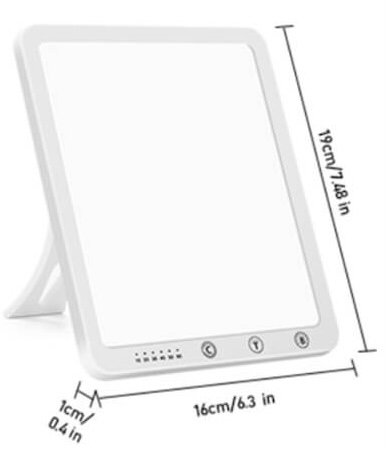
The full spectrum light panel I purchased and now recommend

full spectrum light panel

This is the exact one I purchased (my Amazon link and above image from Amazon). It has 5 brightness levels but I’m only using the brightest one. It has a timer – 10, 20, 30, 40, 50 and 60 minutes. To be safe I started with 10 minutes, then went to 20 minutes the next day and then 30 minutes and have continued with this time. It also has 3 colors but I’ve only used the white so far.

I packed it in my suitcase in the original box and although it was a little bulky, it worked well to prevent it getting damaged.

If you already have a 10,000 lux full spectrum light box or lamp, it will provide similar results and also mood benefits if you experience the winter blues (more about that here). However the light-weight bright light panel is ideal for traveling.

Update Dec 2025:

If the above full spectrum light panel is not available here are some other comparable panel options and some lamp options too:

  • Verilux Happy Light Luxe – a light panel (my Amazon link)
  • Verilux Happy Light Alba – another light panel (my Amazon link)
  • Happy Light Therapy Lamp – a standing map for your living room, bedroom or office (my Amazon link)
  • Light Therapy Lamp – a desk lamp (my Amazon link)

Additional resources when you are new to using amino acids as supplements

As you can see I continue to use GABA and tryptophan to keep me sleeping well and anxiety-free.

For clients who may be considering using either one of these amino acids, I use the symptoms questionnaire to figure out if low low serotonin or other neurotransmitter imbalances may be an issue.

If you suspect low levels of any of the neurotransmitters and do not yet have my book, The Antianxiety Food Solution – How the Foods You Eat Can Help You Calm Your Anxious Mind, Improve Your Mood, and End Cravings, I highly recommend getting it and reading it before jumping in and using amino acids on your own so you are knowledgeable. And be sure to share it with the practitioner/health team you or your loved one is working with.

There is an entire chapter on the amino acids and they are discussed throughout the book in the sections on gut health, gluten, blood sugar control (this is covered in an entire chapter too), sugar cravings, anxiety and mood issues.

The book doesn’t include product names (per the publisher’s request) so this blog, The Antianxiety Food Solution Amino Acid and Pyroluria Supplements, lists the amino acids that I use with my individual clients and those in my group programs.

If, after reading this blog and my book, you don’t feel comfortable figuring things out on your own (i.e. doing the symptoms questionnaire and respective amino acids trials), a good place to get help is the GABA QuickStart Program (if you have low GABA symptoms too). This is a paid online/virtual group program where you get my guidance and community support.

If you are a practitioner, join us in The Balancing Neurotransmitters: the Fundamentals program. This is also a paid online/virtual program with an opportunity to interact with me and other practitioners who are also using the amino acids.

Wrapping up and your feedback

I’d love to hear from you – does any of this resonate with you? If yes, has full spectrum light therapy helped with jet lag? What light box or light panel do you use? And do you also travel with one?

Do you also use melatonin for jet lag and how much helps you? And what else is part of your sleep solutions?

Has bright light therapy improved your sleep if you have liver/bile issues? Has it prevented middle of the night waking?

If you’re a practitioner have you seen this research and seen bright light therapy help with jet lag and/or sleep disruption caused by liver/bile issues?

Feel free to share and ask your questions below.
Filed Under: Gut health, Insomnia Tagged With: 000 lux, 10, bile liver, bright light, bright light panel, cholestasis, circadian rhythm, cognitive performance, daytime sleepiness, disturbed sleep, GABA, GABA Quickstart; Balancing Neurotransmitters: the Fundamentals program for practitioners, jet lag, melatonin, mood, primary biliary cholangitis, serotonin, sleep, sleep quality, sleep timing, tryptophan, waking early

I had chemotherapy and have not been able to get off sugar since. How long will it take 5-HTP or tryptophan to stop the cravings?

July 26, 2024 By Trudy Scott 4 Comments

aminos to stop sugar cravings

Lauren shared her struggle with sugar cravings that started after chemotherapy, asking her question on a recent tryptophan/DPA cravings blog post:

If I try the tryptophan or the 5-HTP and one or the other works, how long will I need to take them for the sugar cravings to stop?

Back in 2021 I had been off sugar for 2 years and it was easy to get off by slowing eliminating sugar. The last elimination was from my coffee and then it was easy to stay away from sugar.

I had chemotherapy for 6 months in 2022. I have not been able to get off sugar since then. After chemo ended, I had the cravings and don’t know how to end the cravings.

Any advice from you would be appreciated.

The good news is that if you have cravings that are caused by low serotonin and you find your ideal dose of tryptophan or 5-HTP, you will notice reduced sugar cravings immediately and they will be further reduced with consistent use, typically a few times a day.

The key is to figure out if your cravings are caused by low serotonin and then it’s a matter of doing a trial of either tryptophan or 5-HTP (if you get results and other low serotonin symptoms improve it’s a clue you’re on track). And then you need to figure out the ideal dose for your unique needs. I share more about all this below and additional information about other types of cravings caused by neurotransmitter imbalances (and the respective amino acids that help).

Since her cravings struggles started after chemotherapy I also discuss possible impacts on neurotransmitters and also candida (sugar cravings are very common with the candida). Read on for my response to the above question from Lauren.

Sugar cravings caused by low serotonin: tryptophan or 5-HTP may offer immediate results

As I mentioned above you will notice reduced sugar cravings immediately with either tryptophan or 5-HTP if your cravings are caused by low serotonin. A big clue with low serotonin-type sugar or carb cravings is that they are more intense in the late afternoon and evening.

A good place to start (as always) is with the symptoms questionnaire. If there are other low serotonin symptoms such as feeling more anxious, worried, fearful with a low mood and irritability etc, that further confirms it’s worth doing a trial.

Some folks do better with one than the other but I have clients start with tryptophan and then switch to 5-HTP if their results are not as expected. In both instances we open the capsule or use powders or a chewable to get instant feedback on the benefits. So in that first session Lauren should be able to say “wow my cravings have reduced from 10/10 to 5/10” within 5-10 minutes. She may also report she feels more optimistic and less worried.

It is possible that her cravings are not caused by low serotonin or that they are a combination of a number of factors.

Sugar cravings caused by other neurotransmitter imbalances, and other amino acids to the rescue

We also look at sugar cravings caused by low GABA (stress eating because of physical tension), low endorphins (comfort eating or emotional eating), low dopamine (eating for an energy boost or improved focus) and low blood sugar (eating due to crankiness and irritability).

Lauren would know if any of the above may be factors based on her scores on the symptoms questionnaire i.e. scores for cravings and other symptoms. This offers further clarification:

  1. If you eat sugar or carbs to feel happy (and especially from late afternoon into the evening) then your sugar cravings are likely due to low serotonin, and tryptophan (or 5-HTP) stops the cravings and boosts mood and reduces anxiety
  2. If you stress-eat your sugar cravings are likely due to low GABA, and GABA will stop the stress-eating and calm you down
  3. If you are a comfort-eater then it’s likely due to low endorphins and DPA will stop that feeling of “I deserve-it” kind of reward-eating or comfort-eating and also give you a hug-like mood boost
  4. If you eat sugar for an energy boost or to give your focus then it’s likely due to low catecholamines and tyrosine will stop those cravings and give you a mood and energy boost, and help with mental clarity
  5. If you have to eat sugar when you haven’t eaten in awhile it’s likely low blood sugar and glutamine on the tongue stops the sugar desire almost immediately and also helps with the low blood sugar symptoms of shakiness and irritability

As you can see there is an amino acid for each of these imbalances and it’s a matter of doing a similar trial for each one. With the correct dose, Lauren can expect quick results too, provided she finds the ideal dose for her needs.

This is the blog post Lauren posted her question on: Tryptophan and DPA (d-phenylalanine) for cravings and sleep issues (and a concern about 5-HTP and nightmares).

It’s one of many posts on the site about amino acids and sugar cravings so I encourage you to use the search feature of the blog.

Chemotherapy: impacts on serotonin and dopamine

Because chemotherapy has an impact on serotonin and dopamine, this may be where Lauren needs to start when considering which amino acids to trial. Here is some additional information on “chemobrain” or  chemotherapy-induced cognitive impairment:

… a medical complication of cancer treatment that is characterized by a general decline in cognition affecting visual and verbal memory, attention, complex problem solving skills, and motor function. It is estimated that one-third of patients who undergo chemotherapy treatment will experience cognitive impairment.

Alterations in the release and uptake of dopamine and serotonin, central nervous system neurotransmitters that play important roles in cognition, could potentially contribute to impaired intellectual performance in those impacted by chemobrain.

And this may offer an explanation as to why she hasn’t been able to quit sugar since chemotherapy.

Chemotherapy, candida albicans and sugar cravings

If none of the above approaches reduce her cravings or if they do help to some extent but are not quite enough, we have to keep looking for root causes.

A big clue is that Lauren had been able to quit sugar using willpower in the past but has struggled since chemotherapy. It’s important to consider the role this may be playing. In cancer patients who have gone through chemotherapy there is increased susceptibility to Candida albicans, “a fungal commensal and a major colonizer of the human skin, as well as of the gastrointestinal and genitourinary tracts.” This is reported to be caused primarily by “chemotherapy-induced depression of innate immune cells and weakened epithelial barriers, which are the body’s first-line defenses against fungal infections.”

Sugar cravings are very common with candida and in some cases can be so severe that no amino acids will work until the candida is addressed. Interestingly, in one candida study, short exposure to serotonin resulted in antifungal activity so it’s possible that tryptophan or 5-HTP helps.

I don’t have my candida symptoms questionnaire on the blog but you can find a mini version on page 93 of my book, The Antianxiety Food Solution and additional information and my dietary/nutrient protocol in chapter 5 of my book.

The full candida questionnaire can be found in William G. Crook’s excellent book, The Yeast Connection and Women’s Health (my Amazon link).

Additional resources when you are new to using amino acids as supplements

As always, I use the symptoms questionnaire to figure out if low low serotonin or other neurotransmitter imbalances may be an issue.

If you suspect low levels of any of the neurotransmitters and do not yet have my book, The Antianxiety Food Solution – How the Foods You Eat Can Help You Calm Your Anxious Mind, Improve Your Mood, and End Cravings, I highly recommend getting it and reading it before jumping in and using amino acids on your own so you are knowledgeable. And be sure to share it with the practitioner/health team you or your loved one is working with.

There is an entire chapter on the amino acids and they are discussed throughout the book in the sections on gut health, gluten, blood sugar control (this is covered in an entire chapter too), sugar cravings, anxiety and mood issues.

The book doesn’t include product names (per the publisher’s request) so this blog, The Antianxiety Food Solution Amino Acid and Pyroluria Supplements, lists the amino acids that I use with my individual clients and those in my group programs.

If, after reading this blog and my book, you don’t feel comfortable figuring things out on your own (i.e. doing the symptoms questionnaire and respective amino acids trials), a good place to get help is the GABA QuickStart Program (if you have low GABA symptoms too). This is a paid online/virtual group program where you get my guidance and community support.

If you are a practitioner, join us in The Balancing Neurotransmitters: the Fundamentals program. This is also a paid online/virtual program with an opportunity to interact with me and other practitioners who are also using the amino acids.

Wrapping up and your feedback

I appreciate Lauren for posting her question on the blog so I can share and we all can learn.

Now I’d love to hear from you – does any of this resonate with you? If yes, what approach helped reduce your sugar cravings after chemotherapy?

If you’re a practitioner have you seen these approaches work well with your clients/patients?

Feel free to share and ask your questions below.
Filed Under: 5-HTP, Cancer, Cravings, serotonin, Tryptophan Tagged With: 5-HTP, amino acids, candida, chemo, chemotherapy, comfort eating, cravings, dopamine, endorphins, GABA, GABA Quickstart; Balancing Neurotransmitters: the Fundamentals program for practitioners, neurotransmitters, serotonin, sleep, stress-eating, sublingually, sugar, sugar cravings, tryptophan

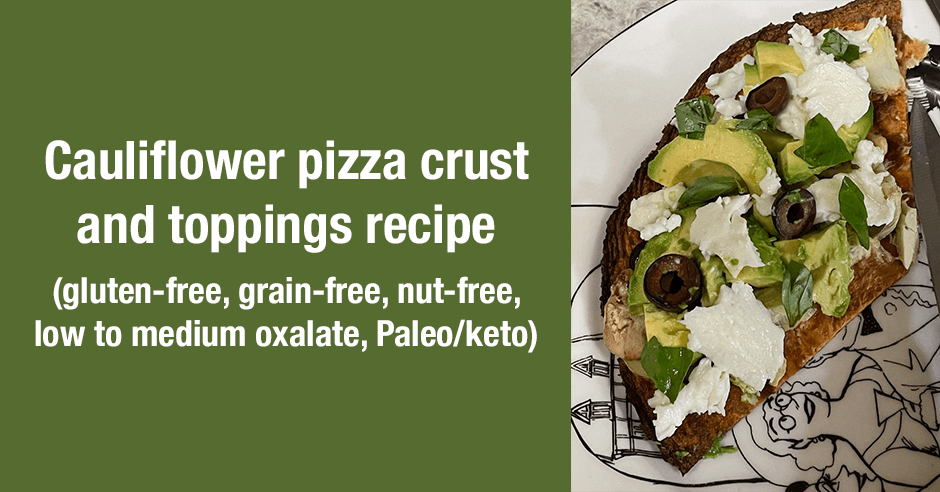
Cauliflower pizza crust and toppings recipe (gluten-free, grain-free, nut-free, low to medium oxalate, Paleo/keto)

July 19, 2024 By Trudy Scott Leave a Comment

cauliflower pizza

Today I’m sharing a really delicious cauliflower pizza crust recipe from Megan Gilmore of Detoxinista (the pizza crust recipe is unchanged and perfect just the way it is), my variations on toppings and some additional information on oxalates.

I do acknowledge, as far as pizza goes, my toppings are rather unconventional but I’ve never really been a big pizza lover (there, I said it!) But I do love cauliflower – it’s my favorite veggie – and I was excited when my sister told me about this recipe and then made it especially for me when I visited her and her family in Hawaii recently! Aren’t I spoiled?!

The fact that the cauliflower pizza crust is low oxalate makes a huge difference: the only ingredients are cauliflower, goats cheese and an egg. I’ve seen other cauliflower pizza crust recipes that include a nut flour such as almond flour. That would be a no-no for me and someone with dietary oxalate issues because almonds are high oxalate.

My topping included: a light smearing of tomato sauce, chunks of chicken (left-overs from the night before), a few halves of tinned artichoke and a few halved olives. I added all this to the prepared cauliflower pizza crust and heated it for 10 minutes.

Once it came out of the oven I loaded it up with freshly cut avocado, pieces of fresh basil and chunks of mozzarella cheese. I don’t like melted cheese and have a hard time digesting it so I prefer to add it afterwards. I think I’ll try feta cheese next time for a change.

I personally have dietary oxalate issues but right now I am doing well with a little tomato sauce, a few artichokes, a few olives and some fresh basil (as long as that is all I’m consuming that day in the way of medium oxalate foods). It’s best to figure out your own needs based on your oxalate issues and what you know you can tolerate.

Read on below for the link to the cauliflower pizza crust recipe and more about dietary oxalates.

The cauliflower pizza crust recipe from detoxinista

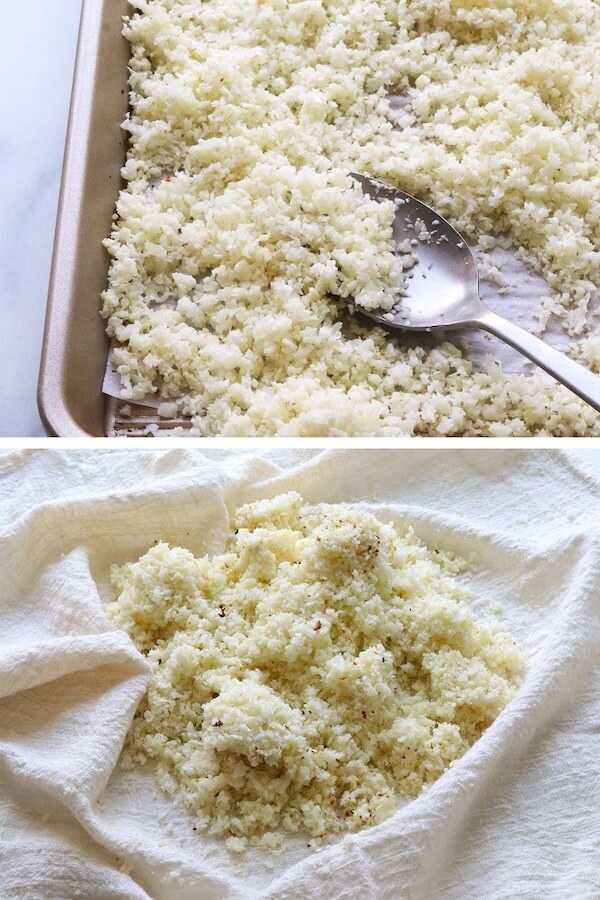
Here is the recipe for the perfect cauliflower pizza crust from Megan Gilmore. I have permission to only share the ingredients: cauliflower, egg, goats cheese, oregano, salt, and a pinch of black pepper, and photos from the site but you need to go to her site for the recipe instructions. It’s well worth it to see how it looks at the various stages. I’ve included a few of Megan’s images below.

I will add that my sister doesn’t have a food processor and just cooked the chopped cauliflower and then used a stick blender to get it looking like this.

cauliflower pizza
(Images used with permission from detoxinista)

(Images used with permission from detoxinista https://detoxinista.com/the-secret-to-perfect-cauliflower-pizza-crust/)

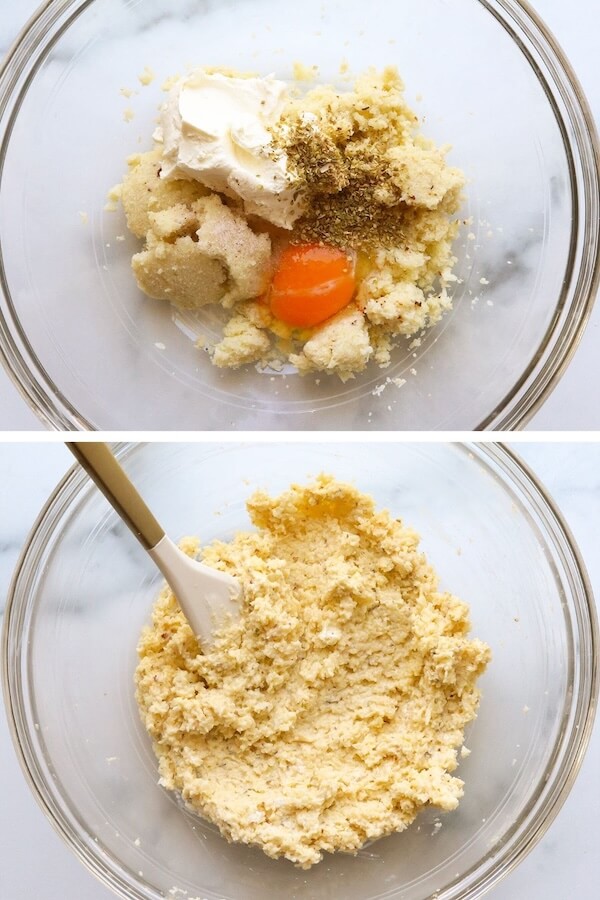
Once you add the egg and goat cheese it will have a texture and consistency like this. This is done after you have squeezed the liquid out of the cooked cauliflower – a crucial step for a firm and crunchy pizza crust.

cauliflower recipe
(Images used with permission from detoxinista)

Check out Megan’s site for other useful images, especially to see what the cooked crust looks like. One tip from my sister: once the crust is golden and crisp, flip it over and cook it another 10 minutes.

You’ll see there are also some variations with no goat cheese and no egg. If you try either of these please do share how they turned out.

Enjoying family, nature and a cauliflower crust pizza

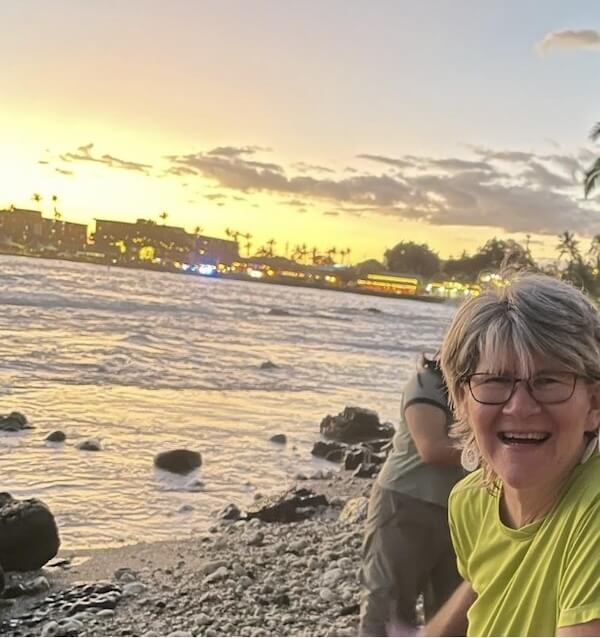
After a gorgeous evening with my sister and brother (they were camera-shy!) at Kona on the Big Island, we got back home and ate delicious pizza on this home-made cauliflower pizza crust!

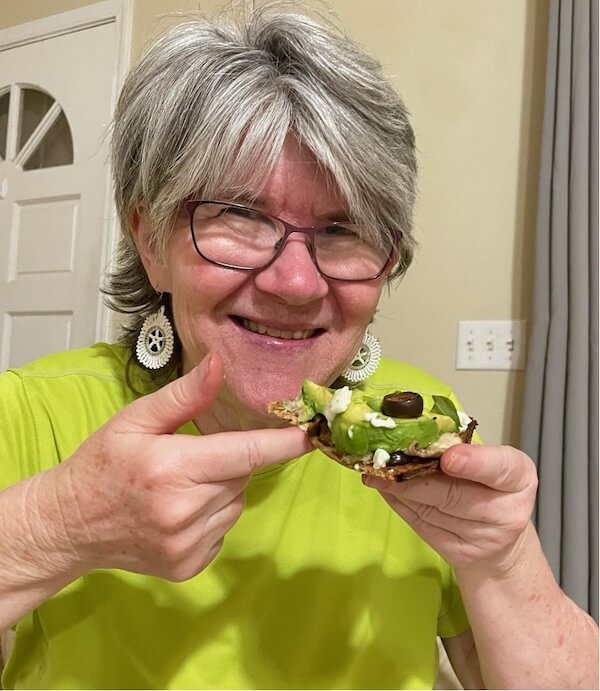
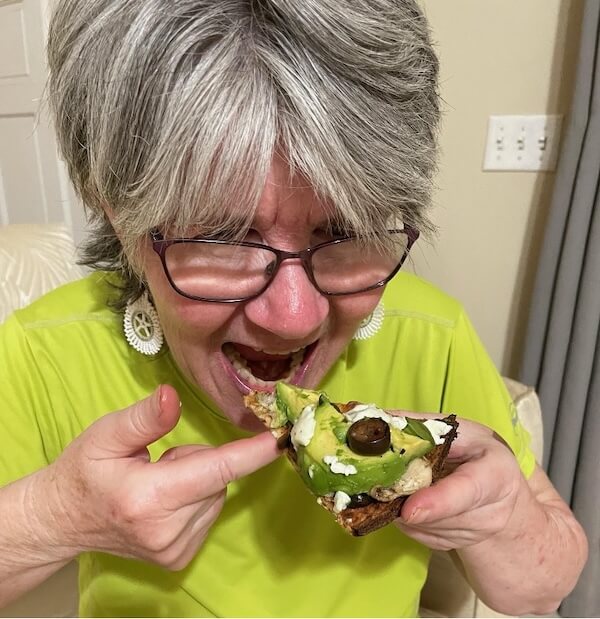
It was all prepared in advance – the crust and all the toppings – so we just put it all together based on our own likes and munched away. And boy did I rave about it – so much so that I said “hey take photos of me eating my pizza and I’ll share my my community”

cauliflower pizza

As you can see it’s a pretty firm crust and holds up well with all the toppings I added to mine. And yes my shirt matches the pizza topping – unintentional but still fun!

cauliflower pizza

It’s also really nice to eat something crunchy with a pizza-crust-like texture. If you’re gluten-free and grain-free I’m sure you can relate! And it tastes lovely.

Of course you can make it with conventional pizza toppings too. And I think you could use the pizza crust as crackers too. I plan to make a double batch and try this and freeze them.

Dietary oxalates and the problems they can cause

This blog post is a helpful one to start with if you’re new to dietary oxalates and the issues they can cause – Oxalate crystal disease, dietary oxalates and pain: the research & questions.

These are the common medium-oxalate and high-oxalate foods that many folks have problems with: nuts, nut-butters and nut-flour (especially baking with almond flour and something to watch when eating Paleo or GAPS), wheat, chocolate, kiwi fruit (very high – see the raphides image on the above blog), star fruit (also very high), beets, potatoes, sweet potatoes, legumes, raspberries, spinach and soy.

In the above blog post, I share an overview of oxalates, my pain issues with dietary oxalates (severe foot pain and eye pain), and deeper dive into the condition called oxalate crystal disease (with some of my insights and questions).

The big take-aways are that calcium oxalate crystals are sharp and can cause far reaching harm beyond pain – such as unresolved anxious feelings, thyroid issues, neurological symptoms, eye issues, hearing loss, bladder issues, headaches, fatigue, sleep issues, restless legs, autism symptoms and more. You can have issues with dietary oxalates and not have kidney disease/kidney stones, although there is very little research supporting the latter.

I’m finding dietary oxalate issues to be underappreciated especially in menopausal women when symptoms can show up and be more severe. And there is a strong connection with gallbladder issues and problems with fat digestion, which becomes more of an issue in perimenopause and beyond.

You can click on this link to read other blog posts on the topic of oxalates.

A resource if you are looking for a nutritional approach

If you are looking for a nutritional approach for your anxious feelings, mood issues, sleep problems and overall health issues, my book, The Antianxiety Food Solution – How the Foods You Eat Can Help You Calm Your Anxious Mind, Improve Your Mood, and End Cravings, is a great foundation. Be sure to share it with the practitioner/health team you or your loved one is working with.

If diet isn’t enough, there are entire chapters on the amino acids, gut health, blood sugar control and pyroluria. I don’t cover oxalates because I only became aware of them after my book was published (but I’ve published much on the blog since then – simply search this blog for other articles on the topic).

If, after reading this blog and my book, you don’t feel comfortable figuring things out on your own (i.e. doing the amino acids symptoms questionnaire and respective amino acids trials), a good place to get help is the GABA QuickStart Program (if you have low GABA symptoms too). This is a paid online/virtual group program where you get my guidance and community support.

If you are a practitioner, join us in The Balancing Neurotransmitters: the Fundamentals program. This is also a paid online/virtual program with an opportunity to interact with me and other practitioners who are also using the amino acids.

I’d love to hear if you try this recipe and enjoy it (and what modifications you made).

Do you like cauliflower and what is your favorite way to enjoy it?

Feel free to share and ask your questions below.

Filed Under: Oxalates, Recipes Tagged With: anxious, cauliflower, cauliflower pizza crust, dietary oxalate issues, egg, gluten-free, goats cheese, grain-free, Low oxalate, low to medium oxalate, Megan Gilmore, nut-free, pain, Paleo/keto, recipe, sharp crystals, sleep

  • « Go to Previous Page
  • Page 1
  • Page 2
  • Page 3
  • Page 4
  • Interim pages omitted …
  • Page 13
  • Go to Next Page »

Primary Sidebar

GABA QuickStart Homestudy

gaba quickstart homestudy

Free Report

9 Great Questions Women Ask about Food, Mood and their Health

You'll also receive a complimentary subscription to my ezine "Food, Mood and Gal Stuff"


Connect with me

Popular Posts

  • Amino Acids Mood Questionnaire from The Antianxiety Food Solution
  • The Antianxiety Food Solution Amino Acid and Pyroluria Supplements
  • Pyroluria Questionnaire from The Antianxiety Food Solution
  • Collagen and gelatin lower serotonin: does this increase your anxiety and depression?
  • Tryptophan for the worry-in-your-head and ruminating type of anxiety
  • GABA for the physical-tension and stiff-and-tense-muscles type of anxiety
  • The Antianxiety Food Solution by Trudy Scott
  • Seriphos Original Formula is back: the best product for anxiety and insomnia caused by high cortisol
  • Am I an anxious introvert because of low zinc and vitamin B6? My response to Huffington Post blog
  • Vagus nerve rehab with GABA, breathing, humming, gargling and key nutrients

Recent Posts

  • Her cravings for chips and peanut butter were triggered by stress: GABA ends cravings and reduces physical tension and fear of heights
  • It is truly miraculous to be able to move through life without crippling anxiety and panic
  • GABA and tryptophan combo provide immediate and noticeable relief for tremors and cervical dystonia in just 7 days
  • Red light therapy for back and neck pain, plantar fasciitis and low mood – a complement to the amino acids GABA, DPA and tryptophan
  • What do I use instead of Seriphos to help lower high cortisol that is affecting my sleep and making me anxious at night?

Categories

  • 5-HTP
  • AB575
  • Addiction
  • ADHD
  • Adrenals
  • Alcohol
  • Allergies
  • Alzheimer's disease
  • Amino Acids
  • Anger
  • Antianxiety
  • Antianxiety Food Solution
  • Antidepressants
  • Anxiety
  • Anxiety and panic
  • Autism
  • Autoimmunity
  • benzodiazapines
  • Bipolar disorder
  • Books
  • Caffeine
  • Cancer
  • Candida
  • Children/Teens
  • Collagen
  • Cooking equipment
  • Coronavirus/COVID-19
  • Cravings
  • Depression
  • Detoxification
  • Diabetes
  • Diet
  • DPA/DLPA
  • Drugs
  • EFT/Tapping
  • EMF
  • EMFs
  • Emotional Eating
  • Endorphins
  • Environment
  • Essential oils
  • Events
  • Exercise
  • Fear
  • Fear of public speaking
  • Fertility and Pregnancy
  • Fish
  • Food
  • Food and mood
  • Functional neurology
  • GABA
  • Gene polymorphisms
  • General Health
  • Giving
  • Giving back
  • Glutamine
  • Gluten
  • GMOs
  • Gratitude
  • Gut health
  • Heart health/hypertension
  • Histamine
  • Hormone
  • Hyperparathyroidism
  • Hypoglycemia
  • Immune system
  • Inflammation
  • Insomnia
  • Inspiration
  • Introversion
  • Joy and happiness
  • Ketogenic diet
  • Lithium orotate
  • Looking awesome
  • Lyme disease and co-infections
  • MCAS/histamine
  • Medication
  • Men's health
  • Mental health
  • Mercury
  • Migraine
  • Mold
  • Movie
  • MTHFR
  • Multiple sclerosis
  • Music
  • NANP
  • Nature
  • Nutritional Psychiatry
  • OCD
  • Osteoporosis
  • Oxalates
  • Oxytocin
  • Pain
  • Paleo
  • Parasites
  • Parkinson’s disease
  • PCOS
  • People
  • PMS
  • Postpartum
  • PTSD/Trauma
  • Pyroluria
  • Questionnaires
  • Real whole food
  • Recipes
  • Research
  • Schizophrenia
  • serotonin
  • SIBO
  • Sleep
  • Special diets
  • Sports nutrition
  • Stress
  • Sugar addiction
  • Sugar and mood
  • Supplements
  • Teens
  • Testimonials
  • Testing
  • The Anxiety Summit
  • The Anxiety Summit 2
  • The Anxiety Summit 3
  • The Anxiety Summit 4
  • The Anxiety Summit 5
  • The Anxiety Summit 6
  • Thyroid
  • Thyroid health
  • Toxins
  • Tryptophan
  • Tyrosine
  • Uncategorized
  • Vegan/vegetarian
  • Women's health
  • Yoga

Archives

  • May 2026
  • April 2026
  • October 2025
  • September 2025
  • August 2025
  • July 2025
  • June 2025
  • May 2025
  • April 2025
  • March 2025
  • February 2025
  • January 2025
  • November 2024
  • October 2024
  • September 2024
  • August 2024
  • July 2024
  • June 2024
  • May 2024
  • April 2024
  • March 2024
  • February 2024
  • January 2024
  • December 2023
  • November 2023
  • October 2023
  • September 2023
  • August 2023
  • July 2023
  • June 2023
  • May 2023
  • April 2023
  • March 2023
  • February 2023
  • January 2023
  • December 2022
  • November 2022
  • October 2022
  • September 2022
  • August 2022
  • July 2022
  • June 2022
  • May 2022
  • April 2022
  • March 2022
  • February 2022
  • January 2022
  • December 2021
  • November 2021
  • October 2021
  • September 2021
  • August 2021
  • July 2021
  • June 2021
  • May 2021
  • April 2021
  • March 2021
  • February 2021
  • January 2021
  • December 2020
  • November 2020
  • October 2020
  • September 2020
  • August 2020
  • July 2020
  • June 2020
  • May 2020
  • April 2020
  • March 2020
  • February 2020
  • January 2020
  • December 2019
  • November 2019
  • October 2019
  • September 2019
  • August 2019
  • July 2019
  • June 2019
  • May 2019
  • April 2019
  • March 2019
  • February 2019
  • January 2019
  • December 2018
  • November 2018
  • October 2018
  • September 2018
  • August 2018
  • July 2018
  • June 2018
  • May 2018
  • April 2018
  • March 2018
  • February 2018
  • January 2018
  • December 2017
  • November 2017
  • October 2017
  • September 2017
  • August 2017
  • July 2017
  • June 2017
  • May 2017
  • April 2017
  • March 2017
  • February 2017
  • January 2017
  • December 2016
  • November 2016
  • October 2016
  • September 2016
  • August 2016
  • July 2016
  • June 2016
  • May 2016
  • April 2016
  • March 2016
  • February 2016
  • January 2016
  • December 2015
  • November 2015
  • October 2015
  • September 2015
  • August 2015
  • July 2015
  • June 2015
  • May 2015
  • April 2015
  • March 2015
  • February 2015
  • January 2015
  • December 2014
  • November 2014
  • October 2014
  • September 2014
  • August 2014
  • July 2014
  • June 2014
  • May 2014
  • April 2014
  • March 2014
  • February 2014
  • January 2014
  • December 2013
  • November 2013
  • October 2013
  • September 2013
  • August 2013
  • July 2013
  • June 2013
  • May 2013
  • April 2013
  • March 2013
  • February 2013
  • January 2013
  • December 2012
  • November 2012
  • October 2012
  • August 2012
  • July 2012
  • June 2012
  • May 2012
  • April 2012
  • March 2012
  • February 2012
  • January 2012
  • December 2011
  • November 2011
  • October 2011
  • September 2011
  • August 2011
  • July 2011
  • June 2011
  • May 2011
  • April 2011
  • March 2011
  • February 2011
  • January 2011
  • December 2010
  • October 2010
  • September 2010
  • July 2010
  • May 2010
  • April 2010
  • March 2010
  • February 2010
  • January 2010
  • November 2009

Share the knowledge!

The above statements have not been evaluated by the Food and Drug Administration. Products listed in this website are not intended to diagnose, treat, cure or prevent any disease.

The information provided on this site is for informational and educational purposes only and is not intended as a substitute for advice from your physician or other health care professional. You should consult with a healthcare professional before starting or modifying any diet, exercise, or supplementation program, before taking or stopping any medication, or if you have or suspect you may have a health problem.


Copyright © 2026 Trudy Scott. All Rights Reserved. | Privacy | Terms and Conditions | Refund Policy | Medical Disclaimer

Free Report

9 Great Questions Women Ask about Food, Mood and their Health

You’ll also receive a complimentary subscription to my ezine “Food, Mood and Gal Stuff”