• Skip to primary navigation
  • Skip to main content
  • Skip to primary sidebar

everywomanover29 blog

Food, Mood and Women's Health – Be your healthiest, look and feel great!

  • Blog
  • About
  • Services
  • Store
  • Resources
  • Testimonials
  • The Book
  • Newsletter
  • Contact
  • Search this site

sleep

Tryptophan and DPA (d-phenylalanine) for cravings and sleep issues (and a concern about 5-HTP and nightmares)

June 21, 2024 By Trudy Scott 19 Comments

tryptophan dpa craving sleep issues

Thank you for all your work! I saw your talk in the Super Trauma conference and immediately went and read your book. I suspect I am low in all 3 neurotransmitters, and have noticed the biggest difference in supplementing with DPA (d-phenylalanine). I started taking all 3 supplements by swallowing and switched to taking them sublingually after I got used to the idea.

My question is about tryptophan in particular. I struggle with nightmares already so I am a bit wary of trying 5-HTP. I tried taking mid afternoon and before bed but it made me way too tired in the afternoon. Is it okay to just double the dose right before bed? How safe are these amino acids in higher doses? I was also wanting to add an evening dose of DPA to help with cravings. Thanks again!

I get many questions like this on the blog about using either 5-HTP with DPA or tryptophan with DPA together, for helping to improve sleep and ease sugar cravings. So today I’m sharing one of these questions and my insights in case you have a similar question. This will also give you the opportunity to ask questions you may have related to using these amino acids together and gain an understanding on how to tweak the amino acids for optimal results.

Read on for my response to the above question from Amanda. I also share more about 5-HTP and nightmares (and why she may also decide to use this amino acid too), vitamin B6 and nightmares, pyroluria, and how to figure out if your cravings are due to low endorphins or low serotonin (or a combination).

Should she add an evening dose of DPA?

It’s wonderful to hear that DPA is helping with Amanda’s comfort cravings/emotional eating and other low endorphin symptoms. As a reminder these include:

  • Heightened sensitivity to emotional pain
  • Heightened sensitivity to physical pain
  • Crying or tearing up easily
  • Eating to soothe your mood, or comfort eating
  • Really, really loving certain foods, behaviors, drugs, or alcohol
  • Craving a reward or numbing treat
  • PMS (premenstrual syndrome) or PMDD (premenstrual dysphoric disorder) *

(bookmark this symptoms questionnaire because it’s updated as new research is published and has more symptoms listed that what is included in my book)

And in case you’re new to DPA (d-phenylalanine), it is an amino acid that prevents the breakdowns of endorphins so we have more of these feel-good neurotransmitters.

I’m really glad she figured out it’s more effective when opened and used on the tongue rather than swallowing it. I share more about this here – How best to use the amino acid DPA for easing heart-ache, weepiness, comfort eating and a compulsive desire for food. It really can mean the difference between no results and great results.

Amanda asks about adding an evening dose of DPA to help with endorphin-related cravings too and also using tryptophan only at night. Keep in mind that afternoon and evening cravings are typically related to low serotonin and it’s best to trial one amino acid at a time so you know which is working for which symptom. If we were working together, I’d recommend figuring out her serotonin support first and then layering in an extra DPA (or possibly two) at night if it’s still needed.

In case you’re curious, I discussed low serotonin, low endorphins and low GABA in my interview at the Trauma Super Conference so she is also using GABA. Using this one sublingually is key and it helps with easing physical tension and stress eating.

What could her serotonin support look like?

Since tryptophan used mid afternoon and before bed made her way too tired in the afternoon she could consider a lower dose of tryptophan (midafternoon and evening) or could just trial one tryptophan after dinner to help with sleep and reduce after dinner cravings.

For some folks this is enough. If not, after a few days of tracking symptoms, she could increase to one tryptophan after dinner and another at bedtime or two tryptophan at bedtime if her symptoms are not down 2/10 or 3/10.

Her concern about 5-HTP and nightmares

Some folks do better on 5-HTP and some on tryptophan and she is getting results with tryptophan so doesn’t really have to worry about 5-HTP at this stage. However, I do want to address Amanda’s concern about 5-HTP and nightmares, because in the future she may want to consider 5-HTP.

She may find she does in fact need some serotonin support earlier in the day and 5-HTP in the afternoon may be the answer for her i.e. 5-HTP midafternoon and tryptophan in the early evening and/or at bedtime.  It’s not unusual that we mix and match these two amino acids.

I’ve not had any clients report nightmares with 5-HTP, so I was surprised to hear this feedback on a Facebook thread, where a number of folks stopped using it for this reason. However, most folks on the same Facebook thread shared that 5-HTP works very well for them and does not cause nightmares. There is also research that supports the use of 5-HTP for night terrors. I suspect it may have to do with low vitamin B6 which we know contributes to poor dream recall and/or nightmares.

I share more about 5-HTP and nightmares here. And vitamin B6 and dream recall here.

I posed this question in the 5-HTP/nightmares blog: “Could it be that folks who get nightmares with 5-HTP, happen to also have pyroluria? Or perhaps they simply have low vitamin B6?” I have all my anxious clients supplement with vitamin B6 and/or P5P and this may be why nightmares with 5-HTP was news to me.

Vitamin B6 for neurotransmitter production and pyroluria

Since she does already struggle with nightmares, I’m not surprised she is concerned. However nightmares are a clue that someone may have low vitamin B6. This is typically picked up when I have clients do the pyroluria questionnaire on the intake form. Addressing low vitamin B6 is also important because it’s a cofactor for making the neurotransmitters and helps with hormone balancing.

I reminded her to read the pyroluria chapter in my book too. It includes the above questionnaire and detailed information on vitamin B6, zinc and evening primrose oil (all needed to address this condition that leads to feelings of being socially anxious).

How safe are these amino acids in higher amounts?

I share the top of the range for dosing all the amino acids in my book. This is typically 1500 mg tryptophan twice a day, 150 mg 5-HTP twice a day and 1500 mg DPA three times a day. Occasionally I have had clients need higher doses. The clue is symptom relief. We start low, monitor symptoms and adjust up as needed, and then down if no additional benefits are observed.

Using extra DPA at night for cravings?

As I mentioned above, I’d recommend figuring out serotonin support first (tryptophan only or a combination of 5-HTP and tryptophan) and then layering in an extra DPA (or possibly two) in the evening if it’s still needed for comfort cravings.

For some folks it’s very easy to identify comfort cravings (low endorphins) from worry/low mood cravings (low serotonin):

  • If you eat sugar or carbs to feel happy (and especially from late afternoon into the evening) then your sugar cravings are likely due to low serotonin, and tryptophan (or 5-HTP) stops the cravings and boosts mood and reduces anxious feelings
  • If you are a comfort-eater then it’s likely due to low endorphins and DPA will stop that feeling of “I deserve-it” kind of reward-eating or comfort-eating and also give you a hug-like mood boost

If it’s not easy to figure out the only way to know for sure is to do a trial of tryptophan and then do a trial of DPA and observe before and after feelings and the need to self-medicate with whatever the sugary treat is. Amanda may need one or the other at various times and she may even need both at certain times.

DPA and tryptophan product options
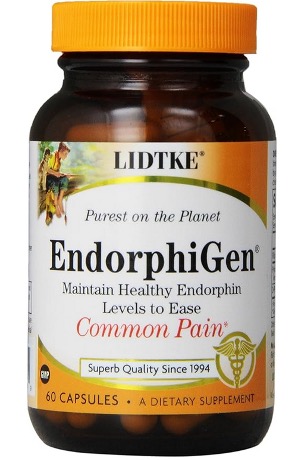
lidke endorphigen
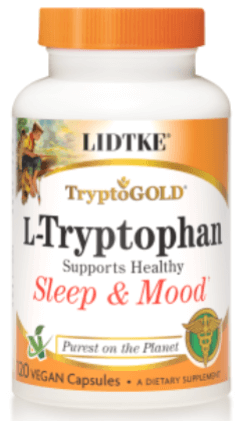
lidtke l-tryptophan

I recommend Lidtke EndorphiGen (which is DPA) and Lidtke Tryptophan 500mg. You can purchase these from my online store (Fullscript – only available to US customers – use this link to set up an account).
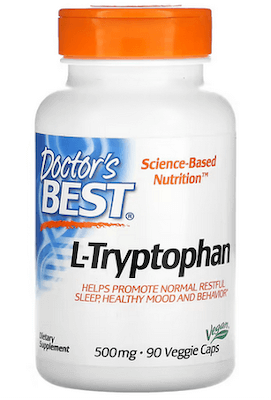
nature's best l-tryptophan
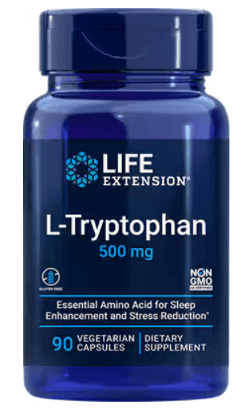
life extension l-tryptophan

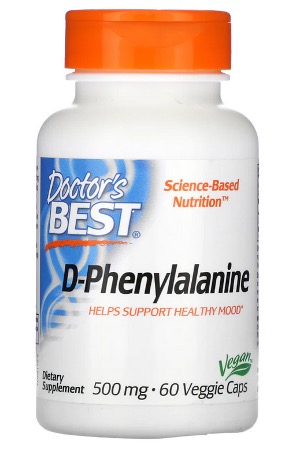
If you’re not in the US, these products are available via iherb: Doctor’s Best D-Phenylalanine (or DPA) and Life Extension Tryptophan 500mg (use this link to save 5%).

Additional resources when you are new to using amino acids as supplements

As always, I use the symptoms questionnaire to figure out if low endorphins or low serotonin or other neurotransmitter imbalances may be an issue.

If you suspect low levels of any of the neurotransmitters and do not yet have my book, The Antianxiety Food Solution – How the Foods You Eat Can Help You Calm Your Anxious Mind, Improve Your Mood, and End Cravings, I highly recommend getting it and reading it before jumping in and using amino acids on your own so you are knowledgeable. And be sure to share it with the practitioner/health team you or your loved one is working with.

There is an entire chapter on the amino acids and they are discussed throughout the book in the sections on gut health, gluten, blood sugar control (this is covered in an entire chapter too), sugar cravings, anxiety and mood issues.

The book doesn’t include product names (per the publisher’s request) so this blog, The Antianxiety Food Solution Amino Acid and Pyroluria Supplements, lists the amino acids that I use with my individual clients and those in my group programs.

If, after reading this blog and my book, you don’t feel comfortable figuring things out on your own (i.e. doing the symptoms questionnaire and respective amino acids trials), if you need serotonin support, the Serotonin QuickStart Program is a good place to start. This is a paid online/virtual group program where you get my guidance on using tryptophan and 5-HTP safely, and community support during 5 LIVE Q&A calls. You can sign up to be notified when the next live launch of this program is happening. We take a deep dive into product options including Lidtke products and others if you’re not able to access Lidtke.

Low GABA can also affect sleep and cause stress eating. If you also have low GABA symptoms, the next step to get help is the GABA QuickStart Program. This is also a paid online/virtual group program where you get my guidance and community support. Another option is the budget-friendly GABA QuickStart Homestudy program.

If you are a practitioner, join us in The Balancing Neurotransmitters: the Fundamentals program. This is also a paid online/virtual program with an opportunity to interact with me and other practitioners who are also using the amino acids.

Wrapping up and your feedback

I’m thrilled Amanda is seeing these benefits with DPA, tryptophan and GABA and is fine-tuning her results even further. I appreciate her asking her questions on the blog so I can share and we all can learn.

Now I’d love to hear from you – does any of this resonate with you? If yes, which combination has worked best for you for emotional eating and sleep issues?

Is 5-HTP or tryptophan better for you and is vitamin B6 part of your supplement list.

If you’re a practitioner have you seen this combination work well with clients/patients?

Feel free to share and ask your questions below.
Filed Under: 5-HTP, Cravings, DPA/DLPA, serotonin, Sleep Tagged With: 5-HTP, amino acids, comfort eating, cravings, d-phenylalanine, DPA, endorphins, GABA, GABA Quickstart; Balancing Neurotransmitters: the Fundamentals program for practitioners, neurotransmitters, Nightmares, pyroluria, serotonin, sleep, stress-eating, sublingually, sugar cravings, tryptophan, vitamin B6

How to accurately measure a small amount of powdered GABA and other GABA options when GABA Calm is not tolerated

April 26, 2024 By Trudy Scott 18 Comments

measuring gaba powder

Brenda finds one GABA Calm helps her sleep but more than one affects her sleep and she suspects the sugar alcohols in the product. She’d like advice on using an alternative and how to accurately measure a small amount of powdered GABA. Here is her question in her own words:    

I have been on the FODMAP diet for a while and it is helping but I just realized that when I take GABA Calm I am ingesting sorbitol and mannitol. I take a bit more than one of those tablets each night to help me sleep and am very aware that if I take too much it can keep me awake.

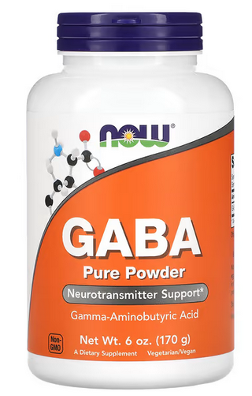
Now that I have realized about the sorbitol and mannitol, I am looking for an alternative source of GABA. I see that you are now recommending the Now GABA Pure Powder product. I was about to purchase this to avoid the sorbitol and mannitol but then realized that I would have to take 1/16th teaspoon of the powder to equate to 150mg. I can’t see me ever getting that measurement correct.

So my question is, can you recommend another source of GABA that would enable me to take 150mg plus a little bit with a fair degree of accuracy and without those added FODMAPs? Thank you very much. I am very grateful for your work.

Brenda has likely been diagnosed with SIBO (small intestinal bacterial overgrowth) or IBS (irritable bowel syndrome) even though she doesn’t mention it. In some folks with SIBO or IBS, sugar alcohols such as xylitol, sorbitol and mannitol can cause digestive upset. Not everyone with SIBO or IBS has issues with GABA Calm. In fact, it’s typically very well tolerated and GABA Calm is a product I have been recommending for many years. However, some folks do have issues and it’s wise to look for an alternative and not push through.

In this blog I share more about sugar alcohols, how to accurately measure out 1/16 teaspoon of the GABA powder to equate to close to 150 mg, how I use my mini measuring spoon, a GABA/theanine product that is low dose and can be opened, and another option she could consider.

Sugar alcohols in GABA Calm and other GABA chewable products

Many of the chewable or sublingual forms of GABA, including GABA Calm contain sugar alcohols which can be problematic and cause digestive upset and often explosive diarrhea. The digestive upset alone could impact sleep.

Sugar alcohols include xylitol, sorbitol, mannitol and erythritol. Your reaction will depend on the amount of sugar alcohols used, how many chewable/sublingual tablets you use and how accustomed you are to sugar alcohols. You may get used to them and eventually be fine with consuming small amounts and yet for others the tiniest amount is an issue.

I share more about sugar alcohols on this blog: Why does chewable GABA make me run to the bathroom and what GABA do I use instead?

Using a mini measuring spoon set and GABA powder

It’s wonderful that GABA Calm is helping Brenda with her sleep issues and when we start to get benefits we do want to increase the amount to see if we can get further benefits.

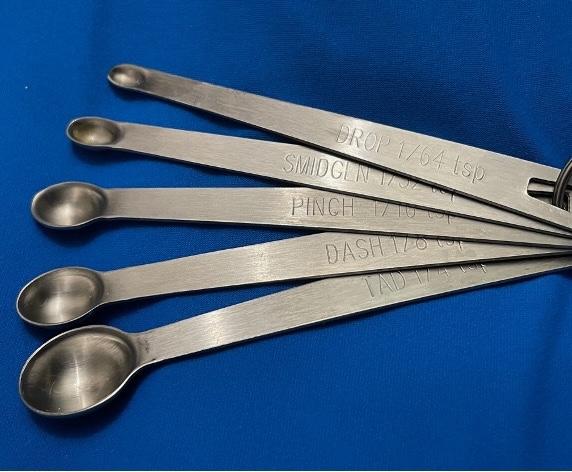
She has a few options and one is to use the NOW GABA powder (or another GABA powder) with a mini measuring spoon set like this one (my Amazon link). This is mine and it is very easy to use, convenient and accurate.

measuring spoons

As you can see it comes in various sizes: 1/4 teaspoon, 1/8 teaspoon, 1/16 teaspoon, 1/32 teaspoon and 1/64 teaspoon.

It is important to look at the product and work out how much you need to measure out. For example, the NOW GABA powder states 1/4 teaspoon is equivalent to 500 mg GABA. This means 1/16 is equivalent to 125 mg GABA. So if Barbara wants to take 150 mg she would use a little more than what would be in the 1/16 spoon (maths is coming in handy after all!)

Keep in mind that product equivalents do differ. For example tryptophan is typically lighter and fluffier than GABA. My tryptophan states 1 teaspoon is 1000 mg tryptophan so a typical starting dose of 500 mg tryptophan would be 2 x 1/4 teaspoon since each 1/4 is 250mg.

I love my mini measuring spoon and use mine on a daily basis for theanine in the day, calcium citrate after dinner (for my oxalate issues), and for GABA and tryptophan at bed time.

Combined GABA and theanine: GABA-T SAP as one option

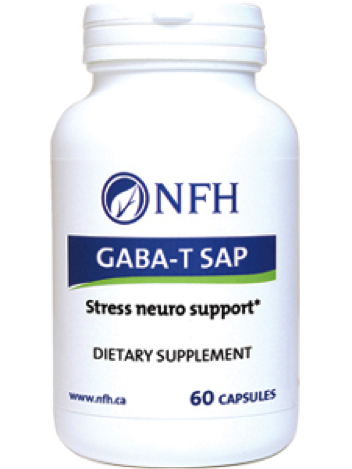
Another option is using a lower mg GABA/theanine product and opening it. Nutritional Fundamentals for Health GABA-T SAP is another favorite of mine. This product is pleasant-tasting when opened on to the tongue and works very well when GABA Calm can’t be used. It contains 300 mg GABA and 150 mg theanine, so can easily be halved to provide the 150 mg GABA she is looking for.

Research shows that the combination of GABA and theanine may improve sleep: GABA and l-theanine mixture decreases sleep latency and improves NREM sleep. The authors share the sleep and anxiety benefits of both GABA and theanine:

γ-Aminobutyric acid (GABA) is the main inhibitory neurotransmitter and it is well established that activation of GABAA receptors favours sleep.

l-Theanine, a naturally occurring amino acid first discovered in green tea, is a well-known anti-anxiety supplement with proven relaxation benefits.

But Barabra is going to have to do a trial to see if this combination works for her.

Mixing and matching as an other option

And finally, if she was also taking GABA Calm in the day for stress and overwhelm, she could  do a trial of using this during the day (for the convenience factor) and then at night use the GABA powder or opened GABA/theanine capsule (because it’s a bit more finicky). This way she’s consuming less sugar alcohols overall.

Both GABA products, the mini measuring spoon set and where to find them

gaba pure poder

Today I mentioned the Now GABA Powder and NFH GABA-T SAP.  You can purchase these from my online store (Fullscript – only available to US customers – use this link to set up an account).

gaba pure poder
zenmind

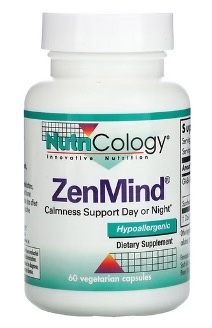
If you’re not in the US, the Now GABA Powder and Nutricology ZenMind (a GABA/theanine combination comparable to GABA-T SAP) is available via iherb (use this link to save 5%).

And the mini measuring spoon set can be found here (my Amazon link)

Additional resources when you are new to using GABA and other amino acids as supplements

As a reminder, low GABA can cause physical tension, anxious feelings, feelings of panic and problems sleeping, as well as self–medicating with alcohol or carbs to relax or fit in. As always, I use the symptoms questionnaire to figure out if low GABA or other neurotransmitter imbalances may be an issue.

If you suspect low levels of any of the neurotransmitters and do not yet have my book, The Antianxiety Food Solution – How the Foods You Eat Can Help You Calm Your Anxious Mind, Improve Your Mood, and End Cravings, I highly recommend getting it and reading it before jumping in and using amino acids on your own so you are knowledgeable. And be sure to share it with the practitioner/health team you or your loved one is working with.

There is an entire chapter on the amino acids and they are discussed throughout the book in the sections on gut health, gluten, blood sugar control (this is covered in an entire chapter too), sugar cravings, anxiety and mood issues.

The book doesn’t include product names (per the publisher’s request) so this blog, The Antianxiety Food Solution Amino Acid and Pyroluria Supplements, lists the amino acids that I use with my individual clients and those in my group programs (over and above the GABA products I mentioned above).

If, after reading this blog and my book, you don’t feel comfortable figuring things out on your own (i.e. doing the symptoms questionnaire and respective amino acids trials), a good place to get help is the GABA QuickStart Program (if you have low GABA symptoms too). This is a paid online/virtual group program where you get my guidance and community support.

If you are a practitioner, join us in The Balancing Neurotransmitters: the Fundamentals program. This is also a paid online/virtual program with an opportunity to interact with me and other practitioners who are also using the amino acids.

Wrapping up and your feedback

I do always appreciate questions like this so keep them coming so I can share and educate further.

Now I’d love to hear from you – do you have issues with the sugar alcohols in GABA Calm or another chewable GABA product? (if yes which one?)

Did you move to a GABA powder and do you use a min spoon set? Or does another GABA product work for you?

Please share how GABA helps and how much helps you?

If you’re a practitioner do you use GABA powder and mini spoons with your clients/patients?

And please let me know if it’s helpful that I’m now including product recommendations and where to get them.

Feel free to share and ask your questions below.
Filed Under: Anxiety, GABA, Insomnia Tagged With: amino acid, cravings, GABA, GABA Calm, GABA powder, GABA Quickstart; Balancing Neurotransmitters: the Fundamentals program for practitioners, GABA-T SAP, IBS, insomnia, measure, mini measuring spoon set, physical-tension, SIBO, sleep, sugar alcohols, theanine

DLPA vs DPA for pain, food cravings, depression, grief, lack of joy; and impacts of DLPA on sleep, and feeling more stressed/anxious

April 5, 2024 By Trudy Scott Leave a Comment

dlpa vs dpa

A very common question I get is from folks asking about the difference between the amino acids DPA (d-phenylalanine) and DLPA (dl-phenylalanine) for endorphin support and endorphin/dopamine support. I dedicate an entire blog to this question explaining the differences and which one I use for weepiness, heart-ache, pain and energy. I also discuss where tyrosine (for dopamine support) fits in. If you missed that or need a recap you can read about this on the blog.

The blog post generated some great questions that I’m sharing today, with my feedback, in case you have similar questions. I discuss a question about DLPA vs DPA for pain and impacts on sleep; a question about DLPA (used by mistake) raising already high dopamine levels and why DPA isn’t working any more for food cravings; a question about using DPA with GABA; and a question about DPA for depression and lack of joy caused by grief.

Here is the question from Gloria who shared this feedback about her use of DLPA (as part of a pain relief product) but says she can’t use it past noon. She also wants to know more about DPA for pain relief:

My experience with DLPA is as part of a supplement called Curamin for pain relief from arthritis that also has curcumin and boswellia. It works quite well in the AM but I can’t tolerate it past noon or it negatively affects my sleep.

Interesting to learn it is similar to tyrosine which I have had sleep problems with in the past.

Does DPA work as well for pain? Is it best to take amino acids on an empty stomach for best absorption? Does that mean an hour before a meal or two hours after? Thank you for your blogs and book!

It’s great that this combination product offers pain relief and it’s good that she has made the connection to poor sleep when it’s used after noon. This is a popular product that I would like to see include the possible impacts on sleep and the other precautions for DLPA . It is a proprietary formulation so you don’t actually know how much DLPA you’re getting. I really don’t like not knowing.

One other concern is that curcumin is high-oxalate and for some this can make pain worse. Otherwise, curcumin and boswellia are excellent for pain relief and reducing inflammation.

DPA is more effective for pain than DLPA because it offers a bigger endorphin boost. If oxalates are not an issue, one option could be to continue with the Curamin before noon and if needed, add standalone DPA in the afternoon and evening, for added pain relief.

Amino acids are more effective on an empty stomach and even more effective when opened on to the tongue. I share more about opening DPA onto the tongue in this blog.

DLPA (used by mistake) raised already high dopamine levels and why isn’t DPA working any more for food cravings?

Rhonda shared how she found out the difference between DPA and DLPA the hard way and wants to go back to DPA:

I certainly found out the difference the hard way. I had used Lidtke Endorphigen for a few years and I think it helped a bit with food cravings. As I am in Australia, I depend on my sister’s visits from US for my supply. When I ran out last year, I bought DLPA by mistake.

After 1 week I was unable to cope with life, totally stressed out about everything, wanting to cry or scream or run away. Zero tolerance towards anyone. After 10 days I realized my mistake and I went back to normal in 24 hrs.

I believe DLPA resulted in very high dopamine as I already have a very slow COMT gene activity for breaking down dopamine.

I now take Endorphigen again but not seeing much effect on sugar cravings this time.

That is quite the reaction she experienced but I’m glad she figured it out so quickly. It’s not uncommon for some folks to react to DLPA like this, feeling more stressed and even anxious. High dopamine, and norepinephrine and epinephrine (so a huge adrenalin rush), related to slow COMT activity could well be the cause.

When Endorphigen (or any of the amino acids) work well initially we continue with trials of higher doses to find the ideal dose. It may also be that a reset is needed after the shift in dopamine.

Rhonda did say she thinks Endorphigen “helped a bit with food cravings.” When it only helps a bit it may be that the dose isn’t high enough or we may need to consider other neurotransmitter imbalances. They can all cause cravings for slightly different reasons: GABA/stress, serotonin/worry or low mood, glutamine/low blood sugar. More on that and the respective amino acids here.

Can GABA be used with DPA?

Ray asks: “Can I use GABA 25mg and also take DPA? Would either/or offset the other?”

My feedback: If someone has low GABA symptoms and GABA helps and they also have low endorphin symptoms and DPA helps then they are absolutely fine to use together and even at the same time. However, I have my clients trial one at a time in order to find the ideal dose and so you know how each one is working

What can I use for my depression and lack of joy, caused by grief?

Vee says she needs something “to get through my grief depression”:

Completely flat, no joy. I always had a calm flat disposition, but now it’s a complete zero. I need my brain to produce some oxytocin so I can like myself, my family and remember all I should be grateful for. I sleep good. I don’t take any meds, and I don’t abuse alcohol. Does tyrosine affect the brain in the way of producing oxytocin?

My feedback: I use DPA/Lidtke Endorphigen for this very purpose. It’s wonderful for grief, depression, lack of joy and the weepiness we see with low endorphins. It also helps with emotional eating that can show up as we try to self-medicate with treats in order to try and feel better.

When the depression also includes being flat, blah and curl-up in bed we use DLPA instead of DPA, or a combination of DPLA/DPA or tyrosine/DPA. Trials of each, one by one, helps you figure out what works best for your unique needs.

And for some folks GABA is helpful as shared by this woman who found GABA allowed her to sit with a feeling of peace and calm most of the time after her mum passed away.

Research does shows a link between dopamine and oxytocin, with oxytocin “emerging as one particular neural substrate that may be influenced by the altered dopamine levels.” Also, for oxytocin support I’d focus on hugs, massage, touch, laughter, making love, yoga, and petting a dog or cat.

DPA and DLPA product options

lidke endorphigen
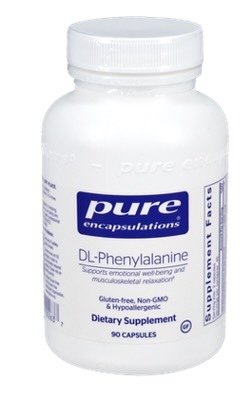
pure dlp

Products I recommend include Lidtke EndorphiGen (which is DPA) and Pure Encapsulations DL-Phenylalanine (DLPA).  You can purchase these from my online store (Fullscript – only available to US customers – use this link to set up an account).

dr's best dpa
life dlp

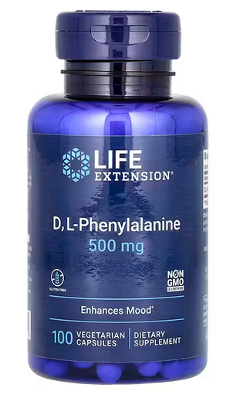
If you’re not in the US, these products are available via iherb: Doctor’s Best D-Phenylalanine (or DPA) and Life Extension D, L-Phenylalanine (or DLPA) (use this link to save 5%).

Additional resources when you are new to using DPA and DLPA, and other amino acids as supplements

As always, I use the symptoms questionnaire to figure out if low endorphins or low dopamine or other neurotransmitter imbalances may be an issue for you.

If you suspect low levels of any of the neurotransmitters and do not yet have my book, The Antianxiety Food Solution – How the Foods You Eat Can Help You Calm Your Anxious Mind, Improve Your Mood, and End Cravings, I highly recommend getting it and reading it before jumping in and using amino acids on your own so you are knowledgeable. And be sure to share it with the practitioner/health team you or your loved one is working with.

There is an entire chapter on the amino acids and they are discussed throughout the book in the sections on gut health, gluten, blood sugar control (this is covered in an entire chapter too), sugar cravings, anxiety and mood issues.

The book doesn’t include product names (per the publisher’s request) so this blog, The Antianxiety Food Solution Amino Acid and Pyroluria Supplements, lists the amino acids that I use with my individual clients and those in my group programs (over and above the few I mentioned above).

If, after reading this blog and my book, you don’t feel comfortable figuring things out on your own (i.e. doing the symptoms questionnaire and respective amino acids trials), a good place to get help is the GABA QuickStart Program (if you have low GABA symptoms too). This is a paid online/virtual group program where you get my guidance and community support.

If you are a practitioner, join us in The Balancing Neurotransmitters: the Fundamentals program. This is also a paid online/virtual program with an opportunity to interact with me and other practitioners who are also using the amino acids.

Wrapping up and your feedback

I do always appreciate questions and feedback like this so keep your questions coming. I do hope my sharing these ones have been helpful to you.

How has DPA or DLPA helped your pain, depression, lack of joy, weepiness, and grief? And has DLPA affected your sleep or made you feel more anxious or stressed?

If yes, which products have helped and do you find swallowed or capsule opened is more effective?

If you’re a practitioner do you use DPA and/or DLPA with clients/patients?

And please let me know if it’s helpful that I’m now including product recommendations and where to get them?

Feel free to share and ask your questions below.
Filed Under: Anxiety and panic, Depression, DPA/DLPA, Endorphins, Insomnia, Pain Tagged With: amino acids, anxiety, anxious, cravings, d-phenylalanine, depression, dl-phenylalanine, DLPA, dopamine, DPA, endorphin, energy, GABA Quickstart; Balancing Neurotransmitters: the Fundamentals program for practitioners, grief, heart-ache, insomnia, lack of joy, neurotransmitters, pain, sleep, stressed, tyrosine, weepiness

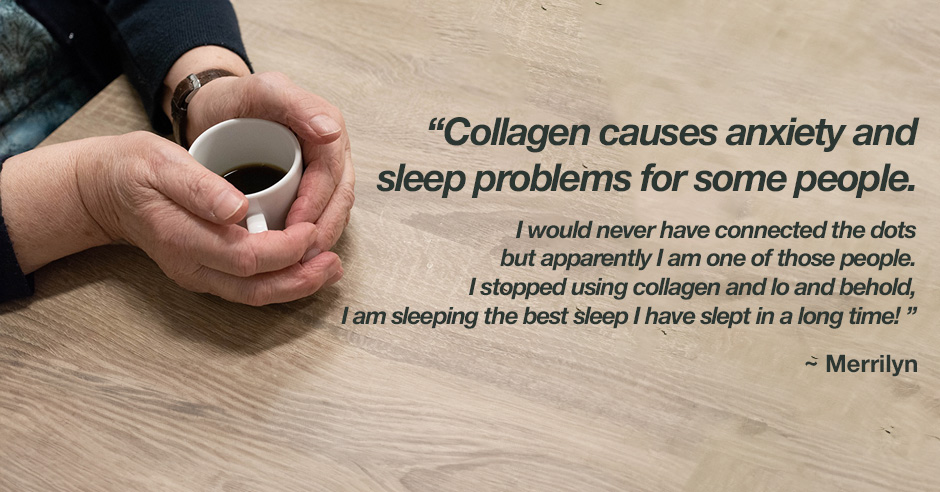
Collagen causes anxiety and sleep problems for some people. I would never have connected the dots but apparently I am one of those people.

March 1, 2024 By Trudy Scott 13 Comments

collagen and anxiety

Thank you for solving my sleeping problem! I would never have connected the dots regarding collagen causing anxiety and sleep problems for some people, but apparently I am one of those people.

Although I would fall asleep instantly at bedtime, I would wake up 3 or 4 hours later and while my body was tired, my mind was wide awake and I was unable to go back to sleep for at least 2 or 3 hours. I would think about all the things I needed to do and the challenges I was having. These things would not bother me as much in the day.  No matter what I tried – like praying and listening to calming music, I could not shut off my anxious thoughts.

Then it occurred to me that when I go out of town to visit my family, I sleep better.   After hearing Trudy’s collagen presentation on the Osteoporosis Summit, I connected the dots!  For the last 6 months, I have been putting about 10 grams of Vital Protein collagen in my coffee each morning.   I don’t take the collagen with me when I travel.  So I stopped using it and lo and behold, I am sleeping the best sleep I have slept in a long time!   I even look forward to going to sleep.

So I thank you Trudy from the bottom of my heart for enlightening me.  And Margie, I thank you for the wonderful Summit you put together with so much great information.  I would still be sleep deprived if it wasn’t for you both!

I was so pleased to receive this lovely thank you email from Merrilyn (sent to me and summit host Margie Bissinger) and said how happy I am for her. I asked if I could share her feedback as a new blog so we can enlighten others who may have similar issues and because it’s an opportunity to share some of sleep/collagen research that supports a possible mechanism.  She kindly said yes and answered my questions:

  • How long had you been using collagen and how long after starting it did the sleep issues start?
  • And how quickly after stopping the collagen did your sleep improve?
  • Did you consider using tryptophan or 5-HTP so you could continue to use the collagen? And are you prone to low serotonin?

Read on for some background on the serotonin-lowering effects for some folks who consume collagen, Merrilyn’s responses to my questions, my insights, some of the research, and the tryptophan and 5-HTP products I recommend.

The original collagen/gelatin serotonin-lowering blog/research from 2017

I first addressed this potential cause for anxiety, mood and sleep issues in a blog in 2017 – Collagen and gelatin lower serotonin: does this increase your anxiety and depression?

Margie invited me to share this information and some of the research with those who are using it or planning to use it for osteoporosis. I’m so glad I accepted because clearly there are still folks who are not aware of the potential serotonin-lowering effects of collagen. And I’m sharing Merrilyn’s results via this new blog in case it’s also new to you.

Briefly, collagen and gelatin are used in tryptophan-depletion studies to lower serotonin levels. It does this because neither collagen or gelatin contain tryptophan. Some people seem to be adversely impacted by acute tryptophan depletion/ATD caused by collagen or gelatin consumption while others are not.

If this is all new to you, I encourage you to read the original blog and search for “collagen” to find other information on this topic on my site.

How long had you been using collagen and how long after starting it did the sleep issues start?

I asked how long she’d been using collagen and how long after starting it did she notice problems with her sleep. This wasn’t clear to her and many folks like Marrilyn unfortunately don’t connect the dots right away.

I started Vital Proteins collagen on July 1, 2023.  I did mark that down because as I add supplements to my diet, I try to make notes and only do one at a time in case they cause a problem.  I did note that I was not consistent with taking it daily and I was only taking 5 to 10 grams daily ( in my cup of coffee!).

I have always had a bit of a problem with waking up at night, but normally go right back to sleep.  I can’t remember exactly when the sleeping problems worsened and I never connected them to collagen.

Seems like over time, the sleeping and waking up with ruminating thoughts was getting worse.  I had started trying Tylenol PM or Advil PM, only taking 1/2 of one with one plain Tylenol or Advil to help me sleep and relieve any muscle tension from exercise. That did not always help. Taking a whole PM was better, but I felt groggy the next day.  I don’t need any now that I have stopped the collagen.

How quickly after stopping the collagen did your sleep improve?

When the cause of waking in the night is due to low serotonin, it’s common to notice improvements very quickly after stopping collagen. This was the case with Merrilyn:

I would say my sleep improved immediately after stopping it.  I realized that on the days I was out of town and didn’t take the collagen, I slept better. … but I attributed it to the fact that it is cooler there and my 6 year old grandson wears me out by the evening.  I do not take the collagen with me and I had not connected this to the sleep pattern.

I returned home after one trip and started the collagen that next morning and the sleepless nights started again.  I can’t remember when I listened to your talk, but I am guessing around January 18th, because I noted that I stopped after that day and according to my Fitbit and my memory, I slept great the night of January 19th and other than one night, I have slept well since.

I do want to commend Merrilyn for keeping a log of new supplements and sleep patterns. It’s something I recommend for all my clients.  

Did you consider using tryptophan or 5-HTP so you could continue to use the collagen and are you prone to low serotonin?

I also asked if she considered using tryptophan or 5-HTP (some folks do better on one vs the other) so she could continue to use the collagen – she had not considered this. And I wanted to know if she has been prone to low serotonin or suspects low serotonin currently.

I do believe I am prone to low serotonin based on the little I have read in your book.   I have thought about using tryptophan with the collagen and might later.  For now, I just want to enjoy sleeping and focus on improving my diet.

I also have evenings when I crave sugar.  I can do without it during the day, but evenings are worse. Something else to work on.

She’s referring to the low serotonin symptoms questionnaire in the amino acid chapter of my book, The Antianxiety Food Solution. It’s also on the blog here.

A big clue is the insomnia and anxiety caused by consumption of collagen, and also the evening cravings. There are cravings with all the neurotransmitter imbalances, with afternoon/evening cravings common with low serotonin.

It is possible Merrilyn’s anxiety and insomnia effects are for reasons other than low serotonin: glutamate, oxalate, arginine or a histamine reaction are all possible with collagen intake). Doing a trial of tryptophan or 5-HTP while consuming collagen would confirm a serotonin connection.

Osteoporosis, allergies, serotonin and coffee

Merrilyn also shared that she is in her early 70s and  besides osteoporosis and allergies, is generally healthy and takes no prescription drugs. Interestingly, research finds there may be a role for 5-HTP (and presumably tryptophan) for allergies and asthma, so this may be another clue for her.

Of course, reducing her cravings – tryptophan and/or 5-HTP make it easy – will also improve her nutrient status of zinc, magnesium, iron, vitamin B6 and other B vitamins etc. all of which are key when it comes to osteoporosis.

Quitting coffee altogether will likely prevent any waking in the night – yes, even just one cup a day can make a difference – and also help improve the status of many of these nutrients. This is often the least favorite change my clients make but Merrilyn will read about all this in the caffeine chapter in my book and may find tyrosine helps her do so.

Research: Daytime tryptophan depletion altered night-time sleep

A paper published in 2002, Mid-morning tryptophan depletion delays REM sleep onset in healthy subjects, reports the following:

Rapid daytime tryptophan depletion in healthy volunteers significantly decreased plasma tryptophan levels during the day and the evening, followed by alterations in the characteristics of night-time sleep, including increased sleep fragmentation, REM sleep latency, and REM density during first sleep episode.

In this randomized double-blind cross-over study, participants received “a tryptophan-free mixture of amino acids at 10:30 am…. resulting in a 77% decrease and 41% decrease of serum tryptophan at 3:30 pm. and 9:30 pm.” Keep in mind that collagen is a blend of certain amino acids and is tryptophan-free.

The authors discuss the fact that serotonin is involved in sleep regulation but interestingly the mood of study participants was not affected.

Even more interesting is another study that found collagen used before bedtime improved sleep and cognitive function in physically active males. It’s possible it’s doing this because it is lowering serotonin that is too high.

Tryptophan and 5-HTP product options

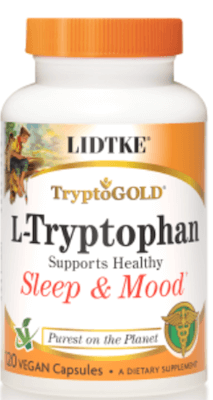
lydke l-tryptophan
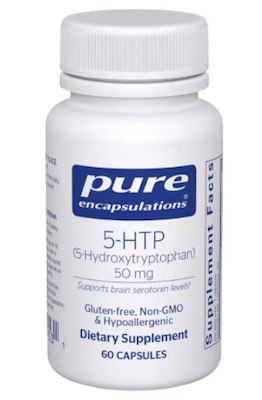
pure 5htp

Products I recommend include Lidtke 500 mg Tryptophan, and Pure Encapsulations 50 mg 5-HTP.  You can purchase these from my online store (Fullscript – only available to US customers – use this link to set up an account).

nature's best l-tryptophan
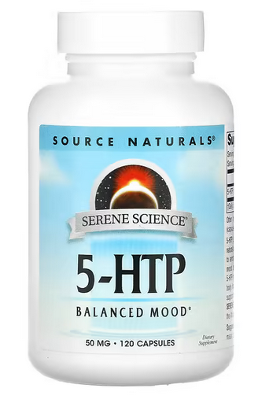
source natural 5-htp

If you’re not in the US, Doctor’s Best L-Tryptophan 500mg and Source Naturals 50 mg 5-HTP  are products I recommend on iherb (use this link to save 5%).

Additional resources when you are new to using tryptophan or 5-HTP and other amino acids as supplements

We use the symptoms questionnaire to figure out if low serotonin or other neurotransmitter imbalances may be an issue for you.

If you suspect low levels of any of the neurotransmitters and do not yet have my book, The Antianxiety Food Solution – How the Foods You Eat Can Help You Calm Your Anxious Mind, Improve Your Mood, and End Cravings, I highly recommend getting it and reading it before jumping in and using amino acids on your own so you are knowledgeable. And be sure to share it with the practitioner/health team you or your loved one is working with.

There is an entire chapter on the amino acids and they are discussed throughout the book in the sections on gut health, gluten, blood sugar control (this is covered in an entire chapter too), sugar cravings, anxiety and mood issues. The importance of quality animal protein and healthy fats is also covered.

The book doesn’t include product names (per the publisher’s request) so this blog, The Antianxiety Food Solution Amino Acid and Pyroluria Supplements, lists the amino acids that I use with my individual clients and those in my group programs.

If, after reading this blog and my book, you don’t feel comfortable figuring things out on your own (i.e. doing the symptoms questionnaire and respective amino acids trials), a good place to get help is the GABA QuickStart Program (if you have low GABA symptoms too). This is a paid online/virtual group program where you get my guidance and community support.

If you are a practitioner, join us in The Balancing Neurotransmitters: the Fundamentals program. This is also a paid online/virtual program with an opportunity to interact with me and other practitioners who are also using the amino acids.

Have you made the connection between your collagen consumption and anxiety/insomnia (or other low serotonin symptoms)?

Did you end up simply stopping collagen or have you successfully used it with tryptophan or 5-HTP?

If you’re a practitioner do you see this with your clients/patients who are prone to low serotonin?

And please let me know if it’s helpful that I’m now including product recommendations and where to get them?

Feel free to share and ask your questions below.
Filed Under: 5-HTP, Anxiety and panic, Collagen, Insomnia, Tryptophan Tagged With: anxiety, anxious thoughts, GABA Quickstart; Balancing Neurotransmitters: the Fundamentals program for practitioners, insomnia, neurotransmitters, osteoporosis, ruminations, serotonin, sleep, tryptophan

Using tryptophan and GABA amino acid supplements together for anxiety, sleep, ruminations and TMJ: questions and answers

February 23, 2024 By Trudy Scott 18 Comments

amino acids q and a

I am taking 250 mg tryptophan, 100-200 mg GABA. Tryptophan is helping with rumination. GABA is helping with feeling less tension in the body. I am also taking 500mg DPA. DLPA used to help me but I thought it was too stimulating so I’m trying DPA now. I couldn’t feel much when taking it on its own.

But the combination of tryptophan, DPA & GABA is generally helping me to feel less wound up. I still struggle with rumination and I have a really difficult time making decisions. I get really overwhelmed when I have a lot of decisions to make – it sends me in a tailspin and leads to more rumination. I’m not sure which amino acid would be good for that?

I generally have trouble relaxing and feeling calm and I feel the tension in my body. I am not sure if I should try increasing the dosage of one of the above?

I am wondering, is it important to take l-tyrosine to balance the tryptophan since tryptophan can lower dopamine over time? Or is the DPA enough since it’s a precursor to tyrosine?

I get many questions like this about using both tryptophan and GABA amino acid supplements together for easing anxiety and today I’m sharing some of these questions and my answers. This will also give you the opportunity to ask questions you may have related to using both these amino acids together. You’ll also read many success stories like the above and how to tweak the amino acids for optimal results.

Read on for my response to the above question from TT and other questions about using GABA and tryptophan together –  how to measure GABA and serotonin levels for using with teens, adding tryptophan for sleep separately from GABA, how to test both for jaw clenching, and the precaution about serotonin syndrome.

My response and feedback for TT – adjustments for even better results

My response and feedback for TT … It’s wonderful that this combination is helping so much. It’s a great start but there are adjustments I’d consider to get even better results. The tryptophan dose is low, with a typical starting dose of 500mg so I’d consider increasing this a few times over a few weeks to see if the ruminations decrease even further. This may also help with the overwhelm and decision making.

Increasing the GABA over a few weeks (after the trial of increased tryptophan) may well improve her ongoing tension and inability to relax. I’d want to make sure she is using GABA sublingually for the best effects.

She asks about the need to take tyrosine to balance the tryptophan but I don’t have clients do this as a rule of thumb and only have clients take tyrosine if they have symptoms of low dopamine. In this instance since TT mentions difficulties with decision-making, a trial of tyrosine may be worth considering, after she has increased tryptophan and increased GABA. More about tyrosine benefits here.

I do want to mention that DPA is not a precursor to dopamine but DLPA does offer some dopamine support. I share more about the differences between DPA and DLPA here.

I want to give my teens GABA and tryptophan – how do I measure GABA and serotonin levels?

I have two teenagers ages 14 and 16 who suffer from anxiety and depression. My daughter has more difficulty with depression and my son with ruminating thoughts . My father had similar issues. We have tried supplements, and medications that help a little.

I want to try giving them GABA and tryptophan, but to make sure that they in fact meet the criteria you describe. Is there a lab test that measures GABA and serotonin levels? Also, how can I figure out the dose and times to give them?

Here is my feedback for Maria …. The best way to determine if someone may have low GABA/serotonin is to look at the low GABA/serotonin symptoms questionnaire (here is that link), rate 1 or 2 symptoms on a scale of 1-10 with 10 being worst, do an initial one-off trial of the respective amino acid and rate the symptoms again right afterwards (in the next 2 to 30 minutes). Based on this we decide if we’ll continue with the amino acid and how much to use.

Dosing is unique to each person’s needs and timing differs for each amino acid – tryptophan is best mid-afternoon and evening and GABA throughout the day and evening if needed too.

I don’t use the urinary neurotransmitter test as it’s not considered an accurate assessment. I blogged about this here.

It’s a comprehensive approach – amino acids AND diet. This mom mentions supplements and medications but nothing about what their diets are like right now – gluten-free, sugar-free, caffeine-free, eating protein at breakfast for blood sugar control, real whole foods, grass-fed red meat, wild fish, fermented foods etc?

I also suggest my book “The Antianxiety Food Solution”  as a great place to start when you are new to the amino acids and other anxiety nutrition solutions like gluten/sugar/caffeine removal, blood sugar control, gut health, pyroluria etc.

And this blog is a wonderful example and gives hope to moms – Tryptophan for my teenager: she laughs and smiles, her OCD and anxiety has lessened, and she is more goal oriented and focused on school. It’s one of many similar blogs so be sure to use the search feature to find others.

GABA and theanine help my anxiety, if I add tryptophan for sleep should I take it separately?

I have taken Gaba and L-theanine for anxiety for the last few years on and off as recommended by a doctor, it really does help although I still have sleeping problems. I also have a lot of symptoms on your low serotonin list so if I add tryptophan to see if it helps with sleep should I take it with the Gaba or separately?

Here is my response and feedback for Diane … I was glad to hear GABA and theanine are helping with the anxiety. I have many clients with low serotonin and low GABA symptoms take GABA, theanine and tryptophan at bedtime at the same time for improving sleep that is caused by low serotonin.

Diane has already identified that she has a lot of low serotonin symptoms from the questionnaire, so like I shared for Maria above, a trial is worth considering.

We always want to capitalize on what is already working so when GABA/theanine is helping with anxiety and offers some help with sleep we will often increase that before considering a trial of tryptophan.

I’m assuming she is addressing dietary factors too and other root causes that may also affect her sleep – like low blood sugar and high cortisol.

Would GABA or tryptophan help with jaw clenching and how do I test to see if they would help?

Would Gaba or tryptophan help with jaw clenching, not grinding, which I assume is an anxiety thing even when I’m unaware of any anxiety? Since I already use Gaba on and off for anxiety or if I can’t sleep (only taking 200 mg) how would I go about testing tryptophan to see if it would help for clenching?

Here is my feedback for Diane … Jaw clenching/TMJ (temporomandibular joint) issues can be related to both low GABA because of the muscle tension and also when serotonin is low.

In the same way we do a trial with the amino acids for anxiety or low self-esteem (or another symptom like cravings) we would do a trial for the jaw clenching i.e. rate the severity on a scale of 1-10 with 10 being worst, do a trial of tryptophan and then GABA (separately) and rate the symptoms again right afterwards (in the next 2 to 30 minutes). And go from there, increasing each as needed (one at a time) and tracking symptom improvement.

Here is a case as an example: Tryptophan ends TMJ pain, headaches and worry, and improves mood and sleep.

Precaution about serotonin syndrome with tryptophan/5-HTP

There are precautions when using certain amino acids and I always review them with all my clients. If they have been prescribed an SSRI, I have them discuss the use of tryptophan/5-HTP with their prescribing doctor so they can be monitored for serotonin syndrome. With careful monitoring and doctor approval I feel comfortable having my clients use tryptophan/5-HTP 6 hours away from their one and only SSRI.

If they are using more than one SSRI and/or a combination of psychiatric medications, the use of tryptophan/5-HTP is not advised.

None of the above applied in these situations but it’s important to be aware of.

Tryptophan and GABA product options

lydke l-tryptophan
gaba calm
gaba pure poder

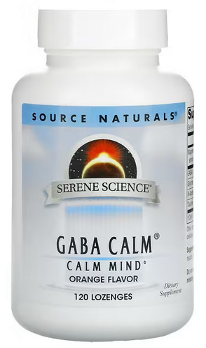
Products I recommend include Lidtke 500 mg Tryptophan, Source Naturals GABA Calm lozenges and Now GABA Powder.  You can purchase these from my online store (Fullscript – only available to US customers – use this link to set up an account).

nature's best l-tryptophan
gaba calm
gaba pure poder

If you’re not in the US, Doctor’s Best L-Tryptophan 500mg and Source Naturals GABA Calm lozenges and Now GABA Powder are products I recommend on iherb (use this link to save 5%).

Additional resources when you are new to using tryptophan or GABA and other amino acids as supplements

We use the symptoms questionnaire to figure out if low serotonin or low GABA or other neurotransmitter imbalances may be an issue for you.

If you suspect low levels of any of the neurotransmitters and do not yet have my book, The Antianxiety Food Solution – How the Foods You Eat Can Help You Calm Your Anxious Mind, Improve Your Mood, and End Cravings, I highly recommend getting it and reading it before jumping in and using amino acids on your own so you are knowledgeable. And be sure to share it with the practitioner/health team you or your loved one is working with.

There is an entire chapter on the amino acids and they are discussed throughout the book in the sections on gut health, gluten, blood sugar control (this is covered in an entire chapter too), sugar cravings, anxiety and mood issues. The importance of quality animal protein and healthy fats is also covered.

The book doesn’t include product names (per the publisher’s request) so this blog, The Antianxiety Food Solution Amino Acid and Pyroluria Supplements, lists the amino acids that I use with my individual clients and those in my group programs.

If, after reading this blog and my book, you don’t feel comfortable figuring things out on your own (i.e. doing the symptoms questionnaire and respective amino acids trials), if you need serotonin support, the Serotonin QuickStart Program is a good place to start. This is a paid online/virtual group program where you get my guidance on using tryptophan and 5-HTP safely, and community support during 5 LIVE Q&A calls. You can sign up to be notified when the next live launch of this program is happening. We take a deep dive into product options including Lidtke products and others if you’re not able to access Lidtke.

Low GABA can also affect sleep and cause stress eating. If you also have low GABA symptoms, the next step to get help is the GABA QuickStart Program. This is also a paid online/virtual group program where you get my guidance and community support. Another option is the budget-friendly GABA QuickStart Homestudy Program.

If you are a practitioner, join us in The Balancing Neurotransmitters: the Fundamentals program. This is also a paid online/virtual program with an opportunity to interact with me and other practitioners who are also using the amino acids.

This blog is a follow-on from the previous blog on this topic so be sure to read that blog too. It also features many valuable questions in the comments and my responses, hence this new post. I hope this has been helpful for you.

Wrapping up

Now I’d love to hear from you…

Have you had success using GABA and tryptophan together for anxiety, insomnia, ruminations, depression, overwhelm, TMJ etc?

Have you tweaked your dosing to find the ideal doses for your needs?

If yes, what doses and which products have helped?

If you’re a practitioner do you use tryptophan and GABA with clients/patients with these low serotonin and low GABA symptoms?

And please let me know if it’s helpful that I’m now including product recommendations and where to get them?

Feel free to share and ask your questions below.
Filed Under: Anxiety and panic, Children/Teens, GABA, Insomnia, Tryptophan Tagged With: amino acid supplements, anxiety, dopamine, GABA, GABA Quickstart; Balancing Neurotransmitters: the Fundamentals program for practitioners, jaw clenching, making decisions, neurotransmitters, ruminations, serotonin, serotonin syndrome, sleep, teens, tension, TMJ, tryptophan, tyrosine

How to use bright light therapy for increased anxiety, increased panic and SAD during the cold dark winter months

January 19, 2024 By Trudy Scott 2 Comments

bright light therapy

There is a seasonality to anxiety and panic disorder just as there are seasonal variations in mood for certain susceptible individuals:

Following a clinical observation of increased anxiety symptoms and mood changes during winter in panic disorder patients, the Seasonal Pattern Assessment Questionnaire (SPAQ) was completed by 133 patients. Global Seasonality Scores (GSS), and the prevalence of Seasonal Affective Disorder (SAD), were significantly higher than reported in general population studies.

Seasonal changes were also found in anxiety and panic attacks.

These findings suggest the possibility of a common aetiology [etiology or cause] for panic disorder and SAD, that seasonality may be a far more general phenomenon in psychopathology, and that light therapy may be a useful treatment for some panic disorder patients.

The above abstract is from this paper: Seasonality in panic disorder

If you’re new to bright light therapy or are currently using it with success and would like to learn more, I’d like to point you to this excellent review paper, Bright Light as a Personalized Precision Treatment of Mood Disorders. The authors of the above paper cover some of the basics like how to use bright light for SAD (seasonal affective disorder) or the winter blues, and for how long, possible adverse effects and who should not use bright light therapy (this last aspect is theoretical).

This information about bright light and mood disorders can be applied to anxiety and panic attacks, in addition to SAD.

As you’ll read below there are also often benefits for non seasonal depression, bipolar disorder, fatigue, sleep issues, emotional eating and other conditions too.  And bright light therapy can be used in conjunction with the amino acids tryptophan or 5-HTP, and is often used with psychiatric medications too.

How to use bright light for SAD and winter anxiety/panic and for how long?

You sit in front of the light box or full spectrum lamp – on a table or your desk – with open eyes.  Using a standing lamp as a source of light is another option.

The authors of the Bright Light paper share the following approach for SAD (seasonal affective disorder or the winter blues), all of which is applicable for increased anxiety and panic attacks in winter too):

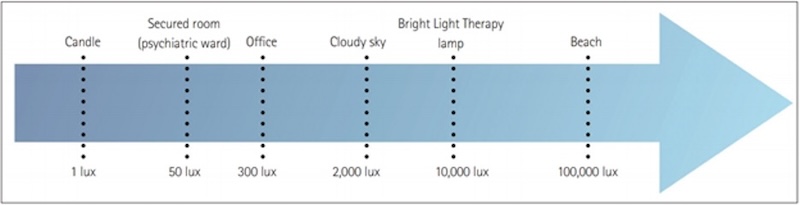
  • Start with a “duration of 30 minutes, using a light intensity of 10,000 lux.” (more on lux comparisons below)
  • “Early morning administration offers greater chances for remission” (although there is documented research and clinical results that for some folks later in the day works well too).
  • “Measured at eye level, a therapeutic distance of 60–80 cm from the light box can be seen as standard requirements (some other devices recommend a distance of 30 cm, so we advise to follow the device recommendations that take into account light parameters and distance).” Most of the lights/devices I recommend state a distance of 30 cm so it’s best to follow the manufacturer’s guidelines.
  • “Lower intensities also appear to be effective, but need longer exposure durations: 2,500 Lux for 2 hours per day or 5,000 Lux for 1 hour a day.” This means sitting further away may allow you to sit in front of the lamp/device for longer duration and get the same benefits.
  • “Significant effects appear only at 2–3 weeks of treatment.” Based on my clinical results, I have clients start to feel some improvements right away with the correct distance and a good lamp.
  • “Treatment is usually continued until the time of usual spontaneous remission in the spring or summer” (and is ideally started as fall/autumn starts to approach rather than in the middle of winter).

I’m also adding this missing and yet important fact from another paper: “The light box is angled ~30° from the line of gaze. The user does not stare directly into the light.”

They also discuss guidelines for year round use of bright light therapy for non-seasonal unipolar depression, another term for major depressive disorder. And midday or morning use for bipolar depression (when on mood stabilizers). I share more about this in my blog: Midday bright light therapy for bipolar depression. I refer you to the study for this information so it can be discussed with your doctor.

Bright light therapy for insomnia and decreased alertness/fatigue

The Bright Light paper also mentions how light therapy “may also be useful to improve sleep quality” … and … “abnormalities in circadian rhythms such as sleep phase delay syndrome, that are frequently associated in mood disorders.”

The authors also mention how light therapy can also help “decreased alertness”, presumably as a result of poor sleep.

Clinically, I see these benefits for clients in similar ways that tryptophan or 5-HTP help with sleep issues. This is related to the serotonin boosting mechanism of bright light therapy. Keep in mind anxiety and panic are symptoms of low serotonin.

What are some possible adverse effects of bright light therapy?

The authors state that bright light therapy “is well-tolerated by patients; adverse effects such as headache, eyestrain, nausea and agitation, are usually transient and mild.” Clinically, I have seldom seen clients experience headache, eyestrain and nausea.

However, I have seen agitation and other low serotonin symptoms get worse – like feeling more sad or more worried or more angry or more irritated or more sleep issues (or all of the above). Too much bright light therapy can ramp up low serotonin symptoms in a similar way that too much tryptophan or 5-HTP can. In other words, it can be overdone and more is not necessarily better. You have to find a balance and figure out what works best for your needs.

I also have clients who are prescribed antidepressants discuss light therapy with their prescribing doctor as I suspect there is the possibility of serotonin syndrome. I don’t see any reports of this in the research and a number of reports of bright light therapy being used successfully in conjunction with antidepressants.

Who should not use bright light therapy?

The authors share these contraindications: “ophthalmic disorders (cataract, macular degeneration, glaucoma, retinitis pigmentosa) and disorders affecting the retina (retinopathy, diabetes, herpes, etc.).” They recommend getting an eye examination if you are in doubt.

Other papers state that the above is theoretical and there are no documented cases of eye damage from bright light therapy. But if you suspect you may be at high risk, get the approval from your ophthalmologist and ongoing monitoring too.

Recommended lights, lamps and panels: always 10,000 lux

This blog post, Winter blues or SAD: light therapy has been updated (as of Jan 2024) with new links for recommended lights/lamps/panels, all 10,000 lux. You can also read feedback from folks who use and find the benefits of full spectrum light or bright light therapy. For example, Chrstine shared this:

My office is the darkest room in the house and I have one sitting on my desk, especially helpful in the winter. This is the second Verilux Happy Light I have used and I really like it. Living in Nevada where there is sunshine over 330 days of the year I am so accustomed to light and brightness that if I am in a dark room or space for too long it really affects me. This has been a great product for me and I can recommend it.

If you’re curious about lux, it is a unit of illumination and this paper, Light Therapy in Mood Disorders: A Brief History with Physiological Insights, includes this very useful lux comparison image:

light therapy and mood disorders
The above is shared under the Creative Commons Attribution License and can be found here .

The combination of using bright light therapy with amino acids such as tryptophan and 5-HTP

I often recommend the use of light therapy in conjunction with amino acids such as tryptophan and 5-HTP. This offers additional serotonin support and helps ease worry-type anxiety, panic attacks, low mood, insomnia, cravings and more. I discuss this combination approach in the winter blues blog.

When someone is already using amino acids with some success, we may just add light therapy and keep amino acid dosing the same or we may use higher doses of amino acids like tryptophan, 5-HTP and GABA during the winter months. We may also use both depending on the person’s unique needs.

I had one client who did really well with tryptophan: his anxiety decreased dramatically but then ramped up before winter. Increasing tryptophan was too much for him so we kept the original tryptophan dose and he started bright light therapy. This worked very well for him until the end of spring when he was able to stop the light therapy.

I also share links to increased OCD (obsessive compulsive disorder), intrusive thoughts, PMDD (premenstrual dysphoric disorder), PMS (premenstrual syndrome), binge eating/emotional eating and drinking/alcoholism in the winter months – and the role of light therapy and amino acids.

Additional resources when you are new to using tryptophan or other amino acids as supplements

We use the symptoms questionnaire to figure out if low serotonin or other neurotransmitter imbalances may be an issue for you.

If you suspect low levels of any of the neurotransmitters and do not yet have my book, The Antianxiety Food Solution – How the Foods You Eat Can Help You Calm Your Anxious Mind, Improve Your Mood, and End Cravings, I highly recommend getting it and reading it before jumping in and using amino acids on your own so you are knowledgeable. And be sure to share it with the practitioner/health team you or your loved one is working with.

There is an entire chapter on the amino acids and they are discussed throughout the book in the sections on gut health, gluten, blood sugar control, sugar cravings, anxiety and mood issues. The importance of quality animal protein is also covered.

The book doesn’t include product names (per the publisher’s request) so this blog, The Antianxiety Food Solution Amino Acid and Pyroluria Supplements, lists the amino acids that I use with my individual clients and those in my group programs.

If, after reading this blog and my book, you don’t feel comfortable figuring things out on your own (i.e. doing the symptoms questionnaire and respective amino acids trials), a good place to get help is the GABA QuickStart Program (if you have low GABA symptoms too). This is a paid online/virtual group program where you get my guidance and community support.

If you are a practitioner, join us in The Balancing Neurotransmitters: the Fundamentals program. This is also a paid online/virtual program with an opportunity to interact with me and other practitioners who are also using the amino acids.

Do you experience increased anxiety, panic attacks and/or the winter blues in the winter months? Have you had success with bright light therapy?

If yes, which full spectrum lamp have you found to be the most useful? What time of the day do you use it, how often do you use it and for what duration?

Have you used a combination of amino acids and light therapy, and adjusted up your amino acids during the colder and darker winter months?

If you’re a practitioner do you recommend light therapy to your clients/patients?

Feel free to share and ask your questions below.
Filed Under: Amino Acids, Anxiety and panic, Depression, Emotional Eating Tagged With: 000 lux, 10, 5-HTP, anxiety, Bipolar, Bright light therapy, depression, emotional eating amino acids, fatigue, GABA Quickstart; Balancing Neurotransmitters: the Fundamentals program for practitioners, how to use, light therapy, mood, panic, SAD, seasonal affective disorder, seasonality, sleep, tryptophan, winter, winter blues

  • « Go to Previous Page
  • Page 1
  • Page 2
  • Page 3
  • Page 4
  • Page 5
  • Interim pages omitted …
  • Page 13
  • Go to Next Page »

Primary Sidebar

GABA QuickStart Homestudy

gaba quickstart homestudy

Free Report

9 Great Questions Women Ask about Food, Mood and their Health

You'll also receive a complimentary subscription to my ezine "Food, Mood and Gal Stuff"


Connect with me

Popular Posts

  • Amino Acids Mood Questionnaire from The Antianxiety Food Solution
  • The Antianxiety Food Solution Amino Acid and Pyroluria Supplements
  • Pyroluria Questionnaire from The Antianxiety Food Solution
  • Collagen and gelatin lower serotonin: does this increase your anxiety and depression?
  • Tryptophan for the worry-in-your-head and ruminating type of anxiety
  • GABA for the physical-tension and stiff-and-tense-muscles type of anxiety
  • The Antianxiety Food Solution by Trudy Scott
  • Seriphos Original Formula is back: the best product for anxiety and insomnia caused by high cortisol
  • Am I an anxious introvert because of low zinc and vitamin B6? My response to Huffington Post blog
  • Vagus nerve rehab with GABA, breathing, humming, gargling and key nutrients

Recent Posts

  • Her cravings for chips and peanut butter were triggered by stress: GABA ends cravings and reduces physical tension and fear of heights
  • It is truly miraculous to be able to move through life without crippling anxiety and panic
  • GABA and tryptophan combo provide immediate and noticeable relief for tremors and cervical dystonia in just 7 days
  • Red light therapy for back and neck pain, plantar fasciitis and low mood – a complement to the amino acids GABA, DPA and tryptophan
  • What do I use instead of Seriphos to help lower high cortisol that is affecting my sleep and making me anxious at night?

Categories

  • 5-HTP
  • AB575
  • Addiction
  • ADHD
  • Adrenals
  • Alcohol
  • Allergies
  • Alzheimer's disease
  • Amino Acids
  • Anger
  • Antianxiety
  • Antianxiety Food Solution
  • Antidepressants
  • Anxiety
  • Anxiety and panic
  • Autism
  • Autoimmunity
  • benzodiazapines
  • Bipolar disorder
  • Books
  • Caffeine
  • Cancer
  • Candida
  • Children/Teens
  • Collagen
  • Cooking equipment
  • Coronavirus/COVID-19
  • Cravings
  • Depression
  • Detoxification
  • Diabetes
  • Diet
  • DPA/DLPA
  • Drugs
  • EFT/Tapping
  • EMF
  • EMFs
  • Emotional Eating
  • Endorphins
  • Environment
  • Essential oils
  • Events
  • Exercise
  • Fear
  • Fear of public speaking
  • Fertility and Pregnancy
  • Fish
  • Food
  • Food and mood
  • Functional neurology
  • GABA
  • Gene polymorphisms
  • General Health
  • Giving
  • Giving back
  • Glutamine
  • Gluten
  • GMOs
  • Gratitude
  • Gut health
  • Heart health/hypertension
  • Histamine
  • Hormone
  • Hyperparathyroidism
  • Hypoglycemia
  • Immune system
  • Inflammation
  • Insomnia
  • Inspiration
  • Introversion
  • Joy and happiness
  • Ketogenic diet
  • Lithium orotate
  • Looking awesome
  • Lyme disease and co-infections
  • MCAS/histamine
  • Medication
  • Men's health
  • Mental health
  • Mercury
  • Migraine
  • Mold
  • Movie
  • MTHFR
  • Multiple sclerosis
  • Music
  • NANP
  • Nature
  • Nutritional Psychiatry
  • OCD
  • Osteoporosis
  • Oxalates
  • Oxytocin
  • Pain
  • Paleo
  • Parasites
  • Parkinson’s disease
  • PCOS
  • People
  • PMS
  • Postpartum
  • PTSD/Trauma
  • Pyroluria
  • Questionnaires
  • Real whole food
  • Recipes
  • Research
  • Schizophrenia
  • serotonin
  • SIBO
  • Sleep
  • Special diets
  • Sports nutrition
  • Stress
  • Sugar addiction
  • Sugar and mood
  • Supplements
  • Teens
  • Testimonials
  • Testing
  • The Anxiety Summit
  • The Anxiety Summit 2
  • The Anxiety Summit 3
  • The Anxiety Summit 4
  • The Anxiety Summit 5
  • The Anxiety Summit 6
  • Thyroid
  • Thyroid health
  • Toxins
  • Tryptophan
  • Tyrosine
  • Uncategorized
  • Vegan/vegetarian
  • Women's health
  • Yoga

Archives

  • May 2026
  • April 2026
  • October 2025
  • September 2025
  • August 2025
  • July 2025
  • June 2025
  • May 2025
  • April 2025
  • March 2025
  • February 2025
  • January 2025
  • November 2024
  • October 2024
  • September 2024
  • August 2024
  • July 2024
  • June 2024
  • May 2024
  • April 2024
  • March 2024
  • February 2024
  • January 2024
  • December 2023
  • November 2023
  • October 2023
  • September 2023
  • August 2023
  • July 2023
  • June 2023
  • May 2023
  • April 2023
  • March 2023
  • February 2023
  • January 2023
  • December 2022
  • November 2022
  • October 2022
  • September 2022
  • August 2022
  • July 2022
  • June 2022
  • May 2022
  • April 2022
  • March 2022
  • February 2022
  • January 2022
  • December 2021
  • November 2021
  • October 2021
  • September 2021
  • August 2021
  • July 2021
  • June 2021
  • May 2021
  • April 2021
  • March 2021
  • February 2021
  • January 2021
  • December 2020
  • November 2020
  • October 2020
  • September 2020
  • August 2020
  • July 2020
  • June 2020
  • May 2020
  • April 2020
  • March 2020
  • February 2020
  • January 2020
  • December 2019
  • November 2019
  • October 2019
  • September 2019
  • August 2019
  • July 2019
  • June 2019
  • May 2019
  • April 2019
  • March 2019
  • February 2019
  • January 2019
  • December 2018
  • November 2018
  • October 2018
  • September 2018
  • August 2018
  • July 2018
  • June 2018
  • May 2018
  • April 2018
  • March 2018
  • February 2018
  • January 2018
  • December 2017
  • November 2017
  • October 2017
  • September 2017
  • August 2017
  • July 2017
  • June 2017
  • May 2017
  • April 2017
  • March 2017
  • February 2017
  • January 2017
  • December 2016
  • November 2016
  • October 2016
  • September 2016
  • August 2016
  • July 2016
  • June 2016
  • May 2016
  • April 2016
  • March 2016
  • February 2016
  • January 2016
  • December 2015
  • November 2015
  • October 2015
  • September 2015
  • August 2015
  • July 2015
  • June 2015
  • May 2015
  • April 2015
  • March 2015
  • February 2015
  • January 2015
  • December 2014
  • November 2014
  • October 2014
  • September 2014
  • August 2014
  • July 2014
  • June 2014
  • May 2014
  • April 2014
  • March 2014
  • February 2014
  • January 2014
  • December 2013
  • November 2013
  • October 2013
  • September 2013
  • August 2013
  • July 2013
  • June 2013
  • May 2013
  • April 2013
  • March 2013
  • February 2013
  • January 2013
  • December 2012
  • November 2012
  • October 2012
  • August 2012
  • July 2012
  • June 2012
  • May 2012
  • April 2012
  • March 2012
  • February 2012
  • January 2012
  • December 2011
  • November 2011
  • October 2011
  • September 2011
  • August 2011
  • July 2011
  • June 2011
  • May 2011
  • April 2011
  • March 2011
  • February 2011
  • January 2011
  • December 2010
  • October 2010
  • September 2010
  • July 2010
  • May 2010
  • April 2010
  • March 2010
  • February 2010
  • January 2010
  • November 2009

Share the knowledge!

The above statements have not been evaluated by the Food and Drug Administration. Products listed in this website are not intended to diagnose, treat, cure or prevent any disease.

The information provided on this site is for informational and educational purposes only and is not intended as a substitute for advice from your physician or other health care professional. You should consult with a healthcare professional before starting or modifying any diet, exercise, or supplementation program, before taking or stopping any medication, or if you have or suspect you may have a health problem.


Copyright © 2026 Trudy Scott. All Rights Reserved. | Privacy | Terms and Conditions | Refund Policy | Medical Disclaimer

Free Report

9 Great Questions Women Ask about Food, Mood and their Health

You’ll also receive a complimentary subscription to my ezine “Food, Mood and Gal Stuff”