• Skip to primary navigation
  • Skip to main content
  • Skip to primary sidebar

everywomanover29 blog

Food, Mood and Women's Health – Be your healthiest, look and feel great!

  • Blog
  • About
  • Services
  • Store
  • Resources
  • Testimonials
  • The Book
  • Newsletter
  • Contact
  • Search this site

pain

What is the difference between DPA and DLPA (amino acids) and which one do I use for weepiness, heart-ache, pain and energy?

March 11, 2022 By Trudy Scott 75 Comments

dpa and dlpa

Today we address a very common question I get: “What is the difference between DPA and DLPA?” The follow-up question is this: “And what symptoms do they help with?” These are both amino acids that help to boost certain feel-good neurotransmitters. DPA (d-phenylalanine) supports endorphins, whereas DLPA (dl-phenylalanine) supports both endorphins (to a lesser extent than DPA) and catecholamines (to a lesser extent than tyrosine).

Depending on your imbalances and symptoms, they could help with weepiness, heart-ache, comfort eating, emotional support, pain relief, better focus and energy, and even improved motivation.  

I mostly recommend DPA (which I call a-hug-in-a-bottle) and share the reasons why below, but some people do really well with DLPA. It’s a matter of figuring out the best one and dose for your unique needs.

DPA for low endorphin symptoms

DPA (d-phenylalanine) is an amino acid that destroys the enzyme that breaks down endorphins. Endorphins are feel-good chemicals that you experience with an endorphin rush when you go for a run or when someone gives you a big hug, when you show kindness to someone or an individual does something nice for you.

Taking the amino acid, DPA, as a supplement helps to raise your endorphins and helps when you feel weepy and overly emotional and reduces the need to self-medicate with treats as a reward or for comfort.

This amino acid is a favorite with so many of my clients and community because it makes them feel so lovely … a warm and fuzzy feeling. I often call it a-hug-in-a-bottle!

Here are the low endorphin symptoms I have my clients rate if they are considering a trial of DPA:

  • Heightened sensitivity to emotional pain
  • Heightened sensitivity to physical pain
  • Crying or tearing up easily
  • Eating to soothe your mood, or comfort eating
  • Really, really loving certain foods, behaviors, drugs, or alcohol
  • Craving a reward or numbing treat

Tyrosine for low catecholamine symptoms

Tyrosine is the amino acid that boosts catecholamines and helps with focus, motivation, energy (especially when you crave carbs for energy) and the blah kind of depression. It’s wonderful for helping you easily quit coffee/caffeine (when you are using it to “self-medicate” due to low catecholamines). It also provides support for the thyroid.

Here are the low catecholamine symptoms I have my clients rate if they are considering a trial of the amino acid tyrosine:

  • Depression and apathy
  • Easily bored
  • Lack of energy
  • Lack of focus
  • Lack of drive and low motivation
  • Attention deficit disorder
  • Procrastination and indecisiveness
  • Craving carbs, alcohol, caffeine, or drugs for energy

DLPA for both low endorphin and low catecholamine symptoms

If someone has both low endorphin and low catecholamine symptoms, a trial of DLPA could be considered.  DLPA supports both endorphins (to a lesser extent than DPA alone) and also catecholamines (to a lesser extent than tyrosine used alone). You could think of it as doing half and half of each.

Low endorphin symptoms:

  • Heightened sensitivity to emotional pain
  • Heightened sensitivity to physical pain
  • Crying or tearing up easily
  • Eating to soothe your mood, or comfort eating
  • Really, really loving certain foods, behaviors, drugs, or alcohol
  • Craving a reward or numbing treat

And low catecholamine symptoms:

  • Depression and apathy
  • Easily bored
  • Lack of energy
  • Lack of focus
  • Lack of drive and low motivation
  • Attention deficit disorder
  • Procrastination and indecisiveness
  • Craving carbs, alcohol, caffeine, or drugs for energy

Why I prefer my clients use DPA and tyrosine, rather than DLPA

Many people do well with DLPA (you can read one example below) but over the years I have streamlined my amino acid recommendations and seldom suggest DLPA. Here are the reasons why I prefer DPA:

  • DPA is not stimulating and doesn’t affect sleep. However, DLPA can be stimulating for anxious folks (and the majority of my clients have anxiety). For this reason, DLPA can not be used later than 3pm as it can affect sleep and for some folks with really bad sleep issues it can’t be tolerated later than mid-morning (in a similar way to tyrosine).
  • I like to have clients use DPA alone so we can clearly identify the benefits they are experiencing for their low endorphin symptoms and then use tyrosine alone so we can clearly identify their low catecholamine benefits.
  • There are no precautions or contraindications with DPA. However, DLPA has the same precautions as tyrosine. This limits using it for endorphin support. These are the precautions:
    • Overactive thyroid/Grave’s disease: tyrosine, DLPA (avoid)
    • Phenylketonuria (PKU): tyrosine, DLPA (avoid)
    • Melanoma: tyrosine, DLPA (avoid)
    • High Blood pressure: tyrosine, DLPA (watch)
    • Migraine headaches: tyrosine, DLPA (watch)
    • Bipolar disorder: tyrosine, DLPA, glutamine (watch)
  • The women I work with who do have low endorphin symptoms have reported superior benefits from DPA compared to DLPA, especially for emotional pain and emotional eating.
  • Some folks can’t tolerate tyrosine and these same folks have a hard time with DLPA.

The one disadvantage with DPA is that it’s not as widely and readily available as DLPA. It often needs to be purchased online (I list some brands below).

Here is some feedback from folks to give you an idea how these amino acids have helped them.

As you’ll see, there are some individuals who do well with DLPA so it’s really a matter of looking at the symptoms and doing a trial.

DPA helps Missy with weepiness and a deep heart-ache (and tastes like dark chocolate)

Missy shares how DPA helped her deep heart-ache sort of feeling:

I have found I was using this product incorrectly. If you are feeling fine, you do not feel much of anything from it. But today I was weepy and felt that deep, heart-ache sort of feeling. I chewed 1000 mgs (2 capsules) and it DID help lift that awful feeling within 15 minutes.

Notice that she said if you’re feeling fine you don’t feel much at all. This is true of all the amino acids – they only make a difference when you need them.

Missy said that she chewed the capsule, however around 2019, the gelatin capsule was replaced with a cellulose capsule. It’s much more palatable when it’s opened up into the mouth. I blog more about opening the capsule here.

She also reported what about half my clients say:

Tastes like slightly bitter dark chocolate 🙂

The remainder of my clients don’t like the taste at all, although many say the taste grows on them. I’ve always been in the dark chocolate camp and find it quite pleasant tasting.

DLPA helps Toby with energy and pain relief (he has CFS and fibromyalgia)

Toby has a diagnosis of CFS (chronic fatigue syndrome) and fibromyalgia and shared how DLPA helps him:

I’ve played around with (I think) all variations of these aminos and have found unequivocally (in the sense of definite and fast observable changes as opposed to none) that DLPA is the one that works for me. I have wondered what that means. I am male, 45, diagnosed with CFS and fibromyalgia and have speculated that in lay terms the DLPA gives me a bit of energy and pain relief (endorphins). Is that a logical conclusion?

He posted an image of the DLPA product he used and said this:

After putting it on my tongue, very quickly I get an agreeable boost in energy and pain relief. I have not experienced this with DPA or tyrosine.

Based on what I’ve covered above with the symptoms you can see that Toby has made a very logical conclusion. He is getting both endorphin support (the pain relief) and catecholamine support (the energy).

Resources if you are new to using DPA or DLPA as supplements

If you are new to using the amino acids DPA or DLPA as supplements, here is the Amino Acids Mood Questionnaire from The Antianxiety Food Solution (you can see the low endorphin and low catecholamine symptoms.)

If you suspect low levels of endorphins and/or low levels of catecholamine and do not yet have my book, The Antianxiety Food Solution – How the Foods You Eat Can Help You Calm Your Anxious Mind, Improve Your Mood, and End Cravings, I highly recommend getting it and reading it before jumping in and using amino acids on your own so you are knowledgeable. And be sure to share it with the team you or your loved one is working with. Blog posts like this are intended to add value to the chapter on amino acids, which contains detailed information on doses and time of the day for dosing.

The book doesn’t include product names (per the publisher’s request) so this blog, The Antianxiety Food Solution Amino Acid and Pyroluria Supplements, lists the DPA and DLPA products that I use with my individual clients and those in my group programs.

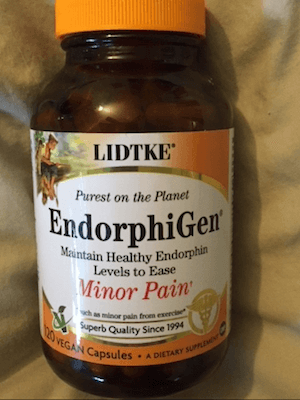
For DPA I have used the Lidtke Endorphigen product for years and it’s a firm favorite with my clients (and I’ve used it myself).

I recently purchased  a bottle of Doctor’s Best D-Phenylalanine to test and it works just as well as the Lidtke product.

If you are a practitioner, join us in The Balancing Neurotransmitters: the Fundamentals program. It’s an opportunity to interact with me and other practitioners who are also using the amino acids.

Do you have any of the low endorphin and/or low catecholamine symptoms and have you seen benefit with DPA, DLPA and/or tyrosine?  If yes, please share what benefits.

Has this blog provided clarification on DPA vs DLPA, and will you be changing how you use these amino acids going forward?

If you’re a practitioner please share what you use with clients/patients.

Feel free to ask your questions here too.
Filed Under: Amino Acids, Emotional Eating, Pain, Women's health Tagged With: amino acids, anxiety, anxious, catecholamines, cfs, comfort eating, d-phenylalanine, Dark chocolate, dl-phenylalanine, DLPA, DPA, emotional support, endorphins, energy, Fibromyalgia, focus, heart-ache, hug, insomnia, motivation, neurotransmitters, pain, symptoms, tyrosine, weepiness, What is the difference between DPA and DLPA

How much GABA should I use for my anxiety? It depends on your unique needs (and there is an extremely large variation in dosing)

February 25, 2022 By Trudy Scott 55 Comments

gaba dosage and needs

GABA is a calming amino acid, used as a supplement, to ease low GABA levels. With low GABA you’ll experience physical-tension and stiff-and-tense-muscles type of anxiety, panic attacks and insomnia. You may feel the need to self-medicate to calm down, often with alcohol but sometimes with carbs and sugary foods. GABA also helps with muscle spasms and provides pain relief when muscles are tight.

One of the most common questions I get from individuals who are excited to hear about the benefits of GABA but are totally new to using this amino acid is: “How much GABA should I use for my anxiety?” Even individuals who may be familiar with GABA and have even experimented with it themselves and are seeing some benefits may also have this question.

Most are not aware of the extremely large variations in dosing that may work for different individuals. Today I’ll share some examples to illustrate both the wonderful benefits and this range of dosing which can be as much as a 1000x to 2000x variation in some instances!

Syd gets sleep and body anxiety benefits with just 1.5 mg to 3 mg GABA

As you can see in this first example, Syd gets sleep and body anxiety benefits with just 1.5 mg to 3 mg GABA. She shared this on a recent blog post where I discussed how using too much GABA can cause a niacin-like flushing sensation

I think it’s useful to note that some, like me, start out with tiny doses and still get benefits with no side effects. I take around 1.5 mg to 3 mg GABA at a time and it works for me! Really helps me sleep at night.

I also take approximately 1.5mg if I feel body anxiety. I divide a melt-able 25mg tablet into 8ths or less. (Very approximate, of course. Sometimes it’s just crumbs!)

Right now, anything higher and I’m a wet noodle the next day, meaning I feel super depleted and can hardly stand up. But, no niacin flush-like symptoms.

I appreciate her sharing and I’m so glad she found her ideal dose. As you can see it’s really really low. We call folks like Syd “pixie dust” people because they do really well with tiny tiny doses. It also shows that some folks get flushed with too much GABA and some don’t. Syd just feels depleted.

In case you’re wondering which product Syd is using, it’s the Kal 25 mg GABA, which she breaks apart.

To give this perspective, a typical starting dose is 125mg GABA for adults and half that for children. I share more below on this and how to use the symptoms questionnaires and do a trial.

Christina’s agoraphobic client was able to leave the house with 3000 mg GABA

A colleague, Christina Veselak, MS, LMFT, CN shared this feedback about her client who had agoraphobia i.e. fear of outdoor spaces:

I once had a profoundly anxious, agoraphobic client who I sent home with instructions to trial GABA until she either got relief from her anxiety or an adverse reaction. She came back a few days later to say that she had arrived at 3000 mg of GABA in the morning as her ideal dose.

That dose allowed her not only to leave her bedroom but also leave her house, socialize and babysit her hyperactive grandsons!

Most of my other clients could not tolerate anything near to that dose without getting an adverse reaction but it was perfect for her.

This really adds perspective to the range of doses that folks may respond to. This dosage is 1000x higher than Syd’s maximum dose and 2000x higher than her lowest dose!

Let’s address this question: How much GABA should I use for my anxiety?

The answer is this – it depends on your unique needs and biochemistry. I know it’s not the answer you (and almost everyone else too) probably want to hear but there really is no one-size-fits-all when it comes to GABA and the other amino acids.

The best way to determine if you may have low GABA and may benefit from using GABA is to look at the low GABA symptoms, rate them on a scale of 1-10, with 10 being worst, do a trial of GABA and rate the symptoms again right afterwards (in the next 2 to 30 minutes).

Here are the symptoms.

From there you continue to adjust up (or down) over the next few weeks to find your ideal dose. If you go too high you may experience an uncomfortable tingling niacin-like flush.

I can share this: for GABA, 125mg is a typical starting dose for adults that I use with my clients. Half that or less is a good ballpark for starting a trial for children. As with all the amino acids, they are always best used sublingually and taken away from protein.

Below is an example from someone who figured out 1-3 of the 125 mg GABA Calm product was ideal for her own needs.

Melissa is much calmer, sleeps well and stopped craving sweets with 125 mg to 375 mg GABA Calm a day

Melissa started using Source Naturals GABA Calm in anticipation of holiday travel and holiday gatherings and shared how much she benefited:

I have been taking 1-3 per day for two weeks. I’m glad I bought it before traveling home for Christmas – I was cool as a cucumber at the airport and was much calmer when visiting family and friends compared to last year!

The true test of its efficacy will be in two weeks when the semester starts. For now, I notice a general calmness and am sleeping well.

An unexpected result was that I stopped craving sweets after about a week of taking it!

And how wonderful for her! And we have much appreciation for her sharing her success.

These results at this dosage are pretty typical for the majority of my clients. Of course there may need to be adjustments seasonally (possibly needing less after the holidays and closer to spring) or more around her period or more with added stresses in her life.

You can read more about the GABA Calm product she used here (you can find it in my online supplement store too).  

Resources if you are new to using GABA as a supplement

If you are new to using the the amino acid GABA as a supplement, here is the Amino Acids Mood Questionnaire from The Antianxiety Food Solution (you can see the low GABA and other low neurotransmitter symptoms)

If you suspect low levels of GABA or low serotonin and do not yet have my book, The Antianxiety Food Solution – How the Foods You Eat Can Help You Calm Your Anxious Mind, Improve Your Mood, and End Cravings, I highly recommend getting it and reading it before jumping in and using amino acids on your own so you are knowledgeable. And be sure to share it with the team you or your loved one is working with.

The book doesn’t include product names (per the publisher’s request) so this blog, The Antianxiety Food Solution Amino Acid and Pyroluria Supplements, lists the GABA products that I use with my individual clients and those in my group programs.

If you don’t feel comfortable reading my book, doing the low GABA symptoms questionnaire and doing trials of GABA on your own, you can get guidance from me in the GABA Quickstart Program.

If you are a practitioner, join us in The Balancing Neurotransmitters: the Fundamentals program. AS you’ve learned today, there are many nuances and best practices when using the amino acids. And it’s an opportunity to interact with me and other practitioners who are also using the amino acids.

What have you found to be your ideal dose of GABA? And how has it helped you?

What dose did you start with and did you go too high and then have to back down again to get to your ideal dose? (be sure to share which product worked for you too)

Are you surprised to learn about this huge variation in dosing GABA?  And if yes do you feel  inspired to experiment with your current dosing?

If you’re a practitioner have you seen these variations?

Feel free to ask your questions here too.
Filed Under: Anxiety, GABA, Insomnia, Sugar addiction Tagged With: Agoraphobia, alcohol, anxiety, calming amino acid, carbs, GABA, GABA Calm, GABA Quickstart program, how much, insomnia, pain, panic attacks, physical-tension, self-medicate, sleep, sugary foods, to calm down, unique needs, variation in dosing

Wean off prescription pain medication, improve sleep and reduce emotional eating with DPA (an endorphin-boosting amino acid)

September 3, 2021 By Trudy Scott 19 Comments

dpa

A question about using the amino acid DPA (d-phenylalanine) to help wean off prescription pain medication was posted on the blog. She was also hoping it would help ease her pain while she was weaning and improve her poor sleep too. I share my feedback on DPA for weaning, timing of vitamin C, additional information for sleep support and using DPA for emotional eating too. Concerns about oxalates and pain are mentioned and the importance of a comprehensive approach.

Here is the question that was posted:

Hi Trudy, I am trying to get off prescription pain medication and have read that DPA really helps – do you have any knowledge and/or experience with this?

There is a very popular opiate withdrawal support website that recommends DPA 500mg 3x/daily. Since amino acids need to be taken away from food and other amino acids, I feel like it could be very easy to make the DPA go to waste if not taken at exactly the right time every day.

The insomnia is the worst part of opiate withdrawal for me – days can go by with only 20-45 minutes of sleep. I have a little one to care for and the stress of no sleep just makes me want to give up.

No sleep worsens my physical pain as I toss and turn for hours on end. It isn’t a surprise that then causes terrible emotional distress.

One more question…since Vitamin C does help withdrawal does it affect/break down DPA?  I take a liposomal version multiple times a day.

Here is my response: Yes, DPA (d-phenylalanine) does help with withdrawal from prescription pain medication and I’ve used it for this purpose with great success with many clients. It does need to be used away from protein and the dosing can vary for each person.

A starting dose of DPA is 500mg and it can be used 3- 4 x day to start, and we increase from there based on the unique need of each person. We typically adjust the DPA up as the prescription medication is tapered very slowly, and under the guidance of the prescribing physician.

I share more about her vitamin C and insomnia questions below.

If you are new to DPA and endorphin support

DPA/d-phenylalanine is an amino acid used as a supplement.

DPA destroys the enzyme that breaks down/inhibits endorphins and in essence raises endorphin levels. Endorphins are feel-good chemicals that you experience with an endorphin rush when you go for a run or when someone gives you a big hug, when you show kindness to someone or an individual does something nice for you.

Taking the amino acid, DPA, as a supplement helps to raise your endorphins and helps when you feel weepy and overly emotional and reduces the need to self-medicate with treats as a reward or for comfort (more on that below). This amino acid is a favorite with so many of my clients and community because it makes them feel so lovely.

In addition to helping with emotional pain, DPA also helps with easing physical pain. And for this reason it can be used to help get off prescription pain medications.

In summary, these are the signs of low endorphins:

  • Heightened sensitivity to emotional pain
  • Heightened sensitivity to physical pain
  • Crying or tearing up easily
  • Eating to soothe your mood, or comfort eating
  • Really, really loving certain foods, behaviors, drugs, or alcohol
  • Craving a reward or numbing treat

DPA and endorphin support for pain: the research

Here is one paper, which discusses how DPA inhibits or breaks down enkephalins (endorphins are closely related compounds) and as a result helps with depression and pain, and acts as an anti-inflammatory: “proven to be beneficial in many human patients with chronic, intractable pain.” The authors also state that a compound such as DPA “may alleviate other conditions associated with decreased endorphin levels such as opiate withdrawal symptoms.”

This paper discusses beta-endorphins and the reward mechanism and how they can induce euphoria, reduce pain and ease addictions and distress: “Long known for its analgesic effect, the opioid beta-endorphin is now shown to induce euphoria, and to have rewarding and reinforcing properties.”

I would love to see DPA used instead of pain meds when possible or used in conjunction with prescription pain medications when they are needed.

I am also very curious to know which opiate withdrawal support website is recommending DPA. I’m so pleased to hear this because it helps so much – for physical pain relief and for weaning off pain medications.

Is DPA the same as DLPA?

DLPA (dl-phenylalanine), although similar sounding, is not the same as DPA and only offers about half as much endorphin support. It also provides dopamine/catecholamine support (i.e. focus, motivation, mood, energy) and this aspect means DLPA has the same precautions as tyrosine. It also means DLPA can affect sleep if used from midafternoon onwards.

I seldom have clients use DLPA and prefer DPA for endorphin support and tyrosine for dopamine/catecholamine support if needed.

Keep in mind, the amino acid DPA, is not the same as the omega-3 fatty acid called docosapentaenoic acid and also abbreviated as DPA.

The brand of DPA that I recommend for my clients

The brand I recommend for my clients is Lidtke Endorphigen. You can read about it and the other supplements I recommend on the supplements blog here.

My recommendation has always been to chew the DPA capsule for the best effects and to get results quickly (in 2-5 minutes). Instead of chewing the whole capsule I now recommend opening the capsule into your mouth. You can read more about using DPA and some client feedback here.

lidtke endorphigen

I’ve used Endorphigen personally too and it’s always with me as part of my travel first-aid kit. I write about using DPA, GABA and acupuncture for pain relief after my back injury and I had DPA, GABA and arnica on hand when I sprained my ankle while hiking in Red Rocks.

Benefits include reduction of emotional/comfort eating too

As I mentioned above, with DPA there is the bonus benefit of endorphin support to help end emotional/comfort eating where you are seeking treats as a reward i.e it helps with physical pain and emotional pain.

You may relate to this if you are someone who would say or think “I just LOVE chocolate-chip cookies!” or “PLEEEEASE don’t make me give up my treats, it’s all I have left after I gave up my coffee and wine! I deserve something nice!”

This emotional attachment to sweet treats and reward-eating is very common with low endorphins.

Using vitamin C with the amino acids and watching for oxalate pain adverse effects

She is correct, vitamin C is best used away from the amino acids so as not to reduce the beneficial effects.

I do caution clients to find the right amount of vitamin C as too much can increase pain in individuals with dietary oxalate issues. I write about oxalate crystal disease here and vitamin C and oxalates here. Both can aggravate insomnia too and increase anxiety.

Address low serotonin, low GABA and/or high cortisol for sleep too

With sleep issues we may also look into supporting low serotonin with tryptophan or 5-HTP,  and/or low GABA levels with GABA and/or theanine. These amino acids can also help with reducing pain in some instances.

Opioids have an endocrine effect via impacts on the hypothalamic-pituitary-gonadal axis, affecting sex hormones levels and cortisol levels. Endocrine dysfunction can adversely impact sleep and make anxiety worse, and needs to be addressed. GABA and serotonin support can help with some of the sex hormone imbalances and Seriphos helps when cortisol is too high.

A comprehensive approach is key

Of course, a comprehensive approach is key, so it’s important to remove inflammatory foods (gluten, maybe all grains, sugar, caffeine, unhealthy fats etc), add fish oil if omega-3s are low and include anti-inflammatory nutrients such as turmeric.

And we always want to figure out the root cause of the pain and address it. Also, ruling out if dietary oxalates (and vitamin C) are an issue is important and often overlooked.

I’m a big fan of working with a physical therapist and acupuncturist too.

Resources if you are new to using the amino acids as supplements

If you are new to using the amino acids, DPA, tryptophan or GABA, as supplements and want to know more, here is the Amino Acids Mood Questionnaire from The Antianxiety Food Solution and a brief overview here, Anxiety and targeted individual amino acid supplements: a summary.

If you suspect low endorphins, low serotonin or low GABA levels and do not yet have my book, The Antianxiety Food Solution – How the Foods You Eat Can Help You Calm Your Anxious Mind, Improve Your Mood, and End Cravings, I highly recommend getting it and reading it before jumping in and using amino acids so you are knowledgeable.

Can you relate to any of this? Has DPA helped your pain and/or helped you withdraw from prescription pain meds? And did you even know this was an option?

Did it also help you sleep and make you less anxious/worried because of the reduction in pain?

What about less emotional eating when using DPA/Endorphigen?

Feel free to post your questions too.

Filed Under: Cravings, Medication, Pain Tagged With: comfort eating, d-phenylalanine, DPA, emotional eating, Endorphigen, endorphins, GABA, get off pain medication, insomnia, Lidtke, opioid, oxalates, pain, pain medication, poor sleep, sleep, tryptophan, vitamin C, wean off prescription pain medication

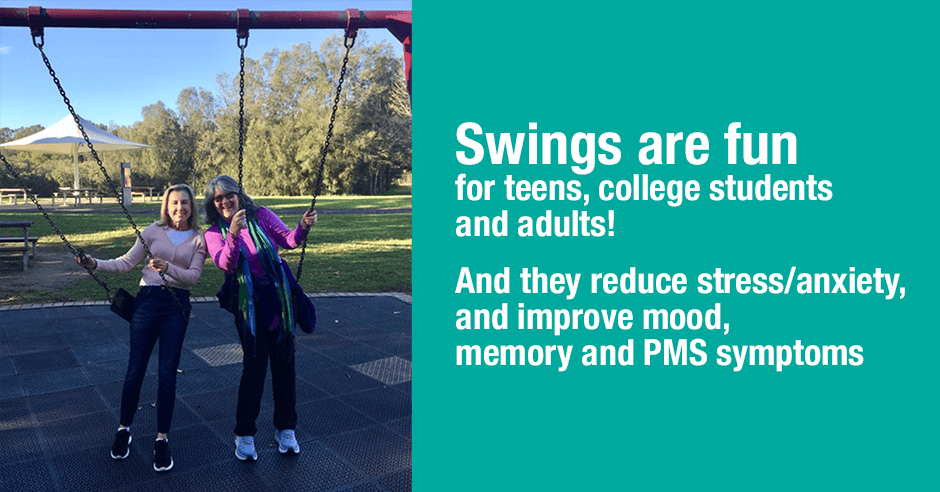
Swings are fun for teens, college students and adults! And they reduce stress/anxiety, and improve mood, memory and PMS symptoms

June 18, 2021 By Trudy Scott 21 Comments

swings for anxiety

Earlier this month I met up with a dear childhood friend for a walk and catch-up and we both rediscovered the joy of swings. I always suggest a walk or hike or swim when meeting with friends and colleagues, and this time was no different except that I really wanted to go somewhere with a swing!

The reason that I wanted to find a swing set was because I had just read an article about swings and teen girls needing a better place to hang out. I love the outdoors and love to play, laugh and have fun, and I couldn’t resist it once I started looking at the research. I discovered all the wonderful benefits of improved mood, reduced anxiety and stress, improved cognition and memory, reduced PMS symptoms, improved social relationships and reduced pain.

These pictures are us swinging and catching up – we laughed and laughed and had such fun!  It’s hard to believe we’ve been friends for close to 50 years and it always feels like we were never apart when we do get together.

swings

Our swing experience made it extra special this time! You can see the pure joy on our faces!

Teen girls needing a better public space to hang out

The recent Bloomberg article I had read, Teen Girls Need Better Public Spaces to Hang Out shares this:

Making space for girls means rethinking which age groups need to swing and climb, how to encourage physical activity (and not just playing a sport), and how to make a safe, sheltered place for outdoor conversation.

And this about movement:

While lack of activity among teens is a major public health issue, many girls are looking for more creative, less competitive ways of moving their bodies.

It features really cool images of swings called “Swing Time.” They are designed by Höweler + Yoon Architecture and deliver “the kind of fun, physical outdoor experience with room for face-to-face conversation that many teen girls are looking for.”

As I mentioned above, I was immediately intrigued because I love the idea of outdoor play and social interaction in a safe place for young girls.

Beth Jones, a Mindset and Wellness Coach who works with teen girls and their moms incorporating movement, play and nutrition, posted the Bloomberg article on Facebook saying:

I love this idea so much. I used to love going to the playground in my teens to swing, hang out, just have a space for me. There’s a reason why my business logo has a girl on a swing. That swinging and twisting are also so great for the vestibular system and can help calm anxiety (the back and forth swinging). Maybe they should bring back some swings to middle and high schools.

I’m familiar with the use of swings in occupational therapy to address sensory processing disorders in children. But I was also very interested to know if there was any research on the health benefits of swings for teens and adults. I went searching and was very pleased with what I found, hence this blog post.

Before we get into the research I’d like to extend a big thanks to Beth Jones for the inspiration for all this! Now the research …..

PMS symptoms improved: mood, stress, anxiety, social relationships, pain and memory

This small study, Vestibular stimulation for management of premenstrual syndrome found the following benefits after 2 months of using the swing in females 18-30 years of age:

  • Depression and stress scores decreased
  • Anxiety scores decreased (although it was not statistically significant)
  • Serum cortisol levels decreased.
  • Social relationships improved
  • Systolic blood pressure decreased (there was no change in diastolic blood pressure and pulse rate)
  • Pain levels decreased
  • Spatial and verbal memory improved

These are amazing benefits using something as simple as a swing. I feel we could safely extrapolate to younger teen girls and even women above 30 years of age too.

Swings for stress management in college students

Vestibular stimulation using swings is the specialty of Dr. Mukkadan, Founder and Research Director of Little Flower Medical Research Centre in India. Together with his team, he published the above PMS paper and this paper on Vestibular Stimulation for Stress Management in Students.

They recommend “placement of swings in college campuses … which may be a simple approach to alleviate stress among college students.”

This is such a simple and yet powerful (and also fun!) intervention especially given the huge rise in anxiety and mental health issues in students. It would be a perfect approach to use in conjunction with amino acid supplements and nutritional psychiatry for these students.

According to another study published by his team, college students will also see improved spatial and verbal memory.

What about swings for teen boys and all adults too?

Once I saw the images in the Bloomberg article, and after reading the research, and after playing on swings again after all these years, my thinking started expanding. I believe everyone could benefit from using a swing.

I certainly wanted to swing right away (hence the walk and swing meet up with my friend a few weeks ago) and now seek out swings when I go for walks. I would love to see an area set aside in parks for teen girls (and boys too) and as Beth says, in middle and high schools too. And how about a designated area in parks for adults who want to swing too?

There are now parks with Liberty swings for children and adults in wheelchairs. The vestibular benefits of rocking chairs are helping veterans dealing with substance abuse and mood issues. I also see an application for stress reduction in the workplace. The opportunities are endless.

Here are some of my recommendations:

  • Seek out swings in parks. Give it a try to see how you feel and how much you enjoy it!
  • Advocate for swings in your communities, middle schools, high schools, colleges and place of business.
  • Get a rocking chair for yourself and/or older family members
  • Get a swing for your backyard (suitable for teens and adults). I’m looking into options for my backyard and will share more once I find some suitable options.

When did you last go for a swing as an adult? How much fun was it!?

If it’s been some time, does this – my pictures and the research – inspire you to want to look for a swing and have a go again?

Does your teen or college student seek out outdoor play like swings and see benefits?

If you are an OT/occupational therapist or exercise physiologist or other health professional using vestibular therapy with swings please do share so we can all learn.

Feel free to post any questions here too.

Filed Under: Anxiety, Joy and happiness, Stress, Teens, Women's health Tagged With: adults, amino acids, anxiety, calm anxiety, cognition, college students, Dr. Mukkadan, fun, joy, laugh, liberty swing, memory, mood, nutritional psychiatry, pain, play, PMS, premenstrual syndrome, social relationships, stress, stress management, swing, Swings, teen girls, teens, vestibular system, veterans

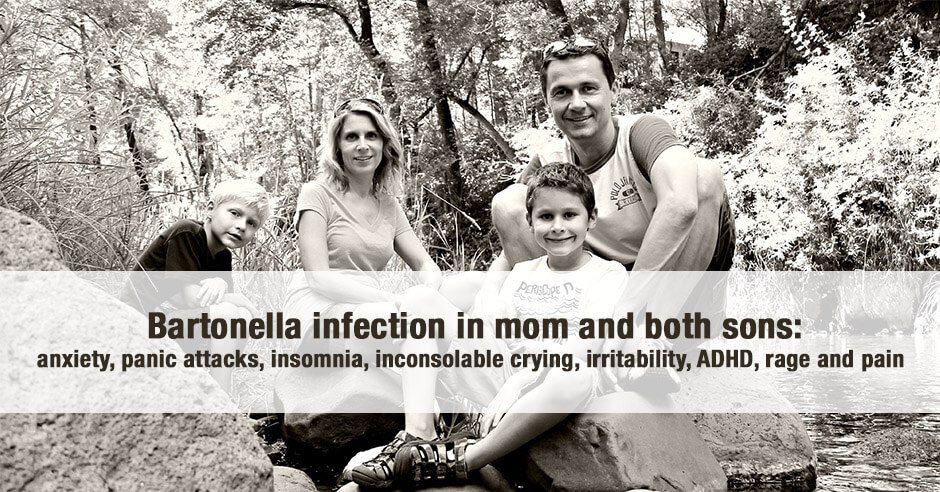
Bartonella infection in mom and both sons: anxiety, panic attacks, insomnia, inconsolable crying, irritability, ADHD, rage and pain

March 12, 2021 By Trudy Scott 32 Comments

bartonella infection

A mom and both her sons experienced a variety of emotional/mood and pain symptoms between them as a result of a Bartonella infection: anxiety, panic attacks, insomnia, irritability, inconsolable crying, ADHD, rage, eye pain, joint pain and pain in the legs. This family case study was published in Parasites and Vectors in 2013. I would love to see individual amino acids being used to ease some of these symptoms while the infection is being treated (more on this below).

Here are some of the emotional and mood-related symptoms they experienced:

  • the mother and both sons developed recurrent rash-like skin lesions, disruptive sleep patterns and both boys developed anxiety accompanied by episodes of inconsolable crying, irritability, and panic attacks
  • subsequent to the spider infestation of the apartment, [the mother] developed fatigue, memory difficulties, headaches, irritability, eye pain, insomnia, chest pain, blurred vision, shortness of breath, rash and skin lesions and anxiety attacks.
  • The youngest son… awakened at night crying and complaining of pain in his legs
  • The older son experienced increased irritability and rage episodes. In addition, the boy’s teacher indicated a lack of attention during class, and suggested that the child might have an Attention Deficit Hyperactivity Disorder (ADHD).

The youngest son also developed severe neurological symptoms and was diagnosed with Guillain-Barre syndrome and Chronic Inflammatory Demyelinating Polyradiculoneuropathy.

You can read the full investigation, timing, sequence of events and all the symptoms in the paper: Bartonella henselae infection in a family experiencing neurological and neurocognitive abnormalities after woodlouse hunter spider bites

Creating awareness, motivating, inspiring and educating

I’d like to highlight some of the reasons for sharing this paper:

  • creating more awareness about the emotional/mood symptoms that can occur with a Bartonella henselae infection
  • educating about this infection in general so other families can find solutions quicker than this family did
  • motivating and inspiring you to not give up looking for answers for you and your family – this mom suspected Bartonella infection after doing internet searches (almost 3 years after all this started)
  • creating more awareness about possible hosts other than ticks (in this case woodlice and woodlice hunter spiders)
  • highlighting how family members exposed to the same infection can have different symptoms and how some family members may not be infected at all (in this case the father was not affected)
  • highlighting that some individuals (the mom in this case) do not recall being bitten and yet still get sick
  • educating on how amino acids can offer much symptom relief during the investigation and treatment of the infection (more on this below)

Treatment with antibiotics and Chinese herbs

This family was successfully treated with antibiotics and other medications once it was determined Bartonella was the cause of their symptoms:

The parents report that the [youngest] child is actively socializing with other children and now runs and plays like he had never done before.

Following this antibiotic course, the mother reported substantial overall improvement and was almost symptom free. However, she continues to experience occasional irritability, confusion, dizziness, nausea, and pain involving the shoulder, hip and the bottoms of her feet.

One of the common symptoms of Bartonella is burning feet and this article, How to Put Out the Fire in Your Burning Bartonella Feet, mentions a herb from the Zhang protocol:

In Chinese herbal medicine, an herb called “houttuynia” is classified as “Clearing Heat and Relieving Toxicity.” This herb has been successfully used to treat Bartonella by a Chinese physician in New York named Dr. Q. Zhang. This herb has antibacterial and antiviral properties in addition to clearing heat and toxins. Fortunately this herb can be combined with other herbs to help relieve Bartonella symptoms.

I mention this because I am personally familiar with the Zhang protocol, having used it when working with Dr. Darin Ingels to address my Lyme disease (Borrelia). Dr. Ingels is the author of  The Lyme Solution and writes about the Zhang protocol in this excellent book.

Using amino acids to address anxiety, panic attacks, sleep problems, crying and pain

Individual amino acids, used as supplements, can offer much symptom relief during the investigation and treatment of the Bartonella infection, however they are seldom recommended. I would love to see this change and become the norm.

In this blog post, GABA helps with Lyme anxiety (while addressing the underlying disease), Tricia shares that “Lyme, Bartonella and Babesia are all known to cause anxiety and other psychological disorders ranging from mild to very severe.” She also shares that her daughter used GABA:

We’ve used Source Naturals GABA Calm sublinguals with good results. I learned about GABA helping anxiety and because I was treating my young daughter I purchased this because it was easy for her to take.

Looking at some of the emotional symptoms this family experienced, and how the amino acids could have helped:

  • anxiety, irritability, and panic attacks: can be eased by using tryptophan/5-HTP
  • disruptive sleep patterns and waking: can be helped by using calming GABA
  • inconsolable crying: can be eased by using DPA to boost endorphins
  • headaches, pain in the legs, shoulders and elsewhere: can be eased with DPA and/or tryptophan
  • rage episodes: can be eased with tryptophan/5-HTP
  • ADHD: can be helped with GABA in some instances and 5-HTP in other instances

I feel for this poor family. It certainly was a very complex family case and reflects the need to dig deep to find the root cause. And I appreciate the case being written up so more awareness can be created.

Have you or your family experienced something like this? And has your practitioner introduced you to the amino acids for some symptom relief while they are addressing the infection/s?

If you’re a practitioner working with Lyme disease and coinfections such as Bartonella, have you seen cases similar to this one? Do you use amino acids for some symptom relief while addressing the infection/s?

Feel free to post your questions and feedback in the comments below.

Filed Under: ADHD, Anxiety, Children/Teens, Lyme disease and co-infections Tagged With: ADHD, amino acids, anxiety, Bartonella henselae infection, Bartonella infection, burning feet, DPA, emotional, eye pain, GABA, inconsolable crying, insomnia, irritability, joint pain, Lyme anxiety, mood, neurocognitive, neurological, pain, pain in the legs, panic attacks, rage, sleep, The Lyme Solution book, tryptophan, woodlouse hunter spider bites, Zhang protocol

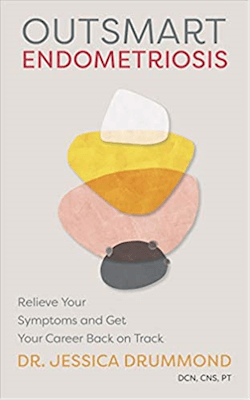
Outsmart Endometriosis by Dr. Jessica Drummond

February 5, 2021 By Trudy Scott Leave a Comment

outsmart endometriosis

Dr. Jessica Drummond, DCN, CNS, PT, is a good friend and colleague whose work in women’s health I highly respect. Her book, Outsmart Endometriosis (now available in paperback), is integrative, evidence-based, practical and empowering!

She is a leader in the field and her vast experience and compassion makes this a must-read. As a nutritionist working with women with anxiety, I am thrilled to have this comprehensive evidence-based book as a resource for those in my community who are on their endometriosis healing journey, and for practitioners who work with women with endometriosis.

Here is the official book blurb:

Endometriosis does not have to ruin your career.

Wouldn’t it be nice to stop worrying about how your endometriosis symptoms are going to hold you back from hitting your career goals? Or to have tools that you can use to reduce your pain and manage your energy so you don’t have to miss out on important opportunities? Sometimes, it can feel like endometriosis is controlling your life.

Sought-after endometriosis, pelvic pain, and nutrition expert Dr. Jessica Drummond, DCN, CNS, PT, has helped thousands of women relieve their pelvic pain in over twenty years of practice. In Outsmart Endometriosis, she offers not another “one-size-fits-none endo diet,” but a comprehensive approach to managing your symptoms using simple, repeatable strategies, and without having to wait for an appointment with your doctor.

In Outsmart Endometriosis, Dr. Drummond can help you to:

  • Stop missing important work meetings or deadlines because of your endometriosis pain, fatigue, anxiety, and/or digestive symptoms
  • Let go of your worries about your fertility
  • Clear your brain fog so you can do your best work
  • Get control over your symptoms so you can feel more comfortable, and no longer just power through or be forced to quit
  • Build a team of the right professionals to support you along the way

Read Outsmart Endometriosis and become the boss of your symptoms and your career.

Get your copy on Amazon here (my Amazon link) or from Target, Barnes and Noble or independent bookstores.  You can also download book bonuses here.

Filed Under: Anxiety, Women's health Tagged With: anxiety, brain fog, digestive symptoms, Dr. Jessica Drummond, endometriosis, fatigue, fertility, nutrition, pain, pelvic pain, team, women, women’s health

  • « Go to Previous Page
  • Page 1
  • Interim pages omitted …
  • Page 3
  • Page 4
  • Page 5
  • Page 6
  • Page 7
  • Interim pages omitted …
  • Page 9
  • Go to Next Page »

Primary Sidebar

GABA QuickStart Homestudy

gaba quickstart homestudy

Free Report

9 Great Questions Women Ask about Food, Mood and their Health

You'll also receive a complimentary subscription to my ezine "Food, Mood and Gal Stuff"


Connect with me

Popular Posts

  • Amino Acids Mood Questionnaire from The Antianxiety Food Solution
  • The Antianxiety Food Solution Amino Acid and Pyroluria Supplements
  • Pyroluria Questionnaire from The Antianxiety Food Solution
  • Collagen and gelatin lower serotonin: does this increase your anxiety and depression?
  • Tryptophan for the worry-in-your-head and ruminating type of anxiety
  • GABA for the physical-tension and stiff-and-tense-muscles type of anxiety
  • The Antianxiety Food Solution by Trudy Scott
  • Seriphos Original Formula is back: the best product for anxiety and insomnia caused by high cortisol
  • Am I an anxious introvert because of low zinc and vitamin B6? My response to Huffington Post blog
  • Vagus nerve rehab with GABA, breathing, humming, gargling and key nutrients

Recent Posts

  • Her cravings for chips and peanut butter were triggered by stress: GABA ends cravings and reduces physical tension and fear of heights
  • It is truly miraculous to be able to move through life without crippling anxiety and panic
  • GABA and tryptophan combo provide immediate and noticeable relief for tremors and cervical dystonia in just 7 days
  • Red light therapy for back and neck pain, plantar fasciitis and low mood – a complement to the amino acids GABA, DPA and tryptophan
  • What do I use instead of Seriphos to help lower high cortisol that is affecting my sleep and making me anxious at night?

Categories

  • 5-HTP
  • AB575
  • Addiction
  • ADHD
  • Adrenals
  • Alcohol
  • Allergies
  • Alzheimer's disease
  • Amino Acids
  • Anger
  • Antianxiety
  • Antianxiety Food Solution
  • Antidepressants
  • Anxiety
  • Anxiety and panic
  • Autism
  • Autoimmunity
  • benzodiazapines
  • Bipolar disorder
  • Books
  • Caffeine
  • Cancer
  • Candida
  • Children/Teens
  • Collagen
  • Cooking equipment
  • Coronavirus/COVID-19
  • Cravings
  • Depression
  • Detoxification
  • Diabetes
  • Diet
  • DPA/DLPA
  • Drugs
  • EFT/Tapping
  • EMF
  • EMFs
  • Emotional Eating
  • Endorphins
  • Environment
  • Essential oils
  • Events
  • Exercise
  • Fear
  • Fear of public speaking
  • Fertility and Pregnancy
  • Fish
  • Food
  • Food and mood
  • Functional neurology
  • GABA
  • Gene polymorphisms
  • General Health
  • Giving
  • Giving back
  • Glutamine
  • Gluten
  • GMOs
  • Gratitude
  • Gut health
  • Heart health/hypertension
  • Histamine
  • Hormone
  • Hyperparathyroidism
  • Hypoglycemia
  • Immune system
  • Inflammation
  • Insomnia
  • Inspiration
  • Introversion
  • Joy and happiness
  • Ketogenic diet
  • Lithium orotate
  • Looking awesome
  • Lyme disease and co-infections
  • MCAS/histamine
  • Medication
  • Men's health
  • Mental health
  • Mercury
  • Migraine
  • Mold
  • Movie
  • MTHFR
  • Multiple sclerosis
  • Music
  • NANP
  • Nature
  • Nutritional Psychiatry
  • OCD
  • Osteoporosis
  • Oxalates
  • Oxytocin
  • Pain
  • Paleo
  • Parasites
  • Parkinson’s disease
  • PCOS
  • People
  • PMS
  • Postpartum
  • PTSD/Trauma
  • Pyroluria
  • Questionnaires
  • Real whole food
  • Recipes
  • Research
  • Schizophrenia
  • serotonin
  • SIBO
  • Sleep
  • Special diets
  • Sports nutrition
  • Stress
  • Sugar addiction
  • Sugar and mood
  • Supplements
  • Teens
  • Testimonials
  • Testing
  • The Anxiety Summit
  • The Anxiety Summit 2
  • The Anxiety Summit 3
  • The Anxiety Summit 4
  • The Anxiety Summit 5
  • The Anxiety Summit 6
  • Thyroid
  • Thyroid health
  • Toxins
  • Tryptophan
  • Tyrosine
  • Uncategorized
  • Vegan/vegetarian
  • Women's health
  • Yoga

Archives

  • May 2026
  • April 2026
  • October 2025
  • September 2025
  • August 2025
  • July 2025
  • June 2025
  • May 2025
  • April 2025
  • March 2025
  • February 2025
  • January 2025
  • November 2024
  • October 2024
  • September 2024
  • August 2024
  • July 2024
  • June 2024
  • May 2024
  • April 2024
  • March 2024
  • February 2024
  • January 2024
  • December 2023
  • November 2023
  • October 2023
  • September 2023
  • August 2023
  • July 2023
  • June 2023
  • May 2023
  • April 2023
  • March 2023
  • February 2023
  • January 2023
  • December 2022
  • November 2022
  • October 2022
  • September 2022
  • August 2022
  • July 2022
  • June 2022
  • May 2022
  • April 2022
  • March 2022
  • February 2022
  • January 2022
  • December 2021
  • November 2021
  • October 2021
  • September 2021
  • August 2021
  • July 2021
  • June 2021
  • May 2021
  • April 2021
  • March 2021
  • February 2021
  • January 2021
  • December 2020
  • November 2020
  • October 2020
  • September 2020
  • August 2020
  • July 2020
  • June 2020
  • May 2020
  • April 2020
  • March 2020
  • February 2020
  • January 2020
  • December 2019
  • November 2019
  • October 2019
  • September 2019
  • August 2019
  • July 2019
  • June 2019
  • May 2019
  • April 2019
  • March 2019
  • February 2019
  • January 2019
  • December 2018
  • November 2018
  • October 2018
  • September 2018
  • August 2018
  • July 2018
  • June 2018
  • May 2018
  • April 2018
  • March 2018
  • February 2018
  • January 2018
  • December 2017
  • November 2017
  • October 2017
  • September 2017
  • August 2017
  • July 2017
  • June 2017
  • May 2017
  • April 2017
  • March 2017
  • February 2017
  • January 2017
  • December 2016
  • November 2016
  • October 2016
  • September 2016
  • August 2016
  • July 2016
  • June 2016
  • May 2016
  • April 2016
  • March 2016
  • February 2016
  • January 2016
  • December 2015
  • November 2015
  • October 2015
  • September 2015
  • August 2015
  • July 2015
  • June 2015
  • May 2015
  • April 2015
  • March 2015
  • February 2015
  • January 2015
  • December 2014
  • November 2014
  • October 2014
  • September 2014
  • August 2014
  • July 2014
  • June 2014
  • May 2014
  • April 2014
  • March 2014
  • February 2014
  • January 2014
  • December 2013
  • November 2013
  • October 2013
  • September 2013
  • August 2013
  • July 2013
  • June 2013
  • May 2013
  • April 2013
  • March 2013
  • February 2013
  • January 2013
  • December 2012
  • November 2012
  • October 2012
  • August 2012
  • July 2012
  • June 2012
  • May 2012
  • April 2012
  • March 2012
  • February 2012
  • January 2012
  • December 2011
  • November 2011
  • October 2011
  • September 2011
  • August 2011
  • July 2011
  • June 2011
  • May 2011
  • April 2011
  • March 2011
  • February 2011
  • January 2011
  • December 2010
  • October 2010
  • September 2010
  • July 2010
  • May 2010
  • April 2010
  • March 2010
  • February 2010
  • January 2010
  • November 2009

Share the knowledge!

The above statements have not been evaluated by the Food and Drug Administration. Products listed in this website are not intended to diagnose, treat, cure or prevent any disease.

The information provided on this site is for informational and educational purposes only and is not intended as a substitute for advice from your physician or other health care professional. You should consult with a healthcare professional before starting or modifying any diet, exercise, or supplementation program, before taking or stopping any medication, or if you have or suspect you may have a health problem.


Copyright © 2026 Trudy Scott. All Rights Reserved. | Privacy | Terms and Conditions | Refund Policy | Medical Disclaimer

Free Report

9 Great Questions Women Ask about Food, Mood and their Health

You’ll also receive a complimentary subscription to my ezine “Food, Mood and Gal Stuff”