• Skip to primary navigation
  • Skip to main content
  • Skip to primary sidebar

everywomanover29 blog

Food, Mood and Women's Health – Be your healthiest, look and feel great!

  • Blog
  • About
  • Services
  • Store
  • Resources
  • Testimonials
  • The Book
  • Contact
  • Search this site

gut

The amino acid glutamine improves low mood by addressing gut health, and it has calming effects too

October 3, 2025 By Trudy Scott 2 Comments

glutamine and low mood

Recent research has shown that the amino acid glutamine can positively affect gut health by supporting the gut microbiome, gut mucosal wall integrity, and by modulating inflammatory responses.

As modulated by the vagus nerve, via the enteric nervous system, the gut-brain connection can impact the brain’s neurochemical environment. Poor gut health can disrupt the balance of neurotransmitters, which can result in neuropsychiatric based conditions such as depression.

Glutamine supplementation may provide significant adjunctive nutritional support in cases of depression by promoting proper gut health and function.

The above is an excerpt from the paper, The role of glutamine in supporting gut health and neuropsychiatric factors, published in 2021.

The authors do note the fact that glutamine is a “fundamental precursor to the most prevalent neurotransmitters, GABA and glutamate.” This is why glutamine supplementation can be calming for many individuals and may sometimes be too stimulating for some folks. It also highlights the importance of biochemical individuality and why it’s important to find your ideal dose (more on that below).

I appreciate their call for more research on glutamine, “as well as studies which could explore using glutamine in concert with other supportive amino acids, such as GABA and tyrosine, in an effort to restore neurotransmitter equilibrium” (more on that below too).

Read on below to learn more about how glutamine directly supports gut health and what harms the gut; how to know if glutamine will be calming or too stimulating, and how much to use; and other clues that you may benefit from glutamine; and additional resources when are new to amino acids such as glutamine, GABA and others.

How glutamine directly supports gut health and what harms the gut

From the above paper, glutamine:

1) has a positive impact on sustaining the balance of the gut microbiome
2) increases the expression of tight junction proteins and the integrity of the intestinal lining (i.e. it heals leaky gut)
3) helps to minimize the inflammatory response in situations of gut mucosal irritation (i.e the inner most lining of the digestive tract).

The authors also discuss all of the many factors that are harmful for the gut: highly processed foods, refined sugars, saturated fat, and minimal healthy fatty acids and antioxidants; lack of probiotics and prebiotics; blood sugar swings; stress and high cortisol; medications and alcohol consumption. Much of this is addressed in my book “The Antianxiety Food Solution”

It’s well-worth reading the entire paper for a full understanding of the two-way gut-brain connection via the vagus nerve and the role of the microbiome when it comes to neurotransmitter production and much more.

How to know if glutamine will be calming or too stimulating, and how much to use

As mentioned above, the authors share that glutamine is a precursor to GABA, a calming neurotransmitter i.e. it is often calming.

Glutamine is also a precursor to glutamate and can be too stimulating for some, typically when very high doses are used.

The paper mentions studies that “observed the effects of glutamine supplementation used at doses of between 15 g and 30 g,” however my recommendation is to start low and slowly increase based on your unique need. I have clients and those in my programs start with 500 mg once a day and increase to 1-3 x 500 mg, up to 3 or 4 times a day.

The only way to know if it will be calming or stimulating is to do a trial alone i.e. with no other new supplements, and carefully track the effects.

I also find using glutamine powder and holding it for 1-2 minutes on the tongue is more effective and less is often needed. This has additional benefits of stopping intense sugar cravings in their tracks (more on this below).

Other clues that you may benefit from glutamine: symptoms of low blood sugar

As mentioned above, glutamine helps reduce intense sugar cravings, and prevents low blood sugar (which can actually cause anxiety and panic attacks). This aspect is not mentioned in the paper but addressing low blood sugar is yet another application of glutamine when it comes to anxiety and low mood.

Here are all the symptoms we see with low blood sugar:

  • Crave sugar, starch or alcohol any time during the day
  • Irritable, shaky, headachey – especially if going too long between meals
  • Intense cravings for sweets
  • Lightheaded if meals are missed
  • Eating relieves fatigue
  • Agitated, easily upset
  • Nervous, anxious, panic attacks

And here are some other blog posts that illustrate some of the above:

  • Reactive hypoglycemia in binge eating disorder, food addiction and intense sugar cravings, and how glutamine stops the cravings
  • Waking with a jolt, feeling shaky and anxious: low blood sugar/hypoglycemia, glutamine and eating for blood sugar stability
  • Glutamine for hypoglycemia/low blood sugar: “500mg mixed in water works in 15 minutes and keeps me going for 2 – 3 hours”
  • “A demonic urge to eat sugar and all things sweet”: glutamine opened onto the tongue stops the urge every time!

Together with low serotonin and low GABA, addressing low blood sugar is one of the most effective approaches I use with clients to help ease anxiety.  We achieve this with the use of glutamine and by controlling blood sugar by starting the day with a breakfast that includes quality animal protein.

We may also use tyrosine if there are low dopamine symptoms and d-phenylalanine if there are low endorphin symptoms, in an “effort to restore neurotransmitter equilibrium.”

Additional resources when you are new to using glutamine, GABA or tyrosine, or other amino acids as supplements

We use the symptoms questionnaire to figure out if low blood sugar (indicating a possible need for glutamine) or low GABA (indicating a possible need for GABA or theanine) or low dopamine (indicating a possible need for tyrosine) or other neurotransmitter imbalances may be an issue for you.

If you suspect low levels of any of the neurotransmitters and do not yet have my book, The Antianxiety Food Solution – How the Foods You Eat Can Help You Calm Your Anxious Mind, Improve Your Mood, and End Cravings. I highly recommend getting it and reading it before jumping in and using amino acids on your own so you are knowledgeable. And be sure to share it with the practitioner/health team you or your loved one is working with.

There is an entire chapter on the amino acids and they are discussed throughout the book in the sections on gut health, gluten, blood sugar control (this and glutamine is covered in an entire chapter too), sugar cravings, anxiety and mood issues. The importance of quality animal protein and healthy fats is also covered.

The book doesn’t include product names (per the publisher’s request) so this blog, The Antianxiety Food Solution Amino Acid and Pyroluria Supplements, lists the amino acids that I use with my individual clients and those in my group programs.

If, after reading this blog and my book, you don’t feel comfortable figuring things out on your own (i.e. doing the symptoms questionnaire and respective amino acids trials), a good place to get help is the GABA QuickStart Program (if you have low GABA symptoms too). This is a paid online/virtual group program where you get my guidance and community support.

If you need serotonin support, the Serotonin QuickStart Program is a good place to get help. This is also a paid online/virtual group program where you get my guidance on using tryptophan and 5-HTP safely, and community support during 5 LIVE Q&A calls. You can sign up to be notified when the next live launch of this program is happening.

If you are a practitioner, join us in The Balancing Neurotransmitters: the Fundamentals program. This is also a paid online/virtual program with an opportunity to interact with me and other practitioners who are also using the amino acids.

Now I’d love to hear from you…

Has glutamine helped you with your leaky gut, low mood and/or offered calming effects?

What about intense cravings for something sweet or irritability and poor focus? And other low blood sugar symptoms?

How much do you find helps? And do you use powder or capsules?

Are you interested in a program to learn more about the safe and effective use of glutamine and/or tyrosine?

Feel free to share and ask your questions below.
Filed Under: Amino Acids, Anxiety, Depression, GABA, Glutamine, Gut health Tagged With: amino acid, blood sugar, calming, cravings, depression, GABA, glutamate, glutamine, gut, gut health, gut-brain connection, Inflammation, low mood, microbiome, mood, neuropsychiatric, neurotransmitters, serotonin, stimulating, tyrosine, vagus nerve

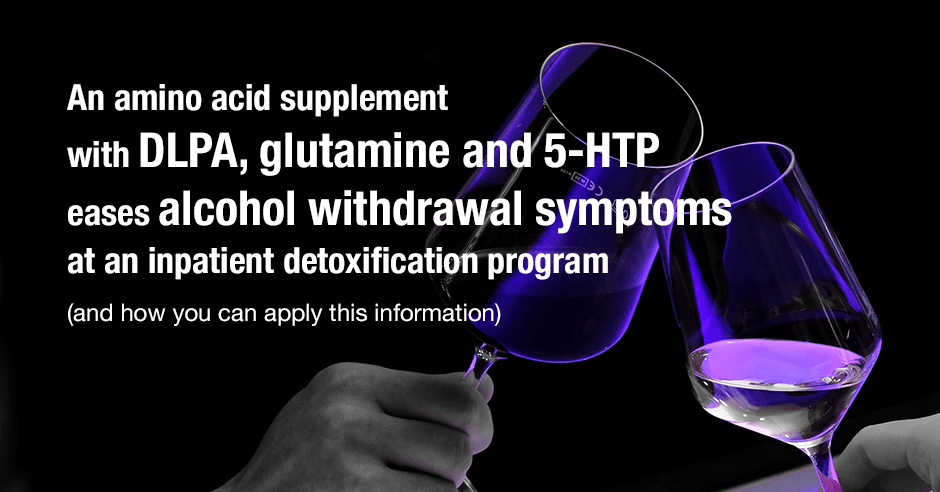
An amino acid supplement with DLPA, glutamine and 5-HTP eases alcohol withdrawal symptoms at an inpatient detoxification program

April 8, 2022 By Trudy Scott 18 Comments

amino acid and alcohol

An amino acid supplement with DLPA, glutamine and 5-HTP (and a few other nutrients) eases alcohol withdrawal symptoms at an inpatient detoxification program. Other than anxiety (I’ll share more on this below), there was also a significant decrease in psychiatric symptoms. Here is an excerpt from the study, The use of a food supplementation with D-phenylalanine, L-glutamine and L-5-hydroxytriptophan in the alleviation of alcohol withdrawal symptoms:

We described the use of a food supplementation with D-phenylalanine, L-glutamine and L-5-hydroxytryptophan in the alleviation of alcohol withdrawal symptoms in patients starting a detoxification therapy.

Since abstinence from ethanol causes a hypodopaminergic and a hypoopioidergic environment in the reward system circuits, manifesting with withdrawal symptoms, food supplements that contains D-phenylalanine, a peptidase inhibitor (of opioid inactivation) and L-amino-acids (for dopamine synthesis) were used to replenish a lack in neurotransmitters and alleviate the symptoms of alcohol withdrawal.

First I cover some translation issues and then more about the actual product and study results. I also share my commentary on the amino acids and dosing used in the study (and the fact that anxiety did not resolve). I include how to apply this information if you have a loved one in an alcohol treatment/rehab program or if you recognize social drinking is an issue for you. And I wrap up with additional resources if you are new to using GABA as a supplement, the GABA Quickstart online program and the practitioner training.

The study was completed and published in Slovenia and there are a few translation issues I’d like to clarify:

  • The study title states D-phenylalanine (DPA) was in the amino acid product, however DL-phenylalanine (DLPA) was actually used. You can read about the difference between DPA and DLPA here. In summary, DPLA works on both dopamine and endorphin support and DPA works on endorphin support only.
  • As you can see from the excerpt above, hypodopaminergic refers to low dopamine and hypoopioidergic refers to low endorphins. During withdrawal from ethanol/alcohol, both low dopamine and low endorphins cause withdrawal symptoms.
  • L-5-hydroxytryptophan is incorrectly spelled as L-5-hydroxytriptophan and reward system is incorrectly spelled as reword system. (Clarifications are provided for facilitating online searches in the research literature.)

More about the product, the study and the conclusion

It was a small randomized, double blind study with just 20 patients and the amino acid product was used for 40 days of the inpatient alcohol detox or rehab program.

This is the actual combination product used:

300 mg DLPA

150 mg glutamine

5 mg 5-HTP

1 mg  vitamin B6

50 mg calcium gluconate

25 mg magnesium oxide

0.01 mg folic acid

Psychiatric symptoms were measured using the SCL- 90R and included assessing for “somatization, obsessive-compulsive, interpersonal sensitivity, depression, anxiety, hostility, phobic anxiety, paranoid, and psychoticism.” During their rehab there was a significant decrease in these categories of psychiatric symptoms in the study group, except for their anxiety symptoms.

The authors conclude that “abstinence causes a major stress for the patients. The use of a food supplement containing D-phenylalanine [it was actually DL-phenylalanine], L-glutamine and L-5-hydroxytryptophan alleviates the withdrawal symptoms.”

As expected, once alcohol consumption was stopped, cortisol levels, liver enzymes and total bilirubin all decreased in the study group and the control group.

My commentary on the amino acids and dosing used in the study (and the fact that anxiety did not resolve)

Keep in mind the same dosing was used for all study participants. What I use clinically with folks with low levels of these neurotransmitters, is an individualized approach based on each person’s needs, for endorphin and dopamine support (from the DLPA), blood sugar support (from glutamine) and serotonin support (from 5-HTP). This means identifying symptoms in each category and doing a trial of each respective amino acid, starting low and increasing based on symptom resolution.

Given that anxiety symptoms didn’t resolve in the study group, I would have loved to see the amino acid GABA included, also dosed according to individual needs. GABA helps ease the physical tension-type anxiety and low GABA tension often drives the need to self-medicate with alcohol in order to relax and fit in socially.

The authors do mention GABA too: “the physiological craving for alcohol may be the result of a deficiency of the naturally occurring opiate like substances as well as other neurochemical deficits (i.e., dopaminergic, GABAergic, and serotonergic).

Also, an animal study shows that GABA helps with gut damage caused by alcohol consumption, so there is this additional benefit.

A higher dose of glutamine and/or 5-HTP may have also helped ease anxiety. They used 150 mg glutamine whereas a typical starting dose for glutamine is 500 mg (and we increase from there). Going up to 1000 mg to 1500 mg three or 4 times a day is not unusual and is typically very beneficial for alcoholics – for blood sugar stability, an additional calming effect and for healing the leaky gut which has been damaged by the alcohol consumption.

With regards to 5-HTP, they used 5 mg 5-HTP which is considered extremely low. I wonder if it was in fact 50 mg, which is a typical starting dose? Going up to 150 mg 5-HTP use 2 or 3 times a day is not unusual. Serotonin support with 5-HTP (or tryptophan) is very beneficial for the worry-type of ruminating anxiety.

For some individuals DLPA may have been too stimulating and contributing to anxiety via a dopamine boost. For these individuals, DPA may have been a better option for endorphin support.

I am not in favor of folic acid and prefer methylfolate, and although magnesium is an important cofactor for neurotransmitter production, magnesium oxide does not provide much usable magnesium.

Outside of the amino acids and other nutrients used, a vitamin B1 (thiamine) deficiency would need to be addressed and any other deficiencies (such as all the B vitamins, zinc, vitamin D, magnesium etc.) caused by chronic alcohol consumption. This is not a comprehensive list and a full functional workup will help to identify all possible deficiencies.

Despite my quibbles, the outcome of the study is very encouraging, I appreciate the researchers and I hope to see it replicated and refined in other settings.

How to apply this information if you have a loved one in an alcohol treatment/rehab program

Unfortunately the amino acids are seldom incorporated at in-patient detox and rehab centers but they should be. Your options are to:

  • Share this study and my blog with the treatment center
  • Educate yourself (on using the questionnaire and doing the amino acid trials) so you can use them with your loved one once rehab is over. This is key for preventing a relapse and for swapping alcohol addiction for sugar or caffeine or nicotine addiction.
  • Introduce one amino acid at a time so you can figure out which one/s they need and how much
  • Read my book, The Antianxiety Food Solution – How the Foods You Eat Can Help You Calm Your Anxious Mind, Improve Your Mood, and End Cravings, and share a copy with the treatment center (and your loved one and their treatment team)
  • Address diet, nutritional deficiencies and gut health

Keep in mind that the amino acids are used with success for cocaine, heroin and other drug addictions.

How to apply this information if you recognize social drinking is an issue for you

New research shares that “low-level alcohol consumption is commonly perceived as being inconsequential or even beneficial for overall health, with some reports suggesting that it may protect against dementia or cardiovascular risks”, however, as the authors suggest “even low-level alcohol consumption is associated with premature brain aging.”

Social drinking is the norm and is way too prevalent. And it’s often used as a calming measure in order to relax and fit in socially.  If this sounds like you:

  • Educate yourself (on using the questionnaire and doing the amino acid trials) so you can use them to quit drinking easily with no willpower and no feelings of being deprived. This is key for preventing the swapping out the need for alcohol (to relax or fit in socially) with a sugar or caffeine or nicotine addiction. In this case, GABA helps a young man who has recently given up alcohol, Adderall and nicotine.
  • Introduce one amino acid at a time so you can figure out which one/s you need and how much
  • Read my book, The Antianxiety Food Solution – How the Foods You Eat Can Help You Calm Your Anxious Mind, Improve Your Mood, and End Cravings, and share a copy with your loved one/spouse/partner and practitioners/therapists.
  • Address diet, nutritional deficiencies and gut health

Resources if you are new to using the amino acids as supplement

If you are new to using the amino acids as supplements, here is the Amino Acids Mood Questionnaire from The Antianxiety Food Solution (you can see all the low neurotransmitter symptoms).

If you suspect low levels of any of the neurotransmitters and do not yet have my book, The Antianxiety Food Solution – How the Foods You Eat Can Help You Calm Your Anxious Mind, Improve Your Mood, and End Cravings, I highly recommend getting it and reading it before jumping in and using amino acids on your own so you are knowledgeable. And be sure to share it with the team you or your loved one is working with.

There is a section on alcohol but keep in mind that all the sections on sugar craving/addiction apply to alcohol addiction and self-medicating with alcohol too. Some individuals use alcohol to numb out and some use sugar. Many use both and once alcohol addiction is addressed, it’s often replaced with sugar and caffeine addiction. This is why addressing neurotransmitter imbalances is key.

The book doesn’t include product names (per the publisher’s request) so this blog, The Antianxiety Food Solution Amino Acid and Pyroluria Supplements, lists the amino acids that I use with my individual clients and those in my group programs.

If you don’t feel comfortable reading my book and figuring things out on your own (doing the symptoms questionnaire and doing respective trials), you can get guidance from me in the GABA Quickstart Program (online/virtual).

If you are a practitioner, join us in The Balancing Neurotransmitters: the Fundamentals program. It’s an opportunity to interact with me and other practitioners who are also using the amino acids.

Have you used amino acids with success as part of an alcohol detox program (for yourself or for a loved one)? Or to help stop social drinking of alcohol?

Which neurotransmitter imbalances were driving your need to self-medicate with alcohol and which amino acids helped?

If you’re a practitioner do you use the amino acids (via an individualized approach) to help with alcohol withdrawal and cessation with your patients and/or clients?

Feel free to ask your questions here too.

Filed Under: 5-HTP, Addiction, Amino Acids, Anxiety, DPA/DLPA, GABA, Glutamine, Tryptophan Tagged With: 5-HTP, alcohol, alcohol withdrawal symptoms, amino acid supplement, anxiety, B1, calming, d-phenylalanine, detox, dl-phenylalanine, DLPA, GABA, GABA Quickstart, glutamine, gut, hypodopaminergic, hypoopioidergic, inpatient detoxification program, L-5-hydroxytriptophan, L-glutamine, practitioner training, psychiatric symptoms, rehab, social drinking, tension, Thiamine, worry

Tryptophan doesn’t work, then it does and then it doesn’t: could it be hormonal shifts, dietary factors and/or parasites?

November 26, 2021 By Trudy Scott 19 Comments

tryptophan result

Have you been in a situation where tryptophan doesn’t work, then it does work, and then sometimes it doesn’t work as expected? There is a reasonable explanation as to why it may not work initially – too much or too little was used. The variable results and the need to switch between lower and higher doses on an ongoing basis can happen but it’s not very pronounced unless there is a specific reason. In this blog I cover some of these reasons – hormone shifts, dietary factors and parasites/other digestive issues.

I’m writing this blog in response to a question that was posted on one of my speaker pages on the Anxiety Summit: Gut-Brain Axis. This is the actual question:

I tried to use tryptophan the first time (whole capsule) and got really high. Some time later I tried again, but used 1/4 of a capsule and had a good result. A few weeks later 1/4 of the capsule didn’t work at night. So I went up to half a capsule. And that’s where  I am now. But some nights (very rare) I can only get good results from a whole capsule. I use it along with the same amount of GABA. Is that a normal reaction for tryptophan?

I don’t know what brand of tryptophan she was using but assume 500mg was her starting dose and she now shifts between 125 mg (¼ capsule) and 250 mg (½ capsule) with variable results.

It’s not unusual for someone to not feel great on 500 mg if that dose is too much for their unique needs. She did the right thing by lowering her dose.  It’s also reasonable that someone may find 500 mg as an initial dose isn’t enough to reduce symptoms.

The variable results and the need to switch between 125 mg and 250 mg can happen but it’s not very pronounced unless there is a specific reason. Some of these reasons include hormone shifts, dietary factors, parasites/other digestive issues, thyroid issues, low lithium, product quality and environmental factors. More on all this below.

Hormone shifts/more serotonin is needed in the luteal phase

I have my clients track when the variability happens, with female clients documenting their cycles. Some women need more serotonin support in the luteal phase i.e. after ovulation and right up to before their periods. Some may even need additional tryptophan for the first few days of their periods too.

Write about tryptophan working well in the luteal phase in this blog – Tryptophan for PMS: premenstrual dysphoria, mood swings, tension, and irritability

In a study published in 1999, A placebo-controlled clinical trial of L-tryptophan in premenstrual dysphoria, tryptophan was found to reduce symptoms of PMS when used in the luteal phase or second half of the cycle (i.e. after ovulation):

37 patients with premenstrual dysphoric disorder were treated with L-tryptophan 6 g per day, and 34 were given placebo. The treatments were administered under double-blind conditions for 17 days, from the time of ovulation to the third day of menstruation, during three consecutive menstrual cycles.

They looked at dysphoria, which is defined as a state of unease or generalized dissatisfaction with life, plus mood swings, tension (and anxiety), and irritability and they found a 34.5% reduction of symptoms with tryptophan compared to 10.4% with placebo.

The paper concludes: “that these results suggest that increasing serotonin synthesis during the late luteal phase of the menstrual cycle has a beneficial effect in patients with premenstrual dysphoric disorder.”

It’s a small study but the results are powerful and it’s something I see clinically with my clients. The one big difference is that I typically have clients using tryptophan throughout the month.

But if you are seeing tryptophan work and then not work at similar times each month this is something to consider and track. And then if need be, increase and decrease tryptophan accordingly (and track again).

Dietary factors – collagen, gluten, sugar, wine and coffee

There are other factors to consider too and dietary impacts is one. For example, collagen leads to a higher need for tryptophan in susceptible individuals (due to it’s serotonin-lowering effects – I blog about this here)

Another dietary factor is accidental gluten exposure in susceptible individuals or a newly discovered gluten issue

High sugar intake, alcohol and/or caffeine consumption may also be a factor – contributing to added stress for the adrenals and depletions in zinc and the B vitamins. This can contribute to lowered serotonin and a need for a higher dose of tryptophan.

Now imagine if it’s just before her period and she adds collagen to her diet and she also eats out and gets zapped by gluten. Triple whammy for this woman!

And she goes to a party and happens to indulge in cocktails or wine, and then goes on a binge at the dessert table, followed by a few cups of coffee (or even one dessert and one cup of coffee).

A food-mood log really helps you figure things out.  And then, if need be, increase and decrease tryptophan accordingly.  And track again and address the dietary issues.

Parasites and other gut issues

If she has a very pronounced shift in symptoms for 4-5 days around a full moon each month – more severe insomnia, more anxious, more depressed – I would want to check for parasites.

I would also want to check for other digestion issues like dysbiosis, SIBO (small intestinal bacterial overgrowth), candida and liver health as they may all be factors. With SIBO and candida, dietary slip-ups may make symptoms worse right after the slip-up, for example increased bloating making sleep and anxiety worse.

Using tryptophan sublingually/opened on the tongue may bypass some of the digestive/liver  issues until they are resolved.

As mentioned above, if need be, increase and decrease tryptophan accordingly. And track again and address the underlying issues.

Other factors to rule out – thyroid, lithium, environmental factors and the product

Two other underlying root causes we always want to rule out when we see variable results using tryptophan (and any of the amino acids) are Hashimoto’s thyroiditis (because we can have variable thyroid results – sometimes hypo/low and sometimes hyper/high) and low levels of lithium (because this can affect the results we see with all the amino acids).

And we always check environmental factors like mold, EMFs and outside stresses. And look for infections like Lyme disease or EBV.  If the basics are not unearthing the solution we continue to dig deeper and do a full functional medicine workup. And adjust the tryptophan as needed.

And finally the quality of the product is key. I find Lidtke Tryptophan to be better than many other brands. I’ve also had many clients switch to Lidtke tryptophan and see better results and often need a lower dose.

Resources if you are new to using tryptophan and the amino acids as supplements

If you are new to using the amino acids tryptophan/5-HTP and the other amino acids as supplements, here is the Amino Acids Mood Questionnaire from The Antianxiety Food Solution (you can see the low serotonin symptoms here) and a brief overview here, Anxiety and targeted individual amino acid supplements: a summary.

If you suspect low serotonin or low levels of any of the neurotransmitters and do not yet have my book, The Antianxiety Food Solution – How the Foods You Eat Can Help You Calm Your Anxious Mind, Improve Your Mood, and End Cravings, I highly recommend getting it and reading it before jumping in and using amino acids so you are knowledgeable. And be sure to share it with the team you or your loved one is working with.

The book doesn’t include product names (per the publisher’s request) so this blog, The Antianxiety Food Solution Amino Acid and Pyroluria Supplements, lists the amino acid products that I use with my individual clients and those in my group programs.

I always appreciate good questions like this and hope this feedback has helped her and you too if you’ve experienced something like this (or if you do in the future). In case you’re wondering, this question was posted after someone tuned into my interview, “GABA & Tryptophan: Gut-Anxiety Connections” on the Anxiety Summit 5: Gut-Brain Axis.

Have you had a variable response to tryptophan (or 5-HTP) and can you relate to any of this?

What did you figure out to be the reason?

Feel free to ask your questions here too.

Filed Under: Anxiety, Depression, Gut health, serotonin, Tryptophan Tagged With: amino acids, anxiety, coffee, collagen, depressed, diet, environmental, GABA, gluten, gut, hormonal shifts, lithium, liver, luteal phase, neurotransmitter, parasites, quality, serotonin, sugar, thyroid, tryptophan, variable, wine

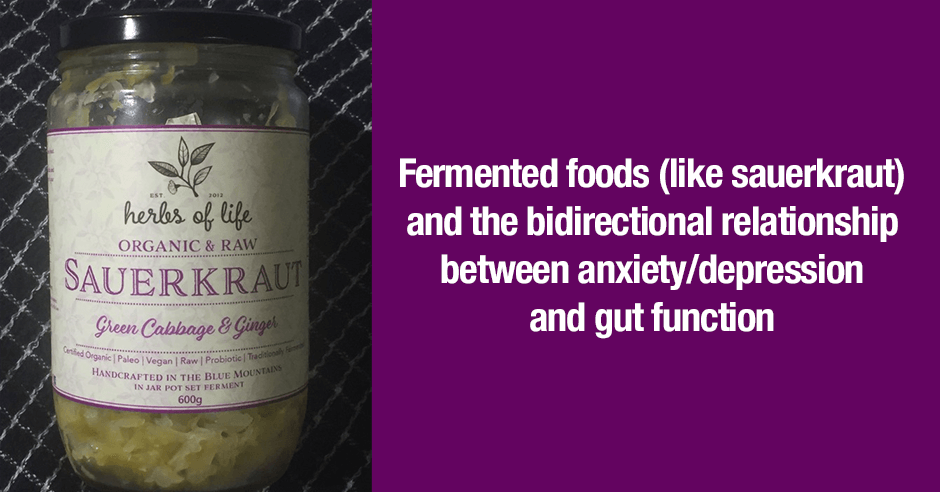
Fermented foods (like sauerkraut) and the bidirectional relationship between anxiety/depression and gut function

September 17, 2021 By Trudy Scott 6 Comments

fermented foods

Today’s blog is to whet your appetite (pun intended) with some snippets from my interview – Anxiety: Gut-Brain Communication & Diet – with Dr. David Perlmutter, author of Grain Brain and Brain Wash. In this interview we talk about fermented foods (like sauerkraut) and a study that highlights mechanisms underlying the  bidirectional relationship between anxiety/depression and gut function.

With anxiety at an all-time high and the ever-evolving research on the gut-brain connections we are relaunching the Anxiety Summit 5: Gut-Brain Axis summit on November 8-14, 2021. This interview is featured during the summit and is meaty (you’d expect nothing less from Dr. Perlmutter.)

The two-way connection between the gut and brain is powerful and needs to be explored and addressed if you have anxiety. Diet, fermented foods, reducing inflammation, addressing leaky gut (or intestinal permeability) and neurotransmitter support with amino acids are some of the ways that make a difference.

For the summit relaunch we have 4 incredible new guest expert interviews on sugar addiction, thiamine deficiency, trauma and the freeze response and safe tapering of SSRIs. And I have a new deep dive interview on glutamine, DPA and tyrosine for anxiety and sugar cravings/addiction. I’m excited to share it all with you!

For now, save the date and look out for the registration link in a few weeks. We’re in edit mode for the videos and transcripts, and getting all the backend setup done.

This is the first question I ask Dr. Perlmutter: I’d like to start with the microbiome and the fact that there is a bidirectional relationship between mental health and gut function. There’s a paper titled, Fermented foods, the gut and mental health: a mechanistic overview with implications for depression and anxiety published online late 2018 in The Journal of Nutritional Neuroscience. It highlights this important bidirectional relationship and the role of fermented foods. Can you share a little bit more about this and why this is important?

Before I share Dr. Perlmutter’s response, let me share a few quotes from the abstract of the paper:

  • Mental disorders including depression and anxiety are often comorbid with gut problems, suggesting a bidirectional relationship between mental health and gut function.
  • Several mechanisms might explain this comorbidity, such as inflammation and immune activation; intestinal permeability; perturbations in the hypothalamic-pituitary-adrenal axis; neurotransmitter/neuropeptide dysregulation; dietary deficiencies; and disturbed gut microbiome composition.
  • The potential of modulating the microbiome-gut-brain axis, and subsequently mental health, through the use of functional foods, is an emerging and novel topic of interest.
  • Fermented foods are considered functional foods due to their reputed health benefits.

The paper goes on to discuss food fermentation and summarizes how these foods “act biologically in the gastrointestinal tract and have the ability to modify the gut microbiota, influence translocation of endotoxins and subsequent immune activation, and promote host nutrition.” They are exploring their theoretical potential to improve symptoms of depression and anxiety in humans, saying more research is needed.

Dr. Perlmutter highlights various section of the paper and starts by sharing more about fermented foods and that we’ve been actively fermenting for thousands of years:

I think it’s first instructive to recognize that we’ve been actively fermenting foods for thousands of years as humans as a technique to preserve them, and allow us to travel with a food source. But beyond that, our ancestors prior to that would eat fermented foods. Fermentation is actually what happens to food when it’s left outside and is exposed to bacteria and begins the process of, dare I say, rotting. I don’t want that to be off putting to people who are going to hear the later part of our discussion dealing with eating fermented foods, because we have wonderful fermented foods that we eat these days.

He goes on to elaborate on what the paper terms functional foods. What this means is that these fermented foods have far-reaching health benefits for optimal health and for making us resistant to disease (i.e. improving our immunity):

The point is that the process of fermentation is basically a process of enrichment of food sources with bacteria. And what a notion that is, where we’re looking at the idea of eating a food that’s teeming with bugs, with germs, if you will. I say it that way, because it has such a negative connotation, but it really is what we want to do. These bacteria are involved in so many processes that deal with our health, and nurture our health, and our resistance to disease.

Some common examples of fermented foods are kimchi, sauerkraut, kefir (dairy kefir and water kefir), kombucha, and yogurt. Keep in mind, you can ferment many different vegetables. One of my favorites is cauliflower.

The paper also mentions inflammation as one possible mechanism for the bidirectional relationship between anxiety/depression and gut function, and Dr. Perlmutter discusses this in great detail, in the context of chronic health conditions. And he ties it all back to the microbiome:

From my perspective, of course, that has to do with the functionality of the brain, the way the brain remains healthy, and disease-free moving forward. And there are multiple mechanisms that relate to what’s going on in the gut to the brain. When we think of disease processes, most of what we are concerned about is the notion of inflammation, at least, in terms of a mechanism that relates to so many of the chronic degenerative conditions of the brain; be it Alzheimer’s, Parkinson’s, or even a non-chronic degenerative condition, which is autism is not necessarily considered to be progressive, but nonetheless at its heart, is in fact an inflammatory disorder.

So beyond that, of course, all of the chronic degenerative conditions that plague our planet, including heart disease, cancer, diabetes, the autoimmune conditions are at their very core, primarily inflammatory.

And let me be very clear that chronic degenerative conditions are ranked by the World Health Organization as the number one cause of death on planet Earth.

So we have to pay attention to anything that’s involved in the regulation of inflammation in the human body. And front and center right now in terms of gaining the spotlight, is the health of the gut bacteria, as well as its metabolites and it’s gene expression, collectively, we call that the microbiome.

The paper mentions intestinal permeability as another mechanism. Dr. Perlmutter covers the importance of the gut lining integrity and why it’s so important when it comes to anxiety, depression and the chronic diseases he mentions:

So we realize that the gut bacteria have a very important function, and that is to maintain the integrity of the gut lining.

And why would I, as a neurologist, give a hoot about the integrity of the gut lining? Quite categorically it’s because that is where inflammation in the body, in the long term, has its genesis. So, meaning we’ve got to have a strong gatekeeper at the lining of the gut to keep various gut-related proteins and other chemicals from making their way into the rest of the body, and challenging the immune system, upregulating the production of inflammatory chemicals that then do damage.

Dr. Perlmutter ends by discussing neurotransmitter dysregulation (also mentioned in the paper):

We know that our gut bacteria are involved in the manufacture of various neurochemicals, various neurotransmitters, serotonin, for example, dopamine, norepinephrine, epinephrine, [GABA], etcetera, that are primarily manufactured in the gut.

As a matter of fact, when it comes to serotonin, which certainly gains the spotlight; 90% is manufactured in the gut, another 9% is manufactured in the blood platelets, meaning that only 1% is actually manufactured in the brain, though, we call it a brain transmitter, a neurotransmitter. That said, the availability of the precursor for serotonin; the amino acid tryptophan, the availability of that even to the brain, is in fact controlled to a significant degree by actions of the gut microbes.

He wraps up by bringing in the microbiome, inflammation, chronic health conditions, anxiety and depression, and our lifestyle choices and diet (which includes foods such as fermented vegetables):

If we simply recognize that our gut bacteria are playing a massive role in regulating inflammation in the body, that’s enough, because our mission for the prevention of chronic degenerative conditions in the brain and out of the brain is controlling inflammation.

And it’s through the lens of the microbiome that we realize the detrimental or effectiveness of our food choices, and other lifestyle choices that can act to increase or balance inflammation. So it becomes extremely important.

The paper does discuss perturbations in the hypothalamic-pituitary-adrenal axis but we didn’t get into this during this interview. However, we do cover this in Dr. Peter Bongiorno’s interview on the summit.

Some of the recent research on specific fermented foods and mental health

Here is some of the recent research on specific fermented foods and mental health, where some or all of the above mechanisms may be a factor:

  • Kefir peptides exhibit antidepressant-like activity in mice through the BDNF/TrkB pathway
  • Effects of Fermented Milk Containing Lacticaseibacillus paracasei Strain Shirota on Constipation in Patients with Depression: A Randomized, Double-Blind, Placebo-Controlled Trial
  • Consumption of OLL1073R-1 yogurt improves psychological quality of life in women healthcare workers: secondary analysis of a randomized controlled trial (this improved mood, sleep and gastrointestinal health)
  • Possible use of fermented foods in rehabilitation of anorexia nervosa: the gut microbiota as a modulator

Some simple changes you can make

Here are some simple changes that be incorporated when you have anxiety or depression:

  • Include fermented foods and beverages in the diet (ideally on a daily basis). If you decide to include sauerkraut, you can make it yourself or buy it from the store. If you buy it ready-made, always make sure it’s raw and found in the refrigerated section. Vinegar should not feature on the label but do look for salt as this is used in the fermentation process. In the example I share above, the added ginger helps with digestion even further and is very delicious!
  • Eat a real whole foods diet with quality animal protein, healthy fats and organic vegetables and fruit (there is much research supporting dietary changes for improving mood and easing anxiety i.e. nutritional psychiatry)
  • Avoid inflammatory foods like gluten, sugar, processed foods/fast foods and foods that you have a sensitivity to
  • Address intestinal permeability if necessary (glutamine is my go-to nutrient for this and I take a deep dive into this amino acid in one of the new interviews on the summit)
  • Use targeted individual amino acids such as GABA to boost GABA (for physical anxiety symptoms) and tryptophan or 5-HTP to boost serotonin (for worry-type anxiety). You can do this while you are addressing underlying gut issues and making dietary changes. Keep in mind that these amino acids help you quit sugar, gluten and junk food at the same time as easing anxiety!

Resources if you are new to using the amino acids as supplements

If you are new to using the amino acids as supplements and want to know more, here is the Amino Acids Mood Questionnaire from The Antianxiety Food Solution and a brief overview here, Anxiety and targeted individual amino acid supplements: a summary.

If you suspect low neurotransmitters and do not yet have my book, The Antianxiety Food Solution – How the Foods You Eat Can Help You Calm Your Anxious Mind, Improve Your Mood, and End Cravings, I highly recommend getting it and reading it before jumping in and using amino acids so you are knowledgeable.

Do join us on the summit relaunch of Anxiety Summit 5: Gut-Brain Axis summit on November 8-14, 2021. Registration details coming soon.

And if you’d like to learn more about Dr. Perlmutter’s book, Brain Wash: Detox Your Mind for Clearer Thinking, Deeper Relationships, and Lasting Happiness (written with his son Dr. Austin Perlmutter), here is my review. In our interview on the summit, he shares about disconnection syndrome (and loneliness) and how our decision-making abilities have been compromised.

Are fermented foods and beverages included in your diet (and your family’s diet) on a daily basis? And what are your favorites?

Do you make your own fermented vegetables?

Have you observed mood and/or digestive improvements since including fermented foods in your diet?

If you are a practitioner, do you recommend fermented foods and discuss this bidirectional communication between the gut and the brain with your clients/patients?

Feel free to post your questions too.

Filed Under: Anxiety, Depression, Gut health, Inflammation Tagged With: amino acids, anxiety, anxiety summit, bidirectional, depression, diet, Dr. David Permutter, fermented foods, GABA, gut, gut-brain, Inflammation, intestinal permeability, leaky gut, mental health, neurotransmitter support, sauerkraut, serotonin, tryptophan

Fix the Brain to Fix the Gut with Dr. Datis Kharrazian on The Anxiety Summit 5

October 11, 2019 By Trudy Scott 4 Comments

fix the brain to fix the gut

Datis Kharrazian, DHSc, DC, MS, FACN, CNS is one my guest experts on The Anxiety Summit 5: Gut-Brain Axis and our topic is: Fix the Brain to Fix the Gut. In this interview you’ll learn:

  • Impact of brain injury and impaired vagal activity (as well as motility and breakdown of the blood brain barrier)
  • Activate your neurons
  • Polyphenols (for neuroinflammation) and butyrate for leaky gut/brain

datis kharrazian

We’re taught that “healing begins in the gut” and it’s a huge factor but in certain instances we need to do more before the gut can truly be healed. When you have had a traumatic brain injury/TBI, integrative functional neurology teaches that the brain has to be fixed for the gut to gut to work well. Dr. Kharrazian why this is important:

Someone can have a TBI and 10 or 15 years later they can experience brain and neurological symptoms – like depression and anxiety. These patients can end up with chronic GI issues as a consequence of the TBI because there is this intimate relationship between the brain and how it controls gut function.

In this interview you’ll hear how, after a TBI, the bidirectional gut-brain-microbiotia axis leads to structural and functional  damage to the gut, increased intestinal permeability and an altered microbiome, an immune response and inflammation. There is also often impaired motility, breakdown of the blood brain barrier and impaired vagal activity (and much more).

Dr Kharrazian discusses aspects of this paper: The bidirectional gut-brain-microbiota axis as a potential nexus between traumatic brain injury, inflammation, and disease

  • we will examine the extent to which the bidirectional influence of the gut-brain axis modulates the complex biological processes occurring at the time of traumatic brain injury (TBI) and over the days, months, and years that follow.
  • In addition to local enteric signals originating in the gut, it is well accepted that gastrointestinal (GI) physiology is highly regulated by innervation from the CNS.
  • Conversely, emerging data suggests that the function and health of the CNS is modulated by the interaction between 1) neurotransmitters, immune signaling, hormones, and neuropeptides produced in the gut, 2) the composition of the gut microbiota, and 3) integrity of the intestinal wall serving as a barrier to the external environment.
  • Specific to TBI, existing pre-clinical data indicates that head injuries can cause structural and functional damage to the GI tract, but research directly investigating the neuronal consequences of this intestinal damage is lacking.

datis kharrazian and trudy scott

Dr. Datis Kharrazian is a clinical research scientist, academic professor, and a functional medicine health care provider. You likely are familiar with his work as the author of Why Do I Still Have Thyroid Symptoms? and Why Isn’t My Brain Working?

He is also the creator of several functional medicine and neurology online courses, and the founder of the Kharrazian institute, a post-graduate institute for functional medicine and restorative neurology. Earlier this year I attended his excellent Neuroinflammation training and decided I really wanted him on the summit to share an important an often overlooked aspect – integrative functional neurology.

What I found most surprising is that you don’t even have to have been concussed for a head injury to have an impact on your gut! The serious consequences of a head injury (and subsequent damage to the gut) is very much related to your blood sugar, nutritional status and stress levels at the time of the fall or head bang.

After learning all this it really got me thinking about the many falls I have had. I have never been concussed but I’ve been in a roll-over car accident, fallen hard snow-boarding, fallen sideways off my mountain bike onto rocks at Moab, and taken a really big pendulum fall when rock-climbing in Cape Town. Based on all this and my many chronic gut issues, I am going to have a full functional neurology assessment done and will report back as I learn more.  I’ve completed Dr. Kharrazian’s questionnaire and it seems like I would really benefit from some neuro-rehab. I hope our interview gives you some insights too.

We also talk about one of my favorite topics: GABA and the controversial blood-brain-barrier question. I think you’ll really enjoy this discussion. Do let me know what you think!

We go on to talk about resveratrol, curcumin and butyrate, as well as some very practical neuro-rehab exercises he uses with his patients.

Please join us and listen to my interviews and all the others on The Anxiety Summit 5: Gut-Brain Axis.

Learn more/purchase now


If you’d like to give feedback or ask a question, please post in the comments section at the bottom.

I’d love to hear from you once you’ve listened in to Dr. Kharrazian’s interview and the others.

Filed Under: The Anxiety Summit 5 Tagged With: anxiety, anxiety summit, blood brain barrier, brain, datis kharrazian, Fix the Brain to Fix the Gut, GABA, gut, gut-brain, gut-brain axis, motility, TBI, traumatic brain injury

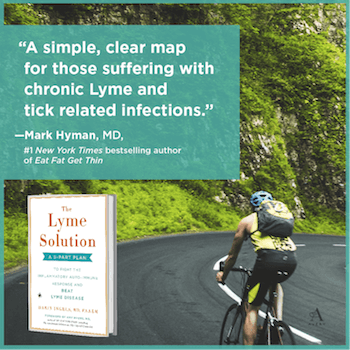
The Lyme Solution by Dr. Darin Ingels

March 30, 2018 By Trudy Scott 4 Comments

I highly recommend Dr. Darin Ingels, ND new book The Lyme Solution: A 5-Part Plan to Fight the Inflammatory Auto-Immune Response and Beat Lyme Disease. As a functional medicine practitioner, he provides a natural approach to treating Lyme disease that is both comprehensive and designed to each person’s own unique needs i.e. he doesn’t use a one size fits all approach. His uniquely holistic approach to treating this rampant disease, treats both the infection and the resulting autoimmune response. He’s also recovered from Lyme disease himself so he really gets it!

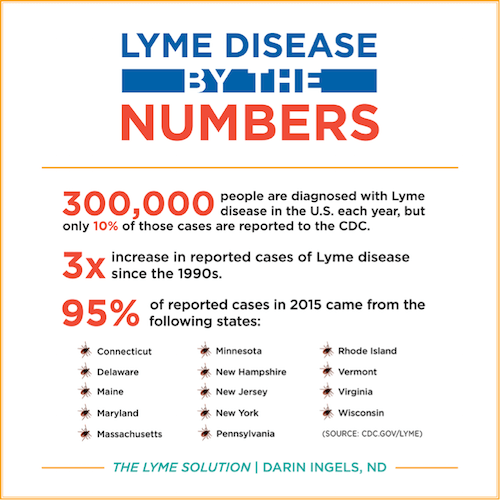
According to the CDC, over 300,000 cases of Lyme are reported every year in the U.S.A.

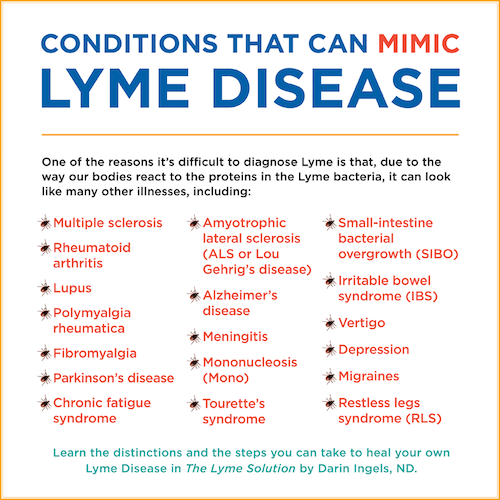
As you can see, many conditions can mimic Lyme disease, including anxiety and depression.

Many in my community have both Lyme disease and anxiety and many nutritional solutions, such as GABA (a calming amino acid supplement), can ease their anxiety while my client is working with a doctor such as Dr. Ingels in order to address and eliminate the Lyme disease.

Tricia Soderstrom from Abounding in Hope With Lyme shares her Lyme GABA story here: GABA helps with Lyme anxiety (while addressing the underlying disease)

Dr. Ingels shared this with me when I asked about what GABA products he likes and why:

I use DFH PharmaGaba and Allergy Research Liposomal GABA, which also has theanine. Liposomal GABA works beautifully for anxiety and sleep disturbances in my Lyme patients and children with autism. I also love how quickly it seems to affect people, often within 10-15 minutes of taking it.

Including the latest research about the diagnosis and treatment of Lyme, The Lyme Solution provides a path to wellness by strengthening the body’s ability to heal from within. Dr. Ingels suggests an actionable 5-Part Plan to:

  • Fortify gut health and restore the immune system
  • Follow a diet that increases immunity and reduces inflammation
  • Thwart and target an active infection
  • Identify hidden toxins that worsen Lyme
  • Lifestyle suggestions to help healing

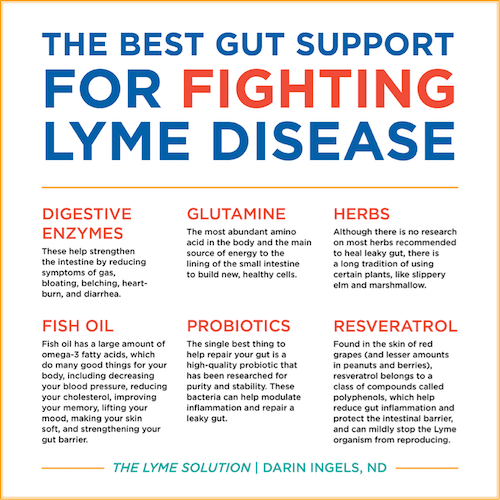
Here are some of his gut support protocols: digestive enzymes, glutamine, resveratrol, herbs like slippery elm and marshmallow, fish oil and probiotics:

The Lyme Solution is a simple guide for how you can advocate for your own health and use innovative treatments to maintain wellness, using the least invasive ways to facilitate treatment. By following this plan, you can become even stronger than you were before the Lyme and better equipped to manage recurring symptoms.

UPDATE: April 20, 2018 – My actual review  

I highly recommend this book if you have Lyme disease or if you suspect that Lyme disease may be playing a role in your ill-health or have chronic anxiety (or another chronic health condition) and have not yet found a solution. I also highly recommend it for practitioners who are both treating Lyme disease patients and those, like myself, who want to really understand all aspects in order to make good referrals for Lyme treatment.

I read it cover to cover in one sitting and could not put it down!

Chapter 1 – An excellent discussion about the problems with long-term antibiotics for chronic Lyme disease and when antibiotics should be used. The chronic inflammatory autoimmune connection is unique to Dr. Ingels’ approach for treating Lyme disease and makes a great deal of sense. The Lyme facts are invaluable: Lyme spirochete going dormant and hiding in scar tissue and lymph nodes; the nymph the most dangerous; Lyme-reactive antibodies form against proteins in the brain, giving rise to neurological symptoms.

Chapter 2 – Covers complex and controversial issues with diagnosis and pitfalls of the various testing that is available. It contains Lyme signs/symptoms and a Lyme questionnaire. It was eye-opening to learn that the bull’s-eye rash is Lyme specific and that changes in handwriting and mixing up words may be a sign of chronic Lyme disease. This is one of my favorite chapters of the book and is very comprehensive.

Chapter 3 – Gut and immune restoring protocols and more on the autoimmune connection. Addressing gut health is key to any condition and Dr. Ingels reiterates that addressing the immune system is key for recovery from Lyme.

Chapter 4 – Immune boosting diet and the importance of alkalinity. This is my least favorite chapter because I’m an advocate of the Paleo diet and have found that when done well with large amounts of vegetables, it is healing and alkaline. (He did connect with me on this and agrees in principle with a Paleo diet that does include plenty of vegetables). I am pleased to see coffee is off the list but would have liked to hear his experiences with intermittent fasting.

Chapter 5 – Covers targeting the infection in a way that doesn’t impact gut flora and undermine the immune system. This chapter has extensive coverage of the herbal protocols Dr. Ingels has found to be effective for his patients: Zhang protocol, his version of the Cowden protocol and others. He goes into great detail for each herb, including products to help with a Herxheimer reaction, as well as the rationale and protocols for breaking up biofilm. It’s also one of my favorite chapters in the book.

Chapter 6 – Cleaning your home and environment and getting rid of toxic chemicals and products, as well as addressing mold. This is also common-sense to address for any condition so it’s great to cover for Lyme.

Chapter 7 – Sleep, exercise and stress reduction. This is also common-sense to address for any condition. I do have a professional difference of opinion for the GABA recommendation for sleep and typically start my clients on much lower doses. I also love GABA for stress and anxiety.

Chapter 8 – Advanced protocols for specific symptoms: mitochondrial issues, neuropathy and balance, low dose immunotherapy, LDN and other approaches where you’ll need to work with a health care provider. Another favorite chapter of mine.

Chapter 9 – Additional lab testing, SIBO, Mast cell activation syndrome and POTS are addressed in relation to Lyme disease. This chapter is enlightening.

The case studies throughout the book reflect the complex nature of Lyme disease and help us get a better understanding about unexpected symptoms, as well as Dr. Ingels’ level of expertise. One such example is Peter’s story: he developed tics but none of the other classic Lyme symptoms, PANS was found and then Lyme disease.

Given that neuropsychiatric symptoms are common in Lyme disease I hope to see more coverage of this in a later edition or follow-up book. I work with individuals with anxiety and underlying Lyme disease is very common, with benzodiazepines and SSRIs commonly prescribed. Using nutritional approaches for the anxiety and/or depression and since it gets to the root cause it’s more effective, plus it lowers the toxic burden and side-effects of added medications. (He also connected with me about this and said he agrees but word-count was the challenge in this first book).

Overall, this book is an excellent resource and I highly recommend it! It offers practical solutions and hope for those who are been suffering with chronic Lyme disease and are seeking a solution.

Learn more and get your copy here on Amazon (my link) or at major bookstores. Get access to a digital version of chapter 1 here.

Filed Under: Books, Lyme disease and co-infections Tagged With: anxiety, autoimmune, Darin Ingels, GABA, glutamine, gut, Lyme Disease, The Lyme Solution

  • Page 1
  • Page 2
  • Go to Next Page »

Primary Sidebar

NEW! GABA QuickStart Homestudy (with special intro pricing)

gaba quickstart homestudy

Free Report

9 Great Questions Women Ask about Food, Mood and their Health

You'll also receive a complimentary subscription to my ezine "Food, Mood and Gal Stuff"


Connect with me

Popular Posts

  • Amino Acids Mood Questionnaire from The Antianxiety Food Solution
  • The Antianxiety Food Solution Amino Acid and Pyroluria Supplements
  • Pyroluria Questionnaire from The Antianxiety Food Solution
  • Collagen and gelatin lower serotonin: does this increase your anxiety and depression?
  • Tryptophan for the worry-in-your-head and ruminating type of anxiety
  • GABA for the physical-tension and stiff-and-tense-muscles type of anxiety
  • The Antianxiety Food Solution by Trudy Scott
  • Seriphos Original Formula is back: the best product for anxiety and insomnia caused by high cortisol
  • Am I an anxious introvert because of low zinc and vitamin B6? My response to Huffington Post blog
  • Vagus nerve rehab with GABA, breathing, humming, gargling and key nutrients

Recent Posts

  • What do I use instead of Seriphos to help lower high cortisol that is affecting my sleep and making me anxious at night?
  • BeSerene™ GABA/theanine cream eases severe muscle tension in her neck/shoulders, prevents her bad headaches and quells her anxiety
  • How the correct approach, dose and sublingual use of GABA can be calming and not cause a flushed and itchy face and neck
  • The amino acid glutamine improves low mood by addressing gut health, and it has calming effects too
  • Flight anxiety with heightened breath, physical tension and also fearing the worst (the role of low GABA and low serotonin)

Categories

  • 5-HTP
  • AB575
  • Addiction
  • ADHD
  • Adrenals
  • Alcohol
  • Allergies
  • Alzheimer's disease
  • Amino Acids
  • Anger
  • Antianxiety
  • Antianxiety Food Solution
  • Antidepressants
  • Anxiety
  • Anxiety and panic
  • Autism
  • Autoimmunity
  • benzodiazapines
  • Bipolar disorder
  • Books
  • Caffeine
  • Cancer
  • Candida
  • Children/Teens
  • Collagen
  • Cooking equipment
  • Coronavirus/COVID-19
  • Cravings
  • Depression
  • Detoxification
  • Diabetes
  • Diet
  • DPA/DLPA
  • Drugs
  • EFT/Tapping
  • EMF
  • EMFs
  • Emotional Eating
  • Endorphins
  • Environment
  • Essential oils
  • Events
  • Exercise
  • Fear
  • Fear of public speaking
  • Fertility and Pregnancy
  • Fish
  • Food
  • Food and mood
  • Functional neurology
  • GABA
  • Gene polymorphisms
  • General Health
  • Giving
  • Giving back
  • Glutamine
  • Gluten
  • GMOs
  • Gratitude
  • Gut health
  • Heart health/hypertension
  • Histamine
  • Hormone
  • Hyperparathyroidism
  • Hypoglycemia
  • Immune system
  • Inflammation
  • Insomnia
  • Inspiration
  • Introversion
  • Joy and happiness
  • Ketogenic diet
  • Lithium orotate
  • Looking awesome
  • Lyme disease and co-infections
  • MCAS/histamine
  • Medication
  • Men's health
  • Mental health
  • Mercury
  • Migraine
  • Mold
  • Movie
  • MTHFR
  • Multiple sclerosis
  • Music
  • NANP
  • Nature
  • Nutritional Psychiatry
  • OCD
  • Osteoporosis
  • Oxalates
  • Oxytocin
  • Pain
  • Paleo
  • Parasites
  • Parkinson’s disease
  • PCOS
  • People
  • PMS
  • Postpartum
  • PTSD/Trauma
  • Pyroluria
  • Questionnaires
  • Real whole food
  • Recipes
  • Research
  • Schizophrenia
  • serotonin
  • SIBO
  • Sleep
  • Special diets
  • Sports nutrition
  • Stress
  • Sugar addiction
  • Sugar and mood
  • Supplements
  • Teens
  • Testimonials
  • Testing
  • The Anxiety Summit
  • The Anxiety Summit 2
  • The Anxiety Summit 3
  • The Anxiety Summit 4
  • The Anxiety Summit 5
  • The Anxiety Summit 6
  • Thyroid
  • Thyroid health
  • Toxins
  • Tryptophan
  • Tyrosine
  • Uncategorized
  • Vegan/vegetarian
  • Women's health
  • Yoga

Archives

  • October 2025
  • September 2025
  • August 2025
  • July 2025
  • June 2025
  • May 2025
  • April 2025
  • March 2025
  • February 2025
  • January 2025
  • November 2024
  • October 2024
  • September 2024
  • August 2024
  • July 2024
  • June 2024
  • May 2024
  • April 2024
  • March 2024
  • February 2024
  • January 2024
  • December 2023
  • November 2023
  • October 2023
  • September 2023
  • August 2023
  • July 2023
  • June 2023
  • May 2023
  • April 2023
  • March 2023
  • February 2023
  • January 2023
  • December 2022
  • November 2022
  • October 2022
  • September 2022
  • August 2022
  • July 2022
  • June 2022
  • May 2022
  • April 2022
  • March 2022
  • February 2022
  • January 2022
  • December 2021
  • November 2021
  • October 2021
  • September 2021
  • August 2021
  • July 2021
  • June 2021
  • May 2021
  • April 2021
  • March 2021
  • February 2021
  • January 2021
  • December 2020
  • November 2020
  • October 2020
  • September 2020
  • August 2020
  • July 2020
  • June 2020
  • May 2020
  • April 2020
  • March 2020
  • February 2020
  • January 2020
  • December 2019
  • November 2019
  • October 2019
  • September 2019
  • August 2019
  • July 2019
  • June 2019
  • May 2019
  • April 2019
  • March 2019
  • February 2019
  • January 2019
  • December 2018
  • November 2018
  • October 2018
  • September 2018
  • August 2018
  • July 2018
  • June 2018
  • May 2018
  • April 2018
  • March 2018
  • February 2018
  • January 2018
  • December 2017
  • November 2017
  • October 2017
  • September 2017
  • August 2017
  • July 2017
  • June 2017
  • May 2017
  • April 2017
  • March 2017
  • February 2017
  • January 2017
  • December 2016
  • November 2016
  • October 2016
  • September 2016
  • August 2016
  • July 2016
  • June 2016
  • May 2016
  • April 2016
  • March 2016
  • February 2016
  • January 2016
  • December 2015
  • November 2015
  • October 2015
  • September 2015
  • August 2015
  • July 2015
  • June 2015
  • May 2015
  • April 2015
  • March 2015
  • February 2015
  • January 2015
  • December 2014
  • November 2014
  • October 2014
  • September 2014
  • August 2014
  • July 2014
  • June 2014
  • May 2014
  • April 2014
  • March 2014
  • February 2014
  • January 2014
  • December 2013
  • November 2013
  • October 2013
  • September 2013
  • August 2013
  • July 2013
  • June 2013
  • May 2013
  • April 2013
  • March 2013
  • February 2013
  • January 2013
  • December 2012
  • November 2012
  • October 2012
  • August 2012
  • July 2012
  • June 2012
  • May 2012
  • April 2012
  • March 2012
  • February 2012
  • January 2012
  • December 2011
  • November 2011
  • October 2011
  • September 2011
  • August 2011
  • July 2011
  • June 2011
  • May 2011
  • April 2011
  • March 2011
  • February 2011
  • January 2011
  • December 2010
  • October 2010
  • September 2010
  • July 2010
  • May 2010
  • April 2010
  • March 2010
  • February 2010
  • January 2010
  • November 2009

Share the knowledge!

The above statements have not been evaluated by the Food and Drug Administration. Products listed in this website are not intended to diagnose, treat, cure or prevent any disease.

The information provided on this site is for informational and educational purposes only and is not intended as a substitute for advice from your physician or other health care professional. You should consult with a healthcare professional before starting or modifying any diet, exercise, or supplementation program, before taking or stopping any medication, or if you have or suspect you may have a health problem.


Copyright © 2026 Trudy Scott. All Rights Reserved. | Privacy | Terms and Conditions | Refund Policy | Medical Disclaimer

Free Report

9 Great Questions Women Ask about Food, Mood and their Health

You’ll also receive a complimentary subscription to my ezine “Food, Mood and Gal Stuff”