• Skip to primary navigation
  • Skip to main content
  • Skip to primary sidebar

everywomanover29 blog

Food, Mood and Women's Health – Be your healthiest, look and feel great!

  • Blog
  • About
  • Services
  • Store
  • Resources
  • Testimonials
  • The Book
  • Newsletter
  • Contact
  • Search this site

Children/Teens

Bartonella infection in mom and both sons: anxiety, panic attacks, insomnia, inconsolable crying, irritability, ADHD, rage and pain

March 12, 2021 By Trudy Scott 32 Comments

bartonella infection

A mom and both her sons experienced a variety of emotional/mood and pain symptoms between them as a result of a Bartonella infection: anxiety, panic attacks, insomnia, irritability, inconsolable crying, ADHD, rage, eye pain, joint pain and pain in the legs. This family case study was published in Parasites and Vectors in 2013. I would love to see individual amino acids being used to ease some of these symptoms while the infection is being treated (more on this below).

Here are some of the emotional and mood-related symptoms they experienced:

  • the mother and both sons developed recurrent rash-like skin lesions, disruptive sleep patterns and both boys developed anxiety accompanied by episodes of inconsolable crying, irritability, and panic attacks
  • subsequent to the spider infestation of the apartment, [the mother] developed fatigue, memory difficulties, headaches, irritability, eye pain, insomnia, chest pain, blurred vision, shortness of breath, rash and skin lesions and anxiety attacks.
  • The youngest son… awakened at night crying and complaining of pain in his legs
  • The older son experienced increased irritability and rage episodes. In addition, the boy’s teacher indicated a lack of attention during class, and suggested that the child might have an Attention Deficit Hyperactivity Disorder (ADHD).

The youngest son also developed severe neurological symptoms and was diagnosed with Guillain-Barre syndrome and Chronic Inflammatory Demyelinating Polyradiculoneuropathy.

You can read the full investigation, timing, sequence of events and all the symptoms in the paper: Bartonella henselae infection in a family experiencing neurological and neurocognitive abnormalities after woodlouse hunter spider bites

Creating awareness, motivating, inspiring and educating

I’d like to highlight some of the reasons for sharing this paper:

  • creating more awareness about the emotional/mood symptoms that can occur with a Bartonella henselae infection
  • educating about this infection in general so other families can find solutions quicker than this family did
  • motivating and inspiring you to not give up looking for answers for you and your family – this mom suspected Bartonella infection after doing internet searches (almost 3 years after all this started)
  • creating more awareness about possible hosts other than ticks (in this case woodlice and woodlice hunter spiders)
  • highlighting how family members exposed to the same infection can have different symptoms and how some family members may not be infected at all (in this case the father was not affected)
  • highlighting that some individuals (the mom in this case) do not recall being bitten and yet still get sick
  • educating on how amino acids can offer much symptom relief during the investigation and treatment of the infection (more on this below)

Treatment with antibiotics and Chinese herbs

This family was successfully treated with antibiotics and other medications once it was determined Bartonella was the cause of their symptoms:

The parents report that the [youngest] child is actively socializing with other children and now runs and plays like he had never done before.

Following this antibiotic course, the mother reported substantial overall improvement and was almost symptom free. However, she continues to experience occasional irritability, confusion, dizziness, nausea, and pain involving the shoulder, hip and the bottoms of her feet.

One of the common symptoms of Bartonella is burning feet and this article, How to Put Out the Fire in Your Burning Bartonella Feet, mentions a herb from the Zhang protocol:

In Chinese herbal medicine, an herb called “houttuynia” is classified as “Clearing Heat and Relieving Toxicity.” This herb has been successfully used to treat Bartonella by a Chinese physician in New York named Dr. Q. Zhang. This herb has antibacterial and antiviral properties in addition to clearing heat and toxins. Fortunately this herb can be combined with other herbs to help relieve Bartonella symptoms.

I mention this because I am personally familiar with the Zhang protocol, having used it when working with Dr. Darin Ingels to address my Lyme disease (Borrelia). Dr. Ingels is the author of  The Lyme Solution and writes about the Zhang protocol in this excellent book.

Using amino acids to address anxiety, panic attacks, sleep problems, crying and pain

Individual amino acids, used as supplements, can offer much symptom relief during the investigation and treatment of the Bartonella infection, however they are seldom recommended. I would love to see this change and become the norm.

In this blog post, GABA helps with Lyme anxiety (while addressing the underlying disease), Tricia shares that “Lyme, Bartonella and Babesia are all known to cause anxiety and other psychological disorders ranging from mild to very severe.” She also shares that her daughter used GABA:

We’ve used Source Naturals GABA Calm sublinguals with good results. I learned about GABA helping anxiety and because I was treating my young daughter I purchased this because it was easy for her to take.

Looking at some of the emotional symptoms this family experienced, and how the amino acids could have helped:

  • anxiety, irritability, and panic attacks: can be eased by using tryptophan/5-HTP
  • disruptive sleep patterns and waking: can be helped by using calming GABA
  • inconsolable crying: can be eased by using DPA to boost endorphins
  • headaches, pain in the legs, shoulders and elsewhere: can be eased with DPA and/or tryptophan
  • rage episodes: can be eased with tryptophan/5-HTP
  • ADHD: can be helped with GABA in some instances and 5-HTP in other instances

I feel for this poor family. It certainly was a very complex family case and reflects the need to dig deep to find the root cause. And I appreciate the case being written up so more awareness can be created.

Have you or your family experienced something like this? And has your practitioner introduced you to the amino acids for some symptom relief while they are addressing the infection/s?

If you’re a practitioner working with Lyme disease and coinfections such as Bartonella, have you seen cases similar to this one? Do you use amino acids for some symptom relief while addressing the infection/s?

Feel free to post your questions and feedback in the comments below.
Filed Under: ADHD, Anxiety, Children/Teens, Lyme disease and co-infections Tagged With: ADHD, amino acids, anxiety, Bartonella henselae infection, Bartonella infection, burning feet, DPA, emotional, eye pain, GABA, inconsolable crying, insomnia, irritability, joint pain, Lyme anxiety, mood, neurocognitive, neurological, pain, pain in the legs, panic attacks, rage, sleep, The Lyme Solution book, tryptophan, woodlouse hunter spider bites, Zhang protocol

5-HTP benefits both adopted daughters who had prenatal exposure to alcohol: they are happier, more focused and can stay on task

March 5, 2021 By Trudy Scott 10 Comments

5-htp and prenatal exposure to alcohol

A grateful mom, Besty, posted wonderful feedback on the 5-HTP and ADHD blog.  She shared how 5-HTP benefits both her adopted daughters who had prenatal exposure to alcohol i.e. exposure to alcohol while in the womb. When using the supplement 5-HTP, an amino acid precursor to serotonin, both girls are happier, more focused and can now stay on task. Here is the feedback Besty shared on the blog:

After listening to Dr. Michael Murry’s interview on your Anxiety Summit, I decided to try 5-HTP on my 18-year-old daughter (a senior in high school) who was adopted at 5 years of age. She has always had some issues with focus, but she has never been medicated for this. She has had some learning struggles. She was exposed to alcohol in the womb, so some of her learning difficulty has been attributed to this.

She started 5-HTP in December and doesn’t ever want to miss a day on it. She says that she can better complete her assignments because it helps her to “stay on task”.

Even on days that she is not in school, she wants to take it, because it makes her feel happier.

Because she has done so well on it, her 23-year-old biological sister (also adopted) started on it. She was also exposed to alcohol while in the womb and has some learning struggles. She is in college. She also doesn’t want to miss a day, because she says that “it keeps her on her toes,” which she says means that it “keeps me focused,” when she is working on her school work.

I am so thankful that I learned about this therapy through your summit!

I thanked Besty for her kind words and for sharing this wonderful outcome both her daughters experienced.  I love hearing stories like this and I am sharing this as a blog post so more folks are inspired and have hope.

Prenatal exposure to alcohol: the adverse effects, and impacts on serotonin and dopamine

This 2012 paper, Moderate prenatal alcohol exposure and serotonin genotype interact to alter CNS serotonin function in Rhesus monkey offspring, describes fetal alcohol spectrum disorder (FASD):

  • Fetal alcohol spectrum disorder (FASD) is associated with a range of adverse effects that can be observed in children prenatally exposed to alcohol.
  • Fetal alcohol syndrome (FAS), which includes growth retardation, craniofacial anomalies, CNS dysfunction, and cognitive and behavioral impairments, is the most serious of the FASD outcomes of prenatal alcohol exposure.
  • Alcohol-related neuro-developmental disorder (ARND) is the term used to describe prenatally alcohol-exposed children with problems that are primarily neurobehavioral, including cognitive effects, hyperactivity, impulsivity, reduced attention span, and lack of inhibition.

It appears these young girls may fall into the ARND category with their reduced attention span and cognitive issues, and some possible neurobehavioral issues. I’m not, however, aware if a diagnosis was made. I’m also not aware if hyperactivity, impulsivity and lack of inhibition have been issues too.

This paper also discusses the research on prenatal alcohol exposure and deficiencies in the serotonergic neurotransmitter system, and the possibility that genetic factors might predispose someone to fetal alcohol effects during a sensitive period. These are primarily genes affecting serotonin production. The authors also report that prenatal exposure to alcohol also affects dopamine levels.

Addressing neurotransmitter imbalances with tryptophan, 5-HTP and tyrosine

We don’t often associate low serotonin with ADHD (attention deficit and hyperactivity disorder) and poor focus but the research and clinical outcomes like this one (and the other success story below with 5-HTP melts) is very promising.

If you are new to addressing neurotransmitter imbalances with targeted amino acids you may find these blogs helpful:

  • Using tryptophan to address low serotonin eases worry, rumination, anxiety and negative self-talk. Keep in mind that some folks do better with tryptophan and some do better with 5-HTP.
  • ADHD: 5-HTP melts have been a miracle for one of my adopted kids. I summarize the role of serotonin in ADHD, the interplay with dopamine and the use of oral tryptophan (a serotonin precursor similar to 5-HTP). And this is the blog post that Besty commented on.
  • We typically consider the use of tyrosine to address low dopamine (one of the catecholamines), leading to better focus, good energy and better motivation so you are more likely to finish tasks. It also improves mood.

Questions I still have about the 5-HTP trials

I have these questions I posed to Betsy and hope to hear back as I feel these answers may be helpful as you navigate your trials with 5-HTP (for yourself or your loved ones):

  • Which product are they using and how much is helping?
  • Did your daughters make any other changes (diet or other supplements) at the same time?
  • What have they tried over the years to help with focus and learning issues?
  • Why did you initially decide to trial 5-HTP with your younger daughter?
  • Did your younger daughter encourage her older sister to trial 5-HTP too?
  • Did either daughter have any of the classic low serotonin symptoms too: worry-type of anxiety, ruminations, OCD, fears, PMS, irritability, insomnia, afternoon/evening cravings, anger issues, lack of confidence? And did the 5-HTP help with any of these symptoms too?
  • Were some of the classic low serotonin symptoms a factor when it came to lack of focus? For example, did the worrying or feelings of fear or insomnia contribute to the inability to stay on task and keep focused?

I’ll report back once I get Besty’s feedback. But keep in mind that dosing/timing doesn’t really matter as the doses that work for her daughters are unique to their own biochemistry and needs.

Additional resources when you are new to using GABA, 5-HTP and other amino acids as supplements

As always, I use the symptoms questionnaire to figure out if low serotonin or low GABA or other neurotransmitter imbalances may be an issue.

If you suspect low levels of any of the neurotransmitters and do not yet have my book, The Antianxiety Food Solution – How the Foods You Eat Can Help You Calm Your Anxious Mind, Improve Your Mood, and End Cravings, I highly recommend getting it and reading it before jumping in and using amino acids on your own so you are knowledgeable. And be sure to share it with the practitioner/health team you or your loved one is working with.

There is an entire chapter on the amino acids and they are discussed throughout the book in the sections on gut health, gluten, blood sugar control (this is covered in an entire chapter too), sugar cravings, anxiety and mood issues.

The book doesn’t include product names (per the publisher’s request) so this blog, The Antianxiety Food Solution Amino Acid and Pyroluria Supplements, lists the amino acids that I use with my individual clients and those in my group programs.

If, after reading this blog and my book, you don’t feel comfortable figuring things out on your own (i.e. doing the symptoms questionnaire and respective amino acids trials), a good place to get help is the GABA QuickStart Program (if you have low GABA symptoms). This is a paid online/virtual group program where you get my guidance and community support.

If you are a practitioner, join us in The Balancing Neurotransmitters: the Fundamentals program. This is also a paid online/virtual program with an opportunity to interact with me and other practitioners who are also using the amino acids.

Wrapping up and your feedback

Have you found that 5-HTP (or tryptophan) helps your child (who was exposed to alcohol in the womb) with focus and ADHD symptoms? Are they happier when using one of these serotonin precursors?

If you’re a practitioner working with children or adults who have had prenatal exposure to alcohol, have you had good results with 5-HTP or tryptophan?

Feel free to post your questions and feedback in the comments below.
Filed Under: 5-HTP, ADHD, Anxiety, Children/Teens, serotonin, Testimonials Tagged With: 5-HTP, ADHD, Alcohol-related neuro-developmental disorder, anxiety, ARND, can stay on task, cognitive, dopamine, exposure to alcohol while in the womb, FAS, FASD, fetal alcohol spectrum disorder, Fetal alcohol syndrome, focus, genetic, happier, hyperactivity, more focused, neurobehavioral, neurotransmitter, prenatal exposure to alcohol, serotonin, tryptophan, tyrosine

Tryptophan for my teenager: she laughs and smiles, her OCD and anxiety has lessened, and she is more goal oriented and focused on school.

February 19, 2021 By Trudy Scott 60 Comments

tryptophan teenager

A mom posted wonderful feedback on a recent blog post on ADHD and 5-HTP, sharing how how tryptophan has helped her daughter in ways that didn’t even realize were an issue. She was shocked to see so many improvements and she called it a miracle experience. Here is the feedback Kathy shared:

We had a “miracle” experience with adding L-Tryptophan 300mg at bedtime for my teenager. I was shocked to see how much it improved my child, especially in ways that I didn’t even realize were an issue.

  • The results were like my teenager coming out of a fog, and also like my child was when she was younger.
  • She became more engaged with the family and did a lot less isolating.
  • She suddenly had interest in activities she had never pursued before. For instance, she wanted to start playing team sports after having played nothing for years. She wanted to do family game night! Before, we couldn’t force her to do it, and now it was her idea.
  • Her thoughts seemed to quiet down and were more organized.
  • Her OCD [obsessive compulsive disorder] and anxiety symptoms lessened.
  • She became more goal oriented and focused on school.
  • She laughs and smiles more!

We were most shocked because what we thought was normal teenage development was actually depression that we had no idea was there.

Tryptophan has been the most effective supplement we have ever used, and we have used a lot. We experimented with the dose until we ended up on 3 at bedtime. The brand we used was the Lidtke L-Tryptophan.

This did not cure her ADD [attention deficit disorder], but definitely improved her executive functioning. We tried GABA and saw no improvement with that. We have tinkered with L-Tyrosine, but haven’t been able to get on a steady dose of it yet to see if it will also help.

Thank you for giving us the idea to try!

I thanked Kathy for sharing the wonderful results her daughter has experienced with the Lidtke Tryptophan and how happy I was for both of them! I love all the surprise benefits she saw and appreciate this feedback: “This has been the most effective supplement we have ever used, and we have used a lot.” I hear this a lot – tryptophan and GABA are game-changers for so many of my clients.

I have these questions I posed to this mom and hope to hear back as I feel these answers may be helpful for other parents and practitioners who work with children and teens:

  • Did she use 3 x chewable 100mg tryptophan or did they open the 500mg capsule
  • What did the trial look like for them to end up with 300mg at night?
  • What made her decide to trial tryptophan instead of 5-HTP?
  • What made you decide to even trial tryptophan – was it her daughter’s anxiety and OCD?
  • Was her daughter willing to trial tryptophan initially or was there resistance?

I’ll report back once I get Kathy’s feedback.

Updated Feb 26, 2021: Kathy’s additional feedback

I read all your blog articles and listened to some of your talks. I made a chart of symptoms and then decided to try GABA Calm first.

Since that didn’t help, the next logical choice for us was Tryptophan. My daughter has a lot of anxiety, intrusive thoughts and other OCD symptoms. The reason I didn’t trial the 5HTP first was because my daughter has some PTSD like startle responses, and since you said it isn’t good if you have high cortisol, I just made the guess that she might due to her startle response.

With the Lidtke brand, we used the [500mg] capsules and I did not open them up. My teen would not have gone for that because she already takes a lot of supplements and medication because she is being treated for Lyme and Bartonella. She is cooperative with taking all the supplements/medication. We started at 1 capsule a night for probably 5 days and saw no difference, then went to two for another 5 days, and then landed on 3 when we noticed the dramatic change.

Even her LLMD [Lyme literate MD] was shocked at how differently she interacted with her in our last appointment.

To further clarify, it turns out Kathy actually started her daughter on 500 mg tryptophan at bedtime and they experimented with the dose until they ended up on 3 x 500 mg at bedtime for a total of 1500 mg. Kathy’s initial comment about 300 mg had me thinking she was using 3 x 100 mg tryptophan.  Either way, the dose really simply reflects what her needs are and someone else may well get similar benefits with a total of 300 mg. This is why we experiment and do trials of different doses.

Normal teenage development or really depression?

I also have to wonder how many other parents would say this after addressing low serotonin levels in their daughters and/or sons: “We were most shocked because what we thought was normal teenage development was actually depression that we had no idea was there.” I suspect the number would be high, especially given the growing incidence of anxiety and depression in teens.

Also, according to the ADAA/Anxiety and Depression Association of America “80 percent of kids with a diagnosable anxiety disorder and 60 percent of kids with diagnosable depression are not getting treatment.”

Now that Kathy has seen these wonderful changes in her daughter, I’d love to know – if she could go back in time – what questions would she have asked her anxious and depressed daughter so she could help her with solutions sooner?

And what would she suggest to other parents to be looking out for in order to identify anxiety and depression in their children (who often cannot adequately articulate that they do feel anxious and/or depressed)?

If you’re new to tryptophan and low serotonin symptoms

In case you’re new to tryptophan, it is an amino acid that is used as a supplement to support low levels of serotonin. With low serotonin we the worry-in-your-head and ruminating type of anxiety, panic attacks and phobias, lack of confidence, depression, negativity, imposter syndrome, PMS, irritability, anger issues, insomnia and afternoon/evening cravings.

My thoughts on addressing the ADD/inattention issues

Here are my thoughts for her as a starting point for helping to address her daughter’s residual ADD/inattention symptoms:

  • When someone does well with tryptophan at night, we often trial 5-HTP in the day too. As I shared in a recent blog, this mom shared how 5-HTP melts helped with ADHD symptoms one of her adopted kids was experiencing. She also called it a miracle!
  • A tyrosine trial may also be worth considering because low catecholamines lead to poor focus and feelings of calm focus are reported with tyrosine. However we also see low energy, low motivation and depression with low catecholamines which no longer seem to be an issue – so I’m not sure if tyrosine would help.
  • L-theanine may work better than the GABA they tried. Research shows it helps with cognitive function specifically improvements in verbal fluency (especially letter fluency) and improvements in executive function (planning, multi-tasking etc).
  • With inattention issues it’s also key to look at low blood sugar, gluten and sugar consumption, low iron, low zinc and low omega-3s.
  • If there was hyperactivity with the inattention then we’d look at salicylates in the diet as they can cause behaviour issues. This doesn’t seem to be the issue but a big clue would be red cheeks and ears that are not from the heat.
  • Consider the Ayurvedic herb Bacopa monnieri which has been shown to improve “visual perception, impulsivity, and attention” in children and adults.
  • Consider the herb saffron (Crocus sativus) which has “memory-enhancing and antidepressant effects” and has been shown to be as effective as Methylphenidate/Ritalin.

Additional resources when you are new to using amino acids as supplements

We use the symptoms questionnaire to figure out if low serotonin or low GABA or low endorphins or low dopamine or low blood sugar may be an issue for you.

If you suspect low levels of any of the neurotransmitters and do not yet have my book, The Antianxiety Food Solution – How the Foods You Eat Can Help You Calm Your Anxious Mind, Improve Your Mood, and End Cravings, I highly recommend getting it and reading it before jumping in and using amino acids on your own so you are knowledgeable. And be sure to share it with the practitioner/health team you or your loved one is working with.

There is an entire chapter on the amino acids and they are discussed throughout the book in the sections on gut health, gluten, blood sugar control, sugar cravings, anxiety and mood issues.

The book doesn’t include product names (per the publisher’s request) so this blog, The Antianxiety Food Solution Amino Acid and Pyroluria Supplements, lists the amino acids that I use with my individual clients and those in my group programs. You can find them all in my online store.

If, after reading this blog and my book, you don’t feel comfortable figuring things out on your own (i.e. doing the symptoms questionnaire and respective amino acids trials), the Serotonin QuickStart Program is a good place to start if you need serotonin support. This is a paid online/virtual group program where you get my guidance on using tryptophan and 5-HTP safely, and community support during 5 LIVE Q&A calls. You can sign up to be notified when the next live launch of this program is happening. We take a deep dive into product options including the Lidtke products and others if you’re not able to access Lidtke.

If you also have low GABA symptoms, the next step to get help is the GABA QuickStart Program. This is also a paid online/virtual group program where you get my guidance and community support. Another option is the budget-friendly GABA QuickStart Homestudy program.

If you are a practitioner, join us in The Balancing Neurotransmitters: the Fundamentals program. This is also a paid online/virtual program with an opportunity to interact with me and other practitioners who are also using the amino acids.

Now I’d like to hear from you

I love hearing heartwarming stories like this and I am sharing it here to inspire and offer hope!

Please do share your success story on the blog so we can all learn from each other, as well as inspire and offer hope.

How has tryptophan helped you or your child? What has helped with inattention?

Feel free to post your questions and feedback in the comments below.
Filed Under: Anxiety, Children/Teens, Testimonials, Tryptophan Tagged With: anxiety, children, depression, engaged, focused, fog, goal oriented, isolating, laughs, OCD, organized, panic, serotonin, teenager, tryptophan, worry

ADHD: 5-HTP melts have been a miracle for one of my adopted kids

January 15, 2021 By Trudy Scott 77 Comments

ADHD and 5-HTP

A mom in my community responded to an ADHD blog sharing how 5-HTP melts have been a miracle for one of her adopted children – after one week! 5-HTP is not where I typically start with ADHD so I quizzed her to get more details and then went looking for the research to understand the mechanisms. This blog shares her rationale for using 5-HTP, the truly wonderful results her son experienced, some of the research and some possible serotonin/dopamine mechanisms. This is what she posted:

5-HTP melts have been a miracle for one of my adopted kids. He had lots of trauma and off the charts ADHD. 5-HTP is better than methylphenidate (Ritalin) and we are now weaning off the non-stimulants.

Just 80mg 5-HTP in the morning is all he needs. He was super ADHD, he had a para (teacher’s aide) in public school for years to keep him on track and this year at a school for ADHD the teachers were complaining that he was never on task.

Now after a week it has changed his life. I am so thankful for the anxiety summit. Thank you Trudy

This is truly wonderful to hear! I responded saying how thrilled I was to hear the impact it was having and asked why this mom decided to try 5-HTP? This amino acid, which is a serotonin precursor, is not typically my first choice for alleviating ADHD symptoms. I consider low GABA (and using GABA) or low catecholamines (and using tyrosine), together with dietary changes, blood sugar control, and assessing for low zinc, low iron and low omega-3s – as a starting point.

I wanted to know if he had low serotonin symptoms such as the worry, ruminating, and obsessive type of anxiety which could have possibly been driving the ADHD symptoms? Were there any other symptoms that were a clue that low serotonin may be a factor: insomnia (with fatigue the next day impacting focus) or sugar cravings in the afternoon/evening (causing blood sugar swings affecting focus and mood)?

Why she used 5-HTP and which low serotonin symptoms he had

This was her response about why she used 5-HTP and which low serotonin symptoms he had:

We have tried all the amino acids over the years. I tried 5-HTP this time because SSRIs were the only class of medication he has not tried. I thought maybe it was worth a try and I also found this study: Comparative study of efficacy of 1-5-hydroxytryptophan and fluoxetine in patients presenting with first depressive episode (where the therapeutic efficacy of 5-HTP was considered as equal to that of the SSRI fluoxetine).

As for cravings or insomnia: he is a kid who loves sugar so I’m not sure if it’s a craving or typical. He takes 0.3mg of melatonin each night because guanfacine, the non-stimulant, prevents the production of melatonin.

She also mentioned that she has followed me for years and that DPA, an endorphin-boosting amino acid, works for her. She is a dietitian and shares my handouts and blog posts with her clients, so she clearly felt comfortable experimenting with the amino acids with her son.

5-HTP products and dosing

I also asked which product they were using and how she landed at 80mg. She wanted a fast-acting supplement that would dissolve in his mouth and purchased Natrol 5-HTP:

They are 100mg but we are breaking off a little because he was falling asleep in class.

I reminded her that 5-HTP (or tryptophan) is typically best used late afternoon and evening so if someone is falling asleep in the day I’d switch to bedtime dosing.  If he needs it during the day for the ADHD symptoms then reducing the dose is the smart thing to do.

I love the sublingual/melt aspect of this product for quick results and because children do so well with a product that tastes pleasant.

However, I do not recommend this particular product because of very mixed ingredients information online. I have not seen the bottle of the actual product used but some of the online information states the product is gluten-free and soy-free and yet other information states it does contains gluten and soy. In some places they state it contains sucralose and an artificial flavor and in other places you see xylitol and natural flavor. This is all rather concerning. I’ll update this section as soon as I can confirm.

What does this mean for this mom? Now that she has figured out that 5-HTP helps her son, it’s best to find a better quality product so as not to cause other problems.

There are two chewable products in my online supplement store that come close to this product:

  • Serotrex Chewable: Two chewables contain 200mg theanine and 60mg 5-HTP. This could be used in the day or at night.
  • Designs for Health Insomnitol Chewables: Two chewables contain 10mg vitamin B6, 500mg inositol, 200mg theanine, 100mg 5-HTP and 3mg melatonin. This would need to be used at night instead.

Both of these contain theanine. Research shows that theanine reduces anxiety and improves cognition via “improvements in verbal fluency (especially letter fluency) and improvements in executive function (planning, multi-tasking etc).”

The research on 5-HTP and tryptophan for ADHD

This paper, The effects of 5-hydroxytryptophan on attention and central serotonin neurochemistry in the rhesus macaque, shares that

Individuals with depression and anxiety typically experience impaired executive function and emotional cognition, symptoms that are generally studied by examining disruptions in attention.

This study used 5-HTP as an intramuscular injection, rather than using it orally but the authors did report the following:

Our findings provide unique causal and mechanistic evidence suggesting that enhancing central serotonergic function results in categorically distinct changes in fundamental cognitive operations such as attention.

This paper, Does serotonin deficit mediate susceptibility to ADHD? summarizes the role of serotonin in ADHD, the interplay with dopamine and the use of oral tryptophan (a serotonin precursor similar to 5-HTP):

  • A chronic deficit of serotonin at the synapse may trigger symptoms of childhood ADHD (developmentally inappropriate levels of hyperactivity, impulsivity and inattention).
  • Studies from animal models of ADHD indicate intimate interplay between serotonin and dopaminergic neurotransmission.
  • Selective serotonin re-uptake inhibitors (SSRIs)…as non-stimulant drugs acting on the serotonin system are … clinically effective.
  • Oral administration of l-tryptophan, the amino acid precursor of serotonin, significantly alleviates ADHD symptoms.
  • Serotoninergic gene variants are associated with increased risk of ADHD.

I appreciate this mom for giving me permission to share here on the blog so we can inspire hope (and I wish for more and more improvements for this young boy):

My son is a 10-year old RAD (reactive attachment disorder) kid that was meth exposed and adopted at 3 years old. 5-HTP has worked so well. He has not thrown a fit in a month. Before fits were a daily occurrence. This might give hope to other parents.

Additional resources when you are new to using GABA, 5-HTP and other amino acids as supplements

As always, I use the symptoms questionnaire to figure out if low serotonin or low GABA or other neurotransmitter imbalances may be an issue.

If you suspect low levels of any of the neurotransmitters and do not yet have my book, The Antianxiety Food Solution – How the Foods You Eat Can Help You Calm Your Anxious Mind, Improve Your Mood, and End Cravings, I highly recommend getting it and reading it before jumping in and using amino acids on your own so you are knowledgeable. And be sure to share it with the practitioner/health team you or your loved one is working with.

There is an entire chapter on the amino acids and they are discussed throughout the book in the sections on gut health, gluten, blood sugar control (this is covered in an entire chapter too), sugar cravings, anxiety and mood issues.

The book doesn’t include product names (per the publisher’s request) so this blog, The Antianxiety Food Solution Amino Acid and Pyroluria Supplements, lists the amino acids that I use with my individual clients and those in my group programs.

If, after reading this blog and my book, you don’t feel comfortable figuring things out on your own (i.e. doing the symptoms questionnaire and respective amino acids trials), a good place to get help is the GABA QuickStart Program (if you have low GABA symptoms). This is a paid online/virtual group program where you get my guidance and community support. Another option is the budget-friendly GABA QuickStart Homestudy Program.

If you need serotonin support, the Serotonin QuickStart Program is a good place to get help. This is also a paid online/virtual group program where you get my guidance on using tryptophan and 5-HTP safely, and community support during 5 LIVE Q&A calls. You can sign up to be notified when the next live launch of this program is happening.

If you are a practitioner, join us in The Balancing Neurotransmitters: the Fundamentals program. This is also a paid online/virtual program with an opportunity to interact with me and other practitioners who are also using the amino acids.

Wrapping up and your feedback

Have you found that 5-HTP (or tryptophan) helps/helped you or your child with ADHD symptoms? If yes, do you feel the ADHD was caused in part because of anxiety and/or fear and/or feeling inadequate and/or perfectionism and/or poor sleep (all signs of low serotonin)? Or were the main symptoms poor focus, low energy, low motivation and depression caused by low catecholamines/low dopamine? Or a mixture of both?

If you’re a practitioner working with children or adults with ADHD, have you had good results with 5-HTP or tryptophan?

Please do share in the comments below.

Filed Under: ADHD, Anxiety, Children/Teens Tagged With: 5-HTP, ADHD, attention, cravings, dopamine, fits, focus, GABA, hyperactivity, impulsivity, inattention, insomnia, meth, RAD, reactive attachment disorder, Ritalin, serotonin, SSRI, sugar, tryptophan, tyrosine

GABA helps a stressed young boy with episodes of “choking” or tightening in his throat

December 25, 2020 By Trudy Scott 34 Comments

gaba throat relief

Earlier this year I blogged about how the calming amino acid GABA is often a solution for both anxiety and globus pharyngeus (lump in the throat) and a mom shared this about her son’s episodes of “choking” or tightening in his throat (to the point that he cannot swallow), especially when school stress gets high:

My son, (8 y.o.) has a history of public school use of physical aversion intervention for behaviors that result from a significant language impairment often reports “choking” or tightening in his throat to the point that he cannot swallow. When school stress gets high, he ceases to swallow his saliva which creates a long period of “spitting” out substances including food and natural spit as he is fearful of “choking” to death. During panic attacks he immediately reports “choking” which furthers his panic. You are the first practitioner I have come across that has explained the relationship between globus pharyngeus, stress reaction and low GABA levels. I always felt his throat tightening (involuntary muscle response) was a stress response but was not aware of it’s connection to GABA levels. Thank you for this informative piece!

I voiced my concern for what her son was going through and how I can’t imagine how scary it must be for someone his age, asking her to keep us updated on his progress.

And just over a month later she reported the success her son was having with GABA:

We started a GABA supplement which has positively impacted my son. While he still struggles with hypersalivation when in distress or anxious, his self-reports of feeling like he is “choking” or his throat is closing, has not been present since GABA has been started. We are about a month in and I am inspired that we will continue to have progress. I have been referring to your work as a source to everyone I know that struggles with anxiety. Thank you for all that you do from a very grateful parent.

What wonderful results for her son! Getting feedback like this warms my heart and I appreciate her for sharing so I can share here.

I did ask what GABA product he was using, how much/how often he uses it and how quickly he noticed an improvement but did not hear back. My recommendation is 125mg to start for adults and less for children and I like the GABA Calm product as it’s a sublingual form and easy to use for kids.

I also commented on the fact that he still has “hypersalivation when in distress or anxious.” I would focus on trying to reduce the anxiety with higher doses of GABA and also consider addressing low serotonin because of the anxiety, panic attacks and being “fearful of “choking” to death”.

The anxiety could trigger hypersalivation but the hypersalivation could also be as a result of a food sensitivity like gluten or dairy. Both these and other food sensitivities could also contribute to low GABA/low serotonin and be a trigger for anxiety.

Of course, bullying at school should always be considered and so should the social anxiety condition pyroluria, speech therapy, gut health and vagus nerve support.

Could this be a case of laryngopharyngeal reflux (LPR)?

I always like to try and connect the dots and wonder if this could be a case of laryngopharyngeal reflux (LPR)?  I don’t know but it’s possible. This paper, Laryngopharyngeal reflux: A confounding cause of aerodigestive dysfunction, states that LPR is “defined by the retrograde passage of gastric contents beyond the upper oesophageal sphincter, with contamination of the larynx, pharynx and lungs” and states that “half of the laryngeal complaints referred to ear, nose and throat (ENT) services are ultimately diagnosed as LPR.

It also mentions globus pharyngeus and dysphagia (which is difficulty swallowing), sharing that changes in pH suggest reflux occurs in “50% of patients with hoarseness, 64% with globus, 55% with chronic cough and 35% with dysphagia.”

This same paper reports that “30% of patients with LPR-like symptoms report anxiety, compared with 6% of healthy controls.”

Prevalence of reflux disease in children and LPR symptoms by age

This paper, Laryngopharyngeal Reflux Disease in Children, reports that “Although the exact prevalence is unknown, it is estimated that nearly 1 in 5 children likely suffers from reflux disease.” This 1 in 5 number is for both GERD (gastroesophageal reflux disease) and LPR.

The authors also share that it usually presents with a different set of symptoms depending on age:

  • Infants typically present with regurgitation, vomiting, dysphagia [difficulty swallowing], anorexia, failure to thrive, apnea, recurrent croup, laryngomalacia [softening of the laryngeal structure], subglottic stenosis [narrowing of the airway], or chronic respiratory issues.
  • School-age children tend to demonstrate chronic cough, dyspnea [shortness of breath], dysphonia [hoarseness], persistent sore throat, halitosis [bad breath], and globus sensation.
  • Older children may also complain of regurgitation, heartburn, vomiting, nausea, or have chronic respiratory issues.

Low levels of GABA, a calming neurotransmitter

In case you’re new to GABA: low levels of GABA, a calming neurotransmitter can lead to anxiety, fears and panic attacks. With low GABA, the anxiety is a physical kind of anxiety with muscle tension or muscle spasms. Low GABA may be one possible root cause of globus pharyngeus, which leads to a rather scary golf-ball-like lump or constriction in the throat – or as this young boy describes, episodes of “choking” or tightening in his throat.

The amino acid GABA raises GABA levels and in this instance helps ease this tightening, choking or throat muscle spasms.

To be clear, there is no research (yet) on the use of the amino acid GABA for these types of symptoms, however in one study gabapentin was compared to baclofen for the treatment of gastro-oesophageal reflux-induced chronic cough and in another study there were improvements with both proton pump inhibitors and gabapentin for globus pharyngeus. If GABA works I’m all for it, rather than these  medications, which do have a long list of side-effects.

Has your child been diagnosed with globus pharyngeus or laryngopharyngeal reflux disease?

Have you observed episodes like this in your child, personally or with clients/patients and has GABA helped?

Have you found other contributing factors like low serotonin, food sensitivities, gut issues, vagus nerve issues or pyroluria?

Feel free to post your questions here on the blog too.

Filed Under: Anxiety, Children/Teens, GABA Tagged With: anxiety, anxious, calming, choking, episodes of choking, GABA, GERD, globus pharyngeus, hypersalivation, laryngopharyngeal reflux, LPR, lump in the throat, reflux, serotonin, stress, stressed, throat tightening, tightening in his throat

Case Study: Bartonella and Sudden-Onset Adolescent Schizophrenia

March 22, 2019 By Trudy Scott 26 Comments

According to a press release from North Carolina State University, researchers share a case study describing an adolescent human patient diagnosed with rapid onset schizophrenia who was found instead to have a Bartonella henselae infection. This study adds to the growing body of evidence that Bartonella infection can mimic a host of chronic illnesses, including mental illness, and could open up new avenues of research into bacterial or microbial causes of mental disorders.

Bartonella is a bacteria most commonly associated with cat scratch disease, which until recently was thought to be a short-lived (or self-limiting) infection. There are at least 30 different known species of Bartonella, and 13 of those have been found to infect human beings. The ability to find and diagnose Bartonella infection in animals and humans – it is notorious for “hiding” in the linings of blood vessels – has led to its identification in patients with a host of chronic illnesses ranging from migraines to seizures to rheumatoid illnesses that the medical community previously hadn’t been able to attribute to a specific cause.

In the case study published in the Journal of Central Nervous Disease, an adolescent with sudden onset psychotic behavior – diagnosed as schizophrenia – was seen and treated by numerous specialists and therapists over an 18-month period. All conventional treatments for both psychosis and autoimmune disorders failed. Finally, a physician recognized lesions on the patient’s skin that are often associated with Bartonella, and the patient tested positive for the infection. Combination antimicrobial chemotherapy led to full recovery.

According to the case report above, Bartonella henselae Bloodstream Infection in a Boy With Pediatric Acute-Onset Neuropsychiatric Syndrome, these are some of the many symptoms he experienced over the 18-month period:

  • He reported feeling overwhelmed, confused, depressed, and agitated.
  • He said that he was an “evil, damned son of the devil” and wanted to kill himself because he was afraid of his new-onset homicidal thoughts toward those he cared about
  • Weeks after initial hospitalization in October, he became more dysfunctional; school was not possible; he developed progressively severe psychiatric symptoms including obsessional intrusive thoughts, phobias, irrational fears, emotional lability, unpredictable rage outbursts, and increased psychotic thinking. He believed that he had special powers and that a family cat wanted to kill him.
  • By December 2015, his illness had progressed in severity, causing his mother to quit her job to provide full-time supervision. In addition to persecutory delusions related to his pets, he developed auditory, visual, and tactile hallucinations and began refusing to leave the house.
  • In January 2016, following discharge after a week-long hospitalization, he developed non-specific somatic symptoms, including excessive fatigue, daily headaches, chest pains, shortness of breath (possible panic anxiety), and urinary frequency

I suspect some of his later symptoms were related to side-effects from many of the medications he was prescribed over the course of his treatment. Some symptoms may also be attributed to withdrawal from some of these medications. One example mentioned in the case study was “abrupt withdrawal of clozapine and tramadol” where “he experienced severe anorexia, nausea, and vomiting, which resulted in hospitalization and a 20.5-kg weight loss over 40 days.” It’s well- documented that withdrawal signs and symptoms of antipsychotic medications such as clozapine “may include insomnia, nausea, vomiting, anxiety, and agitation.”

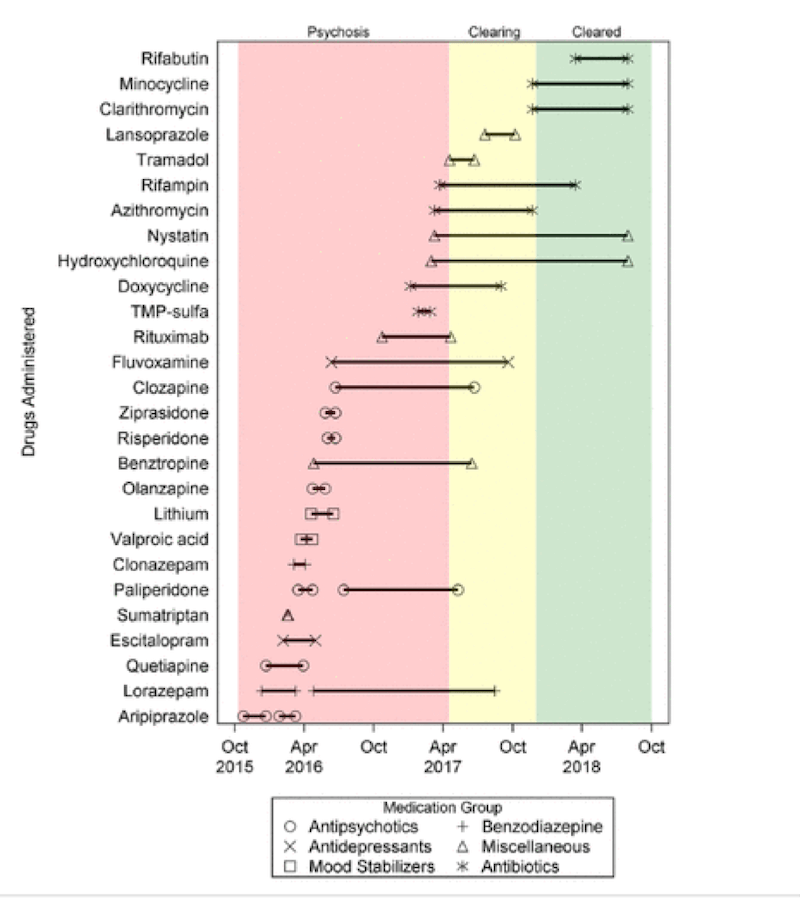
This figure lists the medications he was prescribed during his treatment. The pink area was during his psychotic 18-month period and the yellow area was during his antimicrobial treatment of the Bartonella.

Figure 2. Drug administration timeline for the boy, reprinted from the study

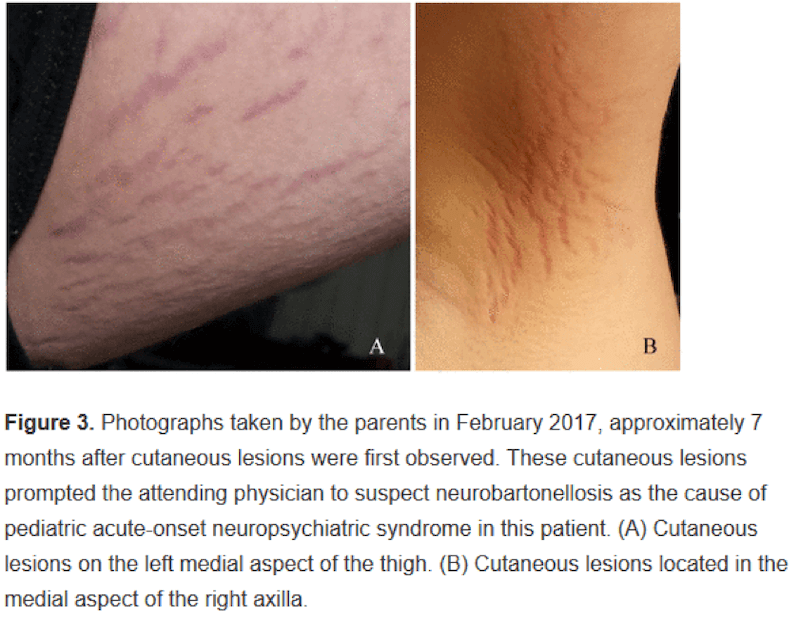
The skin lesions or “stretch mark-like” lesions on his thigh (A) and armpit (B) are tell-tale signs of a Bartonella bacterial infection or neurobartonellosis. Here are photographs taken by his parents.

Also from the study

A successful outcome for this young boy came about as a result of antimicrobial treatment in the way of antibiotics and antifungals. His skin lesions healed, his psychosis and other symptoms resolved, he was able to quit his psychiatric medications and go back to being a typical young boy. How wonderful for this young boy!  And this gives me so much hope for others who may be in a similar situation and looking for solutions.

Other than the hope I felt, these are my other thoughts that came to my mind as I read this case study:

  • How many people are being prescribed psychiatric medications when they actually have an infection or physiological condition? The authors state: “Beyond suggesting that Bartonella infection itself could contribute to progressive neuropsychiatric disorders like schizophrenia, it raises the question of how often infection may be involved with psychiatric disorders generally.”
  • How can a young boy of this age be prescribed this many psychiatric medications over an 18-month period? I’m sure his doctors were doing their best but what is it going to take for doctors to look for infectious (and/or physiological or biological or nutritional or environmental) causes for psychiatric symptoms as the first approach or certainly at the same time in a situation like this where psychosis was a factor?
  • What will it take for mainstream practitioners to get up to speed with this epidemic of Lyme disease? And when will testing for Lyme disease and co-infections be used by all doctors and not just Lyme-literate doctors and functional medicine doctors like Dr. Darin Ingels. the author of “The Lyme Solution.” (Here is my review of his excellent book.) It is worth noting that Dr. Ingels uses very successful treatments that are purely herbal, dietary and immune-supportive, and don’t require antibiotics.

We already know there is a huge psychiatric connection with Lyme disease and co-infections: anxiety, depression, panic attacks, and OCD too. This case adds to the evidence. Even though neuropsychiatric Lyme disease is well-recognized in the world of functional medicine, keep in mind that Lyme disease bacteria such as Borrelia and co-infections such as Bartonella are only one of many possible trigger/root cause of symptoms like this young boy experienced.

Other infectious causes of psychiatric conditions include chronic strep (in the case of PANDAS/PANS) and toxoplasma gondii.

Other physiological root causes of psychiatric conditions like schizophrenia, anxiety, bipolar disorder and depression could include a thyroid condition, heavy metal toxicity from say lead or mercury, mycotoxins, and even gluten.

We need to be shouting case studies like this from the rooftops so more doctors, more psychologists, more functional medicine practitioners, and more parents are aware and start to look for infectious/physiological/biological/nutritional/environmental root causes.

We appreciate those involved in publishing this case and the family for giving permission.  Hopefully, case studies like these will drive future research and treatment approaches.

What do you think and what came to your mind when you read this case study?

Feel free to post your questions here too.

Filed Under: Children/Teens Tagged With: anxiety, bartonella, bipolar disorder and depression, borrelia, lyme, neurobartonellosis, psychiatric, psychosis, psychotic, schizophrenia

  • « Go to Previous Page
  • Page 1
  • Page 2
  • Page 3
  • Page 4
  • Go to Next Page »

Primary Sidebar

GABA QuickStart Homestudy

gaba quickstart homestudy

Free Report

9 Great Questions Women Ask about Food, Mood and their Health

You'll also receive a complimentary subscription to my ezine "Food, Mood and Gal Stuff"


Connect with me

Popular Posts

  • Amino Acids Mood Questionnaire from The Antianxiety Food Solution
  • The Antianxiety Food Solution Amino Acid and Pyroluria Supplements
  • Pyroluria Questionnaire from The Antianxiety Food Solution
  • Collagen and gelatin lower serotonin: does this increase your anxiety and depression?
  • Tryptophan for the worry-in-your-head and ruminating type of anxiety
  • GABA for the physical-tension and stiff-and-tense-muscles type of anxiety
  • The Antianxiety Food Solution by Trudy Scott
  • Seriphos Original Formula is back: the best product for anxiety and insomnia caused by high cortisol
  • Am I an anxious introvert because of low zinc and vitamin B6? My response to Huffington Post blog
  • Vagus nerve rehab with GABA, breathing, humming, gargling and key nutrients

Recent Posts

  • Her cravings for chips and peanut butter were triggered by stress: GABA ends cravings and reduces physical tension and fear of heights
  • It is truly miraculous to be able to move through life without crippling anxiety and panic
  • GABA and tryptophan combo provide immediate and noticeable relief for tremors and cervical dystonia in just 7 days
  • Red light therapy for back and neck pain, plantar fasciitis and low mood – a complement to the amino acids GABA, DPA and tryptophan
  • What do I use instead of Seriphos to help lower high cortisol that is affecting my sleep and making me anxious at night?

Categories

  • 5-HTP
  • AB575
  • Addiction
  • ADHD
  • Adrenals
  • Alcohol
  • Allergies
  • Alzheimer's disease
  • Amino Acids
  • Anger
  • Antianxiety
  • Antianxiety Food Solution
  • Antidepressants
  • Anxiety
  • Anxiety and panic
  • Autism
  • Autoimmunity
  • benzodiazapines
  • Bipolar disorder
  • Books
  • Caffeine
  • Cancer
  • Candida
  • Children/Teens
  • Collagen
  • Cooking equipment
  • Coronavirus/COVID-19
  • Cravings
  • Depression
  • Detoxification
  • Diabetes
  • Diet
  • DPA/DLPA
  • Drugs
  • EFT/Tapping
  • EMF
  • EMFs
  • Emotional Eating
  • Endorphins
  • Environment
  • Essential oils
  • Events
  • Exercise
  • Fear
  • Fear of public speaking
  • Fertility and Pregnancy
  • Fish
  • Food
  • Food and mood
  • Functional neurology
  • GABA
  • Gene polymorphisms
  • General Health
  • Giving
  • Giving back
  • Glutamine
  • Gluten
  • GMOs
  • Gratitude
  • Gut health
  • Heart health/hypertension
  • Histamine
  • Hormone
  • Hyperparathyroidism
  • Hypoglycemia
  • Immune system
  • Inflammation
  • Insomnia
  • Inspiration
  • Introversion
  • Joy and happiness
  • Ketogenic diet
  • Lithium orotate
  • Looking awesome
  • Lyme disease and co-infections
  • MCAS/histamine
  • Medication
  • Men's health
  • Mental health
  • Mercury
  • Migraine
  • Mold
  • Movie
  • MTHFR
  • Multiple sclerosis
  • Music
  • NANP
  • Nature
  • Nutritional Psychiatry
  • OCD
  • Osteoporosis
  • Oxalates
  • Oxytocin
  • Pain
  • Paleo
  • Parasites
  • Parkinson’s disease
  • PCOS
  • People
  • PMS
  • Postpartum
  • PTSD/Trauma
  • Pyroluria
  • Questionnaires
  • Real whole food
  • Recipes
  • Research
  • Schizophrenia
  • serotonin
  • SIBO
  • Sleep
  • Special diets
  • Sports nutrition
  • Stress
  • Sugar addiction
  • Sugar and mood
  • Supplements
  • Teens
  • Testimonials
  • Testing
  • The Anxiety Summit
  • The Anxiety Summit 2
  • The Anxiety Summit 3
  • The Anxiety Summit 4
  • The Anxiety Summit 5
  • The Anxiety Summit 6
  • Thyroid
  • Thyroid health
  • Toxins
  • Tryptophan
  • Tyrosine
  • Uncategorized
  • Vegan/vegetarian
  • Women's health
  • Yoga

Archives

  • May 2026
  • April 2026
  • October 2025
  • September 2025
  • August 2025
  • July 2025
  • June 2025
  • May 2025
  • April 2025
  • March 2025
  • February 2025
  • January 2025
  • November 2024
  • October 2024
  • September 2024
  • August 2024
  • July 2024
  • June 2024
  • May 2024
  • April 2024
  • March 2024
  • February 2024
  • January 2024
  • December 2023
  • November 2023
  • October 2023
  • September 2023
  • August 2023
  • July 2023
  • June 2023
  • May 2023
  • April 2023
  • March 2023
  • February 2023
  • January 2023
  • December 2022
  • November 2022
  • October 2022
  • September 2022
  • August 2022
  • July 2022
  • June 2022
  • May 2022
  • April 2022
  • March 2022
  • February 2022
  • January 2022
  • December 2021
  • November 2021
  • October 2021
  • September 2021
  • August 2021
  • July 2021
  • June 2021
  • May 2021
  • April 2021
  • March 2021
  • February 2021
  • January 2021
  • December 2020
  • November 2020
  • October 2020
  • September 2020
  • August 2020
  • July 2020
  • June 2020
  • May 2020
  • April 2020
  • March 2020
  • February 2020
  • January 2020
  • December 2019
  • November 2019
  • October 2019
  • September 2019
  • August 2019
  • July 2019
  • June 2019
  • May 2019
  • April 2019
  • March 2019
  • February 2019
  • January 2019
  • December 2018
  • November 2018
  • October 2018
  • September 2018
  • August 2018
  • July 2018
  • June 2018
  • May 2018
  • April 2018
  • March 2018
  • February 2018
  • January 2018
  • December 2017
  • November 2017
  • October 2017
  • September 2017
  • August 2017
  • July 2017
  • June 2017
  • May 2017
  • April 2017
  • March 2017
  • February 2017
  • January 2017
  • December 2016
  • November 2016
  • October 2016
  • September 2016
  • August 2016
  • July 2016
  • June 2016
  • May 2016
  • April 2016
  • March 2016
  • February 2016
  • January 2016
  • December 2015
  • November 2015
  • October 2015
  • September 2015
  • August 2015
  • July 2015
  • June 2015
  • May 2015
  • April 2015
  • March 2015
  • February 2015
  • January 2015
  • December 2014
  • November 2014
  • October 2014
  • September 2014
  • August 2014
  • July 2014
  • June 2014
  • May 2014
  • April 2014
  • March 2014
  • February 2014
  • January 2014
  • December 2013
  • November 2013
  • October 2013
  • September 2013
  • August 2013
  • July 2013
  • June 2013
  • May 2013
  • April 2013
  • March 2013
  • February 2013
  • January 2013
  • December 2012
  • November 2012
  • October 2012
  • August 2012
  • July 2012
  • June 2012
  • May 2012
  • April 2012
  • March 2012
  • February 2012
  • January 2012
  • December 2011
  • November 2011
  • October 2011
  • September 2011
  • August 2011
  • July 2011
  • June 2011
  • May 2011
  • April 2011
  • March 2011
  • February 2011
  • January 2011
  • December 2010
  • October 2010
  • September 2010
  • July 2010
  • May 2010
  • April 2010
  • March 2010
  • February 2010
  • January 2010
  • November 2009

Share the knowledge!

The above statements have not been evaluated by the Food and Drug Administration. Products listed in this website are not intended to diagnose, treat, cure or prevent any disease.

The information provided on this site is for informational and educational purposes only and is not intended as a substitute for advice from your physician or other health care professional. You should consult with a healthcare professional before starting or modifying any diet, exercise, or supplementation program, before taking or stopping any medication, or if you have or suspect you may have a health problem.


Copyright © 2026 Trudy Scott. All Rights Reserved. | Privacy | Terms and Conditions | Refund Policy | Medical Disclaimer

Free Report

9 Great Questions Women Ask about Food, Mood and their Health

You’ll also receive a complimentary subscription to my ezine “Food, Mood and Gal Stuff”