• Skip to primary navigation
  • Skip to main content
  • Skip to primary sidebar

everywomanover29 blog

Food, Mood and Women's Health – Be your healthiest, look and feel great!

  • Blog
  • About
  • Services
  • Store
  • Resources
  • Testimonials
  • The Book
  • Newsletter
  • Contact
  • Search this site

Addiction

Multiple sclerosis: low endorphin research and the amino acid DPA (d-phenylalanine) for pain, depression, comfort and trauma support

April 28, 2023 By Trudy Scott 8 Comments

MS support

The research on the role of low endorphins in multiple sclerosis (MS) is exciting because it creates more awareness about a powerful way to offer pain and mood support if you have been diagnosed with this condition. Typically, I ignore the diagnosis when assessing for low levels of neurotransmitters (via a symptoms questionnaire) and have clients do a trial of the amino acid DPA (d-phenylalanine) if they have physical pain symptoms, experience emotional pain symptoms with excessive weepiness/crying and seek comfort via treats/rewarding foods or the numbing effects of alcohol. However, we now know low endorphins play a role in MS (via the endogenous opioid system). By addressing low levels with DPA, you can find some relief of the above pain/depression symptoms and a need for comfort and numbing. DPA may also offer some trauma support if past trauma is a contributing factor (more on all of this below).

Low endorphins play a role in multiple sclerosis: the research

This 2021 paper, Multiple Sclerosis and the Endogenous Opioid System describes MS and the fact that current therapies have limited efficacy: “Multiple sclerosis (MS) is an autoimmune disease characterized by chronic inflammation, neuronal degeneration and demyelinating lesions within the central nervous system. The mechanisms that underlie the pathogenesis and progression of MS are not fully known and current therapies have limited efficacy.”

What is exciting is the identification of the role of the endogenous opioid system and specific opioid peptides in MS:

Preclinical investigations using the murine experimental autoimmune encephalomyelitis (EAE) model of MS, as well as clinical observations in patients with MS, provide converging lines of evidence implicating the endogenous opioid system in the pathogenesis of this disease.

In recent years, it has become increasingly clear that endogenous opioid peptides, binding μ- (MOR), κ- (KOR) and δ-opioid receptors (DOR), function as immunomodulatory molecules within both the immune and nervous systems.

The endogenous opioid system is also well known to play a role in the development of chronic pain and negative affect [i.e. depression], both of which are common comorbidities in MS. As such, dysregulation of the opioid system may be a mechanism that contributes to the pathogenesis of MS and associated symptoms.

Endogenous means internal i.e natural compounds produced by the body and involved in pain relief and mood improvement. This article, Opioid Peptides, describes peptides as compounds that “produce the same effects as the chemicals known as classic alkaloid opiates, which include morphine and heroin.”

It also mentions three major categories of opioid receptors – mu, delta, and kappa – referred to as MOR, DOR and KOR above.

D-phenylalanine for human “endorphin deficiency diseases”

Unfortunately neither of these papers mentions the amino acid DPA (d-phenylalanine) and the fact that it supports endorphin production (by inhibiting the breakdown of endorphins), reducing pain and improving mood – quickly (as in 5-10 minutes).

The use of DPA is not new information as you can read in this paper from 1982 – D-phenylalanine and other enkephalinase inhibitors as pharmacological agents: implications for some important therapeutic application

A number of compounds have been shown to inhibit the degradation of enkephalins. As expected, these compounds produce naloxone reversible analgesia and potentiate the analgesia produced by enkephalins and by acupuncture.

One of these, D-phenylalanine, is also anti-inflammatory.

D-phenylalanine has proven to be beneficial in many human patients with chronic, intractable pain. It is proposed the enkephalinase inhibitors may be effective in a number of human “endorphin deficiency diseases” such as depression, schizophrenia, convulsive disorders and arthritis.

Such compounds may alleviate other conditions associated with decreased endorphin levels such as opiate withdrawal symptoms.

Prevalence of anxiety/depression and alcohol abuse in MS

As I shared in the recent post addressing low GABA symptoms (anxiety, muscle stiffness, swallowing/voice issues and pain) in multiple sclerosis, anxiety and depression is common in this condition. Alcohol abuse is also high. I shared this paper, The incidence and prevalence of psychiatric disorders in multiple sclerosis: A systematic Review, with the following results:

Among population-based studies, the prevalence of anxiety was 21.9% (and up to 35.0% in some papers), 23.7% for depression …and 14.8% for alcohol abuse.

The above Opioid Peptides paper highlights that the endogenous opioid system may be related to excessive alcohol-drinking behavior. In the work I do with amino acids, I see alcohol used as a way to numb out.

All this supports the fact that the amino acid DPA may help ease symptoms of depression and weepiness seen in MS, and self-medicating with alcohol.

The goal is to use these amino acids instead of needing to use benzodiazepines (covered in the above GABA blog), antidepressants and pain medications.

DPA may help trauma in MS, and the freeze response

This paper, Childhood Trauma in Multiple Sclerosis: A Case-Control Study, suggests an association between childhood trauma and early-life stress and MS:

Although childhood trauma was not associated with the degree of current MS-related disability, patients with MS with histories of physical and/or sexual abuse had significantly higher relapse rates than patients without early-life stress.

DPA may also offer some trauma support if past trauma is a contributing factor. I learned about trauma and the low energy freeze state (a survival mechanism) from Dr. Aimie Apigian, MD, MS, MPH. There is the feeling of numbness and being disconnected when in the freeze state and this eventually becomes the default pattern that the nervous system has been wired into.

Individuals with low endorphins are often in the freeze state and are more emotionally sensitive to everything and because of this they experience much more stress. They also experience a feeling of numbness and feel disconnected. The encouraging news is that the amino acid DPA helps ease the low endorphin symptoms while they are addressing their trauma in other ways, like with somatic work and addressing other biological underpinnings of trauma.

DPA is comforting, helps you feel safe and is often described as feeling like someone just hugged you.

Endorphins and the amino acid DPA (d-phenylalanine) and DLPA (dl-phenylalanine)

If you’re new to endorphins and the amino acid DPA and DLPA here are some blog posts:

  • When using the amino acid DPA (d-phenylalanine) I have more resilience and more buffer in the caregiving work I do, and just the oops’s of life
  • What is the difference between DPA and DLPA (amino acids) and which one do I use for weepiness, heart-ache, pain and energy?
  • Wean off prescription pain medication, improve sleep and reduce emotional eating with DPA (an endorphin-boosting amino acid)
  • DPA for weepiness, pain and comfort and reward eating
  • How best to use the amino acid DPA for easing heart-ache, weepiness, comfort eating and a compulsive desire for food

Low GABA and low serotonin are common in multiple sclerosis too

Low endorphins are just the tip of the iceberg when it comes to the underlying neurotransmitter imbalances in MS. Low GABA and low serotonin are common too.

As mentioned, I recently blogged about the GABA research and applications of GABA when it comes to multiple sclerosis. Here is that link.

When that blog was published I had a number of questions (see the comments in the above link) from folks asking if GABA could help with similar symptoms in Parkinson’s: swallowing and voice problems, pain and hand spasms. I said yes – if GABA is low, the amino acid GABA will help. As important as your diagnosis is, it’s always the questionnaire/symptoms that help you figure out if it’s worth trialing GABA, DPA or one of the other amino acids.

Both GABA and DPA can help pain symptoms via different mechanisms, so it’s a matter of doing a trial of each amino acid, one at a time and monitoring your response.

Tryptophan and/or 5-HTP may help ease some of the low serotonin worry-type of anxiety, fear, panic attacks, obsessing, low mood and MS-specific pain issues and insomnia.

If you do have more than one imbalance (which is not unusual), you need to figure out which imbalance you have and address that with the relevant amino acids, one at a time. I have clients pick the area that is more problematic for them and start there.

I gathered some of this research while preparing for an interview with the wonderful Dr. Terry Wahls, MD and author of “The Wahls Protocol.” We were both pleasantly surprised to see these endorphin/MS and other neurotransmitter connections.

I really look forward to seeing future research on the use of the amino acids DPA, GABA and tryptophan in MS. And I’d love to be involved in some studies if you are associated with a research facility or do research.

Resources if you are new to using amino acids as supplements

If you are new to using amino acids as supplements, here is the Amino Acids Mood Questionnaire from The Antianxiety Food Solution (you can see all the symptoms of neurotransmitter imbalances, including low GABA, low serotonin and low endorphins).

If you suspect low levels of any of the neurotransmitters and do not yet have my book, The Antianxiety Food Solution – How the Foods You Eat Can Help You Calm Your Anxious Mind, Improve Your Mood, and End Cravings, I highly recommend getting it and reading it before jumping in and using amino acids on your own so you are knowledgeable. And be sure to share it with the practitioner/health team you or your loved one is working with.

There is an entire chapter on the amino acids and they are discussed throughout the book in the sections on gut health, gluten, blood sugar control, sugar cravings, anxiety and mood issues.

The book doesn’t include product names (per the publisher’s request) so this blog, The Antianxiety Food Solution Amino Acid and Pyroluria Supplements, lists the amino acids that I use with my individual clients and those in my group programs. You can find them all in my online store.

If, after reading this blog and my book, you don’t feel comfortable figuring things out on your own (i.e. doing the symptoms questionnaire and respective amino acids trials), a good place to get help is the GABA QuickStart Program (if you have low GABA symptoms too). This is a paid online/virtual group program where you get my guidance and community support.

If you are a practitioner, join us in The Balancing Neurotransmitters: the Fundamentals program. This is also a paid online/virtual program with an opportunity to interact with me and other practitioners who are also using the amino acids.

Do you have multiple sclerosis and has the amino acid DPA helped with your low endorphin symptoms: pain, depression, alcohol addiction, comfort and trauma support?

How much has helped and which product do you use?

Do you find opening a capsule of DPA helps more than swallowing the DPA capsule?

Were you surprised that DPA would help so much?

What else has helped your multiple sclerosis symptoms? And have you also addressed low GABA and serotonin with amino acids GABA and tryptophan?

If you have questions and other feedback please share it here too.
Filed Under: Addiction, Amino Acids, DPA/DLPA, Endorphins, Multiple sclerosis Tagged With: alcohol, alcohol addiction, comfort, crying, d-phenylalanine, depression, dl-phenylalanine, DLPA, DPA, emotional pain, endogenous opioid system, endorphin, endorphins, freeze response, GABA, GABA Quickstart online program; Balancing Neurotransmitters: the Fundamentals program for practitioners, multiple sclerosis, numbing, pain, reward, serotonin, trauma, treats, weepiness

A 12 year old’s Diet Coke consumption and obsession with collecting the cans: can tryptophan and tyrosine help him quit with ease?

March 24, 2023 By Trudy Scott 14 Comments

diet coke and amino acids

A concerned mother, Rebble, posted a request for help for her 12 year old son who has suddenly started drinking Diet Coke and obsessively collecting the cans. I explain about the biochemistry of addiction and obsession. If your child, another loved one or  even you, are hooked on Diet Coke, this blog offers practical solutions in the way of amino acids to balance brain chemistry and make quitting no longer about willpower. I share why I’d consider starting with the amino acid supplement tryptophan for serotonin support and the amino acid supplement tyrosine for dopamine support. And then looking into low blood sugar. I also share some of the many harmful effects of soda/diet soda and some practical tips for her as she encourages her son to make changes.

Here are her questions and what she has already tried to help him quit:

To my horror, my 12yo son has just started buying/consuming Coke and principally Diet Coke regularly from our village shop. He has got obsessed about collecting the cans, some of which are from his friends’ consumption but more and more from his. He used to hate these drinks but now peer pressure has kicked in and he wants to consume what his friends (who live on the stuff and a horrendous amount of sugar) consume.

I’ve pointed out the ingredients, that they are toxic to his brain. He doesn’t care.

I’ve shown him a brilliant video clip of Renaldo removing coca cola bottles from the press table and promoting water instead (with good effect).

Yet still he keeps buying the stuff.

I’ve made it known with the shopkeeper that I don’t approve of my children buying caffeinated sugary drinks full of neurotoxic ingredients but he doesn’t wish to police my children (though he did give me a refund on the 8 cans he had just sold my son!) which I understand.

Do you have a short summary of why it’s so bad, for children in particular? Either something I could show my children, their friends and/or the shopkeeper?

Is it the caffeine that makes it addictive?

My son does exhibit some challenging behaviors (e.g. torturous noise at home, not able to sit still without fidgeting with things at meals, etc.) but seems to be able to turn this on / off at will. I don’t think he does this at other people’s homes or at school. I can’t say they are necessarily linked to the drinks as they precede the start of him consuming them but I’m certain the drinks cannot help.

This is tough but I’m glad Rebble is horrified and working to do something about it. Sadly many parents have no idea how harmful these drinks are for pre-teens and teens.

She mentions his challenging behaviors preceded his diet soda drinking. It’s common that we see someone self-medicating with sugar and/or artificial sweeteners. And it’s likely that that peer pressure was the tipping point for him and then once she started he was well and truly addicted.

This is the feedback I shared for her and my observations on where to start: when I hear obsessed, peer pressure and challenging behaviors, I immediately think neurotransmitter or brain chemicals imbalances and would look into low serotonin and possibly low dopamine because of his inability to sit still. Low blood sugar may also be an issue.

What emotions are driving his addiction and obsession?

With an addiction you need to figure out what emotions are driving the addiction and use the respective amino acid supplement/s (one or more of them) to help break the addiction and improve the mood/behavioral symptoms at the same time.

These are the questions I review with my clients who have a Diet Coke addiction, or other diet soda or regular soda addiction (or even alcohol or carb addiction):

  1. If you drink it to feel happy (and especially from late afternoon into the evening) then your cravings are likely due to low serotonin, and tryptophan (or 5-HTP) stops the cravings and boosts mood and reduces anxiety.
  2. If you drink it for an energy boost or to give you focus then it’s likely due to low catecholamines and tyrosine will stop those cravings and give you a mood and energy boost, and also help with mental clarity.
  3. If you have to drink it when you haven’t eaten in awhile it’s likely low blood sugar. Glutamine on the tongue stops the desire almost immediately and also helps with the low blood sugar symptoms of shakiness and irritability.
  4. If you stress-drink, your cravings are likely due to low GABA, and GABA will stop the stress-drinking and calm you down too.
  5. If you drink it for comfort or a reward then it’s likely due to low endorphins and DPA (d-phenylalanine) will stop that feeling of “I deserve-it” and also give you a hug-like mood boost.

Ideally mom would have him complete the amino acids symptoms questionnaire in order to figure out which areas are issues for her son.

This is where I would start

I don’t have all this information but based on mom’s feedback this is where I would start: serotonin support, dopamine support and address low blood sugar.

We do know he is obsessed with collecting the cans. Obsession and cravings for a sweet taste is a clear sign of low serotonin i.e. a big clue that #1 may apply to her son and that he may benefit by using tryptophan or 5-HTP.

We do also know he is “not able to sit still without fidgeting with things at meals.” The Diet Cokes may be helping him focus and this is a big clue that #2 and low dopamine may also apply to her son, and that he may benefit from tyrosine. Keep in mind tyrosine also helps to break the caffeine addiction too.

I’m not sure what his “torturous noise at home” could be related to but it may be a clue to #3  i.e. low blood sugar and irritability.  It may also be a symptom of rage or anger, also a sign of low serotonin and #1.

I would also look at his diet and make sure he is eating for blood sugar stability (quality protein for breakfast with healthy fats, healthy fats/protein at each meal and healthy snacks). And address everything else I cover in my book – gluten, microbiome etc.

It’s not unusual for someone to have imbalances in multiple areas. If this is the case, I  always recommend doing a trial of one amino acid at a time, so it’s easy to see the benefits.

Role models, the harmful effects of soda/diet soda and other things I’d try with this young man

On one hand, you could be surprised that the Renaldo press conference clip removing the Cokes (watch it here) didn’t make enough of an impression because having a sporting hero as a role model is powerful. BUT on the other hand, based on what I know about soda/diet soda.caffeine and addiction, role models are unfortunately just not enough for some folks.

I shared these other things I’d try:

1) Have someone other than mom tell him about the harmful effects of diet sodas – a respected teacher, favorite uncle or nutritionist.

2) Appeal to things that may make him think twice about it like acne and not being fit enough to play his favorite sport. Concerns about weight gain or not being able to get into his desired university (because of impacts on his academic grades) may be a driver too. It’s doubtful that he’d be concerned with tooth decay, adrenal dysfunction, diabetes, heart disease, inflammation, increased risk of osteoporosis or increased anxiety/depression and insomnia.

3) Suggest that he does a school project on the topic so he understands the many harmful effects and facts (the research confirms that adolescents lack knowledge regarding health risks of soda and diet soda consumption. The project could hail Renaldo as a hero and he could get his buddies to help.

4) Help him find something else he likes to drink. Fruit juice isn’t a good option but fizzy fermented drinks are and so is fruit-infused water.

5) Be sure the rest of the family is setting an example at home and when you go out

6) Keep planting the seeds with love and encouragement

However, none of the above or flat-out saying he cannot buy diet sodas will work if there is the addiction aspect and unbalanced brain chemistry.

Keep in mind there is a continuum with sugar/carb/artificial sweeteners/caffeine addiction i.e. some kids (and adults) can quit sugar/carbs/artificial sweeteners/caffeine more easily and others need some nutritional support and some need much more support for balancing brain chemistry with amino acids. If there are also behavioral issues/signs that’s the clue they likely need the amino acid support.

Once he has the facts and understands the harm he also has to be willing to make the changes to break the addiction if it’s severe. I have parents gently recommend a month trial to see if it will work. “No diet soda forever” is too much for a pre-teen/teen (and adults too) to grasp and be ok with especially when they are addicted.

Rebble posed her question on a blog about Diet Coke addiction: I need help with my Diet Coke addiction – when I stop, my fatigue, brain fog, anxiety/depression increase big time!

Be sure to read the above blog for further insights.

I appreciate her for reaching out and hope this additional information helps her son and helps you too.

Resources if you are new to using tryptophan or GABA as supplements

If you are new to using tryptophan or GABA as supplements, here is the Amino Acids Mood Questionnaire from The Antianxiety Food Solution (you can see all the symptoms of neurotransmitter imbalances, including low low serotonin and low doapmine).

If you suspect low levels of any of the neurotransmitters and do not yet have my book, The Antianxiety Food Solution – How the Foods You Eat Can Help You Calm Your Anxious Mind, Improve Your Mood, and End Cravings, I highly recommend getting it and reading it before jumping in and using amino acids on your own so you are knowledgeable. And be sure to share it with the practitioner/health team you or your loved one is working with.

There is an entire chapter on the amino acids and they are discussed throughout the book in the sections on gut health, gluten, blood sugar control, sugar cravings, anxiety and mood issues (which include rage/anger/irritability/self-harm).

The book doesn’t include product names (per the publisher’s request) so this blog, The Antianxiety Food Solution Amino Acid and Pyroluria Supplements, lists the amino acids that I use with my individual clients and those in my group programs. You can find them all in my online store. The above oral lavender products are available in my online store too.

If, after reading this blog and my book, you don’t feel comfortable figuring things out on your own (i.e. doing the symptoms questionnaire and respective amino acids trials), a good place to get help is the GABA QuickStart Program (if you have low GABA symptoms). This is a paid online/virtual group program where you get my guidance and community support.

If you are a practitioner, join us in The Balancing Neurotransmitters: the Fundamentals program. This is also a paid online/virtual program with an opportunity to interact with me and other practitioners who are also using the amino acids.

Has one of the amino acids helped with your preteen’s soda or diet soda addiction? Which one/s helped?

What helped your preteen be open to the idea of using the amino acids to quit?

What else helped?

Has any of the above helped you too? Or your clients/patients?

If you have questions and other feedback please share it here too.
Filed Under: Addiction, serotonin, Sugar addiction, Tryptophan, Tyrosine Tagged With: addiction, addictive, amino acids, balance brain chemistry, biochemistry, caffeine, coca cola, Diet Coke, diet soda, dopamine, emotions, harmful effects, low blood sugar, no willpower, obsession, quit, Renaldo, serotonin, soda, tryptophan, tyrosine

Transgenerational transmission of aspartame-induced anxiety and changes in glutamate-GABA signaling: a new study and solutions

January 13, 2023 By Trudy Scott 9 Comments

gaba to break addiction

Do you drink diet sodas or use other sugar free products that contain aspartame? Or did you when you were younger? New research has found aspartame induces anxiety and fear via changes in glutamate-GABA signaling. What is even more concerning is that these effects are transgenerational, meaning you could be living with the anxiety-provoking effects of aspartame via the diet soda habits from your father and his father/your grandfather. This study found it impacts 2 generations via the paternal line but I suspect ongoing research may yet find impacts via your mother and grandmother too. Also, keep in mind, your current or prior use of aspartame is very likely going to impact your children and grandchildren. It’s an animal study but we don’t want to ignore yet another issue with artificial sweeteners.

The good news is that we can use the amino acid GABA to help counter the high glutamate and low GABA, and ease this physical anxiety this imbalance causes. And we can use GABA and glutamine and other amino acids to break the addiction to aspartame and other artificial sweeteners.

Here is the abstract of the paper – Transgenerational transmission of aspartame-induced anxiety and changes in glutamate-GABA signaling and gene expression in the amygdala

We report the effects of aspartame on anxiety-like behavior, neurotransmitter signaling and gene expression in the amygdala, a brain region associated with the regulation of anxiety and fear responses. C57BL/6 mice consumed drinking water containing 0.015% or 0.03% aspartame, a dose equivalent of 8 to 15% of the FDA recommended maximum human daily intake, or plain drinking water. Robust anxiety-like behavior (evaluated using open field test and elevated zero maze) was observed in male and female mice consuming the aspartame-containing water. Diazepam, an allosteric modulator of the GABA-A receptor, alleviated the anxiety-like behavior. RNA sequencing of the amygdala followed by KEGG biological pathway analysis of differentially expressed genes showed glutamatergic and GABAergic synapse pathways as significantly enriched. Quantitative PCR showed upregulation of mRNA for the glutamate NMDA receptor subunit 2D (Grin2d) and metabotropic receptor 4 (Grm4) and downregulation of the GABA-A receptor associated protein (Gabarap) mRNA. Thus, taken together, our diazepam and gene expression data show that aspartame consumption shifted the excitation-inhibition equilibrium in the amygdala toward excitation. Even more strikingly, the anxiety-like behavior, its response to diazepam, and changes in amygdala gene expression were transmitted to male and female offspring in two generations descending from the aspartame-exposed males. Extrapolation of the findings to humans suggests that aspartame consumption at doses below the FDA recommended maximum daily intake may produce neurobehavioral changes in aspartame-consuming individuals and their descendants. Thus, human population at risk of aspartame’s potential mental health effects may be larger than current expectations, which only include aspartame-consuming individuals.

A few notes to highlight:

  • Aspartame caused anxiety in both male and female mice but the intergenerational effects were along the paternal line i.e.“the anxiety phenotype, its response to diazepam, and changes in amygdala gene expression were transmitted from the aspartame-exposed male founders to their descendants.”
  • These effects were caused by the equivalent to 2–4 small /8 oz/ 240 ml cans of aspartame-sweetened diet soda.
  • The anxiety-inducing effects of aspartame in humans are potentially far more widespread than what is currently known

There is still no consensus on adverse effects

The paper also highlights a very concerning aspect: there is still no consensus on aspartame’s effects on brain monoamine content (serotonin and the catecholamines dopamine, adrenaline, and noradrenaline) or behaviors such as memory, depression and anxiety. Despite much research, consensus is also still lacking on aspartame’s carcinogenic or cancer-causing effects and the impacts on weight-gain and obesity, and the bad effects on the microbiome.

In fact, “the US government policy and publications indicate that aspartame is safe when consumed within FDA recommended maximum daily intake value of 50 mg/kg.” In this study it was much less than the maximum i.e. the equivalence of just “8 to 15% of the FDA recommended maximum human daily intake” caused the above anxiety and intergenerational effects.

This paper is adding to the body of knowledge but if you’re still consuming aspartame it is time to make your own decisions and quit. This is often easier said than done and I address this below.

GABA and other amino acids as a solution for your diet soda addiction

I address the addictive nature of diet soda in this blog: I need help with my Diet Coke addiction – when I stop, my fatigue, brain fog, anxiety/depression increase big time!

I need help with my Diet Coke addiction. I have been using it for 35 years and I am too appalled to tell you how much I drink.

I have tried to quit many times and ended up in utter failure. When I stop, my fatigue, brain fog, anxiety/depression increase big time. I know this drink is literally killing my health and I am desperate for some answers, suggestions….or a miracle.

Kevin shares this in the comments: “I was VERY addicted to diet coke and Pepsi. I found oxycontin and morphine easier to quit.” And Karen shares this: “I can relate to a Coke/Pepsi (diet and/or regular) addiction because I drank 3 every day, Monday-Friday for years. For me, that first sip in the morning was my “hit” in the morning for this teetotaler.”

When it comes to using amino acids to help break the addiction, pretty much everything I write about in relation to sugar addiction or cravings would also apply to quitting Diet Coke or other diet sodas. You need to figure out what emotions are driving your addiction and use the respective amino acid supplement/s (one or more of them) to help break the addiction and improve your anxiety and mood symptoms at the same time.

This could be glutamine if you drink it when your blood sugar is low and crave the sweet taste, GABA if you drink it when stressed, tryptophan or 5-HTP if you drink it later in the day in order to feel happy, DPA if it’s your reward and tyrosine if it gives you a mood and energy boost. It’s all explained in the above blog post.

The amino acids ease alcohol withdrawal symptoms too. I share a study in this blog – An amino acid supplement with DLPA, glutamine and 5-HTP eases alcohol withdrawal symptoms at an inpatient detoxification program – and practical solutions using these amino acids. Read this and simply substitute alcohol with diet soda. And keep in mind it’s always an individualized approach based on each person’s needs, for endorphin and dopamine support (from the DLPA), blood sugar support (from glutamine) and serotonin support (from 5-HTP).

GABA as a solution for the physical anxiety symptoms

In this study the mice responded well to diazepam, a benzodiazepine prescribed for anxiety. However, given the many issues with long-term benzo use, the amino acid GABA, used as a supplement is a safer choice. It also addresses the root cause of low GABA and high glutamate.

The FDA approved aspartame as a nutritive sweetener in 1981 and for use in carbonated beverages in 1983 so I don’t have the intergenerational impacts. I drank Tab in my early 20s and it contained aspartame for a short time. It was very likely part of the perfect storm of factors that contributed to my anxiety. GABA was a life-saver for me.

Here are a few blog posts on using GABA for easing physical anxiety and fears:

  • GABA is a life saver for anxiety, theanine helps at night (insomnia) and 5-HTP makes a significant difference in lessening daily pain
  • Drastic reduction in intrusive thoughts, anxiety and fears (and better sleep) with GABA, tryptophan, 5-HTP and the pyroluria protocol
  • GABA, Heartmath and EFT ease Micki’s mold-induced anxiety and panic attacks

Be sure to use the search feature to find other similar articles on the blog.

Resources if you are new to using amino acids as supplements

If you are new to using GABA or any of the other amino acids as supplements, here is the Amino Acids Mood Questionnaire from The Antianxiety Food Solution (you can see all the symptoms of neurotransmitter imbalances, including low GABA and low serotonin).

If you suspect low levels of any of the neurotransmitters and do not yet have my book, The Antianxiety Food Solution – How the Foods You Eat Can Help You Calm Your Anxious Mind, Improve Your Mood, and End Cravings, I highly recommend getting it and reading it before jumping in and using amino acids on your own so you are knowledgeable. And be sure to share it with the practitioner/health team you or your loved one is working with.

There is an entire chapter on the amino acids and they are discussed throughout the book in the sections on gut health, gluten, blood sugar control, sugar cravings, self-medicating with alcohol and more.

The book doesn’t include product names (per the publisher’s request) so this blog, The Antianxiety Food Solution Amino Acid and Pyroluria Supplements, lists the amino acids that I use with my individual clients and those in my group programs. You can find them all in my online store.

If, after reading this blog and my book, you don’t feel comfortable figuring things out on your own (i.e. doing the symptoms questionnaire and respective amino acids trials), a good place to get help is the GABA QuickStart Program (if you have low GABA symptoms). This is a paid online/virtual group program where you get my guidance and community support.

If you are a practitioner, join us in The Balancing Neurotransmitters: the Fundamentals program. This is also a paid online/virtual program with an opportunity to interact with me and other practitioners who are also using the amino acids.

Did you drink diet sodas in the past or do you still consume them or other products that contain aspartame?

Do you suspect they may be one root cause of your anxiety? And has stopping helped?

Did GABA help ease your anxiety and fear? And help with breaking the addiction and quitting? What about other amino acids like tyrosine, glutamine, tryptophan/5-HTP or DPA (d-phenylalanine)?

What about suspected intergenerational impacts from your parents and grandparents?

Feel free to post your questions and feedback in the comments below.

Filed Under: Addiction, Anxiety, Diet, GABA Tagged With: addiction, amino acids, amygdala diazepam, anxiety, artificial sweeteners, aspartame, aspartame-induced anxiety, cancer, cognition, diet soda, endorphins, fear, GABA, GABA Quickstart online program; and Balancing Neurotransmitters: the Fundamentals program for practitioners, generations, glutamate, glutamate-GABA, glutamine, obesity, paternal, sugar free, Transgenerational, tryptophan, tyrosine

An amino acid supplement with DLPA, glutamine and 5-HTP eases alcohol withdrawal symptoms at an inpatient detoxification program

April 8, 2022 By Trudy Scott 18 Comments

amino acid and alcohol

An amino acid supplement with DLPA, glutamine and 5-HTP (and a few other nutrients) eases alcohol withdrawal symptoms at an inpatient detoxification program. Other than anxiety (I’ll share more on this below), there was also a significant decrease in psychiatric symptoms. Here is an excerpt from the study, The use of a food supplementation with D-phenylalanine, L-glutamine and L-5-hydroxytriptophan in the alleviation of alcohol withdrawal symptoms:

We described the use of a food supplementation with D-phenylalanine, L-glutamine and L-5-hydroxytryptophan in the alleviation of alcohol withdrawal symptoms in patients starting a detoxification therapy.

Since abstinence from ethanol causes a hypodopaminergic and a hypoopioidergic environment in the reward system circuits, manifesting with withdrawal symptoms, food supplements that contains D-phenylalanine, a peptidase inhibitor (of opioid inactivation) and L-amino-acids (for dopamine synthesis) were used to replenish a lack in neurotransmitters and alleviate the symptoms of alcohol withdrawal.

First I cover some translation issues and then more about the actual product and study results. I also share my commentary on the amino acids and dosing used in the study (and the fact that anxiety did not resolve). I include how to apply this information if you have a loved one in an alcohol treatment/rehab program or if you recognize social drinking is an issue for you. And I wrap up with additional resources if you are new to using GABA as a supplement, the GABA Quickstart online program and the practitioner training.

The study was completed and published in Slovenia and there are a few translation issues I’d like to clarify:

  • The study title states D-phenylalanine (DPA) was in the amino acid product, however DL-phenylalanine (DLPA) was actually used. You can read about the difference between DPA and DLPA here. In summary, DPLA works on both dopamine and endorphin support and DPA works on endorphin support only.
  • As you can see from the excerpt above, hypodopaminergic refers to low dopamine and hypoopioidergic refers to low endorphins. During withdrawal from ethanol/alcohol, both low dopamine and low endorphins cause withdrawal symptoms.
  • L-5-hydroxytryptophan is incorrectly spelled as L-5-hydroxytriptophan and reward system is incorrectly spelled as reword system. (Clarifications are provided for facilitating online searches in the research literature.)

More about the product, the study and the conclusion

It was a small randomized, double blind study with just 20 patients and the amino acid product was used for 40 days of the inpatient alcohol detox or rehab program.

This is the actual combination product used:

300 mg DLPA

150 mg glutamine

5 mg 5-HTP

1 mg  vitamin B6

50 mg calcium gluconate

25 mg magnesium oxide

0.01 mg folic acid

Psychiatric symptoms were measured using the SCL- 90R and included assessing for “somatization, obsessive-compulsive, interpersonal sensitivity, depression, anxiety, hostility, phobic anxiety, paranoid, and psychoticism.” During their rehab there was a significant decrease in these categories of psychiatric symptoms in the study group, except for their anxiety symptoms.

The authors conclude that “abstinence causes a major stress for the patients. The use of a food supplement containing D-phenylalanine [it was actually DL-phenylalanine], L-glutamine and L-5-hydroxytryptophan alleviates the withdrawal symptoms.”

As expected, once alcohol consumption was stopped, cortisol levels, liver enzymes and total bilirubin all decreased in the study group and the control group.

My commentary on the amino acids and dosing used in the study (and the fact that anxiety did not resolve)

Keep in mind the same dosing was used for all study participants. What I use clinically with folks with low levels of these neurotransmitters, is an individualized approach based on each person’s needs, for endorphin and dopamine support (from the DLPA), blood sugar support (from glutamine) and serotonin support (from 5-HTP). This means identifying symptoms in each category and doing a trial of each respective amino acid, starting low and increasing based on symptom resolution.

Given that anxiety symptoms didn’t resolve in the study group, I would have loved to see the amino acid GABA included, also dosed according to individual needs. GABA helps ease the physical tension-type anxiety and low GABA tension often drives the need to self-medicate with alcohol in order to relax and fit in socially.

The authors do mention GABA too: “the physiological craving for alcohol may be the result of a deficiency of the naturally occurring opiate like substances as well as other neurochemical deficits (i.e., dopaminergic, GABAergic, and serotonergic).

Also, an animal study shows that GABA helps with gut damage caused by alcohol consumption, so there is this additional benefit.

A higher dose of glutamine and/or 5-HTP may have also helped ease anxiety. They used 150 mg glutamine whereas a typical starting dose for glutamine is 500 mg (and we increase from there). Going up to 1000 mg to 1500 mg three or 4 times a day is not unusual and is typically very beneficial for alcoholics – for blood sugar stability, an additional calming effect and for healing the leaky gut which has been damaged by the alcohol consumption.

With regards to 5-HTP, they used 5 mg 5-HTP which is considered extremely low. I wonder if it was in fact 50 mg, which is a typical starting dose? Going up to 150 mg 5-HTP use 2 or 3 times a day is not unusual. Serotonin support with 5-HTP (or tryptophan) is very beneficial for the worry-type of ruminating anxiety.

For some individuals DLPA may have been too stimulating and contributing to anxiety via a dopamine boost. For these individuals, DPA may have been a better option for endorphin support.

I am not in favor of folic acid and prefer methylfolate, and although magnesium is an important cofactor for neurotransmitter production, magnesium oxide does not provide much usable magnesium.

Outside of the amino acids and other nutrients used, a vitamin B1 (thiamine) deficiency would need to be addressed and any other deficiencies (such as all the B vitamins, zinc, vitamin D, magnesium etc.) caused by chronic alcohol consumption. This is not a comprehensive list and a full functional workup will help to identify all possible deficiencies.

Despite my quibbles, the outcome of the study is very encouraging, I appreciate the researchers and I hope to see it replicated and refined in other settings.

How to apply this information if you have a loved one in an alcohol treatment/rehab program

Unfortunately the amino acids are seldom incorporated at in-patient detox and rehab centers but they should be. Your options are to:

  • Share this study and my blog with the treatment center
  • Educate yourself (on using the questionnaire and doing the amino acid trials) so you can use them with your loved one once rehab is over. This is key for preventing a relapse and for swapping alcohol addiction for sugar or caffeine or nicotine addiction.
  • Introduce one amino acid at a time so you can figure out which one/s they need and how much
  • Read my book, The Antianxiety Food Solution – How the Foods You Eat Can Help You Calm Your Anxious Mind, Improve Your Mood, and End Cravings, and share a copy with the treatment center (and your loved one and their treatment team)
  • Address diet, nutritional deficiencies and gut health

Keep in mind that the amino acids are used with success for cocaine, heroin and other drug addictions.

How to apply this information if you recognize social drinking is an issue for you

New research shares that “low-level alcohol consumption is commonly perceived as being inconsequential or even beneficial for overall health, with some reports suggesting that it may protect against dementia or cardiovascular risks”, however, as the authors suggest “even low-level alcohol consumption is associated with premature brain aging.”

Social drinking is the norm and is way too prevalent. And it’s often used as a calming measure in order to relax and fit in socially.  If this sounds like you:

  • Educate yourself (on using the questionnaire and doing the amino acid trials) so you can use them to quit drinking easily with no willpower and no feelings of being deprived. This is key for preventing the swapping out the need for alcohol (to relax or fit in socially) with a sugar or caffeine or nicotine addiction. In this case, GABA helps a young man who has recently given up alcohol, Adderall and nicotine.
  • Introduce one amino acid at a time so you can figure out which one/s you need and how much
  • Read my book, The Antianxiety Food Solution – How the Foods You Eat Can Help You Calm Your Anxious Mind, Improve Your Mood, and End Cravings, and share a copy with your loved one/spouse/partner and practitioners/therapists.
  • Address diet, nutritional deficiencies and gut health

Resources if you are new to using the amino acids as supplement

If you are new to using the amino acids as supplements, here is the Amino Acids Mood Questionnaire from The Antianxiety Food Solution (you can see all the low neurotransmitter symptoms).

If you suspect low levels of any of the neurotransmitters and do not yet have my book, The Antianxiety Food Solution – How the Foods You Eat Can Help You Calm Your Anxious Mind, Improve Your Mood, and End Cravings, I highly recommend getting it and reading it before jumping in and using amino acids on your own so you are knowledgeable. And be sure to share it with the team you or your loved one is working with.

There is a section on alcohol but keep in mind that all the sections on sugar craving/addiction apply to alcohol addiction and self-medicating with alcohol too. Some individuals use alcohol to numb out and some use sugar. Many use both and once alcohol addiction is addressed, it’s often replaced with sugar and caffeine addiction. This is why addressing neurotransmitter imbalances is key.

The book doesn’t include product names (per the publisher’s request) so this blog, The Antianxiety Food Solution Amino Acid and Pyroluria Supplements, lists the amino acids that I use with my individual clients and those in my group programs.

If you don’t feel comfortable reading my book and figuring things out on your own (doing the symptoms questionnaire and doing respective trials), you can get guidance from me in the GABA Quickstart Program (online/virtual).

If you are a practitioner, join us in The Balancing Neurotransmitters: the Fundamentals program. It’s an opportunity to interact with me and other practitioners who are also using the amino acids.

Have you used amino acids with success as part of an alcohol detox program (for yourself or for a loved one)? Or to help stop social drinking of alcohol?

Which neurotransmitter imbalances were driving your need to self-medicate with alcohol and which amino acids helped?

If you’re a practitioner do you use the amino acids (via an individualized approach) to help with alcohol withdrawal and cessation with your patients and/or clients?

Feel free to ask your questions here too.

Filed Under: 5-HTP, Addiction, Amino Acids, Anxiety, DPA/DLPA, GABA, Glutamine, Tryptophan Tagged With: 5-HTP, alcohol, alcohol withdrawal symptoms, amino acid supplement, anxiety, B1, calming, d-phenylalanine, detox, dl-phenylalanine, DLPA, GABA, GABA Quickstart, glutamine, gut, hypodopaminergic, hypoopioidergic, inpatient detoxification program, L-5-hydroxytriptophan, L-glutamine, practitioner training, psychiatric symptoms, rehab, social drinking, tension, Thiamine, worry

I need help with my Diet Coke addiction – when I stop, my fatigue, brain fog, anxiety/depression increase big time!

September 10, 2021 By Trudy Scott 42 Comments

diet coke addiction

A woman asked for help on the blog, wanting desperately to quit her long-time Diet Coke addiction. This woman knows her addiction is detrimental to her health and she gets withdrawal symptoms when she tries to quit – fatigue, brain fog, anxiety and depression increase big time! And yet she can’t quit. This is not unusual. I share my feedback on the brain chemical imbalances that can drive addictions and how to figure out which amino acids (or more than one) may help her quit easily. This means she doesn’t have to go cold turkey and then fail yet again. Using the amino acids means there is no willpower required and no feelings of deprivation, and it’s addressing an underlying neurotransmitter imbalance i.e. a root cause.

Here is her question:

I need help with my Diet Coke addiction. I have been using it for 35 years and I am too appalled to tell you how much I drink.

I have tried to quit many times and ended up in utter failure. A friend mentioned that phenylalanine may be a booster for my dopamine.

When I stop, my fatigue, brain fog, anxiety/depression increase big time. I know this drink is literally killing my health and I am desperate for some answers, suggestions….or a miracle.

What supplements do you recommend for helping me quit this devil of a habit? Thank you for ALL you do!” 

Here is my response …. when it comes to using amino acids to help break the addiction, pretty much everything I write about in relation to sugar addiction or cravings would likely also apply to quitting Diet Coke.

What emotions are driving the addiction?

She needs to figure out what emotions are driving her addiction and use the respective amino acid supplement/s (one or more of them) to help break the addiction and improve the mood symptoms at the same time.

These are the questions I review with my clients who have a Diet Coke addiction (or other diet soda or regular soda addiction):

  1. If you have to drink it when you haven’t eaten in awhile it’s likely low blood sugar. Glutamine on the tongue stops the desire almost immediately and also helps with the low blood sugar symptoms of shakiness and irritability
  2. If you stress-drink, your cravings are likely due to low GABA, and GABA will stop the stress-drinking and calm you down too
  3. If you drink it to feel happy (and especially from late afternoon into the evening) then your cravings are likely due to low serotonin, and tryptophan (or 5-HTP) stops the cravings and boosts mood and reduces anxiety
  4. If you drink it for comfort or a reward comfort then it’s likely due to low endorphins and DPA (d-phenylalanine) will stop that feeling of “I deserve-it” and also give you a hug-like mood boost
  5. If you drink it for an energy boost or to give you focus then it’s likely due to low catecholamines and tyrosine will stop those cravings and give you a mood and energy boost, and also help with mental clarity

Based on her question above, she mentions that “my fatigue, brain fog, anxiety/depression increase big time” when she stops. The fatigue, brain fog and depression is a big clue that #5 above will likely apply. She asks about using phenylalanine for dopamine support (dopamine is one of the catecholamines). I prefer tyrosine to l-phenylalanine for boosting levels.

The fact that anxiety also increases when she stops is a clue that #2 or #3 may apply too, and possibly #1. It’s not unusual for someone to have imbalances in multiple areas.

If this is the case, I  always recommend doing a trial of one at a time, so it’s easy to see the benefits.

It’s not the same neurotransmitter imbalance that shows up in each person

It’s also not the same neurotransmitter imbalance that shows up in each person with a Diet Coke (or other soda addiction). When I shared this on Facebook and asked what was the driving emotion behind their “self-medication” with Diet Coke this is feedback I received from two women:

  • “I had been drinking almost 6 per day for decades. I believe it was comforting.” In this instance, addressing low endorphins with DPA (#4) would have helped. Comfort or reward or treat is a common emotional driver for all addictions.
  • “I noticed I would drink Diet Coke when I felt anxious (1 or 2 times a day).” In this instance #2 or #3 would have helped i.e. GABA support if it was physical anxiety and/or tryptophan or 5-HTP for low serotonin if it was worry-type anxiety.

The caffeine addiction and the artificial sweetener Aspartame

Keep in mind, with Diet Coke, there is the caffeine addiction and the artificial sweetener Aspartame that also make it challenging to quit. Tyrosine and addressing low catecholamines (#5 above) and vitamin C can help with the caffeine addiction and quitting so headaches are minimized.

The amino acids can help with the imbalances created by aspartame. This paper, Direct and indirect cellular effects of aspartame on the brain, proposes that “excessive aspartame ingestion might be involved in the pathogenesis of certain mental disorders and also in compromised learning and emotional functioning.”  This excerpt from the abstract is relevant to this discussion:

Aspartame is composed of phenylalanine (50%), aspartic acid (40%) and methanol (10%). Phenylalanine plays an important role in neurotransmitter regulation, whereas aspartic acid is also thought to play a role as an excitatory neurotransmitter in the central nervous system. Glutamate, asparagines and glutamine are formed from their precursor, aspartic acid. Methanol, which forms 10% of the broken down product, is converted in the body to formate, which can either be excreted or can give rise to formaldehyde, diketopiperazine (a carcinogen) and a number of other highly toxic derivatives. Previously, it has been reported that consumption of aspartame could cause neurological and behavioural disturbances in sensitive individuals. Headaches, insomnia and seizures are also some of the neurological effects that have been encountered, and these may be accredited to changes in regional brain concentrations of catecholamines, which include norepinephrine, epinephrine and dopamine.

This further supports the need for catecholamine support with tyrsosine (#5 above) and GABA support with the amino acid GABA (#2 above).

Recognizing it’s an issue is a big first step

I acknowledge her for recognizing it’s an issue – that is a big first step! I did also ask her to share how much she was consuming each day because there is no judgement here and we acknowledge it’s an addiction. I’ll report back when I hear from her and will also share which amino acid/s helped her break the addiction.

As always, it’s not only about the amino acids and a comprehensive healing approach is always part of the picture. The amino acids make it easy to get started and then other underlying issues can be addressed: other nutritional deficiencies, dysbiosis, fatty liver, metabolic syndrome and so on. You can see some of the many studies below.

Of course, it’s important to be eating a real whole foods diet with quality animal protein, healthy fats, organic vegetables and fruit, no caffeine, no gluten, no sugar, fermented foods and herbs.

Reconsider your diet soda consumption if you’re on the fence

If you are on the fence about giving up your diet soda consumption here are a few additional papers that will hopefully make you reconsider:

  • Diet soda intake and risk of incident metabolic syndrome and type 2 diabetes in the Multi-Ethnic Study of Atherosclerosis (MESA) – “Although these observational data cannot establish causality, consumption of diet soda at least daily was associated with significantly greater risks of select incident metabolic syndrome components and type 2 diabetes.”
  • Altered processing of sweet taste in the brain of diet soda drinkers – “there are alterations in reward processing of sweet taste in individuals who regularly consume diet soda.” This has widespread ramifications for driving the need for sugar/carbs and all things sweet
  • A comparative study of the effect of diet and soda carbonated drinks on the histology of the cerebellum of adult female albino Wistar rats – “These results suggest that diet soda has adverse effect on the cerebellum of adult female albino Wistar rats,” with “shrunken and degenerated Purkinje cells with hypertrophied dendrites.” Purkinje cells are involved in the release of GABA.
  • Soft drinks consumption and nonalcoholic fatty liver disease – “the aspartame sweetener and caramel colorant which are rich in advanced glycation end products … potentially increase insulin resistance and inflammation”

Facts like this help you recognize it’s an issue but even when we have these facts, we often simply cannot quit. This is where the amino acids are so powerful because they work with no willpower required and no feelings of deprivation. And using them addresses the underlying neurotransmitter imbalance/root cause that led to the initial addiction or “self-medication”. They also help address the neurotransmitter deficiencies that are often made worse by diet soda consumption.

Resources if you are new to using the amino acids as supplements

If you are new to using the amino acids as supplements and want to know more, here is the Amino Acids Mood Questionnaire from The Antianxiety Food Solution and a brief overview here, Anxiety and targeted individual amino acid supplements: a summary.

If you suspect low neurotransmitters and do not yet have my book, The Antianxiety Food Solution – How the Foods You Eat Can Help You Calm Your Anxious Mind, Improve Your Mood, and End Cravings, I highly recommend getting it and reading it before jumping in and using amino acids so you are knowledgeable.

What advice do you have if you have been through this yourself and what has helped you?

What do you drink now instead of your diet soda?

If you are a practitioner, how do you help your patients/clients with this kind of addiction?

Feel free to post your questions too.

Filed Under: Addiction, Anxiety, Cravings, Depression Tagged With: 5-HTP, addiction, amino acids, anxiety, artificial sweetener, brain chemical imbalances, brain fog, caffeine, catecholamines, cold turkey, depression, Diet Coke addiction, dopamine, DPA, endorphins, fatigue, GABA, glutamine, low blood sugar, neurotransmitter, no feelings of deprivation, no willpower, quit, serotonin, sugar, tryptophan, tyrosine, withdrawal symptoms

Dark chocolate reduces stress and inflammation, improves memory, immunity and mood – but are you addicted?

June 22, 2018 By Trudy Scott 21 Comments

dark chocolate addiction

A press release from Loma Linda University reports that two new studies show dark chocolate consumption reduces stress and inflammation, while improving memory, immunity and mood. These are wonderful results from human trials and if you’re like most of us I’m sure this subject brings great delight! However (and sorry to be the party-pooper here), there are a number reasons why you may want to hold back on the excitement: if you’re addicted to chocolate and/or sugar this is a big red flag, and if dietary oxalates and caffeine are issues for you then this news won’t be good. But there may be ways you can get some of the benefits without the harmful effects (more on that below).

These papers were presented as posters at the Experimental Biology 2018 annual meeting in San Diego, and the press release reports that

dark chocolate with a high concentration of cacao (minimally 70% cacao, 30% organic cane sugar) has positive effects on stress levels, inflammation, mood, memory and immunity. While it is well known that cacao is a major source of flavonoids, this is the first time the effect has been studied in human subjects to determine how it can support cognitive, endocrine and cardiovascular health.

Lee S. Berk, a researcher in psychoneuroimmunology and food science from Loma Linda University, School of Allied Health Professions, served as principal investigator on both studies and stated the following:

For years, we have looked at the influence of dark chocolate on neurological functions from the standpoint of sugar content – the more sugar, the happier we are. This is the first time that we have looked at the impact of large amounts of cacao in doses as small as a regular-sized chocolate bar in humans over short or long periods of time, and are encouraged by the findings. These studies show us that the higher the concentration of cacao, the more positive the impact on cognition, memory, mood, immunity and other beneficial effects [such as enhanced neuroplasticity].

The flavonoids found in cacao are extremely potent antioxidants and anti-inflammatory agents, with known mechanisms beneficial for brain and cardiovascular health.

In these 2 small studies (which have yet to be published in a peer-review journal) the consumption of 48g of 70% dark organic chocolate offered many of these health benefits in as quickly as 30 mins (in one the study) and when consumed every day for a week (in the other study).

In case you’re wondering how much this means in practical terms: 48 g is just over an ounce and a half, or 2 tablespoons. So think about 2 squares of 70% dark chocolate.

But are you addicted to chocolate? And do you binge?

I know I sounded like a real party pooper in the introduction but if your eyes lit up or you even got a little teary-eyed or felt a really warm “I so deserve this treat” glow or you felt realy joy at the thought of indulging (or maybe all of the above emotions) when you read the subject line then these may be red flag for you. But despair not as there are ways to help you not overdo it and binge on a week’s supply of dark chocolate in one sitting. If you relate to the binge comment you know exactly what I mean and have felt that deep regret and shame afterwards.

Lorraine shares this about her chocolate addiction:

the minute I start eating it – I am like a heroin addict. I can’t stop. I end up bingeing for a few weeks as it’s all I can think about. It’s the weirdest thing – so I mainly abstain from it and have a slip, binge, anxiety relapse about once a year until I am able to buckle down and fight the cravings knowing the anxiety is not worth the euphoria.

For some people the anxiety that is caused by chocolate is too severe (more on that below) but if Lorraine’s anxiety and bingeing are related there may be a solution for her and if yes, it would be the GABA solution below.

The brain chemistry balancing solution for bingeing

Cravings for chocolate can often be due to brain chemical imbalances and when these are addressed no willpower is required and there are no feelings of being deprived. Here is a simple way to help you figure it out:

  • if you have to eat chocolate when you haven’t eaten in awhile it’s likely low blood sugar and glutamine on the tongue stops the desire on the spot
  • if you stress-eat your chocolate cravings are likely due to low GABA, and GABA will stop the stress-eating and calm you down
  • if you eat chocolate to feel happy (and especially from late afternoon onwards) then your cravings are likely due to low serotonin, and tryptophan stops the cravings and boosts mood and reduces anxiety
  • if you eat chocolate for an energy boost then it’s likely due to low catecholamines and tyrosine will stop those cravings and give you a mood and energy boost
  • if you are a comfort-eater then it’s likely due to low endorphins and DPA will stop that “I deserve-it-reward-eating” and also give you a hug-like mood boost

I write more about this in the glutamine cravings blog and you can find all the individual amino acids listed on my supplements blog here with details on how to purchase them from my distributor.

Once you have this figured out this brain balancing there is no bingeing, you can eat a small portion and feel very satisfied and will actually address some mood and anxiety issues at the same time!

Dark chocolate is a no-no if dietary oxalates are an issue for you

If dietary oxalates cause you issues like anxiety, insomnia, vulvar pain, urinary issues, or other pain (for me they cause dreadful foot pain – like shards of glass combined with hot coals)

When considering high oxalate foods, 41mg and above is considered an exceptionally high oxalate food. In one study, the total oxalate contents of 34 samples of dark chocolate collected from 13 different countries ranged from 155 to 485 mg/100 g which equates to around 77 to 240mg for 48g.   So dark chocolate does need to be avoided and I would not even consider eating some even with calcium citrate or magnesium citrate.

In a related study published last year by lead author Professor Lee Birk, Is Chocolate Beneficial for Brain Health? the 20 subjects were subjected to a sequence of cacao sensory awareness tasks ranging from:

  • recall of past experiences
  • imagine eating chocolate right now
  • visualization/looking at real chocolate
  • olfaction [or sense of smell]
  • taste but not swallow
  • and finally chocolate consumption (70% cocoa bar) to satiation

And for many the above provided benefits for them. For me a good long deep sniff of dark chocolate feels quite satisfying, as strange as it may sound.

I do sometimes miss the texture of melted chocolate but solid coconut butter satisfies that need. Believe it or not, but so does pemmican, a savory snack that is made with beef fat and beef jerky, honey/cherries and sea salt. Check out pemmican from US Wellness Meats here (my affiliate link).

Avoid it if the caffeine causes anxiety, insomnia, heart palpitations and/or migraines

For many of my clients the caffeine in dark chocolate can cause anxiety, insomnia, heart palpitations and/or migraines. Some of these “twitchy” effects may also be due to the theobromine, a chemical compound, which roughly translates to “food of the gods” and is also what makes chocolate deadly for dogs.

I have to admit that chocolate would be my “drug” of choice before cakes, cookies or sweets. Putting aside the oxalate issues, it also affects my sleep and creates mild anxiety/sort of edginess with mild heart palpitations with restless sleep. This is how I remember a coffee buzz feeling. But worse than this is the migraine I get a day or 2 days later. It is wicked pain above my left eye that leaves me horizontal for a day. So, no chocolate for me unfortunately, other than enjoying the aroma of it.

Carob as a delicious alternative

Carob is a delicious alternative to dark chocolate as it doesn’t contain caffeine and is lower in oxalates. It has a definite chocolate-like flavor.

A 2002 study found that carob may actually have calming effects. It is also antioxidant rich, contains the polyphenol gallic acid which has been shown to help metabolic syndrome, has chemoprotective properties and helps with digestion.

Check out my Carob Cinnamon Delight al la Trudy hot beverage recipe and this recipe for Carob Coconut Avocado bites (leave out the sesame seeds and add extra coconut flakes if oxalates are an issue).

Organic and Fair Trade of course

If you can get to enjoy dark chocolate be sure to consume only organic as cocoa plants are heavily sprayed, Other than the concerns with the actual pesticides and insecticides, there is cause for concern about raised copper levels because of copper-based pesticides.

Fair Trade is a global movement made up of a diverse network of producers, companies, shoppers, advocates, and organizations putting people and planet first

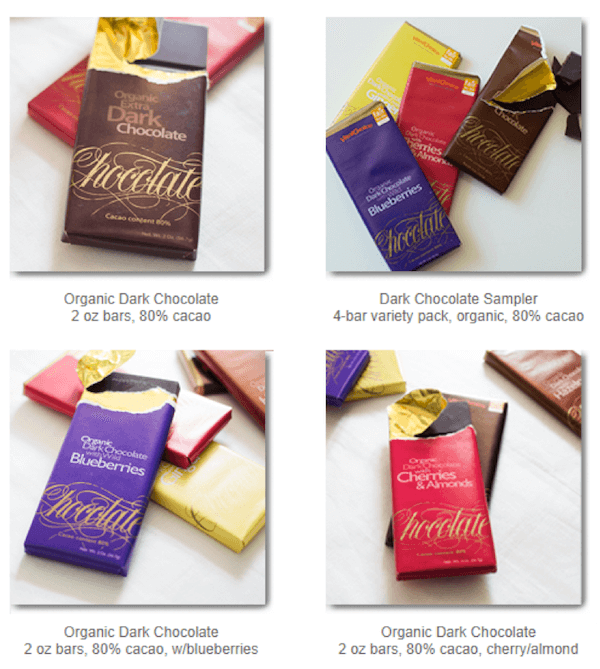
I know I’m going to get questions on what brands I recommend that are organic, Fair Trade and gluten-free so here goes – Vital Choice is my pick right now.

Vital Choice has quality dark chocolate that is both organic and Fair Trade. It is labeled gluten-free but they state it is “Manufactured on shared equipment with products containing wheat, milk, peanuts, and tree nuts.” I have not had any reports of anyone having a gluten issue with it but please use your own discretion. Here is the link to check them out and make a purchase (it is my affiliate link). Simply search for dark chocolate.

Feel free to share how you do with dark chocolate and how it makes you feel when you consume it and be sure to post any questions you may have.

And if you know of brands that are organic, Fair Trade and gluten-free please do share them.

Filed Under: Addiction Tagged With: addicted, anxiety, caffeine, comfort, Dark chocolate, DPA, immunity, Inflammation, insomnia, memory, mood, oxalates, reward, stress, tryptophan, Vital Choice

  • « Go to Previous Page
  • Page 1
  • Page 2
  • Page 3
  • Go to Next Page »

Primary Sidebar

GABA QuickStart Homestudy

gaba quickstart homestudy

Free Report

9 Great Questions Women Ask about Food, Mood and their Health

You'll also receive a complimentary subscription to my ezine "Food, Mood and Gal Stuff"


Connect with me

Popular Posts

  • Amino Acids Mood Questionnaire from The Antianxiety Food Solution
  • The Antianxiety Food Solution Amino Acid and Pyroluria Supplements
  • Pyroluria Questionnaire from The Antianxiety Food Solution
  • Collagen and gelatin lower serotonin: does this increase your anxiety and depression?
  • Tryptophan for the worry-in-your-head and ruminating type of anxiety
  • GABA for the physical-tension and stiff-and-tense-muscles type of anxiety
  • The Antianxiety Food Solution by Trudy Scott
  • Seriphos Original Formula is back: the best product for anxiety and insomnia caused by high cortisol
  • Am I an anxious introvert because of low zinc and vitamin B6? My response to Huffington Post blog
  • Vagus nerve rehab with GABA, breathing, humming, gargling and key nutrients

Recent Posts

  • Her cravings for chips and peanut butter were triggered by stress: GABA ends cravings and reduces physical tension and fear of heights
  • It is truly miraculous to be able to move through life without crippling anxiety and panic
  • GABA and tryptophan combo provide immediate and noticeable relief for tremors and cervical dystonia in just 7 days
  • Red light therapy for back and neck pain, plantar fasciitis and low mood – a complement to the amino acids GABA, DPA and tryptophan
  • What do I use instead of Seriphos to help lower high cortisol that is affecting my sleep and making me anxious at night?

Categories

  • 5-HTP
  • AB575
  • Addiction
  • ADHD
  • Adrenals
  • Alcohol
  • Allergies
  • Alzheimer's disease
  • Amino Acids
  • Anger
  • Antianxiety
  • Antianxiety Food Solution
  • Antidepressants
  • Anxiety
  • Anxiety and panic
  • Autism
  • Autoimmunity
  • benzodiazapines
  • Bipolar disorder
  • Books
  • Caffeine
  • Cancer
  • Candida
  • Children/Teens
  • Collagen
  • Cooking equipment
  • Coronavirus/COVID-19
  • Cravings
  • Depression
  • Detoxification
  • Diabetes
  • Diet
  • DPA/DLPA
  • Drugs
  • EFT/Tapping
  • EMF
  • EMFs
  • Emotional Eating
  • Endorphins
  • Environment
  • Essential oils
  • Events
  • Exercise
  • Fear
  • Fear of public speaking
  • Fertility and Pregnancy
  • Fish
  • Food
  • Food and mood
  • Functional neurology
  • GABA
  • Gene polymorphisms
  • General Health
  • Giving
  • Giving back
  • Glutamine
  • Gluten
  • GMOs
  • Gratitude
  • Gut health
  • Heart health/hypertension
  • Histamine
  • Hormone
  • Hyperparathyroidism
  • Hypoglycemia
  • Immune system
  • Inflammation
  • Insomnia
  • Inspiration
  • Introversion
  • Joy and happiness
  • Ketogenic diet
  • Lithium orotate
  • Looking awesome
  • Lyme disease and co-infections
  • MCAS/histamine
  • Medication
  • Men's health
  • Mental health
  • Mercury
  • Migraine
  • Mold
  • Movie
  • MTHFR
  • Multiple sclerosis
  • Music
  • NANP
  • Nature
  • Nutritional Psychiatry
  • OCD
  • Osteoporosis
  • Oxalates
  • Oxytocin
  • Pain
  • Paleo
  • Parasites
  • Parkinson’s disease
  • PCOS
  • People
  • PMS
  • Postpartum
  • PTSD/Trauma
  • Pyroluria
  • Questionnaires
  • Real whole food
  • Recipes
  • Research
  • Schizophrenia
  • serotonin
  • SIBO
  • Sleep
  • Special diets
  • Sports nutrition
  • Stress
  • Sugar addiction
  • Sugar and mood
  • Supplements
  • Teens
  • Testimonials
  • Testing
  • The Anxiety Summit
  • The Anxiety Summit 2
  • The Anxiety Summit 3
  • The Anxiety Summit 4
  • The Anxiety Summit 5
  • The Anxiety Summit 6
  • Thyroid
  • Thyroid health
  • Toxins
  • Tryptophan
  • Tyrosine
  • Uncategorized
  • Vegan/vegetarian
  • Women's health
  • Yoga

Archives

  • May 2026
  • April 2026
  • October 2025
  • September 2025
  • August 2025
  • July 2025
  • June 2025
  • May 2025
  • April 2025
  • March 2025
  • February 2025
  • January 2025
  • November 2024
  • October 2024
  • September 2024
  • August 2024
  • July 2024
  • June 2024
  • May 2024
  • April 2024
  • March 2024
  • February 2024
  • January 2024
  • December 2023
  • November 2023
  • October 2023
  • September 2023
  • August 2023
  • July 2023
  • June 2023
  • May 2023
  • April 2023
  • March 2023
  • February 2023
  • January 2023
  • December 2022
  • November 2022
  • October 2022
  • September 2022
  • August 2022
  • July 2022
  • June 2022
  • May 2022
  • April 2022
  • March 2022
  • February 2022
  • January 2022
  • December 2021
  • November 2021
  • October 2021
  • September 2021
  • August 2021
  • July 2021
  • June 2021
  • May 2021
  • April 2021
  • March 2021
  • February 2021
  • January 2021
  • December 2020
  • November 2020
  • October 2020
  • September 2020
  • August 2020
  • July 2020
  • June 2020
  • May 2020
  • April 2020
  • March 2020
  • February 2020
  • January 2020
  • December 2019
  • November 2019
  • October 2019
  • September 2019
  • August 2019
  • July 2019
  • June 2019
  • May 2019
  • April 2019
  • March 2019
  • February 2019
  • January 2019
  • December 2018
  • November 2018
  • October 2018
  • September 2018
  • August 2018
  • July 2018
  • June 2018
  • May 2018
  • April 2018
  • March 2018
  • February 2018
  • January 2018
  • December 2017
  • November 2017
  • October 2017
  • September 2017
  • August 2017
  • July 2017
  • June 2017
  • May 2017
  • April 2017
  • March 2017
  • February 2017
  • January 2017
  • December 2016
  • November 2016
  • October 2016
  • September 2016
  • August 2016
  • July 2016
  • June 2016
  • May 2016
  • April 2016
  • March 2016
  • February 2016
  • January 2016
  • December 2015
  • November 2015
  • October 2015
  • September 2015
  • August 2015
  • July 2015
  • June 2015
  • May 2015
  • April 2015
  • March 2015
  • February 2015
  • January 2015
  • December 2014
  • November 2014
  • October 2014
  • September 2014
  • August 2014
  • July 2014
  • June 2014
  • May 2014
  • April 2014
  • March 2014
  • February 2014
  • January 2014
  • December 2013
  • November 2013
  • October 2013
  • September 2013
  • August 2013
  • July 2013
  • June 2013
  • May 2013
  • April 2013
  • March 2013
  • February 2013
  • January 2013
  • December 2012
  • November 2012
  • October 2012
  • August 2012
  • July 2012
  • June 2012
  • May 2012
  • April 2012
  • March 2012
  • February 2012
  • January 2012
  • December 2011
  • November 2011
  • October 2011
  • September 2011
  • August 2011
  • July 2011
  • June 2011
  • May 2011
  • April 2011
  • March 2011
  • February 2011
  • January 2011
  • December 2010
  • October 2010
  • September 2010
  • July 2010
  • May 2010
  • April 2010
  • March 2010
  • February 2010
  • January 2010
  • November 2009

Share the knowledge!

The above statements have not been evaluated by the Food and Drug Administration. Products listed in this website are not intended to diagnose, treat, cure or prevent any disease.

The information provided on this site is for informational and educational purposes only and is not intended as a substitute for advice from your physician or other health care professional. You should consult with a healthcare professional before starting or modifying any diet, exercise, or supplementation program, before taking or stopping any medication, or if you have or suspect you may have a health problem.


Copyright © 2026 Trudy Scott. All Rights Reserved. | Privacy | Terms and Conditions | Refund Policy | Medical Disclaimer

Free Report

9 Great Questions Women Ask about Food, Mood and their Health

You’ll also receive a complimentary subscription to my ezine “Food, Mood and Gal Stuff”