• Skip to primary navigation
  • Skip to main content
  • Skip to primary sidebar

everywomanover29 blog

Food, Mood and Women's Health – Be your healthiest, look and feel great!

  • Blog
  • About
  • Services
  • Store
  • Resources
  • Testimonials
  • The Book
  • Newsletter
  • Contact
  • Search this site

Julie Matthews

Oxalate crystal disease, dietary oxalates and pain: the research & questions

June 26, 2020 By Trudy Scott 143 Comments

oxalate crystal disease

This blog post came out of my quest for finding a medical explanation/term for my own pain caused by dietary oxalates and a desire to gain a better understanding for my clients who experience similar pain. It’s been on my writing list for some time and I’ve been gathering articles and research but the current coronavirus pandemic and recommendations for high vitamin C intake had me concerned enough to blog about it and ask for feedback from my community.

This is the blog, Coronavirus and vitamin C for immune support: new pain or more severe pain due to oxalate issues?, where I pose the question about recent increased intake of vitamin C or the addition of large doses for immune support and increased pain: joint pain, eye pain, foot pain, vulvodynia, bladder issues, insomnia, gut pain, kidney pain, changes in thyroid health/labs, bone pain etc?  The feedback on this blog and on Facebook has been huge and confirms the connection.  Thank you if you’ve already contributed to the discussion!

Today I’ll share an overview of oxalates, my pain issues with dietary oxalates, a deeper dive into the condition called oxalate crystal disease (with some of my insights and questions), and the autism and atherosclerosis research. It’s by no means a comprehensive blog on all things oxalates but rather a way to try and connect some dots and pose some questions for going deeper.

The next blog will address my vitamin C/oxalate/pain story and the research on vitamin C, oxalates and pain, together with questions.

Oxalates defined and food sources

Before we review oxalate crystal disease, let’s define calcium oxalates. Julie Matthews, my good friend and colleague and an oxalate expert shares this in her blog, Oxalates: Their Influence on Chronic Disease

Oxalates present in our body as sharp crystals or crystalline structures with jagged edges that cause pain, irritation, and distress. They can bind with certain minerals; particularly calcium and magnesium, as well as iron and copper

You’ll find many different lists of low, medium and high oxalate foods. When I started eating low oxalate I found Susan Owen’s site simple and very helpful. I then joined the Trying Low Oxalates Facebook group for support and feedback.

In summary, these are the common medium-oxalate and high-oxalate foods that many folks have problems with: nuts, nut-butters and nut-flour (something to watch when eating Paleo or GAPS), wheat, chocolate, kiwi fruit (very high – see the raphides image below), star fruit (also very high), beets, potatoes, legumes, berries, spinach and soy.

You can see why these needle shaped calcium oxalate crystals found in kiwi fruit could inflict pain. This is just one example – there are many different shapes of calcium oxalate crystals.
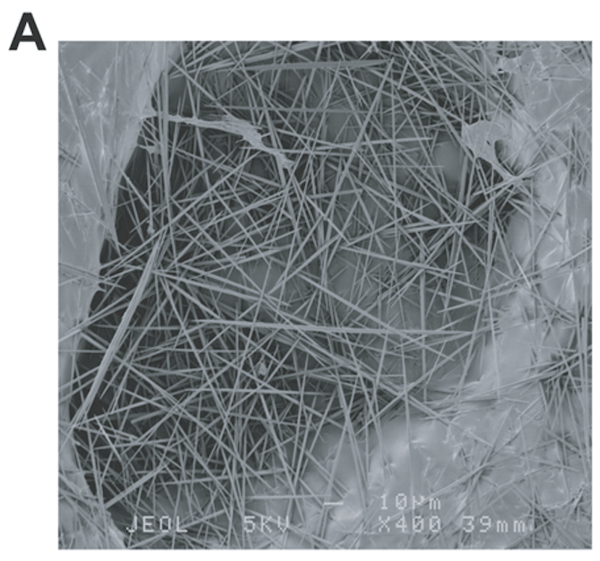
raphides purified from kiwifruit
Raphides purified from kiwifruit. Raphides, needle shaped calcium oxalate crystals, were collected from kiwifruit homogenate through heavy media separation using a dense CsCl solution. (A) The SEM image of purified raphides (x400). Shared from: Synergistic Defensive Function of Raphides and Protease through the Needle Effect via Creative Commons.

My oxalate story: severe foot pain and eye pain

I personally had severe dietary oxalate issues in 2012 which manifested as excruciating foot pain. It was a combination of hot-burning-coals-pain and shards-of-glass-pain. It was just after my book, The Antianxiety Solution (my Amazon link), came out. Due to my book tours and events, I would be on my feet all day presenting, often for 3 full consecutive days, so I figured that must be the reason. When I travelled, I took a blender and made smoothies with berries, ate plenty of healthy nuts as my snacks and took kale chips with me to make sure I was getting my greens. Kiwi fruit was a favorite of mine!

I was eating a high oxalate diet and had no idea until I heard Julie present at an Integrative Medicine for Mental Health Conference on dietary oxalates and autism. A light-bulb went off and then I worked with her to learn about oxalates and figure out if it was in fact because of oxalates and sure enough, as soon as I removed high and medium oxalate foods the pain resolved. Note: the advice is NOT to remove all high and medium oxalate foods at once because dumping can occur. I was fortunate that this didn’t happen with me, possibly because of the vitamin B6 I was already taking as part of the pyroluria protocol.

When I eat a low oxalate diet I do really well. However, more recently dietary oxalates have been causing me eye pain when I have a treat like eggplant or carob. It starts out as a kind of scratchy discomfort and mild pain and then gets worse and worse. I also have a goopy kind of discharge from the inner part of my eye and burning/redness crystal-like teariness on the outer parts of my eyes.  I recently had one very severe incident where the eye pain in my left eye was agonizing for about 2 hours. I was beside myself and tried GABA, DPA and tryptophan for an attempt at pain relief – with no success. When I took 500mg of vitamin B6 the pain eased immediately.

The theory is that oxalates cause issues where you have a weakness. I injured my left eye walking into a low tree-branch while rock-climbing 15 years ago, so I suspect this is why my left eye is more severely affected.

Oxalate crystal disease

The condition “oxalate crystal disease” is the closest explanation I’ve found that explains the pain I’ve experienced and makes the most sense, other than the fact that all the studies mention kidney disease and yet I don’t have kidney disease and have never had kidney stones. I’ve also never had a problem with my estimated Glomerular Filtration Rate (eGFR). In case eGFR is new to you it measures how well your kidneys filter the wastes from your blood and is the best overall measure of kidney function/damage.

This paper, Update on oxalate crystal disease, summarizes it:

Oxalate arthropathy is a rare cause of arthritis characterized by deposition of calcium oxalate crystals within synovial fluid. This condition typically occurs in patients with underlying primary or secondary hyperoxaluria. Primary hyperoxaluria constitutes a group of genetic disorders resulting in endogenous overproduction of oxalate, whereas secondary hyperoxaluria results from gastrointestinal disorders associated with fat malabsorption and increased absorption of dietary oxalate. In both conditions, oxalate crystals can deposit in the kidney leading to renal failure. Since oxalate is primarily renally eliminated, it accumulates throughout the body in renal failure, a state termed oxalosis. Affected organs can include bones, joints, heart, eyes, and skin. Since patients can present with renal failure and oxalosis before the underlying diagnosis of hyperoxaluria has been made, it is important to consider hyperoxaluria in patients who present with unexplained soft tissue crystal deposition. The best treatment of oxalosis is prevention. If patients present with advanced disease, treatment of oxalate arthritis consists of symptom management and control of the underlying disease process.

Let me break this down because I’ve had to look up terminology and read and re-read papers in order to get a better understanding of things:

#1 Oxalate arthropathy is a rare cause of arthritis characterized by deposition of calcium oxalate crystals within synovial fluid.

Oxalate arthropathy is a disease of the joints caused by oxalates depositing in the synovial fluid of the joints.  The paper states it is a rare cause of arthritis, but I suspect it is much more common given what we’re seeing clinically.

Also, because all the research connects oxalate crystal disease with kidney disease, it may be overlooked when there is no kidney disease (more on that below).

Synovial fluid is the fluid between the joints that acts as a lubricant and nutrient source.

#2 This condition typically occurs in patients with underlying primary or secondary hyperoxaluria.

Hyperoxaluria occurs when you have “too much oxalate in your urine.”

#3 Primary hyperoxaluria constitutes a group of genetic disorders resulting in endogenous overproduction of oxalate and… secondary hyperoxaluria results from gastrointestinal disorders associated with fat malabsorption and increased absorption of dietary oxalate.

Primary hyperoxaluria is genetic and results in endogenous or internal overproduction of oxalate, causing too much oxalate in the urine.

The secondary hyperoxaluria description mentions “gastrointestinal disorders associated with fat malabsorption and increased absorption of dietary oxalate.”  There are a number of other factors which I’ll address in a future blog.

According to this paper and others, secondary hyperoxaluria also results in too much oxalate in the urine.

#4 In both conditions, oxalate crystals can deposit in the kidney leading to renal failure. Since oxalate is primarily renally eliminated, it accumulates throughout the body in renal failure, a state termed oxalosis.

Affected organs can include bones, joints, heart, eyes, and skin.

Mayo clinic states oxalosis occurs if your kidneys fail. “Because your body can no longer eliminate the extra oxalate, it starts accumulating — first in your blood, then in your eyes, bones, skin, muscles, blood vessels, heart and other organs.”

My comment is that in some instances, oxalates accumulate in various parts of the body without kidney failure. I share more about this aspect and what we see clinically below, plus an autism and atherosclerosis study.

This paper, Oxalate crystal deposition disease, also mentions the following: “osteopathy, acute and chronic arthropathy with chondrocalcinosis, synovial calcification, and miliary skin calcium oxalate deposits and vascular calcifications that affect mainly the hands and feet.” The paper is focused on primary hyperoxaluria (and does also discuss the kidney involvement) but I’m including it because of the conditions listed. You may have received one of these diagnoses and not linked it back to dietary oxalates and/or vitamin C intake possibly playing a role.

The authors do report “systemic life-threatening cardiovascular, neurologic, and hematologic manifestations”, saying they are rare.

Calcium oxalates: anxiety, sleep, headaches, fatigue and other symptoms

Calcium oxalate crystals can also be found in the thyroid, and ear, leading to hearing loss under some circumstances.

Julie Matthews, in her blog, Oxalates: Their Influence on Chronic Disease, also shares that

Clinical studies and anecdotal experience indicate that oxidative stress, mitochondrial disruption and damage, and nutrient depletions, trigger widely varied symptoms including fatigue and inflammatory cascades, joint pain or pain anywhere in the body. Chronic low energy is very common because of a reduction in ATP in the mitochondria. Oxalates could be a hidden source of headaches, urinary pain, genital irritation, joint, muscle, intestinal or eye pain.

Other common oxalate-caused symptoms may include mood conditions, anxiety, sleep problems, weakness, or burning feet. Indicators can be digestive, respiratory, or even bedwetting for children.

What the researchers are saying – always kidney disease

I’ve reached out to a number of researchers, practitioners and labs and they all state that oxalate crystal disease only happens with kidney disease/kidney stones. This is what one researcher shared with me: “Plasma oxalate concentrations only elevate enough to cause systemic disease when there is significant kidney disease (typically GFR <20-30). I have never seen a significantly elevated plasma oxalate without chronic kidney disease.”

Could this be the case because they are kidney specialists and therefore only seeing patients who already have kidney disease?

The good news is that a number of them are intrigued and interested in learning more.

Oxalate crystals in autism and atherosclerosis without kidney issues

However, based on my own experience and according to many in this community and other communities like the Trying Low Oxalates Facebook group, pain issues related to dietary oxalate intake may occur without kidney issues/kidney stones, and often does.

These papers offer some support for what I suspect we are seeing clinically – systemic oxalate deposits can occur deposits without kidney stones or renal failure:

  • A Potential Pathogenic Role of Oxalate in Autism

Children with ASD [autism spectrum disorder] demonstrated 3-fold greater plasma oxalate levels … and 2.5-fold greater urinary oxalate concentrations. Despite significant hyperoxaluria no evidence of kidney stone disease…was observed

  • Atherosclerotic Oxalosis in Coronary Arteries

calcium oxalate crystals were observed within atherosclerotic plaques in the coronary arteries. Similar deposits were seen in the thyroid gland and other organs but not in the kidneys. None of the patients had chronic renal failure…. We suggest the phrase “atherosclerotic oxalosis” to describe this finding.

These are the disconnects I’m seeing in the research and questions I have:

  • Oxalate crystal disease is reported to be rare and it only happens with kidney disease/kidney stones – could it be more common than reported? As Julie states: “New science and clinical experience reveal concerns about oxalates that far exceed traditional kidney stone pathology.”
  • Should we be calling it hyperoxaluria. “too much oxalate in your urine” if the kidney is not involved? Or do we need to expand the definition of hyperoxaluria to include too much oxalate in other tissues outside the kidney and urine?
  • Could oxalate crystal disease with no kidney disease be a new syndrome that has yet to be widely and clearly identified in the research?

I mean no disrespect to the study authors and researchers by sharing my insights and questions here and in the section above.  I appreciate the work they do and the opportunity to learn from them.

Searching through the literature on this has been extremely challenging because studies always refer to the kidney. It may well be that there is a perfectly logical explanation for much of this and someone has already gone through the research and has answers to all my questions.  I am very willing to be enlightened so please do share if you’ve come across a good explanation.

Either way, please share your insights based on what I’ve shared in this blog and in relation to your experiences with pain caused by dietary oxalates and/or pain caused by vitamin C intake. I will be sharing this blog and the comments with the researchers and practitioners who are open to all this.

Read all posts in this series:

  • Coronavirus and vitamin C for immune support: new pain or more severe pain due to oxalate issues? (part 1)
  • Oxalate crystal disease, dietary oxalates and pain: the research & questions (part 2)
  • Vitamin C causes oxalate formation resulting in pain, anxiety, and insomnia (when there is a defect in ascorbic acid or oxalate metabolism)? (part 3)
  • Willow’s survival story: Easter Lilies cause acute renal failure in cats and Peace Lilies cause oxalate issues (part 4)
  • Waking in the night due to environmental toxins: impacts on the liver, gallbladder and fat digestion (making oxalate issues worse) (part 5)
  • Increased kidney stones in postmenopausal women with lower estradiol levels. What about increased dietary oxalate issues too?
  • Vulvodynia: oxalates, GABA, tryptophan and physical therapy
  • Ox bile as a supplement: to help counter the effects of dietary oxalates very likely caused by bile issues and poor fat digestion
  • Low oxalate success stories: resolution of joint/body pain, insomnia, peripheral neuropathy and can walk without a cane
  • Bright light to reset circadian rhythm: a solution for jet lag (with melatonin) and for disturbed sleep caused by bile issues?
Filed Under: Oxalates Tagged With: atherosclerosis, autism, calcium oxalates, dietary oxalates, eyes, Julie Matthews, kidney disease, oxalate crystal disease, oxalates, pain, questions, research, susan owen, vulvodynia, xalate crystal disease

Anxiety & the Gut-Brain Axis in Autism with Julie Matthews: The Anxiety Summit 5

October 21, 2019 By Trudy Scott 8 Comments

Julie Matthews, CNC, is one my guest experts on The Anxiety Summit 5: Gut-Brain Axis and our topic is: Anxiety & the Gut-Brain Axis in Autism. In this interview you’ll learn:

  • Nutritional and dietary intervention in autism (and the new study Julie contributed to)
  • Gut-immune-brain axis, mTOR and amino acids (we talk about tryptophan at length)
  • Significance of fecal microbiota transplants (and significance and future of this approach)

julie matthews

We start with a discussion about how common anxiety disorders are in autism, and how psychiatric medications are frequently prescribed.

This is why I’m so thrilled about the study Julie was part of: Comprehensive Nutritional and Dietary Intervention for Autism Spectrum Disorder-A Randomized, Controlled 12-Month Trial.

  • study participants had a significant improvement in anxiety from a special diet and various nutritional supplements
  • study participants saw improved communication skills as well as improved daily living skills and social skills – all of which can lead to reduced anxiety and social anxiety, and improved overall happiness
  • there were also improvements in happiness, focus, IQ and language, as well as symptoms of autism

We talk about some of this in the in-person interview we did recently in San Diego.

(Note: The dates for the 2021 Anxiety Summit 5 is November 8-14, 2021)

(I also blogged about this study last year, shortly after the paper was published. You can read about it here so you’re familiar with all the details when you listen to our summit interview.)

Julie and I are both research geeks and in our full interview on the summit we get geeky and talk about new research on:

  • The Gut-Immune-Brain Axis in Autism Spectrum Disorders A Focus on Amino Acids (we discuss mTOR and have a good discussion on the use of tryptophan vs 5-HTP)
  • Fecal transplants in autism (the outcomes are incredibly promising! I’ve since heard that another bigger study is being planned by the same researchers)

julie matthews and trudy scott

You’re likely familiar with Julie’s autism nutrition work and practitioner training on special diets which I wholeheartedly endorse. In case you’re new to her work, Julie is a Certified Nutrition Consultant and published researcher specializing in complex neurological, digestive, and immune conditions, most notably autism. She is the author of the award-winning book, Nourishing Hope for Autism, and co-author of a study proving the efficacy of nutrition and dietary intervention for autism published in the peer-reviewed journal, Nutrients (the study I mention above).

If you’re looking for autism/anxiety and autism/gut solutions you won’t want to miss this interview.

If you are looking for anxiety nutritional and gut solutions but don’t have an autism spectrum disorder/ASD or family member with ASD I encourage you to listen in anyway.  Julie’s approach is based on the BioIndividual Nutrition® needs of each person and stems from her 18 years of work with autism. Using autism as a model for complex chronic disease, her approach and methodology helps practitioners specializing in varied disorders improve the health and healing of their clients through her BioIndividual Nutrition Training for practitioners.

The above statement – using autism as a model for complex chronic disease – is an important one. In the short video clip above I mention how those with ASD are like the canaries in the coal mine. And we talk about many of the overlapping root causes we see in both anxiety disorders and ASD – such as methylation, nutritional deficiencies, gut issues and food sensitivities, heavy metals and so much more.  Julie and I have been highlighting these overlaps for years. Much of what we cover in the interview has wide-reaching implications for anxiety and other chronic health conditions.

I am so appreciative to Julie for helping me figure out my own dietary oxalate issues which were causing excruciating hot-coals/shards-of-glass type foot pain. I’ve learned so much from Julie on this topic and you’ll hear me bring up oxalates in a number of interviews.

julie and trudy 

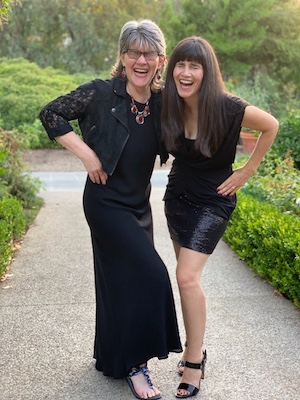
We also happen to be really good friends and love to laugh together (as you can tell!). These two pictures were taken in San Diego at the Mindshare conference (left) and Integrative Medicine for Mental Health conference (right), where we both presented.

You can listen to each of the interviews (and get transcripts) by purchasing The Anxiety Summit 5: Gut-Brain Axis.

If you’d like to give feedback or ask a question, please post in the comments section. I’d love to hear from you once you’ve listened in.

If you’d like to give feedback or ask a question, please post in the comments section at the bottom.

I’d love to hear from you once you’ve listened in to this interview and the others.

Filed Under: The Anxiety Summit 5 Tagged With: anxiety, Anxiety & the Gut-Brain Axis in Autism, anxiety summit, autism, diet, fecal transplant, gut-brain, Julie Matthews, microbiome, mTOR, nutrition, serotonin, tryptophan

The healing properties of camel’s milk for autism (and anxiety)

July 16, 2018 By Trudy Scott 8 Comments

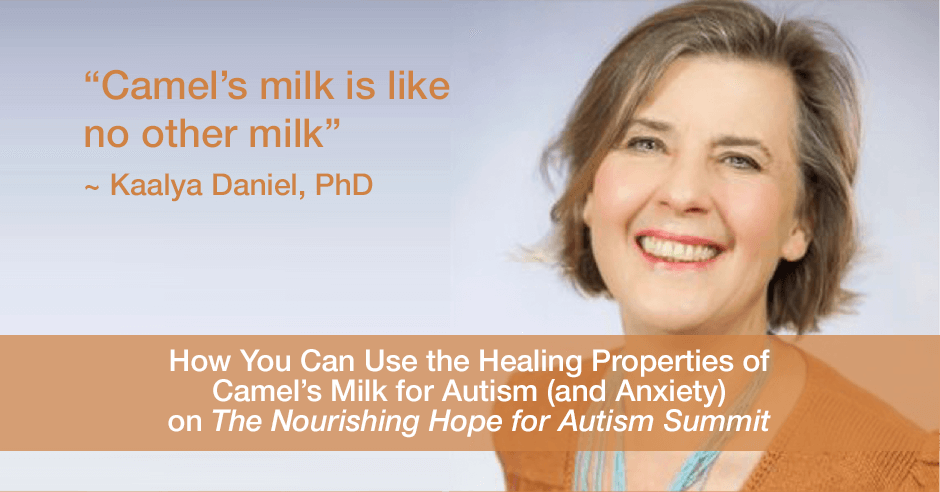
Kaalya Daniel, PhD covers the very interesting topic of camel milk in her interview on The Nourishing Hope for Autism Summit

How You Can Use the Healing Properties of Camel’s Milk for Autism

Camel’s milk is like no other milk. You’ll learn the unique and powerful immune system properties and nutrient benefits of this milk, from an animal known to endure extreme conditions. And how it helps with autism, even when you can’t tolerate other milk.

I don’t have access to the interview transcript yet but since this is a new topic I haven’t yet blogged about I’ve decided to highlight this interview as one I’m really interested in exploring for mom’s in my community with children on the spectrum, with ADHD or other developmental disorders.

In case you’re new to camel’s milk, a paper published in 2015 – Nutritional and Therapeutic Characteristics of Camel Milk in Children: A Systematic Review, shares the following:

Camel milk is the closest to a human mother’s milk. Camel milk is different from other milks, however, having low sugar and cholesterol, high minerals (sodium, potassium, iron, copper, zinc and magnesium, and vitamin C). The milk is considered have medicinal characteristics as well.

The study concludes that there is evidence denoting the importance, usability and benefits of camel’s milk:

Camel milk as a supplemental treatment seems less invasive and costly than specialist care, medications, alternative treatments, and behavioral interventions. Based on our findings, camel milk is safer for children, effective in the treatment of autism, improves general well-being, promotes body natural defenses, is a good nutritional source, and can helps the daily nutritional needs of humans.

Given the many overlaps we see with autism/ASD and anxiety/depression, it’s clear that camel milk has wide applications given the benefits we see has for immunity, the gut and inflammation, as well as providing nourishment when dairy cannot be tolerated. As you can see in the above study below camel milk consumption has been shown to improve general well-being.

I’m not sure if anxiety and GABA is covered in the interview but I did find some interesting research reporting that both camel and goat milk have significantly more bioavailable GABA than cow and human milk – which may be another beneficial mechanism.

Here are just a few of the other speakers and topics I’m really looking forward to hearing:

  • James Adams, PhD: The Scientific Evidence Linking Nutrition and Autism Improvement
  • Dietrich Klinghardt: Understanding Lyme, Infections, Mold, and Heavy Metals and the Effects on Autism
  • Chef Pete Evans: Food is Medicine, Inspiration from a chef
  • Dominic D’Agostino, PhD: Is the Ketogenic Diet Right for an Autistic Child?
  • Susan Owens, MS: The Inflammasome, Oxalates, Autoimmunity and Autism
  • And of course, Julie Matthews, CNC: When GFCF Diets Don’t Work – BioIndividual Nutrition for Autism (I’m actually going to interview Julie on this topic)

In my interview we go into anxiety, OCD and aggression in great detail, discussing the amino acids GABA and tryptophan, plus gluten issues and when and how to use inositol.

This summit provides you with information and tools that address the root causes of autism, ADHD and many other conditions including anxiety.

The Summit runs July 30 to August 3 and is hosted by my dear friend and colleague Julie Matthews, whose work you’re probably very familiar with. In case Julie’s work is new to you, in my eyes, she is THE autism nutrition expert. I’ve had the pleasure of interviewing her a number of times on the Anxiety Summit, I endorse her Bioindividual Nutrition training (special diets) for practitioners, I highly respect the work she does and I adore her!

Register here for The Nourishing Hope for Autism Summit to learn more! It airs online from July 30 to August 3, 2018. Hope to see you online!

I’d love to hear your camel’s milk experiences. If you have questions please post them in the comments below.

Filed Under: Anxiety, Autism, Events Tagged With: anxiety, ASD, autism, Camel milk, GABA, Julie Matthews, Kaayla Daniel, Nourishing Hope for Autism Summit, OCD

Little evidence for SSRI use in anxiety and compulsions in ASD: my interview on Nourishing Hope for Autism Summit

July 2, 2018 By Trudy Scott 2 Comments

One of the reasons I’m so passionate about participating on summits like The Nourishing Hope for Autism Summit and sharing the powerful nutritional interventions is due to the fact that medications such as antidepressants and benzodiazepines are frequently prescribed in ASD – and the research and clinical evidence shows that children and adolescents with ASD (autism spectrum disorder) are more vulnerable to the side effects.

This paper, Psychopharmacological interventions in autism spectrum disorder, makes the following conclusion:

Psychopharmacological treatment of core and associated symptoms in ASD is challenging, in large part because ASD presents in many different ways. Furthermore, children and adolescents with ASD are more vulnerable to the side effects of psychopharmacological intervention than their age-matched, typically developing counterparts.

This paper, Pharmacotherapy of emotional and behavioral symptoms associated with autism spectrum disorder in children and adolescents, supports this, stating there is little evidence to support the use of SSRIs in ASD:

Selective serotonin reuptake inhibitors are often used in clinical practice to target anxiety and compulsions; however, there is little evidence to support its use in this population. There is a great need for further research on the safety and efficacy of existing psychotropic medications in youth with ASD.

And this paper published a few months ago, An update on pharmacotherapy of autism spectrum disorder in children and adolescents, concludes that

Overall, the evidence is limited for pharmacotherapy in children with ASD, and side-effects with long-term use can be burdensome.

Much of this also applies to adults with ASD and in my interview I talk about the psychiatric medicine concerns within the ASD community and the high incidence of anxiety, aggression, irritability and OCD in this population.

We also discuss the following nutritional solutions in my interview (appropriately titled: How to calm anxiety, and eliminate aggression and OCD) –

  • the role low serotonin plays in anxiety, aggression and OCD/obsessions and the use of tryptophan and when to avoid 5-HTP
  • the low GABA type of physical anxiety and how to effectively use GABA for results
  • how to use inositol for OCD and some wonderful success stories
  • lead toxicity and increased anxiety and the protective role of tryptophan and ascorbic acid
  • phenols and oxalates other special diets (and my story with oxalate issues)

Our interviews are always fun, science based and practical – and in this one we even shared some of our personal results (both good and bad) with some of these nutrients.

Here are just a few of the speakers and topics I’m really looking forward to hearing:

  • James Adams, PhD: The Scientific Evidence Linking Nutrition and Autism Improvement
  • Dietrich Klinghardt: Understanding Lyme, Infections, Mold, and Heavy Metals and the Effects on Autism
  • Chef Pete Evans: Food is Medicine, Inspiration from a chef
  • Kaalya Daniel, PhD: How You Can Use the Healing Properties of Camel’s Milk for Autism
  • Dominic D’Agostino, PhD: Is the Ketogenic Diet Right for an Autistic Child?
  • Susan Owens, MS: The Inflammasome, Oxalates, Autoimmunity and Autism
  • And of course, Julie Matthews, CNC: When GFCF Diets Don’t Work – BioIndividual Nutrition for Autism

This summit provides you with information and tools that address the root causes so medications such as the above do not even have to come into the picture!

The Nourishing Hope for Autism Summit runs July 30 to August 3 and is hosted by my dear friend and colleague Julie Matthews, whose work you’re probably very familiar with. In case Julie’s work is new to you, in my eyes, she is THE autism nutrition expert. I’ve had the pleasure of interviewing her a number of times on the Anxiety Summit, I endorse her Bioindividual Nutrition training (special diets) for practitioners, I highly respect the work she does and I adore her!

The focus of this summit is clearly autism and Julie is THE expert so you’ll learn a ton from the experts she has gathered.

But do keep in mind that those with autism or Asperger’s are often considered the canaries in the coalmine and even if you don’t have a loved one with ASD many of the interviews have wider applications for anxiety, ADHD and other developmental and learning disorders.

Register here for The Nourishing Hope for Autism Summit to learn more! It airs online from July 30 to August 3, 2018

Filed Under: Anxiety, Autism, Events Tagged With: antidepressant, anxiety, ASD, Asperger’s, autism, benzodiazepine, compulsions, GABA, inositol, Julie Matthews, medications, Nourishing Hope for Autism Summit, OCD, psychotropic, SSRI, tryptophan

Nutritional and Dietary Intervention for Autism Spectrum Disorder – a new study

June 29, 2018 By Trudy Scott 3 Comments

The research confirms how effective nutritional psychiatry is for anxiety and depression (the SMILEs diet depression trial) so when a 12 month randomized trial reports the benefits of nutrition for autism spectrum disorder (ASD) we celebrate this too. Many of the same mechanisms that contribute to anxiety, can also play a role when it comes to ASD – such as food sensitivities, poor gut health, heavy metals, fatty acid imbalances and so on. Also, many children with ASD experience anxiety – 34 to 47% depending on whether you ask a parent of a teacher. Many adults with autism and Asperger’s syndrome also experience anxiety and overwhelm too. In one study 50% of adults with ASD experienced social anxiety.

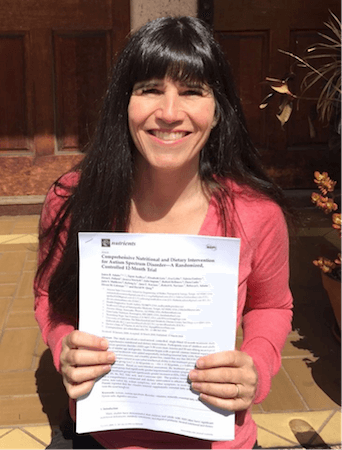
This paper was published in March this year: Comprehensive Nutritional and Dietary Intervention for Autism Spectrum Disorder-A Randomized, Controlled 12-Month Trial and was

a randomized, controlled, single-blind 12-month treatment study of a comprehensive nutritional and dietary intervention.

Treatment began with a special vitamin/mineral supplement, and additional treatments were added sequentially, including essential fatty acids, Epsom salt baths, carnitine, digestive enzymes, and a healthy gluten-free, casein-free, soy-free (HGCSF) diet.

Here is the year-long protocol for the study participants:

Day 0: Vitamin/Mineral supplementation begins.
Day 30: Essential Fatty Acid supplementation begins.
Day 60: Epsom salt baths begin.
Day 90: Carnitine Supplementation begins.
Day 180: Digestive Enzyme supplementation begins.
Day 210: Healthy, casein-free, gluten-free diet begins.
Day 365: Final assessment of autism severity and overall functioning status. Final blood draw and urine collection.

And these are the guidelines for the dietary changes for the study participants:

  1. Adequate intake of a variety of vegetables (including leafy greens) and fruit (preferably whole fruit).
  2. Adequate protein quality and intake.
  3. Adequate, but not excessive, caloric intake.
  4. Minimal consumption of “junk” foods and replacement with healthy snacks.
  5. Healthy, gluten-free, casein-free, and soy-free (HGCSF).
  6. Avoidance of artificial flavors, colors, and preservatives.

Parents of participants reported that the vitamin/mineral supplements, essential fatty acids, and HGCSF diet were the most beneficial. And when asked at the end of the study which treatments they planned to continue at the conclusion of the study, over 85% of parents said the vitamin/mineral supplement and the essential fatty acids were the most likely to be continued, 70% planned to continue the Epsom salt baths, 63% planned to continue the healthy HGCSF diet, and 44% planned to continue using the carnitine and digestive enzymes.

I’m really pleased that they mentioned the following limitation because we really do need to address the nutritional needs of each person:

all participants received all treatments, whereas probably only a subset are likely to benefit from any single intervention (for example, only participants with low carnitine are likely to benefit from carnitine supplementation)…. future studies could try to determine which treatments were most beneficial, using the results of this study to guide those future studies.

Despite the above study limitation, the treatment group saw the following improvements:

  • Improved nonverbal intellectual ability
  • Significantly greater improvement in autismsymptoms and developmental age
  • Significantly greater increases in EPA, DHA, carnitine, and vitamins A, B2, B5, B6, B12, folic acid, and coenzyme Q10

Many of the study participants saw improved communication skills as well as improved daily living skills and social skills – all of which can lead to reduced anxiety and social anxiety, and improved overall happiness.

The authors do mention that the combination of all of the above treatments is feasible for most families and that there were minimal adverse effects. They conclude that:

The positive results of this study suggest that a comprehensive nutritional and dietary intervention is effective at improving nutritional status, non-verbal IQ, autism symptoms, and other symptoms in most individuals with ASD [both children and adults].

Julie Matthews, one of the nutritionists supporting the study

My good friend and colleague, Julie Matthews, was one of the nutritionists supporting the study and is one of the co-authors on the paper. I’m so proud of her contribution to this research which further supports prior studies and the work she does clinically.

Julie is the author of Nourishing Hope for Autism: Nutrition and Diet Guide for Healing Our Children and the founder of the Bioindividual Nutrition Institute. She is hosting the Nourishing Hope for Autism Summit running July 30 to August 30 and she interviews lead researcher, James Adams, PhD, Director of the Autism/Asperger’s Research Program at Arizona State University. The interview is titled “The Scientific Evidence Linking Nutrition and Autism Improvement” so be sure to tune in if you’d like more information on this study and other dietary and nutritional interventions for ASD. (You can register here).


Shamus diagnosed with moderate to severe autism at age 2

Julie shares Shamus’ success story on her Nourishing Hope blog. He was diagnosed with moderate to severe autism at age 2.

When they began him on nutritional and biomedical protocols, his parents had no expectation of improved speech or ever “mainstreaming” their son. They just wanted him to sleep so they could cope with him being autistic.

Within 3 days of starting a gluten and casein-free (GFCF) diet his projectile vomiting stopped and his meltdowns reduced from 20 per day to just 3. The next step was the GAPS diet (Gut and Psychology Syndrome) which included broths and fermented foods, and did lead to worsening symptoms for a short time. Later on overgrowth of the harmful bacteria Clostridium difficile was addressed and other biomedical/nutritional interventions were included.

Today at age 10, Shamus shows no signs of autism and has been classified as “fully recovered!” He’s in a mainstream classroom at school, his teachers love him and he has a great group of friends. Shamus is great at team sports, and exhibits no problems in the classroom whatsoever.

I’m horrified that the doctor told this mom that she was over-anxious, had post-natal depression and needed to take an antidepressant (but that’s another entire blog post).


Both children and adults benefit from dietary changes

I find it very encouraging that the study participants were both children and adults with autism spectrum disorder and their ages ranged from 3 years to 58 years. Julie shares this inspiring and hopeful comment in the press release:

The study also shows that no matter the age of the individual with autism, diet and nutrition intervention can help. It’s never too late to be nourishing hope!

I agree, it’s never too late to make changes. This wonderful success story about an older gentleman with autism is just one example. Carolyn Gammicchia, mom/wife/autism advocate/ disability activist, shared the following on Facebook shortly after the study was published:

I have spoken to many people across the country who implemented this in older individuals, one man was 51 from TX who had been institutionalized and had not spoken. He was in very poor health when a wonderful lady took him in and somehow got my number and called me. She had seen a presentation I had done about five years ago about this and she weaned him off multiple medications, cleaned up his diet (went GFCFSF i.e. gluten-free, casein-free and soy-free) and supplemented with vitamins and minerals, plus exercise. He started speaking, lost 50 lbs, and is able to work now. It works!

Diet reduces anxiety and depression and helps with bipolar and schizoaffective disorder too

I mentioned nutritional psychiatry at the start so here are a few blog posts that highlight how diet reduces anxiety and depression and helps with bipolar and schizoaffective disorder too.

  • Ketogenic diet: reductions in auditory hallucinations and delusions, better mood and energy, and weight loss 
  • Bipolar, disruptive mood or gluten and junk food? 
  • Paleo and grain free diets: anxiety and depression success stories

Going back to the study limitation – what this all means is finding the right combination of dietary and nutritional interventions for each person. There is no one-size fits all and bioindividualized nutrition is key – for ASD, anxiety, depression and any other condition.

We’d love to hear what dietary interventions you’ve used with success with a loved one with autism or Asperger’s syndrome.  Have these changes also reduced anxiety and improved other mood symptoms?

If you’re a practitioner, feel free to share a success story about one of your clients/patients with ASD.

Do also share some tips that you have found make this dietary transition easier and some challenges you have faced. Feel free to post your questions too.

Filed Under: Autism, Diet Tagged With: anxiety, ASD, autism, casein-free, diet, GFCFSF, gluten-free, Julie Matthews, Nourishing Hope for Autism, soy-free

BioIndividual Nutrition Mini-Course and Phenols

October 18, 2017 By Trudy Scott Leave a Comment

My friend and colleague, Julie Matthews, BS, NC, Author of Nourishing Hope for Autism will be hosting the BioIndividual Nutrition Mini-Course as an online webinar for practitioners who make diet and nutrition recommendations. Customizing diets based on a person’s unique biochemistry and health needs is essential to healing chronic disorders.

Learn what it means to practice BioIndividual Nutrition, and how your clinical results can improve by using and customizing therapeutic diets.

The Mini-Course touches on each module of her advanced BioIndividual Nutrition Training program; providing immediately actionable clinical insights, pitfalls to avoid, and proven tips to help you increase your effectiveness with specialized diets.

By the end of this online mini-course, you’ll have a good understanding of how practicing BioIndividual nutrition can help you become more confident, streamline your practice and improve compliance! Whether or not you enroll in the full program semester… You will discover:

  • 14 Clinical Tips you can use in your practice today
  • The nutrition science behind therapeutic diets including low phenol, low oxalate, low amine, low glutamate and low FODMAPs
  • Symptom clues on how to assess your client’s bioindividual nutrition needs
  • 5 most common mistakes nutrition practitioners make
  • Breakthrough case studies

Julie shares this:

This BioIndividual Nutrition Mini-Course will NOT be a general overview. Come prepared to learn!

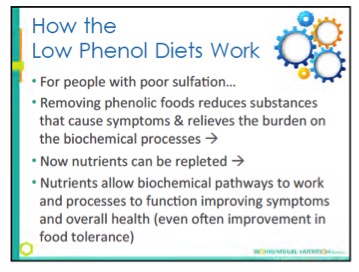
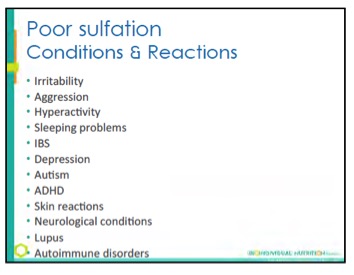
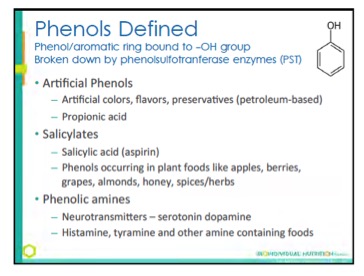
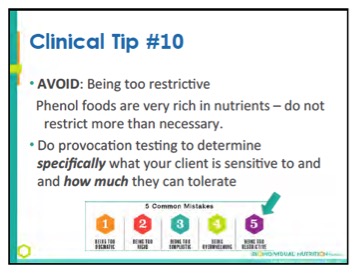
This sampling of valuable information from the section on phenols and sulfation gives you an inkling on the level of detail Julie goes into when she teaches this topic:

This isn’t an area I’ve covered yet on my blog but as you can see there is much relevance when it comes to depression, irritability, agitation and anxiety, autism, ADHD and insomnia and more.

If you have questions Julie will be setting aside some time for Q&A right after the mini-course.

You can register for the online BioIndividual Nutrition Mini-Course here

Filed Under: Events Tagged With: bioindividual nutrition, Julie Matthews

  • Page 1
  • Page 2
  • Page 3
  • Go to Next Page »

Primary Sidebar

GABA QuickStart Homestudy

gaba quickstart homestudy

Free Report

9 Great Questions Women Ask about Food, Mood and their Health

You'll also receive a complimentary subscription to my ezine "Food, Mood and Gal Stuff"


Connect with me

Popular Posts

  • Amino Acids Mood Questionnaire from The Antianxiety Food Solution
  • The Antianxiety Food Solution Amino Acid and Pyroluria Supplements
  • Pyroluria Questionnaire from The Antianxiety Food Solution
  • Collagen and gelatin lower serotonin: does this increase your anxiety and depression?
  • Tryptophan for the worry-in-your-head and ruminating type of anxiety
  • GABA for the physical-tension and stiff-and-tense-muscles type of anxiety
  • The Antianxiety Food Solution by Trudy Scott
  • Seriphos Original Formula is back: the best product for anxiety and insomnia caused by high cortisol
  • Am I an anxious introvert because of low zinc and vitamin B6? My response to Huffington Post blog
  • Vagus nerve rehab with GABA, breathing, humming, gargling and key nutrients

Recent Posts

  • Her cravings for chips and peanut butter were triggered by stress: GABA ends cravings and reduces physical tension and fear of heights
  • It is truly miraculous to be able to move through life without crippling anxiety and panic
  • GABA and tryptophan combo provide immediate and noticeable relief for tremors and cervical dystonia in just 7 days
  • Red light therapy for back and neck pain, plantar fasciitis and low mood – a complement to the amino acids GABA, DPA and tryptophan
  • What do I use instead of Seriphos to help lower high cortisol that is affecting my sleep and making me anxious at night?

Categories

  • 5-HTP
  • AB575
  • Addiction
  • ADHD
  • Adrenals
  • Alcohol
  • Allergies
  • Alzheimer's disease
  • Amino Acids
  • Anger
  • Antianxiety
  • Antianxiety Food Solution
  • Antidepressants
  • Anxiety
  • Anxiety and panic
  • Autism
  • Autoimmunity
  • benzodiazapines
  • Bipolar disorder
  • Books
  • Caffeine
  • Cancer
  • Candida
  • Children/Teens
  • Collagen
  • Cooking equipment
  • Coronavirus/COVID-19
  • Cravings
  • Depression
  • Detoxification
  • Diabetes
  • Diet
  • DPA/DLPA
  • Drugs
  • EFT/Tapping
  • EMF
  • EMFs
  • Emotional Eating
  • Endorphins
  • Environment
  • Essential oils
  • Events
  • Exercise
  • Fear
  • Fear of public speaking
  • Fertility and Pregnancy
  • Fish
  • Food
  • Food and mood
  • Functional neurology
  • GABA
  • Gene polymorphisms
  • General Health
  • Giving
  • Giving back
  • Glutamine
  • Gluten
  • GMOs
  • Gratitude
  • Gut health
  • Heart health/hypertension
  • Histamine
  • Hormone
  • Hyperparathyroidism
  • Hypoglycemia
  • Immune system
  • Inflammation
  • Insomnia
  • Inspiration
  • Introversion
  • Joy and happiness
  • Ketogenic diet
  • Lithium orotate
  • Looking awesome
  • Lyme disease and co-infections
  • MCAS/histamine
  • Medication
  • Men's health
  • Mental health
  • Mercury
  • Migraine
  • Mold
  • Movie
  • MTHFR
  • Multiple sclerosis
  • Music
  • NANP
  • Nature
  • Nutritional Psychiatry
  • OCD
  • Osteoporosis
  • Oxalates
  • Oxytocin
  • Pain
  • Paleo
  • Parasites
  • Parkinson’s disease
  • PCOS
  • People
  • PMS
  • Postpartum
  • PTSD/Trauma
  • Pyroluria
  • Questionnaires
  • Real whole food
  • Recipes
  • Research
  • Schizophrenia
  • serotonin
  • SIBO
  • Sleep
  • Special diets
  • Sports nutrition
  • Stress
  • Sugar addiction
  • Sugar and mood
  • Supplements
  • Teens
  • Testimonials
  • Testing
  • The Anxiety Summit
  • The Anxiety Summit 2
  • The Anxiety Summit 3
  • The Anxiety Summit 4
  • The Anxiety Summit 5
  • The Anxiety Summit 6
  • Thyroid
  • Thyroid health
  • Toxins
  • Tryptophan
  • Tyrosine
  • Uncategorized
  • Vegan/vegetarian
  • Women's health
  • Yoga

Archives

  • May 2026
  • April 2026
  • October 2025
  • September 2025
  • August 2025
  • July 2025
  • June 2025
  • May 2025
  • April 2025
  • March 2025
  • February 2025
  • January 2025
  • November 2024
  • October 2024
  • September 2024
  • August 2024
  • July 2024
  • June 2024
  • May 2024
  • April 2024
  • March 2024
  • February 2024
  • January 2024
  • December 2023
  • November 2023
  • October 2023
  • September 2023
  • August 2023
  • July 2023
  • June 2023
  • May 2023
  • April 2023
  • March 2023
  • February 2023
  • January 2023
  • December 2022
  • November 2022
  • October 2022
  • September 2022
  • August 2022
  • July 2022
  • June 2022
  • May 2022
  • April 2022
  • March 2022
  • February 2022
  • January 2022
  • December 2021
  • November 2021
  • October 2021
  • September 2021
  • August 2021
  • July 2021
  • June 2021
  • May 2021
  • April 2021
  • March 2021
  • February 2021
  • January 2021
  • December 2020
  • November 2020
  • October 2020
  • September 2020
  • August 2020
  • July 2020
  • June 2020
  • May 2020
  • April 2020
  • March 2020
  • February 2020
  • January 2020
  • December 2019
  • November 2019
  • October 2019
  • September 2019
  • August 2019
  • July 2019
  • June 2019
  • May 2019
  • April 2019
  • March 2019
  • February 2019
  • January 2019
  • December 2018
  • November 2018
  • October 2018
  • September 2018
  • August 2018
  • July 2018
  • June 2018
  • May 2018
  • April 2018
  • March 2018
  • February 2018
  • January 2018
  • December 2017
  • November 2017
  • October 2017
  • September 2017
  • August 2017
  • July 2017
  • June 2017
  • May 2017
  • April 2017
  • March 2017
  • February 2017
  • January 2017
  • December 2016
  • November 2016
  • October 2016
  • September 2016
  • August 2016
  • July 2016
  • June 2016
  • May 2016
  • April 2016
  • March 2016
  • February 2016
  • January 2016
  • December 2015
  • November 2015
  • October 2015
  • September 2015
  • August 2015
  • July 2015
  • June 2015
  • May 2015
  • April 2015
  • March 2015
  • February 2015
  • January 2015
  • December 2014
  • November 2014
  • October 2014
  • September 2014
  • August 2014
  • July 2014
  • June 2014
  • May 2014
  • April 2014
  • March 2014
  • February 2014
  • January 2014
  • December 2013
  • November 2013
  • October 2013
  • September 2013
  • August 2013
  • July 2013
  • June 2013
  • May 2013
  • April 2013
  • March 2013
  • February 2013
  • January 2013
  • December 2012
  • November 2012
  • October 2012
  • August 2012
  • July 2012
  • June 2012
  • May 2012
  • April 2012
  • March 2012
  • February 2012
  • January 2012
  • December 2011
  • November 2011
  • October 2011
  • September 2011
  • August 2011
  • July 2011
  • June 2011
  • May 2011
  • April 2011
  • March 2011
  • February 2011
  • January 2011
  • December 2010
  • October 2010
  • September 2010
  • July 2010
  • May 2010
  • April 2010
  • March 2010
  • February 2010
  • January 2010
  • November 2009

Share the knowledge!

The above statements have not been evaluated by the Food and Drug Administration. Products listed in this website are not intended to diagnose, treat, cure or prevent any disease.

The information provided on this site is for informational and educational purposes only and is not intended as a substitute for advice from your physician or other health care professional. You should consult with a healthcare professional before starting or modifying any diet, exercise, or supplementation program, before taking or stopping any medication, or if you have or suspect you may have a health problem.


Copyright © 2026 Trudy Scott. All Rights Reserved. | Privacy | Terms and Conditions | Refund Policy | Medical Disclaimer

Free Report

9 Great Questions Women Ask about Food, Mood and their Health

You’ll also receive a complimentary subscription to my ezine “Food, Mood and Gal Stuff”