• Skip to primary navigation
  • Skip to main content
  • Skip to primary sidebar

everywomanover29 blog

Food, Mood and Women's Health – Be your healthiest, look and feel great!

  • Blog
  • About
  • Services
  • Store
  • Resources
  • Testimonials
  • The Book
  • Contact
  • Search this site

tryptophan

Night eating syndrome: is low serotonin a root cause and is tryptophan a solution?

April 9, 2021 By Trudy Scott 28 Comments

night eating syndrome

According to this paper, Circadian Rhythm Profiles in Women with Night Eating Syndrome, “Patients with night eating syndrome (NES) – first described in 1955 – demonstrate a phase delay in the circadian pattern of food intake, manifested by evening hyperphagia, nocturnal awakenings with food intake, and morning anorexia.”

I would start by asking this question: is low serotonin a root cause and is tryptophan a possible solution? I’ll share why below and where to start in order to find a solution.

Before I do that let me explain the terminology used in the above quote: Circadian means it happens every 24 hours, hyperphagia is obsessive food-seeking behavior, nocturnal awakenings are waking in the night and anorexia refers to restricted eating in the morning.

There is no research supporting the use of serotonin support with either tryptophan or 5-HTP for night eating syndrome but I would still start here for the following reasons:

  • this behavior happens in the evening and at night and it’s well recognized that serotonin levels are lower later in the day and at night
  • carbohydrate cravings and addictions occur with low serotonin and cravings are most intense later in the day (typically afternoon and evening)
  • obsessive behaviors are common with low serotonin
  • insomnia or night-time waking is a common symptom with low serotonin
  • doing a trial with either of these amino acids will very quickly confirm if low serotonin is a contributing factor or will rule it out

I would also have my client look at other low serotonin symptoms which would help confirm that low serotonin may be a factor for them: worry-type of anxiety, ruminations, PMS, irritability, rage or anger, TMJ, panic attacks, perfectionism, depression, low self-esteem and so on. You can see all the low serotonin symptoms here.

We typically start with a trial of tryptophan simply because so many of my clients do so well with it. The other reason is that 5-HTP can raise cortisol and cause a wired-tired feeling. That being said, some folks do better on one vs the other so if tryptophan doesn’t help then we trial 5-HTP.  You can see the products I use with my clients here on the supplements blog.

I would love to see tryptophan or 5-HTP being more extensively – because it works so effectively and quickly, and is addressing the root cause – but also because there is research that does support the serotonin connection to night eating syndrome:

  • Night eating syndome has been associated with “depression, emotional eating, sleep problems, and food addiction as well as with being overweight or with having obesity (especially as people age)” – all low serotonin symptoms.
  • Night eating patients are “responsive to selective serotonin reuptake inhibitor treatment” (antidepressant/SSRI treatment)
  • Bright light therapy may help with night eating because of it’s “serotonergic antidepressant mechanisms of action.” Night eating syndrome also shares features with seasonal affective disorder (SAD) and it’s not uncommon to experience both. The winter blues or SAD is common with low serotonin. I write more about SAD and bright light here.

I’d also consider low blood sugar as a contributing factor. We would need to rule out the use of the sleep medication Ambien/Zolpidem which has been shown to cause amnesia and sleep related eating disorders which resolves when the medication is stopped.

As always, it’s not only the low serotonin we need to address. Tryptophan or 5-HTP offer quick relief but we must always do a full functional workup looking at diet, nutritional deficiencies, digestion, all hormones, toxins and infections (and so on) so we can address all possible root causes – and why serotonin is low in the first place.

I share some possible reasons for low serotonin on this blog on imposter syndrome. Imposter syndrome is another common sign of low serotonin.

Have you been diagnosed with night eating syndrome or do you feel you possibly fit the profile? Does it happen every night and what foods are you drawn to? Which low serotonin symptoms can you relate to and has tryptophan or 5-HTP helped? What about light therapy? And was an  antidepressant prescribed?

Feel free to post your questions and feedback in the comments below.
Filed Under: 5-HTP, Anxiety, Insomnia, Tryptophan Tagged With: 5-HTP, Ambien, anxiety, blood sugar, circadian, food intake, hyperphagia, insomnia, morning anorexia, NES, night eating, Night eating syndrome, nocturnal awakenings, obsessive, panic, SAD, serotonin, SSRI, tryptophan, waking, worry

GABA for easing physical anxiety and tension: some questions and answers

April 2, 2021 By Trudy Scott 79 Comments

gaba q and a

GABA is an amino acid used as a supplement to ease low GABA levels. With low GABA you’ll experience physical-tension and stiff-and-tense-muscles type of anxiety, panic attacks and insomnia. You may feel the need to self-medicate to calm down, often with alcohol but sometimes with carbs and sugary foods. GABA also helps with muscle spasms and provides pain relief when muscles are tight.

When I share my GABA blogs on Facebook I receive so many great questions (some basic questions and some more complex). Today I’m going to share some of these and my answers so you can get the benefits too.

Let’s start with the basic questions about using GABA.

Amanda asks:

What time of the day is best to take GABA?

The best time is 1 to 4 x a day, depending on your symptoms, between meals and always away from protein so it doesn’t compete for absorption with the other amino acids.

Brian asks:

What dose do you recommend starting at?

I have clients start with 125mg and go up from there based on how they respond i.e. are they getting symptom resolution.

Based on the above 2 questions it’s clear that Amanda and Brian are new to using the amino acid GABA. If you are new to using GAB and the other amino acids (and other anxiety nutrition solutions like gluten/sugar/caffeine removal, blood sugar control, gut health, pyroluria etc.) my book “The Antianxiety Food Solution” is a great place to start.

I don’t cover specific brands in my book because brand formulations change and come and go so this is a great question from Olivia who asks:

Which brand would you recommend? thank you

My favorite is Source Naturals GABA Calm but since it’s been in short supply during the pandemic I list many other GABA options here. I’ve updated the main supplements blog with these additional GABA options too.

Now for some of the more advanced questions:

Salome asks:

I’m super sensitive to supplements (Histamine Intolerance / MCAS / Multiple chemical sensitivity). Are there any potential reactions from taking GABA that you know of?

As far as I know there are none (clinically or in the research) but, as always, the best is to do a trial. For clients who are very sensitive we start super low and may use 1/8 to 1/4 of the starting dose of 125mg GABA, and increase from there if there are no adverse effects.

Dena asks:

Does GABA help the same way Xanax does? I only take 0.5mg Xanax a few times a week when I really need it but if GABA works I’d like to try it but worry it won’t help like Xanax does. It calms me down and makes me feel normal

Many of my clients report back that GABA works just like Xanax used to work for them. But do keep in mind it’s important to work with your prescribing doctor and that the benzodiazepine taper should be very very slow. And it’s important to be aware that for some folks tapering can be very challenging (more on that here).

Boyd asks:

In New Zealand GABA is classed as a prohibited Class B drug so what can be used as an alternative for anxiety?

Taurine or theanine are good options if GABA is not available and mail order is not an option. Glutamine can be calming for some folks who are able to convert some of it to GABA. For others it can be too stimulating if it converts to glutamate. Addressing gut health and using precursors like magnesium, zinc and vitamin B6 are also key but this takes longer to see results.

Debbie asks:

Can u take GABA if taking a very low dose SSRI (sertraline). I’ve had to start it because I couldn’t find a GABA product when I needed it.

GABA is safe to take with an SSRI (antidepressant) but this should always be discussed with the prescribing doctor.  Also, keep in mind that Sertraline works on serotonin so GABA may not be the best solution and  tryptophan or 5-HTP may be. Looking at the low GABA and low serotonin symptoms and doing a trial is the best way to figure this out.

Cornina asks:

What could be used instead of Ativan for travel anxiety?

I would trial GABA if the anxiety is more physical with neck tension and butterflies in the stomach or tummy pain. I would trial tryptophan or 5-HTP if it’s mental like imagining-the- worst or if you have a phobia about flying or you are worrying and obsessing. Ideally you would want to build up levels before travelling and also use the amino acids as needed while traveling. Keep in mind that both GABA and serotonin support may be needed.

Kelly asks:

Is 4,000 mg of Now GABA too much for a person to take a day. This person is 86 years old.

This dose of 4,000mg GABA is high so I’d want to know if she is seeing benefits (and what benefits) and having any adverse reactions. I’d also want to know what product and how it’s being used (swallowed or opened on to the tongue).

I asked the above and Kelly shared this additional information:

Yes, it lessens the anxiety but also makes her very sleepy. She doesn’t take that many mg every day. She just swallows it.

When the GABA capsules are opened less can be used. Also, taking it at night helps improve sleep and avoids the sleepiness in the day and the anxiety-relief benefits often carry over to the next day too. We commonly experiment with different timings and dosing to find what works best for the client as there is no one-size fits all.

Rhonda asks:

Which would be best for a truck driver that drives all night – GABA or 5-HTP?

For someone who drives all night and wants to sleep in the day I would want to know why he or she can’t sleep (assuming it’s related to disrupted circadian rhythm). If it’s physical tension then I’d trial GABA, and if it’s worry and over-thinking then I’d trial 5-HTP or tryptophan for serotonin support. Often a combination is helpful, Research shows the sleep promoting effects of combined GABA and 5-HTP for some folks.

We appreciate these folks for asking questions and allowing me to share here on the blog.

As always, it’s not only the low GABA we need to address. GABA offers quick relief but we must always do a full functional workup looking at diet, nutritional deficiencies, digestion, all hormones, toxins and infections (and so on) so we can address all possible root causes.

Have these GABA questions and answers been helpful? Have you seen benefits from using GABA and do you have questions?

Feel free to post your questions and feedback in the comments below.
And join us on Facebook – TrudyScottAntianxietyFoodSolution – to read and ask questions there too.

Filed Under: Anxiety, GABA Tagged With: 5-HTP, anxiety, benzodiazepine, dosing, GABA, histamine, insomnia, MCAS, physical anxiety, serotonin, SSRI, tension, travel anxiety, truck driver, tryptophan

Tryptophan calms comfort eating, eases self-doubt, reduces uncontrollable late night snacking and results in a lot more peace around food.

March 26, 2021 By Trudy Scott 26 Comments

tryptophan calms

Zoe shares her life long story about comfort eating, her insecurities and self-doubt in her teens, the comfort-foods that allowed her to “escape” and how addressing low serotonin at 41 years of age led to her feeling a lot more peace around food. The effects of one chewable tryptophan were instant! Here is her story in her own words, some insights from me and possible next steps for Zoe to consider.

Historically I had comfort eaten and felt insecure and had lots of self-doubt. This led to trying alcohol and cocaine in my early 20s, plus I’m a vegetarian so I think I blew through all my natural serotonin by the time I tried tryptophan at 41!

I think [low] serotonin was huge for me and tryptophan helped calm my comfort eating.

My comfort eating started at secondary school, around 14, an escape from my feelings when I got home from school. I would eat mashed potatoes with loads of butter or a Sara Lee Chocolate gateau.

Thinking about it now, I realize I was craving carbohydrates and I would eat till I felt sick. I craved feeling really full and sadly was bulimic for a few years there as a teenager. I think my feelings of not feeling good enough/unloved drove me to comfort eating and not feeling understood. I would eat, be sick then do an exercise video before my parents even got home! It may also have been hormonal as I get PMS. I also have PCOS (polycystic ovarian syndrome).

Good news is I tried tryptophan last summer and the effects were instant.

I hadn’t read the instructions properly so ate a Lidtke chewable tryptophan tablet with my meal and instantly felt the effect. I stopped eating and feeling hungry instantly. I took the chewables for a couple of months then went onto Lidtke 500mg for another few months.

I do still have a tendency to snack late at night but it’s gone from totally uncontrollable 8 or 9 out of 10 to a 3 or 4 out of 10. I don’t crave food anywhere near as much as I used to and I have a lot more peace around food now.

Thank you for being the one to introduce me to them, you are a super star.

A few thoughts from me

This is a wonderful outcome and I’m thrilled for her transformation! I also appreciate Zoe giving me permission to share here so you can be inspired and have hope!

A few thoughts from me:

  • PMS/dysphoria is common with low serotonin levels and research shows that tryptophan can help ease symptoms in a few cycles
  • Low levels of serotonin and endorphins can lead to alcohol consumption and experimenting with drugs as a means of self-medication. This can often be replaced with sugar addiction and cravings which are also a way to self-medicate.
  • Low serotonin is a factor with bulimia, although it’s typically an under-recognized factor when it comes to eating disorders.

I share where I’d start if we were working together and possible next steps below.

How did she use tryptophan and which products did she use?

Zoe initially used the Lidtke chewable (each one is 100mg) for a few months: ”I used the Lidtke chewable as I don’t need much to feel the effects of aminos!”

Then she switched to the Lidtke 500mg: “I was taking 500mg mixed with banana on an empty stomach every day for about 6 months.”

This amount of tryptophan would be considered low for most folks. 500mg is a typical starting dose often used 1-2 mid-afternoon and 1-2 in the evening.

You may see all her low serotonin symptoms and think she has a lot going on and will likely need large doses of tryptophan for serotonin support. But you never know how much tryptophan will work until you do a trial.

Low endorphins and DPA for eliminating comfort eating

Zoe actually posted much of the above in response to a question I posted on Facebook about eliminating comfort eating and the amino acid called DPA (d-phenylalanine). DPA typically helps the kind of eating where you feel “I deserve this or this is my reward or this is my treat.” Until you address low endorphins with DPA, you may also feel eating these foods are numbing – as in numbing or blocking emotional pain.

She shared “Yes I’ve tried DPLA and it had a very nice effect.” But as you’ve read above, low serotonin was a bigger issue for Zoe and it was the tryptophan that really helped calm her comfort eating.

DLPA or DPA?

I reminded her that DPLA (dl-phenylalanine) is quite different from DPA (d-phenylalanine). DLPA works on boosting low catecholamines (improving low motivation, poor focus and fatigue and stay-in-bed kind of depression) and to a small extent also low endorphins. DPA works purely on boosting low endorphins.

But Zoe did see benefits from DLPA:

DPLA made me feel very content with my life. I felt very happy where I was all of a sudden, instead of feeling the need to chase something better all the time. I’ve never had just straight DPA, I’ve found it hard to find.

It’s not uncommon to see low serotonin and low endorphins in situations like this.

Tryptophan is no longer helping: my feedback and other ideas

Zoe did also share this about the 500mg tryptophan no longer helping like it used to:

The tryptophan doesn’t seem to have the same effect on me anymore sadly but that maybe because I’m ‘topped up’ but I did wonder if I had ruined the quality of my tryptophan by storing it on top of my microwave (so they were heating up).

I’ll try the [Lidtke] Tryptophan Complete this time and hope they work as I do still get a bit of PMS which seemed to go away for a while.

I did hear about mixing it with inositol being a possible solution too?

Here is my feedback on some of this, where I’d start if we were working together and possible next steps:

  • My favorite DPA product is also made by Lidtke and it’s called Endorphigen. It may help with the last remaining snacking
  • However, timing wise late-night snacks for carbs tends to be low serotonin. I would try again with Lidtke 500mg (the microwave heat may have been an issue), considering a trial of 1000mg, trialing the Lidtke Tryptophan Complete (as she may be missing the cofactors to make serotonin) and even consider going back to the chewable Lidtke tryptophan which worked so well initially.
  • I would also look at other factors that may be lowering serotonin levels: has gluten snuck back in or is there any accidental exposure? Has she started consuming collagen and/or gelatin which can lower serotonin in susceptible folks?
  • I would consider trialing inositol if there is an obsessive tendency to the snacking. It does help with PCOS too.
  • She had said “I thought GABA would be amazing for me but it wasn’t.” Since GABA helps with PCOS and PMS, I would revisit GABA trials using different forms, higher doses and making sure trials are sublingual. Progesterone or herbs that support progesterone is another option.
  • I agree with Zoe’s comments about being a vegetarian. Low levels of neurotransmitters are common and we cover the benefits of grass-fed red meat for women in my interview with Dr. Felice Jacka on the first Anxiety Summit. I’d encourage adding some quality animal protein if she’s open to it.
  • For vegetarians, we often also add a free form amino acid blend with tryptophan, especially if adding animal protein is a no-no.
  • I would also consider pyroluria (the social anxiety condition) too as PMS is common, pyrolurics are often vegetarians, and the pyroluria protocol provides necessary cofactors for making serotonin. Zinc is often low in vegetarians too.
  • I would also assess for low iron and low B12 (also often low in vegetarians) and needed for serotonin production; and look into the BCP (birth control pill) or other meds that may be lowering serotonin.
  • I would have her doctor check thyroid health as low thyroid can reduce the effectiveness of the amino acids

As with everyone, a full functional workup looking at diet, nutritional deficiencies, digestion, all hormones, toxins and infections (and so on) is key to address all possible root causes.

Have you found that tryptophan calmed your comfort eating, reduced your self-doubt and late night carb snacking and led to feelings of peace around food? Did it also reduce PMS and other low serotonin symptoms?

If you’re a practitioner working with women who comfort-eat and have typical low serotonin symptoms, have you found tryptophan to help?

Feel free to post your questions and feedback in the comments below.
Filed Under: Cravings, serotonin, Tryptophan Tagged With: alcohol, bulimia, cocaine, comfort eating, craving, GABA, insecure, PCOS, peace, peace around food, PMS, pyroluria, self-doubt, self-medication, serotonin, snacking, thyroid, tryptophan, unloved, vegetarian

5-HTP in Parkinson’s disease: benefits for depression, levodopa-induced motor complications, anxiety and sleep issues

March 19, 2021 By Trudy Scott 37 Comments

5-HTP and Parkinson's Disease

Research shows that the amino acid 5-HTP (5-hydroxytryptophan), the intermediate metabolite of tryptophan in the production of serotonin, offers benefits for Parkinson’s disease patients. It has been reported to ease depression and to reduce levodopa-induced motor complications. This was reported in two separate studies by the same research team at the University of Cagliari, Cagliari, Italy. They were small studies and considered preliminary. However, given what I know about the effectiveness of 5-HTP (for depression, anxiety and insomnia), I consider it a major step forward for Parkinson’s disease patients.

In this study, Efficacy and safety of 5-hydroxytryptophan on depression and apathy in Parkinson’s disease: a preliminary finding, 25 individuals with Parkinson’s disease were enrolled and “patients received placebo or 50 mg of 5-HTP daily over a period of 4 weeks”

The findings were as follows:

a significant improvement of depressive symptoms during the 50-mg 5-HTP treatment compared with placebo.

In this study 5-HTP was not shown to reduce apathy symptoms. This is not surprising to me, given that we typically see the amino acid tyrosine help with apathy symptoms associated with low catecholamines, rather than low serotonin.

In this study, Efficacy and safety of 5-Hydroxytryptophan on levodopa-induced motor complications in Parkinson’s disease: A preliminary finding, 12 Parkinson’s patients who were diagnosed with levodopa-induced dyskinesias (involuntary, erratic, writhing movements of the face, arms, legs or trunk) and motor fluctuations were included. Patients received placebo or 50 mg of 5-HTP daily over 4 weeks.

The findings were as follows:

a significant improvement of levodopa-induced dyskinesias during the 50 mg 5-HTP treatment.

The study authors make the serotonin-dyskinesias connection, stating that “Several studies have indicated that altered serotonergic neurotransmission may contribute to the motor features commonly associated with Parkinson’s disease drug treatment such as levodopa-induced dyskinesias.”

Both studies were single-center, randomized, double-blind placebo-controlled cross-over trials, and both recommend larger studies, longer treatment duration and different doses in order to corroborate these early findings.

Sleep disorders, gastrointestinal dysfunction, and anxiety in Parkinson’s disease

As reported in this paper, Spectrum of Non-Motor Symptoms in Parkinson’s Disease

Despite their significant clinical importance, the awareness of non-motor symptoms is quite negligible. Sleep disorders, gastrointestinal dysfunction, olfactory disturbances, anxiety, and depressive episodes are some of the most common non-motor presentations.

5-HTP helps with depression, anxiety, sleep issues (more here: Sleep promoting effects of combined GABA and 5-HTP)  and digestive issues.

Given what I know about the effectiveness of 5-HTP in my clients with anxiety, low mood and sleep issues, I consider this research a major step forward for Parkinson’s disease patients who may also experience anxiety, depression and sleep issues.

5-HTP also improves focus and when to switch to tryptophan

I was surprised to read that it has been hypothesized that ADHD and Parkinson’s disease share “several overlapping anatomical and neurochemical changes.”

As you can see from these blog posts, in addition to boosting mood, 5-HTP also improves focus and ADHD symptoms:

  • 5-HTP benefits both adopted daughters who had prenatal exposure to alcohol: they are happier, more focused and can stay on task
  • ADHD: 5-HTP melts have been a miracle for one of my adopted kids

One caution with 5-HTP is that it can raise salivary cortisol and cause a “wired-tired” feeling. When this happens we switch to tryptophan, always starting with a trial in order to figure out the ideal dose.

Typical dosing of 5-HTP for low serotonin-type anxiety

I find that using 50 mg of 5-HTP 1-3 times a day is a typical starting dose for my adult clients who have the low serotonin-type of anxiety (mental anxiety, worry, panic attacks, ruminations), low mood, insomnia, sugar cravings, irritability, PMS, anger issues and TMJ.

Keep in mind that in these 2 studies, 50 mg of 5-HTP was used only once a day, and everyone was given the same dose. There is never a one-size fits all approach with the amino acids and we adjust up or down based on symptoms, using a trial approach. I’d love to see this approach used with follow-up studies.

If you are new to the concept of low serotonin and the use of tryptophan or 5-HTP you will find this blog helpful.

Parkinson’s disease and GABA, flavonoids in parsley and insecticides

Here are some other useful blogs on Parkinson’s disease:

  • GABA and tryptophan for pain and anxiety in Parkinson’s disease?
  • Apigenin, a flavonoid in parsley increases brain connections, reduces anxiety
  • Fipronil insecticide: GABA/glutamate and anxiety, aggressive behavior, memory and Alzheimer’s disease in humans?

Have you or a family member with Parkinson’s disease used 5-HTP (or tryptophan) for easing depression and improving levodopa-induced motor complications?

Have you seen reduced anxiety, improved sleep, better digestion and better focus too?

If you’re a practitioner working with Parkinson’s patients have you used 5-HTP or tryptophan with success?

Feel free to post your questions and feedback in the comments below.
Filed Under: 5-HTP, Anxiety, Depression, Parkinson’s disease Tagged With: 5-HTP, anxiety, apathy, depression, dyskinesias, flavonoids, focus, GABA, gastrointestinal dysfunction, insecticides, levodopa-induced motor complications, Parkinson's disease, serotonin, sleep, tryptophan, tyrosine

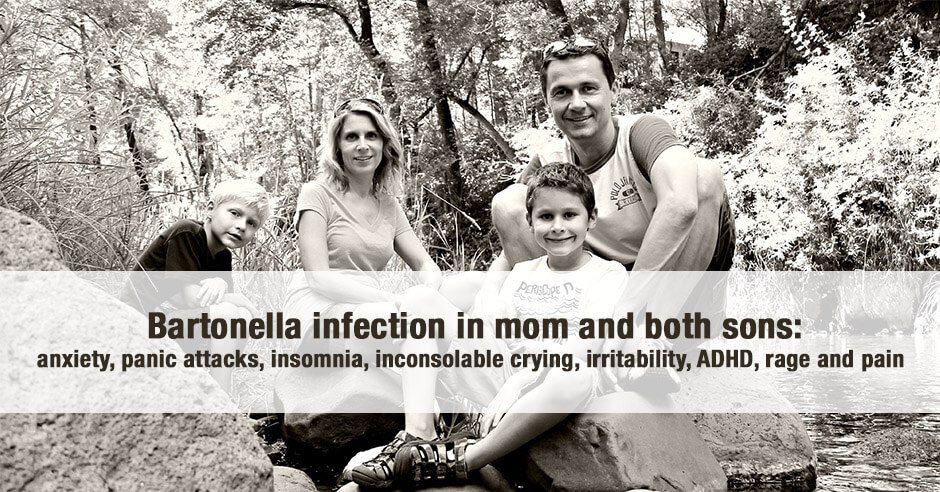
Bartonella infection in mom and both sons: anxiety, panic attacks, insomnia, inconsolable crying, irritability, ADHD, rage and pain

March 12, 2021 By Trudy Scott 32 Comments

bartonella infection

A mom and both her sons experienced a variety of emotional/mood and pain symptoms between them as a result of a Bartonella infection: anxiety, panic attacks, insomnia, irritability, inconsolable crying, ADHD, rage, eye pain, joint pain and pain in the legs. This family case study was published in Parasites and Vectors in 2013. I would love to see individual amino acids being used to ease some of these symptoms while the infection is being treated (more on this below).

Here are some of the emotional and mood-related symptoms they experienced:

  • the mother and both sons developed recurrent rash-like skin lesions, disruptive sleep patterns and both boys developed anxiety accompanied by episodes of inconsolable crying, irritability, and panic attacks
  • subsequent to the spider infestation of the apartment, [the mother] developed fatigue, memory difficulties, headaches, irritability, eye pain, insomnia, chest pain, blurred vision, shortness of breath, rash and skin lesions and anxiety attacks.
  • The youngest son… awakened at night crying and complaining of pain in his legs
  • The older son experienced increased irritability and rage episodes. In addition, the boy’s teacher indicated a lack of attention during class, and suggested that the child might have an Attention Deficit Hyperactivity Disorder (ADHD).

The youngest son also developed severe neurological symptoms and was diagnosed with Guillain-Barre syndrome and Chronic Inflammatory Demyelinating Polyradiculoneuropathy.

You can read the full investigation, timing, sequence of events and all the symptoms in the paper: Bartonella henselae infection in a family experiencing neurological and neurocognitive abnormalities after woodlouse hunter spider bites

Creating awareness, motivating, inspiring and educating

I’d like to highlight some of the reasons for sharing this paper:

  • creating more awareness about the emotional/mood symptoms that can occur with a Bartonella henselae infection
  • educating about this infection in general so other families can find solutions quicker than this family did
  • motivating and inspiring you to not give up looking for answers for you and your family – this mom suspected Bartonella infection after doing internet searches (almost 3 years after all this started)
  • creating more awareness about possible hosts other than ticks (in this case woodlice and woodlice hunter spiders)
  • highlighting how family members exposed to the same infection can have different symptoms and how some family members may not be infected at all (in this case the father was not affected)
  • highlighting that some individuals (the mom in this case) do not recall being bitten and yet still get sick
  • educating on how amino acids can offer much symptom relief during the investigation and treatment of the infection (more on this below)

Treatment with antibiotics and Chinese herbs

This family was successfully treated with antibiotics and other medications once it was determined Bartonella was the cause of their symptoms:

The parents report that the [youngest] child is actively socializing with other children and now runs and plays like he had never done before.

Following this antibiotic course, the mother reported substantial overall improvement and was almost symptom free. However, she continues to experience occasional irritability, confusion, dizziness, nausea, and pain involving the shoulder, hip and the bottoms of her feet.

One of the common symptoms of Bartonella is burning feet and this article, How to Put Out the Fire in Your Burning Bartonella Feet, mentions a herb from the Zhang protocol:

In Chinese herbal medicine, an herb called “houttuynia” is classified as “Clearing Heat and Relieving Toxicity.” This herb has been successfully used to treat Bartonella by a Chinese physician in New York named Dr. Q. Zhang. This herb has antibacterial and antiviral properties in addition to clearing heat and toxins. Fortunately this herb can be combined with other herbs to help relieve Bartonella symptoms.

I mention this because I am personally familiar with the Zhang protocol, having used it when working with Dr. Darin Ingels to address my Lyme disease (Borrelia). Dr. Ingels is the author of  The Lyme Solution and writes about the Zhang protocol in this excellent book.

Using amino acids to address anxiety, panic attacks, sleep problems, crying and pain

Individual amino acids, used as supplements, can offer much symptom relief during the investigation and treatment of the Bartonella infection, however they are seldom recommended. I would love to see this change and become the norm.

In this blog post, GABA helps with Lyme anxiety (while addressing the underlying disease), Tricia shares that “Lyme, Bartonella and Babesia are all known to cause anxiety and other psychological disorders ranging from mild to very severe.” She also shares that her daughter used GABA:

We’ve used Source Naturals GABA Calm sublinguals with good results. I learned about GABA helping anxiety and because I was treating my young daughter I purchased this because it was easy for her to take.

Looking at some of the emotional symptoms this family experienced, and how the amino acids could have helped:

  • anxiety, irritability, and panic attacks: can be eased by using tryptophan/5-HTP
  • disruptive sleep patterns and waking: can be helped by using calming GABA
  • inconsolable crying: can be eased by using DPA to boost endorphins
  • headaches, pain in the legs, shoulders and elsewhere: can be eased with DPA and/or tryptophan
  • rage episodes: can be eased with tryptophan/5-HTP
  • ADHD: can be helped with GABA in some instances and 5-HTP in other instances

I feel for this poor family. It certainly was a very complex family case and reflects the need to dig deep to find the root cause. And I appreciate the case being written up so more awareness can be created.

Have you or your family experienced something like this? And has your practitioner introduced you to the amino acids for some symptom relief while they are addressing the infection/s?

If you’re a practitioner working with Lyme disease and coinfections such as Bartonella, have you seen cases similar to this one? Do you use amino acids for some symptom relief while addressing the infection/s?

Feel free to post your questions and feedback in the comments below.
Filed Under: ADHD, Anxiety, Children/Teens, Lyme disease and co-infections Tagged With: ADHD, amino acids, anxiety, Bartonella henselae infection, Bartonella infection, burning feet, DPA, emotional, eye pain, GABA, inconsolable crying, insomnia, irritability, joint pain, Lyme anxiety, mood, neurocognitive, neurological, pain, pain in the legs, panic attacks, rage, sleep, The Lyme Solution book, tryptophan, woodlouse hunter spider bites, Zhang protocol

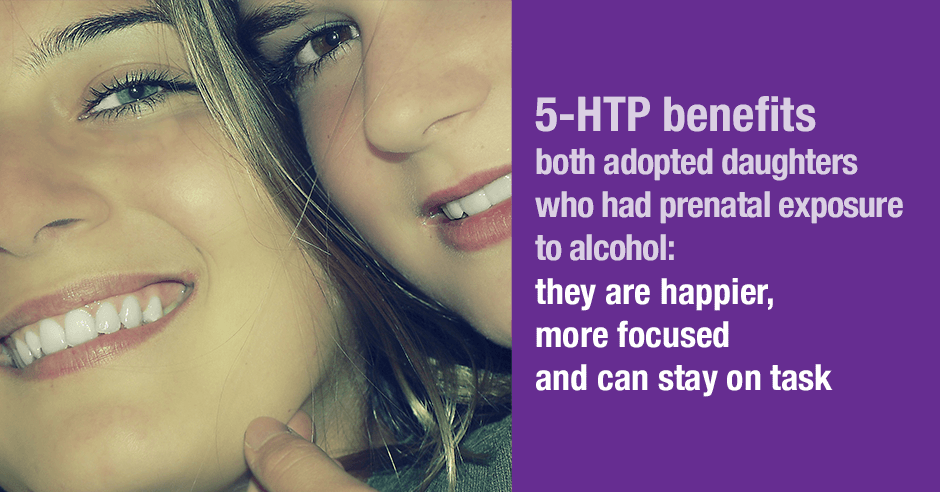
5-HTP benefits both adopted daughters who had prenatal exposure to alcohol: they are happier, more focused and can stay on task

March 5, 2021 By Trudy Scott 10 Comments

5-htp and prenatal exposure to alcohol

A grateful mom, Besty, posted wonderful feedback on the 5-HTP and ADHD blog.  She shared how 5-HTP benefits both her adopted daughters who had prenatal exposure to alcohol i.e. exposure to alcohol while in the womb. When using the supplement 5-HTP, an amino acid precursor to serotonin, both girls are happier, more focused and can now stay on task. Here is the feedback Besty shared on the blog:

After listening to Dr. Michael Murry’s interview on your Anxiety Summit, I decided to try 5-HTP on my 18-year-old daughter (a senior in high school) who was adopted at 5 years of age. She has always had some issues with focus, but she has never been medicated for this. She has had some learning struggles. She was exposed to alcohol in the womb, so some of her learning difficulty has been attributed to this.

She started 5-HTP in December and doesn’t ever want to miss a day on it. She says that she can better complete her assignments because it helps her to “stay on task”.

Even on days that she is not in school, she wants to take it, because it makes her feel happier.

Because she has done so well on it, her 23-year-old biological sister (also adopted) started on it. She was also exposed to alcohol while in the womb and has some learning struggles. She is in college. She also doesn’t want to miss a day, because she says that “it keeps her on her toes,” which she says means that it “keeps me focused,” when she is working on her school work.

I am so thankful that I learned about this therapy through your summit!

I thanked Besty for her kind words and for sharing this wonderful outcome both her daughters experienced.  I love hearing stories like this and I am sharing this as a blog post so more folks are inspired and have hope.

Prenatal exposure to alcohol: the adverse effects, and impacts on serotonin and dopamine

This 2012 paper, Moderate prenatal alcohol exposure and serotonin genotype interact to alter CNS serotonin function in Rhesus monkey offspring, describes fetal alcohol spectrum disorder (FASD):

  • Fetal alcohol spectrum disorder (FASD) is associated with a range of adverse effects that can be observed in children prenatally exposed to alcohol.
  • Fetal alcohol syndrome (FAS), which includes growth retardation, craniofacial anomalies, CNS dysfunction, and cognitive and behavioral impairments, is the most serious of the FASD outcomes of prenatal alcohol exposure.
  • Alcohol-related neuro-developmental disorder (ARND) is the term used to describe prenatally alcohol-exposed children with problems that are primarily neurobehavioral, including cognitive effects, hyperactivity, impulsivity, reduced attention span, and lack of inhibition.

It appears these young girls may fall into the ARND category with their reduced attention span and cognitive issues, and some possible neurobehavioral issues. I’m not, however, aware if a diagnosis was made. I’m also not aware if hyperactivity, impulsivity and lack of inhibition have been issues too.

This paper also discusses the research on prenatal alcohol exposure and deficiencies in the serotonergic neurotransmitter system, and the possibility that genetic factors might predispose someone to fetal alcohol effects during a sensitive period. These are primarily genes affecting serotonin production. The authors also report that prenatal exposure to alcohol also affects dopamine levels.

Addressing neurotransmitter imbalances with tryptophan, 5-HTP and tyrosine

We don’t often associate low serotonin with ADHD (attention deficit and hyperactivity disorder) and poor focus but the research and clinical outcomes like this one (and the other success story below with 5-HTP melts) is very promising.

If you are new to addressing neurotransmitter imbalances with targeted amino acids you may find these blogs helpful:

  • Using tryptophan to address low serotonin eases worry, rumination, anxiety and negative self-talk. Keep in mind that some folks do better with tryptophan and some do better with 5-HTP.
  • ADHD: 5-HTP melts have been a miracle for one of my adopted kids. I summarize the role of serotonin in ADHD, the interplay with dopamine and the use of oral tryptophan (a serotonin precursor similar to 5-HTP). And this is the blog post that Besty commented on.
  • We typically consider the use of tyrosine to address low dopamine (one of the catecholamines), leading to better focus, good energy and better motivation so you are more likely to finish tasks. It also improves mood.

Questions I still have about the 5-HTP trials

I have these questions I posed to Betsy and hope to hear back as I feel these answers may be helpful as you navigate your trials with 5-HTP (for yourself or your loved ones):

  • Which product are they using and how much is helping?
  • Did your daughters make any other changes (diet or other supplements) at the same time?
  • What have they tried over the years to help with focus and learning issues?
  • Why did you initially decide to trial 5-HTP with your younger daughter?
  • Did your younger daughter encourage her older sister to trial 5-HTP too?
  • Did either daughter have any of the classic low serotonin symptoms too: worry-type of anxiety, ruminations, OCD, fears, PMS, irritability, insomnia, afternoon/evening cravings, anger issues, lack of confidence? And did the 5-HTP help with any of these symptoms too?
  • Were some of the classic low serotonin symptoms a factor when it came to lack of focus? For example, did the worrying or feelings of fear or insomnia contribute to the inability to stay on task and keep focused?

I’ll report back once I get Besty’s feedback. But keep in mind that dosing/timing doesn’t really matter as the doses that work for her daughters are unique to their own biochemistry and needs.

Additional resources when you are new to using GABA, 5-HTP and other amino acids as supplements

As always, I use the symptoms questionnaire to figure out if low serotonin or low GABA or other neurotransmitter imbalances may be an issue.

If you suspect low levels of any of the neurotransmitters and do not yet have my book, The Antianxiety Food Solution – How the Foods You Eat Can Help You Calm Your Anxious Mind, Improve Your Mood, and End Cravings, I highly recommend getting it and reading it before jumping in and using amino acids on your own so you are knowledgeable. And be sure to share it with the practitioner/health team you or your loved one is working with.

There is an entire chapter on the amino acids and they are discussed throughout the book in the sections on gut health, gluten, blood sugar control (this is covered in an entire chapter too), sugar cravings, anxiety and mood issues.

The book doesn’t include product names (per the publisher’s request) so this blog, The Antianxiety Food Solution Amino Acid and Pyroluria Supplements, lists the amino acids that I use with my individual clients and those in my group programs.

If, after reading this blog and my book, you don’t feel comfortable figuring things out on your own (i.e. doing the symptoms questionnaire and respective amino acids trials), a good place to get help is the GABA QuickStart Program (if you have low GABA symptoms). This is a paid online/virtual group program where you get my guidance and community support.

If you are a practitioner, join us in The Balancing Neurotransmitters: the Fundamentals program. This is also a paid online/virtual program with an opportunity to interact with me and other practitioners who are also using the amino acids.

Wrapping up and your feedback

Have you found that 5-HTP (or tryptophan) helps your child (who was exposed to alcohol in the womb) with focus and ADHD symptoms? Are they happier when using one of these serotonin precursors?

If you’re a practitioner working with children or adults who have had prenatal exposure to alcohol, have you had good results with 5-HTP or tryptophan?

Feel free to post your questions and feedback in the comments below.

Filed Under: 5-HTP, ADHD, Anxiety, Children/Teens, serotonin, Testimonials Tagged With: 5-HTP, ADHD, Alcohol-related neuro-developmental disorder, anxiety, ARND, can stay on task, cognitive, dopamine, exposure to alcohol while in the womb, FAS, FASD, fetal alcohol spectrum disorder, Fetal alcohol syndrome, focus, genetic, happier, hyperactivity, more focused, neurobehavioral, neurotransmitter, prenatal exposure to alcohol, serotonin, tryptophan, tyrosine

  • « Go to Previous Page
  • Page 1
  • Interim pages omitted …
  • Page 11
  • Page 12
  • Page 13
  • Page 14
  • Page 15
  • Interim pages omitted …
  • Page 31
  • Go to Next Page »

Primary Sidebar

NEW! GABA QuickStart Homestudy (with special intro pricing)

gaba quickstart homestudy

Free Report

9 Great Questions Women Ask about Food, Mood and their Health

You'll also receive a complimentary subscription to my ezine "Food, Mood and Gal Stuff"


Connect with me

Popular Posts

  • Amino Acids Mood Questionnaire from The Antianxiety Food Solution
  • The Antianxiety Food Solution Amino Acid and Pyroluria Supplements
  • Pyroluria Questionnaire from The Antianxiety Food Solution
  • Collagen and gelatin lower serotonin: does this increase your anxiety and depression?
  • Tryptophan for the worry-in-your-head and ruminating type of anxiety
  • GABA for the physical-tension and stiff-and-tense-muscles type of anxiety
  • The Antianxiety Food Solution by Trudy Scott
  • Seriphos Original Formula is back: the best product for anxiety and insomnia caused by high cortisol
  • Am I an anxious introvert because of low zinc and vitamin B6? My response to Huffington Post blog
  • Vagus nerve rehab with GABA, breathing, humming, gargling and key nutrients

Recent Posts

  • What do I use instead of Seriphos to help lower high cortisol that is affecting my sleep and making me anxious at night?
  • BeSerene™ GABA/theanine cream eases severe muscle tension in her neck/shoulders, prevents her bad headaches and quells her anxiety
  • How the correct approach, dose and sublingual use of GABA can be calming and not cause a flushed and itchy face and neck
  • The amino acid glutamine improves low mood by addressing gut health, and it has calming effects too
  • Flight anxiety with heightened breath, physical tension and also fearing the worst (the role of low GABA and low serotonin)

Categories

  • 5-HTP
  • AB575
  • Addiction
  • ADHD
  • Adrenals
  • Alcohol
  • Allergies
  • Alzheimer's disease
  • Amino Acids
  • Anger
  • Antianxiety
  • Antianxiety Food Solution
  • Antidepressants
  • Anxiety
  • Anxiety and panic
  • Autism
  • Autoimmunity
  • benzodiazapines
  • Bipolar disorder
  • Books
  • Caffeine
  • Cancer
  • Candida
  • Children/Teens
  • Collagen
  • Cooking equipment
  • Coronavirus/COVID-19
  • Cravings
  • Depression
  • Detoxification
  • Diabetes
  • Diet
  • DPA/DLPA
  • Drugs
  • EFT/Tapping
  • EMF
  • EMFs
  • Emotional Eating
  • Endorphins
  • Environment
  • Essential oils
  • Events
  • Exercise
  • Fear
  • Fear of public speaking
  • Fertility and Pregnancy
  • Fish
  • Food
  • Food and mood
  • Functional neurology
  • GABA
  • Gene polymorphisms
  • General Health
  • Giving
  • Giving back
  • Glutamine
  • Gluten
  • GMOs
  • Gratitude
  • Gut health
  • Heart health/hypertension
  • Histamine
  • Hormone
  • Hyperparathyroidism
  • Hypoglycemia
  • Immune system
  • Inflammation
  • Insomnia
  • Inspiration
  • Introversion
  • Joy and happiness
  • Ketogenic diet
  • Lithium orotate
  • Looking awesome
  • Lyme disease and co-infections
  • MCAS/histamine
  • Medication
  • Men's health
  • Mental health
  • Mercury
  • Migraine
  • Mold
  • Movie
  • MTHFR
  • Multiple sclerosis
  • Music
  • NANP
  • Nature
  • Nutritional Psychiatry
  • OCD
  • Osteoporosis
  • Oxalates
  • Oxytocin
  • Pain
  • Paleo
  • Parasites
  • Parkinson’s disease
  • PCOS
  • People
  • PMS
  • Postpartum
  • PTSD/Trauma
  • Pyroluria
  • Questionnaires
  • Real whole food
  • Recipes
  • Research
  • Schizophrenia
  • serotonin
  • SIBO
  • Sleep
  • Special diets
  • Sports nutrition
  • Stress
  • Sugar addiction
  • Sugar and mood
  • Supplements
  • Teens
  • Testimonials
  • Testing
  • The Anxiety Summit
  • The Anxiety Summit 2
  • The Anxiety Summit 3
  • The Anxiety Summit 4
  • The Anxiety Summit 5
  • The Anxiety Summit 6
  • Thyroid
  • Thyroid health
  • Toxins
  • Tryptophan
  • Tyrosine
  • Uncategorized
  • Vegan/vegetarian
  • Women's health
  • Yoga

Archives

  • October 2025
  • September 2025
  • August 2025
  • July 2025
  • June 2025
  • May 2025
  • April 2025
  • March 2025
  • February 2025
  • January 2025
  • November 2024
  • October 2024
  • September 2024
  • August 2024
  • July 2024
  • June 2024
  • May 2024
  • April 2024
  • March 2024
  • February 2024
  • January 2024
  • December 2023
  • November 2023
  • October 2023
  • September 2023
  • August 2023
  • July 2023
  • June 2023
  • May 2023
  • April 2023
  • March 2023
  • February 2023
  • January 2023
  • December 2022
  • November 2022
  • October 2022
  • September 2022
  • August 2022
  • July 2022
  • June 2022
  • May 2022
  • April 2022
  • March 2022
  • February 2022
  • January 2022
  • December 2021
  • November 2021
  • October 2021
  • September 2021
  • August 2021
  • July 2021
  • June 2021
  • May 2021
  • April 2021
  • March 2021
  • February 2021
  • January 2021
  • December 2020
  • November 2020
  • October 2020
  • September 2020
  • August 2020
  • July 2020
  • June 2020
  • May 2020
  • April 2020
  • March 2020
  • February 2020
  • January 2020
  • December 2019
  • November 2019
  • October 2019
  • September 2019
  • August 2019
  • July 2019
  • June 2019
  • May 2019
  • April 2019
  • March 2019
  • February 2019
  • January 2019
  • December 2018
  • November 2018
  • October 2018
  • September 2018
  • August 2018
  • July 2018
  • June 2018
  • May 2018
  • April 2018
  • March 2018
  • February 2018
  • January 2018
  • December 2017
  • November 2017
  • October 2017
  • September 2017
  • August 2017
  • July 2017
  • June 2017
  • May 2017
  • April 2017
  • March 2017
  • February 2017
  • January 2017
  • December 2016
  • November 2016
  • October 2016
  • September 2016
  • August 2016
  • July 2016
  • June 2016
  • May 2016
  • April 2016
  • March 2016
  • February 2016
  • January 2016
  • December 2015
  • November 2015
  • October 2015
  • September 2015
  • August 2015
  • July 2015
  • June 2015
  • May 2015
  • April 2015
  • March 2015
  • February 2015
  • January 2015
  • December 2014
  • November 2014
  • October 2014
  • September 2014
  • August 2014
  • July 2014
  • June 2014
  • May 2014
  • April 2014
  • March 2014
  • February 2014
  • January 2014
  • December 2013
  • November 2013
  • October 2013
  • September 2013
  • August 2013
  • July 2013
  • June 2013
  • May 2013
  • April 2013
  • March 2013
  • February 2013
  • January 2013
  • December 2012
  • November 2012
  • October 2012
  • August 2012
  • July 2012
  • June 2012
  • May 2012
  • April 2012
  • March 2012
  • February 2012
  • January 2012
  • December 2011
  • November 2011
  • October 2011
  • September 2011
  • August 2011
  • July 2011
  • June 2011
  • May 2011
  • April 2011
  • March 2011
  • February 2011
  • January 2011
  • December 2010
  • October 2010
  • September 2010
  • July 2010
  • May 2010
  • April 2010
  • March 2010
  • February 2010
  • January 2010
  • November 2009

Share the knowledge!

The above statements have not been evaluated by the Food and Drug Administration. Products listed in this website are not intended to diagnose, treat, cure or prevent any disease.

The information provided on this site is for informational and educational purposes only and is not intended as a substitute for advice from your physician or other health care professional. You should consult with a healthcare professional before starting or modifying any diet, exercise, or supplementation program, before taking or stopping any medication, or if you have or suspect you may have a health problem.


Copyright © 2026 Trudy Scott. All Rights Reserved. | Privacy | Terms and Conditions | Refund Policy | Medical Disclaimer

Free Report

9 Great Questions Women Ask about Food, Mood and their Health

You’ll also receive a complimentary subscription to my ezine “Food, Mood and Gal Stuff”