• Skip to primary navigation
  • Skip to main content
  • Skip to primary sidebar

everywomanover29 blog

Food, Mood and Women's Health – Be your healthiest, look and feel great!

  • Blog
  • About
  • Services
  • Store
  • Resources
  • Testimonials
  • The Book
  • Contact
  • Search this site

SIBO

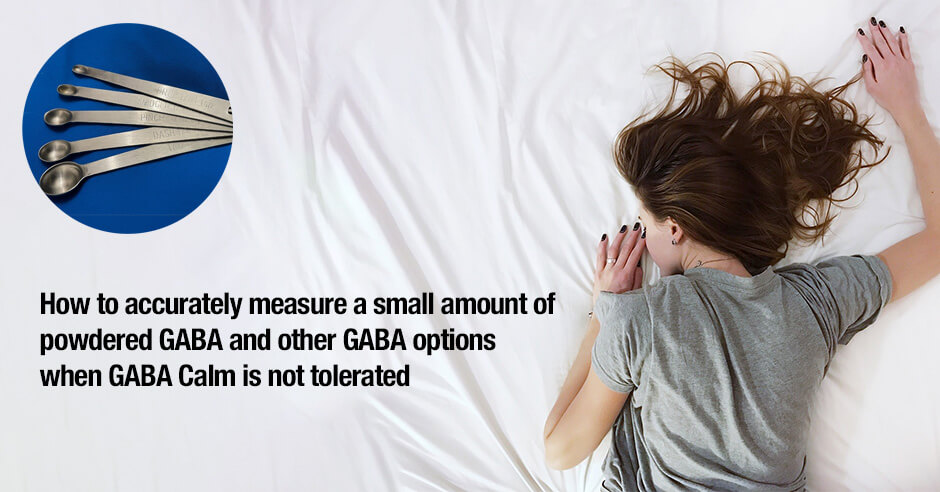
How to accurately measure a small amount of powdered GABA and other GABA options when GABA Calm is not tolerated

April 26, 2024 By Trudy Scott 18 Comments

measuring gaba powder

Brenda finds one GABA Calm helps her sleep but more than one affects her sleep and she suspects the sugar alcohols in the product. She’d like advice on using an alternative and how to accurately measure a small amount of powdered GABA. Here is her question in her own words:    

I have been on the FODMAP diet for a while and it is helping but I just realized that when I take GABA Calm I am ingesting sorbitol and mannitol. I take a bit more than one of those tablets each night to help me sleep and am very aware that if I take too much it can keep me awake.

Now that I have realized about the sorbitol and mannitol, I am looking for an alternative source of GABA. I see that you are now recommending the Now GABA Pure Powder product. I was about to purchase this to avoid the sorbitol and mannitol but then realized that I would have to take 1/16th teaspoon of the powder to equate to 150mg. I can’t see me ever getting that measurement correct.

So my question is, can you recommend another source of GABA that would enable me to take 150mg plus a little bit with a fair degree of accuracy and without those added FODMAPs? Thank you very much. I am very grateful for your work.

Brenda has likely been diagnosed with SIBO (small intestinal bacterial overgrowth) or IBS (irritable bowel syndrome) even though she doesn’t mention it. In some folks with SIBO or IBS, sugar alcohols such as xylitol, sorbitol and mannitol can cause digestive upset. Not everyone with SIBO or IBS has issues with GABA Calm. In fact, it’s typically very well tolerated and GABA Calm is a product I have been recommending for many years. However, some folks do have issues and it’s wise to look for an alternative and not push through.

In this blog I share more about sugar alcohols, how to accurately measure out 1/16 teaspoon of the GABA powder to equate to close to 150 mg, how I use my mini measuring spoon, a GABA/theanine product that is low dose and can be opened, and another option she could consider.

Sugar alcohols in GABA Calm and other GABA chewable products

Many of the chewable or sublingual forms of GABA, including GABA Calm contain sugar alcohols which can be problematic and cause digestive upset and often explosive diarrhea. The digestive upset alone could impact sleep.

Sugar alcohols include xylitol, sorbitol, mannitol and erythritol. Your reaction will depend on the amount of sugar alcohols used, how many chewable/sublingual tablets you use and how accustomed you are to sugar alcohols. You may get used to them and eventually be fine with consuming small amounts and yet for others the tiniest amount is an issue.

I share more about sugar alcohols on this blog: Why does chewable GABA make me run to the bathroom and what GABA do I use instead?

Using a mini measuring spoon set and GABA powder

It’s wonderful that GABA Calm is helping Brenda with her sleep issues and when we start to get benefits we do want to increase the amount to see if we can get further benefits.

She has a few options and one is to use the NOW GABA powder (or another GABA powder) with a mini measuring spoon set like this one (my Amazon link). This is mine and it is very easy to use, convenient and accurate.
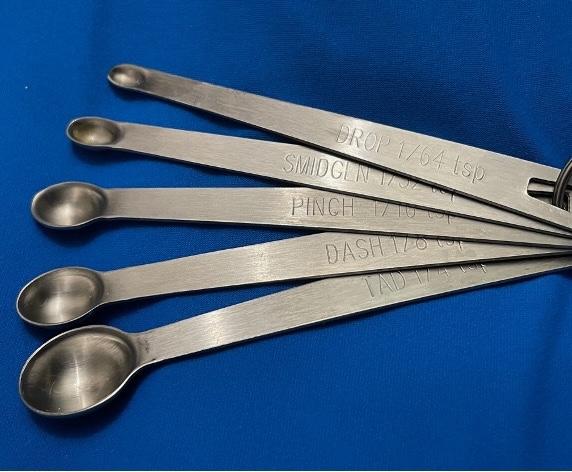
measuring spoons

As you can see it comes in various sizes: 1/4 teaspoon, 1/8 teaspoon, 1/16 teaspoon, 1/32 teaspoon and 1/64 teaspoon.

It is important to look at the product and work out how much you need to measure out. For example, the NOW GABA powder states 1/4 teaspoon is equivalent to 500 mg GABA. This means 1/16 is equivalent to 125 mg GABA. So if Barbara wants to take 150 mg she would use a little more than what would be in the 1/16 spoon (maths is coming in handy after all!)

Keep in mind that product equivalents do differ. For example tryptophan is typically lighter and fluffier than GABA. My tryptophan states 1 teaspoon is 1000 mg tryptophan so a typical starting dose of 500 mg tryptophan would be 2 x 1/4 teaspoon since each 1/4 is 250mg.

I love my mini measuring spoon and use mine on a daily basis for theanine in the day, calcium citrate after dinner (for my oxalate issues), and for GABA and tryptophan at bed time.

Combined GABA and theanine: GABA-T SAP as one option

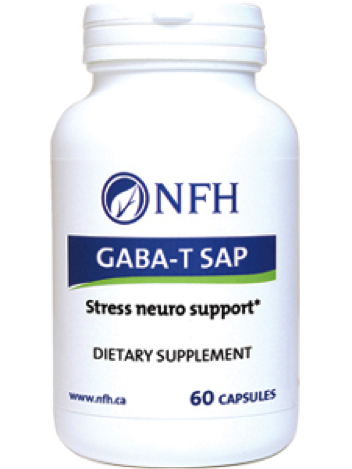
Another option is using a lower mg GABA/theanine product and opening it. Nutritional Fundamentals for Health GABA-T SAP is another favorite of mine. This product is pleasant-tasting when opened on to the tongue and works very well when GABA Calm can’t be used. It contains 300 mg GABA and 150 mg theanine, so can easily be halved to provide the 150 mg GABA she is looking for.

Research shows that the combination of GABA and theanine may improve sleep: GABA and l-theanine mixture decreases sleep latency and improves NREM sleep. The authors share the sleep and anxiety benefits of both GABA and theanine:

γ-Aminobutyric acid (GABA) is the main inhibitory neurotransmitter and it is well established that activation of GABAA receptors favours sleep.

l-Theanine, a naturally occurring amino acid first discovered in green tea, is a well-known anti-anxiety supplement with proven relaxation benefits.

But Barabra is going to have to do a trial to see if this combination works for her.

Mixing and matching as an other option

And finally, if she was also taking GABA Calm in the day for stress and overwhelm, she could  do a trial of using this during the day (for the convenience factor) and then at night use the GABA powder or opened GABA/theanine capsule (because it’s a bit more finicky). This way she’s consuming less sugar alcohols overall.

Both GABA products, the mini measuring spoon set and where to find them
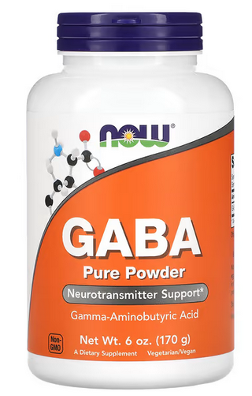
gaba pure poder

Today I mentioned the Now GABA Powder and NFH GABA-T SAP.  You can purchase these from my online store (Fullscript – only available to US customers – use this link to set up an account).
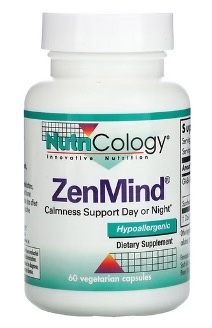
gaba pure poder
zenmind

If you’re not in the US, the Now GABA Powder and Nutricology ZenMind (a GABA/theanine combination comparable to GABA-T SAP) is available via iherb (use this link to save 5%).

And the mini measuring spoon set can be found here (my Amazon link)

Additional resources when you are new to using GABA and other amino acids as supplements

As a reminder, low GABA can cause physical tension, anxious feelings, feelings of panic and problems sleeping, as well as self–medicating with alcohol or carbs to relax or fit in. As always, I use the symptoms questionnaire to figure out if low GABA or other neurotransmitter imbalances may be an issue.

If you suspect low levels of any of the neurotransmitters and do not yet have my book, The Antianxiety Food Solution – How the Foods You Eat Can Help You Calm Your Anxious Mind, Improve Your Mood, and End Cravings, I highly recommend getting it and reading it before jumping in and using amino acids on your own so you are knowledgeable. And be sure to share it with the practitioner/health team you or your loved one is working with.

There is an entire chapter on the amino acids and they are discussed throughout the book in the sections on gut health, gluten, blood sugar control (this is covered in an entire chapter too), sugar cravings, anxiety and mood issues.

The book doesn’t include product names (per the publisher’s request) so this blog, The Antianxiety Food Solution Amino Acid and Pyroluria Supplements, lists the amino acids that I use with my individual clients and those in my group programs (over and above the GABA products I mentioned above).

If, after reading this blog and my book, you don’t feel comfortable figuring things out on your own (i.e. doing the symptoms questionnaire and respective amino acids trials), a good place to get help is the GABA QuickStart Program (if you have low GABA symptoms too). This is a paid online/virtual group program where you get my guidance and community support.

If you are a practitioner, join us in The Balancing Neurotransmitters: the Fundamentals program. This is also a paid online/virtual program with an opportunity to interact with me and other practitioners who are also using the amino acids.

Wrapping up and your feedback

I do always appreciate questions like this so keep them coming so I can share and educate further.

Now I’d love to hear from you – do you have issues with the sugar alcohols in GABA Calm or another chewable GABA product? (if yes which one?)

Did you move to a GABA powder and do you use a min spoon set? Or does another GABA product work for you?

Please share how GABA helps and how much helps you?

If you’re a practitioner do you use GABA powder and mini spoons with your clients/patients?

And please let me know if it’s helpful that I’m now including product recommendations and where to get them.

Feel free to share and ask your questions below.
Filed Under: Anxiety, GABA, Insomnia Tagged With: amino acid, cravings, GABA, GABA Calm, GABA powder, GABA Quickstart; Balancing Neurotransmitters: the Fundamentals program for practitioners, GABA-T SAP, IBS, insomnia, measure, mini measuring spoon set, physical-tension, SIBO, sleep, sugar alcohols, theanine

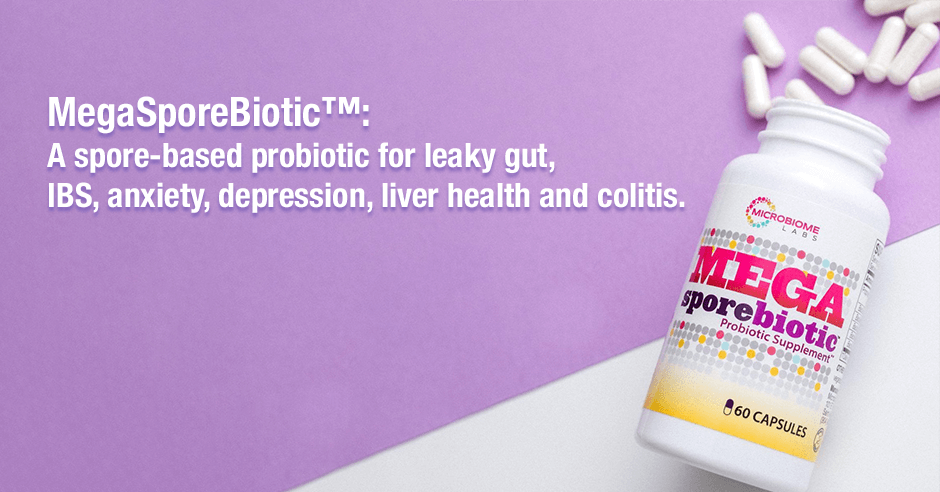
MegaSporeBiotic™: A spore-based probiotic for leaky gut, IBS, anxiety, depression, liver health and colitis

May 7, 2021 By Trudy Scott 44 Comments

megasporebiotic

MegaSporeBiotic™ is “a 100% spore-based broad-spectrum probiotic shown to maintain healthy gut barrier function” i.e. leaky gut. Research and clinical results show it is promising for irritable bowel syndrome (IBS) or SIBO (small intestinal bacterial overgrowth), recovery from liver injury caused by acetaminophen, and is protective in ulcerative colitis (an inflammatory bowel disease). Given the gut-brain connection and the fact that the majority of serotonin is produced in the gut, it’s not surprising that spore-based probiotics may also help ease anxiety and depression.

Here are some of the studies supporting this spore-based probiotic for gut issues:

  • Oral spore-based probiotic supplementation was associated with reduced incidence of post-prandial dietary endotoxin, triglycerides, and disease risk biomarkers

The key findings of the present study is that oral spore-based probiotic supplementation reduced symptoms indicative of “leaky gut syndrome”.

  • Bacillus spp. Spores-A Promising Treatment Option for Patients with Irritable Bowel Syndrome

The results demonstrated that patients treated with MegaSporeBiotic, compared with those treated with rifaximin followed by nutraceutical or low-FODMAP diet, had similar severity scores and rectal volume sensation test results for all parameters tested and statistically significant improvement in measurements of quality of life.

  • Probiotic Bacillus Spores Protect Against Acetaminophen Induced Acute Liver Injury in Rats

This is important because “Acetaminophen  is one of the most used analgesics [pain-reducing] and antipyretic [fever-lowering] agents in the world. Intoxication with acetaminophen is the main cause of acute liver toxicity in both the US and Europe.”

  • Probiotic Bacillus Spores Together with Amino Acids and Immunoglobulins Exert Protective Effects on a Rat Model of Ulcerative Colitis

Pretreatment with probiotic spore-forming Bacillus strains and a supplement of amino acids in combination with immunoglobulins exhibited anti-inflammatory and antioxidant effects in an AA-induced rat model of ulcerative colitis.

In one study, Bacillus coagulans (one of the spore-forming strains in MegaSporeBiotic™), when used alone was shown to help ease depression and gut problems in IBS patients. It was a randomised, double-blind, placebo controlled, multi-centre, pilot clinical study and:

The improvement in depression and IBS symptoms was statistically significant and clinically meaningful. These findings support B. coagulans MTCC 5856 as an important new treatment option for major depressive disorder in IBS patients.

During The Anxiety Summit 5: Gut-Brain Axis, I interviewed Kiran Krishnan who is a microbiologist, one of the founders of Microbiome Labs and a co-creator of MegaSporeBiotic™. He reminds us about the gut-brain connection and how anxiety and mental health issues come from the gut “because the vast majority of serotonin in your body – more than ninety percent of it – is actually produced in the gut” and not in the brain.

He talks about the type of cell in the gut that produces serotonin – the enterochromaffin cell – and the fact that “spore forming bacteria are some of the best stimulators of the enterochromaffin cell to produce serotonin.”

With low levels of serotonin you’ll experience the worry-type of anxiety with ruminations, obsessing, panic attacks, insomnia (often lying awake worrying). Other low serotonin symptoms include low mood/depression, late afternoon and evening carbohydrate cravings, pain, PMS, irritability, rage and anger, TMJ, low confidence, imposter syndrome and perfectionism. This type of low-serotonin anxiety is different from the low GABA physical/tension type anxiety.

These cells also play a crucial role in gastrointestinal regulation, particularly intestinal motility. We know low serotonin also contributes to digestive/IBS-type symptoms.

You can see a list of all the low serotonin symptoms here.

Brandy’s positive feedback on digestive issues and mental health

Brandy Oto, a marriage, couple and family counselor, incorporates  an integrative nutrition approach with her clients and she shares this:

MegaSporeBiotic™ makes a HUGE difference in my body! I have used every probiotic I can think of. Megaspore has not only resolved my digestive issues and allows me regular bowel movements, I find my mental health is much better! I have decided to use it in my practice as well now. Clients consistently report better mental health!

I asked her how quickly she notices an improvement when using MegaSporeBiotic™ and what aspects of mental health improve for her and her clients. She shares this:

I personally notice physical and mental anxiety decrease usually about 4-5 days, bowel movements easy within a couple days, ability to tolerate foods I was sensitive to after 6 or so months on them.

Clients report all types of improvements from anxiety, depression, to digestive issues improving. I have even heard from one client that when she gets off the probiotic symptoms of schizophrenia return.

In Brandy’s mental health practice, she does use amino acids to address neurotransmitter deficiencies too (for example tryptophan or 5-HTP to address low serotonin symptoms like worry, fear, panic attacks). She uses this spore-based probiotic to address underlying issues that cause those deficiencies.

It’s not one or the other – the probiotics and amino acids are part of a comprehensive plan.

Not everyone raves about this probiotic and some folks report it either does nothing for them or is too strong for them. So, as with everything, it’s very individualized.

How do spore-based probiotics differ from other probiotics?

During the Anxiety Summit interview with Kiran, he explains how they differ from other probiotics and why this is important for them to get into the gut:

These are organisms that have a unique capability of covering themselves in a thick calcified protein-like coating. So it’s armor, essentially, around the bacterial cell.

This allows these bacteria to come in through the gastric system, through the oral route, and survive the gauntlet that bacteria have to go through just getting through the process of digestion.

So the first step is the stomach acid. The stomach acid is called the gastric barrier and that’s because it acts as an actual physical barrier through the function of hydrochloric acid to try to kill off as many microbes that are trying to enter the system through food and other exposure.

If something gets past the stomach acid then the second piece of the gauntlet are the bile salts. Bile salts are released into the duodenum itself. Those are very strong antimicrobials and part of their function is to act as an antimicrobial to protect the system against a lot of bacteria coming in on a regular basis.

And then the last part is the pancreatic enzymes that help you digest your food – they also act as antimicrobials.

So there’s this really difficult gauntlet that the microbes that are entering the system through the oral route have to go through in order to make it past these initial systems to get to the site of action in the deeper part of the intestines where they’re supposed to function as a probiotic.

These spores have developed this unique, natural capability of covering themselves in this armor which allows them to survive through all of that.

This study, Survival and persistence of Bacillus clausii in the human gastrointestinal tract following oral administration as spore-based probiotic formulation confirms the above for one particular strain and concludes that “Bacillus clausii spores survive transit through the human gastrointestinal tract.”

Where can I buy MegaSporeBiotic™?

megasporebiotic supplement facts

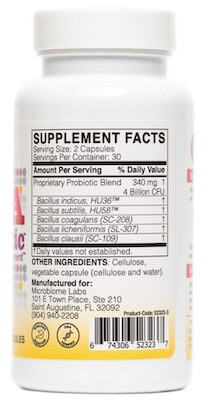
These are the spore-based bacteria contained in the MegaSporeBiotic™ product: Bacillus Licheniformis, Bacillus Indicus HU36™, Bacillus Subtilis HU58™, Bacillus Clausii and Bacillus Coagulans.

You can purchase MegaSporeBiotic™ directly from Microbiome Labs once you have set up an account with them under my name. Use this link (and make sure the Direct2Patient™ Code says tscott).

You can also read more about the product on the Microbiome Labs site here.

If you already have an account with Fullscript, my online supplement store, you can purchase from there too.

If you don’t yet have an account with Fullscript you can read more about how to set up an account here.

Let us know if you’ve used MegaSporeBiotic™ with success and how it helped you with anxiety, depression and/or gut and liver health.

Let us know if you’ve used another spore-based probiotic and which one? Or do you have a favorite probiotic that is not spore-based?

I’m going to a product review like this once a month so please let me know if you like this format with research, feedback and mechanisms.  And let me know what other products you’d like me to review.

Feel free to post your questions here too.


Filed Under: Anxiety, Depression, Gut health, serotonin Tagged With: acetaminophen, amino acids, anxiety, Bacillus clausii, bacillus coagulans, colitis, depression, enterochromaffin, IBS, Kiran Krishnan, leaky gut, liver, MegaSporeBiotic™, Microbiome Labs, probiotics, serotonin, SIBO, spore-based probiotic

GABA for bladder pain/interstitial cystitis and urgency, IBS pain and anxiety?

January 29, 2021 By Trudy Scott 19 Comments

gaba for pain

Is there a place for using the amino acid GABA as a supplement to help with bladder pain/interstitial cystitis and urgency and also help with IBS (irritable bowel syndrome) pain – at the same time as easing physical anxiety caused by low GABA levels?

I’d like to share some quotes from this commentary, GABAB receptors in the bladder and bowel: therapeutic potential for positive allosteric modulators?

The bladder pain syndrome (or interstitial cystitis/painful bladder syndrome) is a spectrum of urological symptoms characterized by frequency, urgency and pain on bladder filling.

Bladder pain syndrome is often present in those who have IBS and abdominal pain and the authors mention the role of GABA in both:

Of further note is the co-morbidity between bladder pain syndrome and other functional pain syndromes, in particular, irritable bowel syndrome, a functional gastrointestinal disorder associated with visceral abdominal pain and altered bowel habit.

… it is tempting to speculate that GABAB receptor positive allosteric modulators may display efficacy in not only functional pain disorders of the bladder, but also of the bowel, through modulation of either central and peripheral GABAB receptors, or both

Positive allosteric modulators increase the activity of the receptor so in this case they are referring to increasing the activity of the GABAB receptor, reducing both bladder pain and gut pain.

This commentary and the original paper refer to ADX71441, which has been shown in animal studies to be “a novel positive allosteric modulator (PAM) of the GABAB receptor that has shown encouraging results in pre-clinical models of anxiety, pain, overactive bladder and alcohol addiction.”

We know GABA eases anxiety and pain and is extremely beneficial when it comes to alcohol and other addictions. In a recent blog post I shared how PharmaGABA eases physical anxiety in a young man who has recently given up Adderall, alcohol and nicotine.

And given that depression, anxiety and stress is higher in women with urinary incontinence it makes sense that an amino acid such as GABA may also help ease some of the symptoms of bladder pain syndrome when low GABA is a factor.

Depending on the root cause/s it’s likely addressing low serotonin, low endorphins and low vitamin D may play a role too. Of course, a full functional medicine and nutritional work up and review of diet is key too. Bladder dysfunction is seen in up to one third of celiac patients. This can cause leaky gut and nutritional deficiencies leading to low levels of neurotransmitters such a GABA and serotonin. Dietary oxalates can often be a factor with bladder issues and pain.

Considering all of this in conjunction with learning from/working with a pelvic floor physical therapist is key.  I highly recommend someone like Isa Herrera, MSPT, CSCS who hosts online masterclass training sessions for those with pelvic health issues. Her next series airs online mid-February and you can learn more and register here.

Here are some related blog posts that you may find helpful:

  • How GABA eases agonizing rectal pain and spasms in under 2 minutesProctalgia fugax is described as a condition that leads to rectal spasms and sharp fleeting pain in the lower rectum or anus….and GABA can ease the severe pain or prevent the spasms before they get severe
  • How to address rectal spasms with GABA, pelvic floor work, gluten removal and squats
  • GABA reduces the visceral pain of IBS & SIBO, eases anxiety and helps with insomnia

In case you’re new to GABA you can read more about it here: GABA for the physical-tension and stiff-and-tense-muscles type of anxiety.

The supplements blog lists GABA products I use with clients and recommend to those in my community.

I’m proposing that there is a place for doing a trial of the amino acid GABA (as a supplement) to help with bladder pain/interstitial cystitis and urgency, especially when there are symptoms of low GABA. If GABA helps to ease the visceral pain caused by IBS/SIBO, it may also help with bladder pain.

Have you observed less bladder pain when using GABA for easing physical symptoms of low GABA anxiety (stiff and tense muscles, overwhelm, lying awake tensely at night, anxious and using alcohol to self-medicate in order to calm down)?

Have you noticed any reduction in bladder urgency when using GABA for anxiety?

Do you also have IBS pain or SIBO (small intestinal bacterial overgrowth) pain that is eased by GABA?

Have the following helped: going gluten-free, lowering oxalates and/or working with a pelvic floor physical therapist?

If you’re a practitioner have you made any of these observations?

Please do share in the comments below and let me know if you found this helpful, what else has helped you or if you have questions.

Filed Under: Anxiety, GABA, Women's health Tagged With: addiction, anxiety, bladder pain, bladder urgency, celiac, depression, dietary oxalates, GABA, gluten, IBS, IBS pain, interstitial cystitis, physical therapist, physical-tension, Proctalgia fugax, rectal pain, SIBO, stiff muscles, stress, tense

Mindd 2019: The cell danger response and microbiome; and microchimerism and pregnancy

March 15, 2019 By Trudy Scott 16 Comments

Today’s blog highlights two interesting and very different topics that can impact both your mental and physical health: The cell danger response: inflammation, the microbiome and digestion; and microchimerism and how pregnancy can change the health of a mother in unintended ways.

I love to share resources after I’ve attended a conference but today I’m switching it up and sharing resources before the conference for three reasons: 1) to get you fired up and excited about attending in person (or on the Livestream) 2) to share in case you can’t attend in person (or via Livestream) and 3) to highlight the amazing work that the Mindd Foundation is doing via the Mindd Forum 2019, which will be in Sydney, Australia, March 23-24, 2019.

There’s also a giveaway of 2 free tickets to the Public stream (in-person or livestream) so read on below to see how to enter.

The cell danger response: inflammation, the microbiome and digestion

The cell danger response can cause increased inflammation and have direct impacts on the microbiome and digestion. The Cell Danger Response (also known as CDR)

is the intracellular response to stressors, viruses, chemicals or toxins and any foreign particles that come into the human system that need to be expelled. If the cell danger response is constantly being activated and is defective, it may cause a heightened prevalence and severity of inflammation.

The above article highlights the effects on the cell danger response on the microbiome, digestion and nutrient absorption, with ramifications for anxiety, depression, ASD (autism spectrum disorder), ADHD (attention deficit hyperactivity disorder) and many other conditions. Here are some highlights of what the CDR can impact the lower part of the colon

  • alter disaccharide metabolism, causing the lower/distal bowel to receive a more significant number of simple sugars and change carbohydrate digestion
  • alter the cells that line the intestines leading to differences in how amino acids are processed, affecting production of neurotransmitters such as GABA, serotonin and dopamine, with consequences for both your brain and gut health

Dr. Robert Naviaux coined the term CDR and will address these links in detail and explain current research with regard to the CDR, cellular healing and how to incorporate these concepts into practice. He will address the role this plays in the healing cycle and treating chronic disease, and specifics on CDR as it applies to understanding Chronic Fatigue Syndrome. His masterclass series is titled: Cellular Pathways for Chronic Disease Recovery.

According to Mindd, three of Dr. Robert Naviaux’s research publications were the most frequently downloaded papers in the journal Mitochondrion in the last 90 days, so this gives you an idea on the relevance of this topic.

Dr Nancy O’Hara also has a helpful explanation of the CDR here cover Clinical Applications of Dr. Naviaux’s research, together with Dr. Elizabeth Mumper.

It’s a pretty complex topic and I’ve been trying to get my head around it for some time. I blogged about some of his early research on CDR and the dramatic effects of a single dose of suramin on “social communication and play, speech and language, calm and focus, repetitive behaviors and coping skills” in 10 boys, ages 5 to 14 years, all diagnosed with autism.

What does all this mean for you?

  • Could the CDR be a factor in your chronic unresolved SIBO (small intestinal bacterial overgrowth)?
  • Could there be applications for anxiety for you if you have tried ALL the nutritional/biochemical approaches and are still not seeing symptom resolution?
  • Could addressing the CDR help you if you’ve been harmed by benzodiazepines, SSRIs and/or fluoroquinolones and can’t take any supplements or can only tolerate very small doses?
  • Could addressing the CDR help when you have a combination of many stresses like past or recent trauma, genetic defects, heavy metals, mold and Lyme, as well as gut issues and nutritional imbalances?

We clearly have much to learn in this area and I’m excited to hear more from these practitioners.

Microchimerism and how pregnancy can change the health of a mother in unintended ways

Pregnancy can change the health of a mother in unintended ways, sometimes causing harm and in other instances saving the mother’s life. Microchimerism is the “two-way implantation of cells between a mother and fetus.”

Approximately 50-75% of women carry immune cells derived from their fetus after giving birth. Not only that, but the offspring can also hold onto maternal cells too. The fetal cells present in a mother can be apparent for years after giving birth, and their role in human health is currently being investigated. Research is also evaluating the likelihood of whether an older sibling/previous pregnancy can pass cells to a current fetus of a different pregnancy.

The majority of research on microchimerism has investigated its potential to cause harm. This is due to a 1996 paper hypothesizing the link between microchimerism and the cause of autoimmune conditions. However, the connection between microchimerism and positive health outcomes has been receiving attention in the last few years. This is partly due to detecting the capability of mammals to save their mother’s lives by providing cells that are repairing tissue, including bone marrow, to replace dysfunctional cells.

While the mechanism of action is currently unclear, it is understood that microchimeric fetal cells can provide repair processes within maternal tissue, via cellular differentiation.

Leah Hechtman will be speaking at the Mindd Forum 2019 on Microchimerism, mRNA and Parental Wisdom. She will review the understanding of how pregnancy can change the health of a mother in unintended ways and “how we can influence unique genetic pathways to improve the health of future generations.” Read about Leah and more about this fascinating topic in the MINDD article on microchimerism.

Ideally, attend the conference in person. These topics will all be presented as part of both the Public stream and the Practitioner stream, and will also be available via Livestream – at the Mindd Forum 2019 (links below).

Other topics of interest being presented at the Mindd forum

Alexx Stuart from Low Tox Life is presenting in the Food Is Medicine program – Foods that Support Detoxification: Brilliant Brassicas!

Are you looking for clever ways to bring delicious inspiration to your plate? Learn how to incorporate brassica vegetables (Broccoli, Cauliflower, Brussels sprouts, Cabbage, Kale and more) – this vital family of veggies – to inspire detoxification and disease-fighting, every single day. From breakfast to snacks to family meals and even dessert!

Naturopath, Nutritionist and Mindd Ambassador Helen Padarin is presenting – Nutrition & Lifestyle that Supports Mitochondria

Many symptoms can be due to your mitochondria needing support. These can include waking tired, energy slumps, fatigue, trouble concentrating, poor muscle tone, speech difficulties, learning disabilities, Autism Spectrum Disorder, vision or hearing problems, exercise intolerance or heart, liver or kidney disease. If you haven’t yet heard about your mitochondria – it’s time to get to know them and learn how to treat them well! Mitochondria are highly intelligent energy producing engines in every cell in your body.

Gillian Koziciki of Cultured Artisans is presenting – Fermenting the Rainbow for Health & Vitality

Bidirectional communication between your gut microbiota and cellular mitochondria show a link to your health and energy levels. Feeding your gut healthy, probiotic foods increases the good bacteria of your microbiome which assists your mitochondrial health. The full colour spectrum of foods can be fermented to provide guerilla nourishment.

Both Dr. Mumper and Dr. O’Hara are presenting – A Functional Approach to Conditions On-the-Rise

Clinical pearls and case histories, testing and treatment on Lyme disease, ADHD, PANDAS & PANS, Alopecia, Vitiligo and Cutaneous Mastocytosis, migraines, rhinitis, asthma, eczema, Cerebral folate deficiency, Chronic inflammatory response syndrome (i.e. toxic mold issues), POTS & Dysautonomia, Autism, Celiac & non-celiac gluten sensitivity, and ADHD without drugs.

Here are all the links

The cell danger response and the microbiome – what’s the link?

What is the Cell Danger Response? with Dr. Nancy O’Hara

A new outlook on Microchimerism

Practitioner stream link

Public stream link

You can find the Mindd Foundation on facebook here.

Drawing to win a ticket to the Public sessions (2 tickets to be won) and 10% discount

If you’d like to be entered into a drawing to enter a ticket to the Public Stream (in-person or livestream):

  1. Comment below and share why you’d like to attend/listen in and what interests you about any or all of these topics
  2. AND share this blog with a friend, colleague and/or on social media. Be sure to mention where you shared it when you comment.
  3. AND let me know if you’d like to attend the Public track in person or do the livestream Public track

I have 2 tickets to give away and I’ll announce the winners on the blog Monday March 18 at 10pm PDT (USA) which is Tuesday March 19 at 4pm AEDT (Australia), and will email you directly if you’re a winner.

As a Mindd Ambassador, I am also thrilled to be able to offer a 10% discount to my community. Use the promotional code TRUDY10 at checkout to receive this discount (this is for both the practitioner and public tracks and the livestream).

Can you see any applications of the above for your health personally or for someone in your family, or a client/patient?

Feel free to post your questions here too and I’ll do my best to try and address them.

And don’t forget to comment and share the blog for a chance to win a ticket to the Public stream!

Filed Under: Events Tagged With: anxiety, CDR, cell danger response, depression, Dr. Robert Naviaux, GABA, Leah Hechtman, microbiome, microchimerism, Mindd 2019, pregnancy, serotonin, SIBO

Lyme Disease: An Overlooked Underlying Cause of IBS & SIBO

August 23, 2018 By Trudy Scott 5 Comments

Lyme disease is an overlooked underlying cause of IBS & SIBO and Dr. Tom Messinger addresses this fascinating connection in his interview on the IBS & SIBO SOS Summit, happening September 3-10, 2018.

Summit host, Shivan Sarna, found out about this connection when she told Dr. Messinger that her feet really hurt. He responded with this:

You know, the spirochetes from Lyme do like the feet

Who knew!?

He also shared that an acute presentation of Lyme disease can manifest with GI symptoms such as nausea, vomiting, diarrhea:

a common underlying cause of SIBO is what’s considered either a GI flu or food poisoning. Most times, clinically, you can’t tease out which of those two scenarios happened. The person just has the same symptoms—nausea, vomiting, diarrhea, abdominal cramping.

However, there is research—and that’s published research—showing that one of the ways an acute presentation of Lyme disease can manifest is that those GI symptoms—nausea, vomiting, diarrhea.

So, a person that has that, and then years down the road is diagnosed with SIBO, it’s traced back to that as probably the onset, and thinking, “Well, it’s probably a GI flu,” you don’t get worked up for it, or it was a food poisoning, but it could’ve actually been a tick bite, Lyme disease, that caused that. And it was written off as it was just a GI flu. So an acute presentation, Borrelia can cause those symptoms that may lead down the road to SIBO.

And there is more:

  • We know that Borrelia does live in the intestinal lining cells
  • Borrelia has an affinity for nervous system tissue and that’s why there’s a lot of neurological symptoms in Lyme. But as we know, the GI system has a lot of nervous system tissue in it. It’s felt that Borrelia has an impact on the migrating motor complex and definitely has a profound impact on motility. It could either make motility hyperactive or hypoactive (diarrhea or constipation).
  • Borrelia has a great affinity for that and usually will impact the vagus nerve. The vagus nerve is your main parasympathetic nerve in your body that helps to regulate all of your digestive function—hydrochloric acid secretion, pancreatic enzyme secretion, motility.

He reminds us to not discount the possibility of Lyme disease based on the following belief:

Well, I don’t live in the northeast. I don’t hike. I’ve never had a tick bite with a bulls eye rash. So there’s no way I could have Lyme disease

Dr. Messinger goes on to talk about the incidence of Lyme, how it can be transmitted, how it affects many body systems (digestion, neurological, hormones etc.), the challenges with Lyme testing, treatment and how overall toxicity may be playing a role in symptom severity.

I have chronic SIBO myself and I’m a speaker on the summit too. I cover how GABA reduces the visceral pain of IBS & SIBO, eases anxiety and helps with insomnia, plus some other protocols for easing the pain when the dreaded belly bloat occurs and you can’t sleep.

I’m also in the process of testing for Lyme disease. I wonder if this is one of the underlying causes of my SIBO? You’ll be sure to hear from me once I find out more.

Summit host, Shivan, asks the excellent questions YOU would ask if you were in the room with these experts. She draws on her own experience with painful digestive issues and years of failed treatments (alternative and conventional) to be YOUR champion for improved health…

…and she’s here to share her knowledge with you!

Join us at The IBS & SIBO SOS Summit to learn more about:

  • Identifying the root cause of your digestive struggles
  • Saving money from wasted doctor visits and ineffective treatments
  • Identifying which foods cause your flares
  • Naturopathic and conventional principles important to gut healing
  • Strategies for food reintroduction
  • Treatments, protocols and diets for IBS and/or SIBO
  • And more!

The IBS & SIBO SOS Summit is online and complimentary from September 3-10, 2018!

I’ll see you online at this educational summit when you register here today

Filed Under: Events, Lyme disease and co-infections Tagged With: IBS, SIBO, sibo sos summit

GABA reduces the visceral pain of IBS & SIBO, eases anxiety and helps with insomnia

August 23, 2018 By Trudy Scott 6 Comments

I have chronic SIBO (small intestinal bacterial overgrowth) and shared some insights – during an interview on the IBS & SIBO SOS Summit – on what helps me when I’m trying a new protocol or new food and get that awful and painful belly bloat.

It’s so bad that I’m in pain all night, tossing and turning and can’t sleep…. and Iberogast, enzymes and peppermint and lavender essential oil on my bloated belly help so much:

Because of the cellulose in one of the Candibactin products, I was getting the bloating. And the Iberogast taken at night just before I went to bed (together with a few other things) definitely helped with some of the bloating.

For me, the problem with the bloating is the pain (obviously), but worse than that is the lack of sleep. If I’m bloated, it just feels like I’m tossing and turning the whole night. And if I don’t get eight hours of sleep, I’m a mess. So, the biggest issue for me is the impact on my sleep.

But if I’ve got this huge, bloated belly which was happening a lot, I take enzymes that help with carb digestion. I will also rub peppermint essential oil on my belly. So I’ve got a little bowl of coconut oil with a dab of lavender (it’s calming and it helps you sleep as well) and a little bit of peppermint oil.

There’s a number of studies showing that essential oil or peppermint ingested in a capsule can help with IBS. And I’ve found that, topically, it can help too. So that works for me to help with some of the bloating.

I also share about my 2 favorite amino acids – you guessed it – GABA and tryptophan. They just have so many applications! In this instance of painful belly bloating they help with pain and sleep and improve motility:

The other thing that helps is GABA which is one of the amino acids. There is research discussing the role of GABA in stress-induced visceral hypersensitivity. GABA helps with reducing the visceral pain that is seen with IBS/SIBO because we have GABA receptors in various parts of the body, including the digestive system. GABA is amazing for physical tension/anxiety and it can ease that. I’m thinking that this easing of physical tension may be one of the mechanisms as to how it works for some of the pain issues.

I do want to mention something about GABA – it works most effectively when taken sublingually. I just chew a capsule and get the results. And it works within five minutes.

And then, the other one that I use at night is tryptophan. This really helps with the sleep as well by boosting serotonin levels. It actually helps with motility too – there’s research showing this.

If your SIBO causes increased anxiety, these two amino acids would help ease those symptoms too – GABA for the physical anxiety and tryptophan for the worry in the head anxiety:

And then, it helps with anxiety as well if that’s an issue – for many people with IBS and SIBO, anxiety is an issue.

Summit host, Shivan Sarna, shares how LDN (low dose naltrexone) has helped her tremendously (she also has chronic SIBO) and we discuss how too much can increase anxiety and impact your sleep. Since doing this interview I’ve had feedback from two people who successfully used GABA Calm to reduce their anxiety from too high a dose of LDN.

We also touch on some of the possible mechanisms of LDN, I share some of the benefits of berberine, and we discuss benzodiazepines which are so often prescribed for IBS/SIBO (for the anxiety, the insomnia and the pain) and why nutritional approaches are a safer option.

Have topical peppermint/lavender essential oils helped with belly bloat?

Has GABA or tryptophan helped you with the pain, poor motility or anxiety associated with SIBO?

Feel free to post your feedback and questions in the comments below.

Filed Under: GABA Tagged With: anxiety, bloat, GABA, Iberogast, IBS, insomnia, lavender, pain, peppermint, SIBO, visceral pain

  • Page 1
  • Page 2
  • Page 3
  • Go to Next Page »

Primary Sidebar

NEW! GABA QuickStart Homestudy (with special intro pricing)

gaba quickstart homestudy

Free Report

9 Great Questions Women Ask about Food, Mood and their Health

You'll also receive a complimentary subscription to my ezine "Food, Mood and Gal Stuff"


Connect with me

Popular Posts

  • Amino Acids Mood Questionnaire from The Antianxiety Food Solution
  • The Antianxiety Food Solution Amino Acid and Pyroluria Supplements
  • Pyroluria Questionnaire from The Antianxiety Food Solution
  • Collagen and gelatin lower serotonin: does this increase your anxiety and depression?
  • Tryptophan for the worry-in-your-head and ruminating type of anxiety
  • GABA for the physical-tension and stiff-and-tense-muscles type of anxiety
  • The Antianxiety Food Solution by Trudy Scott
  • Seriphos Original Formula is back: the best product for anxiety and insomnia caused by high cortisol
  • Am I an anxious introvert because of low zinc and vitamin B6? My response to Huffington Post blog
  • Vagus nerve rehab with GABA, breathing, humming, gargling and key nutrients

Recent Posts

  • What do I use instead of Seriphos to help lower high cortisol that is affecting my sleep and making me anxious at night?
  • BeSerene™ GABA/theanine cream eases severe muscle tension in her neck/shoulders, prevents her bad headaches and quells her anxiety
  • How the correct approach, dose and sublingual use of GABA can be calming and not cause a flushed and itchy face and neck
  • The amino acid glutamine improves low mood by addressing gut health, and it has calming effects too
  • Flight anxiety with heightened breath, physical tension and also fearing the worst (the role of low GABA and low serotonin)

Categories

  • 5-HTP
  • AB575
  • Addiction
  • ADHD
  • Adrenals
  • Alcohol
  • Allergies
  • Alzheimer's disease
  • Amino Acids
  • Anger
  • Antianxiety
  • Antianxiety Food Solution
  • Antidepressants
  • Anxiety
  • Anxiety and panic
  • Autism
  • Autoimmunity
  • benzodiazapines
  • Bipolar disorder
  • Books
  • Caffeine
  • Cancer
  • Candida
  • Children/Teens
  • Collagen
  • Cooking equipment
  • Coronavirus/COVID-19
  • Cravings
  • Depression
  • Detoxification
  • Diabetes
  • Diet
  • DPA/DLPA
  • Drugs
  • EFT/Tapping
  • EMF
  • EMFs
  • Emotional Eating
  • Endorphins
  • Environment
  • Essential oils
  • Events
  • Exercise
  • Fear
  • Fear of public speaking
  • Fertility and Pregnancy
  • Fish
  • Food
  • Food and mood
  • Functional neurology
  • GABA
  • Gene polymorphisms
  • General Health
  • Giving
  • Giving back
  • Glutamine
  • Gluten
  • GMOs
  • Gratitude
  • Gut health
  • Heart health/hypertension
  • Histamine
  • Hormone
  • Hyperparathyroidism
  • Hypoglycemia
  • Immune system
  • Inflammation
  • Insomnia
  • Inspiration
  • Introversion
  • Joy and happiness
  • Ketogenic diet
  • Lithium orotate
  • Looking awesome
  • Lyme disease and co-infections
  • MCAS/histamine
  • Medication
  • Men's health
  • Mental health
  • Mercury
  • Migraine
  • Mold
  • Movie
  • MTHFR
  • Multiple sclerosis
  • Music
  • NANP
  • Nature
  • Nutritional Psychiatry
  • OCD
  • Osteoporosis
  • Oxalates
  • Oxytocin
  • Pain
  • Paleo
  • Parasites
  • Parkinson’s disease
  • PCOS
  • People
  • PMS
  • Postpartum
  • PTSD/Trauma
  • Pyroluria
  • Questionnaires
  • Real whole food
  • Recipes
  • Research
  • Schizophrenia
  • serotonin
  • SIBO
  • Sleep
  • Special diets
  • Sports nutrition
  • Stress
  • Sugar addiction
  • Sugar and mood
  • Supplements
  • Teens
  • Testimonials
  • Testing
  • The Anxiety Summit
  • The Anxiety Summit 2
  • The Anxiety Summit 3
  • The Anxiety Summit 4
  • The Anxiety Summit 5
  • The Anxiety Summit 6
  • Thyroid
  • Thyroid health
  • Toxins
  • Tryptophan
  • Tyrosine
  • Uncategorized
  • Vegan/vegetarian
  • Women's health
  • Yoga

Archives

  • October 2025
  • September 2025
  • August 2025
  • July 2025
  • June 2025
  • May 2025
  • April 2025
  • March 2025
  • February 2025
  • January 2025
  • November 2024
  • October 2024
  • September 2024
  • August 2024
  • July 2024
  • June 2024
  • May 2024
  • April 2024
  • March 2024
  • February 2024
  • January 2024
  • December 2023
  • November 2023
  • October 2023
  • September 2023
  • August 2023
  • July 2023
  • June 2023
  • May 2023
  • April 2023
  • March 2023
  • February 2023
  • January 2023
  • December 2022
  • November 2022
  • October 2022
  • September 2022
  • August 2022
  • July 2022
  • June 2022
  • May 2022
  • April 2022
  • March 2022
  • February 2022
  • January 2022
  • December 2021
  • November 2021
  • October 2021
  • September 2021
  • August 2021
  • July 2021
  • June 2021
  • May 2021
  • April 2021
  • March 2021
  • February 2021
  • January 2021
  • December 2020
  • November 2020
  • October 2020
  • September 2020
  • August 2020
  • July 2020
  • June 2020
  • May 2020
  • April 2020
  • March 2020
  • February 2020
  • January 2020
  • December 2019
  • November 2019
  • October 2019
  • September 2019
  • August 2019
  • July 2019
  • June 2019
  • May 2019
  • April 2019
  • March 2019
  • February 2019
  • January 2019
  • December 2018
  • November 2018
  • October 2018
  • September 2018
  • August 2018
  • July 2018
  • June 2018
  • May 2018
  • April 2018
  • March 2018
  • February 2018
  • January 2018
  • December 2017
  • November 2017
  • October 2017
  • September 2017
  • August 2017
  • July 2017
  • June 2017
  • May 2017
  • April 2017
  • March 2017
  • February 2017
  • January 2017
  • December 2016
  • November 2016
  • October 2016
  • September 2016
  • August 2016
  • July 2016
  • June 2016
  • May 2016
  • April 2016
  • March 2016
  • February 2016
  • January 2016
  • December 2015
  • November 2015
  • October 2015
  • September 2015
  • August 2015
  • July 2015
  • June 2015
  • May 2015
  • April 2015
  • March 2015
  • February 2015
  • January 2015
  • December 2014
  • November 2014
  • October 2014
  • September 2014
  • August 2014
  • July 2014
  • June 2014
  • May 2014
  • April 2014
  • March 2014
  • February 2014
  • January 2014
  • December 2013
  • November 2013
  • October 2013
  • September 2013
  • August 2013
  • July 2013
  • June 2013
  • May 2013
  • April 2013
  • March 2013
  • February 2013
  • January 2013
  • December 2012
  • November 2012
  • October 2012
  • August 2012
  • July 2012
  • June 2012
  • May 2012
  • April 2012
  • March 2012
  • February 2012
  • January 2012
  • December 2011
  • November 2011
  • October 2011
  • September 2011
  • August 2011
  • July 2011
  • June 2011
  • May 2011
  • April 2011
  • March 2011
  • February 2011
  • January 2011
  • December 2010
  • October 2010
  • September 2010
  • July 2010
  • May 2010
  • April 2010
  • March 2010
  • February 2010
  • January 2010
  • November 2009

Share the knowledge!

The above statements have not been evaluated by the Food and Drug Administration. Products listed in this website are not intended to diagnose, treat, cure or prevent any disease.

The information provided on this site is for informational and educational purposes only and is not intended as a substitute for advice from your physician or other health care professional. You should consult with a healthcare professional before starting or modifying any diet, exercise, or supplementation program, before taking or stopping any medication, or if you have or suspect you may have a health problem.


Copyright © 2026 Trudy Scott. All Rights Reserved. | Privacy | Terms and Conditions | Refund Policy | Medical Disclaimer

Free Report

9 Great Questions Women Ask about Food, Mood and their Health

You’ll also receive a complimentary subscription to my ezine “Food, Mood and Gal Stuff”