• Skip to primary navigation
  • Skip to main content
  • Skip to primary sidebar

everywomanover29 blog

Food, Mood and Women's Health – Be your healthiest, look and feel great!

  • Blog
  • About
  • Services
  • Store
  • Resources
  • Testimonials
  • The Book
  • Contact
  • Search this site

Hyla Cass

ADHD and psychiatric meds in children/teens on the rise, and benzodiazepine use increases mortality in adults (including suicide)

October 7, 2020 By Trudy Scott Leave a Comment

meds teens children

Registration for my Anxiety Summit 6: Toxins/Meds/Infections is now open and in the spirit of continuing to share valuable snippets leading up to the summit, here goes for today.

(If you’ve already registered I do hope you find these snippets of value and they help you figure out more about which interviews to tune into first. If you’re only hearing about the summit for the first time, you can register here)

Today I want to highlight some aspects from two of the interviews on psychiatric medications.

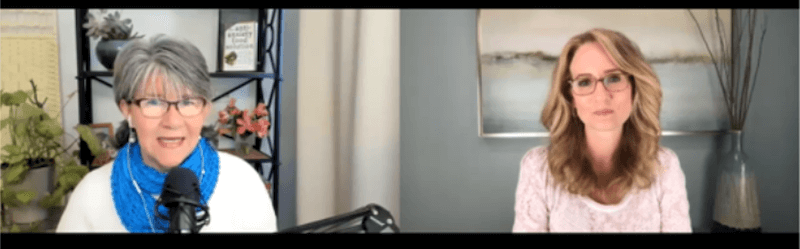
In the interview Psychiatric Medications in Children and Teens with Dr. Nicole Beurkens, we discuss these results from a 2019 paper:

  • Our study indicates that the rate of presentation to child and adolescent psychiatry outpatient clinics is increasing, and rates of diagnosis and initiation of psychiatry drugs are high among the presented children.
  • The prevalence of ADHD shows an increase in males and females in our country, and psychiatric polypharmacy has reached significant rates.

Polypharmacy means concurrent use of multiple medications by a patient. The fact that psychiatric polypharmacy is increasing in children and adolescents is most concerning. There are safer solutions that address the root causes of ADHD, anxiety and depression.

Here is what we cover in this interview:

  • Increasing ADHD, anti-anxiety, SSRI and antipsychotic meds and discontinuation syndrome
  • Disparities in BIPOC communities;
  • Psychiatric side effects of acne, constipation and asthma medications
  • Nutritional psychiatry/targeted nutrients/gut, sleep, movement, screen time and play
nicole beurkens interview

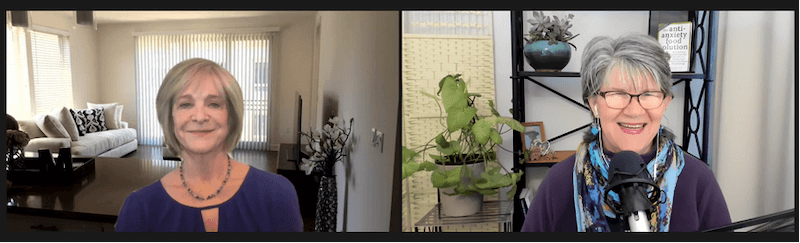
In the interview SSRIs, Benzodiazepines, Alcohol and Amino acids with Dr. Hyla Cass, she shares how benzodiazepines (a class of antianxiety medications that include Xanax, Ativan, Valium and others) are:

  • strongly associated with all cause mortality, including suicide (even when used for short durations of treatment
  • the cause of many accidents even if taken the previous day

Here is what we cover in this interview:

  • SSRI and benzodiazepine side-effects
  • Discontinuation syndrome, pre-taper protocols and tapering
  • The harmful effects of alcohol and the impacts on sleep
  • The dangers of combining alcohol with benzodiazepines, and the risks of antabuse (commonly used in alcohol addiction treatment plans)
  • GABA, tryptophan, 5-HTP, glutamine, DPA, CBD and key nutrient co-factors for medication taper, alcohol addiction, carb cravings and anxiety
hyla cass interview

Dr. Nicole Beurkens’ interview is focused on children and adolescents, and Dr. Hyla Cass’ interview is focused on adults but both are invaluable resources if you want to learn more about psychiatric medications, discontinuation syndrome, tapering and addressing the root-causes with nutritional other non-medication solutions.

Other related medication interviews of interest would be:

  • GABA and Tryptophan vs Meds for Hormone Balance – one of my 3 interviews (I also cover the birth control pill and more about using the amino acids)
  • Benzodiazepines: Short-Term Benefits, Long-Term Harms – Catherine M. Pittman, PhD, HSPP
  • 5-HTP: Anxiety, Depression, Insomnia and Liver Protection – Michael Murray, ND (he shares studies comparing 5-HTP to SSRIs)
  • Neuropsychiatric Toxicity from Fluoroquinolone Antibiotics – Lisa Bloomquist
  • Your Brain on Food: Anxiety, OCD and PTSD – Uma Naidoo, MD, PCP (she also shares studies comparing psychiatric meds to NAC and inositol)

In case you missed the first few emails about the summit … as you know, anxiety can be related to your daily life experiences BUT it can also be triggered by:

  • foods you eat and what you drink (like wheat, oxalates, alcohol and more)
  • environmental toxins (like lead, plastics, fragrances, insecticides, fluoride and more)
  • many types of medications (like the benzos/SSRIs, birth control pill, acne medication, fluoroquinolone antibiotics and more) and/or
  • chronic infections (like Lyme disease, PANDAS, parasites, candida and more).

Once you identify the root causes and understand anxiety’s mechanisms you can support the liver/gallbladder, detox, address infections, implement targeted and supportive solutions, and get relief!

This is my 6th Anxiety Summit, featuring all new topics and the latest research related to anxiety and toxins, medications and infections.
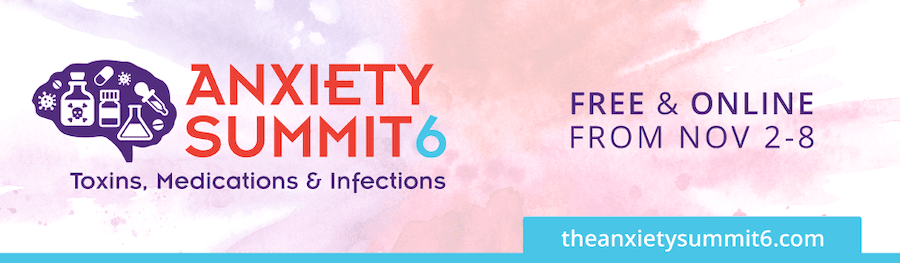
anxiety summit 6

Over the course of the next 6 weeks you’ll be seeing frequent emails from me with snippets and highlights from various interviews – like this one. I do hope you continue to enjoy them and get excited about the summit! Please do share if you know someone who has anxiety!

You’ve heard me say the Anxiety Summit has been called “a bouquet of hope!”  My wish for you is that this summit is your bouquet of hope!

I hope you’ll join me and these incredible speakers, be enlightened and find YOUR solutions!

Here’s to no more anxiety and you feeling on top of the world again!

If you’re already familiar with some of this information and practice some of this already please share how it’s helped you. That way we can all learn.

If you’d like to ask a question, please post in the comments below.

I’d also love to hear from you once you’ve listened to this interview. Please do come back and comment about some of the highlights of this interview and what changes you plan to make.
Filed Under: The Anxiety Summit 6 Tagged With: ADHD, amino acids, anxiety, benzodiazepine, cbd, children, depression, GABA, Hyla Cass, medications, mortality, Nicole Beurkens, psychiatric meds, SSRI, suicide, teens, The Anxiety Summit 6, tryptophan

Sage, gluten, CBD and gut-brain axis: highlights from The Anxiety Summit 5

November 8, 2019 By Trudy Scott 19 Comments

sage gluten cbd gut-brain axis anxiety summit 5

Today I’m sharing a few highlights from The Anxiety Summit 5: Gut-Brain Axis. We cover all new material, it’s research-based and we talk about practical solutions.

The highlights cover sage and other herbs that can impact GABA and anxiety; new testing for gluten issues; CBD and the role in gut health, anxiety and PTSD; and the microbiome and gut-brain axis and neurotransmitters.

#1 Herbs to Improve Digestion and Support GABA ~ Magdalena Wszelaki, author of Cooking for Hormone Balance, shares this in our interview

Astringents like sage, rose and red raspberry tighten loose junctions in IBS, support female hormonal health and ease anxiety.

We discuss sage and make reference to this study called Flavonoids: some of the wisdom of sage? which concludes that the “actions of molecules such as hispidulin [a flavonoid found in sage] might be able to target GABAA receptors for the management of anxiety and epilepsy.”

What I really love about this interview is that Magdalena brings it all back to practical steps and shares how to make a healing medicinal tea.

#2 Latest Gluten Research and Testing (Part 2) ~ Dr. Tom O’Bryan, DC, CCN.  We discuss the Neural and Wheat Zoomer tests and Dr. Tom shares this:

Let’s do a different test that’s more accurate and more sensitive. That’s why the Wheat Zoomer looks at 26 different peptides of poorly digested wheat. And it’s the most comprehensive test on the market today …. on the Anxiety Summit, the ones that you’d be most concerned about is the gluteomorphins and the prodynorphins because those antibodies attack the opiate receptors, and that is critically important with brain dysfunction.

#3 Gut-Brain Axis and Mental Health ~ Peter Bongiornio, ND, LAc, author of Put Anxiety Behind You, talks about the microbiome and bidirectional aspects:

so we have this microbiota, all these germs and bacteria that are in our digestive tract as an example. What we’re seeing now is that the health and the diversity of those create either a healthy brain or an unhealthy brain; that the microbiota that are in our gut actually play a very, very strong role and how neurotransmitters are made both in the gut and in the brain. As well as they also create inflammatory molecules and peptides and things that also travel to the brain and will affect brain inflammation, and affect brain neurotransmitters and affect the receptors of these neurotransmitters as well.

#4 Endocannabinoid System and Your Gut ~ Hyla Cass, MD, talks about CBD and anandamide in the endocannabinoid system:

CBD influences the breakdown of anandamide , extending it’s use. Anandamide is found in both the brain and the gut and the name comes from the Sanskrit word ananda, which means bliss.

So what CBD is doing is extending the life of the anandamides, so they can act longer. Dr. Cass also shares the connection between the endocannabinoid system, stress, the HPA axis, the gut and PTSD:

we react to stress and trauma through the hypothalamic pituitary-adrenal axis/ the HPA Axis. And the endocannabinoid system tends to tone down or modulate the HPA axis to protect us from stress. And when it’s protecting us from stress in that way, it’s also signaling to the GI system to calm down. People that don’t have enough endocannabinoid activity are more likely to have posttraumatic stress disorder.

The Anxiety Summit 5: Gut-Brain Axis airs online Monday Nov 8 to Sunday Nov 14, with replays the following weekend. I do hope you’ll be joining us.

If you’re having any doubts, read this delightful message I received when the Anxiety Summit 5 originally aired and be inspired and motivated to tune in and learn:

Trudy … thanks so very much for the 3 transcripts featuring Ann Louise Gittleman, Carolyn Ledowsky and Dr. Datis Kharrazian … they were ALL fantastic and unlike many of the health related docu-series, I felt that I obtained some great insights and key take-aways that will help me on my road to good health journey! You asked some GREAT questions and I appreciate you digging further for names of supplements and more specificity to ensure clarity. You are a PRO and I am so glad I found you ❤️

You can listen to each of the interviews (and get transcripts) by purchasing The Anxiety Summit 5: Gut-Brain Axis.

If you’d like to give feedback or ask a question, please post in the comments section. I’d love to hear from you once you’ve listened in.

What gems stand out for you today and do you have questions?

If you’d like to ask a question, please post in the comments below.

I’d also love to hear from you once you’ve listened in to these interviews and the others.


Filed Under: The Anxiety Summit 5 Tagged With: anxiety, anxiety summit, cbd, digestion, Endocannabinoid, GABA, Gluten Testing, Gut-Brain Axis Mental Health, herbs, Hyla Cass, Magdalena Wszelaki, Peter Bongiornio, PTSD, tom o’bryan, zoomer

Broken Brain: Anxiety, depression and medication side-effects

January 27, 2018 By Trudy Scott Leave a Comment

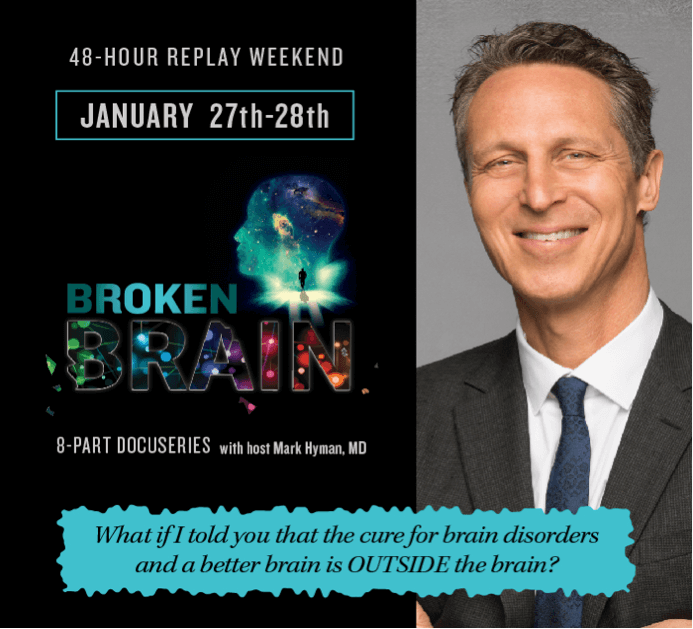
Dr. Mark Hyman, MD, host of the 8-part Broken Brain docuseries, makes this bold statement which is supported by the 58 experts in the docuseries:

What if I told you that the cure for brain disorders and a better brain is OUTSIDE the brain?  

Dr. Hyla Cass, integrative psychiatrist, and author of 8 Weeks to Vibrant Health, and The Addicted Brain, shares some of the side effects of antidepressant medications in her interview in Episode 5 – Anxiety and Depression:

  • some people start to imagine they are getting messages to do harm to themselves; one woman she worked with had weird thoughts of hurting someone
  • some people lose joy and are flat and experience sexual side-effects – this can affect relationships
  • weight gain of 10-20-30 pounds is not uncommon

Dr. Cass also mentions the side-effect called akathisia where it feels like you are crawling out of your skin. This is described in Drug-Induced Akathisia as follows:

Akathisia consists of subjective inner restlessness, such as awareness of the inability to remain seated, restless legs, fidgetiness, and the desire to move constantly, and of objective increased motor phenomena, such as body rocking, shifting from foot to foot, stamping in place, crossing and uncrossing legs, pacing around.

In this paper, Akathisia: overlooked at a cost

It is a recognized side effect of antipsychotic and antiemetic [or anti-nausea] drugs but may also be caused by other widely prescribed drugs such as antidepressants.

As Dr. Hyman states the cure for brain disorders is OUTSIDE the brain, and Dr. Cass reinforces this sharing that we have ability to heal ourselves when given the right materials and when we get to the root cause.

She recommends a nutritional approach using targeted and specific nutrients based on each person’s unique need. Here are some of the many root caused she looks into and addresses:

  • a B12 and other B vitamin deficiencies
  • MTHFR defects
  • hormonal imbalances
  • low levels of neurotransmitters

Dr. Cass also discusses sensible medication withdrawal approaches and much more.

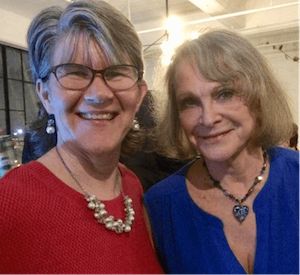
I’m a big fan of Dr. Cass and her interview is one of my favorite interviews in the series. She is both a colleague and good friend – here we are in LA in November when I had the opportunity to interview Dr. Hyman.

Here’s a list of ALL the episodes. Each one is available during the replay period:

  1. The Broken Brain Epidemic / Dr. Hyman’s Story
  2. Gut Brain Connection: Getting to The Root of a Broken Brain
  3. Losing Your Mind (Alzheimer’s, Dementia, MS, and more)
  4. ADHD and Autism
  5. Depression & Anxiety
  6. Traumatic Brain Injury: Accidents, Sports, and more
  7. 7 Steps to An UltraMind (Part 1)
  8. 7 Steps to An UltraMind (Part 2)

You can watch the entire 8-part Broken Brain docuseries by clicking here

All episodes will be aired until midnight on Sunday (9pm PST/ 11:59pm EST).

Keep in mind that what you’re seeing in episode 5 is a short section of Dr. Cass’ full interview. You can get access to her entire interview (video and transcript) and those of the other 58 speakers when you upgrade/purchase the series.

If you are considering purchasing the series now is the time to do it because prices will go up by 50% once it ends. As Dr. Hyman says: “Own Broken Brain and own your future.”  

Enjoy!

Filed Under: Events Tagged With: broken brain, Hyla Cass, mark hyman

The Anxiety Summit: wise words on MS, oxytocin, red meat, marijuana, mercury

June 10, 2016 By Trudy Scott 10 Comments

fb_red_Anxiety4

We’re in the midst of season 4 of The Anxiety Summit www.theanxietysummit.com and here are wise words of wisdom from some of our amazing speakers on MS, oxytocin, red meat, marijuana, mercury and more.

If you have joined the summit and are loving it, this serves as a nice recap, a reminder if you missed a talk and inspiration to stay tuned in for some of the later interviews. And making sure you know that each speaker has a blog with snippets and many additional resources.

And if you’ve recently joined my community for the summit a VERY big welcome!

If you have not yet signed up I hope these wise words inspire you to join us!

Here are some snippets from some of the interviews.

Multiple sclerosis and anxiety: The Wahls Protocol

Dr. Terry Wahls shares how her MS was a gift:

And it all needs to happen this way Trudy.  I had to get that disabled.  I had to be on the verge of utter catastrophe to begin to feel the effects of cognitive decline to do all this work and then feel the effects of all this healing that happens when you provide a healthy habitat for the human ecosystem and all this repair happens.  If this hadn’t of have happened I’d still be a conventional medicine doc thinking the latest drugs out of the New England Journal of Medicine were the way to go as opposed to seeing the gospel of food and sleep and movement and stress reduction.

The Link Between Low Cholesterol and Low Oxytocin

The Pitocin/synthetic discussion oxytocin with Dr. Kurt Woeller was fascinating:

And there’s a theory … that the Pitocin, which is synthetic oxytocin, which is given to women who are not naturally going into labor, it’s meant to action speed labor up. Pitocin being synthetic oxytocin may short circuit in some susceptible kids the natural production of oxytocin, therefore slowing down or turning off those areas in the brain that are normally being developed at that time, with regards to socialization.

Gluten and anxiety: the testing conundrum solution

Dr. Tom O’Bryan’s explanation of the limited gluten sensitivity testing that most people have done:

what happens when people have one of those peptides that the immune system is fighting that’s not the 33 [alpha-gliadin] and you do a blood test for gluten sensitivity.  If your doctor orders the common blood test for gluten sensitivity and it looks for alpha-gliadin and it comes back negative and your doctors says you’re fine eating wheat.  See, here’s the blood test.  Well you can get a false negative meaning it says there’s no problem when there really is because your body’s fighting other peptides of wheat.

Nutrients that Fuel Brain Power and Reduce Anxiety

Dr. Drew Ramsey talks about zinc and animal protein:

Zinc is a mineral and minerals tend to be more absorbable in animal forms.  I think a lot of people are very confused about meat and seafood and often intimidated and scared.  And then we’ve had this message to go plant based and even vegan which is not a diet that is healthy for the brain.

Dr. Hyla Cass, integrative psychiatrist covers marijuana and anxiety later in the summit:

very often people who have been smoking marijuana for a while – when they go off it they go through serious withdrawal – anxiety, insomnia, feeling really very bad. Very much like we see in movies – we understand what it’s like getting off heroin when people go through withdrawal. Very similar, it really looks similar in appearance. Not everyone does that but common enough.

Dr. John Dempster, co-host of the Mental Wellness Summit discusses mercury as a neurotoxin in his interview later in the summit

So I kind of want to shed some light on some of these areas and how it can affect anxiety directly. One of the big areas is mercury itself is a neurotoxin. So how does that impact our biochemistry and our physiology? Well what it’s going to do it’s going to start to disrupt on an endocrine and a neurotransmitter level some of our pathways. And one of the big pathways is actually the glutamate connection and the glutamate pathway. And glutamate is something that’s known as an excitatory neurotransmitter and this is something that if we have too much of it or it’s not being reuptake properly in our synapses we start to exhibit different types of symptoms of anxiety. And of course that’s just one possible trigger for anxiety.

You can see a list of all the speakers and topics here on the master speaker blog.

You can sign up here: season 4 of The Anxiety Summit www.theanxietysummit.com

If you missed any, not to worry, we’ve decided to do an encore day with ALL the speakers. We don’t want you feeling stressed or anxious about missing out – not on a summit on anxiety!

Filed Under: Events, The Anxiety Summit 4 Tagged With: anxiety, brain health, cholesterol, drew ramsey, gluten, Hyla Cass, John Dempster, Kurt Woeller, marijuana, mercury, multiple sclerosis, oxytocin, terry wahls, the anxiety summit, tom o’bryan, Trudy Scott

GABA, the calming amino acid: expert opinions

December 11, 2015 By Trudy Scott 69 Comments

gaba-opinions

GABA (gamma-aminobutyric acid) is one of my top nutrient recommendations for clients with physical tension, anxiety, overwhelm and panic attacks. I’m often asked if it really works and is it even worth taking so here is some feedback from practitioners from the Anxiety Summit, all of whom I consider experts on the topic.

Julia Ross, MFT, pioneer in the field of amino acid therapy, my mentor and the author of The Mood Cure and The Diet Cure shares this wisdom about GABA during our interview: Eliminating Anxiety: Amino Acid Therapy and Adrenal Balancing on season 1 of the Anxiety Summit:

Among other things, GABA relaxes the nerves in the muscles in the body. One of the most common kinds of feedback that we get from people who are doing a GABA trial is that it seems to take effect so quickly. This may be because, unlike tryptophan, which has to be converted into serotonin, GABA is the neurotransmitter and the amino acid all in one and requires no conversion.

There isn’t often a GABA discussion when the topic of the blood-brain-barrier doesn’t come up and whether GABA actually does work. Of course Julia addresses this too:

There is a myth going around, based on one old study, that GABA doesn’t cross into the brain, that it doesn’t cross the blood-brain barrier. But there are other studies that show that it does [here is a paper published earlier this year], and our clinical experience is overwhelming. This is the most popular trial that we do, the GABA trial, using only 100 mg. It zips right into the brain, and people immediately feel relaxed physically and mentally.

I see this with my clients on a daily basis and I can certainly attest to that personally too. I like to share that I was a “GABA girl”: when I had my terrible anxiety and panic attacks in my late 30s anxiety, GABA worked beautifully for me. It was amazing and life-changing! Zero anxiety and no more panic attacks!  

We are all individual and you may find that theanine works better for you than GABA. Julia talks about this too:

I would say about 15 to 20 percent of people who need this GABA-type relief of the tension and stress, don’t seem to get it from GABA. In those cases, most of them do get it from the amino acid, l-theanine, instead, in our experience.

Dr. Josh Friedman, is dear friend, colleague and integrative psychotherapist who uses amino acids and other nutritional approaches in his practice. I also had the honor of interviewing him on season 1 of the Anxiety Summit. I ask him if he uses GABA with his patients and what he thinks about the naysayers. I just love his answer:

[GABA] is definitely something I use. I am not a biochemist, so I actually don’t really know whether it crosses the blood/brain barrier, nor do I care actually. The first question should be, is it harmful? Are any of these things going to cause harm? And the answer with all the amino acids are no, they’re not going to cause harm, especially when compared to psychiatric medicines. The second question is, does it work? Is it helpful for our patients that we see in our practice?

GABA certainly worked for Meme Grant, GAPS Practitioner, Nutritional Therapist, FNTP, and fellow African. She had anxiety, panic attacks, didn’t enjoy speaking in public, had insomnia and was an emotional eater. I also interviewed her in season 1 and she shared this:

I took GABA for the first time in the afternoon and had no panic attacks that afternoon, and I took one in the evening and I did that for a couple of weeks, and I haven’t seen a panic attack since.

I find that many people do well with a combination of GABA and one or more of theanine, taurine and glycine. All of these are calming amino acids and since we are all unique you may find that one of these combinations work better for you.

Dr. Hyla Cass, M.D. board-certified in psychiatry and integrative medicine and the author of Natural Highs and The Addicted Brain and How to Break Free, talks about this in our interview: The Addicted Brain and How to Break Free   

If someone has anxiety, it’s not a Valium or a Xanax deficiency. It could be a GABA deficiency. And that could be due to stress. So if you’re low in GABA, there are some really cool things to take – theanine, glycine, taurine. The different nutrients work together and when we add them together, it’s more than the sum of its parts. So adding glycine and GABA together is going to give you a better result and you don’t have to use as much as each of the individual ones. So that’s nature’s Valium.

Jonathan Prousky, ND, MSc, editor of the Journal of Orthomolecular Medicine and author of Anxiety: Orthomolecular Diagnosis and Treatment shares this in our season 2 interview: Tapering off psychiatric drugs so they do not ruin your life

I have found GABA to be invariably helpful and I don’t really know exactly how GABA works but I know it to be very, very safe and, to me, that is fundamentally important. It’s not associated with any withdrawal, with any tolerance, with any habituation, so people can try it without a lot of concern.

Dr. Prousky uses both regular crystalline GABA and pharmaGABA but prefers the latter. He uses it as part of his SRR model for helping his patients taper of psychiatric drugs such as benzodiazepines. SRR stands for sedation, relaxation and regulation:

  • Sedation: one gets the sedating effects of GABA (he uses pharmaGABA at a dose of 100-200 mg)
  • Relaxation: niacin at a dose of 250-500 mg (immediate-release)
  • Regulation: melatonin (generally about 3mg) to helps regulate the sleep-and-wake cycles

GABA really does work if your anxiety is a result of low GABA levels. As Julia so wisely says:

On a scale of zero to ten, zero is not an unrealistic goal when it comes to anxiety.  It’s really the human potential and GABA [and tryptophan] give us access to it.

So we have many expert opinions but the best way to figure out if GABA works is to try it. You’ll know within 5 minutes if it’s working for you. This is one of the reasons I love the amino acids: you get results right away and it makes you feel less anxious right away, giving you hope while you deal with other factors that may be contributing to your anxiety.

How much GABA do we need and how do we take it? I find that GABA is most effective when taken sublingually. Source Naturals GABA Calm is a great sublingual that contains 125mg GABA, 50mg Glycine, 20mg taurine, some magnesium and 25mg N-Acetyl L-Tyrosine. I also really like Nutritional Fundamentals for Health GABA-T SAP which contains 300mg GABA 300 mg and 150mg theanine. This is pleasant-tasting when opened on to the tongue and seems to be most effective when held there for about 2 minutes.   GABA products that contain 500mg and 750mg are often too much for most of my clients.

You can find these and other GABA products that I recommend here

If you’d like to learn more about GABA from the above experts, you can get details of the Anxiety Summits here 

You’ll also learn about many other nutritional and biochemical causes of anxiety: gut health and the microbiome, hormone imbalance, methylation issues, other low neurotransmitter levels, pyroluria (causing social anxiety), oxalates/gluten (special diets), pyschoneuroendocrinology, heavy metals, poor liver health, adrenal issues like high cortisol, mold, candida, parasites and much more!

Have you used GABA or any of the other calming amino acids and found benefits? Please share what product and how much worked for you?

If you have not tried GABA, were you a naysayer but now feel more inclined to look into this?

Filed Under: Amino Acids, GABA Tagged With: anxiety, anxiety summit, calming amino acid, GABA, Hyla Cass, Julia Ross, panic attacks, Trudy Scott

The Anxiety Summit – How thyroid imbalance can cause anxiety and depression

November 8, 2014 By Trudy Scott 6 Comments

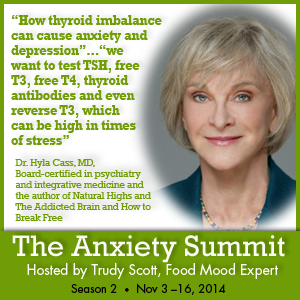
Dr. Hyla CassQuote_Anxiety2

Dr Hyla Cass, MD, author of Eight Weeks to Vibrant Health was interviewed by host of the Anxiety Summit, Trudy Scott, Food Mood Expert and Nutritionist, author of The Antianxiety Food Solution.

How thyroid imbalance can cause anxiety and depression

  • An aside on Abram Hoffer and orthomolecular medicine
  • Thyroid disorders: frequency, causes, symptoms and the mood/anxiety connection
  • Hashimotos thyroiditis and anxiety
  • Hyperthyroidism and anxiety
  • Testing: basal temperature and blood tests
  • Conventional medical treatment
  • Natural thyroid hormones and dietary factors
  • Shoulder stands, rebounding and exercise for stress and anxiety

Hyla and I recently both presented at the Integrative Medicine for Mental Health conference.  While we were these I asked her to do a quick video.  Here it is…

Here is Hyla’s answer to: “What are some of the other factors that can cause us to have a low thyroid function?”

Well, if you’re not converting T4 to T3, you want to go another step deeper, and that is why aren’t you converting T4 to T3? Because that is the active form. So it could be that you’re converting it to inactive form, which is reverse T3. That’s what you do in times of stress. It could be that you’re deficient in certain minerals that are required to convert the T4 to T3. Those are selenium, for example, zinc, magnesium.

We need to have a lot of chemicals in our body, a lot of good chemicals, good vitamins, good minerals for all the chemistry to work properly. So rather than simply replacing thyroid hormones, which is a good idea and it works, but also to find out what’s going on to make your body produce the T3 instead of giving it exogenously, giving external T3. But let’s encourage the body first to make it.

Or your adrenals can be wiped out. You get really stressed and your adrenals are working too hard, and they kind of go on strike. What happens when your adrenals are really exhausted is they’re releasing cortisol. You actually suppress your thyroid, your production of thyroid. You could actually have a low TSH and a low T4 and a low T3. It has to do with your adrenal glands being really tired. What you look for is reverse T3. That’s a good clue that your adrenals are not functioning on all cylinders.

Here is the paper: The prevalence of depression and anxiety disorders in patients with euthyroid Hashimoto’s thyroiditis: a comparative study, discussing the connection between thyroid disorders and anxiety and depression (and treatment resistant depression)

Euthyroid Hashimotos thyroiditis and euthyroid goiter increase predisposition to major depression and anxiety disorders, and thyroid autoimmunity and other thyroid pathologies should be investigated in euthyroid patients with chronic and treatment-resistant complaints.

We discussed hyperthyroidism and psychiatric diagnoses. Here is the paper in the European Journal of Endinocrinology: Hyperthyroidism and psychiatric morbidity: evidence from a Danish nationwide register study:

Hyperthyroid individuals have an increased risk of being hospitalized with psychiatric diagnoses and being treated with antipsychotics, antidepressants, and anxiolytics, both before and after the diagnosis of hyperthyroidism.

Here is the 2014 paper I mentioned – Paradigm shifts in thyroid hormone replacement therapies for hypothyroidism.

Impaired psychological well-being, depression or anxiety are observed in 5-10% of hypothyroid patients receiving levothyroxine, despite normal TSH levels

Here is a link to my interview with Dr. Prousky – Tapering off psychiatric drugs so they don’t ruin your life. It has information about the Canadian Society for Orthomolecular Medicine

Here are two of Hyla’s great books:

Natural Highs: Supplements, Nutrition, and Mind-Body Techniques to Help You Feel Good All the Time

Eight Weeks to Vibrant Health: A Take Charge Plan for Women to Correct Imbalances, Reclaim Energy and Restore Well-Being

Get your free gifts from Dr. Hyla Cass: “Outsmart Your Addiction Quiz” and “Reclaim Your Brain” e-report

If you are not already registered for the Anxiety Summit you can get live access to the speakers of the day here www.theAnxietySummit.com

Filed Under: Antianxiety, Anxiety and panic, Depression, The Anxiety Summit 2, Thyroid health Tagged With: anxiety, depression, hashimoto's thyroiditis, Hyla Cass, hyperthyroidism, the anxiety summit, thyroid, Trudy Scott

  • Page 1
  • Page 2
  • Go to Next Page »

Primary Sidebar

NEW! GABA QuickStart Homestudy (with special intro pricing)

gaba quickstart homestudy

Free Report

9 Great Questions Women Ask about Food, Mood and their Health

You'll also receive a complimentary subscription to my ezine "Food, Mood and Gal Stuff"


Connect with me

Popular Posts

  • Amino Acids Mood Questionnaire from The Antianxiety Food Solution
  • The Antianxiety Food Solution Amino Acid and Pyroluria Supplements
  • Pyroluria Questionnaire from The Antianxiety Food Solution
  • Collagen and gelatin lower serotonin: does this increase your anxiety and depression?
  • Tryptophan for the worry-in-your-head and ruminating type of anxiety
  • GABA for the physical-tension and stiff-and-tense-muscles type of anxiety
  • The Antianxiety Food Solution by Trudy Scott
  • Seriphos Original Formula is back: the best product for anxiety and insomnia caused by high cortisol
  • Am I an anxious introvert because of low zinc and vitamin B6? My response to Huffington Post blog
  • Vagus nerve rehab with GABA, breathing, humming, gargling and key nutrients

Recent Posts

  • What do I use instead of Seriphos to help lower high cortisol that is affecting my sleep and making me anxious at night?
  • BeSerene™ GABA/theanine cream eases severe muscle tension in her neck/shoulders, prevents her bad headaches and quells her anxiety
  • How the correct approach, dose and sublingual use of GABA can be calming and not cause a flushed and itchy face and neck
  • The amino acid glutamine improves low mood by addressing gut health, and it has calming effects too
  • Flight anxiety with heightened breath, physical tension and also fearing the worst (the role of low GABA and low serotonin)

Categories

  • 5-HTP
  • AB575
  • Addiction
  • ADHD
  • Adrenals
  • Alcohol
  • Allergies
  • Alzheimer's disease
  • Amino Acids
  • Anger
  • Antianxiety
  • Antianxiety Food Solution
  • Antidepressants
  • Anxiety
  • Anxiety and panic
  • Autism
  • Autoimmunity
  • benzodiazapines
  • Bipolar disorder
  • Books
  • Caffeine
  • Cancer
  • Candida
  • Children/Teens
  • Collagen
  • Cooking equipment
  • Coronavirus/COVID-19
  • Cravings
  • Depression
  • Detoxification
  • Diabetes
  • Diet
  • DPA/DLPA
  • Drugs
  • EFT/Tapping
  • EMF
  • EMFs
  • Emotional Eating
  • Endorphins
  • Environment
  • Essential oils
  • Events
  • Exercise
  • Fear
  • Fear of public speaking
  • Fertility and Pregnancy
  • Fish
  • Food
  • Food and mood
  • Functional neurology
  • GABA
  • Gene polymorphisms
  • General Health
  • Giving
  • Giving back
  • Glutamine
  • Gluten
  • GMOs
  • Gratitude
  • Gut health
  • Heart health/hypertension
  • Histamine
  • Hormone
  • Hyperparathyroidism
  • Hypoglycemia
  • Immune system
  • Inflammation
  • Insomnia
  • Inspiration
  • Introversion
  • Joy and happiness
  • Ketogenic diet
  • Lithium orotate
  • Looking awesome
  • Lyme disease and co-infections
  • MCAS/histamine
  • Medication
  • Men's health
  • Mental health
  • Mercury
  • Migraine
  • Mold
  • Movie
  • MTHFR
  • Multiple sclerosis
  • Music
  • NANP
  • Nature
  • Nutritional Psychiatry
  • OCD
  • Osteoporosis
  • Oxalates
  • Oxytocin
  • Pain
  • Paleo
  • Parasites
  • Parkinson’s disease
  • PCOS
  • People
  • PMS
  • Postpartum
  • PTSD/Trauma
  • Pyroluria
  • Questionnaires
  • Real whole food
  • Recipes
  • Research
  • Schizophrenia
  • serotonin
  • SIBO
  • Sleep
  • Special diets
  • Sports nutrition
  • Stress
  • Sugar addiction
  • Sugar and mood
  • Supplements
  • Teens
  • Testimonials
  • Testing
  • The Anxiety Summit
  • The Anxiety Summit 2
  • The Anxiety Summit 3
  • The Anxiety Summit 4
  • The Anxiety Summit 5
  • The Anxiety Summit 6
  • Thyroid
  • Thyroid health
  • Toxins
  • Tryptophan
  • Tyrosine
  • Uncategorized
  • Vegan/vegetarian
  • Women's health
  • Yoga

Archives

  • October 2025
  • September 2025
  • August 2025
  • July 2025
  • June 2025
  • May 2025
  • April 2025
  • March 2025
  • February 2025
  • January 2025
  • November 2024
  • October 2024
  • September 2024
  • August 2024
  • July 2024
  • June 2024
  • May 2024
  • April 2024
  • March 2024
  • February 2024
  • January 2024
  • December 2023
  • November 2023
  • October 2023
  • September 2023
  • August 2023
  • July 2023
  • June 2023
  • May 2023
  • April 2023
  • March 2023
  • February 2023
  • January 2023
  • December 2022
  • November 2022
  • October 2022
  • September 2022
  • August 2022
  • July 2022
  • June 2022
  • May 2022
  • April 2022
  • March 2022
  • February 2022
  • January 2022
  • December 2021
  • November 2021
  • October 2021
  • September 2021
  • August 2021
  • July 2021
  • June 2021
  • May 2021
  • April 2021
  • March 2021
  • February 2021
  • January 2021
  • December 2020
  • November 2020
  • October 2020
  • September 2020
  • August 2020
  • July 2020
  • June 2020
  • May 2020
  • April 2020
  • March 2020
  • February 2020
  • January 2020
  • December 2019
  • November 2019
  • October 2019
  • September 2019
  • August 2019
  • July 2019
  • June 2019
  • May 2019
  • April 2019
  • March 2019
  • February 2019
  • January 2019
  • December 2018
  • November 2018
  • October 2018
  • September 2018
  • August 2018
  • July 2018
  • June 2018
  • May 2018
  • April 2018
  • March 2018
  • February 2018
  • January 2018
  • December 2017
  • November 2017
  • October 2017
  • September 2017
  • August 2017
  • July 2017
  • June 2017
  • May 2017
  • April 2017
  • March 2017
  • February 2017
  • January 2017
  • December 2016
  • November 2016
  • October 2016
  • September 2016
  • August 2016
  • July 2016
  • June 2016
  • May 2016
  • April 2016
  • March 2016
  • February 2016
  • January 2016
  • December 2015
  • November 2015
  • October 2015
  • September 2015
  • August 2015
  • July 2015
  • June 2015
  • May 2015
  • April 2015
  • March 2015
  • February 2015
  • January 2015
  • December 2014
  • November 2014
  • October 2014
  • September 2014
  • August 2014
  • July 2014
  • June 2014
  • May 2014
  • April 2014
  • March 2014
  • February 2014
  • January 2014
  • December 2013
  • November 2013
  • October 2013
  • September 2013
  • August 2013
  • July 2013
  • June 2013
  • May 2013
  • April 2013
  • March 2013
  • February 2013
  • January 2013
  • December 2012
  • November 2012
  • October 2012
  • August 2012
  • July 2012
  • June 2012
  • May 2012
  • April 2012
  • March 2012
  • February 2012
  • January 2012
  • December 2011
  • November 2011
  • October 2011
  • September 2011
  • August 2011
  • July 2011
  • June 2011
  • May 2011
  • April 2011
  • March 2011
  • February 2011
  • January 2011
  • December 2010
  • October 2010
  • September 2010
  • July 2010
  • May 2010
  • April 2010
  • March 2010
  • February 2010
  • January 2010
  • November 2009

Share the knowledge!

The above statements have not been evaluated by the Food and Drug Administration. Products listed in this website are not intended to diagnose, treat, cure or prevent any disease.

The information provided on this site is for informational and educational purposes only and is not intended as a substitute for advice from your physician or other health care professional. You should consult with a healthcare professional before starting or modifying any diet, exercise, or supplementation program, before taking or stopping any medication, or if you have or suspect you may have a health problem.


Copyright © 2026 Trudy Scott. All Rights Reserved. | Privacy | Terms and Conditions | Refund Policy | Medical Disclaimer

Free Report

9 Great Questions Women Ask about Food, Mood and their Health

You’ll also receive a complimentary subscription to my ezine “Food, Mood and Gal Stuff”