• Skip to primary navigation
  • Skip to main content
  • Skip to primary sidebar

everywomanover29 blog

Food, Mood and Women's Health – Be your healthiest, look and feel great!

  • Blog
  • About
  • Services
  • Store
  • Resources
  • Testimonials
  • The Book
  • Contact
  • Search this site

endorphins

Is DPA stimulating; can it be used with kids and someone with bipolar disorder; can it be used with a benzo/SSRI? (and other questions)

July 22, 2022 By Trudy Scott 12 Comments

dpa questions

DPA (d-phenylalanine) is an amino acid that destroys the enzyme that breaks down endorphins. Endorphins are feel-good chemicals that you experience with an endorphin rush when you go for a run or when someone gives you a big hug, when you show kindness to someone or someone does something nice for you. The amino acid DPA helps to raise your endorphins. With low endorphins you can feel very weepy, overly emotional, be extra sensitive to emotional pain, be sensitive to physical pain, and indulge in comfort/reward eating. Today I’m sharing some questions (and my feedback) as to whether it’s stimulating, can it be used with kids and someone with bipolar disorder, can it be used with a benzo/SSRI and more.

Misha has had success with DPA and wants to know if it is considered too stimulating. Here is her feedback and question:

I first tried DPA after reading about it on your blog and found it helpful for raising my mood. The DPA definitely helped curb my weepiness. I used Lidtke Endorphigen 1 cap/day. I have chronic Lyme which creates severe difficulty with sleep, anxiety and depression. Six months ago my neurologist took me off DPA saying it would be too stimulating to my nervous system.

I have since begun using DPA again; I really need the endorphin boost. Do you have any insights on whether DPA is considered stimulating? Whether it interferes with sleep (unfortunately my sleep is bad whether I take DPA or not)? Or suggestions for time of day to take it?

Here is my feedback for Misha: There is no evidence that DPA is too stimulating whereas DLPA (dl-phenylalanine) is known to be stimulating (it works like a combination of DPA and tyrosine).

And when I hear all this it tells me the person needs endorphin support:

  • “found it helpful for raising my mood”
  • “The DPA definitely helped curb my weepiness”
  • “I have since begun using DPA again; I really need the endorphin boost”

That said anything is possible which is why using the amino acids is based on the questionnaire and trials to see how a person responds. The best way to know if sleep is affected is to monitor sleep when using it and when not using it. She says her sleep is bad whether she takes DPA or not so I would recommend going back to her neurologist, sharing this information and the fact that it’s helping her so much. And look for other causes of her sleep issues.

Anna asks if DPA and other amino acids are safe for kids and how high doses? This is her question:

My 10 yr old has been diagnosed with social anxiety and she ticks off most of the boxes for low endorphins, low GABA, low serotonin. She’s very sensitive and very very emotional. We tried, but can’t seem to find a naturopath that can help her much. I feel after a while they all reach a dead end. I have been following you for a year and recently got your book. It looks relatively easy to follow, however I’m a bit reluctant, as she’s a kid.

My feedback: I work with women and once they have figured out the amino acids and neurotransmitter imbalances themselves they find it much easier to help their children who often have similar issues. When that is not the case working with a practitioner is ideal. That being said many moms become informed and educated enough to trial the amino acids on their own (like this mom who had her daughter use GABA with much success).

Anna says her daughter is very sensitive and very very emotional so I’d consider using 125 mg DPA to start (500 mg is an adult starting dose).With kids we also always start with dietary changes as laid out in my book. A good place to start is with a gluten-free and sugar-free diet and DPA (and the other amino acids) can help curb the cravings and feelings of deprivation.

Anon has bipolar disorder and likes comfort foods. This is her question:

I have bipolar disorder and wonder if the DPA will send me into a manic state. It’s one of the reasons I can’t take anti-depressants or stimulants otherwise I go manic. But I can eat for comfort so I only have food in the house I’m going to eat according to meal schedules. So I want to try the DPA.

Here is my feedback: I have not seen DPA to be an issue with bipolar disorder and it’s fabulous when you are a comfort-eater. If you have bipolar disorder and are on medications, it’s always advised to discuss new supplements with your prescribing doctor. You can share that DPA is not on the list of amino acids that have precautions with bipolar disorder.

I would not recommend the use of DLPA (dl-phenylalanine) with bipolar disorder because some of this increases dopamine (which can trigger a manic state).

Kristie is doing a benzodiazepine taper and would like to use DPA:

I am currently going through a benzo taper & there are numerous wonderful products that I am unable to mix with benzos. Would this be safe for me?

This is my feedback: I have not had issues with DPA with clients who are doing a benzo taper and there are no documented contraindications. DPA can help with some of the emotional blunting caused by benzos and the emotional fragility we often see during a benzo taper.  I know some of the great benzo support groups say not to use GABA but I find it very helpful when tapering too.

The medication question is a common one. Someone else described her depression as weepy and is using the SSRI. There are also no documented contraindications when using DPA with a SSRI. But again, best to discuss with the prescribing doctor.

Arleen has a question about blood pressure and the DPA product I recommend (Lidtke Endorphigen):

1) Is this product gluten free and 2) What effect if any would it have on blood pressure (mine is naturally low)

Here is my feedback: Lidtke Endorphigen is gluten-free and I have not seen it or other DPA products to be an issue with low blood pressure.

Jan wants to use GABA and DPA. She asks:

Can I use Gaba 125mg and also take DPA? Would either offset the other?

If someone has low GABA symptoms and GABA helps with the physcal anxiety and they also have low endorphin symptoms and DPA helps then they are absolutely fine to use together and even at the same time. However, I have clients trial one at a time in order to find the ideal dose and so you know how each one is working.

Resources if you are new to using the amino acids as supplements

If you are new to using any of the amino acids as supplements, here is the Amino Acids Mood Questionnaire from The Antianxiety Food Solution (you can see all the symptoms of neurotransmitter imbalances, including low endorphins).

If you suspect low levels of any of the neurotransmitters and do not yet have my book, The Antianxiety Food Solution – How the Foods You Eat Can Help You Calm Your Anxious Mind, Improve Your Mood, and End Cravings, I highly recommend getting it and reading it before jumping in and using amino acids on your own so you are knowledgeable. And be sure to share it with the practitioner/health team you or your loved one is working with.

There is an entire chapter on the amino acids and they are discussed throughout the book in the sections on gut health, gluten, blood sugar control, sugar cravings, self-medicating with alcohol and more.

The book doesn’t include product names (per the publisher’s request) so as mentioned above, this blog, The Antianxiety Food Solution Amino Acid and Pyroluria Supplements, lists the amino acids that I use with my individual clients and those in my group programs.

As mentioned above, Lidtke Endorphigen is the DPA product I’ve had the most success with (and it can be found in my online store). Doctor’s Best D-phenylalanine is also a good product.

If, after reading this blog and my book, you don’t feel comfortable figuring things out on your own (i.e. doing the symptoms questionnaire and respective amino acids trials), a good place to get help is the GABA Quickstart Program (if you have low GABA symptoms). This is a paid online/virtual group program where you get my guidance and community support. There are many moms in the program who are having much success with their kids.

You can then use this knowledge to then trial DPA and other amino acids or move on to the Amazing Aminos for Anxiety Program and get help there.

If you are a practitioner, join us in The Balancing Neurotransmitters: the Fundamentals program. This is also a paid online/virtual program with an opportunity to interact with me and other practitioners who are also using the amino acids with success with their clients/patients.

Have you used DPA with success and if yes how has it helped?

If you’re a practitioner, do you use DPA with your clients/patients?

If you have questions please share them here too.
Filed Under: Amino Acids, DPA/DLPA, Endorphins, Supplements Tagged With: amino acid, anxiety, Balancing Neurotransmitters: the Fundamentals, benzo, bipolar disorder, comfort/reward eating, d-phenylalanine, DPA, emotional, emotional pain, endorphin-boosting, endorphins, GABA, GABA Quickstart program, kids, low blood pressure, mood, physical pain, SSRI, stimulating, weepiness, weepy

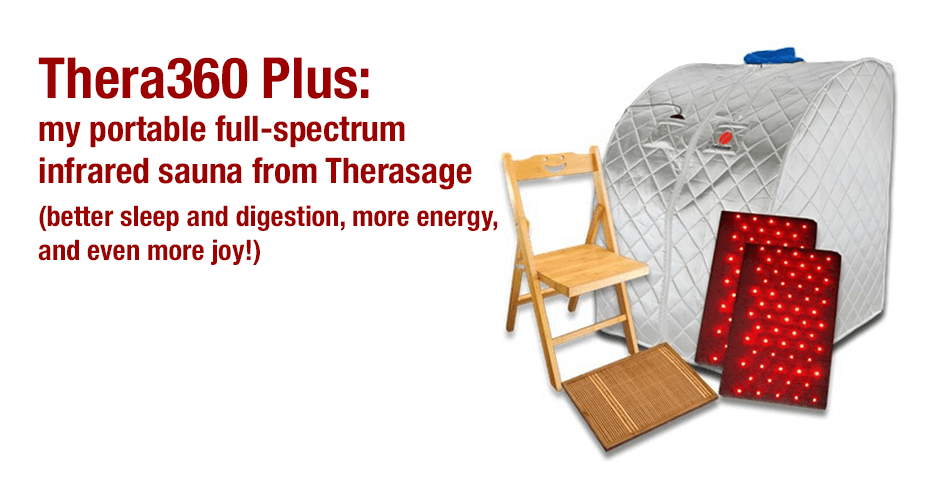
Thera360 Plus: my portable full-spectrum infrared sauna from Therasage (better sleep and digestion, more energy, and even more joy!)

April 29, 2022 By Trudy Scott 39 Comments

thera360 plus

Today I’m sharing why I personally chose the Thera360 Plus, a portable full-spectrum infrared sauna from Therasage. And I also share my feedback on how I feel after using this sauna.  I also have a call to action asking you to share your sauna experiences so the community can benefit from the collective wisdom of everyone who has one or uses one.

I also highlight some of the many health benefits of regular sauna sessions – both mental and physiological.

Mental health benefits: improved well-being, reduced pain, stress reduction and improved sleep

Here are some of the mental health benefits from this paper, Clinical Effects of Regular Dry Sauna Bathing: A Systematic Review):

  • In addition to having profound physiological effects, sauna bathing is reported to have beneficial psychological effects that are reflected in the many reports of improved well-being and pain tolerance.
  • The psychological impact of sauna bathing may be due to a combination of factors that include release of endorphins and other opioid-like peptides such as dynorphins, forced mindfulness, psychological stress reduction, relaxation, improved sleep, time out from busy life schedules, placebo effects, and other aspects of individual psychological and social interactions that likely occur around frequent sauna activity.
  • While it is difficult to distinguish between the different factors that produce positive psychological effects, such effects may enhance other physiological and metabolic benefits as they are likely to promote adherence to regular sauna activity.

Remember, endorphin release leads to feeling joyful.

And this last bullet is an important one to highlight: when you really enjoy doing something you are more likely to continue doing it. This means you’ll continue to see benefits.

There is also research that supports serotonin-boosting effects and cortisol-lowering effects, both of which are important when it comes to anxiety and mood too. (I’ll address this in a future blog on saunas, together with other mechanisms).

Physiological benefits: reduced inflammation, benefits for Alzheimer’s, reducing toxins and improved heart health

Here are a few studies you can read to learn more about some of the many physiological benefits of sauna:

  • Elevating body temperature to reduce low-grade inflammation: a welcome strategy for those unable to exercise?
  • Could Heat Therapy Be an Effective Treatment for Alzheimer’s and Parkinson’s Diseases? A Narrative Review
  • Evaluation of Interventions to Reduce Firefighter Exposures
  • Sauna bathing is associated with reduced cardiovascular mortality and improves risk prediction in men and women: a prospective cohort study
  • Effectiveness of a far-infrared low-temperature sauna program on geriatric syndrome and frailty in community-dwelling older people [improvements were noted]
  • Effects of Waon therapy on chronic fatigue syndrome: a pilot study [Waon therapy is a type of far infrared sauna and improvements were noted]
  • Sauna as a valuable clinical tool for cardiovascular, autoimmune, toxicant- induced and other chronic health problems [they are safe and offer multiple health benefits to regular users].

And this is an excerpt from the Therasage site

The Thera360 Plus sauna enhances mitochondrial health and cellular energy, improves microcirculation and blood oxygenation, enhances the natural production of nitric oxide, offers skin and anti-aging benefits, and the best natural detoxification possible, along with all the amazing health benefits of Full Spectrum Infrared.

The many positive features that helped me pick this sauna

The Thera360 Plus is the sauna I own and endorse. Here are a few of the many positive features that helped me decide to purchase this one (I did a fair amount of research and did look at other units too):

  • It is a full-spectrum (near and far) infrared sauna
  • It comes with red light/photobiomodulation panels (which also help with pain, mood and reducing inflammation).
  • It has the tourmaline gemstones built-in (these generate negative ions so it feels like you’ve been at the beach or a waterfall).
  • The chair and foot base is made of non-toxic bamboo materials. I’m used to having to leave new items outside for days in order to off-gas. I was surprised that this was not needed. Their “No Off-Gassing” message holds true.
  • The bamboo foot base is a grounding mat.
  • It is low EMF and shields not only EMF’s but also ELF’s, RF’s and dirty electricity. Before I purchased my sauna, I met with the owner and am super-impressed by this feature.  It’s a really important factor for me and anyone with anxiety or chronic illness and/or electromagnetic hypersensitivity). As soon as it arrived I set it up (set up is so easy) and got out my meter and measured all the EMFs and sure enough there is no exposure when inside the sauna.
  • The digital temperature controller is simple to use.
  • It’s portable, small and convenient to use.
  • It’s affordable, is made in California and the company ships internationally.

My personal feedback as to how I feel after using this sauna

For me, this infrared sauna (with red light therapy and tourmaline) helps me with sleep, digestion and energy primarily (I have chronic Lyme). I also know it’s helping me with ongoing detoxification, mitochondrial health, stress reduction and mood support, immune function and cardiovascular health.

The good news is that the sauna has anti-inflammatory benefits and provides me with wonderful relief from pain, muscle spasms and other injuries.

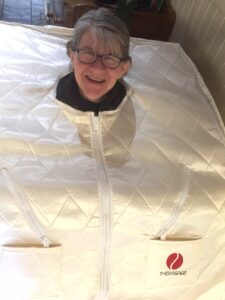
Also, I feel a real sense of joy after using it … I can’t stop smiling for hours after a session.  That is the endorphin and serotonin boost I’m getting, plus some of the benefits of negative ions! I love the outdoors and after a session in the sauna, I almost feel like I’ve been for a hike or walk on the beach.

I’ve also positioned my sauna facing a large window that looks onto our covered patio. It has lots of greenery and I can see the blue sky off to the left. This is particularly pleasant on a cold winter’s day and I get some of the benefits of nature.

sauna
sauna

I love the bamboo chair that ships with it but it wasn’t providing me with any lower back support (I’m prone to back injuries).  I made a modification with a bamboo garden stake and PVC bracket (with some help from my darling father-in-law). Here are some images in case it’s something you’ve been considering….it works perfectly for the back support I need, keeps my bare back exposed to the heat and the bamboo garden stake slides out if needed.

sauna chair
sauna chair PVC clip

A more in-depth blog post: mechanisms and additional insights

I believe we can all benefit from regular sauna bathing! And I’ll be sharing a more in-depth blog post on additional benefits of infrared sauna, some of the mechanisms, how to interpret the research (since there is so much research on traditional/Finnish saunas which are shorter duration and higher temperatures), how to assess the different saunas that are available, and how to use one and get the most benefits.

I’ll also share my insights on using sauna bathing for benzodiazepine, SSRI, opioid and alcohol detox; why folks with pyroluria may see specific benefits; and using sauna bathing to help reduce the impact of these things that increase anxiety – toxic mold, heavy metals, Lyme disease, pesticides, glyphosate, fluoride, phthalates and much more.

Learn more about the Thera360 Plus sauna here on the Therasage site. If you decide to purchase use coupon code TRUDY10 to save 10%.

I was confused when I started looking into saunas and if you’ve been following me for a while you know I like to share what I learn – hence this blog post. I’m still learning and will continue to share in follow-up posts.

There are many excellent saunas available for purchase and this is just one of them that I landed upon after researching a number of them.

If you have a home sauna, please share:

  • which one you have
  • why you purchased this type/brand (or use this type of sauna)
  • and the benefits you have experienced.

And do feel free to share more about:

  • how you use yours – duration, frequency, temperature
  • what you do before and after (for hydration)
  • if you dry-brush (before or after)
  • if you use certain nutrients (like niacin, charcoal, magnesium and other electrolytes, glutathione, NAC etc)
  • anything else you do as part of your sauna bathing
  • what other detox approaches you use (such as rebounding or castor oil packs etc).

By using the collective wisdom from this community we can all learn and benefit. And giving/contributing gives you a nice endorphin boost too!

If you have questions please share them here too.
Filed Under: Detoxification, Inflammation, Sleep, Toxins Tagged With: alzheimer's, cardiovascular, Clinical Effects of Regular Dry Sauna Bathing, cortisol, digestion, endorphins, energy, full-spectrum infrared sauna, health benefits, heart health, improved well-being, Inflammation, infrared sauna, joy, joyful, mental, mindfulness, physiological, portable sauna, reduced pain, relaxation, sauna, serotonin, sleep, stress reduction, Thera360 Plus, Therasage, toxins

What is the difference between DPA and DLPA (amino acids) and which one do I use for weepiness, heart-ache, pain and energy?

March 11, 2022 By Trudy Scott 75 Comments

dpa and dlpa

Today we address a very common question I get: “What is the difference between DPA and DLPA?” The follow-up question is this: “And what symptoms do they help with?” These are both amino acids that help to boost certain feel-good neurotransmitters. DPA (d-phenylalanine) supports endorphins, whereas DLPA (dl-phenylalanine) supports both endorphins (to a lesser extent than DPA) and catecholamines (to a lesser extent than tyrosine).

Depending on your imbalances and symptoms, they could help with weepiness, heart-ache, comfort eating, emotional support, pain relief, better focus and energy, and even improved motivation.  

I mostly recommend DPA (which I call a-hug-in-a-bottle) and share the reasons why below, but some people do really well with DLPA. It’s a matter of figuring out the best one and dose for your unique needs.

DPA for low endorphin symptoms

DPA (d-phenylalanine) is an amino acid that destroys the enzyme that breaks down endorphins. Endorphins are feel-good chemicals that you experience with an endorphin rush when you go for a run or when someone gives you a big hug, when you show kindness to someone or an individual does something nice for you.

Taking the amino acid, DPA, as a supplement helps to raise your endorphins and helps when you feel weepy and overly emotional and reduces the need to self-medicate with treats as a reward or for comfort.

This amino acid is a favorite with so many of my clients and community because it makes them feel so lovely … a warm and fuzzy feeling. I often call it a-hug-in-a-bottle!

Here are the low endorphin symptoms I have my clients rate if they are considering a trial of DPA:

  • Heightened sensitivity to emotional pain
  • Heightened sensitivity to physical pain
  • Crying or tearing up easily
  • Eating to soothe your mood, or comfort eating
  • Really, really loving certain foods, behaviors, drugs, or alcohol
  • Craving a reward or numbing treat

Tyrosine for low catecholamine symptoms

Tyrosine is the amino acid that boosts catecholamines and helps with focus, motivation, energy (especially when you crave carbs for energy) and the blah kind of depression. It’s wonderful for helping you easily quit coffee/caffeine (when you are using it to “self-medicate” due to low catecholamines). It also provides support for the thyroid.

Here are the low catecholamine symptoms I have my clients rate if they are considering a trial of the amino acid tyrosine:

  • Depression and apathy
  • Easily bored
  • Lack of energy
  • Lack of focus
  • Lack of drive and low motivation
  • Attention deficit disorder
  • Procrastination and indecisiveness
  • Craving carbs, alcohol, caffeine, or drugs for energy

DLPA for both low endorphin and low catecholamine symptoms

If someone has both low endorphin and low catecholamine symptoms, a trial of DLPA could be considered.  DLPA supports both endorphins (to a lesser extent than DPA alone) and also catecholamines (to a lesser extent than tyrosine used alone). You could think of it as doing half and half of each.

Low endorphin symptoms:

  • Heightened sensitivity to emotional pain
  • Heightened sensitivity to physical pain
  • Crying or tearing up easily
  • Eating to soothe your mood, or comfort eating
  • Really, really loving certain foods, behaviors, drugs, or alcohol
  • Craving a reward or numbing treat

And low catecholamine symptoms:

  • Depression and apathy
  • Easily bored
  • Lack of energy
  • Lack of focus
  • Lack of drive and low motivation
  • Attention deficit disorder
  • Procrastination and indecisiveness
  • Craving carbs, alcohol, caffeine, or drugs for energy

Why I prefer my clients use DPA and tyrosine, rather than DLPA

Many people do well with DLPA (you can read one example below) but over the years I have streamlined my amino acid recommendations and seldom suggest DLPA. Here are the reasons why I prefer DPA:

  • DPA is not stimulating and doesn’t affect sleep. However, DLPA can be stimulating for anxious folks (and the majority of my clients have anxiety). For this reason, DLPA can not be used later than 3pm as it can affect sleep and for some folks with really bad sleep issues it can’t be tolerated later than mid-morning (in a similar way to tyrosine).
  • I like to have clients use DPA alone so we can clearly identify the benefits they are experiencing for their low endorphin symptoms and then use tyrosine alone so we can clearly identify their low catecholamine benefits.
  • There are no precautions or contraindications with DPA. However, DLPA has the same precautions as tyrosine. This limits using it for endorphin support. These are the precautions:
    • Overactive thyroid/Grave’s disease: tyrosine, DLPA (avoid)
    • Phenylketonuria (PKU): tyrosine, DLPA (avoid)
    • Melanoma: tyrosine, DLPA (avoid)
    • High Blood pressure: tyrosine, DLPA (watch)
    • Migraine headaches: tyrosine, DLPA (watch)
    • Bipolar disorder: tyrosine, DLPA, glutamine (watch)
  • The women I work with who do have low endorphin symptoms have reported superior benefits from DPA compared to DLPA, especially for emotional pain and emotional eating.
  • Some folks can’t tolerate tyrosine and these same folks have a hard time with DLPA.

The one disadvantage with DPA is that it’s not as widely and readily available as DLPA. It often needs to be purchased online (I list some brands below).

Here is some feedback from folks to give you an idea how these amino acids have helped them.

As you’ll see, there are some individuals who do well with DLPA so it’s really a matter of looking at the symptoms and doing a trial.

DPA helps Missy with weepiness and a deep heart-ache (and tastes like dark chocolate)

Missy shares how DPA helped her deep heart-ache sort of feeling:

I have found I was using this product incorrectly. If you are feeling fine, you do not feel much of anything from it. But today I was weepy and felt that deep, heart-ache sort of feeling. I chewed 1000 mgs (2 capsules) and it DID help lift that awful feeling within 15 minutes.

Notice that she said if you’re feeling fine you don’t feel much at all. This is true of all the amino acids – they only make a difference when you need them.

Missy said that she chewed the capsule, however around 2019, the gelatin capsule was replaced with a cellulose capsule. It’s much more palatable when it’s opened up into the mouth. I blog more about opening the capsule here.

She also reported what about half my clients say:

Tastes like slightly bitter dark chocolate 🙂

The remainder of my clients don’t like the taste at all, although many say the taste grows on them. I’ve always been in the dark chocolate camp and find it quite pleasant tasting.

DLPA helps Toby with energy and pain relief (he has CFS and fibromyalgia)

Toby has a diagnosis of CFS (chronic fatigue syndrome) and fibromyalgia and shared how DLPA helps him:

I’ve played around with (I think) all variations of these aminos and have found unequivocally (in the sense of definite and fast observable changes as opposed to none) that DLPA is the one that works for me. I have wondered what that means. I am male, 45, diagnosed with CFS and fibromyalgia and have speculated that in lay terms the DLPA gives me a bit of energy and pain relief (endorphins). Is that a logical conclusion?

He posted an image of the DLPA product he used and said this:

After putting it on my tongue, very quickly I get an agreeable boost in energy and pain relief. I have not experienced this with DPA or tyrosine.

Based on what I’ve covered above with the symptoms you can see that Toby has made a very logical conclusion. He is getting both endorphin support (the pain relief) and catecholamine support (the energy).

Resources if you are new to using DPA or DLPA as supplements

If you are new to using the amino acids DPA or DLPA as supplements, here is the Amino Acids Mood Questionnaire from The Antianxiety Food Solution (you can see the low endorphin and low catecholamine symptoms.)

If you suspect low levels of endorphins and/or low levels of catecholamine and do not yet have my book, The Antianxiety Food Solution – How the Foods You Eat Can Help You Calm Your Anxious Mind, Improve Your Mood, and End Cravings, I highly recommend getting it and reading it before jumping in and using amino acids on your own so you are knowledgeable. And be sure to share it with the team you or your loved one is working with. Blog posts like this are intended to add value to the chapter on amino acids, which contains detailed information on doses and time of the day for dosing.

The book doesn’t include product names (per the publisher’s request) so this blog, The Antianxiety Food Solution Amino Acid and Pyroluria Supplements, lists the DPA and DLPA products that I use with my individual clients and those in my group programs.

For DPA I have used the Lidtke Endorphigen product for years and it’s a firm favorite with my clients (and I’ve used it myself).

I recently purchased  a bottle of Doctor’s Best D-Phenylalanine to test and it works just as well as the Lidtke product.

If you are a practitioner, join us in The Balancing Neurotransmitters: the Fundamentals program. It’s an opportunity to interact with me and other practitioners who are also using the amino acids.

Do you have any of the low endorphin and/or low catecholamine symptoms and have you seen benefit with DPA, DLPA and/or tyrosine?  If yes, please share what benefits.

Has this blog provided clarification on DPA vs DLPA, and will you be changing how you use these amino acids going forward?

If you’re a practitioner please share what you use with clients/patients.

Feel free to ask your questions here too.

Filed Under: Amino Acids, Emotional Eating, Pain, Women's health Tagged With: amino acids, anxiety, anxious, catecholamines, cfs, comfort eating, d-phenylalanine, Dark chocolate, dl-phenylalanine, DLPA, DPA, emotional support, endorphins, energy, Fibromyalgia, focus, heart-ache, hug, insomnia, motivation, neurotransmitters, pain, symptoms, tyrosine, weepiness, What is the difference between DPA and DLPA

Trauma: fluctuating between a high anxiety panic state and a low energy freeze response (with low endorphins and a numbing feeling)

October 22, 2021 By Trudy Scott 10 Comments

trauma

The freeze response in trauma is not well understood and is a low energy state. When the anxiety has become so high or severe it triggers a low energy or freeze state in order for you to survive. There is also the feeling of numbness and being disconnected when in the freeze state and this eventually becomes the default pattern that the nervous system has been wired into. Healing can start with somatic work and using a functional medicine and nutritional psychiatry approach to address the biological underpinnings of trauma.

Dr. Aimie Apigian, MD, MS, MPH discusses all this and much more in her interview on the Anxiety Summit 5: Gut-Brain Axis.

And then Dr. Aimie interviews me and we discuss how folks with low endorphins are often in the freeze state. These folks are more emotionally sensitive to everything and because of this they experience much more stress. They also experience a feeling of numbness and feel disconnected. The encouraging news is that the amino acid DPA (d-phenylalanine) helps ease the low endorphin symptoms while they are recovering. More on all this below.

The freeze response in trauma is not well understood and is a low energy state

Let’s start with this interview with Dr. Aimie – Biology of Trauma and the Freeze Response. This is what we cover:

  • Identifying the freeze response and symptoms when anxiety is high
  • The role of the microbiome, neurotransmitters, oxidative stress, mitochondria and cortisol
  • Somatic work when in the chronic freeze state: containment hugs and marking your territory

dr aimie

Dr. Aimie explains that the freeze response in trauma is not something that’s been really well understood:

  • When we talk about just trauma and mood, and stress even, it’s like we still lump everything in that fight, flight, or freeze response. And the fight and flight response could not be more different than the freeze response.
  • On a biological level, they are completely different biology states, which means that it is humanly impossible to be in both of those states at the same time. So when we look at this freeze response, okay, so what is it? If it’s not fight or flight, what is it?

She shares how the anxiety has been become so high or severe it triggers a low energy or freeze state in order for you to survive:

  • When we look at what it is, it’s when the anxiety has become so high that the body is not able to sustain that level of both anxiety, but it’s really an energy level.
  • Because anxiety is a high energy state and it triggers this response in the body where it says, “Ooh, this is unsustainable,” and in order to survive, for our best interests, it would be better for us to go into a low energy state.
  • And it feels like giving in, giving up. It feels like giving up the fight because the body just goes into this, I kind of call it like, it shifts down into first gear.
  • You’re no longer zooming along in fifth or sixth gear, you just kind of shift down into first gear and now you’re just going through life.

The feeling of numbness and being disconnected when in the freeze state

In addition to the low energy state, this is where Dr. Aimie talks about the feeling of numbness and being disconnected when in the freeze state:

  • Now you’re just going through your day, you feel a little numb, you feel a little disconnected.
  • But the trigger for that freeze response originally comes from the anxiety level, which really becomes a level of fear, terror, panic.

Dr. Amie also shares how this becomes the default pattern that the nervous system has been wired into:

  • And people can have what I call a strong pull towards the freeze response so that they no longer are even aware of the fear and the terror.
  • They just feel anxiety and boom, they go straight into the freeze response because it has just become that default pattern that the nervous system has been wired into.

The biology of trauma and somatic work

She goes on to discuss the biology of trauma and the role of the microbiome, neurotransmitters, oxidative stress, mitochondria and cortisol in contributing to the freeze response (i.e. making you more susceptible to trauma) and as factors we can address in order to facilitate recovery and healing.

Dr. Aimie also describes the somatic work she does with her patients who are in the chronic freeze state: exercises like containment hugs and marking your territory. She shares that “I want people to experience their nervous system. I want them to know what it feels like, be able to actually recognize which state of the nervous system they are in at any given moment in time, and be able to feel what that feels like in their body, because then that’s how we teach them how to shift that.”

In her work and in this interview, Dr. Amie brings the world of trauma recovery and somatic work to the functional medicine and nutritional psychiatry world. It’s an eye-opening interview you don’t want to miss.

The connection between the trauma freeze response and low endorphins

Also featured in the summit is another interview where Dr. Aimie happens to interview me on this topic: Glutamine, DPA and Tyrosine for Anxiety and Sugar Cravings. We cover the following:

  • Sugar addiction: impacts on the microbiome, tryptophan metabolism, zinc & B vitamins
  • Glutamine for intense sugar cravings, anxiety & support of the microbiome/mucosa
  • DPA for comfort/reward cravings, pain & acute stress; tyrosine for focus & calm energy

It’s during this interview that I make the connection between the trauma freeze response and low endorphins when we are discussing the last bullet above.

As a reminder, these are the mood symptoms of low endorphins:

  • Heightened sensitivity to emotional pain
  • (and also Heightened sensitivity to physical pain)
  • Crying or tearing up easily

And these are the ways sugar cravings often show up when you have low endorphins:

  • Eating to soothe your mood, or comfort eating
  • Really, really loving certain foods, behaviors, drugs, or alcohol
  • Craving a reward or numbing treat

dr aimie

As I share about the endorphins and how I use the amino acids DPA and/or DLPA to boost endorphin levels, I remember how Dr. Aimie discussed the numbing effect when someone is in the freeze state and it made me think about endorphins. So I ask Dr. Amie if she finds that folks with low endorphins are often in the freeze state.

Dr. Amie says most definitely yes and shares that with the low endorphins, people in the freeze state really are more emotionally sensitive to everything and because of this they experience much more stress:

  • From my perspective, working with a lot of the trauma response … they are much closer … to that line of overwhelm.
  • So most definitely, yes. And it’s that comfort, right? It’s that self-soothing, and it’s the numbing effect. The numbing effect of reaching for food when you’re not hungry. It’s just for numbing the emotional sensitivity that you have with low endorphins.
  • Endorphins really affect the stress levels and then mood, and then inflammation? It starts this cascade of changes in their biology because of the low endorphins and the increased amount of stress that they experience with that sensitivity.

This discussion tied in perfectly to the study I had to share: The Role of Beta-endorphin in Stress, Behavior, Neuroinflammation, and Brain Energy Metabolism.

In this 2020 paper, the authors discuss beta-endorphins in the context of reward-centric behaviors, pain, neuroinflammation, immune function and also how endorphins attenuate (or reduce the effects of) the acute stress response. They also share how endorphins exert a regulatory effect on serotonin levels.

I find the latter link to serotonin very interesting and will be digging deeper into this in another blog post.  I’ll also be digging into the low endorphins aspect of the trauma freeze response in the coming months. And I want to learn more about the somatic work that Dr. Aimie uses – to experience some of it myself and to bring to my community i.e you! I do love that I also get to learn so much when I do these interviews.

Use DPA to ease the weepiness and need to numb out with comfort food or behaviors

For now, if you have experienced trauma and recognize being in the freeze state, and you feel numbed out and disconnected, and also relate to the above other low endorphin symptoms, I would do a trial of DPA (the amino acid d-phenylalanine) and see how you do. It will likely help ease some of the low endorphin symptoms while you are recovering.

Keep in mind that you can also have low endorphin symptoms without having experienced trauma. I see this with many of my clients and it’s not uncommon to also have low serotonin worry and low GABA physical anxiety symptoms too..

In both instances, I would do a trial of DPA (I like the Lidtke Endorphigen product) and see how you do. If it is low endorphins you’ll ease the weepiness and need to numb out with comfort food or behaviors (such as endless scrolling on social media). You can expect to see results in 5-10 minutes when the DPA is opened onto the tongue.

To recap, be sure to tune in to these 2 interviews to see how it’s all connected and to hear more about trauma, the biology of trauma and how to use amino acids to balance neurotransmitters:

  • Aimie Apigian, MD, MS, MPH – Biology of Trauma and the Freeze Response
  • Trudy Scott, CN – Glutamine, DPA and Tyrosine for Anxiety and Sugar Cravings

These interviews dove-tail well with this topic of trauma, the freeze response and neurotransmitters:

  • Navaz Habib, DC, AFMCP – Vagus Nerve Activation to Reduce Anxiety (because vagus nerve activation habits speed trauma recovery)
  • My other amino acid interview, Cravings and GABA & Tryptophan: Gut-Anxiety Connections (because the amino acids help to support low serotonin and low GABA which is common with trauma)
  • Evan Brand, CFMP, NTP – Floatation Therapy for Anxiety and PTSD (because floatation therapy is gentle and yet effective)
  • Eric Zielinski, DC – Essential Oils for Anxiety and Digestion (because essential oils are well tolerated and effective)
  • David Jockers, DNM, DC, MS – Fasting for Anxiety and Gut Health (he talks about the effects of fasting on endorphins and serotonin)

I encourage you to tune in if you have:

  • Anxiety & feel overwhelmed & stressed by little things
  • Panic attacks &/or obsessive thoughts or behaviors
  • Social anxiety/pyroluria
  • Phobias or fears (flying, spiders or even driving on a highway)

And also if you suffer from…

  • Food sensitivities, IBS/SIBO, parasites or gallbladder issues
  • Constipation, diarrhea, bloating, gas, pain & other digestive issues
  • Leaky gut, a leaky blood-brain barrier or vagus nerve issues

You’ll also benefit if you are also an emotional eater with intense sugar cravings (and know you suffer from low blood sugar), experience insomnia, low mood, PMS, poor focus and/or low motivation.

This is THE online event to learn about the powerful individual amino acids – GABA, theanine, tryptophan, 5-HTP, glutamine, DPA and tyrosine – to quickly ease anxiety and help with gut symptoms while you are dealing with other root causes which take longer to address. (They also help with cravings as with this example, and sleep and immunity).

With research-based anxiety nutritional solutions and practical steps, you can determine your root causes, ease your anxiety and prevent it from coming back so you can feel on top of the world again!

If you are a practitioner, please join us too and find advanced solutions for your clients or patients too!

You’ve heard me say the Anxiety Summit has been called “a bouquet of hope!”  My wish for you is that this summit is your bouquet of hope!

I hope you’ll join me and these incredible speakers, be enlightened and find YOUR solutions!

Here’s to no more anxiety and you feeling on top of the world again!

Can you relate to the freeze state and fluctuating from a high energy anxiety/panic state?

When you’re in the freeze state do you feel numb and disconnected?

Have you had success with somatic work? And also using a functional medicine approach to healing?

Also let us know if you’ve benefited from using DPA to help ease the low endorphin symptoms?

Feel free to post your questions here too.

Filed Under: Amino Acids, Anxiety, PTSD/Trauma, The Anxiety Summit 5 Tagged With: Aimie Apigian, anxiety, Anxiety Summit 5, biology of trauma, d-phenylalanine, disconnected, DPA, Endorphigen, endorphins, freeze, functional medicine, numb, numbness, nutritional psychiatry, panic, somatic work, stress, trauma, weepiness

I need help with my Diet Coke addiction – when I stop, my fatigue, brain fog, anxiety/depression increase big time!

September 10, 2021 By Trudy Scott 42 Comments

diet coke addiction

A woman asked for help on the blog, wanting desperately to quit her long-time Diet Coke addiction. This woman knows her addiction is detrimental to her health and she gets withdrawal symptoms when she tries to quit – fatigue, brain fog, anxiety and depression increase big time! And yet she can’t quit. This is not unusual. I share my feedback on the brain chemical imbalances that can drive addictions and how to figure out which amino acids (or more than one) may help her quit easily. This means she doesn’t have to go cold turkey and then fail yet again. Using the amino acids means there is no willpower required and no feelings of deprivation, and it’s addressing an underlying neurotransmitter imbalance i.e. a root cause.

Here is her question:

I need help with my Diet Coke addiction. I have been using it for 35 years and I am too appalled to tell you how much I drink.

I have tried to quit many times and ended up in utter failure. A friend mentioned that phenylalanine may be a booster for my dopamine.

When I stop, my fatigue, brain fog, anxiety/depression increase big time. I know this drink is literally killing my health and I am desperate for some answers, suggestions….or a miracle.

What supplements do you recommend for helping me quit this devil of a habit? Thank you for ALL you do!” 

Here is my response …. when it comes to using amino acids to help break the addiction, pretty much everything I write about in relation to sugar addiction or cravings would likely also apply to quitting Diet Coke.

What emotions are driving the addiction?

She needs to figure out what emotions are driving her addiction and use the respective amino acid supplement/s (one or more of them) to help break the addiction and improve the mood symptoms at the same time.

These are the questions I review with my clients who have a Diet Coke addiction (or other diet soda or regular soda addiction):

  1. If you have to drink it when you haven’t eaten in awhile it’s likely low blood sugar. Glutamine on the tongue stops the desire almost immediately and also helps with the low blood sugar symptoms of shakiness and irritability
  2. If you stress-drink, your cravings are likely due to low GABA, and GABA will stop the stress-drinking and calm you down too
  3. If you drink it to feel happy (and especially from late afternoon into the evening) then your cravings are likely due to low serotonin, and tryptophan (or 5-HTP) stops the cravings and boosts mood and reduces anxiety
  4. If you drink it for comfort or a reward comfort then it’s likely due to low endorphins and DPA (d-phenylalanine) will stop that feeling of “I deserve-it” and also give you a hug-like mood boost
  5. If you drink it for an energy boost or to give you focus then it’s likely due to low catecholamines and tyrosine will stop those cravings and give you a mood and energy boost, and also help with mental clarity

Based on her question above, she mentions that “my fatigue, brain fog, anxiety/depression increase big time” when she stops. The fatigue, brain fog and depression is a big clue that #5 above will likely apply. She asks about using phenylalanine for dopamine support (dopamine is one of the catecholamines). I prefer tyrosine to l-phenylalanine for boosting levels.

The fact that anxiety also increases when she stops is a clue that #2 or #3 may apply too, and possibly #1. It’s not unusual for someone to have imbalances in multiple areas.

If this is the case, I  always recommend doing a trial of one at a time, so it’s easy to see the benefits.

It’s not the same neurotransmitter imbalance that shows up in each person

It’s also not the same neurotransmitter imbalance that shows up in each person with a Diet Coke (or other soda addiction). When I shared this on Facebook and asked what was the driving emotion behind their “self-medication” with Diet Coke this is feedback I received from two women:

  • “I had been drinking almost 6 per day for decades. I believe it was comforting.” In this instance, addressing low endorphins with DPA (#4) would have helped. Comfort or reward or treat is a common emotional driver for all addictions.
  • “I noticed I would drink Diet Coke when I felt anxious (1 or 2 times a day).” In this instance #2 or #3 would have helped i.e. GABA support if it was physical anxiety and/or tryptophan or 5-HTP for low serotonin if it was worry-type anxiety.

The caffeine addiction and the artificial sweetener Aspartame

Keep in mind, with Diet Coke, there is the caffeine addiction and the artificial sweetener Aspartame that also make it challenging to quit. Tyrosine and addressing low catecholamines (#5 above) and vitamin C can help with the caffeine addiction and quitting so headaches are minimized.

The amino acids can help with the imbalances created by aspartame. This paper, Direct and indirect cellular effects of aspartame on the brain, proposes that “excessive aspartame ingestion might be involved in the pathogenesis of certain mental disorders and also in compromised learning and emotional functioning.”  This excerpt from the abstract is relevant to this discussion:

Aspartame is composed of phenylalanine (50%), aspartic acid (40%) and methanol (10%). Phenylalanine plays an important role in neurotransmitter regulation, whereas aspartic acid is also thought to play a role as an excitatory neurotransmitter in the central nervous system. Glutamate, asparagines and glutamine are formed from their precursor, aspartic acid. Methanol, which forms 10% of the broken down product, is converted in the body to formate, which can either be excreted or can give rise to formaldehyde, diketopiperazine (a carcinogen) and a number of other highly toxic derivatives. Previously, it has been reported that consumption of aspartame could cause neurological and behavioural disturbances in sensitive individuals. Headaches, insomnia and seizures are also some of the neurological effects that have been encountered, and these may be accredited to changes in regional brain concentrations of catecholamines, which include norepinephrine, epinephrine and dopamine.

This further supports the need for catecholamine support with tyrsosine (#5 above) and GABA support with the amino acid GABA (#2 above).

Recognizing it’s an issue is a big first step

I acknowledge her for recognizing it’s an issue – that is a big first step! I did also ask her to share how much she was consuming each day because there is no judgement here and we acknowledge it’s an addiction. I’ll report back when I hear from her and will also share which amino acid/s helped her break the addiction.

As always, it’s not only about the amino acids and a comprehensive healing approach is always part of the picture. The amino acids make it easy to get started and then other underlying issues can be addressed: other nutritional deficiencies, dysbiosis, fatty liver, metabolic syndrome and so on. You can see some of the many studies below.

Of course, it’s important to be eating a real whole foods diet with quality animal protein, healthy fats, organic vegetables and fruit, no caffeine, no gluten, no sugar, fermented foods and herbs.

Reconsider your diet soda consumption if you’re on the fence

If you are on the fence about giving up your diet soda consumption here are a few additional papers that will hopefully make you reconsider:

  • Diet soda intake and risk of incident metabolic syndrome and type 2 diabetes in the Multi-Ethnic Study of Atherosclerosis (MESA) – “Although these observational data cannot establish causality, consumption of diet soda at least daily was associated with significantly greater risks of select incident metabolic syndrome components and type 2 diabetes.”
  • Altered processing of sweet taste in the brain of diet soda drinkers – “there are alterations in reward processing of sweet taste in individuals who regularly consume diet soda.” This has widespread ramifications for driving the need for sugar/carbs and all things sweet
  • A comparative study of the effect of diet and soda carbonated drinks on the histology of the cerebellum of adult female albino Wistar rats – “These results suggest that diet soda has adverse effect on the cerebellum of adult female albino Wistar rats,” with “shrunken and degenerated Purkinje cells with hypertrophied dendrites.” Purkinje cells are involved in the release of GABA.
  • Soft drinks consumption and nonalcoholic fatty liver disease – “the aspartame sweetener and caramel colorant which are rich in advanced glycation end products … potentially increase insulin resistance and inflammation”

Facts like this help you recognize it’s an issue but even when we have these facts, we often simply cannot quit. This is where the amino acids are so powerful because they work with no willpower required and no feelings of deprivation. And using them addresses the underlying neurotransmitter imbalance/root cause that led to the initial addiction or “self-medication”. They also help address the neurotransmitter deficiencies that are often made worse by diet soda consumption.

Resources if you are new to using the amino acids as supplements

If you are new to using the amino acids as supplements and want to know more, here is the Amino Acids Mood Questionnaire from The Antianxiety Food Solution and a brief overview here, Anxiety and targeted individual amino acid supplements: a summary.

If you suspect low neurotransmitters and do not yet have my book, The Antianxiety Food Solution – How the Foods You Eat Can Help You Calm Your Anxious Mind, Improve Your Mood, and End Cravings, I highly recommend getting it and reading it before jumping in and using amino acids so you are knowledgeable.

What advice do you have if you have been through this yourself and what has helped you?

What do you drink now instead of your diet soda?

If you are a practitioner, how do you help your patients/clients with this kind of addiction?

Feel free to post your questions too.

Filed Under: Addiction, Anxiety, Cravings, Depression Tagged With: 5-HTP, addiction, amino acids, anxiety, artificial sweetener, brain chemical imbalances, brain fog, caffeine, catecholamines, cold turkey, depression, Diet Coke addiction, dopamine, DPA, endorphins, fatigue, GABA, glutamine, low blood sugar, neurotransmitter, no feelings of deprivation, no willpower, quit, serotonin, sugar, tryptophan, tyrosine, withdrawal symptoms

Wean off prescription pain medication, improve sleep and reduce emotional eating with DPA (an endorphin-boosting amino acid)

September 3, 2021 By Trudy Scott 19 Comments

dpa

A question about using the amino acid DPA (d-phenylalanine) to help wean off prescription pain medication was posted on the blog. She was also hoping it would help ease her pain while she was weaning and improve her poor sleep too. I share my feedback on DPA for weaning, timing of vitamin C, additional information for sleep support and using DPA for emotional eating too. Concerns about oxalates and pain are mentioned and the importance of a comprehensive approach.

Here is the question that was posted:

Hi Trudy, I am trying to get off prescription pain medication and have read that DPA really helps – do you have any knowledge and/or experience with this?

There is a very popular opiate withdrawal support website that recommends DPA 500mg 3x/daily. Since amino acids need to be taken away from food and other amino acids, I feel like it could be very easy to make the DPA go to waste if not taken at exactly the right time every day.

The insomnia is the worst part of opiate withdrawal for me – days can go by with only 20-45 minutes of sleep. I have a little one to care for and the stress of no sleep just makes me want to give up.

No sleep worsens my physical pain as I toss and turn for hours on end. It isn’t a surprise that then causes terrible emotional distress.

One more question…since Vitamin C does help withdrawal does it affect/break down DPA?  I take a liposomal version multiple times a day.

Here is my response: Yes, DPA (d-phenylalanine) does help with withdrawal from prescription pain medication and I’ve used it for this purpose with great success with many clients. It does need to be used away from protein and the dosing can vary for each person.

A starting dose of DPA is 500mg and it can be used 3- 4 x day to start, and we increase from there based on the unique need of each person. We typically adjust the DPA up as the prescription medication is tapered very slowly, and under the guidance of the prescribing physician.

I share more about her vitamin C and insomnia questions below.

If you are new to DPA and endorphin support

DPA/d-phenylalanine is an amino acid used as a supplement.

DPA destroys the enzyme that breaks down/inhibits endorphins and in essence raises endorphin levels. Endorphins are feel-good chemicals that you experience with an endorphin rush when you go for a run or when someone gives you a big hug, when you show kindness to someone or an individual does something nice for you.

Taking the amino acid, DPA, as a supplement helps to raise your endorphins and helps when you feel weepy and overly emotional and reduces the need to self-medicate with treats as a reward or for comfort (more on that below). This amino acid is a favorite with so many of my clients and community because it makes them feel so lovely.

In addition to helping with emotional pain, DPA also helps with easing physical pain. And for this reason it can be used to help get off prescription pain medications.

In summary, these are the signs of low endorphins:

  • Heightened sensitivity to emotional pain
  • Heightened sensitivity to physical pain
  • Crying or tearing up easily
  • Eating to soothe your mood, or comfort eating
  • Really, really loving certain foods, behaviors, drugs, or alcohol
  • Craving a reward or numbing treat

DPA and endorphin support for pain: the research

Here is one paper, which discusses how DPA inhibits or breaks down enkephalins (endorphins are closely related compounds) and as a result helps with depression and pain, and acts as an anti-inflammatory: “proven to be beneficial in many human patients with chronic, intractable pain.” The authors also state that a compound such as DPA “may alleviate other conditions associated with decreased endorphin levels such as opiate withdrawal symptoms.”

This paper discusses beta-endorphins and the reward mechanism and how they can induce euphoria, reduce pain and ease addictions and distress: “Long known for its analgesic effect, the opioid beta-endorphin is now shown to induce euphoria, and to have rewarding and reinforcing properties.”

I would love to see DPA used instead of pain meds when possible or used in conjunction with prescription pain medications when they are needed.

I am also very curious to know which opiate withdrawal support website is recommending DPA. I’m so pleased to hear this because it helps so much – for physical pain relief and for weaning off pain medications.

Is DPA the same as DLPA?

DLPA (dl-phenylalanine), although similar sounding, is not the same as DPA and only offers about half as much endorphin support. It also provides dopamine/catecholamine support (i.e. focus, motivation, mood, energy) and this aspect means DLPA has the same precautions as tyrosine. It also means DLPA can affect sleep if used from midafternoon onwards.

I seldom have clients use DLPA and prefer DPA for endorphin support and tyrosine for dopamine/catecholamine support if needed.

Keep in mind, the amino acid DPA, is not the same as the omega-3 fatty acid called docosapentaenoic acid and also abbreviated as DPA.

The brand of DPA that I recommend for my clients

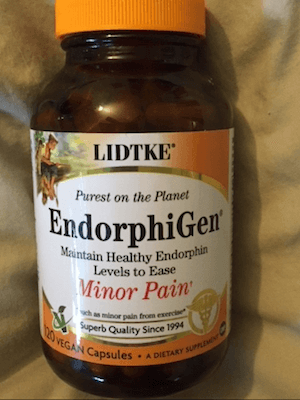
The brand I recommend for my clients is Lidtke Endorphigen. You can read about it and the other supplements I recommend on the supplements blog here.

My recommendation has always been to chew the DPA capsule for the best effects and to get results quickly (in 2-5 minutes). Instead of chewing the whole capsule I now recommend opening the capsule into your mouth. You can read more about using DPA and some client feedback here.

lidtke endorphigen

I’ve used Endorphigen personally too and it’s always with me as part of my travel first-aid kit. I write about using DPA, GABA and acupuncture for pain relief after my back injury and I had DPA, GABA and arnica on hand when I sprained my ankle while hiking in Red Rocks.

Benefits include reduction of emotional/comfort eating too

As I mentioned above, with DPA there is the bonus benefit of endorphin support to help end emotional/comfort eating where you are seeking treats as a reward i.e it helps with physical pain and emotional pain.

You may relate to this if you are someone who would say or think “I just LOVE chocolate-chip cookies!” or “PLEEEEASE don’t make me give up my treats, it’s all I have left after I gave up my coffee and wine! I deserve something nice!”

This emotional attachment to sweet treats and reward-eating is very common with low endorphins.

Using vitamin C with the amino acids and watching for oxalate pain adverse effects

She is correct, vitamin C is best used away from the amino acids so as not to reduce the beneficial effects.

I do caution clients to find the right amount of vitamin C as too much can increase pain in individuals with dietary oxalate issues. I write about oxalate crystal disease here and vitamin C and oxalates here. Both can aggravate insomnia too and increase anxiety.

Address low serotonin, low GABA and/or high cortisol for sleep too

With sleep issues we may also look into supporting low serotonin with tryptophan or 5-HTP,  and/or low GABA levels with GABA and/or theanine. These amino acids can also help with reducing pain in some instances.

Opioids have an endocrine effect via impacts on the hypothalamic-pituitary-gonadal axis, affecting sex hormones levels and cortisol levels. Endocrine dysfunction can adversely impact sleep and make anxiety worse, and needs to be addressed. GABA and serotonin support can help with some of the sex hormone imbalances and Seriphos helps when cortisol is too high.

A comprehensive approach is key

Of course, a comprehensive approach is key, so it’s important to remove inflammatory foods (gluten, maybe all grains, sugar, caffeine, unhealthy fats etc), add fish oil if omega-3s are low and include anti-inflammatory nutrients such as turmeric.

And we always want to figure out the root cause of the pain and address it. Also, ruling out if dietary oxalates (and vitamin C) are an issue is important and often overlooked.

I’m a big fan of working with a physical therapist and acupuncturist too.

Resources if you are new to using the amino acids as supplements

If you are new to using the amino acids, DPA, tryptophan or GABA, as supplements and want to know more, here is the Amino Acids Mood Questionnaire from The Antianxiety Food Solution and a brief overview here, Anxiety and targeted individual amino acid supplements: a summary.

If you suspect low endorphins, low serotonin or low GABA levels and do not yet have my book, The Antianxiety Food Solution – How the Foods You Eat Can Help You Calm Your Anxious Mind, Improve Your Mood, and End Cravings, I highly recommend getting it and reading it before jumping in and using amino acids so you are knowledgeable.

Can you relate to any of this? Has DPA helped your pain and/or helped you withdraw from prescription pain meds? And did you even know this was an option?

Did it also help you sleep and make you less anxious/worried because of the reduction in pain?

What about less emotional eating when using DPA/Endorphigen?

Feel free to post your questions too.

Filed Under: Cravings, Medication, Pain Tagged With: comfort eating, d-phenylalanine, DPA, emotional eating, Endorphigen, endorphins, GABA, get off pain medication, insomnia, Lidtke, opioid, oxalates, pain, pain medication, poor sleep, sleep, tryptophan, vitamin C, wean off prescription pain medication

  • « Go to Previous Page
  • Page 1
  • Page 2
  • Page 3
  • Page 4
  • Page 5
  • Go to Next Page »

Primary Sidebar

NEW! GABA QuickStart Homestudy (with special intro pricing)

gaba quickstart homestudy

Free Report

9 Great Questions Women Ask about Food, Mood and their Health

You'll also receive a complimentary subscription to my ezine "Food, Mood and Gal Stuff"


Connect with me

Popular Posts

  • Amino Acids Mood Questionnaire from The Antianxiety Food Solution
  • The Antianxiety Food Solution Amino Acid and Pyroluria Supplements
  • Pyroluria Questionnaire from The Antianxiety Food Solution
  • Collagen and gelatin lower serotonin: does this increase your anxiety and depression?
  • Tryptophan for the worry-in-your-head and ruminating type of anxiety
  • GABA for the physical-tension and stiff-and-tense-muscles type of anxiety
  • The Antianxiety Food Solution by Trudy Scott
  • Seriphos Original Formula is back: the best product for anxiety and insomnia caused by high cortisol
  • Am I an anxious introvert because of low zinc and vitamin B6? My response to Huffington Post blog
  • Vagus nerve rehab with GABA, breathing, humming, gargling and key nutrients

Recent Posts

  • What do I use instead of Seriphos to help lower high cortisol that is affecting my sleep and making me anxious at night?
  • BeSerene™ GABA/theanine cream eases severe muscle tension in her neck/shoulders, prevents her bad headaches and quells her anxiety
  • How the correct approach, dose and sublingual use of GABA can be calming and not cause a flushed and itchy face and neck
  • The amino acid glutamine improves low mood by addressing gut health, and it has calming effects too
  • Flight anxiety with heightened breath, physical tension and also fearing the worst (the role of low GABA and low serotonin)

Categories

  • 5-HTP
  • AB575
  • Addiction
  • ADHD
  • Adrenals
  • Alcohol
  • Allergies
  • Alzheimer's disease
  • Amino Acids
  • Anger
  • Antianxiety
  • Antianxiety Food Solution
  • Antidepressants
  • Anxiety
  • Anxiety and panic
  • Autism
  • Autoimmunity
  • benzodiazapines
  • Bipolar disorder
  • Books
  • Caffeine
  • Cancer
  • Candida
  • Children/Teens
  • Collagen
  • Cooking equipment
  • Coronavirus/COVID-19
  • Cravings
  • Depression
  • Detoxification
  • Diabetes
  • Diet
  • DPA/DLPA
  • Drugs
  • EFT/Tapping
  • EMF
  • EMFs
  • Emotional Eating
  • Endorphins
  • Environment
  • Essential oils
  • Events
  • Exercise
  • Fear
  • Fear of public speaking
  • Fertility and Pregnancy
  • Fish
  • Food
  • Food and mood
  • Functional neurology
  • GABA
  • Gene polymorphisms
  • General Health
  • Giving
  • Giving back
  • Glutamine
  • Gluten
  • GMOs
  • Gratitude
  • Gut health
  • Heart health/hypertension
  • Histamine
  • Hormone
  • Hyperparathyroidism
  • Hypoglycemia
  • Immune system
  • Inflammation
  • Insomnia
  • Inspiration
  • Introversion
  • Joy and happiness
  • Ketogenic diet
  • Lithium orotate
  • Looking awesome
  • Lyme disease and co-infections
  • MCAS/histamine
  • Medication
  • Men's health
  • Mental health
  • Mercury
  • Migraine
  • Mold
  • Movie
  • MTHFR
  • Multiple sclerosis
  • Music
  • NANP
  • Nature
  • Nutritional Psychiatry
  • OCD
  • Osteoporosis
  • Oxalates
  • Oxytocin
  • Pain
  • Paleo
  • Parasites
  • Parkinson’s disease
  • PCOS
  • People
  • PMS
  • Postpartum
  • PTSD/Trauma
  • Pyroluria
  • Questionnaires
  • Real whole food
  • Recipes
  • Research
  • Schizophrenia
  • serotonin
  • SIBO
  • Sleep
  • Special diets
  • Sports nutrition
  • Stress
  • Sugar addiction
  • Sugar and mood
  • Supplements
  • Teens
  • Testimonials
  • Testing
  • The Anxiety Summit
  • The Anxiety Summit 2
  • The Anxiety Summit 3
  • The Anxiety Summit 4
  • The Anxiety Summit 5
  • The Anxiety Summit 6
  • Thyroid
  • Thyroid health
  • Toxins
  • Tryptophan
  • Tyrosine
  • Uncategorized
  • Vegan/vegetarian
  • Women's health
  • Yoga

Archives

  • October 2025
  • September 2025
  • August 2025
  • July 2025
  • June 2025
  • May 2025
  • April 2025
  • March 2025
  • February 2025
  • January 2025
  • November 2024
  • October 2024
  • September 2024
  • August 2024
  • July 2024
  • June 2024
  • May 2024
  • April 2024
  • March 2024
  • February 2024
  • January 2024
  • December 2023
  • November 2023
  • October 2023
  • September 2023
  • August 2023
  • July 2023
  • June 2023
  • May 2023
  • April 2023
  • March 2023
  • February 2023
  • January 2023
  • December 2022
  • November 2022
  • October 2022
  • September 2022
  • August 2022
  • July 2022
  • June 2022
  • May 2022
  • April 2022
  • March 2022
  • February 2022
  • January 2022
  • December 2021
  • November 2021
  • October 2021
  • September 2021
  • August 2021
  • July 2021
  • June 2021
  • May 2021
  • April 2021
  • March 2021
  • February 2021
  • January 2021
  • December 2020
  • November 2020
  • October 2020
  • September 2020
  • August 2020
  • July 2020
  • June 2020
  • May 2020
  • April 2020
  • March 2020
  • February 2020
  • January 2020
  • December 2019
  • November 2019
  • October 2019
  • September 2019
  • August 2019
  • July 2019
  • June 2019
  • May 2019
  • April 2019
  • March 2019
  • February 2019
  • January 2019
  • December 2018
  • November 2018
  • October 2018
  • September 2018
  • August 2018
  • July 2018
  • June 2018
  • May 2018
  • April 2018
  • March 2018
  • February 2018
  • January 2018
  • December 2017
  • November 2017
  • October 2017
  • September 2017
  • August 2017
  • July 2017
  • June 2017
  • May 2017
  • April 2017
  • March 2017
  • February 2017
  • January 2017
  • December 2016
  • November 2016
  • October 2016
  • September 2016
  • August 2016
  • July 2016
  • June 2016
  • May 2016
  • April 2016
  • March 2016
  • February 2016
  • January 2016
  • December 2015
  • November 2015
  • October 2015
  • September 2015
  • August 2015
  • July 2015
  • June 2015
  • May 2015
  • April 2015
  • March 2015
  • February 2015
  • January 2015
  • December 2014
  • November 2014
  • October 2014
  • September 2014
  • August 2014
  • July 2014
  • June 2014
  • May 2014
  • April 2014
  • March 2014
  • February 2014
  • January 2014
  • December 2013
  • November 2013
  • October 2013
  • September 2013
  • August 2013
  • July 2013
  • June 2013
  • May 2013
  • April 2013
  • March 2013
  • February 2013
  • January 2013
  • December 2012
  • November 2012
  • October 2012
  • August 2012
  • July 2012
  • June 2012
  • May 2012
  • April 2012
  • March 2012
  • February 2012
  • January 2012
  • December 2011
  • November 2011
  • October 2011
  • September 2011
  • August 2011
  • July 2011
  • June 2011
  • May 2011
  • April 2011
  • March 2011
  • February 2011
  • January 2011
  • December 2010
  • October 2010
  • September 2010
  • July 2010
  • May 2010
  • April 2010
  • March 2010
  • February 2010
  • January 2010
  • November 2009

Share the knowledge!

The above statements have not been evaluated by the Food and Drug Administration. Products listed in this website are not intended to diagnose, treat, cure or prevent any disease.

The information provided on this site is for informational and educational purposes only and is not intended as a substitute for advice from your physician or other health care professional. You should consult with a healthcare professional before starting or modifying any diet, exercise, or supplementation program, before taking or stopping any medication, or if you have or suspect you may have a health problem.


Copyright © 2026 Trudy Scott. All Rights Reserved. | Privacy | Terms and Conditions | Refund Policy | Medical Disclaimer

Free Report

9 Great Questions Women Ask about Food, Mood and their Health

You’ll also receive a complimentary subscription to my ezine “Food, Mood and Gal Stuff”