• Skip to primary navigation
  • Skip to main content
  • Skip to primary sidebar

everywomanover29 blog

Food, Mood and Women's Health – Be your healthiest, look and feel great!

  • Blog
  • About
  • Services
  • Store
  • Resources
  • Testimonials
  • The Book
  • Newsletter
  • Contact
  • Search this site

anxiety

Coronavirus: new research on vitamin D supplementation possibly improving clinical outcomes

April 24, 2020 By Trudy Scott 57 Comments

coronavirus and vitamin d

It’s very encouraging to see research like this being published in the midst of the coronavirus pandemic: Vitamin D Supplementation Could Possibly Improve Clinical Outcomes of Patients Infected with Coronavirus-2019 (COVID-2019)

Serum 25(OH)D level was lowest in critical cases, but highest in mild cases. Serum 25(OH)D levels were statistically significant among clinical outcomes.

The results suggest that an increase in serum 25(OH)D level in the body could either improve clinical outcomes or mitigate worst (severe to critical) outcomes, while a decrease in serum 25(OH)D level in the body could worsen clinical outcomes of COVID-2019 patients.

In other words,  lower levels of vitamin D were associated with more severe symptoms and higher levels were associated with less severe symptoms. The role of vitamin D in immunity has been long understood and is summarized in the paper as follows:

Vitamin  D has  been  proven  to reduce  risk  of  getting a common  cold. It  also  enhances cellular immunity, modulates adaptive  immunity, and  enhances expression  of  antioxidation-related genes.

There are a few aspects I’d like to highlight: it was not a peer-reviewed randomized controlled trial but rather a retrospective study (looking back on past events) submitted as a research letter; it was a small study of 212 cases and they were all confirmed to have SARS-CoV-2 infection.  Vitamin D status was based on serum 25(OH)D levels of “(1) normal -25(OH)D of >30 ng/ml, (2) insufficient-25(OH)D of 21-29ng/ml, and (3) deficient-25(OH)D of < 20 ng/ml,” with tests done every 7 days.

What is astounding to me is that such a small difference in vitamin D levels could have such a dramatic impact on severity of symptoms i.e. from a median of 31.2 ng/ml to 17.1 ng/ml:

  1. mild – mild clinical features without pneumonia diagnosis: serum 25(OH)D level was 31.2 ng/ml
  2. ordinary – confirmed pneumonia with fever and other respiratory symptoms: serum 25(OH)D level was 27.4 ng/ml
  3. severe – hypoxia (at most 93% oxygen saturation) and respiratory distress: serum 25(OH)D level was 21.2 ng/ml
  4. critical – respiratory failure requiring intensive case monitoring: serum 25(OH)D level was 17.1 ng/ml.

The author concludes as follows, recommending randomized controlled trials and large population studies:

… this study provides substantial information to clinicians and health policy-makers. Vitamin D supplementation could possibly improve clinical outcomes of patients infected with COVID-2019. Further research should conduct randomized controlled trials and large population studies to evaluate this recommendation.

I would really like to acknowledge the author, Dr. Mark Apilio, for taking the time to gather this information and submit this research in the midst of the pandemic, so we can all learn and further our knowledge.

I reached out to him to find out more about his interest in vitamin D. I was also curious to find out if vitamin D levels are routinely checked in the Philippines and if vitamin D supplementation recommendations are common practice. I received this feedback:

I am a clinical professor with experience in handling patients with infection. In times like this, academicians in the Philippines are driven to finding therapeutic drugs for Covid-19 or palliative drugs, at least. Also with other experts’ advice, Vit D could be a good topic to research using clinical outcomes of the Covid-19 patients.

Vitamin D supplementation in the Philippines is uncommon since most of the Filipinos believe that they could get Vit D easily because of the sun (country near the equator). However, Vit D test is common for patients with severe respiratory infections for monitoring of status. Based on the table [in the review letter], mean ± SD was used to report serum 25(OH)D level of the cases. I am happy with the results of the study and the support of Vit D advocates like you. I do hope this shall serve as a call for health officials to at least focus on something like this which could impact clinical outcomes of Covid-19 patients.

Keep in mind that low vitamin D is also a factor when it comes to mental health and anxiety. You can read more about this aspect here – Vitamin D: anxiety, depression, sun exposure, supplements and optimal levels. This blog also has additional information about testing and optimal ranges from the Vitamin D Council.

I really like these two Designs for Health products: Vitamin D Synergy which provides Vitamin D3 2000 IU and vitamin K1; and Vitamin D Supreme which provides Vitamin D3 5000 IU and vitamin K1/K2. Both can be purchased via my online supplement store (details on setting up an account here).

Vitamin D is such a simple and yet powerful intervention for immune support and I look forward to randomized controlled trials for coronavirus. In the meantime, it’s one of the many immune-supportive nutrients I plan to continue using and recommending to my clients.

UPDATES 5/1/2020:

I’m sharing some updates to last week’s blog on vitamin D and coronavirus because there is a brand new study with astounding results and some other supporting vitamin D papers.  There is also new research on vitamin K and coronavirus and I’ve added this one too. I did hear back from the author in the Philippines and added his feedback above.

This is the new paper with astounding results. It was a retrospective cohort study: Patterns of COVID-19 Mortality and Vitamin D: An Indonesian Study (and just posted April 26). It had 780 cases with laboratory-confirmed infection of SARS-CoV-2 in Indonesia:

Age, sex, co-morbidity, Vitamin D status, and disease outcome (mortality) were extracted from electronic medical records. The aim was to determine patterns of mortality and associated factors, with a special focus on Vitamin D status. Results revealed that the majority of the death cases were male and older and had pre-existing conditions and below normal Vitamin D serum level.

These are the astounding results:

  • Vitamin D deficient cases (serum 25(OH)D of < 20 ng/ml) were approximately 19.12 times more likely to die from the disease
  • Vitamin D insufficient cases (serum 25(OH)D of 21 – 29 ng/ml) were approximately 12.55 times more likely to die from the disease

This review paper, Evidence that Vitamin D Supplementation Could Reduce Risk of Influenza and COVID-19 Infections and Deaths published earlier in April makes these recommendations about dosages and vitamin D levels to aim for (pending additional research):

To reduce the risk of infection, it is recommended that people at risk of influenza and/or COVID-19 consider taking 10,000 IU/d of vitamin D3 for a few weeks to rapidly raise 25(OH)D concentrations, followed by 5000 IU/d. The goal should be to raise 25(OH)D concentrations above 40-60 ng/mL (100-150 nmol/L). For treatment of people who become infected with COVID-19, higher vitamin D3 doses might be useful. Randomized controlled trials and large population studies should be conducted to evaluate these recommendations.

In this paper (not yet peer-reviewed), Reduced Vitamin K Status as A Potentially Modifiable Prognostic Risk Factor in COVID19, the authors report that vitamin K status – according to Dp-ucMGP levels – was reduced in patients with COVID-19 and related to poor prognosis.”

They state this is due to the fact that “Coagulation is an intricate balance between clot promoting and dissolving processes in which vitamin K plays a well-known role.” They also propose an intervention trial with vitamin K for patients with COVID-19.

Do share if you routinely get your vitamin D levels checked and supplement regularly with vitamin D.  And let us know if you’ve noticed an improved immune system when your vitamin D levels are optimal. If you did get the virus please also let us know how you’ve fared and recovered.
Filed Under: Anxiety, Coronavirus/COVID-19 Tagged With: 25(OH)D, anxiety, clinical outcomes, Coronavirus, COVID-19, D3, depression, immune system, immunity, vitamin D, Vitamin D Supreme, Vitamin D Synergy

GABA and theanine for easing anxiety, improving sleep and supporting immunity

March 20, 2020 By Trudy Scott 86 Comments

gaba theanine

Stress and anxiety suppresses immunity and so does poor sleep. One root cause of anxiety and poor sleep can be low GABA (gamma-aminobutyric acid) levels.  When you boost low levels of GABA (the neurotransmitter) with the amino acid GABA (it has the same name as the neurotransmitter) or theanine (another amino acid), you feel calmer and you sleep better, and you indirectly support your immune function too. We also have research that directly supports the role that GABA and theanine may play when it comes to improving immune function.

This paper, Psychological Stress, Immunity, and the Effects on Indigenous Microflora, describes the field of PsychoNeuroImmunology which

has clearly demonstrated that the physiological response to psychological stressors can dramatically impact the functioning of the immune system, thus identifying one way in which susceptibility to or severity of diseases are exacerbated during stressful periods.

It’s important that we keep all this in mind as we deal with the coronavirus pandemic and during other times when we may be exposed to infections.

The authors also share that psychological stressors impact the microbiome contributing to increases in markers of inflammation even when there is no infection. As you may recall from the recent Anxiety Summit 5: Gut-Brain Axis there is a bidirectional communication between the gut and the brain, with poor gut health having a direct impact on anxiety levels.

The sleep-immunity connection

Here is some of the research supporting the sleep and immunity connection:

  • The Bidirectional Relationship between Sleep and Immunity against Infections

Sleep is considered an important modulator of the immune response. Thus, a lack of sleep can weaken immunity, increasing organism susceptibility to infection.

  • Short- and long-term health consequences of sleep disruption

Sleep abnormalities affect immune function in a reciprocal manner, leading to changes in proinflammatory cytokines, such as tumor necrosis factor, interleukins 1 and 6, and C-reactive protein. The multitude of systems that react to sleep loss suggest effects beyond the central nervous system and include total body functioning.

The GABA and theanine anxiety-immunity connection

Here is some of the research supporting the more direct role GABA and theanine may play when it comes to immune function (and act as a relaxant and anti-stress nutrient at the same time):

  • Relaxation and immunity enhancement effects of gamma-aminobutyric acid (GABA) administration in humans

GABA could work effectively as a natural relaxant and its effects could be seen within 1 hour of its administration to induce relaxation and diminish anxiety. Moreover, GABA administration could enhance immunity under stress conditions.

  • L-Theanine as a Functional Food Additive: Its Role in Disease Prevention and Health Promotion

A number of recent studies have suggested that theanine administration can improve the body’s immune system….one particular study highlighted the use of theanine as an intervention to decrease the incidence of upper respiratory tract infection symptoms via enhancing gamma and delta T-lymphocyte function.

The authors cite one study where “administration of 200 mg theanine was found to have an “anti-stress” effect on pharmacy students” and “regulate dopamine and serotonin levels in the brain through the release of the inhibitory neurotransmitter GABA.”

The  low GABA type of anxiety

When you have the  low GABA type of anxiety you’ll feel physically tense and overwhelmed, fearful and not be sleeping well. You may lie in bed stiff and tense and may also have unwanted thoughts and experience monkey-mind. It’s common to self-medicate with alcohol to stay calm or you may also use carbs to relax. When you use the amino acid supplement GABA, you get quick and very effective relief – when it’s used sublingually.

Already using GABA/theanine or have used it in the past?

If you are already using GABA or theanine you may find you need extra during this time of added stress.  You don’t want to make the mistake of thinking “This is serious, I need to double-up.” The best approach is to monitor your low GABA symptoms and consider using an extra dose during the day or possibly more at night or possibly more at each dose. Use the trial method to monitor your response.

Someone in my facebook community said she was conserving her GABA and noticed her anxiety was creeping back up. Now is not the time to cut back on GABA.

If you’ve found benefit from GABA or theanine in the past but are not currently using it you may very likely feel the need for the additional support right now.

New to low GABA anxiety symptoms and using GABA/theanine?

If you suspect low GABA symptoms and are new to using the amino acids and do not have my book I highly recommend getting it and reading it before jumping in to taking supplements: The Antianxiety Food Solution – How the Foods You Eat Can Help You Calm Your Anxious Mind, Improve Your Mood, and End Cravings. (get it out of the library if you’re watching your expenses.)

There is a complete chapter on the amino acids and one for pyroluria, plus information on real whole food, sugar and blood sugar, gluten, digestion and much more.  If you’re not a reader there is now also an audible version.

Here is the Amino Acids Mood Questionnaire from The Antianxiety Food Solution and additional information on Anxiety and targeted individual amino acid supplements: a summary

Please also read and follow these Amino Acid Precautions.

This lists The Antianxiety Food Solution Amino Acid and Pyroluria Supplements that I use with my individual clients and those in my group programs.

In summary, anxiety and sleep deprivation are not good for your immunity, and theanine and GABA can ease anxiety, improve sleep AND enhance immunity.

Please share your experiences with GABA and theanine and feel free to ask questions. Let us know if you were aware of the connections to immune function and if you’ve noticed your immune system is stronger when using GABA or theanine?

Filed Under: Anxiety Tagged With: anxiety, Coronavirus, GABA, immune function; questionnaire, immune system, immunity, microbiome, psychological stressors, Psychoneuroimmunology, serotonin, sleep, stress, theanine

Botox injections (cosmetic or non-cosmetic): are they a root cause of anxiety and panic attacks?

March 6, 2020 By Trudy Scott 71 Comments

botox injections

New research shows Botox injections are being considered for severe depression and bipolar disorder because it stops frowning and this lack of frowning has a positive impact on neurotransmitters and mood. I recently posted this on Facebook and asked this question:

I’m curious if you have had Botox injections or would consider it (for cosmetic reasons) or perhaps for migraines, dystonia, proctalgia fugax or depression/bipolar?

If you have had Botox injections are you happy with the result or did you have any adverse effects like increased anxiety, panic attacks or anything else?

The response was varied with most folks saying they would never consider using Botox for cosmetic reasons, some folks saying they used Botox for cosmetic reasons and had issues and some folks saying they’ve used Botox for cosmetic reasons and love it, and others who have used Botox for non-cosmetic reasons.

All the practitioners who commented have concerns about Botox saying results are mixed with some of their clients having severe reactions and some doing fine. As I looked further into this topic I’ve gained additional insights and my biggest concern for you, and my community, is that Botox can lead to very severe anxiety and panic attacks.

I encourage you to keep an open mind about my Botox concerns if you have chronic anxiety that is not resolving and it started (or got worse) after receiving Botox injections, or if  you’re considering Botox injections.

Anxiety, panic attacks, inability to handle stress, body shaking

I gained my biggest insights from the Botox Dysport (Side Effects) Support group. Someone suggested I look into this group and I requested an invite to join so I could learn more. So many of the members of this support group  report anxiety, panic attacks, inability to handle stress, body shaking and problems connecting socially.  This is what one member shared:

…just joining the dots, I’ve been unwell for a few years since getting Botox but didn’t put it together until having it last week and going into panic attacks / ER.

Since then extreme anxiety and I’ve ended up in a mental health facility on benzodiazepines (ativan/valium). Reactions / withdrawal has been severe, have started to put it all together whilst reading through this page.

I’m realising that my decline, immune system failure (chronic epstein barr) fatigue, loss of motivation, loss of appetite, shaking in my body, muscle atrophy, anxiety, no motivation to connect socially, can’t handle any stress, can’t relax, tinnitus, breathing trouble and the list goes on is from botox…. scared to say the least as doesn’t seem to be a solution, I was worried to get Botox originally and obviously am eating myself up with regret, thought I would share if anyone has a similar story.

There are many similar posts to this one and it’s heart-breaking, especially because they say they are not being heard by their doctors.

I had a short online conversation with one of the moderators and she shared they suspect Botox is impacting the hypothalamic-pituitary-adrenal (HPA) axis leading to high cortisol and causing their anxiety symptoms. Many of the members find relief with Seriphos, which is a phosphorylated serine product I’ve had great success with. Here is my blog post on Seriphos for anxiety and insomnia related to high cortisol.

I asked if any of the members find GABA or serotonin support helpful and for some GABA helps ease the physical tension and for other members tryptophan or 5-HTP helps ease the worry type of anxiety. However for others, the amino acids seem to have a paradoxical effect and make symptoms worse.

I’ve never been in favor of Botox for cosmetic reasons simply because I’m not a fan of putting foreign objects/toxins into the body and because I believe in aging gracefully with confidence. I do find that many women feel the need for cosmetic Botox injections and other ways to try and look younger (such as breast implants and hair dye) because of low self-esteem and lack of confidence caused by low serotonin.

Botox for non-cosmetic purposes

Botox is also used for non-cosmetic purposes. Some of my neurologist colleagues also have concerns about cosmetic use and will only use Botox injections for the following:

  • severe cases of dystonia
  • migraines (to relax forehead muscles)
  • proctalgia fugax /rectal spasms

Botox may also be used for multiple sclerosis (MS) symptoms, pelvic pain and bladder issues, for TMJ, after a stroke and for chronic anal fissures in colitis (sphincter spasms can prevent anal fissures from healing).

I would love to see safer approaches for non-cosmetic Botox injections being researched and explored by practitioners. For example:

  • Relief of dystonia symptoms using diet, GABA, tryptophan, zinc and vitamin B6
  • Sublingual GABA to help to relax forehead muscles in those with migraines
  • Sublingual GABA for the extremely painful proctalgia fugax. Could this also be considered in colitis patients?

Botox for mental health – we can do better with nutritional psychiatry

At the beginning of this blog I mentioned the new research that shows Botox injections are being considered for severe depression and bipolar disorder because it stops frowning. This lack of frowning has a positive impact on neurotransmitters and mood.

A study published in 2018, Clinical analysis of 86 botulism cases caused by cosmetic injection of botulinum toxin (BoNT), reports that botulism is a severe side effect of Botox injections with symptoms including: “headache, dizziness, insomnia, fatigue, blurred vision, eye opening difficulty, slurred speech, dysphagia [difficulty swallowing], constipation, and anxiety.”

The authors report these symptoms occur in the first 36 days after the Botox injections and that all symptoms resolved after botulinum antitoxin serum injections.

This conclusion clearly doesn’t address why there are so many folks in the Botox Dysport (Side Effects) Support group continue to experience long-term severe symptoms.

We also have research reporting a possible connection between Botox injections and thyroid autoimmunity.

I feel we can do better especially with what we know about nutritional psychiatry, the use of targeted individual amino acids, nutrients like lithium orotate, the gut-brain connections and everything covered in my book The Antianxiety Food Solution (my Amazon link) and on this blog.

A note of appreciation

I’d like to end with a note of appreciation to everyone who commented on my Facebook post, to the members of Botox Dysport (Side Effects) Support group on facebook (with over 5700 members as of this writing).

I’d also like to thank Diane Kazer for asking bold questions about Botox injections as part of her Non-Toxic Beauty Revolution Summit which addresses Botox, breast implant illness, toxins in your cosmetics and so much more. In my interview we talked extensively about the low serotonin/low self-esteem connections which I feel is a big missing piece for helping women who feel the desire or need to use cosmetic Botox in order to feel good and love themselves.

Diane writes about Botox here: Is Botox Safe? Top 3 Concerns & What to do if you’ve had it, sharing a brief history of botox, what she has uncovered about toxicity issues and possible detox solutions.

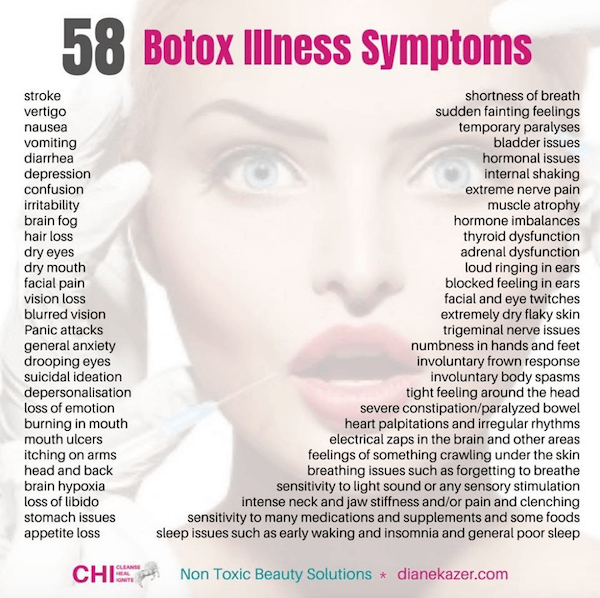
She also created this list of 58 Botox Illness Symptoms which she gave me permission to share here. She compiled this list from 1000+ people who have had Botox injections.

58 botox illness symptoms

Because of Diane asking questions and this initial research I’ve done, I’m adding a question about past history of Botox injections to my client intake form and will be gathering more information from my community of anxious women to see if there are patterns as to why some folks have such bad reactions.

I do feel we need to be asking if Botox injections (cosmetic or non-cosmetic) are a possible root cause of anxiety and panic attacks because they are adding to the toxic burden in susceptible folks.

But I do acknowledge it’s challenging to unwind all the contributing factors because it depends on what is going on with each person, such as their gut health, other medications (benzodiazepines themselves can be problematic), past trauma, infections, poor adrenal health, low GABA, low serotonin, poor detox capacity, low bile production, genetics etc. Unfortunately there is no way to know in advance who will be harmed and if Botox is the tipping point.

Please comment below if you’ve had Botox injections and had adverse reactions or have benefited from them with no adverse reactions. And if you have not had Botox would you ever consider it? Feel free to post your questions too.

Filed Under: Anxiety, Thyroid, Toxins Tagged With: 5-HTP, anxiety, bladder, Botox, botox injections, cosmetic, dystonia, GABA, low confidence, low serotonin, migraines, MS, panic attacks, pelvic, self-esteem, serotonin, TMJ, tryptophan

Imposter syndrome and low serotonin: is tryptophan the solution?

February 28, 2020 By Trudy Scott 75 Comments

imposter syndrome

An article published on Psychology Today states that imposter syndrome and “feelings of inadequacy are surprisingly common” and cites the results of a 2020 systematic review:

62 studies with over 14,000 participants found that a staggering 56 percent to 82 percent of individuals, across genders, backgrounds, and ages, experienced imposter feelings at some point.

In case you aren’t familiar with the term imposter syndrome, many of my clients who appear to have very successful careers will say to me … “I feel like I’m an imposter. They’re going to catch me out at what I’m doing. I’m not really as good as everyone thinks I am.” Perhaps you can relate to this? You just don’t feel that you’re good enough – you’re faking it until you make it and putting on a brave face.

No-one is talking about the biochemical and low serotonin aspect of imposter syndrome and the role tryptophan plays. This really does need to be part of the discussion and part of the solution.

Read on for examples of imposter syndrome you may resonate with and the typical tools that are offered to help you reframe and be kind to yourself (hint: it’s hard work when it’s a biochemical imbalance); and the simple biochemical solution i.e. addressing low serotonin. You also need to figure out why serotonin is low and address this. There is no research supporting this low serotonin connection but there is a proposal to investigate serotonin, oxytocin, and dopamine systems among those who suffer with imposter syndrome. You’ll also find additional resources if you need guidance using amino acids like tryptophan/5-HTP and GABA.

There is more awareness but it’s really hard work to reframe and be kind to yourself

Valerie Young’s excellent book, The Secret Thoughts of Successful Women: Why Capable People Suffer from the Impostor Syndrome and How to Thrive in Spite of It, [my Amazon link] has created the awareness we need and offers so much in terms of recognizing the way imposter syndrome mani­fests in our lives. She shares these examples which you may also resonate with:

From the high-achieving Ph.D. candidate convinced she’s only been admitted to the program because of a clerical error to the senior executive who worries others will find out she’s in way over her head, a shocking number of accomplished women in all ca­reer paths and at every level feel as though they are faking it – impostors in their own lives and careers.

This article in Harvard Business Review, Overcoming Imposter Syndrome, states

Imposter syndrome can be defined as a collection of feelings of inadequacy that persist despite evident success. ‘Imposters’ suffer from chronic self-doubt and a sense of intellectual fraudulence that override any feelings of success or external proof of their competence.

The article mentions phrases such as “I must not fail”, “I feel like a fake” and “it’s all down to luck”, offering these tools: recognize the imposter feelings, reframe, talk about how you feel, be kind to yourself, visualize success and seek support.

This is all great advice but it’s hard work when you’re already struggling and when it’s actually a biochemical imbalance! What if there was a simple solution that involved addressing low serotonin with an amino acid supplement such as tryptophan or 5-HTP?

What if there was a simple biochemical solution i.e. address low serotonin?

If your serotonin is low you WILL feel like this: plenty of self-doubt, lack of confidence and negative self talk. It’s common to feel anxious and inadequate, have ruminating thoughts, do lots of reprocessing and overthinking, and be a perfectionist (you may get stuck because of the perfectionism and overthinking things). This often occurs together with carb cravings (especially late afternoon and evening), PMS/perimenopausal/menopausal symptoms. Insomnia is common and this is when much of the ruminations and negative self-talk occurs.

There is a very simple solution. Figure out if low serotonin is the issue and address it with tryptophan or 5-HTP.  Using co-factors like zinc, vitamin B6, iron, magnesium, and diet and lifestyle changes may be necessary too. Other neurotransmitter imbalances like low GABA, low endorphins and low dopamine may also be factors.

I can relate to all this personally. I had a very successful corporate job in my late 30s and I started to feel sure I was useless and that I was going to lose my job. I felt like they were going to figure I didn’t really know what I was doing despite my leadership abilities! Then the dreadful perimenopausal symptoms and anxiety and panic attacks started. And then I figured out it was low serotonin, low GABA and hormone imbalances, and a number of other root causes that contributed to my low neurotransmitters.  I list many typical root causes below.

Why is serotonin low (and address the root causes)

You need to figure out why serotonin is low and address this. Low serotonin may be caused by many factors such as:

  • dysbiosis and a messed up microbiome (we make so much serotonin in the gut)
  • stress and the adrenals (cortisol affects your sex hormone production)
  • the birth control pill (which lowers zinc and vitamin B6, both of which are needed for serotonin production)
  • gluten issues (leading to low serotonin and other nutritional deficiencies)
  • not consuming enough quality animal protein (amino acids are the building blocks of our neurotransmitters, and grass fed red meat provides zinc, iron and omega-3s – all needed to make serotonin)
  • low stomach acid (meaning you can’t digest the protein you’re consuming)
  • sex hormone imbalances (serotonin and estrogen are very closely linked)
  • liver issues (affecting how you process xenoestrogens)
  • low bile production (so you’re not digesting the healthy fats you’re eating)
  • statins (leading to cholesterol that is too low)
  • not getting enough exercise, sunshine or nature
  • mold exposure
  • heavy metal toxicity
  • Lyme disease and other co-infections
  • and more

I’ve poured through the research on imposter syndrome and there is no mention of serotonin. A few articles – like this one in Forbes, Why You Need To Understand The Neuroscience Of Imposter Syndrome – do mention serotonin and dopamine:

feelings of “not deserving” correlate with lower levels of the neurotransmitter serotonin which relates to mood, and low levels of dopamine which are connected to reward and motivation

There is no mention of tryptophan (or 5-HTP) or any of the above approaches for raising serotonin (other than exercise) or tyrosine to help raise dopamine. However, clinically we see all the signs of imposter syndrome disappear once low serotonin is addressed, and motivation improve once low dopamine is addressed.

New 2020 research:  the need to explore the role of serotonin and other neurotransmitters

A paper published in 2020, shortly after this blog was published, Focusing on the Neuro-Psycho-Biological and Evolutionary Underpinnings of the Imposter Syndrome, does mention the need to explore the role of serotonin and other neurotransmitters:

exploring the serotonin, oxytocin, and dopamine systems among imposterism sufferers could be a worthy research pursuit. Likewise, it would be intriguing to know how these neuro-hormones and other bioactive molecules are functionally interconnected, and how they are related to the feelings of self-doubt in the syndromal imposters.

Based on my experience, I suspect research will eventually confirm that low serotonin is a major factor with imposter syndrome but also that many other neurotransmitters play a role too – with low levels of oxytocin, dopamine, endorphins and GABA.  The above paper also mentions a possible role of cortisol and sex hormones.  And just as we see with anxiety, fears and worries, the combination of root cause factors will likely be unique for each person.

Additional resources when you are new to using tryptophan and other amino acids as supplements

As always, I use the symptoms questionnaire to figure out if low serotonin or other neurotransmitter imbalances may be an issue.

If you suspect low levels of any of the neurotransmitters and do not yet have my book, The Antianxiety Food Solution – How the Foods You Eat Can Help You Calm Your Anxious Mind, Improve Your Mood, and End Cravings, I highly recommend getting it and reading it before jumping in and using amino acids on your own so you are knowledgeable. And be sure to share it with the practitioner/health team you or your loved one is working with.

There is an entire chapter on the amino acids and they are discussed throughout the book in the sections on gut health, gluten, blood sugar control (this is covered in an entire chapter too), sugar cravings, anxiety and mood issues.

The book doesn’t include product names (per the publisher’s request) so this blog, The Antianxiety Food Solution Amino Acid and Pyroluria Supplements, lists the amino acids that I use with my individual clients and those in my group programs.

If, after reading this blog and my book, you don’t feel comfortable figuring things out on your own (i.e. doing the symptoms questionnaire and respective amino acids trials), and you need serotonin support, the Serotonin QuickStart Program is a good place to get help. This is a paid online/virtual group program where you get my guidance on using tryptophan and 5-HTP safely, and community support during 5 LIVE Q&A calls. You can sign up to be notified when the next live launch of this program is happening.

The next way to get help is the GABA QuickStart Program (if you have low GABA symptoms too). This is a paid online/virtual group program where you get my guidance and community support. Another option is the budget-friendly GABA QuickStart Homestudy Program.

If you are a practitioner, join us in The Balancing Neurotransmitters: the Fundamentals program. This is also a paid online/virtual program with an opportunity to interact with me and other practitioners who are also using the amino acids.

Imposter syndrome and low serotonin? Have you made the connection and can you relate?

Please comment below if imposter syndrome resonates with you so we can all learn from each other. I’d love to hear:

  • how imposter syndrome shows up in your life and how you’d describe it to your best friend?
  • when do you feel like this – at work, all the time (work and home life) or only certain situations?
  • are these new feelings and if yes when did they start?  or have you always felt like this?
  • what type of job do you have? or are you an entrepreneur?
  • have you sought help for imposter syndrome and what has helped?
  • are you surprised to learn there is a biochemical aspect and nutritional solutions?
  • what other low serotonin symptoms do you have?
  • have you used tryptophan (or 5-HTP) for other low serotonin symptoms (like anxiety, ruminations, insomnia etc) and then realized that imposter syndrome is no longer an issue for you?
  • have you figured out and addressed some of the root causes of your low serotonin?
  • have you found that other neurotransmitter support has helped too – such as GABA (for low GABA) or DPA (for low endorphins) or tyrosine (for low dopamine) or glutamine (for low blood sugar)?

(if you feel more comfortable sharing some of this anonymously feel free to use a nickname when commenting – I’m aware that there is a stigma to admitting this in the corporate world)

Feel free to post your questions too.

Filed Under: Anxiety Tagged With: 5-HTP, anxiety, fake, fraud, Imposter syndrome, inadequate, low serotonin, overthinking, perfectionist, reprocessing, self-doubt, serotonin, The Secret Thoughts of Successful Women, tryptophan, Valerie Young

Tapping (or EFT) for reducing anxiety, depression, pain and cravings, plus physiological changes in cortisol, heart rate, blood pressure and SigA

February 21, 2020 By Trudy Scott 16 Comments

tapping and anxiety

Awareness about tapping or EFT (emotional freedom technique) is growing and so is the research. I’ve been intrigued by tapping for some time and I’m impressed by some of the very positive feedback I’ve heard about how it reduces anxiety, depression, pain and cravings. I’m now more intrigued after reading a 2019 paper that describes some of the physiological changes (i.e. changes in the body) that improve after tapping.

This paper, Clinical EFT (Emotional Freedom Techniques) Improves Multiple Physiological Markers of Health, describes EFT as “an evidence-based self-help therapeutic method”, reporting that “over 100 studies demonstrate its efficacy.”

It’s further described as “a brief intervention combining elements of exposure, cognitive therapy, and somatic [or physical] stimulation of acupressure points on the face and body.” The full paper here goes into great detail if you’d like to read more.

The objectives of this study were to measure and describe some of the physiological changes that occur after tapping, in order to understand some of the mechanisms. Up until now “information about the physiological effects of EFT is limited.”

As far as physiological changes, these included: heart rate variability and heart coherence, resting heart rate and blood pressure, salivary cortisol (to show changes in the endocrine system), and salivary immunoglobulin A (SigA) (to show impacts on the immune system).

They also measured these psychological symptoms: anxiety, depression, posttraumatic stress disorder, pain, and cravings. After a 4-day training workshop on tapping, the researchers reported that happiness increased by 31% and the following declines in psychological symptoms in 203 participants were reported:

  • anxiety (-40%)
  • depression (-35%)
  • posttraumatic stress disorder (-32%)
  • pain (-57%) and
  • cravings (-74%)

These physiological improvements were found in the subset of 31 participants that were tested:

  • resting heart rate (-8%)
  • salivary cortisol (-37%)
  • systolic blood pressure (-6%) and diastolic blood pressure (-8%)
  • heart rate variability and heart coherence
  • salivary immunoglobulin A (SigA) (+113%)

The authors conclude that

gains were maintained on follow-up, indicating EFT results in positive health effects as well as increased mental well-being.

If you’ve been following me for awhile you know I like to look into the research so I’m excited by this study and look forward to further research and gaining a better understanding of this tool.

I also look forward to learning how lasting these psychological and physiological changes are and if you need to keep tapping in order to sustain the changes.

Possible impacts on boosting neurotransmitter levels

Because of the psychological benefits I was also curious about the possible impacts of tapping on boosting neurotransmitter levels such as GABA and serotonin. I found this research on acupuncture which we may be able to partially extrapolate from since EFT does have the acupressure aspect: Effect of Acupuncture on Neurotransmitters/Modulators

In general, acupuncture enhances the activity of the endogenous opioid peptides, serotonin, dopamine, ACh [actelyl-choline], and inhibitory amino acids such as γ-aminobutyric acid (GABA), glycine, taurine, and lactamine, while it attenuates the activity of noradrenalin and excitatory amino acids including glutamate and aspartic acid.

Compliments the dietary/nutritional/biochemical approach

Based on what I’ve been recently learned, tapping compliments the dietary/nutritional/biochemical approach I use my clients for helping to ease anxiety, overwhelm and stress.

I reached out on Facebook and here is some of the feedback I received:

  • Maria shares how she uses both EFT and tryptophan: I started using EFT and it has helped – wasn’t expecting it to, but it really does work. However, having had a particular problem for many years, I realize that it’s going to take time to really be at the level I want to be. I also got a teenager to try it, and to their amazement, it did settle their anxiousness – from what they initially said was a 10 -11 – down to 7 in just a few minutes. Last night, I tried the Lidtke Tryptophan and couldn’t believe how deeply and undisturbed I slept – thank you Trudy – I learnt about that product from you during the anxiety summit. By the way, I will be joining the Tapping Summit – can’t wait for that one!
  • Terri Hirning is a practitioner and shares that her and her biz partner bring it to their clients in conjunction with lifestyle changes for maximum effect. She shares: I find that anxiety is a big issue for my clients. So while they are implementing dietary or supplement changes, tapping can help reduce those emotions while their biochemistry comes into alignment.

She also says: I taught it to my children and they have The Tapping Solution app and will proactively use it when they need to shift things. I am so thankful for this work.

  • Meeta Darji is a health coach and says this: YES! EFT is profound in helping with anxiety and stress. I have been doing it for the last two years and use it on my kids too. I’m training at the moment and learning how it can help with cravings and addictions. Absolutely incredible and I can’t wait to add it to my health coaching practice.

She does use amino acids like GABA, tryptophan, DPA, glutamine for anxiety and cravings/addictions and agrees that EFT is definitely a good compliment. EFT is great for using with limiting beliefs, traumas, addictions, fears and so much more, so together with amino acids, it’s very powerful.

  • Benita Scott shares this: EFT is so great! I use it as part of my professional practice as a psychologist and in conjunction with Nutritional therapies it’s a game changer for so many vulnerable clients. It’s been shown to increase GABA levels, decrease cortisol and alter brain cells in relation to food cravings too. There has been a paradigm shift in psychology recently and I think EFT, Matrix and nutritional supplements are changing how we work and heal.
  • Dede shares how EFT changed her life: I was on permanent disability for 20 years due to panic attacks. EFT changed all that so I became a practitioner. This was 11 years ago.

She shares how she went through “the literal hell of getting off psych meds. I wouldn’t have survived without EFT and food changes.”

It does seem to be very individualized and works very well for some folks and not very well or not at all for others:

  • One person said EFT is soothing in the moment but she didn’t find any significant or lasting benefits.
  • Someone else shared: I have tried it, my daughter and her son went to a practitioner, and it did nothing for me or them. I have studied how to do it on-line from well known sites, and still nothing. I’m wondering if a lot of healings are the placebo effect.
  • It doesn’t seem to work for me either (more on that below)

My tapping experience is very limited

I will admit that, at this point, my tapping experience is very limited.  I have such great success with amino acids like GABA, tryptophan and glutamine to provide quick anxiety-relief, end the overwhelm and stop the carb cravings for my clients, I haven’t felt the need to look into tapping.

In case you’re new to me and my work, here is a sampling of a few tools I use with my anxious clients:

  • My main approach is using targeted amino acids such as tryptophan or 5-HTP for the low serotonin worry-in-your-head anxiety where folks may also experience fears, panic attacks, ruminations, phobias, insomnia, PMS, anger, irritability and cravings; and GABA for the low GABA physical-anxiety that also includes muscle tension, overwhelm, insomnia and the need to self-medicate with alcohol to calm down
  • Another amino acid is DPA (d-phenylalanine) and I’m mentioning this one because it boosts endorphins (in a similar way to acupuncture) and helps my clients who are experiencing weepiness, pain and are big comfort/reward eaters. I blog about this here: DPA for weepiness, pain and comfort and reward eating)
  • Since the EFT study mentions cortisol, I’ll share one of my key nutrients for lowering cortisol – Seriphos (I blog about this here: Seriphos Original Formula is back: the best product for anxiety and insomnia caused by high cortisol)
  • And of course everything else: diet, no sugar, no caffeine, gut health, improving sleep, toxin removal and addressing all nutritional deficiencies etc (covered in great detail in my book “The Antianxiety Food Solution” and elsewhere on this blog.)

I’m getting newly acquainted with EFT

I have been hearing about tapping/EFT for years – first from Dr. Mercola and then had a group session at a conference with Brad Yates and didn’t notice any benefits. I’ve tried it again a few times and have yet to experience any profound benefits. I’d expect to be a good candidate given my history with anxiety/insomnia.

I really do like to be able to share resources and products I have experienced personally but in this instance I’m still a newbie.

As of now I don’t know why tapping/EFT doesn’t help me and some other folks. Perhaps there is a bioindividual aspect? Just like some folks do well with herbs and some with vitamins/amino acids; some folks thrive on spinach and some have oxalate issues; some folks do well with  meditation and others struggle with it; some find nature to be an elixir and others find dancing to be their magic?

However, based on what I’ve recently learned about the physiological changes and the feedback I’ve heard, I’m getting newly acquainted with EFT and it’s an additional resource I want to offer you – my community of anxious women.

Right now I’m seeing it as another tool in the toolbox (for some folks), together with dietary changes, addressing biochemical imbalances, gut health, getting out in nature etc.

Resources for additional learning

If you’re new to tapping and would like to learn more, the 13th Annual Tapping World Summit airs online Feb 24 – March 7. Here is the main summit registration page.

This is a great introductory video from summit host Nick Ortner (register to watch it and get access to the summit)

I’d love to hear back from you in the comments below

  • Do you use tapping/EFT in conjunction with dietary/nutritional/biochemical changes to help ease your anxiety, stress, overwhelm? (if you’re a practitioner, do you use both with clients/patients?)
  • Do you find one approach to be better than the other?
  • Have you tried tapping without success?
  • If you’re new to tapping/EFT are you interested in learning how to incorporate it into your life?

Please share so I can learn from you and we can all learn from each other (and thanks to everyone who has contributed to the discussion already).

Filed Under: Anxiety, EFT/Tapping Tagged With: anxiety, blood pressure, cortisol, cravings, dawson church, depression, eft, emotional freedom technique, GABA, happiness, heart rate, Nick Ortner, pain, physiological, psychological, seriphos, serotonin, sIgA, tapping, tapping solution

Microdose lithium formulation is capable of halting signs of advanced Alzheimer’s and improving cognition

February 7, 2020 By Trudy Scott 60 Comments

microdose lithium formulation and alzheimer

In a new study, a team of researchers has shown that, when given in a formulation that facilitates passage to the brain, lithium in doses up to 400 times lower than what is currently being prescribed for mood disorders is capable of both halting signs of advanced Alzheimer’s pathology and of recovering lost cognitive abilities.

The above snippet is from a press release published in January 2020 on Science Daily: Can lithium halt progression of Alzheimer’s disease? Keep in mind that this is an animal study but the results are so promising.  I’m also very intrigued by the delivery method (more on that below).

In order to give this microdosing context, a typical adult prescription is 900-1800mg lithium carbonate/day.  I reached out to the lead author for clarification about the dosing of this new formulation and lead researcher Dr. Cuello shared this with me:

I calculate that our lithium dosage is 285 times lower concentration than the 900 mg dose (based on 70 kg of body weight) and 570 times lower than the 1800 mg dose.

This translates to around 3.2 mg to 6.4 mg NP03 based on 70kg of body weight (which is around 154.3 lbs).

NP03 is a disease-modifying nano dose formulation of lithium citrate which is used sublingually. I assume it’s not yet commercially available.

Also from the press release: “our findings show that microdoses of lithium in formulations such as the one we used, which facilitates passage to the brain through the brain-blood barrier while minimizing levels of lithium in the blood, sparing individuals from adverse effects, should find immediate therapeutic applications.”

Here is a link to the actual paper: NP03, a Microdose Lithium Formulation, Blunts Early Amyloid Post-Plaque Neuropathology in McGill-R-Thy1-APP Alzheimer-Like Transgenic Rats

Can we compare NP03 to low dose lithium orotate?

What is really interesting is that low dose lithium in the form of lithium orotate is commonly recommended by integrative practitioners for anxiety, mild mood swings, brain fog, ADHD and insomnia. I have found it to be extremely beneficial for many of my clients and have used it personally with success (for brain fog and insomnia).

Just how much lithium orotate is low dose? Typical doses are 5-10 mg per day, increasing to 20mg per day.

Can we compare NP03 to low dose lithium orotate? It’s too early to know for sure but we I believe we can start to make extrapolations, especially given that both are very low doses.

Integrative psychiatrist, Dr. James Greenblatt, MD has written extensively about low dose lithium orotate for the above purposes and for Alzheimer’s too. In this article, Lithium: The Cinderella Story About a Mineral That May Prevent Alzheimer’s Disease, he shares that

Scientists first became interested in the use of lithium for treating neurodegenerative disorders when they observed that bipolar patients using lithium therapy seemed to have lower rates of cognitive decline than peers on other medications.

He writes how an enzyme called Glycogen Synthase Kinase-3 (GSK-3) – a serine/threonine protein kinase – normally plays a major role in neural growth and development and how lithium

works as a direct GSK-3 inhibitor… halting inappropriate amyloid production and the hyper-phosphoryation of tau proteins before they become problematic.

If all this fascinates you as much as it does me, Dr. Greenblatt writes more about lithium orotate in his excellent book: “Nutritional Lithium: A Cinderella Story: The Untold Tale of a Mineral That Transforms Lives and Heals the Brain” (my Amazon link).

Lithium deficiency and the onset of Alzheimer’s disease: a 2025 study

Update August 8,  2025:

A new animal study, Lithium deficiency and the onset of Alzheimer’s disease (and published Aug 2025), supports the above, concluding that lithium orotate is “a potential approach to the prevention and treatment of Alzheimer’s disease.” The authors share this about lithium in the brain:

endogenous lithium is dynamically regulated in the brain and contributes to cognitive preservation during ageing. Of the metals we analysed, lithium was the only one that was significantly reduced in the brain in individuals with mild cognitive impairment (MCI), a precursor to Alzheimer’s disease. Lithium bioavailability was further reduced in Alzheimer’s disease by amyloid sequestration.

The authors explored the role of endogenous lithium in the brain (i.e. lithium within the brain) by depleting it from the diet of wild-type and Alzheimer’s disease mouse models and found that:

Reducing endogenous cortical lithium by approximately 50% markedly increased the deposition of amyloid-β and the accumulation of phospho-tau, and led to pro-inflammatory microglial activation, the loss of synapses, axons and myelin, and accelerated cognitive decline.

It’s exciting that they found that lithium orotate, “a lithium salt with reduced amyloid binding, prevents pathological changes and memory loss in Alzheimer’s disease mouse models and ageing wild-type mice.” And this paper also mentions the fact that these “effects were mediated, at least in part, through activation of the kinase GSK3β.”

They conclude that:

These findings reveal physiological effects of endogenous lithium in the brain and indicate that disruption of lithium homeostasis may be an early event in the pathogenesis (cause) of Alzheimer’s disease. Lithium replacement with amyloid-evading salts [such as lithium orotate] is a potential approach to the prevention and treatment of Alzheimer’s disease.

Given the concerns with the toxicity of high dose prescription lithium carbonate, I appreciate that this was addressed:

An important limitation in the treatment of aged individuals with pharmacological doses of lithium [i.e. lithium carbonate] is kidney and thyroid toxicity. It is encouraging that toxicity could not be detected following long-term treatment of ageing mice with a low dose of lithium orotate.

Alzheimer’s and cognitive decline have many root causes

Keep in mind that Alzheimer’s and cognitive decline have many root causes that must be considered. This may include inflammation, stress and candida, and even insecticide exposure.

The best Alzheimer’s book is “The End of Alzheimer’s: The First Program to Prevent and Reverse Cognitive Decline” by Dr. Dale Bredeson (my Amazon link). He doesn’t mention lithium orotate so I look forward to hearing his thoughts on this new research. [I’ll come and update the blog when I do]

You can read about some of Dr. Bredesen’s work here: Alzheimer’s disease, mercury and mycotoxins.

Benzodiazepines have also been linked to increased Alzheimer’s risk which is why a nutritional approach for anxiety is the best approach. Let’s use the amino acids like GABA (for physical anxiety), and tryptophan (for worry and fears), as well as dietary changes and improving gut health instead of anti-anxiety medications (more on these below).

Additional resources when you are new to using tryptophan and other amino acids as supplements

As always, I use the symptoms questionnaire to figure out if low serotonin or other neurotransmitter imbalances may be an issue.

If you suspect low levels of any of the neurotransmitters and do not yet have my book, The Antianxiety Food Solution – How the Foods You Eat Can Help You Calm Your Anxious Mind, Improve Your Mood, and End Cravings, I highly recommend getting it and reading it before jumping in and using amino acids on your own so you are knowledgeable. And be sure to share it with the practitioner/health team you or your loved one is working with.

There is an entire chapter on the amino acids and they are discussed throughout the book in the sections on gut health, gluten, blood sugar control (this is covered in an entire chapter too), sugar cravings, anxiety and mood issues.

The book doesn’t include product names (per the publisher’s request) so this blog, The Antianxiety Food Solution Amino Acid and Pyroluria Supplements, lists the amino acids that I use with my individual clients and those in my group programs.

If, after reading this blog and my book, you don’t feel comfortable figuring things out on your own (i.e. doing the symptoms questionnaire and respective amino acids trials), a good place to get help is the GABA QuickStart Program (if you have low GABA symptoms). This is a paid online/virtual group program where you get my guidance and community support. You can sign up to be notified when the next live launch is happening.

If you need serotonin support, the Serotonin QuickStart Program is a good place to get help. This is also a paid online/virtual group program where you get my guidance on using tryptophan and 5-HTP safely, and community support during 5 LIVE Q&A calls. You can sign up to be notified when the next live launch of this program is happening.

If you are a practitioner, join us in The Balancing Neurotransmitters: the Fundamentals program. This is also a paid online/virtual program with an opportunity to interact with me and other practitioners who are also using the amino acids.

Wrapping up and your feedback

I look forward to human clinical trials of NP03. Dr. Cuello “ believes that there is an excellent opportunity to launch initial clinical trials of this formulation with populations with detectable preclinical Alzheimer’s pathology or with populations genetically predisposed to Alzheimer’s, such as adult individuals with Down Syndrome.”

I also look forward to human clinical trials of lithium orotate for Alzheimer’s disease. And  I would love to see lithium orotate compared to NP03 in future research.

In the meantime I feel this research is exciting because it supports so much of what is being seen clinically with lithium orotate.

Have you used lithium orotate with success? How much has helped you and have you seen cognitive benefits? What about a more even mood, better sleep and less anxiety?

And have you or a family member seen improvements with the Bredesen protocol?

Filed Under: Alzheimer's disease, Anxiety Tagged With: alzheimer's, anxiety, benzodizepines, brain fog, cognition, cognitive, Dr. Dale Bredesen, Dr. James Greenblatt, insomnia, lithium, lithium citrate, lithium orotate, low-dose, Microdose, mood swings

  • « Go to Previous Page
  • Page 1
  • Interim pages omitted …
  • Page 25
  • Page 26
  • Page 27
  • Page 28
  • Page 29
  • Interim pages omitted …
  • Page 96
  • Go to Next Page »

Primary Sidebar

GABA QuickStart Homestudy

gaba quickstart homestudy

Free Report

9 Great Questions Women Ask about Food, Mood and their Health

You'll also receive a complimentary subscription to my ezine "Food, Mood and Gal Stuff"


Connect with me

Popular Posts

  • Amino Acids Mood Questionnaire from The Antianxiety Food Solution
  • The Antianxiety Food Solution Amino Acid and Pyroluria Supplements
  • Pyroluria Questionnaire from The Antianxiety Food Solution
  • Collagen and gelatin lower serotonin: does this increase your anxiety and depression?
  • Tryptophan for the worry-in-your-head and ruminating type of anxiety
  • GABA for the physical-tension and stiff-and-tense-muscles type of anxiety
  • The Antianxiety Food Solution by Trudy Scott
  • Seriphos Original Formula is back: the best product for anxiety and insomnia caused by high cortisol
  • Am I an anxious introvert because of low zinc and vitamin B6? My response to Huffington Post blog
  • Vagus nerve rehab with GABA, breathing, humming, gargling and key nutrients

Recent Posts

  • Her cravings for chips and peanut butter were triggered by stress: GABA ends cravings and reduces physical tension and fear of heights
  • It is truly miraculous to be able to move through life without crippling anxiety and panic
  • GABA and tryptophan combo provide immediate and noticeable relief for tremors and cervical dystonia in just 7 days
  • Red light therapy for back and neck pain, plantar fasciitis and low mood – a complement to the amino acids GABA, DPA and tryptophan
  • What do I use instead of Seriphos to help lower high cortisol that is affecting my sleep and making me anxious at night?

Categories

  • 5-HTP
  • AB575
  • Addiction
  • ADHD
  • Adrenals
  • Alcohol
  • Allergies
  • Alzheimer's disease
  • Amino Acids
  • Anger
  • Antianxiety
  • Antianxiety Food Solution
  • Antidepressants
  • Anxiety
  • Anxiety and panic
  • Autism
  • Autoimmunity
  • benzodiazapines
  • Bipolar disorder
  • Books
  • Caffeine
  • Cancer
  • Candida
  • Children/Teens
  • Collagen
  • Cooking equipment
  • Coronavirus/COVID-19
  • Cravings
  • Depression
  • Detoxification
  • Diabetes
  • Diet
  • DPA/DLPA
  • Drugs
  • EFT/Tapping
  • EMF
  • EMFs
  • Emotional Eating
  • Endorphins
  • Environment
  • Essential oils
  • Events
  • Exercise
  • Fear
  • Fear of public speaking
  • Fertility and Pregnancy
  • Fish
  • Food
  • Food and mood
  • Functional neurology
  • GABA
  • Gene polymorphisms
  • General Health
  • Giving
  • Giving back
  • Glutamine
  • Gluten
  • GMOs
  • Gratitude
  • Gut health
  • Heart health/hypertension
  • Histamine
  • Hormone
  • Hyperparathyroidism
  • Hypoglycemia
  • Immune system
  • Inflammation
  • Insomnia
  • Inspiration
  • Introversion
  • Joy and happiness
  • Ketogenic diet
  • Lithium orotate
  • Looking awesome
  • Lyme disease and co-infections
  • MCAS/histamine
  • Medication
  • Men's health
  • Mental health
  • Mercury
  • Migraine
  • Mold
  • Movie
  • MTHFR
  • Multiple sclerosis
  • Music
  • NANP
  • Nature
  • Nutritional Psychiatry
  • OCD
  • Osteoporosis
  • Oxalates
  • Oxytocin
  • Pain
  • Paleo
  • Parasites
  • Parkinson’s disease
  • PCOS
  • People
  • PMS
  • Postpartum
  • PTSD/Trauma
  • Pyroluria
  • Questionnaires
  • Real whole food
  • Recipes
  • Research
  • Schizophrenia
  • serotonin
  • SIBO
  • Sleep
  • Special diets
  • Sports nutrition
  • Stress
  • Sugar addiction
  • Sugar and mood
  • Supplements
  • Teens
  • Testimonials
  • Testing
  • The Anxiety Summit
  • The Anxiety Summit 2
  • The Anxiety Summit 3
  • The Anxiety Summit 4
  • The Anxiety Summit 5
  • The Anxiety Summit 6
  • Thyroid
  • Thyroid health
  • Toxins
  • Tryptophan
  • Tyrosine
  • Uncategorized
  • Vegan/vegetarian
  • Women's health
  • Yoga

Archives

  • May 2026
  • April 2026
  • October 2025
  • September 2025
  • August 2025
  • July 2025
  • June 2025
  • May 2025
  • April 2025
  • March 2025
  • February 2025
  • January 2025
  • November 2024
  • October 2024
  • September 2024
  • August 2024
  • July 2024
  • June 2024
  • May 2024
  • April 2024
  • March 2024
  • February 2024
  • January 2024
  • December 2023
  • November 2023
  • October 2023
  • September 2023
  • August 2023
  • July 2023
  • June 2023
  • May 2023
  • April 2023
  • March 2023
  • February 2023
  • January 2023
  • December 2022
  • November 2022
  • October 2022
  • September 2022
  • August 2022
  • July 2022
  • June 2022
  • May 2022
  • April 2022
  • March 2022
  • February 2022
  • January 2022
  • December 2021
  • November 2021
  • October 2021
  • September 2021
  • August 2021
  • July 2021
  • June 2021
  • May 2021
  • April 2021
  • March 2021
  • February 2021
  • January 2021
  • December 2020
  • November 2020
  • October 2020
  • September 2020
  • August 2020
  • July 2020
  • June 2020
  • May 2020
  • April 2020
  • March 2020
  • February 2020
  • January 2020
  • December 2019
  • November 2019
  • October 2019
  • September 2019
  • August 2019
  • July 2019
  • June 2019
  • May 2019
  • April 2019
  • March 2019
  • February 2019
  • January 2019
  • December 2018
  • November 2018
  • October 2018
  • September 2018
  • August 2018
  • July 2018
  • June 2018
  • May 2018
  • April 2018
  • March 2018
  • February 2018
  • January 2018
  • December 2017
  • November 2017
  • October 2017
  • September 2017
  • August 2017
  • July 2017
  • June 2017
  • May 2017
  • April 2017
  • March 2017
  • February 2017
  • January 2017
  • December 2016
  • November 2016
  • October 2016
  • September 2016
  • August 2016
  • July 2016
  • June 2016
  • May 2016
  • April 2016
  • March 2016
  • February 2016
  • January 2016
  • December 2015
  • November 2015
  • October 2015
  • September 2015
  • August 2015
  • July 2015
  • June 2015
  • May 2015
  • April 2015
  • March 2015
  • February 2015
  • January 2015
  • December 2014
  • November 2014
  • October 2014
  • September 2014
  • August 2014
  • July 2014
  • June 2014
  • May 2014
  • April 2014
  • March 2014
  • February 2014
  • January 2014
  • December 2013
  • November 2013
  • October 2013
  • September 2013
  • August 2013
  • July 2013
  • June 2013
  • May 2013
  • April 2013
  • March 2013
  • February 2013
  • January 2013
  • December 2012
  • November 2012
  • October 2012
  • August 2012
  • July 2012
  • June 2012
  • May 2012
  • April 2012
  • March 2012
  • February 2012
  • January 2012
  • December 2011
  • November 2011
  • October 2011
  • September 2011
  • August 2011
  • July 2011
  • June 2011
  • May 2011
  • April 2011
  • March 2011
  • February 2011
  • January 2011
  • December 2010
  • October 2010
  • September 2010
  • July 2010
  • May 2010
  • April 2010
  • March 2010
  • February 2010
  • January 2010
  • November 2009

Share the knowledge!

The above statements have not been evaluated by the Food and Drug Administration. Products listed in this website are not intended to diagnose, treat, cure or prevent any disease.

The information provided on this site is for informational and educational purposes only and is not intended as a substitute for advice from your physician or other health care professional. You should consult with a healthcare professional before starting or modifying any diet, exercise, or supplementation program, before taking or stopping any medication, or if you have or suspect you may have a health problem.


Copyright © 2026 Trudy Scott. All Rights Reserved. | Privacy | Terms and Conditions | Refund Policy | Medical Disclaimer

Free Report

9 Great Questions Women Ask about Food, Mood and their Health

You’ll also receive a complimentary subscription to my ezine “Food, Mood and Gal Stuff”