• Skip to primary navigation
  • Skip to main content
  • Skip to primary sidebar

everywomanover29 blog

Food, Mood and Women's Health – Be your healthiest, look and feel great!

  • Blog
  • About
  • Services
  • Store
  • Resources
  • Testimonials
  • The Book
  • Contact
  • Search this site

5-HTP

Around my period I definitely feel the need for extra tryptophan if I’ve had some extra heavy emotional stuff come up that I need to process

December 10, 2021 By Trudy Scott 6 Comments

period and extra tryptophan

Many women find that they need additional nutritional support i.e. tryptophan for serotonin support (and often GABA too) around their periods. Today’s case study highlights the hormonal shifts that may lead to a situation where it appears tryptophan doesn’t work, then it does work, and then sometimes it doesn’t work as expected. The variable results and the need to switch between lower and higher doses on an ongoing basis can occur with PMS (premenstrual syndrome) PMDD (premenstrual dysphoric disorder, a severe, sometimes disabling extension of premenstrual syndrome). The variable results can also be more pronounced while recovering from trauma.

This case study is a follow-on from a blog I recently published: Tryptophan doesn’t work, then it does and then it doesn’t: could it be hormonal shifts, dietary factors and/or parasites?

Here is Kimberley’s feedback on the Facebook post that discussed these variable results. She shared how her hormonal shifts led to a need for additional tryptophan and 5-HTP:

Around my period I definitely feel the need for extra tryptophan. My PMDD symptoms have decreased since I started using tryptophan/5-HTP, but sometimes I need a bit more if I’ve had some extra heavy emotional stuff come up that I need to process (since that always happens with my period!).

I thanked her for sharing and said how happy I was for her. I also asked what symptoms have decreased and how much? I also asked how much tryptophan and 5-HTP she uses before her period and then around her period?

I was also curious if she just experimented with different doses until she figured it out or had she heard me talk about the PMDD tryptophan study: A placebo-controlled clinical trial of L-tryptophan in premenstrual dysphoria. In this study tryptophan was found to reduce symptoms of PMS when used in the luteal phase or second half of the cycle (i.e. after ovulation).

Her low serotonin symptoms have decreased as much as 75-80 percent

Kimberley confirmed that she had read the above study and related blog post – Tryptophan for PMS: premenstrual dysphoria, mood swings, tension, and irritability – and more about her symptoms:

I had read the blog you referenced, which is one of the reasons I tried tryptophan in the first place.

I was experiencing a lot of emotional distress, feelings of downright despair that left me miserable both during my period and ovulation (half the month, every month, which was truly awful). Those have definitely decreased, sometimes as much as 75-80 percent, other times they’re worse and I feel like I need more support.

I usually take 1x Lidtke 5-HTP (50mg) mid-afternoon and 1x Lidtke Tryptophan (500mg) at bedtime, but yesterday I increased to 2x Lidtke Tryptophan and do feel an improvement in my mood this morning.

I experimented to get the right dose of both amino acids, initially increasing to the maximum you recommend, and then slowly decreasing to what I’m taking now when I found I didn’t feel well when I took too much.

I just reread the blog you linked above and realized I should be using GABA every day to support progesterone (instead of just as needed for anxiety). Thanks for the reminder!

I love that after reading the blog she was inspired and motivated to experiment with different doses when she is/was feeling so bad. I encouraged her to continue trialing different doses at various times of the month especially in the second half of the month. I also reminded her that some folks do better with tryptophan and some do better with 5-HTP when it comes to low serotonin symptoms. And to continue to look at why serotonin is low and address that. Low GABA (related to low progesterone) can cause increased anxiety at this time and is a common issue with PMS/PMDD.

(You can see the entire list of low serotonin and low GABA symptoms here.)

She plans to continue experimenting with tryptophan and 5-HTP and may also try switching over to just 5-HTP and see if that changes anything. It’s unlikely that she would benefit from much higher doses of either as she shared “I don’t seem to be able to take more than 2 caps of either one without getting uncomfortable symptoms, though.”

Exercise and yoga for her low serotonin and PMDD

She did share how much exercise helps her mood, why she isn’t able to exercise as much:

The biggest thing I know to do to address low serotonin is add more exercise into my life, but this has been hard lately because I’ve had a couple of different viruses recently that left my exercise intolerance worse than it had been. I’m trying to support my mitochondria right now and add light exercise back in slowly.

Exercise is a wonderful way to raise serotonin levels and aerobic exercise has been shown to reduce the symptoms of PMS too. Yoga may be an option while she is recovering. In one study, yoga was found to be beneficial for PMS: “Alpha-brain waves production due to regular yoga practice are directly related with state of peace, creativity, mood elevation, relaxation, and release of serotonin, thus leading yoga practitioners feel more relaxed.”

Trauma: cortisol, serotonin, dopamine and estradiol

Kimberley also shared how how trauma plays into her situation:

I think some of the reasons for my health issues, low neurotransmitters, etc., are trauma related and I’ve been working through Dr. Aimie Apigian’s programs for that. But that’s another story.

I respect Dr. Aimie Apigian’s work in trauma and somatic experiencing and acknowledge this aspect must be addressed too. I love that Dr. Aimie brings this together with a functional medicine approach, looking at biology/biochemistry too. Recent trauma research confirms that there are major biochemical mechanisms involved in PTSD (post-traumatic stress disorder). These can include impacts to cortisol, serotonin and dopamine levels. And women are more vulnerable to these effects.

A 2021 paper, Estradiol, stress reactivity, and daily affective experiences in trauma-exposed women discusses high cortisol and more severe symptoms around their periods when estradiol (one of the estrogens) is low. As I mentioned above, estrogen and serotonin are closely related. The authors state this:“For women who are cycling, it may be useful to understand how the menstrual cycle affects their symptoms. When you can explain what’s happening biologically, it often becomes less threatening.”

Yoga may provide added psychological benefits as she works through her past trauma too.

Kimberly gave me permission to share her story and this is always something I appreciate so others in my community can learn from these types of experiences. If needed, I hope this her story gives you confidence to experiment with different doses and combinations around your period.

She also benefits from the comments from others on Facebook and the comments here on the blog, our back and forth, and this blog post.

She promised to keep me posted on how she goes and I’ll be sure to share when I hear back from her.

Resources if you are new to using tryptophan, 5-HTP and GABA and the amino acids as supplements

If you are new to using the amino acids as supplements, here is the Amino Acids Mood Questionnaire from The Antianxiety Food Solution (you can see the low GABA symptoms here) and a brief overview here, Anxiety and targeted individual amino acid supplements: a summary.

If you suspect low GABA or low levels of any of the neurotransmitters and do not yet have my book, The Antianxiety Food Solution – How the Foods You Eat Can Help You Calm Your Anxious Mind, Improve Your Mood, and End Cravings, I highly recommend getting it and reading it before jumping in and using amino acids so you are knowledgeable. And be sure to share it with the team you or your loved one is working with.

The book doesn’t include product names (per the publisher’s request) so this blog, The Antianxiety Food Solution Amino Acid and Pyroluria Supplements, lists the amino acid products that I use with my individual clients and those in my group programs.

Have you found you need additional tryptophan/5-HTP or GABA around your period? How have you experimented and how does it help you?

If you’re a practitioner, have you seen this with clients or patients?

Do you also feel better with exercise and/or yoga?

And are/were your variable results more pronounced while recovering from trauma?

Feel free to ask your questions here too.
Filed Under: Anxiety, GABA, PMS, PTSD/Trauma, serotonin, Women's health Tagged With: 5-HTP, anxiety, biochemical, cortisol, despair, dopamine, emotional distress, emotional stuff, estradiol, estrogen, exercise, GABA, hormonal shifts, miserable, my period, PMDD, PMS premenstrual syndrome, premenstrual dysphoric disorder, PTSD, serotonin, stress, trauma, tryptophan, yoga

SSRI/antidepressant impact on the microbiome, discontinuation syndrome and safe tapering

October 16, 2021 By Trudy Scott 2 Comments


Antidepressants can have an antibiotic effect, causing dysbiosis and impacting serotonin, GABA and dopamine production. This can cause psychiatric symptoms and even suicidal thoughts or behaviors. Various SSRI (selective serotonin reuptake inhibitors) and SNRI (serotonin norepinephrine reuptake inhibitors) have more of an effect than others. And the top known side effects for SSRIs are gut symptoms: nausea, diarrhea and vomiting.

These medications are seldom prescribed with informed consent and can cause severe psychological, cognitive, physical and neurological withdrawal side effects (also known as discontinuation syndrome). A functional medicine and nutritional approach using 5-HTP, GABA, theanine and glycine can often be used to smooth the taper process.

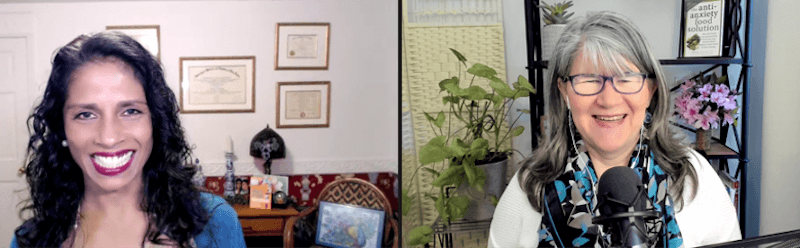
Dr. Achina Stein addresses all this in her interview, SSRI Impact on the Microbiome and Safe SSRI Tapering, on The Anxiety Summit 5: Gut-Brain Axis.

achina stein and trudy scott

We cover the following:

  • Antibiotic effect of antidepressants: dysbiosis and impacts on serotonin/GABA/dopamine
  • Withdrawal/discontinuation syndrome symptoms of SSRIs and benzodiazepines
  • 5-HTP, GABA, theanine and glycine to smooth the taper process

Here are a few snippets from our interview.

We start with a discussion on the antibiotic effect of antidepressants and a review of this paper – Serotonin Reuptake Inhibitors and the Gut Microbiome: Significance of the Gut Microbiome in Relation to Mechanism of Action, Treatment Response, Side Effects, and Tachyphylaxis.

Dr. Stein comments on this study sharing how SSRIs affect the gut and microbiome in many different ways:

  • “This paper is important. It’s one of several papers that talk about how the SSRIs or serotonin reuptake inhibitors affect the gastrointestinal tract. And as you know, the gastrointestinal tract is really full of serotonin.
  • SSRIs, as well as other psychotropic medications, actually exert an antibiotic effect, which can have a direct consequence in disrupting the integrity and stability of the gut microbiome.
  • And the ones that are most likely to do that are Sertraline, fluoxetine, and paroxetine in that order. And it’s followed by fluvoxamine, escitalopram, and citalopram, having the least impact.
  • What they’re noticing is that this antibiotic effect actually results in dysbiosis.
  • The top known side effects for SSRIs are gut symptoms: nausea, diarrhea, vomiting.
  • We know that the gut microbiome has a significant effect on emotions, behaviors, and metabolic changes.
  • And it’s involved in the metabolism of drugs, and this combination is what really causes psychiatric symptoms and even suicidal thoughts or behaviors.”

She also talks about the bidirectional gut-brain connection/communication, the microbiome and short-chain fatty acids (which are a common theme you’ll hear throughout the summit):

  • “There is this huge connection between the gut microbiome and the brain.
  • And there’s also other indirect communication pathways because we’ve always wondered, well, how does this happen that the gut is connected to the brain?
  • So the other pathways which are more indirect are the hypothalamic-pituitary-adrenal axis.
  • And there’s also an immune-mediated connection where there’s a communication between short-chain fatty acids and microglia in the brain.
  • So short-chain fatty acids are the main metabolites produced by the microbiota in the large intestine through bacterial fermentation of indigestible polysaccharides, which are dietary fiber and resistant starch. And they possess neuroactive properties. So they influence the communication between these short-chain fatty acids between the gut and the microglia of the brain.
  • And it’s a bidirectional communication too.”

And we talk about tachyphylaxis or the poop-out effect of antidepressants.

The discussion on the SSRI (selective serotonin reuptake inhibitors) and SNRI (serotonin norepinephrine reuptake inhibitors) discontinuation syndrome (or withdrawal symptoms) is eye-opening and sobering, Here are just a few of the many psychological symptoms that she says patients may experience when tapering:

I’m just going to read them off because I think it’s important for people to know: mood swings, unstable moods, hypomania, hyperarousal, anxiety, medication-induced agitation – which is described as being caffeinated – impulsive behavior, aggression, irritability, crying spells, lowered mood or depression.

Dr. Stein also shares the many cognitive, physical and neurological side effects, and how she works with her patients with a functional medicine and nutritional approach to try and mitigate the side effects. She likes to use 5-HTP, GABA, theanine and glycine to smooth the taper process.

We also have a lengthy discussion about informed consent and the fact that it’s not happening and should be.

We do a deep dive into all this and much more.

The interviews that dove-tail well with this topic are as follows:

  • My interviews, GABA & Tryptophan: Gut-Anxiety Connections and Glutamine, DPA and Tyrosine for Anxiety and Sugar Cravings. The amino acids help during the  tapering process and help you make the dietary changes.
  • Thiamine Deficiency in Anxiety and Gut Health (Part 1 and 2) with Chandler Marrs. She talks about how medications can deplete thiamine. Could this contribute to some of the severe discontinuation syndrome symptoms we see?
  • Anxiety, Gut-Brain Communication and Diet with David Perlmutter, MD, FACN, ABIHM. This one gives you an excellent overview of the gut-brain communication and fermented foods, short-chain fatty acids and histone deacetylases (HDACs).
  • Gut-Brain Axis and Mental Health with Peter Bongiorno, ND, LAc. This is also a great overview on the mental health impacts of the microbiome. He goes deep into serotonin and GABA production mechanisms.

I encourage you to tune in if you have:

  • Anxiety & feel overwhelmed & stressed by little things
  • Panic attacks &/or obsessive thoughts or behaviors
  • Social anxiety/pyroluria
  • Phobias or fears (flying, spiders or even driving on a highway)

And also if you suffer from…

  • Food sensitivities, IBS/SIBO, parasites or gallbladder issues
  • Constipation, diarrhea, bloating, gas, pain & other digestive issues
  • Leaky gut, a leaky blood-brain barrier or vagus nerve issues

Join us if you are also an emotional eater with intense sugar cravings (and know you suffer from low blood sugar), experience insomnia, low mood, PMS, poor focus and/or low motivation.

This is THE online event to learn about the powerful individual amino acids – GABA, theanine, tryptophan, 5-HTP, glutamine, DPA and tyrosine – to quickly ease anxiety and help with gut symptoms while you are dealing with other root causes which take longer to address. (They also help with cravings as with this example, and sleep and immunity).

With research-based anxiety nutritional solutions and practical steps, you can determine your root causes, ease your anxiety and prevent it from coming back so you can feel on top of the world again!

If you are a practitioner, please join us too and find advanced solutions for your clients or patients too!

You’ve heard me say the Anxiety Summit has been called “a bouquet of hope!”  My wish for you is that this summit is your bouquet of hope!

I hope you’ll join me and these incredible speakers, be enlightened and find YOUR solutions!

Here’s to no more anxiety and you feeling on top of the world again!

Learn more/purchase now


How have antidepressants impacted your gut and digestion?

Have you experienced discontinuation syndrome when tapering from an SSRI or SNRI or benzodiazepines? And have diet and the amino acids helped smooth the taper process?

Feel free to post your questions here too.

Filed Under: Antidepressants, Anxiety, Depression, The Anxiety Summit 5 Tagged With: 5-HTP, antibiotic, antidepressant, anxiety summit, cognitive, discontinuation syndrome, dopamine, Dr. Achina Stein, dysbiosis, functional medicine, GABA, glycine, gut-brain, informed consent, microbiome, neurological, nutritional, physical, psychiatric symptoms, psychological, safe tapering, serotonin, SNRI, SSRI, Suicidal, taper, theanine, withdrawal side effects

I need help with my Diet Coke addiction – when I stop, my fatigue, brain fog, anxiety/depression increase big time!

September 10, 2021 By Trudy Scott 42 Comments

diet coke addiction

A woman asked for help on the blog, wanting desperately to quit her long-time Diet Coke addiction. This woman knows her addiction is detrimental to her health and she gets withdrawal symptoms when she tries to quit – fatigue, brain fog, anxiety and depression increase big time! And yet she can’t quit. This is not unusual. I share my feedback on the brain chemical imbalances that can drive addictions and how to figure out which amino acids (or more than one) may help her quit easily. This means she doesn’t have to go cold turkey and then fail yet again. Using the amino acids means there is no willpower required and no feelings of deprivation, and it’s addressing an underlying neurotransmitter imbalance i.e. a root cause.

Here is her question:

I need help with my Diet Coke addiction. I have been using it for 35 years and I am too appalled to tell you how much I drink.

I have tried to quit many times and ended up in utter failure. A friend mentioned that phenylalanine may be a booster for my dopamine.

When I stop, my fatigue, brain fog, anxiety/depression increase big time. I know this drink is literally killing my health and I am desperate for some answers, suggestions….or a miracle.

What supplements do you recommend for helping me quit this devil of a habit? Thank you for ALL you do!” 

Here is my response …. when it comes to using amino acids to help break the addiction, pretty much everything I write about in relation to sugar addiction or cravings would likely also apply to quitting Diet Coke.

What emotions are driving the addiction?

She needs to figure out what emotions are driving her addiction and use the respective amino acid supplement/s (one or more of them) to help break the addiction and improve the mood symptoms at the same time.

These are the questions I review with my clients who have a Diet Coke addiction (or other diet soda or regular soda addiction):

  1. If you have to drink it when you haven’t eaten in awhile it’s likely low blood sugar. Glutamine on the tongue stops the desire almost immediately and also helps with the low blood sugar symptoms of shakiness and irritability
  2. If you stress-drink, your cravings are likely due to low GABA, and GABA will stop the stress-drinking and calm you down too
  3. If you drink it to feel happy (and especially from late afternoon into the evening) then your cravings are likely due to low serotonin, and tryptophan (or 5-HTP) stops the cravings and boosts mood and reduces anxiety
  4. If you drink it for comfort or a reward comfort then it’s likely due to low endorphins and DPA (d-phenylalanine) will stop that feeling of “I deserve-it” and also give you a hug-like mood boost
  5. If you drink it for an energy boost or to give you focus then it’s likely due to low catecholamines and tyrosine will stop those cravings and give you a mood and energy boost, and also help with mental clarity

Based on her question above, she mentions that “my fatigue, brain fog, anxiety/depression increase big time” when she stops. The fatigue, brain fog and depression is a big clue that #5 above will likely apply. She asks about using phenylalanine for dopamine support (dopamine is one of the catecholamines). I prefer tyrosine to l-phenylalanine for boosting levels.

The fact that anxiety also increases when she stops is a clue that #2 or #3 may apply too, and possibly #1. It’s not unusual for someone to have imbalances in multiple areas.

If this is the case, I  always recommend doing a trial of one at a time, so it’s easy to see the benefits.

It’s not the same neurotransmitter imbalance that shows up in each person

It’s also not the same neurotransmitter imbalance that shows up in each person with a Diet Coke (or other soda addiction). When I shared this on Facebook and asked what was the driving emotion behind their “self-medication” with Diet Coke this is feedback I received from two women:

  • “I had been drinking almost 6 per day for decades. I believe it was comforting.” In this instance, addressing low endorphins with DPA (#4) would have helped. Comfort or reward or treat is a common emotional driver for all addictions.
  • “I noticed I would drink Diet Coke when I felt anxious (1 or 2 times a day).” In this instance #2 or #3 would have helped i.e. GABA support if it was physical anxiety and/or tryptophan or 5-HTP for low serotonin if it was worry-type anxiety.

The caffeine addiction and the artificial sweetener Aspartame

Keep in mind, with Diet Coke, there is the caffeine addiction and the artificial sweetener Aspartame that also make it challenging to quit. Tyrosine and addressing low catecholamines (#5 above) and vitamin C can help with the caffeine addiction and quitting so headaches are minimized.

The amino acids can help with the imbalances created by aspartame. This paper, Direct and indirect cellular effects of aspartame on the brain, proposes that “excessive aspartame ingestion might be involved in the pathogenesis of certain mental disorders and also in compromised learning and emotional functioning.”  This excerpt from the abstract is relevant to this discussion:

Aspartame is composed of phenylalanine (50%), aspartic acid (40%) and methanol (10%). Phenylalanine plays an important role in neurotransmitter regulation, whereas aspartic acid is also thought to play a role as an excitatory neurotransmitter in the central nervous system. Glutamate, asparagines and glutamine are formed from their precursor, aspartic acid. Methanol, which forms 10% of the broken down product, is converted in the body to formate, which can either be excreted or can give rise to formaldehyde, diketopiperazine (a carcinogen) and a number of other highly toxic derivatives. Previously, it has been reported that consumption of aspartame could cause neurological and behavioural disturbances in sensitive individuals. Headaches, insomnia and seizures are also some of the neurological effects that have been encountered, and these may be accredited to changes in regional brain concentrations of catecholamines, which include norepinephrine, epinephrine and dopamine.

This further supports the need for catecholamine support with tyrsosine (#5 above) and GABA support with the amino acid GABA (#2 above).

Recognizing it’s an issue is a big first step

I acknowledge her for recognizing it’s an issue – that is a big first step! I did also ask her to share how much she was consuming each day because there is no judgement here and we acknowledge it’s an addiction. I’ll report back when I hear from her and will also share which amino acid/s helped her break the addiction.

As always, it’s not only about the amino acids and a comprehensive healing approach is always part of the picture. The amino acids make it easy to get started and then other underlying issues can be addressed: other nutritional deficiencies, dysbiosis, fatty liver, metabolic syndrome and so on. You can see some of the many studies below.

Of course, it’s important to be eating a real whole foods diet with quality animal protein, healthy fats, organic vegetables and fruit, no caffeine, no gluten, no sugar, fermented foods and herbs.

Reconsider your diet soda consumption if you’re on the fence

If you are on the fence about giving up your diet soda consumption here are a few additional papers that will hopefully make you reconsider:

  • Diet soda intake and risk of incident metabolic syndrome and type 2 diabetes in the Multi-Ethnic Study of Atherosclerosis (MESA) – “Although these observational data cannot establish causality, consumption of diet soda at least daily was associated with significantly greater risks of select incident metabolic syndrome components and type 2 diabetes.”
  • Altered processing of sweet taste in the brain of diet soda drinkers – “there are alterations in reward processing of sweet taste in individuals who regularly consume diet soda.” This has widespread ramifications for driving the need for sugar/carbs and all things sweet
  • A comparative study of the effect of diet and soda carbonated drinks on the histology of the cerebellum of adult female albino Wistar rats – “These results suggest that diet soda has adverse effect on the cerebellum of adult female albino Wistar rats,” with “shrunken and degenerated Purkinje cells with hypertrophied dendrites.” Purkinje cells are involved in the release of GABA.
  • Soft drinks consumption and nonalcoholic fatty liver disease – “the aspartame sweetener and caramel colorant which are rich in advanced glycation end products … potentially increase insulin resistance and inflammation”

Facts like this help you recognize it’s an issue but even when we have these facts, we often simply cannot quit. This is where the amino acids are so powerful because they work with no willpower required and no feelings of deprivation. And using them addresses the underlying neurotransmitter imbalance/root cause that led to the initial addiction or “self-medication”. They also help address the neurotransmitter deficiencies that are often made worse by diet soda consumption.

Resources if you are new to using the amino acids as supplements

If you are new to using the amino acids as supplements and want to know more, here is the Amino Acids Mood Questionnaire from The Antianxiety Food Solution and a brief overview here, Anxiety and targeted individual amino acid supplements: a summary.

If you suspect low neurotransmitters and do not yet have my book, The Antianxiety Food Solution – How the Foods You Eat Can Help You Calm Your Anxious Mind, Improve Your Mood, and End Cravings, I highly recommend getting it and reading it before jumping in and using amino acids so you are knowledgeable.

What advice do you have if you have been through this yourself and what has helped you?

What do you drink now instead of your diet soda?

If you are a practitioner, how do you help your patients/clients with this kind of addiction?

Feel free to post your questions too.

Filed Under: Addiction, Anxiety, Cravings, Depression Tagged With: 5-HTP, addiction, amino acids, anxiety, artificial sweetener, brain chemical imbalances, brain fog, caffeine, catecholamines, cold turkey, depression, Diet Coke addiction, dopamine, DPA, endorphins, fatigue, GABA, glutamine, low blood sugar, neurotransmitter, no feelings of deprivation, no willpower, quit, serotonin, sugar, tryptophan, tyrosine, withdrawal symptoms

Teen with anxiety, low self-esteem and insomnia: how to do a one-off trial of tryptophan to figure out if she has low serotonin

August 20, 2021 By Trudy Scott 23 Comments


teen anxiety tryptophan serotonin

A mom asks for advice for her teenage daughter who has anxiety, low self-esteem issues,  insomnia, experiences negativity and has phobias. She wants to know if serotonin support may help and where to start. I share my feedback confirming that these are low serotonin symptoms and that I would do a trial of tryptophan. I go deeper in this blog and also go into detail about how I would do a one-off trial (or evaluation) of tryptophan if I was working with this family. I also share why I’d look into low GABA, seasonal allergies and the birth control pill. And I discuss the importance of being proactive given the increasing suicide and self-harm in this age-group, with the pandemic compounding the increase.

Here is the question that Maria asked about her daughter:

My 13-year-old teen has always suffered from insomnia, sometimes light, sometimes a bit heavier, depending on the period. She has suffered from asthma from a young age, even if this issue has improved enormously, it is sometimes present, specially during spring time as she is allergic to different plants. She would suffer from sugar cravings in the past as we were trying to change her diet. Things are going better in this respect as well; however, negativity, phobias, low self esteem and anxiety are always present for her.

Are these signs of low serotonin? How could we help her feel better? Should serotonin pills be applied directly? Would this make the system dependent on it? If amino acids should be supplemented, how should we do this, considering her age?

I responded that yes, negativity, phobias, low self esteem and anxiety (the worry type) are signs of low serotonin. Insomnia can also be caused by low serotonin especially if her daughter is lying awake, overthinking and worrying about things.

I shared that the body does not get dependent on the amino acids and I’d consider a trial of tryptophan to address her symptoms.

Doing a one-off trial/evaluation of tryptophan based on her symptoms

If I was working with this family, I would help this mom figure out for sure if her daughter has low serotonin by reviewing the low serotonin symptom list with her, and helping her rate them on a scale of 1-10 with 10 being the worst.

This can often be challenging for a 13-year old: giving the symptoms a severity rating and being able to identify exactly how she feels. Her ratings may also be reflective of where she is in her cycle at the time and may fluctuate more in the month if her cycle is not yet regular. Working together with mom we can hopefully figure this out. If not, we do the best we can with the information we have.

The next step is picking one or two symptoms that are easy to measure the day we do the initial trial or evaluation. For this young girl I’d pick anxiety/worry and negativity and ask her some questions that would help us assess before and after results of the one-off trial /evaluation of tryptophan:

  • For anxiety and worry she may say it’s also a 9 and give me this example: “I’m really worried about performing in the concert – I keep thinking about it all day long and at night.”
  • For negativity she may say it’s a 9 and give me this example: “I really don’t think I’m good enough to be in the dance class.”

Both tryptophan and 5-HTP can raise serotonin but I like to start with tryptophan. I typically start with 100mg Lidtke chewable tryptophan in children/teens so I’d have her chew one tablet and then check back in the next 2 to 5 minutes (or maybe a little longer for some folks).

This is the kind of feedback I’m looking for:

  • With regards to anxiety and worry she may say: “Gosh, I completely stopped thinking about the concert. I’m not worrying about it at all. Now that you ask I’m thinking about it again but I think my worry/anxiety is about a 5 now.”
  • With regards to negativity she may say: “I think I feel better about being in the dance class. I think I can do it. My negativity feels like it’s a 5 or 6”

Since this teen responded so well, I’d have her start taking tryptophan midafternoon and evening (away from protein) and we’d increase if needed, each week, and based on her symptoms.

I have everyone keep a food mood and supplements log and mom could help her do this too.

GABA, seasonal allergies and the birth control pill

I also always assess low GABA when someone is anxious (especially if she also has physical anxiety, tension, stiff muscles) and has insomnia. We’d do the same one-off trial with a product like GABA Calm (or similar) once we’ve established a good dose of tryptophan for easing her symptoms.

This mom also mentioned Spring time allergies so I also shared this blog with her: 5-HTP and/or tryptophan to help with increased anxiety, panic attacks and depression caused by spring allergies. Depending on the season, her daughter may score higher on some of the low serotonin symptoms.

I’d also want to know if her daughter is on a birth control pill (often prescribed at this age for acne) because it can contribute to anxiety and depression.

Being proactive is wise given the rise in suicide and self-harm in this age group

Being proactive about addressing low serotonin symptoms quickly is wise given the rise in suicide and self-harm in this age group. This 2021 Italian study discusses the role of emotional dysregulation when it comes to and self-injurious thoughts and behaviours in high-school students:

Overall, 11.1% of adolescents reported self-harming behaviours without suicide ideation or attempts, 6.4% declared having thought to suicide without acting a suicide attempt or self-harm, 1.4% declared having attempted suicide and really thought to take away their life.

Unfortunately, the pandemic has also made things worse for many adolescents. This study reports that Canadian adolescents appear to be experiencing “higher rates of self-harm thoughts and behaviours relative to before the pandemic.”

It’s important to keep in mind that pre-teens and teens may not be willing to admit that they are engaging in self-harm like cutting or burning, or thinking about taking their lives.

Resources if you are new to using the amino acids as supplements

If you are new to using the amino acids tryptophan/5-HTP or GABA as supplements and want to know more in case you need them in a future situation, here is the Amino Acids Mood Questionnaire from The Antianxiety Food Solution (you can see all the low serotonin and low GABA symptoms here) and a brief overview here, Anxiety and targeted individual amino acid supplements: a summary.

If you suspect low serotonin or low levels of any of the neurotransmitters and do not yet have my book, The Antianxiety Food Solution – How the Foods You Eat Can Help You Calm Your Anxious Mind, Improve Your Mood, and End Cravings, I highly recommend getting it and reading it before jumping in and using amino acids so you are knowledgeable.

It also covers all the basics of a healthy diet. It’s a comprehensive approach – amino acids AND diet. I’d also want to know what her diet is like right now – gluten-free, sugar-free, caffeine-free, eating protein at breakfast for blood sugar control, real whole foods, grass-fed red meat, wild fish, fermented foods etc?

The book doesn’t include product names (per the publisher’s request) so this blog, The Antianxiety Food Solution Amino Acid and Pyroluria Supplements, lists the amino acid products that I use with my individual clients and those in my group programs.

Thanks to this mom for asking the question and allowing me to use it as a teaching tool for my community. Let’s get her daughter and all teens feeling their best again.

Can you relate to the question this mom asked? Does it sound similar to what your daughter is experiencing right now or a client/patient?

Do you do a one-off trial /evaluation like this to find out if serotonin support is needed? Or have you done this in the past with your daughter, family member or yourself?

What are the before and after questions (and symptom ratings) and did tryptophan help?

Feel free to post any questions here too.

Filed Under: Anxiety, Depression, Teens, Tryptophan Tagged With: 5-HTP, allergic, allergies, anxiety, asthma, birth control pill, cutting, insomnia, low GABA, low self-esteem, low serotonin, negativity, one-off trial, overthinking, pandemic, phobias, seasonal allergies, self-harm, sucide, sugar cravings, teen, teenage, tryptophan, worrying

Pesticide warehouse fire and spill: environmental effects, detoxification and long-term impacts for anxiety and physical health

August 13, 2021 By Trudy Scott 6 Comments

pasticide warehouse and fire spill
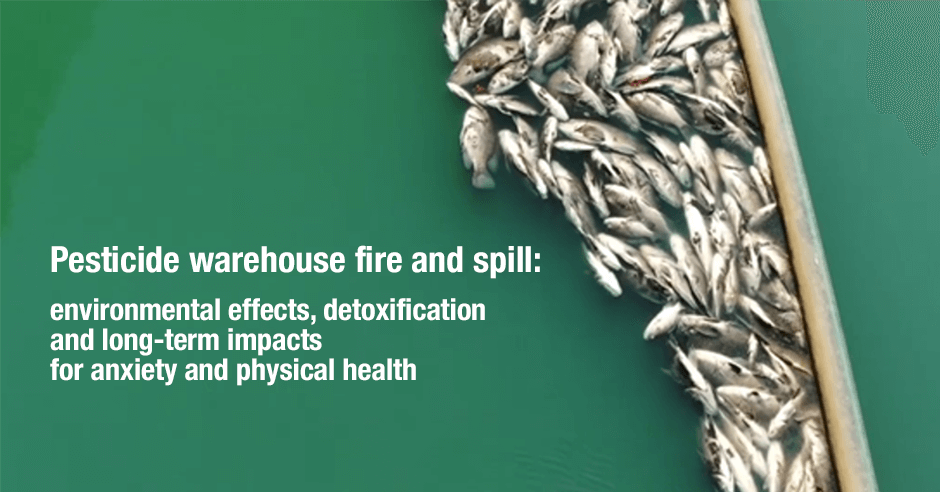
The toxic green river/lagoon with poisoned/dead fish piling up (Credit: Drone Fundi)

One month ago, during the political riots in South Africa, a warehouse in Cornubia was burned down causing a slew of pesticides, insecticides and fungicides to be spilled into the nearby river and ocean, and burned into the atmosphere. This happened in a semi-industrial area bordering on residential areas such as Umhlanga Rocks and Sunningdale, and the informal settlement Blackburn. My sister and her family live in Umhlanga Rocks and we frantically communicated (during the riots and after the spill), trying to figure out what was going on, with me offering insights on how to help them mitigate some of the short-term toxic health effects. These included practical steps to avoid the toxic air and water, and some nutritional approaches to start supporting detoxification.

While this blog is specific to the situation in South Africa, something like this could happen near you one day. For this reason, I’m sharing what I have learned and what I already know about environmental toxins so you are aware of the short-term and long-term impacts for anxiety, mood and physical health.

Much of the nutritional support and detoxification recommendations are also applicable if you are dealing with smoke from forest fires too, like much of the western states of the US and Canada right now, and some countries like France and Greece in the EU.

The South African civil unrest and riots that led to the pesticide fire and spill

This article describes the civil unrest and explains how “South Africa suffered an insurrection attempt with two provinces, KwaZulu-Natal and Gauteng disabled, and national fuel and food supply lines disrupted.” It is thought that twelve masterminds planned and executed it on social media and then lost control after the looting started.

The pesticide warehouse in Cornubia, KwaZulu-Natal, was leased by United Phosphorus Limited (UPL) and was burned down as a direct result of this rioting and looting.

Queen Nandi Drive Durban
One of hundreds of  burning buildings: Queen Nandi Drive, Durban (Credit: Kierran Allen Photography)

The Cornubia warehouse was one of many hundreds of factories, stores and warehouses that were burned down, all contributing to a toxic soup in the atmosphere.

Wildlife photographer, Kierran Allen, captures the above scene and many other shocking images. Check them out on his Facebook page and here.

The pesticide warehouse fire and spill

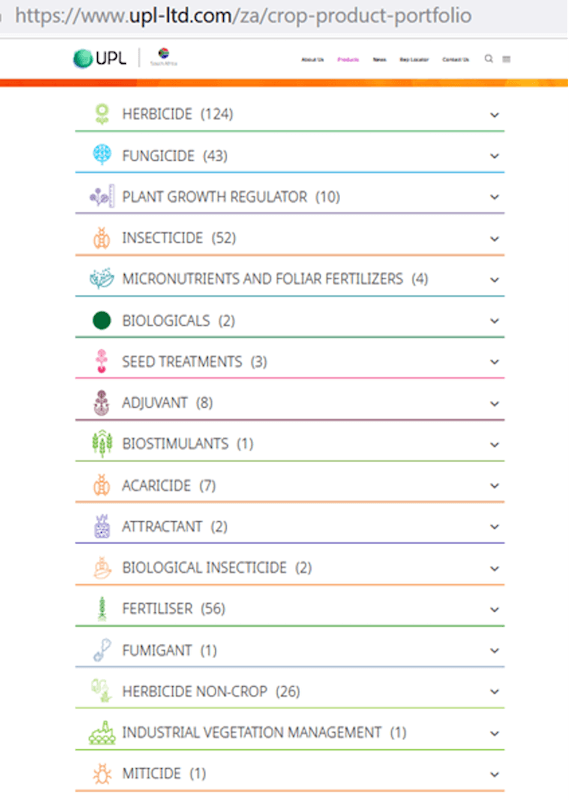
The UPL product list is long and includes 124 herbicides, 43 fungicides, 52 insecticides and various other chemicals. I looked through some of the categories and found atrazine, paraquat, glyphosate, chlorpyrifos and many more.

As of today, 30 days after the initial fire, the company has not disclosed which products were part of the fire and spill (more on this below).

spilled products

As a result of the warehouse fire and spill, the Ohlanga river and Umhlanga lagoon turned a strange green-blue and thousands and thousands of fish were killed. The beaches and sea water became toxic too. Koi fish in a nearby neighborhood pond died. Surfers reported burning skin while surfing at Umdloti, 12 km north of the lagoon mouth.

Individuals in the community reported headaches, burning skin and eyes, asthma, nose and throat problems, and coughing. I also saw a report of “oily black goop floating on my pool surface” and getting on the paws of their cats and dogs.

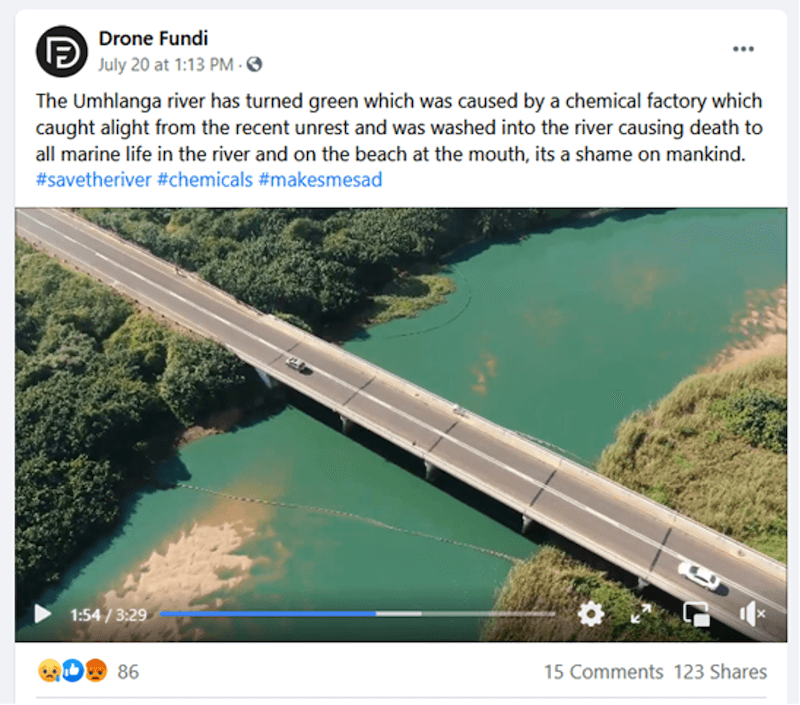
Drone Fundi published an excellent 3-minute aerial video on their Facebook page and gave me permission to snag a screenshot of the dead fish image for this blog.

Umhlanga river

umhlanga river
The toxic green-blue river/lagoon with poisoned/dead fish piling up (Credit: Drone Fundi)

Excellent coverage by environmental journalist, Tony Carnie

Environmental journalist, Tony Carnie, has provided the most comprehensive coverage in a number of excellent articles on The Daily Maverick blog:

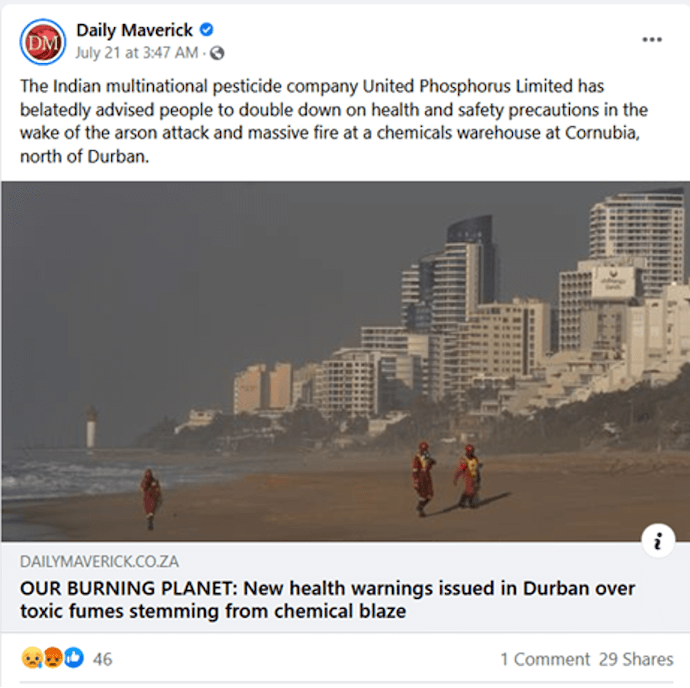
  • On July 20th, 2021: New health warnings issued in Durban over toxic fumes stemming from chemical blaze

    The Indian multinational pesticide company United Phosphorus Limited has belatedly advised people to double down on health and safety precautions in the wake of the arson attack and massive fire at a chemicals warehouse at Cornubia, north of Durban.

daily maverick article

  • On August 12, 2021: ‘Lift the cloud of secrecy over Durban toxic chemicals explosion,’ MPs and community leaders demand

    It has been exactly a month since a massive cloud of toxic chemical fumes engulfed residential areas over large parts of Durban for 12 days – but government officials and the Indian-owned UPL agrochemicals giant are still refusing to release a full inventory of the quantity and type of poisons to the public.

Red flags about the fire and spill that concern me

As I read the media articles, the company press releases and reached out to the company, a number of concerning red flags started showing up:

  • UPL hired a risk management company to do the press releases and respond to enquiries. I did correspond with them and although very responsive they didn’t initially provide details of what pesticides were involved and then offered a partial list
  • The first press release on July 17, 2021 mentioned a warehouse storing “plant protection products.” I had never heard this term before and had to look it up – they are pesticides and other chemicals like insecticides and fungicides. It took a good few days for this to make it into media reports
  • UPL consulted with Dr. Gerhard Verdoorn and shared this in a press releases on July 19, 2021:

    He was provided with a list of the crop solution products stored in the warehouse, and was requested to provide guidance on the possible health implications posed by the release of these products into the environment.

    In his view, there is a minimal risk of any long-term effects to the health of people exposed to smoke from the warehouse. However, exposure in the short term to some of the chemicals contained in the crop solution products may result in dermal, eye and respiratory irritation.

This does not mention that Dr. Verdoorn is an industry spokesperson and I have concerns that they continue to downplay the severity and possible long-term impacts.

This same press release did mention some of the chemicals that were in the fire:

Some of the herbicides, such as chloroacetamides (for example, acetochlor, S-metalochlor), phenoxycarboxylic acids (2,4-D, MCPA and benzoic acids, or dicamba) may not have burned out completely. Two pyrethroids – alpha-cypermethrin and lambda-cyhalothrin – which are dermal, eye and respiratory tract irritants may have been present in the smoke.

  • One of my first thoughts was why is this warehouse located so close to residential areas and why don’t they have safety measures in place
  • 30 days later there is no disclosure of what pesticides and how much (The Daily Maverick blog reports this). One article mentioned they don’t want to provoke anxiety in the community by sharing the list. Not knowing causes anxiety and concerns.
  • 30 days later there is no expert commentary on long term potential impacts (I share more on this below) and long term mitigation/cleanup and detoxification approaches for the community

After watching movies like Erin Brockovich, Dark Waters (the true story of Dupont and Teflon) and Rainmaker, red flags like this need to be documented. I’m more than happy to take all this back if and when things change.

I share all this for the residents of this area who are being impacted right now, and so you can get an idea of red flags to look out for if you encounter something like this in your neighborhood one day.

Update August 17th: The list of chemicals

According to this Daily Maverick article, Here it is: The toxic stockpile of chemicals in torched United Phosphorus Limited Durban warehouse

*More than 26 000 kilograms of Masta 900, an insecticide containing the “very potent neurotoxin” methomyl for which “contact with skin, inhalation of dust or spray, or swallowing may be fatal.”

*Another 1 800 litres of methamidophos, also a “very potent neurotoxin”.

*More than 40 000 litres of products using the herbicide paraquat which poses “high risk for all life forms”.

*Over 19 000 kilograms of Terbufos, another “very toxic” chemical presenting “high risk to all forms of life”.

*More than 600 000 kilograms of products containing tebuthiuron, a chemical classified as “very toxic to aquatic life … with long lasting effects” sold under a variety of brand names including Lava 800 and Limpopo SC.

*More than 160 000 kilograms of potassium hydroxide and 100 000 kilograms of ammonia hydroxide, both intermediate products used in manufacturing that are “extremely caustic” chemicals that burn skin on contact.

*More than 3 000 kilograms of Cyprex, a “highly active herbicide” containing halosulfuron-methyl, a product that “may damage the unborn child”, according to the European Chemicals Agency.

*More than 500 000 litres of Triclon, a product containing triclopyr butotyl and classified as “flammable, harmful and environmentally hazardous” and that “may cause lung damage if swallowed”.

*More than 30 000 litres of MSMA 720, also known as monosodium methylarsonate which has been shown to have “limited evidence of a carcinogenic effect”, and over time converts to inorganic arsenic in soil with the potential to contaminate water sources.

*More than 30 000 kilograms of oxamyl-based insecticides, including products Bandito and Oxadate, that also present “high risk for all life forms”.

*Almost 11 000 kilograms of Tenazole, containing “extremely flammable” fungicide terbuconazole.

*More than 1 000 litres of Colloso, a fungicide containing the active ingredient carbendazim which “may cause heritable genetic damage”,  “may impair fertility”, and “may cause harm to unborn child”.

Practical solutions for short-term immediate exposure

As soon as I learned what had happened I started reading everything in the local media, contacted UPL, looked up the products they carry and immediately shared Dr. Elisa Song’s 2018 blog with my sister and friends: How to Detoxify When Air Pollution is High. Dr. Song published this resource for keeping children and families safe and healthy through the tragedy of the 2018 California fire season.

I knew her advice on “Optimizing Indoor Air Quality” would be perfect for the toxic pesticide situation too:

  • keep doors and windows closed at all times
  • have separate outdoor clothes and shoes
  • vacuum daily and use a HEPA filter
  • bring plants inside to help improve air quality
  • use your air conditioner as another way to clean the air and
  • diffuse essential oils.

My additions were as follows:

  • don’t hang clothes on the washing line
  • keep your pets inside and wipe them down after they go outside
  • ideally go somewhere away from the situation
  • definitely don’t go to the source to see what is happening as exposure will likely be much higher.

I also reached out to colleagues for specific information relating to a pesticide spill and certified Toxicity and Detox Specialist, Sinclair Kennally, very kindly did a write up specially for this situation. In her blog post, Environmental Toxin Exposure: what to do when disasters hit, she shares wonderful advice on:

  • daily best practices during the disaster
  • DIY strategies to reduce toxic exposure when supplies are scarce
  • herbs that can be used for first aid in a pinch
  • most important supplements for recovery afterwards
  • using activated charcoal or zeolite on laundry loads
  • making your own air filter pet care (using apple cider vinegar and bentonite clay/activated charcoal)
  • emergency essentials (especially water).

Detoxification solutions, and respiratory and immune health

Dr. Song’s detox advice on the same blog on “Supporting Respiratory and Immune Health” is very applicable for a pesticide spill such as this and for forest fires (and other environmental pollution): “Daily epsom salt baths to support detoxification and enhance magnesium and glutathione levels,” liposomal glutathione, extra magnesium and essential oils to support detoxification, immune and respiratory health. She mentions citrus and lavender essential oils which offer the added benefit of being calming and helping with sleep too (more on that below).

On Sinclair’s blog she empahsizes “Toxin excretion is the most crucial stage of any disaster” and she discusses sauna, binders, mobilizers and support for detox pathways in great detail.

The stores were all closed because of the looting so I gathered some additional resources in case folks didn’t have certain things on hand:

  • N-Acetyl Cysteine/NAC – improves glutathione levels, is a powerful antioxidant, “acts directly as a scavenger of free radicals” and is a mucolytic (clears mucus and relieves breathing difficulties)
  • Rooibos tea – is neuroprotective and it’s “cell-protective activity …is connected with the ability of reducing glycaemia, inflammation as well as oxidative stress.” It also eases anxiety and supports healthy cortisol levels
  • Apple cider vinegar (preferably organic with the mother) – “could be promising for attenuation of liver cell damages induced by several toxins through its powerful antioxidant properties” due to its major constituents of flavonoids and polyphenols.
  • Broccoli sprouts or extract – “the sulforaphane may be exerting its protective actions by activating a signaling molecule, NRF2, that elevates the capacity of cells to adapt to and survive a broad range of environmental toxins.” The authors go on to say it’s a “frugal, simple and safe means that can be taken by individuals to possibly reduce some of the long-term health risks associated with air pollution.”  A simple way to get some of these benefits is to make your own homemade broccoli sprouts (easy and lots of fun to nurture them and watch them grow!) and to consume them daily!
  • Vitamin D3 – “vitamin D is a significant factor in detoxification and protection against environmental toxins” (used based on vitamin D levels i.e. always test first)

Sleep, stress/anxiety, pyroluria and immunity

Sinclair starts with a reminder to “be gentle and kind with yourself and others” and Dr. Song also mentions the importance of  managing stress: “Psychological stress IS a toxin and fills up our inflammation bucket as much as any physical toxin.” Dr. Song recommends some wonderful kid’s books and breathing/meditation apps.

Of course, I wholeheartedly support their sage advice. I also recommend increasing tryptophan or 5-HTP, and GABA, as needed, if you are already using these amino acid supplements. You’ll increase  tryptophan or 5-HTP for the worry-type low serotonin anxiety and/or GABA for the physical-tension low GABA anxiety.

Supporting serotonin and GABA levels also help with sleep issues and GABA also supports a good immune system.

We know these chemicals can have a direct impact on neurotransmitter levels. One example is the insecticide fipronil impacting GABA levels. In this blog I share how the main mechanism of action is by targeting the gamma-aminobutyric acid (GABA) receptor and that recent research points to increased anxiety, aggressive behavior, memory problems and even Alzheimer’s disease in animal studies.

Another example is the herbicide glyphosate, which affects gut microbiota, causing anxiety and depression-like behaviors in mice, very likely via alterations in GABA and serotonin levels.

I also recommend bumping up your pyroluria supplements because zinc and vitamin B6 are depleted by added stress and worry.

Potential long term impacts on mental and physical health

This paper, Environmental Exposures and Depression: Biological Mechanisms and Epidemiological Evidence shares that pesticides are “quickly absorbed through the skin, mucous membranes, gastrointestinal and respiratory tracts, and the placenta” and can cause depression via various mechanisms:

  • Inhibiting the enzyme acetylcholinesterase (AChE), which results in decreased degradation of the neurotransmitter acetylcholine
  • Interference with the serotonergic and dopaminergic systems

Depression may also be caused by DNA methylation in specific genes, “increased oxidative stress, astrocyte dysfunction, and impaired hippocampal neurotransmission.”  Prenatal exposure also increases the risk of depression.

This chapter, Psychiatric Effects of Organic Chemical Exposure, from the book, Effects of Persistent and Bioactive Organic Pollutants on Human Health, states that:

Clinicians should remain aware that psychiatric symptoms can arise from toxic chemicals in diverse situations including terrorist attacks with chemical agents, mass chemical disasters in industrial or community settings, individual chemical accidents, and intentional solvent inhalation. Emerging evidence also indicates that prenatal exposure to organic compounds adversely affects neurodevelopment in humans and may be associated with later risk of mental illness.

Other chapters in this book cover cancer, diabetes, heart disease, obesity, thyroid function, women’s and men’s reproductive health, bone and joint health, immunity, respiratory illnesses, cognitive function and Parkinson’s disease.

All this is why we need to know what products were part of the fire and spill.

Resources if you are new to using the amino acids as supplements

If you are new to using the amino acids tryptophan/5-HTP or GABA as supplements and want to know more in case you need them in a future situation, here is the Amino Acids Mood Questionnaire from The Antianxiety Food Solution (you can see all the low serotonin symptoms here) and a brief overview here, Anxiety and targeted individual amino acid supplements: a summary.

If you suspect low serotonin or low levels of any of the neurotransmitters and do not yet have my book, The Antianxiety Food Solution – How the Foods You Eat Can Help You Calm Your Anxious Mind, Improve Your Mood, and End Cravings, I highly recommend getting it and reading it before jumping in and using amino acids so you are knowledgeable. It also covers all the basics of a healthy diet that Dr. Song recommends.

The book doesn’t include product names (per the publisher’s request) so this blog, The Antianxiety Food Solution Amino Acid and Pyroluria Supplements, lists the amino acid products that I use with my individual clients and those in my group programs.

With much appreciation to Dr. Song, Sinclair for their helpful resources, the journalists, advocates and photographers, and to all the researchers.

Have you (or a loved one) experienced a pesticide or other environmental spill/disaster (or excessive smoke from a forest fire) and have these detox approaches and anxiety/sleep recommendations helped (or are they helping right now)?

Do you have any additional tips to share?

Feel free to post any questions here too.

Filed Under: Anxiety, Depression, Detoxification, Environment, Women's health Tagged With: 5-HTP, anxiety, Cornubia, depression, detoxification, environmental disaster, fire, forest fires, fungicides, GABA, insecticides, long-term impacts, pesticide, pesticides, physical health, serotonin, sleep, south africa, spill, stress, toxic health effects, tryptophan, Umhlanga Rocks

Timing/combinations of tryptophan and 5-HTP for anxiety, depression and bad sleep (premenstrual dysphoric disorder/PMDD)

August 6, 2021 By Trudy Scott 28 Comments

tryptophan 5-htp timing

Naomi asked these questions about tryptophan timing, using it in the morning and her PMDD (premenstrual dysphoric disorder) symptoms of anxiety, depression and bad sleep: 

I heard your talk on the Biology of Trauma summit, thank you it was great. When’s the best time to take tryptophan? I want to try it for PMDD depression & anxiety along with accompanied bad/little sleep.

I’ve read it needs to be taken on an empty stomach. If I take it in the mornings will it make me drowsy for the day? I struggle with having an empty stomach in the evenings as I often need to eat something close to bedtime to have the energy to sleep through.

I thanked Naomi for her kind words and shared that tryptophan is best used mid-afternoon and evening when serotonin levels take a downwards dip. And tryptophan (and the other amino acids) must always be taken on an empty stomach/away from protein. I also shared how she may want to experiment with also using 5-HTP at various times in the day and in different combinations (more on that below).

Regarding the evening dose, tryptophan can be used between dinner and a bedtime snack if a snack is necessary for blood sugar stability (for improving sleep).

I shared this blog as an additional resource for her – Tryptophan for PMS: premenstrual dysphoria, mood swings, tension, and irritability

In a study published in 1999, A placebo-controlled clinical trial of L-tryptophan in premenstrual dysphoria, tryptophan was found to reduce symptoms of PMS when used in the luteal phase or second half of the cycle (i.e. after ovulation).

I’ve seen both tryptophan and 5-HTP improve symptoms in 2-3 cycles (often in conjunction with GABA) and other steps I outline in the above blog. I don’t typically have clients only use it after ovulation but this is one way a trial could be approached.

Using a combination of tryptophan and 5-HTP

Regarding Naomi’s question about taking tryptophan in the morning and her concern about it making her drowsy during the day, this is my feedback about possibly experimenting with also using 5-HTP at various times in the day and in different combinations:

  • Many folks do not need serotonin support earlier in the day since it goes down at the end of the day but there are some women who do
  • If you are someone who does need serotonin support earlier in the day, you may do very well with tryptophan i.e. it may not make you sleepy
  • If you are someone who does need serotonin support earlier in the day, you may find that tryptophan does make you sleepy and you do better with 5-HTP earlier in the day. In this case, you would use 5-HTP in the morning (as needed, possibly on waking and/or mid-morning) and tryptophan in the afternoon and evening.

And just to add to the mix of variations, keep in mind that some folks do better on 5-HTP (at any time of the day) and some folks with high cortisol find 5-HTP too stimulating.

The way to figure out which amino acid and which combination works best for you is to do a trial of the various combinations and keep a careful log of your responses.

I really do recommend my book when you are new to the amino acids

I also reminded her that when you are new to the amino acids I really do recommend my book “The Antianxiety Food Solution” so you understand exactly how to use them. There is an entire chapter on the amino acids.

I also cover other anxiety nutrition solutions like gluten/sugar/caffeine removal (all important for anxiety, depression and sleep), blood sugar control (often a factor in not being able to sleep through the night and daytime anxiety), gut health (affects mood and can also affect sleep), pyroluria (the zinc, vitamin B6 and evening primrose oil are key for hormone health). I reminded her that it’s the amino acids and diet we must work on.

If you’ve been reading my blog posts and following me for awhile, you know I speak on many summits. I see these interviews as a great introduction for folks new to the amino acids but cannot possibly cover everything in 45-60 minutes.

Additional information on PMDD and low serotonin

Here is additional information on PMDD and low serotonin – Premenstrual Dysphoric Disorder: Epidemiology and Treatment:

It is possible that women with PMDD are more sensitive to [the] effects of estrogens on serotonergic function. Women with PMDD or PMS exhibit specific serotonin abnormalities that are particularly apparent in the late luteal phase [or second half of the cycle] when estrogen levels have declined. These include a deficiency in whole blood serotonin, blunted serotonin production in response to l-tryptophan challenge and, and aggravated premenstrual symptoms during tryptophan depletion.

Be aware that the authors recommend antidepressants as the first-line treatment for PMDD and unfortunately do not mention using tryptophan, GABA or a dietary approach.

I always use this approach when serotonin is low

Keep in mind that this discussion about tryptophan and 5-HTP timing and combinations is not necessarily only applicable for PMDD or PMS but can be used across the board when serotonin support is needed.  I always use this approach when serotonin is low i.e. someone has worry-type ruminating anxiety, depression, afternoon and evening cravings, irritability, anger issues.

Resources if you are new to using the amino acids as supplements

If you are new to using the amino acids tryptophan/5-HTP or GABA as supplements, here is the Amino Acids Mood Questionnaire from The Antianxiety Food Solution (you can see all the low serotonin symptoms here) and a brief overview here, Anxiety and targeted individual amino acid supplements: a summary.

As I mentioned above, if you suspect low serotonin or low levels of any of the neurotransmitters and do not yet have my book, The Antianxiety Food Solution – How the Foods You Eat Can Help You Calm Your Anxious Mind, Improve Your Mood, and End Cravings, I highly recommend getting it and reading it before jumping in and using amino acids so you are knowledgeable. And be sure to share it with the team you or your loved one is working with.

The book doesn’t include product names (per the publisher’s request) so this blog, The Antianxiety Food Solution Amino Acid and Pyroluria Supplements, lists the amino acid products that I use with my individual clients and those in my group programs.

Have you (or a loved one) been diagnosed with PMDD, PMS or have low serotonin symptoms?

Has tryptophan or 5-HTP helped and what combination and what timing has worked best for you?

Feel free to post any questions here too.

Filed Under: Anxiety, Tryptophan, Women's health Tagged With: 5-HTP, anxiety, bad sleep, combinations, depression, drowsy, empty stomach, GABA, insomnia, morning, PMDD, PMS, premenstrual dysphoric disorder, serotonin, Timing, tryptophan

  • « Go to Previous Page
  • Page 1
  • Interim pages omitted …
  • Page 4
  • Page 5
  • Page 6
  • Page 7
  • Page 8
  • Interim pages omitted …
  • Page 13
  • Go to Next Page »

Primary Sidebar

NEW! GABA QuickStart Homestudy (with special intro pricing)

gaba quickstart homestudy

Free Report

9 Great Questions Women Ask about Food, Mood and their Health

You'll also receive a complimentary subscription to my ezine "Food, Mood and Gal Stuff"


Connect with me

Popular Posts

  • Amino Acids Mood Questionnaire from The Antianxiety Food Solution
  • The Antianxiety Food Solution Amino Acid and Pyroluria Supplements
  • Pyroluria Questionnaire from The Antianxiety Food Solution
  • Collagen and gelatin lower serotonin: does this increase your anxiety and depression?
  • Tryptophan for the worry-in-your-head and ruminating type of anxiety
  • GABA for the physical-tension and stiff-and-tense-muscles type of anxiety
  • The Antianxiety Food Solution by Trudy Scott
  • Seriphos Original Formula is back: the best product for anxiety and insomnia caused by high cortisol
  • Am I an anxious introvert because of low zinc and vitamin B6? My response to Huffington Post blog
  • Vagus nerve rehab with GABA, breathing, humming, gargling and key nutrients

Recent Posts

  • What do I use instead of Seriphos to help lower high cortisol that is affecting my sleep and making me anxious at night?
  • BeSerene™ GABA/theanine cream eases severe muscle tension in her neck/shoulders, prevents her bad headaches and quells her anxiety
  • How the correct approach, dose and sublingual use of GABA can be calming and not cause a flushed and itchy face and neck
  • The amino acid glutamine improves low mood by addressing gut health, and it has calming effects too
  • Flight anxiety with heightened breath, physical tension and also fearing the worst (the role of low GABA and low serotonin)

Categories

  • 5-HTP
  • AB575
  • Addiction
  • ADHD
  • Adrenals
  • Alcohol
  • Allergies
  • Alzheimer's disease
  • Amino Acids
  • Anger
  • Antianxiety
  • Antianxiety Food Solution
  • Antidepressants
  • Anxiety
  • Anxiety and panic
  • Autism
  • Autoimmunity
  • benzodiazapines
  • Bipolar disorder
  • Books
  • Caffeine
  • Cancer
  • Candida
  • Children/Teens
  • Collagen
  • Cooking equipment
  • Coronavirus/COVID-19
  • Cravings
  • Depression
  • Detoxification
  • Diabetes
  • Diet
  • DPA/DLPA
  • Drugs
  • EFT/Tapping
  • EMF
  • EMFs
  • Emotional Eating
  • Endorphins
  • Environment
  • Essential oils
  • Events
  • Exercise
  • Fear
  • Fear of public speaking
  • Fertility and Pregnancy
  • Fish
  • Food
  • Food and mood
  • Functional neurology
  • GABA
  • Gene polymorphisms
  • General Health
  • Giving
  • Giving back
  • Glutamine
  • Gluten
  • GMOs
  • Gratitude
  • Gut health
  • Heart health/hypertension
  • Histamine
  • Hormone
  • Hyperparathyroidism
  • Hypoglycemia
  • Immune system
  • Inflammation
  • Insomnia
  • Inspiration
  • Introversion
  • Joy and happiness
  • Ketogenic diet
  • Lithium orotate
  • Looking awesome
  • Lyme disease and co-infections
  • MCAS/histamine
  • Medication
  • Men's health
  • Mental health
  • Mercury
  • Migraine
  • Mold
  • Movie
  • MTHFR
  • Multiple sclerosis
  • Music
  • NANP
  • Nature
  • Nutritional Psychiatry
  • OCD
  • Osteoporosis
  • Oxalates
  • Oxytocin
  • Pain
  • Paleo
  • Parasites
  • Parkinson’s disease
  • PCOS
  • People
  • PMS
  • Postpartum
  • PTSD/Trauma
  • Pyroluria
  • Questionnaires
  • Real whole food
  • Recipes
  • Research
  • Schizophrenia
  • serotonin
  • SIBO
  • Sleep
  • Special diets
  • Sports nutrition
  • Stress
  • Sugar addiction
  • Sugar and mood
  • Supplements
  • Teens
  • Testimonials
  • Testing
  • The Anxiety Summit
  • The Anxiety Summit 2
  • The Anxiety Summit 3
  • The Anxiety Summit 4
  • The Anxiety Summit 5
  • The Anxiety Summit 6
  • Thyroid
  • Thyroid health
  • Toxins
  • Tryptophan
  • Tyrosine
  • Uncategorized
  • Vegan/vegetarian
  • Women's health
  • Yoga

Archives

  • October 2025
  • September 2025
  • August 2025
  • July 2025
  • June 2025
  • May 2025
  • April 2025
  • March 2025
  • February 2025
  • January 2025
  • November 2024
  • October 2024
  • September 2024
  • August 2024
  • July 2024
  • June 2024
  • May 2024
  • April 2024
  • March 2024
  • February 2024
  • January 2024
  • December 2023
  • November 2023
  • October 2023
  • September 2023
  • August 2023
  • July 2023
  • June 2023
  • May 2023
  • April 2023
  • March 2023
  • February 2023
  • January 2023
  • December 2022
  • November 2022
  • October 2022
  • September 2022
  • August 2022
  • July 2022
  • June 2022
  • May 2022
  • April 2022
  • March 2022
  • February 2022
  • January 2022
  • December 2021
  • November 2021
  • October 2021
  • September 2021
  • August 2021
  • July 2021
  • June 2021
  • May 2021
  • April 2021
  • March 2021
  • February 2021
  • January 2021
  • December 2020
  • November 2020
  • October 2020
  • September 2020
  • August 2020
  • July 2020
  • June 2020
  • May 2020
  • April 2020
  • March 2020
  • February 2020
  • January 2020
  • December 2019
  • November 2019
  • October 2019
  • September 2019
  • August 2019
  • July 2019
  • June 2019
  • May 2019
  • April 2019
  • March 2019
  • February 2019
  • January 2019
  • December 2018
  • November 2018
  • October 2018
  • September 2018
  • August 2018
  • July 2018
  • June 2018
  • May 2018
  • April 2018
  • March 2018
  • February 2018
  • January 2018
  • December 2017
  • November 2017
  • October 2017
  • September 2017
  • August 2017
  • July 2017
  • June 2017
  • May 2017
  • April 2017
  • March 2017
  • February 2017
  • January 2017
  • December 2016
  • November 2016
  • October 2016
  • September 2016
  • August 2016
  • July 2016
  • June 2016
  • May 2016
  • April 2016
  • March 2016
  • February 2016
  • January 2016
  • December 2015
  • November 2015
  • October 2015
  • September 2015
  • August 2015
  • July 2015
  • June 2015
  • May 2015
  • April 2015
  • March 2015
  • February 2015
  • January 2015
  • December 2014
  • November 2014
  • October 2014
  • September 2014
  • August 2014
  • July 2014
  • June 2014
  • May 2014
  • April 2014
  • March 2014
  • February 2014
  • January 2014
  • December 2013
  • November 2013
  • October 2013
  • September 2013
  • August 2013
  • July 2013
  • June 2013
  • May 2013
  • April 2013
  • March 2013
  • February 2013
  • January 2013
  • December 2012
  • November 2012
  • October 2012
  • August 2012
  • July 2012
  • June 2012
  • May 2012
  • April 2012
  • March 2012
  • February 2012
  • January 2012
  • December 2011
  • November 2011
  • October 2011
  • September 2011
  • August 2011
  • July 2011
  • June 2011
  • May 2011
  • April 2011
  • March 2011
  • February 2011
  • January 2011
  • December 2010
  • October 2010
  • September 2010
  • July 2010
  • May 2010
  • April 2010
  • March 2010
  • February 2010
  • January 2010
  • November 2009

Share the knowledge!

The above statements have not been evaluated by the Food and Drug Administration. Products listed in this website are not intended to diagnose, treat, cure or prevent any disease.

The information provided on this site is for informational and educational purposes only and is not intended as a substitute for advice from your physician or other health care professional. You should consult with a healthcare professional before starting or modifying any diet, exercise, or supplementation program, before taking or stopping any medication, or if you have or suspect you may have a health problem.


Copyright © 2026 Trudy Scott. All Rights Reserved. | Privacy | Terms and Conditions | Refund Policy | Medical Disclaimer

Free Report

9 Great Questions Women Ask about Food, Mood and their Health

You’ll also receive a complimentary subscription to my ezine “Food, Mood and Gal Stuff”