• Skip to primary navigation
  • Skip to main content
  • Skip to primary sidebar

everywomanover29 blog

Food, Mood and Women's Health – Be your healthiest, look and feel great!

  • Blog
  • About
  • Services
  • Store
  • Resources
  • Testimonials
  • The Book
  • Newsletter
  • Contact
  • Search this site

Amino Acid Precautions

November 16, 2014 By Trudy Scott 159 Comments

There are some precautions to be aware of when taking supplemental amino acids. These are reprinted from The Mood Cure (2004) with permission from Julia Ross. Consult a knowledgeable practitioner before taking any supplemental amino acids if any of the following statements apply to you:

  • React to supplements, foods or medications with unusual or uncomfortable symptoms
  • Have a serious physical illness, particularly cancer
  • Have severe liver or kidney problems
  • Have an ulcer (amino acids are slightly acidic)
  • Have schizophrenia or other mental illness
  • Pregnant or nursing
  • Taking any medications for mood problems, particularly MAO inhibitors, or more than one SSRI

Also, please be aware of the following precautions in regard to specific amino acids and consult with a knowledgeable practitioner if in doubt:

  • Overactive thyroid/Grave’s disease: tyrosine, DLPA
  • Phenylketonuria (PKU): tyrosine, DLPA
  • Melanoma: tyrosine, DLPA
  • High Blood pressure: tyrosine, DLPA
  • Migraine headaches: tyrosine, DLPA
  • Low blood pressure: GABA, taurine
  • High blood pressure and on blood pressure medications: GABA, taurine (Sept 2023: research)
  • Asthma: tryptophan, melatonin
  • Severe depression: melatonin
  • Bipolar disorder: tyrosine, DLPA, glutamine
  • Cancer: there is a question around glutamine (some research shows it’s beneficial some research suggests avoiding it – check with your oncologist if you are currently undergoing treatment)

Amino Acids and SSRIs

If you’re currently taking a selective serotonin reuptake inhibitor (SSRI) or monoamine oxidase inhibitor (MAOI), don’t take either 5-HTP or tryptophan unless you’re working with a knowledgeable practitioner. Taking 5-HTP or tryptophan with either of these classes of antidepressants may cause serotonin syndrome, an adverse reaction characterized by agitation, confusion, rapid heart rate, and blood pressure fluctuations. If you experience these symptoms, stop taking 5-HTP or tryptophan immediately. When I have clients who are taking a single SSRI who might also benefit from tryptophan or 5-HTP, I have them take the amino acid six hours apart from their medication—after obtaining approval from their doctor and with their doctor monitoring for adverse reactions. Please do the same. I also recommend the chapter on antidepressants and amino acids in The Mood Cure: The 4-Step Program to take charge of your Emotions

The above (except for the cancer/glutamine statement) is an excerpt from my book The Antianxiety Food Solution: How the Foods You Eat Can Help You Calm Your Anxious Mind, Improve Your Mood, and End Cravings

Here is a link to the information shared during my interview on the Anxiety Summit season 2: Targeted individual amino acids for eliminating anxiety: practical applications 
The questionnaire is also on the blog – amino acid questionnaire   It has many comments that are invaluable.

Filed Under: Amino Acids, Antianxiety, Anxiety and panic, The Anxiety Summit 2 Tagged With: amino acids, Julia Ross, precautions, the antianxiety food solution, the mood cure, Trudy Scott

The Anxiety Summit – Eggs, broths, sprouts, almond flour, questions and what to do next

November 16, 2014 By Trudy Scott 31 Comments

Trudy Scott Anxiety

The host of the Anxiety Summit, Trudy Scott, Food Mood Expert and Nutritionist, author of The Antianxiety Food Solution talks about:

Eggs, broths, sprouts, almond flour, questions and what to do next

  • Are eggs a superfood? and choline for a better mood and less anxiety
  • More superfoods: broths, sprouts and curcumin
  • Reconsidering almond flour for baking
  • Questions answered (a select few from the blog and facebook page)
  • What you can get out of the summit, resources and where to go next

We’ve gathered all the speaker/topic blogs into one blog called Anxiety Summit Season 2 speakers and topics so you can find them easily. These have snippets from our interviews, links to research, and links to speaker books and gifts.  You can also use these blogs to comment, share your experiences and ask questions. 

Here is the New York Times article U.S.D.A. Approves Modified Potato

The potato’s DNA has been altered so that less of a chemical called acrylamide, which is suspected of causing cancer in people, is produced when the potato is fried.

A Huffpo blog announces Doritos-Flavored Mountain Dew Is Real

Here is New York City’s first take-out window devoted to sippable broths

I recently spoke on Dr. Josh Axe’s Natural Cures summit and here is a great broth recipe on his site

I love this picture in the LA urban farming article

The dinner menu lists “our home-grown items”: broccolini, baby carrots, blueberries, figs, snap peas and heirloom tomatoes.

Here is a link to Julia Rucklidge’s TEDX talk: The surprisingly dramatic role of nutrition in mental health. I love how she opens with:

what I’m going to share today may sound as radical as hand-washing sounded to a mid-19th century doctor and yet it is equally scientific. It is the simple idea that optimizing nutrition is a safe and viable way to avoid, treat or lessen mental illness. Nutrition matters. Poor nutrition is a significant and modifiable risk factor for the development of mental illness

Eggs are one of the most nutritious foods on earth! Here is some of the egg research:

“Orally administered whole egg demonstrates antidepressant-like effects in the forced swimming test on rats”

Skipping breakfast can increase depression, anxiety and stress levels and eggs can be part of a healthy breakfast. “A cross-sectional investigation of depressive, anxiety, and stress symptoms and health-behavior participation in Australian university students”

Eggs are an excellent source of choline. Research shows that plasma choline levels are related to anxiety levels

The lowest choline quintile was significantly associated with high anxiety levels.

Results from an October 2014 study in Behavioral Brain Research suggest that

high choline intake during early development can prevent or dramatically reduce deficits in social behavior and anxiety in an autistic mouse model

An article on Webmd, Egg-Rich Diet Not Harmful in Type 2 Diabetes suggest that

eating two eggs per day, 6 days a week can be a safe part of a healthy diet for people with type 2 (that’s 12 eggs a week – yeah!)

I blogged about eggs and that you can eat the yolk this last month. You can read about TMAO concerns in the comments of the above blog.

Grow your own broccoli sprouts to get sulforaphane! Here is the study called Sulforaphane treatment of autism spectrum disorder (ASD), published Oct 2014

improvement in social interaction, abnormal behavior, and verbal communication

… oxidative stress, depressed glutathione synthesis, reduced mitochondrial function and oxidative phosphorylation, increased lipid peroxidation, and neuroinflammmation

Here is the curcumin depression study

In a randomised, double-blind, placebo-controlled study, 56 individuals with major depressive disorder were treated with curcumin (500 mg twice daily) or placebo for 8 weeks.

From weeks 4 to 8, curcumin was significantly more effective than placebo in improving several mood-related symptoms

Here is my healthy travel foods blog that includes pemmican, THE energy bar of the 21st century. You can purchase pemmican from US Wellness Meats.

Here is my carob blog with the yummy Carob Cinnamon Delight al la Trudy

I mentioned a number of studies related to PTSD symptoms. Here they are:

  • Lower EPA (one of the omega-3 fatty acids) levels are associated with the severity of clinical symptoms in PTSD.
  • One factor could be low levels of vitamin D
  • Another factor in PTSD could be cortisol and DHEA
  • And a new study found a connection between PTSD and low HDL and high triglycerides

Here are the Amino Acid Precautions. They will also be added to my blog Targeted individual amino acids for eliminating anxiety: practical applications.

If you are wanting to find out more about pyroluria, do check out my session from season 1 “How zinc and vitamin B6 prevent pyroluria and social anxiety.   And here is the pyroluria questionnaire from my book.

If you missed my opening interview here are a few lines from “Top of the World”

A new beginning, a brand new day
All of my fears are gone away
I feel so calm, so free, so whole
Right now, I’m feeling on top of the world

Grab your copy of the song here if you don’t yet have it!

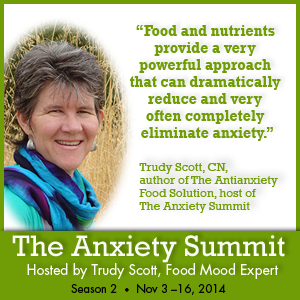
“Food and nutrients provide a very powerful approach that can dramatically reduce and very often completely eliminate anxiety- and can totally prevent it in the first place too.”

You can have zero anxiety! Really! You deserve to feel on top of the world.

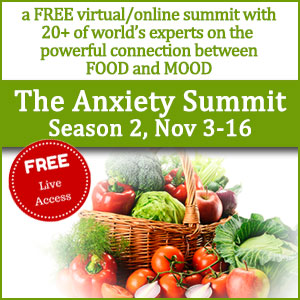
If you are not already registered for the Anxiety Summit you can get live access to the speakers of the day here www.theAnxietySummit.com

Filed Under: Antianxiety, Anxiety and panic, Food and mood, The Anxiety Summit 2 Tagged With: almond flour, anxiety, broths, curcumin, eggs, sprouts, the anxiety summit, Trudy Scott

The surprisingly dramatic role of nutrition in mental health: Julia Rucklidge at TEDx

November 16, 2014 By Trudy Scott 29 Comments

Julia Rucklidge

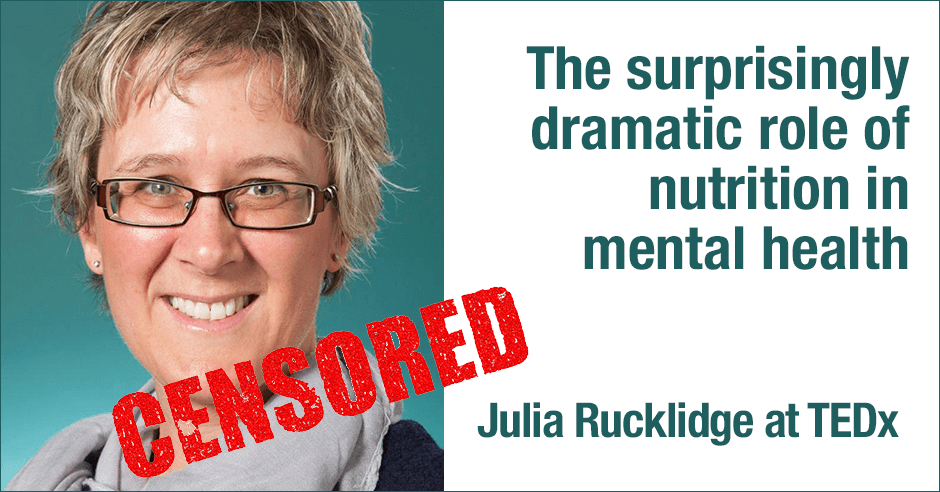
Julia Rucklidge, PhD, researcher from New Zealand, recently did this amazing TEDx talk called: The surprisingly dramatic role of nutrition in mental health

I love how she opens with:

what I’m going to share today may sound as radical as hand-washing sounded to a mid-19th century doctor and yet it is equally scientific. It is the simple idea that optimizing nutrition is a safe and viable way to avoid, treat or lessen mental illness. Nutrition matters. Poor nutrition is a significant and modifiable risk factor for the development of mental illness

Here are some real gems from her talk:

A well-nourished body and brain is better able to withstand ongoing stress

When people get well they get well in all areas: improved sleep, mood stabilization, reduction in anxiety and less need for cigarettes/cannabis/alcohol.


My research and other research from around the world show 60-70% of people respond to micronutrients – this shows just how powerful this intervention is


We should focus on food and lifestyle changes and exercise first, then therapy and save medications for when these approaches don’t work

I’d like to share the ending of Julia Rucklidge’s talk. She shares the story of how limes on ships in the 1600s eliminated deaths from scurvy but that it took 264 years for the British government to mandate the use of citrus on ships. She closes with this profound question and challenge:

How long will it take us to recognize that that sub-optimal nutrition is contributing to the epidemic of mental illness? Nutrition matters!

Bravo Julia! And thank you for all the great research you’re doing! We appreciate you!

UPDATE: June 8, 2018

I have decided to update the blog and share it again because Professor Rucklidge is sharing powerful research-based evidence about food-as-medicine for mental health and her talk is being flagged/censored by TEDx and this is not acceptable!

Professor Bonnie J. Kaplan, PhD, from the University of Calgary shared this information with me via an email:

There have been almost 900,000 views of Julia Rucklidge’s TEDx talk on nutrition and mental health, with many complimentary comments. Last week, however, the TED organization inexplicably “flagged” the video with the following comment:

“NOTE FROM TED: We’ve flagged this talk, which was filmed at a TEDx event, because it appears to fall outside TEDx’s curatorial guidelines. There is limited evidence to support the claims made by this speaker.”

Julia has attempted to educate the TED people regarding the fact that over 35 peer-reviewed publications could hardly be described as “limited evidence,” and that her interpretations do not go beyond the data. But they are not interested in her evidence.

The whole thing seems so strange: isn’t TED supposed to be all about innovation? But clearly, some lobbyist has convinced them that a non-pharmaceutical treatment should not be respected.

I’m sharing it again and updating the blog so you can watch it again or watch it for the first time and be inspired and have hope!

We’d like to ask for your help in please sharing too. Let us support her work and all the nutritional psychiatry researchers at ISNPR and around the world!

  • Even if you have already watched it, please click on it again and watch again (click on the video link above or use this link)
  • Share the youtube video and/or this blog with others, through Facebook or email or twitter or word of mouth (or all of the above)
  • Comment below the youtube video and/or comment on this blog of mine
  • Ask your friends, family and colleagues to do the same

More about Professor Rucklidge’s research interests

Professor Rucklidge’s research interests are centered on the role of nutrition in the expression and treatment of mental illness, from ADHD to depression to stress following natural disasters. Research methodologies include single case research designs, open label trials and randomized controlled trials.

  • ADHD
  • Child and adolescent clinical psychology
  • Clinical psychology
  • Learning disabilities
  • Young Offending
  • Earthquake research
  • Nutritional interventions
  • Mood Disorders

Some of her publications on micronutrients

  • Database Analysis of Depression and Anxiety in a Community Sample-Response to Micronutrient Intervention

Overall, people from the general population who suffer from mood and anxiety problems may benefit from improved nutritional status achieved with nutritional supplements.

  • Vitamin-mineral treatment improves aggression and emotional regulation in children with ADHD: a fully blinded, randomized, placebo-controlled trial

Micronutrients improved overall function, reduced impairment and improved inattention, emotional regulation and aggression, but not hyperactive/impulsive symptoms, in this sample of children with ADHD. Although direct benefit for core ADHD symptoms was modest, with mixed findings across raters, the low rate of adverse effects and the benefits reported across multiple areas of functioning indicate micronutrients may be a favourable option for some children, particularly those with both ADHD and emotional dysregulation.

  • A randomised trial of nutrient supplements to minimise psychological stress after a natural disaster. This study was co-authored with Professor Kaplan, and adds to the body of evidence showing that nutrient formulas with multiple minerals and/or vitamins (such as a B-complex) minimise/minimize stress associated with natural disasters such as earthquakes, fires and floods. I blogged about this after Hurricane Harvey in Houston.


  • Could yeast infections impair recovery from mental illness? A case study using micronutrients and olive leaf extract for the treatment of ADHD and depression. This case study reports that infections like candida can contribute to poor gut health and inflammation, leading to nutrient absorption issues and deterioration in psychiatric symptoms. The yeast overgrowth has to be addressed in order for the micronutrients to be effective. I blog about this here also sharing the candida-serotonin connection.

 Nutritional medicine as mainstream in psychiatry

Professor Rucklidge is also a contributing author to Nutritional medicine as mainstream in psychiatry which I blog about here

Psychiatry is at an important juncture, with the current pharmacologically focused model having achieved modest benefits in addressing the burden of poor mental health worldwide. Although the determinants of mental health are complex, the emerging and compelling evidence for nutrition as a crucial factor in the high prevalence and incidence of mental disorders suggests that diet is as important to psychiatry as it is to cardiology, endocrinology, and gastroenterology. Evidence is steadily growing for the relation between dietary quality (and potential nutritional deficiencies) and mental health, and for the select use of nutrient-based supplements to address deficiencies, or as monotherapies or augmentation therapies.

As you can tell I’m a big fan of her research work and what an honor it was for me to interview her on one of the Anxiety Summits: What if… Nutrition could Treat Anxiety and Depression? She shared wise words then than seem very relevant to this censorship of her TEDx talk:

How long is it going to take our society to pay attention to the research that shows that suboptimal nutrition is contributing to the epidemic of mental illness? Are we just going to sit around and ignore this evidence to our peril? Or are we going to start paying attention and start to invest in the really important research that needs to happen?

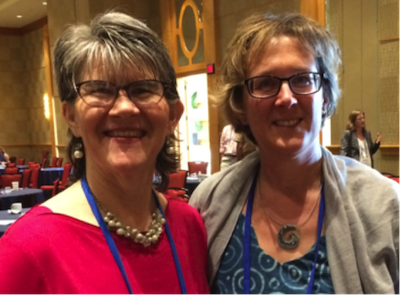
It was a thrill to then finally meet her in person last year at the ISNPR conference.

Julia Rucklidge and Trudy Scott
Meeting Julia Rucklidge at the ISNPR conference

This nutritional psychiatry work is widely supported by many practitioners

This nutritional psychiatry work is widely supported by many practitioners. Last year I interviewed Dr. Mark Hyman MD, creator of the Broken Brain series and author of What the Heck Should I Eat? In our interview he talks about somatopsychic medicine i.e. mental health symptoms caused by bodily illness and shares this about when he started to make this connection years ago:

I was just treating people’s physical systems, fixing their gut, helping their immune system, cleaning up their diet, optimizing their nutritional status, balancing their hormones, and all their mental problems would get better.

Their anxiety would get better, their depression would get better, and I wasn’t actually treating the depression or anxiety. Autism, ADD, memory issues, dementia, all these things would start to get better

And I began to realize that the body was driving a lot of this brain dysfunction, and that if you fix the body, a lot of the brain disorders would get better, that it wasn’t a primarily a mental problem, but it was a physical problem.

Dr. Nicole Beurkens, clinical psychologist and board-certified nutrition specialist, shares this about the talk:

This is an extremely important evidence-based talk on a topic that is moving the field of mental health forward. As a clinical psychologist and board-certified nutrition specialist, I see daily the positive impact that nutrition can have on mental health for children and adults. More than medication and talk therapy is needed to reduce symptoms for many people with these challenges, and nutrition is an accessible research-based option. I often recommend this video to patients and their families.

Dr. Beurkens is also speaker on a prior Anxiety Summit. It’s now in it’s fourth season and I’ve the wonderful opportunity to interview and share the nutritional psychiatry wisdom from over 70 practitioners, researchers, mental advocates and clients.

So much wonderful feedback from study participants

There is so much wonderful feedback in the comments below the youtube video. I love this comment from a study participant from New Zealand, Deidre Fraser:

I’m a pretty ordinary Kiwi, not particularly alternative. I don’t have a big appetite for risk. But I have participated in one of Julia Rucklidge’s studies and my family has benefited hugely from the introduction to, and continued use of micronutrients. Could we have achieved the same result using a pharmaceutical medicine? Some behaviours would have likely been addressed, but and it is a big BUT, one of the side effects (unexpected) would NOT have been improved happiness and self-worth, which resulted in better friendships – pretty basic things we all want from life!

We also got increased focus and the noticeably different academic performance that we thought we wanted (We just hadn’t realised that should be the secondary objective).

I don’t really understand the science behind it all, but the empirical research and published journals are there to support micronutrients as a valid option with verifiable research outcomes.

And SP Hancock shares these compelling results:

I’m so grateful for this presentation. It compelled me to find a medical doctor who looks at symptoms of mental illness from a perspective other than traditional psychiatry. He helped me heal my gut so that I can get the micronutrients I need from my food choices. 2 years ago I was using the micronutrient supplement Dr. Rucklidge had diligently researched for more than a decade. Today, I no longer need supplementation because my gut can absorb micronutrients from my food. I have been off medications for three years now–completely stable using only food after having lived for nearly two decades with acute symptoms of refractory schizoaffective disorder bipolar type with catatonia. Thank you Dr. Rucklidge for your structured, independently funded studies. Your hard work and sound research methodology gave me the courage to find a doctor willing to look at my symptoms from a fresh perspective. Keep up the exceptional work!

I hope this has inspired you to keep seeking a solution if you are still on your healing journey or and even if you have found your solution. Either way we’d love your help in getting this message out to more people so please share share and share!

Professor Bonnie Kaplan says: “Let’s see if we can quadruple the views to 5 million or so.” I’m sure we can! Thank you!

Filed Under: Food and mood Tagged With: ADHD, anxiety, depression, Julia Rucklidge, mental health, mental illness, micronutrients, natural disaster, nutrition, nutritional psychiatry, stress, TEDx

The Anxiety Summit – Primal nutrition for anxiety and depression

November 16, 2014 By Trudy Scott 1 Comment

lauren noel 

Dr. Lauren Noel, ND was interviewed by host of the Anxiety Summit, Trudy Scott, Food Mood Expert and Nutritionist, author of The Antianxiety Food Solution.

Primal nutrition for anxiety and depression

  • The benefits of eating grass-fed red meat
  • Which healthy fats to include and why
  • Why include nutrient-dense bone broths and how to make them
  • Mineral-rich foods make a difference

Here is the blog post from season 1 of the Anxiety Summit: The Research – Food to prevent and treat anxiety and depression?

out of every single dietary food grouping that I looked at including vegetables, fruits, salads, beans, etc the strongest correlate of mental health was red meat intake (grass-fed red meat of course)

I’m glad we talked about total cholesterol that is too low because the whole cholesterol question comes up a lot. Here is a blog post with some links to studies: Total cholesterol that is too low: anxiety and depression in women

Here is some research on how trans fats make us depressed and anxious

Here is my roasted spicy pumpkin seed recipe  and Magdalena’s liver pate recipe

If you can’t get your meat locally, you can mail order grass-fed meat and other wonderful products like liver and pemmican from US Wellness Meats.  In the interview I mentioned their Liverwurst, which is a mixture of grass-fed beef trim (30%), liver (30%), heart (20%) and kidney (20%). I really think this “is the tastiest way to incorporate healthy grass-fed beef organs into your diet!” All of their beef products are 100% grass-fed and grass-finished. They source from family farms, and endorse sustainable farming and humane practices.

Dr. Lo is the host of Dr. Lo Radio, a top rated podcast on iTunes that has attracted over 1million listens. It’s a great podcast. Here are links to 2 shows: Death by Food Pyramid with Denise Minger and Your Personal Paleo Code with Chris Kresser

If you are not already registered for the Anxiety Summit you can get live access to the speakers of the day here www.theAnxietySummit.com

Filed Under: Antianxiety, Anxiety and panic, Food and mood, Real whole food, The Anxiety Summit 2 Tagged With: anxiety, broths, cholesterol, healthy fats, Lauren Noel, liver, red meat, the anxiety summit, Trudy Scott

The Anxiety Summit Season 2: All the speakers and topics

November 15, 2014 By Trudy Scott 8 Comments

as

The Anxiety Summit November 3 – 16, 2014.

Nutritional Solutions for Anxiety

Hosted by Trudy Scott,
Food Mood Expert and Nutritionist, author of The Antianxiety Food Solution.

Here are all the speakers, their topics and blog posts with additional information, links to studies and more

Trudy Scott, “The latest food and nutrient research on anxiety, music and more”

Randy Hartnell, “What you need to know about seafood—the ultimate brain and mood food”

JJ Virgin, CNS, “The Sugar Impact Diet”

Julie Matthews, CNC, “Fermented foods and probiotics for anxiety and depression: The practical and the research”

Dr. Tom O’Bryan, DC, “Gluten’s impact on the inflamed brain: reducing anxiety and depression”

Jeffrey M. Smith, “Anxiety and mood: Health risks of GMOs and Roundup”

Dr. Kelly Brogan MD, “Psychoneuroimmunology, the new psychiatry”

Dr. Ted Dinan MD, PhD, “Microbes in the gut and psychobiotics as a potential treatment for anxiety and depression”

Dr Mikell S. Parsons, DC., “Conquering those yeastie beasties (candida) once and for all”

Dr. Ameet Aggarwal ND “The hidden master organ: Why treating your liver is fundamental to anxiety and depression”

Tom A. Malterre, MS, CN, “Our environmental toxin exposures promote anxiety”

Kris Homme, MPH, “Your hidden mercury burden: A likely root cause of the other root causes of anxiety – part 1”

Dr. Alan Christianson, ND, “Adrenals – Master glands of anxiety / tranquility”

Dr Hyla Cass, MD, “Mood, Anxiety, Energy and Your Thyroid”

Trudy Scott, CN, “Targeted individual amino acids for eliminating anxiety: practical applications”

Kris Homme, MPH, “Your hidden mercury burden: A likely root cause of the other root causes of anxiety – part 2”

Dr. Carolyn Dean, MD, ND, “Take magnesium and melt your anxiety away”

Sayer Ji, “Deconstructing medical anxiety & evidence-based natural solutions”

Dr. Benjamin Lynch, ND, “Anxiety: Biochemical and genetic predispositions”

Dr. Peter Osborne, DC, “Drug induced nutritional deficiencies that contribute to anxiety”

Dr. Jonathan Prousky, MSc, ND, “Tapering off psychiatric drugs so they don’t ruin your life”

Success stories from real people – Angela Savitri, “How Changing My Breakfast Cut My Anxiety in Half”

Success stories from real people – AMMA JO, “The power of music for mood and inspiration”

Sharon Heller, PhD, “Hidden causes of anxiety: Drugs, illness, light and balance”

Rebecca Robb, PsyD, “Treating Anxiety in an Integrative Medicine Practice”

Dr. Lauren Noel, ND, “Primal nutrition for anxiety and depression”

Trudy Scott, CN, “Eggs, broths, sprouts, almond flour, questions and what to do next”

Thank you for joining us on The Anxiety Summit Season 2! I hope you’ll join us again in spring for the season 3 of The Anxiety Summit!

Want these incredible interviews for your learning library? or did you miss the summit?

Purchase the MP3s or MP3s + transcripts + interview highlights and listen when it suits you.

Remember don’t tolerate how you feel. You deserve to feel your absolute best, and you can and should feel on top of the world always. You can completely eliminate your anxiety symptoms. Don’t give up hope, and just keep looking for answers until you have zero anxiety ~ Trudy


Filed Under: Antianxiety, The Anxiety Summit 2 Tagged With: anxiety, the anxiety summit, Trudy Scott, trudy scotty

The Anxiety Summit – Hidden causes of anxiety: Drugs, illness, light and balance

November 14, 2014 By Trudy Scott 31 Comments

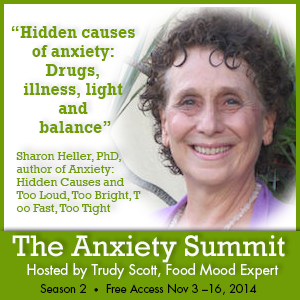
Sharon Heller, PhD author of Anxiety: Hidden Causes was interviewed on the Anxiety Summit by host of the Anxiety Summit, Trudy Scott, Food Mood Expert and Nutritionist, author of The Antianxiety Food Solution.

Hidden causes of anxiety: Drugs, illness, light and balance

  • How anxiety is often misdiagnosed as psychological when it’s primary cause is physical
  • Why such misdiagnoses happen
  • Physical causes of anxiety: thyroid disorders, diabetes, Cushing’s Syndrome, adrenal exhaustion
  • Common heart conditions that can cause anxiety: mitral valve prolapse and high blood pressure.
  • Infections and anxiety: Lyme disease, PANDAs
  • Over-the counter drugs that cause anxiety: lidocaine, birth control pills and more
  • Space-related phobias: Vestibular/balance and the inner ear
  • Anxiety and photosensitivity

Here are some snippets from our interview:

I think my experience is very, very common, where people are in a state of distress, they’re anxious, they’re fatigued, they’re not feeling well, and doctors don’t diagnose what their problem is. And therefore, they’re told that their problem is all in their head and put on psychotropic medication, when indeed, as it turns out, they may have some physical problem that’s causing their symptoms.

Say someone has panic attacks, which is not uncommon, and particularly, panic attacks that come out of the blue out of nowhere. All of a sudden, you know, one day you get a panic attack. Okay, a wave of panic overcomes you, your heart races, your pulse throbs, the world spins, you can hardly catch your breath, you feel as if you’re dying, you feel this horrible profound dread, even as if you’re losing your mind. So what do you do? You assume it’s psychological, so you go see a psychiatrist and they diagnose you with panic disorder, and they give you psychotropic medication, and usually these drugs do do what they’re designed to do, and they do alleviate the panic, and so you think, okay, it’s psychological.

But, you know, first of all, it may not disappear or it may come back but not as strong, because actually lots of physical conditions can cause the same symptoms and that includes hypoglycemia or low blood sugar.

Sharon shared how Superman actress Margot Kidder has bipolar and now uses amino acids. Here is the article on the Safe Harbor/Alternative Mental Health site

Here are links to Sharon’s books (I have read and highly recommend the first two)

Anxiety: Hidden Causes: Why your anxiety may not be “all in your head” but from something physical

Too Loud, Too Bright, Too Fast, Too Tight, What To Do If You Are Sensory Defensive in an Over-Stimulating World

Uptight and Off Center, How Sensory Processing Disorder Throws Adults Off Balance and How to Create Stability.

If you are not already registered for the Anxiety Summit you can get live access to the speakers of the day here www.theAnxietySummit.com

Filed Under: Antianxiety, Anxiety and panic, Drugs, The Anxiety Summit 2 Tagged With: anxiety, balance, drugs, hidden causes, illness, light, mitral valve prolapse, Sharon Heller, the anxiety summit, Trudy Scott

  • « Go to Previous Page
  • Page 1
  • Interim pages omitted …
  • Page 122
  • Page 123
  • Page 124
  • Page 125
  • Page 126
  • Interim pages omitted …
  • Page 160
  • Go to Next Page »

Primary Sidebar

GABA QuickStart Homestudy

gaba quickstart homestudy

Free Report

9 Great Questions Women Ask about Food, Mood and their Health

You'll also receive a complimentary subscription to my ezine "Food, Mood and Gal Stuff"


Connect with me

Popular Posts

  • Amino Acids Mood Questionnaire from The Antianxiety Food Solution
  • The Antianxiety Food Solution Amino Acid and Pyroluria Supplements
  • Pyroluria Questionnaire from The Antianxiety Food Solution
  • Collagen and gelatin lower serotonin: does this increase your anxiety and depression?
  • Tryptophan for the worry-in-your-head and ruminating type of anxiety
  • GABA for the physical-tension and stiff-and-tense-muscles type of anxiety
  • The Antianxiety Food Solution by Trudy Scott
  • Seriphos Original Formula is back: the best product for anxiety and insomnia caused by high cortisol
  • Am I an anxious introvert because of low zinc and vitamin B6? My response to Huffington Post blog
  • Vagus nerve rehab with GABA, breathing, humming, gargling and key nutrients

Recent Posts

  • Her cravings for chips and peanut butter were triggered by stress: GABA ends cravings and reduces physical tension and fear of heights
  • It is truly miraculous to be able to move through life without crippling anxiety and panic
  • GABA and tryptophan combo provide immediate and noticeable relief for tremors and cervical dystonia in just 7 days
  • Red light therapy for back and neck pain, plantar fasciitis and low mood – a complement to the amino acids GABA, DPA and tryptophan
  • What do I use instead of Seriphos to help lower high cortisol that is affecting my sleep and making me anxious at night?

Categories

  • 5-HTP
  • AB575
  • Addiction
  • ADHD
  • Adrenals
  • Alcohol
  • Allergies
  • Alzheimer's disease
  • Amino Acids
  • Anger
  • Antianxiety
  • Antianxiety Food Solution
  • Antidepressants
  • Anxiety
  • Anxiety and panic
  • Autism
  • Autoimmunity
  • benzodiazapines
  • Bipolar disorder
  • Books
  • Caffeine
  • Cancer
  • Candida
  • Children/Teens
  • Collagen
  • Cooking equipment
  • Coronavirus/COVID-19
  • Cravings
  • Depression
  • Detoxification
  • Diabetes
  • Diet
  • DPA/DLPA
  • Drugs
  • EFT/Tapping
  • EMF
  • EMFs
  • Emotional Eating
  • Endorphins
  • Environment
  • Essential oils
  • Events
  • Exercise
  • Fear
  • Fear of public speaking
  • Fertility and Pregnancy
  • Fish
  • Food
  • Food and mood
  • Functional neurology
  • GABA
  • Gene polymorphisms
  • General Health
  • Giving
  • Giving back
  • Glutamine
  • Gluten
  • GMOs
  • Gratitude
  • Gut health
  • Heart health/hypertension
  • Histamine
  • Hormone
  • Hyperparathyroidism
  • Hypoglycemia
  • Immune system
  • Inflammation
  • Insomnia
  • Inspiration
  • Introversion
  • Joy and happiness
  • Ketogenic diet
  • Lithium orotate
  • Looking awesome
  • Lyme disease and co-infections
  • MCAS/histamine
  • Medication
  • Men's health
  • Mental health
  • Mercury
  • Migraine
  • Mold
  • Movie
  • MTHFR
  • Multiple sclerosis
  • Music
  • NANP
  • Nature
  • Nutritional Psychiatry
  • OCD
  • Osteoporosis
  • Oxalates
  • Oxytocin
  • Pain
  • Paleo
  • Parasites
  • Parkinson’s disease
  • PCOS
  • People
  • PMS
  • Postpartum
  • PTSD/Trauma
  • Pyroluria
  • Questionnaires
  • Real whole food
  • Recipes
  • Research
  • Schizophrenia
  • serotonin
  • SIBO
  • Sleep
  • Special diets
  • Sports nutrition
  • Stress
  • Sugar addiction
  • Sugar and mood
  • Supplements
  • Teens
  • Testimonials
  • Testing
  • The Anxiety Summit
  • The Anxiety Summit 2
  • The Anxiety Summit 3
  • The Anxiety Summit 4
  • The Anxiety Summit 5
  • The Anxiety Summit 6
  • Thyroid
  • Thyroid health
  • Toxins
  • Tryptophan
  • Tyrosine
  • Uncategorized
  • Vegan/vegetarian
  • Women's health
  • Yoga

Archives

  • May 2026
  • April 2026
  • October 2025
  • September 2025
  • August 2025
  • July 2025
  • June 2025
  • May 2025
  • April 2025
  • March 2025
  • February 2025
  • January 2025
  • November 2024
  • October 2024
  • September 2024
  • August 2024
  • July 2024
  • June 2024
  • May 2024
  • April 2024
  • March 2024
  • February 2024
  • January 2024
  • December 2023
  • November 2023
  • October 2023
  • September 2023
  • August 2023
  • July 2023
  • June 2023
  • May 2023
  • April 2023
  • March 2023
  • February 2023
  • January 2023
  • December 2022
  • November 2022
  • October 2022
  • September 2022
  • August 2022
  • July 2022
  • June 2022
  • May 2022
  • April 2022
  • March 2022
  • February 2022
  • January 2022
  • December 2021
  • November 2021
  • October 2021
  • September 2021
  • August 2021
  • July 2021
  • June 2021
  • May 2021
  • April 2021
  • March 2021
  • February 2021
  • January 2021
  • December 2020
  • November 2020
  • October 2020
  • September 2020
  • August 2020
  • July 2020
  • June 2020
  • May 2020
  • April 2020
  • March 2020
  • February 2020
  • January 2020
  • December 2019
  • November 2019
  • October 2019
  • September 2019
  • August 2019
  • July 2019
  • June 2019
  • May 2019
  • April 2019
  • March 2019
  • February 2019
  • January 2019
  • December 2018
  • November 2018
  • October 2018
  • September 2018
  • August 2018
  • July 2018
  • June 2018
  • May 2018
  • April 2018
  • March 2018
  • February 2018
  • January 2018
  • December 2017
  • November 2017
  • October 2017
  • September 2017
  • August 2017
  • July 2017
  • June 2017
  • May 2017
  • April 2017
  • March 2017
  • February 2017
  • January 2017
  • December 2016
  • November 2016
  • October 2016
  • September 2016
  • August 2016
  • July 2016
  • June 2016
  • May 2016
  • April 2016
  • March 2016
  • February 2016
  • January 2016
  • December 2015
  • November 2015
  • October 2015
  • September 2015
  • August 2015
  • July 2015
  • June 2015
  • May 2015
  • April 2015
  • March 2015
  • February 2015
  • January 2015
  • December 2014
  • November 2014
  • October 2014
  • September 2014
  • August 2014
  • July 2014
  • June 2014
  • May 2014
  • April 2014
  • March 2014
  • February 2014
  • January 2014
  • December 2013
  • November 2013
  • October 2013
  • September 2013
  • August 2013
  • July 2013
  • June 2013
  • May 2013
  • April 2013
  • March 2013
  • February 2013
  • January 2013
  • December 2012
  • November 2012
  • October 2012
  • August 2012
  • July 2012
  • June 2012
  • May 2012
  • April 2012
  • March 2012
  • February 2012
  • January 2012
  • December 2011
  • November 2011
  • October 2011
  • September 2011
  • August 2011
  • July 2011
  • June 2011
  • May 2011
  • April 2011
  • March 2011
  • February 2011
  • January 2011
  • December 2010
  • October 2010
  • September 2010
  • July 2010
  • May 2010
  • April 2010
  • March 2010
  • February 2010
  • January 2010
  • November 2009

Share the knowledge!

The above statements have not been evaluated by the Food and Drug Administration. Products listed in this website are not intended to diagnose, treat, cure or prevent any disease.

The information provided on this site is for informational and educational purposes only and is not intended as a substitute for advice from your physician or other health care professional. You should consult with a healthcare professional before starting or modifying any diet, exercise, or supplementation program, before taking or stopping any medication, or if you have or suspect you may have a health problem.


Copyright © 2026 Trudy Scott. All Rights Reserved. | Privacy | Terms and Conditions | Refund Policy | Medical Disclaimer

Free Report

9 Great Questions Women Ask about Food, Mood and their Health

You’ll also receive a complimentary subscription to my ezine “Food, Mood and Gal Stuff”