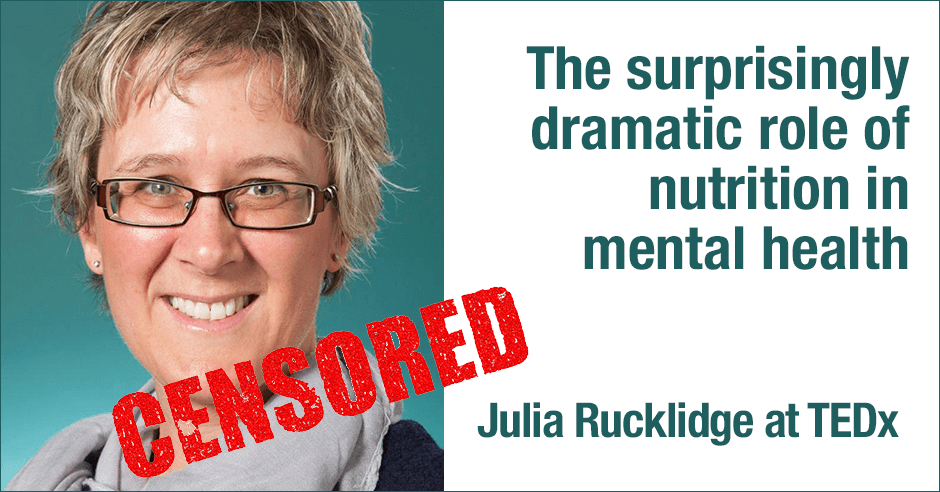
Julia Rucklidge, PhD, researcher from New Zealand, recently did this amazing TEDx talk called: The surprisingly dramatic role of nutrition in mental health
I love how she opens with:
what I’m going to share today may sound as radical as hand-washing sounded to a mid-19th century doctor and yet it is equally scientific. It is the simple idea that optimizing nutrition is a safe and viable way to avoid, treat or lessen mental illness. Nutrition matters. Poor nutrition is a significant and modifiable risk factor for the development of mental illness
Here are some real gems from her talk:
A well-nourished body and brain is better able to withstand ongoing stress
When people get well they get well in all areas: improved sleep, mood stabilization, reduction in anxiety and less need for cigarettes/cannabis/alcohol.
My research and other research from around the world show 60-70% of people respond to micronutrients – this shows just how powerful this intervention is
We should focus on food and lifestyle changes and exercise first, then therapy and save medications for when these approaches don’t work
I’d like to share the ending of Julia Rucklidge’s talk. She shares the story of how limes on ships in the 1600s eliminated deaths from scurvy but that it took 264 years for the British government to mandate the use of citrus on ships. She closes with this profound question and challenge:
How long will it take us to recognize that that sub-optimal nutrition is contributing to the epidemic of mental illness? Nutrition matters!
Bravo Julia! And thank you for all the great research you’re doing! We appreciate you!
UPDATE: June 8, 2018
I have decided to update the blog and share it again because Professor Rucklidge is sharing powerful research-based evidence about food-as-medicine for mental health and her talk is being flagged/censored by TEDx and this is not acceptable!
Professor Bonnie J. Kaplan, PhD, from the University of Calgary shared this information with me via an email:
There have been almost 900,000 views of Julia Rucklidge’s TEDx talk on nutrition and mental health, with many complimentary comments. Last week, however, the TED organization inexplicably “flagged” the video with the following comment:
“NOTE FROM TED: We’ve flagged this talk, which was filmed at a TEDx event, because it appears to fall outside TEDx’s curatorial guidelines. There is limited evidence to support the claims made by this speaker.”
Julia has attempted to educate the TED people regarding the fact that over 35 peer-reviewed publications could hardly be described as “limited evidence,” and that her interpretations do not go beyond the data. But they are not interested in her evidence.
The whole thing seems so strange: isn’t TED supposed to be all about innovation? But clearly, some lobbyist has convinced them that a non-pharmaceutical treatment should not be respected.
I’m sharing it again and updating the blog so you can watch it again or watch it for the first time and be inspired and have hope!
We’d like to ask for your help in please sharing too. Let us support her work and all the nutritional psychiatry researchers at ISNPR and around the world!
- Even if you have already watched it, please click on it again and watch again (click on the video link above or use this link)
- Share the youtube video and/or this blog with others, through Facebook or email or twitter or word of mouth (or all of the above)
- Comment below the youtube video and/or comment on this blog of mine
- Ask your friends, family and colleagues to do the same
More about Professor Rucklidge’s research interests
Professor Rucklidge’s research interests are centered on the role of nutrition in the expression and treatment of mental illness, from ADHD to depression to stress following natural disasters. Research methodologies include single case research designs, open label trials and randomized controlled trials.
- ADHD
- Child and adolescent clinical psychology
- Clinical psychology
- Learning disabilities
- Young Offending
- Earthquake research
- Nutritional interventions
- Mood Disorders
Some of her publications on micronutrients
Overall, people from the general population who suffer from mood and anxiety problems may benefit from improved nutritional status achieved with nutritional supplements.
Micronutrients improved overall function, reduced impairment and improved inattention, emotional regulation and aggression, but not hyperactive/impulsive symptoms, in this sample of children with ADHD. Although direct benefit for core ADHD symptoms was modest, with mixed findings across raters, the low rate of adverse effects and the benefits reported across multiple areas of functioning indicate micronutrients may be a favourable option for some children, particularly those with both ADHD and emotional dysregulation.
- A randomised trial of nutrient supplements to minimise psychological stress after a natural disaster. This study was co-authored with Professor Kaplan, and adds to the body of evidence showing that nutrient formulas with multiple minerals and/or vitamins (such as a B-complex) minimise/minimize stress associated with natural disasters such as earthquakes, fires and floods. I blogged about this after Hurricane Harvey in Houston.
- Could yeast infections impair recovery from mental illness? A case study using micronutrients and olive leaf extract for the treatment of ADHD and depression. This case study reports that infections like candida can contribute to poor gut health and inflammation, leading to nutrient absorption issues and deterioration in psychiatric symptoms. The yeast overgrowth has to be addressed in order for the micronutrients to be effective. I blog about this here also sharing the candida-serotonin connection.
Nutritional medicine as mainstream in psychiatry
Professor Rucklidge is also a contributing author to Nutritional medicine as mainstream in psychiatry which I blog about here
Psychiatry is at an important juncture, with the current pharmacologically focused model having achieved modest benefits in addressing the burden of poor mental health worldwide. Although the determinants of mental health are complex, the emerging and compelling evidence for nutrition as a crucial factor in the high prevalence and incidence of mental disorders suggests that diet is as important to psychiatry as it is to cardiology, endocrinology, and gastroenterology. Evidence is steadily growing for the relation between dietary quality (and potential nutritional deficiencies) and mental health, and for the select use of nutrient-based supplements to address deficiencies, or as monotherapies or augmentation therapies.
As you can tell I’m a big fan of her research work and what an honor it was for me to interview her on one of the Anxiety Summits: What if… Nutrition could Treat Anxiety and Depression? She shared wise words then than seem very relevant to this censorship of her TEDx talk:
How long is it going to take our society to pay attention to the research that shows that suboptimal nutrition is contributing to the epidemic of mental illness? Are we just going to sit around and ignore this evidence to our peril? Or are we going to start paying attention and start to invest in the really important research that needs to happen?
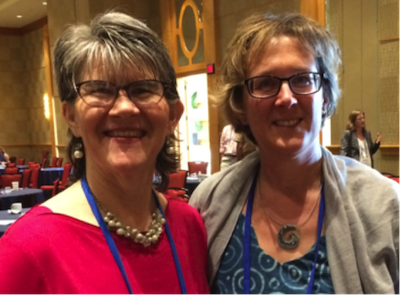
It was a thrill to then finally meet her in person last year at the ISNPR conference.
This nutritional psychiatry work is widely supported by many practitioners
This nutritional psychiatry work is widely supported by many practitioners. Last year I interviewed Dr. Mark Hyman MD, creator of the Broken Brain series and author of What the Heck Should I Eat? In our interview he talks about somatopsychic medicine i.e. mental health symptoms caused by bodily illness and shares this about when he started to make this connection years ago:
I was just treating people’s physical systems, fixing their gut, helping their immune system, cleaning up their diet, optimizing their nutritional status, balancing their hormones, and all their mental problems would get better.
Their anxiety would get better, their depression would get better, and I wasn’t actually treating the depression or anxiety. Autism, ADD, memory issues, dementia, all these things would start to get better
And I began to realize that the body was driving a lot of this brain dysfunction, and that if you fix the body, a lot of the brain disorders would get better, that it wasn’t a primarily a mental problem, but it was a physical problem.
Dr. Nicole Beurkens, clinical psychologist and board-certified nutrition specialist, shares this about the talk:
This is an extremely important evidence-based talk on a topic that is moving the field of mental health forward. As a clinical psychologist and board-certified nutrition specialist, I see daily the positive impact that nutrition can have on mental health for children and adults. More than medication and talk therapy is needed to reduce symptoms for many people with these challenges, and nutrition is an accessible research-based option. I often recommend this video to patients and their families.
Dr. Beurkens is also speaker on a prior Anxiety Summit. It’s now in it’s fourth season and I’ve the wonderful opportunity to interview and share the nutritional psychiatry wisdom from over 70 practitioners, researchers, mental advocates and clients.
So much wonderful feedback from study participants
There is so much wonderful feedback in the comments below the youtube video. I love this comment from a study participant from New Zealand, Deidre Fraser:
I’m a pretty ordinary Kiwi, not particularly alternative. I don’t have a big appetite for risk. But I have participated in one of Julia Rucklidge’s studies and my family has benefited hugely from the introduction to, and continued use of micronutrients. Could we have achieved the same result using a pharmaceutical medicine? Some behaviours would have likely been addressed, but and it is a big BUT, one of the side effects (unexpected) would NOT have been improved happiness and self-worth, which resulted in better friendships – pretty basic things we all want from life!
We also got increased focus and the noticeably different academic performance that we thought we wanted (We just hadn’t realised that should be the secondary objective).
I don’t really understand the science behind it all, but the empirical research and published journals are there to support micronutrients as a valid option with verifiable research outcomes.
And SP Hancock shares these compelling results:
I’m so grateful for this presentation. It compelled me to find a medical doctor who looks at symptoms of mental illness from a perspective other than traditional psychiatry. He helped me heal my gut so that I can get the micronutrients I need from my food choices. 2 years ago I was using the micronutrient supplement Dr. Rucklidge had diligently researched for more than a decade. Today, I no longer need supplementation because my gut can absorb micronutrients from my food. I have been off medications for three years now–completely stable using only food after having lived for nearly two decades with acute symptoms of refractory schizoaffective disorder bipolar type with catatonia. Thank you Dr. Rucklidge for your structured, independently funded studies. Your hard work and sound research methodology gave me the courage to find a doctor willing to look at my symptoms from a fresh perspective. Keep up the exceptional work!
I hope this has inspired you to keep seeking a solution if you are still on your healing journey or and even if you have found your solution. Either way we’d love your help in getting this message out to more people so please share share and share!
Professor Bonnie Kaplan says: “Let’s see if we can quadruple the views to 5 million or so.” I’m sure we can! Thank you!

Great stuff! I can personally tell a difference when I’m eating right and when I’m not. Once you experience the tangible effects of your food choices the foods that don’t support good health lose a lot of their appeal.
Absolutely Michele – I’m the same way and it’s just so powerful when you make that connection
Is there detail anywhere on what micro nutrients and how much were given? Thanks!!
Please see the comments in this blog https://www.everywomanover29.com/blog/anxiety-summit-nutrition-to-treat-anxiety-depression/
“Once you experience the tangible effects of your food choices the foods that don’t support good health lose a lot of their appeal.” Yes, this is what I’ve found too, Michele.
Trudy, these graphics are shocking! Thank you. I just shared this with my chiropractor who is a huge proponent of nutrition and healthful foods (and NOT of medicine.)
Aren’t they! thanks for sharing Mary Ellen
I SOOOOOOOOO wish that nutrients were covered by healthcare as well as preventative alternatives!!
I do too Jessica – it makes so much sense. Better for the person and actually more affordable for insurance companies.
Great talk! I know from personal experience how my physical and mental health improved as I changed my diet. The hard part is really figuring out what your body needs. It is so much more time consuming that the “easy” taking a pill. However, none of the pills ever made me actually better and the work that I did to figure out what my body needed directly linked to getting healthier.
I am so glad that you are getting this really important message out to more people. I wish my parents would have know about this.
~Rose Hawley-Perry
Mindfully Organized
Rose
It’s great to hear you were able to figure this out – the body is quite amazing – when give the right raw materials we can feel so much better
Trudy
Great talk thanks for sharing – this statement says it all “A well-nourished body and brain is better able to withstand ongoing stress”
Glad you enjoyed it Heidi – in this day and age we need that support for all the stress we deal with
Trudy, thanks for sharing this amazing talk. I am so thankful you are such a tremendous advocate for anxiety and mental health in general. I am reading all the information you share and getting a plan together to balance my health better through making better food choices. It’ll be a challenge to balance the impact healthy foods are having with the medications I’m taking. My goal is to get OFF of all my meds!
Hi Tandy
I’m so happy for you! With many of the food changes you may very well see less of a need for certain medications. Many of my clients are able to quit SSRIs and anti-anxiety meds when they quit gluten, coffee, sugar and add in healthy foods and balance blood sugar. Of course, many need more then just food changes and this is where the amino acids and nutrients like zinc and vitamin B6 help so much
Trudy
Our entire family has seen the changes from
adjusting the way we eat in the last 15 months alone.
The positive changes were clear to us in the first
six weeks!
This is wonderful Mitch!
Amen! Thanks for sharing.
Mind/Body Connection at its clearest!
XO,
Katherine
Singer/Songwriter/TV Show Host
oh yes – what we eat does affect our mind!
great video. It’s good to see this info getting out there. Now they need to put you on the stage Trudy!
Eating right is so important for health on so many levels. I’ve seen it not only with myself but with clients. The power of food is definitely amazing.
This is a great talk. Thanks for sharing, Trudy! I plan to look up some of the studies she mentioned, particularly on how nutrition affects ADHD.
Tiffany – her research is excellent – you’ll find it very useful
It’s horrifying that TEDx is trying to discredit Dr. Rucklidge and honestly I would have expected better of them. I find it interesting that they say she needs more proof when, to me at least, good nutrition aiding mental health (all health, really) is just common sense.
Vanessa
You make an excellent point – good nutrition is just common sense! And she also has all the research that her and her team have published too!
Having benefited greatly from a nutrient approach to Mental Health, I was dismayed by this. I wrote to TED querying what they meant by “limited evidence” given what’s available in terms of published research, and this is the response they gave:
“Hello Dominic,
Thank you for reaching out to us about Julia Rucklidge’s talk. TED’s curation team is currently in conversation with the speaker and the TEDxChristchurch organizer about this flag. Given that the intersection of nutrition and mental health is an emerging field of study, TED has been actively reviewing the claims put forward in this talk. TED is not considering any removal of the video and it will remain available on YouTube. Please monitor the YouTube watch page for any updates: https://www.youtube.com/watch?v=3dqXHHCc5lA
Thank you again.
Best,
The TEDx Team”
I must say that if they were in good faith they could prove it by removing the disclaimer while reviewing this evidence. One does have to wonder what kind of authority they will ultimately defer to on this.
Dominic
Thanks for reaching out to TED and for sharing their response. It’s encouraging but at the same time I’m sure you agree why did they flag it before reviewing the research supporting the emerging and quickly growing field of nutrition and mental health
I first came across a doctor who practiced nutritional medicine in the mid 80s in Australia. He’d been an agricultural scientist and noticed what plants looked like when deprived of correct nutrition. Then he was a psychiatrist and did so much good. His versalitly and understanding was amazing!
Angela
Thanks for sharing – I’d love to know his name and website if you have it. If only we all made connections like this.