• Skip to primary navigation
  • Skip to main content
  • Skip to primary sidebar

everywomanover29 blog

Food, Mood and Women's Health – Be your healthiest, look and feel great!

  • Blog
  • About
  • Services
  • Store
  • Resources
  • Testimonials
  • The Book
  • Newsletter
  • Contact
  • Search this site

Anxiety

This Is Your Brain on Food by Uma Naidoo, MD (video interview and review)

August 21, 2020 By Trudy Scott 6 Comments

brain on food

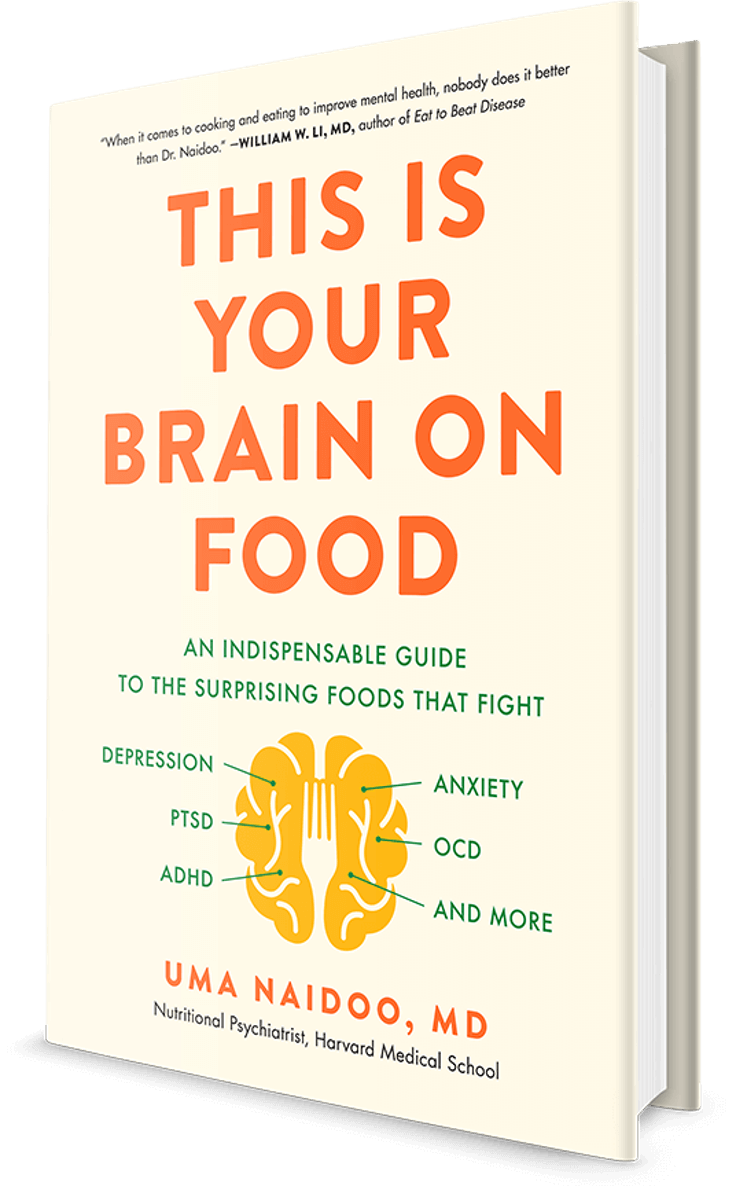
Dr. Uma Naidoo has a wonderful new book called This Is Your Brain on Food: An Indispensable Guide to the Surprising Foods that Fight Depression, Anxiety, PTSD, OCD, ADHD, and More (my Amazon link)

Her big bold message is this “Until we solve nutritional problems, no amount of medication and psychotherapy is going to be able to stem the tide of mental issues in our society.”  This is something I wholeheartedly agree with!

I had the wonderful opportunity to interview Dr. Naidoo and we talked about the benefits of fermented foods and social anxiety, vitamin D and anxiety, dietary sources of polyphenols for ADHD and much more:

  • A 2015 study, Fermented foods, neuroticism, and social anxiety, reports that people eating fermented foods saw a reduction in their social anxiety and neurotic traits
  • Dr. Naidoo recommends unflavored kefir (which can be used to make a creamy dressing), miso, fermented vegetables and kombucha (watch the added sugars)
  • I mention kombucha as a source of fluoride (watch if you have issues with fluoride)
  • Vitamin D and anxiety: we discuss a 2019 study, Effect of Vitamin D Supplement on Mood Status and Inflammation in Vitamin D Deficient Type 2 Diabetic Women with Anxiety: A Randomized Clinical Trial

51 women with type 2 diabetes and vitamin D deficiency were randomly allocated to receive one oral pearl of 50,000 IU vitamin D3 (26 women) or a placebo (25 women) fortnightly for 16 weeks

Anxiety score changes were significantly lower in vitamin D group than the controls

  • Dr . Naidoo recommends these sources of vitamin D: egg yolks, salmon, mushrooms and sun exposure (sun through a window doesn’t count)
  • Dietary polyphenols and ADHD: We talk about a 2018 study, Rationale for Dietary Antioxidant Treatment of ADHD

Dietary polyphenols… have antioxidant capacities as well as immunoregulatory effects and, therefore, appear appropriate in ADHD therapy.

  • Dr. Naidoo recommends these sources of polyphenols: berries and other fruit, vegetables, extra virgin olive oil.
  • I’m fascinated by the fact that polyphenols “act as a low-dose toxin that trains the body to mount an immune response in a process called hormesis” (there are many geeky gems like this in the book)
  • Dr. Naidoo shares the story of her 36 year old patient with severe anxiety. He was a binge eater and also had a history of alcohol abuse. Vitamin B1 (250mg) was every effective for him…“In animal studies, thiamine appears to reduce stress-like responses because it protects the hippocampus”
  • We talk about chamomile tea and how it helps with sleep. There are some cautions if you’re on a blood thinner prescription or going to have surgery. Pregnant women should also avoid it.
  • Dr. Naidoo shares a delicious Golden Milk recipe with tips on how to use turmeric (one her favorite spices and inspired by her grandmother’s cooking) with black pepper. You’ll find this in the recipes section.
  • Dr Naidoo also shares one of her favorite comfort foods – a yummy lentil soup recipe called dal in south Indian cuisines. It’s a great source of fiber, plant-based protein and is very affordable. And really healthy when cooked with vegetables and spices like mustard seeds, ginger, garlic and turmeric. She shares a tip to improve the flavors – making tadka (listen to the interview below, enjoy and be inspired!)


It’s a wonderful book that I highly recommend if:

  • you are new to nutritional psychiatry and the power of food
  • you are a seasoned foodie and want to geek out on mechanisms and the science
  • you want to learn about foods and nutrients (all science-based) specifically for depression, anxiety, PTSD, OCD, ADHD and insomnia
  • you are a practitioner and want to learn and share a wonderful book with your patients or clients

I read it cover to cover and picked up so many gems. I also loved reading about her memories of cooking with her Pinetown granny (Pinetown is just outside Durban where we both happened to grow up)!

We do have a few professional differences of opinion that I feel I should mention:

  • I am not in favor of canola oil and I’d switch out the recipes that call for canola oil with olive oil
  • I have a difficult time extrapolating high-fat diets in rat studies to concerns about saturated fat consumption in humans (given the nature of the rat chow in many of these studies)
  • I’m more concerned with portion-size of carbs than I am with portion-size of healthy fats (and typically recommend full-fat coconut milk, and chicken and turkey with skin-on)
  • I find grass-red meat to be beneficial for my clients with anxiety and mood issues
  • Many of my anxious clients cannot tolerate any caffeine and I consider 14 alcoholic drinks a week for men and 7 alcoholic drinks a week for women to be excessive
  • I prefer stove-top and oven cooking to using a microwave.

This is the official book blurb:

Did you know that blueberries can help you cope with the aftereffects of trauma? That salami can cause depression, or that boosting Vitamin D intake can help treat anxiety?

When it comes to diet, most people’s concerns involve weight loss, fitness, cardiac health, and longevity. But what we eat affects more than our bodies; it also affects our brains. And recent studies have shown that diet can have a profound impact on mental health conditions ranging from ADHD to depression, anxiety, sleep disorders, OCD, dementia and beyond.

A triple threat in the food space, Dr. Uma Naidoo is a board-certified psychiatrist, nutrition specialist, and professionally trained chef. In This Is Your Brain on Food, she draws on cutting-edge research to explain the many ways in which food contributes to our mental health, and shows how a sound diet can help treat and prevent a wide range of psychological and cognitive health issues.

Packed with fascinating science, actionable nutritional recommendations, and delicious, brain-healthy recipes, This Is Your Brain on Food is the go-to guide to optimizing your mental health with food.

Uma Naidoo, MD is board-certified psychiatrist (Harvard Medical School), professional chef (Cambridge School of Culinary Arts), and nutrition specialist (Cornell University). She is currently the Director of Nutritional and Lifestyle Psychiatry at Massachusetts General Hospital (MGH), where she consults on nutritional interventions for the psychiatrically and medically ill; Director of Nutritional Psychiatry at the Massachusetts General Hospital Academy; and has a private practice in Newton, MA. She also teaches at The Cambridge School of Culinary Arts.

Dr. Naidoo speaks frequently at conferences at Harvard, for Goop audiences, the New York City Jewish Community Center (JCC), and Ivy Boston. She blogs for Harvard Health and Psychology Today and completed a unique video cooking series for the MGH Academy which teaches Nutritional Psychiatry using culinary techniques in the kitchen.

You can get your copy of This Is Your Brain on Food here (my Amazon link) and find additional information about Dr. Naidoo here and the book here.

Let us know what you think in the comments below and be sure to leave Dr. Naidoo a review once you read your copy!

Feel free to post your questions here too.
Filed Under: Anxiety, Books Tagged With: ADHD, anxiety, brain, chamomile tea, dal, depression, Dr. Uma Naidoo, fermented food, food, insomnia, OCD, polyphenols, PTSD, sleep, This Is Your Brain on Food, turmeric, Uma Naidoo, vitamin D

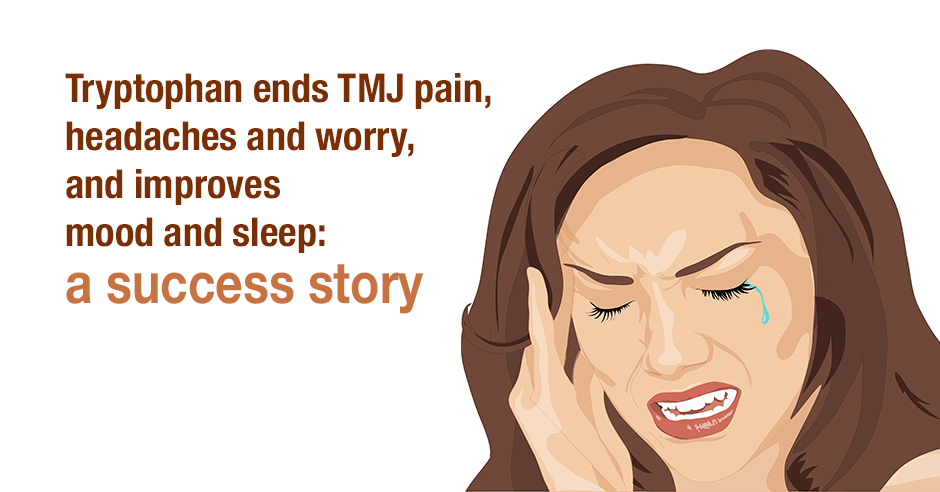
Tryptophan ends TMJ pain, headaches and worry, and improves mood and sleep: a success story

July 17, 2020 By Trudy Scott 32 Comments

tryptophan success story

Today I’m sharing a success story on how the amino acid tryptophan, taken as a supplement, ends  TMJ (temporomandibular joint) pain and headaches in a woman in my community. She had the added benefits of an improved mood and less worrying and her sleep improved too.

There is evidence to support the low serotonin connection to TMJ and pain like fibromyalgia and I share that research below.

Before I share the success story, in case you’re new to neurotransmitter imbalances, the other symptoms we see with low serotonin are the worrying-type of anxiety, panic attacks and phobias, lack of confidence, depression, negativity, imposter syndrome, PMS, irritability, anger issues, insomnia and afternoon/evening cravings. Tryptophan can be used to boost serotonin levels and improve these symptoms as you’ll see below.

Right after speaking on the recent Trauma and Mind-Body Super Conference, Renee shared her wonderful success story on Facebook:

Out of all the interviews I felt yours gave the most actionable steps. I was taking amitriptyline for TMJ and didn’t like the side effects, however what other options did I have? Not many according to my GP [general practitioner]. Luckily I found your suggestion of tryptophan. And I can’t explain how much of a change it made! I weaned off the medicine and took tryptophan instead and not only did it help the TMJ but also helped me feel more even emotionally.

I am being referred for trauma therapy and I am optimistic that I will be discomfort free soon.

So huge thanks for sharing your knowledge. It helped me at a time when I was really starting to think there were no ‘natural’ options and conventional meds were all I could take.

I checked in with her, thanking her and acknowledging her wonderful feedback. I also asked how much tryptophan made this difference and how quickly she saw an improvement. And what side-effects she was seeing with the medication. She shared this:

I am a week into taking tryptophan, and I’m taking 500mg. I saw improvements with the TMJ within an hour of taking it. My jaw felt loose and I had no headaches, I also felt more ‘even’ mood wise. Like an underlying worry had gone. [worry is a classic symptom of low serotonin – more on that here]

I also had some stress yesterday that usually would have made me crumble, but instead I was able to stand up for myself and see subjectively the extent of the issue and resolve it. I am amazed!

My original medication (amitriptyline) had given me extreme dry mouth, which I found hard to manage, the headaches were also not relieved as much as I had hoped, plus I was having sessions of palpitations.

I haven’t had any palpitations from the day I started tryptophan whereas the dry mouth took some time to subside.

These really are wonderful results and typical that we’d see results this quickly with tryptophan if the root cause of the TMJ and headaches is low serotonin. It can sometimes take a few weeks to find the ideal dose but Renee found it with the initial trial amount of 500mg.

Sleep improved but made her too sleepy too early (some of the medication side-effects went away too)

The tryptophan also improved her sleep (and the palpitations and dry mouth side-effects from the medication stopped):

I was struggling to get to sleep and stay asleep, suffering bouts of insomnia, prior to any medication. I still am sleeping well taking tryptophan which I am pleased about.

She did however share that the timing of the tryptophan was making her too sleepy too early in the evening and she was planning to shift the timing:

I am finding tryptophan is making me feel drowsy in the evening, so I am trying different times during the day to take it. Hopefully I can push back the tiredness to perhaps 8/9 at night to coincide with bedtime.

My advice to her was that I have my clients use tryptophan MA (mid-afternoon) and evening and if MA makes them too sleepy they just do an evening dose. That can be enough for TMJ the next day. Sometimes more than 1 x 500mg in the evening is needed for easing TMJ and headache pain that night and the next day too.

I did check with her about weaning off the medication as cold-turkey quitting of psychiatric medications are dangerous and not advised. She shared this:

I weaned off over 1 week, but I was only on it for 8 weeks in total before I found tryptophan.

A slow taper under the guidance of the prescribing doctor is always recommended (more on this for amitriptyline/Elavil withdrawal here).

Some research supporting this serotonin/TMJ connection

  • Plasma tryptophan and kynurenine in females with temporomandibular disorders and fibromyalgia – An exploratory pilot study

…both temporomandibular disorders myalgia (TMDM) and fibromyalgia (FM) have been linked to central and peripheral changes in serotonin availability.” (tryptophan is not used in this study which also makes the serotonin/anxiety connection)

  • The effects of dietary tryptophan on chronic maxillofacial pain and experimental pain tolerance

Over the 4 weeks of the study, there was a greater reduction in reported clinical pain and a greater increase in pain tolerance threshold in the tryptophan group than in the placebo group. The tryptophan group was given “three grams of tryptophan in conjunction with a high carbohydrate, low fat, low protein diet.”

Additional resources when you are new to using tryptophan and other amino acids as supplements

As always, I use the symptoms questionnaire to figure out if low serotonin or other neurotransmitter imbalances may be an issue.

If you suspect low levels of any of the neurotransmitters and do not yet have my book, The Antianxiety Food Solution – How the Foods You Eat Can Help You Calm Your Anxious Mind, Improve Your Mood, and End Cravings, I highly recommend getting it and reading it before jumping in and using amino acids on your own so you are knowledgeable. And be sure to share it with the practitioner/health team you or your loved one is working with.

There is an entire chapter on the amino acids and they are discussed throughout the book in the sections on gut health, gluten, blood sugar control (this is covered in an entire chapter too), sugar cravings, anxiety and mood issues.

The book doesn’t include product names (per the publisher’s request) so this blog,The Antianxiety Food Solution Amino Acid and Pyroluria Supplements, lists the amino acids that I use with my individual clients and those in my group programs.

If, after reading this blog and my book, you don’t feel comfortable figuring things out on your own (i.e. doing the symptoms questionnaire and respective amino acids trials), a good place to get help is the GABA QuickStart Program (if you have low GABA symptoms). This is a paid online/virtual group program where you get my guidance and community support. You can sign up to be notified when the next live launch is happening.

If you need serotonin support, the Serotonin QuickStart Program is a good place to get help. This is also a paid online/virtual group program where you get my guidance on using tryptophan and 5-HTP safely, and community support during 5 LIVE Q&A calls. You can sign up to be notified when the next live launch of this program is happening.

If you are a practitioner, join us in The Balancing Neurotransmitters: the Fundamentals program. This is also a paid online/virtual program with an opportunity to interact with me and other practitioners who are also using the amino acids.

Wrapping up and your feedback

I appreciate Renee sharing her success story and I’m thrilled with her results.

Please share your TMJ/headache tryptophan success story if you have one (and how much tryptophan or 5-HTP helped you).

What about mood, anxiety and sleep (and any other low serotonin symptoms) – did they improve too?

And do share if other nutrients or approaches have helped.

And feel free to post your questions here too.
Filed Under: Anxiety, Pain, Tryptophan Tagged With: anxiety, Headaches, insomnia, mood, pain, palpitations, serotonin, sleep, temporomandibular joint pain, TMJ, TMJ pain, tryptophan, worry

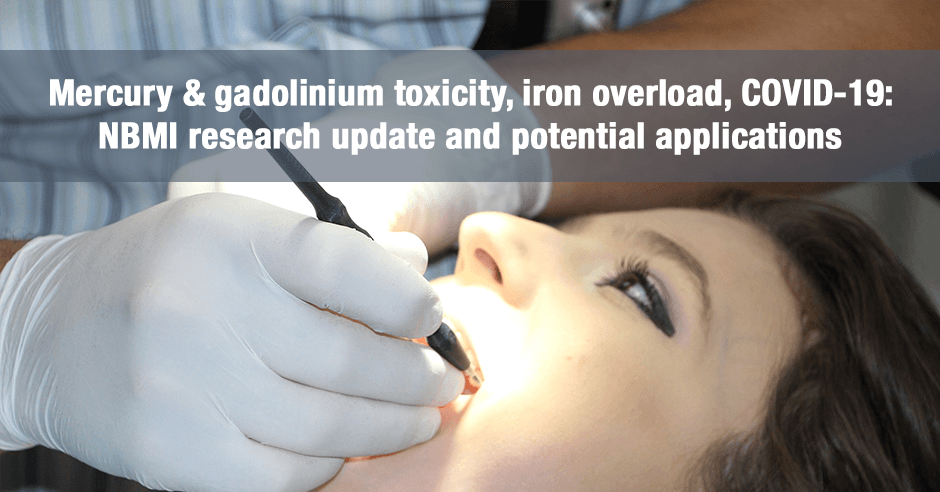
Mercury & gadolinium toxicity, iron overload, COVID-19: NBMI research update and potential applications

July 10, 2020 By Trudy Scott 15 Comments

mercury toxicity

Professor Boyd Haley set out to find a safe and non-toxic heavy metal chelator that would cross the blood-brain barrier, get inside the cells and bind mercury. The compound was initially sold as an antioxidant called OSR and is now called NBMI. In 2018 I wrote a blog about this – Mercury detox: NBMI as a safe and non-toxic heavy metal chelator. At the time NBMI was in phase 2 clinical trials. The blog was a popular one then and still gets many comments and requests for updates. Today I’m sharing some updates on progress, new studies and proposed new applications. I still find NBMI intriguing and look forward to it being readily available once the studies are completed.

The recent newsletter from EmeraMed, reports that their projects are all running according to plan (despite coronavirus setbacks) and “producing the anticipated positive results necessary to bring our drug to market. When we complete the studies requested last year by the FDA, EmeraMed will file a new drug application (NDA), which then starts the FDA approval process.” 

Studies on metal binding have shown that NBMI is strongly attracted to mercury, arsenic, lead, cadmium, uranium, gadolinium [used as a contrast agent in MRIs] and free iron and copper.

EmeraMed are expanding the clinical trials to look at other disorders that NBMI can potentially improve. These updates were shared in the newsletter:

  • The Colombian drug regulatory agency INVIMA approved a trial for mercury intoxication in May 2020:

…mercury intoxication and kidney disease are a serious life-threatening intractable condition and prominent in Colombia

…mercury from fish in the Santa Margareta river is one potential source for kidney injury leading to dialysis treatment. It will be a double-blind placebo controlled pivotal study, the participants health and results will be carefully monitored.

The treatment will be much longer than our earlier trials with gold miners and will look at numerous physiological parameters.

  • There are two pilot studies on iron overload in Europe:

Excess iron causes many devastating disorders, some lethal. Atypical Parkinson, an always fatal disease, is partially finished.

We expect to receive an interim report by July 2020 on a Thalassemia study that shows a highly significant benefit from NBMI. 8 out of 8 improved without any reported drug induce toxic side effects. “Impressive” in the words of one reviewer.

  • A potential use for COVID-19 based on NBMI increasing glutathione levels:

The mechanism of action is based on the ability of Emeramide to: 1; enter cells and cross the blood brain barrier, 2; scavenge and remove existing hydroxyl free radicals lowering oxidative stress and 3; chelate into non-reactive and non-toxic complexes several toxic metals and most importantly Fe2+ a redox metal that has been proposed to be displaced from hemoglobin by the COVID-19 infection.

We know NBMI would help because viruses need to release free iron to be able to reproduce. That iron causes oxidative stress possibly leading to a cytokine storm.

Another potential application is environmental clean-up of rivers, lakes and streams:

Arsenic (As) in drinking water is a well-recognized problem but since it is very difficult to remove, EPA maximum drinking water standard allows drinking water to have arsenic levels that cause significant amounts of bladder and lung cancers.

And one more potential application is the improved “treatment of waste-water sewer sludge to remove mercury or other toxic metals before it is spread on farms.”

Here is the mercury feasibility trial mentioned in the newsletter: Efficacy of N,N’bis-(2-mercaptoethyl) Isophthalamide on Mercury Intoxication: A Randomized Controlled Trial, where NBMI was given to 36 gold miners with high levels of mercury in their urine:

Although this study was designed with a small sample size to test for feasibility, the gained results with 300 mg NBMI already showed an effect on physical fatigue with statistical significance and there were indications to positive effects on other symptoms, like sleeping problems.

You can read more about this mercury research here.

The newsletter link above has information about which countries are allowing early access. Please contact the company directly rather than ask me about how to obtain the product as I am simply sharing what they have shared with me. I also encourage you to sign up for EmeraMed’s newsletter so you can keep up to date with progress and access information.

I find it intriguing and look forward to it being readily available once the studies are completed.

Please share if you used the original OSR product with any success or if you have managed to obtain NBMI and trial it?

And feel free to post your questions for Professor Boyd Haley. I’m hoping to have him speak on Anxiety Summit 6: Toxins/Meds/Infections.

Filed Under: Anxiety, Coronavirus/COVID-19 Tagged With: Boyd Haley, Coronavirus, COVID-19, emeramed, environmental, gadolinium toxicity, glutathione, iron overload, mercury toxicity, NBMI, toxicity, water treatment

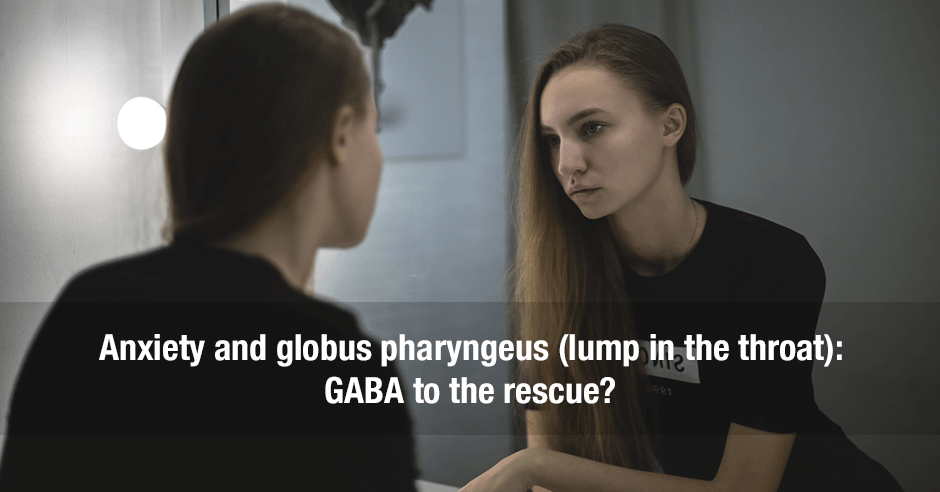
Anxiety and globus pharyngeus (lump in the throat): GABA to the rescue?

July 3, 2020 By Trudy Scott 69 Comments

globus pharyngeus and gaba

Low levels of GABA, a calming neurotransmitter can lead to anxiety, fears and panic attacks. With low GABA, the anxiety is a physical kind of anxiety with muscle tension or muscle spasms.  Today you’ll read how low GABA may be one possible root cause of globus pharyngeus, which you may have experienced as a rather scary golf-ball-like lump or constriction in the throat.

Let me describe globus pharyngeus and then I’ll share my story with globus pharyngeus, why low GABA may be a factor (and supplemental sublingual GABA to the rescue) and other possible root causes that should be considered.

This 2015 paper, Globus pharyngeus: an update for general practice, defines it as follows:

Globus pharyngeus or globus sensation is the painless sensation of a lump in the throat and may be described as a foreign body sensation, a tightening or choking feeling.

Globus means globe or sphere and it can actually feel like you have a golf-ball sized object in your throat.

You may have experienced it without even knowing the medical name. Only a few of my clients and those in my community have ever heard the term. I also only learned about the name many years after my episode.

What is very surprising is that, according to the above paper, up to 45% of the population have experienced it.

My story with globus pharyngeus

I’m one of the 45% and for me it was a terrifying experience.  As you may know, I experienced anxiety, PMS, fears and panic attacks in my late 30s and early 40s (it’s why I do this work).

Fortunately I only had one episode. It truly felt like I had a golf-ball in my throat and was horrifying. I knew I needed to swallow so I could get rid of this obstruction but at the same time I was terrified to swallow in case it got stuck and choked and killed me.

I remember going to the mirror to try and see this golf-ball sized object in my throat. I was so surprised that I couldn’t see anything.

Looking back, I suspect the addition of GABA Calm to my protocol prevented further episodes. I was also using progesterone cream at the time and this promotes GABA production too.

I’ve had many clients report that looking back they also realized their episodes stopped once they addressed their low GABA levels.

I was also under a great deal of stress at the time: work stress (long hours and my adrenals were a mess) and physical stress (due to amalgam removal, gluten issues, perimenopausal changes and much more).

Globus pharyngeus and GABA

The fact that the throat or pharynx “is a muscular tube that runs from the back of your nose down into your neck” is one reason for considering a muscle spasm and low GABA as a root cause.

The amino acid GABA, when used sublingually, eases muscle spasms within 15 seconds to 2 minutes. Some examples where we see this:

  • Physical tension with anxiety
  • Rectal spasms or proctalgia fugax
  • Throat spasms caused by vagus nerve issues

If you’re in the midst of an episode it’s impossible to open a capsule of GABA into your mouth. Until a client knows how much they can tolerate we start with 100-125 mg and increased based on the trial.  Taking the powder and dabbing it with a wet finger and putting the finger to the inside cheek a few times is the best way for quick relief.

A product that is GABA-only in a capsule such as Enzymatic Therapy GABA or ProThera 500mg GABA are my choices for in-the moment relief (more on these in my supplement store here).

Source Naturals GABA Calm is my most popular GABA product and is my choice for everyday use.

Of course, I recommend this approach to doing nothing. The authors state: “simple reassurance may be all that is required” or “Advise patients to resist the urge to dry swallow.” We can do better.

Once your GABA levels are sufficient, it’s less likely to happen unless you’re under a great deal of stress and/or there are psychological factors at play:

There is increased reporting of stressful life events prior to development of symptoms and research suggests that as many as 96% of patients with globus sensation report an exacerbation of symptoms during times of emotional intensity.

During times of added stress, folks may experience other “physical symptoms such as palpitations, poor sleep, and feelings of panic.”

Other root causes and possible solutions

The above paper does also list other root causes and solutions that would need to be investigated if GABA doesn’t help or possibly in conjunction with GABA support: tonsil issues, hiatus hernia, reflux in 23 -68% of individuals (I would look for the root cause rather than using a proton pump inhibitor/PPI), sinusitis, post-nasal drip, goitre, an actual foreign body, high consumption of alcohol/caffeine/tobacco and cancer (which they state is rare).

Interestingly, speech and language therapy has been shown to improve globus pharyngeus in two studies, possibly due to the reassurance experienced.

The paper concludes as follows:

Finally the link between anxiety and globus sensation must be considered. Evidence supports the use of cognitive behavioural therapy, but very little evidence exists for the use of anxiolytics or antidepressants.

I’ll add to this: the link between low GABA and globus sensation must also be considered, especially if you experience the physical type of low GABA anxiety. GABA to the rescue!

Based on the research, low serotonin, vagus nerve function, thyroid health and h/pylori may also be factors. I suspect food sensitivities play a role. And pyroluria too, because of the additional loss of zinc and vitamin B6 which is needed for GABA production. I’ll leave all this for a follow-up blog.

Have you experienced a globus sensation episode? And what did it feel like?

Did you get a diagnosis or is the term new to you?

Has GABA helped … in the moment or if you look back on your use of GABA for anxiety?

Did you discover other root causes and solutions? Please do share.

Please share if  you have pyroluria and your episodes were triggered by a very stressful event

And feel free to post your questions.

If you’re a practitioner I’d love to hear your feedback too.

Filed Under: Amino Acids, Anxiety, GABA Tagged With: anxiety, choked, choking, constriction in the throat, GABA, GABA Calm, globus pharyngeus, golf ball, lump in the throat, panic attack, spasm, swallow, vagus nerve

Social anxiety caused by pyroluria: oxytocin, the vagus nerve, pectus excavatum and Ehlers-Danlos Syndrome

June 12, 2020 By Trudy Scott 19 Comments

social anxiety pyroluria

Pyroluria is associated with a type of anxiety characterized by social anxiety, avoidance of crowds, a feeling of inner tension, and bouts of depression. If you have pyroluria you may experience varying degrees of anxiety or fear, often starting in childhood, and you usually manage to cover it up and push through. You may build your life around one person, become more of a loner over time, have difficulty handling stress or change, and have heightened anxiety symptoms when under more stress.

It’s not well-recognized in the medical profession and has long been considered a genetic condition. More recently some practitioners have been proposing that it may be triggered by environmental toxins and that it’s not only genetic. Either way, symptoms can start to resolve within a week when low levels of zinc and vitamin B6, together with some other nutrients are addressed. Stress management is key. This can be emotional stress and the stress of toxin exposure, infections like Lyme disease, mold toxicity and even low blood sugar and gluten issues.

We would typically not connect social anxiety/pyroluria with low oxytocin, vagus nerve function or connective tissue disorders but if you read on you’ll see there are some interesting connections.

Oxytocin, social anxiety and zinc

Research has found that oxytocin levels correlate strongly with levels of social anxiety. A paper published in the Journal of Psychiatric Research looked at how variations in the oxytocin receptor (OXTR) gene is associated with an increased risk of anxiety, stress and depression in individuals with a history of exposure to early life stress. Supporting low levels of oxytocin can ease the threats of social interactions.

What is interesting is that zinc, a key nutrient for pyroluria, is needed for binding oxytocin to its receptor. You can read more about all this here: Oxytocin, social anxiety, pyroluria and autism

Sociability improves vagus nerve function and thriving at home alone

Increased sociability helps improve vagus nerve function. It’s all good and well to recommend getting out and hanging out with more people but if you have pyroluria it’s really challenging. It’s also hard work, very stressful and the added stress makes your pyroluria symptoms worse so it becomes a vicious cycle.

You can read all about this here: Increased sociability improves vagus nerve function: the role of social anxiety, pyroluria and low zinc. There is an updated section on social isolation during coronavirus and how some people are thriving being home alone.

Pectus excavatum and Ehlers-Danlos Syndrome

Pectus excavatum is an indentation in the chest wall and is related to problems with connective tissue. When it comes to pyroluria and pectus excavatum, this is what we see in common: social anxiety and depression, low zinc and low vitamin B6, dental crowding and sometimes Ehlers-Danlos Syndrome (EDS). I write more about this here: Pectus excavatum and pyroluria: is there a connection?.

I’ve written an entire blog on Joint hypermobility / Ehlers-Danlos Syndrome and pyroluria. Anxiety, depression, attention deficit (and hyperactivity) disorder, autism spectrum disorders, and obsessive-compulsive personality disorders are all common with EDS. Many folks with EDS report better less social anxiety, improved mood and often improved physical symptoms/reduced pain on the pyroluria protocol of zinc, vitamin B6, evening primrose oil and a good copper-free multi.

Resources for you

  • My book The Antianxiety Food Solution (my Amazon affiliate link) has an entire chapter on pyroluria. Read it and become a savvy health-advocate for yourself. Share a copy with your doctor and point out the references.
  • Here is the pyroluria questionnaire. Here is a blog if you’re new to pyroluria and the associated conditions.
  • You can find the pyroluria products in my supplement store here.

Please do share if you have pyroluria or score high on the questionnaire and have seen improvements in your social anxiety and any physical symptoms.

Filed Under: Anxiety, Pyroluria Tagged With: anxiety, Ehlers-Danlos Syndrome, oxytocin, Pectus Excavatum, pyroluria, social anxiety, vagus nerve, vitamin B6, zinc

Depression, anxiety and intergenerational trauma due to racism in the Black community

June 5, 2020 By Trudy Scott 12 Comments

anxiety in black community

I feel sickened by George Floyd’s death and the police brutality we all witnessed. I stand by Black Lives Matter and an end to racism, social injustice and inequalities. In the light of current events in the USA and around the world, today’s article highlights the prevalence of mental health in the Black community, the biological impacts of trauma, racism and intergenerational trauma, some reasons why mental health services are not being used, the impacts of racism on physical health and some resources geared to Black mental health.

In this recent article by Columbia University Department of Psychiatry, Addressing Mental Health in the Black Community, we learn the following:

Research suggests that the adult Black community is 20% more likely to experience serious mental health problems, such as Major Depressive Disorder or Generalized Anxiety Disorder.

Additionally, Black emerging adults (ages 18-25) also experience higher rates of mental health problems and lower rates of mental health service utilization compared to White emerging adults, and older Black adults.

What shocked me was reading this statistic: “the Black community comprises approximately 40% of the homeless population, 50% of the prison population, and 45% of children in the foster care system.” All of this puts the Black community is at more risk for mental health issues.

The article also highlights the biological impacts of trauma“through enslavement, oppression, colonialism, racism, and segregation” and shares that “intergenerational trauma may be passed down biologically from one generation to the next.”

Some of the factors that may lead to mental health services not being used amongst the Black community are lack of trust, lack of finances and fear:

Lack of trust in the medical system due to historical abuses of Black people in the guise of health care, less access to adequate insurance, culturally responsive mental health providers, financial burden, and past history with discrimination in the mental health system.

I encourage you to read the entire article at this link.

This paper, Transgenerational Consequences of Racial Discrimination for African American Health goes further into the intergenerational effects of racism on both psychological and physical health: immune health, heart health, obesity, diabetes and so on. The paper concludes as follows:

without addressing the harmful consequences of racial discrimination, improving the health of African Americans as well as other marginalized groups, will remain inadequately addressed.

This inspiring quote is from Nelson Mandela from his autobiography, Long Walk to Freedom  (1994) and no-one says it better than him. It is a message of hope!

Nelson Mandela Quote
from the Nelson Mandela facebook page

Here are some resources geared specifically to Black mental health

  • Black Mental Health Resources to Fight the Harmful Effects of Racism
  • Black lives matter. Black mental health matters too.

With regards to nutritional support for anxiety, depression and PTSD, everything that I write about in terms of nutritional psychiatry applies. My book, The Antianxiety Food Solution, covers the foundations of diet and how to use amino acids. This recent blog, The psychological trauma of coronavirus – nutritional support for doctors, nurses and their loved ones could easily be adapted to be: The psychological trauma of racism – nutritional support for the Black Community.

I am very aware that when it comes to working with a functional medicine practitioner or a nutritionist, and purchasing supplements/doing special diets may be a major stumbling block for many Blacks with financial hardships. This needs to become the standard of care so everyone has access to resources like these.

Until then finding access to real whole foods is a powerful first step.  In the SMILES diet depression trial,  the first randomized controlled diet depression study, ONE THIRD of the dietary intervention group saw improvements in their depression and anxiety symptoms. This was simply by switching from processed/junk food to real food with no specific dietary restrictions.

This is the power of nutritional psychiatry:

Although the growth in scientific research related to nutrition in psychiatry may be recent, it is now at a stage where it can no longer be ignored. In light of this, we aim to provide a platform to move towards a new integrated paradigm in psychiatry whereby nutritional considerations (both educational and prescriptive) can be considered “mainstream”.

The International Society for Nutritional Psychiatry Research/ISNPR made the above statement via a letter published in 2015 in World Psychiatry, the official journal of the World Psychiatric Association –   “International Society for Nutritional Psychiatry Research consensus position statement: nutritional medicine in modern psychiatry.” You can read more about this here.

This recent paper, Nutritional Psychiatry: Towards Improving Mental Health by What You Eat, further adds to the discussion, providing an “overview of the emerging field of nutritional psychiatry, exploring the scientific evidence exemplifying the importance of a well-balanced diet for mental health.”

I recently heard integrative psychiatrist Dr. Kelly Brogan, share this on The Trauma and MindBody Super Conference:“it’s best to address trauma when your nervous system has physiologically improved.” She always starts with addressing physiology: diet, gluten issues, the gut and microbiome, blood sugar stability, micronutrient deficiencies such as low B12, low thyroid and other contributing physiological root causes.

By incorporating nutritional psychiatry and functional medicine approaches we can provide additional healing support for the depression, anxiety, current trauma and intergenerational trauma caused by racism and inequalities.


Updates 7/7/20:

The above SMILES Diet Depression study doesn’t mention race. There are, however, many studies that didn’t make it into the blog because I felt compelled to publish something quickly.

 Here are some of them:

  • Variation in the Prevalence of Depression and Patterns of Association, Sociodemographic and Lifestyle Factors in Community-Dwelling Older Adults in Six Low- And Middle-Income Countries

China, Ghana, India, Mexico, the Russian Federation, and South Africa…examine the relationship between demographic and lifestyle characteristics and depression….. Increased fruit and vegetable intake appeared to co-occur with significantly lower rates of depression, suggesting diet as a modifiable factor for addressing depression burden.

  • Community-based Fortified Dietary Intervention Improved Health Outcomes Among Low-Income African-American Women 

Among overweight/obese women, improvement in health-related quality of life related to physical health, a significant decrease in depressive score, and a reduction in waist circumference were noted.

I am not an authority on Black mental health, racism or intergenerational trauma. As I look into the research, read articles and listen to podcasts, I acknowledge that I’ve been learning a great deal. And I know I still have much to learn.

I am, however, an authority on food and using a nutritional approach for anxiety. Real whole nutrient-dense food is the foundation and always will be – for every single human regardless of race.  We do, however, need more programs and studies that are specific for people of color. 

This needs to be a public health initiative where we also address the food security issues. According to this paper, Food Insecurity and Maternal Mental Health Among African American Single Mothers Living With HIV/AIDS in the Alabama Black Belt, “Food insecurity places low-income African American women at risk of depression.”  This is one of many similar such studies.  

Together with this we need to address racism. This paper, Experiences of Racial and Ethnic Discrimination Are Associated with Food Insecurity and Poor Health, sums up with this:

Public health interventions intended to improve food security and health may be only partially effective without simultaneously addressing racism and discrimination

If you have information on non-profit organizations, community gardens, community kitchens and other resources for supporting Black communities when it comes to nutritional supplements, food insecurity and food deserts, and eating real foods please share in the comments.

For now check out and be inspired by Ron Finley, the Gangsta Gardener – and his amazing community garden and gardening masterclasses: 

Ron envisions a world where gardening is gangsta, where cool kids know their nutrition and where communities embrace the act of growing, knowing and sharing the best of the earth’s fresh-grown food. 

Determined to change South Central Los Angeles from food desert to food forest, he wants his actions to be educational, inspiring, and nutritious. He wants kids to grow up with the option of healthy food, instead of fried, fattening staples. He wants to sweep up and transform his street, his hood, the city of LA and communities everywhere.

Please also share your experiences supporting mental health in Black communities. And if you’ve been subject to racism and felt the mental and physical effects please share too. We’re here to support you and learn how we can do better.

Filed Under: Anxiety, Depression, PTSD/Trauma Tagged With: anxiety, Black community, depression, George Floyd, intergenerational, mental health, Nelson Mandela, racism, trauma

  • « Go to Previous Page
  • Page 1
  • Interim pages omitted …
  • Page 24
  • Page 25
  • Page 26
  • Page 27
  • Page 28
  • Interim pages omitted …
  • Page 34
  • Go to Next Page »

Primary Sidebar

GABA QuickStart Homestudy

gaba quickstart homestudy

Free Report

9 Great Questions Women Ask about Food, Mood and their Health

You'll also receive a complimentary subscription to my ezine "Food, Mood and Gal Stuff"


Connect with me

Popular Posts

  • Amino Acids Mood Questionnaire from The Antianxiety Food Solution
  • The Antianxiety Food Solution Amino Acid and Pyroluria Supplements
  • Pyroluria Questionnaire from The Antianxiety Food Solution
  • Collagen and gelatin lower serotonin: does this increase your anxiety and depression?
  • Tryptophan for the worry-in-your-head and ruminating type of anxiety
  • GABA for the physical-tension and stiff-and-tense-muscles type of anxiety
  • The Antianxiety Food Solution by Trudy Scott
  • Seriphos Original Formula is back: the best product for anxiety and insomnia caused by high cortisol
  • Am I an anxious introvert because of low zinc and vitamin B6? My response to Huffington Post blog
  • Vagus nerve rehab with GABA, breathing, humming, gargling and key nutrients

Recent Posts

  • Her cravings for chips and peanut butter were triggered by stress: GABA ends cravings and reduces physical tension and fear of heights
  • It is truly miraculous to be able to move through life without crippling anxiety and panic
  • GABA and tryptophan combo provide immediate and noticeable relief for tremors and cervical dystonia in just 7 days
  • Red light therapy for back and neck pain, plantar fasciitis and low mood – a complement to the amino acids GABA, DPA and tryptophan
  • What do I use instead of Seriphos to help lower high cortisol that is affecting my sleep and making me anxious at night?

Categories

  • 5-HTP
  • AB575
  • Addiction
  • ADHD
  • Adrenals
  • Alcohol
  • Allergies
  • Alzheimer's disease
  • Amino Acids
  • Anger
  • Antianxiety
  • Antianxiety Food Solution
  • Antidepressants
  • Anxiety
  • Anxiety and panic
  • Autism
  • Autoimmunity
  • benzodiazapines
  • Bipolar disorder
  • Books
  • Caffeine
  • Cancer
  • Candida
  • Children/Teens
  • Collagen
  • Cooking equipment
  • Coronavirus/COVID-19
  • Cravings
  • Depression
  • Detoxification
  • Diabetes
  • Diet
  • DPA/DLPA
  • Drugs
  • EFT/Tapping
  • EMF
  • EMFs
  • Emotional Eating
  • Endorphins
  • Environment
  • Essential oils
  • Events
  • Exercise
  • Fear
  • Fear of public speaking
  • Fertility and Pregnancy
  • Fish
  • Food
  • Food and mood
  • Functional neurology
  • GABA
  • Gene polymorphisms
  • General Health
  • Giving
  • Giving back
  • Glutamine
  • Gluten
  • GMOs
  • Gratitude
  • Gut health
  • Heart health/hypertension
  • Histamine
  • Hormone
  • Hyperparathyroidism
  • Hypoglycemia
  • Immune system
  • Inflammation
  • Insomnia
  • Inspiration
  • Introversion
  • Joy and happiness
  • Ketogenic diet
  • Lithium orotate
  • Looking awesome
  • Lyme disease and co-infections
  • MCAS/histamine
  • Medication
  • Men's health
  • Mental health
  • Mercury
  • Migraine
  • Mold
  • Movie
  • MTHFR
  • Multiple sclerosis
  • Music
  • NANP
  • Nature
  • Nutritional Psychiatry
  • OCD
  • Osteoporosis
  • Oxalates
  • Oxytocin
  • Pain
  • Paleo
  • Parasites
  • Parkinson’s disease
  • PCOS
  • People
  • PMS
  • Postpartum
  • PTSD/Trauma
  • Pyroluria
  • Questionnaires
  • Real whole food
  • Recipes
  • Research
  • Schizophrenia
  • serotonin
  • SIBO
  • Sleep
  • Special diets
  • Sports nutrition
  • Stress
  • Sugar addiction
  • Sugar and mood
  • Supplements
  • Teens
  • Testimonials
  • Testing
  • The Anxiety Summit
  • The Anxiety Summit 2
  • The Anxiety Summit 3
  • The Anxiety Summit 4
  • The Anxiety Summit 5
  • The Anxiety Summit 6
  • Thyroid
  • Thyroid health
  • Toxins
  • Tryptophan
  • Tyrosine
  • Uncategorized
  • Vegan/vegetarian
  • Women's health
  • Yoga

Archives

  • May 2026
  • April 2026
  • October 2025
  • September 2025
  • August 2025
  • July 2025
  • June 2025
  • May 2025
  • April 2025
  • March 2025
  • February 2025
  • January 2025
  • November 2024
  • October 2024
  • September 2024
  • August 2024
  • July 2024
  • June 2024
  • May 2024
  • April 2024
  • March 2024
  • February 2024
  • January 2024
  • December 2023
  • November 2023
  • October 2023
  • September 2023
  • August 2023
  • July 2023
  • June 2023
  • May 2023
  • April 2023
  • March 2023
  • February 2023
  • January 2023
  • December 2022
  • November 2022
  • October 2022
  • September 2022
  • August 2022
  • July 2022
  • June 2022
  • May 2022
  • April 2022
  • March 2022
  • February 2022
  • January 2022
  • December 2021
  • November 2021
  • October 2021
  • September 2021
  • August 2021
  • July 2021
  • June 2021
  • May 2021
  • April 2021
  • March 2021
  • February 2021
  • January 2021
  • December 2020
  • November 2020
  • October 2020
  • September 2020
  • August 2020
  • July 2020
  • June 2020
  • May 2020
  • April 2020
  • March 2020
  • February 2020
  • January 2020
  • December 2019
  • November 2019
  • October 2019
  • September 2019
  • August 2019
  • July 2019
  • June 2019
  • May 2019
  • April 2019
  • March 2019
  • February 2019
  • January 2019
  • December 2018
  • November 2018
  • October 2018
  • September 2018
  • August 2018
  • July 2018
  • June 2018
  • May 2018
  • April 2018
  • March 2018
  • February 2018
  • January 2018
  • December 2017
  • November 2017
  • October 2017
  • September 2017
  • August 2017
  • July 2017
  • June 2017
  • May 2017
  • April 2017
  • March 2017
  • February 2017
  • January 2017
  • December 2016
  • November 2016
  • October 2016
  • September 2016
  • August 2016
  • July 2016
  • June 2016
  • May 2016
  • April 2016
  • March 2016
  • February 2016
  • January 2016
  • December 2015
  • November 2015
  • October 2015
  • September 2015
  • August 2015
  • July 2015
  • June 2015
  • May 2015
  • April 2015
  • March 2015
  • February 2015
  • January 2015
  • December 2014
  • November 2014
  • October 2014
  • September 2014
  • August 2014
  • July 2014
  • June 2014
  • May 2014
  • April 2014
  • March 2014
  • February 2014
  • January 2014
  • December 2013
  • November 2013
  • October 2013
  • September 2013
  • August 2013
  • July 2013
  • June 2013
  • May 2013
  • April 2013
  • March 2013
  • February 2013
  • January 2013
  • December 2012
  • November 2012
  • October 2012
  • August 2012
  • July 2012
  • June 2012
  • May 2012
  • April 2012
  • March 2012
  • February 2012
  • January 2012
  • December 2011
  • November 2011
  • October 2011
  • September 2011
  • August 2011
  • July 2011
  • June 2011
  • May 2011
  • April 2011
  • March 2011
  • February 2011
  • January 2011
  • December 2010
  • October 2010
  • September 2010
  • July 2010
  • May 2010
  • April 2010
  • March 2010
  • February 2010
  • January 2010
  • November 2009

Share the knowledge!

The above statements have not been evaluated by the Food and Drug Administration. Products listed in this website are not intended to diagnose, treat, cure or prevent any disease.

The information provided on this site is for informational and educational purposes only and is not intended as a substitute for advice from your physician or other health care professional. You should consult with a healthcare professional before starting or modifying any diet, exercise, or supplementation program, before taking or stopping any medication, or if you have or suspect you may have a health problem.


Copyright © 2026 Trudy Scott. All Rights Reserved. | Privacy | Terms and Conditions | Refund Policy | Medical Disclaimer

Free Report

9 Great Questions Women Ask about Food, Mood and their Health

You’ll also receive a complimentary subscription to my ezine “Food, Mood and Gal Stuff”