• Skip to primary navigation
  • Skip to main content
  • Skip to primary sidebar

everywomanover29 blog

Food, Mood and Women's Health – Be your healthiest, look and feel great!

  • Blog
  • About
  • Services
  • Store
  • Resources
  • Testimonials
  • The Book
  • Newsletter
  • Contact
  • Search this site

tyrosine

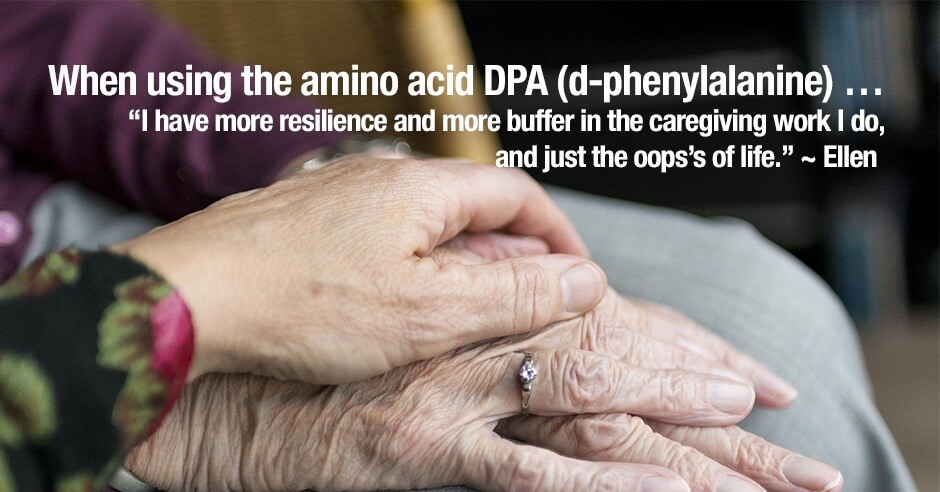
When using the amino acid DPA (d-phenylalanine) I have more resilience and more buffer in the caregiving work I do, and just the oops’s of life

July 29, 2022 By Trudy Scott 10 Comments

using dpa

I had not investigated DPA as I am a joyful, happy person. But recently I have been so depleted that I benefitted much from taking licorice to boost cortisol (who knew cortisol isn’t always to be lowered?)

Your presentation convinced me to try DPA as when I get depleted enough I get weepy (not sadness, just from being physically drained). Wow. I used a 500 mg dose of Lidke Endorphigen in the afternoon, and that has made a startling difference. I have more resilience now, more buffer, in the caregiving work I do, and just the oops’s of life.

I have been an avid note-taker of your summits and the interviews you give on the summits of others, and have recommended your book and blog to precious ones looking for answers to their health challenges.

Because of your diligence, I have been greatly helped by using GABA, 5-HTP (seems to work better for me than tryptophan), and tyrosine (so my thyroid glandular works more effectively).

Thank you ever so much for presenting information with evidence backing in a way that truly meets my curious, investigative, analytical mind. I love to know the whys and hows of things.

Ellen shared this feedback on one of the blogs after she heard me talk about DPA and low endorphins on The Anxiety Summit 5: Gut-Brain Axis. I’m sharing her wonderful results to give you a practical resource if you find yourself depleted and needing resilience as a caregiver. I’m also sharing this in order to illustrate that it’s not always easy to know when to trial a certain amino acid.

Ellen commented that she appreciated understanding the whys and hows of things. She is referring to my explanation of how DPA (d-phenylalanine) works. It’s an amino acid that destroys the enzyme that breaks down endorphins and thereby helps to raise your endorphins. With low endorphins you can feel very weepy, overly emotional, be extra sensitive to emotional pain, be sensitive to physical pain, and indulge in comfort/reward eating. You also often don’t feel joy.

Even though she was well versed in the use of GABA, 5-HTP and tyrosine (and seeing results), she had not investigated DPA. She described herself as a joyful and happy person so she didn’t think she needed DPA.

But her caregiving work (and other health and life challenges) had left her depleted and she started to feel weepy. And she is happy to share that DPA reversed that feeling. I’m thrilled for her and appreciate her for sharing.

The DPA product, how best to use it and how it differs from DLPA

Ellen mentions Lidtke Endorphigen which contains 500 mg of DPA. This product has been a long-time firm favorite with my clients and those in my community.

I used to recommend simply chewing the capsule to get the quickest and best effects and this worked well when it was produced in a gelatin capsule. Now it’s made with a cellulose capsule and chewing doesn’t work at all well, so opening the capsule (or just biting off the top) and tipping the powder into your mouth works best.

I’m often asked about the difference between DPA and DLPA (dl-phenylalanine) so if you have this question you can read more about that here.

Some of the supporting research

Research supports the use of DPA for helping to ease depression and the fact that caregivers are prone to an emotional burden.

  • D-phenylalanine and other enkephalinase inhibitors as pharmacological agents: implications for some important therapeutic application

It is proposed that the enkephalinase [a subgroup of endorphins] inhibitors may be effective in a number of human “endorphin deficiency diseases” such as depression…

  • Burden and quality of life of caregivers for hemodialysis patients

Caregivers of hemodialysis patients may experience a significant burden and an adverse effect on their quality of life. Emotional aspects of caregivers (particularly female spouses) and patients are important predictors of burden.

The study mentions that “Social support and psychological interventions should be considered to improve caregiver life and patient outcomes.”

There is no research that I am aware of that has found DPA to be beneficial for caregivers but until we have that research, let’s include nutritional support based on clinical results we see.

This case, Caregiving Burden, Stress, and Health Effects Among Family Caregivers of Adult Cancer Patients, illustrates what many caregivers experience: “extremely high levels of psychological distress, including anxiety, depression, worry and extreme loneliness.”

Ellen was already using GABA, 5-HTP and tyrosine when she added DPA, so as a caregiver she was already addressing her low GABA physical-type anxiety (with GABA), low serotonin worry-type anxiety (with 5-HTP) and low dopamine low-energy/low mood (with tyrosine). Adding DPA was the cherry-on-the-top for her weepiness and low resilience, and gave her more of a buffer.

Resources if you are new to using the amino acids as supplements

If you are new to using any of the amino acids as supplements, here is the Amino Acids Mood Questionnaire from The Antianxiety Food Solution (you can see all the symptoms of neurotransmitter imbalances, including low endorphins).

If you suspect low levels of any of the neurotransmitters and do not yet have my book, The Antianxiety Food Solution – How the Foods You Eat Can Help You Calm Your Anxious Mind, Improve Your Mood, and End Cravings, I highly recommend getting it and reading it before jumping in and using amino acids on your own so you are knowledgeable. And be sure to share it with the practitioner/health team you or your loved one is working with.

There is an entire chapter on the amino acids and they are discussed throughout the book in the sections on gut health, gluten, blood sugar control, sugar cravings, self-medicating with alcohol and more.

The book doesn’t include product names (per the publisher’s request) so as mentioned above, this blog, The Antianxiety Food Solution Amino Acid and Pyroluria Supplements, lists the amino acids that I use with my individual clients and those in my group programs.

As mentioned above, Lidtke Endorphigen is the DPA product I’ve had the most success with (and it can be found in my online store). Doctor’s Best D-phenylalanine is also a good product.

If, after reading this blog and my book, you don’t feel comfortable figuring things out on your own (i.e. doing the symptoms questionnaire and respective amino acids trials), a good place to get help is the GABA Quickstart Program (if you have low GABA symptoms). This is a paid online/virtual group program where you get my guidance and community support. There are many moms in the program who are having much success with their kids.

You can then use this knowledge to then trial DPA and other amino acids or move on to the Amazing Aminos for Anxiety Program and get help there.

If you are a practitioner, join us in The Balancing Neurotransmitters: the Fundamentals program. This is also a paid online/virtual program with an opportunity to interact with me and other practitioners who are also using the amino acids with success with their clients/patients.

If you’re a caregiver have you used DPA with success and if yes how has it helped? And do you feel more resilient?

Has GABA, 5-HTP (or tryptophan) and tyrosine also helped you?

What else helps you as a caregiver and what advice would you share with others taking care of a loved one?

If you’re a practitioner, do you use DPA with your clients/patients?

If you have questions please share them here too.
Filed Under: Amino Acids, DPA/DLPA, Endorphins, Supplements Tagged With: 5-HTP, anxiety, Balancing Neurotransmitters: the Fundamentals program for practitioners, buffer, caregiver, caregiving work, comfort/reward eating, d-phenylalanine, depleted, depression, DLPA, DPA, emotional burden, emotional pain, endorphins, GABA, GABA Quickstart program, joy, joyful, Lidke Endorphigen, physical pain, resilience, tyrosine, weepiness, weepy

What is the difference between DPA and DLPA (amino acids) and which one do I use for weepiness, heart-ache, pain and energy?

March 11, 2022 By Trudy Scott 75 Comments

dpa and dlpa

Today we address a very common question I get: “What is the difference between DPA and DLPA?” The follow-up question is this: “And what symptoms do they help with?” These are both amino acids that help to boost certain feel-good neurotransmitters. DPA (d-phenylalanine) supports endorphins, whereas DLPA (dl-phenylalanine) supports both endorphins (to a lesser extent than DPA) and catecholamines (to a lesser extent than tyrosine).

Depending on your imbalances and symptoms, they could help with weepiness, heart-ache, comfort eating, emotional support, pain relief, better focus and energy, and even improved motivation.  

I mostly recommend DPA (which I call a-hug-in-a-bottle) and share the reasons why below, but some people do really well with DLPA. It’s a matter of figuring out the best one and dose for your unique needs.

DPA for low endorphin symptoms

DPA (d-phenylalanine) is an amino acid that destroys the enzyme that breaks down endorphins. Endorphins are feel-good chemicals that you experience with an endorphin rush when you go for a run or when someone gives you a big hug, when you show kindness to someone or an individual does something nice for you.

Taking the amino acid, DPA, as a supplement helps to raise your endorphins and helps when you feel weepy and overly emotional and reduces the need to self-medicate with treats as a reward or for comfort.

This amino acid is a favorite with so many of my clients and community because it makes them feel so lovely … a warm and fuzzy feeling. I often call it a-hug-in-a-bottle!

Here are the low endorphin symptoms I have my clients rate if they are considering a trial of DPA:

  • Heightened sensitivity to emotional pain
  • Heightened sensitivity to physical pain
  • Crying or tearing up easily
  • Eating to soothe your mood, or comfort eating
  • Really, really loving certain foods, behaviors, drugs, or alcohol
  • Craving a reward or numbing treat

Tyrosine for low catecholamine symptoms

Tyrosine is the amino acid that boosts catecholamines and helps with focus, motivation, energy (especially when you crave carbs for energy) and the blah kind of depression. It’s wonderful for helping you easily quit coffee/caffeine (when you are using it to “self-medicate” due to low catecholamines). It also provides support for the thyroid.

Here are the low catecholamine symptoms I have my clients rate if they are considering a trial of the amino acid tyrosine:

  • Depression and apathy
  • Easily bored
  • Lack of energy
  • Lack of focus
  • Lack of drive and low motivation
  • Attention deficit disorder
  • Procrastination and indecisiveness
  • Craving carbs, alcohol, caffeine, or drugs for energy

DLPA for both low endorphin and low catecholamine symptoms

If someone has both low endorphin and low catecholamine symptoms, a trial of DLPA could be considered.  DLPA supports both endorphins (to a lesser extent than DPA alone) and also catecholamines (to a lesser extent than tyrosine used alone). You could think of it as doing half and half of each.

Low endorphin symptoms:

  • Heightened sensitivity to emotional pain
  • Heightened sensitivity to physical pain
  • Crying or tearing up easily
  • Eating to soothe your mood, or comfort eating
  • Really, really loving certain foods, behaviors, drugs, or alcohol
  • Craving a reward or numbing treat

And low catecholamine symptoms:

  • Depression and apathy
  • Easily bored
  • Lack of energy
  • Lack of focus
  • Lack of drive and low motivation
  • Attention deficit disorder
  • Procrastination and indecisiveness
  • Craving carbs, alcohol, caffeine, or drugs for energy

Why I prefer my clients use DPA and tyrosine, rather than DLPA

Many people do well with DLPA (you can read one example below) but over the years I have streamlined my amino acid recommendations and seldom suggest DLPA. Here are the reasons why I prefer DPA:

  • DPA is not stimulating and doesn’t affect sleep. However, DLPA can be stimulating for anxious folks (and the majority of my clients have anxiety). For this reason, DLPA can not be used later than 3pm as it can affect sleep and for some folks with really bad sleep issues it can’t be tolerated later than mid-morning (in a similar way to tyrosine).
  • I like to have clients use DPA alone so we can clearly identify the benefits they are experiencing for their low endorphin symptoms and then use tyrosine alone so we can clearly identify their low catecholamine benefits.
  • There are no precautions or contraindications with DPA. However, DLPA has the same precautions as tyrosine. This limits using it for endorphin support. These are the precautions:
    • Overactive thyroid/Grave’s disease: tyrosine, DLPA (avoid)
    • Phenylketonuria (PKU): tyrosine, DLPA (avoid)
    • Melanoma: tyrosine, DLPA (avoid)
    • High Blood pressure: tyrosine, DLPA (watch)
    • Migraine headaches: tyrosine, DLPA (watch)
    • Bipolar disorder: tyrosine, DLPA, glutamine (watch)
  • The women I work with who do have low endorphin symptoms have reported superior benefits from DPA compared to DLPA, especially for emotional pain and emotional eating.
  • Some folks can’t tolerate tyrosine and these same folks have a hard time with DLPA.

The one disadvantage with DPA is that it’s not as widely and readily available as DLPA. It often needs to be purchased online (I list some brands below).

Here is some feedback from folks to give you an idea how these amino acids have helped them.

As you’ll see, there are some individuals who do well with DLPA so it’s really a matter of looking at the symptoms and doing a trial.

DPA helps Missy with weepiness and a deep heart-ache (and tastes like dark chocolate)

Missy shares how DPA helped her deep heart-ache sort of feeling:

I have found I was using this product incorrectly. If you are feeling fine, you do not feel much of anything from it. But today I was weepy and felt that deep, heart-ache sort of feeling. I chewed 1000 mgs (2 capsules) and it DID help lift that awful feeling within 15 minutes.

Notice that she said if you’re feeling fine you don’t feel much at all. This is true of all the amino acids – they only make a difference when you need them.

Missy said that she chewed the capsule, however around 2019, the gelatin capsule was replaced with a cellulose capsule. It’s much more palatable when it’s opened up into the mouth. I blog more about opening the capsule here.

She also reported what about half my clients say:

Tastes like slightly bitter dark chocolate 🙂

The remainder of my clients don’t like the taste at all, although many say the taste grows on them. I’ve always been in the dark chocolate camp and find it quite pleasant tasting.

DLPA helps Toby with energy and pain relief (he has CFS and fibromyalgia)

Toby has a diagnosis of CFS (chronic fatigue syndrome) and fibromyalgia and shared how DLPA helps him:

I’ve played around with (I think) all variations of these aminos and have found unequivocally (in the sense of definite and fast observable changes as opposed to none) that DLPA is the one that works for me. I have wondered what that means. I am male, 45, diagnosed with CFS and fibromyalgia and have speculated that in lay terms the DLPA gives me a bit of energy and pain relief (endorphins). Is that a logical conclusion?

He posted an image of the DLPA product he used and said this:

After putting it on my tongue, very quickly I get an agreeable boost in energy and pain relief. I have not experienced this with DPA or tyrosine.

Based on what I’ve covered above with the symptoms you can see that Toby has made a very logical conclusion. He is getting both endorphin support (the pain relief) and catecholamine support (the energy).

Resources if you are new to using DPA or DLPA as supplements

If you are new to using the amino acids DPA or DLPA as supplements, here is the Amino Acids Mood Questionnaire from The Antianxiety Food Solution (you can see the low endorphin and low catecholamine symptoms.)

If you suspect low levels of endorphins and/or low levels of catecholamine and do not yet have my book, The Antianxiety Food Solution – How the Foods You Eat Can Help You Calm Your Anxious Mind, Improve Your Mood, and End Cravings, I highly recommend getting it and reading it before jumping in and using amino acids on your own so you are knowledgeable. And be sure to share it with the team you or your loved one is working with. Blog posts like this are intended to add value to the chapter on amino acids, which contains detailed information on doses and time of the day for dosing.

The book doesn’t include product names (per the publisher’s request) so this blog, The Antianxiety Food Solution Amino Acid and Pyroluria Supplements, lists the DPA and DLPA products that I use with my individual clients and those in my group programs.

For DPA I have used the Lidtke Endorphigen product for years and it’s a firm favorite with my clients (and I’ve used it myself).

I recently purchased  a bottle of Doctor’s Best D-Phenylalanine to test and it works just as well as the Lidtke product.

If you are a practitioner, join us in The Balancing Neurotransmitters: the Fundamentals program. It’s an opportunity to interact with me and other practitioners who are also using the amino acids.

Do you have any of the low endorphin and/or low catecholamine symptoms and have you seen benefit with DPA, DLPA and/or tyrosine?  If yes, please share what benefits.

Has this blog provided clarification on DPA vs DLPA, and will you be changing how you use these amino acids going forward?

If you’re a practitioner please share what you use with clients/patients.

Feel free to ask your questions here too.

Filed Under: Amino Acids, Emotional Eating, Pain, Women's health Tagged With: amino acids, anxiety, anxious, catecholamines, cfs, comfort eating, d-phenylalanine, Dark chocolate, dl-phenylalanine, DLPA, DPA, emotional support, endorphins, energy, Fibromyalgia, focus, heart-ache, hug, insomnia, motivation, neurotransmitters, pain, symptoms, tyrosine, weepiness, What is the difference between DPA and DLPA

GABA helps 14-year-old with Tourette’s Syndrome (the tics and sleep), and tyrosine makes him happier and his mind sharper

January 21, 2022 By Trudy Scott 30 Comments

gaba tyrosine teenager

We typically associate low GABA, a calming neurotransmitter, with a physical-type of tension- anxiety that also often affects sleep. However there is evidence that low GABA is also a factor in other conditions. One of these conditions is Tourette’s Syndrome, which is characterized by the presence of chronic tics which can be motor/movement and vocal. In today’s blog I share some research that suggests a deficit in GABAergic transmission may contribute to symptoms in Tourette’s and a case study where a teenage boy found relief from his tics when using the amino acid GABA as a supplement. GABA also improved his sleep. He also made some dietary changes – no gluten, no sugar and no caffeine – and supplemented with magnesium and melatonin. The amino acid tyrosine, used as a supplement, also improved his low mood and focus, both of which can be issues with Tourette’s.

Kim, a mom in this community, shared this wonderful feedback about her son in response to a Facebook post a few years ago:

Because of your book, I started using GABA for my 14-year-old son with moderate to severe Tourette’s Syndrome, and the results have been significant. Highly recommended for tics, and sleep for these individuals. Thank you.

I asked her how much GABA he used and how often and she shared this:

He used 750mg GABA nightly before bed, and if tics are really active then additional 300mg. Lots of water and a balanced diet with no caffeine…. life-saver.

Keep in mind that 750mg is considered a high dose. We typically start with 125mg GABA and increase based on each person’s unique needs. There is the temptation to think “I have tics and this is a very severe condition so I need a high dose to start.” You don’t want to be thinking like this. Some people may not need this much and others may need this high dose. We always use the trial method to figure out the ideal dose.

She also shared that when he added tyrosine, he saw benefits from that amino acid supplement too:

He recently added 300mg of l-tyrosine, and it promotes happiness and a sharper mind, due to brain fog. He says he really notices a difference. He has read your book as well.

How wonderful is this? GABA helped reduce his tics and improved his sleep, and tyrosine improved his mood and focus.

I love that he’s read my book – good for him and this mom! It’s never too early to have you and your child read this information. It’s empowering for them so they understand the changes they need to make and why these amino acids, dietary changes and elimination of caffeine make such a difference.

I recently checked in to see how he is doing now and asked what other nutritional approaches helped/help other than GABA, a balanced diet and no caffeine. She shared this:

He’s gluten free, magnesium for sure for the muscle tics, and melatonin for good sleep (Touretters need a routine sleep schedule).

He’s 18 now and is doing way better as he matures, but GABA no doubt has improved his life. We promote GABA and educate others as much as possible.

All this is so great to hear and I love that they now help to educate others about GABA too.

I appreciate that she gave me permission to share, hence this post. (The image above is a stock image and not her son.)

Tourette’s Syndrome and reduced GABA function

This paper, Reduced GABAergic inhibition and abnormal sensory symptoms in children with Tourette syndrome, describes the condition and the role of reduced GABA function:

Tourette Syndrome is characterized by the presence of chronic tics. Individuals with Tourette Syndrome often report difficulty with ignoring (habituating to) tactile sensations, and some patients perceive that this contributes to a “premonitory urge” to tic. While common, the physiological basis of impaired tactile processing in Tourette Syndrome, and indeed tics themselves, remain poorly understood.

It has been well established that GABAergic processing plays an important role in shaping the neurophysiological response to tactile stimulation. Furthermore, there are multiple lines of evidence suggesting that a deficit in GABAergic transmission may contribute to symptoms found in Tourette Syndrome.

In this study, the authors used testing (magnetic resonance spectroscopy) and tasks that were vibrotactile (the perception of vibration through touch) to investigate the role of GABA and atypical sensory processing in these 8-12-year old children with Tourette Syndrome.

They found the following:

  • lower concentration of GABA in the sensorimotor cortex and “impaired performance on tactile detection and adaptation tasks, consistent with altered GABAergic function”
  • the altered/reduced GABAergic function correlated with the severity of motor tics and sensory impairments, “linking the core feature of Tourette Syndrome directly to … brain neurochemistry.”

The authors conclude that this provides a foundation for novel interventions (i.e. medications) but unfortunately do not offer the use of the amino acid GABA as one of these solutions. This is very unfortunate but not unexpected. I plan to reach out to the authors and share this case study and blog.

This research supports why GABA works so well for Kim’s son and why he needed higher amounts of GABA when his tics were more active/severe. And now I’m curious to find out if her son has/had sensory issues and how they improve/improved with GABA. I’ll report back if I hear from her about this.

It’s no surprise that GABA helps his sleep too. There is much evidence supporting this – like the the sleep promoting effects of combined GABA and 5-HTP (or GABA alone or 5-HTP alone).  I’ve also shared many GABA-sleep success stories on the blog. Here is one: Since starting GABA my child sleeps for the first time in years and really notices a difference in his carb cravings. (Use the search feature and “GABA sleep” to find additional blog posts)

Interestingly only 8% of the children in the study had generalized anxiety disorder. Given how common low GABA is in anxiety, and that low serotonin can also be a factor with tics, I would have expected anxiety to be higher.

Evidence supporting the other nutritional changes he made

There is evidence to support the other nutritional changes that Kim’s son made:

  • There are reports that “an increase in tics has been related to the consumption of caffeine and refined sugar.” The authors acknowledge that there is no one diet for Tourette’s, so as always, it’s a matter of figuring out the ideal diet for each child (or adult) with tics. Oligoantigenic diets have been identified as significantly reducing tics. This involves removing foods that can potentially cause a food sensitivity leading to tics and/or behavioral impacts and/or insomnia.
  • A gluten-free diet maintained for one year in patients with Tourette’s Syndrome was shown to markedly reduce tics and OCD in children and adults
  • Magnesium is one of the most used supplements in children with Tourette’s Syndrome. When used with probiotics, omega-3 and multivitamins “Seventy-five per cent of supplement users in the Tourette syndrome group noted improvement, mainly in motor and vocal tics, sleep quality and anxiety reduction.”
  • Melatonin is listed with a number of medications commonly prescribed for tic disorders where sleep issues are also a factor

Keep in mind that the above is not a protocol for relief from tics for everyone with Tourette’s Syndrome. It’s what worked for the unique biochemical needs of Kim’s son.

That said, this could be a framework to start with and build upon.

Tyrosine improves his mood and focus

Tyrosine helps with low catecholamines, improving the curl-up-in-bed low-energy kind of low mood and poor focus. (You can see all the symptoms here.) The typical dose is 500mg tyrosine a few times a day. Kim’s son found just 300mg to be beneficial.

Interestingly, 48% of the children in this study had attention-deficit/hyperactivity disorder (ADHD) with about half of those on stimulant medication. I wonder how many would have also benefited from tyrosine for improving their focus, as it did for Kim’s son.

You can read more about tyrosine for focus and mood, and motivation and energy here.

Resources if you are new to using GABA or tyrosine as a supplement

If you are new to using the the amino acid GABA or tyrosine as supplements, here is the Amino Acids Mood Questionnaire from The Antianxiety Food Solution (you can see the low serotonin and other low neurotransmitter symptoms) and a brief overview here: Anxiety and targeted individual amino acid supplements: a summary.

If you suspect low levels of GABA or catecholamines and do not yet have my book, The Antianxiety Food Solution – How the Foods You Eat Can Help You Calm Your Anxious Mind, Improve Your Mood, and End Cravings, I highly recommend getting it and reading it before jumping in and using amino acids so you are knowledgeable.

And be sure to share it with the team you or your loved one is working with. As I mentioned above, it’s empowering for your teen and also relatively easy reading too.

The book doesn’t include product names (per the publisher’s request) so this blog, The Antianxiety Food Solution Amino Acid and Pyroluria Supplements, lists the GABA and tyrosine products that I use with my individual clients and those in my group programs.

Have you seen results with GABA or any of the above approaches? Or has another approach helped you or your child?

If you’re a practitioner have you seen GABA and any of the above to help? What else has helped your clients/patients?

If you suffer from Tourette’s Syndrome, do you also experience ADHD, insomnia, low mood and/or anxiety?

Feel free to ask your questions here too.

Filed Under: ADHD, GABA, Insomnia Tagged With: ADHD, anxiety, caffeine, focus, GABA, gluten, low mood, magnesium, melatonin, mind sharper, nutritional, sleep, sugar, teen, tics, Tourette’s Syndrome, tyrosine, tyrosine happier

I need help with my Diet Coke addiction – when I stop, my fatigue, brain fog, anxiety/depression increase big time!

September 10, 2021 By Trudy Scott 42 Comments

diet coke addiction

A woman asked for help on the blog, wanting desperately to quit her long-time Diet Coke addiction. This woman knows her addiction is detrimental to her health and she gets withdrawal symptoms when she tries to quit – fatigue, brain fog, anxiety and depression increase big time! And yet she can’t quit. This is not unusual. I share my feedback on the brain chemical imbalances that can drive addictions and how to figure out which amino acids (or more than one) may help her quit easily. This means she doesn’t have to go cold turkey and then fail yet again. Using the amino acids means there is no willpower required and no feelings of deprivation, and it’s addressing an underlying neurotransmitter imbalance i.e. a root cause.

Here is her question:

I need help with my Diet Coke addiction. I have been using it for 35 years and I am too appalled to tell you how much I drink.

I have tried to quit many times and ended up in utter failure. A friend mentioned that phenylalanine may be a booster for my dopamine.

When I stop, my fatigue, brain fog, anxiety/depression increase big time. I know this drink is literally killing my health and I am desperate for some answers, suggestions….or a miracle.

What supplements do you recommend for helping me quit this devil of a habit? Thank you for ALL you do!” 

Here is my response …. when it comes to using amino acids to help break the addiction, pretty much everything I write about in relation to sugar addiction or cravings would likely also apply to quitting Diet Coke.

What emotions are driving the addiction?

She needs to figure out what emotions are driving her addiction and use the respective amino acid supplement/s (one or more of them) to help break the addiction and improve the mood symptoms at the same time.

These are the questions I review with my clients who have a Diet Coke addiction (or other diet soda or regular soda addiction):

  1. If you have to drink it when you haven’t eaten in awhile it’s likely low blood sugar. Glutamine on the tongue stops the desire almost immediately and also helps with the low blood sugar symptoms of shakiness and irritability
  2. If you stress-drink, your cravings are likely due to low GABA, and GABA will stop the stress-drinking and calm you down too
  3. If you drink it to feel happy (and especially from late afternoon into the evening) then your cravings are likely due to low serotonin, and tryptophan (or 5-HTP) stops the cravings and boosts mood and reduces anxiety
  4. If you drink it for comfort or a reward comfort then it’s likely due to low endorphins and DPA (d-phenylalanine) will stop that feeling of “I deserve-it” and also give you a hug-like mood boost
  5. If you drink it for an energy boost or to give you focus then it’s likely due to low catecholamines and tyrosine will stop those cravings and give you a mood and energy boost, and also help with mental clarity

Based on her question above, she mentions that “my fatigue, brain fog, anxiety/depression increase big time” when she stops. The fatigue, brain fog and depression is a big clue that #5 above will likely apply. She asks about using phenylalanine for dopamine support (dopamine is one of the catecholamines). I prefer tyrosine to l-phenylalanine for boosting levels.

The fact that anxiety also increases when she stops is a clue that #2 or #3 may apply too, and possibly #1. It’s not unusual for someone to have imbalances in multiple areas.

If this is the case, I  always recommend doing a trial of one at a time, so it’s easy to see the benefits.

It’s not the same neurotransmitter imbalance that shows up in each person

It’s also not the same neurotransmitter imbalance that shows up in each person with a Diet Coke (or other soda addiction). When I shared this on Facebook and asked what was the driving emotion behind their “self-medication” with Diet Coke this is feedback I received from two women:

  • “I had been drinking almost 6 per day for decades. I believe it was comforting.” In this instance, addressing low endorphins with DPA (#4) would have helped. Comfort or reward or treat is a common emotional driver for all addictions.
  • “I noticed I would drink Diet Coke when I felt anxious (1 or 2 times a day).” In this instance #2 or #3 would have helped i.e. GABA support if it was physical anxiety and/or tryptophan or 5-HTP for low serotonin if it was worry-type anxiety.

The caffeine addiction and the artificial sweetener Aspartame

Keep in mind, with Diet Coke, there is the caffeine addiction and the artificial sweetener Aspartame that also make it challenging to quit. Tyrosine and addressing low catecholamines (#5 above) and vitamin C can help with the caffeine addiction and quitting so headaches are minimized.

The amino acids can help with the imbalances created by aspartame. This paper, Direct and indirect cellular effects of aspartame on the brain, proposes that “excessive aspartame ingestion might be involved in the pathogenesis of certain mental disorders and also in compromised learning and emotional functioning.”  This excerpt from the abstract is relevant to this discussion:

Aspartame is composed of phenylalanine (50%), aspartic acid (40%) and methanol (10%). Phenylalanine plays an important role in neurotransmitter regulation, whereas aspartic acid is also thought to play a role as an excitatory neurotransmitter in the central nervous system. Glutamate, asparagines and glutamine are formed from their precursor, aspartic acid. Methanol, which forms 10% of the broken down product, is converted in the body to formate, which can either be excreted or can give rise to formaldehyde, diketopiperazine (a carcinogen) and a number of other highly toxic derivatives. Previously, it has been reported that consumption of aspartame could cause neurological and behavioural disturbances in sensitive individuals. Headaches, insomnia and seizures are also some of the neurological effects that have been encountered, and these may be accredited to changes in regional brain concentrations of catecholamines, which include norepinephrine, epinephrine and dopamine.

This further supports the need for catecholamine support with tyrsosine (#5 above) and GABA support with the amino acid GABA (#2 above).

Recognizing it’s an issue is a big first step

I acknowledge her for recognizing it’s an issue – that is a big first step! I did also ask her to share how much she was consuming each day because there is no judgement here and we acknowledge it’s an addiction. I’ll report back when I hear from her and will also share which amino acid/s helped her break the addiction.

As always, it’s not only about the amino acids and a comprehensive healing approach is always part of the picture. The amino acids make it easy to get started and then other underlying issues can be addressed: other nutritional deficiencies, dysbiosis, fatty liver, metabolic syndrome and so on. You can see some of the many studies below.

Of course, it’s important to be eating a real whole foods diet with quality animal protein, healthy fats, organic vegetables and fruit, no caffeine, no gluten, no sugar, fermented foods and herbs.

Reconsider your diet soda consumption if you’re on the fence

If you are on the fence about giving up your diet soda consumption here are a few additional papers that will hopefully make you reconsider:

  • Diet soda intake and risk of incident metabolic syndrome and type 2 diabetes in the Multi-Ethnic Study of Atherosclerosis (MESA) – “Although these observational data cannot establish causality, consumption of diet soda at least daily was associated with significantly greater risks of select incident metabolic syndrome components and type 2 diabetes.”
  • Altered processing of sweet taste in the brain of diet soda drinkers – “there are alterations in reward processing of sweet taste in individuals who regularly consume diet soda.” This has widespread ramifications for driving the need for sugar/carbs and all things sweet
  • A comparative study of the effect of diet and soda carbonated drinks on the histology of the cerebellum of adult female albino Wistar rats – “These results suggest that diet soda has adverse effect on the cerebellum of adult female albino Wistar rats,” with “shrunken and degenerated Purkinje cells with hypertrophied dendrites.” Purkinje cells are involved in the release of GABA.
  • Soft drinks consumption and nonalcoholic fatty liver disease – “the aspartame sweetener and caramel colorant which are rich in advanced glycation end products … potentially increase insulin resistance and inflammation”

Facts like this help you recognize it’s an issue but even when we have these facts, we often simply cannot quit. This is where the amino acids are so powerful because they work with no willpower required and no feelings of deprivation. And using them addresses the underlying neurotransmitter imbalance/root cause that led to the initial addiction or “self-medication”. They also help address the neurotransmitter deficiencies that are often made worse by diet soda consumption.

Resources if you are new to using the amino acids as supplements

If you are new to using the amino acids as supplements and want to know more, here is the Amino Acids Mood Questionnaire from The Antianxiety Food Solution and a brief overview here, Anxiety and targeted individual amino acid supplements: a summary.

If you suspect low neurotransmitters and do not yet have my book, The Antianxiety Food Solution – How the Foods You Eat Can Help You Calm Your Anxious Mind, Improve Your Mood, and End Cravings, I highly recommend getting it and reading it before jumping in and using amino acids so you are knowledgeable.

What advice do you have if you have been through this yourself and what has helped you?

What do you drink now instead of your diet soda?

If you are a practitioner, how do you help your patients/clients with this kind of addiction?

Feel free to post your questions too.

Filed Under: Addiction, Anxiety, Cravings, Depression Tagged With: 5-HTP, addiction, amino acids, anxiety, artificial sweetener, brain chemical imbalances, brain fog, caffeine, catecholamines, cold turkey, depression, Diet Coke addiction, dopamine, DPA, endorphins, fatigue, GABA, glutamine, low blood sugar, neurotransmitter, no feelings of deprivation, no willpower, quit, serotonin, sugar, tryptophan, tyrosine, withdrawal symptoms

What if overthinking, fear, anxiety and worry (caused by low serotonin) is holding you back instead of low motivation/low dopamine?

July 2, 2021 By Trudy Scott 50 Comments

overthinking

One of the first things that comes to mind when someone is stuck and not able to get things done is low motivation caused by low catecholamines/low dopamine. But what if overthinking, fear, anxiety and worry (caused by low serotonin) is holding you back instead? The following case may help you figure it out if any of this applies to you.

William asked this question on one of the tyrosine blogs, justifiably thinking he may need tyrosine to get unstuck:

Excellent article. I may try tyrosine. I have anxiety and shut down when I am about to start something or my mind overthinks and I shut down with worry. I have problems sleeping. I take a group of things…GABA, glycine, 5-HTP but still wake at 3am.

Anyway I always have GOOD intentions of doing things when I wake in the morning….then it goes downhill. I was not always like this but got worse with STRESS from work and now I FIGHT myself to actually do something I used to LOVE to do. Makes me MAD!

I actually am AFRAID just thinking about taking Tyrosine {Not funny}

I FEAR so much it becomes stupid. I think of doing things and SHUT DOWN with worry.

I want my life back…life is too short to suffer knowing HELP is so close. What do you think? Love your articles…

I think this is a great question many others in my community may relate to so I’ve decided to do this as a blog post with his question and a longer response.

I thanked him for his kind words, saying I can’t offer advice via the blog but can share that we need to be careful with tyrosine when someone has sleep issues or anxiety. I also offered some brief thoughts which I’ll elaborate on here so you can understand my thinking as I work with someone.

Is it low motivation caused by low catecholamines/low dopamine?

The first thing that comes to mind when someone is stuck and not able to get things done is low catecholamines and low dopamine. The classic signs are lack of motivation, fatigue, poor focus and feeling depressed, often using sugary foods or drinks for an energy pick-up (especially in the afternoon).

William may feel that he has low motivation and needs tyrosine because he can’t get things done or he starts something and can’t complete it.

His intentions are good but he has to push himself or as he says “fight myself” to get things done. Because of this he feels tyrosine may be the next amino acid he should trial.

Why I would investigate and address low serotonin

William says he has anxiety and also has trouble sleeping. This could be related to low serotonin and/or low GABA.

However when someone has anxiety and insomnia and I hear the following words/phrases, I immediately think low serotonin should be investigated and addressed:

  • “My mind overthinks”
  • “I shut down with worry”
  • “I actually am AFRAID just thinking about taking Tyrosine”
  • “I fear so much”

All of the above can hold you back and look like low motivation when it is actually worry and fear that is holding you back.

Typically, with low serotonin, you could also second-guess things you do, experience negative self-talk, have a lack of confidence when doing things, get stuck because of perfectionism and may even feel like an imposter. You may also be very controlling and want to do it all yourself and not be willing to delegate – this can hold you back too.

All this and anything else on the list of low serotonin symptoms would further suggest we need to address this first.

Finding the ideal serotonin support for his needs

He is currently taking GABA, glycine and 5-HTP but still wakes at 3am. And he is still anxious.

I would work to optimize 5-HTP dosing (increasing every few days to see if more helps) or switch to tryptophan if the increased dose isn’t helping. Some folks do better one one versus the other and 5-HTP can raise cortisol in some instances causing a wired-tired feeling.

I’d do the same with GABA once the ideal dose of 5-HTP or tryptophan is found. This helps improve sleep and reduce anxiety too.

And I’d look into high cortisol in case this is causing his 3am awakenings.

Once he has ideal serotonin support for his needs, the overthinking will stop, the worry will go away and his fears will vanish – and he will be able to complete things he starts.

Being well rested because of a great night’s sleep is going to help a great deal too.

There may be a need for tyrosine now or later

I may be wrong and there may in fact be a need for tyrosine now. These cases illustrate tyrosine helping when it didn’t seem it would:

  • Tyrosine for alleviating anxiety and panic attacks and creating a feeling of calm focus
  • Tyrosine erases severe performance anxiety in a female musician: no more shaking, sweating, panic attacks and passing out

There may also be a need for tyrosine later and a trial will provide the answers.

Right now William is “AFRAID just thinking about taking Tyrosine” but once his serotonin levels are ideal he should no longer have this fear.

Resources if you are new to using the amino acids as supplements

If you are new to using the amino acids tryptophan/5-HTP, GABA or  tyrosine as supplements, here is the Amino Acids Mood Questionnaire from The Antianxiety Food Solution and a brief overview here, Anxiety and targeted individual amino acid supplements: a summary.

If you suspect low levels of any of the neurotransmitters and do not yet have my book, The Antianxiety Food Solution – How the Foods You Eat Can Help You Calm Your Anxious Mind, Improve Your Mood, and End Cravings, I highly recommend getting it and reading it before jumping in and using amino acids so you are knowledgeable.

The book doesn’t include product names (per the publisher’s request) so this blog, The Antianxiety Food Solution Amino Acid and Pyroluria Supplements, lists the amino acid products that I use with my individual clients and those in my group programs.

As with all individual amino acids we use them for quick relief of symptoms. And we also always focus on the foundations like diet, the gut, adrenals and stress levels.

We appreciate William for asking this question so we all get to learn. Hopefully he’ll jump on and add to the discussion and share his results later.

Can you relate to his lack of motivation showing up as fear, worry and overthinking instead and holding you back?

What about these other low serotonin symptoms keeping you stuck: second-guessing, negative self-talk, lack of confidence, perfectionism, imposter syndrome and controlling?

Has using tryptophan or 5-HTP allowed you to get past some of this so you can get things done?

Did you also have to address low dopamine and actual low motivation, poor focus and fatigue with tyrosine?

Feel free to post any questions here too.

Filed Under: 5-HTP, Anxiety, serotonin, Tryptophan Tagged With: 5-HTP, afraid, anxiety, controlling, fear, GABA, holding you back, imposter, low dopamine, low motivation, low serotonin, my mind overthinks, overthinking, perfectionist, problems sleeping, shut down, stuck, tryptophan, tyrosine, unstuck, worry

Tyrosine erases severe performance anxiety in a female musician: no more shaking, sweating, panic attacks and passing out

June 4, 2021 By Trudy Scott 42 Comments

tyrosine and musician anxiety

Today I’m sharing the case of a female musician with severe performance anxiety. It was so severe that she would shake, sweat and actually pass out. She also had problems breathing which happens when you’re having a panic attack. Surprisingly, the amino acid supplement tyrosine eliminates – or as she says, erases – all these anxiety symptoms very quickly. It’s surprising because tyrosine is typically not used for easing anxiety symptoms and is instead used to support the low catecholamine symptoms: low motivation, low energy, poor focus, feeling flat and depressed (the curl-up-in-bed kind), cravings for sugary foods for better energy and the need for caffeine.

I share her story in her own words and explore some possible mechanisms around serotonin, cortisol, dopamine and GABA.

Pam initially shared on a Facebook thread how tyrosine erased her extreme performance anxiety and we dug deeper. This is the start of the conversation:

I’ve been performing (music) ever since I was seven, but I always hated it. For extreme performance anxiety, I found, way too late, that 1,500mg of l-tyrosine simply erased the shaking and fainting, and I was “just nervous like everybody else.”

I responded saying what a great result this was and shared that I found it so interesting that tyrosine erased the shaking and fainting that she experienced with her performance anxiety.

As I mentioned above, tyrosine is typically not used for anxiety. Instead, it’s used to improve the low catecholamine symptoms of poor focus, low energy and low motivation. (More on this here)

I also always want to understand the mechanism as to why an amino acid helps ease anxiety symptoms – or in this case erased them. I share more on that below.

When I asked what she meant by “just nervous like everybody else“, this was her response:

It means pretty much everyone gets performance nerves, but not to the point of fainting on stage. Knowing intellectually that that was ridiculous did not make any difference in the fact that it occurred.

I don’t even remember why I tried tyrosine, but I do remember the first time I took it 40 minutes before a performance. I waltzed out on stage ahead of time and sat in my chair warming up, showing off even, to a hall that was filling with people.

That was and is inconceivable without the tyrosine support, which I have to assume is putting my dopamine at a normal level. Yes, I get a little wired, which can be a good thing, but passing out, having my intestines demand to be emptied, not being able to breathe [is this a panic attack?], shaking, sweating….it fixes all of that.

It’s wonderful to hear such powerful results from 1,500mg tyrosine and how quickly it works.  The latter is not surprising as this is typical with all the amino acids. They work quickly if it’s what you need and you have the ideal dose for your needs.

What is surprising is that tyrosine erased her severe performance anxiety symptoms. I immediately started trying to understand possible mechanisms.

What is the mechanism – a serotonin boost to improve confidence?

When I read “I waltzed out on stage ahead of time and sat in my chair warming up, showing off even, to a hall that was filling with people” I immediately thought of how tryptophan or 5-HTP works to give you a serotonin boost that improves your confidence.

However, Pam doesn’t feel the mechanism is related to low serotonin:

You would think, if it were serotonin, that SSRIs would be effective. They are not and cause me to have terror attacks.

She also shared that she recently gave 5-HTP a trial and it did nothing so that further supports her theory/gut feeling that her extreme performance anxiety is not related to low serotonin:

I think there is a belief system associated with serotonin that is not cognizant of the fact that the other neurotransmitters can be the culprits. I read someone’s web site sometime not that long ago, that detailed how to test all the major neurotransmitters, find out which ones were to low OR too high, and what amino acids to take to fix the imbalances. To me, this is a more comprehensive view than being stuck on serotonin.

Anxiety is not always caused by low serotonin or low GABA (although these causes are very common). I’m with Pam on finding which neurotransmitter imbalance you have. There is no one-size fits all and results can happen without us fully understanding why. It does sound like this is very much dopamine related for her but I wanted to understand how it was helping her.

What is the mechanism – lowering cortisol under extremely stressful situations?

I started looking into the research and found that one possible mechanism could be that tyrosine lowers the high cortisol that occurs after an extremely stressful situation – like going on stage to perform – and eases anxiety this way.

An animal study supports this theory: Dietary tyrosine suppresses the rise in plasma corticosterone following acute stress in rats:

Acute, uncontrollable stress increases norepinephrine (NE) turnover in the rat’s brain (depleting NE) and diminishes the animal’s subsequent tendency to explore a novel environment. Pre-treatment with tyrosine can reverse these adverse effects of stress, presumably by preventing the depletion of NE in the hypothalamus.

In the present study, we found that pre-treatment with supplemental tyrosine not only prevented the behavioral depression and hypothalamic NE depletion observed after an acute stress, but also suppressed the rise in plasma corticosterone. These results support a role for brain NE in stress-induced corticosterone secretion and demonstrate that supplemental tyrosine can protect against several adverse consequences of such stress.

Keep in mind that cortisol is the primary endogenous adrenal steroid in humans, whereas corticosterone is the primary adrenal corticosteroid in laboratory rats.

What is the mechanism – dopaminergic system influence on anxiety-like behavior?

I dug deeper into the research and found that there is evidence that dopamine plays an important role in anxiety modulation in different parts of the brain and that both dopamine D1 and D2 receptor mechanisms are important in mediating anxiety.

This paper, The Modulatory Role of Dopamine in Anxiety-like Behavior describes some of this, together with the role of GABA and glutamate:

The activity of dopaminergic system is modulated by several neurotransmitters, including glutamatergic neurons from the medial prefrontal cortex (mPFC), GABAergic fibers from the nucleus accumbens (NAc) as well as the ventral pallidum and cholinergic fibers from the pedunculopontine nucleus and the laterodorsal tegmental nucleus. Thus, changes in the glutamatergic, and GABAergic, as well as mediated transmission in the mesolimbic, mesocortical and nigrostriatal dopaminergic system may influence anxiety-like behavior.

In the past I’ve blogged about tyrosine for alleviating anxiety and panic attacks and creating a feeling of calm focus so this is not an isolated case but it is pretty unusual. As I share in the above blog, a man and a woman saw dramatic reductions in their anxiety when using tyrosine. GABA and tryptophan had not helped and both individuals were also under extreme stress. It was work stress in their cases and both of them felt that their ability to now focus in business situations eased their severe anxiety.

Regardless of the mechanism, Pam saw profound results and that is all that really matters.

My additional feedback on dosing and timing

Here is some additional feedback from me on dosing and timing. On one hand I recommend caution based on my experience with the amino acids. And on the other hand, what she did worked so I’m torn about her approach but am going to say it anyway:

  • A typical starting dose is 500mg tyrosine and I would never have anyone start with 1,500mg (even though it was the sweet spot for Pam). However, if she hadn’t used that dose, she would not have had the same results. I’m waiting to hear back if she started with 1,500mg tyrosine or worked up to this. (Pam also told a friend of hers about her results and the outcome was very different for her friend:“She tried 100mg of tyrosine and it caused her extreme nervousness, the opposite of me. I have to assume that 100mg put her at too *much* dopamine, and her genetic profile was significantly different from mine.” We are all unique and there is no one-size-fits-all.)
  • I would also be cautious about trying a new amino acid for the first time right before a major event like a musical performance. I have clients trial the amino acids at home before heading out. However, if she had done that she would likely have not experienced the desired results.

I feel it would be helpful to know if she had done a trial of GABA or tryptophan before using tyrosine but it seems she doesn’t recall this or why she decided to use 1,500mg tyrosine. If she hasn’t done I trial with both GABA and tryptophan, I would love her to consider this now in order to potentially take things up a notch further and ease her feelings of just being “nervous like everybody else”.

I appreciate Pam sharing her amazing results with tyrosine and I’m really happy for her! I’m waiting to hear back with details of what kind of musical performances she does. I’ll share this and the other information once I hear back.

I say it often and I’ll say it again – there is not a one-size-fits-all. This case illustrates this very well. Sometimes it’s methodical trial and error (my preference) and other times it’s hit and miss when nothing else seems to be helping.

Resources if you are new to using tyrosine as a supplement

If you are new to using the amino acid tyrosine as a supplement, here is the Amino Acids Mood Questionnaire from The Antianxiety Food Solution and a brief overview here, Anxiety and targeted individual amino acid supplements: a summary.

If you suspect low levels of any of the neurotransmitters and do not yet have my book, The Antianxiety Food Solution – How the Foods You Eat Can Help You Calm Your Anxious Mind, Improve Your Mood, and End Cravings, I highly recommend getting it and reading it before jumping in and using amino acids so you are knowledgeable.

The book doesn’t include product names (per the publisher’s request) so this blog, The Antianxiety Food Solution Amino Acid and Pyroluria Supplements, lists tyrosine and other products that I use with my individual clients and those in my group programs.

As with all individual amino acids we use tyrosine for quick relief of symptoms, like Pam did. And we must also always focus on the foundations like diet, the gut, adrenals and stress levels.

Do you use or have you used tyrosine to help with performance anxiety – personally or with a patient/client?

And were you/are you surprised that this worked so well when tryptophan or 5-HTP or GABA had not worked as expected?

What other symptoms did/does the tyrosine help improve: focus, motivation, drive, low energy, low mood? And did/does it help reduce sugar cravings and the need for caffeine?

Feel free to post your questions here too.

Filed Under: Anxiety, Fear of public speaking, Music, Tyrosine Tagged With: anxiety, calm focus, catecholamine, cortisol, dopamine, fainting, GABA, musician, nervous, panic attacks, passing out, performance anxiety, serotonin, shaking, sweating, tyrosine

  • « Go to Previous Page
  • Page 1
  • Page 2
  • Page 3
  • Page 4
  • Page 5
  • Go to Next Page »

Primary Sidebar

GABA QuickStart Homestudy

gaba quickstart homestudy

Free Report

9 Great Questions Women Ask about Food, Mood and their Health

You'll also receive a complimentary subscription to my ezine "Food, Mood and Gal Stuff"


Connect with me

Popular Posts

  • Amino Acids Mood Questionnaire from The Antianxiety Food Solution
  • The Antianxiety Food Solution Amino Acid and Pyroluria Supplements
  • Pyroluria Questionnaire from The Antianxiety Food Solution
  • Collagen and gelatin lower serotonin: does this increase your anxiety and depression?
  • Tryptophan for the worry-in-your-head and ruminating type of anxiety
  • GABA for the physical-tension and stiff-and-tense-muscles type of anxiety
  • The Antianxiety Food Solution by Trudy Scott
  • Seriphos Original Formula is back: the best product for anxiety and insomnia caused by high cortisol
  • Am I an anxious introvert because of low zinc and vitamin B6? My response to Huffington Post blog
  • Vagus nerve rehab with GABA, breathing, humming, gargling and key nutrients

Recent Posts

  • Her cravings for chips and peanut butter were triggered by stress: GABA ends cravings and reduces physical tension and fear of heights
  • It is truly miraculous to be able to move through life without crippling anxiety and panic
  • GABA and tryptophan combo provide immediate and noticeable relief for tremors and cervical dystonia in just 7 days
  • Red light therapy for back and neck pain, plantar fasciitis and low mood – a complement to the amino acids GABA, DPA and tryptophan
  • What do I use instead of Seriphos to help lower high cortisol that is affecting my sleep and making me anxious at night?

Categories

  • 5-HTP
  • AB575
  • Addiction
  • ADHD
  • Adrenals
  • Alcohol
  • Allergies
  • Alzheimer's disease
  • Amino Acids
  • Anger
  • Antianxiety
  • Antianxiety Food Solution
  • Antidepressants
  • Anxiety
  • Anxiety and panic
  • Autism
  • Autoimmunity
  • benzodiazapines
  • Bipolar disorder
  • Books
  • Caffeine
  • Cancer
  • Candida
  • Children/Teens
  • Collagen
  • Cooking equipment
  • Coronavirus/COVID-19
  • Cravings
  • Depression
  • Detoxification
  • Diabetes
  • Diet
  • DPA/DLPA
  • Drugs
  • EFT/Tapping
  • EMF
  • EMFs
  • Emotional Eating
  • Endorphins
  • Environment
  • Essential oils
  • Events
  • Exercise
  • Fear
  • Fear of public speaking
  • Fertility and Pregnancy
  • Fish
  • Food
  • Food and mood
  • Functional neurology
  • GABA
  • Gene polymorphisms
  • General Health
  • Giving
  • Giving back
  • Glutamine
  • Gluten
  • GMOs
  • Gratitude
  • Gut health
  • Heart health/hypertension
  • Histamine
  • Hormone
  • Hyperparathyroidism
  • Hypoglycemia
  • Immune system
  • Inflammation
  • Insomnia
  • Inspiration
  • Introversion
  • Joy and happiness
  • Ketogenic diet
  • Lithium orotate
  • Looking awesome
  • Lyme disease and co-infections
  • MCAS/histamine
  • Medication
  • Men's health
  • Mental health
  • Mercury
  • Migraine
  • Mold
  • Movie
  • MTHFR
  • Multiple sclerosis
  • Music
  • NANP
  • Nature
  • Nutritional Psychiatry
  • OCD
  • Osteoporosis
  • Oxalates
  • Oxytocin
  • Pain
  • Paleo
  • Parasites
  • Parkinson’s disease
  • PCOS
  • People
  • PMS
  • Postpartum
  • PTSD/Trauma
  • Pyroluria
  • Questionnaires
  • Real whole food
  • Recipes
  • Research
  • Schizophrenia
  • serotonin
  • SIBO
  • Sleep
  • Special diets
  • Sports nutrition
  • Stress
  • Sugar addiction
  • Sugar and mood
  • Supplements
  • Teens
  • Testimonials
  • Testing
  • The Anxiety Summit
  • The Anxiety Summit 2
  • The Anxiety Summit 3
  • The Anxiety Summit 4
  • The Anxiety Summit 5
  • The Anxiety Summit 6
  • Thyroid
  • Thyroid health
  • Toxins
  • Tryptophan
  • Tyrosine
  • Uncategorized
  • Vegan/vegetarian
  • Women's health
  • Yoga

Archives

  • May 2026
  • April 2026
  • October 2025
  • September 2025
  • August 2025
  • July 2025
  • June 2025
  • May 2025
  • April 2025
  • March 2025
  • February 2025
  • January 2025
  • November 2024
  • October 2024
  • September 2024
  • August 2024
  • July 2024
  • June 2024
  • May 2024
  • April 2024
  • March 2024
  • February 2024
  • January 2024
  • December 2023
  • November 2023
  • October 2023
  • September 2023
  • August 2023
  • July 2023
  • June 2023
  • May 2023
  • April 2023
  • March 2023
  • February 2023
  • January 2023
  • December 2022
  • November 2022
  • October 2022
  • September 2022
  • August 2022
  • July 2022
  • June 2022
  • May 2022
  • April 2022
  • March 2022
  • February 2022
  • January 2022
  • December 2021
  • November 2021
  • October 2021
  • September 2021
  • August 2021
  • July 2021
  • June 2021
  • May 2021
  • April 2021
  • March 2021
  • February 2021
  • January 2021
  • December 2020
  • November 2020
  • October 2020
  • September 2020
  • August 2020
  • July 2020
  • June 2020
  • May 2020
  • April 2020
  • March 2020
  • February 2020
  • January 2020
  • December 2019
  • November 2019
  • October 2019
  • September 2019
  • August 2019
  • July 2019
  • June 2019
  • May 2019
  • April 2019
  • March 2019
  • February 2019
  • January 2019
  • December 2018
  • November 2018
  • October 2018
  • September 2018
  • August 2018
  • July 2018
  • June 2018
  • May 2018
  • April 2018
  • March 2018
  • February 2018
  • January 2018
  • December 2017
  • November 2017
  • October 2017
  • September 2017
  • August 2017
  • July 2017
  • June 2017
  • May 2017
  • April 2017
  • March 2017
  • February 2017
  • January 2017
  • December 2016
  • November 2016
  • October 2016
  • September 2016
  • August 2016
  • July 2016
  • June 2016
  • May 2016
  • April 2016
  • March 2016
  • February 2016
  • January 2016
  • December 2015
  • November 2015
  • October 2015
  • September 2015
  • August 2015
  • July 2015
  • June 2015
  • May 2015
  • April 2015
  • March 2015
  • February 2015
  • January 2015
  • December 2014
  • November 2014
  • October 2014
  • September 2014
  • August 2014
  • July 2014
  • June 2014
  • May 2014
  • April 2014
  • March 2014
  • February 2014
  • January 2014
  • December 2013
  • November 2013
  • October 2013
  • September 2013
  • August 2013
  • July 2013
  • June 2013
  • May 2013
  • April 2013
  • March 2013
  • February 2013
  • January 2013
  • December 2012
  • November 2012
  • October 2012
  • August 2012
  • July 2012
  • June 2012
  • May 2012
  • April 2012
  • March 2012
  • February 2012
  • January 2012
  • December 2011
  • November 2011
  • October 2011
  • September 2011
  • August 2011
  • July 2011
  • June 2011
  • May 2011
  • April 2011
  • March 2011
  • February 2011
  • January 2011
  • December 2010
  • October 2010
  • September 2010
  • July 2010
  • May 2010
  • April 2010
  • March 2010
  • February 2010
  • January 2010
  • November 2009

Share the knowledge!

The above statements have not been evaluated by the Food and Drug Administration. Products listed in this website are not intended to diagnose, treat, cure or prevent any disease.

The information provided on this site is for informational and educational purposes only and is not intended as a substitute for advice from your physician or other health care professional. You should consult with a healthcare professional before starting or modifying any diet, exercise, or supplementation program, before taking or stopping any medication, or if you have or suspect you may have a health problem.


Copyright © 2026 Trudy Scott. All Rights Reserved. | Privacy | Terms and Conditions | Refund Policy | Medical Disclaimer

Free Report

9 Great Questions Women Ask about Food, Mood and their Health

You’ll also receive a complimentary subscription to my ezine “Food, Mood and Gal Stuff”