• Skip to primary navigation
  • Skip to main content
  • Skip to primary sidebar

everywomanover29 blog

Food, Mood and Women's Health – Be your healthiest, look and feel great!

  • Blog
  • About
  • Services
  • Store
  • Resources
  • Testimonials
  • The Book
  • Contact
  • Search this site

lyme

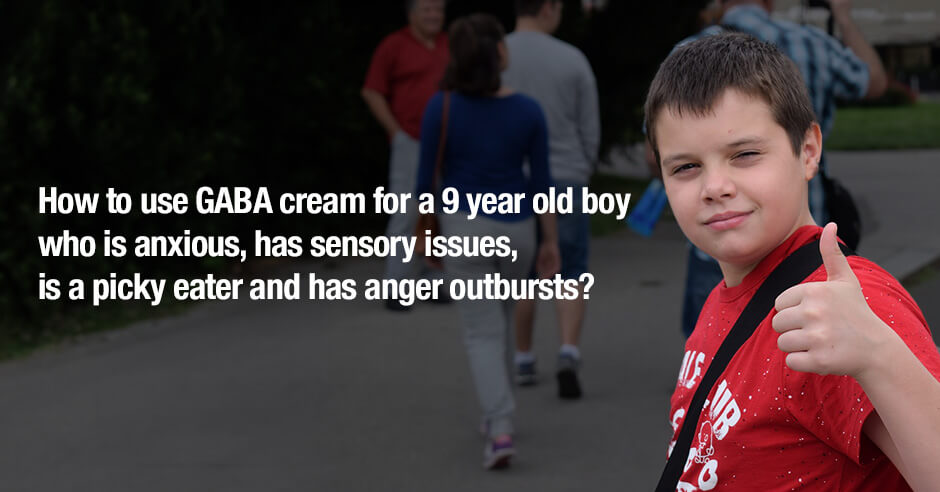
How to use GABA cream for a 9 year old boy who is anxious, has sensory issues, is a picky eater and has anger outbursts?

May 3, 2024 By Trudy Scott 8 Comments

gaba cream for boy

Devon is looking for input on using a GABA cream product to help her anxious 9-year old son who has some anger and sensory issues. She’d like advice on timing too. He is a picky eater and doesn’t like GABA Calm. I share my insights about using GABA cream for raising levels of GABA (a calming neurotransmitter), some of the GABA sensory connections, the GABA anger connections and other factors to address (nutritional imbalances, diet and infections).

Here is her question and some additional background information from our online discussion:

My son has SPD/GAD (sensory processing disorder/generalized anxiety disorder). His anxiety is causing school refusal and a lot of angry outbursts. I suspect PANDAS but his primary care doctor doesn’t think he has that (I might try a different path).

He doesn’t have a problem with sleep, it is mostly anxiety/anger in the day. I am wondering if he can use this GABA cream during the day vs at night?Or would applying this at night help him through the day?

I am really hopeful that the GABA cream will help him attain a little more peace in his days.

Devon doesn’t recall if ARFID (Avoidant restrictive food intake disorder) was part of his diagnosis but he is a picky eater and

has a carb heavy diet that centers only around certain foods. He recently added corn on the cob and artichokes.

He has tried GABA here and there but can’t get past the flavor of the chewable so has never taken it consistently.

Any thoughts on this would be great. I have learned so much from your blog. Thank you for all of the info you share.

Using GABA cream for a child with these symptoms

Devon asked this question on the Somnium Nighttime GABA Cream blog where I write about using it for insomnia, anxiety, bloated belly, muscle spasms, MS (multiple sclerosis), ARFID, anorexia, Alzheimer’s and autism.

I shared that I’ve had many parents use GABA cream during the day with success to help with anxious feelings their children are experiencing. With sleep not being an issue for her son I would start really low and increase the amount and timing from there based on symptom resolution. A pea-size amount is recommended and I’d start with a 1/4 of this in the morning before school when the symptoms are causing school refusal.

Devon doesn’t mention if they noticed benefits with GABA Calm but we use sublingual /powder/liposomal GABA in a similar way. So when this has helped in the past it’s a good clue that GABA cream will help.

Sublingual /powder/ liposomal GABA is typically used morning, mid-morning, mid-afternoon, evening and during the night if needed.  Similar timing can be followed with the cream, however, for some children (and adults)  just once a day may be enough with additional use based on the situation, for example anger outbursts at a play date. The key to use is to start low and go slow and figure out what works for each child’s unique needs. More severe symptoms don’t necessarily mean more GABA is needed. The other key is consistency in order to increase GABA levels.

It can be applied behind the ears, inner forearm and belly but keep in mind that mom or the caregiver applying it will be getting a dose of GABA too.

A clue that too much is being used is increased sleepiness. If benefits are seen but the child is too sleepy another option is to use it at night and observe if benefits are carried through to the next day.

The GABA research: autism, social impairment and sensory issues

In this paper looking at autistic children, the authors report “increased cerebellar glutamate levels compared to neurotypical children” which means lower GABA levels. They also found that “altered excitatory/inhibitory signaling in the cerebellum was more clear-cut when analyses were restricted to male participants.” And this altered signaling of GABA/glutamate correlated with “more severe social impairment” in males.

This paper looking at adults with autism highlights the relationships “between sensory processing difficulties, loneliness, and anxiety.” And another study identifies “reduced inhibitory neurotransmission (reduced GABA) in a higher-order motor area, which modulates motor commands and integrates multiple sensory modalities” and “may underlie sensory hyper-responsiveness in ASD (autism spectrum disorder).”

Although Devon’s son hasn’t been diagnosed with autism, many of the studies have been done in this population and much can be gleaned from them.

There is also much clinical evidence supporting how GABA can help in situations like this and it’s not only in boys. This blog is just one example that highlights how GABA Calm helped a young girl improve her sleep issues, anxiety feelings and sensorimotor skills.

Picky eating, carb cravings, ARFID and the neurotransmitters

When the picky eating and carb cravings are driven by low GABA and stress/physical anxiety, GABA cream can help reduce those in the same way sublingual GABA does.

Anger is typically associated with low serotonin but can often be low GABA too. More here – GABA helps ease symptoms of anger, rage, and dark moods. I share one paper that reports “Gamma-aminobutyric acid (GABA), the primary inhibitory neurotransmitter, may be critical in the neurochemical control of aggressive behavior.”

I’d also consider low serotonin as a possible contributing factor because other signs are increased anxious feelings, and also late afternoon and evening cravings.

Devon is not sure if ARFID is part of her son’s diagnosis but addressing low serotonin can help if there is an element of fear around eating too. More on ARFID here.

Just like we track his anxious feelings and outburst of anger, tracking his eating is important too. And introducing one amino acid at a time so there is no confusion as to which one is helping which symptoms.

Pyroluria, low zinc, low vitamin B6, low magnesium and dietary factors

Zinc, vitamin B6 and magnesium are needed for neurotransmitter production i.e. to make GABA and serotonin. They are also very common deficiencies and looking at and addressing low levels are important. Zinc also affects appetite and low levels can make sensory issues more severe.

Devon shares that suspects his zinc levels a few years ago were good, based on the liquid zinc test. Levels can change and given her son’s school refusal I’d assess for the social anxiety condition called pyroluria (zinc and vitamin B6 are key). The liquid zinc is also a great way to increase zinc since it tastes like water if you are deficient.

Topical magnesium is an excellent option – as a spray, a roller (she has been using this with him) –  or epsom salts baths are another option for increasing magnesium.

As always dietary factors need to be addressed as and when his sensory issues improve: real whole food, quality animal protein (especially at breakfast for blood sugar control), organic fruits and veggies, healthy fats, fermented veggies, gluten-free (and possibly grain-free), sugar-free and caffeine-free. And special diets may need to be considered too – low oxalate, low salicylate, low glutamate and/or low phenol.

PANDAS, Lyme disease and addressing the infection/s

Devon mentions that she suspects PANDAS (Pediatric Autoimmune Neuropsychiatric Disorders Associated with Streptococcal Infections) and it’s unfortunate that she is being dismissed but sadly it’s not unusual. It’s important to find a doctor who will support her in getting testing for this and either ruling it out or addressing the infection/s. You can read more about PANDAS and PANS here.

She doesn’t mention Lyme disease but I’m mentioning it because many infections can cause neuropsychiatric symptoms and should be considered.

The good news is that supporting low GABA, low serotonin and other imbalances, does provide much symptom relief. But we always want to get to the root cause as to why there are imbalances.

A topical GABA product: Somnium
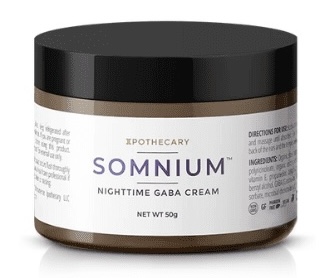
somnium cream

Use this link to read more about Somnium and get the coupon code.

Additional resources when you are new to using GABA and other amino acids as supplements

As a reminder, low GABA can cause physical tension, anxious feelings, feelings of panic and problems sleeping, as well as self–medicating with alcohol or carbs to relax or fit in. As always, I use the symptoms questionnaire to figure out if low GABA or other neurotransmitter imbalances may be an issue.

If you suspect low levels of any of the neurotransmitters and do not yet have my book, The Antianxiety Food Solution – How the Foods You Eat Can Help You Calm Your Anxious Mind, Improve Your Mood, and End Cravings, I highly recommend getting it and reading it before jumping in and using amino acids on your own so you are knowledgeable. And be sure to share it with the practitioner/health team you or your loved one is working with.

There is an entire chapter on the amino acids and they are discussed throughout the book in the sections on gut health, gluten, blood sugar control (this is covered in an entire chapter too), sugar cravings, anxiety and mood issues.

The book doesn’t include product names (per the publisher’s request) so this blog, The Antianxiety Food Solution Amino Acid and Pyroluria Supplements, lists the amino acids that I use with my individual clients and those in my group programs (over and above the topical GABA product I mentioned above).

If, after reading this blog and my book, you don’t feel comfortable figuring things out on your own (i.e. doing the symptoms questionnaire and respective amino acids trials), a good place to get help is the GABA QuickStart Program (if you have low GABA symptoms too). This is a paid online/virtual group program where you get my guidance and community support.

If you are a practitioner, join us in The Balancing Neurotransmitters: the Fundamentals program. This is also a paid online/virtual program with an opportunity to interact with me and other practitioners who are also using the amino acids.

Wrapping up and your feedback

I do always appreciate questions like this so keep them coming so I can share and educate further. I will also update this blog once I hear back from Devon. She has purchased Somnium GABA Cream and plans to have her son use it.

And keep in mind, although this blog is specific for sensitive children and teens, it’s applicable to adults and folks who prefer a cream to a supplement.

Now I’d love to hear from you – does your child have low GABA levels and have you considered using a GABA cream?

If you have had success with Somnim please do share how it helps, how much you use and where you apply it?

Have you also addressed other nutritional imbalances, infections and diet?

If you’re a practitioner do you use GABA cream with your clients/patients?

And please let me know if it’s helpful that I’m now including product recommendations and where to get them.

Feel free to share and ask your questions below.
Filed Under: Anger, Anxiety, Children/Teens, GABA Tagged With: amino acid, anger, anger outbursts, anxious, ARFID, Avoidant Restrictive Food Intake Disorder, calming, cravings, diet, GABA, GABA Calm, GABA cream, GABA Quickstart; Balancing Neurotransmitters: the Fundamentals program for practitioners, GAD, generalized anxiety disorder, infections, lyme, neurotransmitter, PANDAS, peace, picky eater, school refusal, sensory issues, Sensory Processing Disorder, Somnium, spd

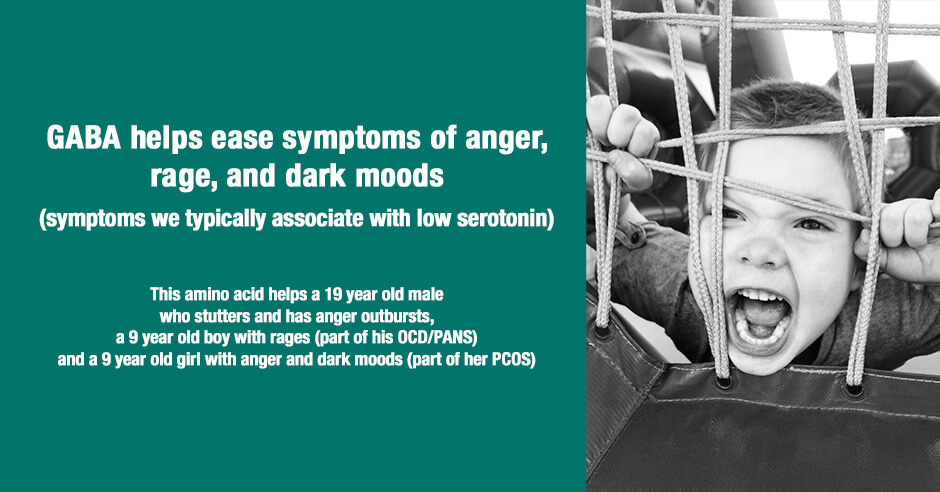
GABA helps ease symptoms of anger, rage, and dark moods (symptoms we typically associate with low serotonin)

June 30, 2023 By Trudy Scott 23 Comments

gaba eases anger

As a result of this wonderful feedback from a mom in the online GABA QuickStart program, I’ve been looking into GABA-anger connections. I’ve been trying to understand how GABA could offer similar benefits to tryptophan/5-HTP for anger, rage and dark moods, which we typically associate with low serotonin. She shares this:

My son who is 19 and on the autism spectrum was having issues with outbursts of anger and stuttering.  These issues seemed to worsen during his senior year of high school. Since starting GABA and tailoring his dosage from Trudy’s instruction and feedback, we have seen a 90% reduction in stuttering and 80% reduction in anger and outbursts.  We have done many supplemental protocols over the years and this is one of the few we have seen have an impact.

I am so happy for this young man and his family, and was also very intrigued. I’ve seen GABA help with stuttering. I have not noticed that GABA helps very much with anger/rage in clients but possibly because they are making other changes at the same time. Since they were in the program and he also had anxiety, we decided to continue with GABA.

I worked with them in the program over a few months and know he only changed one thing – GABA, starting low and increasing to find his ideal dose (with my guidance).

So I started to dig into the research, search through prior blog posts and ask on Facebook and the feedback is robust – folks are seeing GABA help with symptoms of anger and rage.

I share a few case studies below: how PharmaGABA helps a 9 year old boy with rages (part of his OCD/PANS), how GABA helps a young boy with Lyme-induced anger and how GABA helps a 9 year old girl with anger and dark moods (part of her PCOS).

I also share my insights with each case. And some possible mechanisms because we always want to understand why.

PharmaGABA helps 9 year old with rages that are part of his OCD/PANS

Kathy shares how pharmaGABA helped her son (on a pharmaGABA blog):

My 9 year old son had a lot of benefits from PharmaGABA. He used to have rages as part of his OCD/PANS. PharmaGaba 3 times a day was a miracle to get him through that period.

PANS is a neuropsychiatric disorder that falls under the same umbrella as PANDAS but is triggered by an infection other than strep.

If you’re new to PANS/PANDAS, I share the definition of PANDAS, from the PANDAS Network, in this blog: “PANDAS (Pediatric Autoimmune Neuropsychiatric Disorders Associated with Streptococcal Infections) occurs when strep triggers a misdirected immune response that results in inflammation on a child’s brain. In turn, the child quickly begins to exhibit life changing symptoms such as OCD/obsessive compulsive order, anxiety, tics, personality changes, decline in math and handwriting abilities, sensory sensitivities, restrictive eating, and more.”

Both PANS and PANDAS trigger OCD/obsessive compulsive disorder. OCD is typically supported with tryptophan and/or inositol i.e. these obsessive thinking and behaviors are typically related to low serotonin even when there is an infection involved. The infection needs to be addressed but the tryptophan and/or inositol help to ease the obsessive symptoms.

Rage is a common symptom when serotonin is low. Tryptophan addresses low serotonin and can have a huge impact as I share in this blog – Rage, anxiety, cravings & insomnia in 11-year old girl with RAD/reactive attachment disorder: chewable tryptophan turns things around.

However, in this instance, pharmaGABA worked for the rages Kathy’s son experienced.

PharmaGABA is one form of GABA that has been shown to help with relaxation and anxiety.

GABA helps a young boy with Lyme-induced anger

Another mom shared this on a Lyme disease post on Facebook:

One kid has developed fits of anger that come out of nowhere but the GABA seems to be able to help him to play longer periods.

Lyme disease can also have a neuropsychiatric aspect, as shared by Dr. Suruchi Chandra MD. I’ve had the pleasure of interviewing Dr. Chandra on one of the Anxiety Summits and hear her present at integrative mental health conferences.

In one conference presentation she shared this: “Lyme disease is one of the fastest growing infectious diseases in the United States. It can remain dormant for years and then later mimic a number of psychiatric illnesses, including anxiety disorders, mood disturbances, psychosis, and autism-like behaviors. It can be further complicated by the presence of co-infections.”

Anger and rage are also common symptoms. In one study, “Lyme rage” is described as an anger episode that “had a very abrupt onset and was extremely intense and often with minimal cognitive control.”

Yet again, we often see GABA help ease some of the anxiety symptoms, as I share here – GABA helps with Lyme anxiety (while addressing the underlying disease).

However in this instance, GABA helped with her son’s anger symptoms induced by the Lyme bacteria.

GABA helps a 9 year old girl with anger and dark moods (part of her PCOS)

Debbie was diagnosed with PCOS (polycystic ovarian syndrome) and GABA helped ease her lifelong anxiety, wean off anxiety medication, ovulate each month and stop her PCOS medications. She was thrilled that GABA helps her daughter too. She shared how her oldest daughter who is 9 has been showing early signs of developing PCOS and other issues similar to hers:

When her mood started changing and she was getting angry out of nowhere and very dark and moody, I started her on a small dose of GABA. Immediately both of us saw the difference in her mood. She now asks for her “happy pills” daily because she doesn’t want to feel those dark feelings anymore. I wish this information was around when I was young. It could’ve helped so much of what I had to struggle with for years.

I typically think of tryptophan or 5-HTP as “happy pills”, and anger and a dark mood as symptoms of low serotonin.

However, yet again, GABA resolves these symptoms in Debbie’s daughter.

These are just a few of the many recent success stories I’ve heard about GABA and anger/rage.

Does low GABA anger/rage look different from low serotonin anger-rage?

This is all new to me so I honestly don’t know. We do know that low GABA leads to more of a physical kind of anxiety (i.e. felt in the body) and it’s different from low serotonin worry-type anxiety (i.e. it’s felt in the head).

Therefore, it’s possible that low GABA anger and rage has more of a physical aspect too.

I have yet to explore this aspect but feel it may be helpful to figure out if there is a difference in order to effectively use the neurotransmitter symptoms questionnaire. This questionnaire is used to decide whether to trial GABA or tryptophan/5-HTP and the low GABA section will be updated with anger/rage once I’ve gone a bit deeper with all this.

The kind of anger symptoms may well look the same and then we’ll use the clustering of either low GABA or low serotonin symptoms to base our decision for doing an amino acid trial.

Research: GABA may be critical in the neurochemical control of aggressive behavior and rage

There is no research that I am aware of where the amino acid GABA has been used to ease rage, anger or dark moods.

However, this letter, Tiagabine for Rage, Aggression, and Anxiety published in the Journal of Neuropsychiatry and Clinical Neuroscicnes in 2015 offers some round-about support to this GABA-rage observation. They are discussing patients with treatment-resistant rage and aggression and they propose that:

Gamma-aminobutyric acid (GABA), the primary inhibitory neurotransmitter, may be critical in the neurochemical control of aggressive behavior.

They share that the prescription medication called Tiagabine, a selective GABA reuptake inhibitor (SGRI), increases synaptic GABA availability.

And that 20 out of 36 patients aged 15-54 years (69%)

with symptoms of rage, aggression, or anxiety in association with one or more of the following disorders: bipolar, intermittent explosive, major depression, panic disorder, attention deficit hyperactivity disorder, or substance abuse …demonstrated a good or excellent response to tiagabine, with reduction or elimination of the symptoms of rage, aggression, or anxiety.

This and the few studies on anger and glutamate (like this one) offer the most plausible explanations for the quick results we expect when using GABA and other amino acids i.e. quick as in results in 1-30 minutes.

Other than this there is not much direct evidence supporting this GABA-rage connection. GABA likely also helps quickly because of reduced anxiety, improved sleep, and being easil able to quit or eat less sugar (and in adults quit alcohol).

Based on some research I’ve found and my experience with GABA, I suspect GABA may also help in these ways over a longer period: countering a histamine reaction, reducing inflammation and impacting cytokines, improving progesterone levels, beneficial impacts on the microbiome, supporting the liver and toxin removal (such as fluorides), gut healing and reducing high blood pressure. I am still digging into the research.

I thank these families for sharing their stories so we all benefit.

I also really appreciate this opportunity to learn from you – my community – and I will always strive to keep an open mind.

Resources if you are new to using amino acids as supplements

If you are new to using amino acids as supplements, here is the Amino Acids Mood Questionnaire from The Antianxiety Food Solution (you can see all the symptoms of neurotransmitter imbalances, including low GABA and low serotonin).

If you suspect low levels of any of the neurotransmitters and do not yet have my book, The Antianxiety Food Solution – How the Foods You Eat Can Help You Calm Your Anxious Mind, Improve Your Mood, and End Cravings, I highly recommend getting it and reading it before jumping in and using amino acids on your own so you are knowledgeable. And be sure to share it with the practitioner/health team you or your loved one is working with.

There is an entire chapter on the amino acids and they are discussed throughout the book in the sections on gut health, gluten, blood sugar control, sugar cravings, anxiety and mood issues.

The book doesn’t include product names (per the publisher’s request) so this blog, The Antianxiety Food Solution Amino Acid and Pyroluria Supplements, lists the amino acids that I use with my individual clients and those in my group programs. You can find them all in my online store.

If, after reading this blog and my book, you don’t feel comfortable figuring things out on your own (i.e. doing the symptoms questionnaire and respective amino acids trials), a good place to get help is the GABA QuickStart Program (if you have low GABA symptoms). This is a paid online/virtual group program where you get my guidance and community support. Another option is the budget-friendly GABA QuickStart Homestudy program.

[The 19 year old young man/his mother were part of an earlier version of the GABA Quickstart program].

If you also need serotonin support, the Serotonin QuickStart Program is a good place to get help. This is also a paid online/virtual group program where you get my guidance on using tryptophan and 5-HTP safely, and community support during 5 LIVE Q&A calls. You can sign up to be notified when the next live launch of this program is happening.

If you are a practitioner, join us in The Balancing Neurotransmitters: the Fundamentals program. This is also a paid online/virtual program with an opportunity to interact with me and other practitioners who are also using the amino acids.

Now I’d love to hear from you ….

Has GABA helped you or your child with symptoms of anger, rage or a dark mood? And if yes, how did it help, how much helped and which product helped?

Can you be sure GABA helped i.e. is this the only change you made?

Has serotonin support with tryptophan or 5-HTP also helped? And if yes how would you describe the low serotonin anger symptoms vs the low GABA anger symptoms? Are they different?

If you are a practitioner, have you observed any of the above?

Feel free to post your feedback and questions here in the comments.

Filed Under: Anger, Anxiety, GABA Tagged With: 5-HTP, aggressive, amino acids, anger, anxiety, autism spectrum, dark moods, GABA, low serotonin, lyme, neurochemical, OCD, outbursts, PANDAS, PANS, PCOS, pharmaGABA, rage, resources if you are new to the amino acids; the GABA Quickstart online program; and Balancing Neurotransmitters: the Fundamentals program for practitioners, stuttering, Tiagabine, tryptophan

The importance of addressing pyroluria with chronic Lyme disease (and co-infections), MCAS (Mast Cell Activation Syndrome) and other chronic illnesses

August 5, 2022 By Trudy Scott 27 Comments

addressing pyroluria

Pyroluria is a social anxiety condition that responds well to zinc, vitamin B6, evening primrose oil and a few other key nutrients, typically resulting in resolution of social anxiety symptoms within a few weeks with the correct combination and dosing. However there is much more to pyroluria than meets the eye. Addressing this biochemical imbalance is crucial for recovery from chronic Lyme disease (and co-infections), MCAS (Mast Cell Activation Syndrome) and other chronic illnesses caused by heavy metal toxicity, mold toxicity, multiple chemical sensitivities and Ehlers Danlos syndrome (amongst others).

Dr. Neil Nathan, MD, author of Toxic: Heal Your Body from Mold Toxicity, Lyme Disease, Multiple Chemical Sensitivities, and Chronic Environmental Illness (2018), shares this about pyroluria and chronic illness:

This biochemical imbalance is surprisingly common in chronically ill patients, and missing this diagnosis (by neglecting to test for and treat it) also denies us the opportunity to provide a simple, benign treatment that can help quiet down patients’ already overstimulated nervous systems.

(Here is my Amazon link to his book, which is excellent)

For over 15 years Dr. Dietrich Klinghardt has been saying you won’t see success with Lyme disease without also addressing pyroluria. He has seen a correlation with all his patients with chronic illness and pyroluria.

Let me quote from an article by Scott Forsgren, FDN-P and Dr. Dietrich Klinghardt, MD PhD: Kryptopyrroluria (aka Hemopyrrollactamuria): A Major Piece of the Puzzle in Overcoming Chronic Lyme Disease (a Townsend letter article published in 2017):

Based on testing with a lab in Holland, Klinghardt has found the incidence of KPU [Kryptopyrroluria or pyroluria] in Lyme disease to be 80% or higher; incidence of KPU over 75% in patients with heavy metal toxicity (lead, mercury, aluminum, cadmium, and others) and in children with autism over 80%.

These are very significant percentages of the patient population with chronic illness that may benefit from a treatment program that addresses KPU.

They also state what has long been known when it comes to pyroluria: symptoms are made worse by stress and “chronic infections, such as Lyme disease, may themselves serve as a trigger for the condition (of pyroluria).”

When it comes to MCAS, an updated version of this same article states that:

Klinghardt has worked with biochemists in Germany that are beginning to link KPU with mastocytosis or mast cell activation syndrome (MCAS).

They have observed that KPU treatment repairs the heme molecule, which notably stabilizes the mast cells and lowers the response to these relative rises in histamine.

I use the term pyroluria in this article, throughout my blog and in my book. It was coined by Carl Pfeiffer, MD PhD in the 1970s (after its discovery by Abram Hoffer in 1958). You’ll see these other terms used in various articles and in some of the older research: kryptopyrroluria (KPU), hemopyrrollactamuria (HPU), pyrrole disorder, mauve factor and sometimes malvaria.

As I shared in my interview with Dr. Kelly MCann on the summit, The Many Manifestations of Mast Cell Activation, it would be wonderful to get the terminology standardized and to get some case studies published. This would allow it to gain more acceptance in the mainstream and in functional medicine.

These papers, Discerning the Mauve Factor, Part 1 and 2, highlight some of the mechanisms as to why addressing pyroluria is so important:

  • “Treatment with nutrients – particularly vitamin B6 and zinc – reduces urinary excretion of HPL and improves diverse neurobehavioral symptoms in subjects with elevated urinary HPL.
  • Heightened HPL excretion classically associates with emotional stress, which in turn is known to associate with oxidative stress.
  • HPL correlated inversely with plasma glutathione
  • HPL is a promising biomarker for oxidative stress. HPL is known to cause non-erythroid heme depression, which lowers zinc, increases nitric oxide, and increases oxidative stress.”

The Forsgren/Klinghardt article above, covers additional mechanisms. With regards to MCAS specifically, the pyroluria supplements – zinc, vitamin B and evening primrose oil – all play a role in reducing histamine, providing immune support and reducing inflammation. And they provide nutritional support for the anxiety and mental health aspects of the condition – directly for pyroluria and indirectly via neurotransmitter support (since they are necessary cofactors for making serotonin and GABA).

Here is some of the research I gathered on some of the ways zinc, vitamin B6 and evening primrose oil (EPO) may help when it comes to MCAS:

  • This paper, Role of Zinc Signaling in the Regulation of Mast Cell-, Basophil-, and T Cell-Mediated Allergic Responses, states that “zinc signaling dysregulation is a leading health problem in inflammatory disease and allergy…. These findings may lead to future therapeutic applications for suppressing inflammatory or allergic responses.”
  • In this paper, Effect of pyridoxine on histamine liberation and degranulation of rat mast cells, the authors share that vitamin B6 “significantly inhibited rat mast cell degranulation and histamine release induced by egg albumin allergen.” This paper also discusses the lack of toxicity of vitamin B6 and “the possibility that other mechanisms of action may be involved, such as the improvement in tryptophan metabolism.”
  • This paper, Alterations of mast cell mediator production and release by gamma-linolenic and docosahexaenoic acid/DHA, was looking at mastocytoma (a type of mastocytosis) using a cell line as a model for canine atopic dermatitis (cells were incubated with the wasp venom peptide.) They found that “GLA decreased histamine release …and DHA diminished prostaglandin production.” Evening primrose oil is a source of GLA and fish oil is a source of DHA.

If you’re new to MCAS, Dr. Jill Carnahan has an excellent overview here: Mast Cell Activation Syndrome: Here’s What You Need to Know When Histamine Goes Haywire and I’ve blogged about PharmaGABA often being an issue and making anxiety worse when you have MCAS or histamine issues.

The ramifications of this biochemical imbalance are far-reaching

Here is the pyroluria questionnaire / symptoms list (from my book, The Antianxiety Food Solution). It has been updated with recently with additional conditions. You can read about pyroluria prevalence and associated conditions here.

Here are some of my pyroluria blog posts you may find useful (click each of the linked articles to read further). As you will see the ramifications of this biochemical imbalance are far-reaching:

  • Alice in Wonderland Syndrome – is there a pyroluria connection?
  • I was called a vulture for preying on sensitive people in a social anxiety group – because I mentioned pyroluria and a nutritional solution
  • Intrusive thoughts are a thing with anxiety: low GABA, low serotonin, pyroluria (low zinc & vitamin B6) and hormone imbalances as possible causes
  • Increased sociability improves vagus nerve function: the role of social anxiety, pyroluria and low zinc
  • Joint hypermobility / Ehlers-Danlos Syndrome and pyroluria?

Feel free to use the search feature on the blog to find additional information about pyroluria. I have written about it extensively. I have it myself and it’s really common – I see it in about 80% of my community – so I am pretty passionate about the topic.

Resources if you are new to pyroluria

If you are new to pyroluria, there is an entire chapter on the topic in my book, The Antianxiety Food Solution – How the Foods You Eat Can Help You Calm Your Anxious Mind, Improve Your Mood, and End Cravings. I highly recommend getting it and reading it before jumping in and using the pyroluria supplements on your own. And be sure to share it with the practitioner/health team you or your loved one is working with. We need the wider practitioner community to be aware of this condition and the importance of addressing it.

I use individual amino acids such as GABA and tryptophan with all my anxious clients and we always layer in the pyroluria protocol. There is also an entire chapter on the amino acids and they are discussed throughout the book in the sections on gut health, gluten, blood sugar control, sugar cravings, self-medicating with alcohol and more.

The book doesn’t include product names (per the publisher’s request) so this blog, The Antianxiety Food Solution Amino Acid and Pyroluria Supplements, lists the amino acids and pyroluria supplements that I use with my individual clients and those in my group programs.

If you are a practitioner, join us in The Balancing Neurotransmitters: the Fundamentals program. This is a paid online/virtual program with an opportunity to interact with me and other practitioners who are also using the amino acids and pyroluria protocol with success with their clients/patients.

Have you used the pyroluria protocol as part of your recovery from chronic Lyme disease or MCAS (or another chronic illness)?

Did you learn about this from your practitioner or elsewhere? (please share where)

If you’re a practitioner, is the pyroluria protocol part of your  plan for clients and patients? And has it been a game-changer for them?

If you have questions please share them here too.

Filed Under: Lyme disease and co-infections, MCAS/histamine, Pyroluria Tagged With: Alice in Wonderland Syndrome, Balancing Neurotransmitters: the Fundamentals program for practitioners, chronic illnesses, chronic Lyme disease, Dr. Dietrich Klinghardt Kryptopyrroluria, Ehlers-Danlos Syndrome, evening primrose oil, heavy metal toxicity, Hemopyrrollactamuria, intrusive thoughts, KPU, lyme, mast cell activation syndrome, MCAS, mold toxicity, multiple chemical sensitivities, pyroluria, social anxiety, vagus, vitamin B6, zinc

What causes low serotonin? Use tryptophan/5-HTP to help with the anxiety, overwhelm and worry right away and address all the root causes

May 13, 2022 By Trudy Scott 40 Comments

what causes low serotonin

Low serotonin has a number of root causes which can be different for each person. If you do have low serotonin levels you always want to figure and address why it’s low. This can take time to figure out and resolve so you want to be using either tryptophan or 5-HTP (and sometimes both) to boost your serotonin levels and get symptom relief quickly. This helps with the worry, overwhelm, anxiety, insomnia, carb cravings, TMJ, irritability, PMS, anger, OCD, low mood and ruminations right away. It also helps with the worry and overwhelm triggered by sometimes complex and challenging root causes.

Here is a list of some of the many factors that may cause low serotonin for you:

  • stress and adrenal dysfunction (high cortisol affects your sex hormone and neurotransmitter production, inlcuding serotonin)
  • eating junk food and sugar (a Western diet “of processed or fried foods, refined grains, sugary products, and beer was associated with a higher odds of mood disorders”
  • consuming caffeine (which reduces zinc and B vitamins, needed to make serotonin)
  • not consuming enough quality animal protein (amino acids are the building blocks of our neurotransmitters, and grass fed red meat provides zinc, iron and omega-3s – all needed to make serotonin)
  • low stomach acid (meaning you can’t digest the protein you’re consuming)
  • gluten issues (leading to low serotonin and other nutritional deficiencies such as low iron, low vitamin D etc.)
  • low vitamin D (“Brain serotonin is synthesized from tryptophan by tryptophan hydroxylase 2, which is activated by vitamin D hormone”)
  • low iron/ferritin levels (iron is a cofactor for making serotonin)
  • dysbiosis and microbiome imbalances (we make so much serotonin in the gut)
  • candida (in one study short exposure to serotonin resulted in antifungal activity)
  • liver issues (affecting how you process xenoestrogens)
  • low bile production (affecting how you digest the healthy fats you’re eating)
  • sex hormone imbalances (serotonin and estrogen are very closely linked and women make less serotonin than men. In one study, tryptophan improved the low serotonin PMS symptoms)
  • thyroid imbalance (“it is postulated that one mechanism, among others, through which exogenous thyroid hormones may exert their modulatory effects in affective illness is via an increase in serotonergic neurotransmission”)
  • histamine imbalances (in one study “Acute LPS-induced inflammation increases CNS histamine and decreases CNS serotonin)”
  • the birth control pill (which lowers zinc and vitamin B6, both of which are needed for serotonin production)
  • statins (leading to cholesterol that is too low)
  • mold exposure/mycotoxins/mold poisoning
  • heavy metal toxicity such as lead (and tryptophan and ascorbic acid can help ease the anxiety)
  • Lyme disease and other co-infections (serotonin was found to be low in cerebrospinal fluid in patients with post-Lyme disease syndrome i.e. chronic Lyme)
  • collagen consumption (in susceptible folks this can lower serotonin levels)
  • seasonal allergies (“Cytokines may lead to a mood disturbance via the expression of the IDO enzyme, which shifts the synthesis of tryptophan from serotonin to kynurenine. The resultant acute tryptophan depletion results in decreased brain serotonin”)
  • genetics (one example is the MTHFR polymorphism)
  • low zinc, low vitamin B6 (and other B vitamins), low selenium, low magnesium etc. – all needed to make serotonin
  • oxalates (which can bind to zinc and deplete it)
  • a high copper diet (nut flours on Paleo diets can be problematic), copper IUD, copper pipes etc. (which can cause low zinc)
  • lack of nature (forest bathing reduces cortisol which affects serotonin production)
  • lack of exercise
  • lack of sunshine (like in the winter when serotonin declines)

When I posted some of this list on Facebook earlier this week, there was a great deal of interest, hence this blog. I’ve included one relevant link for each one so you can read further on the topic.

When I posted it I also asked this: “Have you figured out your root cause/s that are contributing to your low serotonin levels? And has tryptophan or 5-HTP helped while you’re figuring it all out?”

Leanne has mold, dysbiosis, Lyme, low vitamin D, bile issues and more

Leanne responded and gave me the go ahead to share especially if this helps someone else (I appreciate that!) She shared she has identified these root causes:

Mold. Dysbiosis. Possible Lyme/co-infections. Low vitamin D. Bile and motility issues. Liver issues. Stress. Low HCL. Those are the ones I’m aware of. And taking each and every day to work on them.  It takes time to heal

I agree it takes time to heal and can be a longer journey for some folks, especially when there are a number of underlying factors. She is in a good frame of mind, saying pragmatically, it takes time to heal. This confirms her serotonin levels are robust i.e. she is not in a state of overwhelm and worry. Sure enough, when I asked if tryptophan or 5-HTP has been helping this was her response:

5-HTP and GABA calm initially helped me in my first round of going through this back in 2015. Then I discovered l-tryptophan about a year ago and that seemed to be a better help over 5-HTP.

Since I’ve just identified that histamine is an issue and started a low histamine diet this past week I noticed less of a need for l-tryptophan as I did before. My body is calming down significantly. And my digestion is working a little better.

But I still have to address mold, SIBO, candida, parasites and possibly Lyme and underlying hidden viruses.

So I know these amino acids will play a key part in supporting me as I dive deeper into addressing them all.

It’s wonderful the amino acids have helped her so much and they will most likely continue to help. A quick comment on her preference for tryptophan over 5-HTP – some folks do better on one vs the other.

Regarding the histamine issues/root cause, it’s good that she is now addressing this. Already she needs less tryptophan (for now). Things may fluctuate in the future again as she peels away the onion layers of root causes. She may find she needs tryptophan again or a higher dose or needs to get back on the GABA.

As you can see she has been working on her health for some time. This is not unusual. Slow and steady is just fine, especially when there is so much going on.

The amino acids are intended for short-term use while diet and underlying root causes are addressed. But when the list is long this is a common reason for the ongoing need for serotonin support. Keep in mind, your list may be a short one and may be quick to resolve. And not everyone has the same root causes.

Resources if you are new to using tryptophan or 5-HTP as supplements

If you are new to using tryptophan or 5-HTP as supplements, here is the Amino Acids Mood Questionnaire from The Antianxiety Food Solution (you can see all the low serotonin symptoms).

If you suspect low levels of serotonin or any of the neurotransmitters and do not yet have my book, The Antianxiety Food Solution – How the Foods You Eat Can Help You Calm Your Anxious Mind, Improve Your Mood, and End Cravings, I highly recommend getting it and reading it before jumping in and using amino acids on your own so you are knowledgeable. And be sure to share it with the team you or your loved one is working with.

There is an entire chapter on the amino acids and they are discussed throughout the book in the sections on gut health, blood sugar control, sugar cravings, self-medicating with alcohol and more.

The book doesn’t include product names (per the publisher’s request) so this blog, The Antianxiety Food Solution Amino Acid and Pyroluria Supplements, lists the amino acids that I use with my individual clients and those in my group programs.

If you are a practitioner, join us in The Balancing Neurotransmitters: the Fundamentals program. This is also a paid online/virtual program with an opportunity to interact with me and other practitioners who are also using the amino acids.

Have you figured out your root cause/s that are contributing to your low serotonin levels? And does this give you a better understanding of your own issues?

Do you have any other root causes I may have missed? (when I posted this list on Facebook, a few people pointed out I had missed a few. I’ll update the list and continue to add as we discover new connections).

Has tryptophan and/or 5-HTP helped you feel less overwhelmed and worried while you’re figuring it all out?

Have you adjusted doses of tryptophan and/or 5-HTP as things change and root causes are addressed/resolved?

If you’re a practitioner, do you have anything to add and do your clients/patients find this useful?

If you have questions please share them here too.

Filed Under: 5-HTP, Anxiety, serotonin, Tryptophan Tagged With: 5-HTP, adrenal dysfunction, anxiety, bile issues, candida, collagen, diet junk food, dysbiosis, gluten, high cortisol, histamine, iron, Lead toxicity, low cholesterol, low stomach acid, lyme, mold, overwhelm, red meat, root causes, seasonal allergies, serotonin, stress, sugar, thyroid, tryptophan, vitamin D, What causes low serotonin?, worry

Case Study: Bartonella and Sudden-Onset Adolescent Schizophrenia

March 22, 2019 By Trudy Scott 26 Comments

According to a press release from North Carolina State University, researchers share a case study describing an adolescent human patient diagnosed with rapid onset schizophrenia who was found instead to have a Bartonella henselae infection. This study adds to the growing body of evidence that Bartonella infection can mimic a host of chronic illnesses, including mental illness, and could open up new avenues of research into bacterial or microbial causes of mental disorders.

Bartonella is a bacteria most commonly associated with cat scratch disease, which until recently was thought to be a short-lived (or self-limiting) infection. There are at least 30 different known species of Bartonella, and 13 of those have been found to infect human beings. The ability to find and diagnose Bartonella infection in animals and humans – it is notorious for “hiding” in the linings of blood vessels – has led to its identification in patients with a host of chronic illnesses ranging from migraines to seizures to rheumatoid illnesses that the medical community previously hadn’t been able to attribute to a specific cause.

In the case study published in the Journal of Central Nervous Disease, an adolescent with sudden onset psychotic behavior – diagnosed as schizophrenia – was seen and treated by numerous specialists and therapists over an 18-month period. All conventional treatments for both psychosis and autoimmune disorders failed. Finally, a physician recognized lesions on the patient’s skin that are often associated with Bartonella, and the patient tested positive for the infection. Combination antimicrobial chemotherapy led to full recovery.

According to the case report above, Bartonella henselae Bloodstream Infection in a Boy With Pediatric Acute-Onset Neuropsychiatric Syndrome, these are some of the many symptoms he experienced over the 18-month period:

  • He reported feeling overwhelmed, confused, depressed, and agitated.
  • He said that he was an “evil, damned son of the devil” and wanted to kill himself because he was afraid of his new-onset homicidal thoughts toward those he cared about
  • Weeks after initial hospitalization in October, he became more dysfunctional; school was not possible; he developed progressively severe psychiatric symptoms including obsessional intrusive thoughts, phobias, irrational fears, emotional lability, unpredictable rage outbursts, and increased psychotic thinking. He believed that he had special powers and that a family cat wanted to kill him.
  • By December 2015, his illness had progressed in severity, causing his mother to quit her job to provide full-time supervision. In addition to persecutory delusions related to his pets, he developed auditory, visual, and tactile hallucinations and began refusing to leave the house.
  • In January 2016, following discharge after a week-long hospitalization, he developed non-specific somatic symptoms, including excessive fatigue, daily headaches, chest pains, shortness of breath (possible panic anxiety), and urinary frequency

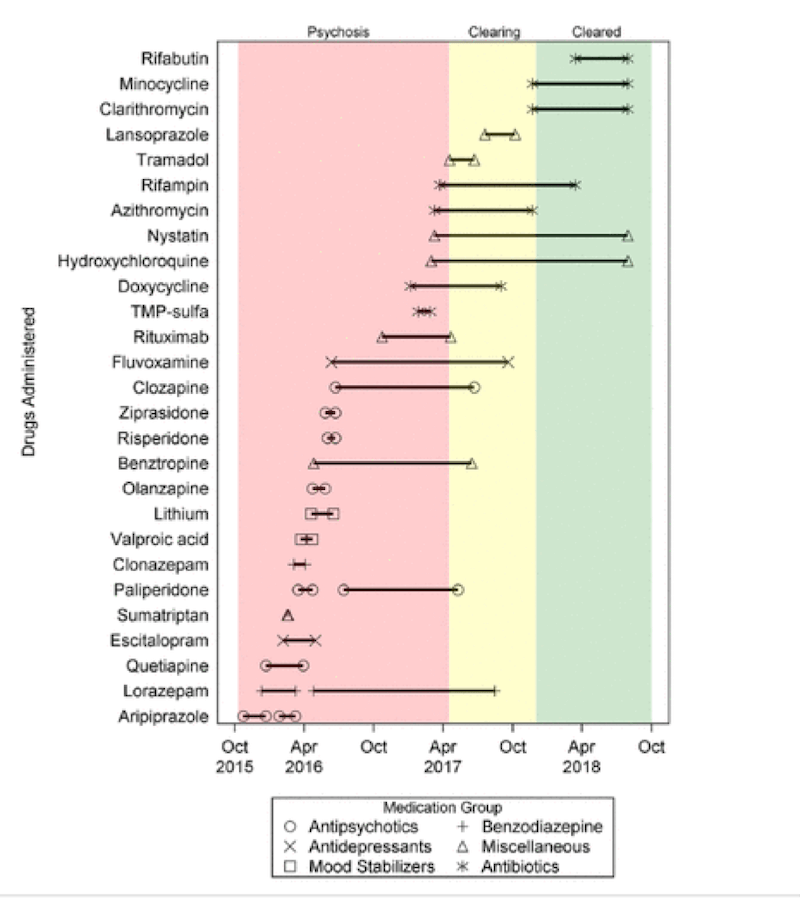
I suspect some of his later symptoms were related to side-effects from many of the medications he was prescribed over the course of his treatment. Some symptoms may also be attributed to withdrawal from some of these medications. One example mentioned in the case study was “abrupt withdrawal of clozapine and tramadol” where “he experienced severe anorexia, nausea, and vomiting, which resulted in hospitalization and a 20.5-kg weight loss over 40 days.” It’s well- documented that withdrawal signs and symptoms of antipsychotic medications such as clozapine “may include insomnia, nausea, vomiting, anxiety, and agitation.”

This figure lists the medications he was prescribed during his treatment. The pink area was during his psychotic 18-month period and the yellow area was during his antimicrobial treatment of the Bartonella.

Figure 2. Drug administration timeline for the boy, reprinted from the study

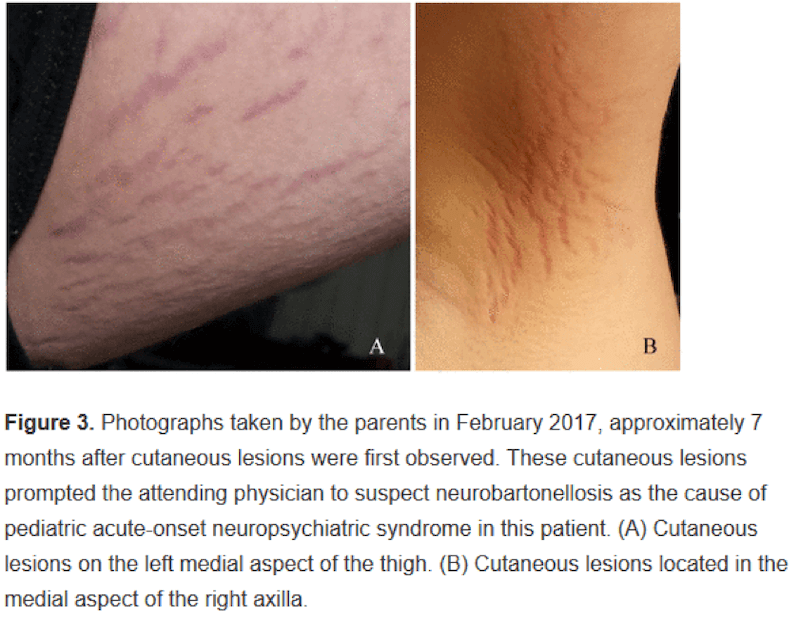
The skin lesions or “stretch mark-like” lesions on his thigh (A) and armpit (B) are tell-tale signs of a Bartonella bacterial infection or neurobartonellosis. Here are photographs taken by his parents.

Also from the study

A successful outcome for this young boy came about as a result of antimicrobial treatment in the way of antibiotics and antifungals. His skin lesions healed, his psychosis and other symptoms resolved, he was able to quit his psychiatric medications and go back to being a typical young boy. How wonderful for this young boy!  And this gives me so much hope for others who may be in a similar situation and looking for solutions.

Other than the hope I felt, these are my other thoughts that came to my mind as I read this case study:

  • How many people are being prescribed psychiatric medications when they actually have an infection or physiological condition? The authors state: “Beyond suggesting that Bartonella infection itself could contribute to progressive neuropsychiatric disorders like schizophrenia, it raises the question of how often infection may be involved with psychiatric disorders generally.”
  • How can a young boy of this age be prescribed this many psychiatric medications over an 18-month period? I’m sure his doctors were doing their best but what is it going to take for doctors to look for infectious (and/or physiological or biological or nutritional or environmental) causes for psychiatric symptoms as the first approach or certainly at the same time in a situation like this where psychosis was a factor?
  • What will it take for mainstream practitioners to get up to speed with this epidemic of Lyme disease? And when will testing for Lyme disease and co-infections be used by all doctors and not just Lyme-literate doctors and functional medicine doctors like Dr. Darin Ingels. the author of “The Lyme Solution.” (Here is my review of his excellent book.) It is worth noting that Dr. Ingels uses very successful treatments that are purely herbal, dietary and immune-supportive, and don’t require antibiotics.

We already know there is a huge psychiatric connection with Lyme disease and co-infections: anxiety, depression, panic attacks, and OCD too. This case adds to the evidence. Even though neuropsychiatric Lyme disease is well-recognized in the world of functional medicine, keep in mind that Lyme disease bacteria such as Borrelia and co-infections such as Bartonella are only one of many possible trigger/root cause of symptoms like this young boy experienced.

Other infectious causes of psychiatric conditions include chronic strep (in the case of PANDAS/PANS) and toxoplasma gondii.

Other physiological root causes of psychiatric conditions like schizophrenia, anxiety, bipolar disorder and depression could include a thyroid condition, heavy metal toxicity from say lead or mercury, mycotoxins, and even gluten.

We need to be shouting case studies like this from the rooftops so more doctors, more psychologists, more functional medicine practitioners, and more parents are aware and start to look for infectious/physiological/biological/nutritional/environmental root causes.

We appreciate those involved in publishing this case and the family for giving permission.  Hopefully, case studies like these will drive future research and treatment approaches.

What do you think and what came to your mind when you read this case study?

Feel free to post your questions here too.

Filed Under: Children/Teens Tagged With: anxiety, bartonella, bipolar disorder and depression, borrelia, lyme, neurobartonellosis, psychiatric, psychosis, psychotic, schizophrenia

Primary Sidebar

NEW! GABA QuickStart Homestudy (with special intro pricing)

gaba quickstart homestudy

Free Report

9 Great Questions Women Ask about Food, Mood and their Health

You'll also receive a complimentary subscription to my ezine "Food, Mood and Gal Stuff"


Connect with me

Popular Posts

  • Amino Acids Mood Questionnaire from The Antianxiety Food Solution
  • The Antianxiety Food Solution Amino Acid and Pyroluria Supplements
  • Pyroluria Questionnaire from The Antianxiety Food Solution
  • Collagen and gelatin lower serotonin: does this increase your anxiety and depression?
  • Tryptophan for the worry-in-your-head and ruminating type of anxiety
  • GABA for the physical-tension and stiff-and-tense-muscles type of anxiety
  • The Antianxiety Food Solution by Trudy Scott
  • Seriphos Original Formula is back: the best product for anxiety and insomnia caused by high cortisol
  • Am I an anxious introvert because of low zinc and vitamin B6? My response to Huffington Post blog
  • Vagus nerve rehab with GABA, breathing, humming, gargling and key nutrients

Recent Posts

  • What do I use instead of Seriphos to help lower high cortisol that is affecting my sleep and making me anxious at night?
  • BeSerene™ GABA/theanine cream eases severe muscle tension in her neck/shoulders, prevents her bad headaches and quells her anxiety
  • How the correct approach, dose and sublingual use of GABA can be calming and not cause a flushed and itchy face and neck
  • The amino acid glutamine improves low mood by addressing gut health, and it has calming effects too
  • Flight anxiety with heightened breath, physical tension and also fearing the worst (the role of low GABA and low serotonin)

Categories

  • 5-HTP
  • AB575
  • Addiction
  • ADHD
  • Adrenals
  • Alcohol
  • Allergies
  • Alzheimer's disease
  • Amino Acids
  • Anger
  • Antianxiety
  • Antianxiety Food Solution
  • Antidepressants
  • Anxiety
  • Anxiety and panic
  • Autism
  • Autoimmunity
  • benzodiazapines
  • Bipolar disorder
  • Books
  • Caffeine
  • Cancer
  • Candida
  • Children/Teens
  • Collagen
  • Cooking equipment
  • Coronavirus/COVID-19
  • Cravings
  • Depression
  • Detoxification
  • Diabetes
  • Diet
  • DPA/DLPA
  • Drugs
  • EFT/Tapping
  • EMF
  • EMFs
  • Emotional Eating
  • Endorphins
  • Environment
  • Essential oils
  • Events
  • Exercise
  • Fear
  • Fear of public speaking
  • Fertility and Pregnancy
  • Fish
  • Food
  • Food and mood
  • Functional neurology
  • GABA
  • Gene polymorphisms
  • General Health
  • Giving
  • Giving back
  • Glutamine
  • Gluten
  • GMOs
  • Gratitude
  • Gut health
  • Heart health/hypertension
  • Histamine
  • Hormone
  • Hyperparathyroidism
  • Hypoglycemia
  • Immune system
  • Inflammation
  • Insomnia
  • Inspiration
  • Introversion
  • Joy and happiness
  • Ketogenic diet
  • Lithium orotate
  • Looking awesome
  • Lyme disease and co-infections
  • MCAS/histamine
  • Medication
  • Men's health
  • Mental health
  • Mercury
  • Migraine
  • Mold
  • Movie
  • MTHFR
  • Multiple sclerosis
  • Music
  • NANP
  • Nature
  • Nutritional Psychiatry
  • OCD
  • Osteoporosis
  • Oxalates
  • Oxytocin
  • Pain
  • Paleo
  • Parasites
  • Parkinson’s disease
  • PCOS
  • People
  • PMS
  • Postpartum
  • PTSD/Trauma
  • Pyroluria
  • Questionnaires
  • Real whole food
  • Recipes
  • Research
  • Schizophrenia
  • serotonin
  • SIBO
  • Sleep
  • Special diets
  • Sports nutrition
  • Stress
  • Sugar addiction
  • Sugar and mood
  • Supplements
  • Teens
  • Testimonials
  • Testing
  • The Anxiety Summit
  • The Anxiety Summit 2
  • The Anxiety Summit 3
  • The Anxiety Summit 4
  • The Anxiety Summit 5
  • The Anxiety Summit 6
  • Thyroid
  • Thyroid health
  • Toxins
  • Tryptophan
  • Tyrosine
  • Uncategorized
  • Vegan/vegetarian
  • Women's health
  • Yoga

Archives

  • October 2025
  • September 2025
  • August 2025
  • July 2025
  • June 2025
  • May 2025
  • April 2025
  • March 2025
  • February 2025
  • January 2025
  • November 2024
  • October 2024
  • September 2024
  • August 2024
  • July 2024
  • June 2024
  • May 2024
  • April 2024
  • March 2024
  • February 2024
  • January 2024
  • December 2023
  • November 2023
  • October 2023
  • September 2023
  • August 2023
  • July 2023
  • June 2023
  • May 2023
  • April 2023
  • March 2023
  • February 2023
  • January 2023
  • December 2022
  • November 2022
  • October 2022
  • September 2022
  • August 2022
  • July 2022
  • June 2022
  • May 2022
  • April 2022
  • March 2022
  • February 2022
  • January 2022
  • December 2021
  • November 2021
  • October 2021
  • September 2021
  • August 2021
  • July 2021
  • June 2021
  • May 2021
  • April 2021
  • March 2021
  • February 2021
  • January 2021
  • December 2020
  • November 2020
  • October 2020
  • September 2020
  • August 2020
  • July 2020
  • June 2020
  • May 2020
  • April 2020
  • March 2020
  • February 2020
  • January 2020
  • December 2019
  • November 2019
  • October 2019
  • September 2019
  • August 2019
  • July 2019
  • June 2019
  • May 2019
  • April 2019
  • March 2019
  • February 2019
  • January 2019
  • December 2018
  • November 2018
  • October 2018
  • September 2018
  • August 2018
  • July 2018
  • June 2018
  • May 2018
  • April 2018
  • March 2018
  • February 2018
  • January 2018
  • December 2017
  • November 2017
  • October 2017
  • September 2017
  • August 2017
  • July 2017
  • June 2017
  • May 2017
  • April 2017
  • March 2017
  • February 2017
  • January 2017
  • December 2016
  • November 2016
  • October 2016
  • September 2016
  • August 2016
  • July 2016
  • June 2016
  • May 2016
  • April 2016
  • March 2016
  • February 2016
  • January 2016
  • December 2015
  • November 2015
  • October 2015
  • September 2015
  • August 2015
  • July 2015
  • June 2015
  • May 2015
  • April 2015
  • March 2015
  • February 2015
  • January 2015
  • December 2014
  • November 2014
  • October 2014
  • September 2014
  • August 2014
  • July 2014
  • June 2014
  • May 2014
  • April 2014
  • March 2014
  • February 2014
  • January 2014
  • December 2013
  • November 2013
  • October 2013
  • September 2013
  • August 2013
  • July 2013
  • June 2013
  • May 2013
  • April 2013
  • March 2013
  • February 2013
  • January 2013
  • December 2012
  • November 2012
  • October 2012
  • August 2012
  • July 2012
  • June 2012
  • May 2012
  • April 2012
  • March 2012
  • February 2012
  • January 2012
  • December 2011
  • November 2011
  • October 2011
  • September 2011
  • August 2011
  • July 2011
  • June 2011
  • May 2011
  • April 2011
  • March 2011
  • February 2011
  • January 2011
  • December 2010
  • October 2010
  • September 2010
  • July 2010
  • May 2010
  • April 2010
  • March 2010
  • February 2010
  • January 2010
  • November 2009

Share the knowledge!

The above statements have not been evaluated by the Food and Drug Administration. Products listed in this website are not intended to diagnose, treat, cure or prevent any disease.

The information provided on this site is for informational and educational purposes only and is not intended as a substitute for advice from your physician or other health care professional. You should consult with a healthcare professional before starting or modifying any diet, exercise, or supplementation program, before taking or stopping any medication, or if you have or suspect you may have a health problem.


Copyright © 2026 Trudy Scott. All Rights Reserved. | Privacy | Terms and Conditions | Refund Policy | Medical Disclaimer

Free Report

9 Great Questions Women Ask about Food, Mood and their Health

You’ll also receive a complimentary subscription to my ezine “Food, Mood and Gal Stuff”