• Skip to primary navigation
  • Skip to main content
  • Skip to primary sidebar

everywomanover29 blog

Food, Mood and Women's Health – Be your healthiest, look and feel great!

  • Blog
  • About
  • Services
  • Store
  • Resources
  • Testimonials
  • The Book
  • Newsletter
  • Contact
  • Search this site

Sensory Processing Disorder

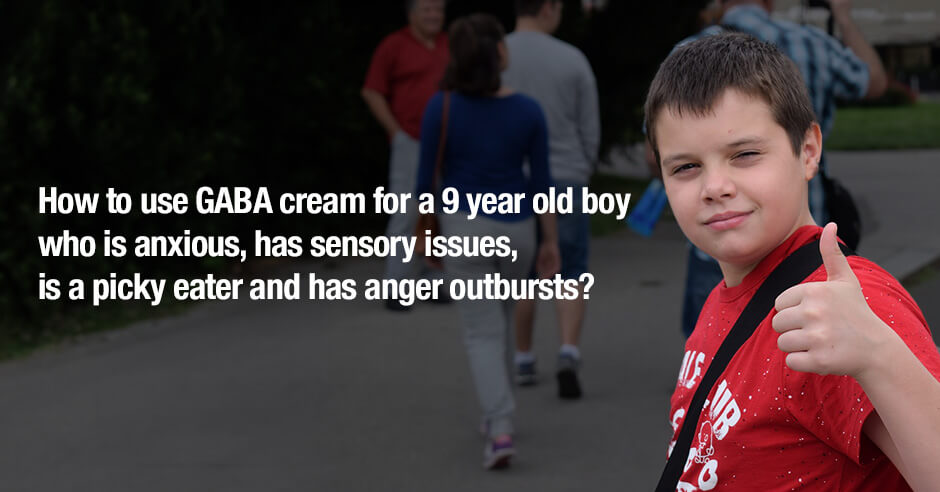
How to use GABA cream for a 9 year old boy who is anxious, has sensory issues, is a picky eater and has anger outbursts?

May 3, 2024 By Trudy Scott 8 Comments

gaba cream for boy

Devon is looking for input on using a GABA cream product to help her anxious 9-year old son who has some anger and sensory issues. She’d like advice on timing too. He is a picky eater and doesn’t like GABA Calm. I share my insights about using GABA cream for raising levels of GABA (a calming neurotransmitter), some of the GABA sensory connections, the GABA anger connections and other factors to address (nutritional imbalances, diet and infections).

Here is her question and some additional background information from our online discussion:

My son has SPD/GAD (sensory processing disorder/generalized anxiety disorder). His anxiety is causing school refusal and a lot of angry outbursts. I suspect PANDAS but his primary care doctor doesn’t think he has that (I might try a different path).

He doesn’t have a problem with sleep, it is mostly anxiety/anger in the day. I am wondering if he can use this GABA cream during the day vs at night?Or would applying this at night help him through the day?

I am really hopeful that the GABA cream will help him attain a little more peace in his days.

Devon doesn’t recall if ARFID (Avoidant restrictive food intake disorder) was part of his diagnosis but he is a picky eater and

has a carb heavy diet that centers only around certain foods. He recently added corn on the cob and artichokes.

He has tried GABA here and there but can’t get past the flavor of the chewable so has never taken it consistently.

Any thoughts on this would be great. I have learned so much from your blog. Thank you for all of the info you share.

Using GABA cream for a child with these symptoms

Devon asked this question on the Somnium Nighttime GABA Cream blog where I write about using it for insomnia, anxiety, bloated belly, muscle spasms, MS (multiple sclerosis), ARFID, anorexia, Alzheimer’s and autism.

I shared that I’ve had many parents use GABA cream during the day with success to help with anxious feelings their children are experiencing. With sleep not being an issue for her son I would start really low and increase the amount and timing from there based on symptom resolution. A pea-size amount is recommended and I’d start with a 1/4 of this in the morning before school when the symptoms are causing school refusal.

Devon doesn’t mention if they noticed benefits with GABA Calm but we use sublingual /powder/liposomal GABA in a similar way. So when this has helped in the past it’s a good clue that GABA cream will help.

Sublingual /powder/ liposomal GABA is typically used morning, mid-morning, mid-afternoon, evening and during the night if needed.  Similar timing can be followed with the cream, however, for some children (and adults)  just once a day may be enough with additional use based on the situation, for example anger outbursts at a play date. The key to use is to start low and go slow and figure out what works for each child’s unique needs. More severe symptoms don’t necessarily mean more GABA is needed. The other key is consistency in order to increase GABA levels.

It can be applied behind the ears, inner forearm and belly but keep in mind that mom or the caregiver applying it will be getting a dose of GABA too.

A clue that too much is being used is increased sleepiness. If benefits are seen but the child is too sleepy another option is to use it at night and observe if benefits are carried through to the next day.

The GABA research: autism, social impairment and sensory issues

In this paper looking at autistic children, the authors report “increased cerebellar glutamate levels compared to neurotypical children” which means lower GABA levels. They also found that “altered excitatory/inhibitory signaling in the cerebellum was more clear-cut when analyses were restricted to male participants.” And this altered signaling of GABA/glutamate correlated with “more severe social impairment” in males.

This paper looking at adults with autism highlights the relationships “between sensory processing difficulties, loneliness, and anxiety.” And another study identifies “reduced inhibitory neurotransmission (reduced GABA) in a higher-order motor area, which modulates motor commands and integrates multiple sensory modalities” and “may underlie sensory hyper-responsiveness in ASD (autism spectrum disorder).”

Although Devon’s son hasn’t been diagnosed with autism, many of the studies have been done in this population and much can be gleaned from them.

There is also much clinical evidence supporting how GABA can help in situations like this and it’s not only in boys. This blog is just one example that highlights how GABA Calm helped a young girl improve her sleep issues, anxiety feelings and sensorimotor skills.

Picky eating, carb cravings, ARFID and the neurotransmitters

When the picky eating and carb cravings are driven by low GABA and stress/physical anxiety, GABA cream can help reduce those in the same way sublingual GABA does.

Anger is typically associated with low serotonin but can often be low GABA too. More here – GABA helps ease symptoms of anger, rage, and dark moods. I share one paper that reports “Gamma-aminobutyric acid (GABA), the primary inhibitory neurotransmitter, may be critical in the neurochemical control of aggressive behavior.”

I’d also consider low serotonin as a possible contributing factor because other signs are increased anxious feelings, and also late afternoon and evening cravings.

Devon is not sure if ARFID is part of her son’s diagnosis but addressing low serotonin can help if there is an element of fear around eating too. More on ARFID here.

Just like we track his anxious feelings and outburst of anger, tracking his eating is important too. And introducing one amino acid at a time so there is no confusion as to which one is helping which symptoms.

Pyroluria, low zinc, low vitamin B6, low magnesium and dietary factors

Zinc, vitamin B6 and magnesium are needed for neurotransmitter production i.e. to make GABA and serotonin. They are also very common deficiencies and looking at and addressing low levels are important. Zinc also affects appetite and low levels can make sensory issues more severe.

Devon shares that suspects his zinc levels a few years ago were good, based on the liquid zinc test. Levels can change and given her son’s school refusal I’d assess for the social anxiety condition called pyroluria (zinc and vitamin B6 are key). The liquid zinc is also a great way to increase zinc since it tastes like water if you are deficient.

Topical magnesium is an excellent option – as a spray, a roller (she has been using this with him) –  or epsom salts baths are another option for increasing magnesium.

As always dietary factors need to be addressed as and when his sensory issues improve: real whole food, quality animal protein (especially at breakfast for blood sugar control), organic fruits and veggies, healthy fats, fermented veggies, gluten-free (and possibly grain-free), sugar-free and caffeine-free. And special diets may need to be considered too – low oxalate, low salicylate, low glutamate and/or low phenol.

PANDAS, Lyme disease and addressing the infection/s

Devon mentions that she suspects PANDAS (Pediatric Autoimmune Neuropsychiatric Disorders Associated with Streptococcal Infections) and it’s unfortunate that she is being dismissed but sadly it’s not unusual. It’s important to find a doctor who will support her in getting testing for this and either ruling it out or addressing the infection/s. You can read more about PANDAS and PANS here.

She doesn’t mention Lyme disease but I’m mentioning it because many infections can cause neuropsychiatric symptoms and should be considered.

The good news is that supporting low GABA, low serotonin and other imbalances, does provide much symptom relief. But we always want to get to the root cause as to why there are imbalances.

A topical GABA product: Somnium
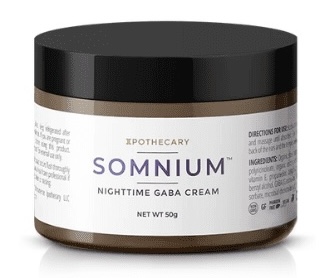
somnium cream

Use this link to read more about Somnium and get the coupon code.

Additional resources when you are new to using GABA and other amino acids as supplements

As a reminder, low GABA can cause physical tension, anxious feelings, feelings of panic and problems sleeping, as well as self–medicating with alcohol or carbs to relax or fit in. As always, I use the symptoms questionnaire to figure out if low GABA or other neurotransmitter imbalances may be an issue.

If you suspect low levels of any of the neurotransmitters and do not yet have my book, The Antianxiety Food Solution – How the Foods You Eat Can Help You Calm Your Anxious Mind, Improve Your Mood, and End Cravings, I highly recommend getting it and reading it before jumping in and using amino acids on your own so you are knowledgeable. And be sure to share it with the practitioner/health team you or your loved one is working with.

There is an entire chapter on the amino acids and they are discussed throughout the book in the sections on gut health, gluten, blood sugar control (this is covered in an entire chapter too), sugar cravings, anxiety and mood issues.

The book doesn’t include product names (per the publisher’s request) so this blog, The Antianxiety Food Solution Amino Acid and Pyroluria Supplements, lists the amino acids that I use with my individual clients and those in my group programs (over and above the topical GABA product I mentioned above).

If, after reading this blog and my book, you don’t feel comfortable figuring things out on your own (i.e. doing the symptoms questionnaire and respective amino acids trials), a good place to get help is the GABA QuickStart Program (if you have low GABA symptoms too). This is a paid online/virtual group program where you get my guidance and community support.

If you are a practitioner, join us in The Balancing Neurotransmitters: the Fundamentals program. This is also a paid online/virtual program with an opportunity to interact with me and other practitioners who are also using the amino acids.

Wrapping up and your feedback

I do always appreciate questions like this so keep them coming so I can share and educate further. I will also update this blog once I hear back from Devon. She has purchased Somnium GABA Cream and plans to have her son use it.

And keep in mind, although this blog is specific for sensitive children and teens, it’s applicable to adults and folks who prefer a cream to a supplement.

Now I’d love to hear from you – does your child have low GABA levels and have you considered using a GABA cream?

If you have had success with Somnim please do share how it helps, how much you use and where you apply it?

Have you also addressed other nutritional imbalances, infections and diet?

If you’re a practitioner do you use GABA cream with your clients/patients?

And please let me know if it’s helpful that I’m now including product recommendations and where to get them.

Feel free to share and ask your questions below.
Filed Under: Anger, Anxiety, Children/Teens, GABA Tagged With: amino acid, anger, anger outbursts, anxious, ARFID, Avoidant Restrictive Food Intake Disorder, calming, cravings, diet, GABA, GABA Calm, GABA cream, GABA Quickstart; Balancing Neurotransmitters: the Fundamentals program for practitioners, GAD, generalized anxiety disorder, infections, lyme, neurotransmitter, PANDAS, peace, picky eater, school refusal, sensory issues, Sensory Processing Disorder, Somnium, spd

OCD, anxiety, PANDAS and PANS: Dr Brandon Brock

June 18, 2017 By Trudy Scott 6 Comments

This is a quick reminder that The Autism, ADHD and Sensory Processing Disorder Summit starts tomorrow.

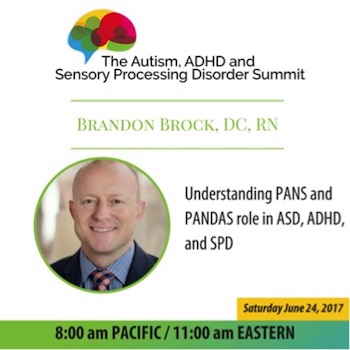
I really enjoyed Dr. Brandon Brock’s interview, Understanding PANS and PANDAS role in ASD, ADHD and SPD, and it is particularly relevant for anxiety and OCD. During the interview he describes what he often finds with these children with PANS (Pediatric Acute-onset Neuropsychiatric Syndrome) and PANDAS (Pediatric Autoimmune Neuropsychiatric Disorders Associated with Streptococcal Infections):

A lot of times the child may come in having nightmares or they just start bed wetting or they’re having fears or a little bit of irritability and they get blamed on all kinds of things. You know they get blamed on maybe a sketchy home environment that’s really not that sketchy, or maybe they just say it’s normal for a child to go through this, or maybe they’re just starting to hit puberty so they’re getting more aggressive. In other words there’s always a reason other than looking at the brain physiology. Why is it changing? Is the brain physiology changing because maybe there is an environmental factor? You know maybe there is some abuse or something. And that does happen.

But on a bigger scale maybe they had some sort of infectious disease, or maybe they had a toxin that got into their body, and it made their immune system react, and it started giving them symptoms like abnormal movements, ticks, especially in the face, lip smacking, hair twirling.

He talks about how these immune reactions to the brain and basal ganglia cause symptoms:

So when you have an immune response against the basal ganglia it’s kind of like pushing the play button over and over and over again. So now we see things like obsessive compulsive disorder, we see tics, we see choreiform movements [repetitive and rapid, jerky, involuntary movement that appears to be well-coordinated], we see nightmares and bizarre thoughts, or the kid does something that we call a perseveration. It is the repetition of a particular response (such as a word, phrase, or gesture), so they say something over and over and over. So there’s a fine line between a kid being a kid and then a kid having something like PANDAS. And really what we call that is auto-immune encephalitis, which just means inflammation of the brain. So the kid’s brain really is kind of like, if you want to say it metaphorically, on fire.

Dr. Brock talks about the 2 strep tests or anti-streptococcal antibody titers that are commercially available and determines whether the child has had a previous strep infection:

  • Antistrepolysin O (ASO) titer,* which rises 3-6 weeks after a strep infection, and
  • Antistreptococcal DNAse B (AntiDNAse-B) titer, which rises 6-8 weeks after a strep infection.]

In addition to the many other labs tests they do, he goes on to discuss another whole set of antibodies that can become positive down the road:

Dopamine antibodies, calcium calmodulin mechanisms, and then all of the intra-cellular structures, like the tubulin structures, the alpha and beta tubulin structures, the micro-tubulin structures, and even the cell wall. So we have an antibody panel that really says it’s either the structure, it’s either the receptor, or it’s the actual pumping mechanism that makes dopamine.

He didn’t mention this but it’s the Cunningham Panel done by Moleculera Labs

Dr. Brock goes on to talk about functional neurology, diet, how to find a good practitioner and much more. It’s a great interview!

The Autism, ADHD and Sensory Processing Disorder Summit, hosted by Tara Hunkin, NTP, runs from June 19-28, 2017.

It will be 10 days of eye opening information into the root causes of your child’s neurological dysfunction. Imagine learning about what may have caused their symptoms and how to address them with nutrition and biomedical approaches and leverage the power of positive neuroplasticity to improve function, health and their lives.

As I mentioned in the prior summit announcement many of the interviews on this summit may be applicable for you even if you don’t have a child with a sensory processing disorder, ADHD and/or autism – many of my clients with anxiety often benefit from the biomedical support that many of these speakers are addressing. Simply replace sensory processing disorder, ADHD and/or autism with anxiety and listen and learn.

And if you’re new to my work, do also tune into my interview: Anxiety’s Role in ASD, ADHD and SPD and how nutrient therapy can help.

Here are a few other speakers and their interesting topics (and I can’t wait to hear them all):

  • David Perlmutter, MD: The role of the microbiome in neurological health.
  • Alex Doman: Using music to heal your child’s brain
  • Derrick MacFabe, MD: The role of propionic acid in the multi-system challenges found in ASD.
  • Sonia McGowin, DC: How to know if biomedical intervention is right for your child.

You can register for The Autism, ADHD and Sensory Processing Disorder Summit here

Filed Under: Autism Tagged With: ADHD, anxiety, autism, Brandon Brock, OCD, PANDAS, PANS, Sensory Processing Disorder, strep, Tara Hunkin

Anxiety in autism, ADHD and sensory processing disorders

June 5, 2017 By Trudy Scott 8 Comments

I had the pleasure of being interviewed by Tara Hunkin on the upcoming Autism, ADHD and Sensory Processing Disorder Summit and share my expertise on anxiety since we so often see anxiety in this population. My topic is: Anxiety’s Role in ASD, ADHD and SPD and how nutrient therapy can help.

I start out sharing some of the research on the incidence and connections.

This 2009 paper Sensory Overresponsivity and Anxiety in Children With ADHD in the American Journal of Occupational Therapy, reports that:

Approximately 25% of children with attention deficit hyperactivity disorder (ADHD) have a comorbid anxiety disorder.

The purpose of this particular study was to determine whether sensory overresponsivity (SOR) or sensory processing disorders are related to increased anxiety in children with ADHD. There were twenty-four children between the age of 6 to 10 with ADHD and 24 children without ADHD.

The study concluded that:

Children in the ADHD + SOR [sensory over responsivity] group were significantly more anxious than both the ADHD-only and non-ADHD (control) groups.

Occupational therapists treating children with ADHD and SOR should be aware that these children may also have anxiety and discuss options with families for prevention or treatment.

I would add that anyone working with these children should be aware of the connections: doctors, nutritionists, psychologists and anyone else on the health team.

We also discuss this 2012 paper, also from the American Journal of Occupational Therapy – Sensory Overresponsivity and Anxiety in Typically Developing Children and Children With Autism and Attention Deficit Hyperactivity Disorder: Cause or Coexistence?

Reviews of the coexistence of ASD [autism spectrum disorder] and anxiety disorders have concluded that among children and youth with ASD, anxiety disorders are highly prevalent, clinically significant, and varied as to specific type of anxiety disorder

Approximately 25% of children with attention deficit hyperactivity disorder (ADHD) also have anxiety disorder, a rate that is elevated when ADHD is seen in conjunction with conduct or oppositional defiant disorders

The paper mentions these 3 factors as models worthy of further study in order to understand the relationship between anxiety, sensory overresponsivity, autism and ADHD:

(1) anxiety caused by, or a symptom of, SOR (primary anxiety model);
(2) SOR caused by, or a symptom of, anxiety (primary SOR model); and
(3) the presence of both anxiety and SOR, linked by way of another factor

Based on what I know about anxiety I feel it could be a combination of all of the above.

My interview also covers the following around how to address the anxiety in these children and their moms (who also often have anxiety):

  • Low serotonin anxiety, symptoms, using tryptophan and 5-HTP and precautions with using them with an SSRI
  • A young girl with RAD (reactive attachment disorder) with rage/anger, anxiety, insomnia, and sugar cravings and the successful use of chewable tryptophan, addressing low iron and a gluten-free diet
  • A young boy with OCD and the successful use of both tryptophan and inositol
  • Low GABA anxiety, the use of GABA and not phenibut, and cautions about using too much
  • A young girl with ADHD and irritability and the successful use of GABA
  • Pyroluria incidence and symptoms and how it ties back to neurotransmitter imbalances

Sensory processing disorders, ADHD and autism are not my expertise and I don’t work much with children so I’m really pleased to be bringing you this information via the other amazing speakers AND listening and learning myself!

Here are some speakers and topics I’m particularly interested in

  • Brandon Brock, RN, DC: Understanding PANS and PANDAS role in ASD, ADHD and SPD.
  • Elizabeth Mumper, MD: Mitochondrial Dysfunction: What it is and how to address the underlying causes.
  • Richard Frye, MD, Ph.D.: Cerebral Folate Deficiency: and how it impairs neurological health.
  • Nancy O’Hara, MD: What you need to know about cell danger response in ASD & other neurodevelopmental disorders.
  • John Tjenos, NTP: The importance of the vagus nerve and how to build vagal tone with essential oils.

We have so much to learn from practitioners and researchers working in this area. And children affected by these conditions do recover!

The Autism, ADHD and Sensory Processing Disorder Summit, hosted by Tara Hunkin, NTP, runs from June 19-28, 2017.

It will be 10 days of eye opening information into the root causes of your child’s neurological dysfunction. Imagine learning about what may have caused their symptoms and how to address them with nutrition and biomedical approaches and leverage the power of positive neuroplasticity to improve function, health and their lives.

Do also keep in mind that these topics may have relevance for you even if you don’t have a child with a sensory processing disorder, ADHD and/or autism. These children are the canaries in the coal mine and many of my clients with anxiety can benefit from the biomedical support that many of these speakers are addressing. Simply replace sensory processing disorder, ADHD and/or autism with anxiety and listen and learn.

You can register for The Autism, ADHD and Sensory Processing Disorder Summit here

Feel free to ask questions or provide feedback and your experiences in the comment section below.

Filed Under: Autism, Events Tagged With: ADHD, anxiety, autism, Brandon Brock, Elizabeth Mumper, GABA, inositol, Nancy O’Hara, sensory overresponsivity, Sensory Processing Disorder, serotonin, Tara Hunkin, tryptophan

Primary Sidebar

GABA QuickStart Homestudy

gaba quickstart homestudy

Free Report

9 Great Questions Women Ask about Food, Mood and their Health

You'll also receive a complimentary subscription to my ezine "Food, Mood and Gal Stuff"


Connect with me

Popular Posts

  • Amino Acids Mood Questionnaire from The Antianxiety Food Solution
  • The Antianxiety Food Solution Amino Acid and Pyroluria Supplements
  • Pyroluria Questionnaire from The Antianxiety Food Solution
  • Collagen and gelatin lower serotonin: does this increase your anxiety and depression?
  • Tryptophan for the worry-in-your-head and ruminating type of anxiety
  • GABA for the physical-tension and stiff-and-tense-muscles type of anxiety
  • The Antianxiety Food Solution by Trudy Scott
  • Seriphos Original Formula is back: the best product for anxiety and insomnia caused by high cortisol
  • Am I an anxious introvert because of low zinc and vitamin B6? My response to Huffington Post blog
  • Vagus nerve rehab with GABA, breathing, humming, gargling and key nutrients

Recent Posts

  • Her cravings for chips and peanut butter were triggered by stress: GABA ends cravings and reduces physical tension and fear of heights
  • It is truly miraculous to be able to move through life without crippling anxiety and panic
  • GABA and tryptophan combo provide immediate and noticeable relief for tremors and cervical dystonia in just 7 days
  • Red light therapy for back and neck pain, plantar fasciitis and low mood – a complement to the amino acids GABA, DPA and tryptophan
  • What do I use instead of Seriphos to help lower high cortisol that is affecting my sleep and making me anxious at night?

Categories

  • 5-HTP
  • AB575
  • Addiction
  • ADHD
  • Adrenals
  • Alcohol
  • Allergies
  • Alzheimer's disease
  • Amino Acids
  • Anger
  • Antianxiety
  • Antianxiety Food Solution
  • Antidepressants
  • Anxiety
  • Anxiety and panic
  • Autism
  • Autoimmunity
  • benzodiazapines
  • Bipolar disorder
  • Books
  • Caffeine
  • Cancer
  • Candida
  • Children/Teens
  • Collagen
  • Cooking equipment
  • Coronavirus/COVID-19
  • Cravings
  • Depression
  • Detoxification
  • Diabetes
  • Diet
  • DPA/DLPA
  • Drugs
  • EFT/Tapping
  • EMF
  • EMFs
  • Emotional Eating
  • Endorphins
  • Environment
  • Essential oils
  • Events
  • Exercise
  • Fear
  • Fear of public speaking
  • Fertility and Pregnancy
  • Fish
  • Food
  • Food and mood
  • Functional neurology
  • GABA
  • Gene polymorphisms
  • General Health
  • Giving
  • Giving back
  • Glutamine
  • Gluten
  • GMOs
  • Gratitude
  • Gut health
  • Heart health/hypertension
  • Histamine
  • Hormone
  • Hyperparathyroidism
  • Hypoglycemia
  • Immune system
  • Inflammation
  • Insomnia
  • Inspiration
  • Introversion
  • Joy and happiness
  • Ketogenic diet
  • Lithium orotate
  • Looking awesome
  • Lyme disease and co-infections
  • MCAS/histamine
  • Medication
  • Men's health
  • Mental health
  • Mercury
  • Migraine
  • Mold
  • Movie
  • MTHFR
  • Multiple sclerosis
  • Music
  • NANP
  • Nature
  • Nutritional Psychiatry
  • OCD
  • Osteoporosis
  • Oxalates
  • Oxytocin
  • Pain
  • Paleo
  • Parasites
  • Parkinson’s disease
  • PCOS
  • People
  • PMS
  • Postpartum
  • PTSD/Trauma
  • Pyroluria
  • Questionnaires
  • Real whole food
  • Recipes
  • Research
  • Schizophrenia
  • serotonin
  • SIBO
  • Sleep
  • Special diets
  • Sports nutrition
  • Stress
  • Sugar addiction
  • Sugar and mood
  • Supplements
  • Teens
  • Testimonials
  • Testing
  • The Anxiety Summit
  • The Anxiety Summit 2
  • The Anxiety Summit 3
  • The Anxiety Summit 4
  • The Anxiety Summit 5
  • The Anxiety Summit 6
  • Thyroid
  • Thyroid health
  • Toxins
  • Tryptophan
  • Tyrosine
  • Uncategorized
  • Vegan/vegetarian
  • Women's health
  • Yoga

Archives

  • May 2026
  • April 2026
  • October 2025
  • September 2025
  • August 2025
  • July 2025
  • June 2025
  • May 2025
  • April 2025
  • March 2025
  • February 2025
  • January 2025
  • November 2024
  • October 2024
  • September 2024
  • August 2024
  • July 2024
  • June 2024
  • May 2024
  • April 2024
  • March 2024
  • February 2024
  • January 2024
  • December 2023
  • November 2023
  • October 2023
  • September 2023
  • August 2023
  • July 2023
  • June 2023
  • May 2023
  • April 2023
  • March 2023
  • February 2023
  • January 2023
  • December 2022
  • November 2022
  • October 2022
  • September 2022
  • August 2022
  • July 2022
  • June 2022
  • May 2022
  • April 2022
  • March 2022
  • February 2022
  • January 2022
  • December 2021
  • November 2021
  • October 2021
  • September 2021
  • August 2021
  • July 2021
  • June 2021
  • May 2021
  • April 2021
  • March 2021
  • February 2021
  • January 2021
  • December 2020
  • November 2020
  • October 2020
  • September 2020
  • August 2020
  • July 2020
  • June 2020
  • May 2020
  • April 2020
  • March 2020
  • February 2020
  • January 2020
  • December 2019
  • November 2019
  • October 2019
  • September 2019
  • August 2019
  • July 2019
  • June 2019
  • May 2019
  • April 2019
  • March 2019
  • February 2019
  • January 2019
  • December 2018
  • November 2018
  • October 2018
  • September 2018
  • August 2018
  • July 2018
  • June 2018
  • May 2018
  • April 2018
  • March 2018
  • February 2018
  • January 2018
  • December 2017
  • November 2017
  • October 2017
  • September 2017
  • August 2017
  • July 2017
  • June 2017
  • May 2017
  • April 2017
  • March 2017
  • February 2017
  • January 2017
  • December 2016
  • November 2016
  • October 2016
  • September 2016
  • August 2016
  • July 2016
  • June 2016
  • May 2016
  • April 2016
  • March 2016
  • February 2016
  • January 2016
  • December 2015
  • November 2015
  • October 2015
  • September 2015
  • August 2015
  • July 2015
  • June 2015
  • May 2015
  • April 2015
  • March 2015
  • February 2015
  • January 2015
  • December 2014
  • November 2014
  • October 2014
  • September 2014
  • August 2014
  • July 2014
  • June 2014
  • May 2014
  • April 2014
  • March 2014
  • February 2014
  • January 2014
  • December 2013
  • November 2013
  • October 2013
  • September 2013
  • August 2013
  • July 2013
  • June 2013
  • May 2013
  • April 2013
  • March 2013
  • February 2013
  • January 2013
  • December 2012
  • November 2012
  • October 2012
  • August 2012
  • July 2012
  • June 2012
  • May 2012
  • April 2012
  • March 2012
  • February 2012
  • January 2012
  • December 2011
  • November 2011
  • October 2011
  • September 2011
  • August 2011
  • July 2011
  • June 2011
  • May 2011
  • April 2011
  • March 2011
  • February 2011
  • January 2011
  • December 2010
  • October 2010
  • September 2010
  • July 2010
  • May 2010
  • April 2010
  • March 2010
  • February 2010
  • January 2010
  • November 2009

Share the knowledge!

The above statements have not been evaluated by the Food and Drug Administration. Products listed in this website are not intended to diagnose, treat, cure or prevent any disease.

The information provided on this site is for informational and educational purposes only and is not intended as a substitute for advice from your physician or other health care professional. You should consult with a healthcare professional before starting or modifying any diet, exercise, or supplementation program, before taking or stopping any medication, or if you have or suspect you may have a health problem.


Copyright © 2026 Trudy Scott. All Rights Reserved. | Privacy | Terms and Conditions | Refund Policy | Medical Disclaimer

Free Report

9 Great Questions Women Ask about Food, Mood and their Health

You’ll also receive a complimentary subscription to my ezine “Food, Mood and Gal Stuff”