• Skip to primary navigation
  • Skip to main content
  • Skip to primary sidebar

everywomanover29 blog

Food, Mood and Women's Health – Be your healthiest, look and feel great!

  • Blog
  • About
  • Services
  • Store
  • Resources
  • Testimonials
  • The Book
  • Contact
  • Search this site

insomnia

Increasing tryptophan or 5-HTP temporarily when a winter dip in serotonin causes more severe anxiety, OCD and/or the winter blues

December 24, 2021 By Trudy Scott 30 Comments

tryptophan and 5htp during winter

Don’t forget that serotonin takes a dip in winter when the days are shorter and there is less light. If you’re currently using tryptophan or 5-HTP to boost low serotonin and ease low serotonin symptoms – worry-type anxiety, panic attacks, insomnia, ruminations, PMS, irritability, negativity, perfectionism, obsessiveness, lack of confidence, anger/rage, afternoon/evening cravings – you may find you need to increase your dose for a few months.

This will especially be the case if you check off winter blues or more severe winter anxiety (yes it’s a thing and published in the research) on the low serotonin symptoms list.

I shared this on Facebook last week and the feedback ranged from surprised to curious to confirmatory.

In this blog I’m sharing some of the feedback and some of the supporting evidence, as well as other factors to consider.

The addition of 5-HTP in the morning and a light box

Kathy thanked me for the reminder and shared the changes she makes in the winter months:

Thanks for the reminder! I need to increase my dose this time of year… I can feel myself feeling “down”. I take 500 mg Tryptophan before bed and 100 mg 5-HTP in the morning before breakfast. I also use a light box in the morning while eating breakfast, which helps.

This is an increase from her typical dosing in the spring and summer when she only takes tryptophan at night before bed.

She also only uses her light box or SAD (seasonal affective disorder) lamp in winter. You can read more about SAD/full spectrum lamps here. They are also a wonderful way to boost serotonin and mood in the winter.

My daughter’s anxiety and OCD goes through the roof

Mark shared about his daughter’s anxiety and OCD (obsessive compulsive disorder):

Every year from October – March, my daughter’s anxiety and OCD goes through the roof. At first we thought it was the transition from summer to school, then the craziness of the winter holidays and suspected mold allergy. Now, based on this information, a winter/less light induced dip in serotonin may be an additional factor we hadn’t considered. We’ll try adjusting her 5-HTP dose and see if we gain some improvement. Thanks for the tip.

It’s really common for families to attribute the more severe anxiety and OCD to the stress and craziness of the winter holidays. And of course suspected mold issues do need to be looked into and addressed. But even then, the dip in serotonin can compound all these factors.

Planned tryptophan bump for Christmas sugar cravings and holiday family stress

Carol shared this about her plans to temporarily boost serotonin:

I am one of those light weights that was able to do one 500 mg pill a day of tryptophan. But I do think that it would help to bump it up to two a day to get me through the Christmas sugar cravings AND holiday family stressful get togethers! I’m all about taking the minimum effective dose but this is helpful to know that there could be a temporary boost just to get you through this time!

It’s wonderful that 500mg tryptophan is enough for her and I’m all for a minimum effective dose! However the winter dip in serotonin – and increased sugar cravings and family stress – is a common reason many folks bump up the dose for a month or more.

You may also find you made the change intuitively. Linda shared this: “I had made the adjustment. I just did not realize the reason why.”

A question about timing of 5-HTP and what to do in Spring

Suzanne shared that she uses a SAD light (also called a light box) and finds that it helps. She asks:

Can I just take the 5-HTP on days with no sun or is it better to have it build up in my system? When spring rolls around, do I taper off or can I just stop taking it?

This is my feedback: I haven’t had anyone just use 5-HTP on cloudy days but it’s worth a trial.  If you are noticing increased anxiety and mood changes only on cloudy days and using the SAD lamp on those days helps, then using 5-HTP on those days may be enough. If not, use 5-HTP consistently/daily through the winter months.

Amino acids do not need to be tapered but I find my clients do better when they are reduced over a few weeks. Some folks also choose to just stop taking them and do fine.

I appreciate all the feedback and the great questions. I’ll report back when I hear how Mark’s daughter does with the adjusted 5-HTP and how Carol does with the bump in tryptophan (and any other feedback I get from these folks).

Some of the research and possible mechanisms

There are many studies that support serotonin changes and seasonal variations in mood. Here are just two of them:

  • Effect of sunlight and season on serotonin turnover in the brain “Alterations in monoaminergic neurotransmission in the brain are thought to underlie seasonal variations in mood, behaviour, and affective disorders… turnover of serotonin by the brain was lowest in winter. Moreover, the rate of production of serotonin by the brain was directly related to the prevailing duration of bright sunlight… Our findings are further evidence for the notion that changes in release of serotonin by the brain underlie mood seasonality and seasonal affective disorder.”
  • Sunshine, Serotonin, and Skin: A Partial Explanation for Seasonal Patterns in Psychopathology? “one contributory facet may be the role of sunshine on human skin. Human skin has an inherent serotonergic system that appears capable of generating serotonin.”

Other factors to consider: low vitamin D, sugar, pyroluria and phenols

There are other low-serotonin related factors to consider too:

  • Low vitamin D is common in the winter and sufficient levels are needed for making serotonin. This paper, Vitamin D and the omega-3 fatty acids control serotonin synthesis and action, part 2: relevance for ADHD, bipolar disorder, schizophrenia, and impulsive behavior describes how“Brain serotonin is synthesized from tryptophan by tryptophan hydroxylase 2, which is transcriptionally activated by vitamin D hormone. Inadequate levels of vitamin D (∼70% of the population) and omega-3 fatty acids are common, suggesting that brain serotonin synthesis is not optimal.”
  • The increased consumption of sugar at this time can lead to reduced zinc, magnesium and B vitamins (like vitamin B6 and thiamine) and this can further reduce serotonin levels, which relies on these nutrients as cofactors for production. By boosting serotonin with additional tryptophan or 5-HTP you can actually reduce some of the cravings.
  • If you have the social anxiety condition called pyroluria, the added stress of family and holiday gatherings can also contribute to zinc and vitamin B6 being dumped, and further impacting serotonin production.
  • Christmas tree phenols can be a trigger for anger, meltdowns, anxiety, hyperactivity, insomnia, aggression, self-injury and autistic symptoms in susceptible individuals

Resources if you are new to using tryptophan and 5-HTP as supplements

If you are new to using the amino acids as supplements, here is the Amino Acids Mood Questionnaire from The Antianxiety Food Solution (you can see the low serotonin symptoms here) and a brief overview here, Anxiety and targeted individual amino acid supplements: a summary.

If you suspect low serotonin or low levels of any of the neurotransmitters and do not yet have my book, The Antianxiety Food Solution – How the Foods You Eat Can Help You Calm Your Anxious Mind, Improve Your Mood, and End Cravings, I highly recommend getting it and reading it before jumping in and using amino acids so you are knowledgeable. And be sure to share it with the team you or your loved one is working with.

The book doesn’t include product names (per the publisher’s request) so this blog, The Antianxiety Food Solution Amino Acid and Pyroluria Supplements, lists the amino acid products that I use with my individual clients and those in my group programs.

If, after reading this blog and my book, you don’t feel comfortable figuring things out on your own (i.e. doing the symptoms questionnaire and respective amino acids trials), a good place to get help is the GABA QuickStart Program (if you have low GABA symptoms). This is a paid online/virtual group program where you get my guidance and community support. 

Another option is the budget-friendly GABA QuickStart Homestudy program.

If you also need serotonin support, the Serotonin QuickStart Program is a good place to get help. This is also a paid online/virtual group program where you get my guidance on using tryptophan and 5-HTP safely, and community support during 5 LIVE Q&A calls. You can sign up to be notified when the next live launch of this program is happening.

If you are a practitioner, join us in The Balancing Neurotransmitters: the Fundamentals program. This is also a paid online/virtual program with an opportunity to interact with me and other practitioners who are also using the amino acids.

Wrapping up and your feedback

Have you noticed this winter dip in serotonin and made adjustments to your 5-HTP or tryptophan? And do you feel less anxious, less obsessive, not as low and with fewer sugar cravings?

Do you find that using a SAD lamp/full spectrum light at this time helps even further?

Were you aware that serotonin dipped in winter and could be playing a role for you? Or did you think it was just the stress and overwhelm of the holidays (and /or some of the emotional upheaval some of us face at this time)?

If you’re a practitioner, have you seen this with clients or patients?

Have you also noticed you need to adjust your GABA and other amino acids at this time too (both GABA and dopamine show seasonality)?

Feel free to ask your questions here too.
Filed Under: 5-HTP, Anxiety, Depression, serotonin, Tryptophan Tagged With: 5-HTP, anger, anxiety, dip in serotonin, holiday family stress, insomnia, irritability, lack of confidence, less light, light box, low vitamin D, negativity, obsessiveness, OCD, panic attacks, perfectionism, Phenols, PMS, pyroluria, rage, ruminations, serotonin, shorter days, skin, sugar, sugar cravings, tryptophan, winter, winter blues, worry-type anxiety

GABA lozenge relieves excruciating pelvic floor/rectal pain and spasms within 30 seconds: a solution for proctalgia fugax

December 3, 2021 By Trudy Scott 28 Comments

gaba lorenze

Have you experienced excruciating pain in the rectum as a result of spasms in your anal sphincter? You may not even know this condition is called proctalgia fugax and you may struggle with the agonizing pelvic floor pain with no quick solution. You may also not get much help from your doctor because the management of proctalgia fugax remains challenging.

The good news is that there is a simple solution that eases the spasms and stops the pain very quickly, typically in less than 2 minutes and sometimes as quickly as 30 seconds. Ashlee discovered how quickly a GABA lozenge worked to give her immediate relief from her scary and excruciatingly painful spasms.

Here is Ashlee’s wonderful feedback on the blog I wrote on this topic a few years ago after this started happening to me:

I want to personally thank you for this article and option of GABA to relieve the excruciating pain I was having.

After research I realized that my pelvic floor was having spasms. Such a new and scary feeling to have been having, and finding your advice and immediate relief of GABA changed everything!

Of course the scariest part initially is the pain and the “what is happening feeling!” But it’s quickly followed up with “when will this happen again, where will I be, and what do I do in that situation?”

I would highly recommend the GABA lozenges which I got at the vitamin store down the street. I carry them in a little baggie with me now just in case an episode happens. I did have an episode happen when I was on site of a job, and thankfully had the GABA lozenge to immediately relieve the pain, literally (within 30 seconds!! INCREDIBLE!)

The option otherwise (and what I did when it first happened) was to soak in a warm bath or with a heating pad, which obviously is not an option if you are at work or not at home.

The other options as suggested online are even scarier… resorting to electric shock up the rectum to ease the spasms! Yikes!

I thanked her for sharing how well the GABA lozenge works for her, saying how happy I am for her! I also let her know that I’d love to share it as a new blog post because it offers so much hope to others (hence this blog).

GABA Calm lozenge and other low GABA symptoms

I assume Ashlee is referring to Source Naturals GABA Calm lozenges which contains 125mg of GABA and is a sublingual lozenge. They do really work this quickly for spasms, pain and anxiety too. GABA always works best when used in a sublingual form like this or when a GABA capsule is opened onto the tongue.

I agree with her – it’s a good plan to keep GABA on hand in case she gets the spasms during the day. I also recommend having GABA next to the bed because it often seems to happen in the middle of the night.

I did ask if using GABA has also helped with easing her other low GABA symptoms. These can include:

  • physical anxiety and overwhelm
  • intrusive thoughts
  • stiff and tense muscles or other muscle spasms/pain
  • insomnia (often the type where you lie awake feeling stiff and tense)
  • stress eating carbs or sugary treats
  • self-medicating with wine or other alcoholic beverages in order to relax and fit in

You can see the entire list of low GABA symptoms here.

(I’ll share an update when I hear back from Ashlee.)

My experience, definition of proctalgia fugax, incidence and overview

I acknowledged her comment about it being very scary the first time it happens. I first blogged about this after it happened to me in 2017 and I figured out GABA worked very quickly for my excruciatingly painful spasms. It was really scary!

You can read about my experience and triggers on this blog: How GABA eases agonizing rectal pain and spasms in under 2 minutes.

The above blog also

  • defines this condition called proctalgia fugax which leads to rectal spasms and sharp fleeting pain in the lower rectum or anus. In some people it can be more than fleeting and is often described as excruciating and agonizing
  • shares how others describe the pain and how common it is (up to 18% of the population, more common in women and affects individuals between 30 and 60 years of age).
  • discusses heating pads as a solution (they also work but can take 20 minutes to take effect and that is simply too long when you are moaning and writhing in pain)
  • mentions medications that are commonly prescribed
  • describes using 30-60 seconds of finger pressure as one possible solution
  • reviews the BEST solution – sublingual GABA. Theanine and taurine can also help

Electrical stimulation of the anorectal muscles or botox – as treatment approaches

When I had first researched this a few years ago, I had not read about “electric shock up the rectum to ease the spasms” that Ashlee mentioned in her comment.  I went looking and found this on Webmd:

For severe proctalgia fugax, electrical stimulation of the anorectal muscles may provide relief. This treatment option involves inserting a small, finger-sized probe into the rectum and using a low voltage current to relax spastic muscles through vibration.

This may be similar to the 30-60 seconds on finger pressure I described but I’ll take the GABA supplement thank you!

This article also mentions botox injections which I am aware is often done. But this opens up another whole can of worms with toxicity issues and the risk of increased panic attacks with botox.

I also share additional information here: How to address rectal spasms with GABA, pelvic floor work, gluten removal and squats

Management of proctalgia fugax remains challenging and treatment outcomes modest at best

A paper, Proctalgia Syndromes: Update in Diagnosis and Management, published June 2020 by gastroenterology departments in Ireland, Romania, Italy and the USA recognizes that “functional anorectal pain syndromes” are complicated and “are a neglected yet often disabling clinical entity resulting in significant economic and psychological burden to the patient.”

They acknowledge that “management of proctalgia fugax remains challenging and treatment outcomes modest at best” and conclude that “further investigation of treatment approaches in proctalgia fugax is required.”

I plan to reach out to the authors and share these wonderful results that individuals are reporting with the use of sublingual GABA. I would also love to get some case studies published so this approach becomes common knowledge.

Resources if you are new to using GABA and the amino acids as supplements

If you are new to using the amino acids GABA and the other amino acids as supplements, here is the Amino Acids Mood Questionnaire from The Antianxiety Food Solution (you can see the low GABA symptoms here) and a brief overview here, Anxiety and targeted individual amino acid supplements: a summary.

If you suspect low GABA or low levels of any of the neurotransmitters and do not yet have my book, The Antianxiety Food Solution – How the Foods You Eat Can Help You Calm Your Anxious Mind, Improve Your Mood, and End Cravings, I highly recommend getting it and reading it before jumping in and using amino acids so you are knowledgeable. And be sure to share it with the team you or your loved one is working with.

The book doesn’t include product names (per the publisher’s request) so this blog, The Antianxiety Food Solution Amino Acid and Pyroluria Supplements, lists the amino acid products that I use with my individual clients and those in my group programs.

Have you ever experienced this rectal pain and spasms/proctalgia fugax? Has GABA worked for you? What else has helped?

If GABA helped ease the spasms and pain, how quickly did it work and what product did you use? Did it help with some of the other low GABA symptoms too?

Have you been able to figure out possible triggers or root causes other than low GABA?

If you’re a practitioner, have you seen this with clients or patients and has GABA helped them?

Feel free to ask your questions here too.
Filed Under: Anxiety, GABA, Pain Tagged With: agonizing, anal sphincter, anorectal muscles, anxiety. Physical anxiety, botox as treatment, electrical stimulation, excruciating, GABA, GABA Calm, GABA lozenge, insomnia, muscle tension, pelvic floor pain, Proctalgia fugax, rectal pain, rectum, scary, spasms, warm bath. heating pad

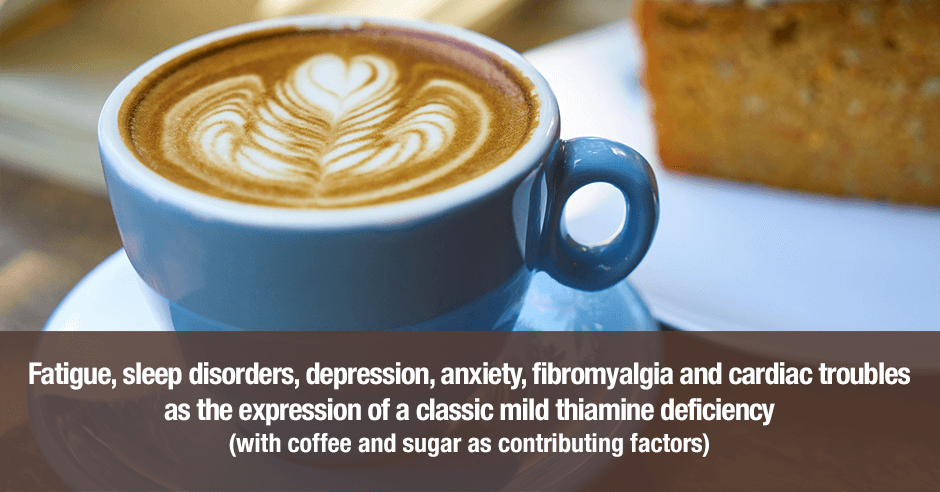
Fatigue, sleep disorders, depression, anxiety, fibromyalgia and cardiac troubles as the expression of a classic mild thiamine deficiency

October 8, 2021 By Trudy Scott 15 Comments

coffee sugar thiamine

Fatigue, sleep disorders, depression, anxiety, fibromyalgia and cardiac troubles are some of the symptoms we see as the expression of a classic mild thiamine deficiency. Thiamine deficiency is very under-rated and under-recognized, and can have far reaching ramifications. And a magnesium deficiency and high dose magnesium can actually cause a thiamine deficiency. There are also many other causes of thiamine deficiency that may not be on your radar: a high carb/processed food/sugar diet, coffee, tea, alcohol, genetics, environmental toxins, medications, celiac disease, leaky gut, bariatric surgery and malabsorption.

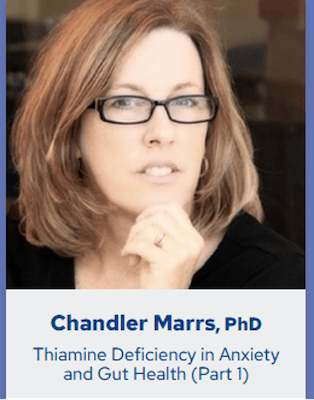
It’s for this reason that I invited Chandler Marrs, PhD to speak on the Anxiety Summit 5: Gut-Brain Axis. We had so much to cover and it ended up being so long, that we split it into part 1 and part 2.

chandler marrs

This is what we cover in Thiamine Deficiency in Anxiety and Gut Health (Part 1)

  • Excessive carbs, alcohol, medications and genetics as causes of low B1/thiamine
  • Dysbiosis, dysmotility, constipation, anxiety, depression, panic attacks, low energy
  • Psychiatric and digestive effects: research, history and other symptoms

This is what we cover in Thiamine Deficiency in Anxiety and Gut Health (Part 2)

  • The mitochondria, dysautonomia and POTS
  • Other symptoms: hyperemesis, exercise intolerance, muscle pain, neuropathy
  • Thiamine supplementation – forms, dosing and paradoxical reactions

Thiamine deficiency is under-rated and under-recognized

We start with why it’s an under-rated and under-recognized deficiency and Dr. Marrs shares that the assumption is that deficiency is not common and even when you test it looks like you are not deficient:

  • “The assumption is that there is no such thing [as a thiamine deficiency] and that it’s rare unless you are a chronic alcoholic. And even then, it’s missed 80% of the time. Or you have a severe injury or illness that depletes thiamine rapidly.
  • The presumption is that we’ve solved it, and it’s rare, and it only happens in countries where food availability is problematic.
  • The reality is that the chemistry of our foods, the chemistry of our environment, the medications that we take all combine and accrue to not only deplete the available thiamine on the basis of intake but to increase the need and to damage a lot of the enzymes involved in the processing of thiamine.
  • So a lot of folks are functionally deficient in that even though by definition they meet the daily requirement and they may, based upon lab testing, show up as being sufficient and not frankly deficient.
  • And so, I think that we just have taken our eye off of the ball with regard to this particular nutrient.”

Magnesium deficiency (and high dose magnesium) can actually cause a thiamine deficiency

Dr. Marrs also shares how a magnesium deficiency (which is very common) can actually cause a thiamine deficiency:

  • “One of the things that’s interesting is it requires magnesium to activate thiamine into its active form.
  • If someone is thiamine sufficient and magnesium deficient, then they are actually functionally deficient in thiamine because you cannot take the free thiamine and activate it into thiamine pyrophosphate.
  • So magnesium deficiency itself can cause thiamine deficiency. And there’s a good percentage of the population that doesn’t get enough magnesium.”

And she also shares how when taking high dose magnesium it’s so crucial to also be addressing low thiamine in order to prevent them becoming more thiamine deficient:

  • “Now, the flip side of that is really interesting. And I think this is important for your audience, in particular, is that magnesium supplementation, when someone has a problem with thiamine, will actually shut down thiamine processing and mitochondrial processing at one of the enzymes. Because if you don’t have thiamine with magnesium, then the enzyme α-ketoglutarate dehydrogenase kind of shuts the whole sequence down.
  • So if you are giving someone high dose magnesium, which is common to supplement, and not tackling the thiamine as well, you risk them becoming more thiamine deficient and reducing ATP output, energy output even further. So everything has to be in balance to some extent or another.”

I can think of one situation where this could be common. You use high dose magnesium due to constipation. Low thiamine may be one of the underlying causes of your constipation and now high dose magnesium is going to make the low thiamine situation worse.

Up to 30% of psychiatric patients have a thiamine deficiency

We talk about how up to 30% of psychiatric patients have a thiamine deficiency but that there hasn’t been enough work on psychiatric disorders which Dr. Marrs says “is strange given the fact that some of the strongest symptoms involve brain function and the most dangerous or some of the more dangerous damage is relative to areas of the brain.”

I share some quotes from a 2019 paper that does actually look at the psychiatric aspects – Neurological, Psychiatric, and Biochemical Aspects of Thiamine Deficiency in Children and Adults:

  • “The brain is highly vulnerable to thiamine deficiency due to its heavy reliance on mitochondrial ATP production. This is more evident during rapid growth, i.e., perinatal and children.
  • Thiamine deficiency contributes to a number of conditions spanning from mild neurological and psychiatric symptoms, confusion, reduced memory, sleep disturbances, and severe encephalopathy, ataxia, congestive heart failure, muscle atrophy, and even death.”

This paper also looks at the beneficial effect of thiamine supplementation in autism spectrum disorder (ASD) and other neurological conditions.

Below, I share some additional studies that we didn’t talk about in the interview but add value to the topic.

Fatigue, sleep disorders, depression, anxiety, fibromyalgia and cardiac troubles as the expression of a classic mild thiamine deficiency

This paper, High-dose thiamine improves the symptoms of fibromyalgia, states that “It is our opinion that fatigue, sleep disorders, depression, anxiety and cardiac troubles are the expressions of a classic mild thiamine deficiency.”

The authors share 3 cases where thiamine/vitamin B1 improved symptoms in all areas for all these women:

  • Patient 1: Female, 58 years old, weight 59 kg. From 1998, the patient began to have widespread pain accompanied by severe fatigue, depression, anxiety, irritability, sleep disorders, trouble concentrating, dry skin, general sickness, continuous headache, intolerance to low temperatures and, more recently, episodes of tachycardia and extrasystolia [alteration in heart rhythm].
  • Patient 2: Female, 37 years old, weight 74 kg. From 1999, the patient has had widespread pain and all the symptoms described for patient 1, with the only exception being that of cardiac symptoms.
  • Patient 3: Female, 60 years old, weight 65 kg. From 2006, the patient began to have widespread pain, fatigue, depression, anxiety, sleep disorders. Trouble concentrating.

As you can see the symptoms can be very varied and this is what makes it challenging to identify low thiamine as being the issue.

Thiamine deficiency after bariatric surgery

Here one case study where thiamine deficiency occurred after bariatric surgery: Wernicke’s encephalopathy mimicking multiple sclerosis in a young female patient post-bariatric gastric sleeve surgery:

We describe a case of Wernicke’s encephalopathy secondary to thiamine (B1) deficiency in a patient status post-bariatric sleeve gastrectomy.

The presenting symptoms of new-onset weakness, diplopia [double-vision], and confusion in a young female patient raised suspicion for multiple sclerosis (MS), but given a history of bariatric surgery, thiamine levels were checked, revealing significant Vitamin B1 (thiamine) deficiency.

This case highlights the importance of thorough history taking, as a misdiagnosis of MS in this case could have resulted in irreversible neurological deterioration and hematological and infectious consequences associated with the inappropriate administration of disease-modifying therapies.

Bariatric surgery is one of many causes of thiamine deficiency.

Some of the other many causes of thiamine deficiency

Other causes of thiamine deficiency include factors that may not be on your radar: a high carb/processed food/sugar diet (and even consistent smaller amounts of “healthy” sweeteners), coffee and tea consumption, alcohol consumption (excessive consumption and even moderate consumption i.e. social drinking), genetics (we talk about specific genes in the interview), environmental toxins, certain medications, celiac disease, leaky gut and malabsorption etc.

We do a deep dive into all this in the two interviews (and much more).

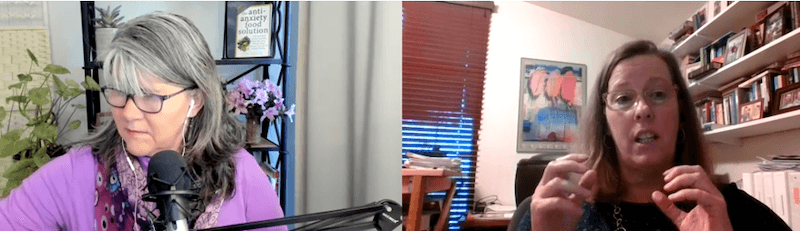
chandler marrs interview
(As you can see, when I do interviews I take notes throughout for a few reasons: writing consolidates the information into my brain and it allows me to make notes for follow-up questions. It also helps the video editing process later.)

Interviews that dove-tail well with this topic are these ones:

  • Michael Collins – Sugar/Fructose Addiction: Anxiety, ADHD and Aggression (because sugar and carbs lead to low thiamine)
  • My interviews, Glutamine, DPA and Tyrosine for Anxiety and Sugar Cravings and GABA & Tryptophan: Gut-Anxiety Connections (because the amino acids help you quit sugar/carbs, coffee and alcohol easily)
  • Tara Hunkin, NTP, CGP, RWP – Mitochondrial Dysfunction in Anxiety (because low thiamine adversely affects the mitochondria)

I encourage you to tune in if you have:

  • Anxiety & feel overwhelmed & stressed by little things
  • Panic attacks &/or obsessive thoughts or behaviors
  • Social anxiety/pyroluria
  • Phobias or fears (flying, spiders or even driving on a highway)

And also if you suffer from…

  • Food sensitivities, IBS/SIBO, parasites or gallbladder issues
  • Constipation, diarrhea, bloating, gas, pain & other digestive issues
  • Leaky gut, a leaky blood-brain barrier or vagus nerve issues

Join us if you are also an emotional eater with intense sugar cravings (and know you suffer from low blood sugar), experience insomnia, low mood, PMS, poor focus and/or low motivation.

This is THE online event to learn about the powerful individual amino acids – GABA, theanine, tryptophan, 5-HTP, glutamine, DPA and tyrosine – to quickly ease anxiety and help with gut symptoms while you are dealing with other root causes which take longer to address. (They also help with cravings as with this example, and sleep and immunity).

With research-based anxiety nutritional solutions and practical steps, you can determine your root causes, ease your anxiety and prevent it from coming back so you can feel on top of the world again!

If you are a practitioner, please join us too and find advanced solutions for your clients or patients too!

You’ve heard me say the Anxiety Summit has been called “a bouquet of hope!” My wish for you is that this summit is your bouquet of hope!

I hope you’ll join me and these incredible speakers, be enlightened and find YOUR solutions! More about this summit and other Anxiety Summits here.

Here’s to no more anxiety and you feeling on top of the world again!

Please share if these thiamine deficiency symptoms are new to you.

Also let us know if you’ve benefited from thiamine in the past or are currently using some form of thiamine – and how helped/is helping.

Have you seen this correlation between low magnesium and low thiamine OR taking high doses of magnesium and low thiamine symptoms?

Feel free to post your questions here too.

Learn more/purchase now

Filed Under: Anxiety, Depression, Sugar addiction, The Anxiety Summit 5 Tagged With: alcohol, anxiety, Anxiety Summit 5, carbs, cardiac, Chandler Marrs PhD., coffee, depression, fatigue, Fibromyalgia, insomnia, magnesium, neurological, psychiatric, sleep disorders, sugar, sugar craving, Thiamine, vitamin B1

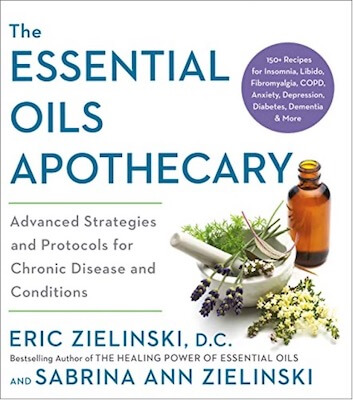
The Essential Oils Apothecary – Advanced Strategies and Protocols for Chronic Disease and Conditions by Eric Zielinski and Sabrina Ann Zielinski

September 10, 2021 By Trudy Scott Leave a Comment

essential oils apothecary

This wonderful new book was just released this week. It covers the basics and their recipes are wonderful as always. I really appreciate that Dr. Z and Mama Z include chapters on insomnia, stress and anxiety, depression and substance abuse. Even though I already know about and use essential oils, I picked up plenty of gems. I do love that they include the research too.

Here are a few highlights that resonated with me:

  • A new essential oil that I learned about is Bitter Orange. I love all the citrus essential oils and learn that this one “is used in Ayurvedic medicine as an aid to meditation and can be extremely helpful in easing stress and anxiety” … and that a “study from Iranian researchers found that when patients were given bitter orange prior to a minor operation, they felt more relaxed, with much less anxiety.”
  • Being reminded about Thyme essential oil for stress relief and anxiety support. I found this statement worth remembering and fascinating: “Like many essential oils, thyme oil works by stimulating smell receptors in the nose, which then transmit messages through the nervous system to the emotion-controlling limbic system in the brain.”
  • Learning about a study where “Japanese investigators evaluated the anti-stress benefit of aromatherapeutic hand massages in healthy women in their twenties.” I see a huge application for this in children, hospitalized loved ones and elderly parents too.
  • I love ginger and I was intrigued to learn about Plai root essential oil, a cousin to ginger and similar to eucalyptus “with additional spicy notes.” They share that a study with healthy male volunteers found  that plai improved mood “by easing the negative emotions and enhancing positive emotions, especially feelings of pleasure and contentment.” They also share that plai essential oil pairs well with rosemary, a favorite of mine for mood and anxiety support.
  • I was not aware that black pepper essential oil can “reduce cravings for cigarettes, alcohol, or marijuana. Black pepper oil can also help you fight withdrawal symptoms and keep you calm throughout….by elevating levels of the feel-good neurotransmitter serotonin in your brain.” They share a fun recipe for Quit Sticks to help folks quit these addictions.
  • The list of essential oils that are rich in linalool, “known for its calming, sedative, anticonvulsant, and anxiolytic (anti­anxiety) properties. Chemically, it is a monoterpenoid—a major compound found in essential oils – and is widely used as an antimicrobial agent and a fragrance.” The list includes Rosewood (82.3 to 90.3 percent), Coriander seed (59.0 to 87.5 percent), Magnolia leaf or flower (78.9 percent / 69.9 percent), Bergamot mint (24.9 to 55.2 percent), Neroli (31.4 to 54.3 percent), Lavender (25.0 to 45.0 percent) and many others.

I’ve highlighted some gems related to insomnia, stress and anxiety, depression and substance abuse but there are also sections on the following: chronic fatigue, fibromyalgia, low libido, Alzheimer’s and dementia, bone and joint disorders, cancer support, cardiovascular disease, chronic respiratory disease, diabetes and obesity, fatty liver, inflammatory bowel disease, Parkinson’s disease and epilepsy.

Here is the official blurb:

Soothing practices, healing rituals, and 100+ practical recipes for applying essential oils to the treatment and symptom management of chronic illness–by the bestselling author of The Healing Power of Essential Oils and his wife, Mama Z!

More and more people living with a chronic condition–from insomnia, hypertension, and fibromyalgia to migraines, insulin resistance, and even the effects of chemotherapy–are reaching for essential oils as a complementary therapy to treat their symptoms. Whether you apply them topically, infuse them in liquid, or diffuse them in the air, essential oils are proven to penetrate the skin and work on the body’s physiology gently and quickly.

Dr. Eric Zielinski, author of the bestselling primer on using essential oils for general health, The Healing Power of Essential Oils, and his wife, Sabrina, affectionately called Mama Z, now bring their masterful and authoritative knowledge to the complexities of chronic illness. The Essential Oil Apothecary shares more than 100 research-backed and easy-to-prepare formulations, from an Immune Boosting Blend to an Anxiety-Busting Body Oil, to help with symptoms of twenty-five common chronic conditions, including fatigue, pain, anxiety, and addiction. It also offers two life-changing tools: an essential home makeover to remove toxins that may be making you sicker, and self-care rituals (including Mama Z’s beauty rituals) that help you feel better when navigating any chronic illness.

Dr. and Mama Z’s evidence-based and holistic approach will help you experience the power of essential oils against chronic illness and build a lifetime of healthy habits and supportive lifestyle actions.

I see this as a book you’ll refer to again and again (like I refer to their first book “The Healing Power of Essential Oils”). I recommend it for essential oils beginners and for individuals (including practitioners) who are already using essential oils.

Use this link to order your copy and claim additional bonus digital content.   Or purchase from your favorite local bookstore or from Amazon (my link) and then use this link to claim your bonus content.

Let us know what gems you pick up when you read it!

Filed Under: Anxiety, Books, Cravings, Depression, Essential oils Tagged With: anxiety, Bitter Orange, black pepper essential oil, cravings for cigarettes. serotonin., depression, eric zielinski, essential oils, insomnia, linalool, Plai root, Sabrina Ann Zielinski, stress, substance abuse, The Essential Oils Apothecary, Thyme

Wean off prescription pain medication, improve sleep and reduce emotional eating with DPA (an endorphin-boosting amino acid)

September 3, 2021 By Trudy Scott 19 Comments

dpa

A question about using the amino acid DPA (d-phenylalanine) to help wean off prescription pain medication was posted on the blog. She was also hoping it would help ease her pain while she was weaning and improve her poor sleep too. I share my feedback on DPA for weaning, timing of vitamin C, additional information for sleep support and using DPA for emotional eating too. Concerns about oxalates and pain are mentioned and the importance of a comprehensive approach.

Here is the question that was posted:

Hi Trudy, I am trying to get off prescription pain medication and have read that DPA really helps – do you have any knowledge and/or experience with this?

There is a very popular opiate withdrawal support website that recommends DPA 500mg 3x/daily. Since amino acids need to be taken away from food and other amino acids, I feel like it could be very easy to make the DPA go to waste if not taken at exactly the right time every day.

The insomnia is the worst part of opiate withdrawal for me – days can go by with only 20-45 minutes of sleep. I have a little one to care for and the stress of no sleep just makes me want to give up.

No sleep worsens my physical pain as I toss and turn for hours on end. It isn’t a surprise that then causes terrible emotional distress.

One more question…since Vitamin C does help withdrawal does it affect/break down DPA?  I take a liposomal version multiple times a day.

Here is my response: Yes, DPA (d-phenylalanine) does help with withdrawal from prescription pain medication and I’ve used it for this purpose with great success with many clients. It does need to be used away from protein and the dosing can vary for each person.

A starting dose of DPA is 500mg and it can be used 3- 4 x day to start, and we increase from there based on the unique need of each person. We typically adjust the DPA up as the prescription medication is tapered very slowly, and under the guidance of the prescribing physician.

I share more about her vitamin C and insomnia questions below.

If you are new to DPA and endorphin support

DPA/d-phenylalanine is an amino acid used as a supplement.

DPA destroys the enzyme that breaks down/inhibits endorphins and in essence raises endorphin levels. Endorphins are feel-good chemicals that you experience with an endorphin rush when you go for a run or when someone gives you a big hug, when you show kindness to someone or an individual does something nice for you.

Taking the amino acid, DPA, as a supplement helps to raise your endorphins and helps when you feel weepy and overly emotional and reduces the need to self-medicate with treats as a reward or for comfort (more on that below). This amino acid is a favorite with so many of my clients and community because it makes them feel so lovely.

In addition to helping with emotional pain, DPA also helps with easing physical pain. And for this reason it can be used to help get off prescription pain medications.

In summary, these are the signs of low endorphins:

  • Heightened sensitivity to emotional pain
  • Heightened sensitivity to physical pain
  • Crying or tearing up easily
  • Eating to soothe your mood, or comfort eating
  • Really, really loving certain foods, behaviors, drugs, or alcohol
  • Craving a reward or numbing treat

DPA and endorphin support for pain: the research

Here is one paper, which discusses how DPA inhibits or breaks down enkephalins (endorphins are closely related compounds) and as a result helps with depression and pain, and acts as an anti-inflammatory: “proven to be beneficial in many human patients with chronic, intractable pain.” The authors also state that a compound such as DPA “may alleviate other conditions associated with decreased endorphin levels such as opiate withdrawal symptoms.”

This paper discusses beta-endorphins and the reward mechanism and how they can induce euphoria, reduce pain and ease addictions and distress: “Long known for its analgesic effect, the opioid beta-endorphin is now shown to induce euphoria, and to have rewarding and reinforcing properties.”

I would love to see DPA used instead of pain meds when possible or used in conjunction with prescription pain medications when they are needed.

I am also very curious to know which opiate withdrawal support website is recommending DPA. I’m so pleased to hear this because it helps so much – for physical pain relief and for weaning off pain medications.

Is DPA the same as DLPA?

DLPA (dl-phenylalanine), although similar sounding, is not the same as DPA and only offers about half as much endorphin support. It also provides dopamine/catecholamine support (i.e. focus, motivation, mood, energy) and this aspect means DLPA has the same precautions as tyrosine. It also means DLPA can affect sleep if used from midafternoon onwards.

I seldom have clients use DLPA and prefer DPA for endorphin support and tyrosine for dopamine/catecholamine support if needed.

Keep in mind, the amino acid DPA, is not the same as the omega-3 fatty acid called docosapentaenoic acid and also abbreviated as DPA.

The brand of DPA that I recommend for my clients

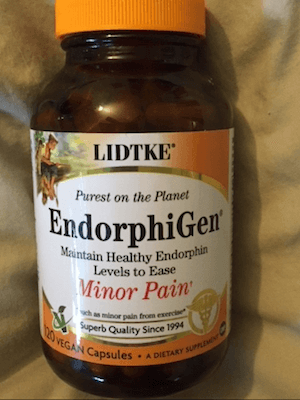
The brand I recommend for my clients is Lidtke Endorphigen. You can read about it and the other supplements I recommend on the supplements blog here.

My recommendation has always been to chew the DPA capsule for the best effects and to get results quickly (in 2-5 minutes). Instead of chewing the whole capsule I now recommend opening the capsule into your mouth. You can read more about using DPA and some client feedback here.

lidtke endorphigen

I’ve used Endorphigen personally too and it’s always with me as part of my travel first-aid kit. I write about using DPA, GABA and acupuncture for pain relief after my back injury and I had DPA, GABA and arnica on hand when I sprained my ankle while hiking in Red Rocks.

Benefits include reduction of emotional/comfort eating too

As I mentioned above, with DPA there is the bonus benefit of endorphin support to help end emotional/comfort eating where you are seeking treats as a reward i.e it helps with physical pain and emotional pain.

You may relate to this if you are someone who would say or think “I just LOVE chocolate-chip cookies!” or “PLEEEEASE don’t make me give up my treats, it’s all I have left after I gave up my coffee and wine! I deserve something nice!”

This emotional attachment to sweet treats and reward-eating is very common with low endorphins.

Using vitamin C with the amino acids and watching for oxalate pain adverse effects

She is correct, vitamin C is best used away from the amino acids so as not to reduce the beneficial effects.

I do caution clients to find the right amount of vitamin C as too much can increase pain in individuals with dietary oxalate issues. I write about oxalate crystal disease here and vitamin C and oxalates here. Both can aggravate insomnia too and increase anxiety.

Address low serotonin, low GABA and/or high cortisol for sleep too

With sleep issues we may also look into supporting low serotonin with tryptophan or 5-HTP,  and/or low GABA levels with GABA and/or theanine. These amino acids can also help with reducing pain in some instances.

Opioids have an endocrine effect via impacts on the hypothalamic-pituitary-gonadal axis, affecting sex hormones levels and cortisol levels. Endocrine dysfunction can adversely impact sleep and make anxiety worse, and needs to be addressed. GABA and serotonin support can help with some of the sex hormone imbalances and Seriphos helps when cortisol is too high.

A comprehensive approach is key

Of course, a comprehensive approach is key, so it’s important to remove inflammatory foods (gluten, maybe all grains, sugar, caffeine, unhealthy fats etc), add fish oil if omega-3s are low and include anti-inflammatory nutrients such as turmeric.

And we always want to figure out the root cause of the pain and address it. Also, ruling out if dietary oxalates (and vitamin C) are an issue is important and often overlooked.

I’m a big fan of working with a physical therapist and acupuncturist too.

Resources if you are new to using the amino acids as supplements

If you are new to using the amino acids, DPA, tryptophan or GABA, as supplements and want to know more, here is the Amino Acids Mood Questionnaire from The Antianxiety Food Solution and a brief overview here, Anxiety and targeted individual amino acid supplements: a summary.

If you suspect low endorphins, low serotonin or low GABA levels and do not yet have my book, The Antianxiety Food Solution – How the Foods You Eat Can Help You Calm Your Anxious Mind, Improve Your Mood, and End Cravings, I highly recommend getting it and reading it before jumping in and using amino acids so you are knowledgeable.

Can you relate to any of this? Has DPA helped your pain and/or helped you withdraw from prescription pain meds? And did you even know this was an option?

Did it also help you sleep and make you less anxious/worried because of the reduction in pain?

What about less emotional eating when using DPA/Endorphigen?

Feel free to post your questions too.

Filed Under: Cravings, Medication, Pain Tagged With: comfort eating, d-phenylalanine, DPA, emotional eating, Endorphigen, endorphins, GABA, get off pain medication, insomnia, Lidtke, opioid, oxalates, pain, pain medication, poor sleep, sleep, tryptophan, vitamin C, wean off prescription pain medication

Teen with anxiety, low self-esteem and insomnia: how to do a one-off trial of tryptophan to figure out if she has low serotonin

August 20, 2021 By Trudy Scott 23 Comments


teen anxiety tryptophan serotonin

A mom asks for advice for her teenage daughter who has anxiety, low self-esteem issues,  insomnia, experiences negativity and has phobias. She wants to know if serotonin support may help and where to start. I share my feedback confirming that these are low serotonin symptoms and that I would do a trial of tryptophan. I go deeper in this blog and also go into detail about how I would do a one-off trial (or evaluation) of tryptophan if I was working with this family. I also share why I’d look into low GABA, seasonal allergies and the birth control pill. And I discuss the importance of being proactive given the increasing suicide and self-harm in this age-group, with the pandemic compounding the increase.

Here is the question that Maria asked about her daughter:

My 13-year-old teen has always suffered from insomnia, sometimes light, sometimes a bit heavier, depending on the period. She has suffered from asthma from a young age, even if this issue has improved enormously, it is sometimes present, specially during spring time as she is allergic to different plants. She would suffer from sugar cravings in the past as we were trying to change her diet. Things are going better in this respect as well; however, negativity, phobias, low self esteem and anxiety are always present for her.

Are these signs of low serotonin? How could we help her feel better? Should serotonin pills be applied directly? Would this make the system dependent on it? If amino acids should be supplemented, how should we do this, considering her age?

I responded that yes, negativity, phobias, low self esteem and anxiety (the worry type) are signs of low serotonin. Insomnia can also be caused by low serotonin especially if her daughter is lying awake, overthinking and worrying about things.

I shared that the body does not get dependent on the amino acids and I’d consider a trial of tryptophan to address her symptoms.

Doing a one-off trial/evaluation of tryptophan based on her symptoms

If I was working with this family, I would help this mom figure out for sure if her daughter has low serotonin by reviewing the low serotonin symptom list with her, and helping her rate them on a scale of 1-10 with 10 being the worst.

This can often be challenging for a 13-year old: giving the symptoms a severity rating and being able to identify exactly how she feels. Her ratings may also be reflective of where she is in her cycle at the time and may fluctuate more in the month if her cycle is not yet regular. Working together with mom we can hopefully figure this out. If not, we do the best we can with the information we have.

The next step is picking one or two symptoms that are easy to measure the day we do the initial trial or evaluation. For this young girl I’d pick anxiety/worry and negativity and ask her some questions that would help us assess before and after results of the one-off trial /evaluation of tryptophan:

  • For anxiety and worry she may say it’s also a 9 and give me this example: “I’m really worried about performing in the concert – I keep thinking about it all day long and at night.”
  • For negativity she may say it’s a 9 and give me this example: “I really don’t think I’m good enough to be in the dance class.”

Both tryptophan and 5-HTP can raise serotonin but I like to start with tryptophan. I typically start with 100mg Lidtke chewable tryptophan in children/teens so I’d have her chew one tablet and then check back in the next 2 to 5 minutes (or maybe a little longer for some folks).

This is the kind of feedback I’m looking for:

  • With regards to anxiety and worry she may say: “Gosh, I completely stopped thinking about the concert. I’m not worrying about it at all. Now that you ask I’m thinking about it again but I think my worry/anxiety is about a 5 now.”
  • With regards to negativity she may say: “I think I feel better about being in the dance class. I think I can do it. My negativity feels like it’s a 5 or 6”

Since this teen responded so well, I’d have her start taking tryptophan midafternoon and evening (away from protein) and we’d increase if needed, each week, and based on her symptoms.

I have everyone keep a food mood and supplements log and mom could help her do this too.

GABA, seasonal allergies and the birth control pill

I also always assess low GABA when someone is anxious (especially if she also has physical anxiety, tension, stiff muscles) and has insomnia. We’d do the same one-off trial with a product like GABA Calm (or similar) once we’ve established a good dose of tryptophan for easing her symptoms.

This mom also mentioned Spring time allergies so I also shared this blog with her: 5-HTP and/or tryptophan to help with increased anxiety, panic attacks and depression caused by spring allergies. Depending on the season, her daughter may score higher on some of the low serotonin symptoms.

I’d also want to know if her daughter is on a birth control pill (often prescribed at this age for acne) because it can contribute to anxiety and depression.

Being proactive is wise given the rise in suicide and self-harm in this age group

Being proactive about addressing low serotonin symptoms quickly is wise given the rise in suicide and self-harm in this age group. This 2021 Italian study discusses the role of emotional dysregulation when it comes to and self-injurious thoughts and behaviours in high-school students:

Overall, 11.1% of adolescents reported self-harming behaviours without suicide ideation or attempts, 6.4% declared having thought to suicide without acting a suicide attempt or self-harm, 1.4% declared having attempted suicide and really thought to take away their life.

Unfortunately, the pandemic has also made things worse for many adolescents. This study reports that Canadian adolescents appear to be experiencing “higher rates of self-harm thoughts and behaviours relative to before the pandemic.”

It’s important to keep in mind that pre-teens and teens may not be willing to admit that they are engaging in self-harm like cutting or burning, or thinking about taking their lives.

Resources if you are new to using the amino acids as supplements

If you are new to using the amino acids tryptophan/5-HTP or GABA as supplements and want to know more in case you need them in a future situation, here is the Amino Acids Mood Questionnaire from The Antianxiety Food Solution (you can see all the low serotonin and low GABA symptoms here) and a brief overview here, Anxiety and targeted individual amino acid supplements: a summary.

If you suspect low serotonin or low levels of any of the neurotransmitters and do not yet have my book, The Antianxiety Food Solution – How the Foods You Eat Can Help You Calm Your Anxious Mind, Improve Your Mood, and End Cravings, I highly recommend getting it and reading it before jumping in and using amino acids so you are knowledgeable.

It also covers all the basics of a healthy diet. It’s a comprehensive approach – amino acids AND diet. I’d also want to know what her diet is like right now – gluten-free, sugar-free, caffeine-free, eating protein at breakfast for blood sugar control, real whole foods, grass-fed red meat, wild fish, fermented foods etc?

The book doesn’t include product names (per the publisher’s request) so this blog, The Antianxiety Food Solution Amino Acid and Pyroluria Supplements, lists the amino acid products that I use with my individual clients and those in my group programs.

Thanks to this mom for asking the question and allowing me to use it as a teaching tool for my community. Let’s get her daughter and all teens feeling their best again.

Can you relate to the question this mom asked? Does it sound similar to what your daughter is experiencing right now or a client/patient?

Do you do a one-off trial /evaluation like this to find out if serotonin support is needed? Or have you done this in the past with your daughter, family member or yourself?

What are the before and after questions (and symptom ratings) and did tryptophan help?

Feel free to post any questions here too.

Filed Under: Anxiety, Depression, Teens, Tryptophan Tagged With: 5-HTP, allergic, allergies, anxiety, asthma, birth control pill, cutting, insomnia, low GABA, low self-esteem, low serotonin, negativity, one-off trial, overthinking, pandemic, phobias, seasonal allergies, self-harm, sucide, sugar cravings, teen, teenage, tryptophan, worrying

  • « Go to Previous Page
  • Page 1
  • Interim pages omitted …
  • Page 6
  • Page 7
  • Page 8
  • Page 9
  • Page 10
  • Interim pages omitted …
  • Page 17
  • Go to Next Page »

Primary Sidebar

NEW! GABA QuickStart Homestudy (with special intro pricing)

gaba quickstart homestudy

Free Report

9 Great Questions Women Ask about Food, Mood and their Health

You'll also receive a complimentary subscription to my ezine "Food, Mood and Gal Stuff"


Connect with me

Popular Posts

  • Amino Acids Mood Questionnaire from The Antianxiety Food Solution
  • The Antianxiety Food Solution Amino Acid and Pyroluria Supplements
  • Pyroluria Questionnaire from The Antianxiety Food Solution
  • Collagen and gelatin lower serotonin: does this increase your anxiety and depression?
  • Tryptophan for the worry-in-your-head and ruminating type of anxiety
  • GABA for the physical-tension and stiff-and-tense-muscles type of anxiety
  • The Antianxiety Food Solution by Trudy Scott
  • Seriphos Original Formula is back: the best product for anxiety and insomnia caused by high cortisol
  • Am I an anxious introvert because of low zinc and vitamin B6? My response to Huffington Post blog
  • Vagus nerve rehab with GABA, breathing, humming, gargling and key nutrients

Recent Posts

  • What do I use instead of Seriphos to help lower high cortisol that is affecting my sleep and making me anxious at night?
  • BeSerene™ GABA/theanine cream eases severe muscle tension in her neck/shoulders, prevents her bad headaches and quells her anxiety
  • How the correct approach, dose and sublingual use of GABA can be calming and not cause a flushed and itchy face and neck
  • The amino acid glutamine improves low mood by addressing gut health, and it has calming effects too
  • Flight anxiety with heightened breath, physical tension and also fearing the worst (the role of low GABA and low serotonin)

Categories

  • 5-HTP
  • AB575
  • Addiction
  • ADHD
  • Adrenals
  • Alcohol
  • Allergies
  • Alzheimer's disease
  • Amino Acids
  • Anger
  • Antianxiety
  • Antianxiety Food Solution
  • Antidepressants
  • Anxiety
  • Anxiety and panic
  • Autism
  • Autoimmunity
  • benzodiazapines
  • Bipolar disorder
  • Books
  • Caffeine
  • Cancer
  • Candida
  • Children/Teens
  • Collagen
  • Cooking equipment
  • Coronavirus/COVID-19
  • Cravings
  • Depression
  • Detoxification
  • Diabetes
  • Diet
  • DPA/DLPA
  • Drugs
  • EFT/Tapping
  • EMF
  • EMFs
  • Emotional Eating
  • Endorphins
  • Environment
  • Essential oils
  • Events
  • Exercise
  • Fear
  • Fear of public speaking
  • Fertility and Pregnancy
  • Fish
  • Food
  • Food and mood
  • Functional neurology
  • GABA
  • Gene polymorphisms
  • General Health
  • Giving
  • Giving back
  • Glutamine
  • Gluten
  • GMOs
  • Gratitude
  • Gut health
  • Heart health/hypertension
  • Histamine
  • Hormone
  • Hyperparathyroidism
  • Hypoglycemia
  • Immune system
  • Inflammation
  • Insomnia
  • Inspiration
  • Introversion
  • Joy and happiness
  • Ketogenic diet
  • Lithium orotate
  • Looking awesome
  • Lyme disease and co-infections
  • MCAS/histamine
  • Medication
  • Men's health
  • Mental health
  • Mercury
  • Migraine
  • Mold
  • Movie
  • MTHFR
  • Multiple sclerosis
  • Music
  • NANP
  • Nature
  • Nutritional Psychiatry
  • OCD
  • Osteoporosis
  • Oxalates
  • Oxytocin
  • Pain
  • Paleo
  • Parasites
  • Parkinson’s disease
  • PCOS
  • People
  • PMS
  • Postpartum
  • PTSD/Trauma
  • Pyroluria
  • Questionnaires
  • Real whole food
  • Recipes
  • Research
  • Schizophrenia
  • serotonin
  • SIBO
  • Sleep
  • Special diets
  • Sports nutrition
  • Stress
  • Sugar addiction
  • Sugar and mood
  • Supplements
  • Teens
  • Testimonials
  • Testing
  • The Anxiety Summit
  • The Anxiety Summit 2
  • The Anxiety Summit 3
  • The Anxiety Summit 4
  • The Anxiety Summit 5
  • The Anxiety Summit 6
  • Thyroid
  • Thyroid health
  • Toxins
  • Tryptophan
  • Tyrosine
  • Uncategorized
  • Vegan/vegetarian
  • Women's health
  • Yoga

Archives

  • October 2025
  • September 2025
  • August 2025
  • July 2025
  • June 2025
  • May 2025
  • April 2025
  • March 2025
  • February 2025
  • January 2025
  • November 2024
  • October 2024
  • September 2024
  • August 2024
  • July 2024
  • June 2024
  • May 2024
  • April 2024
  • March 2024
  • February 2024
  • January 2024
  • December 2023
  • November 2023
  • October 2023
  • September 2023
  • August 2023
  • July 2023
  • June 2023
  • May 2023
  • April 2023
  • March 2023
  • February 2023
  • January 2023
  • December 2022
  • November 2022
  • October 2022
  • September 2022
  • August 2022
  • July 2022
  • June 2022
  • May 2022
  • April 2022
  • March 2022
  • February 2022
  • January 2022
  • December 2021
  • November 2021
  • October 2021
  • September 2021
  • August 2021
  • July 2021
  • June 2021
  • May 2021
  • April 2021
  • March 2021
  • February 2021
  • January 2021
  • December 2020
  • November 2020
  • October 2020
  • September 2020
  • August 2020
  • July 2020
  • June 2020
  • May 2020
  • April 2020
  • March 2020
  • February 2020
  • January 2020
  • December 2019
  • November 2019
  • October 2019
  • September 2019
  • August 2019
  • July 2019
  • June 2019
  • May 2019
  • April 2019
  • March 2019
  • February 2019
  • January 2019
  • December 2018
  • November 2018
  • October 2018
  • September 2018
  • August 2018
  • July 2018
  • June 2018
  • May 2018
  • April 2018
  • March 2018
  • February 2018
  • January 2018
  • December 2017
  • November 2017
  • October 2017
  • September 2017
  • August 2017
  • July 2017
  • June 2017
  • May 2017
  • April 2017
  • March 2017
  • February 2017
  • January 2017
  • December 2016
  • November 2016
  • October 2016
  • September 2016
  • August 2016
  • July 2016
  • June 2016
  • May 2016
  • April 2016
  • March 2016
  • February 2016
  • January 2016
  • December 2015
  • November 2015
  • October 2015
  • September 2015
  • August 2015
  • July 2015
  • June 2015
  • May 2015
  • April 2015
  • March 2015
  • February 2015
  • January 2015
  • December 2014
  • November 2014
  • October 2014
  • September 2014
  • August 2014
  • July 2014
  • June 2014
  • May 2014
  • April 2014
  • March 2014
  • February 2014
  • January 2014
  • December 2013
  • November 2013
  • October 2013
  • September 2013
  • August 2013
  • July 2013
  • June 2013
  • May 2013
  • April 2013
  • March 2013
  • February 2013
  • January 2013
  • December 2012
  • November 2012
  • October 2012
  • August 2012
  • July 2012
  • June 2012
  • May 2012
  • April 2012
  • March 2012
  • February 2012
  • January 2012
  • December 2011
  • November 2011
  • October 2011
  • September 2011
  • August 2011
  • July 2011
  • June 2011
  • May 2011
  • April 2011
  • March 2011
  • February 2011
  • January 2011
  • December 2010
  • October 2010
  • September 2010
  • July 2010
  • May 2010
  • April 2010
  • March 2010
  • February 2010
  • January 2010
  • November 2009

Share the knowledge!

The above statements have not been evaluated by the Food and Drug Administration. Products listed in this website are not intended to diagnose, treat, cure or prevent any disease.

The information provided on this site is for informational and educational purposes only and is not intended as a substitute for advice from your physician or other health care professional. You should consult with a healthcare professional before starting or modifying any diet, exercise, or supplementation program, before taking or stopping any medication, or if you have or suspect you may have a health problem.


Copyright © 2026 Trudy Scott. All Rights Reserved. | Privacy | Terms and Conditions | Refund Policy | Medical Disclaimer

Free Report

9 Great Questions Women Ask about Food, Mood and their Health

You’ll also receive a complimentary subscription to my ezine “Food, Mood and Gal Stuff”