• Skip to primary navigation
  • Skip to main content
  • Skip to primary sidebar

everywomanover29 blog

Food, Mood and Women's Health – Be your healthiest, look and feel great!

  • Blog
  • About
  • Services
  • Store
  • Resources
  • Testimonials
  • The Book
  • Contact
  • Search this site

histamine

GABA Oolong tea in children with autism: improvements in sensorimotor skills, autism profiles, anxiety and sleep (new research)

December 2, 2022 By Trudy Scott 14 Comments

gaba woolong tea and autism

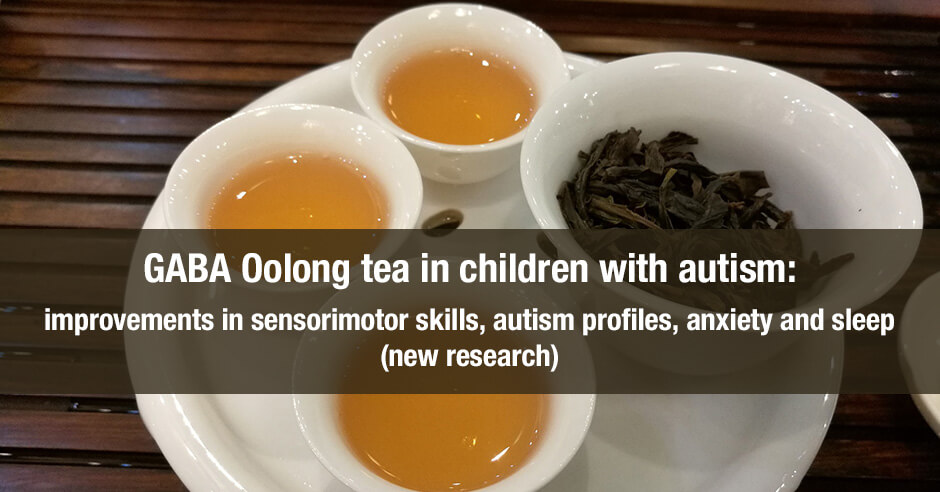
A small feasibility study, A double-blind, placebo-controlled, randomised-designed GABA tea study in children diagnosed with autism spectrum conditions, explored the effect of drinking GABA Oolong tea on sensorimotor skills, autism profiles, anxieties and sleep of children with autism.

It was a very small study with nine children (5 male and 4 female) but the results were very promising… “significant improvement in manual dexterity and some large individual improvements in balance, sensory responsivity, DSM-5 criteria and cortisol levels with GABA tea.”

In addition to reducing anxiety (in all but one participant – more on that below), the paper lists the following additional information related to sensory issues, cortisol levels and sleep:

  • Results also demonstrated that sensory responsivity improved in two-thirds of the participants and autism symptomology decreased in over half, with four of these individuals being positively re-classified on the DSM-5 scale
  • Differences between evening and morning cortisol levels, deemed the ‘carryover’ effect and cortisol awakening levels were also decreased in over two thirds of the participants, which we attribute to a reduction in stress response which may have helped to reduce sensorimotor responsivity in individuals with autism.
  • Contrary to our hypotheses, GABA Oolong tea did not appear to impact sleep, with no discernible differences noted in a range of sleep parameters compared with the placebo, despite parents’ subjective reports that their children appeared to sleep more deeply.

They conclude as follows … “These results suggest that sensorimotor abilities, anxiety levels and DSM-5 symptomology of children with autism can benefit from the administration of GABA in the form of Oolong tea.”

What is GABA Oolong tea?

When I shared this study and results on Facebook, I had a few people ask if they could simply add the amino acid GABA to their Oolong tea: “Is it just brewed tea with GABA powder added? Or does someone make a specific tea? I can totally add some GABA to my daily tea.”

It’s not regular oolong tea with GABA added, instead it’s specially fermented to increase GABA levels naturally. Amber GABA Oolong tea by Meileaf is the actual tea used in the study and they share this on the product page.

The farmers achieve this by alternating the leaves between air and a nitrogen rich environment (with no air) during the oxidation phase. This is done over a matter of hours and naturally increases the GABA levels in the tea leaves.

They also share this: “In order to be called GABA tea, the leaves must contain at least 150 mg of GABA per 100g (normal oolong has about 6 mg so that is 25 times higher).”

GABA Oolong tea does also contain theanine, caffeine and epigallocatechin gallate. There is a large part of the study dedicated to theanine so feel free to read that at your leisure.

How much GABA was ingested by study participants?

It was a surprisingly low dose of GABA! They were given 4 cups a day of the GABA Oolong tea and this provided a total of 39.2mg GABA for the day. The authors share this about the amount of daily GABA the study participants received:

With the GABA Oolong tea the dose would be approximately 280 mg per 100 g tea. Based on using 3.5 g per tea portion this equates to 9.8 mg of GABA; multiplied by 4 throughout the day, being 39.2 mg of GABA.

I’ve reached out to confirm which tea was used in the study since Meileaf mentions that this tea contains 205 mg of GABA per 100 g whereas the study states there was 280 mg GABA per 100 g tea. I see consistency with assessing GABA levels accurately being a possible issue (more on that below).

One of the first questions I had was how could such a small amount – 39.2 mg GABA for the day –  be so effective? I typically have clients start with 125 mg GABA and they may end up using this dose 3 or 4 x day (so 375 to 500 mg GABA total for the day.)

That said, we are all unique and as I’ve shared, there can be an extremely large variation in dosing.  In this blog I share how Syd gets sleep and body anxiety benefits with just 1.5 mg to 3 mg GABA and yet Christina’s agoraphobic client was able to leave the house with 3000 mg GABA.

My other questions: the placebo, caffeine, a histamine reaction, low cortisol and B1 depletion

With new research there are always many factors to consider and I have a number of other questions I’d love to see addressed:

  • Why did the placebo tea also contain GABA? It had 22.2 mg per day of GABA – about half that found in the GABA Oolong tea.
  • GABA Oolong tea does contain small amounts of caffeine and how would this affect susceptible individuals? One child was more anxious – was it due to caffeine or was it too much GABA for his needs or a histamine reaction due to the fermentation process (or something else)?
  • Do we need to be concerned about long term use and depletion of vitamin B1/thiamine which happens with regular tea.
  • And what about the effects if someone already has low cortisol levels?
  • Will there be standard levels and accurate measures of GABA in the various GABA Oolong teas that we can rely on? This applies to consumers and practitioners wanting to try this approach and for ongoing research.
  • How much of the effect was also due to addressing dehydration and helping with dietary oxalate issues which are known to be common in autism?

Hopefully new ongoing research with more participants will shed light on some of these questions.

I’d also love to see head to head research comparing GABA Oolong tea with supplementation of the amino acid GABA, and a study where both are used for possible synergistic effects.

I do appreciate that the authors attempt to address the GABA blood brain barrier (BBB) debate and how GABA could work, focusing on a permeable blood brain barrier in epilepsy and increased epilepsy in autism. This angle is new to me. I’ve addressed the leaky BBB at length here in my interview with Dr. Kharrazian (it’s a theory) and one of my interviews on a prior Anxiety Summit (there are many possible mechanisms and the peripheral effects).

If you’re new to symptoms of low GABA (and cases highlighting the calming effects of the amino acid GABA used as as a supplement)

GABA (gamma aminobutyric acid) is a calming neurotransmitter and the calming amino acid GABA used as a supplement can raise GABA levels. With low GABA levels you’ll feel a physical-tension and stiff-and-tense-muscles type of anxiety.

The other symptoms we see with low GABA are panic attacks, physical tension in certain settings like public speaking or driving, and the need to self-medicate to calm down, often with alcohol but sometimes with carbs and sugary foods. Insomnia can also be due to low GABA and you’ll experience physical tension (rather than the ruminating thoughts which is the low serotonin type of insomnia – although it’s not uncommon to experience both). GABA also helps with muscle spasms and pain relief when muscles are tight.

Here are are some case studies where you can read about the calming effects (and other benefits) of the amino acid GABA used as as a supplement:

  • GABA is a life saver for anxiety, theanine helps at night (insomnia) and 5-HTP makes a significant difference in lessening daily pain
  • Drastic reduction in intrusive thoughts, anxiety and fears (and better sleep) with GABA, tryptophan, 5-HTP and the pyroluria protocol
  • GABA, Heartmath and EFT ease Micki’s mold-induced anxiety and panic attacks
  • GABA, Rescue Remedy & essential oils for eliminating dental anxiety
  • GABA for children: ADHD, focus issues, irritability, anxiety and tantrums

Resources if you are new to using GABA and other amino acids as supplements

If you are new to using GABA or any of the other amino acids as supplements, here is the Amino Acids Mood Questionnaire from The Antianxiety Food Solution (you can see all the symptoms of neurotransmitter imbalances, including low GABA and low serotonin).

If you suspect low levels of any of the neurotransmitters and do not yet have my book, The Antianxiety Food Solution – How the Foods You Eat Can Help You Calm Your Anxious Mind, Improve Your Mood, and End Cravings, I highly recommend getting it and reading it before jumping in and using amino acids on your own so you are knowledgeable. And be sure to share it with the practitioner/health team you or your loved one is working with.

There is an entire chapter on the amino acids and they are discussed throughout the book in the sections on gut health, gluten, blood sugar control, sugar cravings, self-medicating with alcohol and more.

The book doesn’t include product names (per the publisher’s request) so this blog, The Antianxiety Food Solution Amino Acid and Pyroluria Supplements, lists the amino acids that I use with my individual clients and those in my group programs. You can find them all in my online store.

If, after reading this blog and my book, you don’t feel comfortable figuring things out on your own (i.e. doing the symptoms questionnaire and respective amino acids trials), a good place to get help is the GABA QuickStart Program (if you have low GABA symptoms). This is a paid online/virtual group program where you get my guidance and community support.

If you are a practitioner, join us in The Balancing Neurotransmitters: the Fundamentals program. This is also a paid online/virtual program with an opportunity to interact with me and other practitioners who are also using the amino acids.

Have you used GABA Oolong tea with clients/patients or personally? How much and what benefits have you seen?  Which product have you used?

If you’ve also used the amino acid GABA sublingually and with success, I’d love to hear how much (and which product) and how it compares with GABA Oolong tea for anxiety, insomnia, sensorimotor skills and/or autism symptoms (as applicable to you, your child or other family member and/or your client/patient)?

If you have questions please share them here too.
Filed Under: Anxiety, Autism, GABA, Insomnia Tagged With: amino acid, anxiety, autism, autism profiles, B1 depletion, balance, BBB, blood brain barrier, caffeine, calming, children, cortisol, GABA, GABA Oolong tea, GABA Quickstart online program; Balancing Neurotransmitters: the Fundamentals program for practitioners, histamine, insomnia, manual dexterity, research, sensorimotor skills, sensory responsivity, sleep, study

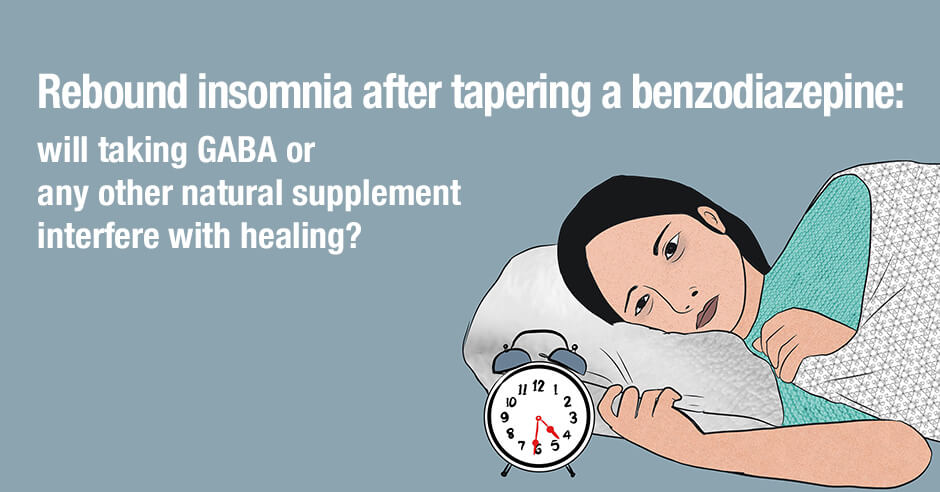
Rebound insomnia after tapering a benzodiazepine: will taking GABA or any other natural supplement interfere with healing?

August 26, 2022 By Trudy Scott 16 Comments

rebound insomnia after tapering

This question was posted on one of the GABA blog posts by Fran, asking about about using GABA for insomnia shortly after having tapered a benzodiazepine she had used for 15 years:

I am a senior who took benzodiazepines (clonazepam) on advice of my doctor for sleep because of chronic fatigue for 15 years. Last year I weaned myself off the medication and it has been just over 10 months. No one tells you that when you stop taking them you go into a rebound insomnia phase and it can last a long time. The doctor still won’t admit that!

I joined benzo buddies, a group I found out about on your site and found much encouragement from the posts of many brave and determined people. One post mentioned that the drug actually overrides your GABA receptors so when you stop taking it they have to heal to become active again. My question is: Will taking GABA or any other natural supplement interfere with that healing. The writer of the post feels taking nothing is best for the brain to return to normal and that only time will do that.

I said I was sorry to hear about her struggles with her benzodiazepine prescription. Sadly it’s all too common and it’s seldom that folks are cautioned about the rebound insomnia and other issues seen with benzodiazepines.

I love benzo buddies and other benzo support groups and often recommend that clients join one of these groups for the community support aspect. I am really happy that Fran found encouragement.

However, I  respectfully disagree with their message that GABA supplements or other supplements should not be used and that you should just wait for time to heal. We want to use everything at our disposal in order to heal as quickly as possible. And quality sleep is imperative for healing.

Also many of the most severely affected folks are part of these support groups, so it may well be all that they know, hence the advice they dispense.

Many do get relief with GABA during and post benzo taper and it won’t affect long-term healing (with a very low dose)

It is true that GABA receptors can be affected by benzodiazepines but despite this, many of my clients and others in my community do get relief from GABA during this period. Since we are all unique, some folks may have an issue, so we always do a trial with GABA if someone has rebound insomnia (and other low GABA symptoms of physical tension/anxiety, stiff and tense muscles, stress eating etc).

When someone can’t tolerate GABA they will know very quickly – typically in 1-2 days. If you can’t tolerate GABA it may feel the same as someone who takes GABA and doesn’t need it (i.e. GABA isn’t low) or when someone takes too much. This could make you feel light-headed, dizzy, feel a flush and/or feel too tired. You may even feel more anxious. Vitamin C is a wonderful antidote to all this and these short-term adverse reactions won’t interfere with long-term healing.

We also start with a very small dose – I typically have someone start with 25mg GABA and go up from there – and only use sublingual GABA. For some very sensitive folks we will start even lower as in this example where Syd gets sleep and body anxiety benefits with just 1.5 mg to 3 mg GABA.

Other nutrients that may also help with insomnia

We may also use other nutrients to help with sleep support and rebound anxiety (which is also common) and other symptoms, all based on each person’s unique needs. These may include tryptophan or 5-HTP if serotonin is also low (this can affect sleep and cause worry/ruminating type anxiety), melatonin if that is low (either sublingual or timed-release) and Seriphos if cortisol is high too. We may also combine GABA with theanine (research shows the combination may help some folks).

A full functional medicine and nutritional workup is recommended in order to be as nutritionally stable as possible. Ideally this happens before tapering starts but even if it’s done after the fact it can help with healing and symptom relief. Addressing histamine imbalances is one factor to consider as this can impact sleep (more on that below).

This is an important question that many folks ask so I appreciate her asking so I could share it as a blog post for others in a similar situation.

I am waiting to hear back about what happened when she did use GABA and how much she used. She mentioned that she did take GABA for a time at first but it only worked for a while. I find that during the taper and post taper, GABA needs can fluctuate as healing starts to take place. I have clients adjust up and down as needed.

More on benzodiazepine withdrawal and histamine issues

These medications have the most debilitating withdrawal reactions in all of medicine and Valium blocks DAO/impacts histamine levels:

  • World Benzodiazepine Awareness Day 2017: Awareness and Anxiety Nutrition Solutions

Benzodiazepines (Xanax, Klonopin, Ativan, Valium, Librium, and others) as well as Z-drugs (Ambien, Lunesta and others), which are similar, have the most debilitating withdrawal reactions in all of medicine.

This happens in regular, everyday people who are taking the medications exactly as their doctor prescribed. It also happens to people on what they think are “low doses” and is not just a “high dose” problem.

  • The benzodiazepine valium blocks DAO and impacts histamine levels: wisdom from Yasmina Ykelenstam and a tribute to her brilliance

Many people doing a benzodiazepine taper are often switched to Valium which is a DAO [diamine oxidase blocker (or histamine liberator)] and this further prevents histamine from being removed from the body [and can lead to increased anxiety].

Dyes are also triggers…the pink Xanax can be problematic.

GABA is as effective as benzodiazepines (which should only be prescribed for short-term use)

Many folks who have used benzos in the past, find GABA to be as effective. Another woman in my community, Dee, shared that she had taken Xanax in the past for panic attacks and her functional medicine doctor suggested GABA Calm as she wanted a natural product. This is her encouraging feedback: “I was amazed how it works just like the Xanax did – instant calm feeling within 10 mins of taking 2 capsules. I use them as needed when I am having heightened stress and anxiety.”

Ideally we want to use GABA instead of one of the benzodiazepines – which are all too commonly prescribed for anxiety, insomnia and pain – in order to avoid tolerance issues, dependence and withdrawal/tapering issues. The fact that they are used long term – like 15 years for Fran – further compounds the issues. Even a few months can be problematic for some folks. It’s important to be aware that this class of medication is intended for short-term use  i.e. 2-4 weeks only.

Resources if you are new to using the GABA and other amino acids as supplements

If you are new to using GABA and any of other the amino acids as supplements, here is the Amino Acids Mood Questionnaire from The Antianxiety Food Solution (you can see all the symptoms of neurotransmitter imbalances, including low GABA).

If you suspect low levels of any of the neurotransmitters and do not yet have my book, The Antianxiety Food Solution – How the Foods You Eat Can Help You Calm Your Anxious Mind, Improve Your Mood, and End Cravings, I highly recommend getting it and reading it before jumping in and using amino acids on your own so you are knowledgeable. And be sure to share it with the practitioner/health team you or your loved one is working with.

There is an entire chapter on the amino acids and they are discussed throughout the book in the sections on gut health, gluten, blood sugar control, sugar cravings, self-medicating with alcohol and more.

The book doesn’t include product names (per the publisher’s request) so this blog, The Antianxiety Food Solution Amino Acid and Pyroluria Supplements, lists the amino acids that I use with my individual clients and those in my group programs. You can find them all in my online store.

If, after reading this blog and my book, you don’t feel comfortable figuring things out on your own (i.e. doing the symptoms questionnaire and respective amino acids trials), a good place to get help is the GABA QuickStart Program (if you have low GABA symptoms). This is a paid online/virtual group program where you get my guidance and community support.

If you are a practitioner, join us in The Balancing Neurotransmitters: the Fundamentals program. This is also a paid online/virtual program with an opportunity to interact with me and other practitioners who are also using the amino acids.

Have you used GABA with success while tapering a benzodiazepine or shortly after tapering is complete?

Have you used other nutrients to help while tapering or post taper? If yes, which ones?

Did you find that GABA was not helpful? (which product and how much did you use?)

If you have questions please share them here too.
Filed Under: Anxiety, benzodiazapines, GABA, Insomnia Tagged With: 5-HTP, amino acids, Balancing Neurotransmitters: the Fundamentals program for practitioners, benzo buddies, benzodiazepine, clonazepam, DAO enzyme, GABA, GABA Quickstart program, GABA receptors, healing, histamine, insomnia, medication, melatonin, natural supplement, Rebound insomnia, seriphos, sleep, tapering, theanine, tryptophan, Xanax

What causes low serotonin? Use tryptophan/5-HTP to help with the anxiety, overwhelm and worry right away and address all the root causes

May 13, 2022 By Trudy Scott 40 Comments

what causes low serotonin

Low serotonin has a number of root causes which can be different for each person. If you do have low serotonin levels you always want to figure and address why it’s low. This can take time to figure out and resolve so you want to be using either tryptophan or 5-HTP (and sometimes both) to boost your serotonin levels and get symptom relief quickly. This helps with the worry, overwhelm, anxiety, insomnia, carb cravings, TMJ, irritability, PMS, anger, OCD, low mood and ruminations right away. It also helps with the worry and overwhelm triggered by sometimes complex and challenging root causes.

Here is a list of some of the many factors that may cause low serotonin for you:

  • stress and adrenal dysfunction (high cortisol affects your sex hormone and neurotransmitter production, inlcuding serotonin)
  • eating junk food and sugar (a Western diet “of processed or fried foods, refined grains, sugary products, and beer was associated with a higher odds of mood disorders”
  • consuming caffeine (which reduces zinc and B vitamins, needed to make serotonin)
  • not consuming enough quality animal protein (amino acids are the building blocks of our neurotransmitters, and grass fed red meat provides zinc, iron and omega-3s – all needed to make serotonin)
  • low stomach acid (meaning you can’t digest the protein you’re consuming)
  • gluten issues (leading to low serotonin and other nutritional deficiencies such as low iron, low vitamin D etc.)
  • low vitamin D (“Brain serotonin is synthesized from tryptophan by tryptophan hydroxylase 2, which is activated by vitamin D hormone”)
  • low iron/ferritin levels (iron is a cofactor for making serotonin)
  • dysbiosis and microbiome imbalances (we make so much serotonin in the gut)
  • candida (in one study short exposure to serotonin resulted in antifungal activity)
  • liver issues (affecting how you process xenoestrogens)
  • low bile production (affecting how you digest the healthy fats you’re eating)
  • sex hormone imbalances (serotonin and estrogen are very closely linked and women make less serotonin than men. In one study, tryptophan improved the low serotonin PMS symptoms)
  • thyroid imbalance (“it is postulated that one mechanism, among others, through which exogenous thyroid hormones may exert their modulatory effects in affective illness is via an increase in serotonergic neurotransmission”)
  • histamine imbalances (in one study “Acute LPS-induced inflammation increases CNS histamine and decreases CNS serotonin)”
  • the birth control pill (which lowers zinc and vitamin B6, both of which are needed for serotonin production)
  • statins (leading to cholesterol that is too low)
  • mold exposure/mycotoxins/mold poisoning
  • heavy metal toxicity such as lead (and tryptophan and ascorbic acid can help ease the anxiety)
  • Lyme disease and other co-infections (serotonin was found to be low in cerebrospinal fluid in patients with post-Lyme disease syndrome i.e. chronic Lyme)
  • collagen consumption (in susceptible folks this can lower serotonin levels)
  • seasonal allergies (“Cytokines may lead to a mood disturbance via the expression of the IDO enzyme, which shifts the synthesis of tryptophan from serotonin to kynurenine. The resultant acute tryptophan depletion results in decreased brain serotonin”)
  • genetics (one example is the MTHFR polymorphism)
  • low zinc, low vitamin B6 (and other B vitamins), low selenium, low magnesium etc. – all needed to make serotonin
  • oxalates (which can bind to zinc and deplete it)
  • a high copper diet (nut flours on Paleo diets can be problematic), copper IUD, copper pipes etc. (which can cause low zinc)
  • lack of nature (forest bathing reduces cortisol which affects serotonin production)
  • lack of exercise
  • lack of sunshine (like in the winter when serotonin declines)

When I posted some of this list on Facebook earlier this week, there was a great deal of interest, hence this blog. I’ve included one relevant link for each one so you can read further on the topic.

When I posted it I also asked this: “Have you figured out your root cause/s that are contributing to your low serotonin levels? And has tryptophan or 5-HTP helped while you’re figuring it all out?”

Leanne has mold, dysbiosis, Lyme, low vitamin D, bile issues and more

Leanne responded and gave me the go ahead to share especially if this helps someone else (I appreciate that!) She shared she has identified these root causes:

Mold. Dysbiosis. Possible Lyme/co-infections. Low vitamin D. Bile and motility issues. Liver issues. Stress. Low HCL. Those are the ones I’m aware of. And taking each and every day to work on them.  It takes time to heal

I agree it takes time to heal and can be a longer journey for some folks, especially when there are a number of underlying factors. She is in a good frame of mind, saying pragmatically, it takes time to heal. This confirms her serotonin levels are robust i.e. she is not in a state of overwhelm and worry. Sure enough, when I asked if tryptophan or 5-HTP has been helping this was her response:

5-HTP and GABA calm initially helped me in my first round of going through this back in 2015. Then I discovered l-tryptophan about a year ago and that seemed to be a better help over 5-HTP.

Since I’ve just identified that histamine is an issue and started a low histamine diet this past week I noticed less of a need for l-tryptophan as I did before. My body is calming down significantly. And my digestion is working a little better.

But I still have to address mold, SIBO, candida, parasites and possibly Lyme and underlying hidden viruses.

So I know these amino acids will play a key part in supporting me as I dive deeper into addressing them all.

It’s wonderful the amino acids have helped her so much and they will most likely continue to help. A quick comment on her preference for tryptophan over 5-HTP – some folks do better on one vs the other.

Regarding the histamine issues/root cause, it’s good that she is now addressing this. Already she needs less tryptophan (for now). Things may fluctuate in the future again as she peels away the onion layers of root causes. She may find she needs tryptophan again or a higher dose or needs to get back on the GABA.

As you can see she has been working on her health for some time. This is not unusual. Slow and steady is just fine, especially when there is so much going on.

The amino acids are intended for short-term use while diet and underlying root causes are addressed. But when the list is long this is a common reason for the ongoing need for serotonin support. Keep in mind, your list may be a short one and may be quick to resolve. And not everyone has the same root causes.

Resources if you are new to using tryptophan or 5-HTP as supplements

If you are new to using tryptophan or 5-HTP as supplements, here is the Amino Acids Mood Questionnaire from The Antianxiety Food Solution (you can see all the low serotonin symptoms).

If you suspect low levels of serotonin or any of the neurotransmitters and do not yet have my book, The Antianxiety Food Solution – How the Foods You Eat Can Help You Calm Your Anxious Mind, Improve Your Mood, and End Cravings, I highly recommend getting it and reading it before jumping in and using amino acids on your own so you are knowledgeable. And be sure to share it with the team you or your loved one is working with.

There is an entire chapter on the amino acids and they are discussed throughout the book in the sections on gut health, blood sugar control, sugar cravings, self-medicating with alcohol and more.

The book doesn’t include product names (per the publisher’s request) so this blog, The Antianxiety Food Solution Amino Acid and Pyroluria Supplements, lists the amino acids that I use with my individual clients and those in my group programs.

If you are a practitioner, join us in The Balancing Neurotransmitters: the Fundamentals program. This is also a paid online/virtual program with an opportunity to interact with me and other practitioners who are also using the amino acids.

Have you figured out your root cause/s that are contributing to your low serotonin levels? And does this give you a better understanding of your own issues?

Do you have any other root causes I may have missed? (when I posted this list on Facebook, a few people pointed out I had missed a few. I’ll update the list and continue to add as we discover new connections).

Has tryptophan and/or 5-HTP helped you feel less overwhelmed and worried while you’re figuring it all out?

Have you adjusted doses of tryptophan and/or 5-HTP as things change and root causes are addressed/resolved?

If you’re a practitioner, do you have anything to add and do your clients/patients find this useful?

If you have questions please share them here too.
Filed Under: 5-HTP, Anxiety, serotonin, Tryptophan Tagged With: 5-HTP, adrenal dysfunction, anxiety, bile issues, candida, collagen, diet junk food, dysbiosis, gluten, high cortisol, histamine, iron, Lead toxicity, low cholesterol, low stomach acid, lyme, mold, overwhelm, red meat, root causes, seasonal allergies, serotonin, stress, sugar, thyroid, tryptophan, vitamin D, What causes low serotonin?, worry

GABA for easing physical anxiety and tension: some questions and answers

April 2, 2021 By Trudy Scott 79 Comments

gaba q and a

GABA is an amino acid used as a supplement to ease low GABA levels. With low GABA you’ll experience physical-tension and stiff-and-tense-muscles type of anxiety, panic attacks and insomnia. You may feel the need to self-medicate to calm down, often with alcohol but sometimes with carbs and sugary foods. GABA also helps with muscle spasms and provides pain relief when muscles are tight.

When I share my GABA blogs on Facebook I receive so many great questions (some basic questions and some more complex). Today I’m going to share some of these and my answers so you can get the benefits too.

Let’s start with the basic questions about using GABA.

Amanda asks:

What time of the day is best to take GABA?

The best time is 1 to 4 x a day, depending on your symptoms, between meals and always away from protein so it doesn’t compete for absorption with the other amino acids.

Brian asks:

What dose do you recommend starting at?

I have clients start with 125mg and go up from there based on how they respond i.e. are they getting symptom resolution.

Based on the above 2 questions it’s clear that Amanda and Brian are new to using the amino acid GABA. If you are new to using GAB and the other amino acids (and other anxiety nutrition solutions like gluten/sugar/caffeine removal, blood sugar control, gut health, pyroluria etc.) my book “The Antianxiety Food Solution” is a great place to start.

I don’t cover specific brands in my book because brand formulations change and come and go so this is a great question from Olivia who asks:

Which brand would you recommend? thank you

My favorite is Source Naturals GABA Calm but since it’s been in short supply during the pandemic I list many other GABA options here. I’ve updated the main supplements blog with these additional GABA options too.

Now for some of the more advanced questions:

Salome asks:

I’m super sensitive to supplements (Histamine Intolerance / MCAS / Multiple chemical sensitivity). Are there any potential reactions from taking GABA that you know of?

As far as I know there are none (clinically or in the research) but, as always, the best is to do a trial. For clients who are very sensitive we start super low and may use 1/8 to 1/4 of the starting dose of 125mg GABA, and increase from there if there are no adverse effects.

Dena asks:

Does GABA help the same way Xanax does? I only take 0.5mg Xanax a few times a week when I really need it but if GABA works I’d like to try it but worry it won’t help like Xanax does. It calms me down and makes me feel normal

Many of my clients report back that GABA works just like Xanax used to work for them. But do keep in mind it’s important to work with your prescribing doctor and that the benzodiazepine taper should be very very slow. And it’s important to be aware that for some folks tapering can be very challenging (more on that here).

Boyd asks:

In New Zealand GABA is classed as a prohibited Class B drug so what can be used as an alternative for anxiety?

Taurine or theanine are good options if GABA is not available and mail order is not an option. Glutamine can be calming for some folks who are able to convert some of it to GABA. For others it can be too stimulating if it converts to glutamate. Addressing gut health and using precursors like magnesium, zinc and vitamin B6 are also key but this takes longer to see results.

Debbie asks:

Can u take GABA if taking a very low dose SSRI (sertraline). I’ve had to start it because I couldn’t find a GABA product when I needed it.

GABA is safe to take with an SSRI (antidepressant) but this should always be discussed with the prescribing doctor.  Also, keep in mind that Sertraline works on serotonin so GABA may not be the best solution and  tryptophan or 5-HTP may be. Looking at the low GABA and low serotonin symptoms and doing a trial is the best way to figure this out.

Cornina asks:

What could be used instead of Ativan for travel anxiety?

I would trial GABA if the anxiety is more physical with neck tension and butterflies in the stomach or tummy pain. I would trial tryptophan or 5-HTP if it’s mental like imagining-the- worst or if you have a phobia about flying or you are worrying and obsessing. Ideally you would want to build up levels before travelling and also use the amino acids as needed while traveling. Keep in mind that both GABA and serotonin support may be needed.

Kelly asks:

Is 4,000 mg of Now GABA too much for a person to take a day. This person is 86 years old.

This dose of 4,000mg GABA is high so I’d want to know if she is seeing benefits (and what benefits) and having any adverse reactions. I’d also want to know what product and how it’s being used (swallowed or opened on to the tongue).

I asked the above and Kelly shared this additional information:

Yes, it lessens the anxiety but also makes her very sleepy. She doesn’t take that many mg every day. She just swallows it.

When the GABA capsules are opened less can be used. Also, taking it at night helps improve sleep and avoids the sleepiness in the day and the anxiety-relief benefits often carry over to the next day too. We commonly experiment with different timings and dosing to find what works best for the client as there is no one-size fits all.

Rhonda asks:

Which would be best for a truck driver that drives all night – GABA or 5-HTP?

For someone who drives all night and wants to sleep in the day I would want to know why he or she can’t sleep (assuming it’s related to disrupted circadian rhythm). If it’s physical tension then I’d trial GABA, and if it’s worry and over-thinking then I’d trial 5-HTP or tryptophan for serotonin support. Often a combination is helpful, Research shows the sleep promoting effects of combined GABA and 5-HTP for some folks.

We appreciate these folks for asking questions and allowing me to share here on the blog.

As always, it’s not only the low GABA we need to address. GABA offers quick relief but we must always do a full functional workup looking at diet, nutritional deficiencies, digestion, all hormones, toxins and infections (and so on) so we can address all possible root causes.

Have these GABA questions and answers been helpful? Have you seen benefits from using GABA and do you have questions?

Feel free to post your questions and feedback in the comments below.

And join us on Facebook – TrudyScottAntianxietyFoodSolution – to read and ask questions there too.

Filed Under: Anxiety, GABA Tagged With: 5-HTP, anxiety, benzodiazepine, dosing, GABA, histamine, insomnia, MCAS, physical anxiety, serotonin, SSRI, tension, travel anxiety, truck driver, tryptophan

The benzodiazepine valium blocks DAO and impacts histamine levels: wisdom from Yasmina Ykelenstam and a tribute to her brilliance

September 14, 2018 By Trudy Scott 72 Comments

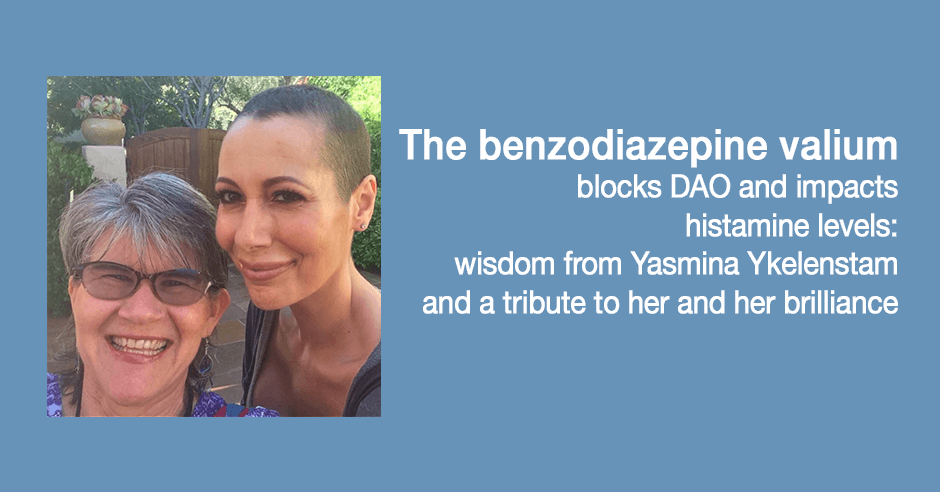
The benzodiazepine valium blocks DAO and impacts histamine levels and may actually increase anxiety via this mechanism. I learned all this in an interview I conducted with my amazing colleague Yasmina Ykelenstam.

Sadly Yasmina lost her battle to a rare and aggressive type of breast cancer this week. She had triple negative breast cancer which has a minimal survival rate of no longer than just a few months. She lived with it for over 2 years, outliving all odds. She had just turned 43.

It is with great sadness and reflection that I write this post as tribute to Yasmina who was as bold as she was brilliant.

Yasmina is well known as the Low Histamine Chef and for an abundance of histamine intolerance resources and recipes on Healing Histamine.

We only met in person on one occasion in 2017 and spent an evening and wonderful lunch together. Her warmth, passion and caring shone through and I felt I already knew this kind and smart woman. I had been following her work online after an interview with Dr. Ben Lynch on season 2 of the Anxiety Summit – Biochemical and genetic predispositions: COMT, GAD & MAOA – where he raved about her work.

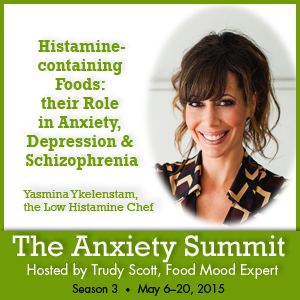
I reached out to Yasmina and was so thrilled to have the opportunity to interview her for season 3 of the Anxiety Summit – Histamine-containing Foods: their Role in Anxiety, Depression and Schizophrenia

As a tribute to Yasmina and so her brilliance continues to shine I’m sharing some of the highlights from our interview, where she shared that:

  • Histamine is the gluten of the intolerance world
  • Histamine is a neurotransmitter and plays a role in mood disorders
  • Histamine can cause symptoms of anxiety: Increased heart rate and blood pressure, shortness of breath and gasping for air, pounding heart, dizziness and feeling faint

In case you’re new to histamine intolerance this paper provides a quick overview: Histamine and histamine intolerance

Histamine intolerance results from a disequilibrium of accumulated histamine and the capacity for histamine degradation. Histamine is a biogenic amine that occurs to various degrees in many foods. In healthy persons, dietary histamine can be rapidly detoxified by amine oxidases, whereas persons with low amine oxidase activity are at risk of histamine toxicity. Diamine oxidase (DAO) is the main enzyme for the metabolism of ingested histamine.

This new research shows how a low histamine diet has benefits: Histamine-reduced diet and increase of serum diamine oxidase correlating to diet compliance in histamine intolerance

In our interview we had a lengthy discussion on benzodiazapines and the histamine connection. It was both fascinating and very concerning:

Many people doing a benzodiazepine taper are often switched to Valium which is a DAO [diamine oxidase blocker (or histamine liberator)] and this further prevents histamine from being removed from the body.

Dye are also triggers…the pink Xanax can be problematic 

Here is the transcript from the benzodiazepine section of our interview, with a few tweaks to give it context. I start by asking Yasmina to talk about histamine interactions with psychiatric medications.

* * * * * * * * * * * * * * * * * * *

Yasmina Ykelenstam: Well, I recommend that people go to a wonderful website and it is called histaminintoleranz.ch. It’s German, but it’s translated into English. That’s H‑I‑S‑T‑A‑M‑I‑N‑I‑N‑T‑O‑L‑E‑R‑A‑N‑Z.ch. And they have a very, very long list of medications on there that interact with diamine oxidase or histamine liberators. The one that I just wanted to mention very quickly because it’s relevant to anxiety – and that one is diazepam [you can find this listed on the above site on this page.]

Diazepam (or Valium) is a medicine, as I said, that I used when I was a child – for a couple of days. And it’s a tranquilizer, a benzodiazepine. One of the most commonly prescribed benzodiazepines in the world is Valium.

I don’t know if it still is, but when the UN would send out emergency packs to people, Valium was included in there. That’s how widespread its use is. It’s a diamine oxidase blocker. So it blocks the enzyme responsible for degrading histamine in the body. So people who are dealing with anxiety symptoms that are perhaps caused by histamine issues would not do very well potentially with Valium / diazepam because it would further prevent histamine from being removed from the body.

I was on Valium / diazepam for many, many years after it was first prescribed to me and I did not know that. And it was the medicine, it was the tranquilizer that I chose to use to taper from another benzo. I was on Xanax at the time and I had been told that Xanax is harder to withdraw from than crack. So I should switch to another benzodiazepine that had a longer half-life – how long it stays in the body – so that it would make it easier for me to withdraw. And Valium / diazepam was the one that I chose and I think that’s when my body started giving me the message of “Hurry up; just finish this; just cut, cut, cut; get this out of the body because it’s not doing you any good.”

But there is a very, very long list of medications on that German site and interestingly, there are a number of antihistamines in the list of medications that block diamine oxidase and also the other histamine-degrading enzyme. Cimetidine, C‑I‑M‑E‑T‑I‑D‑I‑N-E – I think it is a second-generation antihistamine. It is still prescribed today. It was being prescribed to many people by a doctor in London.

I have another doctor: Dr. Seneviratne in London. He is an immunologist with mast cell focus. He’s excellent. But there was another doctor who was supposedly a mast cell person who was prescribing cimetidine to people. I had to send a message to him saying please stop doing this because it’s probably not very good for them. Also, we were talking about diphenhydramine and that is an HNMT blocker, which is the other histamine‑degrading enzyme.

Trudy Scott: Okay. So I want to just recap here. So we’ve got these meds that block the DAO enzyme, which in turn prevents you from releasing histamine and preventing histamine from being removed from the body.

Yasmina Ykelenstam: Exactly. Yeah, and what’s odd is diphenhydramine is obviously Benadryl, which is one of the most commonly prescribed antihistamines in the United States.

Trudy Scott: A lot of people are on diphenhydramine. You’re right, yeah.

Yasmina Ykelenstam: There are many different mechanisms of action for degrading histamine and for getting it out of the body. So it might not be the end of the world if you’re taking one medication that affects the DAO enzyme but doesn’t affect the HNMT enzyme. And obviously, there’s the liver and there’s different methods of dealing with things in the body. So it’s not the end of the world, but still it’s something you might not want to do and should definitely discuss with your doctor.

Trudy Scott: Yes, and being aware of this. Now I wanted to just go back to the benzodiazepines because I was not aware of this connection to Valium diazepam, and that being a DAO blocker. So is it only the Valium and the other benzodiazepines are not, or is it all benzodiazepines?

Yasmina Ykelenstam: Okay, let me try to remember. Haloperidol is an antipsychotic, isn’t it? (It’s on the list)

Trudy Scott: Yes, that’s correct.

Yasmina Ykelenstam: I am not aware of any others offhand and I’m just trying to take a quick look at the list now that I have it in front of me. But no, I don’t believe so because I looked them up because having taken all of them, and I mean, really all of them, I have taken every benzodiazepine ever made in the last 30 years. And no, I think it was just the diazepam, but as I said, it is one of the most commonly prescribed.

Trudy Scott: And it’s really important for me to mention this because I am dead against all benzodiazepines because of their addictive/dependent nature and the side effects and when you’re trying to taper off they cause all these problems. I’ve interviewed a number of people on this topic. In Season 1 of the Anxiety Summit, I interviewed Dr. Catherine Pittman who talked about the Benzobuddies.org group and how so many individuals battle getting off benzodiazepines.

Yasmina Ykelenstam: Oh, I was a member.

Trudy Scott: You were?

Yasmina Ykelenstam: I was a member there (at benzobuddies.org) at one point.

Trudy Scott: Oh, you were? Yeah, it’s a very big issue and problematic drug. But why I’m saying this is because Professor Ashton, who’s an expert on tapering, talks about switching to Valium. So this could be problematic.

Yasmina Ykelenstam: Well, if you could reach out to these communities, that would be fantastic because I did spend some time after, figuring out what was going on, trying to contact people and trying to let them know of this link because there were a lot of people that were in these communities that were suffering from protracted withdrawals. And by this point, I had my suspicions that the protracted withdrawals were actually a histamine response and that the reason that they were experiencing this was just that the original issue was never dealt with. And that was that it might be an underlying histamine issue that initially had them diagnosed with the anxiety disorder and then they were taking these meds. And so when you take the medication away, you’re still left with the existing condition but it isn’t being addressed.

Trudy Scott: Yes, and maybe some of them had done the switch to Valium, which was making things worse.

Yasmina Ykelenstam: Exactly.

Trudy Scott: Very interesting.

Yasmina Ykelenstam: The reason I switched to Valium was because I was following Dr. Ashton’s protocol from benzo.org.uk. I was advised against coming off my medication and I was told that there was no safe withdrawal protocol. I brought them a copy of the Ashton protocol and I was laughed out of the office, but I chose to do it on my own anyway and I’m very grateful to her research.

Trudy Scott: Yes, she’s done amazing research. I’m so appreciative to learn of this component and I’m on a mission to educate people about the benzodiazepines and this is just another aspect that we need to be considering. I will certainly reach out to some of these groups and people hearing this on this Summit, is going to bring awareness to this aspect. All of this is fantastic.

Yasmina Ykelenstam: The other brief thing is that, of course, the dyes are also triggers. And this is why a lot of us, when we’re prescribed psychiatric meds, end up with a new set of symptoms because of the coloring that is actually on the tablets. I was unable to take the pink Xanax, but I was able to take the white Xanax, and my doctor never understood it. He said, “I don’t understand how higher doses of Xanax make you feel worse, but the lower ones works for you.” And I kept telling him, “But I’m taking the same dose at the end of the day, so I don’t understand either.”

* * * * * * * * * * * * * * * * * * *

Here is the link to the entire audio so you can get a better understanding of histamine intolerance.

I’d love to hear your benzodiazepine and histamine intolerance experiences – both good and bad

It would remiss of me to omit something that is seldom discussed: the link between benzodiazepine use and increased cancer risk. In our interview Yasmina shared this “I have taken every benzodiazepine ever made in the last 30 years.”

Yasmina was always very open about her healing journey and I suspect she asked herself this question and would be ok with me making this possible connection in the hope it may help someone who is considering a starting a benzodiazepine prescription or someone contemplating doing a benzodiazepine taper.

I hope this has been helpful if you’re currently taking a benzodiazepine, are considering taking one, have taken one in the past, have issues with high histamine foods, are taking one of the other medications on the list, and/or have had issues with the colors in medications.

With much appreciation to Yasmina! We loved her and thank her for sharing so freely and wisely and we love that her wisdom will live on! Rest in peace.  My deepest sympathies to her family and others who were close to her.

Note added later on 9/14/18 after this blog was published:

As soon as I heard the sad news about Yasmina I wrote this blog as a tribute to her. Then a few hours before it was due to be published I heard her family had not yet made the announcement public and hadn’t yet shared the news with her community.  At the last minute I removed the tribute sections out of respect for them. When I woke I saw the announcement on her Facebook page and reinstated my tribute.

I’ll be doing further updates to share some of what was said about continuing her legacy and anything more I learn.

Filed Under: benzodiazapines Tagged With: benzodiazepine, cancer, DAO, diazepam, histamine, Valium, Yasmina Ykelenstam

Histamine issues: IBS, fatigue, brain fog, anxiety, depression, migraines

January 11, 2018 By Trudy Scott 10 Comments

Dr. Ben Lynch is hosting the Dirty Genes Summit Jan 22-39 and he shares this about you and your genes:

You are not a victim of circumstance… born with bad genes, destined to die of whatever your family tree has genetically bequeathed you.

The way your genes express is unique – and it can change throughout your life. 

Knowing how to create that change is vitally important and you’ll see how clear this is in his wonderful histamine interview with Yasmina Ykelenstam of Healing Histamine.

I love the bucket analogy where Yasmina shares about histamine and inflammation:

Imagine the body as a giant bucket and there is only so much inflammation you can put into it before our inflammation causing behaviors that you can fill it up with before you spill over symptoms. So let’s say you fill it with a few high histamine foods; then you feel it up with stress; then you fill it up to being exposed to animal hair (dander); then pollen season starts; and woah, we’re right, right, right at the top; and then we eat an apple which is not high histamine, it doesn’t cause inflammation, in fact, it’s anti-inflammatory; and suddenly we spill over because the active digestion itself is an inflammatory process.

We blame the poor little apple and not the hamburger we ate the week ago that started the inflammation bucket filling up. We don’t blame the puppy because we love the doggy so much. We certainly don’t blame our stress because we don’t want to take too hard a look at our lives and how difficult it would be for us to make changes, steps to take real steps to handle our stress and to start meditating or to remove stressful processes from our life because that’s just too much for us to handle

She shares how you can combat some of this by adding foods with

anti-properties: anti-histamine and anti-inflammatory properties…I just stopped eating the wrong high histamine foods, the processed ones, the sugary ones, the ones that added nothing to my life beyond the two seconds in my mouth.

Dr. Lynch asks Yasmina to list symptoms she experienced in this midst of her histamine issues (many of which are commonly seen in individuals with histamine issues)

IBS, which is mostly loose stools or being totally bound up so you can’t go to the bathroom for 8 days and they tend to go back and forth… severe swelling of the stomach – what I call basketball stomach… At my worse, it was projectile vomiting and constant nausea, and constant until it went away… chronic migraines. I once had migraines every day for six months before they went away. Common symptoms include dizziness, brain fog, low blood pressure, feeling dizzy when you stand up… really, inability to think straight is a really, really big one. It’s kind of like somebody almost puts a wet blanket over your brain. It tends to happen after you eat.

She also shares how fatigue after eating is often an issue. And how intolerance to alcohol is a factor, specifically red wine:

Most people do better with tequila, vodka, rum and gin, although alcohol paralyzes the thiamine oxidase, histamine degrading enzyme.

There is also a mental health impact from histamine issues – histamine is a neurotransmitter – and Yasmina shares how this may impact you:

…it affects dopamine, GABA, serotonin, and it can make us depressed. It can also make us manic as I discovered in my teens. It can mimic the symptoms of bipolar disorder and also schizophrenia. There’s been a few interesting studies where certain types of antihistamines that are not available on the market were able to reverse schizophrenia symptoms better than antipsychotic medications.

Anxiety is also a very, very big histamine symptom and whenever I see somebody who has a histamine problem, they do tend to be quite stressed out and kind of the chicken or the egg, which came first. But definitely histamine causes more stress and anxiety and that again is in the medical research.

This statement about symptoms rotating was new to me and may be new to you too:

It has to be consistent and then it goes away and then it comes back again. That’s what’s really confusing about histamine because: 1. It mimics many disorders, and 2. The symptoms rotate

All in all, this is a fascinating interview and well worth listening to!

Join the summit and you will learn that your genes can be turned off or on and this event will teach:

  • How Do Your Genes Impact You?
  • How to Clean Your Genes With Food
  • About Your Genes and Your Mental Health
  • How to Alter Your Genetic Expression
  • The Building Blocks of Healthy Families (and generations!)
  • An Understanding of How Your Genes Work
  • Genetic Testing and How to Clean Up Your Genes for the Long Term

Register for the Dirty Genes Summit here – to hear this entire interview and learn from Dr. Ben Lynch and the other experts he interviews.

Hope you can join!

Filed Under: Anxiety, Events, Histamine Tagged With: anxiety, Ben Lynch, dirty genes summit, histamine, IBS, Yasmina Ykelenstam

  • Page 1
  • Page 2
  • Go to Next Page »

Primary Sidebar

NEW! GABA QuickStart Homestudy (with special intro pricing)

gaba quickstart homestudy

Free Report

9 Great Questions Women Ask about Food, Mood and their Health

You'll also receive a complimentary subscription to my ezine "Food, Mood and Gal Stuff"


Connect with me

Popular Posts

  • Amino Acids Mood Questionnaire from The Antianxiety Food Solution
  • The Antianxiety Food Solution Amino Acid and Pyroluria Supplements
  • Pyroluria Questionnaire from The Antianxiety Food Solution
  • Collagen and gelatin lower serotonin: does this increase your anxiety and depression?
  • Tryptophan for the worry-in-your-head and ruminating type of anxiety
  • GABA for the physical-tension and stiff-and-tense-muscles type of anxiety
  • The Antianxiety Food Solution by Trudy Scott
  • Seriphos Original Formula is back: the best product for anxiety and insomnia caused by high cortisol
  • Am I an anxious introvert because of low zinc and vitamin B6? My response to Huffington Post blog
  • Vagus nerve rehab with GABA, breathing, humming, gargling and key nutrients

Recent Posts

  • What do I use instead of Seriphos to help lower high cortisol that is affecting my sleep and making me anxious at night?
  • BeSerene™ GABA/theanine cream eases severe muscle tension in her neck/shoulders, prevents her bad headaches and quells her anxiety
  • How the correct approach, dose and sublingual use of GABA can be calming and not cause a flushed and itchy face and neck
  • The amino acid glutamine improves low mood by addressing gut health, and it has calming effects too
  • Flight anxiety with heightened breath, physical tension and also fearing the worst (the role of low GABA and low serotonin)

Categories

  • 5-HTP
  • AB575
  • Addiction
  • ADHD
  • Adrenals
  • Alcohol
  • Allergies
  • Alzheimer's disease
  • Amino Acids
  • Anger
  • Antianxiety
  • Antianxiety Food Solution
  • Antidepressants
  • Anxiety
  • Anxiety and panic
  • Autism
  • Autoimmunity
  • benzodiazapines
  • Bipolar disorder
  • Books
  • Caffeine
  • Cancer
  • Candida
  • Children/Teens
  • Collagen
  • Cooking equipment
  • Coronavirus/COVID-19
  • Cravings
  • Depression
  • Detoxification
  • Diabetes
  • Diet
  • DPA/DLPA
  • Drugs
  • EFT/Tapping
  • EMF
  • EMFs
  • Emotional Eating
  • Endorphins
  • Environment
  • Essential oils
  • Events
  • Exercise
  • Fear
  • Fear of public speaking
  • Fertility and Pregnancy
  • Fish
  • Food
  • Food and mood
  • Functional neurology
  • GABA
  • Gene polymorphisms
  • General Health
  • Giving
  • Giving back
  • Glutamine
  • Gluten
  • GMOs
  • Gratitude
  • Gut health
  • Heart health/hypertension
  • Histamine
  • Hormone
  • Hyperparathyroidism
  • Hypoglycemia
  • Immune system
  • Inflammation
  • Insomnia
  • Inspiration
  • Introversion
  • Joy and happiness
  • Ketogenic diet
  • Lithium orotate
  • Looking awesome
  • Lyme disease and co-infections
  • MCAS/histamine
  • Medication
  • Men's health
  • Mental health
  • Mercury
  • Migraine
  • Mold
  • Movie
  • MTHFR
  • Multiple sclerosis
  • Music
  • NANP
  • Nature
  • Nutritional Psychiatry
  • OCD
  • Osteoporosis
  • Oxalates
  • Oxytocin
  • Pain
  • Paleo
  • Parasites
  • Parkinson’s disease
  • PCOS
  • People
  • PMS
  • Postpartum
  • PTSD/Trauma
  • Pyroluria
  • Questionnaires
  • Real whole food
  • Recipes
  • Research
  • Schizophrenia
  • serotonin
  • SIBO
  • Sleep
  • Special diets
  • Sports nutrition
  • Stress
  • Sugar addiction
  • Sugar and mood
  • Supplements
  • Teens
  • Testimonials
  • Testing
  • The Anxiety Summit
  • The Anxiety Summit 2
  • The Anxiety Summit 3
  • The Anxiety Summit 4
  • The Anxiety Summit 5
  • The Anxiety Summit 6
  • Thyroid
  • Thyroid health
  • Toxins
  • Tryptophan
  • Tyrosine
  • Uncategorized
  • Vegan/vegetarian
  • Women's health
  • Yoga

Archives

  • October 2025
  • September 2025
  • August 2025
  • July 2025
  • June 2025
  • May 2025
  • April 2025
  • March 2025
  • February 2025
  • January 2025
  • November 2024
  • October 2024
  • September 2024
  • August 2024
  • July 2024
  • June 2024
  • May 2024
  • April 2024
  • March 2024
  • February 2024
  • January 2024
  • December 2023
  • November 2023
  • October 2023
  • September 2023
  • August 2023
  • July 2023
  • June 2023
  • May 2023
  • April 2023
  • March 2023
  • February 2023
  • January 2023
  • December 2022
  • November 2022
  • October 2022
  • September 2022
  • August 2022
  • July 2022
  • June 2022
  • May 2022
  • April 2022
  • March 2022
  • February 2022
  • January 2022
  • December 2021
  • November 2021
  • October 2021
  • September 2021
  • August 2021
  • July 2021
  • June 2021
  • May 2021
  • April 2021
  • March 2021
  • February 2021
  • January 2021
  • December 2020
  • November 2020
  • October 2020
  • September 2020
  • August 2020
  • July 2020
  • June 2020
  • May 2020
  • April 2020
  • March 2020
  • February 2020
  • January 2020
  • December 2019
  • November 2019
  • October 2019
  • September 2019
  • August 2019
  • July 2019
  • June 2019
  • May 2019
  • April 2019
  • March 2019
  • February 2019
  • January 2019
  • December 2018
  • November 2018
  • October 2018
  • September 2018
  • August 2018
  • July 2018
  • June 2018
  • May 2018
  • April 2018
  • March 2018
  • February 2018
  • January 2018
  • December 2017
  • November 2017
  • October 2017
  • September 2017
  • August 2017
  • July 2017
  • June 2017
  • May 2017
  • April 2017
  • March 2017
  • February 2017
  • January 2017
  • December 2016
  • November 2016
  • October 2016
  • September 2016
  • August 2016
  • July 2016
  • June 2016
  • May 2016
  • April 2016
  • March 2016
  • February 2016
  • January 2016
  • December 2015
  • November 2015
  • October 2015
  • September 2015
  • August 2015
  • July 2015
  • June 2015
  • May 2015
  • April 2015
  • March 2015
  • February 2015
  • January 2015
  • December 2014
  • November 2014
  • October 2014
  • September 2014
  • August 2014
  • July 2014
  • June 2014
  • May 2014
  • April 2014
  • March 2014
  • February 2014
  • January 2014
  • December 2013
  • November 2013
  • October 2013
  • September 2013
  • August 2013
  • July 2013
  • June 2013
  • May 2013
  • April 2013
  • March 2013
  • February 2013
  • January 2013
  • December 2012
  • November 2012
  • October 2012
  • August 2012
  • July 2012
  • June 2012
  • May 2012
  • April 2012
  • March 2012
  • February 2012
  • January 2012
  • December 2011
  • November 2011
  • October 2011
  • September 2011
  • August 2011
  • July 2011
  • June 2011
  • May 2011
  • April 2011
  • March 2011
  • February 2011
  • January 2011
  • December 2010
  • October 2010
  • September 2010
  • July 2010
  • May 2010
  • April 2010
  • March 2010
  • February 2010
  • January 2010
  • November 2009

Share the knowledge!

The above statements have not been evaluated by the Food and Drug Administration. Products listed in this website are not intended to diagnose, treat, cure or prevent any disease.

The information provided on this site is for informational and educational purposes only and is not intended as a substitute for advice from your physician or other health care professional. You should consult with a healthcare professional before starting or modifying any diet, exercise, or supplementation program, before taking or stopping any medication, or if you have or suspect you may have a health problem.


Copyright © 2026 Trudy Scott. All Rights Reserved. | Privacy | Terms and Conditions | Refund Policy | Medical Disclaimer

Free Report

9 Great Questions Women Ask about Food, Mood and their Health

You’ll also receive a complimentary subscription to my ezine “Food, Mood and Gal Stuff”