• Skip to primary navigation
  • Skip to main content
  • Skip to primary sidebar

everywomanover29 blog

Food, Mood and Women's Health – Be your healthiest, look and feel great!

  • Blog
  • About
  • Services
  • Store
  • Resources
  • Testimonials
  • The Book
  • Contact
  • Search this site

GABA Quickstart

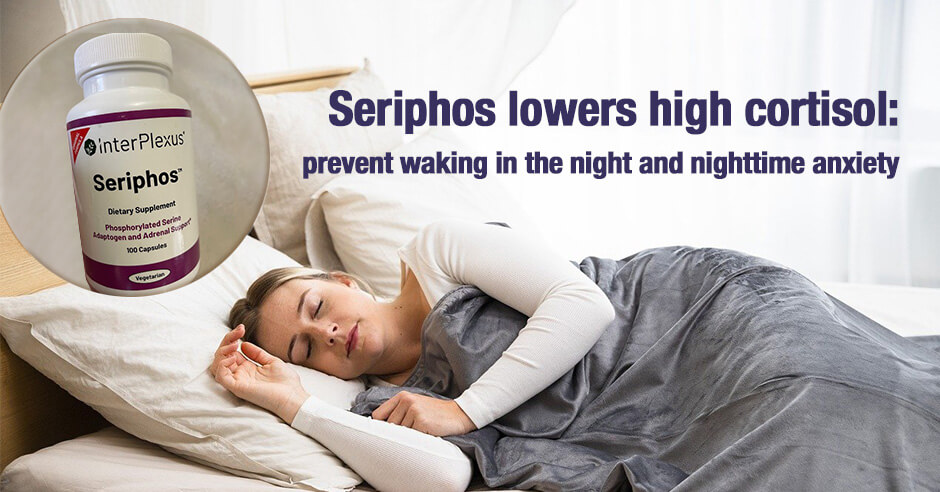
Seriphos lowers high cortisol: prevent waking in the night and nighttime anxiety

October 20, 2023 By Trudy Scott 63 Comments

seriphos and cortisol

Seriphos is my favorite nutrient for lowering high nighttime cortisol in order to reduce night waking and nighttime anxiety. I’ve used it with success in the past and have just needed it again:

After coming back from Hawaii (I was there for just under 2 weeks), I was still waking a few times each night. Sometimes I would be awake for 2-3 hours! I’m a hot mess when I don’t get sleep through the night. With just 1 Seriphos before bed for 9 days I was sleeping through the night again. It was glorious!

High cortisol can be a temporary issue after international travel i.e. caused by jetlag and out of balance circadian rhythm. I will admit that I have a number of confounding factors – like my loss and grief (my darling mom has just passed away), being sprayed with insecticide on landing in Australia (which I suspect caused severe vertigo the day after I got back), and high blood pressure (and likely higher cortisol too) after drinking too much licorice tea for my voice loss. Whatever the causes of my high cortisol, Seriphos really helped me sleep through the night.

I ran out of Seriphos 2 nights ago and I was awake for 3 hours last night. I’ll be adding it back to my nighttime protocol as soon as my order arrives.

Seriphos is made by Interplexus and is a phosphorylated serine product. It is similar to the more recognized phosphatidylserine which is also used and known for lowering high cortisol – clinically and in the research.  However, clinically, I have found Seriphos to be more effective and work more quickly.

UPDATE Feb 2024: I did end up tweaking my Seriphos dose a few times. After a few weeks I decided to trial 2 per night – this worked well. Then a few weeks later I trialed 3 per night – but after a few days I realized that even though it worked well for sleep it made me too tired the next day. For this reason I went back down to 2 Seriphos at bedtime.

UPDATE August 2024: I’m now using just 1 Seriphos at night and have added ox bile supplementation and a bright light panel in the morning because of bile issues. More on this below.

Seriphos for high cortisol due to trauma, loss of beloved cat and more

When I posted this on Facebook, I had a number of folks share how Seriphos has also helped them.

Kathy shared this: “I take two Seriphos at night for high cortisol that causes insomnia. It works well for me and helps me to relax. I have a significant trauma background that keeps me in fight or flight, so Seriphos is a must have at night. I do take a break from time to time if I am going through a less stressful time.”

Hopefully Kathy is also working on the trauma, doing trauma work and even incorporating other nutritional approaches which help so much with recovery – like zinc, vitamin D, a B complex, GABA and tryptophan etc. Taking a break from time to time is a good plan – I share more about this below.

Kim shared this: “Seriphos is a life saver – I started it when I was having cortisol/adrenaline issues a few years ago and have continued using it. I don’t ever want to be without Seriphos. A little over a month ago I unexpectedly lost my youngest cat. She was emaciated when I rescued her over 4 years ago and we turned around health issues. I feel so sad that she was dealt such a bad hand but we got her a loving home. My animals are everything to me and the grief is so difficult. She was a character and I love her so much.”

She uses one capsule in the evening but also uses a capsule during the day if she feels off. Hopefully Kim is also doing trauma work and other nutritional support too.

Janie shared this: “I have used it, years ago when my cortisol was off the charts, morning and at night. I was awake every night until 2am, unable to sleep. Seriphos certainly helped.”

She used 1 Seriphos per day for about 3 months.

Patricia said: “Please remember that there is Original Seriphos and the next gen Seriphos. I was one of thousands of people who had used original Seriphos for sleep and then they changed their formulation without telling us and then so very many of us were wide awake at night until we realized that they had changed the formulation.”

This happened in 2016/2017 and I blogged about that whole fiasco here –  Seriphos Original Formula is back: the best product for anxiety and insomnia caused by high cortisol. You can read many other success stories on the blog and in the comments.

Address the causes of your high cortisol: jetlag, grief, toxins, licorice intake

As you can see from my example there can be a number of causes of high cortisol and you always want to address these causes while using Seriphos so you can eventually stop using it:

  • International travel i.e. caused by jetlag and out of balance circadian rhythm. I’m home so this is no longer a contributing issue.
  • Loss and grief can have physiological effects and high cortisol is one of many effects: “It appears that cortisol remains elevated for at least the first 6 months of bereavement. For some, cortisol elevation may become chronic”. The loss of my darling mom is going to take time but I am making time for grieving and I’m nurturing myself. As I navigate this period in my life I’ll continue to share what has helped me. I suspect I may need Seriphos for longer than the usual 3 months.
  • Being sprayed with insecticide on landing in Australia (which I suspect caused severe vertigo the day after I got back). It’s well-recognized that environmental toxins are hormone disruptors and affect the hypothalamic-pituitary-adrenal (HPA) axis and cortisol. I’m addressing this with active detoxification and my portable infrared sauna.
  • High blood pressure and likely higher cortisol too after drinking too much licorice tea for my voice loss. I have stopped the licorice consumption and my blood pressure is back to normal.

Other possible causes of high cortisol include day to day stresses, food sensitivities such as gluten, high sugar consumption, parasites and so on. Each factor needs to be addressed.

I do recommend Salivary cortisol testing before using Seriphos

Salivary cortisol testing is something I do with all my clients anyway. And I do recommend salivary cortisol testing before using Seriphos and the other cortisol-lowering nutrients mentioned below.

I will admit that I didn’t follow my own recommendation because I’ve had high nighttime cortisol in the past and recognized the symptoms. I had also identified all the above root causes and I desperately needed to sleep. I now have an adrenal saliva test kit on hand and will report back when I get the results.

Seriphos will only work for waking in the night if cortisol is high

One woman shared “I have never slept through the night in years. It would be delightful to get to the morning without waking.” Seriphos will very likely help if her cortisol is high.

Keep in mind there are many causes of not being able to sleep through the night and Seriphos will not help if cortisol is not high. Other root causes for insomnia/waking in the night (and nighttime anxiety) we consider and investigate are:

  • Low GABA and low serotonin (I always start with these while waiting for salivary cortisol results to come back),
  • Low melatonin

The following factors need to be addressed as root causes of sleep issues, anxiety and other symptoms (like gut issues, pain etc.), and also keep in mind that they are very possibly contributing to your high cortisol too:

  • Gluten and other food sensitivities
  • Caffeine and sugar intake
  • Oxalate issues and/or toxins exposure affecting bile production (this affected my sleep last year)
  • EMFs
  • Parasites and other gut issues like IBS/SIBO etc.
  • Disrupted circadian rhythms connected to liver/gallbladder/bile issues – more on that and bright light here. (Research does support a connection between high cortisol and cholestasis i.e. “stagnation, or at least a marked reduction, in bile secretion and flow.”)

A few folks reported they had tried Seriphos without success and it may well be that they don’t have high cortisol. Or they would possibly benefit from another approach to lower their cortisol (more on this below).

What are my options if I have high cortisol at night and Seriphos has the opposite effect?

One person said it had the opposite reaction. Joanne shared this: “Seriphos had the opposite effect on me. [One Seriphos] gave me extreme anxiety, kept me awake all night. Saliva tested consistently high cortisol at night so it should have helped. Been trying to work out why it would and how it might inform how I treat my insomnia.”

I’ve had a few clients do better with less than the recommended 3 per day and one not being able to use it at all. I suspect an allergic reaction or that it’s just too high a dose for some folks. The capsule could be opened and less could be used.

If this doesn’t work, other options for lowering high cortisol include lactium/hydrolyzed casein, Relora® (which contains Magnolia officinalis and Phellodendron amurense), essential oils such as bergamot and some herbal adaptogens. You can also read about some phosphatidylserine products I looked into when the Seriphos product was changed.

Forest bathing also helps to lower high cortisol levels and I recommend it for everyone.

Where does using Seriphos fit into everything else that I’m doing to address my insomnia and/or anxiety?

I typically don’t start with Seriphos right away with clients unless we know cortisol is high. As mentioned above I always start with assessing for low GABA and low serotonin and we do trials of the respective amino acids based on the symptoms questionnaire.

I also assess for low blood sugar and dietary factors like gluten, caffeine, sugar, quality animal protein intake etc. as covered in my book “The Antianxiety Food Solution.” More about my book here.  It does include a chapter on the amino acids and how to use them too.

Then we start to dig deeper and would consider Seriphos or lactium for anxiety caused by high night time or even high morning cortisol or high cortisol at other times of the day.

With many folks all of the above often applies. And we continue with assessing for each of the 60+ nutritional and biochemical root causes of anxiety/waking in the night (which does include liver/gallbladder/bile issues).

Where do I purchase Seriphos and how much do I use? What about taking a break?
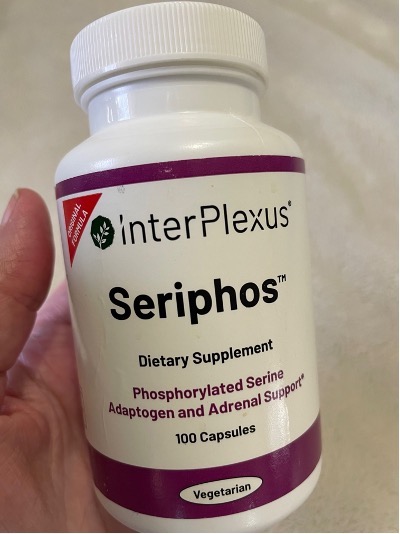
seriphos

You can purchase Seriphos from my online store (Fullscript – only available to USA customers – use this link to set up an account) and you can also find it on iherb (use this link to save 5%).

The bottle states to use 1 capsule with water 15 minutes before a meal. Clinically, using 1-3 capsules a few hours before the high cortisol seems to be most effective. For 2-4am waking this typically means taking Seriphos right before bed. In some instances, taking 1 on waking in the night can help too (for a maximum of 3).

With high cortisol in the night and on waking, I have clients use Seriphos before bed and lactium on waking.

It is recommended to take a one-month break after 3 months of Seriphos use. Ideally, once the root causes of high cortisol are addressed, you should be able to stop anyway.  Or take a break, retest cortisol and then continue.

I’ll share some research and how Seriphos differs from phosphatidylserine in a follow-up blog if there is enough interest.

I appreciate all the feedback from these women in my community.

Have you used Seriphos (a phosphorylated serine product) to help with high cortisol and waking in the night/nighttime anxiety caused by any of the?

What do you suspect the cause(s) of your high cortisol is or was? And have you confirmed high cortisol with a saliva cortisol test?

Have any of the other products mentioned above helped to reduce high cortisol? If yes, have you compared them with Seriphos?

Let me know if you’re interested in a follow-up blog that includes some research and how Seriphos differs from phosphatidylserine.

Feel free to share and ask your questions below.
Filed Under: Adrenals, Anxiety, Insomnia, Stress, Toxins Tagged With: 000 lux, 10, anxiety, Balancing Neurotransmitters: the Fundamentals program for practitioners, bile liver, bright light, bright light panel, cholestasis, circadian rhythm, cognitive performance, cortisol, daytime sleepiness, disturbed sleep, GABA, GABA Quickstart, grief, high blood pressure, high cortisol, insecticide, Interplexus, jet lag, jetlag, licorice tea for my voice loss, melatonin, mood, nighttime anxiety, phosphatidylserine, phosphorylated serine, primary biliary cholangitis, salivary cortisol testing, seriphos, serotonin, sleep, sleep quality, sleep timing, trauma, tryptophan, vertigo, waking, waking early

GABA and taurine reduce high blood pressure: the anxiety connection and what do when on blood pressure medication or if blood pressure is already low

September 1, 2023 By Trudy Scott 18 Comments

gaba and taurine

Gamma-amino butyric acid (GABA) is an amino acid that used as a supplement to help ease physical anxiety and help with insomnia, and a host of other symptoms ranging from pain to throat spasms (you can see the most recent list of symptoms here)

Research shows that GABA lowers blood pressure too. This has implications if you have high blood pressure/hypertension and are currently taking blood pressure medication or if you happen to have low blood pressure. The latter is already a precaution I review with my clients i.e. to watch the use of GABA when blood pressure is low. But we do need to add another precaution to cover folks already on blood pressure medications. Read on to learn about these precautions and what they may mean for you, and to read about the GABA (and taurine) hypertension research. And the fact that anxiety is common when you have high blood pressure and can actually be a driving factor.

This paper, United States Pharmacopeia (USP) Safety Review of Gamma-Aminobutyric Acid (GABA), published in 2021, reports the results of a 4-week study that investigated the tolerability of GABA supplementation in mildly hypertensive but otherwise healthy adults:

The authors first established an optimum dose in mildly hypertensive subjects (SBP/systolic blood pressure between 130 and 180 mm Hg) who were randomized to receive oral doses of GABA at 0 (placebo), 20, 40, or 80 mg/day for 4 weeks.

An intake of 80 mg/day of GABA was associated with a significant reduction of the BP in adults with mild hypertension, and no adverse effects were reported.

A subsequent study evaluated long-term effects of GABA at 80 mg daily versus placebo in mildly hypertensive subjects for 8 weeks:

At the end of the 8-week study, SBP [systolic blood pressure i.e. the top number] and DBP [diastolic blood pressure i.e. the bottom number] were on average 5% lower in all the subjects who received 80 mg/day of GABA compared to participants in the placebo group whose blood pressure levels remained above normal.

This is a substantial reduction when 80 mg of GABA a day is considered a very low dose. I typically have my anxious clients start with 125mg GABA and increase from there. They may end up using 125 mg GABA 3 or 4 times a day and sometimes 250 mg a few times a day.

I’m not suggesting using only GABA or taurine (more on this below) when blood pressure is high as there can be many variables and root causes. I would, however, like to see GABA be given more consideration, especially when anxiety is a symptom too.

The existing GABA precautions: a new one if you are taking medication for high blood pressure

If you are currently taking blood pressure medication for high blood pressure and plan to do a trial of GABA, it’s worth monitoring your blood pressure and discussing with your prescribing doctor. GABA may lower your blood pressure enough that your medication can be reduced or possibly stopped.  The above paper states this:

Because some studies showed that GABA was associated with decreases in blood pressure, it is conceivable that concurrent use of GABA with anti-hypertensive medications could increase risk of hypotension [low blood pressure].

I have now added this as a new precaution – High blood pressure and on blood pressure medications: GABA, taurine. You can see it on the Amino Acid Precautions blog.

The existing GABA precautions: watch when you have low blood pressure and don’t use when pregnant or nursing

As you can read in the amino acids chapter of my book and on the above precautions blog, there is already a precaution stating to watch the use of GABA when you have low blood pressure. It’s worth being aware of but is not something I’ve actually seen to be an issue. Occasionally folks reduce their GABA dose because they feel light-headed.

This precaution is already addressed – not to use GABA when pregnant or nursing – but it’s worth repeating here as it’s a frequent question I am asked . The above paper states:

Caution is advised for pregnant and lactating women since GABA can affect neurotransmitters and the endocrine system, i.e., increases in growth hormone and prolactin levels.

Taurine: hypertension, stroke and heart disease

You’ll notice taurine grouped with GABA on the list of precautions. Based on the research, this amino acid also helps reduce blood pressure and is cardio-protective: “Advances in extensive studies on experimental models indicate that taurine is preventive against hypertension, stroke and atherosclerotic arterial diseases.”

This is one of the proposed mechanisms of taurine for lowering blood pressure : “The preventive mechanisms of taurine were ascribed to sympathetic modulation for reducing blood pressure (BP) and anti-inflammatory action.” GABA works in a similar way.

The same precautions would apply: low blood pressure and high blood pressure with blood pressure medication.

As I mentioned above, there is more to hypertension than adding only taurine or GABA. This book by Dr. Mark Houston MD, is an excellent resource – What Your Doctor May Not Tell You About(TM): Hypertension: The Revolutionary Nutrition and Lifestyle Program to Help Fight High Blood Pressure (my Amazon link).

He does mention taurine and recommends 1 to 1.5 g of taurine twice a day for high blood pressure. He does not mention GABA supplementation but does mention how vitamin B6 is important for GABA and serotonin production and improving sympathetic function.

Stress, anxiety and fear affect blood pressure and GABA helps

Dr. Houston shares that “numerous studies have linked stress, anxiety, fear and other negative emotions to an elevation in blood pressure. Conversely, as stress decreases, so does blood pressure. ”

This supports my comments above about giving GABA more consideration when it comes to high blood pressure, especially when anxiety is a symptom too. Here are some cases studies:

  • GABA for the physical-tension and stiff-and-tense-muscles type of anxiety
  • PCOS (polycystic ovarian syndrome): GABA helped ease lifelong anxiety, wean off anxiety medication, ovulate each month and stop PCOS meds
  • Multiple sclerosis: low GABA research and the amino acid GABA for anxiety, muscle stiffness, swallowing/voice issues and pain
  • GABA lessens anxiety, agitation and defiance in 98 year old mother who has been “sundowning” for a couple of years

When GABA is not available taurine is a viable option for anxiety and hypertension.

Resources if you are new to using amino acids as supplements

If you suspect low levels of any of the neurotransmitters and do not yet have my book, The Antianxiety Food Solution – How the Foods You Eat Can Help You Calm Your Anxious Mind, Improve Your Mood, and End Cravings, I highly recommend getting it and reading it before jumping in and using amino acids on your own so you are knowledgeable. And be sure to share it with the practitioner/health team you or your loved one is working with.

There is an entire chapter on the amino acids and they are discussed throughout the book in the sections on gut health, gluten, blood sugar control, sugar cravings, anxiety and mood issues.

The book doesn’t include product names (per the publisher’s request) so this blog, The Antianxiety Food Solution Amino Acid and Pyroluria Supplements, lists the amino acids that I use with my individual clients and those in my group programs. You can find them all in my online store.

If, after reading this blog and my book, you don’t feel comfortable figuring things out on your own (i.e. doing the symptoms questionnaire and respective amino acids trials), a good place to get help is the GABA QuickStart Program (if you have low GABA symptoms too). This is a paid online/virtual group program where you get my guidance and community support.

If you are a practitioner, join us in The Balancing Neurotransmitters: the Fundamentals program. This is also a paid online/virtual program with an opportunity to interact with me and other practitioners who are also using the amino acids.

If you have low blood pressure, has GABA (or taurine) been an issue for you?

Do you have high blood pressure and has GABA (or taurine) lowered it? If yes, how much did you use and how much did your blood pressure improve? And did you have to adjust your blood pressure medication (and which one)?

Has GABA (or taurine) helped ease your physical anxiety and other low GABA symptoms?

If you have questions and other feedback please share in the comments too.

Filed Under: Anxiety, GABA Tagged With: amino acids, anxiety, Balancing Neurotransmitters: the Fundamentals program for practitioners, blood pressure medication, fear, GABA, GABA Quickstart, heart disease, high blood pressure, hypertension, hypertensive, insomnia, low blood pressure, nursing, pain, precaution, pregnant, stress, stroke, systolic blood pressure, taurine, throat spasms

Keep GABA powder handy for choking episodes, stridor and panic (and find the ideal dose and be consistent for prevention/easing anxiety)

April 22, 2022 By Trudy Scott 24 Comments

gaba powder

If you are prone to laryngospasm, “choking” episodes and swallowing problems (also known as dysphagia), it makes sense to keep GABA powder on hand (and in a number of locations) and to find the ideal dose for your unique needs since what works for one person may be too little or too much for you. In today’s blog, I share Shawna’s experience with choking episodes, stridor and panic, and how GABA helped her very quickly. She applied some of what she had read about in this recent blog post: Paroxysmal laryngospasm with low GABA physical-tension-type-anxiety: Is GABA powder rubbed on the inside of the cheek a solution?

Her results were profound (as you’ll read about below, and in her own words) but she could have been better prepared with GABA powder and her dosing was not ideal. I share my insights and advice for her and for you if you are prone to similar episodes.

This is how she describes her choking episodes:

I too experience “choking” episodes/laryngospasm. For me it seems my throat reflex doesn’t kick in quick enough and liquid (often just saliva) will go down the wrong way. It can even happen just as I’m falling asleep. Then my throat seems to close and stridor ensues where I can barely wheeze any air in. It definitely sets off panic in me. The length of the episode is likely only a few minutes but it feels much longer. I’d say it can happen 4 or 5x/year for me.

Shortly after reading the above blog post, Shawna had an episode. She shares this:

This situation actually just happened again to me today, I was sitting on the couch and had a bit of a reflux burp and then all of a sudden … “I can’t get air in.” Luckily I had read Trudy’s article (and am so glad I did! It was good to know I am not alone, and there were possible solutions. It is more common than I thought).

When the stridor happens my adrenaline kicks in, and I really can’t think straight. I did know I needed to go to the kitchen and get my GABA though. Initially I could only find the lozenge, so I rubbed that inside my cheek as I was searching for the capsule.

Once I got the capsule open, I shook some on my finger and rubbed it into my cheek, then I just dumped the rest of the 750 mg GABA capsule right under my tongue.

In a matter of seconds (literally just a couple!) the stridor released, and I could get air in!!! WOW! It really works! I have never had an episode clear that quickly before. I am literally amazed and so very grateful. I will carry GABA powder with me wherever I go now. Thank you SO much Trudy! <3

I am eternally grateful for you sharing this trick, it feels almost life-saving to me!

She also shared what she experienced 45 minutes after dumping 750mg GABA onto her tongue. It stopped the stridor and choking but she had a mild adverse effect:

Within 45 minutes after taking the GABA today, I felt so sleepy – like I needed to sleep, then a weird sensation of heartbeat irregularity and almost like an adrenaline rush that lasted about 5 minutes. Strange!

I thanked her for sharing and said how wonderful to hear about her very quick response. I also asked about sharing her success in a future blog post on this topic. She said yes. I appreciate this opportunity to share a powerful success story with GABA and  to use some of her story as a way to educate my community and hopefully also help her further.

These episodes started over 15 years ago and she had mentioned this to the doctor years ago, saying she had stridor from choking. However, because it was so irregular, the doctor never suggested any testing.

She also shared that she does have symptoms of both low GABA (feeling worried/fearful, unable to relax, insomnia, overactive brain) and low serotonin (anxiety, perfectionism, anxiety that is worse in the winter, disturbed sleep, self-criticism, TMJ). More on this below.

Keep GABA powder handy

I shared that for folks who are prone to these kinds of episodes I recommend keeping GABA powder on hand in various places in the home and when out and about. This could look like little containers of GABA powder in the bedroom, bathroom, living room, kitchen, handbag, gym bag and even in the car.

I also recommend telling family members about the GABA powder and where it’s kept so as to be prepared in the instance of a more severe episode. You can also demonstrate how they can help you – by tipping some GABA powder into the palm of their hand and holding it out for you or even putting some on the inside of your cheek if needed.

If you’re the parent or caregiver, you can also do this for your child or the person you’re caring for i.e. rub some GABA powder on the inside of the cheek.

Find the ideal dose for your choking episodes

The sleepiness and then weird symptoms (heartbeat irregularity and adrenaline-like rush) after the GABA is likely due to the very high dose of 750mg. I typically start clients on 125mg and there is a large variation in dosing, as explained in this blog.

Shawna’s adverse symptoms only lasted 5 minutes but they can be experienced for up to 30-60 minutes in some folks.

It’s important to find the ideal dose for your choking or swallowing episodes. You do this with the trial method, starting low and increasing based on your unique needs. This may mean you won’t get optimal results the first few times.

Another option is to do what Shawna did and use a relatively high dose initially and so you do get results. And then use less the next time if you get adverse effects from too much GABA.

I prefer the former approach – starting low and slow. Typical is 125mg GABA (and less for very sensitive folks) and increasing frequency and or dosing to 250mg after a week of tracking results. And continuing up from there or backing down if adverse effects are seen.

Consistent use for prevention and easing anxiety

Consistent use of GABA is key especially when there are other low GABA symptoms. Shawna mentions feeling worried/fearful, being unable to relax, experiencing insomnia, and having an overactive brain.

Being consistent with GABA – daily use and a few times a day based on your needs – will raise GABA levels and hopefully prevent or at least reduce future choking or swallowing episodes.

Shawna also shared that she currently takes 100mg of GABA in a sleep remedy. Based on my experience this isn’t enough for her needs. The fact that it is part of a sleep remedy makes it challenging to adjust up and down as needed. For this reason I like a GABA-only or GABA-theanine product.

She does have plans on ordering the GABA Calm lozenges for daytime use to “see if that has an overall decrease in my GABA symptoms.” She did however voice her concerns about Calm Calm not being GABA-only and how she’d respond to the taurine and tyrosine in them. This is a valid concern and a trial will provide the answer.

She also feels it’s difficult to find a GABA-only product in such a low dose. My feedback is to get a GABA powder and simply measure out the dose she requires with a tiny measuring spoon or use the 750mg GABA capsules she has, opened and divided into smaller doses.

GABA is always more effective as a powder or used by opening a capsule.

As always, a full functional workup is important to identify all possible triggers and address them.

And be sure to also get a diagnosis, keeping in mind that can be challenging. And keep your doctor informed about GABA and other supplement use.

Address low serotonin-type anxiety with tryptophan too

Shawna also mentions low serotonin-type symptoms: worry-type of anxiety, perfectionism, anxiety that is worse in the winter, disturbed sleep (this can be caused by low serotonin and low GABA), self-criticism and TMJ.

She would need to do a similar trial with tryptophan or 5-HTP to address these low serotonin symptoms. I recommend trialing one amino acid at a time.

She would also need to work with someone to investigate why she has low GABA and low serotonin and also address these triggers (such as gluten issues, leaky gut, low zinc, low B6, parasites, pyroluria, toxins, sugar/alcohol and so on).

In case you’re new to paroxysmal laryngospasm and stridor

If you are new to paroxysmal laryngospasm here is a good definition:

One type of reactive airway obstruction is paroxysmal laryngospasm, which is a rare laryngeal disease in adults. In this condition, the throat is completely closed due to some form of hypersensitivity or a protective laryngeal reflex causing a transient, complete inability to breathe. Paroxysmal laryngospasm onset in patients is often characterized by a sudden and complete inability to breathe, along with voice loss or hoarseness and stridor. Paroxysmal laryngospasm usually lasts from several seconds to several minutes and may be accompanied by obvious causes such as upper respiratory tract infection, emotional agitation or tension, and/or severe coughing.

I wrote about some of the research, hysterical stridor in adult females who are anxious and/or depressed, and my personal use of GABA during a laryngospasm episode in this blog – Paroxysmal laryngospasm with low GABA physical-tension-type-anxiety: Is GABA powder rubbed on the inside of the cheek a solution?.

I also share that stridor is “an abnormal high-pitched sound produced by turbulent airflow through a partially obstructed airway.”) It’s awful and scary to experience, and distressing to hear a loved one struggling with a partially blocked airway.

The following video offers a helpful illustration of “Laryngospasm and Vocal Cord Dysfunction.” It shows how the vocal cords should open and shows what happens when they don’t, and the accompanying stridor sound. I personally find the sound quite distressing so please use your own discretion when watching and listening.

Resources if you are new to using GABA as a supplement

If you are new to using GABA as a supplement, here is the Amino Acids Mood Questionnaire from The Antianxiety Food Solution (you can see all the low GABA symptoms).

If you suspect low levels of any of the neurotransmitters and do not yet have my book, The Antianxiety Food Solution – How the Foods You Eat Can Help You Calm Your Anxious Mind, Improve Your Mood, and End Cravings, I highly recommend getting it and reading it before jumping in and using amino acids on your own so you are knowledgeable. And be sure to share it with the team you or your loved one is working with.

I don’t cover choking or swallowing issues in my book but there is a detailed chapter covering the  amino acids.

The book doesn’t include product names (per the publisher’s request) so this blog, The Antianxiety Food Solution Amino Acid and Pyroluria Supplements, lists the amino acids that I use with my individual clients and those in my group programs.

If you don’t feel comfortable figuring things out on your own (doing the symptoms questionnaire and doing respective trials), after reading this blog and my book, you can get guidance from me in the GABA Quickstart Program (online/virtual).

If you are a practitioner, join us in The Balancing Neurotransmitters: the Fundamentals program. It’s an opportunity to interact with me and other practitioners who are also using the amino acids.

Have you experienced choking episodes/laryngospasm and problems swallowing? And do you have the low GABA physical-tension-type-anxiety symptoms?

If you’ve already been using GABA with success, have you noticed a reduction in these episodes?

Have you ever used GABA in the way Shawna did to stop an episode quickly? And how much helped? Have you done a trial to figure out your ideal dose?

Do you keep GABA powder on hand in various places in your home and when out?

Feel free to ask your questions here too.

Filed Under: Anxiety, GABA Tagged With: anxiety, choking episodes, close, consistent, dysphagia, GABA, GABA powder, GABA Quickstart, I can’t get air in, ideal dose, laryngospasm, panic, paroxysmal laryngospasm, practitioner training, Prevention, stridor, swallowing problems, throat

PharmaGABA vs GABA when you have histamine issues/MCAS: does pharmaGABA ease physical anxiety or make things worse?

April 15, 2022 By Trudy Scott 34 Comments

PharmaGABA vs GABA

If you have histamine issues or MCAS (mast cell activation syndrome) and the low GABA type of physical anxiety (with muscle tension, insomnia and stress eating), you may well want to consider which type of GABA product you use. It may be wise to avoid or use caution with the type of GABA that is produced via fermentation and could actually make your symptoms worse and cause a histamine reaction.

PharmaGABA and GABA (gamma-aminobutyric acid) are the two forms of commercially available GABA products. PharmaGABA is produced via industrial fermentation of the amino acid glutamic acid (glutamate) using Lactobacillus hilgardii. This is the same beneficial bacteria that is used to ferment foods like kimchi, the well-known Korean vegetable fermented product.

However, GABA is not fermented and is a manufactured product. It’s the form I typically have clients start with simply because it’s been around longer than pharmaGABA and I’ve had such excellent results with it.

I’ve also had reliable feedback from folks who have used both, that GABA works best for them. That said, some folks do find that pharmaGABA works better for their needs and I recognize that there is no one-size-fits-all.

How probable is it that someone could have a histamine reaction to pharmaGABA?

It was only recently that I became aware of the possibility that someone could have a histamine reaction to pharmaGABA. Someone asked the question in my GABA Quickstart online group program and I posed the question to folks on Facebook. Today I’m sharing some of that feedback and asking you to please contribute to the discussion so we can all learn.

Based on what I’ve learned so far I believe it’s very feasible and also probable for many individuals who have histamine issues to have a bad response to pharmaGABA. Keep in mind, histamine triggers are not the same across the board, and it’s possible that some individuals may not react initially and may only react as more and more is used. Or they may not not react at all.

Today’s blog is to shine light on the matter because it’s not something I’ve heard about or seen documented in the research or company product specifications or warnings.

PharmaGABA wasn’t tolerated by Calina’s daughter: she had increased ADHD, agitation, rages, tics and was argumentative and very emotional

Calina shared this about her daughter’s reaction to pharmaGABA and asked about a GABA product that isn’t fermented:

My daughter has high histamine and did not tolerate the pharmaGABA at all. She has increased ADHD, agitation, rages, constantly starts arguments, tics and is very emotional. She has the same reactions with fermented foods (like sauerkraut).

Calina shared that she is 20 and was diagnosed with MCAS at 2 years old:

It improved some for many years, but she’s always been very short attention span, anxiety, OCD, ODD, and learning differences.

Her daughter has a number of more recent factors that are likely compounding things for her:

In 2017 after a mold exposure, dog bite, mosquito bites that left bullseye rashes, all of those symptoms intensified to the extreme.

She used to eat sauerkraut daily but became intolerant. She’s always had problems with all fermented foods and supplements.

I suspect her daughter does have a histamine reaction to pharmaGABA. The clue for me is that her reactions to pharmaGABA are the same as when she consumes fermented foods.

And the symptoms are more severe and more varied than what we see when too much GABA or too much pharmaGABA is used. With too much of either we see increased anxiety and/or more sleepiness and/or feeling flushed. Flushing is common with histamine issues/MCAS and it can be challenging to figure out cause and effect, but this mom and daughter have been dealing with this for a long time and are more likely able to identify what is causing what.

If her daughter has low GABA anxiety physical type symptoms (with insomnia, spinning/focus issues, intrusive thoughts, panic attacks, stiff and tense muscles) I would recommend a GABA-only product, with manufactured GABA instead of fermented pharmaGABA.

PharmaGABA didn’t work for Bren and caused a migraine the next day

A common sign of histamine intolerance/MCAS is migraines so it’s possible that pharmaGABA could trigger a migraine in someone with histamine issues.

Bren shared this on my Facebook post:

Ah now I think I understand why Jarrow’s GABA Soothe not only didn’t work nearly as well for me as GABA Calm, but I also had a migraine the next day. Thanks so much for that information.

When I asked if she has histamine issues and if a migraine is a typical histamine reaction for her she shared that is really only just learning about histamine issues:

Until recently I would have said no and have only had the vaguest idea of what that might mean. But I have been struggling to get off Seroquel, which is the reason I started taking GABA, and I recently found out that Seroquel is a potent anti-histamine. So when you posted about people having histamine issues with the pharmaGABA, which seemed to have caused my migraine, I put 2 and 2 together. I may have it all wrong, but if so it is quite a coincidence.

In Bren’s case it’s a bit more challenging to tease out since this is new to her, she doesn’t eat sauerkraut because she doesn’t like them, but she feels there may be other foods that are affecting her.

This Jarrow GABA Soothe product also contains theanine and Ashwagandha extract so it’s hard to know if it was the pharmaGABA itself. In this instance confirming her reaction with a pharmaGABA only product would be better.

Quetiapine, sold under the brand name Seroquel, is an atypical antipsychotic medication and Bren started to make the connections when she saw my question and because she had read about Seroquel being a histamine-blocking medication.

I share her example because you may not know if you have histamine issues but you may have had a less than pleasant reaction. This will hopefully give you some things to think about.

Product labeling of pharmaGABA can be confusing

You may have noticed this product, Jarrow GABA Soothe, has GABA on the front of the bottle and strangely has “Gamma-amino butyric acid (GABA) (PharmaGABA)” on the product label.

This label makes no sense at all and is contributing to consumer and practitioner confusion.

Unfortunately this kind of labeling is not unusual and variations of this is common with many products.

GABA is used interchangeably with pharmaGABA all the time. In fact, I do it here on the blog and did it in my book. Maybe we are going to find we need to be specific.

Is the flush reaction from too much GABA or because of a histamine reaction?

The biggest issue I see with GABA and pharmaGABA is using too high a dose to start. This causes a temporary and uncomfortable tingling niacin-like flush sensation (in the brain and body).

One challenging aspect is figuring out if the flush reaction is from too much pharmaGABA, or if it’s due to a histamine reaction.

I’d suggest lowering the pharmaGABA dose and looking at all the adverse symptoms. For example, the symptoms of  increased ADHD, agitation, rages, tics, being more argumentative and very emotional experienced by Calina’s daughter would not be attributed to too much pharmaGABA but to a histamine reaction (especially when correlated with her similar reactions to high histamine foods.)

If you’re new to histamine issues and MCAS

If you’re new to histamine issues and MCAS (mast cell activation syndrome), Dr. Jill Carnahan has an excellent overview here – Mast Cell Activation Syndrome: Here’s What You Need to Know When Histamine Goes Haywire.

Mast cell activation syndrome is an immune disorder. It’s just one type of mast cell activation disease.

What sets MCAS apart from other mast cell activation diseases is that it isn’t caused by an abnormally large amount of mast cells, and it isn’t a result of pathogen infection. Instead, when you have MCAS, you have a normal amount of mast cells, but they’re overactive and malfunctioning.

When your body is exposed to what it thinks is a threat, these overactive mast cells start to go haywire and secrete massive amounts of chemical mediators stored in the cytoplasm of your cells—degranulation. What’s meant to be a positive, protective response from your mast cells instead triggers both local and systemic negative effects.

When chemical messengers are released into your body, they set off an alarm that triggers an immune system response. And when this response becomes chronic—the chemical messengers are set off too much, too often—the result is mast cell activation syndrome.

In this instance, because pharmaGABA is fermented (and is likely high in histamine for this reason), it’s perceived to be a threat and causes adverse symptoms.

Over the next few months I’ll be sharing additional information about histamine issues and MCAS because of the symptoms of anxiety, insomnia, brain fog, depression and racing heart. Stress is a big trigger and teasing out the role and interplay of neurotransmitter support with GABA and tryptophan is of value.

Resources if you are new to using GABA or pharmaGABA as supplement

If you are new to using the amino acids as supplements, here is the Amino Acids Mood Questionnaire from The Antianxiety Food Solution (you can see all the low GABA symptoms).

If you suspect low levels of any of the neurotransmitters and do not yet have my book, The Antianxiety Food Solution – How the Foods You Eat Can Help You Calm Your Anxious Mind, Improve Your Mood, and End Cravings, I highly recommend getting it and reading it before jumping in and using amino acids on your own so you are knowledgeable. And be sure to share it with the team you or your loved one is working with.

I actually write about pharmaGABA briefly because it was new at the time and I had some clients who were seeing success with GABA, also trial pharmaGABA. The results were not as good as when they used GABA, so I continued to use GABA.

The book doesn’t include product names (per the publisher’s request) so this blog, The Antianxiety Food Solution Amino Acid and Pyroluria Supplements, lists the amino acids that I use with my individual clients and those in my group programs.

If you don’t feel comfortable reading my book and figuring things out on your own (doing the symptoms questionnaire and doing respective trials), you can get guidance from me in the GABA Quickstart Program (online/virtual).

If you are a practitioner, join us in The Balancing Neurotransmitters: the Fundamentals program. It’s an opportunity to interact with me and other practitioners who are also using the amino acids.

If you have histamine issues or have been diagnosed with MCAS:

  • Have you found you can’t tolerate pharmaGABA and do better with GABA for easing physical anxiety, insomnia and/or stress eating?
  • Are your histamine reactions to pharmaGABA similar to when you eat fermented foods and other high histamine foods?
  • Please share which pharmaGABA product you used and how much you used
  • Please share the reactions and the foods that trigger similar reactions so we can build an informal database with the feedback

If you have experienced reactions to pharmaGABA but do well with GABA, do you now have plans to look into the possibility of histamine issues/MCAS? Please share which pharmaGABA product you used and how much you used.

If you’re a practitioner, have you observed these effects with your patients and/or clients and is it something you caution them about?

Feel free to ask your questions here too.

Filed Under: Anxiety, GABA, MCAS/histamine Tagged With: ADHD, agitation, argumentative, emotional, fermentation, flush, GABA, GABA Quickstart, gamma-aminobutyric acid, high histamine, histamine issues, insomnia, Lactobacillus hilgardii, mast cell activation syndrome, MCAS, migraine, muscle tension, pharmaGABA, physical anxiety, practitioner training, rages, stress-eating, tics

An amino acid supplement with DLPA, glutamine and 5-HTP eases alcohol withdrawal symptoms at an inpatient detoxification program

April 8, 2022 By Trudy Scott 18 Comments

amino acid and alcohol

An amino acid supplement with DLPA, glutamine and 5-HTP (and a few other nutrients) eases alcohol withdrawal symptoms at an inpatient detoxification program. Other than anxiety (I’ll share more on this below), there was also a significant decrease in psychiatric symptoms. Here is an excerpt from the study, The use of a food supplementation with D-phenylalanine, L-glutamine and L-5-hydroxytriptophan in the alleviation of alcohol withdrawal symptoms:

We described the use of a food supplementation with D-phenylalanine, L-glutamine and L-5-hydroxytryptophan in the alleviation of alcohol withdrawal symptoms in patients starting a detoxification therapy.

Since abstinence from ethanol causes a hypodopaminergic and a hypoopioidergic environment in the reward system circuits, manifesting with withdrawal symptoms, food supplements that contains D-phenylalanine, a peptidase inhibitor (of opioid inactivation) and L-amino-acids (for dopamine synthesis) were used to replenish a lack in neurotransmitters and alleviate the symptoms of alcohol withdrawal.

First I cover some translation issues and then more about the actual product and study results. I also share my commentary on the amino acids and dosing used in the study (and the fact that anxiety did not resolve). I include how to apply this information if you have a loved one in an alcohol treatment/rehab program or if you recognize social drinking is an issue for you. And I wrap up with additional resources if you are new to using GABA as a supplement, the GABA Quickstart online program and the practitioner training.

The study was completed and published in Slovenia and there are a few translation issues I’d like to clarify:

  • The study title states D-phenylalanine (DPA) was in the amino acid product, however DL-phenylalanine (DLPA) was actually used. You can read about the difference between DPA and DLPA here. In summary, DPLA works on both dopamine and endorphin support and DPA works on endorphin support only.
  • As you can see from the excerpt above, hypodopaminergic refers to low dopamine and hypoopioidergic refers to low endorphins. During withdrawal from ethanol/alcohol, both low dopamine and low endorphins cause withdrawal symptoms.
  • L-5-hydroxytryptophan is incorrectly spelled as L-5-hydroxytriptophan and reward system is incorrectly spelled as reword system. (Clarifications are provided for facilitating online searches in the research literature.)

More about the product, the study and the conclusion

It was a small randomized, double blind study with just 20 patients and the amino acid product was used for 40 days of the inpatient alcohol detox or rehab program.

This is the actual combination product used:

300 mg DLPA

150 mg glutamine

5 mg 5-HTP

1 mg  vitamin B6

50 mg calcium gluconate

25 mg magnesium oxide

0.01 mg folic acid

Psychiatric symptoms were measured using the SCL- 90R and included assessing for “somatization, obsessive-compulsive, interpersonal sensitivity, depression, anxiety, hostility, phobic anxiety, paranoid, and psychoticism.” During their rehab there was a significant decrease in these categories of psychiatric symptoms in the study group, except for their anxiety symptoms.

The authors conclude that “abstinence causes a major stress for the patients. The use of a food supplement containing D-phenylalanine [it was actually DL-phenylalanine], L-glutamine and L-5-hydroxytryptophan alleviates the withdrawal symptoms.”

As expected, once alcohol consumption was stopped, cortisol levels, liver enzymes and total bilirubin all decreased in the study group and the control group.

My commentary on the amino acids and dosing used in the study (and the fact that anxiety did not resolve)

Keep in mind the same dosing was used for all study participants. What I use clinically with folks with low levels of these neurotransmitters, is an individualized approach based on each person’s needs, for endorphin and dopamine support (from the DLPA), blood sugar support (from glutamine) and serotonin support (from 5-HTP). This means identifying symptoms in each category and doing a trial of each respective amino acid, starting low and increasing based on symptom resolution.

Given that anxiety symptoms didn’t resolve in the study group, I would have loved to see the amino acid GABA included, also dosed according to individual needs. GABA helps ease the physical tension-type anxiety and low GABA tension often drives the need to self-medicate with alcohol in order to relax and fit in socially.

The authors do mention GABA too: “the physiological craving for alcohol may be the result of a deficiency of the naturally occurring opiate like substances as well as other neurochemical deficits (i.e., dopaminergic, GABAergic, and serotonergic).

Also, an animal study shows that GABA helps with gut damage caused by alcohol consumption, so there is this additional benefit.

A higher dose of glutamine and/or 5-HTP may have also helped ease anxiety. They used 150 mg glutamine whereas a typical starting dose for glutamine is 500 mg (and we increase from there). Going up to 1000 mg to 1500 mg three or 4 times a day is not unusual and is typically very beneficial for alcoholics – for blood sugar stability, an additional calming effect and for healing the leaky gut which has been damaged by the alcohol consumption.

With regards to 5-HTP, they used 5 mg 5-HTP which is considered extremely low. I wonder if it was in fact 50 mg, which is a typical starting dose? Going up to 150 mg 5-HTP use 2 or 3 times a day is not unusual. Serotonin support with 5-HTP (or tryptophan) is very beneficial for the worry-type of ruminating anxiety.

For some individuals DLPA may have been too stimulating and contributing to anxiety via a dopamine boost. For these individuals, DPA may have been a better option for endorphin support.

I am not in favor of folic acid and prefer methylfolate, and although magnesium is an important cofactor for neurotransmitter production, magnesium oxide does not provide much usable magnesium.

Outside of the amino acids and other nutrients used, a vitamin B1 (thiamine) deficiency would need to be addressed and any other deficiencies (such as all the B vitamins, zinc, vitamin D, magnesium etc.) caused by chronic alcohol consumption. This is not a comprehensive list and a full functional workup will help to identify all possible deficiencies.

Despite my quibbles, the outcome of the study is very encouraging, I appreciate the researchers and I hope to see it replicated and refined in other settings.

How to apply this information if you have a loved one in an alcohol treatment/rehab program

Unfortunately the amino acids are seldom incorporated at in-patient detox and rehab centers but they should be. Your options are to:

  • Share this study and my blog with the treatment center
  • Educate yourself (on using the questionnaire and doing the amino acid trials) so you can use them with your loved one once rehab is over. This is key for preventing a relapse and for swapping alcohol addiction for sugar or caffeine or nicotine addiction.
  • Introduce one amino acid at a time so you can figure out which one/s they need and how much
  • Read my book, The Antianxiety Food Solution – How the Foods You Eat Can Help You Calm Your Anxious Mind, Improve Your Mood, and End Cravings, and share a copy with the treatment center (and your loved one and their treatment team)
  • Address diet, nutritional deficiencies and gut health

Keep in mind that the amino acids are used with success for cocaine, heroin and other drug addictions.

How to apply this information if you recognize social drinking is an issue for you

New research shares that “low-level alcohol consumption is commonly perceived as being inconsequential or even beneficial for overall health, with some reports suggesting that it may protect against dementia or cardiovascular risks”, however, as the authors suggest “even low-level alcohol consumption is associated with premature brain aging.”

Social drinking is the norm and is way too prevalent. And it’s often used as a calming measure in order to relax and fit in socially.  If this sounds like you:

  • Educate yourself (on using the questionnaire and doing the amino acid trials) so you can use them to quit drinking easily with no willpower and no feelings of being deprived. This is key for preventing the swapping out the need for alcohol (to relax or fit in socially) with a sugar or caffeine or nicotine addiction. In this case, GABA helps a young man who has recently given up alcohol, Adderall and nicotine.
  • Introduce one amino acid at a time so you can figure out which one/s you need and how much
  • Read my book, The Antianxiety Food Solution – How the Foods You Eat Can Help You Calm Your Anxious Mind, Improve Your Mood, and End Cravings, and share a copy with your loved one/spouse/partner and practitioners/therapists.
  • Address diet, nutritional deficiencies and gut health

Resources if you are new to using the amino acids as supplement

If you are new to using the amino acids as supplements, here is the Amino Acids Mood Questionnaire from The Antianxiety Food Solution (you can see all the low neurotransmitter symptoms).

If you suspect low levels of any of the neurotransmitters and do not yet have my book, The Antianxiety Food Solution – How the Foods You Eat Can Help You Calm Your Anxious Mind, Improve Your Mood, and End Cravings, I highly recommend getting it and reading it before jumping in and using amino acids on your own so you are knowledgeable. And be sure to share it with the team you or your loved one is working with.

There is a section on alcohol but keep in mind that all the sections on sugar craving/addiction apply to alcohol addiction and self-medicating with alcohol too. Some individuals use alcohol to numb out and some use sugar. Many use both and once alcohol addiction is addressed, it’s often replaced with sugar and caffeine addiction. This is why addressing neurotransmitter imbalances is key.

The book doesn’t include product names (per the publisher’s request) so this blog, The Antianxiety Food Solution Amino Acid and Pyroluria Supplements, lists the amino acids that I use with my individual clients and those in my group programs.

If you don’t feel comfortable reading my book and figuring things out on your own (doing the symptoms questionnaire and doing respective trials), you can get guidance from me in the GABA Quickstart Program (online/virtual).

If you are a practitioner, join us in The Balancing Neurotransmitters: the Fundamentals program. It’s an opportunity to interact with me and other practitioners who are also using the amino acids.

Have you used amino acids with success as part of an alcohol detox program (for yourself or for a loved one)? Or to help stop social drinking of alcohol?

Which neurotransmitter imbalances were driving your need to self-medicate with alcohol and which amino acids helped?

If you’re a practitioner do you use the amino acids (via an individualized approach) to help with alcohol withdrawal and cessation with your patients and/or clients?

Feel free to ask your questions here too.

Filed Under: 5-HTP, Addiction, Amino Acids, Anxiety, DPA/DLPA, GABA, Glutamine, Tryptophan Tagged With: 5-HTP, alcohol, alcohol withdrawal symptoms, amino acid supplement, anxiety, B1, calming, d-phenylalanine, detox, dl-phenylalanine, DLPA, GABA, GABA Quickstart, glutamine, gut, hypodopaminergic, hypoopioidergic, inpatient detoxification program, L-5-hydroxytriptophan, L-glutamine, practitioner training, psychiatric symptoms, rehab, social drinking, tension, Thiamine, worry

GABA mixed in water and swished in his mouth before a meal prevents esophageal spasms /choking/vomiting, and allows him to swallow

April 1, 2022 By Trudy Scott 24 Comments

gaba in water

GABA mixed in water and swished in the mouth of an adult male, before a meal, prevents his esophageal spasms, and stops his frequent choking and vomiting, and allows him to swallow his food. A colleague shared her husband’s swallowing issues after she read my blog post about using GABA powder inside the check for laryngospasms. 

This is what she shared:

That [blog] made me think that [GABA] might be useful for my husband‘s esophageal spasms. He frequently can’t get food down during a meal because of them.

So he started mixing 500 mg GABA in a little water and swishing it around his mouth and then swallowing it at the beginning of each meal. Since he started doing that he has not had one spasm, or vomiting episode.

It’s wonderful to hear about her husband’s success with GABA and this unique application of swishing around GABA powder (mixed in water) in his mouth before a meal (I’ll share more on this aspect below).

I asked if they know what the causes of his esophageal spasms are but they don’t yet know:

We can’t figure it out. It appears to be all food. I would expect there to be a trigger-food, but we can’t find it.

The GABA has completely stopped it. Last night we went out to dinner and he forgot to bring GABA with him and immediately started choking. So he went to the nearest vitamin store, (of which there is only one)! Fortunately it was open. As soon as he got back to the restaurant and took his GABA, he was fine.

GABA does work so well for him and offers him some relief while they continue to search for other underlying root cause/s. Until these are found, GABA is supporting overall low GABA levels, associated with physical tension-type anxiety, intrusive thoughts, stiff and tense muscles in other areas of the body and also stress-eating and self-medicating with alcohol in order to relax. More on low GABA symptoms here.

My input on his dosing and swishing

Regarding the dosing and swishing method I have this input:

  • 500 mg GABA is the ideal dose for his needs but this is considered a high dose to start. For low GABA tension-type anxiety, I have clients start with a trial of 125 mg GABA and go up from there. I’d recommend the same approach for someone with issues like this gentleman experiences.
  • GABA is most effective when used sublingually or by opening a capsule on to the tongue or by using GABA powder on the inside of a cheek, rather than swallowing a GABA capsule. For this reason, his method of swishing GABA mixed in water is excellent for achieving the spasm-reducing and relaxing benefits quickly. For some folks doing this 30 minutes before a meal may be more effective than doing it right before eating.

The diagnosis can vary from person to person

The diagnosis can vary from person to person. But as long as there are spasms that are affecting swallowing, doing a trial of GABA is worthwhile in order to determine if it will help.

One example is eosinophilic esophagitis where

Clinical manifestations in infants and toddlers generally include vomiting, food refusal, choking with meals and, less commonly, failure to thrive. Predominant symptoms in school-aged children and adolescents include dysphagia (difficulty swallowing), food impactions, and choking/gagging with meals, particularly when comprised of foods with coarse textures. Other symptoms in this patient population include abdominal/chest pain, vomiting, and regurgitation.

The predominant symptom in adults is dysphagia [difficulty swallowing]; however, intractable heartburn and food avoidance may also be present.

One paper, Esophageal microbiome in active eosinophilic esophagitis and changes induced by different therapies discusses the role of the microbiome and how “an increase in levels of gamma-aminobutyric acid (GABA) …is known to exert a role in esophageal motor function.”

Finding the other root causes (other than low GABA)

Regarding finding the root causes, other than low GABA, this is an important aspect that does need to be pursued. Here are some of the many factors worth considering:

  • Finding food triggers. This can be challenging but an obvious one is gluten which can play a role in eosinophilic esophagitis. Dairy and environmental irritants can be issues too.
  • GERD/reflux needs to be ruled out or addressed. Food sensitivities are often a factor here too.
  • Vagus nerve issues can play a role in digestive issues like this. GABA and vagus nerve exercises helped my cough and voice issues. I recorded all my exercises on video and you can find these here. Fortunately I didn’t have any swallowing or choking episodes at that time but have had a choking episode more recently (GABA did help) so I know how scary this can be.
  • Pyroluria, a social anxiety condition needs to be ruled out or addressed too. This is because nausea, gagging and choking are common symptoms for some individuals.
  • I’d also consider a tongue tie. I just finished reading Tongue Tied: How a Tiny String Under the Tongue Impacts Nursing, Speech, Feeding, and More (my Amazon link) by Richard Baxter, DMD, MS. The focus on babies and children but adults can also benefit from addressing tongue tie issues later in life.
  • Addressing gut health and the microbiome may be one of the keys, as outlined in the paper above.

This is not a comprehensive list and a full functional workup will help to identify all possible root causes.

Related blogs: young boy with choking episodes, lump-in-the throat sensation, anxiety and globus pharyngeus

Here are some related blogs that you may find useful

  • Paroxysmal laryngospasm with low GABA physical-tension-type-anxiety: Is GABA powder rubbed on the inside of the cheek a solution? (this is the blog that inspired my colleague to have her husband do the GABA mouth swishing)
  • GABA helps a stressed young boy with episodes of “choking” or tightening in his throat
  • GABA is the answer after 40 years of a lump-in-the-throat sensation, nervousness and muscle tension at work
  • Anxiety and globus pharyngeus (lump in the throat): GABA to the rescue?

Resources if you are new to using GABA as a supplement

If you are new to using the the amino acid GABA as a supplement, here is the Amino Acids Mood Questionnaire from The Antianxiety Food Solution (you can see the low GABA and other low neurotransmitter symptoms).

If you suspect low levels of GABA or low serotonin and do not yet have my book, The Antianxiety Food Solution – How the Foods You Eat Can Help You Calm Your Anxious Mind, Improve Your Mood, and End Cravings, I highly recommend getting it and reading it before jumping in and using amino acids on your own so you are knowledgeable. And be sure to share it with the team you or your loved one is working with.

The book doesn’t include product names (per the publisher’s request) so this blog, The Antianxiety Food Solution Amino Acid and Pyroluria Supplements, lists the GABA products that I use with my individual clients and those in my group programs.

If you don’t feel comfortable reading my book, doing the low GABA symptoms questionnaire and doing trials of GABA on your own, you can get guidance from me in the GABA Quickstart Program (online/virtual).

If you are a practitioner, join us in The Balancing Neurotransmitters: the Fundamentals program. It’s an opportunity to interact with me and other practitioners who are also using the amino acids.

Have you experienced throat or esophageal spasms and difficulty swallowing with choking and/or vomiting.

And do you have the low GABA physical-tension-type-anxiety symptoms?  What else is a trigger for you and do you have a diagnosis?

If you’ve already been using GABA with success for easing your anxiety, have you noticed a reduction in your swallowing issues?

Have you ever used GABA in this way to help your swallowing issues?

If you’re a practitioner please share what you have seen?

Feel free to ask your questions here too.

Filed Under: Amino Acids, Anxiety, GABA, Gluten Tagged With: anxiety, can’t get food down, choking, choking sensation, eosinophilic esophagitis, esophageal spasms, GABA, GABA Quickstart, globus pharyngeus, gluten, gut health, laryngospasms, lump in the throat, physical-tension, pyroluria, swallow, swallowing issues, swished, tongue tie, trigger-food, vomiting

  • « Go to Previous Page
  • Page 1
  • Page 2
  • Page 3

Primary Sidebar

NEW! GABA QuickStart Homestudy (with special intro pricing)

gaba quickstart homestudy

Free Report

9 Great Questions Women Ask about Food, Mood and their Health

You'll also receive a complimentary subscription to my ezine "Food, Mood and Gal Stuff"


Connect with me

Popular Posts

  • Amino Acids Mood Questionnaire from The Antianxiety Food Solution
  • The Antianxiety Food Solution Amino Acid and Pyroluria Supplements
  • Pyroluria Questionnaire from The Antianxiety Food Solution
  • Collagen and gelatin lower serotonin: does this increase your anxiety and depression?
  • Tryptophan for the worry-in-your-head and ruminating type of anxiety
  • GABA for the physical-tension and stiff-and-tense-muscles type of anxiety
  • The Antianxiety Food Solution by Trudy Scott
  • Seriphos Original Formula is back: the best product for anxiety and insomnia caused by high cortisol
  • Am I an anxious introvert because of low zinc and vitamin B6? My response to Huffington Post blog
  • Vagus nerve rehab with GABA, breathing, humming, gargling and key nutrients

Recent Posts

  • What do I use instead of Seriphos to help lower high cortisol that is affecting my sleep and making me anxious at night?
  • BeSerene™ GABA/theanine cream eases severe muscle tension in her neck/shoulders, prevents her bad headaches and quells her anxiety
  • How the correct approach, dose and sublingual use of GABA can be calming and not cause a flushed and itchy face and neck
  • The amino acid glutamine improves low mood by addressing gut health, and it has calming effects too
  • Flight anxiety with heightened breath, physical tension and also fearing the worst (the role of low GABA and low serotonin)

Categories

  • 5-HTP
  • AB575
  • Addiction
  • ADHD
  • Adrenals
  • Alcohol
  • Allergies
  • Alzheimer's disease
  • Amino Acids
  • Anger
  • Antianxiety
  • Antianxiety Food Solution
  • Antidepressants
  • Anxiety
  • Anxiety and panic
  • Autism
  • Autoimmunity
  • benzodiazapines
  • Bipolar disorder
  • Books
  • Caffeine
  • Cancer
  • Candida
  • Children/Teens
  • Collagen
  • Cooking equipment
  • Coronavirus/COVID-19
  • Cravings
  • Depression
  • Detoxification
  • Diabetes
  • Diet
  • DPA/DLPA
  • Drugs
  • EFT/Tapping
  • EMF
  • EMFs
  • Emotional Eating
  • Endorphins
  • Environment
  • Essential oils
  • Events
  • Exercise
  • Fear
  • Fear of public speaking
  • Fertility and Pregnancy
  • Fish
  • Food
  • Food and mood
  • Functional neurology
  • GABA
  • Gene polymorphisms
  • General Health
  • Giving
  • Giving back
  • Glutamine
  • Gluten
  • GMOs
  • Gratitude
  • Gut health
  • Heart health/hypertension
  • Histamine
  • Hormone
  • Hyperparathyroidism
  • Hypoglycemia
  • Immune system
  • Inflammation
  • Insomnia
  • Inspiration
  • Introversion
  • Joy and happiness
  • Ketogenic diet
  • Lithium orotate
  • Looking awesome
  • Lyme disease and co-infections
  • MCAS/histamine
  • Medication
  • Men's health
  • Mental health
  • Mercury
  • Migraine
  • Mold
  • Movie
  • MTHFR
  • Multiple sclerosis
  • Music
  • NANP
  • Nature
  • Nutritional Psychiatry
  • OCD
  • Osteoporosis
  • Oxalates
  • Oxytocin
  • Pain
  • Paleo
  • Parasites
  • Parkinson’s disease
  • PCOS
  • People
  • PMS
  • Postpartum
  • PTSD/Trauma
  • Pyroluria
  • Questionnaires
  • Real whole food
  • Recipes
  • Research
  • Schizophrenia
  • serotonin
  • SIBO
  • Sleep
  • Special diets
  • Sports nutrition
  • Stress
  • Sugar addiction
  • Sugar and mood
  • Supplements
  • Teens
  • Testimonials
  • Testing
  • The Anxiety Summit
  • The Anxiety Summit 2
  • The Anxiety Summit 3
  • The Anxiety Summit 4
  • The Anxiety Summit 5
  • The Anxiety Summit 6
  • Thyroid
  • Thyroid health
  • Toxins
  • Tryptophan
  • Tyrosine
  • Uncategorized
  • Vegan/vegetarian
  • Women's health
  • Yoga

Archives

  • October 2025
  • September 2025
  • August 2025
  • July 2025
  • June 2025
  • May 2025
  • April 2025
  • March 2025
  • February 2025
  • January 2025
  • November 2024
  • October 2024
  • September 2024
  • August 2024
  • July 2024
  • June 2024
  • May 2024
  • April 2024
  • March 2024
  • February 2024
  • January 2024
  • December 2023
  • November 2023
  • October 2023
  • September 2023
  • August 2023
  • July 2023
  • June 2023
  • May 2023
  • April 2023
  • March 2023
  • February 2023
  • January 2023
  • December 2022
  • November 2022
  • October 2022
  • September 2022
  • August 2022
  • July 2022
  • June 2022
  • May 2022
  • April 2022
  • March 2022
  • February 2022
  • January 2022
  • December 2021
  • November 2021
  • October 2021
  • September 2021
  • August 2021
  • July 2021
  • June 2021
  • May 2021
  • April 2021
  • March 2021
  • February 2021
  • January 2021
  • December 2020
  • November 2020
  • October 2020
  • September 2020
  • August 2020
  • July 2020
  • June 2020
  • May 2020
  • April 2020
  • March 2020
  • February 2020
  • January 2020
  • December 2019
  • November 2019
  • October 2019
  • September 2019
  • August 2019
  • July 2019
  • June 2019
  • May 2019
  • April 2019
  • March 2019
  • February 2019
  • January 2019
  • December 2018
  • November 2018
  • October 2018
  • September 2018
  • August 2018
  • July 2018
  • June 2018
  • May 2018
  • April 2018
  • March 2018
  • February 2018
  • January 2018
  • December 2017
  • November 2017
  • October 2017
  • September 2017
  • August 2017
  • July 2017
  • June 2017
  • May 2017
  • April 2017
  • March 2017
  • February 2017
  • January 2017
  • December 2016
  • November 2016
  • October 2016
  • September 2016
  • August 2016
  • July 2016
  • June 2016
  • May 2016
  • April 2016
  • March 2016
  • February 2016
  • January 2016
  • December 2015
  • November 2015
  • October 2015
  • September 2015
  • August 2015
  • July 2015
  • June 2015
  • May 2015
  • April 2015
  • March 2015
  • February 2015
  • January 2015
  • December 2014
  • November 2014
  • October 2014
  • September 2014
  • August 2014
  • July 2014
  • June 2014
  • May 2014
  • April 2014
  • March 2014
  • February 2014
  • January 2014
  • December 2013
  • November 2013
  • October 2013
  • September 2013
  • August 2013
  • July 2013
  • June 2013
  • May 2013
  • April 2013
  • March 2013
  • February 2013
  • January 2013
  • December 2012
  • November 2012
  • October 2012
  • August 2012
  • July 2012
  • June 2012
  • May 2012
  • April 2012
  • March 2012
  • February 2012
  • January 2012
  • December 2011
  • November 2011
  • October 2011
  • September 2011
  • August 2011
  • July 2011
  • June 2011
  • May 2011
  • April 2011
  • March 2011
  • February 2011
  • January 2011
  • December 2010
  • October 2010
  • September 2010
  • July 2010
  • May 2010
  • April 2010
  • March 2010
  • February 2010
  • January 2010
  • November 2009

Share the knowledge!

The above statements have not been evaluated by the Food and Drug Administration. Products listed in this website are not intended to diagnose, treat, cure or prevent any disease.

The information provided on this site is for informational and educational purposes only and is not intended as a substitute for advice from your physician or other health care professional. You should consult with a healthcare professional before starting or modifying any diet, exercise, or supplementation program, before taking or stopping any medication, or if you have or suspect you may have a health problem.


Copyright © 2026 Trudy Scott. All Rights Reserved. | Privacy | Terms and Conditions | Refund Policy | Medical Disclaimer

Free Report

9 Great Questions Women Ask about Food, Mood and their Health

You’ll also receive a complimentary subscription to my ezine “Food, Mood and Gal Stuff”