• Skip to primary navigation
  • Skip to main content
  • Skip to primary sidebar

everywomanover29 blog

Food, Mood and Women's Health – Be your healthiest, look and feel great!

  • Blog
  • About
  • Services
  • Store
  • Resources
  • Testimonials
  • The Book
  • Newsletter
  • Contact
  • Search this site

dopamine

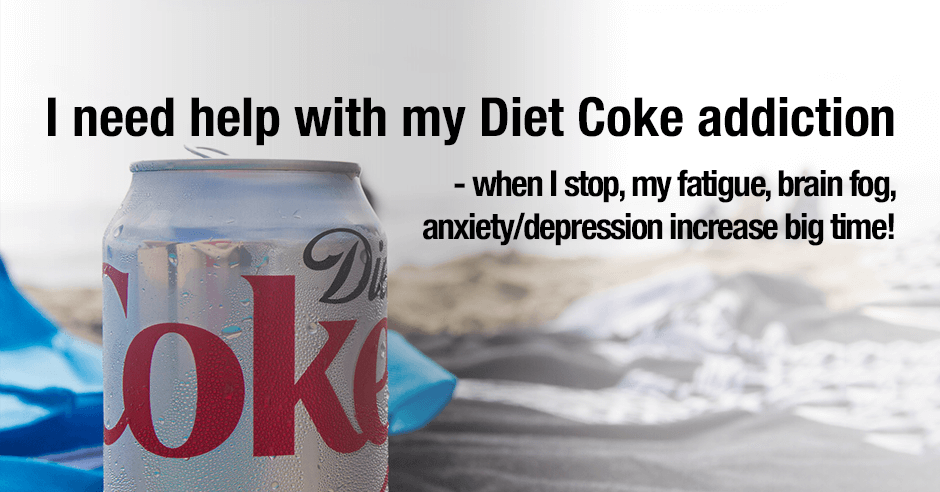
I need help with my Diet Coke addiction – when I stop, my fatigue, brain fog, anxiety/depression increase big time!

September 10, 2021 By Trudy Scott 42 Comments

diet coke addiction

A woman asked for help on the blog, wanting desperately to quit her long-time Diet Coke addiction. This woman knows her addiction is detrimental to her health and she gets withdrawal symptoms when she tries to quit – fatigue, brain fog, anxiety and depression increase big time! And yet she can’t quit. This is not unusual. I share my feedback on the brain chemical imbalances that can drive addictions and how to figure out which amino acids (or more than one) may help her quit easily. This means she doesn’t have to go cold turkey and then fail yet again. Using the amino acids means there is no willpower required and no feelings of deprivation, and it’s addressing an underlying neurotransmitter imbalance i.e. a root cause.

Here is her question:

I need help with my Diet Coke addiction. I have been using it for 35 years and I am too appalled to tell you how much I drink.

I have tried to quit many times and ended up in utter failure. A friend mentioned that phenylalanine may be a booster for my dopamine.

When I stop, my fatigue, brain fog, anxiety/depression increase big time. I know this drink is literally killing my health and I am desperate for some answers, suggestions….or a miracle.

What supplements do you recommend for helping me quit this devil of a habit? Thank you for ALL you do!” 

Here is my response …. when it comes to using amino acids to help break the addiction, pretty much everything I write about in relation to sugar addiction or cravings would likely also apply to quitting Diet Coke.

What emotions are driving the addiction?

She needs to figure out what emotions are driving her addiction and use the respective amino acid supplement/s (one or more of them) to help break the addiction and improve the mood symptoms at the same time.

These are the questions I review with my clients who have a Diet Coke addiction (or other diet soda or regular soda addiction):

  1. If you have to drink it when you haven’t eaten in awhile it’s likely low blood sugar. Glutamine on the tongue stops the desire almost immediately and also helps with the low blood sugar symptoms of shakiness and irritability
  2. If you stress-drink, your cravings are likely due to low GABA, and GABA will stop the stress-drinking and calm you down too
  3. If you drink it to feel happy (and especially from late afternoon into the evening) then your cravings are likely due to low serotonin, and tryptophan (or 5-HTP) stops the cravings and boosts mood and reduces anxiety
  4. If you drink it for comfort or a reward comfort then it’s likely due to low endorphins and DPA (d-phenylalanine) will stop that feeling of “I deserve-it” and also give you a hug-like mood boost
  5. If you drink it for an energy boost or to give you focus then it’s likely due to low catecholamines and tyrosine will stop those cravings and give you a mood and energy boost, and also help with mental clarity

Based on her question above, she mentions that “my fatigue, brain fog, anxiety/depression increase big time” when she stops. The fatigue, brain fog and depression is a big clue that #5 above will likely apply. She asks about using phenylalanine for dopamine support (dopamine is one of the catecholamines). I prefer tyrosine to l-phenylalanine for boosting levels.

The fact that anxiety also increases when she stops is a clue that #2 or #3 may apply too, and possibly #1. It’s not unusual for someone to have imbalances in multiple areas.

If this is the case, I  always recommend doing a trial of one at a time, so it’s easy to see the benefits.

It’s not the same neurotransmitter imbalance that shows up in each person

It’s also not the same neurotransmitter imbalance that shows up in each person with a Diet Coke (or other soda addiction). When I shared this on Facebook and asked what was the driving emotion behind their “self-medication” with Diet Coke this is feedback I received from two women:

  • “I had been drinking almost 6 per day for decades. I believe it was comforting.” In this instance, addressing low endorphins with DPA (#4) would have helped. Comfort or reward or treat is a common emotional driver for all addictions.
  • “I noticed I would drink Diet Coke when I felt anxious (1 or 2 times a day).” In this instance #2 or #3 would have helped i.e. GABA support if it was physical anxiety and/or tryptophan or 5-HTP for low serotonin if it was worry-type anxiety.

The caffeine addiction and the artificial sweetener Aspartame

Keep in mind, with Diet Coke, there is the caffeine addiction and the artificial sweetener Aspartame that also make it challenging to quit. Tyrosine and addressing low catecholamines (#5 above) and vitamin C can help with the caffeine addiction and quitting so headaches are minimized.

The amino acids can help with the imbalances created by aspartame. This paper, Direct and indirect cellular effects of aspartame on the brain, proposes that “excessive aspartame ingestion might be involved in the pathogenesis of certain mental disorders and also in compromised learning and emotional functioning.”  This excerpt from the abstract is relevant to this discussion:

Aspartame is composed of phenylalanine (50%), aspartic acid (40%) and methanol (10%). Phenylalanine plays an important role in neurotransmitter regulation, whereas aspartic acid is also thought to play a role as an excitatory neurotransmitter in the central nervous system. Glutamate, asparagines and glutamine are formed from their precursor, aspartic acid. Methanol, which forms 10% of the broken down product, is converted in the body to formate, which can either be excreted or can give rise to formaldehyde, diketopiperazine (a carcinogen) and a number of other highly toxic derivatives. Previously, it has been reported that consumption of aspartame could cause neurological and behavioural disturbances in sensitive individuals. Headaches, insomnia and seizures are also some of the neurological effects that have been encountered, and these may be accredited to changes in regional brain concentrations of catecholamines, which include norepinephrine, epinephrine and dopamine.

This further supports the need for catecholamine support with tyrsosine (#5 above) and GABA support with the amino acid GABA (#2 above).

Recognizing it’s an issue is a big first step

I acknowledge her for recognizing it’s an issue – that is a big first step! I did also ask her to share how much she was consuming each day because there is no judgement here and we acknowledge it’s an addiction. I’ll report back when I hear from her and will also share which amino acid/s helped her break the addiction.

As always, it’s not only about the amino acids and a comprehensive healing approach is always part of the picture. The amino acids make it easy to get started and then other underlying issues can be addressed: other nutritional deficiencies, dysbiosis, fatty liver, metabolic syndrome and so on. You can see some of the many studies below.

Of course, it’s important to be eating a real whole foods diet with quality animal protein, healthy fats, organic vegetables and fruit, no caffeine, no gluten, no sugar, fermented foods and herbs.

Reconsider your diet soda consumption if you’re on the fence

If you are on the fence about giving up your diet soda consumption here are a few additional papers that will hopefully make you reconsider:

  • Diet soda intake and risk of incident metabolic syndrome and type 2 diabetes in the Multi-Ethnic Study of Atherosclerosis (MESA) – “Although these observational data cannot establish causality, consumption of diet soda at least daily was associated with significantly greater risks of select incident metabolic syndrome components and type 2 diabetes.”
  • Altered processing of sweet taste in the brain of diet soda drinkers – “there are alterations in reward processing of sweet taste in individuals who regularly consume diet soda.” This has widespread ramifications for driving the need for sugar/carbs and all things sweet
  • A comparative study of the effect of diet and soda carbonated drinks on the histology of the cerebellum of adult female albino Wistar rats – “These results suggest that diet soda has adverse effect on the cerebellum of adult female albino Wistar rats,” with “shrunken and degenerated Purkinje cells with hypertrophied dendrites.” Purkinje cells are involved in the release of GABA.
  • Soft drinks consumption and nonalcoholic fatty liver disease – “the aspartame sweetener and caramel colorant which are rich in advanced glycation end products … potentially increase insulin resistance and inflammation”

Facts like this help you recognize it’s an issue but even when we have these facts, we often simply cannot quit. This is where the amino acids are so powerful because they work with no willpower required and no feelings of deprivation. And using them addresses the underlying neurotransmitter imbalance/root cause that led to the initial addiction or “self-medication”. They also help address the neurotransmitter deficiencies that are often made worse by diet soda consumption.

Resources if you are new to using the amino acids as supplements

If you are new to using the amino acids as supplements and want to know more, here is the Amino Acids Mood Questionnaire from The Antianxiety Food Solution and a brief overview here, Anxiety and targeted individual amino acid supplements: a summary.

If you suspect low neurotransmitters and do not yet have my book, The Antianxiety Food Solution – How the Foods You Eat Can Help You Calm Your Anxious Mind, Improve Your Mood, and End Cravings, I highly recommend getting it and reading it before jumping in and using amino acids so you are knowledgeable.

What advice do you have if you have been through this yourself and what has helped you?

What do you drink now instead of your diet soda?

If you are a practitioner, how do you help your patients/clients with this kind of addiction?

Feel free to post your questions too.
Filed Under: Addiction, Anxiety, Cravings, Depression Tagged With: 5-HTP, addiction, amino acids, anxiety, artificial sweetener, brain chemical imbalances, brain fog, caffeine, catecholamines, cold turkey, depression, Diet Coke addiction, dopamine, DPA, endorphins, fatigue, GABA, glutamine, low blood sugar, neurotransmitter, no feelings of deprivation, no willpower, quit, serotonin, sugar, tryptophan, tyrosine, withdrawal symptoms

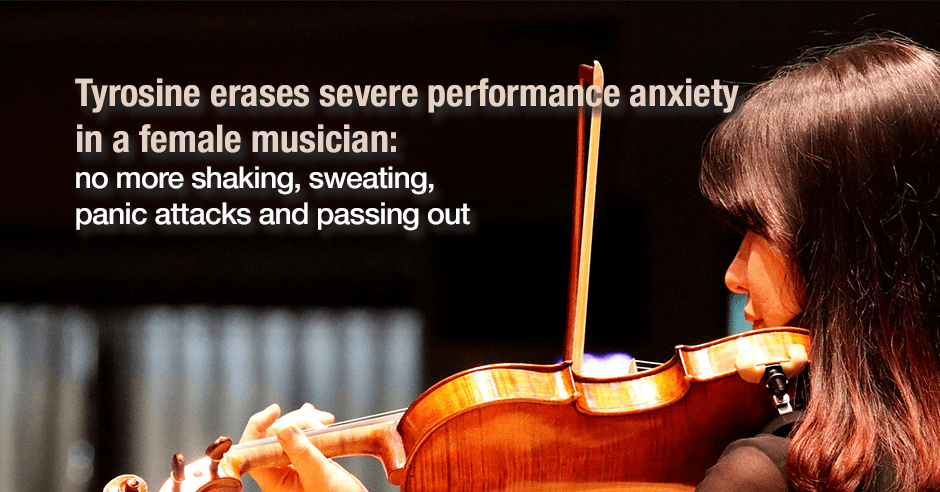
Tyrosine erases severe performance anxiety in a female musician: no more shaking, sweating, panic attacks and passing out

June 4, 2021 By Trudy Scott 42 Comments

tyrosine and musician anxiety

Today I’m sharing the case of a female musician with severe performance anxiety. It was so severe that she would shake, sweat and actually pass out. She also had problems breathing which happens when you’re having a panic attack. Surprisingly, the amino acid supplement tyrosine eliminates – or as she says, erases – all these anxiety symptoms very quickly. It’s surprising because tyrosine is typically not used for easing anxiety symptoms and is instead used to support the low catecholamine symptoms: low motivation, low energy, poor focus, feeling flat and depressed (the curl-up-in-bed kind), cravings for sugary foods for better energy and the need for caffeine.

I share her story in her own words and explore some possible mechanisms around serotonin, cortisol, dopamine and GABA.

Pam initially shared on a Facebook thread how tyrosine erased her extreme performance anxiety and we dug deeper. This is the start of the conversation:

I’ve been performing (music) ever since I was seven, but I always hated it. For extreme performance anxiety, I found, way too late, that 1,500mg of l-tyrosine simply erased the shaking and fainting, and I was “just nervous like everybody else.”

I responded saying what a great result this was and shared that I found it so interesting that tyrosine erased the shaking and fainting that she experienced with her performance anxiety.

As I mentioned above, tyrosine is typically not used for anxiety. Instead, it’s used to improve the low catecholamine symptoms of poor focus, low energy and low motivation. (More on this here)

I also always want to understand the mechanism as to why an amino acid helps ease anxiety symptoms – or in this case erased them. I share more on that below.

When I asked what she meant by “just nervous like everybody else“, this was her response:

It means pretty much everyone gets performance nerves, but not to the point of fainting on stage. Knowing intellectually that that was ridiculous did not make any difference in the fact that it occurred.

I don’t even remember why I tried tyrosine, but I do remember the first time I took it 40 minutes before a performance. I waltzed out on stage ahead of time and sat in my chair warming up, showing off even, to a hall that was filling with people.

That was and is inconceivable without the tyrosine support, which I have to assume is putting my dopamine at a normal level. Yes, I get a little wired, which can be a good thing, but passing out, having my intestines demand to be emptied, not being able to breathe [is this a panic attack?], shaking, sweating….it fixes all of that.

It’s wonderful to hear such powerful results from 1,500mg tyrosine and how quickly it works.  The latter is not surprising as this is typical with all the amino acids. They work quickly if it’s what you need and you have the ideal dose for your needs.

What is surprising is that tyrosine erased her severe performance anxiety symptoms. I immediately started trying to understand possible mechanisms.

What is the mechanism – a serotonin boost to improve confidence?

When I read “I waltzed out on stage ahead of time and sat in my chair warming up, showing off even, to a hall that was filling with people” I immediately thought of how tryptophan or 5-HTP works to give you a serotonin boost that improves your confidence.

However, Pam doesn’t feel the mechanism is related to low serotonin:

You would think, if it were serotonin, that SSRIs would be effective. They are not and cause me to have terror attacks.

She also shared that she recently gave 5-HTP a trial and it did nothing so that further supports her theory/gut feeling that her extreme performance anxiety is not related to low serotonin:

I think there is a belief system associated with serotonin that is not cognizant of the fact that the other neurotransmitters can be the culprits. I read someone’s web site sometime not that long ago, that detailed how to test all the major neurotransmitters, find out which ones were to low OR too high, and what amino acids to take to fix the imbalances. To me, this is a more comprehensive view than being stuck on serotonin.

Anxiety is not always caused by low serotonin or low GABA (although these causes are very common). I’m with Pam on finding which neurotransmitter imbalance you have. There is no one-size fits all and results can happen without us fully understanding why. It does sound like this is very much dopamine related for her but I wanted to understand how it was helping her.

What is the mechanism – lowering cortisol under extremely stressful situations?

I started looking into the research and found that one possible mechanism could be that tyrosine lowers the high cortisol that occurs after an extremely stressful situation – like going on stage to perform – and eases anxiety this way.

An animal study supports this theory: Dietary tyrosine suppresses the rise in plasma corticosterone following acute stress in rats:

Acute, uncontrollable stress increases norepinephrine (NE) turnover in the rat’s brain (depleting NE) and diminishes the animal’s subsequent tendency to explore a novel environment. Pre-treatment with tyrosine can reverse these adverse effects of stress, presumably by preventing the depletion of NE in the hypothalamus.

In the present study, we found that pre-treatment with supplemental tyrosine not only prevented the behavioral depression and hypothalamic NE depletion observed after an acute stress, but also suppressed the rise in plasma corticosterone. These results support a role for brain NE in stress-induced corticosterone secretion and demonstrate that supplemental tyrosine can protect against several adverse consequences of such stress.

Keep in mind that cortisol is the primary endogenous adrenal steroid in humans, whereas corticosterone is the primary adrenal corticosteroid in laboratory rats.

What is the mechanism – dopaminergic system influence on anxiety-like behavior?

I dug deeper into the research and found that there is evidence that dopamine plays an important role in anxiety modulation in different parts of the brain and that both dopamine D1 and D2 receptor mechanisms are important in mediating anxiety.

This paper, The Modulatory Role of Dopamine in Anxiety-like Behavior describes some of this, together with the role of GABA and glutamate:

The activity of dopaminergic system is modulated by several neurotransmitters, including glutamatergic neurons from the medial prefrontal cortex (mPFC), GABAergic fibers from the nucleus accumbens (NAc) as well as the ventral pallidum and cholinergic fibers from the pedunculopontine nucleus and the laterodorsal tegmental nucleus. Thus, changes in the glutamatergic, and GABAergic, as well as mediated transmission in the mesolimbic, mesocortical and nigrostriatal dopaminergic system may influence anxiety-like behavior.

In the past I’ve blogged about tyrosine for alleviating anxiety and panic attacks and creating a feeling of calm focus so this is not an isolated case but it is pretty unusual. As I share in the above blog, a man and a woman saw dramatic reductions in their anxiety when using tyrosine. GABA and tryptophan had not helped and both individuals were also under extreme stress. It was work stress in their cases and both of them felt that their ability to now focus in business situations eased their severe anxiety.

Regardless of the mechanism, Pam saw profound results and that is all that really matters.

My additional feedback on dosing and timing

Here is some additional feedback from me on dosing and timing. On one hand I recommend caution based on my experience with the amino acids. And on the other hand, what she did worked so I’m torn about her approach but am going to say it anyway:

  • A typical starting dose is 500mg tyrosine and I would never have anyone start with 1,500mg (even though it was the sweet spot for Pam). However, if she hadn’t used that dose, she would not have had the same results. I’m waiting to hear back if she started with 1,500mg tyrosine or worked up to this. (Pam also told a friend of hers about her results and the outcome was very different for her friend:“She tried 100mg of tyrosine and it caused her extreme nervousness, the opposite of me. I have to assume that 100mg put her at too *much* dopamine, and her genetic profile was significantly different from mine.” We are all unique and there is no one-size-fits-all.)
  • I would also be cautious about trying a new amino acid for the first time right before a major event like a musical performance. I have clients trial the amino acids at home before heading out. However, if she had done that she would likely have not experienced the desired results.

I feel it would be helpful to know if she had done a trial of GABA or tryptophan before using tyrosine but it seems she doesn’t recall this or why she decided to use 1,500mg tyrosine. If she hasn’t done I trial with both GABA and tryptophan, I would love her to consider this now in order to potentially take things up a notch further and ease her feelings of just being “nervous like everybody else”.

I appreciate Pam sharing her amazing results with tyrosine and I’m really happy for her! I’m waiting to hear back with details of what kind of musical performances she does. I’ll share this and the other information once I hear back.

I say it often and I’ll say it again – there is not a one-size-fits-all. This case illustrates this very well. Sometimes it’s methodical trial and error (my preference) and other times it’s hit and miss when nothing else seems to be helping.

Resources if you are new to using tyrosine as a supplement

If you are new to using the amino acid tyrosine as a supplement, here is the Amino Acids Mood Questionnaire from The Antianxiety Food Solution and a brief overview here, Anxiety and targeted individual amino acid supplements: a summary.

If you suspect low levels of any of the neurotransmitters and do not yet have my book, The Antianxiety Food Solution – How the Foods You Eat Can Help You Calm Your Anxious Mind, Improve Your Mood, and End Cravings, I highly recommend getting it and reading it before jumping in and using amino acids so you are knowledgeable.

The book doesn’t include product names (per the publisher’s request) so this blog, The Antianxiety Food Solution Amino Acid and Pyroluria Supplements, lists tyrosine and other products that I use with my individual clients and those in my group programs.

As with all individual amino acids we use tyrosine for quick relief of symptoms, like Pam did. And we must also always focus on the foundations like diet, the gut, adrenals and stress levels.

Do you use or have you used tyrosine to help with performance anxiety – personally or with a patient/client?

And were you/are you surprised that this worked so well when tryptophan or 5-HTP or GABA had not worked as expected?

What other symptoms did/does the tyrosine help improve: focus, motivation, drive, low energy, low mood? And did/does it help reduce sugar cravings and the need for caffeine?

Feel free to post your questions here too.

Filed Under: Anxiety, Fear of public speaking, Music, Tyrosine Tagged With: anxiety, calm focus, catecholamine, cortisol, dopamine, fainting, GABA, musician, nervous, panic attacks, passing out, performance anxiety, serotonin, shaking, sweating, tyrosine

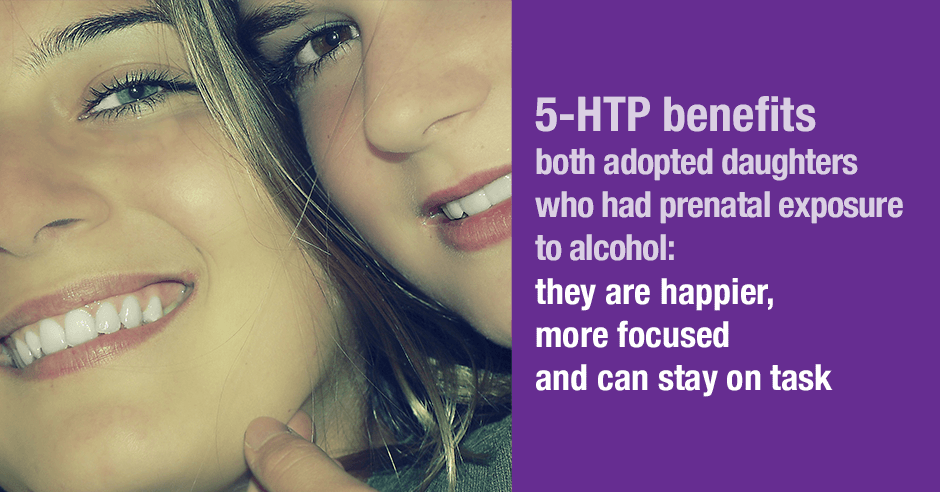
5-HTP benefits both adopted daughters who had prenatal exposure to alcohol: they are happier, more focused and can stay on task

March 5, 2021 By Trudy Scott 10 Comments

5-htp and prenatal exposure to alcohol

A grateful mom, Besty, posted wonderful feedback on the 5-HTP and ADHD blog.  She shared how 5-HTP benefits both her adopted daughters who had prenatal exposure to alcohol i.e. exposure to alcohol while in the womb. When using the supplement 5-HTP, an amino acid precursor to serotonin, both girls are happier, more focused and can now stay on task. Here is the feedback Besty shared on the blog:

After listening to Dr. Michael Murry’s interview on your Anxiety Summit, I decided to try 5-HTP on my 18-year-old daughter (a senior in high school) who was adopted at 5 years of age. She has always had some issues with focus, but she has never been medicated for this. She has had some learning struggles. She was exposed to alcohol in the womb, so some of her learning difficulty has been attributed to this.

She started 5-HTP in December and doesn’t ever want to miss a day on it. She says that she can better complete her assignments because it helps her to “stay on task”.

Even on days that she is not in school, she wants to take it, because it makes her feel happier.

Because she has done so well on it, her 23-year-old biological sister (also adopted) started on it. She was also exposed to alcohol while in the womb and has some learning struggles. She is in college. She also doesn’t want to miss a day, because she says that “it keeps her on her toes,” which she says means that it “keeps me focused,” when she is working on her school work.

I am so thankful that I learned about this therapy through your summit!

I thanked Besty for her kind words and for sharing this wonderful outcome both her daughters experienced.  I love hearing stories like this and I am sharing this as a blog post so more folks are inspired and have hope.

Prenatal exposure to alcohol: the adverse effects, and impacts on serotonin and dopamine

This 2012 paper, Moderate prenatal alcohol exposure and serotonin genotype interact to alter CNS serotonin function in Rhesus monkey offspring, describes fetal alcohol spectrum disorder (FASD):

  • Fetal alcohol spectrum disorder (FASD) is associated with a range of adverse effects that can be observed in children prenatally exposed to alcohol.
  • Fetal alcohol syndrome (FAS), which includes growth retardation, craniofacial anomalies, CNS dysfunction, and cognitive and behavioral impairments, is the most serious of the FASD outcomes of prenatal alcohol exposure.
  • Alcohol-related neuro-developmental disorder (ARND) is the term used to describe prenatally alcohol-exposed children with problems that are primarily neurobehavioral, including cognitive effects, hyperactivity, impulsivity, reduced attention span, and lack of inhibition.

It appears these young girls may fall into the ARND category with their reduced attention span and cognitive issues, and some possible neurobehavioral issues. I’m not, however, aware if a diagnosis was made. I’m also not aware if hyperactivity, impulsivity and lack of inhibition have been issues too.

This paper also discusses the research on prenatal alcohol exposure and deficiencies in the serotonergic neurotransmitter system, and the possibility that genetic factors might predispose someone to fetal alcohol effects during a sensitive period. These are primarily genes affecting serotonin production. The authors also report that prenatal exposure to alcohol also affects dopamine levels.

Addressing neurotransmitter imbalances with tryptophan, 5-HTP and tyrosine

We don’t often associate low serotonin with ADHD (attention deficit and hyperactivity disorder) and poor focus but the research and clinical outcomes like this one (and the other success story below with 5-HTP melts) is very promising.

If you are new to addressing neurotransmitter imbalances with targeted amino acids you may find these blogs helpful:

  • Using tryptophan to address low serotonin eases worry, rumination, anxiety and negative self-talk. Keep in mind that some folks do better with tryptophan and some do better with 5-HTP.
  • ADHD: 5-HTP melts have been a miracle for one of my adopted kids. I summarize the role of serotonin in ADHD, the interplay with dopamine and the use of oral tryptophan (a serotonin precursor similar to 5-HTP). And this is the blog post that Besty commented on.
  • We typically consider the use of tyrosine to address low dopamine (one of the catecholamines), leading to better focus, good energy and better motivation so you are more likely to finish tasks. It also improves mood.

Questions I still have about the 5-HTP trials

I have these questions I posed to Betsy and hope to hear back as I feel these answers may be helpful as you navigate your trials with 5-HTP (for yourself or your loved ones):

  • Which product are they using and how much is helping?
  • Did your daughters make any other changes (diet or other supplements) at the same time?
  • What have they tried over the years to help with focus and learning issues?
  • Why did you initially decide to trial 5-HTP with your younger daughter?
  • Did your younger daughter encourage her older sister to trial 5-HTP too?
  • Did either daughter have any of the classic low serotonin symptoms too: worry-type of anxiety, ruminations, OCD, fears, PMS, irritability, insomnia, afternoon/evening cravings, anger issues, lack of confidence? And did the 5-HTP help with any of these symptoms too?
  • Were some of the classic low serotonin symptoms a factor when it came to lack of focus? For example, did the worrying or feelings of fear or insomnia contribute to the inability to stay on task and keep focused?

I’ll report back once I get Besty’s feedback. But keep in mind that dosing/timing doesn’t really matter as the doses that work for her daughters are unique to their own biochemistry and needs.

Additional resources when you are new to using GABA, 5-HTP and other amino acids as supplements

As always, I use the symptoms questionnaire to figure out if low serotonin or low GABA or other neurotransmitter imbalances may be an issue.

If you suspect low levels of any of the neurotransmitters and do not yet have my book, The Antianxiety Food Solution – How the Foods You Eat Can Help You Calm Your Anxious Mind, Improve Your Mood, and End Cravings, I highly recommend getting it and reading it before jumping in and using amino acids on your own so you are knowledgeable. And be sure to share it with the practitioner/health team you or your loved one is working with.

There is an entire chapter on the amino acids and they are discussed throughout the book in the sections on gut health, gluten, blood sugar control (this is covered in an entire chapter too), sugar cravings, anxiety and mood issues.

The book doesn’t include product names (per the publisher’s request) so this blog, The Antianxiety Food Solution Amino Acid and Pyroluria Supplements, lists the amino acids that I use with my individual clients and those in my group programs.

If, after reading this blog and my book, you don’t feel comfortable figuring things out on your own (i.e. doing the symptoms questionnaire and respective amino acids trials), a good place to get help is the GABA QuickStart Program (if you have low GABA symptoms). This is a paid online/virtual group program where you get my guidance and community support.

If you are a practitioner, join us in The Balancing Neurotransmitters: the Fundamentals program. This is also a paid online/virtual program with an opportunity to interact with me and other practitioners who are also using the amino acids.

Wrapping up and your feedback

Have you found that 5-HTP (or tryptophan) helps your child (who was exposed to alcohol in the womb) with focus and ADHD symptoms? Are they happier when using one of these serotonin precursors?

If you’re a practitioner working with children or adults who have had prenatal exposure to alcohol, have you had good results with 5-HTP or tryptophan?

Feel free to post your questions and feedback in the comments below.

Filed Under: 5-HTP, ADHD, Anxiety, Children/Teens, serotonin, Testimonials Tagged With: 5-HTP, ADHD, Alcohol-related neuro-developmental disorder, anxiety, ARND, can stay on task, cognitive, dopamine, exposure to alcohol while in the womb, FAS, FASD, fetal alcohol spectrum disorder, Fetal alcohol syndrome, focus, genetic, happier, hyperactivity, more focused, neurobehavioral, neurotransmitter, prenatal exposure to alcohol, serotonin, tryptophan, tyrosine

Imposter syndrome and neurotransmitter support: I feel like the person I’m supposed to become

February 26, 2021 By Trudy Scott 9 Comments

imposter syndrome and neurotransmitter support

A newly qualified nutritionist posted wonderful feedback on a blog post on imposter syndrome and low serotonin with tryptophan as one possible solution. She shared how neurotransmitter support with tryptophan, tyrosine and GABA was her solution, eliminating her imposter syndrome and social awkwardness in 2 weeks. Here is the feedback Yo shared on the blog:

Thanks for your work on neurotransmitters, Trudy.  I am a fan. I had suffered BADLY from imposter syndrome at the end of my nutrition degree and I felt socially awkward in so many outings and situations. My anxiety and stress were through the roof! VERY bad sleep, stressed and my digestion was very poor.

Fast forward to a year later after addressing my sleep (no. 1 priority); stress levels; diet; loads of minerals; vitamin supplementation – my health started to shift for the better, but I still had the imposter syndrome hanging over my head.

What really tipped the balance was the supplementation of tyrosine, tryptophan & GABA. The imposter syndrome seemed to have vanished within two weeks. And it was in your blogs that had pointed out clues to the amino acids I was needing to supplement.

I feel like the person I’m supposed to become and I can’t thank you enough for the amazing work you’ve been doing. I will definitely be following your journey, learning more about these neurotransmitters, and sharing this information so that others can benefit from it. Thank you, thank you!

I thanked Yo for her kind words and for sharing this wonderful outcome.  I always say we all deserve to feel our absolute best so I love that she says “I feel like the person I’m supposed to become”!

Read on for my commentary on her specific work addressing her neurotransmitter imbalances with targeted amino acids, and questions I still have about the amino acid trials she did. I also define imposter syndrome in case you’re new to it and more on the low serotonin aspect of imposter syndrome. You’ll also find additional resources if you need guidance using amino acids like tryptophan/5-HTP and GABA.

Addressing neurotransmitter imbalances with targeted amino acids

I also congratulated her on doing the foundational work first. As she discovered, even with all that in place, we often still have to address neurotransmitter imbalances with targeted amino acids too.  With regards to imposter syndrome and the amino acids she used:

  • Using tryptophan to address low serotonin eases worry, rumination, anxiety, negative self-talk, self-doubt and and not feeling capable – all of which we’d typically associate with imposter syndrome
  • Using tyrosine to address low dopamine results in more motivation and better focus so you are more likely to finish tasks (and therefore feel more confident and capable). Many folks report a feeling of calm focus with tyrosine too
  • Using GABA to address low GABA eases physical tension and overwhelm and helps stop unwanted thoughts.

A 2-week turnaround is fabulous and means she found the right combination of amino acids and ideal doses for her unique needs right away. I’ve seen results like this in 2 weeks but doing a new amino acid trial each week would usually take at least 3 weeks. I suspect her results were so fast because of the foundational work that was in place.

I typically start with amino acids trials on day one of working with someone, while we are working on diet, sleep, stress – this would have led to her feeling like the person she was meant to become much sooner and would have helped with sleep, stress and dietary changes too.  Her approach worked but it took longer to get results.

Questions I still have about the amino acid trials

I have these questions I posed to Yo and hope to hear back as I feel these answers may be helpful as you navigate your own challenges with imposter syndrome:

  • Did she do a trial of one amino acid at a time (my preferred approach so you know exactly what effects each one has)?
  • Or did she start taking all 3 amino acids at once and why?
  • What doses were ideal for her unique needs and how quickly did she find the ideal doses
  • Is she continuing with a maintenance dose?
  • Also, since she mentioned social awkwardness I have to wonder if the pyroluria protocol would be of added value (if any of the social awkwardness still remains)? This protocol helps to make neurotransmitters.

I’ll report back once I get Yo’s feedback.

If you’re new to imposter syndrome

If you’re new to imposter syndrome, here is a definition from Intellectual Self-doubt and How to Get Out of It:

People with imposter syndrome often feel like they are not as capable or adequate as others perceive or evaluate them to be. The signs and symptoms are feelings of phoniness, self-doubt, and inability to take credit for one’s accomplishments. It is a form of intellectual self-doubt. Those with imposter syndrome are often intelligent and high achievers – like many academics, pharmacists, and professional students. On one hand, imposter syndrome provides motivation to persevere. On the other hand, you over prepare and overwork.

This author shares a link to the Clance Imposter Scale. This is a self-assessment of imposter syndrome, developed by Dr. Pauline Rose Clance and Dr. Suzanne Imes (who worked together and coined the term “Impostor Phenomenon”.).

This paper reports that

Imposter syndrome is common among early career nurse researchers and often has a considerable impact on those affected. It can cause various problems, including anxiety, self-doubt and feelings of inadequacy, and therefore has significant potential to adversely affect personal and professional development.

Imposter syndrome and low serotonin as a root cause

You can also read more about imposter syndrome on my previous blog post on this topic – Imposter syndrome and low serotonin: is tryptophan the solution? and the Harvard Business review definition:

Imposter syndrome can be defined as a collection of feelings of inadequacy that persist despite evident success. ‘Imposters’ suffer from chronic self-doubt and a sense of intellectual fraudulence that override any feelings of success or external proof of their competence.

The numbers of papers on imposter syndrome are increasing but there is still no mention of biochemistry or neurotransmitters so these amino acid success stories are adding to the body of knowledge. (I would love to get them published as case studies so if you can help please do let me know.)

Additional resources when you are new to using tryptophan and other amino acids as supplements

As always, I use the symptoms questionnaire to figure out if low serotonin or other neurotransmitter imbalances may be an issue.

If you suspect low levels of any of the neurotransmitters and do not yet have my book, The Antianxiety Food Solution – How the Foods You Eat Can Help You Calm Your Anxious Mind, Improve Your Mood, and End Cravings, I highly recommend getting it and reading it before jumping in and using amino acids on your own so you are knowledgeable. And be sure to share it with the practitioner/health team you or your loved one is working with.

There is an entire chapter on the amino acids and they are discussed throughout the book in the sections on gut health, gluten, blood sugar control (this is covered in an entire chapter too), sugar cravings, anxiety and mood issues.

The book doesn’t include product names (per the publisher’s request) so this blog, The Antianxiety Food Solution Amino Acid and Pyroluria Supplements, lists the amino acids that I use with my individual clients and those in my group programs.

If, after reading this blog and my book, you don’t feel comfortable figuring things out on your own (i.e. doing the symptoms questionnaire and respective amino acids trials), and you need serotonin support, the Serotonin QuickStart Program is a good place to get help. This is a paid online/virtual group program where you get my guidance on using tryptophan and 5-HTP safely, and community support during 5 LIVE Q&A calls. You can sign up to be notified when the next live launch of this program is happening.

The next way to get help is the GABA QuickStart Program (if you have low GABA symptoms too). This is a paid online/virtual group program where you get my guidance and community support. Another option is the budget-friendly GABA QuickStart Homestudy Program.

If you are a practitioner, join us in The Balancing Neurotransmitters: the Fundamentals program. This is also a paid online/virtual program with an opportunity to interact with me and other practitioners who are also using the amino acids.

Wrapping up and your feedback

I love hearing life-changing stories like this and I am sharing it here to inspire and offer hope! I also love that Yo is such a fan now and wants to pay it forward by sharing this information with clients so I also shared my amino acid practitioner training with her.

Now I’d love your feedback …

Is imposter syndrome new to you? And is this concept of addressing imposter syndrome with amino acids new to you? We would appreciate hearing:

  • #1 How you describe your imposter syndrome and how it impacts your life
  • #2 How you score on the Clance Imposter Scale (and which aspects bother you the most)
  • #3 What symptoms you have on the Amino Acid Questionnaire in the low serotonin, low catecholamine and low GABA sections.

If you already know about imposter syndrome and have found a solution with the amino acids please do share your success story so we can all learn from each other, as well as inspire and offer hope. We would appreciate hearing:

  • #A How you described your imposter syndrome and how it impacted your life
  • #B How you scored on the Clance Imposter Scale before and after using amino acids (and which aspects bothered you the most)
  • #C What symptoms you had on the Amino Acid Questionnaire  in the low serotonin, low catecholamine and low GABA sections (before and after using the amino acids)
  • #D Which amino acids were most helpful and how much of each amino acid helped you
  • #E If you’ve also had CBT (cognitive behavior therapy) and how it helped too

If you feel more comfortable sharing some of this anonymously feel free to use a nickname or your initials only when commenting – I’m aware that there is a stigma to admitting this in the corporate world, as a health professional and as an entrepreneur.

Feel free to post your questions and feedback in the comments below.

Filed Under: Anxiety, Testimonials, Tryptophan, Women's health Tagged With: anxiety, Clance Imposter Scale, dopamine, focus, GABA, Imposter syndrome, Impostor Phenomenon, neurotransmitter, Pauline Rose Clance, phoniness, self-doubt, serotonin, tryptophan, tyrosine, worry

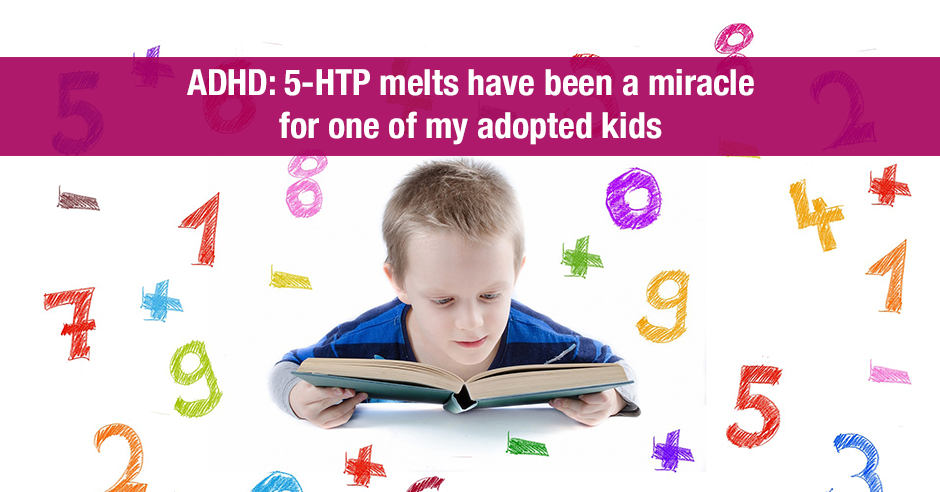
ADHD: 5-HTP melts have been a miracle for one of my adopted kids

January 15, 2021 By Trudy Scott 77 Comments

ADHD and 5-HTP

A mom in my community responded to an ADHD blog sharing how 5-HTP melts have been a miracle for one of her adopted children – after one week! 5-HTP is not where I typically start with ADHD so I quizzed her to get more details and then went looking for the research to understand the mechanisms. This blog shares her rationale for using 5-HTP, the truly wonderful results her son experienced, some of the research and some possible serotonin/dopamine mechanisms. This is what she posted:

5-HTP melts have been a miracle for one of my adopted kids. He had lots of trauma and off the charts ADHD. 5-HTP is better than methylphenidate (Ritalin) and we are now weaning off the non-stimulants.

Just 80mg 5-HTP in the morning is all he needs. He was super ADHD, he had a para (teacher’s aide) in public school for years to keep him on track and this year at a school for ADHD the teachers were complaining that he was never on task.

Now after a week it has changed his life. I am so thankful for the anxiety summit. Thank you Trudy

This is truly wonderful to hear! I responded saying how thrilled I was to hear the impact it was having and asked why this mom decided to try 5-HTP? This amino acid, which is a serotonin precursor, is not typically my first choice for alleviating ADHD symptoms. I consider low GABA (and using GABA) or low catecholamines (and using tyrosine), together with dietary changes, blood sugar control, and assessing for low zinc, low iron and low omega-3s – as a starting point.

I wanted to know if he had low serotonin symptoms such as the worry, ruminating, and obsessive type of anxiety which could have possibly been driving the ADHD symptoms? Were there any other symptoms that were a clue that low serotonin may be a factor: insomnia (with fatigue the next day impacting focus) or sugar cravings in the afternoon/evening (causing blood sugar swings affecting focus and mood)?

Why she used 5-HTP and which low serotonin symptoms he had

This was her response about why she used 5-HTP and which low serotonin symptoms he had:

We have tried all the amino acids over the years. I tried 5-HTP this time because SSRIs were the only class of medication he has not tried. I thought maybe it was worth a try and I also found this study: Comparative study of efficacy of 1-5-hydroxytryptophan and fluoxetine in patients presenting with first depressive episode (where the therapeutic efficacy of 5-HTP was considered as equal to that of the SSRI fluoxetine).

As for cravings or insomnia: he is a kid who loves sugar so I’m not sure if it’s a craving or typical. He takes 0.3mg of melatonin each night because guanfacine, the non-stimulant, prevents the production of melatonin.

She also mentioned that she has followed me for years and that DPA, an endorphin-boosting amino acid, works for her. She is a dietitian and shares my handouts and blog posts with her clients, so she clearly felt comfortable experimenting with the amino acids with her son.

5-HTP products and dosing

I also asked which product they were using and how she landed at 80mg. She wanted a fast-acting supplement that would dissolve in his mouth and purchased Natrol 5-HTP:

They are 100mg but we are breaking off a little because he was falling asleep in class.

I reminded her that 5-HTP (or tryptophan) is typically best used late afternoon and evening so if someone is falling asleep in the day I’d switch to bedtime dosing.  If he needs it during the day for the ADHD symptoms then reducing the dose is the smart thing to do.

I love the sublingual/melt aspect of this product for quick results and because children do so well with a product that tastes pleasant.

However, I do not recommend this particular product because of very mixed ingredients information online. I have not seen the bottle of the actual product used but some of the online information states the product is gluten-free and soy-free and yet other information states it does contains gluten and soy. In some places they state it contains sucralose and an artificial flavor and in other places you see xylitol and natural flavor. This is all rather concerning. I’ll update this section as soon as I can confirm.

What does this mean for this mom? Now that she has figured out that 5-HTP helps her son, it’s best to find a better quality product so as not to cause other problems.

There are two chewable products in my online supplement store that come close to this product:

  • Serotrex Chewable: Two chewables contain 200mg theanine and 60mg 5-HTP. This could be used in the day or at night.
  • Designs for Health Insomnitol Chewables: Two chewables contain 10mg vitamin B6, 500mg inositol, 200mg theanine, 100mg 5-HTP and 3mg melatonin. This would need to be used at night instead.

Both of these contain theanine. Research shows that theanine reduces anxiety and improves cognition via “improvements in verbal fluency (especially letter fluency) and improvements in executive function (planning, multi-tasking etc).”

The research on 5-HTP and tryptophan for ADHD

This paper, The effects of 5-hydroxytryptophan on attention and central serotonin neurochemistry in the rhesus macaque, shares that

Individuals with depression and anxiety typically experience impaired executive function and emotional cognition, symptoms that are generally studied by examining disruptions in attention.

This study used 5-HTP as an intramuscular injection, rather than using it orally but the authors did report the following:

Our findings provide unique causal and mechanistic evidence suggesting that enhancing central serotonergic function results in categorically distinct changes in fundamental cognitive operations such as attention.

This paper, Does serotonin deficit mediate susceptibility to ADHD? summarizes the role of serotonin in ADHD, the interplay with dopamine and the use of oral tryptophan (a serotonin precursor similar to 5-HTP):

  • A chronic deficit of serotonin at the synapse may trigger symptoms of childhood ADHD (developmentally inappropriate levels of hyperactivity, impulsivity and inattention).
  • Studies from animal models of ADHD indicate intimate interplay between serotonin and dopaminergic neurotransmission.
  • Selective serotonin re-uptake inhibitors (SSRIs)…as non-stimulant drugs acting on the serotonin system are … clinically effective.
  • Oral administration of l-tryptophan, the amino acid precursor of serotonin, significantly alleviates ADHD symptoms.
  • Serotoninergic gene variants are associated with increased risk of ADHD.

I appreciate this mom for giving me permission to share here on the blog so we can inspire hope (and I wish for more and more improvements for this young boy):

My son is a 10-year old RAD (reactive attachment disorder) kid that was meth exposed and adopted at 3 years old. 5-HTP has worked so well. He has not thrown a fit in a month. Before fits were a daily occurrence. This might give hope to other parents.

Additional resources when you are new to using GABA, 5-HTP and other amino acids as supplements

As always, I use the symptoms questionnaire to figure out if low serotonin or low GABA or other neurotransmitter imbalances may be an issue.

If you suspect low levels of any of the neurotransmitters and do not yet have my book, The Antianxiety Food Solution – How the Foods You Eat Can Help You Calm Your Anxious Mind, Improve Your Mood, and End Cravings, I highly recommend getting it and reading it before jumping in and using amino acids on your own so you are knowledgeable. And be sure to share it with the practitioner/health team you or your loved one is working with.

There is an entire chapter on the amino acids and they are discussed throughout the book in the sections on gut health, gluten, blood sugar control (this is covered in an entire chapter too), sugar cravings, anxiety and mood issues.

The book doesn’t include product names (per the publisher’s request) so this blog, The Antianxiety Food Solution Amino Acid and Pyroluria Supplements, lists the amino acids that I use with my individual clients and those in my group programs.

If, after reading this blog and my book, you don’t feel comfortable figuring things out on your own (i.e. doing the symptoms questionnaire and respective amino acids trials), a good place to get help is the GABA QuickStart Program (if you have low GABA symptoms). This is a paid online/virtual group program where you get my guidance and community support.

If you are a practitioner, join us in The Balancing Neurotransmitters: the Fundamentals program. This is also a paid online/virtual program with an opportunity to interact with me and other practitioners who are also using the amino acids.

Wrapping up and your feedback

Have you found that 5-HTP (or tryptophan) helps/helped you or your child with ADHD symptoms? If yes, do you feel the ADHD was caused in part because of anxiety and/or fear and/or feeling inadequate and/or perfectionism and/or poor sleep (all signs of low serotonin)? Or were the main symptoms poor focus, low energy, low motivation and depression caused by low catecholamines/low dopamine? Or a mixture of both?

If you’re a practitioner working with children or adults with ADHD, have you had good results with 5-HTP or tryptophan?

Please do share in the comments below.

Filed Under: ADHD, Anxiety, Children/Teens Tagged With: 5-HTP, ADHD, attention, cravings, dopamine, fits, focus, GABA, hyperactivity, impulsivity, inattention, insomnia, meth, RAD, reactive attachment disorder, Ritalin, serotonin, SSRI, sugar, tryptophan, tyrosine

Toxoplasma gondii: schizophrenia, bipolar disorder, OCD and unresolved anxiety?

August 14, 2017 By Trudy Scott 17 Comments

Toxoplasma gondii is a microscopic parasite that infects cats and can be found in the soil – research shows it may be a factor in schizophrenia, bipolar disorder and OCD in susceptible individuals. Could toxoplasma gondii could be one of the root causes of unresolved anxiety? I believe so and feel it’s under-rated.

This is the one of the parasitic infections I cover in an interview I did on The Parasite Summit.

Here are a few snippets from my interview:

A single-celled parasite called Toxoplasma gondii causes a disease known as toxoplasmosis.

Toxoplasma gondii is a microscopic parasite that infects cats and can be found in the soil. The infection can be acquired by ingesting contaminated food or water, by handling contaminated cat litter, or by transmission from mother-to-child.

According to the CDC – as of Mar 1, 2017 – in the United States it is estimated that 11% of the population 6 years and older have been infected with Toxoplasma. In various places throughout the world, it has been shown that up to 95% of some populations have been infected with Toxoplasma.

I love cats and have always been a cat person and pets are wonderful companions helping many of us humans recovering from PTSD and trauma – but we always need to dig deeper:

  • some individuals don’t respond as well to dietary changes, brain chemical balancing and addressing other biochemical/nutritional factors
  • I’m always looking for root possible causes. I’ve identified 70+ causes of anxiety and one of them is parasites
  • any parasite could be a factor – it causes stress and inflammation in the body, and we may see high cortisol leading to increased anxiety, insomnia and inflammation
  • could toxoplasma gondii could be one of the root causes of unresolved anxiety? I believe so and feel it’s under-rated – and believe we’ll be hearing more about it as more research comes out

I discuss this review paper published this year: Is Toxoplasma gondii a Trigger of Bipolar Disorder?

The association between T. gondii and schizophrenia/schizoaffective disorder is one of the most studied links between one pathogen and a psychiatric disorder.

However, growing emerging evidence has also documented an association between latent toxoplasmosis and the risk of [bipolar disorder] and suicidal/aggressive behaviors. T. gondii infection, as previously suggested for schizophrenia, may contribute to the onset and the progressive course of the disease interacting with genetic hereditary predisposing factors, as well as affecting neurotransmitter systems and immune responses, which have recently been shown to be closely linked to the pathogenesis of BD and its medical comorbidities.

The link between this parasite and psychiatric disorders could be also explained by its ability to influence neurotransmitter pathways. Indeed, T. gondii has been shown to increase dopamine levels, as well as to modulate serotonin, gamma-aminobutyric acid (GABA) and glutamate signaling.

With the impacts on neurotransmitters it’s clear how this parasite could directly trigger anxiety, panic attacks, fears, worry and even OCD. I cover this and more (malaria and malaria medications too) in my interview and book.

Parasites may be silently impacting your health and they’re FAR MORE COMMON than you think! Parasites aren’t just found in third-world countries, millions are already infected in industrialized countries and parasites could be silently hampering your health. Fortunately, with awareness and appropriate care, parasites can be prevented and treated, once detected.

If you’re struggling with any of the following, it may be worth looking into parasites:

  • Gastrointestinal: pain/cramps, excess gas, bloating, constipation/diarrhea
  • Infertility and hormone disorders
  • Skin issues: acne, itching, rashes
  • Mental health: depression, bipolar disorder, anxiety, OCD, schizophrenia
  • Challenges with autoimmune disease recovery (Toxoplasma gondii may also be a factor in Hashimoto’s thyroiditis)

Please share feedback and ask questions in the comments below.

Filed Under: Anxiety and panic, Events, Parasites Tagged With: anxiety, bipolar disorder, cats, dopamine, GABA, hashimoto's thyroiditis, OCD, parasite, schizophrenia, serotonin, The Parasite Summit, toxoplasma gondii, Trudy Scott

  • « Go to Previous Page
  • Page 1
  • Page 2
  • Page 3
  • Page 4
  • Go to Next Page »

Primary Sidebar

GABA QuickStart Homestudy

gaba quickstart homestudy

Free Report

9 Great Questions Women Ask about Food, Mood and their Health

You'll also receive a complimentary subscription to my ezine "Food, Mood and Gal Stuff"


Connect with me

Popular Posts

  • Amino Acids Mood Questionnaire from The Antianxiety Food Solution
  • The Antianxiety Food Solution Amino Acid and Pyroluria Supplements
  • Pyroluria Questionnaire from The Antianxiety Food Solution
  • Collagen and gelatin lower serotonin: does this increase your anxiety and depression?
  • Tryptophan for the worry-in-your-head and ruminating type of anxiety
  • GABA for the physical-tension and stiff-and-tense-muscles type of anxiety
  • The Antianxiety Food Solution by Trudy Scott
  • Seriphos Original Formula is back: the best product for anxiety and insomnia caused by high cortisol
  • Am I an anxious introvert because of low zinc and vitamin B6? My response to Huffington Post blog
  • Vagus nerve rehab with GABA, breathing, humming, gargling and key nutrients

Recent Posts

  • Her cravings for chips and peanut butter were triggered by stress: GABA ends cravings and reduces physical tension and fear of heights
  • It is truly miraculous to be able to move through life without crippling anxiety and panic
  • GABA and tryptophan combo provide immediate and noticeable relief for tremors and cervical dystonia in just 7 days
  • Red light therapy for back and neck pain, plantar fasciitis and low mood – a complement to the amino acids GABA, DPA and tryptophan
  • What do I use instead of Seriphos to help lower high cortisol that is affecting my sleep and making me anxious at night?

Categories

  • 5-HTP
  • AB575
  • Addiction
  • ADHD
  • Adrenals
  • Alcohol
  • Allergies
  • Alzheimer's disease
  • Amino Acids
  • Anger
  • Antianxiety
  • Antianxiety Food Solution
  • Antidepressants
  • Anxiety
  • Anxiety and panic
  • Autism
  • Autoimmunity
  • benzodiazapines
  • Bipolar disorder
  • Books
  • Caffeine
  • Cancer
  • Candida
  • Children/Teens
  • Collagen
  • Cooking equipment
  • Coronavirus/COVID-19
  • Cravings
  • Depression
  • Detoxification
  • Diabetes
  • Diet
  • DPA/DLPA
  • Drugs
  • EFT/Tapping
  • EMF
  • EMFs
  • Emotional Eating
  • Endorphins
  • Environment
  • Essential oils
  • Events
  • Exercise
  • Fear
  • Fear of public speaking
  • Fertility and Pregnancy
  • Fish
  • Food
  • Food and mood
  • Functional neurology
  • GABA
  • Gene polymorphisms
  • General Health
  • Giving
  • Giving back
  • Glutamine
  • Gluten
  • GMOs
  • Gratitude
  • Gut health
  • Heart health/hypertension
  • Histamine
  • Hormone
  • Hyperparathyroidism
  • Hypoglycemia
  • Immune system
  • Inflammation
  • Insomnia
  • Inspiration
  • Introversion
  • Joy and happiness
  • Ketogenic diet
  • Lithium orotate
  • Looking awesome
  • Lyme disease and co-infections
  • MCAS/histamine
  • Medication
  • Men's health
  • Mental health
  • Mercury
  • Migraine
  • Mold
  • Movie
  • MTHFR
  • Multiple sclerosis
  • Music
  • NANP
  • Nature
  • Nutritional Psychiatry
  • OCD
  • Osteoporosis
  • Oxalates
  • Oxytocin
  • Pain
  • Paleo
  • Parasites
  • Parkinson’s disease
  • PCOS
  • People
  • PMS
  • Postpartum
  • PTSD/Trauma
  • Pyroluria
  • Questionnaires
  • Real whole food
  • Recipes
  • Research
  • Schizophrenia
  • serotonin
  • SIBO
  • Sleep
  • Special diets
  • Sports nutrition
  • Stress
  • Sugar addiction
  • Sugar and mood
  • Supplements
  • Teens
  • Testimonials
  • Testing
  • The Anxiety Summit
  • The Anxiety Summit 2
  • The Anxiety Summit 3
  • The Anxiety Summit 4
  • The Anxiety Summit 5
  • The Anxiety Summit 6
  • Thyroid
  • Thyroid health
  • Toxins
  • Tryptophan
  • Tyrosine
  • Uncategorized
  • Vegan/vegetarian
  • Women's health
  • Yoga

Archives

  • May 2026
  • April 2026
  • October 2025
  • September 2025
  • August 2025
  • July 2025
  • June 2025
  • May 2025
  • April 2025
  • March 2025
  • February 2025
  • January 2025
  • November 2024
  • October 2024
  • September 2024
  • August 2024
  • July 2024
  • June 2024
  • May 2024
  • April 2024
  • March 2024
  • February 2024
  • January 2024
  • December 2023
  • November 2023
  • October 2023
  • September 2023
  • August 2023
  • July 2023
  • June 2023
  • May 2023
  • April 2023
  • March 2023
  • February 2023
  • January 2023
  • December 2022
  • November 2022
  • October 2022
  • September 2022
  • August 2022
  • July 2022
  • June 2022
  • May 2022
  • April 2022
  • March 2022
  • February 2022
  • January 2022
  • December 2021
  • November 2021
  • October 2021
  • September 2021
  • August 2021
  • July 2021
  • June 2021
  • May 2021
  • April 2021
  • March 2021
  • February 2021
  • January 2021
  • December 2020
  • November 2020
  • October 2020
  • September 2020
  • August 2020
  • July 2020
  • June 2020
  • May 2020
  • April 2020
  • March 2020
  • February 2020
  • January 2020
  • December 2019
  • November 2019
  • October 2019
  • September 2019
  • August 2019
  • July 2019
  • June 2019
  • May 2019
  • April 2019
  • March 2019
  • February 2019
  • January 2019
  • December 2018
  • November 2018
  • October 2018
  • September 2018
  • August 2018
  • July 2018
  • June 2018
  • May 2018
  • April 2018
  • March 2018
  • February 2018
  • January 2018
  • December 2017
  • November 2017
  • October 2017
  • September 2017
  • August 2017
  • July 2017
  • June 2017
  • May 2017
  • April 2017
  • March 2017
  • February 2017
  • January 2017
  • December 2016
  • November 2016
  • October 2016
  • September 2016
  • August 2016
  • July 2016
  • June 2016
  • May 2016
  • April 2016
  • March 2016
  • February 2016
  • January 2016
  • December 2015
  • November 2015
  • October 2015
  • September 2015
  • August 2015
  • July 2015
  • June 2015
  • May 2015
  • April 2015
  • March 2015
  • February 2015
  • January 2015
  • December 2014
  • November 2014
  • October 2014
  • September 2014
  • August 2014
  • July 2014
  • June 2014
  • May 2014
  • April 2014
  • March 2014
  • February 2014
  • January 2014
  • December 2013
  • November 2013
  • October 2013
  • September 2013
  • August 2013
  • July 2013
  • June 2013
  • May 2013
  • April 2013
  • March 2013
  • February 2013
  • January 2013
  • December 2012
  • November 2012
  • October 2012
  • August 2012
  • July 2012
  • June 2012
  • May 2012
  • April 2012
  • March 2012
  • February 2012
  • January 2012
  • December 2011
  • November 2011
  • October 2011
  • September 2011
  • August 2011
  • July 2011
  • June 2011
  • May 2011
  • April 2011
  • March 2011
  • February 2011
  • January 2011
  • December 2010
  • October 2010
  • September 2010
  • July 2010
  • May 2010
  • April 2010
  • March 2010
  • February 2010
  • January 2010
  • November 2009

Share the knowledge!

The above statements have not been evaluated by the Food and Drug Administration. Products listed in this website are not intended to diagnose, treat, cure or prevent any disease.

The information provided on this site is for informational and educational purposes only and is not intended as a substitute for advice from your physician or other health care professional. You should consult with a healthcare professional before starting or modifying any diet, exercise, or supplementation program, before taking or stopping any medication, or if you have or suspect you may have a health problem.


Copyright © 2026 Trudy Scott. All Rights Reserved. | Privacy | Terms and Conditions | Refund Policy | Medical Disclaimer

Free Report

9 Great Questions Women Ask about Food, Mood and their Health

You’ll also receive a complimentary subscription to my ezine “Food, Mood and Gal Stuff”