• Skip to primary navigation
  • Skip to main content
  • Skip to primary sidebar

everywomanover29 blog

Food, Mood and Women's Health – Be your healthiest, look and feel great!

  • Blog
  • About
  • Services
  • Store
  • Resources
  • Testimonials
  • The Book
  • Newsletter
  • Contact
  • Search this site

depression

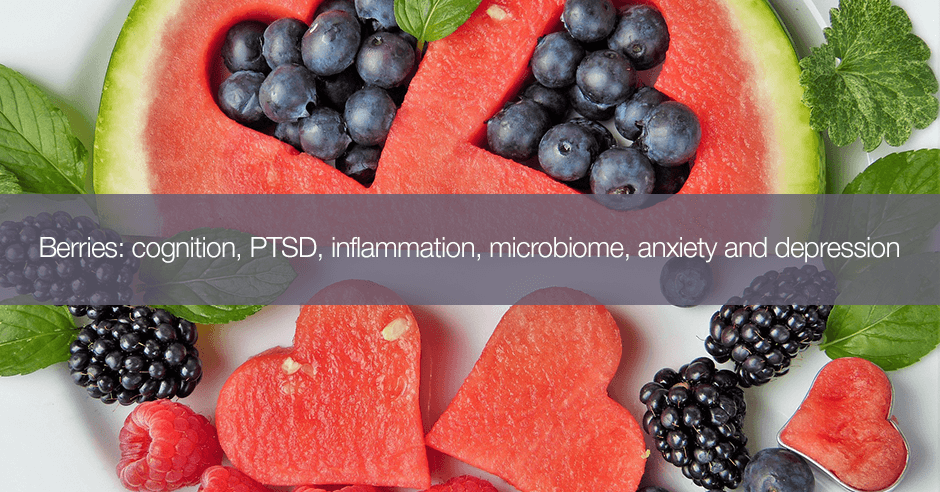
Berries: cognition, PTSD, inflammation, microbiome, anxiety and depression

February 2, 2018 By Trudy Scott 11 Comments

Berries such as blueberries, raspberries, raspberries and strawberries have so many health benefits, including but not limited to improving cognitive function, offering benefits for PTSD (post-traumatic stress disorder), reducing inflammation and even increasing good bacteria in our gut. There are even initial promising results of a compound in blackberries having antibiotic like properties against drug-resistant bacteria MRSA (methicillin resistant staphylococcus aureus).

Blueberries improve cognition

In a 2017 randomized, double-blind, placebo-controlled trial, dietary blueberries were found to improve cognition among older adults

In this study, 13 men and 24 women, between the ages of 60 and 75 years, were recruited into a randomized, double-blind, placebo-controlled trial in which they consumed either freeze-dried blueberry (24 g/day, equivalent to 1 cup of fresh blueberries) or a blueberry placebo for 90 days.

The findings show that the addition of 1 daily cup of blueberries to the diets of older adults can improve some aspects of cognition, such as

…significantly fewer repetition errors … in the California Verbal Learning Test (CLVT), a neuropsychological test which can be used to assess verbal memory abilities.

… fewer errors on trials when they switched to a new task as part of a task-switching test. Task switching is an important component of executive function, a collection of brain processes that are responsible for guiding thought and behavior.

This research was funded by the U.S. Highbush Blueberry Council.

Blueberries boost serotonin and ease PTSD

A study presented in 2016 reports that blueberries boost serotonin and may help with PTSD and anxiety. This was an animal study where the traumatized rats were fed a blueberry-enriched diet. The study authors report an increase in serotonin levels and suggest that these findings

indicate non-pharmacological approaches might modulate neurotransmitters in PTSD.

Presumably this could help if you have anxiety and depression too, since low serotonin is often one of the underlying factors.  

Anti-inflammatory activity of berry fruits

A 2016 study compared the anti-inflammatory and antioxidant effects of extracts of Lycium barbarum (found in goji berries), Vaccinium macrocarpon (found in cranberries) and Vaccinium myrtillus (found in blueberries).

High amounts of phenolic compounds, including rutin, were identified in all berries extracts. Quercetin was identified in blueberries and cranberries. Hepatic/liver concentrations of glutathione were higher in animals treated with goji berry extracts. Overall the study reports that:

These results suggest that quercetin, rutin, or other phenolic compounds found in these berry fruits extracts could produce an anti-inflammatory response based on modulation of oxidative stress.

We know that inflammation plays a role in mood issues so this is yet another mechanism for supporting your body nutritionally.

Wild blueberry powder drink increases bifidobacteria in the human gut

Wild blueberries are a rich source of polyphenols, fiber and other compounds that are metabolized by the intestinal microbiota. A 2011 human study reports that six weeks of consumption of a wild blueberry (Vaccinium angustifolium) drink can positively impact the composition of the intestinal microbiome, by increasing levels of Bifidobacterium.

There are numerous studies showing the benefits of bifidobacteria probiotics on mood and anxiety. Here are a few of them:

  • reduced depressive symptoms in IBS patients
  • reduced anxiety (animal study)
  • reduced inflammation, balanced neurotransmitters and a positive impact on the HPA axis (animal study)

Blackberry compound as an antibiotic against MRSA?

This section doesn’t involve eating blackberries but I’m including it because I just love this story, it’s inspiring and it has not received any coverage in the mainstream media. An article in a local publication reports that Irish teen wins top science prize for blackberry antibiotic that fights resistant bacteria

A 15-year-old science student Simon Meehan of Coláiste Choilm won first place in the 54th BT Young Scientist & Technology Exhibition. His discovery is that chemicals found within blackberries could form antibiotics that kills Staphylococcus aureus – often known as MRSA and well known for being resistant to antibiotics.

And he says his grandfather – a herbalist – was the inspiration that kept him going, keeping a frame picture of him at his side whilst he worked.

Professor John O’Halloran, who helped judge the competition, was fulsome in his praise for Simon’s work: “This is a really exciting project which explores the possibility of the blackberry leaf extracts’ ability to control harmful bacteria. The unexpected findings deliver a unique approach to killing bacteria using natural plant active ingredients.

You can watch a video of Simon Meehan sharing more about this investigation and the result here:

Simon Meehan of Coláiste Choilm, Cork investigates the antimicrobial effects of aerial & root parts of selected plants against Staphylococcus aureus.

Here are some ways to enjoy berries in your diet:

  • Fresh berries as a healthy snack
  • Berries like blueberries are quite delicious when eaten frozen too – kids often love them like this
  • In a smoothie for breakfast, together with coconut milk, a banana and some whey, pea or other quality protein powder (great for good blood sugar control/hypoglycemia and reducing anxiety and irritability too)
  • As a dessert with grass-fed organic ice-cream or cream, or coconut milk if dairy is an issue for you
  • Dunked in melted dark organic free-trade chocolate as an occasional treat
  • Freeze-dried or dehydrated berries as a camping or travel snack

Make sure to buy organic berries as non-organic are on the Dirty Dozen list and are highly sprayed with pesticides.

How do you enjoy eating your berries and how often do you eat them?
Filed Under: Food Tagged With: antibiotic, anxiety, Berries, bifidiobacteria, blackberries, blueberries, cognition, depression, Inflammation, microbiome, PTSD, serotonin, Simon Meehan

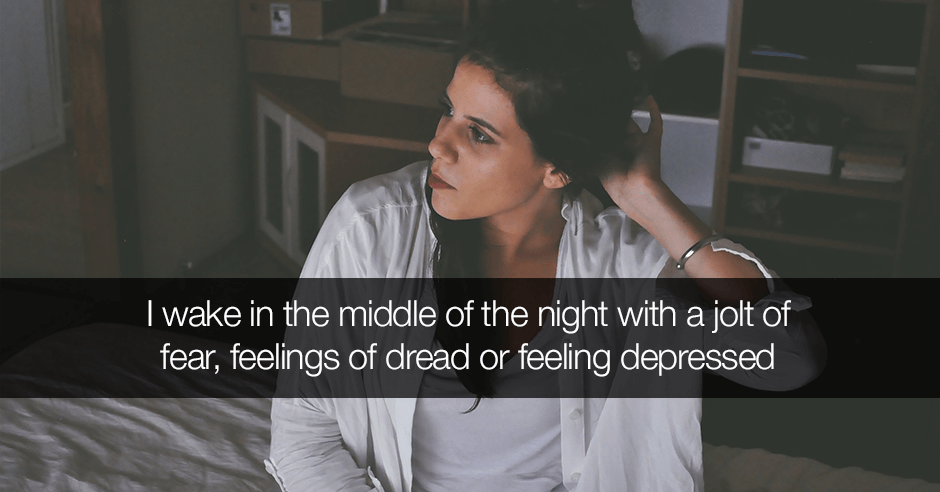
I wake in the middle of the night with a jolt of fear, feelings of dread or feeling depressed

January 26, 2018 By Trudy Scott 33 Comments

Waking in the night feeling anxious and with a jolt of fear, having a panic attack, experiencing feelings of impending doom, with a pounding heart and even feeling depressed is a common issue I see with clients and it’s a common question that I’m often asked on my blog and on Facebook.

Here is a typical question you may relate to:

I usually wake between 5-6 am and have this overwhelming feeling of dread and start thinking of all the things I have to get done. And then I can’t fall back asleep. What is this?

Or this one:

Does anyone have severe depression when waking up in the middle of the night, but never during the day or before falling asleep. It doesn’t go away until after I’m fully awake and upright in the morning.

Low serotonin?

Serotonin is known to dip later in the day and at night and we know low serotonin can cause depression and insomnia/waking in the night, so my first thought would be to assess for low serotonin and address this if it is the case. I use the questionnaire and trial method.

I always start with tryptophan, but may switch to 5-HTP if that’s not working as expected as some people do better on one versus the other. We add melatonin if the tryptophan or 5-HTP isn’t quite enough to help with the waking.

There are many possible causes of low serotonin so over the course of the next few months these will be addressed too, on a case by case basis. Some of the causes in include: a poor diet, low stomach acid, malabsorption, low zinc, low B6, low iron, low magnesium, dysbiosis and/or parasites and/or candida, the birth control pill, MTHFR defects (with this defect expressing) etc.

Low GABA?

Low GABA levels may be a factor too as this can contribute to insomnia and waking, especially when there is physical tension. New research reports GABA’s involvement in unwanted thoughts and it’s a common factor in my community and clients. Again, I use the questionnaire and trial method to find the ideal amount of GABA for each person.

High cortisol?

High cortisol in the night can also be a factor and I suspect this when someone says they wake with a jolt of fear or feels what they describe as an adrenalin rush. Saliva testing can confirm cortisol levels and Seriphos is the best product I’ve found to lower high cortisol. Addressing low blood sugar and finding the root cause of the adrenal issues are also key. General adrenal support with B vitamins and adaptogenic herbs are often needed too.

Hormone imbalances and/or PMS?

Here is another typical question you may relate to:

I’ve had the worst week regards 3am panic attacks, lurid dreams and wake up aching. It always feels like the end of the world and yet I get up and stagger out to do my morning routines and all is right with the world (apart from physical aches and pains). I have often had bouts of this. It’s a week to go until my period.

If the anxiety or panic attacks are cyclical and tied to your menstrual cycle I will still start with a trial of tryptophan which has been shown to help PMS, tension, depression and mood swings. Serotonin support also helps with fibromyalgia-type aches and pains.

A trial of GABA is often needed too and can help with alleviating the panic attacks, waking and some of the aches. Other factors like a gluten sensitivities, adrenal issues and high oxalates may also play a role in physical aches.

Lurid dreams clues me into the possibility of low vitamin B6, which is an important co-factor for making both GABA and serotonin, as well as being important for alleviating PMS symptoms and the social anxiety condition called pyroluria. The pyroluria protocol, with vitamin B6, zinc and evening primrose oil, helps both the social anxiety as well as PMS symptoms and insomnia.

Address the basics

You may be looking for the perfect supplement to help and while the amino acids come pretty close to being that, it goes without saying that you want to always address the basics. This means making sure you are eating a real whole food diet with quality animal protein and getting that animal protein at breakfast in order to balance blood sugar. The following needs to be eliminated too: caffeine, gluten and sugar. Some individuals do even better on a ketogenic diet.

Looking at sleep hygiene factors fall under the basics too: a dark, cool and quiet room, no PC or iPhone late at night, no iPhone or other EMF sources close by, sunlight exposure in the early morning etc.

And we mustn’t forget stress reduction, exercise and nature.

Address other bigger issues

Medication side-effects must always be considered. Here are a few examples:

  • benzodiazepines, commonly prescribed for anxiety and insomnia, can increase anxiety and worsen insomnia as tolerance develops and during withdrawal
  • beta-blockers, prescribed for high blood pressure can affect melatonin levels;
  • some antidepressants ‘may worsen or cause primary sleep disorders like restless legs syndrome, sleep bruxism, REM sleep behavior disorder, nightmares, and sleep apnea, which may result from an antidepressant-induced weight gain.’

Hashimoto’s thyroiditis must also always be considered especially when there are fluctuations in mood, anxiety and sleep. These fluctuations in mood and anxiety can happen at any time of the day and not necessarily in the night.

If the insomnia and middle of the night anxiety and depression persists we continue to dig and look at dietary histamine and oxalate issues, SIBO, parasites and other digestive issues.

If we are still not seeing all the expected results then a referral for Lyme disease, mold toxicity, sleep apnea, TBI (traumatic brain injury) and heavy metals may be needed.  Current or past  trauma and support for PTSD must also be considered – this can be therapy-based and nutritional support.

My checklist

My checklist when I start when working with someone with issues similar to the above. This will be tweaked based on each person’s own biochemistry and where they are in terms of diet, supplements and lifestyle:

  • Low serotonin? Do a tryptophan or 5-HTP trial
  • Low melatonin? If tryptophan or 5-HTP trial isn’t quite enough then add melatonin
  • Low GABA? Do a GABA trial
  • Low blood sugar? Add quality protein at breakfast, plus glutamine
  • High cortisol? Support the adrenals and use Seriphos or something else to lower the high cortisol
  • PMS/sex hormone imbalances or Hashimoto’s? Address with diet, nutrients and hormone support as needed
  • Low magnesium, low zinc, low B6, low iron? Assess for these deficiencies and address them
  • Gut health issues like leaky gut, dysbiosis, candida, parasites, SIBO? Address these issues
  • Histamine, oxalate or other dietary issues? Address these issues
  • Medication side-effects? Figure out which one is an issue and work with the doctor to taper if needed and address why the medication was initially prescribed.
  • If the issue persists – a referral for Lyme disease, mold, sleep apnea and/or heavy metals etc

As you can see there are many overlaps with some of the 60+ root causes of anxiety.

Here is additional information on tryptophan for low serotonin, GABA for low GABA and glutamine for low blood sugar, plus the list of supplements I use with clients.

As always, if the amino acids are new to you, review the precautions and be smart about using them. My book The Antianxiety Food Solution (Amazon affiliate link) has an entire chapter on the amino acids, plus chapters on diet, gut health, caffeine, blood sugar and more.

We’d love to hear which of the above approaches have helped with your insomnia and waking with a jolt of fear or dread or pounding heart.

Filed Under: Anxiety, Depression, Insomnia Tagged With: anxiety, depression, dread, fear, GABA, insomnia, panic attacks, pounding heart, serotonin, tryptophan, wake in the night

GI MAP stool testing: DNA and antibiotic resistance genes

January 21, 2018 By Trudy Scott 3 Comments

Dr. Ben Lynch interviews Dr. David Brady’s on the Dirty Genes Summit (Jan 22 through Jan 29) and they cover stool testing and antibiotic resistance genes.

The section on antibiotic resistance genes is part of the discussion about the stool testing that Dr. Brady recommends: the GI Map test by Diagnostic Solutions Lab, a PCR/DNA test he helped to develop.

Before they get to the antibiotic resistance genes discussion, Dr. Brady shares more about this 2-year old test and why he has found it superior to other stool testing, sharing that it’s more comprehensive than what the gastroenterologist would do, plus the fact that other functional stool tests rely on culture technologies which has the limitation that you can only test bugs that you can grow. He shares that:

More than 95% of bugs in the gut can’t be grown on a petri dish. They are anaerobes or they are very difficult to culture.

He also discusses the process of testing for sensitivities to herbs (in some of the other stool tests) i.e. what herb will kill what bug, sharing that this is a flawed method:

While dropping specific prescriptive antibiotics on a culture has been methodically worked out to correlate with a certain dose of that antibiotic orally, it’s never been done for herbs and volatile oils.

Dr. Brady does discuss one other major advantage of the GI MAP test:

We look for antibiotic resistance genes, both phenotype and genotype of the microbiotia and looking through the genetic signatures of antibiotic resistance. So if you’re going to use a prescriptive antibiotic, we can tell you if the microbiotia of the patient harbors the genes for resistance to sulfonamide or fluoroquinolones or some others.

I see great value in this beyond finding a solution for addressing the pathogens. This is because we know antibiotics have side-effects and some like the fluroquinolones can actually cause anxiety, depression, insomnia, panic attacks, clouded thinking, depersonalization, suicidal thoughts, psychosis, nightmares, and impaired memory. We cover this in detail in the Anxiety Summit interview with Lisa Bloomquist, fluoroquinolone toxicity patient advocate: Antibiotic Induced Anxiety – How Fluoroquinolone Antibiotics Induce Psychiatric Illness Symptoms

When it comes to genetics work and testing, dr. Brady endorses Dr. Peter D’Adamo, Opus23 and Dr. Ben Lynch, recognizing the importance of science and looking at the clinical presentation of the patient rather than individual SNPs.  I would have loved hearing some examples of what he means by this.  

All in all, this is a fascinating interview and well worth listening to!

Register for the Dirty Genes Summit here – to hear this entire interview and learn from Dr. Ben Lynch and the other experts he interviews.

Hope you can join in!

Please post questions and comments below.

Filed Under: Events, Gene polymorphisms, Testing Tagged With: antibiotic resistance genes, anxiety, Ben Lynch, David Brady, depression, Dirty Genes, fluroquinolones, GI MAP

Smart pills: sensors, copper, silicon and EMFs in medications?

January 19, 2018 By Trudy Scott 1 Comment

Can you discuss the new copper and silicon microchip they are starting to use in Abilify and other bipolar and schizophrenia medications? This subject has been in the news.

The above question was posted on a recent blog – Copper toxicity: anxiety, phobias, ADHD on the Heavy Metals Summit

This was new to me and at first glance I didn’t like the sound of copper and a microchip in a medication, so I went looking for information.

Before I share my findings, here is a quick overview of Abilify/Aripiprazole and the FDA-Approved and Off-Label Uses: originally approved for schizophrenia and then approved for bipolar disorder, approved ‘as adjunctive treatment for major depressive disorder’ and also approved for irritability in autism spectrum disorders.

The above article also lists off-label use of Abilify which includes the following: generalized anxiety disorder, social phobia, ADHD, dementia, insomnia, OCD, PTSD, substance abuse and Tourette’s syndrome.

Dr. Mark Hyman actually mentions off-label use of antipsychotics like Abilify in the Broken Brain docuseries. He discusses their use in children:

there’s pushing of medications for off-label use, which means that they’re not approved for those indications. They’re doing this for kids with antipsychotics, and they’re actually being sued. The pharma companies have been held liable for promoting these drugs for off-label uses for kids, which they’re not allowed to do. They get fined billions of dollars, but they don’t care because they’ve made umpteen more billions, and they just see it as a marketing expense.

What are these ‘smart pills’?

This article, ‘smart pill’ can help patients remember their meds explains more about these new smart pills:

Chicago’s Rush University Medical Center has become one of the few health care providers in the United States to use a grain-of-sand-sized sensor that, after being swallowed, can alert patients when they’ve forgotten to take medication.

Developed by Proteus Digital Health, the FDA-approved sensor is made from microscopic quantities of copper and magnesium. Powered by the human body (no batteries or antennas required), the tiny sensor turns on after reaching patients’ stomachs, where it begins sending signals to a Band-Aid-like, Bluetooth-enabled patch worn on the torso. The patch then decodes those signals into meaningful health information and sends it to users and physicians in an app.

Here is the press release about these ‘smart pills’- Otsuka and Proteus® Announce the First U.S. FDA Approval of a Digital Medicine System: Abilify MyCite® (aripiprazole tablets with sensor)

This was approved by the FDA for use in U.S. in 2012. The microchip is actually made of copper, magnesium and silicon, and reacts with stomach juices when swallowed along with the medication. According to the above article:

Once the microchip has done its job, it dissolves and passes out of the body along with other digested food.

However, another article on the introduction of these smart pills into the UK doesn’t seem to reach the same conclusion:

What’s not clear is how long the microchip operates inside the body, and what happens to it once it dies. Is it digested, or is it flushed out into the sewer system wholly intact? And if it’s flushed, what happens to all those millions of chips that wind up in sewage treatment facilities?

Some of my concerns

I have no idea what the long-term implications of this ‘smart pill’ technology will be and would hope patients are being informed now, will be informed in the future, and will have a choice as to whether or not they want to use ‘smart’ medications like this.

Here are some of my initial concerns I’d like to share:

  • the adverse effects of added copper in the body (implications for dementia and Alzheimer’s disease, and anxiety and autism)
  • the adverse health effects of Bluetooth/EMFs for the person ingesting a ‘smart pill’ and for those around them (the new book The Non-Tinfoil Guide to EMFs by Nicolas Pineault is the most current resource for all things related to EMFs)
  • the adverse effects of silicon in the body
  • the harmful environmental impacts once these get into the sewer system
  • the added costs of these medications
  • how quickly we’ll start to see this technology used in more and more medications
  • lack of awareness for the consumer in terms of adverse health impacts and privacy concerns

Without going into the myriad of issues with off-label use of atypical antipsychotics and all the functional medicine and nutritional approaches that can be used to address anxiety (such as tryptophan), social phobia (such as low zinc and low vitamin B6), ADHD (such as gardening or low iron), OCD (such as a gluten-free diet or inositol), insomnia (such as GABA and 5-HTP) and PTSD, we now have the added concerns of what problems these ‘smart pills’ may contribute to.

I say let’s be smart about this and rethink these ‘smart pills’ and ideally look for functional medicine and nutritional solutions instead of using antipsychotics off-label.

And even if we look at some of the approved uses of antipsychotic medications, case studies report a nutritional psychiatry approach for this. Dr. Georgia Ede, MD, shares two schizoaffective cases in her article: Low-Carbohydrate Diet Superior to Antipsychotic Medications. These were patients of Dr. Chris Palmer, a psychiatrist from Harvard’s McLean Hospital in Belmont, Massachusetts. They both tried a ketogenic diet for weight loss. Here are the results the woman patient experienced:

After four weeks on the diet, her delusions had resolved and she’d lost ten pounds. At four months’ time, she’d lost 30 pounds and her score on a clinical questionnaire called the PANSS (Positive and Negative Symptom Scale), which ranks symptoms on a scale from 30 (best) to 210 (worst), had come down from 107 to 70. 

The male patient experienced similar results with “dramatic” reductions in auditory hallucinations and delusions, as well as better mood and energy. He also lost weight, losing 104 pounds over the course of a year.  As Dr. Ede writes:

These outcomes are truly remarkable: improvement by dozens of points on the PANSS, significant weight loss, and better quality of life. There simply is no psychiatric medication available with the power to accomplish those results.  

And in this instance and others like them we won’t have the ‘smart pill’ issues.

Have you ever been prescribed Abilify or one of the other antipsychotics? And for what symptoms?

Has your doctor ever offered you the ‘smart pill’ option?

Have you worked with clients or patients who have been prescribed these medications?

Filed Under: Antianxiety Tagged With: Abilify, antipsychotics, anxiety, autism, copper, depression, EMFs, off-label, smart pill, smart pills, social phobia

Is the term ‘broken brain’ hopeful and real or too negative and scary?

January 12, 2018 By Trudy Scott 18 Comments

If you experience anxiety, panic attacks, depression, memory or cognitive issues, ADHD or poor focus and someone suggests you may be suffering from a broken brain are you intrigued and hopeful that something that is broken can now be fixed OR do you consider the term broken brain too negative and scary?

I received this feedback from someone in my community when I shared my recent Broken Brain interview with Dr. Mark Hyman:

I’m looking forward to seeing the [Broken Brain] documentaries however I dislike the title. Everything that you say and think is affecting your brain. For me Broken is not a word with healing potencies but suggests that is something very bad happening in the brain. And maybe that is the case, but how we interpret our symptoms is very crucial for healing. In my opinion it could be Healing the Brain or something like that. I think is very important that the title implies positivity not fear!

I shared this feedback with her: “Thanks for sharing – you’re the 4th person in a day to say this. Prior to your feedback and hearing from 3 mental health colleagues earlier today I had not considered the name would invoke negativity and fear. One of my mental health colleagues shared with me that “referring to people as ‘broken’ is really stigmatizing and inappropriate.”

My thinking is that just like a leg is broken, the brain can be broken and can just as easily be fixed when we address the root causes. I’ve also watched the series (during the test run late last year) and have seen the wisdom, caring and compassion of the experts and Dr. Hyman, as well as the solutions and message of hope. I suspect that has swayed my opinion too. But I do see your point on being positive and solution-oriented without the fear aspect.”

What do you think?

It’s important that I serve my community well – and that’s you! If something concerns you I want to know so I can address it.  I also want you to know that I’m offering solutions hope and not wanting to create fear and negativity, so I posed this question on Facebook (together with the above feedback from the blog):

I’d love to hear your thoughts on the title of Dr. Hyman’s new Broken Brain docu-series?

What do you think? Good title? Bad title? And why?

The positive feedback: enlightening, fixable, hopeful

The majority of responses were positive feedback. Here are many of them:

  • Mary Anne McEvoy: I rather like the title. When I read the word “Broken” it brought my awareness to: “WOW – the brain can actually get ‘broken’!” I want to see the docu-series because of the word broken.
  • Cathcart Louque: I don’t mind the title at all. I work in mental health (as a Care Manger for a non-profit mental health organization helping low income people) and see “broken brains” everyday which could be so much better by diet, exercise, meditation etc. I wish something would shake people up into wanting to have better brain health. Dementia and Alzheimer’s can be at work ten, twenty, thirty years before it manifests but people continue to make bad choices. I hope his videos will bring enlightenment to many and more will be proactive! Me included 😀! Daily healthy choices are not always the easiest but boy it’s so worth it.
  • Susan McDuffie: This title may really speak to those who feel in dire straits. ‘Have tried everything, read everything, and still struggle.’ Sometimes it’s the darker words that actually resonate with people.
  • Wyndie: I’m not afraid of the word broken – it’s true. Some things break. But broken things can be fixed. When I hear that title, I don’t hear negative, I hear reality.
  • Holly Higgins, NTP: I love the title. It’s catchy, alliterative, and it’s the exact words that so many of my clients use to describe how they feel. I’ve heard this phrase over and over by people who feel like they’ve been harmed by psychiatry or have never felt like their brain was working right. We are all going to have different reactions. It’s clear from the content of the series and the character of the people involved that this was not meant to be offensive.
  • Marthe: I actually liked the title. I thought it was powerful and, to me, it inferred that brain issues are becoming common occurrences and that there are ways to heal.
  • Leslie Montano: It’s just a title. I like the alliteration. It’s catchy, easy to remember, and certainly effective in that way for marketing. It not stigmatizing, it is not directly calling any person broken, it is speaking about a part of the body generally. Things that are broken can be repaired. There is hope. And personally, 2 years ago before I fixed my diet and lifestyle, I felt broken. Broken brain explains EXACTLY what was going on and how I was feeling.
  • Sharleen McDowall: As a psychologist, I like the title. I see the title the same way you do – just like a broken leg. I think the title conveys a strong message and it is needed to spark the conversation about how we are treating our brains. Also, Dr. Hyman’s message focuses on how the broken brain can be healed which is very positive.
  • Lee Ann Foster: First of all, it’s a good, empowering series giving people a lot of useful and hope-inspiring information to care for their brain related issues. Secondly, as a 30-year old functional neuropsychology practice, Neurosource, in which we get to root issues and help re-regulate brain function through evidence based technologies and lifestyle interventions, we find that many people are relieved when we show them through 3-D neuroimaging how their brain is dysregulated – or one could say broken. We find people feel hopeful when they see their issues are physiological in nature (and can be helped), versus giving them stigmatized and often inaccurate or unhelpful mental health diagnostic labels that mean very little aside from labeling for insurance and pharmaceutical purposes. Just my two cents.
  • Pierce: For me the first step in healing is acknowledging that I’m broken at the moment. Then I focus on moving forward and healing for the long term.
  • Deena Louise: My son has tuberous sclerosis that has left him severely disabled with autism, MR and uncontrolled epilepsy….when my daughter, who is younger than him by 6 years, was able to understand that he was “different” than neurotypical people, she asked what was wrong with him….why didn’t he talk. She didn’t understand autism, so we just told her he had a broken brain. Some things can be fixed and some things can’t. She understood it when we said it that way. I think the title is fine…broken is just a word used to describe something that isn’t working right at the moment. Dealing with anxiety, menopause, insomnia and panic…my brain definitely feels broken! I can’t wait to watch the series, I don’t care what he calls it. I am grateful for all of these lovely functional medicine docs and scientists giving of their time and expertise to help so many.

The less than positive feedback: worthless, negative, insensitive

Three mental health professionals felt the term broken brain was stigmatizing but other than this, surprisingly few people had negative feedback. A few people resonated with words like repair or mend instead of broken, saying most people think of broken as worthless and negative, and can’t be fixed. One mom felt it was insensitive to the real struggles of depression and anxiety. Here are a few specific comments:

  • Donna: Broken brains aren’t as easily fixable as broken legs. Broken brain means Alzheimer’s or stroke or something equally scary to me. I think another word could have been used to get the point across…. whatever a broken but fixable brain is…
  • Missy Ruth: Our brains are not broken. They regenerate and grow and change and are incredible. However, they certainly can feel like they are not operating like we wish they would. Labeling the brain as “broken” is an example of inflammatory linguistics, and as human beings we create fear by using terms that exaggerate. We scare ourselves. Nobody’s brain is broken.

If you don’t like the term broken brain, I’m hoping you will get some inspiration and feel some level of comfort from the positive comments above and watch it anyway. You will see there are solutions, compassion and hope!

Also, many of my clients who use words like “negative, worthless, scary and fear”, do feel better when we look into low serotonin and address low levels with tryptophan or 5-HTP. Also, addressing gluten issues, poor gut health, low GABA, low zinc and so on – everything body-related that can affect the mind and brain. All of this is covered in the docuseries, other then the use of targeted amino acids, which I cover extensively in my book The Antianxiety Food Solution, in my newsletters and elsewhere on this blog.

An apology: integrity, compassion and hope

I really want to hear your thoughts but also want to offer Dr. Hyman’s apology if you are offended by the term broken brain. As soon as his team started getting feedback they issued this statement on his behalf:

Thank you for your comment. We completely understand what you are saying and we agree. So much of this docuseries is about Dr. Hyman’s personal health crisis and how he treated his own brain disorder. During this time Dr. Hyman felt like he had a broken brain. This is why we decided to call the title Broken Brain because the foundation of the series is about his personal journey. However, we do not think that everyone who is dealing with a brain disorder or a developmental disorder has a broken brain. We know that all individuals, including those with brain conditions, are fully complete people, each with their unique spirit. We hope that you’ll watch the series and understand that more than anything it’s about hope and about moving toward our best health!

I find this very thoughtful and it clearly reflects the level of his integrity and compassion.

In case you’re just hearing about the Broken Brain for the first time, you can watch my highlights video interview with Dr. Hyman (together with the transcript).

So, what do YOU think? Is broken brain a good title or term? Or a bad title or term? And why?

(With appreciation if you already provided feedback and for giving me permission to share it here. This is a good discussion to have!)

Filed Under: Antianxiety, Events Tagged With: anxiety, broken brain, depression, Dr. Mark Hyman, hopeful, Negative, panic attacks

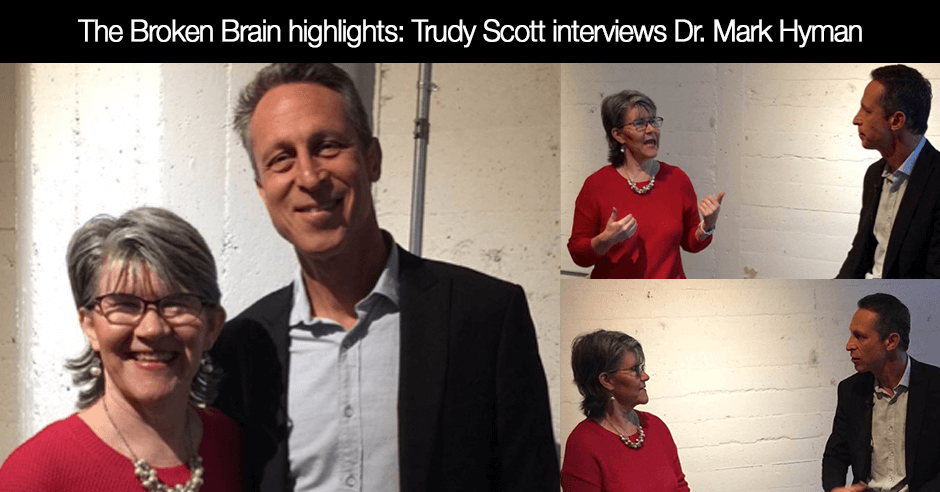
The Broken Brain highlights: Trudy Scott interviews Dr. Mark Hyman

January 3, 2018 By Trudy Scott 6 Comments

I’m really excited to share my in-person video interview with Dr. Mark Hyman, MD. It’s an interview I arranged because I’m so excited about his Broken Brain docu-series which will start airing on January 17th. You may have seen it when they recently did a test launch but if you haven’t yet seen the series it is well-worth watching and is highly recommended! (Registration link here)

In this interview with Dr. Hyman we talk about root causes of anxiety, depression, dementia, Alzheimer’s disease and ADHD: medication side-effects, diet, the microbiome, nutritional deficiencies, brain chemical imbalances, heavy metal toxicities and more; he shares his personal mercury toxicity story and the why behind the Broken Brain series; we cover off-label medications, trauma, labels and functional medicine.

I love the term he uses to describe body-mind medicine (which is different from mind-body medicine): somatopsychic = mental symptoms caused by bodily illness i.e. all of the above root causes.

One of the big reasons I’m supporting The Broken Brain docu-sersies is that it offers solutions and plenty of hope!

Here is the interview and transcript.

(there are captions on the video – if you don’t see them be sure to click the CC on the bottom right)

Trudy: – Welcome, it’s Trudy Scott here, food mood expert, certified nutritionist, author of The Antianxiety Food Solution, host of The Anxiety Summit, and today I’ve got the pleasure of interviewing Dr. Mark Hyman, who is the creator and host of the new Broken Brain series, and I’m just really excited to be here. I’ve been such a fan of yours for so many years. I know my community knows who you are, and they’re really excited about the Broken Brain series. I wanted to get together with you, and give some highlights, and talk about firstly why you created the Broken Brain series, and you’ve got a story behind your passion about it.

Dr. Mark Hyman: – I do. I do. Thank you for having me. Yeah, so about 20 years ago, I went from being a very healthy young doctor to having a broken brain, and a broken body, and it turned out it was from mercury poisoning that I got when I was in China, and I just developed severe chronic fatigue, where I couldn’t focus, I couldn’t remember, I couldn’t think, I couldn’t pay attention, I was depressed, I couldn’t sleep, I felt just completely not myself, and through that journey, was able to discover this world of functional medicine, which I thought was fairly developed at the time, but was really just in its infancy, and through discovering functional medicine, I was able to repair my own system, and fix my broken brain. I began to apply this with patients, seeing all kinds of things, without really knowing what I was doing, I was just treating people’s physical systems, fixing their gut, helping their immune system, cleaning up their diet, optimizing their nutritional status, balancing their hormones, and all their mental problems would get better. Their anxiety would get better, their depression would get better, and I wasn’t actually treating the depression or anxiety. Autism, ADD, memory issues, dementia, all these things would start to get better, and I began to realize that the body was driving a lot of this brain dysfunction, and that if you fix the body, a lot of the brain disorders would get better, that it wasn’t a primarily a mental problem, but it was a physical problem. Just as there’s a mind body effect, which is real, there’s also a body mind effect and that hadn’t been really talked about, so I wrote a book called The UltraMind Solution 10 years ago, which outlined this model, and then really this has been an incredible 10 years of brain research that I felt needed updating, and so we created a documentary series online looking at the new research, and how this applies, and the things that I noticed 10, 15, 20 years ago are now becoming more and more accepted and understood as real, and so we’re able to actually work with people in a very specific and direct way to help heal their broken brains, and to help people recover from things that we thought were really irreversible, not just anxiety, depression, but ADD, autism, dementia, Parkinson’s, all sort of issues that affect the brain that have a very different approach that can be used to repair and heal.

Trudy: – That’s so powerful, and I love that you talk about this effect that the body has on the brain, because we know about mind body medicine, you talk about that in the series, about how we can use our mind to affect our health, but you use this term. Tell me what the term is that you use that talks about how physical issues in our body, nutritional deficiencies, imbalances, can actually affect the brain.

Dr. Mark Hyman: – You mean the body mind effect?

Trudy: – Yes.

Dr. Mark Hyman – Yeah.

Trudy: – You’ve give it a term, and it was called?

Dr. Mark Hyman: – Oh, somatopsychic.

Trudy: – Somatopsychic, yes.

Dr. Mark Hyman: – We think of psychosomatic, but there’s also a somatopsychic phenomena. I would say if you have mercury poisoning, or you have a thyroid problem, or you have abnormal gut flora, or you’re vitamin D deficient, or B12 deficient, it’s very hard to have a proper functioning brain. You can’t just say someone’s got depression, that’s what’s causing their hopelessness, and helplessness, and sadness, and maybe many other things, it could be psychological, it could be a trauma, but it also could be so many other factors, and they often are overlooked and ignored, and when I start peeling back the layers of what’s happening with these people, and looking underneath the hood, and looking through the functional medicine lens at the body as a system, and correcting the imbalances, it’s shocking to me what happens. I always remember when I start applying this, I was like, wow, you got better? I can’t believe it. You shouldn’t really get better, according to Western medicine.

Trudy: – Amazing, and you mention trauma. Even if someone has experienced trauma, if their nutritional status is good, they’re able to deal with it better.

Dr. Mark Hyman: – Right.

Trudy: – And maybe have less symptoms of post-traumatic stress.

Dr. Mark Hyman: – That’s right.

Trudy: – If they have a good nutritional status, and there’s a lot of good research supporting that.

Dr. Mark Hyman: – Absolutely.

Trudy: – You talk about that in the series as well.

Dr. Mark Hyman: – Yeah, absolutely. Your brain has the ability to be resilient, but if you’re nutritionally depleted, and if you’re having all sorts of inflammatory problems, if you’re eating foods you’re reacting to, or allergic to, your brain can’t work properly, so your baseline is going be much lower, but if you fix all those things, then your capacity to deal with your psychological issues, it’s not that they don’t exist, it’s that your ability to cope with them, to work through them, to heal and repair the more difficult things, which are early life traumas, or abuse, or addiction, these are much easier to deal with once you fix the basic constitution of the person.

Trudy: – Right. Now one thing that you talk about a lot in the Broken Brain series, which I really appreciate, is the fact that there’s so much over-medication.

Dr. Mark Hyman: – Yeah.

Trudy: – Can you talk a little about it today? And I know with your story, you also had anxiety, depression, and you were prescribed medications as well.

Dr. Mark Hyman: – Yeah.

Trudy: – So this is common.

Dr. Mark Hyman: – Yeah.

Trudy: – You talk about antipsychotics. You shared some pretty scary stats on the increase that we see.

Dr. Mark Hyman: – When you look at it, it kind of goes up and down, but psychiatric medication as a whole, is the number two or three most prescribed category of drugs in America, and increasing across the globe, and it’s being used instead of dealing with the real issues, and they don’t really even work that well. I mean, anxiety medications can work, but antidepressants have been shown really not to work that well for mild to moderate depression. For severe depression, they can be helpful, and they can be life saving for some people, but they’re not a panacea, and when I was a kid, there was that one kid in the class, Patty Ainsworth, who was a troublemaker. Now it’s like 10% of the class is on ADD medication. That’s a problem.

Trudy: – It is.

Dr. Mark Hyman: – And when we see one in four people have depression in their lifetime, and if the knee jerk reaction is medication, it just sort of gives people a sense of numbness, but it doesn’t really deal with the issue. So I think we are way over-medicated, and on top of that, there’s pushing of medications for off-label use, which means that they’re not approved for those indications. So they’re doing this for kids with antipsychotics, and they’re actually been sued. So the pharma companies have been held liable for promoting these drugs for off-label uses, which they’re not allowed to do, for kids. They get fined billions of dollars, but they don’t care because they’ve made umpteen more billions, and they just see it as a marketing expense. So it’s really discouraging to see what happens to the pharmaceutical use in this space, because even for example, ADD is so fixable by dealing with the root causes, and most of us not are not even trained how to think that way.

Trudy: – That’s why I love the Broken Brian series, because it offers a message of hope, offers some practical solutions, and it empowers the person who’s suffering from the brain disorder, whatever it is, anxiety, depression, dementia, you name it, empowers them with solutions, and I think the other thing is it’s going to give curious practitioners who are not on board with this functional medicine approach some insights into what the future may hold, which I think is very promising.

Dr. Mark Hyman: – Yeah. It’s very powerful. I remember this guy who read my book, The UltraMind Solution, which is really what the Broken Brain series is based on, and he was a doctor, and he had a kid with autism, and he said, “We’re so desperate. Our kids was five, he wasn’t talking. We just started with the diet. We just got him off gluten, casein, and a few days later, all of a sudden, he started talking in full sentences,” and this is a skeptical physician who witnessed this, and I see this all the time. Patients, for example, have Alzheimer’s, or dementia, or diagnosed with dementia, and it turns out they have other issues. They have heavy metal poisoning, or they might have Lyme disease in the brain, or they might have severe nutritional deficiencies, or they might be insulin resistant with high levels of sugar in their diet that are affecting their brain, and you can fix those things. There may still be issues left over, but it’s going to be much easier to deal with those after.

Trudy: – Get to the root cause, and address those root causes.

Dr. Mark Hyman: – That’s right. That’s the purpose of functional medicine, which is a medicine of why, not what, and we have all these labels, but you know, if someone comes into my office, and they’re hopeless, and helpless, have no interest in life, can’t focus, can’t sleep, don’t want to have sex, I know what’s wrong with you. Depression, but depression isn’t the cause of those symptoms, it’s the name of the symptoms. It doesn’t tell you what’s really wrong with that person. It’s could be a host of things, from low thyroid, to gluten, to mercury poisoning, to vitamin D deficiency, to B12 deficiency, to insulin resistance. All these factors can lead to depression. Same syndrome, but different causes. So I’m much more interested in addressing the causes, then you don’t have to use the medication.

Trudy: – And some people have an issue with gluten, and have autism symptoms, and someone else can have depression or anxiety or dementia.

Dr. Mark Hyman: – That’s right.

Trudy: – So it can affect different people in a different way.

Dr. Mark Hyman: – That’s a very good point. So in functional medicine, we see that one disease can have many causes, but on the other hand, one causative factor can create many diseases. For example, heavy metals may cause dementia, or autism, or depression, or anxiety, or insomnia, or gut issues can cause all these various things that are not one disease, or for example gluten, like you mentioned, can cause autoimmune disease, can cause cancer, can cause diabetes, can cause osteoporosis, can cause anemia, can cause depression, can cause even dementia. So how do you begin to think about it? Our current naming of diseases doesn’t make any sense. So all the labeling, if you look at the diagnostic criteria, we have something called the DSM-5, which is the diagnostic and statistical manual that categorizes and catalogs all the psychiatric disorders, and they’re all categorized by symptoms. So it’s all descriptive. It’s says if you have these five symptoms, you have this, but it doesn’t tell you why, and it doesn’t really help you, other than giving you a label, which doesn’t mean anything about helping you understand what’s really going on.

Trudy: – And then you’re on a medication that’s going to give you side effects, and not actually get to the root cause of the problem.

Dr. Mark Hyman: – Right.

Trudy: – And yeah, just make some nutritional changes, addressing the thyroid, getting off gluten, addressing the gut – big session in the Broken Brain series.

Dr. Mark Hyman: – Yeah, it’s huge.

Trudy: – The gut brain connection.

Dr. Mark Hyman: – I mean, we’re just learning about this. For example, for years one of the main ways I treated the brain was fixing the gut, and that means optimizing the flora, getting rid of bad bugs, helping heal leaky gut, and we just did it, we didn’t really have a deep understanding other than we knew the microbiome was important, but now we know, for example, that there are more bacterial molecules in your blood than your own molecules, that you have 10 times as many bacterial cells in you as your own cells, 100 times as much bacterial DNA, and that DNA is all producing proteins, and all those proteins, you have 20,000 genes, there’s two million genes of bacteria in you, and they’re all producing molecules that are entering your blood stream, and driving all sorts of biological reactions, that aren’t even human molecules. So we have to begin to sort of how do those affect the brain and what’s going on? And it’s very powerful.

Trudy: – And so much research in this area, it’s just growing and growing.

Dr. Mark Hyman: – Yeah.

Trudy: – So you mentioned earlier that you wanted to do this because of all the new research. There is so much research on the gut brain connection, nutritional psychiatry. Dr. Drew Ramsey talks about this recent study on depression, and just getting people onto a real whole foods diet, and how 30% saw remission of symptoms, just changing their diet.

Dr. Mark Hyman: – Of course.

Trudy: – Not even going gluten free. So it’s powerful. These small changes can have powerful effects.

Dr. Mark Hyman: – Profound, profound effects

Trudy: – Well, thank you so much.

Dr. Mark Hyman – Thank you.

Trudy: – For your wonderful work that you do. And for making time today. I highly recommend the Broken Brain series with Dr. Mark Hyman, all the wonderful experts.

Dr. Mark Hyman: – Oh, so many. We’ve got 57 experts.

Trudy: – Amazing, some of our favorite functional medicine practitioners.

Dr. Mark Hyman: – Yeah.

Trudy: – Thank you.

Dr. Mark Hyman: – Thank you.

(I’m a tad disappointed that there is the background noise of people talking – and apologize – but I am hoping the great content overrides this and it’s not too distracting.)

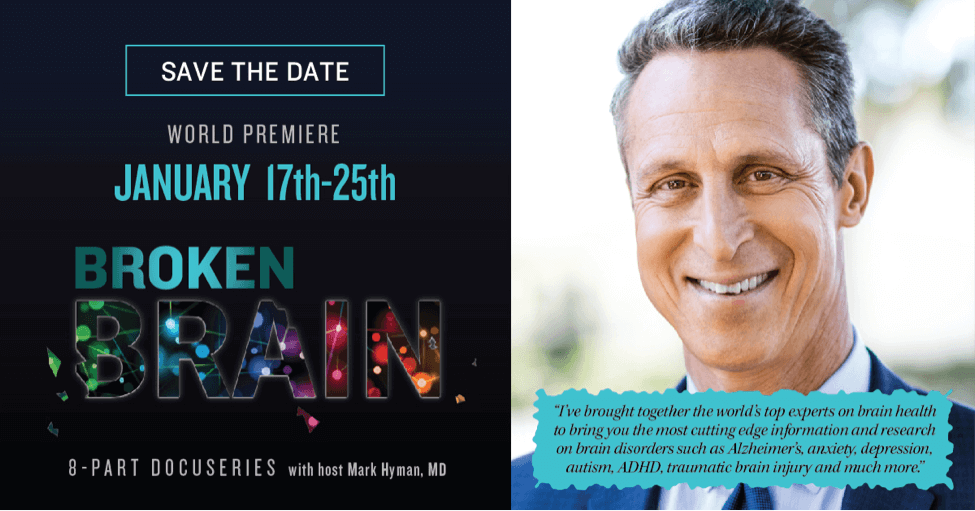
Save the date for the 8 -part Broken Brain docusersies, hosted by Dr. Mark Hyman – and register here. It airs January 17-25th

Here’s a list of ALL the episodes, to showcase just some of what you will have access to. Each episode will be available for 24 hours, at no-cost!

  1. The Broken Brain Epidemic / My Story (January 17)
  2. Gut Brain Connection: Getting to The Root of a Broken Brain (January 18)
  3. Losing Your Mind (Alzheimer’s, Dementia, MS, and More) (January 19)
  4. ADHD and Autism (January 20)
  5. Depression & Anxiety (January 21)
  6. Traumatic Brain Injury: Accidents, Sports, and More (January 22)
  7. 7 Steps to An UltraMind (Part 1) (January 23)
  8. 7 Steps to An UltraMind (Part 2) (January 24)

I hope you enjoy it and get as much out of it as I did!

I actually flew from Sydney to LA for this opportunity to meet and interview him, and share more about the Broken Brain series, and I’m so glad I did! It was the first time I’d met Dr. Hyman in person and it truly was an honor to be in the company of this great man who is doing so much in the functional medicine world! Again, here is that link to register

Please share if any of this resonates with you – what solutions you have found have helped you and/or what you are working on addressing now?

AN UPDATE: there has been some feedback on the term “broken brain” being too negative and even scary so I gathered some feedback and share it in this blog: Is the term ‘broken brain’ hopeful and real or too negative and scary? I really want to hear your thoughts if you are offended by the term broken brain.  I also want to share Dr. Hyman’s apology.

Filed Under: Anxiety, Depression, Events, Gut health, Mental health, Mercury Tagged With: ADHD, alzheimer's, anxiety, broken brain, depression, functional medicine, mark hyman, Trudy Scott

  • « Go to Previous Page
  • Page 1
  • Interim pages omitted …
  • Page 12
  • Page 13
  • Page 14
  • Page 15
  • Page 16
  • Interim pages omitted …
  • Page 27
  • Go to Next Page »

Primary Sidebar

GABA QuickStart Homestudy

gaba quickstart homestudy

Free Report

9 Great Questions Women Ask about Food, Mood and their Health

You'll also receive a complimentary subscription to my ezine "Food, Mood and Gal Stuff"


Connect with me

Popular Posts

  • Amino Acids Mood Questionnaire from The Antianxiety Food Solution
  • The Antianxiety Food Solution Amino Acid and Pyroluria Supplements
  • Pyroluria Questionnaire from The Antianxiety Food Solution
  • Collagen and gelatin lower serotonin: does this increase your anxiety and depression?
  • Tryptophan for the worry-in-your-head and ruminating type of anxiety
  • GABA for the physical-tension and stiff-and-tense-muscles type of anxiety
  • The Antianxiety Food Solution by Trudy Scott
  • Seriphos Original Formula is back: the best product for anxiety and insomnia caused by high cortisol
  • Am I an anxious introvert because of low zinc and vitamin B6? My response to Huffington Post blog
  • Vagus nerve rehab with GABA, breathing, humming, gargling and key nutrients

Recent Posts

  • Her cravings for chips and peanut butter were triggered by stress: GABA ends cravings and reduces physical tension and fear of heights
  • It is truly miraculous to be able to move through life without crippling anxiety and panic
  • GABA and tryptophan combo provide immediate and noticeable relief for tremors and cervical dystonia in just 7 days
  • Red light therapy for back and neck pain, plantar fasciitis and low mood – a complement to the amino acids GABA, DPA and tryptophan
  • What do I use instead of Seriphos to help lower high cortisol that is affecting my sleep and making me anxious at night?

Categories

  • 5-HTP
  • AB575
  • Addiction
  • ADHD
  • Adrenals
  • Alcohol
  • Allergies
  • Alzheimer's disease
  • Amino Acids
  • Anger
  • Antianxiety
  • Antianxiety Food Solution
  • Antidepressants
  • Anxiety
  • Anxiety and panic
  • Autism
  • Autoimmunity
  • benzodiazapines
  • Bipolar disorder
  • Books
  • Caffeine
  • Cancer
  • Candida
  • Children/Teens
  • Collagen
  • Cooking equipment
  • Coronavirus/COVID-19
  • Cravings
  • Depression
  • Detoxification
  • Diabetes
  • Diet
  • DPA/DLPA
  • Drugs
  • EFT/Tapping
  • EMF
  • EMFs
  • Emotional Eating
  • Endorphins
  • Environment
  • Essential oils
  • Events
  • Exercise
  • Fear
  • Fear of public speaking
  • Fertility and Pregnancy
  • Fish
  • Food
  • Food and mood
  • Functional neurology
  • GABA
  • Gene polymorphisms
  • General Health
  • Giving
  • Giving back
  • Glutamine
  • Gluten
  • GMOs
  • Gratitude
  • Gut health
  • Heart health/hypertension
  • Histamine
  • Hormone
  • Hyperparathyroidism
  • Hypoglycemia
  • Immune system
  • Inflammation
  • Insomnia
  • Inspiration
  • Introversion
  • Joy and happiness
  • Ketogenic diet
  • Lithium orotate
  • Looking awesome
  • Lyme disease and co-infections
  • MCAS/histamine
  • Medication
  • Men's health
  • Mental health
  • Mercury
  • Migraine
  • Mold
  • Movie
  • MTHFR
  • Multiple sclerosis
  • Music
  • NANP
  • Nature
  • Nutritional Psychiatry
  • OCD
  • Osteoporosis
  • Oxalates
  • Oxytocin
  • Pain
  • Paleo
  • Parasites
  • Parkinson’s disease
  • PCOS
  • People
  • PMS
  • Postpartum
  • PTSD/Trauma
  • Pyroluria
  • Questionnaires
  • Real whole food
  • Recipes
  • Research
  • Schizophrenia
  • serotonin
  • SIBO
  • Sleep
  • Special diets
  • Sports nutrition
  • Stress
  • Sugar addiction
  • Sugar and mood
  • Supplements
  • Teens
  • Testimonials
  • Testing
  • The Anxiety Summit
  • The Anxiety Summit 2
  • The Anxiety Summit 3
  • The Anxiety Summit 4
  • The Anxiety Summit 5
  • The Anxiety Summit 6
  • Thyroid
  • Thyroid health
  • Toxins
  • Tryptophan
  • Tyrosine
  • Uncategorized
  • Vegan/vegetarian
  • Women's health
  • Yoga

Archives

  • May 2026
  • April 2026
  • October 2025
  • September 2025
  • August 2025
  • July 2025
  • June 2025
  • May 2025
  • April 2025
  • March 2025
  • February 2025
  • January 2025
  • November 2024
  • October 2024
  • September 2024
  • August 2024
  • July 2024
  • June 2024
  • May 2024
  • April 2024
  • March 2024
  • February 2024
  • January 2024
  • December 2023
  • November 2023
  • October 2023
  • September 2023
  • August 2023
  • July 2023
  • June 2023
  • May 2023
  • April 2023
  • March 2023
  • February 2023
  • January 2023
  • December 2022
  • November 2022
  • October 2022
  • September 2022
  • August 2022
  • July 2022
  • June 2022
  • May 2022
  • April 2022
  • March 2022
  • February 2022
  • January 2022
  • December 2021
  • November 2021
  • October 2021
  • September 2021
  • August 2021
  • July 2021
  • June 2021
  • May 2021
  • April 2021
  • March 2021
  • February 2021
  • January 2021
  • December 2020
  • November 2020
  • October 2020
  • September 2020
  • August 2020
  • July 2020
  • June 2020
  • May 2020
  • April 2020
  • March 2020
  • February 2020
  • January 2020
  • December 2019
  • November 2019
  • October 2019
  • September 2019
  • August 2019
  • July 2019
  • June 2019
  • May 2019
  • April 2019
  • March 2019
  • February 2019
  • January 2019
  • December 2018
  • November 2018
  • October 2018
  • September 2018
  • August 2018
  • July 2018
  • June 2018
  • May 2018
  • April 2018
  • March 2018
  • February 2018
  • January 2018
  • December 2017
  • November 2017
  • October 2017
  • September 2017
  • August 2017
  • July 2017
  • June 2017
  • May 2017
  • April 2017
  • March 2017
  • February 2017
  • January 2017
  • December 2016
  • November 2016
  • October 2016
  • September 2016
  • August 2016
  • July 2016
  • June 2016
  • May 2016
  • April 2016
  • March 2016
  • February 2016
  • January 2016
  • December 2015
  • November 2015
  • October 2015
  • September 2015
  • August 2015
  • July 2015
  • June 2015
  • May 2015
  • April 2015
  • March 2015
  • February 2015
  • January 2015
  • December 2014
  • November 2014
  • October 2014
  • September 2014
  • August 2014
  • July 2014
  • June 2014
  • May 2014
  • April 2014
  • March 2014
  • February 2014
  • January 2014
  • December 2013
  • November 2013
  • October 2013
  • September 2013
  • August 2013
  • July 2013
  • June 2013
  • May 2013
  • April 2013
  • March 2013
  • February 2013
  • January 2013
  • December 2012
  • November 2012
  • October 2012
  • August 2012
  • July 2012
  • June 2012
  • May 2012
  • April 2012
  • March 2012
  • February 2012
  • January 2012
  • December 2011
  • November 2011
  • October 2011
  • September 2011
  • August 2011
  • July 2011
  • June 2011
  • May 2011
  • April 2011
  • March 2011
  • February 2011
  • January 2011
  • December 2010
  • October 2010
  • September 2010
  • July 2010
  • May 2010
  • April 2010
  • March 2010
  • February 2010
  • January 2010
  • November 2009

Share the knowledge!

The above statements have not been evaluated by the Food and Drug Administration. Products listed in this website are not intended to diagnose, treat, cure or prevent any disease.

The information provided on this site is for informational and educational purposes only and is not intended as a substitute for advice from your physician or other health care professional. You should consult with a healthcare professional before starting or modifying any diet, exercise, or supplementation program, before taking or stopping any medication, or if you have or suspect you may have a health problem.


Copyright © 2026 Trudy Scott. All Rights Reserved. | Privacy | Terms and Conditions | Refund Policy | Medical Disclaimer

Free Report

9 Great Questions Women Ask about Food, Mood and their Health

You’ll also receive a complimentary subscription to my ezine “Food, Mood and Gal Stuff”