• Skip to primary navigation
  • Skip to main content
  • Skip to primary sidebar

everywomanover29 blog

Food, Mood and Women's Health – Be your healthiest, look and feel great!

  • Blog
  • About
  • Services
  • Store
  • Resources
  • Testimonials
  • The Book
  • Contact
  • Search this site

depression

Using amino acids for anxiety and depression: does the right dose ever change or need a tweak?

October 19, 2018 By Trudy Scott 14 Comments

If you are using targeted individual amino acids for anxiety and/or depression and doing well on them, you’ll likely get to the point when you’re asking questions like how to discontinue them and does the right dose ever change or need a tweak, especially after some stressful life events. Amy posted this question in the comments section of the blog on using tyrosine to create a sense of calm energy (paraphrased and formatting for ease of reading)

Trudy you are a God send! I stumbled upon your work after following Julia Ross. I have depression and anxiety. I’m currently taking:

1000 mg tyrosine 2x daily

500 mg glutamine morning, 1000mg mid-morning and afternoon

500mg DPA (Endorphigen) 3 x daily (previously I was using DLPA but your recommended DPA was so much better and less stimulating)

50 mg 5-HTP afternoon and

1500mg tryptophan at night

I used the amino acids to treat what used to be referred to as “atypical” depression: loss of motivation, tiredness, lethargic, intense carb craving, feelings of guilt and hopelessness. I would become paralyzed with depression, barely able to get through the days. When I was younger I treated these episodes with antidepressants but as I got older could no longer tolerate the side effects. I’m also still on birth control pills at the age of 46 and believe I may be in perimenopause but can’t stop the pills for medical reasons.

Tyrosine gave me my energy back, glutamine cut the carb cravings. DPA and True Calm work wonders for my anxiety.

I watch my sugar intake and always consume lots of animal protein. I’m so grateful for this solution.

After trialing this seems to be the right combo. I always get confused when is it time to discontinue supplements? Do you stop or slowly reduce or taper?

Does the “right” dose ever change? I’ve been on this combo about 2 months. I’ve felt great but some anxiety/panic creeping back up …. wondering if supplements need a tweak or is this just the result of some stressful life events. Advice appreciated!

I was really pleased to hear the wonderful results she was having and glad that she had trialed the amino acids to find the correct amount for her unique needs and situation. I don’t see this happening often enough and it really is the most effective way to get results. It’s what I do with all my clients – methodical, step-by-step trialing of each amino acid, one at a time and carefully documenting results (both good and bad) in order to find the optimal dose of each one.

When and how to discontinue the amino acids?

To answer her question about when and how to discontinue this is my feedback:

Once you are feeling back to your old self with no more anxiety, panic attacks or depression, you may choose to stop everything at once, but I prefer to slowly lower the amount of one amino acid at a time and add back if your symptoms come back. They don’t need to be “tapered” but doing it this way it helps with preventing your original anxiety and depression symptoms going back to really bad in one big swoop and having to start all over again.

I will add that I have had feedback from someone saying when she stopped tryptophan abruptly she felt the same withdrawal effects as when she weaned off meds but based on my experience this is very rare.

After posting her question Amy made some adjustments – taking less of all of them. As I mentioned above I find it better to lower the amount of one amino acid at a time – kind of reverse of the trialing method you use when starting the amino acids. Also, since she mentioned she felt anxiety/panic creeping back up, I would have expected her to increase some of the calming amino acids.

Does the right dose ever change or need a tweak?

And to answer Amy’s other question: does the right dose ever change or need a tweak?

Yes, the “right dose” can change based on stressful life events especially if you have pyroluria – stressful life events can cause you to dump more zinc and vitamin B6 affecting serotonin and GABA production and increasing the social anxiety.

Amy does mention that she’s on the birth control pill and this depletes zinc and vitamin B6 and hence serotonin) and has an impact on the microbiome – so this may well be playing a role in the need to tweak doses.

There are many other factors that could lead to the need to adjust the amino acids (or other supplement protocols):

  • hormonal changes like PMS, perimenopause or menopause
  • something contributing to leaky gut like adding back gluten or accidental exposure to gluten
  • antibiotics (affecting the microbiome and serotonin/GABA levels)
  • artificial sweeteners (because of their effect on the microbiome and hormones)
  • starting on other medications (since many cause nutritional depletions)
  • adding in a new food like collagen/gelatin (for some people collagen and gelatin may lower serotonin levels)
  • running a marathon (it likely depletes zinc and may ramp up cortisol)
  • a formulation changing completely without you knowing (one example is Seriphos – used to lower high cortisol – where the core ingredient changed completely and the labeling stayed the same)
  • a product changing from using gelatin to cellulose capsules (this may be problematic if you have SIBO)
  • you move into a new home and get mold exposure
  • you get a new dog or cat and start using Frontline Plus for fleas (fipronil, the active ingredient, targets GABA receptors and recent research points to increased anxiety, aggressive behavior, memory problems)
  • you have started using a sauna (depletion of zinc and other minerals, as well as stirring up toxins)
  • your need for serotonin support increases as you head into winter-time (some low serotonin folks are more susceptible to the winter blues)
  • a recent course of fluoroquinolone antibiotics (impacts on magnesium and GABA levels and the mitochondria)
  • you may no longer need them

This is not a complete list of reasons that could impact you but this will give you an idea of what to start to think about.

Hopefully this shows how important it is to monitor how you’re doing and adjust as needed (either up or down) and think about what is changing in your life.

If you’d like to read about the amino acids products Amy uses – the same ones I recommend and use with clients – you can find them listed on my supplements blog.

We appreciate Amy for allowing me to share her results and posting these questions which are a great learning opportunity for you.  She shared this with me:

I hope my “story” is helpful. Keep doing this important work! I work in the behavior health field. My colleagues think this is radical thinking and continue to only support the medical model. I’ve done a lot of my own research and trial and error. I wish there were more-open minded clinicians.

Hopefully with success stories like this, all the nutritional psychiatry research and behavioral health practitioners like Amy who have experienced it first hand and/or with clients/patients and family, we’ll change how mental health care is approached.

Do success stories like this lead you to be more open-minded about anxiety nutrition solutions? Have they worked for you?

And have you found the ideal dose of amino acids and then needed to adjust them up or down based on any of the above? How methodical were you in doing your adjustments?
Filed Under: Amino Acids, Anxiety, Anxiety and panic, Tryptophan Tagged With: adjust, anxiety, depression, discontinue, DPA, microbiome, right dose, stress, taper, tryptophan, tweak, tyrosine

Delayed IgG food sensitivities: depression and anxiety due to inflammation, leaky gut, leaky blood brain barrier and low serotonin

July 20, 2018 By Trudy Scott 7 Comments

It’s really encouraging and exciting to see a major study confirming what we’ve known about IgG food sensitivities or IgG food reactivity for years, and also reporting a link to irritable bowel syndrome (IBS) and depression. The paper, published in May this year, The Food-Specific Serum IgG Reactivity in Major Depressive Disorder Patients, Irritable Bowel Syndrome Patients and Healthy Controls states

There is an increasing amount of evidence which links the pathogenesis of irritable bowel syndrome (IBS) with food IgG hyperreactivity. Some authors have suggested that food IgG hyperreactivity could be also involved in the pathophysiology of major depressive disorder (MDD).

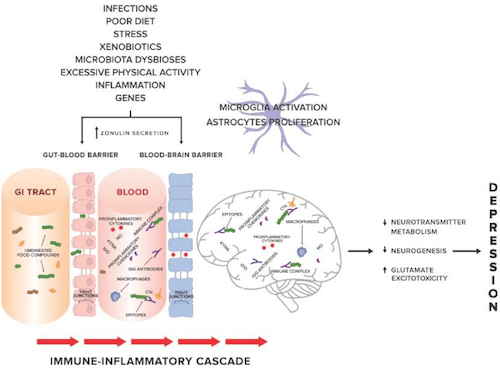
The following diagram and excerpt illustrates the gut-immune-inflammatory-brain model for depression that is associated with food IgG hyperreactivity or sensitivity.

The gut-immune-inflammatory-brain model for Major Depressive Disorder associated with food IgG hyperreactivity. According to the hypothesis proposed in our previous work, we present a possible mechanism underlying the MDD [major depressive disorder] development, suggesting that the interplay between genetic and environmental factors may lead to disruption of tight junctions, the loss of their integrity and both gut and BBB [blood brain barrier] permeability. Undigested food compounds, which would normally break down in the gut, translocate into the blood circulation, and trough epitopes combine with food IgG antibodies to form immune complexes. This, in turn, provokes an abnormal response and triggers immune-inflammatory cascade. Uncontrolled release of the proinflammatory mediators may contribute to low-grade systemic inflammation and low-grade neuroinflammation, which, via pathological processes in CNS [central nervous system], i.e., changes in neurotransmitter metabolism, neurogenesis, glutamate excitotoxicity, may in consequence induce and then maintain and prolong depression.

[diagram and excerpt from The Food-Specific Serum IgG Reactivity in Major Depressive Disorder Patients, Irritable Bowel Syndrome Patients and Healthy Controls]

I wrote my book, The Antianxiety Food Solution, in 2011 and there wasn’t research on the gut-immune-inflammatory-brain model, but I do write extensively about delayed IgG food sensitivities (as well as other types of food issues). If you don’t have my book I’m including some of the highlights related to this (and I encourage you to pick up a copy too!). If you do have my book I hope this next section encourages you to go back and read chapter 4 again (and even check out the other books I mention below).

I write about how with delayed food reactions, it may take a few hours to several days before symptoms appear, which can make it difficult to identify the offending food or foods. In these reactions, the body responds by creating a type of antibody known as IgG (immunoglobulin G).

I also write about how food sensitivities can have effects beyond physiological symptoms, including creating imbalances in key chemicals in the brain, which can cause anxiety, phobias, depression, irritability, and mood swings. When food sensitivities have these effects, they are sometimes termed “brain allergies” or “cerebral allergies.” Dr. Carl Pfeiffer wrote extensively about this and used these terms in his wonderful book, Nutrition and Mental Illness, way back in 1987. (This book is a quick read and is one of my favorite older books on the subject of mental health and biochemical imbalances.)

I also reference the work of my colleague and friend, clinical nutritionist Liz Lipski. In her 2004 book, the 3rd edition of Digestive Wellness she shares that

24 percent of American adults claim they have delayed food and environmental reactions.

She feels that these sensitivities are often the result of leaky gut syndrome, a condition characterized by damage to the microvilli lining the intestinal walls. This allows undigested food particles to travel across the intestinal wall and into the blood, where the immune system responds to them as foreign, harmful substances and creates antibodies to neutralize them.

All this sounds very similar to what the new study is reporting doesn’t it? I’d prefer it not to take so long for the knowledge from as far back as 1987 to get into mainstream journals but it’s the world we live in and we can just appreciate that we are moving forward and in the right direction!

The 2018 paper mentioned above concludes the following:

Our findings suggest more common food-specific serum IgG hyperreactivity among patients with IBS and MDD [major depressive disorder], which may be one of the mechanisms leading to the development of immune activation and low-grade inflammation observed in these disorders.

They do support an elimination diet for IBS but not for depression:

There is no causal relationship which could confirm clinical utility of an elimination diet in patients with depression

I do love research, but this really bothers me as it’s just common-sense and we do have some case studies supporting the use of elimination diets. In this case study the patient’s “treatment-resistant” depression improved considerably with an elimination diet, with similar results in another case study where a gluten-free elimination diet improved both anxiety and depression and everyday functioning.

In the meantime, we’ll continue to rely on the wisdom of practitioners like Dr. Pfeiffer and Liz Lipski, and all the clinical evidence showing how an elimination diet does help with both depression and anxiety. Just read some of the success stories on this blog – Paleo and grain free diets: anxiety and depression success stories.

Other mechanisms: nutrient malabsorption and serotonin production

There are other mechanisms that I also cover in my book – nutrient malabsorption and a more direct impact on serotonin production.

One possible mechanism is indirect effects of gastrointestinal damage due to eating problem foods, resulting in nutrient malabsorption. In a 2009 double blind placebo-controlled study:

65 celiac patients aged 45-64 years on a strict gluten-free diet for several years [and showing signs of low folate, low vitamin B12 and low vitamin B6] were randomized to a daily dose of 0.8 mg folic acid,0.5 mg cyanocobalamin and 3 mg pyridoxine or placebo for 6 months

I doubt folic acid or this form of B12 would be used today but even with these forms at these low doses, the study participants showed homocysteine in a good range and reported improvement in general well-being – after just 6 months of supplementation.

Another possible mechanism is the fact that gluten sensitivity and the resulting damage to the gut can limit the availability of tryptophan and therefore lead to decreases in levels of serotonin. Research published in 2005, Gluten-free diet may alleviate depressive and behavioural symptoms in adolescents with coeliac disease: a prospective follow-up case-series study, reports that:

serotonergic dysfunction due to impaired availability of tryptophan may play a role in vulnerability to depressive and behavioral disorders among adolescents with untreated coeliac disease

In addition to removing the foods that are causing the sensitivities, you need to heal the gut and boost serotonin levels with a targeted individual amino acid like tryptophan.

Give the link between anxiety and depression, all of the above could apply if you have anxiety too.

Have you had IgG food sensitivity testing and found that an elimination diet helped reduce your depression or anxiety symptoms?

Filed Under: Depression Tagged With: anxiety, blood brain barrier, celiac, depression, gluten, IgG, leaky BBB, leaky gut, serotonin, tryptophan

Kate Spade: suicide, hormonal imbalance, antidepressants as a trigger and the stigma of mental health

June 15, 2018 By Trudy Scott 34 Comments

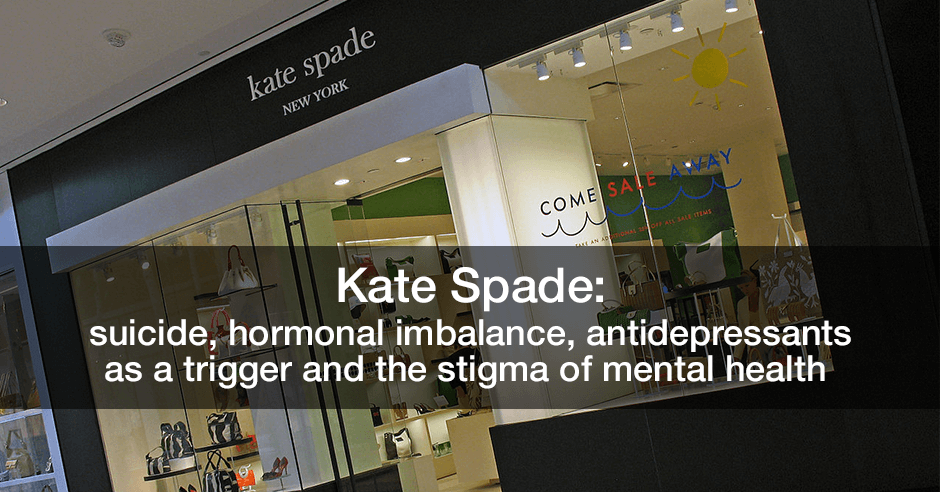
Photo by Paul Keleher (originally posted to Flickr as kate spade) [CC BY 2.0], via Wikimedia Commons
Kate Spade, a well-known American fashion icon and handbag designer, died by suicide last week at the age of 55. I’m always torn in situations like this…just share the news story with my sympathies in order to respect the family or use this as an opportunity to learn from and prevent others from suffering the same fate. This time I’m doing the latter – with the risk of appearing insensitive – because there are red flags here and I feel so strongly that we all need to learn from this in order to move mental health forward. I’m hoping her husband and family would approve.

In the announcement about Kate Spade’s suicide in the New York Times, Mr. Spade said:

that though his wife had suffered from anxiety at points during their relationship and marriage, her serious bouts of depression only began about six years ago, at the age of 49.

Kate suffered from depression and anxiety for many years. She was actively seeking help and working closely with her doctors to treat her disease, one that takes far too many lives. We were in touch with her the night before and she sounded happy. There was no indication and no warning that she would do this. It was a complete shock. And it clearly wasn’t her. There were personal demons she was battling.

My heart goes out to Kate Spade’s husband, young daughter and loved ones. Her suicide is just so sad but as I said I have a fair bit to say about this….


Hormone imbalance triggering anxiety and depression?

According to the reports, Kate’s “serious bouts of depression only began about six years ago, at the age of 49, but she had suffered “from depression and anxiety for many years”.

Perimenopause and menopause is a classic time for women to experience worsening anxiety and depression and can be driven by fluctuating hormones, especially low estrogen. In this study, Depression and the menopause: why antidepressants are not enough? the authors share that

Postmenopausal depression is more severe, has a more insidious course, is more resistant to conventional antidepressants in comparison with premenopausal women and has better outcomes when antidepressants are combined with HT (hormone therapy).

Addressing hormone imbalance as one possible root cause can eliminate the anxiety and depression. Some of my favorite resources for hormone balance are these books: The Hormone Secret and Cooking for Hormone Balance.


Low levels of neurotransmitters like serotonin, catecholamines and GABA?

Directly connected to hormonal imbalance is brain chemistry imbalance. Addressing low levels of neurotransmitters like serotonin, the catecholamines and GABA provide results quickly when they are used in a targeted way based on individual needs:

  • Low serotonin is an issue when estrogen levels are declining and the amino acid tryptophan can have profound benefits if low serotonin is one of the root causes, leading to depression, worry, fear, overwhelm and sleep issues.
  • Low catecholamines can cause the “I just want to say in bed” depression and low motivation, together with fatigue and poor focus. The amino acid tyrosine can help to eliminate some of this and also provides thyroid support.  Poor thyroid health can also be a root cause of depression.
  • We see low GABA levels when progesterone is low and if this is one of the root causes, it can result in increased physical anxiety and insomnia. The amino acid GABA, opened on to the tongue, can provide calming results within minutes.

I can totally relate to the hormonal aspect as I suffered from PMS for years and my anxiety issues and panic attacks started in my late 30s and I had a really low spell as I was going through menopause.  Both GABA and tryptophan turned things around very quickly for me as they do for my clients.


The role of diet and nutritional psychiatry?

There is so much new science behind the role of a real foods traditional diet for alleviating both depression and anxiety. The SMILES study, published by Prof Felice Jacka early 2017, was the first randomized controlled diet depression study and ONE THIRD of the dietary intervention group saw improvements in their depression symptoms.  This was just diet alone and switching from processed and junk food to real food with no specific dietary restrictions.

There is also much clinical evidence supporting how diet can have an impact. Holly, suffered from with severe depression and anxiety changed her diet and shared this with me:

Over the course of a year and a half, I was given 10 different psychiatric diagnoses and cycled through 10 different medications. I discovered the healing power of diet completely by accident, and it changed my life. I now live with no diagnoses and no symptoms.

I started with the Whole30 (strict paleo), then went paleo, dabbled with a ketogenic approach, and now I eat a modified paleo diet, with some rice and goat dairy.

This has been termed nutritional psychiatry and you can read more diet-depression and diet-anxiety success stories here.

Keep in mind that your prescribing psychiatrist may not yet be on board with this or up to date on the newest research. Just last week someone told me what happened when they discussed nutritional psychiatry with their doctor and showed them my book The Antianxiety Food Solution (my Amazon link). He said: “Good luck with that!”


Could the antidepressant medication have triggered her suicide?

The statement from Kate’s husband says “She was actively seeking help for depression and anxiety over the last 5 years, seeing a doctor on a regular basis and taking medication for both depression and anxiety.”  Could the antidepressant medication have triggered her suicide or played some part?

We will never know with Kate but this is always my first thought when I learn of a suicide and when we hear of homicides in the news. One of my colleagues shared this when her suicide was first announced: “I was wondering if she was under psych care and what role meds might have played in this tragedy.”

This paper is one of many papers reporting similar antidepressant suicide and violence risks, and concludes that:

Antidepressants double the occurrence of events in adult healthy volunteers that can lead to suicide and violence

Kelly Brogan MD – Holistic Psychiatrist​ no longer prescribes psychiatric medications because we don’t know who will experience this side-effect. She writes this about a Swedish study and antidepressants and increased suicides

As antidepressant prescriptions increased 270% over 15 years, suicide rates also increased. Strikingly, more than half of the young women who committed suicide (52%) were prescribed antidepressants within a year of committing suicide. And antidepressants were detected in 41% of the women who committed suicide, showing that they were under the influence of antidepressants at the time of death. 


What if you are taking an antidepressant and seeing benefits?

When I posted some of this on Facebook earlier in the week someone who is on an antidepressant and benefiting shared her frustration that we are blaming suicide on medications.

There are many who do benefit but there are two issues I have:

  1. Even if someone is doing well on an antidepressant, benzodiazepine or other psychiatric medication I feel we need informed consent about the side-effects and training for the individual and family on what to look out for as things can change. The can occur when meds are changed, doses are increased or decreased, new meds are added, one or more are stopped abruptly or too quickly (called discontinuation syndrome). Many doctors also need to be educated and to acknowledge that suicide and homicide are very real side-effects of these meds.
  2. We don’t know who will be adversely impacted, which is why consent/knowledge about this is so important.

When we rent ski equipment or go bungee jumping we sign an informed consent form, acknowledging the possible risks of death. Why is this not happening with these medications? I just want individuals to be going into this with eyes wide-open so they don’t say “why didn’t anyone tell us this?”

If someone is currently seeing benefits from antidepressants (or benzodiazepines) I make sure they know ALL the risks and encourage them to continue to look for root the causes and address these (never stopping medications abruptly and never without the prescribing doctor’s permission).

There are many possible biological or biomedical or metabolic causes of depression and anxiety and many of these can play a factor in suicide.  Here is a list of just some of them:

  • gluten sensitivity and celiac disease
  • low B12, low B6, low omega3s, low zinc
  • the anti-malaria drug mefloquine (has been associated with acts of violence and suicide)
  • toxoplasma gondii
  • fluoroquinolone antibiotics
  • many common drugs may be contributing to depression (over 200 including acid reflux meds, blood pressure meds, birth control pill)

My concern is that none of these – the medications or poor diet and nutritional deficiencies – are ever discussed when someone does commit suicide or goes on a violent or homicidal rampage.


The stigma of mental health and the fear of seeking help

There are reports that “Kate Spade felt unable to seek help or discuss her mental health because she feared this might damage the brand she created.”  This is a huge issue and if it was true for her or if anyone with a mental health condition feels like this, this has to change!

As Dr. Mark Hyman MD​ said this when I interviewed him last year before the launch of his Broken Brain docu-series

I began to realize that the body was driving a lot of this brain dysfunction, and that if you fix the body, a lot of the brain disorders would get better, that it wasn’t a primarily a mental problem, but it was a physical problem.

Our interview and full transcript is here and we cover the gamut in 12 minutes: the gut and microbiome, nutritional deficiencies, food sensitivities, heavy metals, other environmental toxins and medications.

We don’t hide the fact that we have a broken leg so why do we have to hide it when we have a broken brain? If we can start to acknowledge that mental health issues so often have this physical aspect (and often it’s 100% physical) then hopefully we can end this crazy stigma.

And even if there is also trauma or lifestyle factors that make someone depressed or anxious – so be it. Stop the stigma and shame. Why do we have to put on a brave face and pretend all is well. It has to stop so people can ask for help.

Last but not least, I feel we need to offer practical nutritional psychiatry resources to the family who have been traumatized by the loss of a loved one to suicide.  We know the amino acids and B vitamins help individuals recover from psychological stress after a natural disaster and these same nutrients can help the family in the midst of their sorrow.

I am aware it’s a very delicate subject and I’m sure this will rub some people the wrong way but I believe we all need to be talking about this and not tip-toeing around it.

I really feel this all needed to be said today. I hope this helps you or a loved one.

Rest in peace Kate Spade.

Filed Under: Amino Acids, Depression, Nutritional Psychiatry Tagged With: antidepressant, anxiety, depression, estrogen, fear, GABA, hormone imbalance, Kate Spade, mental health, progesterone, root causes, serotonin, SSRI, stigma, suicide

Squats and deadlifts fix everything: Signals from our large leg muscles alter our brain and nervous system

June 1, 2018 By Trudy Scott 22 Comments

A new paper published in Frontiers in Neuroscience reports new research that highlights how signals from our large leg muscles alter our brain and nervous system:

Groundbreaking research shows that neurological health depends as much on signals sent by the body’s large, leg muscles to the brain as it does on directives from the brain to the muscles… the study fundamentally alters brain and nervous system medicine – giving doctors new clues as to why patients with motor neuron disease, multiple sclerosis, spinal muscular atrophy and other neurological diseases often rapidly decline when their movement becomes limited.

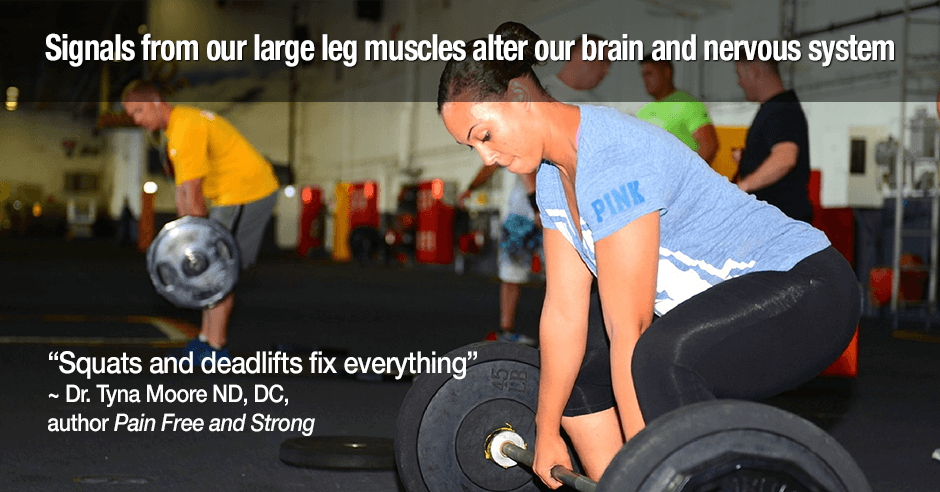
My friend and colleague, Dr. Tyna Moore ND, DC, author Pain Free and Strong said this when she shared the study on social media: “Told ya – squats and deadlifts fix everything!”

Study author, Dr. Raffaella Adami, shares this about body chemistry being altered:

Our study supports the notion that people who are unable to do load-bearing exercises – such as patients who are bed-ridden, or even astronauts on extended travel – not only lose muscle mass, but their body chemistry is altered at the cellular level and even their nervous system is adversely impacted.

Here are some points from the discussion section in the actual study that relate directly to anxiety, depression and cognition:

The level of glutamate was up-regulated… the concentration of serotonin, dopamine, GABA, and epinephrine was reduced

What this means is that people who are not able to do load-bearing exercise had glutamate up-regulated (likely leading to more anxiety and excitotoxicity), reduced serotonin and GABA (contributing to more anxiety, worry, fear, depression and carb cravings), and lower dopamine and epinephrine (so more depression, less energy and less motivation).  (You can read all the symptoms associated with out of balance neurotransmitters here and how I use targeted individual amino acids to address low levels – which you want to do in conjunction with dietary and lifestyle changes such as resistance training.)

The study goes on to share that:

Prospective studies indicate that physical inactivity is one of the most frequent avoidable risk factors for developing Alzheimer’s disease. Moreover, elevated physical activity levels are associated with a lower risk of Alzheimer’s disease. The Alzheimer’s disease patient who undertook exercise training showed decreased neuropsychiatric symptoms, improvement in cognitive function, and a slower decline in the activities of daily life.

This was an animal study conducted with mice but we have many human studies that highlight the benefits of exercise for both anxiety and depression. In this recent meta-analysis “of 33 clinical trials including 1877 participants, resistance exercise training was associated with a significant reduction in depressive symptoms.”

When I shared the Frontiers in Neuroscience paper on Facebook, I received this feedback that correlates with the research:

Chris: My son’s concussion symptoms improved by leaps when he began consistent light cardio and added some leg weight training

Katie: I wonder if this is why my mom “lost her mind” (suddenly dementia) when she broke her ankle. I thought it was the antibiotics but maybe it was the extended reclining recovery

Jessica: I had a brain injury due to being hit by a car while crossing the street a year ago. I had to dig deep to heal – meditation, fish oil….. But I thought I had hit a plateau in my healing. About 2 months ago I was able to start doing yoga again, and move my body… wow, what a difference it has made in my brain healing! I am feeling able to focus again and have more brain energy! The body is connected from head to toes

As you’ve gathered from Dr. Tyna Moore’s quote about squats and deadlifts, she is a big fan of resistance training, and she is my go-to person for questions on this topic. I’ve been following her online for a few years, love her posts and we finally got to meet in person last summer.

Tyna and trudy
Tyna and I last summer

Dr. Tyna has written a great ebook called Pain Free and Strong (you can download a copy here). She shares how sarcopenia or muscle wasting results from “deconditioning and lack of strength training exercises,” and this wisdom about movement and resistance training, also referred to as strength training:

Movement is the key to life. Without movement, your cells cannot do their thing. Your blood and lymph do not pump well. Your metabolism slows, your hormones suffer and your sleep becomes compromised. More than anything, you hurt. Motion is lotion and movement is medicine.

We have been taught as a society to do cardiovascular exercises, such as running, biking or walking as the core of our exercise routines. When I discuss exercise with my patients, I talk about “appropriate and strategic exercise” and what I’m referring to is strength training.

the most potent exercises for orthopedic health, improving metabolism, balancing hormones, decreasing inflammation, modulating immune function, reducing pain, lowering blood pressure, improving heart health and increasing resilience revolve around adding and maintaining healthy lean skeletal muscle mass to the body, and keeping it there as we age.

The entire chapter on movement is well-worth reading to get a better understanding of the importance of adding and maintaining healthy lean skeletal muscle mass.

Dr. Tyna also has the answer on how we can do this, sharing that squats and deadlifts “are king and the cornerstone to any strength and conditioning program”:

Compound lifts like squats and deadlifts can give us more bang for our buck metabolically, while also providing profound hormetic and hormonal benefits. Studies have also shown that free weights may be more potent than machines, and that machines put you into an unnatural position at times, which can lead to further injury. If machines are all you have access to, so be it. Just know that free weights are optimal and you need [a professional] to show you how to use them safely.

If you’re new to squats and deadlifts like I am, you may be like me and prefer to know what you’re letting yourself in for so here are 2 excellent blog posts with great images on how to and how not to do deadlifts and squats.  For women, the exercise section in this book looks excellent: The New Rules of Lifting for Women: Lift Like a Man, Look Like a Goddess (my Amazon link). The exercise information is more than half the book and has in-depth explanations on the mechanisms, going into much more in detail than I can cover in a blog. I would pass on the nutritional sections as the advice about canola, Splenda and low-fat is clearly outdated information. But as Dr. Tyna says in her ebook, you can’t learn this from  a book or video – find a personal trainer to guide you if you’re new to free weights.

In case you’re wondering about aerobic exercise it’s still good. In fact, one study reports how both aerobic exercise and resistance training offer slightly different benefits if you suffer from anxiety:

aerobic exercise improved general psychological distress and anxiety, while resistance training improved disorder-specific symptoms, anxiety sensitivity, distress tolerance, and intolerance of uncertainty.

So go for your walk, ride your bike, swim in the ocean, go hiking, play tennis – and all the better if you can do this out in nature for the added benefits of sunshine, fresh air, greenery and the scenery – but don’t forget the huge benefits of resistance training and find a personal trainer to get you up to speed on doing squats and deadlifts and using free weights.

And remember what Dr. Tyna says: “squats and deadlifts fix everything!”

Let us know if this is new to you and you’re now interested in doing squats and deadlifts and using free weights?

I’ve done plenty of resistance training with free weights over the years, especially when I was rock-climbing every weekend, but have not done deadlifts or squats with free weights and have decided it’s time to start. I’ll keep you posted on my progress. Feel free to share your progress too.

If you’re already doing squats and deadlifts and using free weights we’d love to hear how you enjoy it, how long you’ve been doing it and the benefits you’ve seen?  And please do share tips or words of encouragement for us newbies.

Filed Under: Exercise Tagged With: ALS, anxiety, brain, brain chemicals, deadlifts, depression, hormones, leg muscles, lifting weights, nervous system, squats, weights

Amyotrophic lateral sclerosis/ALS: ketogenic diet, GABA, 5-HTP and environmental toxins

May 25, 2018 By Trudy Scott 31 Comments

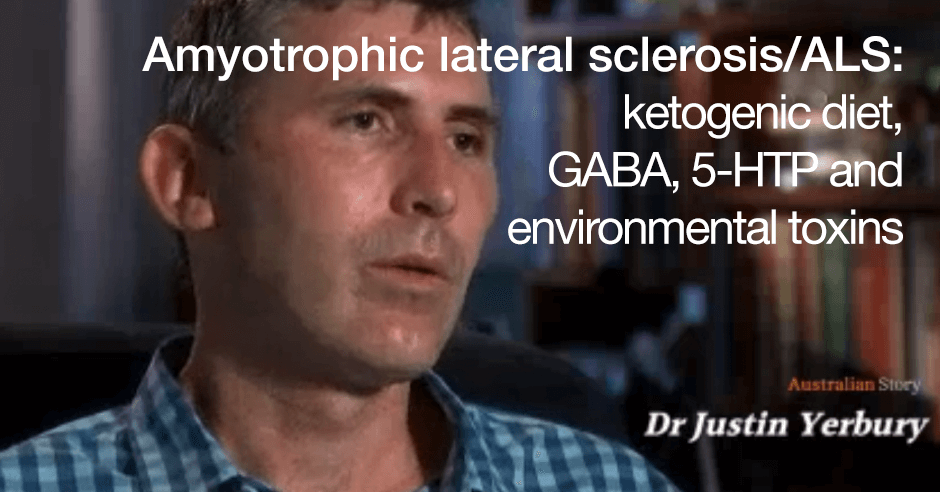
(Image from ABC: The Enemy Within – Australian Story)

I recently watched a documentary on the life and work of Justin Yerbury, a basket-ball player turned scientist who has motor neuron disease (also referred to as ALS) and is seeking a cure. It was aired on ABC and called The Enemy Within – Australian Story

When Justin Yerbury’s family members began to die from motor neurone disease he made a life-changing decision.

He turned his back on a professional basketball career and enrolled in a science degree. Almost 20 years later, he is an internationally recognised expert on the disease, leading the way in the search for a treatment.

Recently, however, Justin’s work took on a terrible urgency as he too developed symptoms of MND.

As Australian Story filmed with Justin and his family, his condition deteriorated dramatically, requiring difficult decisions to enable him to continue his search for a cure.

Having met Justin in 2017, Professor Stephen Hawking recorded the introduction to this story shortly before his death from motor neurone disease.

(the Australian spellings are neurone instead of neuron and recognised instead of recognized)

I felt very moved by his story and work and felt compelled to reach out to Dr. Yerbury to share what I have learned about this condition in the last few years. I know of a number of practitioners who work with individuals with this condition and even some colleagues with family members who have been diagnosed with this condition. I have also had enough queries that it’s time for a blog post on the topic so you are informed too.

What is Amyotrophic lateral sclerosis (ALS) and motor neuron disease (MND)?

Let’s start with the fact sheet on Amyotrophic lateral sclerosis from the NIH (National Institute of Neurological Disorders and Stroke). They describe ALS as follows:

Amyotrophic lateral sclerosis (ALS) is a group of rare neurological diseases that mainly involve the nerve cells (neurons) responsible for controlling voluntary muscle movement. Voluntary muscles produce movements like chewing, walking, and talking. The disease is progressive, meaning the symptoms get worse over time. Currently, there is no cure for ALS and no effective treatment to halt, or reverse, the progression of the disease.

ALS belongs to a wider group of disorders known as motor neuron diseases, which are caused by gradual deterioration (degeneration) and death of motor neurons. Motor neurons are nerve cells that extend from the brain to the spinal cord and to muscles throughout the body. These motor neurons initiate and provide vital communication links between the brain and the voluntary muscles.

I encourage you to watch the 30 minute program if you want to learn more about this condition and Dr. Yerbury’s work (they call it MND rather than ALS in the documentary.)

You may also be familiar with the life and story of Professor Stephen Hawking – he had ALS or motor neuron disease.

Ketogenic diet for ALS?

Here is some of the information I sent to Dr. Yerbury, explaining my work as a nutritionist working with women with anxiety using nutritional psychiatry approaches. Many of these nutritional psychiatry approaches – such as the SMILES study – have been spear-headed in Australia by Professor Felice Jacka.

I’ve recently being looking at the growing research base on the ketogenic diet and mental health and when I saw his story on ABC my first thought was – I wonder if there is research on ketogenic diets and ALS/MND? After a very quick search I found these papers:

  • High-Fat and Ketogenic Diets in Amyotrophic Lateral Sclerosis

there are strong epidemiologic data showing that malnutrition is a common symptom of amyotrophic lateral sclerosis both in humans and in mice and may contribute to disease progression. There is also epidemiologic evidence that increased dietary fat and cholesterol intake might reduce the risk of amyotrophic lateral sclerosis and the rate disease progression. Finally, data from animal studies strongly suggest that increasing dietary intake of fat ameliorates disease progression. However, determining whether amyotrophic lateral sclerosis patients should be treated with a high-fat or ketogenic diet can be based only on randomized double-blind placebo-controlled interventional trials.

  • Neuroprotection in Metabolism-Based Therapy

Metabolism-based therapy [which includes the ketogenic diet] has been used successfully in the treatment of seizures but study of its use in other neurodegenerative disorders [such as Alzheimer’s disease, Parkinson’s disease and ALS] is growing.

A gluten-free diet?

We must always consider gluten with every chronic health condition. There is a case report of celiac disease with neurologic manifestations misdiagnosed as amyotrophic lateral sclerosis:

he was diagnosed as having CD, and a gluten-free diet was immediately begun. At a 4-month follow-up, his weight and the quality of his stool had improved gradually, and the neurological manifestations had not progressed.

Another study reports that in certain cases, ALS may be associated with autoimmunity and gluten sensitivity, with elevated transglutaminase 6 antibodies in the serum of 23 patients.

GABA and 5-HTP: the Deanna Protocol

Awhile back I was contacted by someone in my community about the Deanna Protocol for ALS because it uses amino acids GABA and 5-HTP and other nutrients like niacin and CoQ10:

It is determined that the substances in the DP™ Plan provide energy to cells that are dying and in doing so keeps them alive.  This is very important because when nerve cells die, they release glutamate which kills the contiguous cells.  If too many cells are dying then we cannot supply enough energy to keep up with the rate of death of the cells.  When the DP™ Plan​ is taken in sufficient quantities, it will support the nerves that are challenged by glutamate.

As you may already know I use targeted individual amino acids such as GABA and tryptophan/5-HTP with clients so I am very familiar with their therapeutic benefits for anxiety and I am fascinated they also ease symptoms in ALS.

There is an animal study supporting this approach: Metabolic therapy with Deanna Protocol supplementation delays disease progression and extends survival in amyotrophic lateral sclerosis (ALS) mouse model.

Anxiety and depression

There is also research indicating that psychiatric symptoms often precede an ALS diagnosis:

neuropsychiatric conditions are overrepresented in amyotrophic lateral sclerosis (ALS) patient kindreds and psychiatric symptoms may precede the onset of motor symptoms…. A diagnosis of depression was significantly associated with a first record of ALS ≥5 years later, in keeping with growing evidence for major depressive disorder as an early marker of cerebral neurodegeneration.

This doesn’t mean if you have anxiety or depression that ALS or another neurodegenerative disorder is in your future, because we can address so many of the root causes before we get to that diagnosis. Many of the nutrients in the Deanna Protocol will help both the person with ALS and the caregivers who also suffer psychological distress.

Environmental toxins and ALS

We recently spent 3 days at Shell Harbour just south of the Wollongong area and we loved it!

Lovely Red Sands Beach, NSW

As beautiful as it was I couldn’t help but be concerned about the toxins being released into the air from the steel production plants. Dr. Yerbury lives in the area and is conducting his research at the University of Wollongong. I know toxins play a role in many diseases and wondered about an ALS connection. I found this paper: Association of Environmental Toxins With Amyotrophic Lateral Sclerosis

Pollution in Wollongong

I also shared that I’m a total research geek and pretty passionate about the power of nutrition, lifestyle and environmental factors because this was how I was able to eliminate my own anxiety and panic attacks.

You can learn more about Dr. Yerbury and his publications here. We appreciate the work him and his research team are doing and thank him for sharing his story.

It would be wonderful if some of this information can help Dr. Yerbury and even be considered for future research by his very passionate research team. I also hope this information will be helpful for you or a loved one suffering with ALS or MND.

Filed Under: Anxiety, Gluten, Toxins Tagged With: 5-HTP, ALS, amyotrophic lateral sclerosis, anxiety, caregiver, depression, Dr. Justin Yerbury, environmental toxins, GABA, gluten, Ketogenic diet, MND, motor neuron disease

Brain and mood benefits of a ketogenic lifestyle

May 19, 2018 By Trudy Scott 4 Comments

Keto Edge Summit

We know that ketones help you burn fat for energy, powerfully reduce inflammation and show promise in preventing and eradicating diabetes, cancer, autoimmune and neurodegenerative diseases like Alzheimer’s and Parkinson’s, and even play a role in mental health conditions like anxiety and depression. Experts on the Keto Edge Summit share many of the brain and mood benefits of a ketogenic lifestyle.

Dr. David Jockers shares this about anxiety and GABA and glutamate (his #5 benefit) in his interview on the ‘Top 7 Benefits of a Ketogenic Lifestyle’:

We have an epidemic of depression and anxiety in our society. And so, one of the key things that being keto-adapted does—not only does it downregulate inflammation in the brain, and we know that depression now is really neuroinflammation.

So the other big thing is we’ve got these neurotransmitters. One is glutamate; the other is GABA. Glutamate is an excitatory neurotransmitter, meaning that it helps us think sharply and quickly. What balances glutamate is this other neurotransmitter called GABA, gamma-aminobutyric acid. And it’s inhibitory. It helps balance us and calm us. What we find is that people with anxiety, they have high glutamate, low GABA. They don’t have a good ratio. Same thing with depression.

So what a ketogenic diet does, when we’re keto-adapted, it helps balance out the glutamate to GABA ratio and creates stability there. What does that mean to you? That means you’re going to be able to think sharply and quickly but you’re not going to get out of control. Your brain’s not going to be going too fast. You’re not going to be at risk for anxiety, for depression in the same way. You’re going to notice just an improved mood, more emotional balance.

Dr. David Perlmutter shares the importance of blood sugar regulation in his interview ‘Keto for Brain Health’:

Blood sugar regulation is pivotal as it relates to the destiny of your brain. Probably the most important biometric that determines whether you will or won’t become an Alzheimer’s patient is what your fasting blood sugar is today.

Even with the ApoE-4 gene, the ketogenic diet, physical exercise, and gluten-free, lowering sugar and carbs… are important changes that can absolutely rewrite your book.

I think it’s important to understand that humans have probably been in a state of ketosis most of the time over most of our existence on this planet. It’s only been in the last 10,000 years or so when we’ve created agriculture that we’ve had this robust availability of carbohydrate resources that has really shifted the human diet to one that is carbohydrate-based as opposed to fat-based.

Dr. Cheryl Burdette also covers inflammation in her interview, ‘Inflammation and the Ketogenic Diet’:

So when we see markers of oxidative stress high, not only do we know the DNA is suffering but we know our mitochondria, our powerhouse is suffering and, therefore, our brain is suffering. And so what you see is a high 8-OHdG – you see that high in conditions like Alzheimer’s or Parkinson’s but you even see it high in depression or bipolar or anxiety. What you also see is a ketogenic diet, helps to lower that. What you also see is adding more antioxidants, helps to lower that. So again, we’re back to our green leafies with our good fats.

The Keto Edge Summit is available online and there are REPLAYS ALL WEEKEND. You can still register here to hear the replays

Please share your gems and what you’ve implemented or are planning to implement in terms of a ketogenic lifestyle.

Filed Under: Events, Ketogenic diet Tagged With: anxiety, brain, David Jockers, David Perlmutter, depression, GABA, glutamate, Keto Edge Summit, Ketogenic diet, ketogenic lifestyle, mood

  • « Go to Previous Page
  • Page 1
  • Interim pages omitted …
  • Page 9
  • Page 10
  • Page 11
  • Page 12
  • Page 13
  • Interim pages omitted …
  • Page 27
  • Go to Next Page »

Primary Sidebar

NEW! GABA QuickStart Homestudy (with special intro pricing)

gaba quickstart homestudy

Free Report

9 Great Questions Women Ask about Food, Mood and their Health

You'll also receive a complimentary subscription to my ezine "Food, Mood and Gal Stuff"


Connect with me

Popular Posts

  • Amino Acids Mood Questionnaire from The Antianxiety Food Solution
  • The Antianxiety Food Solution Amino Acid and Pyroluria Supplements
  • Pyroluria Questionnaire from The Antianxiety Food Solution
  • Collagen and gelatin lower serotonin: does this increase your anxiety and depression?
  • Tryptophan for the worry-in-your-head and ruminating type of anxiety
  • GABA for the physical-tension and stiff-and-tense-muscles type of anxiety
  • The Antianxiety Food Solution by Trudy Scott
  • Seriphos Original Formula is back: the best product for anxiety and insomnia caused by high cortisol
  • Am I an anxious introvert because of low zinc and vitamin B6? My response to Huffington Post blog
  • Vagus nerve rehab with GABA, breathing, humming, gargling and key nutrients

Recent Posts

  • What do I use instead of Seriphos to help lower high cortisol that is affecting my sleep and making me anxious at night?
  • BeSerene™ GABA/theanine cream eases severe muscle tension in her neck/shoulders, prevents her bad headaches and quells her anxiety
  • How the correct approach, dose and sublingual use of GABA can be calming and not cause a flushed and itchy face and neck
  • The amino acid glutamine improves low mood by addressing gut health, and it has calming effects too
  • Flight anxiety with heightened breath, physical tension and also fearing the worst (the role of low GABA and low serotonin)

Categories

  • 5-HTP
  • AB575
  • Addiction
  • ADHD
  • Adrenals
  • Alcohol
  • Allergies
  • Alzheimer's disease
  • Amino Acids
  • Anger
  • Antianxiety
  • Antianxiety Food Solution
  • Antidepressants
  • Anxiety
  • Anxiety and panic
  • Autism
  • Autoimmunity
  • benzodiazapines
  • Bipolar disorder
  • Books
  • Caffeine
  • Cancer
  • Candida
  • Children/Teens
  • Collagen
  • Cooking equipment
  • Coronavirus/COVID-19
  • Cravings
  • Depression
  • Detoxification
  • Diabetes
  • Diet
  • DPA/DLPA
  • Drugs
  • EFT/Tapping
  • EMF
  • EMFs
  • Emotional Eating
  • Endorphins
  • Environment
  • Essential oils
  • Events
  • Exercise
  • Fear
  • Fear of public speaking
  • Fertility and Pregnancy
  • Fish
  • Food
  • Food and mood
  • Functional neurology
  • GABA
  • Gene polymorphisms
  • General Health
  • Giving
  • Giving back
  • Glutamine
  • Gluten
  • GMOs
  • Gratitude
  • Gut health
  • Heart health/hypertension
  • Histamine
  • Hormone
  • Hyperparathyroidism
  • Hypoglycemia
  • Immune system
  • Inflammation
  • Insomnia
  • Inspiration
  • Introversion
  • Joy and happiness
  • Ketogenic diet
  • Lithium orotate
  • Looking awesome
  • Lyme disease and co-infections
  • MCAS/histamine
  • Medication
  • Men's health
  • Mental health
  • Mercury
  • Migraine
  • Mold
  • Movie
  • MTHFR
  • Multiple sclerosis
  • Music
  • NANP
  • Nature
  • Nutritional Psychiatry
  • OCD
  • Osteoporosis
  • Oxalates
  • Oxytocin
  • Pain
  • Paleo
  • Parasites
  • Parkinson’s disease
  • PCOS
  • People
  • PMS
  • Postpartum
  • PTSD/Trauma
  • Pyroluria
  • Questionnaires
  • Real whole food
  • Recipes
  • Research
  • Schizophrenia
  • serotonin
  • SIBO
  • Sleep
  • Special diets
  • Sports nutrition
  • Stress
  • Sugar addiction
  • Sugar and mood
  • Supplements
  • Teens
  • Testimonials
  • Testing
  • The Anxiety Summit
  • The Anxiety Summit 2
  • The Anxiety Summit 3
  • The Anxiety Summit 4
  • The Anxiety Summit 5
  • The Anxiety Summit 6
  • Thyroid
  • Thyroid health
  • Toxins
  • Tryptophan
  • Tyrosine
  • Uncategorized
  • Vegan/vegetarian
  • Women's health
  • Yoga

Archives

  • October 2025
  • September 2025
  • August 2025
  • July 2025
  • June 2025
  • May 2025
  • April 2025
  • March 2025
  • February 2025
  • January 2025
  • November 2024
  • October 2024
  • September 2024
  • August 2024
  • July 2024
  • June 2024
  • May 2024
  • April 2024
  • March 2024
  • February 2024
  • January 2024
  • December 2023
  • November 2023
  • October 2023
  • September 2023
  • August 2023
  • July 2023
  • June 2023
  • May 2023
  • April 2023
  • March 2023
  • February 2023
  • January 2023
  • December 2022
  • November 2022
  • October 2022
  • September 2022
  • August 2022
  • July 2022
  • June 2022
  • May 2022
  • April 2022
  • March 2022
  • February 2022
  • January 2022
  • December 2021
  • November 2021
  • October 2021
  • September 2021
  • August 2021
  • July 2021
  • June 2021
  • May 2021
  • April 2021
  • March 2021
  • February 2021
  • January 2021
  • December 2020
  • November 2020
  • October 2020
  • September 2020
  • August 2020
  • July 2020
  • June 2020
  • May 2020
  • April 2020
  • March 2020
  • February 2020
  • January 2020
  • December 2019
  • November 2019
  • October 2019
  • September 2019
  • August 2019
  • July 2019
  • June 2019
  • May 2019
  • April 2019
  • March 2019
  • February 2019
  • January 2019
  • December 2018
  • November 2018
  • October 2018
  • September 2018
  • August 2018
  • July 2018
  • June 2018
  • May 2018
  • April 2018
  • March 2018
  • February 2018
  • January 2018
  • December 2017
  • November 2017
  • October 2017
  • September 2017
  • August 2017
  • July 2017
  • June 2017
  • May 2017
  • April 2017
  • March 2017
  • February 2017
  • January 2017
  • December 2016
  • November 2016
  • October 2016
  • September 2016
  • August 2016
  • July 2016
  • June 2016
  • May 2016
  • April 2016
  • March 2016
  • February 2016
  • January 2016
  • December 2015
  • November 2015
  • October 2015
  • September 2015
  • August 2015
  • July 2015
  • June 2015
  • May 2015
  • April 2015
  • March 2015
  • February 2015
  • January 2015
  • December 2014
  • November 2014
  • October 2014
  • September 2014
  • August 2014
  • July 2014
  • June 2014
  • May 2014
  • April 2014
  • March 2014
  • February 2014
  • January 2014
  • December 2013
  • November 2013
  • October 2013
  • September 2013
  • August 2013
  • July 2013
  • June 2013
  • May 2013
  • April 2013
  • March 2013
  • February 2013
  • January 2013
  • December 2012
  • November 2012
  • October 2012
  • August 2012
  • July 2012
  • June 2012
  • May 2012
  • April 2012
  • March 2012
  • February 2012
  • January 2012
  • December 2011
  • November 2011
  • October 2011
  • September 2011
  • August 2011
  • July 2011
  • June 2011
  • May 2011
  • April 2011
  • March 2011
  • February 2011
  • January 2011
  • December 2010
  • October 2010
  • September 2010
  • July 2010
  • May 2010
  • April 2010
  • March 2010
  • February 2010
  • January 2010
  • November 2009

Share the knowledge!

The above statements have not been evaluated by the Food and Drug Administration. Products listed in this website are not intended to diagnose, treat, cure or prevent any disease.

The information provided on this site is for informational and educational purposes only and is not intended as a substitute for advice from your physician or other health care professional. You should consult with a healthcare professional before starting or modifying any diet, exercise, or supplementation program, before taking or stopping any medication, or if you have or suspect you may have a health problem.


Copyright © 2026 Trudy Scott. All Rights Reserved. | Privacy | Terms and Conditions | Refund Policy | Medical Disclaimer

Free Report

9 Great Questions Women Ask about Food, Mood and their Health

You’ll also receive a complimentary subscription to my ezine “Food, Mood and Gal Stuff”