• Skip to primary navigation
  • Skip to main content
  • Skip to primary sidebar

everywomanover29 blog

Food, Mood and Women's Health – Be your healthiest, look and feel great!

  • Blog
  • About
  • Services
  • Store
  • Resources
  • Testimonials
  • The Book
  • Newsletter
  • Contact
  • Search this site

Antianxiety

Bergamot as effective as diazepam for reducing anxiety?

August 19, 2016 By Trudy Scott 75 Comments

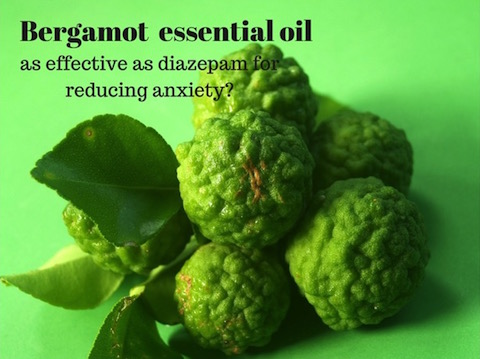
bergamot-green

Could the essential oil bergamot be as effective as diazepam (a benzodiazepine) in reducing anxiety?

An animal study shows very promising results: Acute effects of bergamot oil on anxiety-related behaviour and corticosterone level in rats

both BEO [bergamot essential oil] and diazepam exhibited anxiolytic-like behaviours and attenuated HPA axis activity by reducing the corticosterone response to stress

What this is means is that the bergamot was found to be as effective as diazepam in reducing the anxiety. Bergamot also reduced cortisol levels.

I’m really excited to see a study comparing an essential oil with benzodiazepines because I’m really worried that so many people are being prescribed benzodiazepines and that they are being used long-term. They are meant to be used short-term, if at all. They have very addictive properties, there are dependence issues and can be really really hard to quit, often with a very challenging withdrawal period. And too many people, including many in the medical profession, are not aware of all the issues once you start down this road.

If you’ve been following me for some time you’ll know I’m really vocal about the dangers of this class of medication.  You can read about the first World Benzodiazepine Awareness Day here.

How wonderful if we use these other wonderful approaches instead of benzodiazepines: use an essential oil like bergamot (or more than one – like lavender, roman chamomile and neroli too) and make food changes (like quitting gluten, caffeine and sugar), and add some amino acids like GABA and tryptophan and reduce the stress in our lives!

I talk about this research and other essential oils for anxiety and stress in the Essential Oils Revolution 2 summit which runs August 22 to 29. I’m so thrilled to be part of this event!
essential-oils-revolution-banner

Let’s get the conversation started now. Feel free to share which essential oils you use for anxiety and stress? And how do you use them?
 

Filed Under: Antianxiety, Essential oils, Events Tagged With: anxiety, benzodiazepine, Bergamot, diazepam, essential oils, Essential Oils Revolution

Anxiety and Hypoglycemia Symptoms Improve with Diet Modification

August 12, 2016 By Trudy Scott 15 Comments

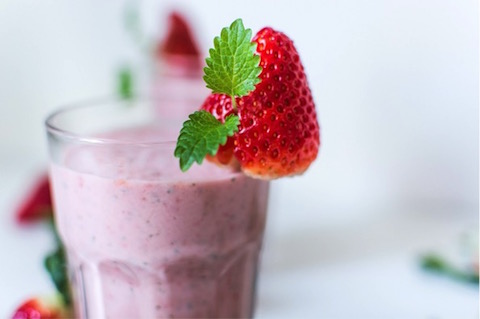
strawberry-smoothie

A paper published by the Canadian College of Naturopathic Medicine last month supports what I see with my clients on a daily basis: when it comes to anxiety caused by low blood sugar (or hypoglycemia) the correct diet can have a huge impact. And this means is the inclusion of enough protein, fats and fiber, especially at breakfast.

Here is the abstract from the paper: Generalized Anxiety Disorder and Hypoglycemia Symptoms Improved with Diet Modification

Observational evidence suggests that a relationship may exist between high glycemic index diets and the development of anxiety and depression symptoms; however, as no interventional studies assessing this relationship in a psychiatric population have been completed, the possibility of a causal link is unclear.

AB is a 15-year-old female who presented with concerns of generalized anxiety disorder and hypoglycemia symptoms. Her diet consisted primarily of refined carbohydrates. The addition of protein, fat, and fiber to her diet resulted in a substantial decrease in anxiety symptoms as well as a decrease in the frequency and severity of hypoglycemia symptoms.

A brief return to her previous diet caused a return of her anxiety symptoms, followed by improvement when she restarted the prescribed diet.

This case strengthens the hypothesis that dietary glycemic index may play a role in the pathogenesis or progression of mental illnesses such as generalized anxiety disorder and subsequently that dietary modification as a therapeutic intervention in the treatment of mental illness warrants further study.

Here are some details about this case report for AB, who was a 15-year-old female student of south-Asian descent:

  • she had anxiety (rated as 8/10 with 10 being the highest level of anxiety), worried excessively, experienced heart palpitations, shakiness, discomfort in her stomach, and muscle tension and often missed school because of how she felt
  • she experienced symptoms of hypoglycemia/low blood sugar and when her blood sugar dipped too low she experienced muscle weakness, headaches, nausea, anxiety, and poor concentration
  • when she felt anxious she would eat she would eat chocolate, chips, fruit and when her blood sugar dipped she would eat a granola bar

As you can see from her typical daily diet she was eating mostly carbohydrates, with very little protein, fat or fiber:

  1. Breakfast: fruit smoothie containing fruit, fruit juice, and water.
  2. Morning snack: bagel with margarine.
  3. Lunch: pasta or white rice with vegetables.
  4. Afternoon snack: granola bar or cookies or gummy candies.
  5. After school meal: white pasta; it may include meat.
  6. Dinner: white rice or spaghetti; it may include meat.
  7. Evening snack: cookies and toast.
  8. Beverages: 2 liters of water, 1 cup of juice, 1 cup of lactose-free milk, and 1 cup of tea.

She made the following changes in her diet adding protein at breakfast, lunch, dinner and at snack time, and adding healthy fats like flax seeds, olive oil and nut butters:

  1. Breakfast: includes a smoothie containing fruit, water, 1 scoop of protein powder, and 1 tablespoon of flax seeds or olive oil.
  2. Lunch and dinner: include a serving of protein (meat, legume, and soy) and a serving of vegetables.
  3. Snacks: include protein when possible (e.g., apple with sunflower seed butter, vegetable sticks with hummus, and pumpkin seeds).
  4. Continue to eat carbohydrate-containing snacks as needed for the management of hypoglycemia symptoms.

Over a 4-week period she made a few simple dietary changes and saw profound results: her anxiety decreased significantly from 8/10 to 4 or 5/10, she had more energy, she had fewer headaches, better concentration and improved mood.

The interesting factor is that when she slipped up for a week and went back to her old diet she felt more anxious within a day, but felt better within 2 days of adding back protein, fats and fiber.

These results are very typical with my clients and getting a handle on stabilizing blood sugar is the first thing I do with all my clients. Believe it or not, for some people this is ALL they need to do. I would add that I recommend making these changes in conjunction with the removal of gluten and caffeine.

I also like to see animal protein (and fat) as part of the snacks: like grass-fed beef jerky, grass-fed beef sticks, boiled eggs or pemmican. AB was allergic to eggs, nuts, and fish so these were not an option for her. Soy is often as issue so would need to be watched.

So this case study supports the fact that we must not forget the basics like blood sugar control. It’s very common for me to get questions like this on my blog: “I’m anxious, which amino acid should I use?” I always reply: focus first on real whole food and eating to balance blood sugar, remove sugar, gluten and caffeine, and then look at doing a trial of one or more of the amino acids

I do like to make things easier for my clients and this is where an amino acid like glutamine is very helpful in terms of providing added blood sugar stability, a calming effect and help with gut healing

Adding the glutamine and also doing a trial of an amino acid like GABA Calm may get the anxiety down a few more notches because we are always aiming for zero.

Addressing adrenal issues (which are closely related to blood sugar issues), and of course addressing all the other possible factors like thyroid health, gut health, other food sensitivities and so on would be the next step.

Have you see the positive impacts of keeping your blood sugar stable? What makes the most impact for you?

If you are a practitioner, how do you help your clients or patients address blood sugar issues?

Filed Under: Antianxiety Tagged With: anxiety, Carbohydrate, fat, fatigue, GABA, glutamine, Headaches, Hypoglycemia, low blood sugar, protein

Anxiety and the amino acids: an overview

July 1, 2016 By Trudy Scott 31 Comments

Here is the Amino Acids Mood Questionnaire from The Antianxiety Food Solution and additional information on Anxiety and targeted individual amino acid supplements: a summary

Please read and follow these Amino Acid Precautions before using any of the amino acids.

The best way to figure out if you have a particular brain chemical imbalance and if you’ll benefit from a certain amino acid, is to do a trial.   This is something I do with all my clients with anxiety, when we’re working one-one-one and with those in group programs, and it works really well.

Because the effects of amino acids can be felt within a few minutes to a few days, it’s easy to confirm whether you do in fact have a deficiency in a certain area and whether you’ll benefit from supplementing with the associated amino acid.

Here is information on how to do a trial.

Here are the supplements I use with my clients.

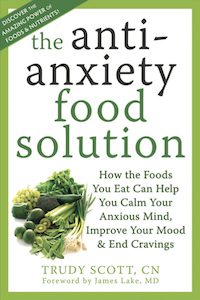
If you do not have my book I highly recommend getting it and reading it before jumping in to taking amino acids: The Antianxiety Food Solution – How the Foods You Eat Can Help You Calm Your Anxious Mind, Improve Your Mood, and End Cravings

antianxiety food solution

There is a complete chapter on the amino acids and one for pyroluria, plus information on real whole food, sugar and blood sugar, gluten, digestion and much more.

Once you have read it you can use these above blogs, and others on my site, as summaries. They do contain some additional information that is not in my book.

If all this sounds too overwhelming, check out the The Amazing Aminos for Anxiety homestudy program. This homestudy group program provides guidance with using each of the targeted individual amino acids and how to do a trial.

Filed Under: Amino Acids, Antianxiety Tagged With: Amazing amino acids for anxiety, Amino acid trial, amino acids, anxiety, the antianxiety food solution

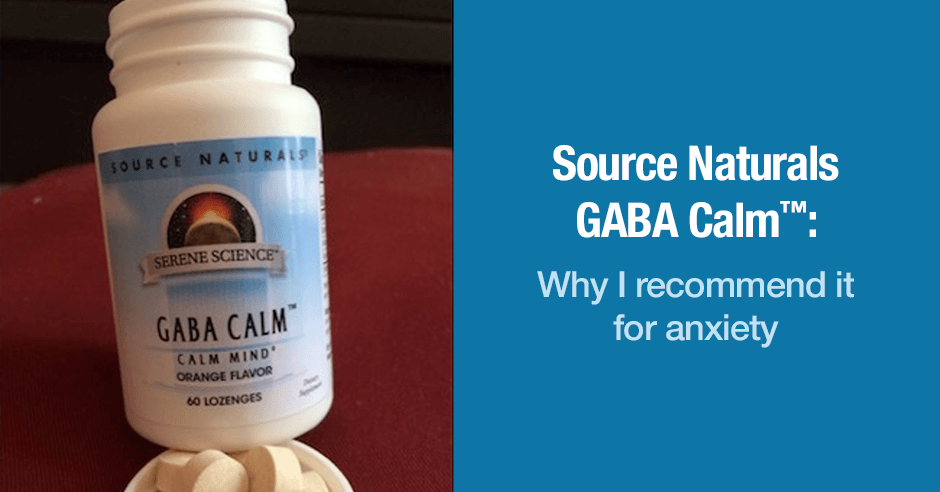
Source Naturals GABA Calm™: Why I recommend it for anxiety

May 27, 2016 By Trudy Scott 185 Comments

source naturals gaba calm

When you have low GABA levels you will have physical anxiety with stiff and tense muscles as well as feelings of stress, overwhelm and may even have panic attacks.

The amino acid GABA helps to raise GABA levels and ease these symptoms very quickly. I find that all GABA products are most effective when taken sublingually or opened on to the tongue. This is why I recommend the Source Naturals GABA Calm™ product.

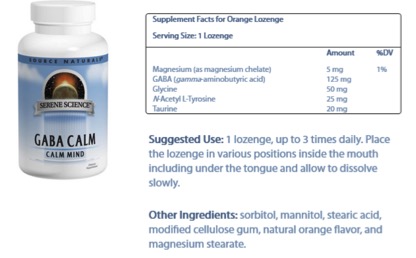
It is a pleasant-tasting sublingual product that you can buy at your local health-store and in my online supplement store. It is a lozenge that contains 125mg GABA, 5mg magnesium, 50mg glycine, 25mg tyrosine and 20 mg taurine.

[Note: this product is a lozenge with 125mg GABA and is not to be confused with the Source Naturals, GABA Calm Mind, 750 mg tablets]

This is my most popular and most effective form of GABA I use with my clients. Here is the product description from the Source Naturals site:

GABA Calm™ combines two of the main inhibitory neurotransmitters, GABA and glycine, with N-acetyl L-tyrosine, which is a precursor to the neurotransmitters dopamine and norepinephrine. In addition, taurine supports the calming effects of GABA. The lozenge form dissolves in the mouth for quick and convenient delivery.

gaba-calm-supplement-facts 

The GABA, glycine and taurine are calming and the N-acetyl L-tyrosine (which boosts the catecholamines and can be more stimulating) counters some of the calming effects so you have a nice balance.

A typical starting dose could look like this:

  • 1 x GABA Calm on waking
  • 1 x GABA Calm mid-morning
  • 1 x GABA Calm mid-afternoon

If this works well but you still have some anxiety, then you could try 2 each time and even 3 each time.

I have all my clients do an amino acid trial to determine what will work best for their own needs.

As with all of the amino acids we review the Amino Acid Precautions before starting GABA Calm. The only precaution for using GABA is low blood pressure. I have yet to see it be an issue but it’s something to watch.

Since GABA Calm does contain tyrosine please be aware of these precautions. I don’t have my clients use it in these instances:

  • Overactive thyroid/Grave’s disease
  • Melanoma
  • Phenylketonuria (PKU)
  • Bipolar disorder

The amount of tyrosine in GABA Calm is so low it’s typically not an issue but I have my clients monitor their use of GABA Calm if they have

  • High Blood pressure
  • Migraine headaches

Some of my clients do fine taking this product at night and it calms them and helps them sleep. Here is feedback I recently received from someone:

I’ve been getting good results with taking 2 x Source Naturals GABA Calm lozenges of late, especially at night if I can’t get to sleep. I have tried several GABA supplements but this one seems to be the only one that works for me

Others find it affects their sleep and can only use it for easing their anxiety in the day time.

When I was experiencing my anxiety and panic attacks I used to take GABA Calm™ during the day (1-3, 3 times day) and it completely stopped the panic attacks and eased my anxiety while I dug deeper looking for the other contributing factors (like gluten issues, low progesterone, heavy metals and more). I took 2 of the Country Life GABA Relaxer at night. This product contains GABA, glycine, taurine, inositol, vitamin B6 and niacinamide.

It’s a great product to use with children. Trish Soderstrom shared how she used this product with her daughter’s Lyme anxiety.

We’ve used Source Naturals GABA Calm sublinguals with good results. I learned about GABA helping anxiety and because I was treating my young daughter I purchased this because it was easy for her to take.

She’ll be sharing more during her interview on the Anxiety Summit: How We Used GABA for Lyme Anxiety.

Dr. Zendi Moldenhauer, PhD, NP, RN will also be talking about how she uses this product in her interview: Anxiety in children, adolescents and young adults: an integrative psychiatric approach.

I recently received this comment on another blog post where I mentioned GABA Calm™:

Checked out gaba calm. Sounded great until I looked at the ingredients: sorbitol and mannitol are listed as first ingredients. These fake sugars can wreak havoc on your system. Also natural orange flavor… Heaven knows what that is. Too bad, sounded great. Any other suggestions?

Here is my response to this: I agree we could do better but it’s still a very effective product since sublingual GABA is best for most people. Sorbitol and mannitol are not fake sugars but sugar alcohols that don’t affect blood sugar. Very large amounts of sugar alcohols can sometimes cause lose stool but none of my clients have reported this effect from GABA Calm since it contains a very small amount.

If you choose not to use this product, I list other GABA products here on my supplements blog. Opening the capsule seems to be the best way to take GABA.

We are all different and many people do well with other types of GABA products as you can read here – GABA, the calming amino acid: products and results.

The blood brain barrier question comes up at least once a week. In fact, I was just asked this question last week:

Does a GABA supplement have to cross the blood brain barrier to be effective? A nutrition seminar I have been to, said it does not and GABA supplements are ineffective.

This is a myth and I am on a mission to change this thinking about GABA. GABA supplements are very effective for many anxious individuals.

I’d love to hear if you’ve used GABA Calm™ for anxiety, panic attacks, sleep and/or stress eating and how it’s worked for you. How often do you take it and how much do you take?

If you use it with clients I’d love to hear from you too.

If you use GABA Calm™ during the day and another GABA product at night please share that info too.

I’m sharing this information in preparation for my Anxiety Summit interview on GABA and dispelling the blood brain barrier myth. I’ll be sharing what we do know about how GABA works, what we don’t yet know and what we hope to learn through further research.


Filed Under: Antianxiety, GABA Tagged With: amino acids, GABA, GABA Calm, panic, the anxiety summit

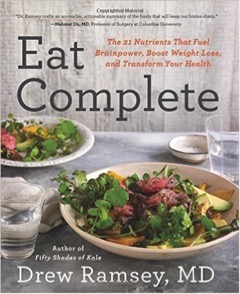
Dr. Drew Ramsey’s new book Eat Complete

May 23, 2016 By Trudy Scott Leave a Comment

eat-complete

Dr. Drew Ramsey’s newest book just released this week and it’s wonderful! Mine just arrived and the food photos are superb!

Check out Eat Complete: The 21 Nutrients That Fuel Brainpower, Boost Weight Loss, and Transform Your Health

From leading psychiatrist and author of Fifty Shades of Kale comes a collection of 100 simple, delicious, and affordable recipes to help you get the core nutrients your brain and body need to stay happy and healthy.

What does food have to do with brain health? Everything.

Your brain burns more of the food you eat than any other organ. It determines if you gain or lose weight, if you’re feeling energetic or fatigued, if you’re upbeat or depressed. In this essential guide and cookbook, Drew Ramsey, MD, explores the role the human brain plays in every part of your life, including mood, health, focus, memory, and appetite, and reveals what foods you need to eat to keep your brain—and by extension your body—properly fueled.

Drawing upon cutting-edge scientific research, Dr. Ramsey identifies the twenty-one nutrients most important to brain health and overall well-being—the very nutrients that are often lacking in most people’s diets. Without these nutrients, he emphasizes, our brains and bodies don’t run the way they should.

Eat Complete includes 100 appetizing, easy, gluten-free recipes engineered for optimal nourishment. It also teaches readers how to use food to correct the nutrient deficiencies causing brain drain and poor health for millions.

Featuring fifty stunning, full-color photographs, Eat Complete helps you pinpoint the nutrients missing from your diet and gives you tasty recipes to transform your health—and ultimately your life.

Of course blueberries are featured – so it’s a perfect tie-in to the new blueberry-PTSD research.

Dr. Ramsey is one of our expert speakers on the June Anxiety Summit (which airs June 6-16) and I can’t wait to share more with you! In the meantime, enjoy his new book and get inspired to get back into the kitchen!


Filed Under: Antianxiety, Books, Recipes Tagged With: anxiety, blueberries, drew ramsey, eat complete

Blueberries boost serotonin and may help with PTSD and anxiety

May 20, 2016 By Trudy Scott 11 Comments

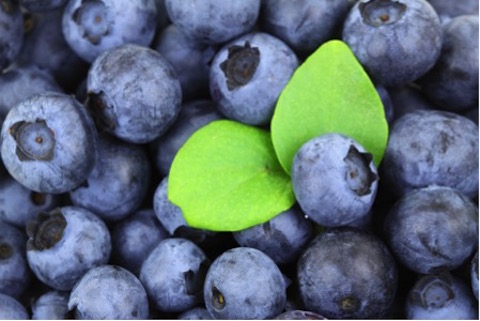
blueberries

New research finds that blueberries boost serotonin and may help with PTSD and anxiety. This was an animal study and is very promising.

A press release issued by the American Physiological Society shares the following:

Up to 8 percent of people in the U.S. suffer from post-traumatic stress disorder (PTSD) as the result of witnessing or being the victim of a traumatic event.

People with PTSD have been in a situation in which they were at risk of death, serious injury or sexual violence or have seen first-hand loved ones faces such threats. They may experience flashbacks, emotional detachment and jumpiness, among other symptoms that affect their ability to function in everyday life.

Currently, the only approved therapy for PTSD is selective serotonin reuptake inhibitors (SSRIs), such as Zoloft and Paxil, but their effectiveness is marginal. Now researchers at Louisiana State University have found that a readily available superfood—the blueberry—could be an effective treatment.

Philip J. Ebenezer presented the poster titled “The Neuro-Protective Efficacy of Blueberry in an Animal Model of Post-Traumatic Stress Disorder (PTSD)” at the Experimental Biology meeting on March 30, 2016.

Here is the paper/poster abstract: The Neuro-protective Efficacy of Blueberry in an Animal Model of Post-Traumatic Stress Disorder (PTSD)

Post-traumatic stress disorder (PTSD) is a trauma and stressor-related disorder that results in a prolonged stress response. It is associated with increased oxidative stress and inflammation in the prefrontal cortex (PFC) and hippocampus (HC). Previous findings from our lab indicate that neurotransmitter levels are modulated in the brain of PTSD animals. The only approved therapy for PTSD is the use of selective serotonin re-uptake inhibitors (SSRI), but their efficacy is marginal. Recently, we demonstrated that over-activation of Norepinephrine (NE) along with Serotonin (5-HT) as the possible reason for the lack of efficacy of SSRI. Hence, there is a need for novel therapeutic approaches for the treatment of PTSD. In this study, we investigated the neuroprotective role of blueberries (BB) in modulating neurotransmitter levels in PTSD. Rats were fed with a blueberry-enriched (2%) or a control diet. Rats were exposed to cats for one hour on days 1 and 11 of a 31-day schedule to simulate traumatic conditions. At the end of the study, the rats were euthanized and PFC and HC were isolated. We measured monoamines and their metabolites by high-performance liquid chromatography. In our PTSD model, NE levels were increased and 5-HT levels were decreased when compared to control. In contrast, a BB diet increased 5-HT without affecting NE levels. These findings indicate non-pharmacological approaches might modulate neurotransmitters in PTSD. Further studies to understand the molecular mechanism of neuro-protection by BB can provide a potential therapeutic target for the treatment of PTSD.

In summary, the traumatized rats that were fed blueberries saw an increase in serotonin levels and the study authors suggest that the non-drug neuroprotection offered by the blueberries may offer support for those with PTSD. Presumably this could help those with anxiety and depression too, since low serotonin can also be a factor in these conditions.  

Here are some ways to incorporate blueberries:

  • Fresh blueberries as a healthy snack
  • Frozen blueberries, also eaten as is as healthy snack (kids love this treat)
  • In a smoothie for breakfast, together with coconut milk, a banana and some whey or pea protein powder (great for good blood sugar control and reducing anxiety and irritability too)
  • As a dessert with grass-fed organic ice-cream or cream, or coconut milk if dairy is an issue for you
  • Dunked in melted dark organic free-trade chocolate as an occasional treat

Make sure to buy organic blueberries as non-organic are on the Dirty Dozen list and are highly sprayed with pesticides.

I love blueberries! How about you? How do you like to eat them?

PS. We’ll be covering other new food anxiety research on the upcoming Anxiety Summit and hope you can join us.

Filed Under: Antianxiety, PTSD/Trauma Tagged With: anxiety, blueberries, PTSD, serotonin, the anxiety summit

  • « Go to Previous Page
  • Page 1
  • Page 2
  • Page 3
  • Page 4
  • Page 5
  • Page 6
  • Interim pages omitted …
  • Page 20
  • Go to Next Page »

Primary Sidebar

GABA QuickStart Homestudy

gaba quickstart homestudy

Free Report

9 Great Questions Women Ask about Food, Mood and their Health

You'll also receive a complimentary subscription to my ezine "Food, Mood and Gal Stuff"


Connect with me

Popular Posts

  • Amino Acids Mood Questionnaire from The Antianxiety Food Solution
  • The Antianxiety Food Solution Amino Acid and Pyroluria Supplements
  • Pyroluria Questionnaire from The Antianxiety Food Solution
  • Collagen and gelatin lower serotonin: does this increase your anxiety and depression?
  • Tryptophan for the worry-in-your-head and ruminating type of anxiety
  • GABA for the physical-tension and stiff-and-tense-muscles type of anxiety
  • The Antianxiety Food Solution by Trudy Scott
  • Seriphos Original Formula is back: the best product for anxiety and insomnia caused by high cortisol
  • Am I an anxious introvert because of low zinc and vitamin B6? My response to Huffington Post blog
  • Vagus nerve rehab with GABA, breathing, humming, gargling and key nutrients

Recent Posts

  • Her cravings for chips and peanut butter were triggered by stress: GABA ends cravings and reduces physical tension and fear of heights
  • It is truly miraculous to be able to move through life without crippling anxiety and panic
  • GABA and tryptophan combo provide immediate and noticeable relief for tremors and cervical dystonia in just 7 days
  • Red light therapy for back and neck pain, plantar fasciitis and low mood – a complement to the amino acids GABA, DPA and tryptophan
  • What do I use instead of Seriphos to help lower high cortisol that is affecting my sleep and making me anxious at night?

Categories

  • 5-HTP
  • AB575
  • Addiction
  • ADHD
  • Adrenals
  • Alcohol
  • Allergies
  • Alzheimer's disease
  • Amino Acids
  • Anger
  • Antianxiety
  • Antianxiety Food Solution
  • Antidepressants
  • Anxiety
  • Anxiety and panic
  • Autism
  • Autoimmunity
  • benzodiazapines
  • Bipolar disorder
  • Books
  • Caffeine
  • Cancer
  • Candida
  • Children/Teens
  • Collagen
  • Cooking equipment
  • Coronavirus/COVID-19
  • Cravings
  • Depression
  • Detoxification
  • Diabetes
  • Diet
  • DPA/DLPA
  • Drugs
  • EFT/Tapping
  • EMF
  • EMFs
  • Emotional Eating
  • Endorphins
  • Environment
  • Essential oils
  • Events
  • Exercise
  • Fear
  • Fear of public speaking
  • Fertility and Pregnancy
  • Fish
  • Food
  • Food and mood
  • Functional neurology
  • GABA
  • Gene polymorphisms
  • General Health
  • Giving
  • Giving back
  • Glutamine
  • Gluten
  • GMOs
  • Gratitude
  • Gut health
  • Heart health/hypertension
  • Histamine
  • Hormone
  • Hyperparathyroidism
  • Hypoglycemia
  • Immune system
  • Inflammation
  • Insomnia
  • Inspiration
  • Introversion
  • Joy and happiness
  • Ketogenic diet
  • Lithium orotate
  • Looking awesome
  • Lyme disease and co-infections
  • MCAS/histamine
  • Medication
  • Men's health
  • Mental health
  • Mercury
  • Migraine
  • Mold
  • Movie
  • MTHFR
  • Multiple sclerosis
  • Music
  • NANP
  • Nature
  • Nutritional Psychiatry
  • OCD
  • Osteoporosis
  • Oxalates
  • Oxytocin
  • Pain
  • Paleo
  • Parasites
  • Parkinson’s disease
  • PCOS
  • People
  • PMS
  • Postpartum
  • PTSD/Trauma
  • Pyroluria
  • Questionnaires
  • Real whole food
  • Recipes
  • Research
  • Schizophrenia
  • serotonin
  • SIBO
  • Sleep
  • Special diets
  • Sports nutrition
  • Stress
  • Sugar addiction
  • Sugar and mood
  • Supplements
  • Teens
  • Testimonials
  • Testing
  • The Anxiety Summit
  • The Anxiety Summit 2
  • The Anxiety Summit 3
  • The Anxiety Summit 4
  • The Anxiety Summit 5
  • The Anxiety Summit 6
  • Thyroid
  • Thyroid health
  • Toxins
  • Tryptophan
  • Tyrosine
  • Uncategorized
  • Vegan/vegetarian
  • Women's health
  • Yoga

Archives

  • May 2026
  • April 2026
  • October 2025
  • September 2025
  • August 2025
  • July 2025
  • June 2025
  • May 2025
  • April 2025
  • March 2025
  • February 2025
  • January 2025
  • November 2024
  • October 2024
  • September 2024
  • August 2024
  • July 2024
  • June 2024
  • May 2024
  • April 2024
  • March 2024
  • February 2024
  • January 2024
  • December 2023
  • November 2023
  • October 2023
  • September 2023
  • August 2023
  • July 2023
  • June 2023
  • May 2023
  • April 2023
  • March 2023
  • February 2023
  • January 2023
  • December 2022
  • November 2022
  • October 2022
  • September 2022
  • August 2022
  • July 2022
  • June 2022
  • May 2022
  • April 2022
  • March 2022
  • February 2022
  • January 2022
  • December 2021
  • November 2021
  • October 2021
  • September 2021
  • August 2021
  • July 2021
  • June 2021
  • May 2021
  • April 2021
  • March 2021
  • February 2021
  • January 2021
  • December 2020
  • November 2020
  • October 2020
  • September 2020
  • August 2020
  • July 2020
  • June 2020
  • May 2020
  • April 2020
  • March 2020
  • February 2020
  • January 2020
  • December 2019
  • November 2019
  • October 2019
  • September 2019
  • August 2019
  • July 2019
  • June 2019
  • May 2019
  • April 2019
  • March 2019
  • February 2019
  • January 2019
  • December 2018
  • November 2018
  • October 2018
  • September 2018
  • August 2018
  • July 2018
  • June 2018
  • May 2018
  • April 2018
  • March 2018
  • February 2018
  • January 2018
  • December 2017
  • November 2017
  • October 2017
  • September 2017
  • August 2017
  • July 2017
  • June 2017
  • May 2017
  • April 2017
  • March 2017
  • February 2017
  • January 2017
  • December 2016
  • November 2016
  • October 2016
  • September 2016
  • August 2016
  • July 2016
  • June 2016
  • May 2016
  • April 2016
  • March 2016
  • February 2016
  • January 2016
  • December 2015
  • November 2015
  • October 2015
  • September 2015
  • August 2015
  • July 2015
  • June 2015
  • May 2015
  • April 2015
  • March 2015
  • February 2015
  • January 2015
  • December 2014
  • November 2014
  • October 2014
  • September 2014
  • August 2014
  • July 2014
  • June 2014
  • May 2014
  • April 2014
  • March 2014
  • February 2014
  • January 2014
  • December 2013
  • November 2013
  • October 2013
  • September 2013
  • August 2013
  • July 2013
  • June 2013
  • May 2013
  • April 2013
  • March 2013
  • February 2013
  • January 2013
  • December 2012
  • November 2012
  • October 2012
  • August 2012
  • July 2012
  • June 2012
  • May 2012
  • April 2012
  • March 2012
  • February 2012
  • January 2012
  • December 2011
  • November 2011
  • October 2011
  • September 2011
  • August 2011
  • July 2011
  • June 2011
  • May 2011
  • April 2011
  • March 2011
  • February 2011
  • January 2011
  • December 2010
  • October 2010
  • September 2010
  • July 2010
  • May 2010
  • April 2010
  • March 2010
  • February 2010
  • January 2010
  • November 2009

Share the knowledge!

The above statements have not been evaluated by the Food and Drug Administration. Products listed in this website are not intended to diagnose, treat, cure or prevent any disease.

The information provided on this site is for informational and educational purposes only and is not intended as a substitute for advice from your physician or other health care professional. You should consult with a healthcare professional before starting or modifying any diet, exercise, or supplementation program, before taking or stopping any medication, or if you have or suspect you may have a health problem.


Copyright © 2026 Trudy Scott. All Rights Reserved. | Privacy | Terms and Conditions | Refund Policy | Medical Disclaimer

Free Report

9 Great Questions Women Ask about Food, Mood and their Health

You’ll also receive a complimentary subscription to my ezine “Food, Mood and Gal Stuff”