• Skip to primary navigation
  • Skip to main content
  • Skip to primary sidebar

everywomanover29 blog

Food, Mood and Women's Health – Be your healthiest, look and feel great!

  • Blog
  • About
  • Services
  • Store
  • Resources
  • Testimonials
  • The Book
  • Newsletter
  • Contact
  • Search this site

Antianxiety

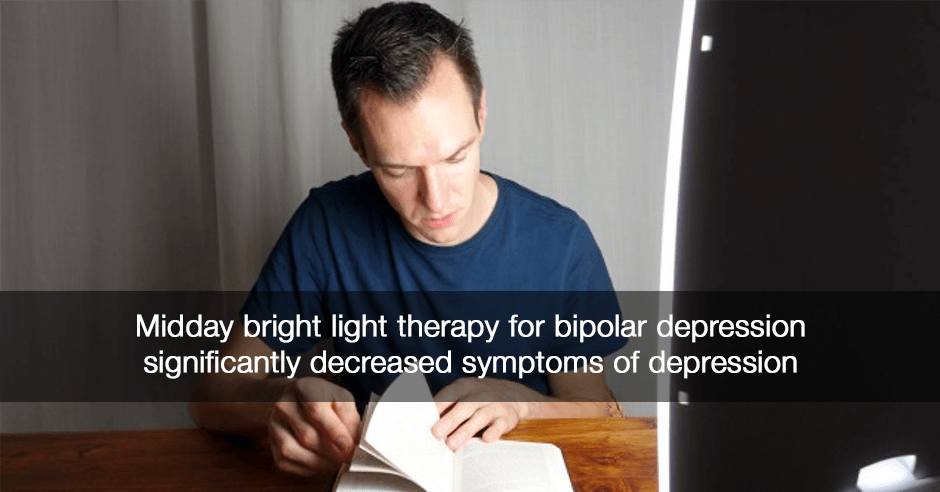
Midday bright light therapy for bipolar depression

October 20, 2017 By Trudy Scott 6 Comments

A recent study from Northwestern University and published in The American Journal of Psychiatry: Adjunctive Bright Light Therapy for Bipolar Depression: A Randomized Double-Blind Placebo-Controlled Trial has found that midday daily exposure to 7,000 lux bright white light for 6 weeks, significantly decreased symptoms of depression and increased functioning in people with bipolar disorder.

The press release issued by Northwestern University reports as follows

Previous studies found morning bright light therapy reduced symptoms of depression in patients with Seasonal Affective Disorder (SAD.). But patients with bipolar disorder can experience side effects such as mania or mixed symptoms from this type of depression treatment. This study implemented a novel midday light therapy intervention in an effort to provide relief for bipolar depression and avoid those side effects.

Compared to dim placebo light, study participants assigned to bright white light between noon and 2:30 p.m. for six weeks experienced a significantly higher remission rate (minimal depression and return to normal functioning). More than 68 percent of patients who received midday bright light achieved a normal level of mood, compared to 22.2 percent of patients who received the placebo light.
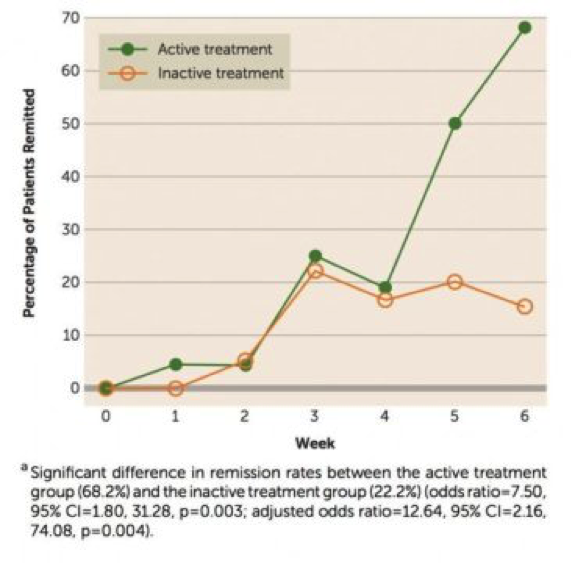
Images used with permission from Northwestern University

How the 7,000 lux bright light therapy was used

Here are the details of how the 7,000 lux bright light therapy was used in the study:

The light therapy patients were instructed to place the light box about one foot from their face for 15-minute sessions to start.

Every week, they increased their exposure to the light therapy by 15-minute increments until they reached a dose of 60 minutes per day or experienced a significant change in their mood.

Study lead author Dr. Dorothy Sit shares that starting low and slowly increasing the treatment made it more tolerable. None of the study participants experienced side effects, likely because the treatment was customized for each patient:

No one experienced mania or hypomania, a condition that includes a period of elation, euphoria, irritability, agitation, rapid speech, racing thoughts, a lack of focus and risk-taking behaviors.

A noticeable mood improvement with bright light therapy was also noticed as quickly as four weeks, which is similar to other light therapy research for non-seasonal depression and depression during pregnancy.

How do you do this in the middle of a work day?

You may have concerns about doing this at midday as this facebook follower voiced:

I guess if your bipolar depression is so debilitating that you cannot hold a job, then this is worth trying.

But 60 minutes!! What working person has 60 minutes in the middle of their workday?

It’s very doable because there are very nice desk versions that could easily be used at work (without anyone knowing – if privacy is a concern) or at a home-office desk for your convenience. I share some examples in this blog – Winter blues or SAD: light therapy.

I have tried lights in the morning but found that it caused agitation

I also received this feedback about increased agitation:

I have tried lights in the morning but found that it caused agitation. Over time my tolerance went down so that I could only use for less than 5 minutes. I haven’t ever tried midday light though. I’m not bipolar but I have depression which is generally worse in the winter. Exercise helps.

It may be worth trying midday light therapy if morning light therapy causes agitation or other adverse effects.

The press release mentions that light therapy is typically used in the morning to help reset circadian rhythms and the authors are unclear why midday light therapy worked for these patients with bipolar disorder. They plan to investigate further. If it is working via the same mechanism i.e. by resetting circadian rhythms, then it may well work at this time for other individuals too.

It may also be that your depression (and/or anxiety) is not caused by low serotonin but by something else instead – such as low catecholamines, poor thyroid health, gluten issues, poor diet and so on.

Using light therapy and tryptophan (or 5-HTP)

I have also found that some people do well on a combination of light therapy and tryptophan (or 5-HTP). One of my clients had many low serotonin symptoms and did better mood-wise and with reduced anxiety, on a small amount of tryptophan but still needed additional serotonin support. Additional tryptophan was too much for him and increased his day-time sleepiness, but using a small amount of tryptophan together with light therapy was the ideal balance for him.

Have you used light therapy with success – for the winter blues or depression or bipolar disorder? Or even for anxiety?

Have you ever used it at midday or at other times?

And have you used light therapy in conjunction with tryptophan or 5-HTP?

Filed Under: Antianxiety, Bipolar disorder, Depression, Mental health Tagged With: 5-HTP, anxiety, bipolar disorder, Bright light therapy, depression, serotonin, tryptophan

How GABA eases agonizing rectal pain and spasms in under 2 minutes

June 30, 2017 By Trudy Scott 188 Comments

Proctalgia fugax is described as a condition that leads to rectal spasms and sharp fleeting pain in the lower rectum or anus. In some people it can be more than fleeting and is often described as excruciating and agonizing.  

This paper describing proctalgia fugax shares how this pain can

recur over weeks, is localized to the anus or lower rectum, and can last from seconds to several minutes with no pain between episodes. There is no diurnal variation. There are numerous precipitants [preceding factors] including sexual activity, stress, constipation, defecation and menstruation, although the condition can occur without a trigger.

Although the cause of proctalgia fugax is unclear, spasm of the anal sphincter is commonly implicated. The condition may be more likely to occur after sclerotherapy for hemorrhoids and vaginal hysterectomy. There are also associations with other functional pathologies, such as irritable bowel syndrome and anxiety.

My story

I have experienced this awful anal sphincter spasm and pain myself so I want to shine some light on this condition and offer the simplest and most effective solution: oral and sublingual GABA. It works to completely eliminate the pain in 1-2 minutes! And it can also be used to prevent a full-on spasm if you catch it in advance. More about this below.

Let me first share my story so you can relate to the pain. I started to experience this a few years ago. It was right after my aunt died from rectal cancer and my immediate thought was that I was dying of cancer. That’s how bad the pain was. It’s like nothing I’ve ever experienced and I’ve had some pretty bad pain experiences: shingles, a tick bite headache, ice-pick headaches from a neck injury and poking my eye on a tree-branch while hiking.

For me, since it initially used to happen during the night, it felt like I was in bad dream and was lying somewhere injured and in agony. I would half wake-up moaning in pain, not quite grasping how the pain I was feeling could be so bad. Then I would come fully awake and feel the need to bear down (as in needing to have a bowel movement) but this would actually make it worse.

How do others describe the pain?

When I shared this paper on facebook one woman said her rectal pain and spasms last 20-30 minutes and is bad a childbirth.

Someone else shared that her husband “complained of feeling like a knitting needle was being driven through his anus.”

What do I think my triggers are?

I have not had sclerotherapy for hemorrhoids or a vaginal hysterectomy. I do have a history of anxiety and panic attacks (in my late 30s) and do have IBS/SIBO right now and I suspect that both low GABA and IBS/SIBO are my biggest root causes. I no longer have any anxiety but since I respond so well to GABA I assume my GABA levels are not optimal (likely due to the SIBO). I suspect exposure to hidden sources of gluten could also be a factor, and this could also affect my GABA levels.

Medications or heating pads as a solution?

I didn’t ever consider the conventional approaches which include: botox, benzodiazepines, SSRIs, Gabapentin, lidocaine, oral diltiazem, topical glyceryl nitrate, nerve blocks or salbutamol.

A warm bath has been reported to help but I was looking for a 1-2 minute fix (and less if possible). Once you’ve experienced this pain you’ll understand that you not imagine running a bath in the midst of a spasm and waiting to get in it.

Heating pads do also work but can take 20 minutes to take effect and that is simply too long for most people.

The first solution for in-the-moment relief (takes 2 to 12 minutes)

After the first episode I started searching online and because I didn’t know it was called proctalgia fugax I searched for “rectal cramp”, “rectal spasm”, “anal cramp” and came across forums with hundreds of women asking about it and describing their pain.

But no-one really had a solution and many had seen their doctors without much success. The best solution that many people use is 30-60 seconds of finger pressure (with the finger wrapped in toilet paper) in the anal sphincter during a spasm. Sometimes this is needed for up to 2-3 mins and sometimes doing this 2 or 3 times a few minutes apart is needed. Think about how you put pressure on a calf muscle spasm to stop the cramps. This works well but the agony can last for the entire 2 to 12 minutes (depending on how many times it has to be done).  Adding a small amount of arnica cream onto the toilet paper seems to helps too.  

How common is it?

It took more searching and reading and then I discovered what it was called. Once I found a name for it and started looking into I was surprised to see how common it is:

The prevalence of proctalgia fugax in the general population may be as high as 8%–18%. Many patients present to primary health care physicians and often do not require further consultation because the symptoms are fleeting. This condition is more common among women than among men, and usually affects patients between 30 and 60 years of age.

Although it’s more common among women I worked with a male client who experienced this. During one of his episodes, the pain was SO bad he actually passed out and hit his head on the bathroom floor.

The best solution for almost-immediate relief (takes 1 minute)

I know that GABA works amazing well for physical anxiety and stiff and tense muscles and I decided to try GABA in the midst of a spasm. It worked amazingly well and within 1 minute the terrible pain started to ease. It does need to be taken sublingually and I have found that 250mg to 500mg opened onto my tongue works best for me.

Each person would need to find the ideal amount for their needs but at night this should be a reasonable amount. During the day this could be too much and make you sleepy or too relaxed.

I’ve also used a combination of sublingual GABA and theanine with similar results.

I know GABA isn’t readily available everywhere so I did an experiment with taurine and found I needed more (at least 1000 mg) and it did take longer (2-3 minutes) to get relief, but it did work.

THE immediate solution for preventing the spasm

But I have now gotten to the point where I can nip it in the bud and prevent the spasm altogether – by taking sublingual GABA at the very first hint of an ache or twinge. I’ve been fortunate that when this does happen (about once a month and sometimes every 2 months) it’s around 8-11pm.

The long-term solutions for getting to the root cause/s?

We always want to get to the root cause of an issue and that is the next step. I reached out to the practitioners in my community to ask them how they help their clients and patients with this and what approaches they have used to end the spasm and pain. I will be sharing some of their solutions and how to get to some of the root causes in part 2.

UPDATE: Here is part 2 – How to address rectal spasms with GABA, pelvic floor work, gluten removal and squats

I’d love your feedback!

I’d love your feedback so I can learn what works, so we can all learn from each other and so others get answers quicker than I did.

Have you ever experienced this rectal pain and spasms? And what has worked for you?

I’d love to know if it is more common after sclerotherapy for hemorrhoids and vaginal hysterectomy? Have you had either? Or any surgery in the abdominal area?

Do you also have IBS/SIBO?  What about celiac disease or gluten sensitivity?

Do you currently have anxiety or mood issues or have a history of anxiety or mood issues?  How many low GABA and low serotonin symptoms do you have – here is the questionnaire  (a paper from 1965 mentions that patients with proctalgia fugax have been described as irritable, perfectionistic, meticulous, obsessional, tense, and anxious)

If you’ve tried GABA or these other approaches (or decide to try them) please come back and share.  Too many people don’t know about this and it needs to change!

Filed Under: Amino Acids, Antianxiety, GABA, Hormone, Pain, SIBO, Women's health Tagged With: anal sphincter, anus, anxiety, cramp, GABA, pain, Proctalgia fugax, rectal spasm, taurine

Why green spaces in cities are good for grey matter, stress and anxiety

April 12, 2017 By Trudy Scott 2 Comments

Central Park in New York City

I love all research that support green space and nature for anxiety and stress reduction. And I’m thrilled to see this taking a front seat in cities where people often have less access to greenery!   A great example is the beautiful   Central Park in New York City.

New research is reviewed in this report in Science Daily: Why green spaces in cities are good for grey matter

Walking between busy urban environments and green spaces triggers changes in levels of excitement, engagement and frustration in the brain, a study of older people has found.

Researchers at the Universities of York and Edinburgh say the findings have important implications for architects, planners and health professionals as we deal with an aging population.

The volunteers experienced beneficial effects of green space and preferred it, as it was calming and quieter, the study revealed.

Dr Chris Neale, Research Fellow, from the University of York’s Stockholm Environment Institute, said: “There are concerns about mental wellbeing as the global population becomes older and more urbanised.”

“Urban green space has a role to play in contributing to a supportive city environment for older people through mediating the stress induced by built up settings.”

You can read the study abstract here – Older People’s Experiences of Mobility and Mood in an Urban Environment: A Mixed Methods Approach Using Electroencephalography (EEG) and Interviews.

Personally I need greenery and nature and thrive on it!

How important is greenery for you? Especially if you’re a city person?

Filed Under: Antianxiety, Environment, Nature, Stress Tagged With: anxiety, calming, green spaces, greenery, grey matter, nature, parks, stress

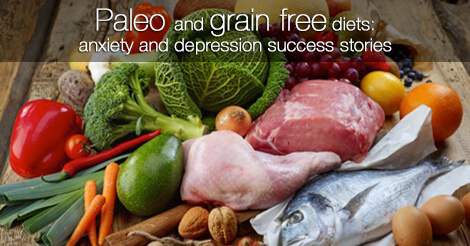
Paleo and grain free diets: anxiety and depression success stories

March 31, 2017 By Trudy Scott 16 Comments

I recently reached out to my community to hear your diet-depression or diet-anxiety success stories in anticipation of the new SMILES diet depression trial, published last month and which I covered in a blog post last week. In that post I promised to share some real-life success stories on how an anti-inflammatory and anti-anxiety diet i.e. nutritional psychiatry people’s lives for the better!

I also shared that everyone who responded with success stories was following a more “evolved” diet than those who participated in the SMILES trial, the first randomized controlled diet depression study where ONE THIRD of the dietary intervention group saw improvements in their depression symptoms by switching from processed/junk food to real food with no specific dietary restrictions!

What do I mean by a more evolved diet? Each of them was eating a real foods or traditional non-processed diet that was gluten-free, mostly or all grain-free and various permutations of the Paleo or cave-main diet.

The anxiety and depression success stories

Alice from Cape Town shared this about banting, a Paleo-type dietary approach that does include dairy products and has been popularized in South Africa by Professor Tim Noakes:

Three days after I stopped eating grains, my chronic depression lifted and has never returned (it’s three years later now). I had been a vegetarian most of my life, discovered in my early 50s that I was gluten intolerant, went off grains, started banting (Cape Town craze!) and have never felt better. Gut, mood, bones, energy, skin … all better!

Andrea shared this about her diet-mood results, also with a grain-free and high fat diet:

I happened upon a fat loss diet that had me cut out grains, most dairy, and sugar while focusing on mostly meat, fish, fats from nature such as butter, olive, and coconut oils. Nuts, seeds, and legumes were allowed too. These rules made it so I had to avoid processed foods. There was one day a week of eating anything.

Within 6 weeks I was shocked that I got much much more than fat loss. My depression, anxiety, mood swings, sleep issues and all but one pesky health symptom was left disappeared. I was stronger, faster, and felt energy I never remember having.

Holly shared how she healed severe depression and anxiety by changing her diet:

Over the course of a year and a half, I was given 10 different psychiatric diagnoses and cycled through 10 different medications. I discovered the healing power of diet completely by accident, and it changed my life. I now live with no diagnoses and no symptoms.

I started with the Whole30 (strict paleo), then went paleo, dabbled with a ketogenic approach, and now I eat a modified paleo diet, with some rice and goat dairy.

Krysti shared how diet reduced her severe mood swings and panic attacks:

I was dx with bipolar at 18 years old. Suffered panic attacks and the random severe mood swings that made absolutely no sense. I was sad for days to weeks only to be followed with unrealistic overly-exuberant highs where I had the energy of a toddler on sugar and the signature grandiose thoughts that I could simultaneously fly and conquer the world and do all the things! For a day. Then the next day felt numb. And resorted back to “cutting” just to feel something. I never cut for attention. In fact not even my closest friends knew I did it. It was for me and I hid it.

…my oldest sister introduced me to Paleo. I was soon dx celiac, cut out grains and have been med and *mostly* mood swing/manic free ever since. No panic attacks. I have never felt more emotionally stable. Even through the death of my youngest sister and big life events, my emotions have been that of a normal person. Explicable. Expected. Level. No extremes.

You can read their entire inspiring diet-depression stories and other ones in the comments on this blog.

Thanks to Alice, Andrea, Holly and Krysti for sharing your wonderful and very hopeful stories! It warms my heart and I know it inspires my community!

And here is my story again:

For me it was anxiety and panic attacks that resolved when I made dietary and other nutritional and lifestyle changes.   I had been eating a vegetarian diet for a few years and I suspect the non-organic/GMO processed soy products (soy milk, soy yogurt, soy “butter” etc) were a big issue for me and damaged my gut.  When I added back quality animal protein (grass-fed red meat, wild fish, pastured eggs and chicken), switched to organic produce, added healthy fats and removed gluten my mood improved dramatically.  Now I eat a combination of a Paleo/SCD /low FODMAPS/low oxalate diet.

During the severe anxiety and panic attacks I also needed additional support in the way of the targeted amino acids GABA (this was a life-saver and stopped the panic attacks in a few days) and tryptophan, plus zinc, vitamin B6, evening primrose oil, a good multi and B complex and adrenal support.  I still continue with some of these basic nutrients today.

My health issues have been complex as I’ve also had to deal with heavy metals, poor gut health and much more so I had what I call “a perfect storm” and yet diet has had such a huge impact for me!

Getting off medications

Lead researcher Professor Felice Jacka was quoted in an ABC article saying this in response to the SMILES trial:

people suffering from depression should not replace therapy and drug treatments with the Mediterranean diet.

Based on my experience working with clients and feedback I receive on the blog, finding the ideal diet and addressing all nutritional deficiencies often allows my clients to work with their doctors on eliminating all their depression and antianxiety medications. Other medications also go by the wayside: pain meds, high blood pressure meds, allergy meds, reflux meds etc.

What is Paleo?

I had the pleasure of hearing Australian Chef Pete Evans at an all-day Sydney event earlier this year, in celebration of the launch of his new book The Complete Gut Health Cookbook, with co-author Dr. Helen Padarin. He is a big time Paleo advocate and this is what he said on stage at the start of his presentation and wonderful day of cooking demos:

Paleo is basically a meat and 3 vegetables – it’s that simple!

To expand on this a bit…this means quality animal proteins like grass-fed red meat, wild fish, pastured eggs and chickens, organic vegetables (typically lower carb) and fruit, soaked nuts (if tolerated), bone broths, fermented vegetables and broths, and health fats like coconut and avocado. Many in the Paleo community say no to dairy and butter but I do find that some of my clients do fine with small amounts and some people do better with fermented dairy like kefir and yogurt or goat/sheep and even camel milk rather than cow’s milk.

I also got to meet both Pete and Helen at the book signing – they are both wonderful and very down-to-earth!

Meeting the famous (and very down-to-earth) Chef Pete Evans at the book signing

Can you imagine my surprise when Pete invited me on to stage to welcome me to Australia and share a bit about my work with diet and anxiety!?

Here is a 5 minute clip of me on stage with Pete and Helen where we talk about:

  • How what we eat has a direct impact on our brains and how we feel
  • How our gut bacteria make some of our brain chemicals like serotonin and GABA when we consume fermented foods [and other foods rich in amino acids and organic produce]
  • The term “psychobiotics” coined by Dr. Ted Dinan ie. good bacteria that improve our mood
  • Kelly Brogan’s wonderful work around depression and diet and medication tapering, and her great book A Mind of Your Own
  • How quickly can diet lead to anxiety and depression symptoms improving and allowing you to get off medications? …biochemical individuality, diet alone, addressing gut health, adding fermented foods, addressing low zinc and other root causes, looking at gene defects
  • Real food, liver, rooibos tea, herbs
  • My story of anxiety and panic attacks and changing from a vegetarian diet to a modified Paleo diet
  • The Anxiety Summit and my book The Antianxiety Food Solution as resources


As you’ve read with these success stories and heard me say on Pete’s stage, many people can do it with diet alone (even if their anxiety is very severe), many need additional nutritional support, and many need the targeted individual amino acids to get immediate relief from their anxiety or depression while they are looking for all their root causes. Many also need the amino acids to break their gluten and sugar addictions. But making the dietary changes are the foundation!

Stay tuned for more about Pete Evans, some of his recipes and gut healing protocols and the unfortunate grilling he’s been getting in the Australian media for advocating a Paleo diet! In the meantime, I will say that all his books come highly recommended!

In case you’re wondering about the research on the Paleo diet, while we don’t have a study that’s looking directly at anxiety and depression, we do have these papers on the overall benefits of a Paleolithic diet:

  • January 2017: Benefits of a Paleolithic diet with and without supervised exercise on fat mass, insulin sensitivity, and glycemic control: a randomized controlled trial in individuals with type 2 diabetes
  • June 2016: Paleolithic and Mediterranean Diet Pattern Scores Are Inversely Associated with Biomarkers of Inflammation and Oxidative Balance in Adults
  • January 2016: Cutting through the Paleo hype: The evidence for the Palaeolithic diet

And in this paper co-authored by Professor Felice Jacka – Nutritional psychiatry research: an emerging discipline and its intersection with global urbanization, environmental challenges and the evolutionary mismatch, they mention

a potential evolutionary mismatch between our ancestral past (Paleolithic, Neolithic) and the contemporary nutritional environment.

We do, of course, have many studies supporting a diet-mood connection:

  • Anxiety and Hypoglycemia Symptoms Improve with Diet Modification
  • Western diet is associated with a smaller left hippocampus and anxiety
  • Integrative Medicine Approach to Pediatric Obsessive-Compulsive Disorder and Anxiety
  • Reduced anxiety in forensic inpatients – long-term intervention with Atlantic salmon

And Professor Felice Jacka shared this during our interview on The Anxiety Summit: The Research – Food to prevent and treat anxiety and depression?

One of the hypotheses that I had during the Ph.D. was that increased intake of animal foods would be toxic and would be associated with more mental disorders.

This did not turn out to be the case: In our study, out of every single dietary food grouping that I looked at including vegetables, fruits, salads, beans, etc the strongest correlate of mental health was red meat intake [grass-fed red meat of course.]

Consistently, women who have less than the recommended intake of red meat seem to be in an increased risk for common mental disorders [like anxiety and depression] and bipolar disorder.

She was referring to the results of her Ph.D. paper that was published in the American Journal of Psychiatry in 2010: “Association of Western and Traditional Diets with Depression and Anxiety in Women.”

Have you changed your diet to a Paleo way of eating and observed a reduction or elimination of anxiety or depression? Was a dietary change enough or did you need to address brain chemical imbalances and other nutritional deficiencies too?

If you’re a practitioner, have you seen results like this with your clients or patients?

Filed Under: Antianxiety, Antianxiety Food Solution, Paleo Tagged With: anxiety, depression, felice jacka, grain-free, grains, paleo, Pete Evans, red meat, vegetables

GABA, toxins, hormones, autoimmunity – encore of The Diabetes Summit

March 28, 2017 By Trudy Scott Leave a Comment

Brain Mowll is host of the 4th season of the Diabetes Summit and here are all the speakers and topics in the encore replay line-up (including yours truly).

TRUDY SCOTT, CN: Understanding Anxiety: The Connection to Diabetes

  • Learn about the link between diabetes, anxiety, and depression
  • Understanding the root imbalances underlying anxiety
  • Natural solutions and supplemental support for anxiety 

We may need to look at low serotonin as well because we’ve got two kinds of anxiety when it comes to neurotransmitters, the low GABA, which is the physical anxiety, and the low serotonin, which is more the ruminating thoughts, the worry in the head, the reprocessing, the negative self-talk. So we often have low GABA, and we often have low serotonin as well. And both of those have a corresponding amino acid that helps to raise it. With low GABA we use GABA. With low serotonin we use tryptophan or 5-HTP. And we’re going talk about that one in a second. But the interesting thing is I was really excited to see that there’s some really new research on how GABA has some pretty promising benefits in terms of diabetes support as well.

Read some additional snippets from my interview: Diabetes, anxiety and GABA


RAZI BERRY: Using Naturopathic Principles to Prevent Diabetes

  • Learning from Razi’s health experience and journey
  • How toxins in our environment can disrupt metabolism
  • Natural solutions to improve blood sugar and overall health

Read some snippets from her interview here: Anxiety, phenibut, toxins and cold showers for detoxification


ANNA CABECA, DO: Creating Hormone Balance to Optimize Metabolic Health

  • The keys to balancing hormones to burn fat and control sugar
  • Understanding the connection between menopause and metabolism
  • How to optimize hormone levels

Dr Cabeca shares this about the ketogenic diet (for women), going keto-crazy and being like a witch when eating too low-carb:

…if you’re working on a ketogenic diet and lifestyle, check to see your urine. And you’re most likely acidic. But now, get that pH up into an alkaline range, and you’ll see your neurotransmitters will balance. You’ll feel calmer. You’ll sleep better. You’ll start to melt fat away which is huge. And that made all the difference in the world, combing those two.

Read some additional snippets from her interview: Menopause: insulin, cortisol, and oxytocin (an interview with Dr. Anna Cabeca)


TOM O’BRYAN: Autoimmune Disease and the Connection To Diabetes

  • Understanding what drives autoimmune disease
  • Exploring various toxins that inundate our lives
  • How to balance the immune response to allow proper healing


SAYER JI: What the Evidence Reveals About Reversing Diabetes

  • What the peer reviewed, medical literature shows
  • The best natural strategies to reverse diabetes
  • The role of supplements and helpful nutrients


BJ HARDICK: Sugar, Detox, and The Brain: Natural Strategies For Healing

  • Understanding damaging foods and how to remove them
  • How to properly structure a detoxification program
  • Type 3 diabetes and how dysglycemia effects the brain


SACHIN PATEL: A New Model for Medicine, Diabetes, and Blood Sugar Health

  • Re-evaluating the healthcare model and redefining our roles
  • How to be empowered to control your health as a patient
  • A new model for caring for the body and optimizing health

This aspect of why we eat is seldom addressed and it’s profound:

When you are living a life that is on purpose – that requires you to be eating healthy because you’re going to do whatever it takes to eliminate things that are going to impact that purpose.

I also love the analogy of the right fuel in the car but driving in the wrong direction (like hating your job or not having a purpose):

When you are living a life that is on purpose – that requires you to be eating healthy because you’re going to do whatever it takes to eliminate things that are going to impact that purpose


NIKI GRATRIX: The Mind-Body Connection to Metabolic Health

  • How to tap into your internal abundance of energy
  • Understand ACE (adverse childhood events) score and how childhood events impact health
  • Natural techniques and strategies to let go of limits


PETER OSBORNE: The Autoimmune Connection to Blood Sugar and Diabetes

  • The connection between autoimmune and blood sugar
  • How to test and treat autoimmune disease effectively
  • Natural solutions to reduce inflammation and heal the body


MICHAEL MURRAY, ND: The Four Types of Blood Sugar Problems in Diabetes

  • Understanding a natural medicine approach to diabetes
  • Dr. Murray’s four types of blood sugar problems
  • Natural strategies to address the specific blood sugar issues


JOEL KAHN, MD: A Plant-Based Approach to Heart Health and Blood Sugar Health 
  • Sorting through the confusion about dietary strategies
  • Understanding the importance of plant-based foods
  • Key nutrients and supplements for heart health

I’d like to add that while I respect Dr. Kahn’s cardiology diet expertise, I am an advocate of quality animal protein and have found that many people with anxiety and depression typically don’t do very well on a vegan diet. His discussion was professional and very respectful and I do wholeheartedly agree with this:

I think whether grass fed beef, free range, omega 3 rich eggs are healthy or not, and that’s probably not possible to solve that question completely, the data’s here, there, or frankly there’s not enough data, just always add these organic brightly colored fruits and vegetables to whatever you’re eating

He also acknowledged Dr. Hyman’s coining of the term, the Pegan diet, which combines the best of a Paleo and vegan diet saying

It’s a useful term. It’s another way to say eat a very clean, very vegetable rich diet with a little wiggle room [i.e. the addition of quality animal protein]

We really do need a study comparing a real foods diet with feedlot meat and farmed fish – with a real foods diet with grass-fed meat and wild fish!

Here is the link to register for the Diabetes Summit if this is the first you’re hearing about it. You can still sign up to listen!

Enjoy these encore day replays!

Filed Under: Antianxiety, Depression, Diabetes, Events Tagged With: ana cabeca, bj hardick, Diabetes Summit, joel kahn, michael murray, niki gratrix, peter osborne, Razi Berry, sachin patel, Sayer Ji, tom o’bryan

SMILES diet depression trial: reduced depression and anxiety

March 24, 2017 By Trudy Scott 16 Comments

The SMILES trial, A randomised controlled trial of dietary improvement for adults with major depression was recently published BMC Medicine. It is the first randomized controlled trial to test whether dietary improvement can actually treat depression. Yes, we’re using dietary improvement and treat in the same sentence!

The objective was to determine if “structured dietary support, focusing on improving diet quality using a modified Mediterranean diet model” would have an impact on mood. The outcome is very exciting:

‘SMILES’ was a 12-week, parallel-group, single blind, randomised controlled trial of an adjunctive dietary intervention in the treatment of moderate to severe depression. The intervention consisted of seven individual nutritional consulting sessions delivered by a clinical dietician. The control condition comprised a social support protocol to the same visit schedule and length.

The results indicate that dietary improvement may provide an efficacious and accessible treatment strategy for the management of this highly prevalent mental disorder, the benefits of which could extend to the management of common co-morbidities.

These encouraging results were seen in participants who switched from a junk food diet to a real foods diet. Of the 67 who were enrolled in the study, the majority were using some form of therapy: psychotherapy and medications combined or psychotherapy only or medication only. There were 31 in the diet support group and 25 in the social support control group. Participants had to have been eating this diet in order to be accepted into the study:

a poor (low) intake of dietary fibre, lean proteins and fruit and vegetables, and a high intake of sweets, processed meats and salty snacks.

The dietary approach followed by participants in the study intervention group was the ‘ModiMedDiet’ which is based on the Australian Dietary guidelines and the Dietary Guidelines for Adults in Greece.

The primary focus was on increasing diet quality by supporting the consumption of the following 12 key food groups (recommended servings in brackets): whole grains (5–8 servings per day); vegetables (6 per day); fruit (3 per day), legumes (3–4 per week); low-fat and unsweetened dairy foods (2–3 per day); raw and unsalted nuts (1 per day); fish (at least 2 per week); lean red meats (3–4 per week), chicken (2–3 per week); eggs (up to 6 per week); and olive oil (3 tablespoons per day), whilst reducing intake of ‘extras’ foods, such as sweets, refined cereals, fried food, fast-food, processed meats and sugary drinks (no more than 3 per week). Red or white wine consumption beyond 2 standard drinks per day and all other alcohol (e.g. spirits, beer) were included within the ‘extras’ food group. Individuals were advised to select red wine preferably and only drink with meals.

The dietary composition of the ModiMedDiet was as follows: protein 18% of total energy; fat 40%; carbohydrates 37%; alcohol 2%; fibre/other 3%.

Here are the reasons I’m excited about this research:

  • It’s the first randomized controlled diet depression study and ONE THIRD of the dietary intervention group saw improvements in their depression symptoms.  This was just diet alone and switching from processed/junk food to real food with no specific dietary restrictions!
  • Participants also reported improvements in anxiety symptoms.
  • The authors even addressed the cost factor, stating it was more affordable to eat this way ($112 per week vs $138 per week).
  • The authors address the fact that the dietary intervention group was able to make these dietary changes “despite the fatigue and lack of motivation” that we so commonly see with depression.
  • I’m optimistic about it paving the way for making dietary approaches part of the standard of treatment for mental health conditions. The paper suggests the addition of “clinical dieticians to multidisciplinary mental health teams.”  I’d like to add that these dieticians, together with nutritionists and health coaches would need to be well versed in functional medicine approaches.
  • According to an article on ABC, one participant continued the Mediterranean diet after finishing the study and is now doing a diploma in health science. How inspiring is this? When we get results like this we want to share them with everyone!  

These are very encouraging results and we applaud the positive results of this SMILES study which are truly groundbreaking.

Let’s also be aware of where we are headed with future research and how we can improve on the trial diet.  The researchers conclude with this comment about future research:

The scaling up of interventions and identification of the pathways that mediate the impact of dietary improvement on depressive illness are also key imperatives

Professor Jacka recently shared this paper on how personalized dietary interventions successfully lower post-meal glucose i.e. how certain foods can affect two people quite differently because of our unique gut bacteria. She said that she wants to do a similar personalized nutrition study for depression if they are successful in obtaining NHMRC funding.

Here are some questions I’ve been asked about this SMILES trial (and I’m sharing here in case you have similar questions):

  • why did only one-third of the study intervention group see improvements?
  • why was wheat and other grains included?
  • why was low fat dairy and lean meats emphasized?
  • why was there no mention of grass-fed meat, wild fish, healthy fats like butter and coconut oil, pastured eggs or chickens or quality organic fruits and vegetables?

The ideal dietary approach for anxiety, depression and any health condition is always one that high quality, is personalized and takes into account biochemical individuality. With the removal of gluten, grains and the inclusion of the other dietary changes mentioned above, plus addressing all nutritional imbalances I expect we will see more than one-third of the dietary group experiencing improvements in depression in future trials.  

I truly appreciate the work of Professor Felice Jacka and her team and look forward to seeing more studies like the SMILES trial, using a personalized approach and quality foods that include grass-fed red meat and wild fish, plus pastured eggs or chickens, and healthy fats; and organic produce as a baseline. 

And then future trials that also look at the impacts of these dietary changes on anxiety and depression: gluten and/or grain removal;  removal of high histamine foods and high oxalate foods;  a low FODMAPs diet; the specific carbohydrate diet/SCD; a Paleo diet and so on – all based on biochemical individuality. We know these diets works in clinical practice and now we just need the research to back this up.  In part 2 of the blog, I share some incredibly inspiring diet-depression and diet-anxiety Paleo success stories.

In summary:

  • a simple change like switching from junk to real food can have a major impact on your depression and anxiety – ONE THIRD of the dietary intervention group saw improvements in their depression symptoms and many also saw reduced anxiety. This is profound! 
  • you may need to make additional dietary changes (gluten-free, grain-free, low FODMAPs i.e. avoiding or adding certain foods based on your biochemical individuality) and always add healthy fats and focus on quality
  • you may also need to address brain chemical imbalances with amino acids supplements, address gut health, adrenal issues, low zinc, low vitamin B6, low vitamin D etc. too

Are you encouraged by this research?

And have you made similar dietary changes to those done in the SMILES trial and seen a reduction in your anxiety and depression?

Have you removed gluten or grains and made additional dietary changes, and added supplements and seen even more benefits?

Note: to avoid confusion I’ve used the Australia spelling of “randomised” and “fibre” in the quoted sections and the US spelling “randomized” elsewhere in the blog.

Filed Under: Antianxiety, Depression Tagged With: anxiety, depression, diet, felice jacka, SMILES, treatment, trial

  • « Go to Previous Page
  • Page 1
  • Page 2
  • Page 3
  • Page 4
  • Interim pages omitted …
  • Page 20
  • Go to Next Page »

Primary Sidebar

GABA QuickStart Homestudy

gaba quickstart homestudy

Free Report

9 Great Questions Women Ask about Food, Mood and their Health

You'll also receive a complimentary subscription to my ezine "Food, Mood and Gal Stuff"


Connect with me

Popular Posts

  • Amino Acids Mood Questionnaire from The Antianxiety Food Solution
  • The Antianxiety Food Solution Amino Acid and Pyroluria Supplements
  • Pyroluria Questionnaire from The Antianxiety Food Solution
  • Collagen and gelatin lower serotonin: does this increase your anxiety and depression?
  • Tryptophan for the worry-in-your-head and ruminating type of anxiety
  • GABA for the physical-tension and stiff-and-tense-muscles type of anxiety
  • The Antianxiety Food Solution by Trudy Scott
  • Seriphos Original Formula is back: the best product for anxiety and insomnia caused by high cortisol
  • Am I an anxious introvert because of low zinc and vitamin B6? My response to Huffington Post blog
  • Vagus nerve rehab with GABA, breathing, humming, gargling and key nutrients

Recent Posts

  • Her cravings for chips and peanut butter were triggered by stress: GABA ends cravings and reduces physical tension and fear of heights
  • It is truly miraculous to be able to move through life without crippling anxiety and panic
  • GABA and tryptophan combo provide immediate and noticeable relief for tremors and cervical dystonia in just 7 days
  • Red light therapy for back and neck pain, plantar fasciitis and low mood – a complement to the amino acids GABA, DPA and tryptophan
  • What do I use instead of Seriphos to help lower high cortisol that is affecting my sleep and making me anxious at night?

Categories

  • 5-HTP
  • AB575
  • Addiction
  • ADHD
  • Adrenals
  • Alcohol
  • Allergies
  • Alzheimer's disease
  • Amino Acids
  • Anger
  • Antianxiety
  • Antianxiety Food Solution
  • Antidepressants
  • Anxiety
  • Anxiety and panic
  • Autism
  • Autoimmunity
  • benzodiazapines
  • Bipolar disorder
  • Books
  • Caffeine
  • Cancer
  • Candida
  • Children/Teens
  • Collagen
  • Cooking equipment
  • Coronavirus/COVID-19
  • Cravings
  • Depression
  • Detoxification
  • Diabetes
  • Diet
  • DPA/DLPA
  • Drugs
  • EFT/Tapping
  • EMF
  • EMFs
  • Emotional Eating
  • Endorphins
  • Environment
  • Essential oils
  • Events
  • Exercise
  • Fear
  • Fear of public speaking
  • Fertility and Pregnancy
  • Fish
  • Food
  • Food and mood
  • Functional neurology
  • GABA
  • Gene polymorphisms
  • General Health
  • Giving
  • Giving back
  • Glutamine
  • Gluten
  • GMOs
  • Gratitude
  • Gut health
  • Heart health/hypertension
  • Histamine
  • Hormone
  • Hyperparathyroidism
  • Hypoglycemia
  • Immune system
  • Inflammation
  • Insomnia
  • Inspiration
  • Introversion
  • Joy and happiness
  • Ketogenic diet
  • Lithium orotate
  • Looking awesome
  • Lyme disease and co-infections
  • MCAS/histamine
  • Medication
  • Men's health
  • Mental health
  • Mercury
  • Migraine
  • Mold
  • Movie
  • MTHFR
  • Multiple sclerosis
  • Music
  • NANP
  • Nature
  • Nutritional Psychiatry
  • OCD
  • Osteoporosis
  • Oxalates
  • Oxytocin
  • Pain
  • Paleo
  • Parasites
  • Parkinson’s disease
  • PCOS
  • People
  • PMS
  • Postpartum
  • PTSD/Trauma
  • Pyroluria
  • Questionnaires
  • Real whole food
  • Recipes
  • Research
  • Schizophrenia
  • serotonin
  • SIBO
  • Sleep
  • Special diets
  • Sports nutrition
  • Stress
  • Sugar addiction
  • Sugar and mood
  • Supplements
  • Teens
  • Testimonials
  • Testing
  • The Anxiety Summit
  • The Anxiety Summit 2
  • The Anxiety Summit 3
  • The Anxiety Summit 4
  • The Anxiety Summit 5
  • The Anxiety Summit 6
  • Thyroid
  • Thyroid health
  • Toxins
  • Tryptophan
  • Tyrosine
  • Uncategorized
  • Vegan/vegetarian
  • Women's health
  • Yoga

Archives

  • May 2026
  • April 2026
  • October 2025
  • September 2025
  • August 2025
  • July 2025
  • June 2025
  • May 2025
  • April 2025
  • March 2025
  • February 2025
  • January 2025
  • November 2024
  • October 2024
  • September 2024
  • August 2024
  • July 2024
  • June 2024
  • May 2024
  • April 2024
  • March 2024
  • February 2024
  • January 2024
  • December 2023
  • November 2023
  • October 2023
  • September 2023
  • August 2023
  • July 2023
  • June 2023
  • May 2023
  • April 2023
  • March 2023
  • February 2023
  • January 2023
  • December 2022
  • November 2022
  • October 2022
  • September 2022
  • August 2022
  • July 2022
  • June 2022
  • May 2022
  • April 2022
  • March 2022
  • February 2022
  • January 2022
  • December 2021
  • November 2021
  • October 2021
  • September 2021
  • August 2021
  • July 2021
  • June 2021
  • May 2021
  • April 2021
  • March 2021
  • February 2021
  • January 2021
  • December 2020
  • November 2020
  • October 2020
  • September 2020
  • August 2020
  • July 2020
  • June 2020
  • May 2020
  • April 2020
  • March 2020
  • February 2020
  • January 2020
  • December 2019
  • November 2019
  • October 2019
  • September 2019
  • August 2019
  • July 2019
  • June 2019
  • May 2019
  • April 2019
  • March 2019
  • February 2019
  • January 2019
  • December 2018
  • November 2018
  • October 2018
  • September 2018
  • August 2018
  • July 2018
  • June 2018
  • May 2018
  • April 2018
  • March 2018
  • February 2018
  • January 2018
  • December 2017
  • November 2017
  • October 2017
  • September 2017
  • August 2017
  • July 2017
  • June 2017
  • May 2017
  • April 2017
  • March 2017
  • February 2017
  • January 2017
  • December 2016
  • November 2016
  • October 2016
  • September 2016
  • August 2016
  • July 2016
  • June 2016
  • May 2016
  • April 2016
  • March 2016
  • February 2016
  • January 2016
  • December 2015
  • November 2015
  • October 2015
  • September 2015
  • August 2015
  • July 2015
  • June 2015
  • May 2015
  • April 2015
  • March 2015
  • February 2015
  • January 2015
  • December 2014
  • November 2014
  • October 2014
  • September 2014
  • August 2014
  • July 2014
  • June 2014
  • May 2014
  • April 2014
  • March 2014
  • February 2014
  • January 2014
  • December 2013
  • November 2013
  • October 2013
  • September 2013
  • August 2013
  • July 2013
  • June 2013
  • May 2013
  • April 2013
  • March 2013
  • February 2013
  • January 2013
  • December 2012
  • November 2012
  • October 2012
  • August 2012
  • July 2012
  • June 2012
  • May 2012
  • April 2012
  • March 2012
  • February 2012
  • January 2012
  • December 2011
  • November 2011
  • October 2011
  • September 2011
  • August 2011
  • July 2011
  • June 2011
  • May 2011
  • April 2011
  • March 2011
  • February 2011
  • January 2011
  • December 2010
  • October 2010
  • September 2010
  • July 2010
  • May 2010
  • April 2010
  • March 2010
  • February 2010
  • January 2010
  • November 2009

Share the knowledge!

The above statements have not been evaluated by the Food and Drug Administration. Products listed in this website are not intended to diagnose, treat, cure or prevent any disease.

The information provided on this site is for informational and educational purposes only and is not intended as a substitute for advice from your physician or other health care professional. You should consult with a healthcare professional before starting or modifying any diet, exercise, or supplementation program, before taking or stopping any medication, or if you have or suspect you may have a health problem.


Copyright © 2026 Trudy Scott. All Rights Reserved. | Privacy | Terms and Conditions | Refund Policy | Medical Disclaimer

Free Report

9 Great Questions Women Ask about Food, Mood and their Health

You’ll also receive a complimentary subscription to my ezine “Food, Mood and Gal Stuff”